
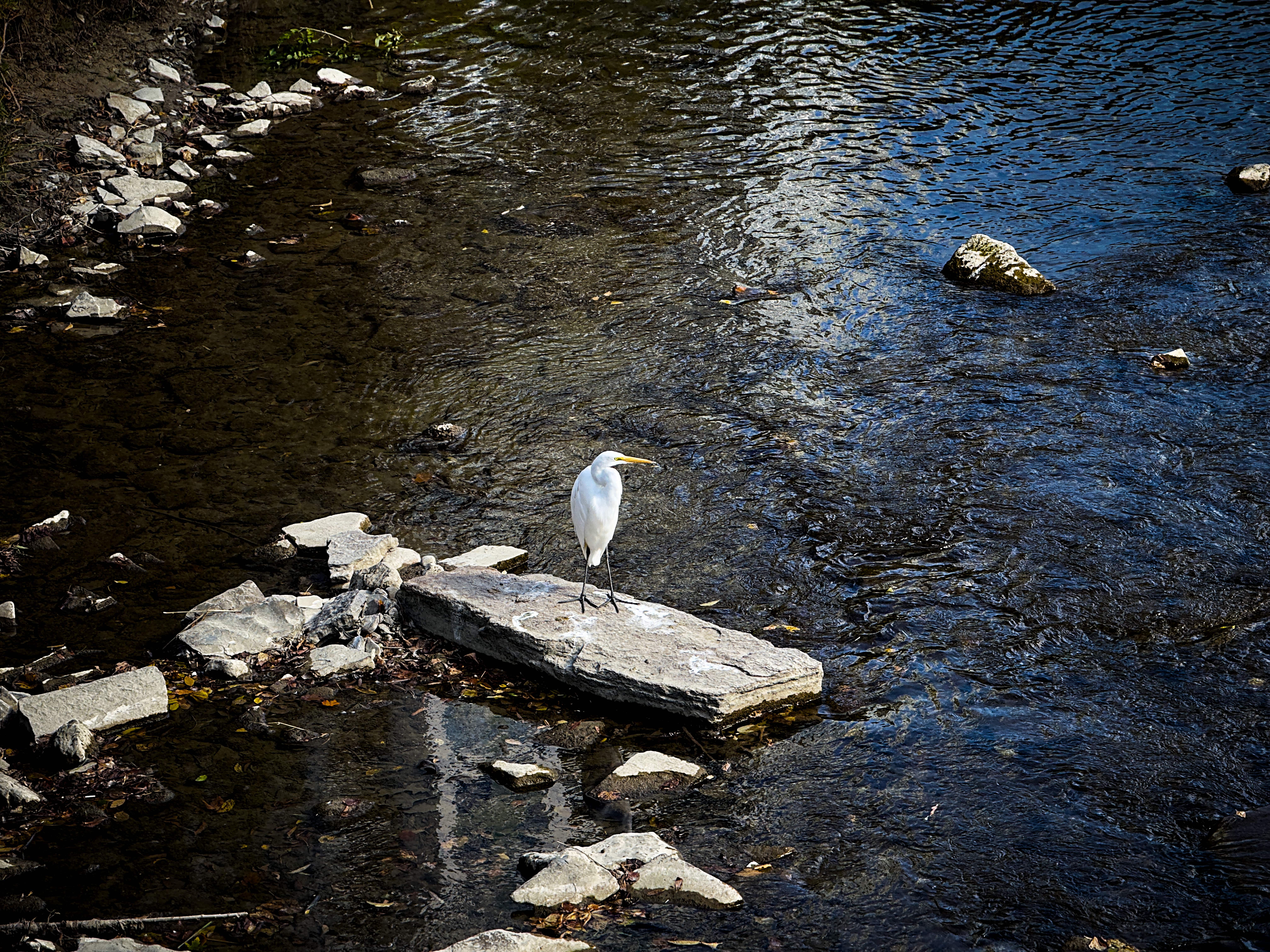
One of the more imposing birds in the world can be found here in Raymore Park. Great Egrets can be found on most continents and are a spectacular sight. With an average height of a metre they can often be seen stalking along shallow and marshy areas of the Humber at this time of year. They’re understandably quite shy and will fly off gracefully if disturbed. Their cruising speed is around 40 km/h – not too shabby – beating their wings at a sedate two beats per second. They were nearly wiped out in the 19th Century after being hunted for their beautiful feathers. It is said that the National Audubon Society was founded partly in order to protect the species.
This individual was seen recently keeping a keen eye out for unwary prey by the footbridge. Great Egrets are related to herons and often hang out together. Although there is a high rate of mortality in juveniles, the lifespan of breeding adults is around 15 years. They live on a variety of animals including fish, amphibians, reptiles, insects and even mice. Fish make up the bulk of their diet.
Great Egrets have been breeding in southern Ontario since around the beginning of this century and they nest in trees close to water. Large birds such as Herons and Great Egrets are commonly seen on the Humber well into December (depending on the weather) when they begin moving south in small groups often migrating more than a thousand kilometres. They will over-winter in areas where the water stays open.

 Friends of Raymore Park