Tag Archives: Humber River

Raymore Park: Changes over the years. Part 3.

My observations regarding changes to Raymore Park over the last 32 years. Click for the first five items in Part 1 and Part 2.

6. Vehicles using the Humber Trail.

There’s a constant variety of vehicles using the Humber Trail through Raymore Park. The rules say no motorized vehicles and this is largely obeyed. There are occasions when police fire or ambulance crews have to bring vehicles down the trail to assist someone in difficulties but generally the worst offenders are noisy, gas powered mini bikes. In recent years, a variety of battery-powered devices have become more common. When the Humber Trail closes the ‘Weston Gap‘ it will be possible to cycle from Lake Ontario to Humber College on quiet streets or a dedicated trail. This will be great for cyclists but will increase traffic on the trail which at the moment ends in a huge set of steps in Weston.
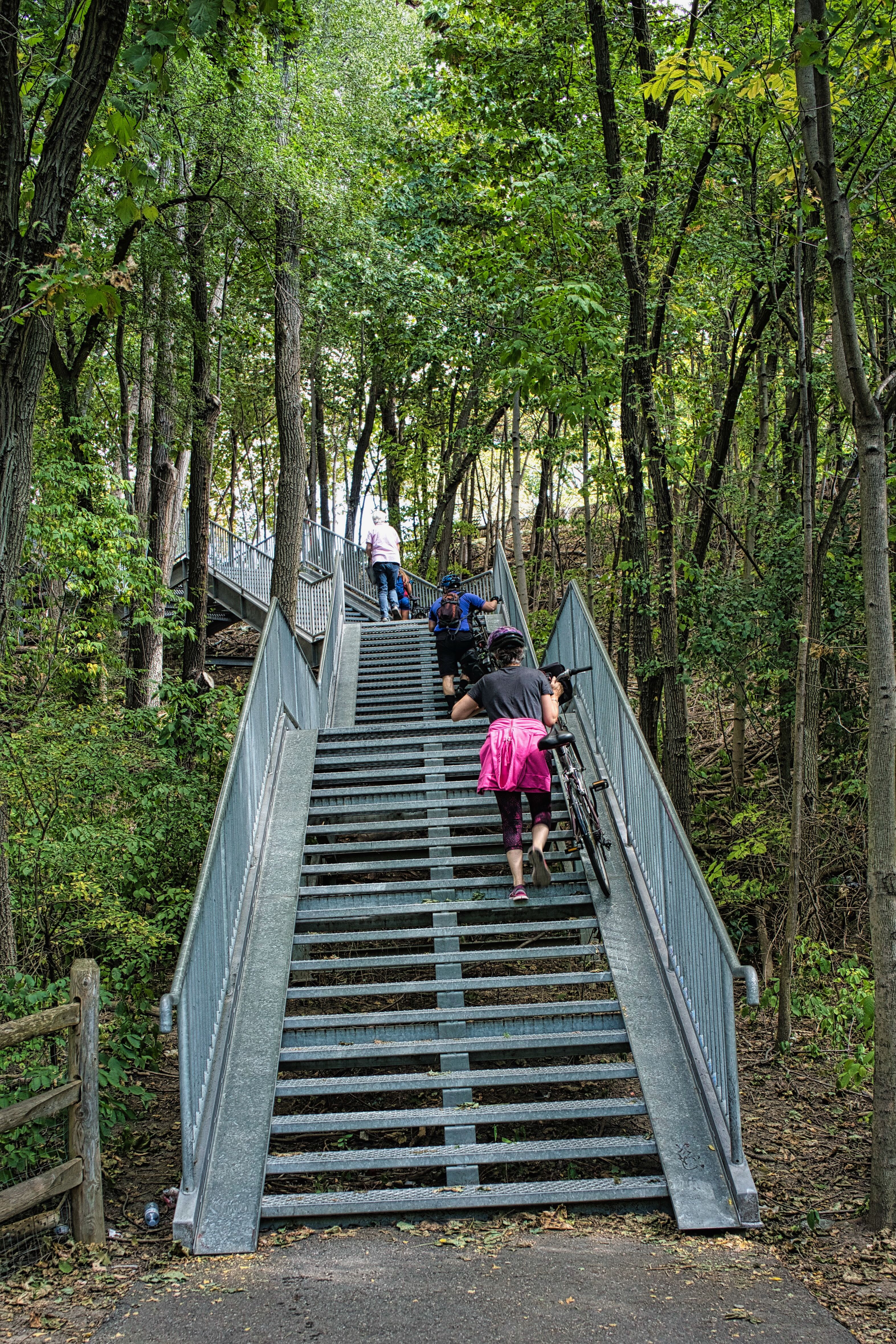
The trail ends at Weston and St Phillips and continues after a dangerous trip north along Weston Road.
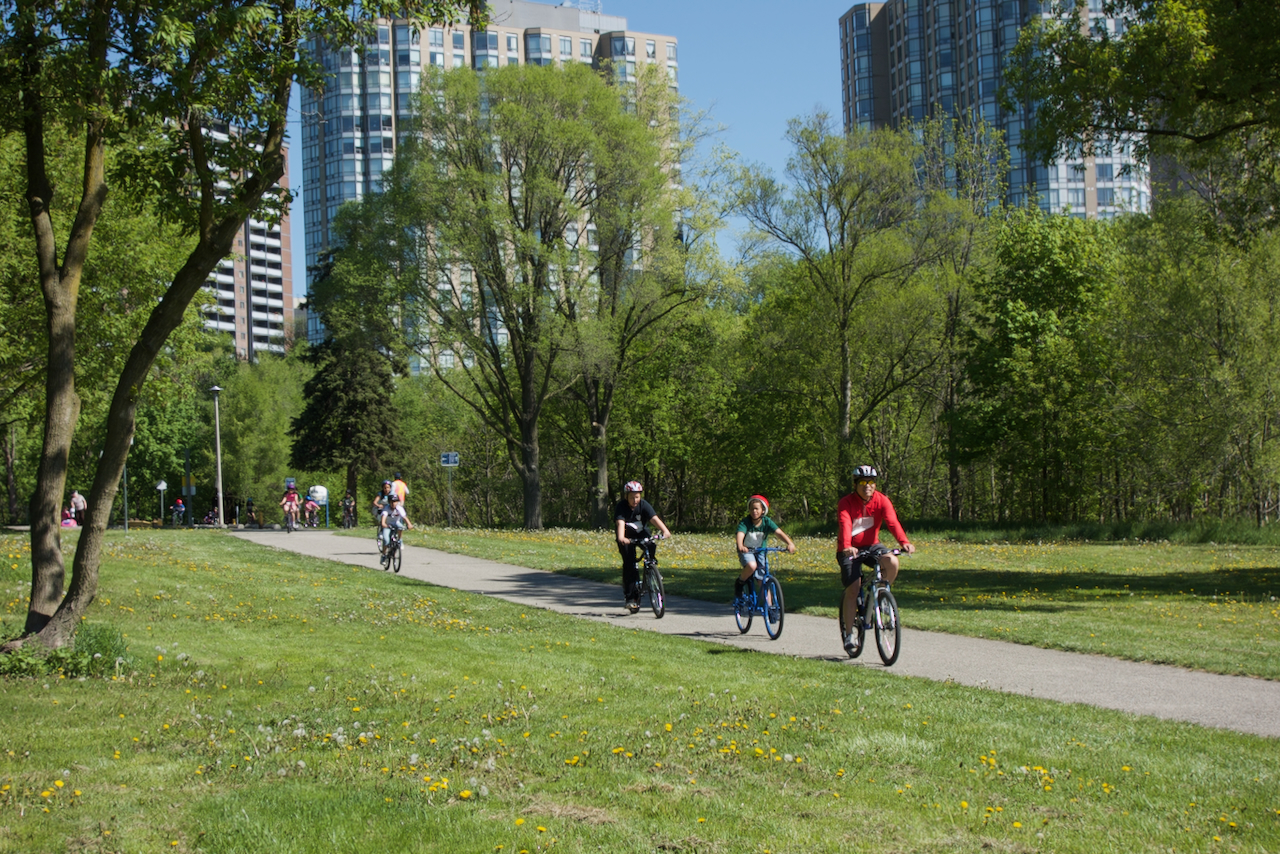
A teacher leads a class trip southwards on the Humber Trail through Raymore Park in May 2013.

7. Wildlife

A groundhog feasts on Raymore Park’s dandelions in April 2010.

Wildlife in the park has a constant battle with other species in order to survive and retain habitat. Add the pressures of an urban park and life can become even more difficult. Threats to wildlife can come in the form of non-native species, off-leash dogs, over-zealous mowing of grass and human incursions into the undergrowth.
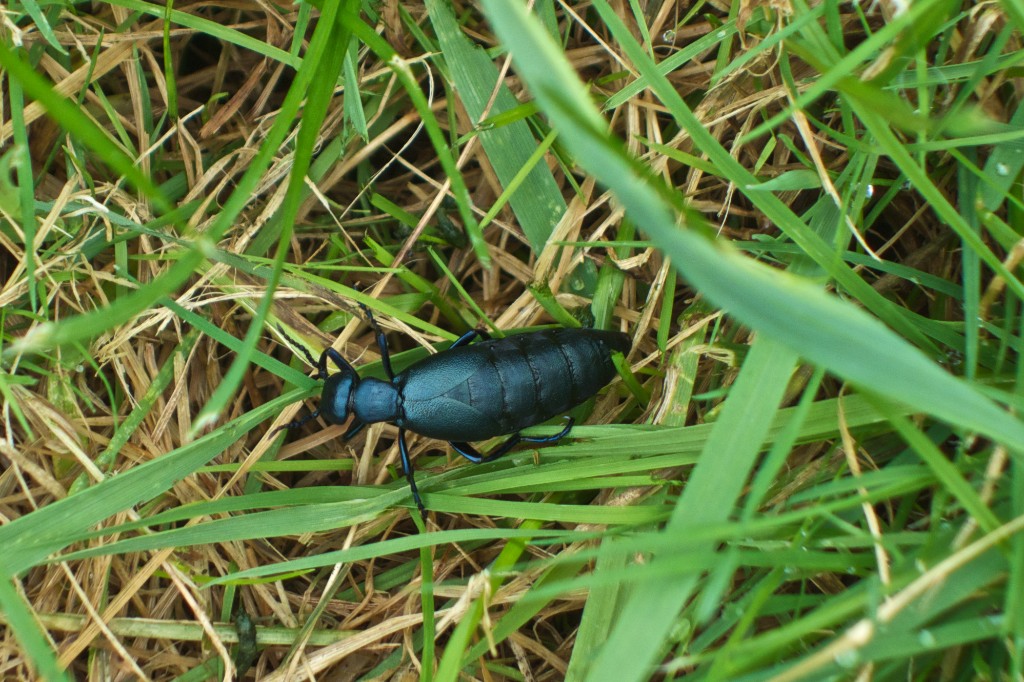
An American oil beetle has an amazing life cycle. From 2013.

Over the years, areas being mowed are smaller as the city, TRCA and and volunteers have added native plants to create more undergrowth where wildlife can thrive.
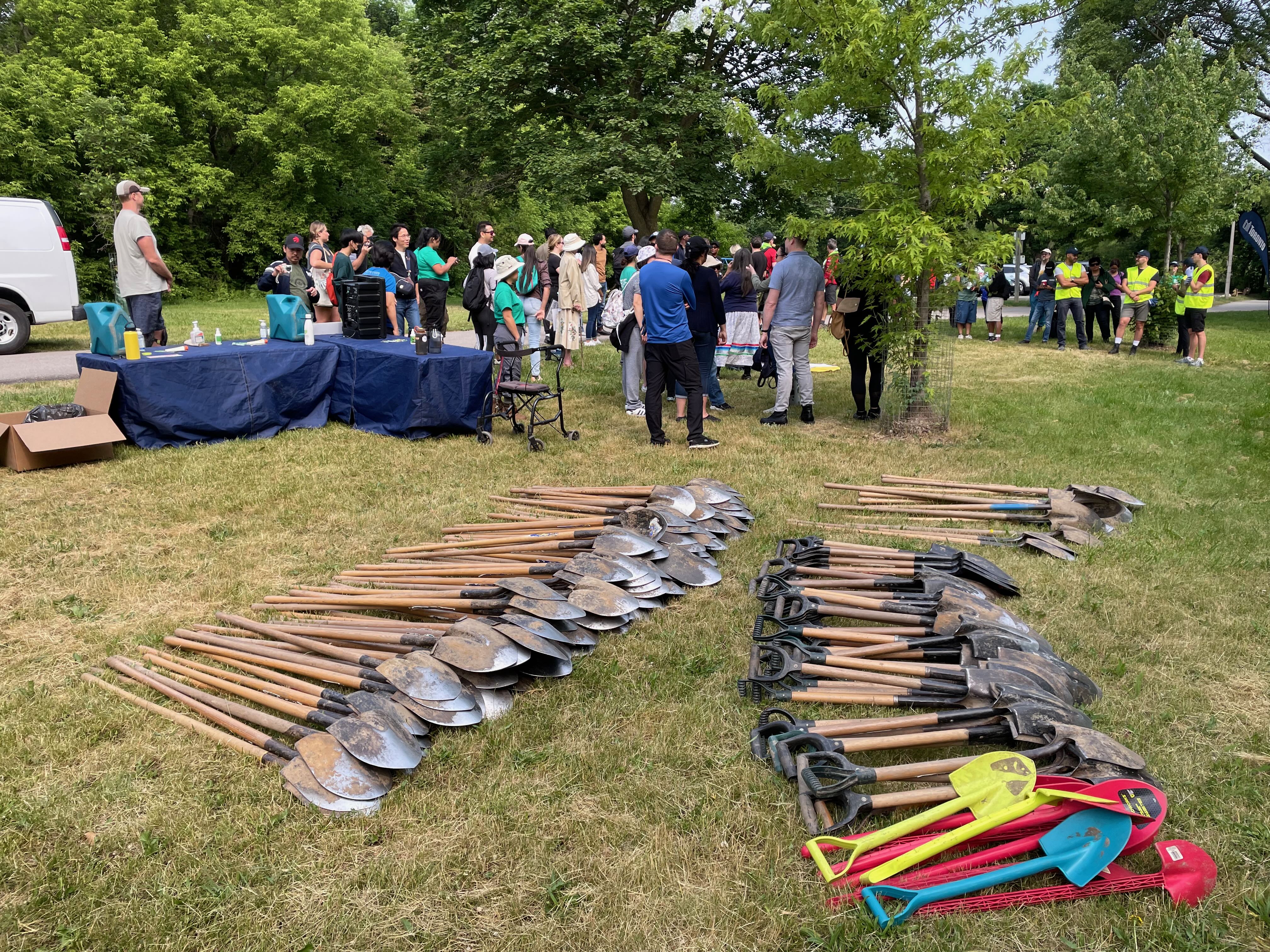
The Humber River Citizens’ Alliance and the City of Toronto held a planting day in June 2023.

The latest planting came in June near the largely unused baseball diamond and despite some prolonged dry spells, the plants are doing well. Essential wildlife corridors are slowly being formed.
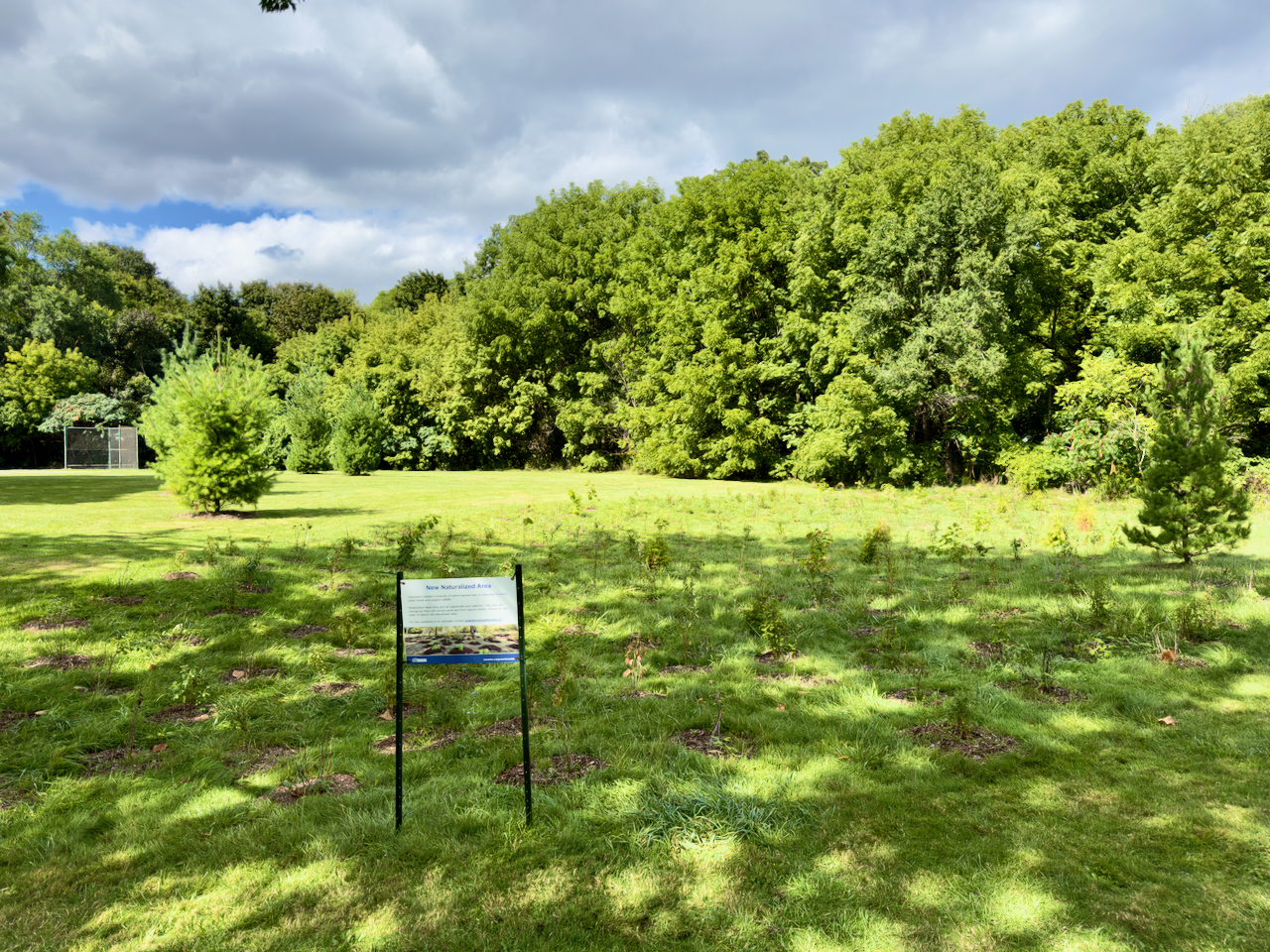
The new naturalized area in late August 2025.

8. A Private School is using the Park.

For the last few years, a private elementary school has been operating out of a home on Tilden and more recently from the Weston Gospel Chapel at 59 Kingdom. The school makes extensive weekday use of the park in lengthy, seemingly unstructured sessions, often on the swings and slide. This extra noise and foot traffic adds pressure on the park’s wildlife and reduces the tranquility that visitors might expect from a park.

9. Homeless / Unhoused people.

In recent years, some people have set up tents in the middle of the ‘wild area’ and have lived there for weeks at a time. The city doesn’t move them on but does wellness checks and tries to persuade them to go to a shelter. When they move out, the city does its best to clean up the site. Currently there are no people living in Raymore Park. Here are Toronto’s protocols for homeless / unhoused people.
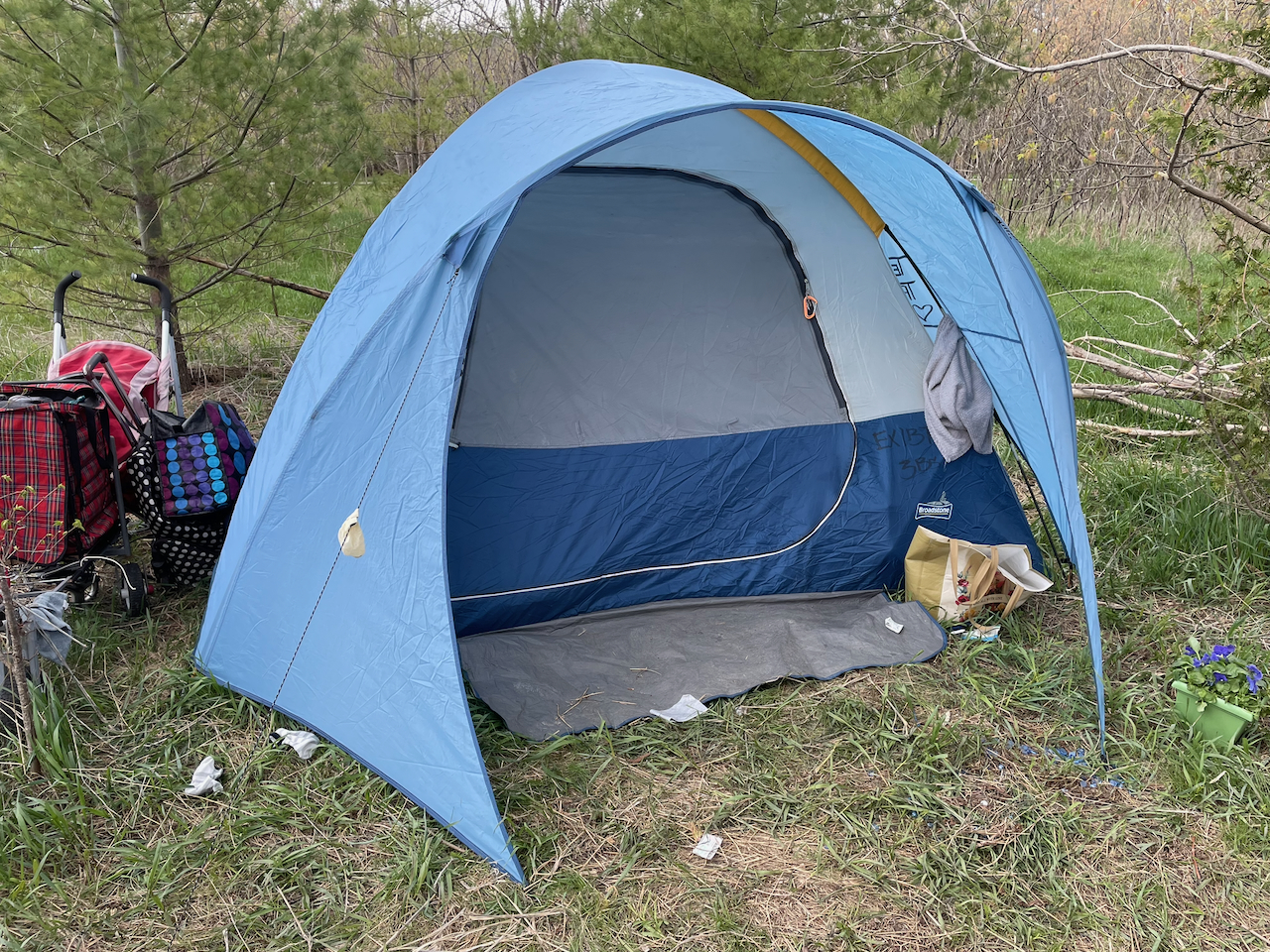
An encampment in the wild area in April 2023.

Part 4 coming soon.
Great Egret goes Fishing

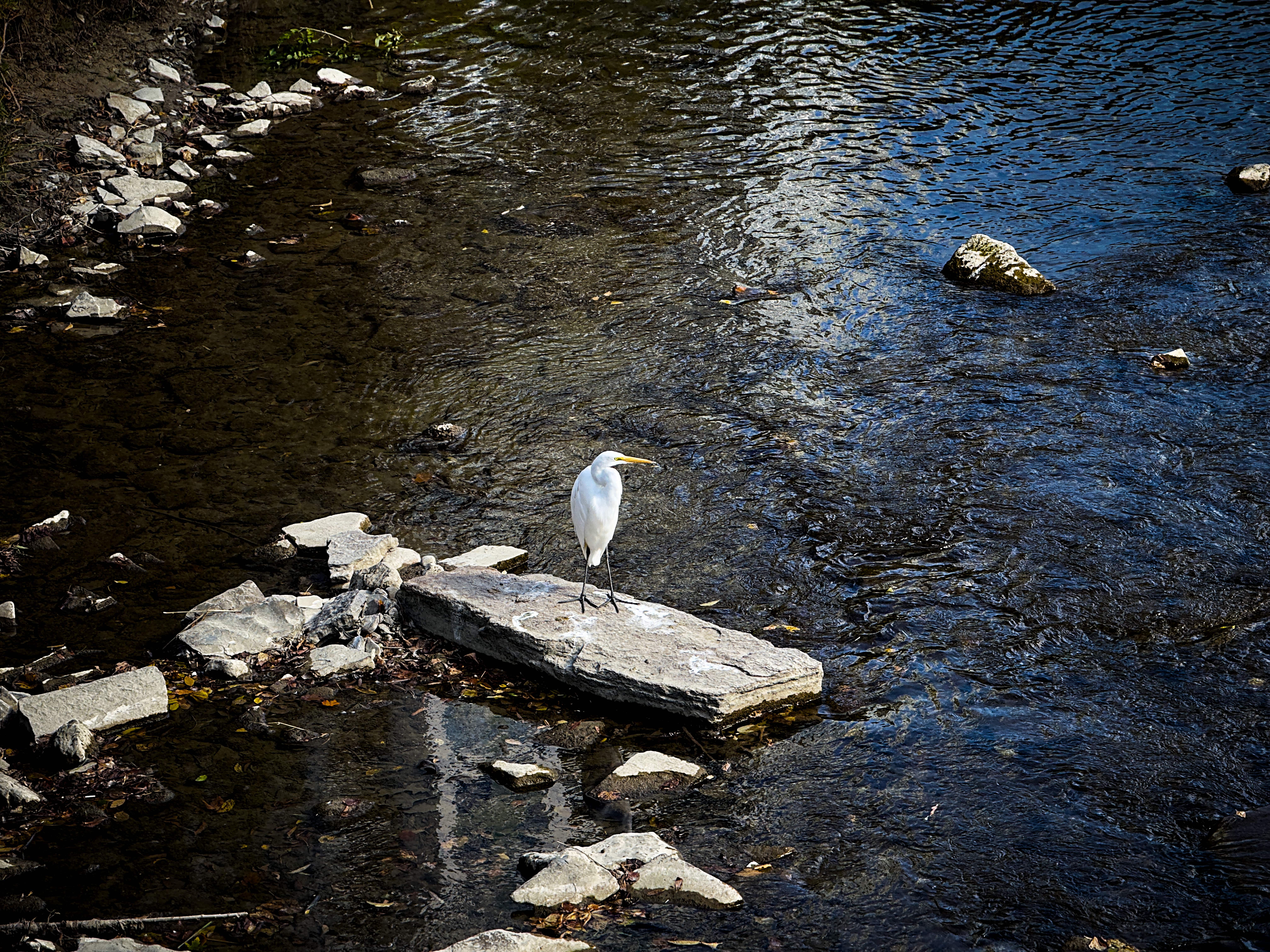
One of the more imposing birds in the world can be found here in Raymore Park. Great Egrets can be found on most continents and are a spectacular sight. With an average height of a metre they can often be seen stalking along shallow and marshy areas of the Humber at this time of year. They’re understandably quite shy and will fly off gracefully if disturbed. Their cruising speed is around 40 km/h – not too shabby – beating their wings at a sedate two beats per second. They were nearly wiped out in the 19th Century after being hunted for their beautiful feathers. It is said that the National Audubon Society was founded partly in order to protect the species.

This individual was seen recently keeping a keen eye out for unwary prey by the footbridge. Great Egrets are related to herons and often hang out together. Although there is a high rate of mortality in juveniles, the lifespan of breeding adults is around 15 years. They live on a variety of animals including fish, amphibians, reptiles, insects and even mice. Fish make up the bulk of their diet.

Great Egrets have a distinctive yellow bill and black legs. Photo: October 2024. Click to enlarge.

Great Egrets have been breeding in southern Ontario since around the beginning of this century and they nest in trees close to water. Large birds such as Herons and Great Egrets are commonly seen on the Humber well into December (depending on the weather) when they begin moving south in small groups often migrating more than a thousand kilometres. They will over-winter in areas where the water stays open.

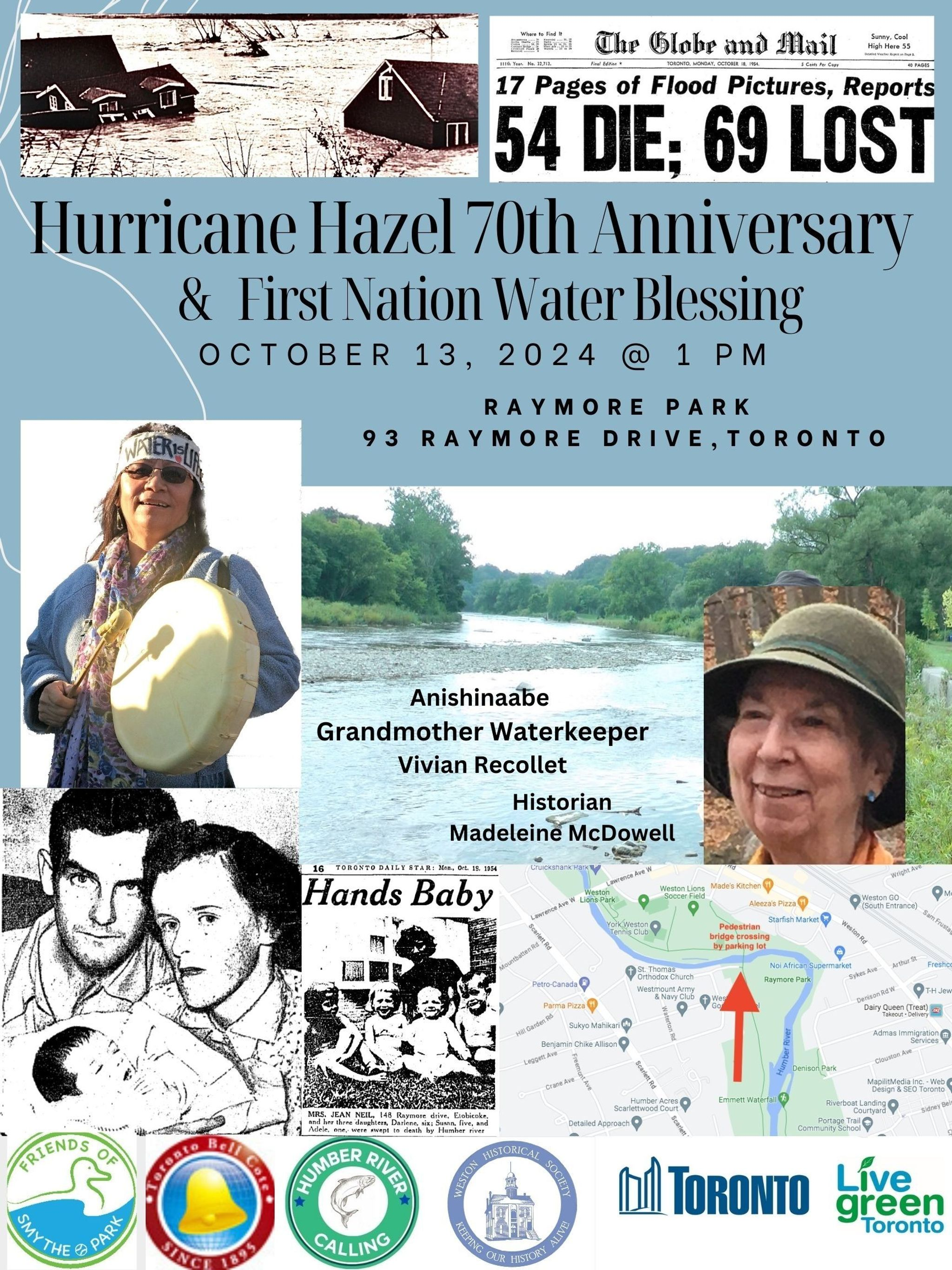
Hazel: 70 years on.

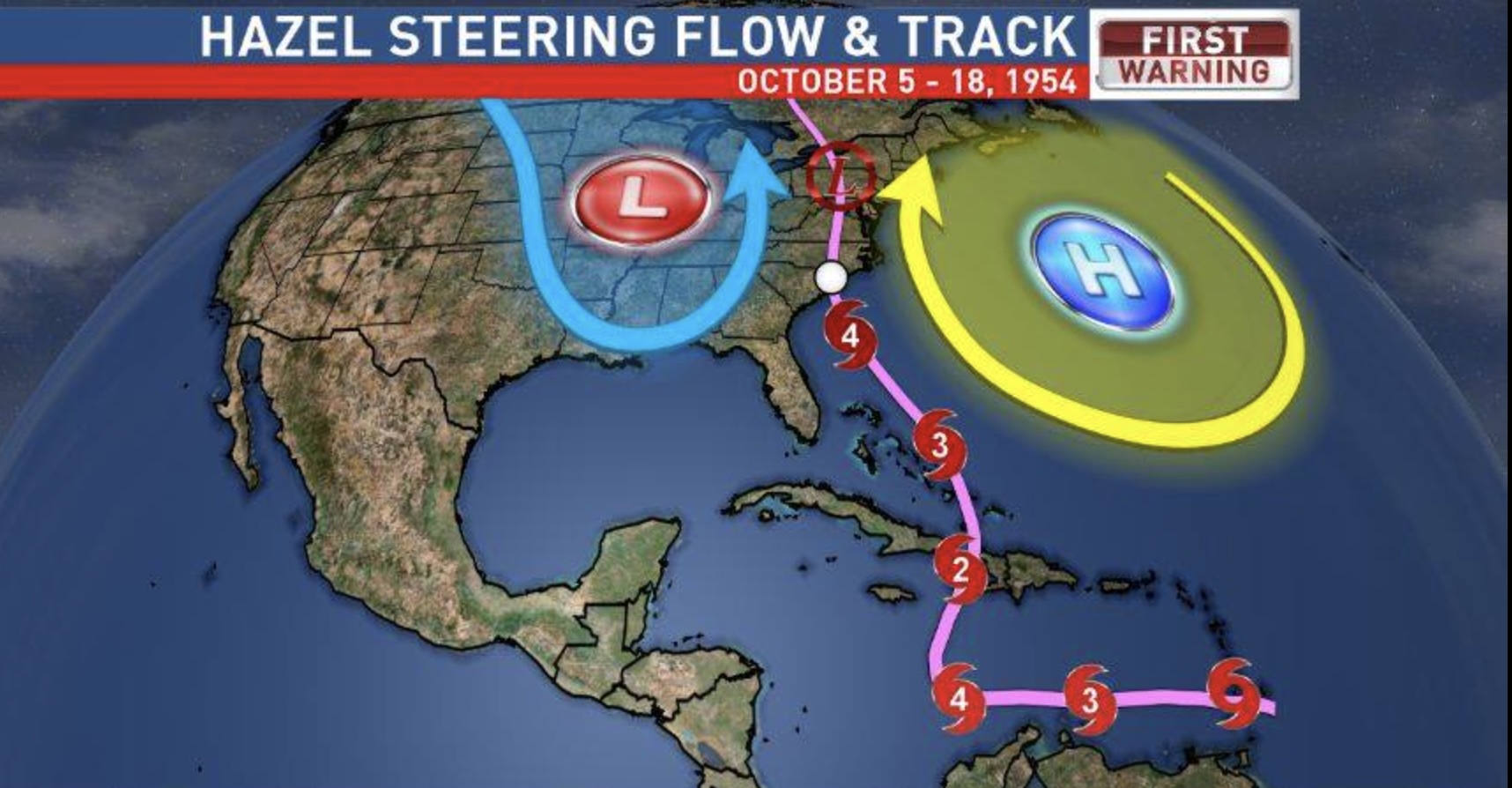
Hurricane Hazel began its trail of devastation as a category 2 hurricane in the Caribbean, killing more than a thousand people in Haiti. It moved northwards hitting the Carolinas as a category 3 thanks to warm waters off Florida. As it passed over land, it weakened to a tropical storm and then became a depression but thanks to a merger with a cold front, Hazel was re-energized and the resulting system started dumping water on the GTA on the 15th and 16th of October 1954.

High pressure pushed Hazel over Toronto where it combined with a low-pressure area and cold front.

Local historian Madeleine McDowell correctly points out that the Humber River has the sharpest drop from source to mouth of any river in North America. As a result, when heavy rains fall, the river becomes fills up quickly. Events similar to Hazel have occurred in the past. In fact, in the 19th Century, Weston was moved to the east bank of the Humber after several catastrophic floods. Weston Golf and Country Club now occupies the site of the old settlement.

Raymore Park was one of many created after Hazel as part of an effort to clear flood plain lands and give rivers space where excess water can be absorbed.

Read more about Hazel’s legacy here.

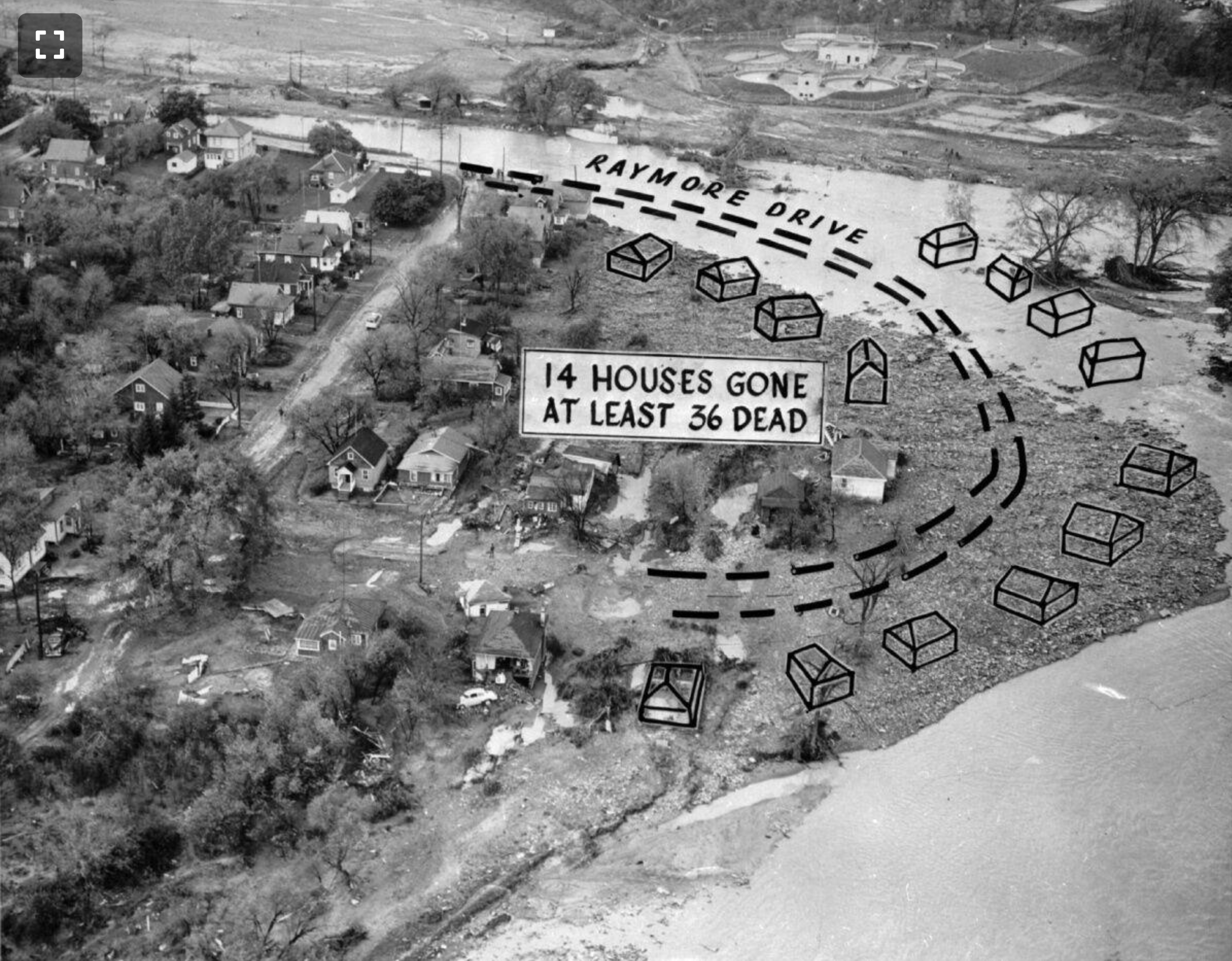
The old location of Raymore Drive. Present day Tilden Crescent begins below the square in the top left. Gilhaven Avenue (running from bottom left) is now occupied by Raymore Park’s parking lot.

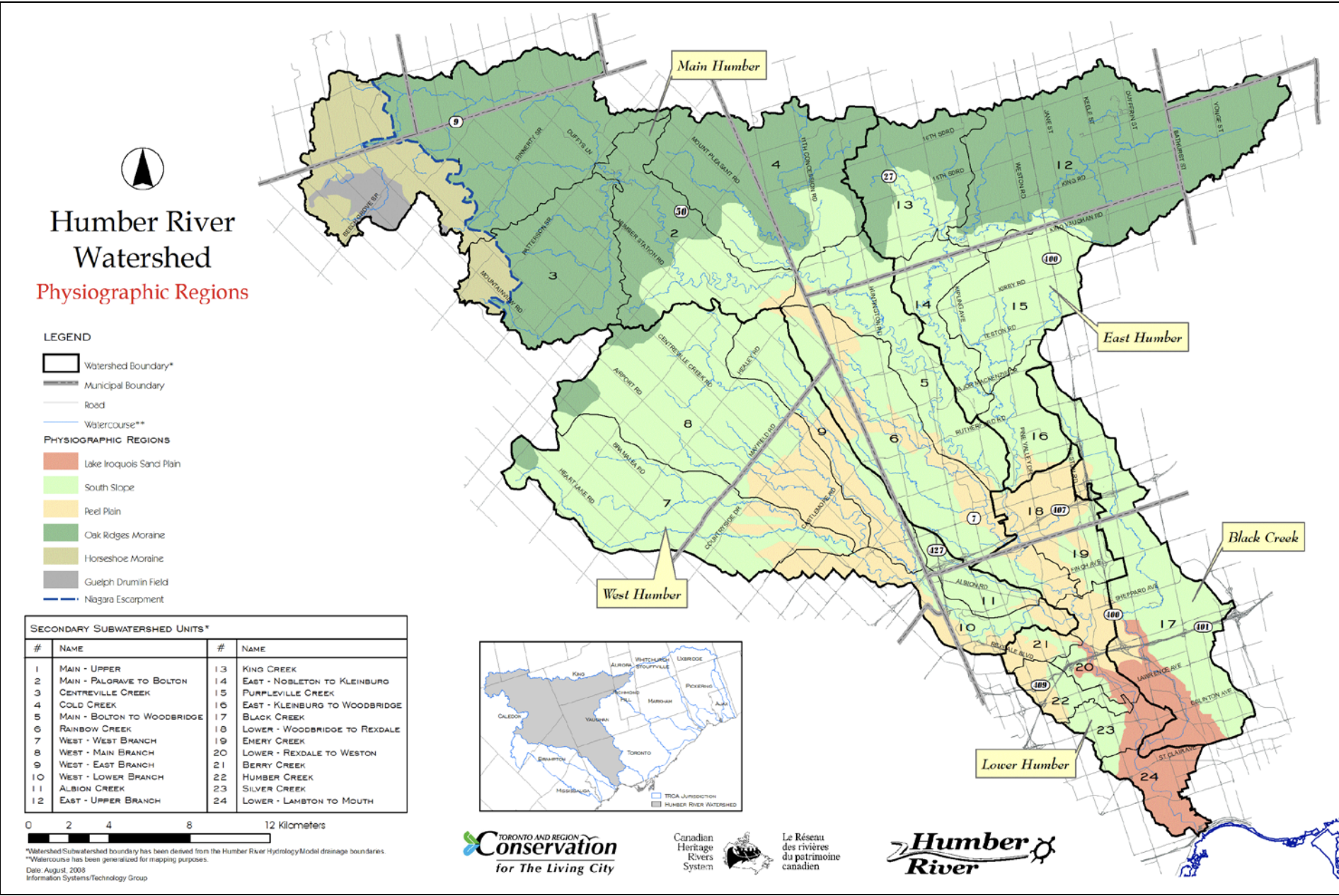
Topologically, the Humber catchment area is relatively unchanged since the glaciers left about ten thousand years ago. The valleys are the same width, and the drainage area is the same. Rare events like Hazel will continue to happen. The problem is that since 1954, a good portion of the Humber watershed has been paved over.

Click to enlarge.

In 2002, urban land occupied 20.7% of the watershed. By 2020 that amount was 26.7%, a significant increase. Natural cover is also decreasing although forest canopy is relatively stable at 29%. Because there is less land and vegetation to absorb rainfall, water enters the Humber faster causing river levels to rise quicker and higher than in the past. In addition runoff from paved land is dirtier affecting animal habitats and our drinking water. When the next Hazel type storm drenches our area (and it will), the effects may be far more severe.

Q: Is climate change a factor in events such as Hazel?

A: We can speculate, however, urbanization is a far more immediate danger. For example, the proposed Highway 413 is a huge threat to the watersheds of both the Humber and Credit rivers.

Read more here and here.

If you would like to commemorate the 70th anniversary of Hazel, meet in Raymore Park on Sunday October 13 between 1 and 3pm. Historian Madeleine McDowell will be there to talk about the event.

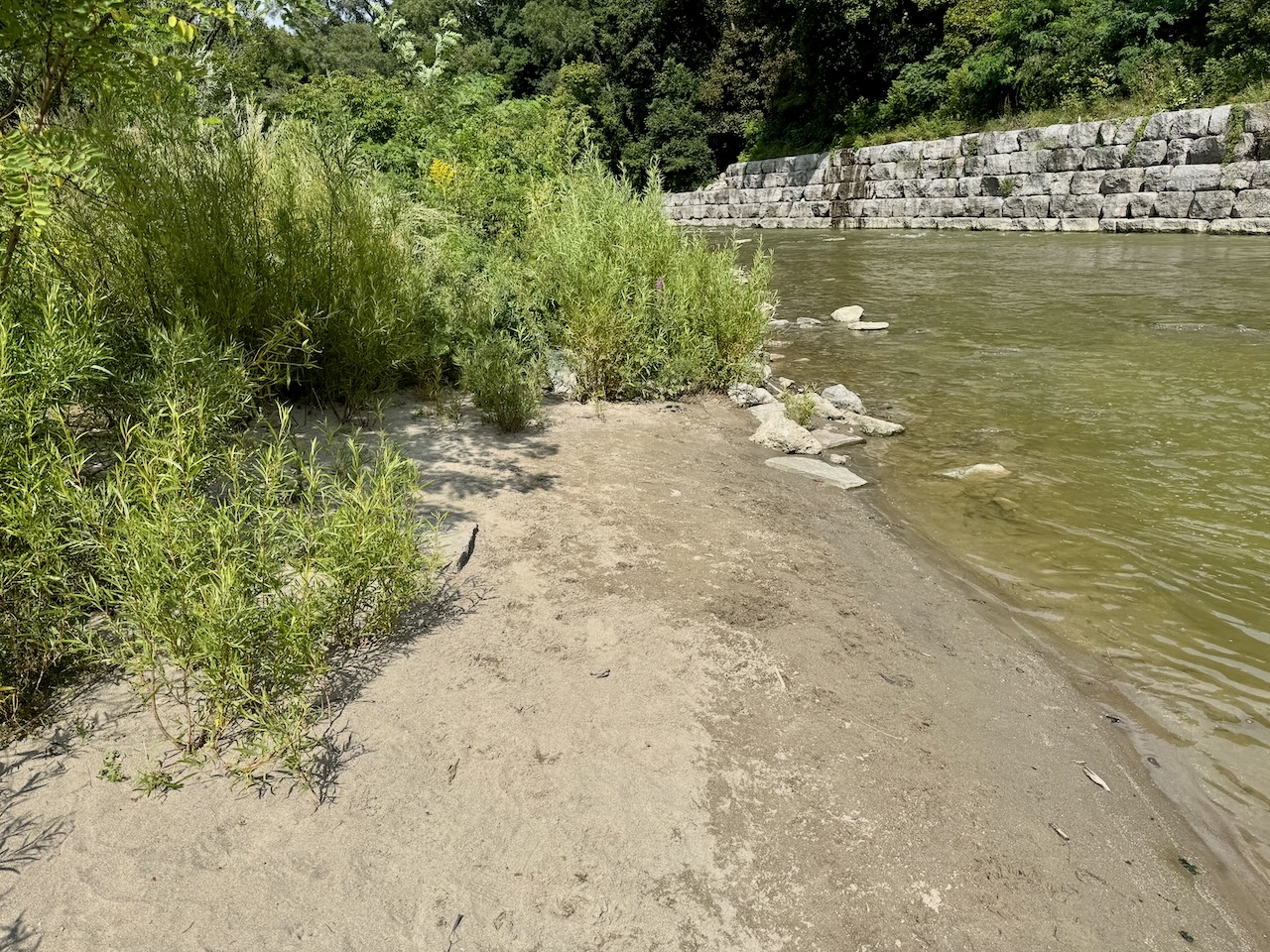
Raymore Park’s Beach is back.

Looking north towards the retaining wall.

The Humber makes an almost 90° turn inside Raymore Park and as the current slows down on the inside of the curve, sand is gently deposited on the western bank. When the river level is high, the sand is flushed downstream towards the lake. The sand comes from the Oak Ridges Moraine where it was dumped by glaciers that melted over 12,000 years ago.

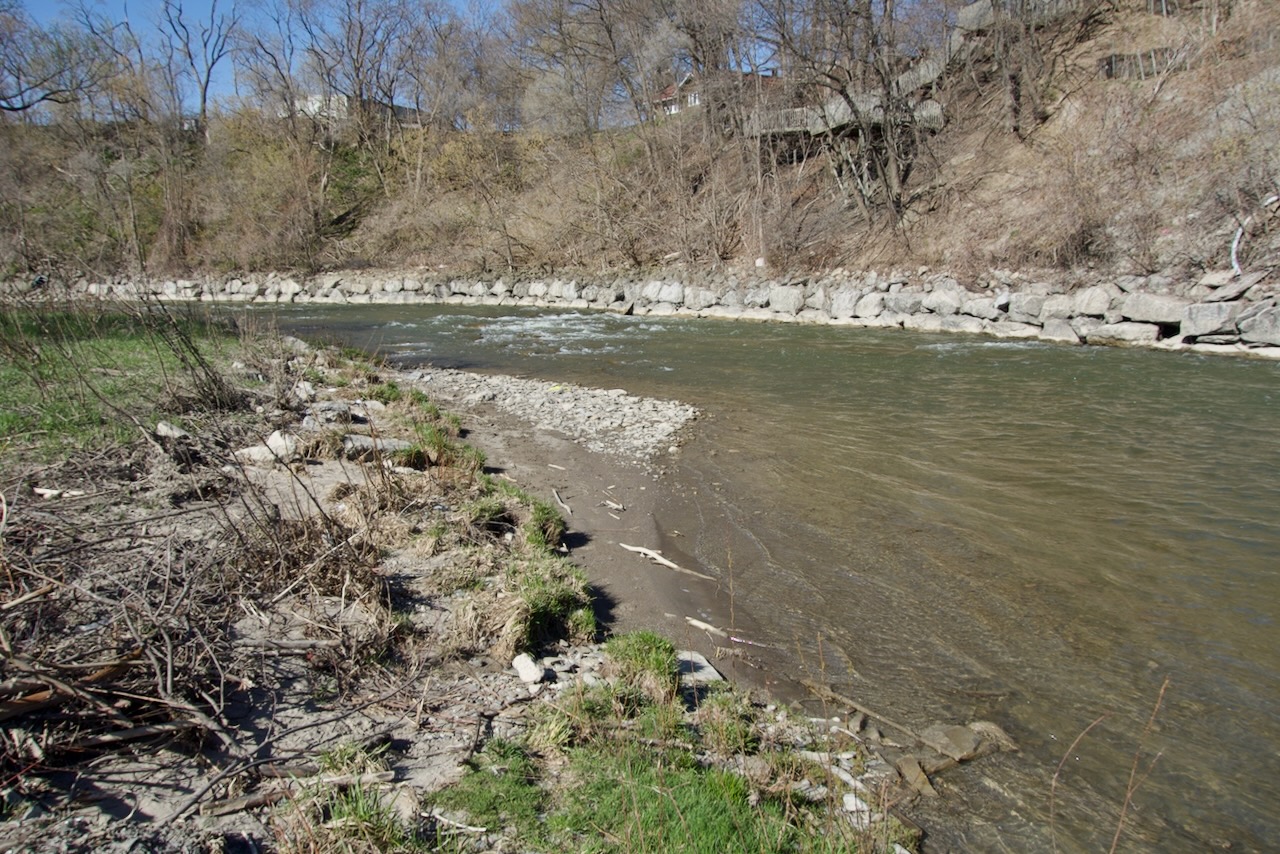
The beach in May 2014 from about the same spot showing the old retaining wall.

This is the beach that was used by children from the subdivision destroyed by Hurricane Hazel in October 1954. The beach is a dynamic thing; some years it isn’t much at all; sometimes expanding and sometimes shrinking but the sand will continue to be be deposited for the next several thousand years until there’s none left upstream.

Read more about the beach here and about what washes ashore here.

Make do and mend.

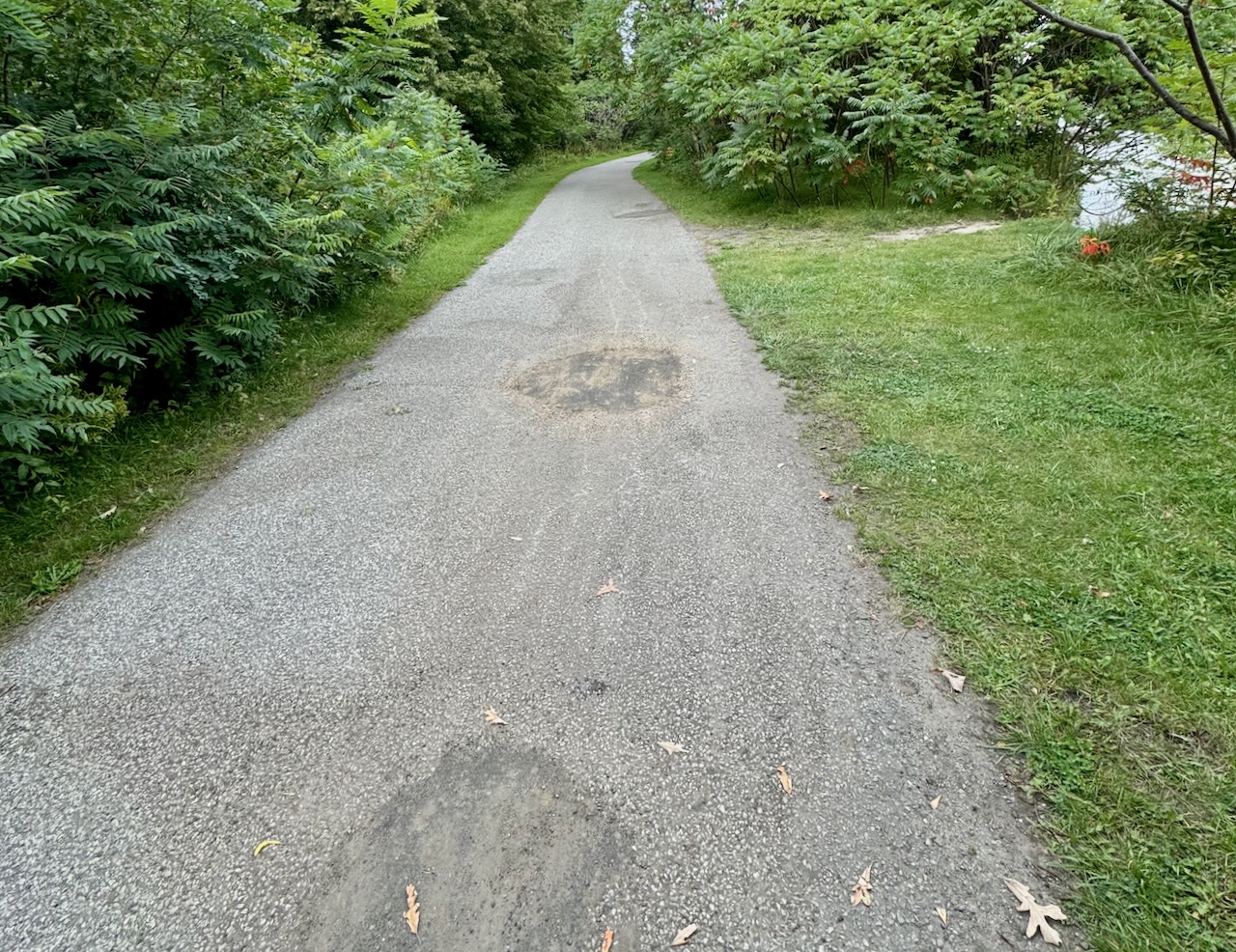
Looking north towards the weir along the Humber Trail in Raymore Park. August 2024.

Crews have finally repaired sinkholes in the bike path south of the Weir. Some of these were decades old, quite deep and particularly dangerous to inattentive cyclists. Often they would fill with water, freeze and a layer of snow would hide the slip hazard.

This section of the trail was newly paved at least 30 years ago.

Read more here.

Infrastructure problems affect Raymore Park

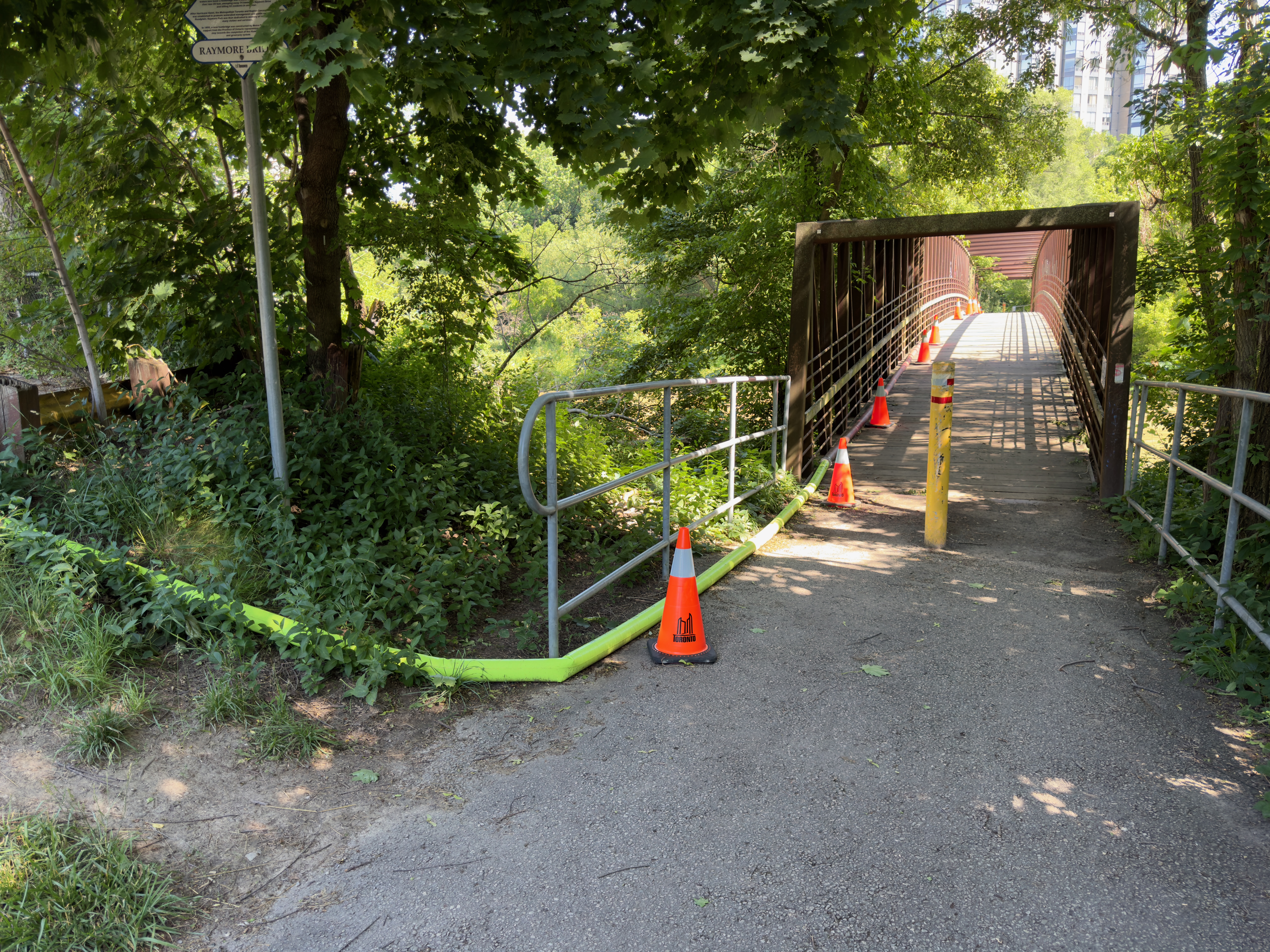
Visitors to Raymore Park may have noticed loud diesel pumps at the entrance and a rubberized pipe crossing the footbridge onto the Weston side.

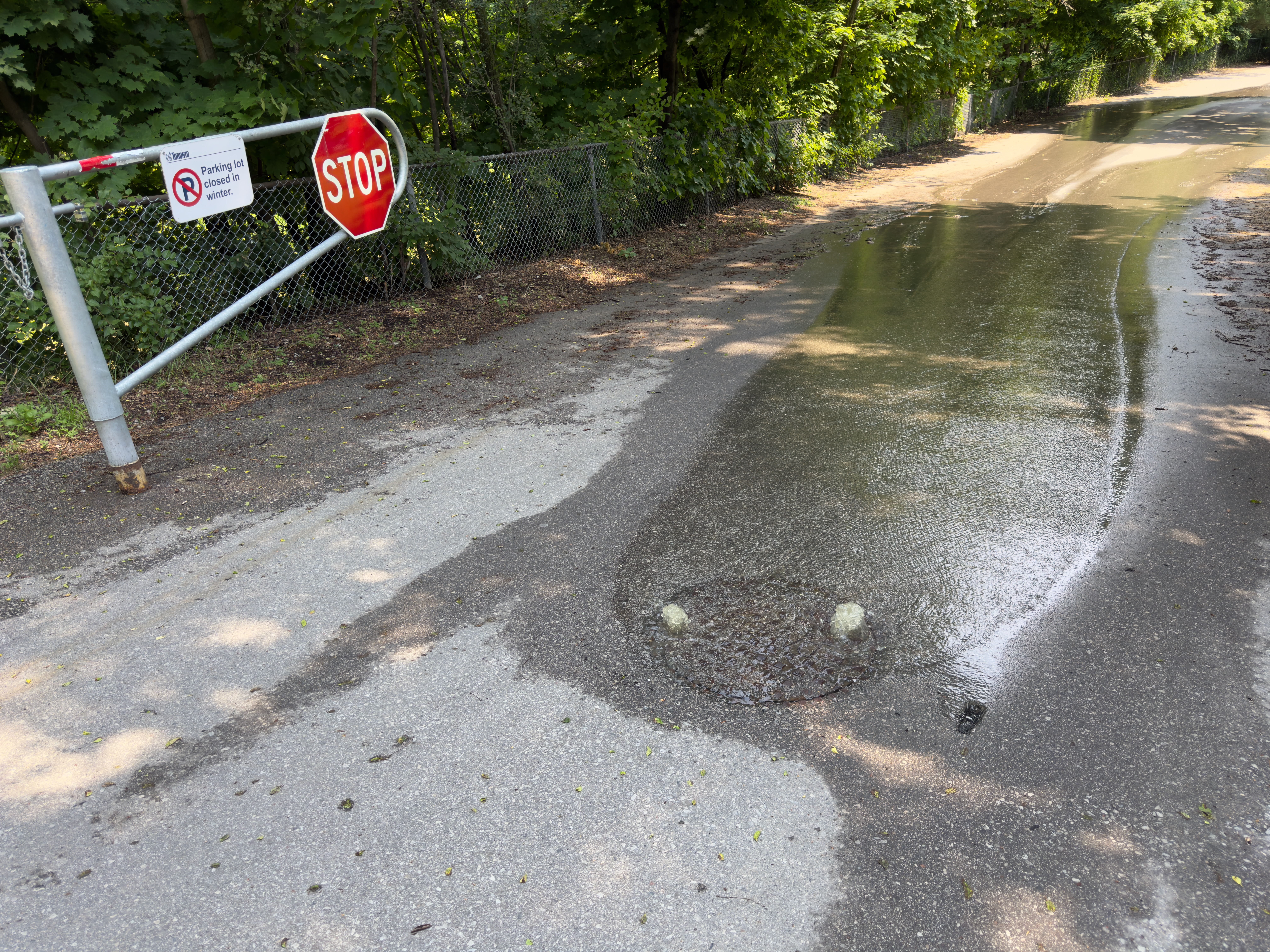
The neighbourhood around Raymore Park has been experiencing sewage backups thanks to a blocked sanitary sewer at the park entrance. Last month sewage was seen spilling out of a manhole cover and making its way into the Humber before crews could get on the job. This sewer has been blocked before, causing sewage to enter neighbourhood basements.

Raw sewage spilling from a manhole cover and making its way into the Humber. June 18, 2024.

A City work crew came out and discovered that the sewer was blocked on both sides of the river by tree roots and was crushed on the Weston side. After realizing that it was a big job, workers installed a temporary by-pass powered by a diesel pump. Sewage is now being piped over the pedestrian footbridge and into the sewage system.

Sewage piped over the bridge towards the main sewer on the Weston side. June 24, 2024.

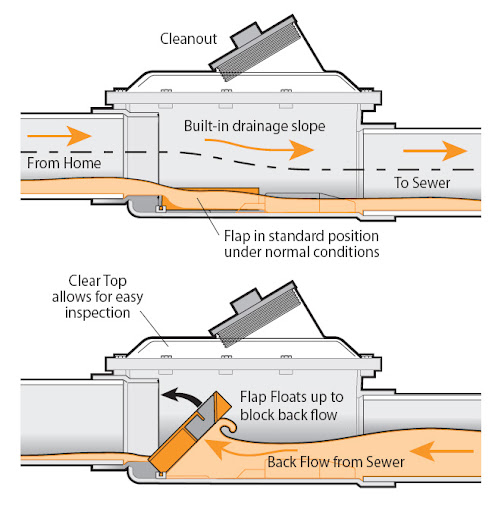
The job of clearing, repairing and relining the underground sewers is being put out to tender – a process that will take weeks if not months. Unfortunately, diesel pumps sometimes fail (twice in the last month) and these breakdowns have led to basement back-flow valves activating and in some cases, flooded basements – this is especially true during rain.

A backflow valve for basement installation. http://backwatervalve.com/

Until the sewer is cleared, repaired and relined, the bypass will carry neighbourhood sewage over to Weston. Let’s hope that the diesel pump will be carefully monitored so that local residents don’t have to deal with further sewage back ups and flooded basements.

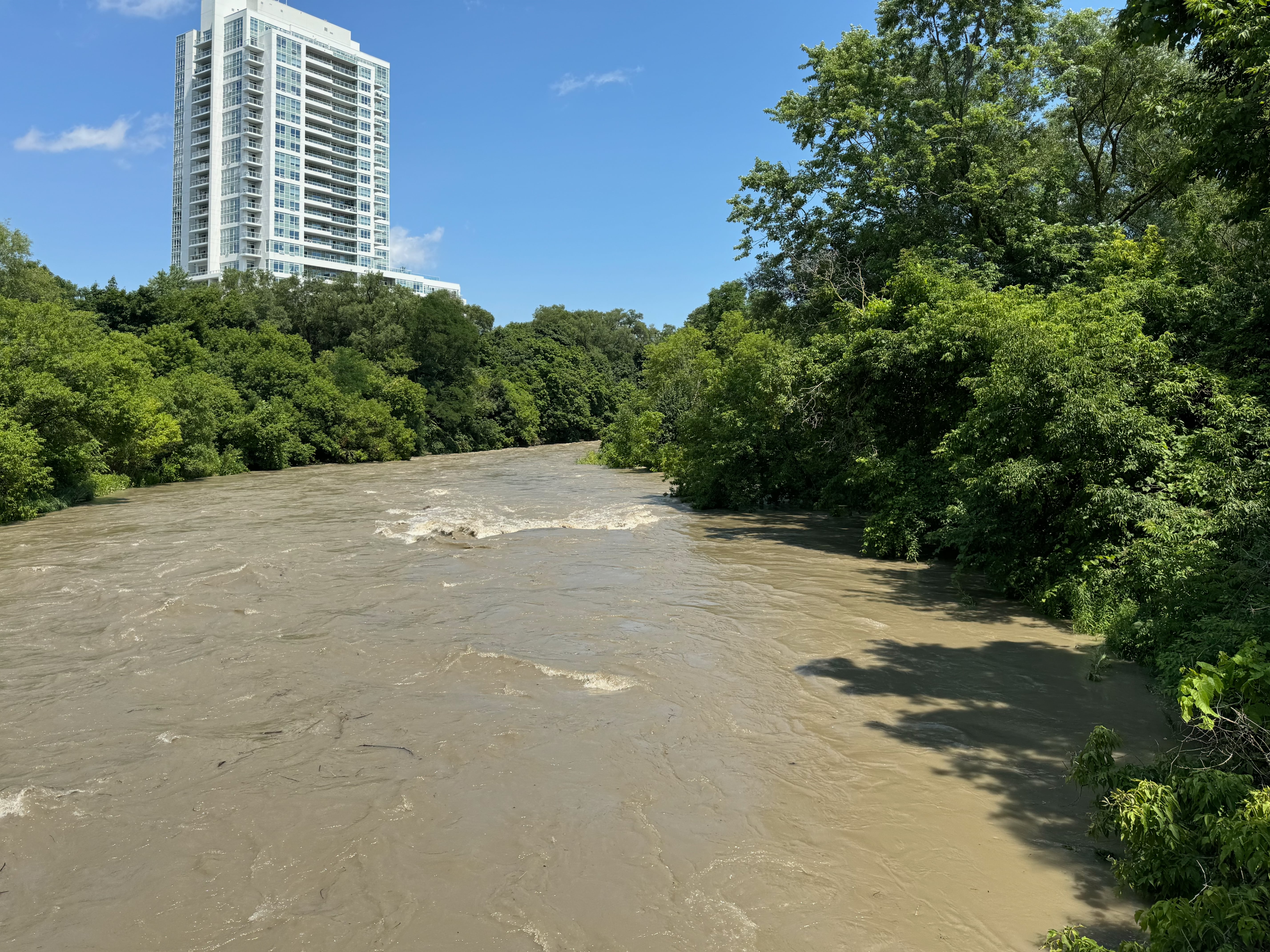
Huge rainfall swells Humber.

The Humber at rare levels.

July 16, 2024 was a rare but not unexpectedly rainy day. July often sees huge dumps of rain and Toronto received around 10cm in quite a short time. The Humber has a tell-tale depth gauge in the form of the old footbridge abutment which yesterday completely disappeared.

By way of comparison, here’s how it looked in April 2022.

The old footbridge abutment is clearly visible on most days. April 24, 2022.

As the city grows and more land is paved over, the ability of the river to hold huge volumes of runoff will be tested. Without green spaces and parkland to absorb runoff, the Humber would be much more of a threat during heavy rain or spring thaws.

Parks are for everyone.

Most Toronto parks on a weekend are filled with people enjoying themselves. To paraphrase an old saying, Parks are the lungs of the city and a natural setting with trees and grass provides cleaner and fresher air along with a chance to relax.

There are parks that are ideal for picnics while others provide tranquility and a natural setting. Some Toronto parks have bathrooms and built in barbecue stands while others, like Raymore Park are more natural.

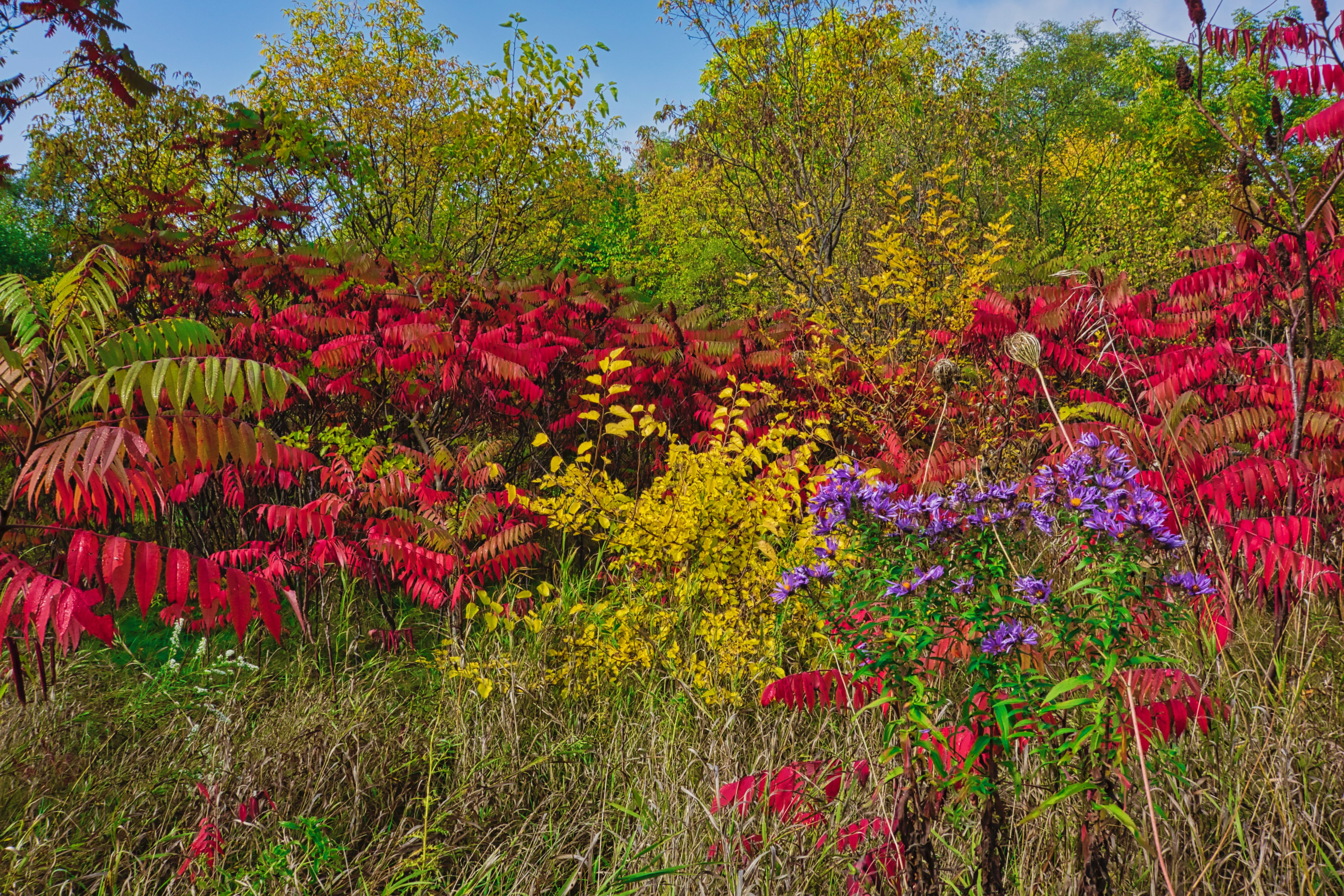
Glorious fall colours in Raymore Park’s wild area (October 2013).

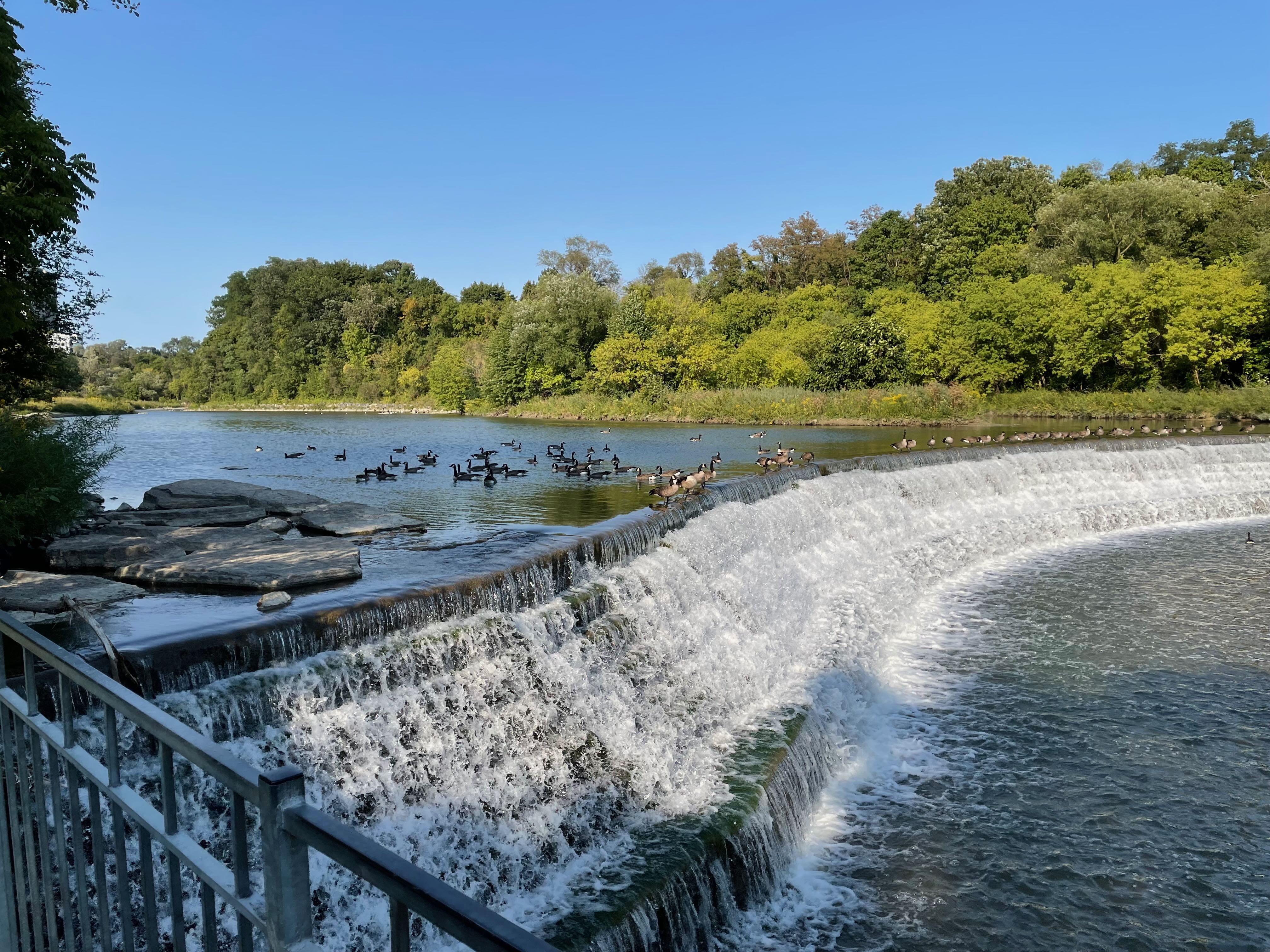
Raymore Park is quite large and there are areas where you can throw a ball, walk the dog, have a picnic or just sit on one of the many benches and contemplate. Watching the water going over the weir is mesmerizing and the negative ions created by falling water are said to be therapeutic. If you like shade, there are lots of trees – just be careful not to feed the summer mosquitoes! There’s even a rudimentary baseball diamond tucked away north of the dog off-leash area. We don’t have flower beds or seasonal plantings but we have a large variety of flora and fauna.

Geese enjoying the weir in September 2022.

In nearby Lions Park, people like to set up in groups and barbecue on warm weekends. They bring chairs and tables, awnings and coolers and relax by the river. Walking or cycling past these groups is a treat for the nose and if your hunger is stimulated, there’s an increasing number of fast (and slow) food locations a five-minute walk away on Weston Road.

Who are the people using parks? Every age group, athletic level and ethnicity are represented in Toronto’s green spaces and ravines; people looking for exercise, a meal or a relaxing stroll. There are no barriers or fees, everyone is welcome and people become more relaxed when they arrive. If you want to strike up a conversation, talk to a dog owner about their dog – or better yet, borrow a dog and walk it in the park (on leash of course). Dogs are instant ice-breakers. There are many volunteer organizations that help clean our parks after a long winter (locally it’s Humber River Pals) and get rid of accumulated litter while others look for invasive plants and remove them. Garlic mustard is a frequent target for those wanting some springtime greens and provide breathing room for native plants.

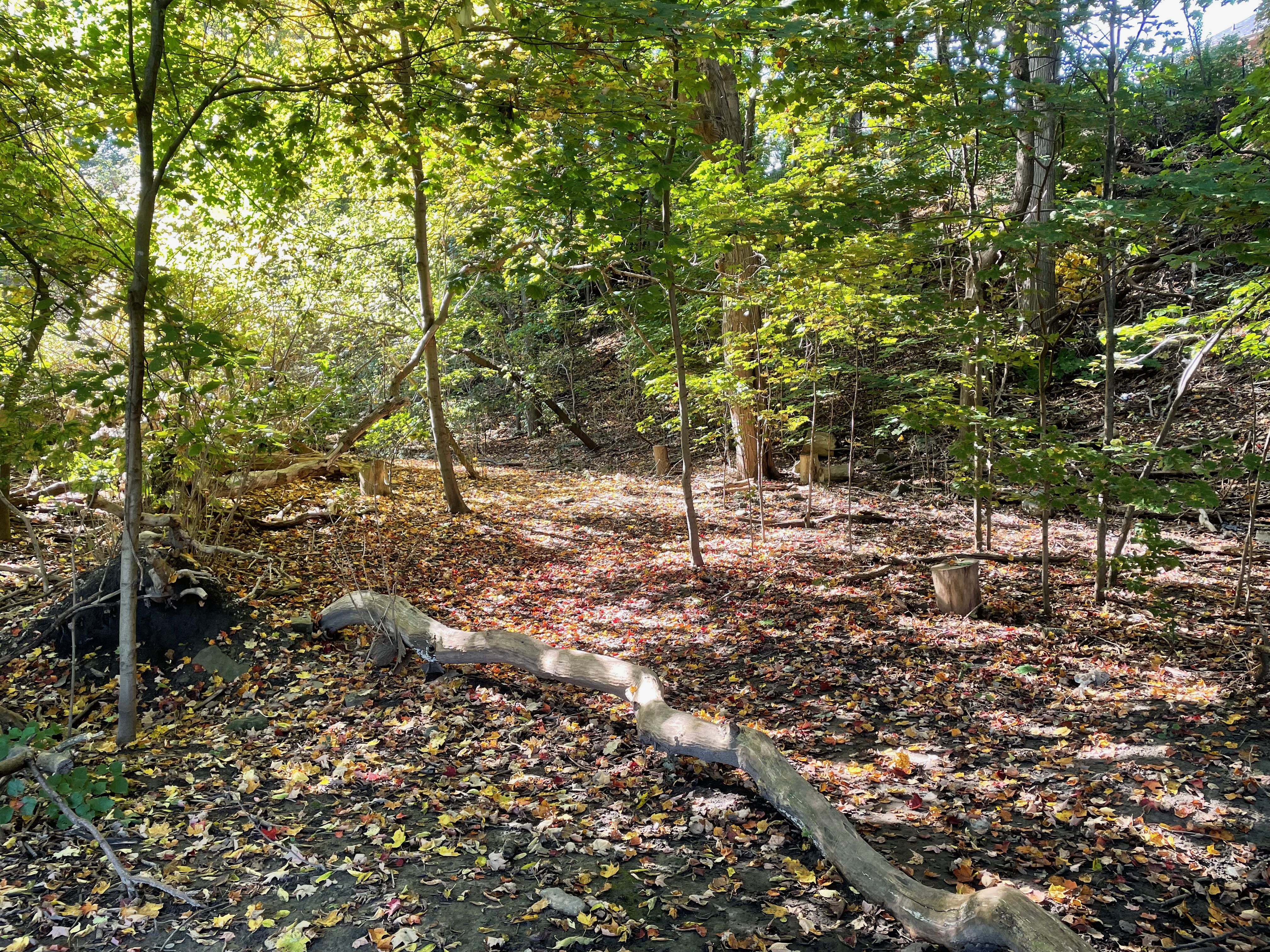
Raymore’s wooded area in October 2021.

It is possible to cycle from Raymore Park down to Lake Ontario with very few diversions onto side streets. The trail loosely follows the Humber to it’s mouth on the lake. Cycling through several parks on the way down to the lake reveals the variety of beautiful parks along the Humber.

So what’s stopping you? Get out and enjoy.

Humber Creek culvert nears completion.

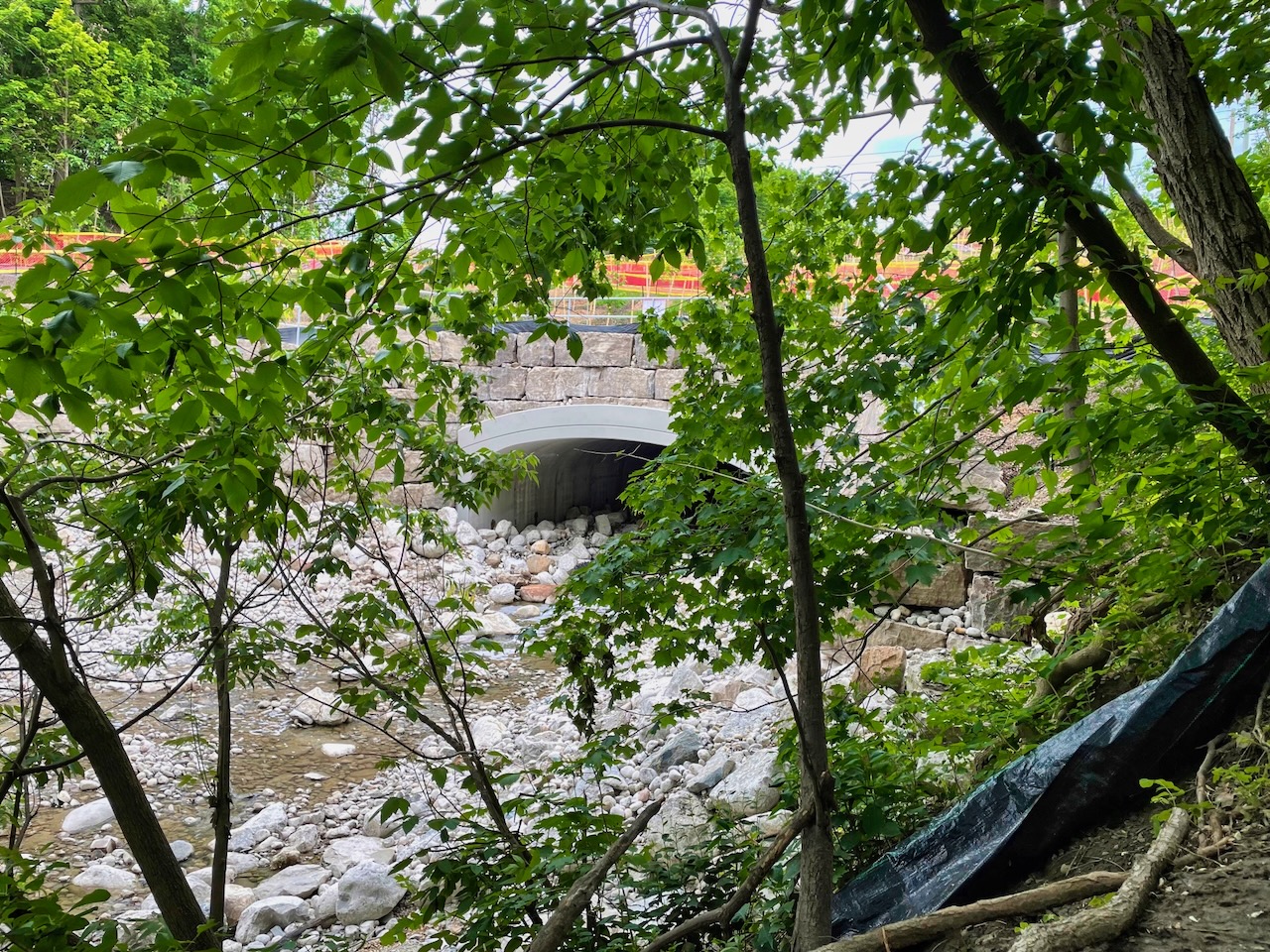
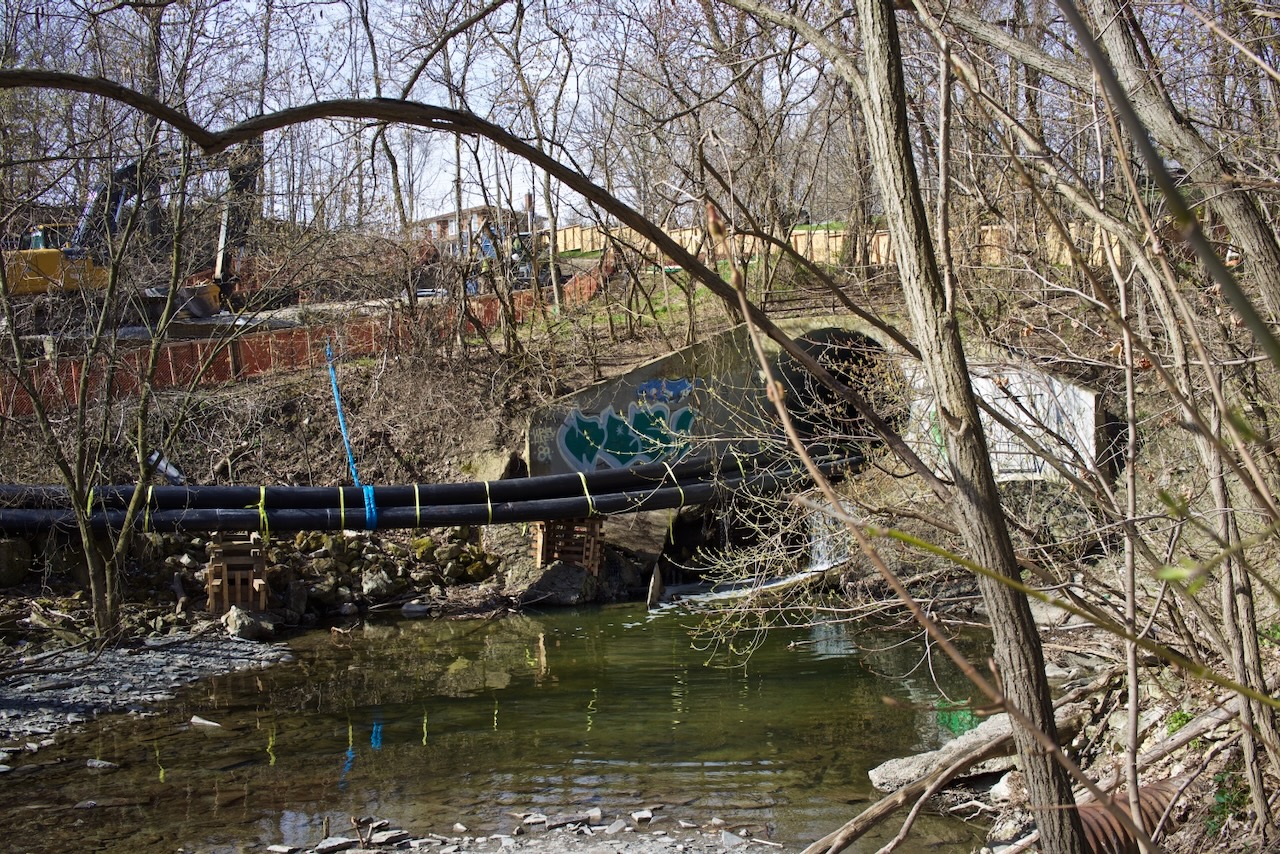
The culvert work under Scarlett road that brings Humber Creek to the Humber River is almost complete. I was able to get a look at it the other day and the eastern side is ready.

Through the trees…

The old culvert was quite something:

The old culvert during previous sewer repairs in April 2016.

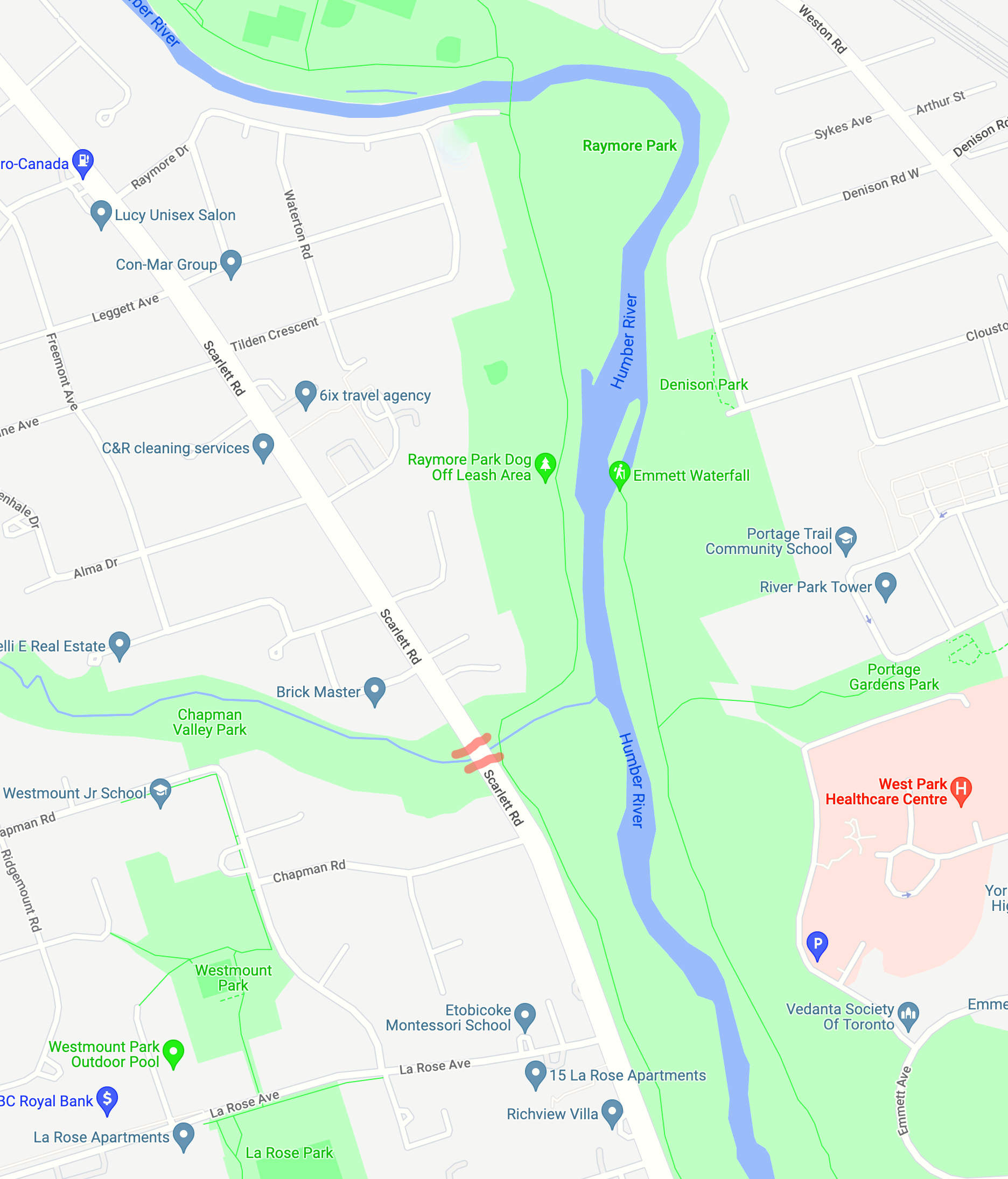
The old outlet was a good couple of metres above the creek which made for a spectacular and powerful jet of water after rainstorms. A deep pool formed as a result. Unfortunately, the height of the culvert made passage along the creek quite difficult for wildlife. The new lower bed has created a corridor that will link Raymore and Chapmen Valley Parks and lower the risk of deer and other animals running across Scarlett Road.

The soon to be linked Chapman Valley and Raymore Parks – From Google.

In addition to linking the parks, the terracing around the culvert has been landscaped. The other side of the culvert is supposed to be completed by this July or August.

Ice damage in wild area.

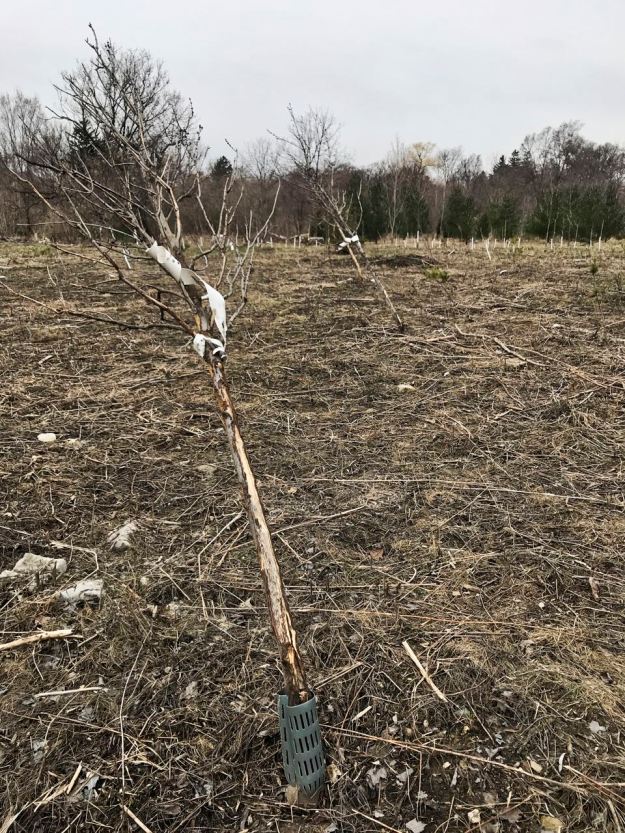
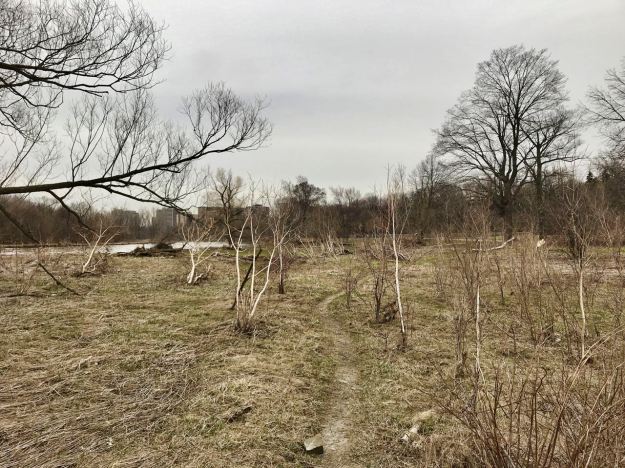
Some spring thaws are rougher than others but this year’s was particularly brutal. Many young trees were planted after recent construction work in the wild area past the curve in the river. Many of these trees have been destroyed by huge chunks of ice and torrents of water.

These trees (along with many others) have lost much of their bark after the annual inundation.

Looking south from above the dam, water and ice has stripped the bark from these young trees.

Sadly, there’s nothing to be done except plant more wisely in the future.

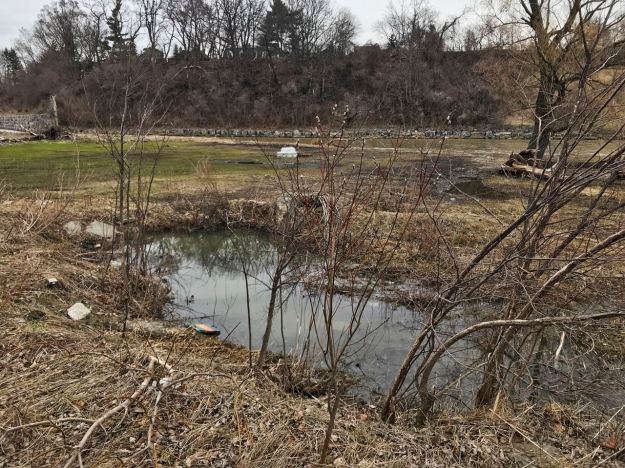
On the plus side, two observations; there’s very little garbage in the wild area and the pond formed in 2013 has survived the construction mess and the latest floods.

The pond and the protruding sewer cover (white – upper centre).

On another topic, the white object sticking out above the newly planted grass in the background is a visible reminder of the sewer relining that took place over the last couple of years. Hans Havermann’s excellent blog has an article complete with extensive photos of this sewer pipe cover and the engineering (or lack of) that has led to its striking prominence, damage and repair this February.

Blocks of ice weighing several tonnes overflow the Humber’s banks almost every year. Anything that protrudes above ground level is at risk.