Tag Archives: litter

Cleanup reveals alarming micro-plastics

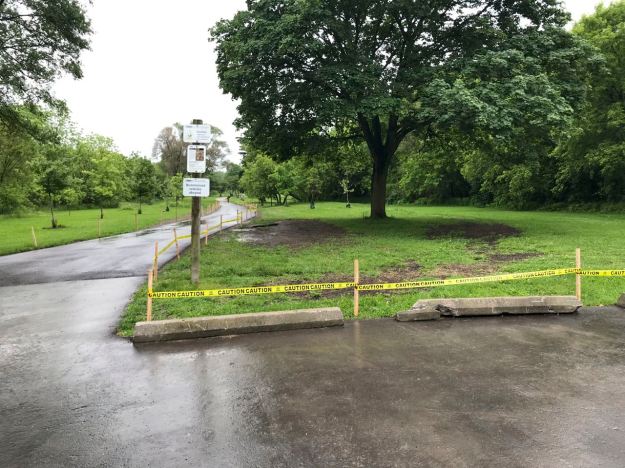
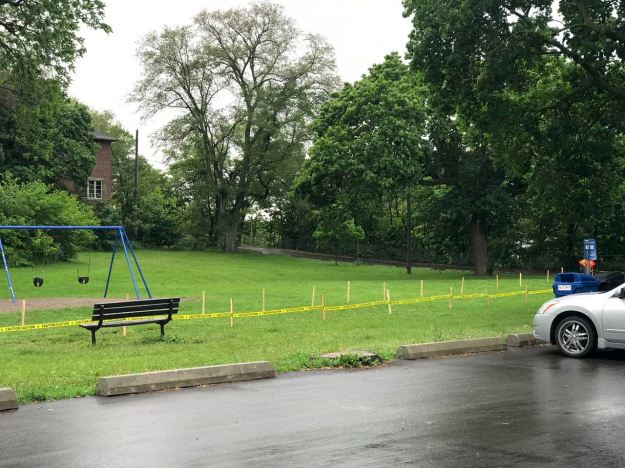
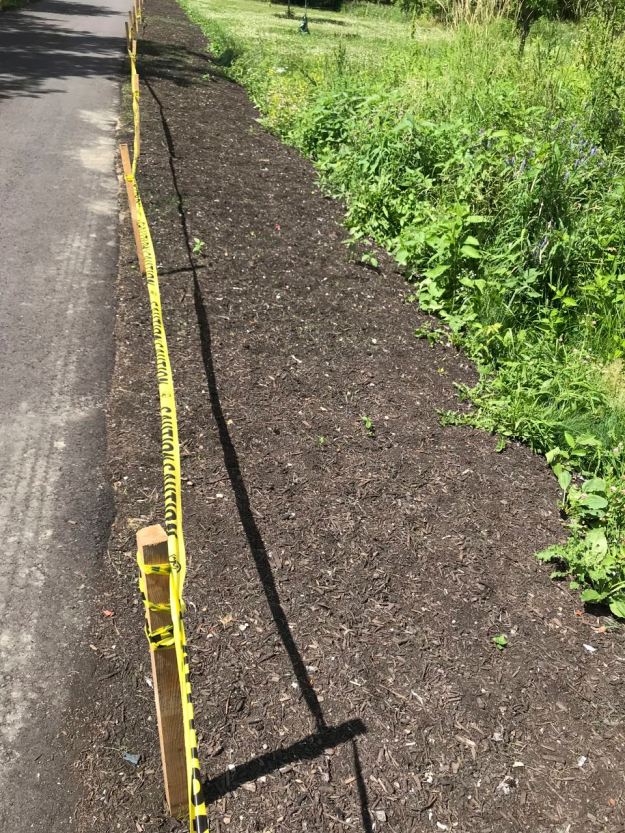
After what seemed like an age, remediation work to restore grass to its original condition was under way a couple of weeks ago. Some of the work seemed unnecessary as the grass had re-grown quite nicely. Other areas definitely needed work.

Ground is taped off ready for the mulch / seed mix.

Not much remediation needed here but work was done regardless.

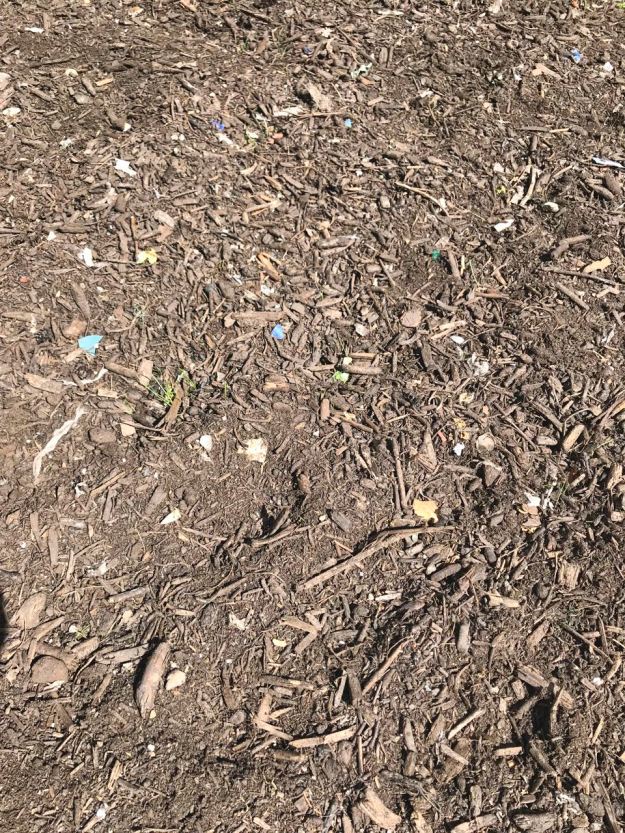
Yesterday, while out on a Raymore Park clean-up with members of the Sukyo Mahikari Church on Scarlett Road, we noticed that the mulch seed mixture was heavily contaminated with micro-plastic particles.

The mulch seed mixture as it was laid.

The mixture is contaminated with small plastic particles.

I’m not sure what level of such plastic is permitted (if any) but this is a danger to birds and other animals who no doubt have already scavenged through the mulch and ingested some of the particles. In hindsight, with this level of contamination, surely its preferable to allow nature to fill in the grass naturally than to contaminate the ground with easily ingestible pieces of plastic.

This looked like a contract job done under tender for the city. Remember the mantra that the private sector always does things better and cheaper?

This definitely wasn’t done better and I’ll bet it wasn’t cheaper either.

Double Trouble.

DSC03316

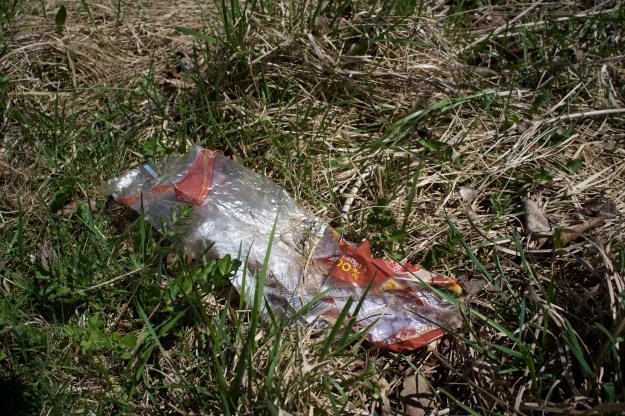
Plastic is a danger to wildlife in our parks.

Raymore Park attracts many people, drawn by its natural setting. It also has its fair share of visitors whose presence is a net detriment. The one responsible for this empty bag qualifies as doubly ignorant. First they bring their Dempsters 100% whole wheat bread scraps filled with some unwholesome ingredients*, attracting gulls and Canada geese while  training birds in general to approach humans. That’s not good enough apparently so they complete their (literal) douchebaggery by leaving the empty bag on the ground. The whole point of their visit seems to be the self-gratification obtained by watching wildlife jostle and beg for scraps.

*Ingredients of Dempsters 100% Whole Wheat Bread:

Whole grain whole wheat flour including the germ, water, glucose-fructose / sugar, yeast, vegetable oil (canola or soybean), wheat gluten, salt, vinegar, acetylated tartaric acid esters of mono and diglycerides, calcium propionate, sodium stearoyl-2-lactylate, sorbic acid, monoglycerides.

There is no shortage of material on the harmful effects of feeding bread to birds. Unfortunately the damage done isn’t evident at the time or else people might think twice.

It’s your park too; get involved!

The Toronto Parks System is huge, occupying 12% of the city and consisting of hundreds of parks of varying size. Some are tiny little parkettes measured in square metres while others are measured in hectares. While it would be wonderful to have park staff available on site to solve problems at each location, sadly, this is not possible.  At one time, contacting a park supervisor was a laborious process. Now thanks to 311, it’s a lot easier.

So what can an ordinary resident do if they see a problem in their local park?

In my experience, Toronto’s  311 system, has made contact with park supervisors a lot easier. Operators will either forward your call to the voice mailbox of a supervisor or they will write up a work order themselves.

Here is an example of a situation I recently tackled in Lions Park, which is the one next to Raymore.

The problem:

Litter is the enemy of parks. It’s a hazard to wildlife and it puts off visitors. When litter levels reach a certain point, ordinary visitors and sightseers begin to drop away. Litter that stays on the ground actually attracts more, as people are less inhibited when the place is already a mess. It’s tough to fight human nature.

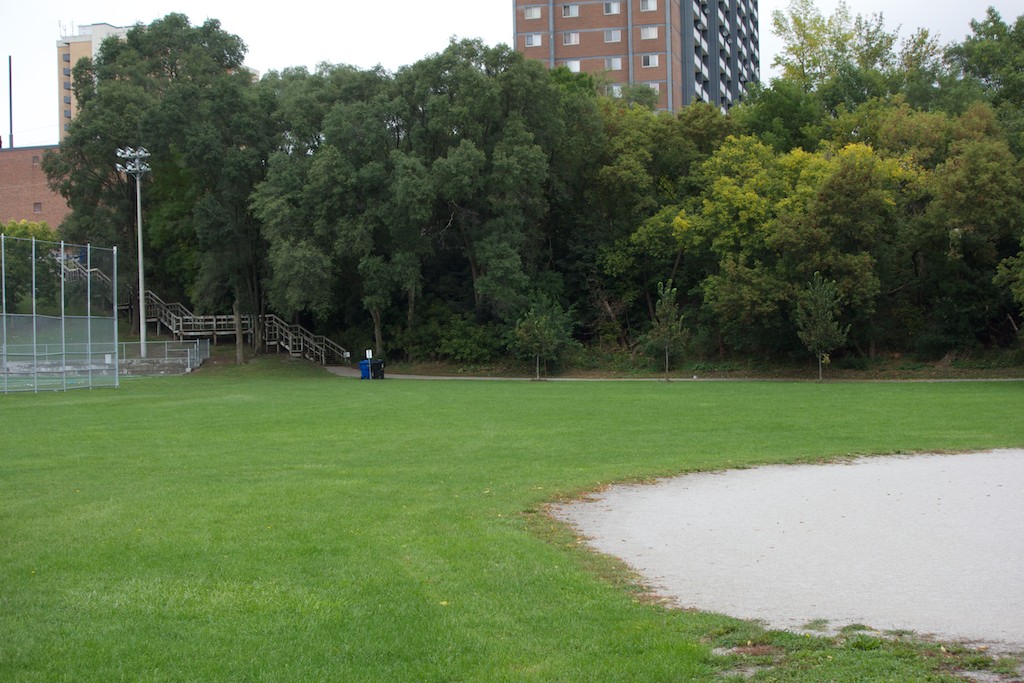
Lions Park contains a sports complex which includes a FIFA standard soccer field. Quite often, secondary soccer games spring up and for goalposts, garbage and recycling bins were easily commandeered from various positions around the park. After the game, the bins either stayed or ended up around the main field leaving vast areas without bins. Garbage became even more of a problem. In addition, the location of the bins was problematic as the photos will illustrate.
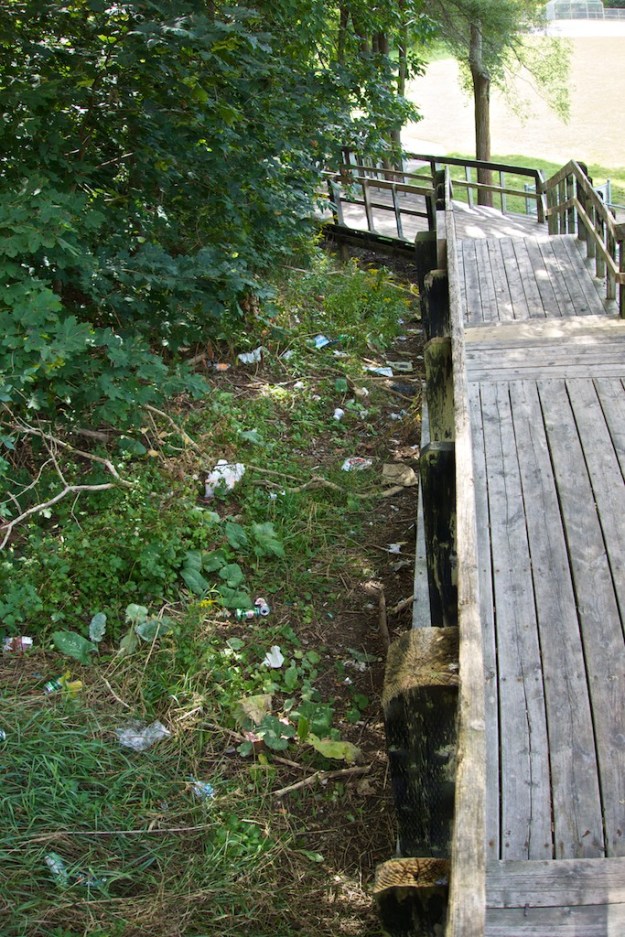
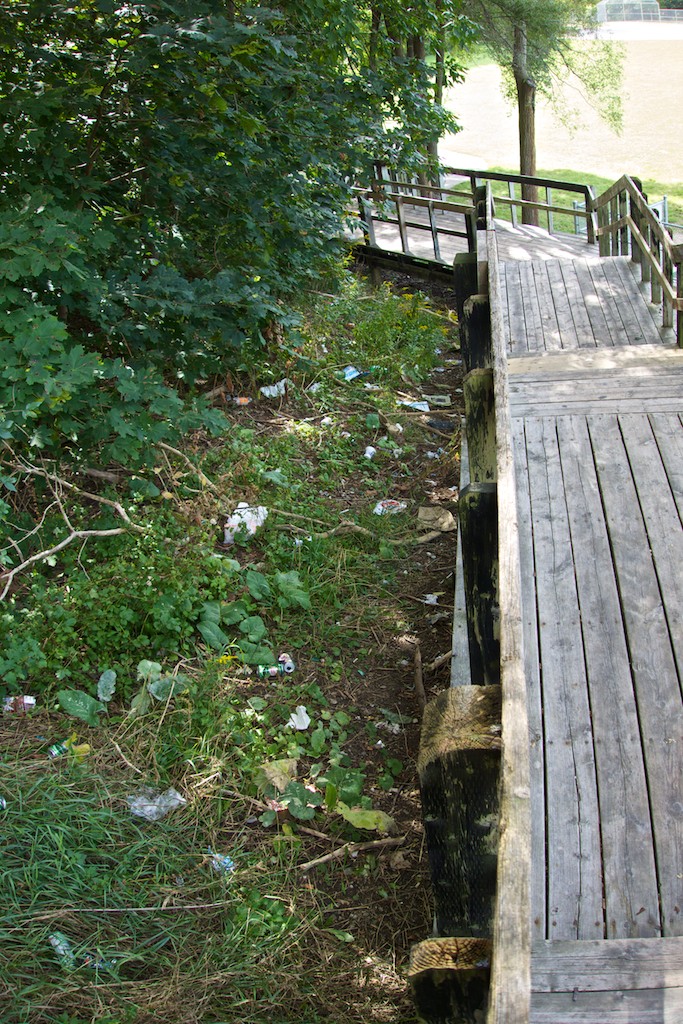
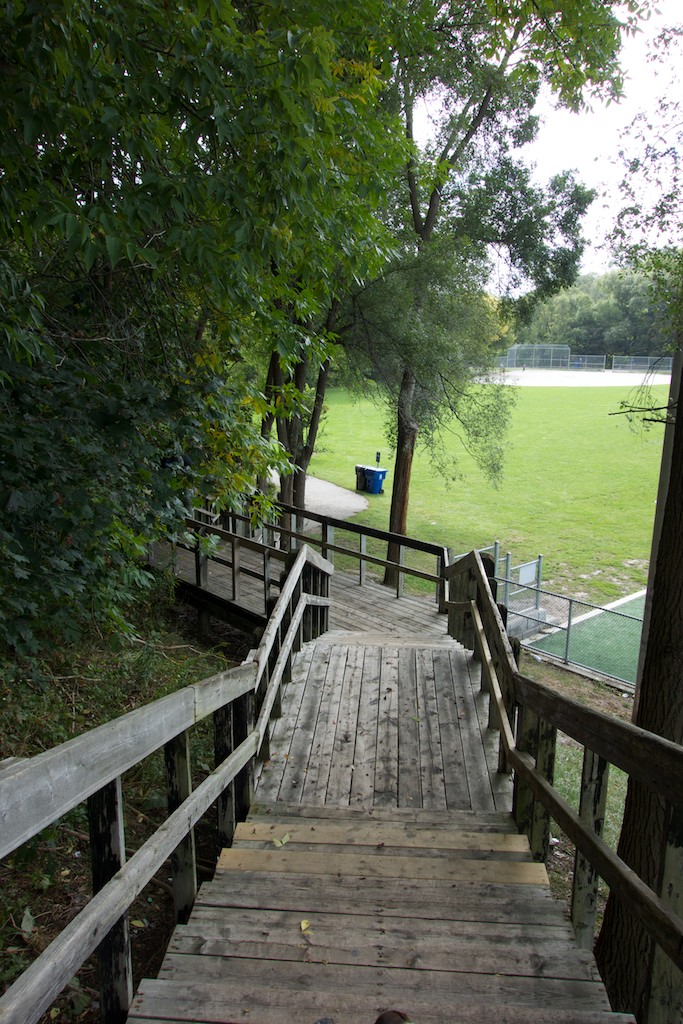
These stairs generate a large amount of garbage.

These stairs generate a large amount of garbage – no bins in sight.
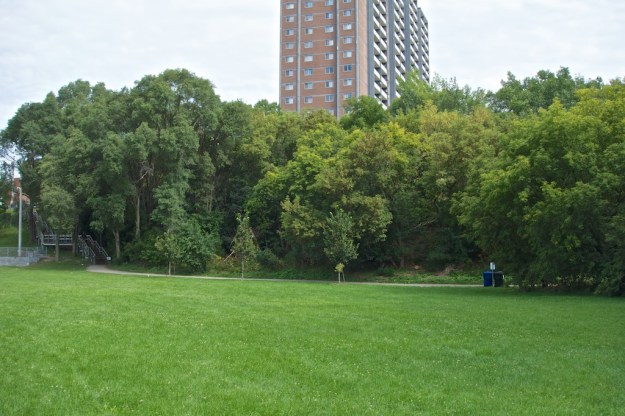
Bins are located far from the stairs.

Bins (on right of picture) are located far from the stairs.

The stairs are often used as bleachers as they are above the soccer field. They also act as a hang-out spot. While it’s impractical to place bins on the stairs, no bins were visible making disposal inconvenient.
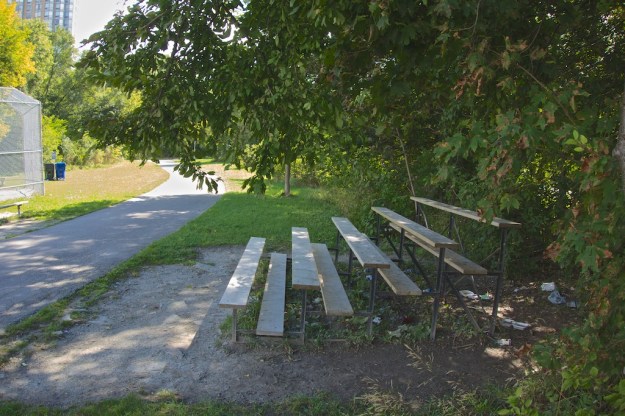
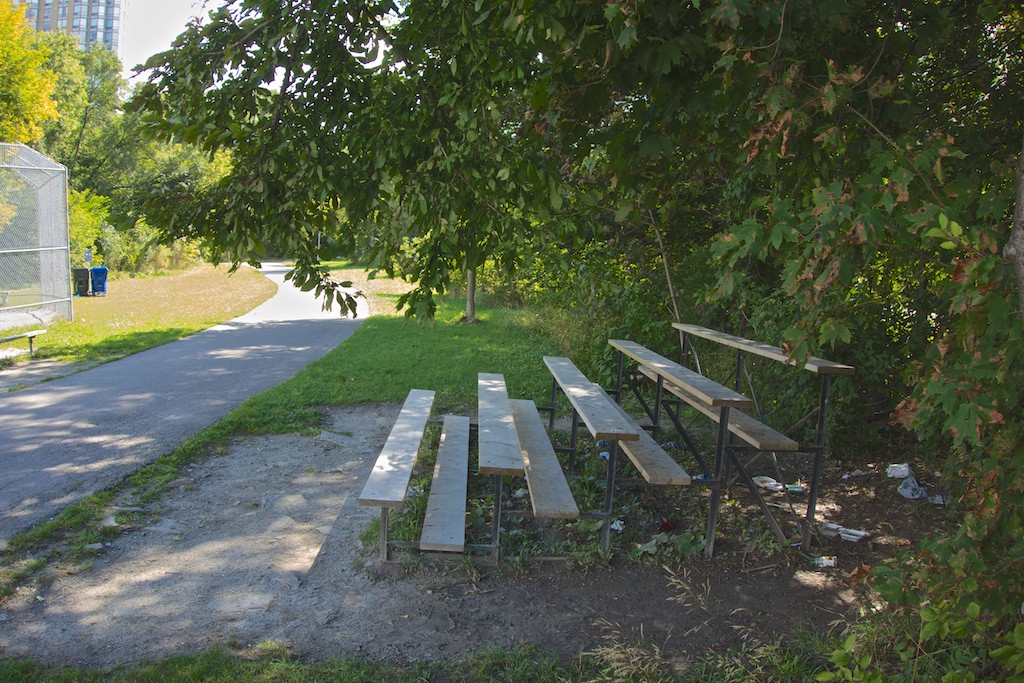
Bleachers - another big source of litter.

Bleachers – another big source of litter and bins too far away.

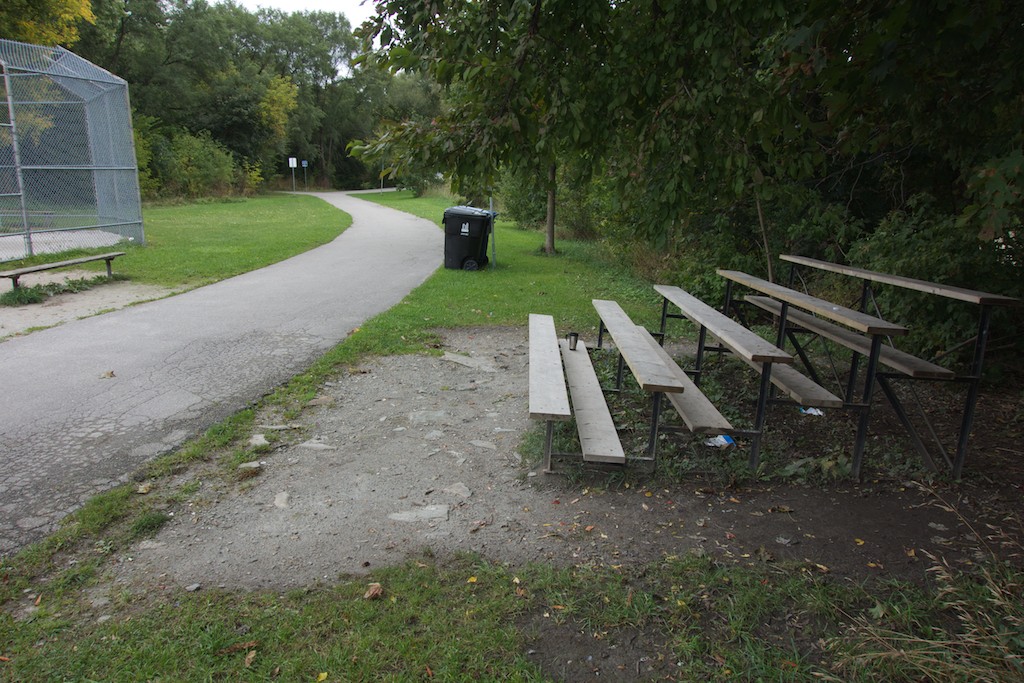
Bleachers generate large amounts of garbage. These back onto the delicate ecosystem of the Humber while the nearest bins were too far away.

With a problem outlined and a strategy for improvement in my head, I phoned 311. Unfortunately it was not possible to leave a message for the Park Supervisor as her phone mailbox was constantly full.

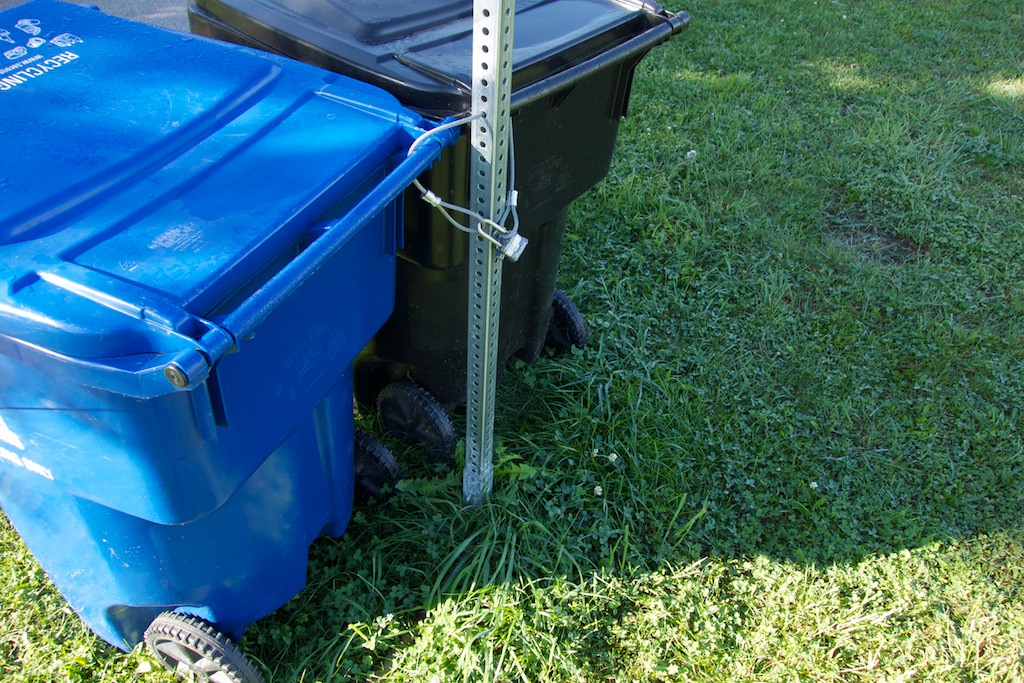
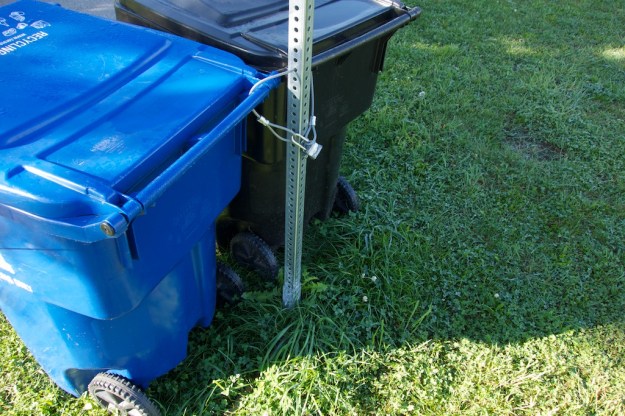
With the supervisor unavailable, I again called 311 and action was promised. Sure enough, stakes were hammered into the ground and as is standard practice, bins wired to them. Unfortunately, there was nothing to stop anyone disconnecting the wires and removing the bins. Within a couple of days, the bins had returned to being goalposts. To make matters worse, bins had been located poorly.

Eventually, the park supervisor got back to me after I placed a call to 311 and her boss. She explained that bin placement was not decided by Toronto Parks. The people who remove the waste now decide locations. A call made to Solid Waste Management soon got me in touch with Carson Freeman who agreed to come out and meet me on site. We discussed the issues and decided on a course of action which was carried out.

To cut a long story short, within a relatively short period of time, action was taken. Bins were placed in better locations and padlocked into place. The Parks supervisor sent a crew to clean up the garbage by the stairs and a new start was made.
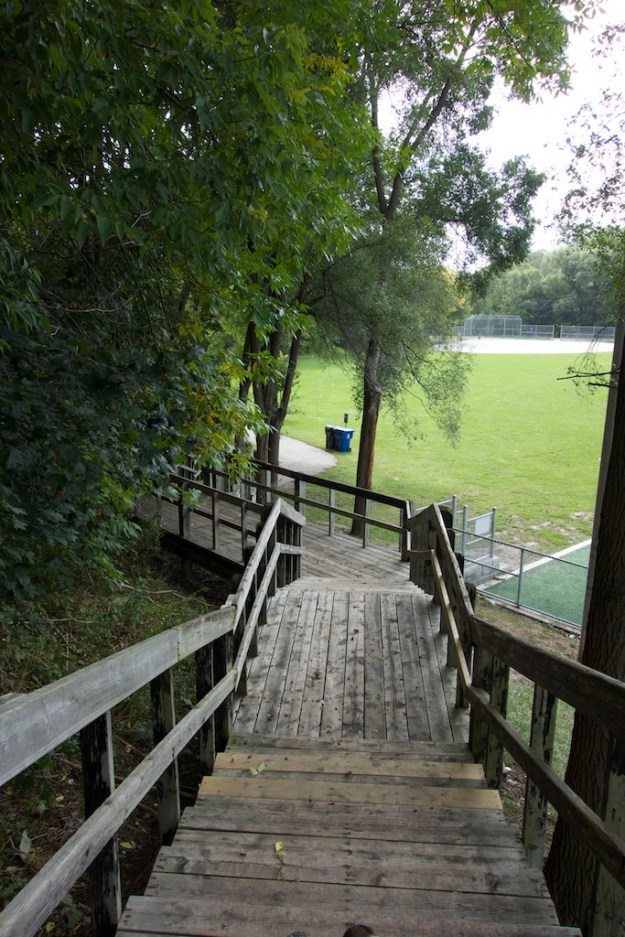
People can now see a bin when descending the stairs.

People can now see a bin when descending the newly cleaned stairs.
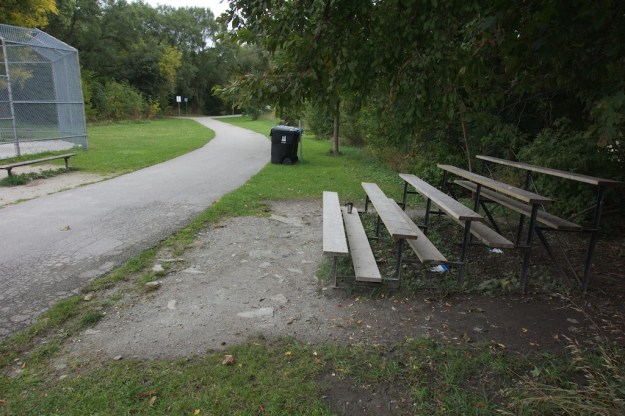
Bleachers have a bin that's closer.

These bins are harder to ignore.

Bins at the foot of the stairs (as well as at the top).
Bins at the foot of the stairs (as well as at the top).

The clincher - padlocks to stop bins from wandering.

The clincher – padlocks to stop bins from wandering.

I’m guessing that such intervention by an ordinary citizen is rare. The level of cooperation was outstanding – after all, park staff want clean parks too. They can’t be in every park every day but rely on knowledgeable citizen responses much of the time to point out problems and suggest solutions. By politely pointing out a concern and offering a workable solution, private citizens and parks management can work together to solve park problems.

Incidentally, the people who drop much of the litter are probably still doing so. Despite that, the new bin placement acts as a visible nag to do the right thing, makes things easier for responsible citizenry as well as for ‘park angels’ who actively pick up litter when they see it.

Want to get involved? – It’s a great thing to do. Just remember the three ‘P’s, Politeness, Persistence, and a well thought out Plan.

Litter idiot of the day.

DSC02373

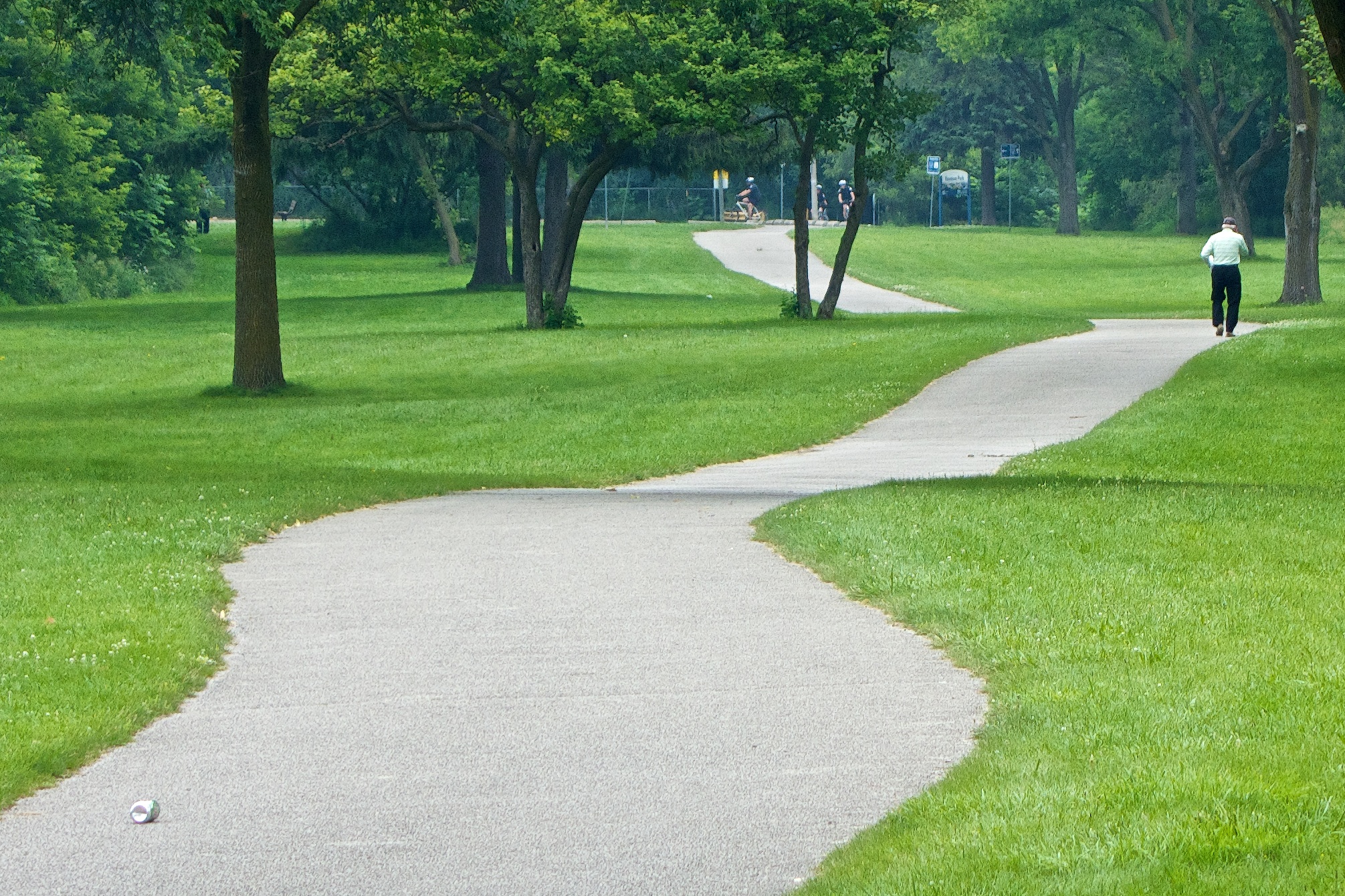
It’s rare when someone is so blatant as to drop garbage in front of witnesses but on Tuesday July 2nd, this elderly gent had no qualms. His diet Mountain Dew had been drained and what’s a man to do when he’s on a fitness walk? Carry it to the recycling bin conveniently located in the parking lot? Not a chance. Why not just toss it and hope someone is there to pick up after him. Calls to get his attention went unheeded and he gamely motored on.

Interestingly, the group in the distance on bicycles consists of four officers out of a group of 25 who have been assigned to patrol the Weston area for the summer. If my wife can walk alone and without weapons through the park and streets of Weston, why oh why do our police feel a grouping of four is the minimum necessary to feel safe while on patrol?

Park Clean Up

Aren't people wonderful!

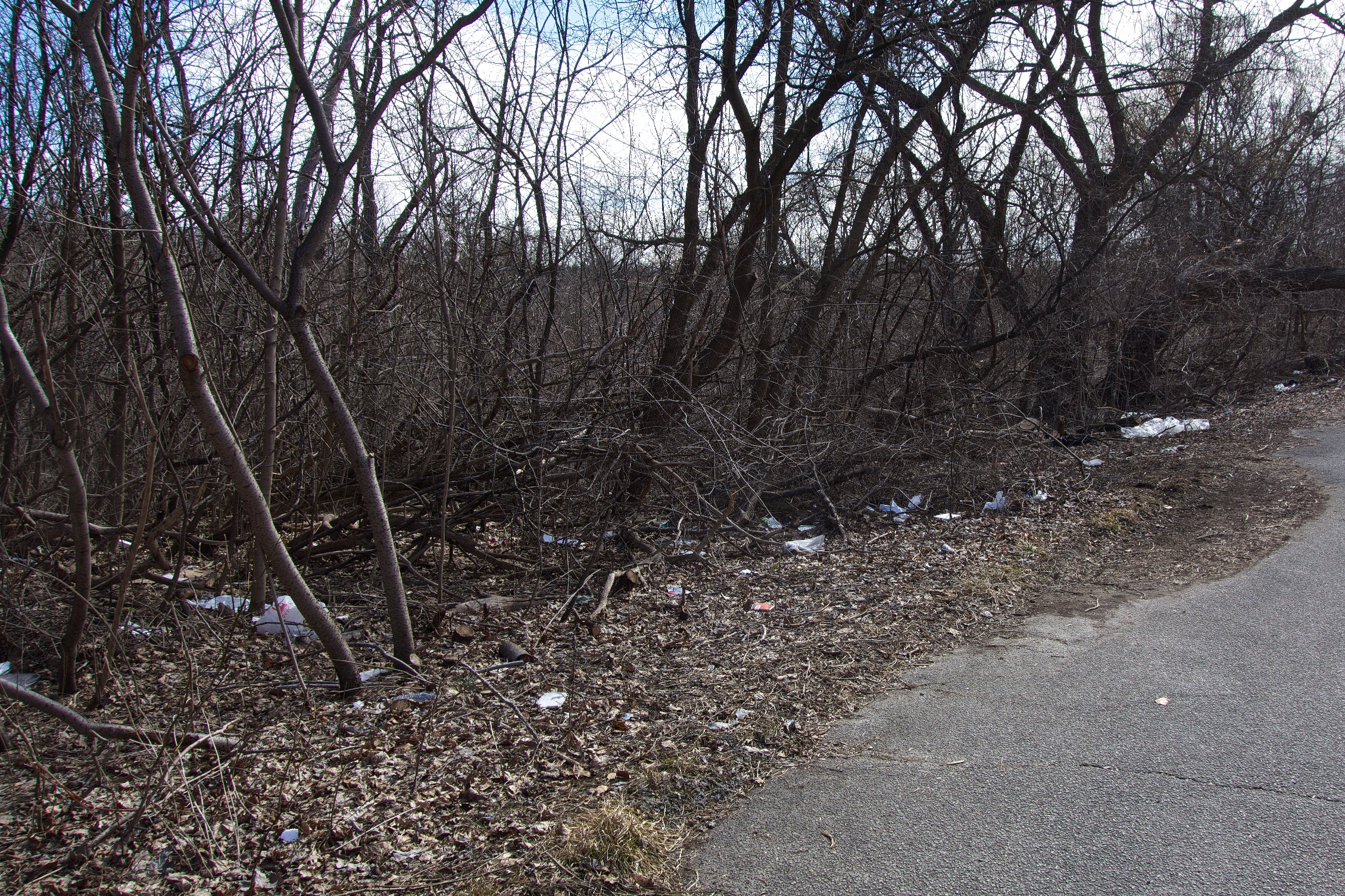
Aren’t people wonderful! All within easy reach of garbage cans too. Cycle path at Scarlett just north of La Rose.

On Tuesday I emailed local Councillor Doug Ford about the huge amount of litter along the cycle path just north of Eglinton.  Yesterday a clean-up crew came to this end of the park and unfortunately they missed most of the litter since they didn’t bother reaching over the 4′ fence or walking into the wild area. I called the park supervisor today today and he sent them out again very quickly.  The original concern i.e. the litter on the cycle path remains unaddressed.
Here is the email:

Hi Doug,

Now that the snow has gone, I notice there is a huge amount of garbage along the cycle path from just above Eglinton to just north of La Rose. I try and pick up the odd pieces of trash but this is beyond my abilities. I enclose a photograph for illustration purposes. I was wondering if a crew could be sent out to take care of this…

We have had a long winter and the snow has only just cleared. Regardless, there must be a way to keep on top of litter throughout the winter months. God forbid that a city worker should occasionally have to walk along the trail.

Some councillors organize community clean-up days where people in a neighbourhood spend a couple of hours hauling trash from local parks. I think this is passing the buck and neighbourhoods that aren’t so cohesive or those without strong community involvement end up being compromised even further.

A load of rubbish.

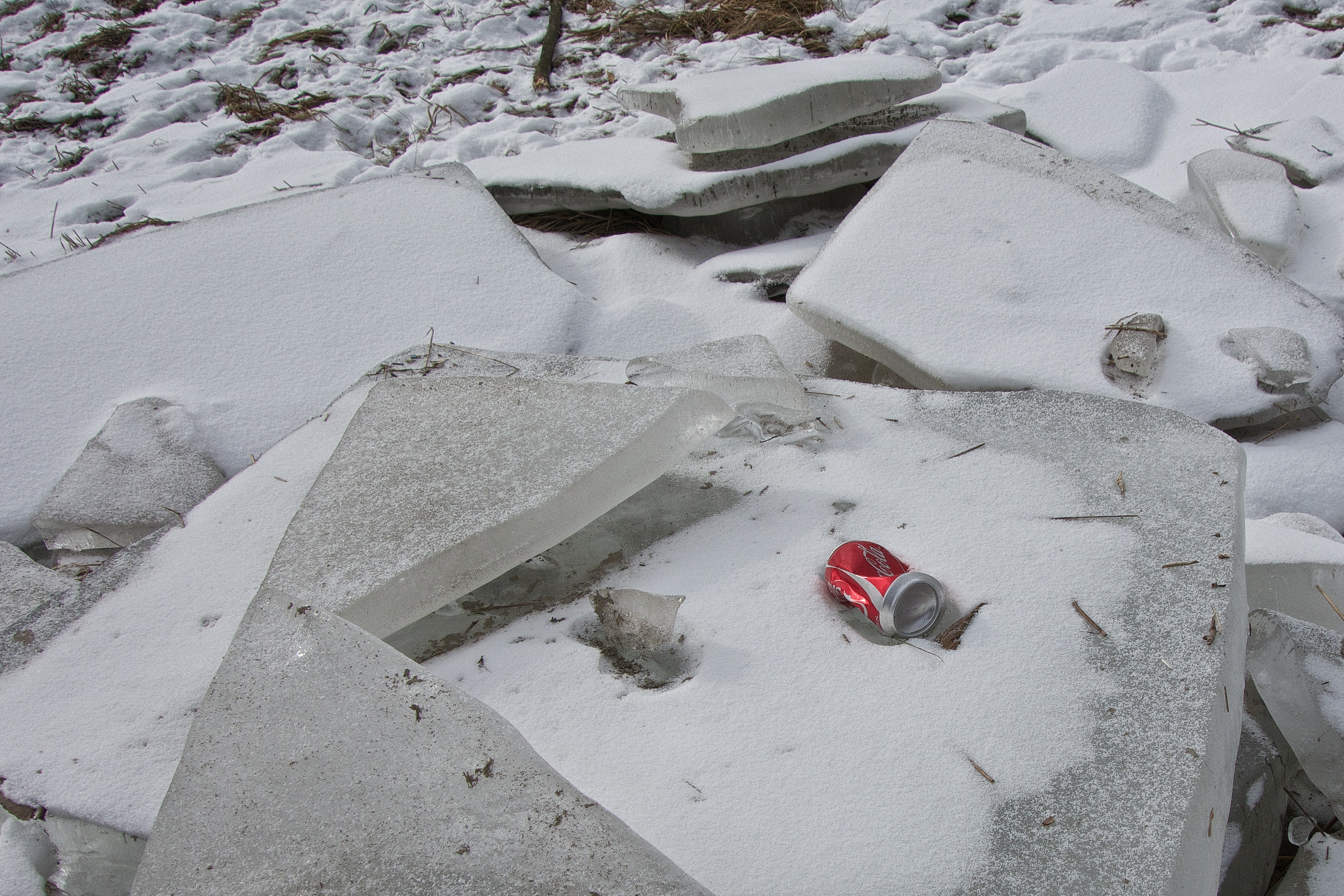
A sad sight in any park is litter. This morning I noticed a Coke can embedded in a block of ice. There it lay, eventually destined to be pressed into the earth (were it not for my intervention) where it would stay for the next few hundred years.

Used once, life expectancy: 500 years.

Used once, life expectancy: 500 years.

We marvel today at Roman ruins that are buried several feet underground and wonder how this happened. The secret is that over the years, people threw waste where they liked. Back then, it was largely organic and when mixed in with the occasional broken crockery eventually became part of the soil. Nowadays, most organic waste ends up in the sewer while our garbage is metal or plastic and does not break down easily.

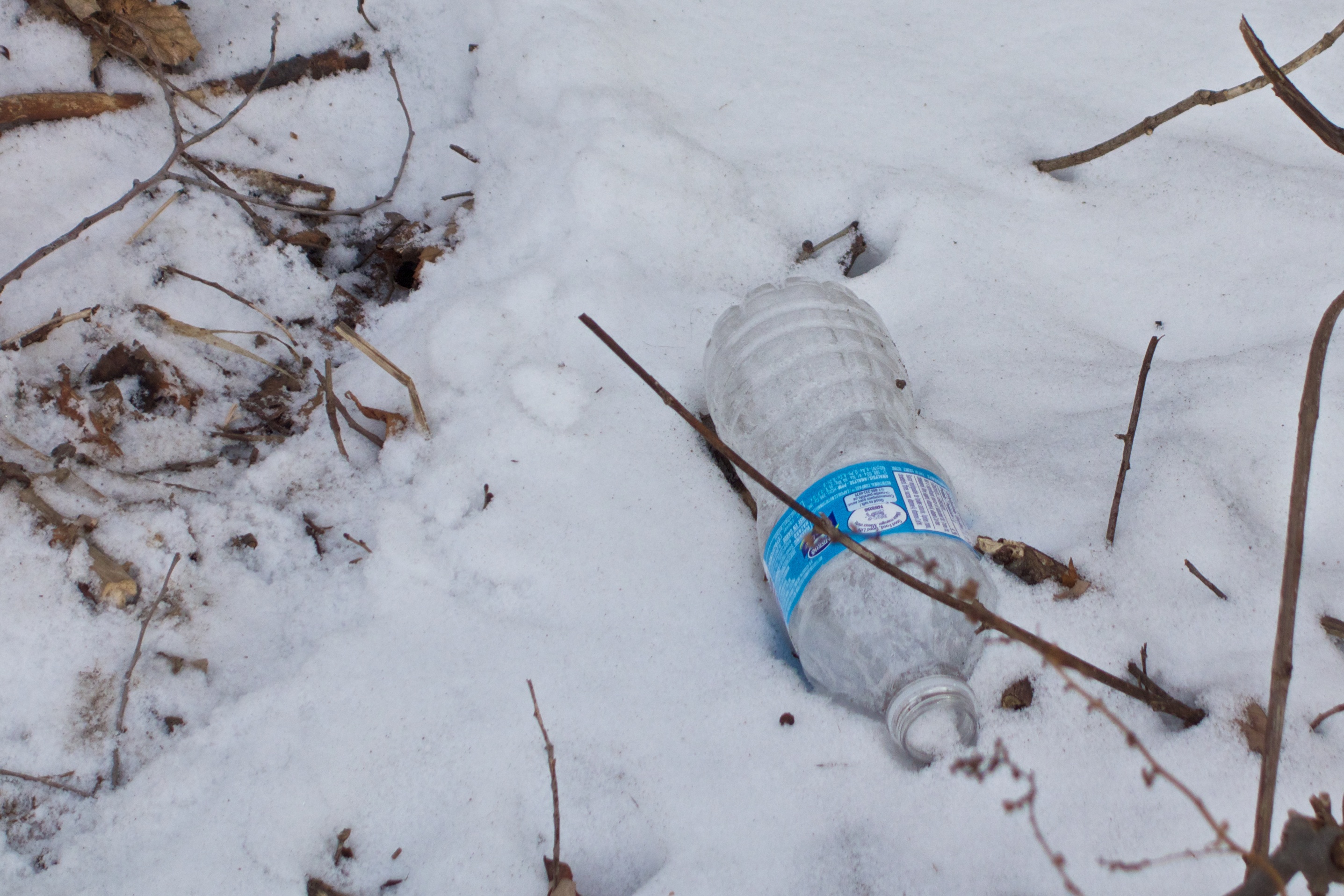
Plastic bottles - the triumph of marketing over need.

Plastic bottles – the triumph of marketing over need.

Soft drink corporations have lobbied hard to ensure that there is no deposit paid on bottles or cans. They surely know that many of their empty containers end up as litter but are unwilling to be good corporate citizens as this would cost money. Corporate money pays for political campaigns so we all know the chances of anything being done by politicians.

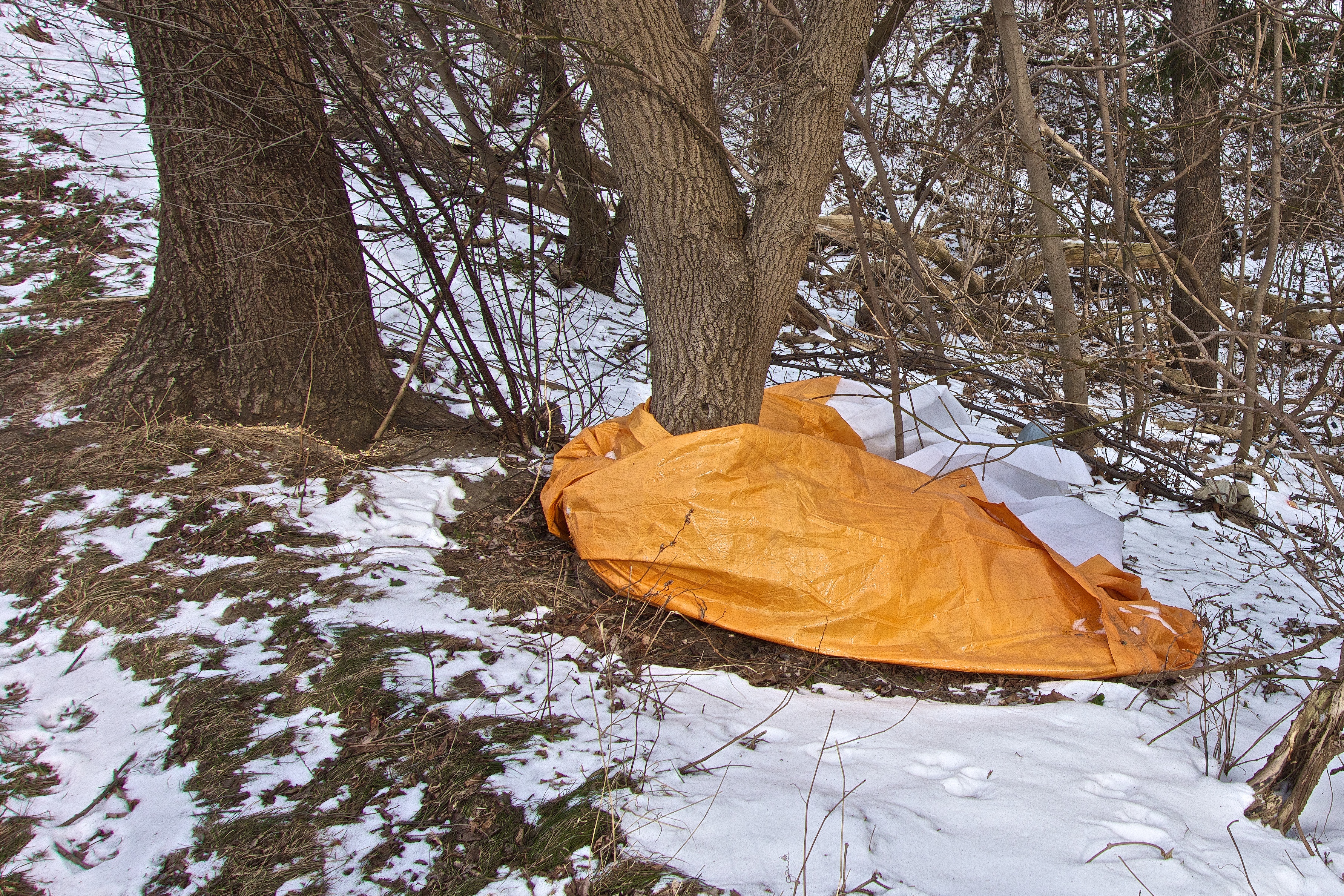
A tarp from a building site wraps around a tree.

A tarp from a building site wraps around a tree.

Adapting the broken window theory, it’s easy to see that litter attracts more litter. Unfortunately, this view is not shared by our park managers. They seem to wait until litter has reached a certain level before sending out a crew to clean it up. Most of us will pick up a can or two and drop it in a garbage can but things like tarps are likely there for keeps without council intervention.

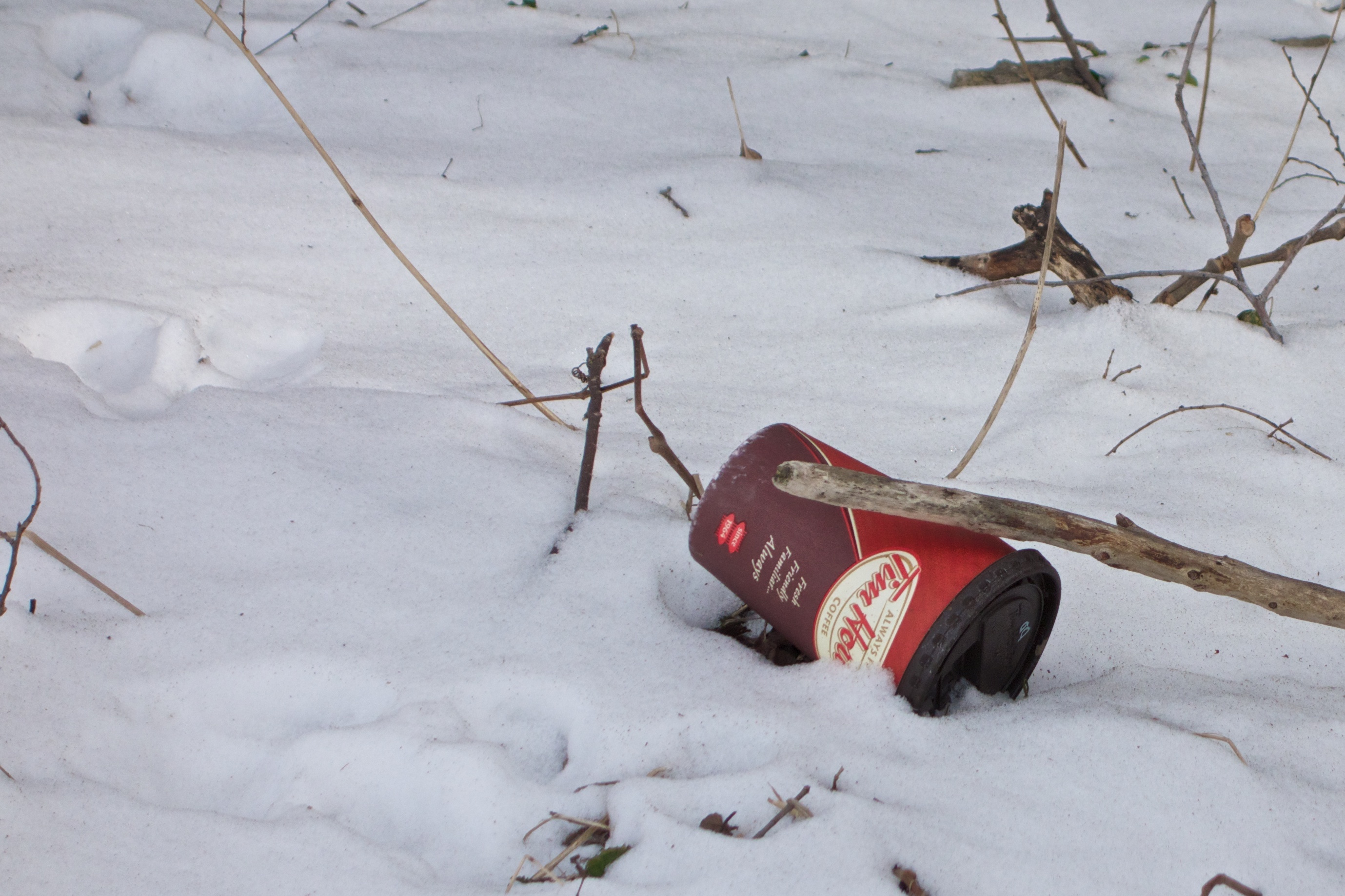
At least this coffee cup is made of paper.

I used to think coffee cups were made of paper. They are but lined with plastic; the lid is entirely plastic.

Litter is a big threat to parks – not just aesthetically but things like plastic bags and can holders are detrimental to wildlife. It’s up to park users to ensure that we clean up after ourselves (and occasionally others). It should also become a higher priority for park managers.