Tag Archives: Raymore Park

Exploring Toronto’s Aerial History: Raymore Park Before Hurricane Hazel

In the City of Toronto Archives there are extensive aerial photos of the city taken between 1947 and 1992. They are black and white images but reasonably detailed. While researching Hurricane Hazel I was able to download an image of what is now Raymore Park to reveal the community that existed just over a year before Hurricane Hazel struck in October 1954. Colourizing and sharpening the photo makes it resemble today’s satellite images (details are unchanged but colours are arbitrary and not historically accurate) from Google and help appreciate the extent of community that existed back then. I have labelled relevant streets.

Raymore Drive extended into what is now the park, hugging the river’s edge before heading south and looping back onto Gilhaven Avenue.
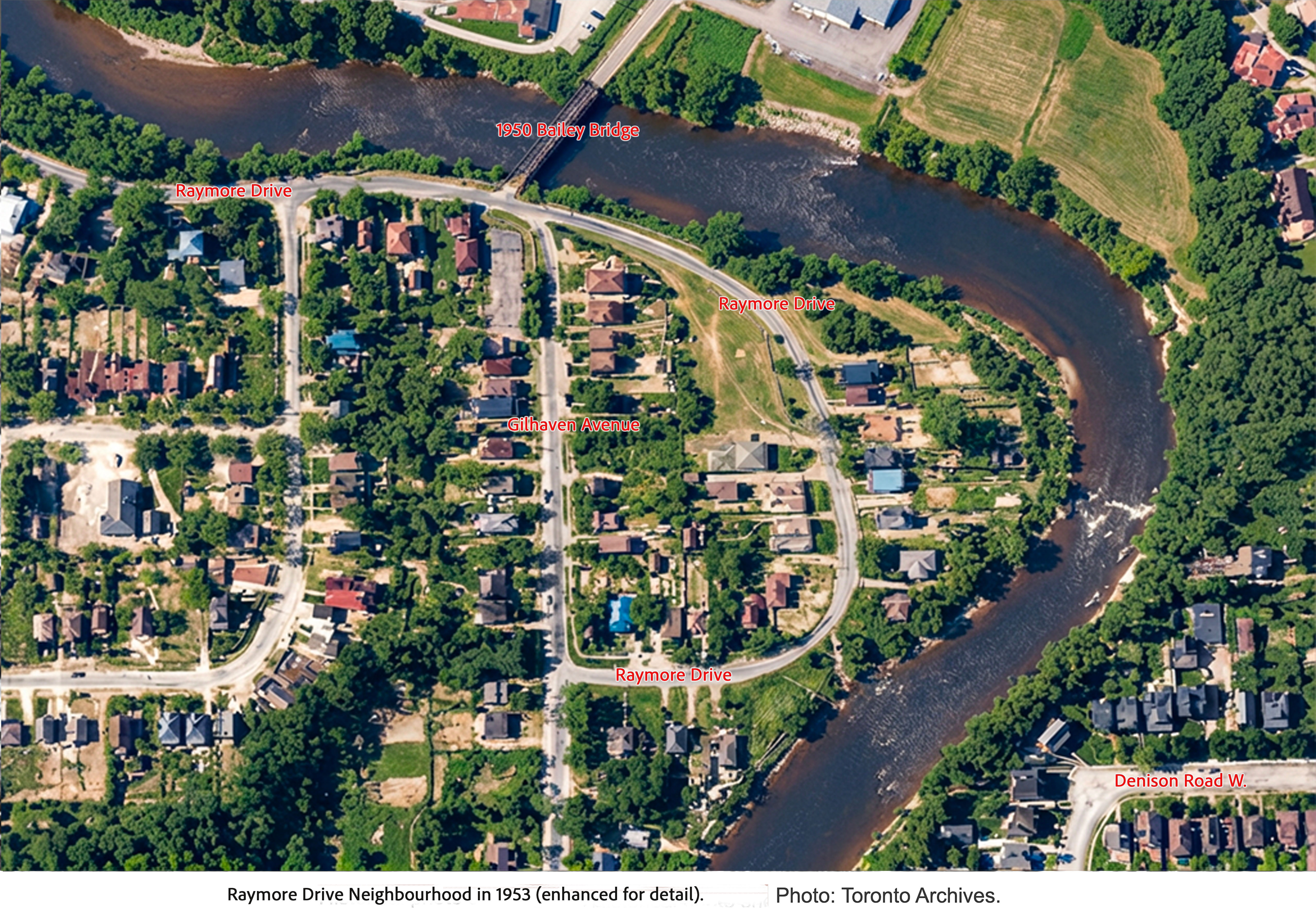
Click to enlarge.

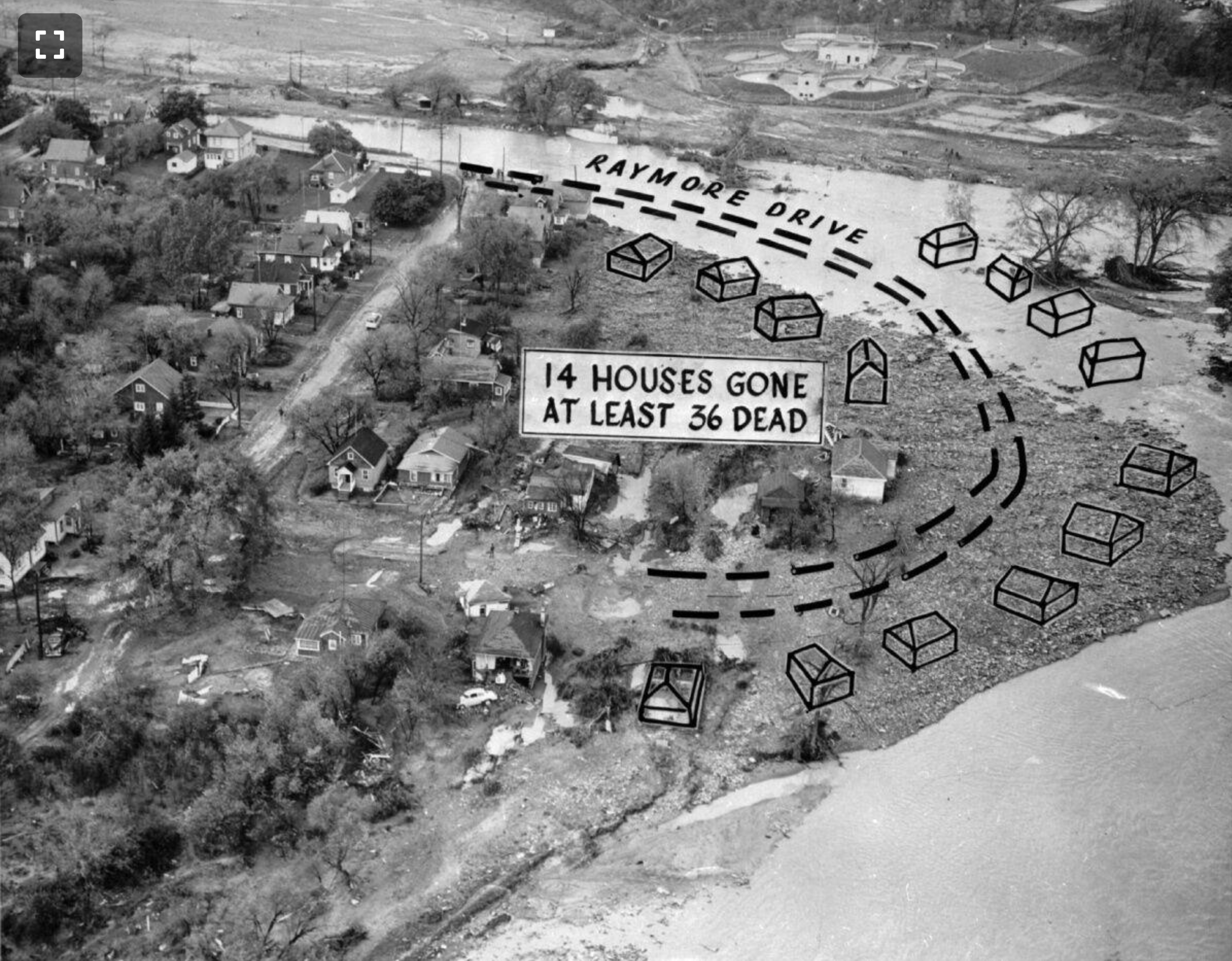
I was surprised at the size of the community with houses occupying much of the flood plain land and stretching a considerable way down Gilhaven Avenue (now the approximate location of the bike path). It looks as if it was an idyllic place to live – riverside dwellings but with city amenities. There was even a beach for the kids. Many of the homes were cottage style on blocks while some had full basements. Most are a lot smaller than our modern dwellings. The homes destroyed seem to have been along the river’s edge at the far right and lower edge of the peninsula. The people who died lived on this stretch of Raymore.

At the top of the image, on the other bank of the river, parts of the (now demolished) water filtration plant can be seen.

Below is a recent satellite image and I have adjusted the size and rotation to match that of the 1953 photo.
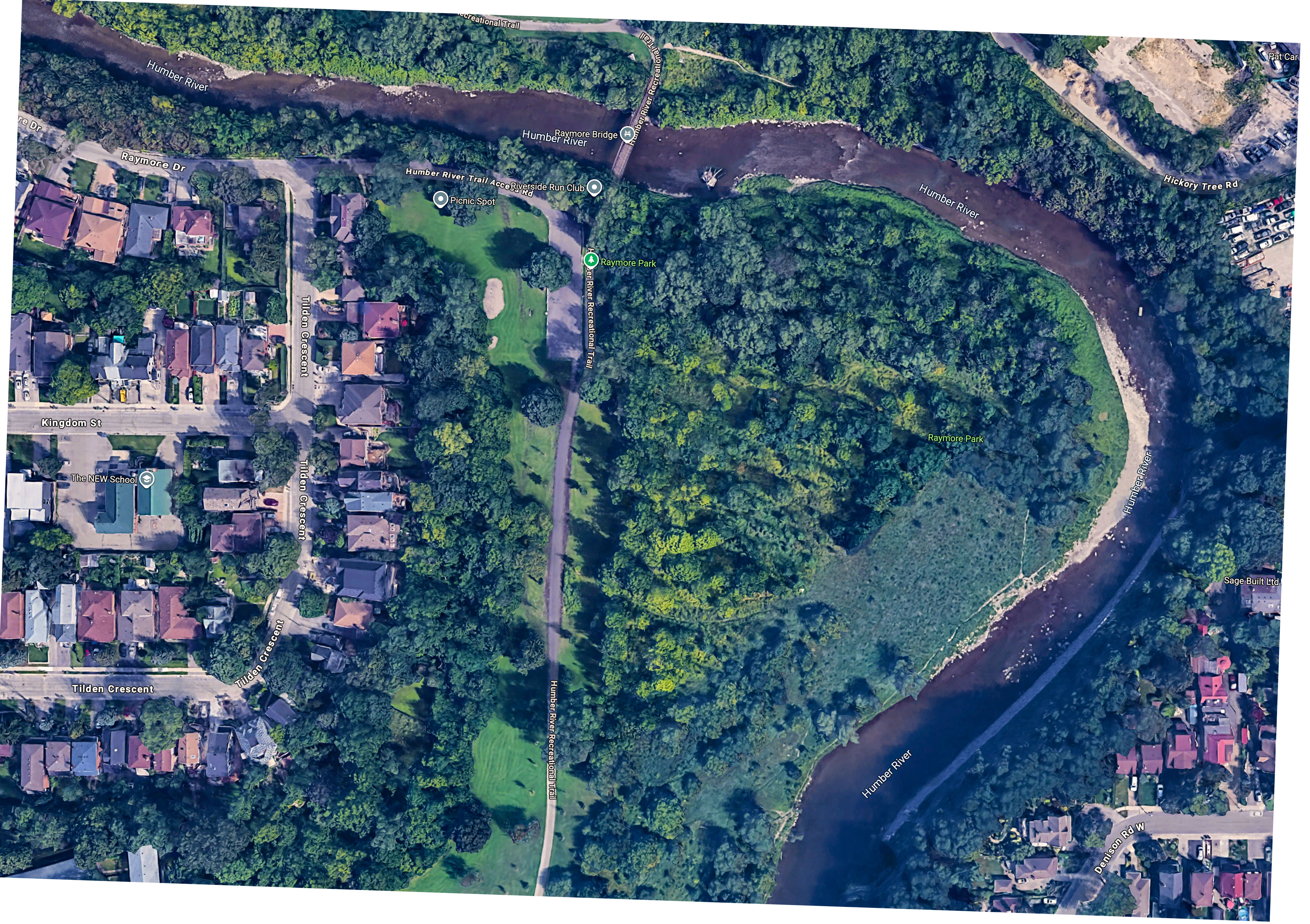
From Google. Click to enlarge.

The Bailey Bridge seen in the upper photo was put there in 1950 and both of the old abutments can be seen to this day. The current footbridge was installed in 2005.

Some of the homes along what is now the bike path were undamaged apart from flooded basements but authorities at the time elected to remove all homes in the flood plain leaving only Tilden Crescent intact. Raymore Drive was ended at Tilden and Gilhaven Avenue ceased to exist.

Very few of the buildings on surviving streets from 1953 exist today – I recognize the house that once stood at the east corner of Raymore and what is now Tilden, Westmount Gospel Chapel on Kingdom and some homes on Denison. Readers are welcome to add discoveries of their own.

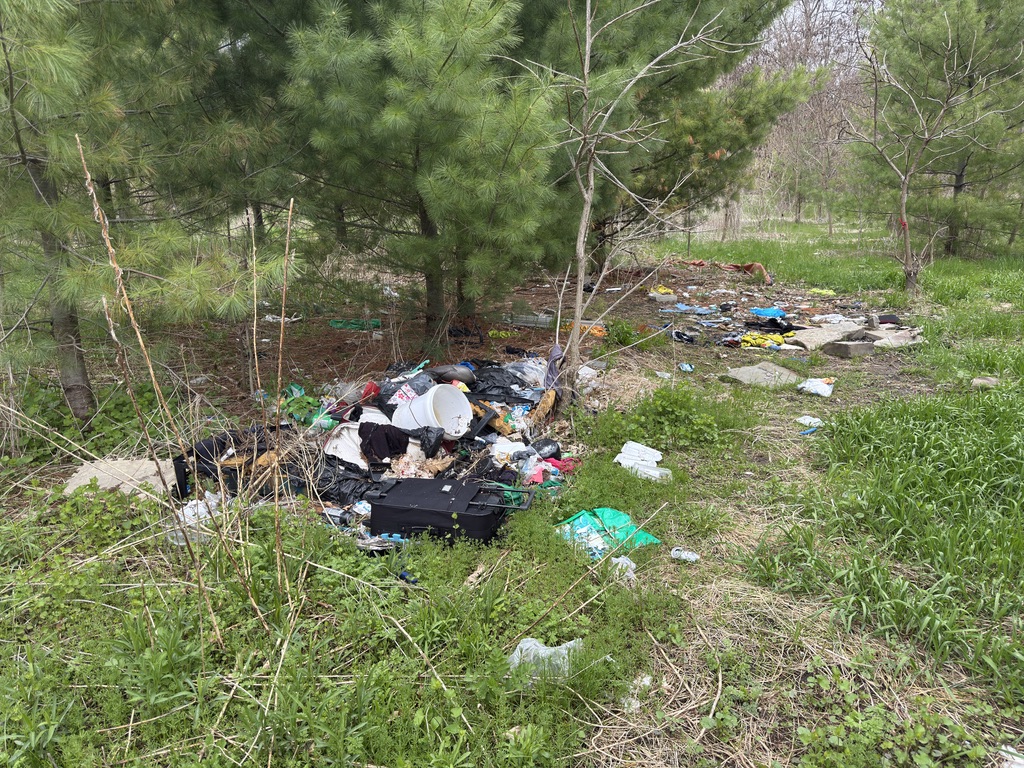
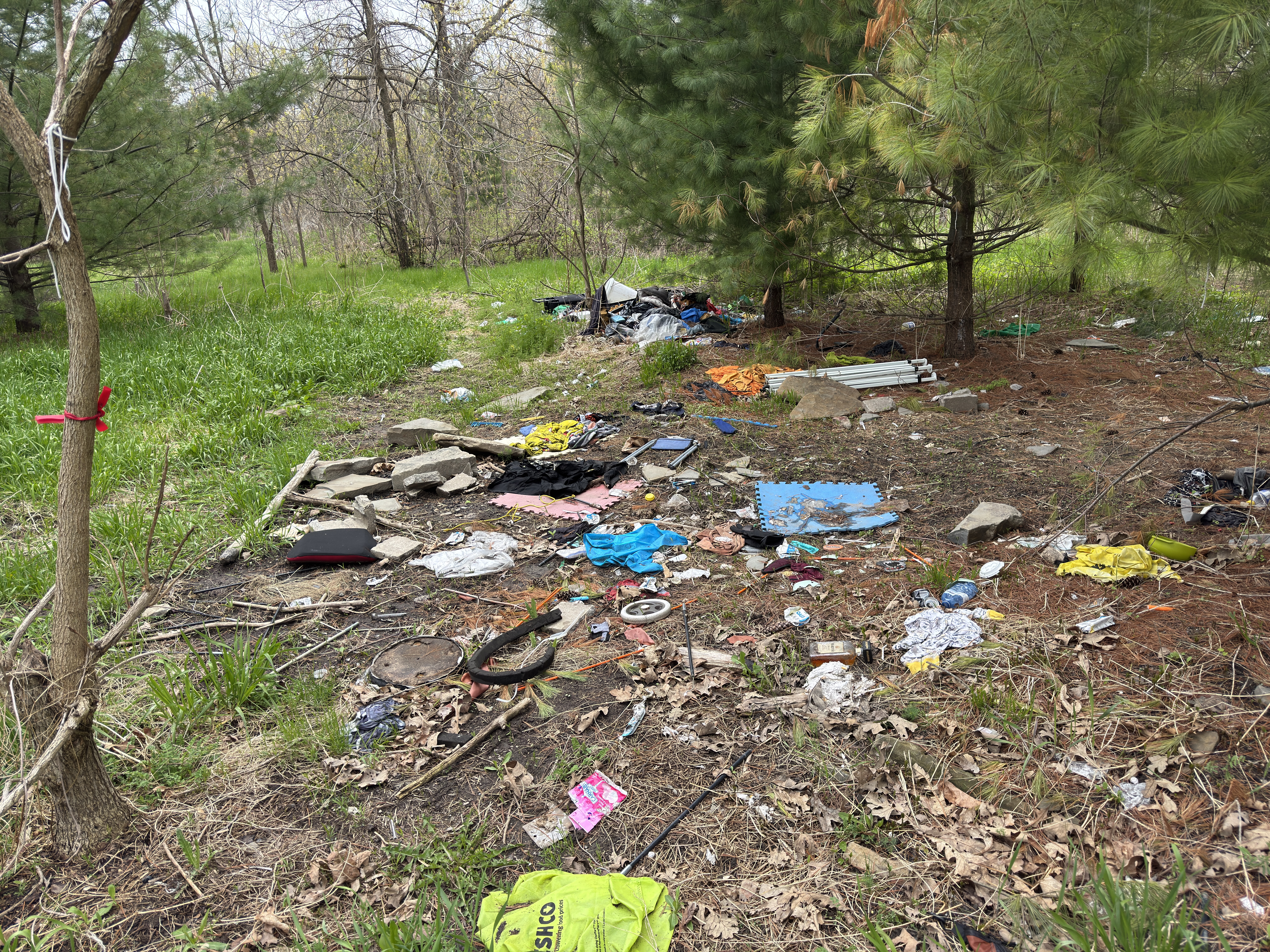
Old Encampment tough to remove.

The layers of specialty run deep at City Hall and particularly the various teams of the Parks and Rec. people.

The people who set this up are long gone but the memory lingers on… April 28, 2026.

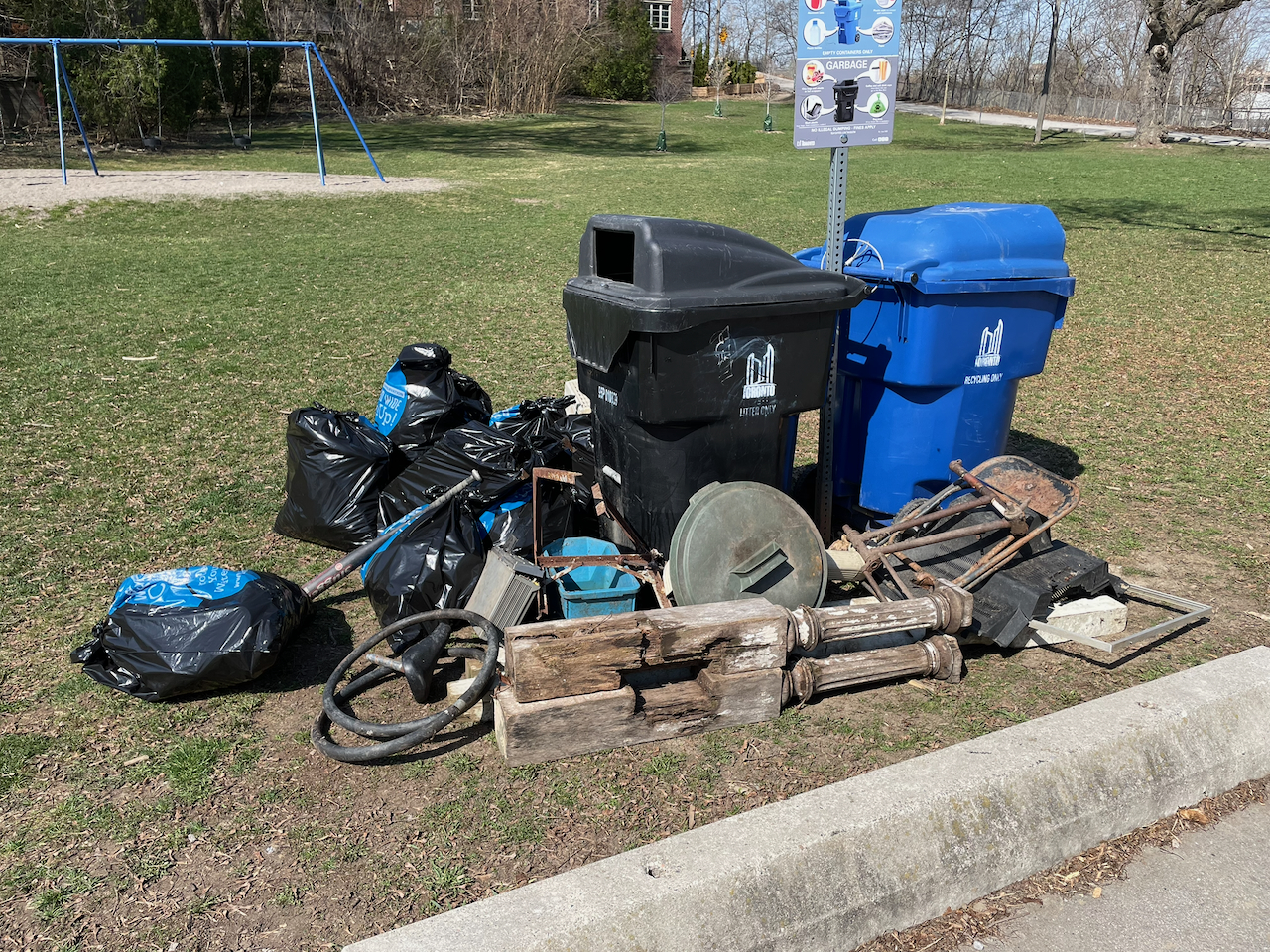
This collection of garbage from an abandoned encampment has been sitting for what looks like a few months in the middle of the wild area just south of the parking lot. I discovered it while doing research on Hurricane Hazel. One would expect that the city would want it cleaned up quickly.

11 days ago, I submitted a request to 311 to have the area cleaned up. Yesterday I phoned to check on progress and this morning I had a message from Jacqueline at Parks saying that the reason it has taken so long is as follows:

First the site had to be checked by the Encampments Team to make sure it’s not active. Ok, fair enough. This took place on April 20.

Next, Parks Operations checked out the site and determined that it’s too close to the ravine. It’s on flat ground and nowhere near the water but whatever.

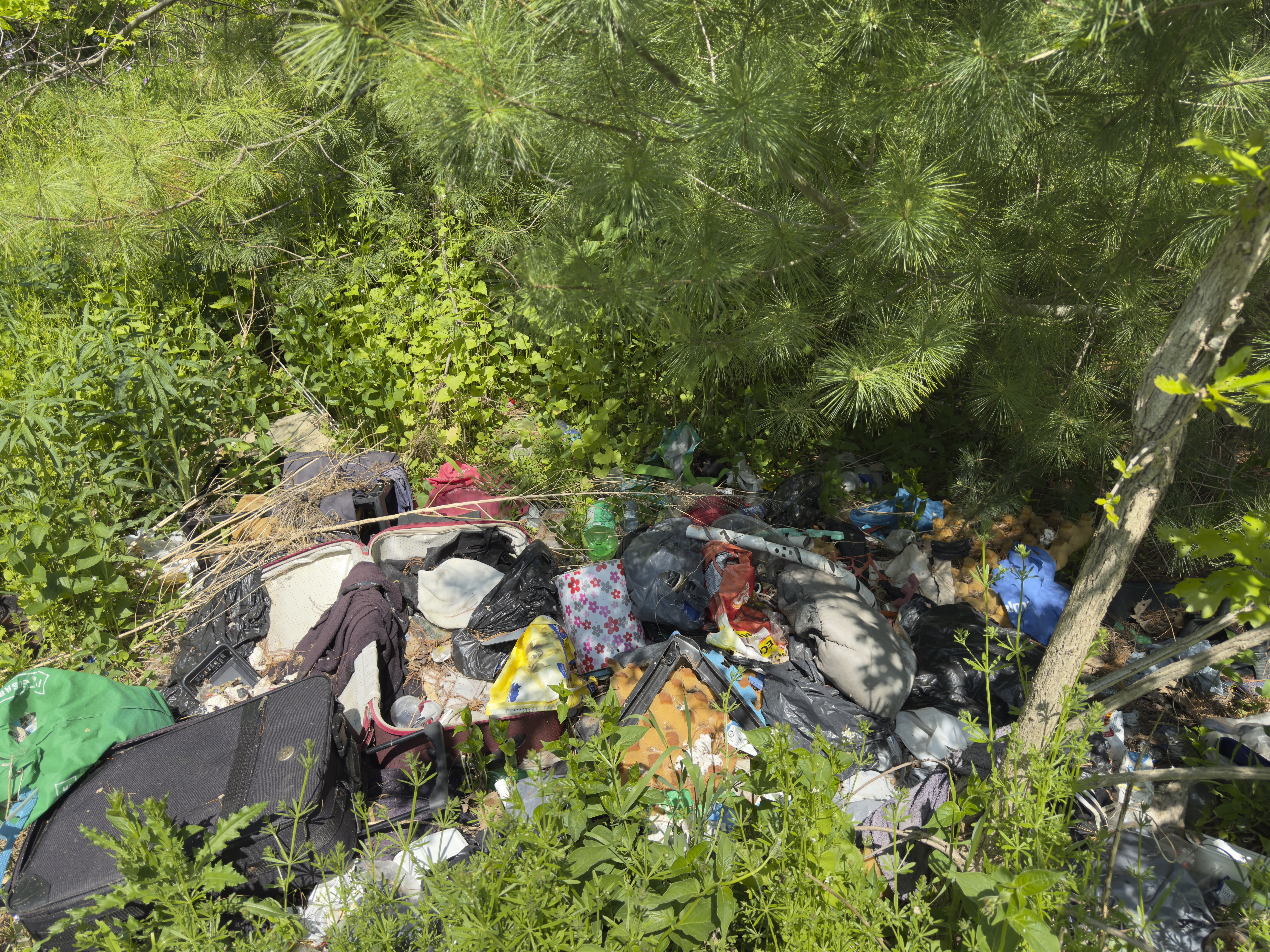
A view of the mess from the other direction. April 28, 2026.

The Ravines Team was then assigned. I guess the Encampments Team isn’t able to make such determinations.

Great, so where’s the Ravines Team? Sadly, the Ravines Team cannot do their job because, “Conditions are not great because of all the rain so we don’t send our staff out until things have settled in terms of terrain and stability”. I assume that they worry their truck will get stuck in the soft ground.

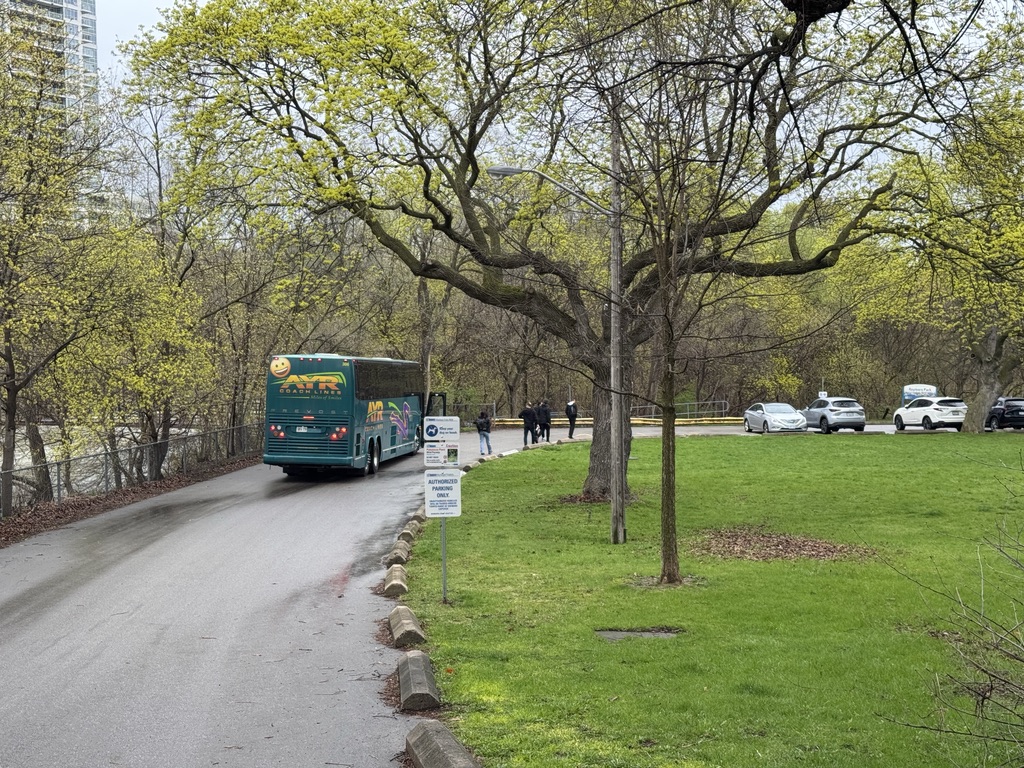
By sheer chance, a clean-up crew from TRCA (with a canopy tent) was present in the park today and about a dozen able-bodied people emerged from a huge bus ready to do a park clean-up. There were grabbers galore for ease of pick-up and lots of gloves and garbage bags.

I talked to a lady under the canopy tent and let her know about the old encampment. I offered to guide people to where it was but she insisted she would find it. She told me the park had vey little litter to pick up otherwise.

This story has a happy ending – right?

A bus dropping off a TRCA clean-up team at 10:05 on April 28, 2026.

Wrong!

On returning this afternoon, TRCA and the canopy tent had vanished but sadly the garbage hadn’t. Rain is forecast for the next seven days so conditions will continue to be too wet for the Ravines Team.

In the meantime, this garbage will pollute the park and encourage others to do so. Call me naive but how hard would it be to keep the truck on the path while the team bags and carries the garbage 70 metres to the truck?

Raymore Park Changes over the years – Part 4

The fourth and final set of observations regarding changes to Raymore Park over the last 32 years. Click for the first nine items in Part 1 , Part 2 and Part 3.

10. Invasive Plants and Insects.

Raymore Park is home to many non-native species. Norway Maples and Siberian Elms seem to predominate but plantings over the years have promoted native species such as black walnut, cedar and dogwoods. Dog strangling vines and garlic mustard still choke large areas of the park but volunteers have been pulling them out when they can. Dutch elm disease is caused by a fungus spread by insects. This disease killed most of North America’s magnificent elm trees. It also attacks (but doesn’t kill) non-natives such as Siberian elms. The Emerald Ash Borer is another invader that has devastated ash trees.

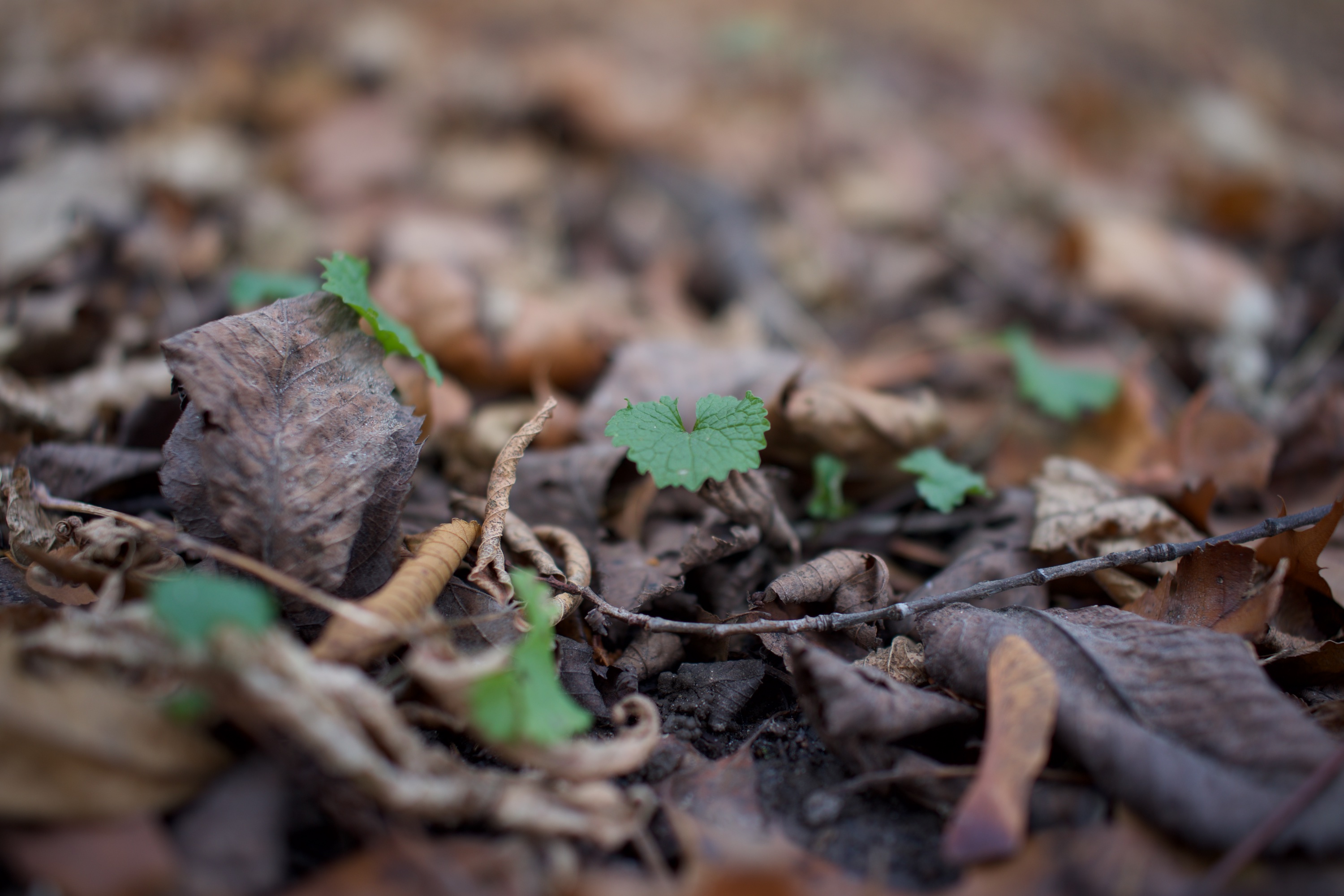
Garlic mustard lurking in the undergrowth in December 2015.

11. Fewer People in the Wild Area.

Even though more people are using the park, adding a dog off-leash area has reduced pressure on the wild area. The well-worn footpath that used to follow the river is now overgrown beyond the ‘beach’.

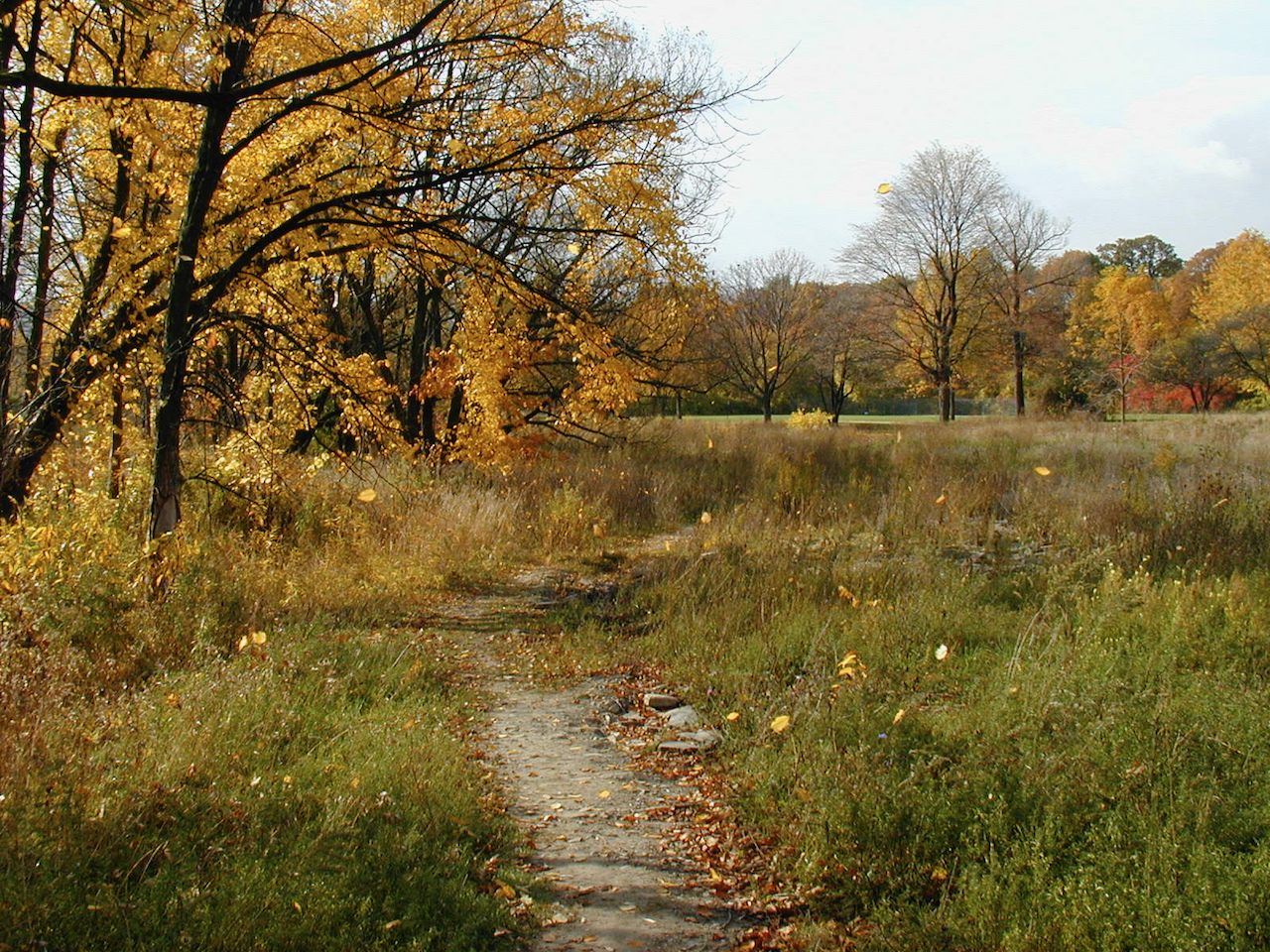
The wild area path, clearly visible in October 2000 – The Humber (not visible) is on the left of the photo.
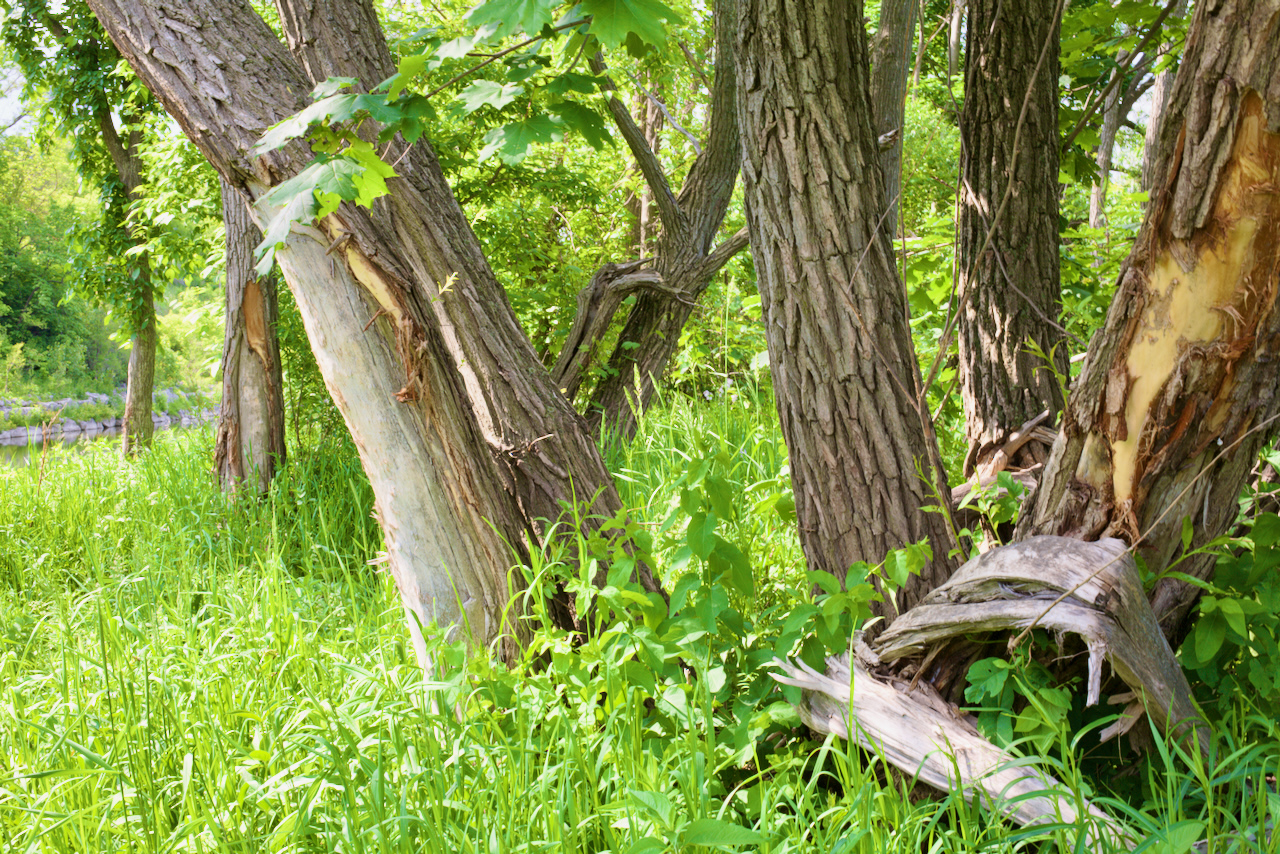
Wild area trees in June 2009 showing scars inflicted by ice floes. The path once here is now overgrown.
12. Increased Citizen Involvement.

In recent years, volunteer groups such as Toronto Nature Stewards have dedicated many hours to make improvements in Toronto’s parks. There is a TNS team that regularly operates in Raymore Park led by Brian MacLean. Humber River Pals is another volunteer group that cleans litter from local parks including Raymore.
The garbage haul after a TRCA clean-up event on April 13, 2023.

13. Fishing in the Humber

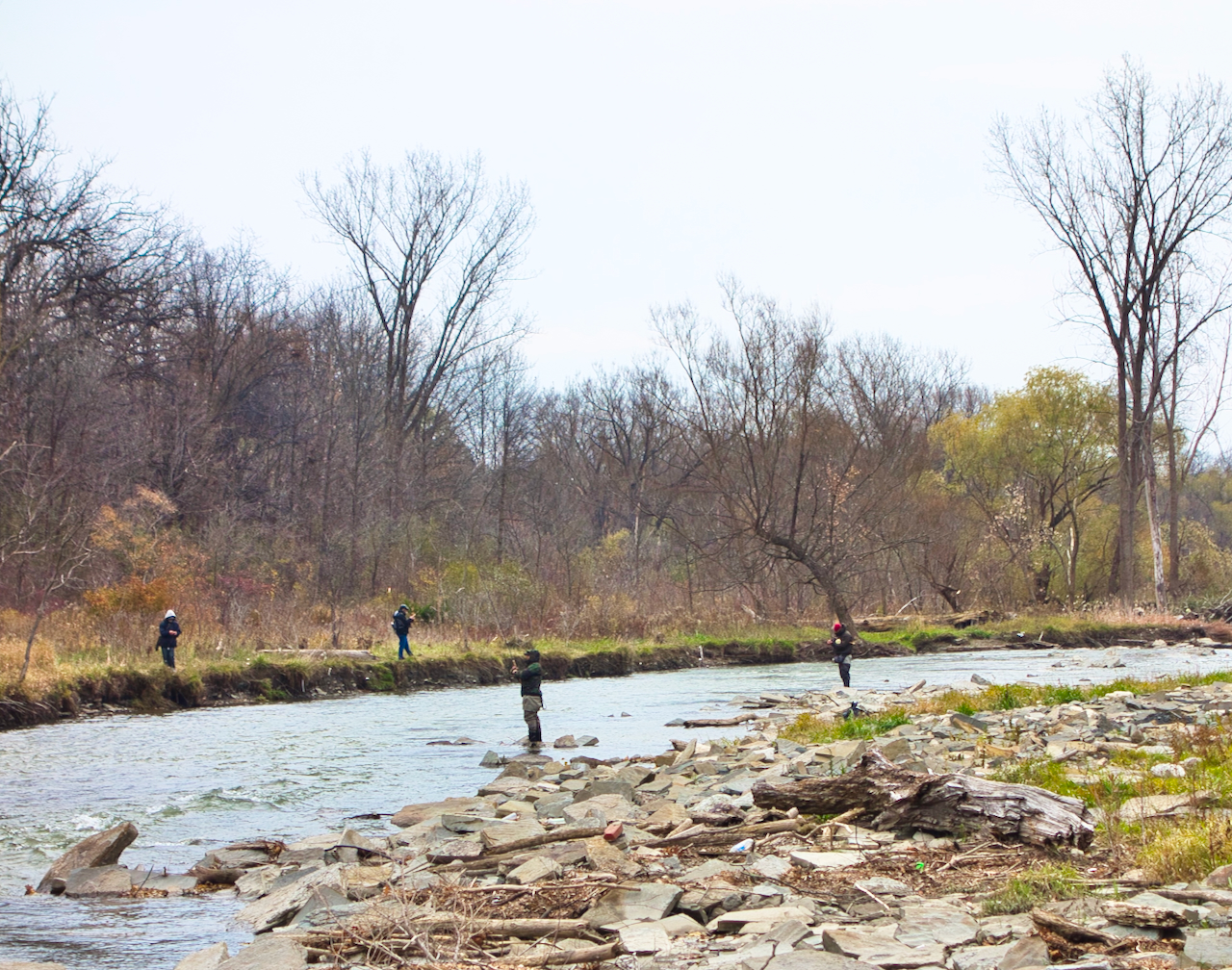
More people are fishing for the (mostly) lake trout, and Chinook salmon that come up the Humber in the fall. A licence is needed unless you’re under 18 or over 65 and there are rules to be followed such as no netting and keeping well clear of the weir.

Fish running the gauntlet below the weir in November 2013.

14. Takeaway

The biggest takeaway is that Raymore Park was created out of the tragedy of Hurricane Hazel. Dozens of people lost their lives and 32 homes were destroyed on October 15, 1954. The little subdivision that once nestled along the banks of the Humber was violently swept away in a sudden torrent.

Raymore Park is a place where nature has been invited back. Over the years, wildlife has gradually returned but continues to be under pressure from a variety of sources. Over the last few decades, people have become more aware of the value of parks and nature in an urban setting. Along with this awareness, groups of dedicated volunteers are giving their time and energy to alleviate some of the problems caused by invading species along with increased use of the park.

People and nature can co-exist when we do our best to be good stewards.

The woods south of the weir in November 2021.

Raymore Park: Changes over the years. Part 3.

My observations regarding changes to Raymore Park over the last 32 years. Click for the first five items in Part 1 and Part 2.

6. Vehicles using the Humber Trail.

There’s a constant variety of vehicles using the Humber Trail through Raymore Park. The rules say no motorized vehicles and this is largely obeyed. There are occasions when police fire or ambulance crews have to bring vehicles down the trail to assist someone in difficulties but generally the worst offenders are noisy, gas powered mini bikes. In recent years, a variety of battery-powered devices have become more common. When the Humber Trail closes the ‘Weston Gap‘ it will be possible to cycle from Lake Ontario to Humber College on quiet streets or a dedicated trail. This will be great for cyclists but will increase traffic on the trail which at the moment ends in a huge set of steps in Weston.

The trail ends at Weston and St Phillips and continues after a dangerous trip north along Weston Road.
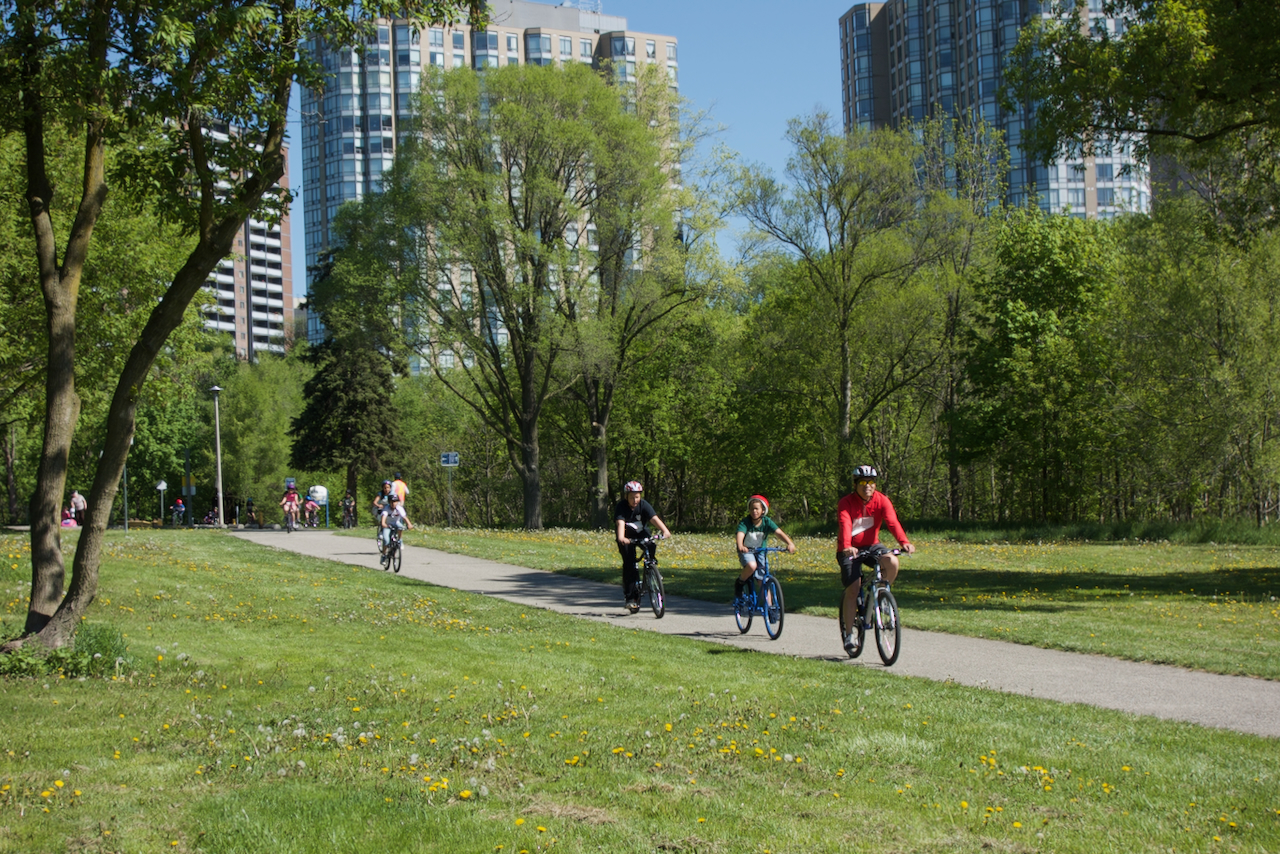
A teacher leads a class trip southwards on the Humber Trail through Raymore Park in May 2013.

7. Wildlife

A groundhog feasts on Raymore Park’s dandelions in April 2010.

Wildlife in the park has a constant battle with other species in order to survive and retain habitat. Add the pressures of an urban park and life can become even more difficult. Threats to wildlife can come in the form of non-native species, off-leash dogs, over-zealous mowing of grass and human incursions into the undergrowth.

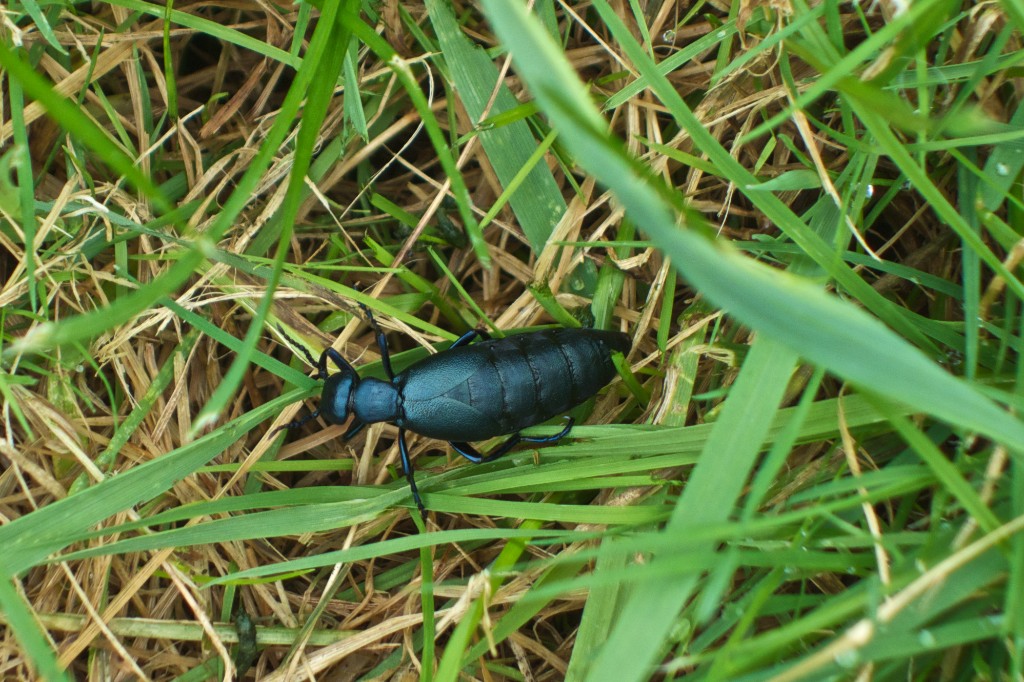
An American oil beetle has an amazing life cycle. From 2013.

Over the years, areas being mowed are smaller as the city, TRCA and and volunteers have added native plants to create more undergrowth where wildlife can thrive.

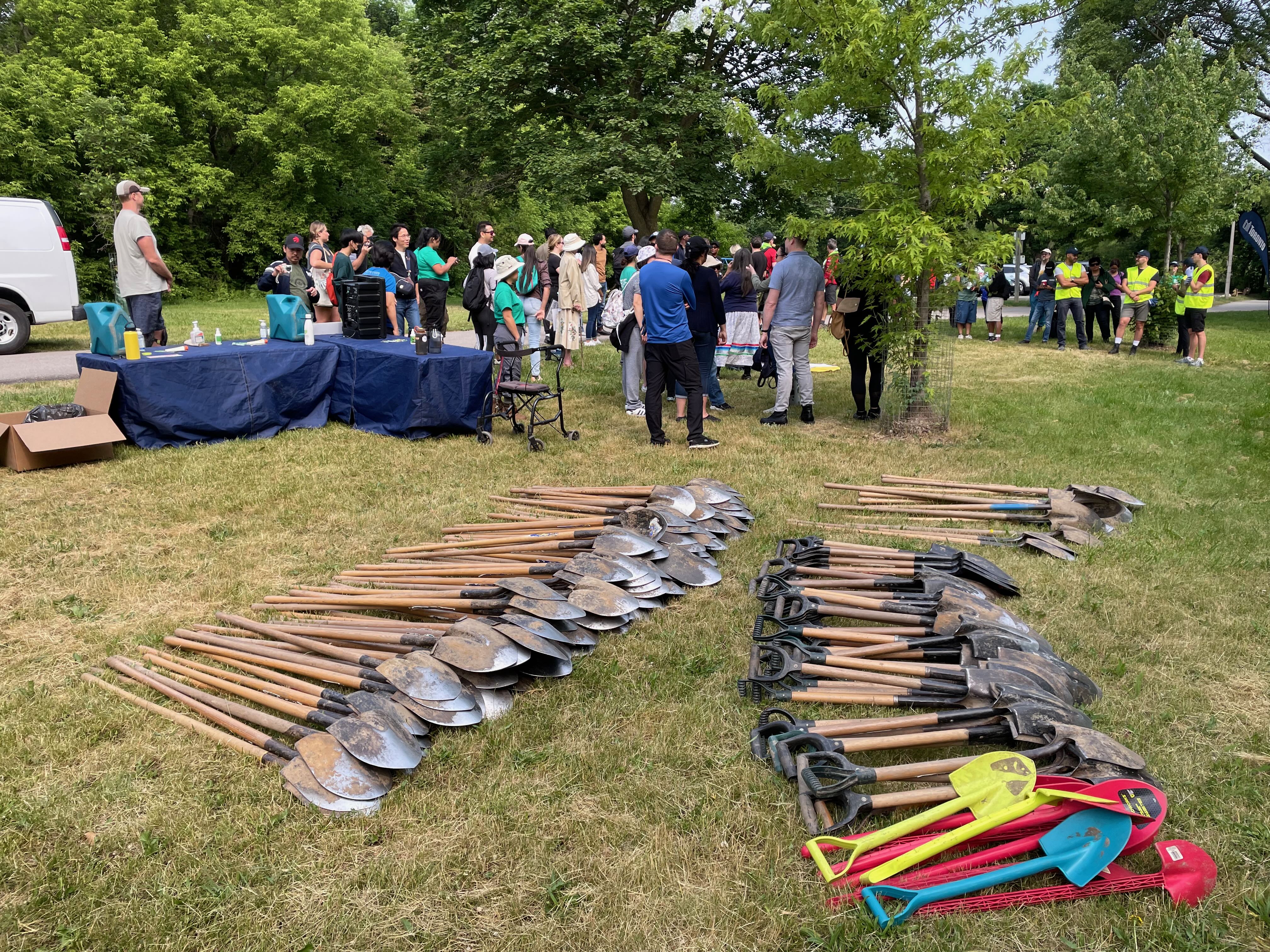
The Humber River Citizens’ Alliance and the City of Toronto held a planting day in June 2023.

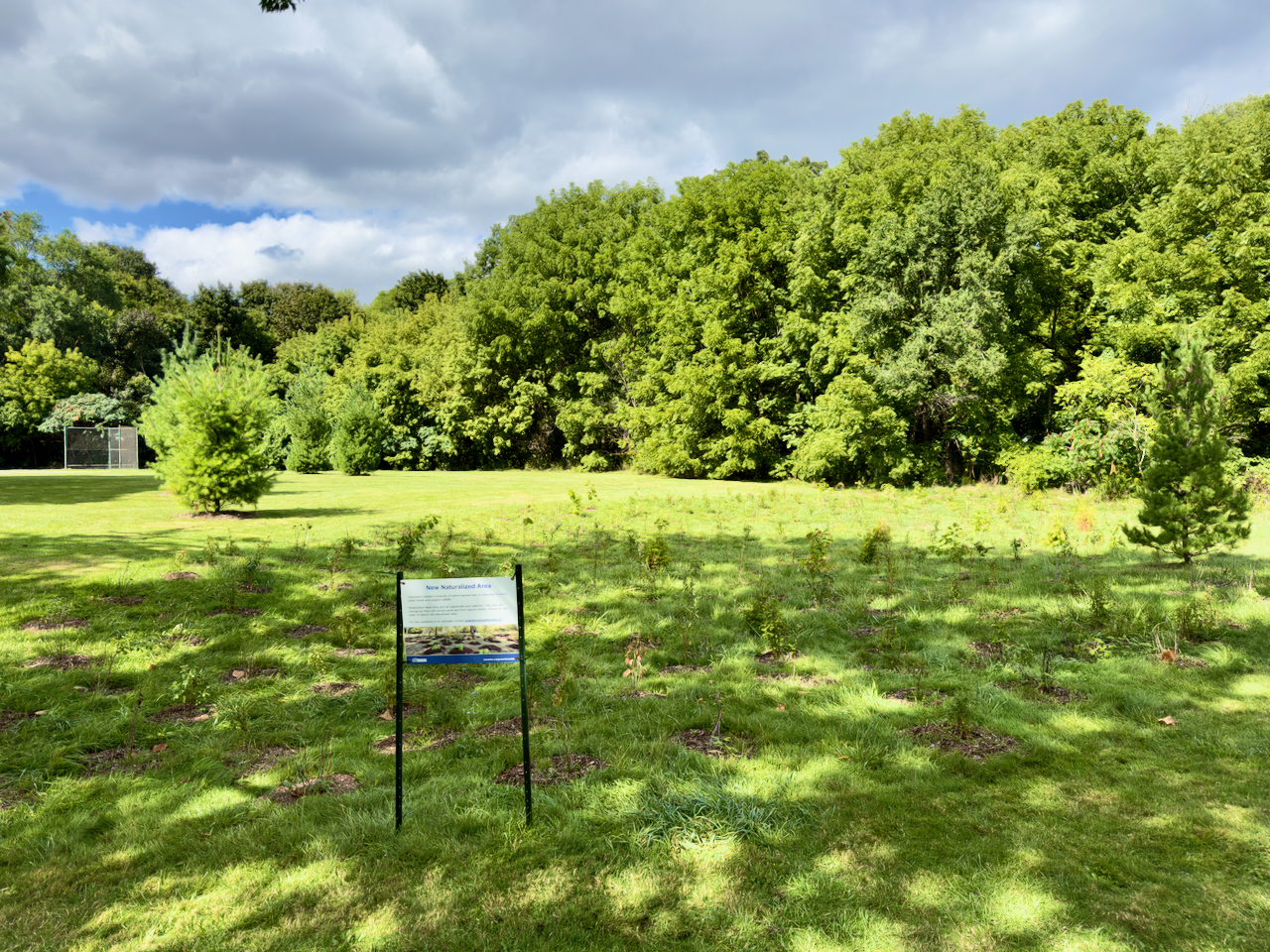
The latest planting came in June near the largely unused baseball diamond and despite some prolonged dry spells, the plants are doing well. Essential wildlife corridors are slowly being formed.

The new naturalized area in late August 2025.

8. A Private School is using the Park.

For the last few years, a private elementary school has been operating out of a home on Tilden and more recently from the Weston Gospel Chapel at 59 Kingdom. The school makes extensive weekday use of the park in lengthy, seemingly unstructured sessions, often on the swings and slide. This extra noise and foot traffic adds pressure on the park’s wildlife and reduces the tranquility that visitors might expect from a park.

9. Homeless / Unhoused people.

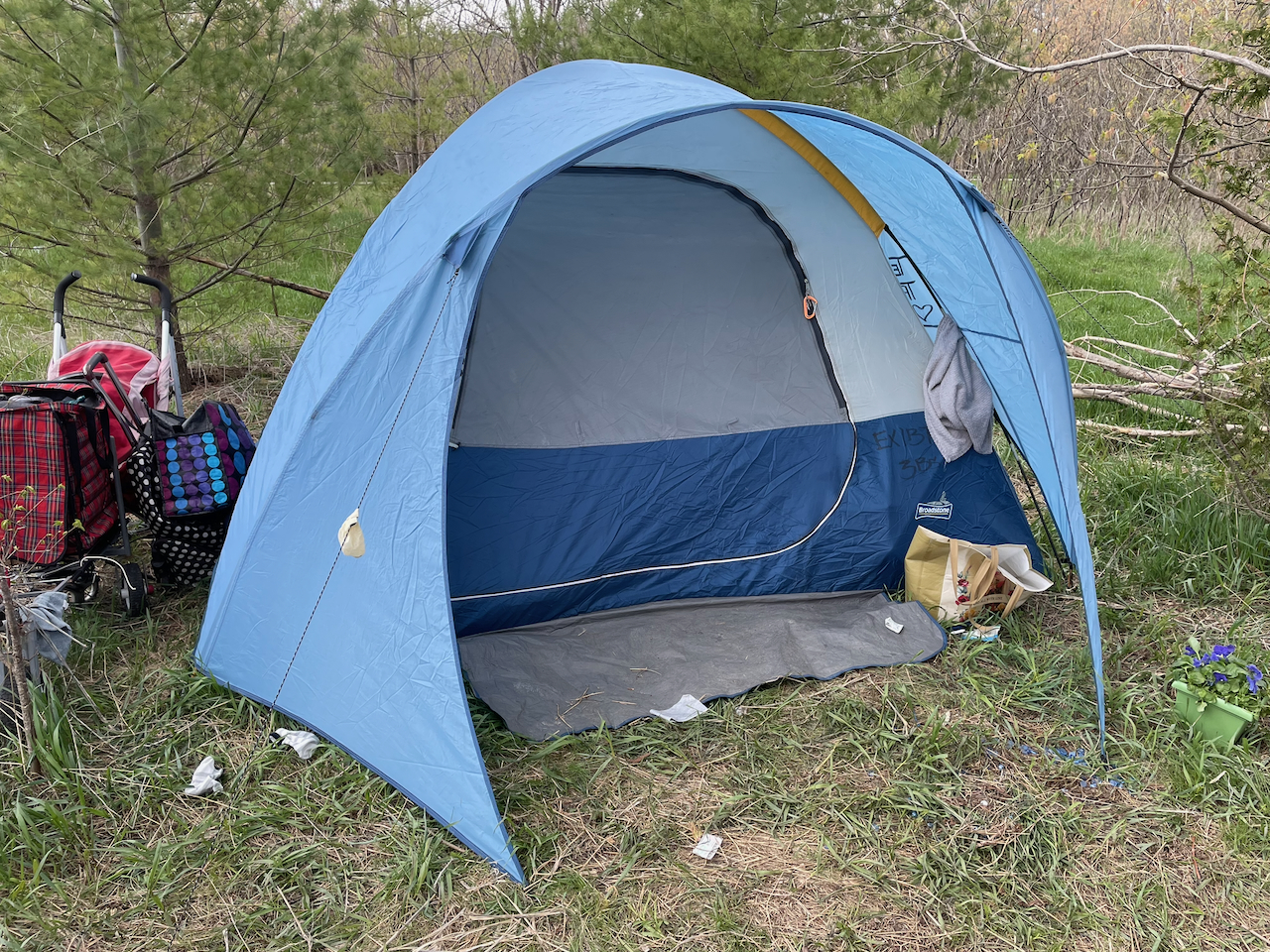
In recent years, some people have set up tents in the middle of the ‘wild area’ and have lived there for weeks at a time. The city doesn’t move them on but does wellness checks and tries to persuade them to go to a shelter. When they move out, the city does its best to clean up the site. Currently there are no people living in Raymore Park. Here are Toronto’s protocols for homeless / unhoused people.

An encampment in the wild area in April 2023.

Part 4 coming soon.

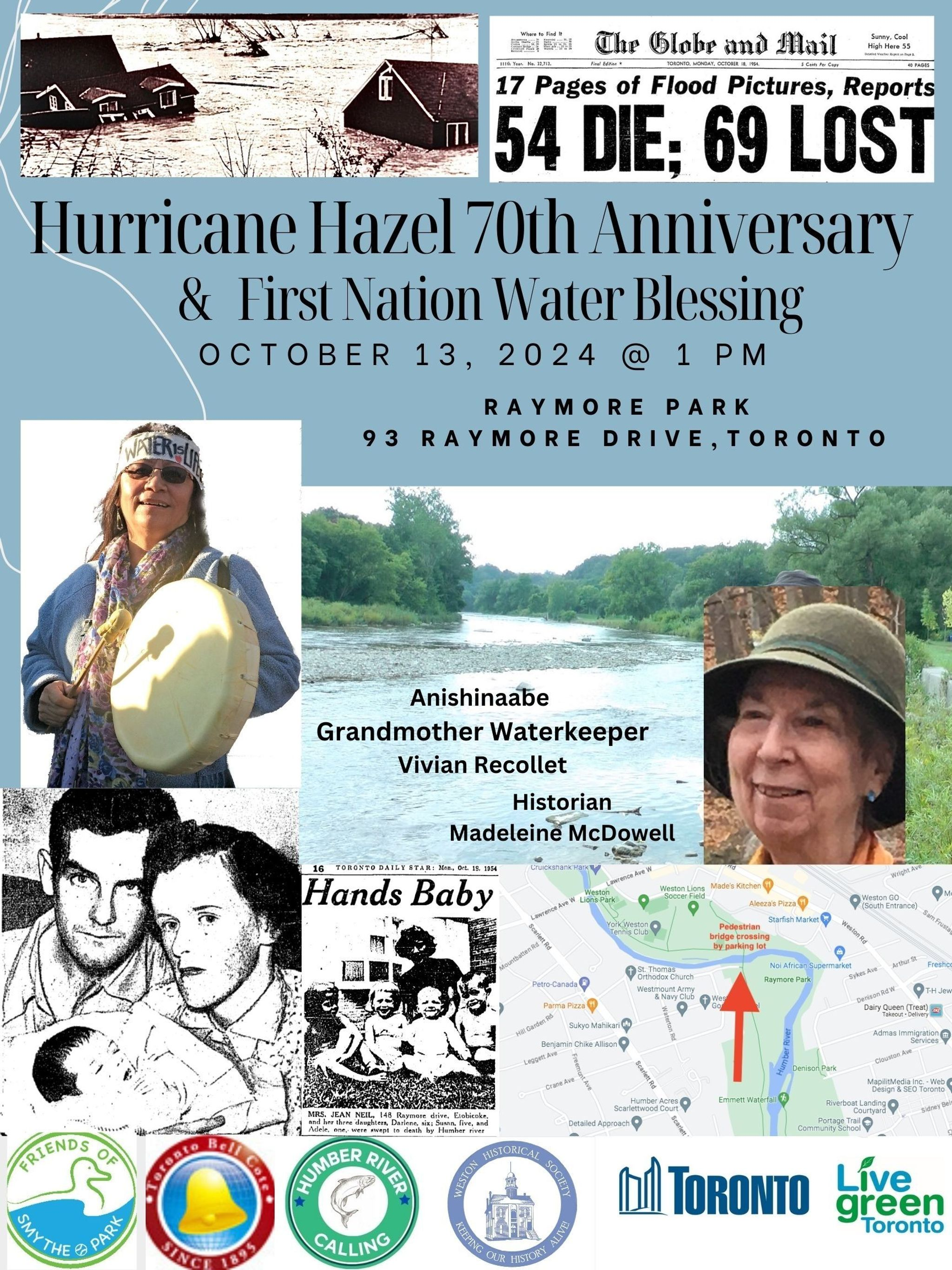
Hazel: 70 years on.

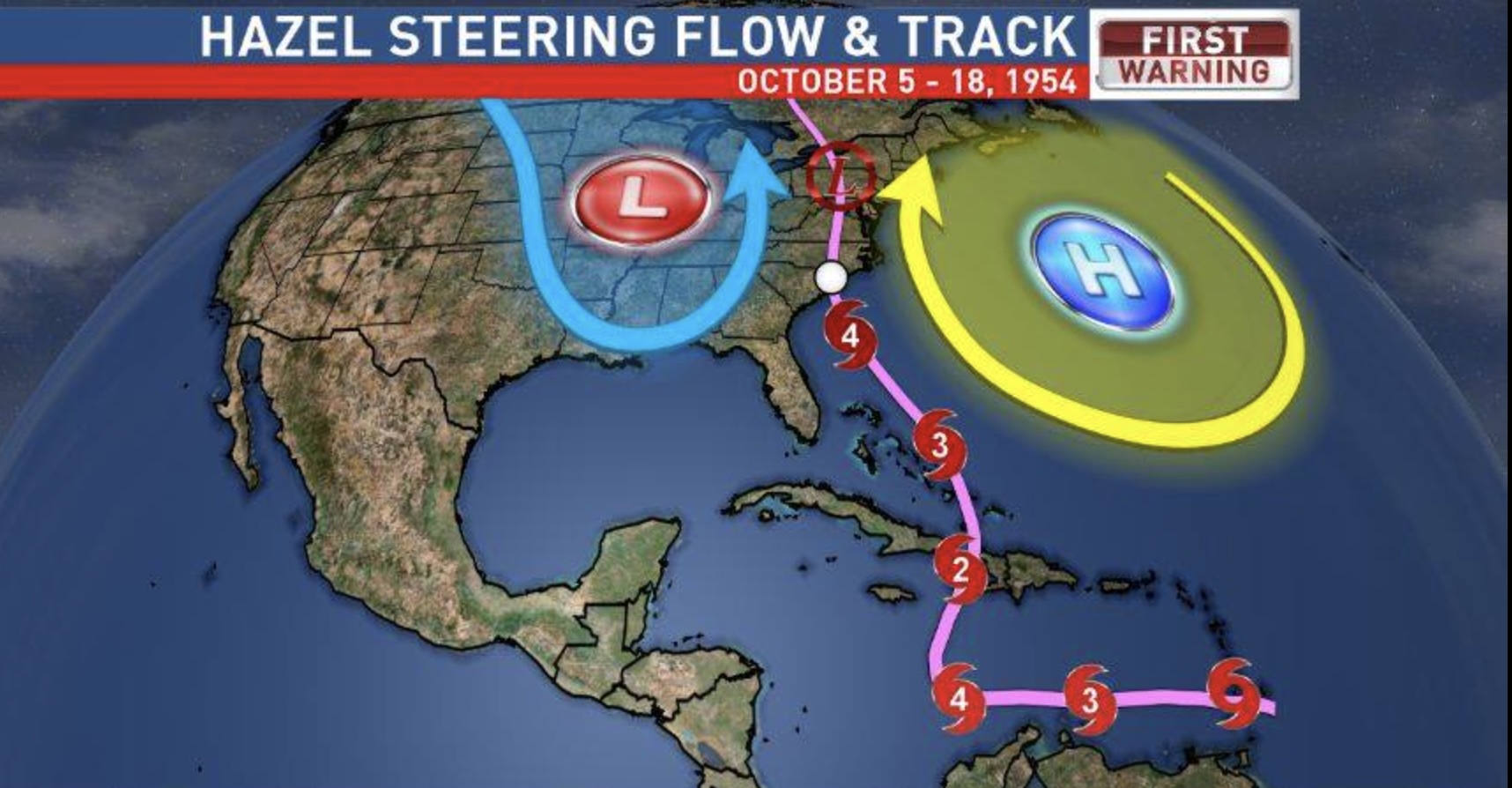
Hurricane Hazel began its trail of devastation as a category 2 hurricane in the Caribbean, killing more than a thousand people in Haiti. It moved northwards hitting the Carolinas as a category 3 thanks to warm waters off Florida. As it passed over land, it weakened to a tropical storm and then became a depression but thanks to a merger with a cold front, Hazel was re-energized and the resulting system started dumping water on the GTA on the 15th and 16th of October 1954.

High pressure pushed Hazel over Toronto where it combined with a low-pressure area and cold front.

Local historian Madeleine McDowell correctly points out that the Humber River has the sharpest drop from source to mouth of any river in North America. As a result, when heavy rains fall, the river becomes fills up quickly. Events similar to Hazel have occurred in the past. In fact, in the 19th Century, Weston was moved to the east bank of the Humber after several catastrophic floods. Weston Golf and Country Club now occupies the site of the old settlement.

Raymore Park was one of many created after Hazel as part of an effort to clear flood plain lands and give rivers space where excess water can be absorbed.

Read more about Hazel’s legacy here.

The old location of Raymore Drive. Present day Tilden Crescent begins below the square in the top left. Gilhaven Avenue (running from bottom left) is now occupied by Raymore Park’s parking lot.

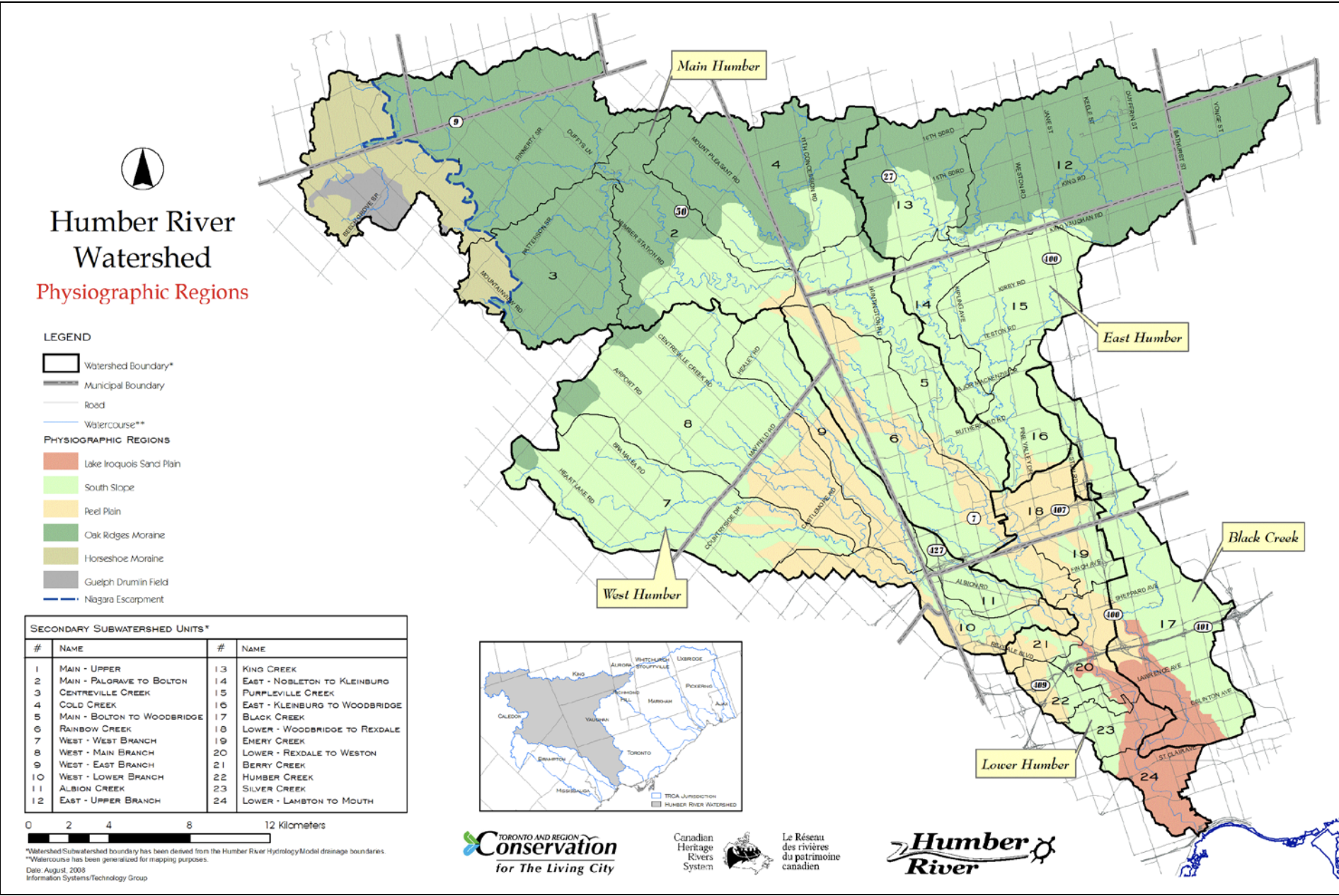
Topologically, the Humber catchment area is relatively unchanged since the glaciers left about ten thousand years ago. The valleys are the same width, and the drainage area is the same. Rare events like Hazel will continue to happen. The problem is that since 1954, a good portion of the Humber watershed has been paved over.

Click to enlarge.

In 2002, urban land occupied 20.7% of the watershed. By 2020 that amount was 26.7%, a significant increase. Natural cover is also decreasing although forest canopy is relatively stable at 29%. Because there is less land and vegetation to absorb rainfall, water enters the Humber faster causing river levels to rise quicker and higher than in the past. In addition runoff from paved land is dirtier affecting animal habitats and our drinking water. When the next Hazel type storm drenches our area (and it will), the effects may be far more severe.

Q: Is climate change a factor in events such as Hazel?

A: We can speculate, however, urbanization is a far more immediate danger. For example, the proposed Highway 413 is a huge threat to the watersheds of both the Humber and Credit rivers.

Read more here and here.

If you would like to commemorate the 70th anniversary of Hazel, meet in Raymore Park on Sunday October 13 between 1 and 3pm. Historian Madeleine McDowell will be there to talk about the event.

Make do and mend.

Looking north towards the weir along the Humber Trail in Raymore Park. August 2024.

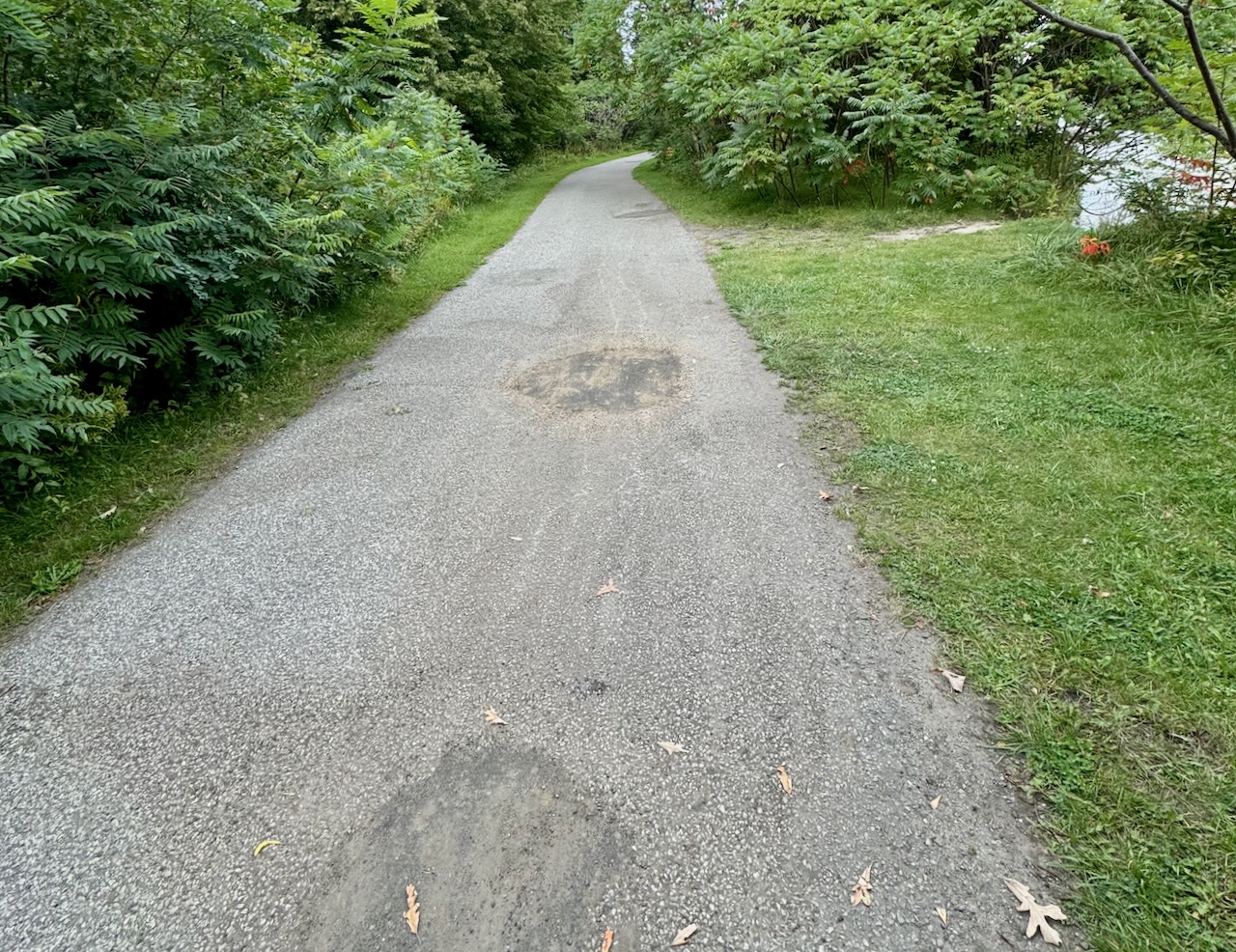
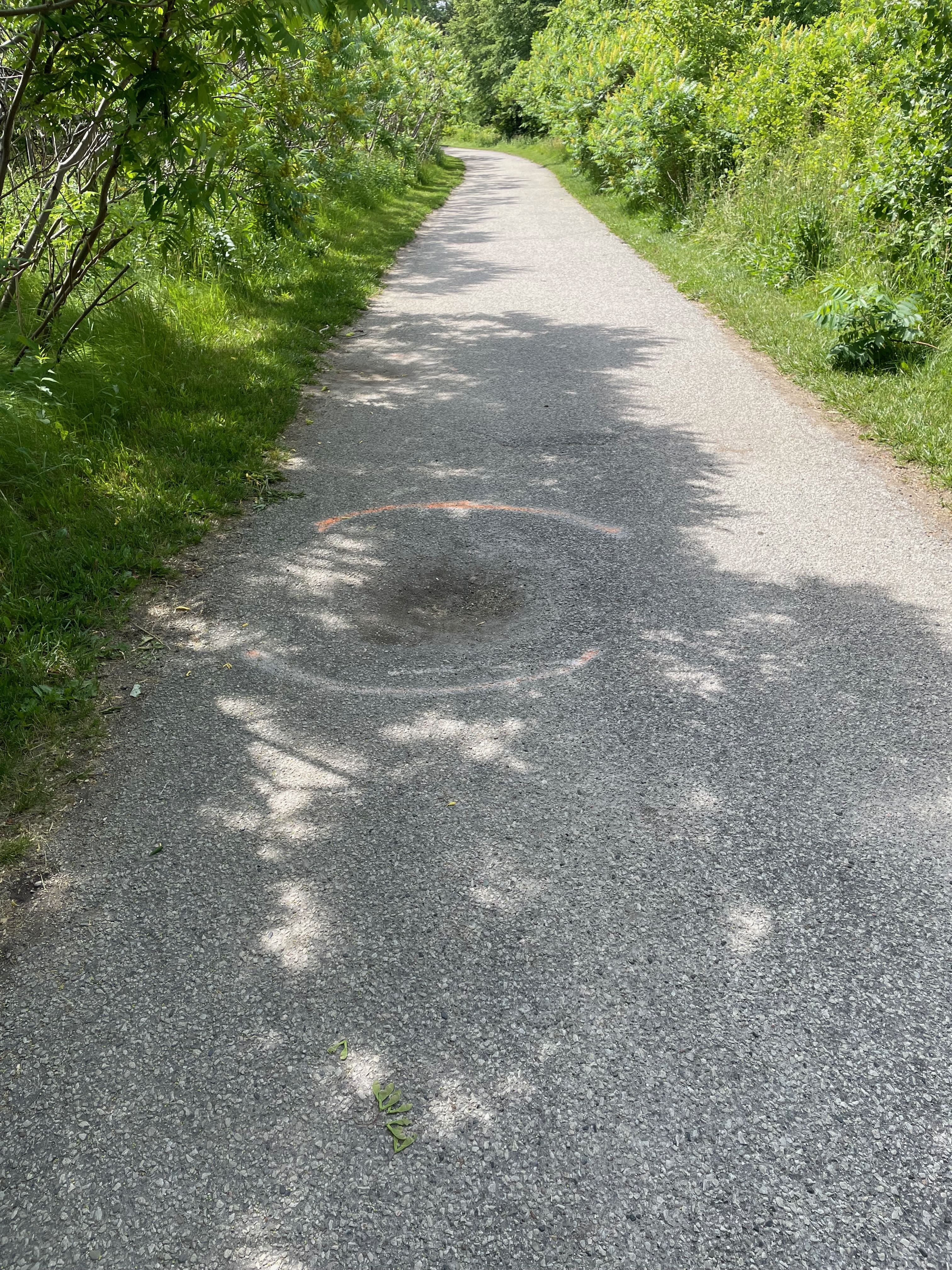
Crews have finally repaired sinkholes in the bike path south of the Weir. Some of these were decades old, quite deep and particularly dangerous to inattentive cyclists. Often they would fill with water, freeze and a layer of snow would hide the slip hazard.

This section of the trail was newly paved at least 30 years ago.

Read more here.

Infrastructure problems affect Raymore Park

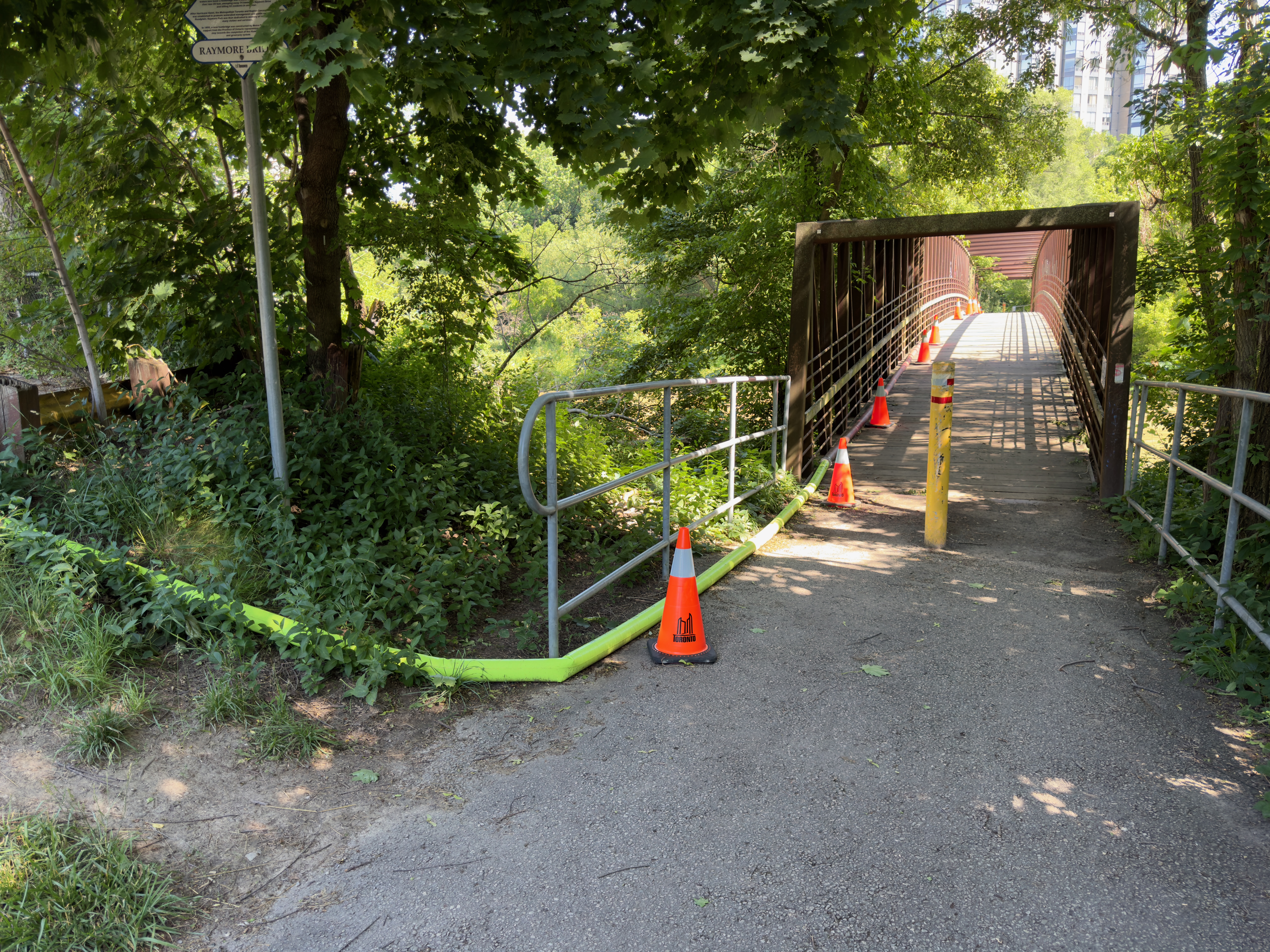
Visitors to Raymore Park may have noticed loud diesel pumps at the entrance and a rubberized pipe crossing the footbridge onto the Weston side.

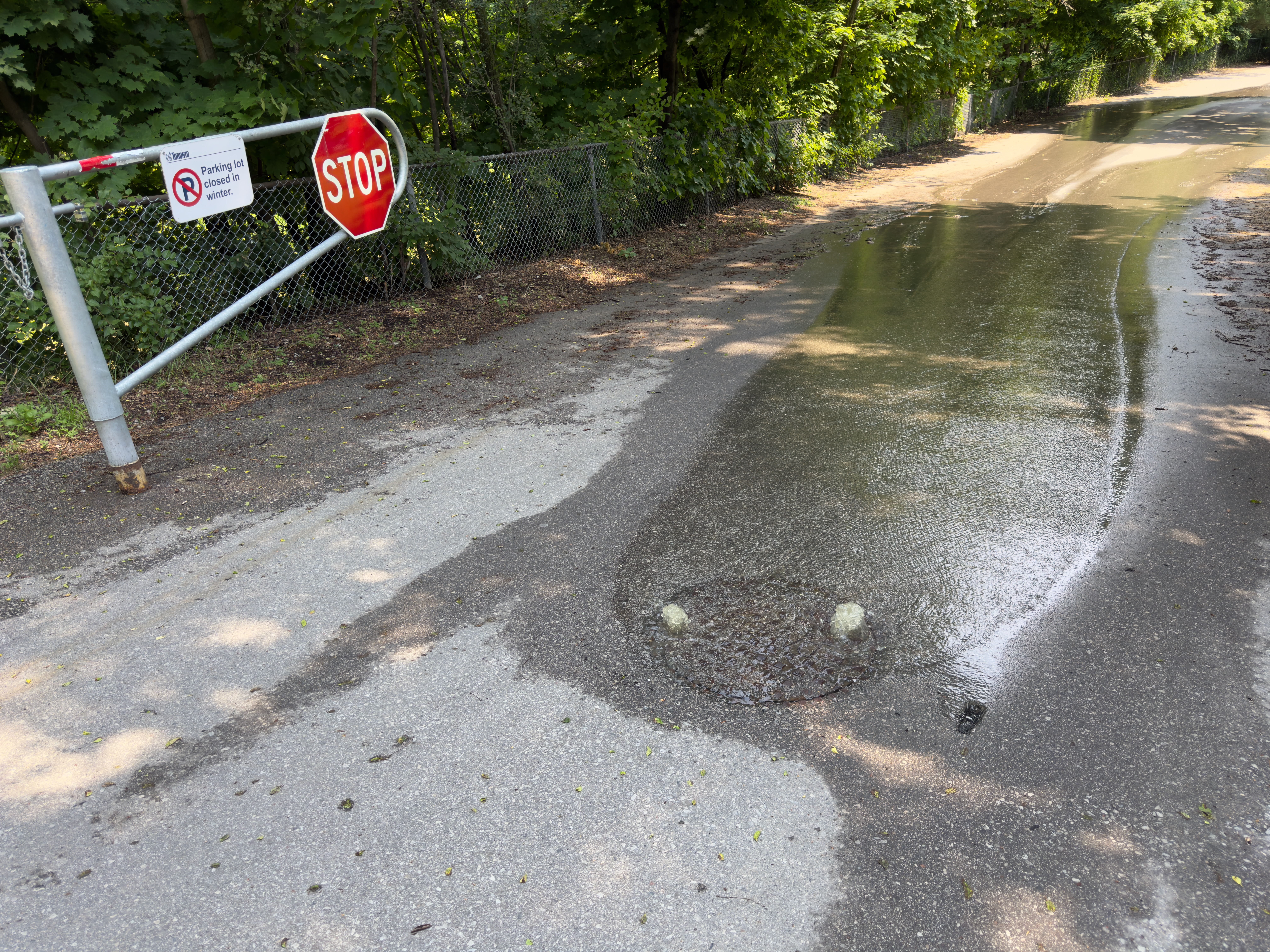
The neighbourhood around Raymore Park has been experiencing sewage backups thanks to a blocked sanitary sewer at the park entrance. Last month sewage was seen spilling out of a manhole cover and making its way into the Humber before crews could get on the job. This sewer has been blocked before, causing sewage to enter neighbourhood basements.

Raw sewage spilling from a manhole cover and making its way into the Humber. June 18, 2024.

A City work crew came out and discovered that the sewer was blocked on both sides of the river by tree roots and was crushed on the Weston side. After realizing that it was a big job, workers installed a temporary by-pass powered by a diesel pump. Sewage is now being piped over the pedestrian footbridge and into the sewage system.

Sewage piped over the bridge towards the main sewer on the Weston side. June 24, 2024.

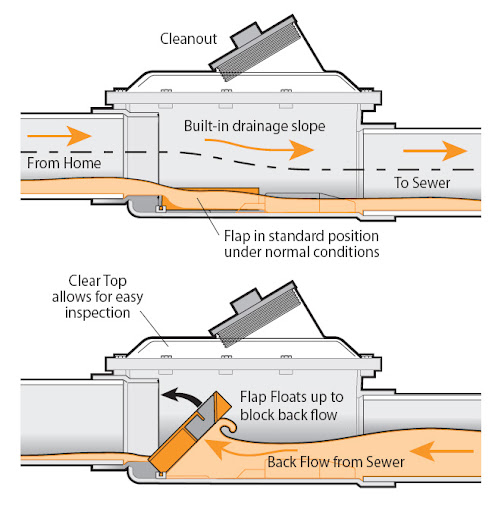
The job of clearing, repairing and relining the underground sewers is being put out to tender – a process that will take weeks if not months. Unfortunately, diesel pumps sometimes fail (twice in the last month) and these breakdowns have led to basement back-flow valves activating and in some cases, flooded basements – this is especially true during rain.

A backflow valve for basement installation. http://backwatervalve.com/

Until the sewer is cleared, repaired and relined, the bypass will carry neighbourhood sewage over to Weston. Let’s hope that the diesel pump will be carefully monitored so that local residents don’t have to deal with further sewage back ups and flooded basements.

Huge rainfall swells Humber.

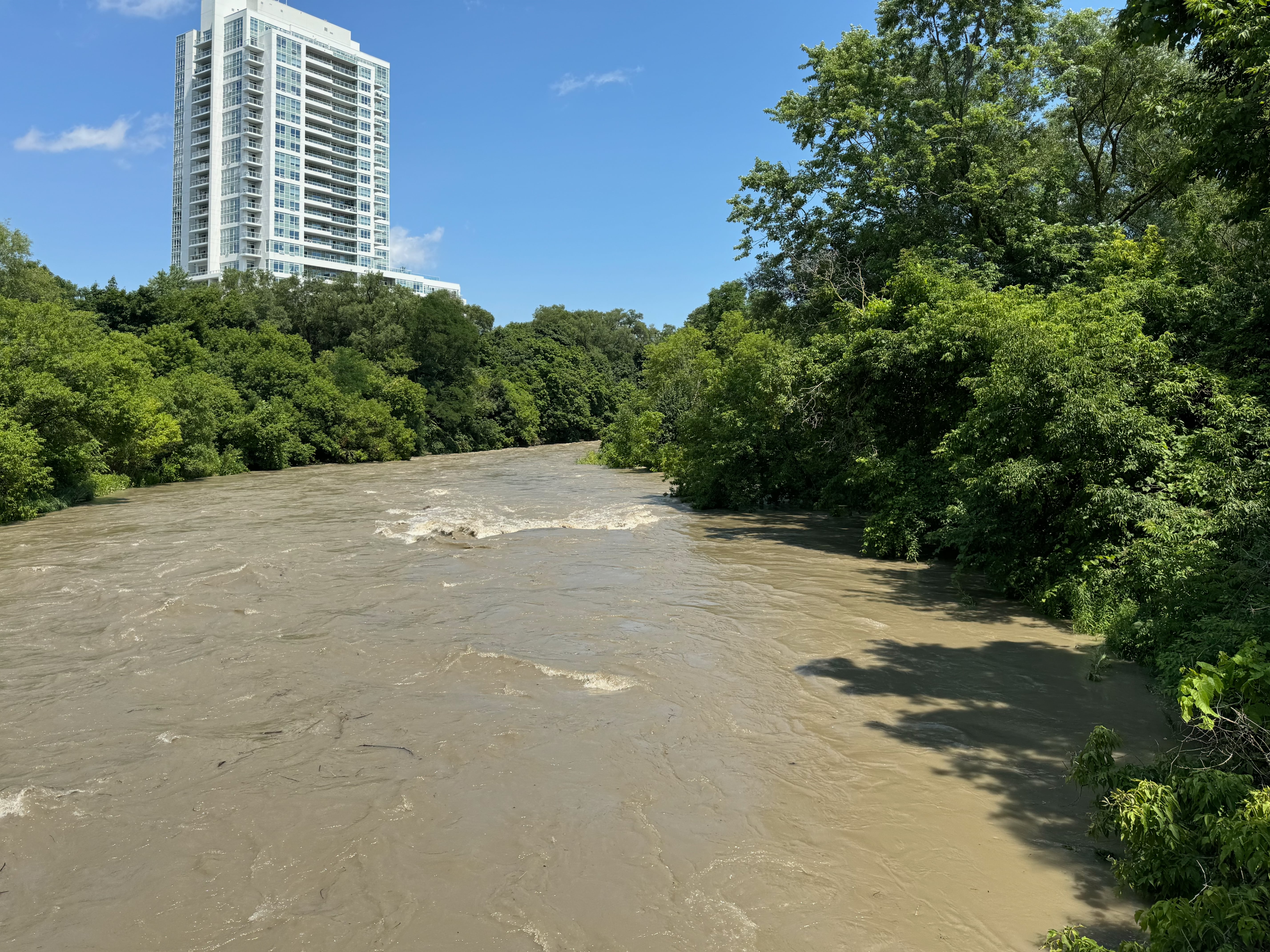
The Humber at rare levels.

July 16, 2024 was a rare but not unexpectedly rainy day. July often sees huge dumps of rain and Toronto received around 10cm in quite a short time. The Humber has a tell-tale depth gauge in the form of the old footbridge abutment which yesterday completely disappeared.

By way of comparison, here’s how it looked in April 2022.

The old footbridge abutment is clearly visible on most days. April 24, 2022.

As the city grows and more land is paved over, the ability of the river to hold huge volumes of runoff will be tested. Without green spaces and parkland to absorb runoff, the Humber would be much more of a threat during heavy rain or spring thaws.

Bike Path in bad shape.

Back when Mugsey was alive, I was walking with a fellow dog-walking friend when she slipped on ice that had formed in a bike path depression south of the weir. A thin layer of snow had concealed the ice lurking beneath and down she went, breaking an arm.

This was around 2011. The depression is still there along with several others. Some of them are quite deep and could cause a serious accident if a cyclist was caught unawares.

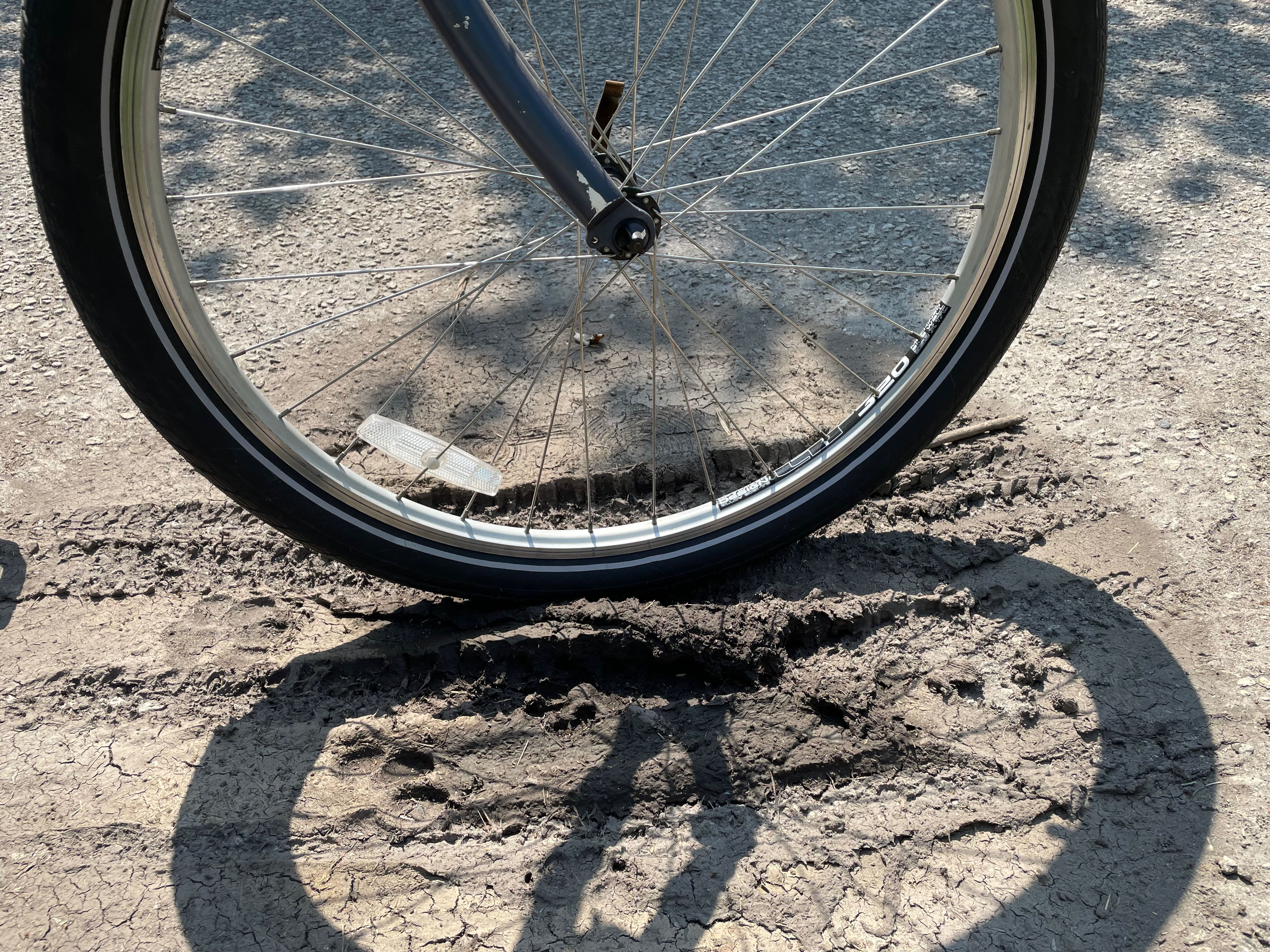
This one is filled with mud. July 2023.

The bike path is in need of levelling and repaving to today’s standards but for some reason, it’s not been a priority.

The photo doesn’t do the depth of the depression justice. June 2023.

Someone has helpfully used spray paint to outline the depression (and a few others in the vicinity) but nothing has been done since 2011. Maybe if Toronto is serious about creating a network of bike lanes around our city, these dangerous depressions can either be repaired or the bike path repaved and brought up to standard.

Humber Creek culvert nears completion.

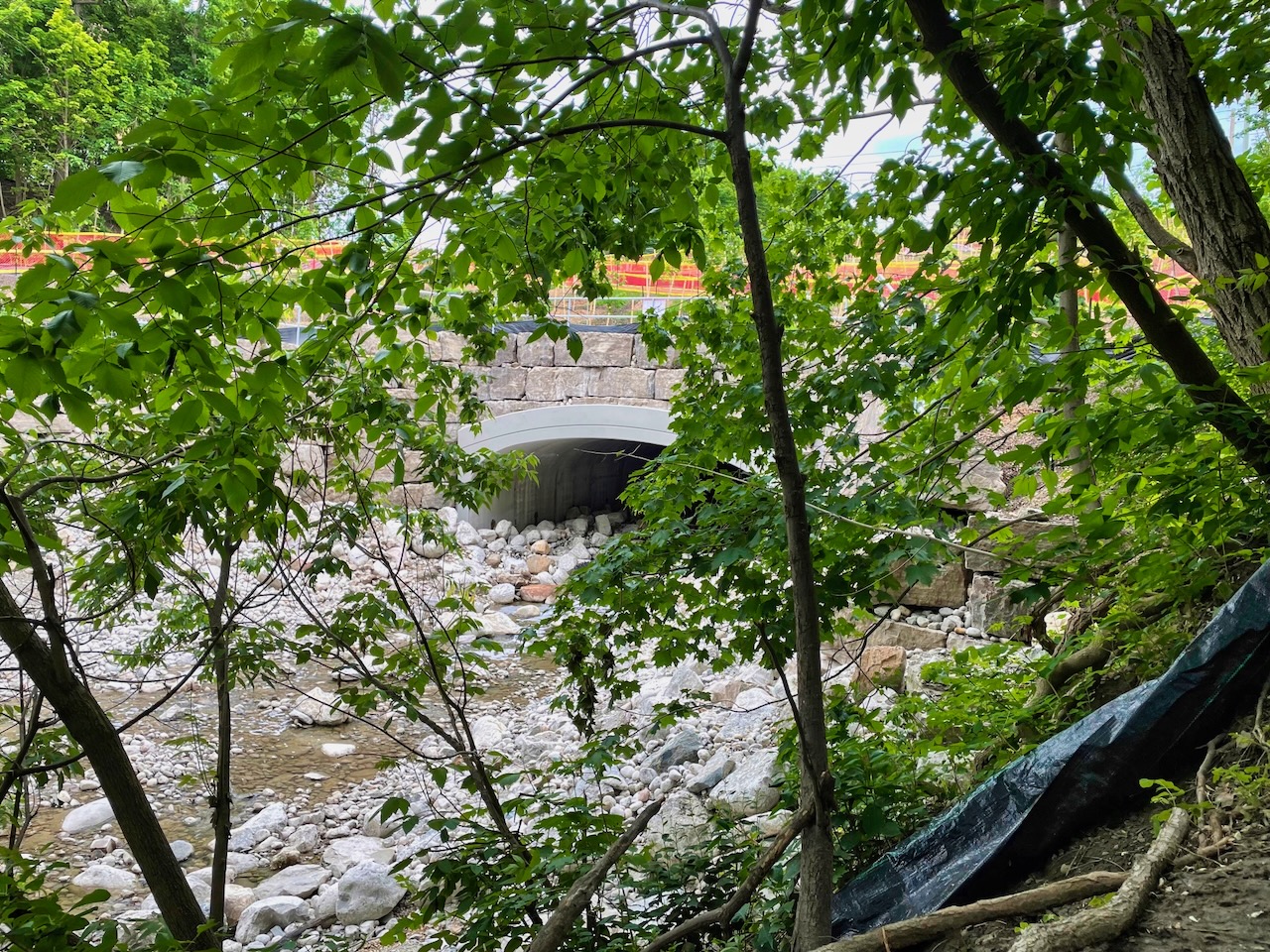
The culvert work under Scarlett road that brings Humber Creek to the Humber River is almost complete. I was able to get a look at it the other day and the eastern side is ready.

Through the trees…

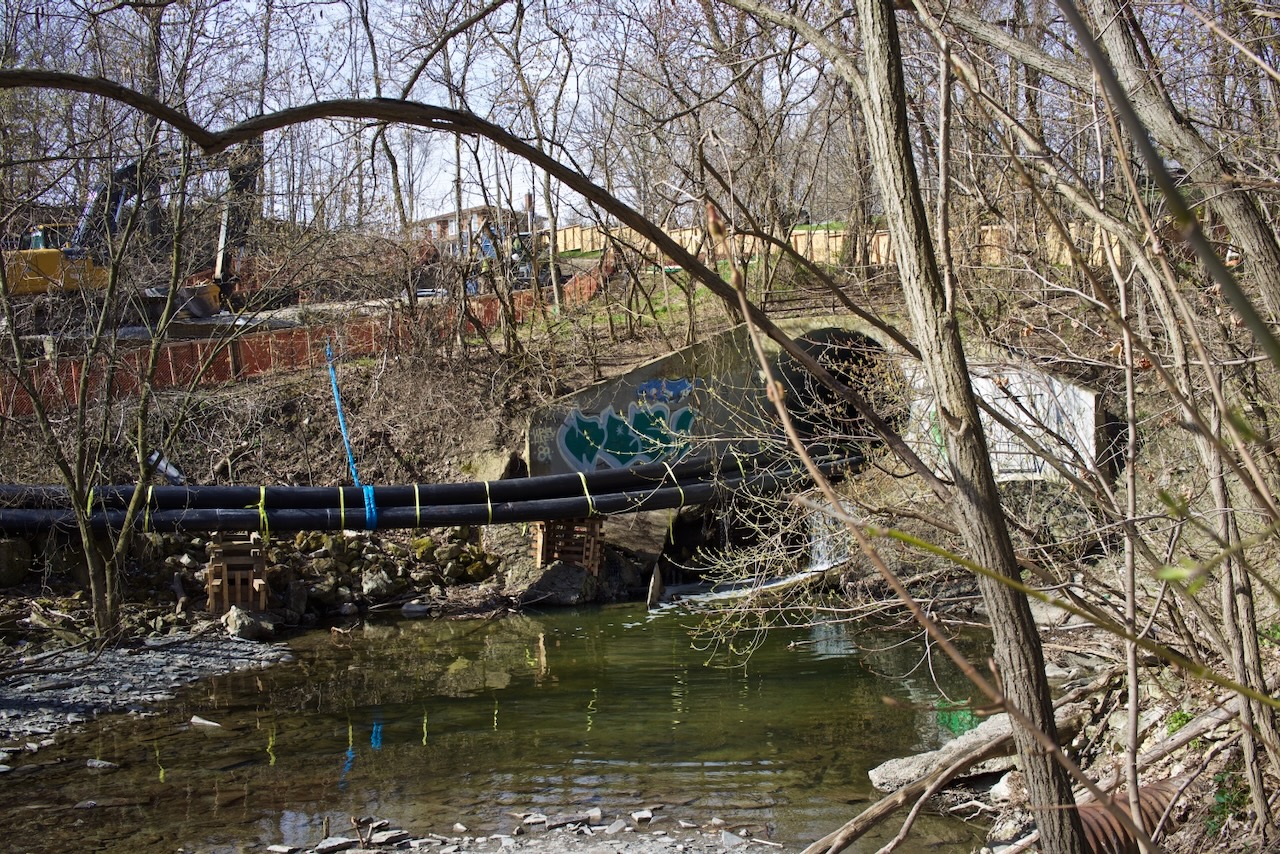
The old culvert was quite something:

The old culvert during previous sewer repairs in April 2016.

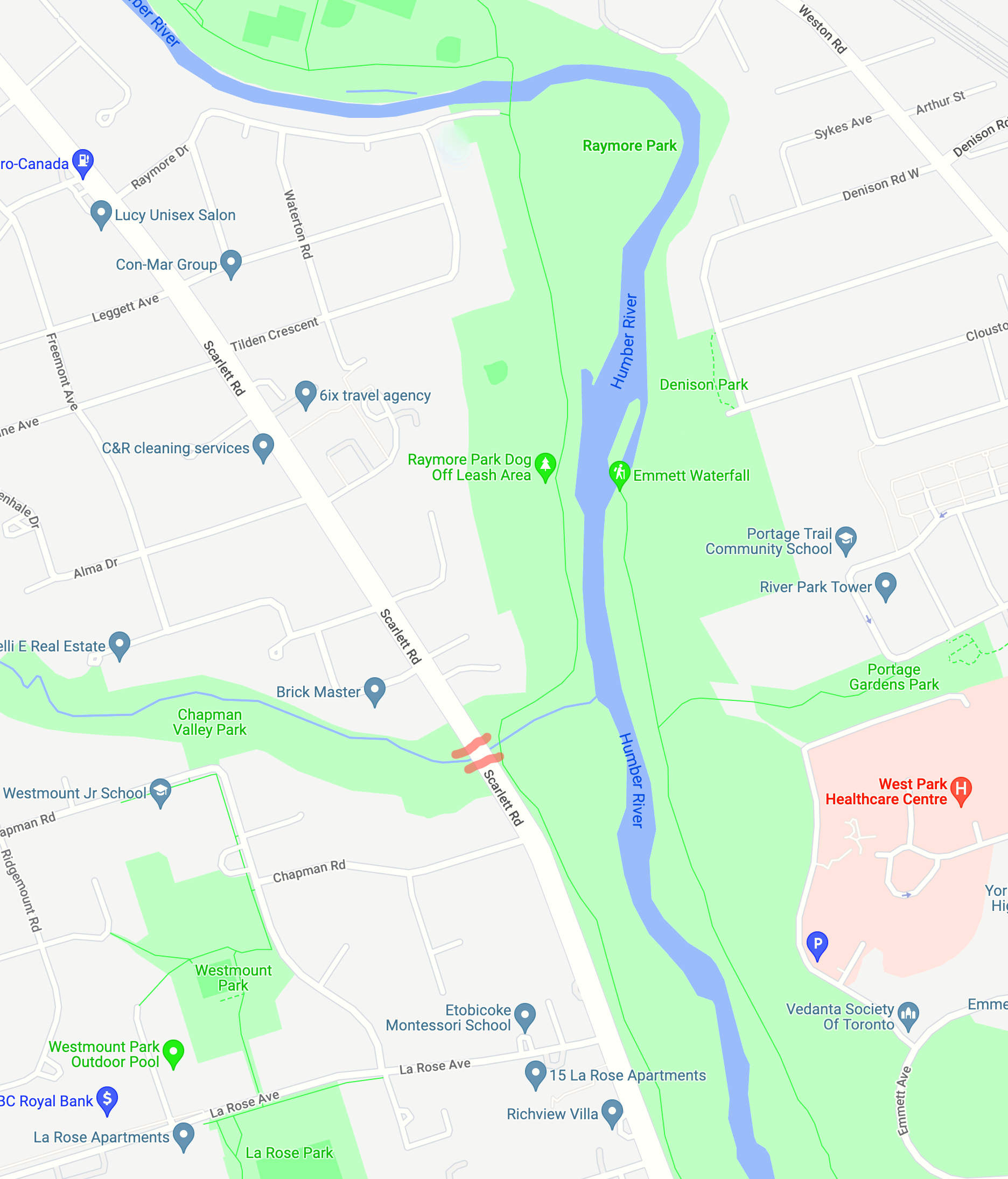
The old outlet was a good couple of metres above the creek which made for a spectacular and powerful jet of water after rainstorms. A deep pool formed as a result. Unfortunately, the height of the culvert made passage along the creek quite difficult for wildlife. The new lower bed has created a corridor that will link Raymore and Chapmen Valley Parks and lower the risk of deer and other animals running across Scarlett Road.

The soon to be linked Chapman Valley and Raymore Parks – From Google.

In addition to linking the parks, the terracing around the culvert has been landscaped. The other side of the culvert is supposed to be completed by this July or August.