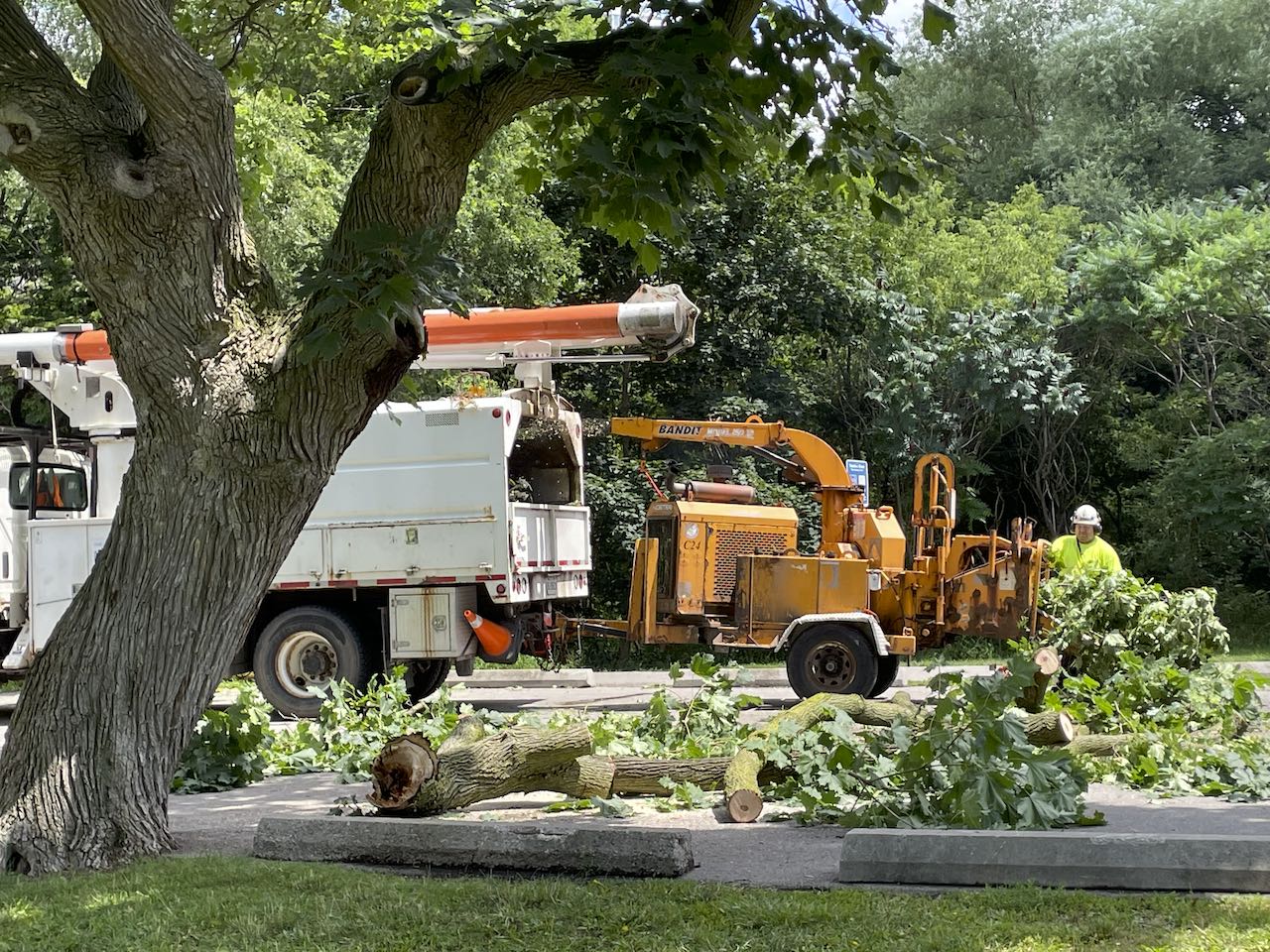
A worker feeds branches of an elderly Norway Maple into a wood chipper.
A large Norway Maple by the parking lot is coming closer to the end of its life. The tree provides much needed shade but its days appear to be numbered as more rotten branches are found. It is the last of several large maples that once lined (and shaded) the parking lot.
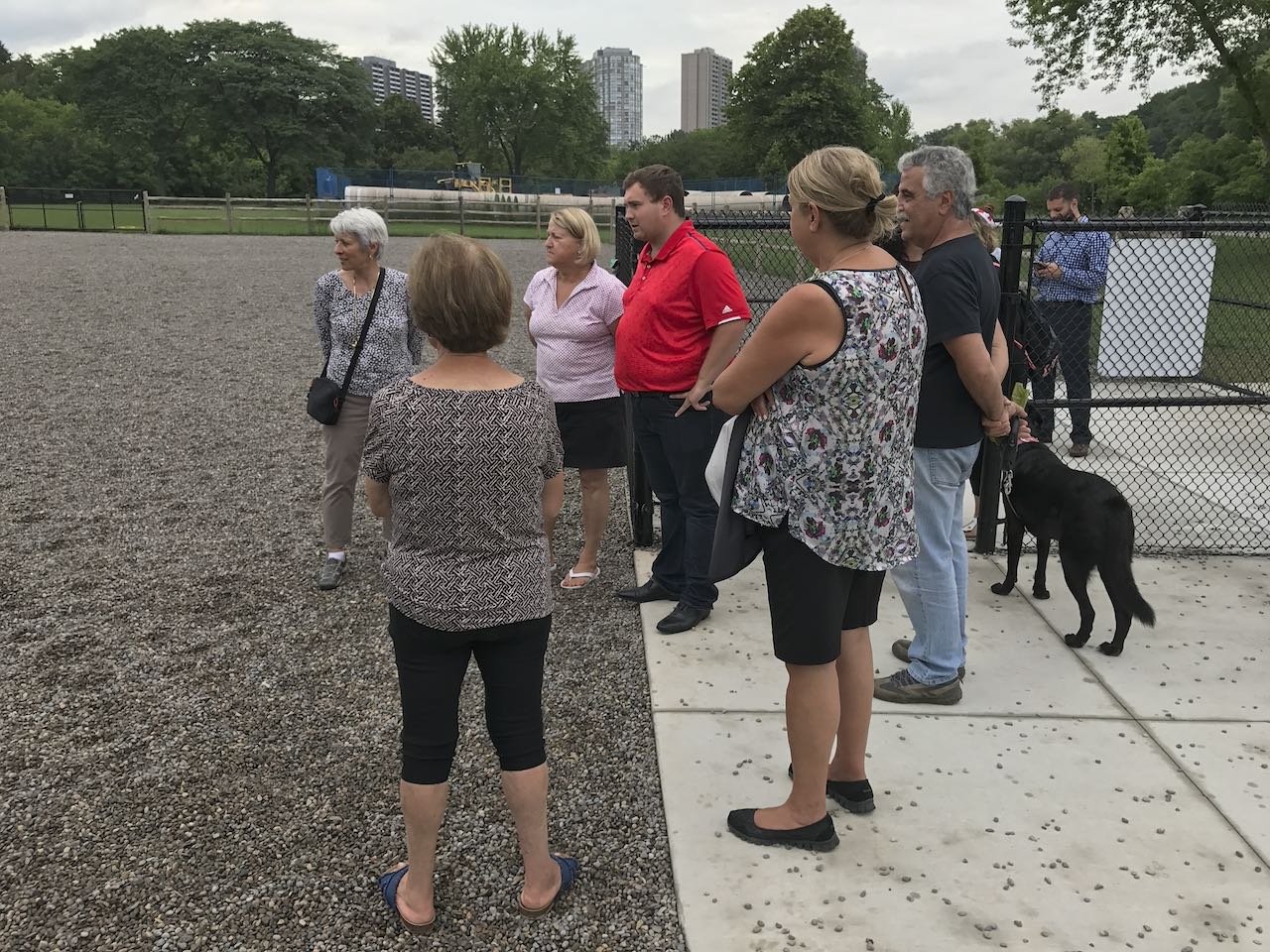
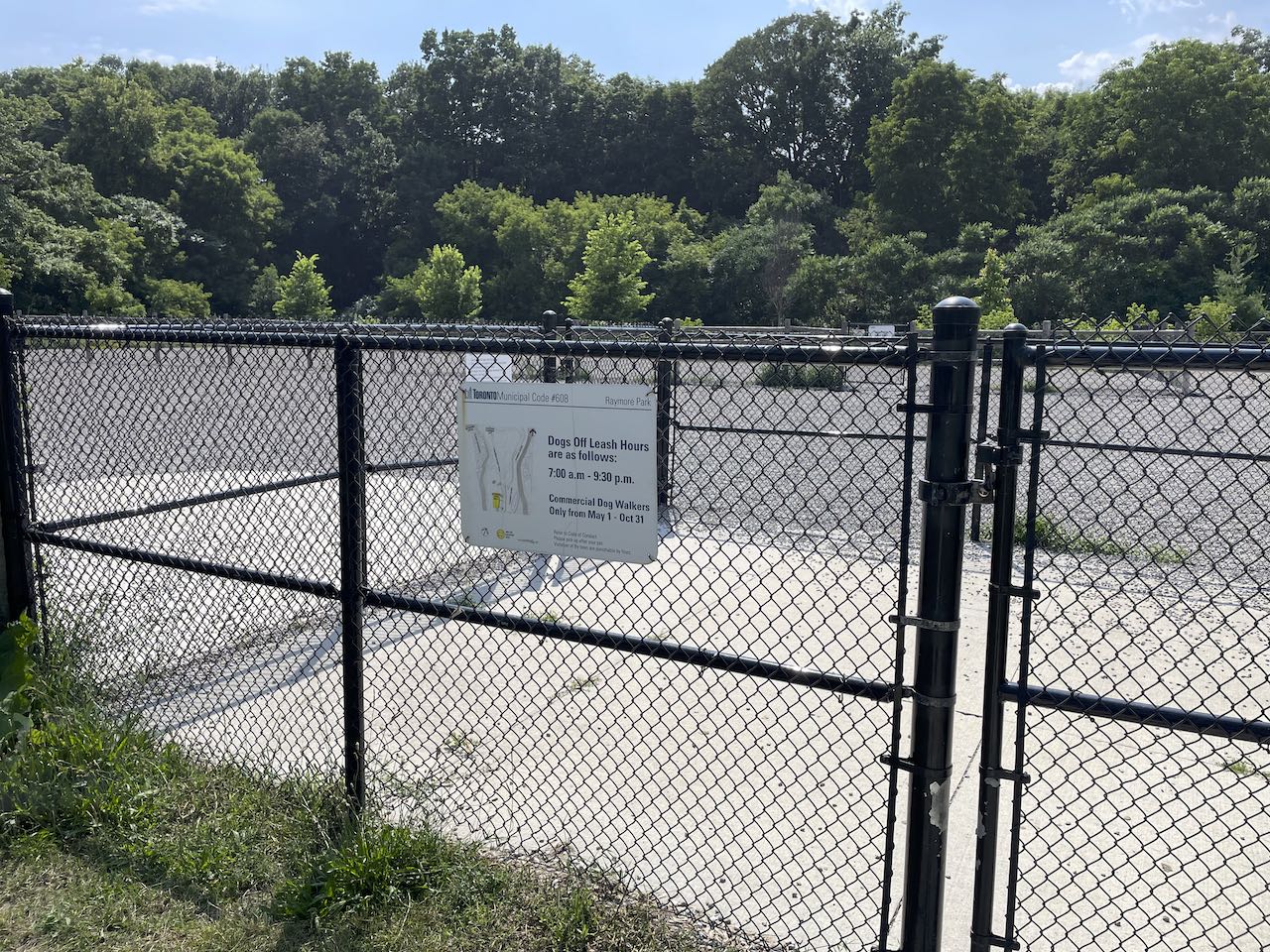
The Raymore Park dog off-leash area (DOLA) was opened with some fanfare by Premier Doug Ford’s nephew six years ago. Its design followed standard Toronto Parks and Forestry protocols, namely removal of vegetation and topsoil then replacement with pea-gravel and fenced with rustic poles and rails backed up by a wire containment fence. The aim was to provide an off-leash area where dogs could exercise and socialize safely. The idea, sold at a community presentation was that the DOLA would be used mainly by local residents and that any extra traffic would be minimal.
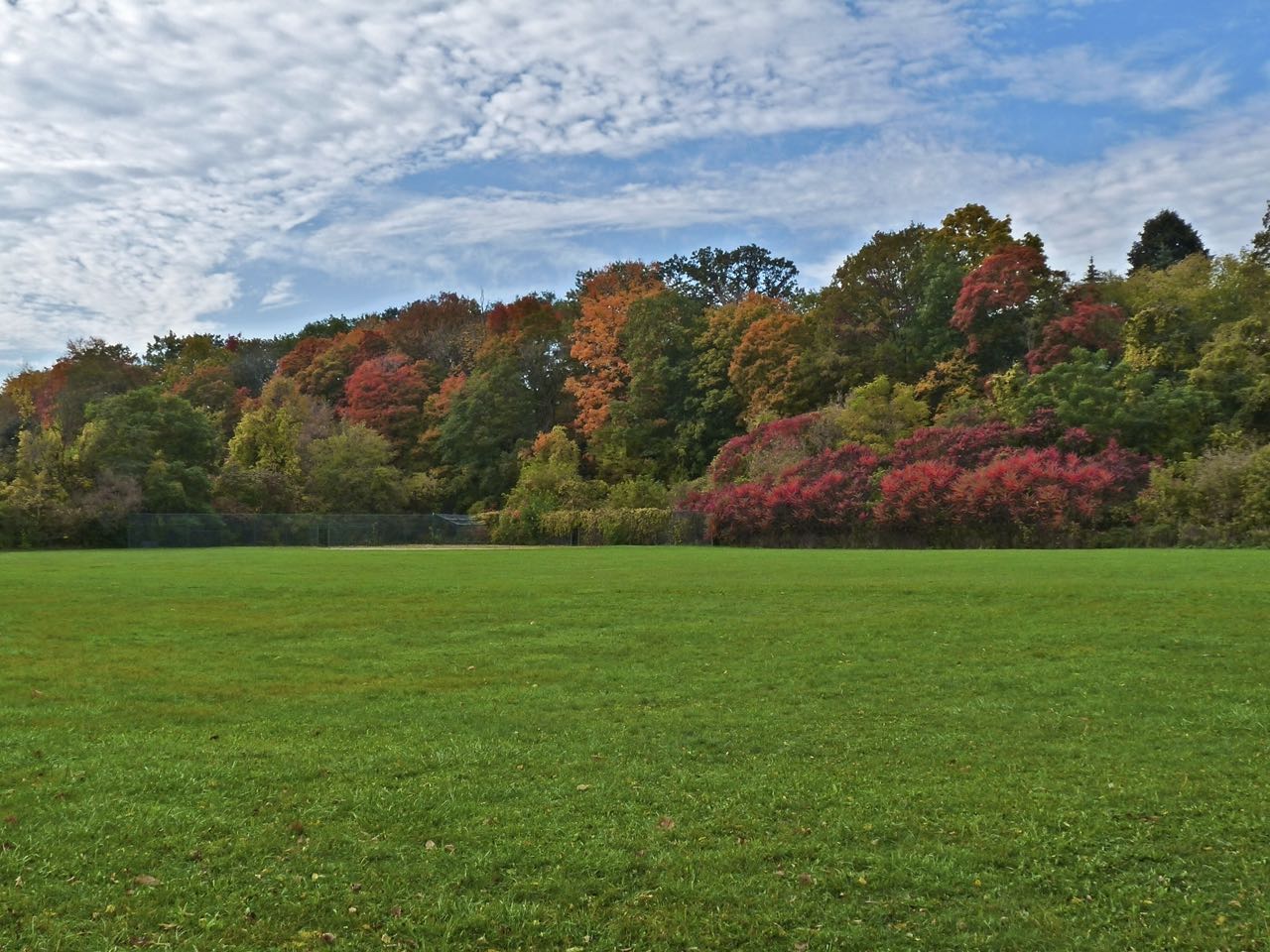
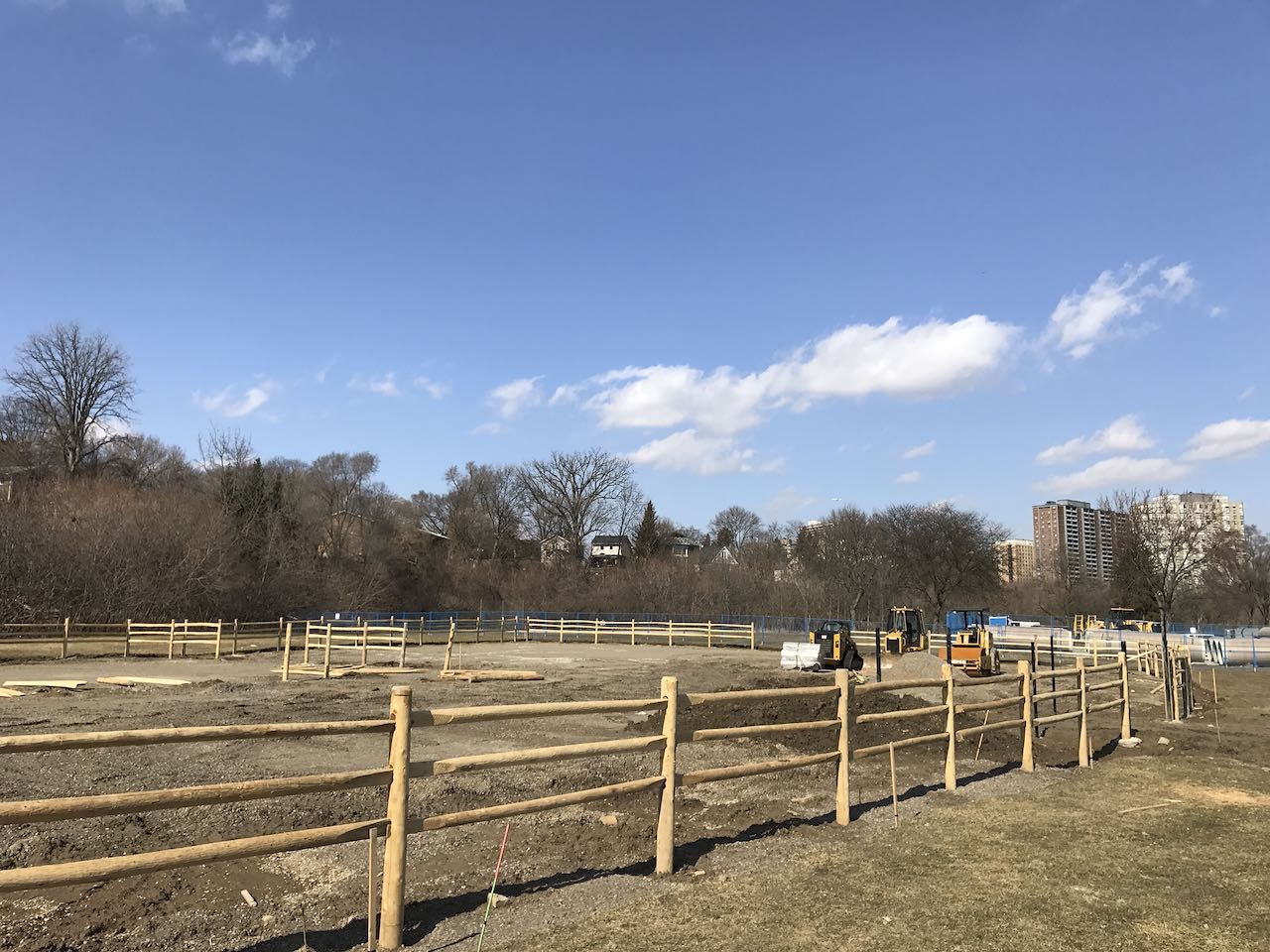
The site of the present-day DOLA back in October 2008 looking south-west..The DOLA under construction in February 2017 looking north-west.Then councillor (red top) Mike Ford at the opening ceremony on July 10, 2017.
The DOLA was built with several design flaws.
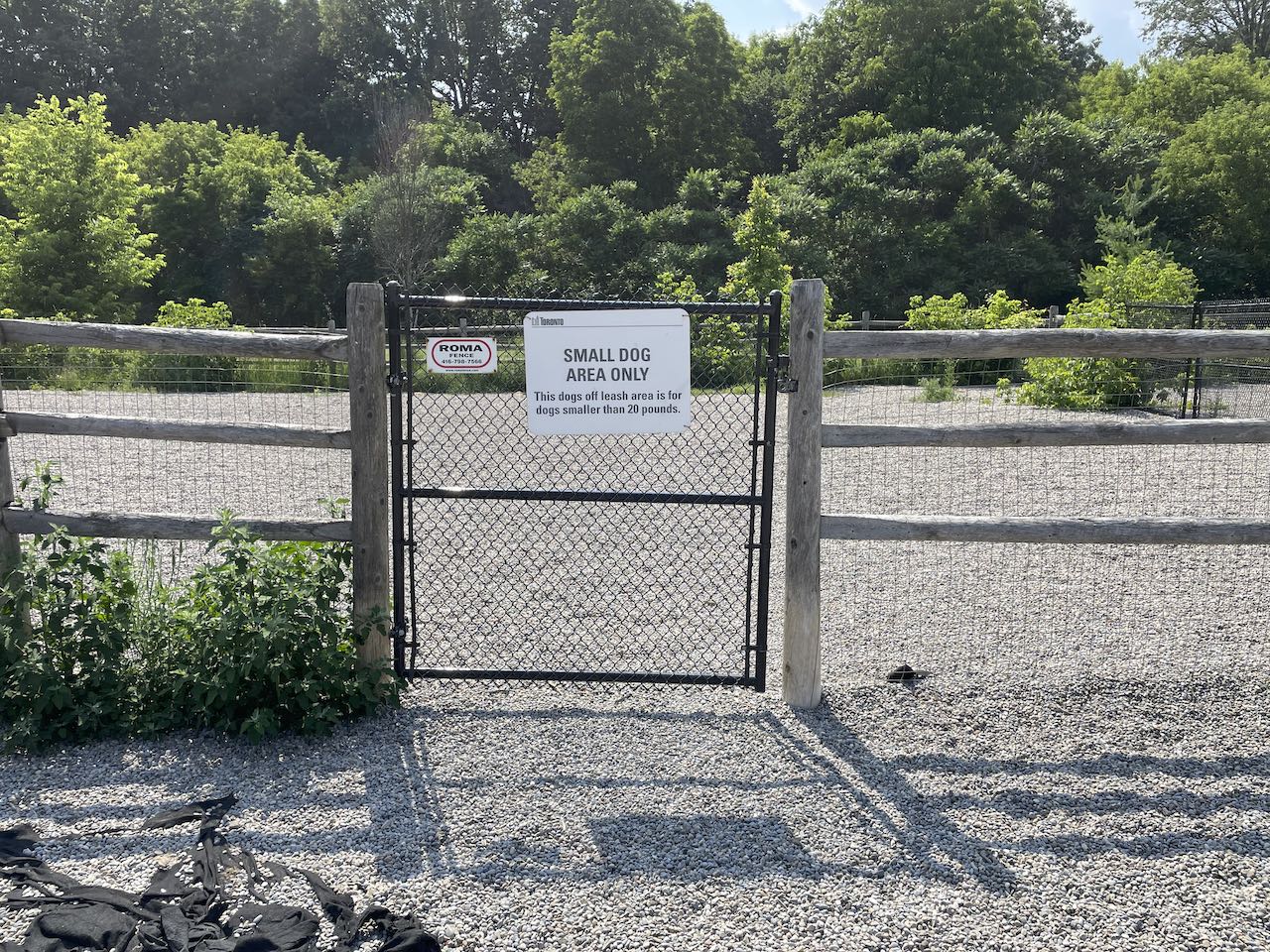
1. The small dog enclosure is only accessible by passing through the large dog enclosure.
Small dogs must run the gauntlet to get to their enclosure. July 2017.The small dog area with landscape fabric in the foreground. July 2023.
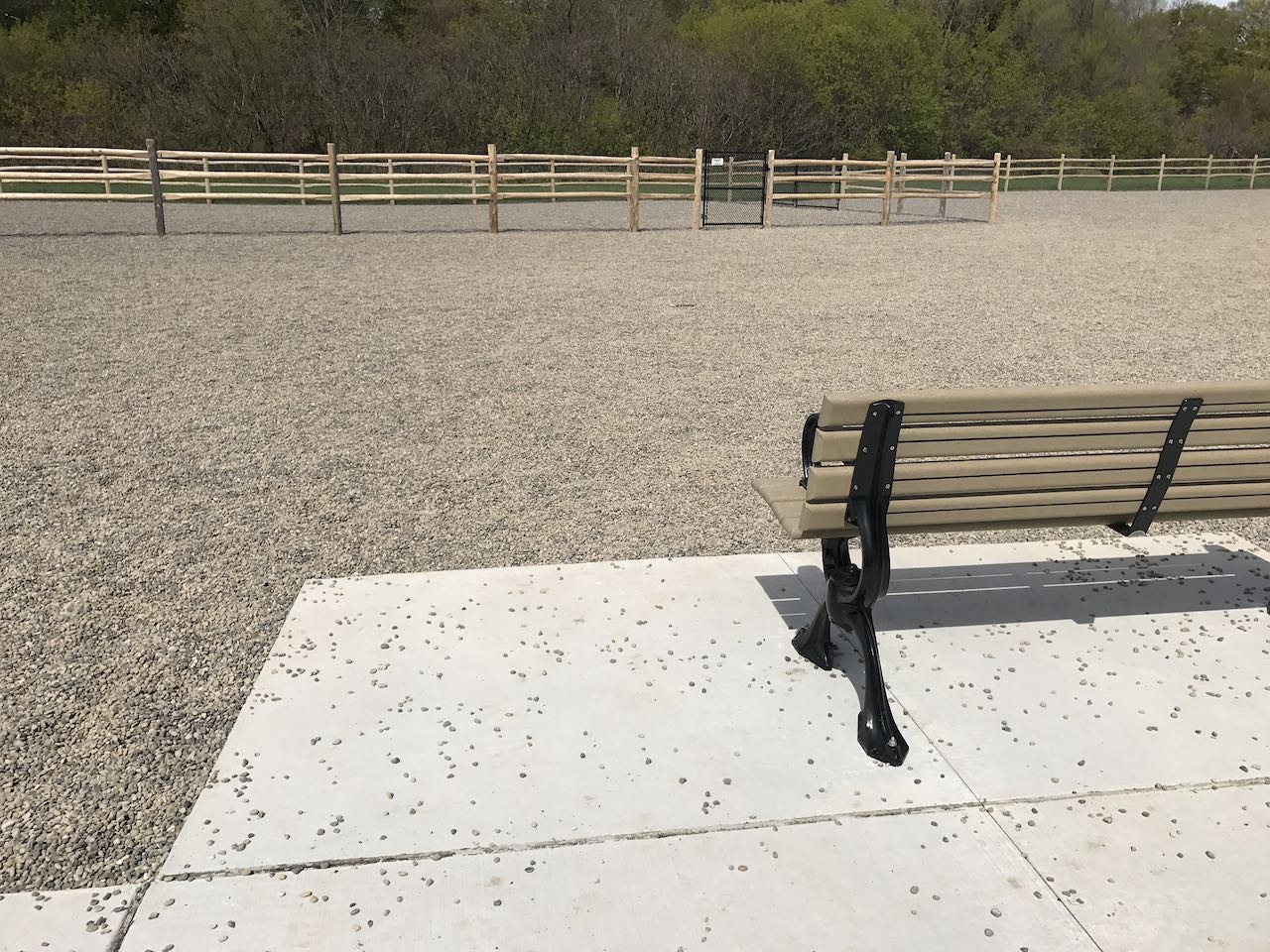
2. The pea gravel surface irritates dog paws making exercise out of the question for most.
3. No shade for dogs and owners. A few trees have been planted but these will take many years to mature.
Some trees have been planted but no shade – and harsh pea gravel. July 2023.
4. The space is totally alienated from nature and looks more like a cattle feedlot.
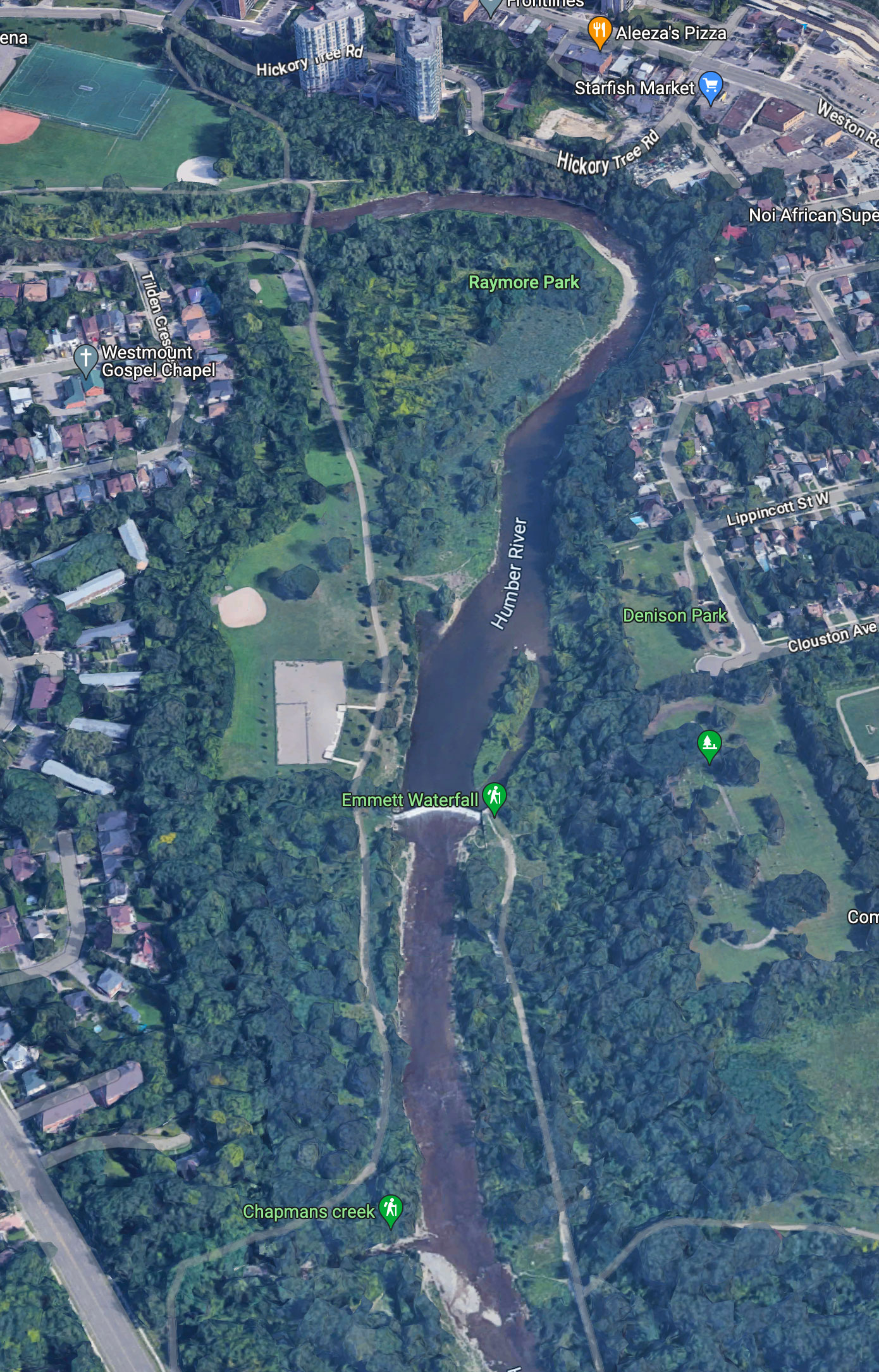
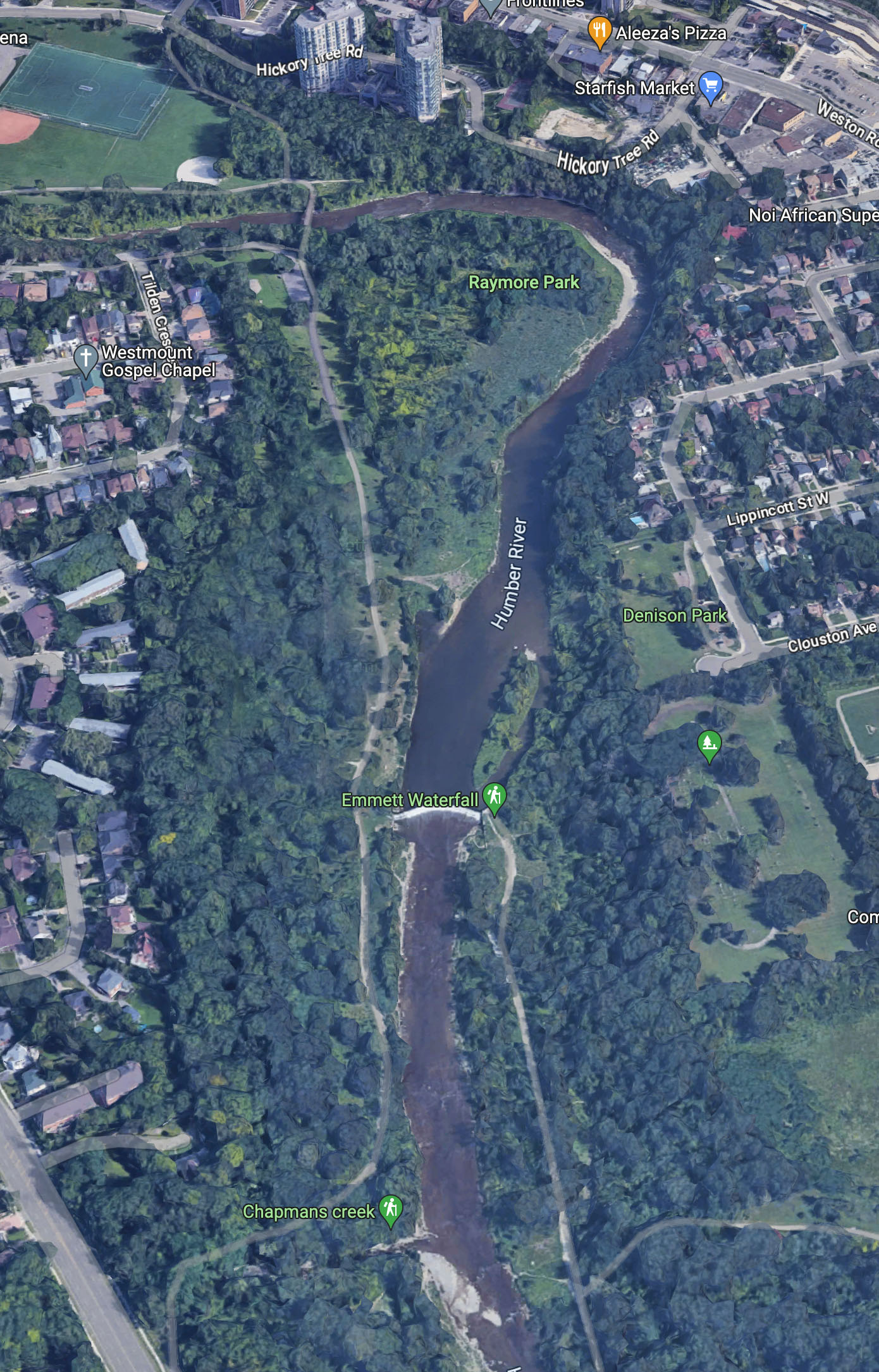
The DOLA and remaining (unused) baseball diamond just north of Emmet Waterfall. Google Maps.
A few observations:
The DOLA is empty most of the day.
The DOLA is popular with commercial dog walkers but a majority of individual owners seem to prefer other parts of Raymore park.
Commercial dog walkers are banned from November through May but many of them use the park year-round.
Compared to the rest of the park, the off-leash section is a barren wasteland.
Thanks to pea gravel making running uncomfortable, dogs get little exercise.
Many people ignore leash by-laws in the park.
The DOLA has done little to protect park wildlife from off-leash dogs.
By-law enforcement seems to have disappeared since Covid.
The DOLA seems to have been a huge waste of money and resources.
Overall Grade: D-
Public Consultation:
A Toronto-wide consultation process was begun in June 2019 to gather feedback on how to improve DOLA design with stakeholder meetings and public surveys. The effort seems to have ground to a halt during Covid as there are no updates beyond this one in 2020.
My two cents: The DOLA should never have been built as there was no demand for it – especially for one so flawed. Far better, cheaper and less disruptive, to have allowed the huge open space between the two unused baseball diamonds to be planted with native trees and create a woodland / wildlife corridor that would join with the one south of the weir.
What might have been – extending the woods north beyond the falls to form a wildlife corridor. Google Maps.
Extra Credit: Read Maria Kwok’s thorough review of Raymore Park’s DOLA here.
Back when Mugsey was alive, I was walking with a fellow dog-walking friend when she slipped on ice that had formed in a bike path depression south of the weir. A thin layer of snow had concealed the ice lurking beneath and down she went, breaking an arm.
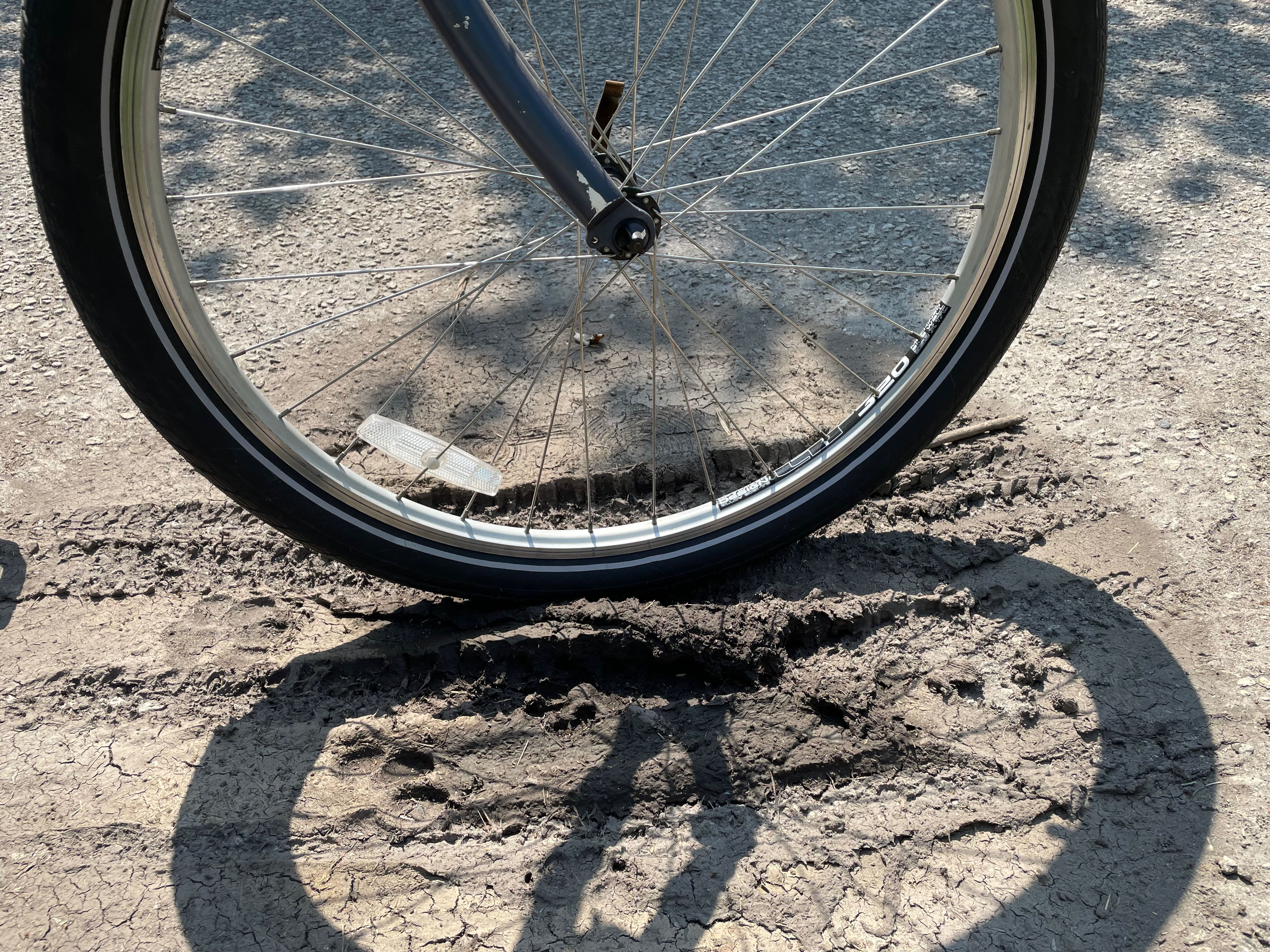
This was around 2011. The depression is still there along with several others. Some of them are quite deep and could cause a serious accident if a cyclist was caught unawares.
This one is filled with mud. July 2023.
The bike path is in need of levelling and repaving to today’s standards but for some reason, it’s not been a priority.
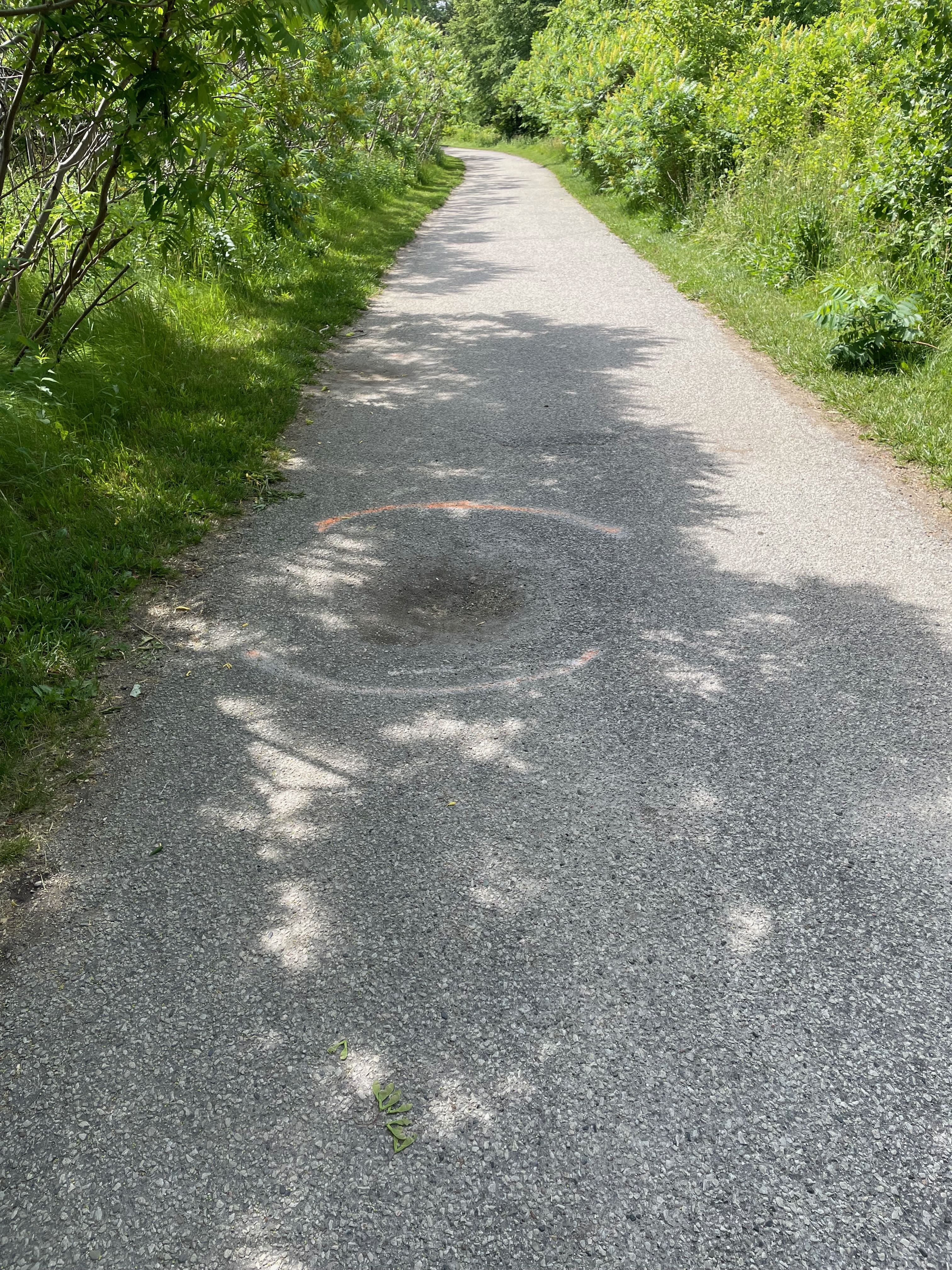
The photo doesn’t do the depth of the depression justice. June 2023.
Someone has helpfully used spray paint to outline the depression (and a few others in the vicinity) but nothing has been done since 2011. Maybe if Toronto is serious about creating a network of bike lanes around our city, these dangerous depressions can either be repaired or the bike path repaved and brought up to standard.
As far as nature is concerned, the May 24th weekend is the worst possible time to have fireworks going off. Spring is the time when animals nurture their fragile young and research has shown the devastation that fireworks can cause in wildlife. Imagine several nights when random bangs and flashing lights are cannonading through our city. This is what happens on our Victoria Day weekend every year. These days fireworks are widely available and they’re not always used responsibly.
Particular shame must go to the people who set fireworks off in parks. Even though it is illegal, law enforcement has bigger fish to fry. Tonight loud booms were echoing through Raymore Park (and no doubt others) accompanied by bright flashes of light. Park gates were still open at 11pm allowing vehicles to enter resulting in the fireworks being set off in the parking lot.
Luckily rain ended the show but the thoughtlessness of these people has likely distressed and perhaps killed some young animals in our parks.
This year marks 30 years since I started coming to Raymore Park. During that time many changes have occurred, most of them reflecting adjustments in park philosophy and management.
4. Areas under grass.
After Hurricane Hazel hit the Humber Valley in 1954, it was decided that flood plain and ravine land should be cleared of settlement to avoid further loss of life. Residents of Raymore Drive and Gilhaven Drive who survived were compensated for the purchase of their homes or lots. Gilhaven drive was approximately where the parking lot is today. Lands were then made part of what is now the Toronto and Region Conservation Authority (TRCA) and homes were bulldozed to create wide expanses of grass. Slowly, thanks to diminishing budgets, some grassed areas have been allowed to naturalize and sumac bushes have advanced, allowing trees to spring up in their midst. Currently, there is no grass cutting south of the weir apart from a strip on either side of the bike path.
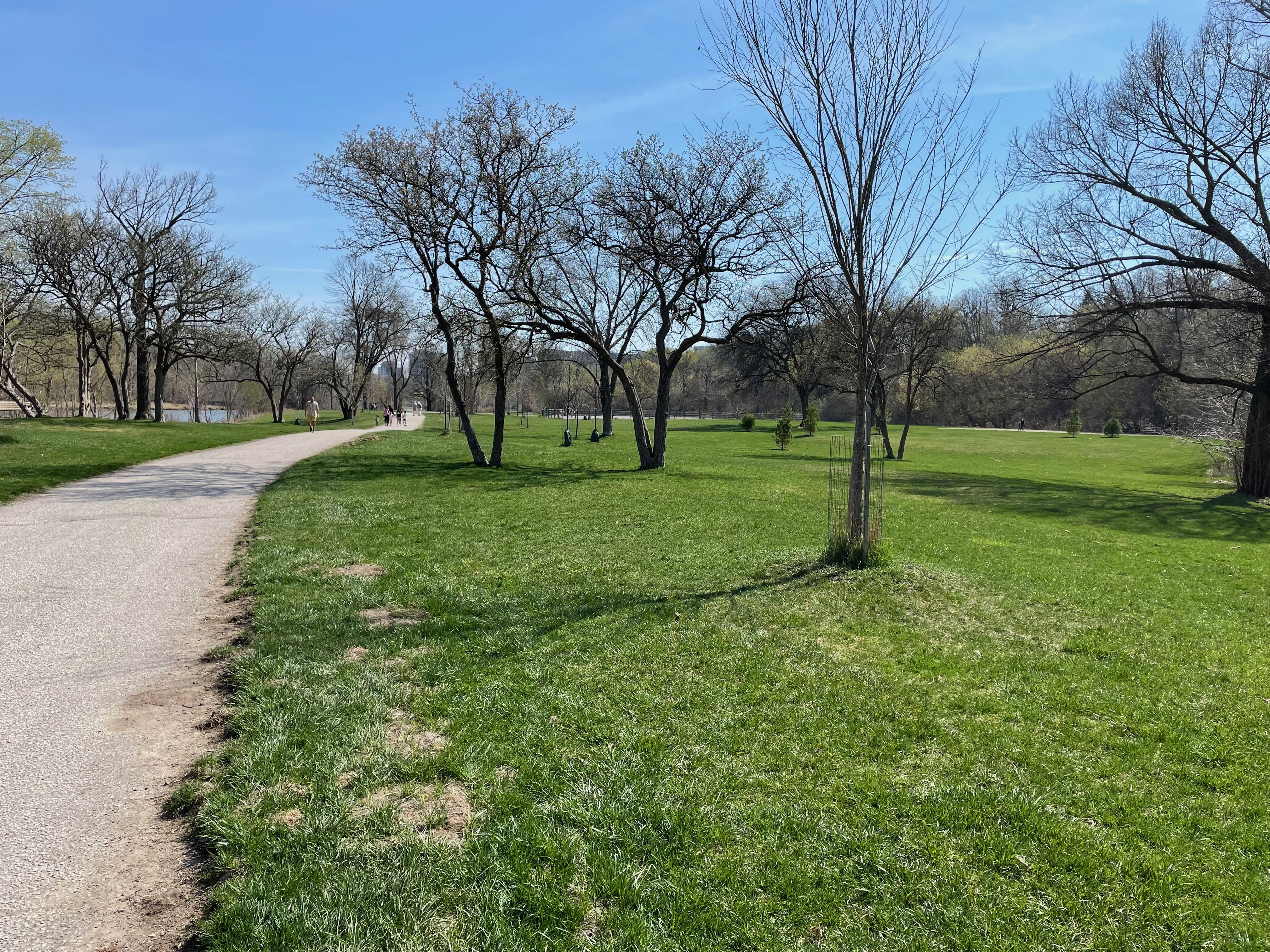
Looking south towards the weir. Lots of grass with some recent tree plantings.
5. Dogs.
Raymore has been a popular park for local dog owners for decades. When the condos at Hickory Tree opened, residents were allowed to keep dogs and used Raymore Park once the footbridge opened in 1995. The wild area was popular and a path was carved out by dogs and their owners as they followed the Humber through the bush.
In 2017, an area near one of the baseball diamonds was converted into a dog off-leash area (DOLA). The ground was fitted with weeping tile to improve drainage, bulldozed and covered with the aptly named pea gravel. It was then fenced off from the rest of the park. The pea gravel is supposed to allow for better drainage but many owners say that it makes their dogs’ paws uncomfortable.
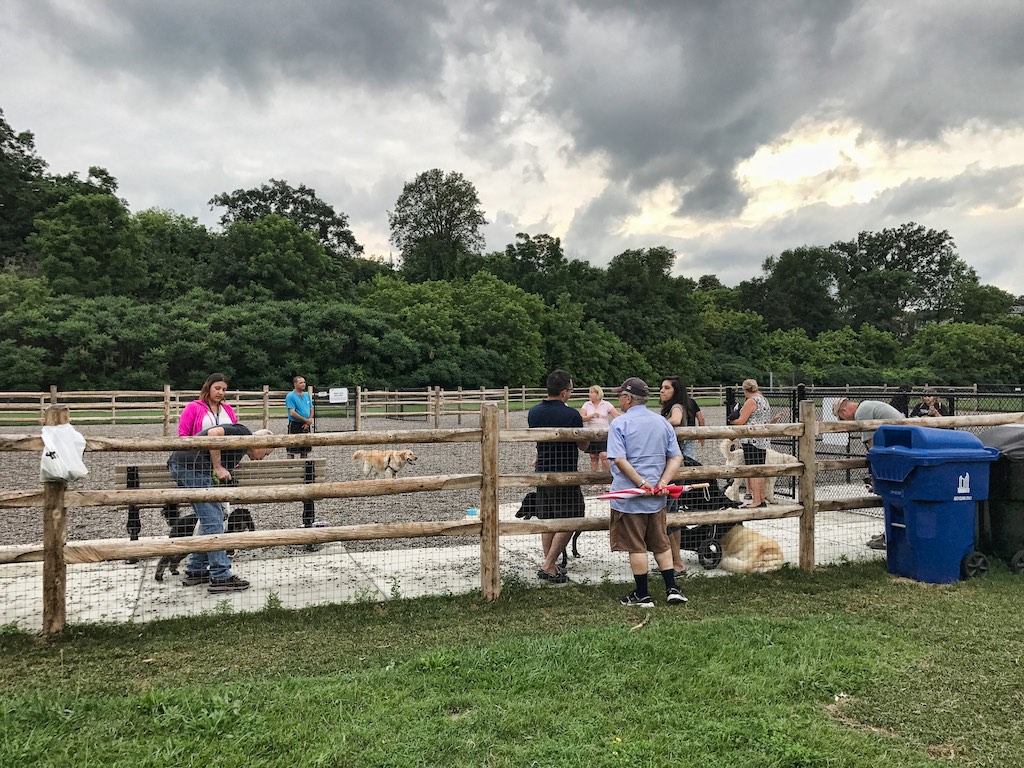
Residents and their dogs gather Monday, July 10 2017 for the official Raymore Park DOLA opening.
The DOLA took a few years to become popular but is now widely used and is popular with professional dog walkers who can be seen with up to six dogs at a time.
Some owners avoid the DOLA, instead preferring to allow their dogs to run free in places like the wild area. They play a cat and mouse game with city by-law enforcement officers and occasionally have encounters with wildlife that are unfortunate.
This year marks 30 years since I started coming to Raymore Park. During that time many changes have occurred, most of them reflecting adjustments in park philosophy and management.
1. Pesticides:
Herbicides were sprayed here – just north of the current off-leash area. October 2000.
Back in 1993, park staff would spray grassy areas with herbicide in order to keep weeds down and in particular, poison ivy. They used Roundup (Glyphosate) which is pretty potent. Caution notices were placed on the grass informing people that weedkiller had been sprayed but these didn’t last long. At that time, much more of the park was grass (more on that in another article). Despite the claims of Monsanto, Roundup when sprayed over such a wide area is probably terrible for wildlife and dogs. The City banned pesticides in theory in late 1998 but the practice continued for a while after that according to this article from 2000.
2. The Humber Footbridge.
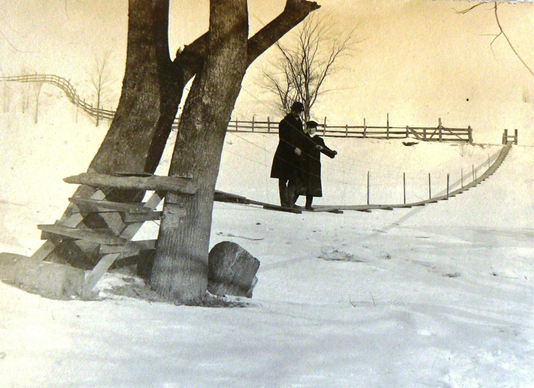
The 1917 ‘swing’ footbridge that was condemned and replaced in 1950. Photo via Weston Historical Society.
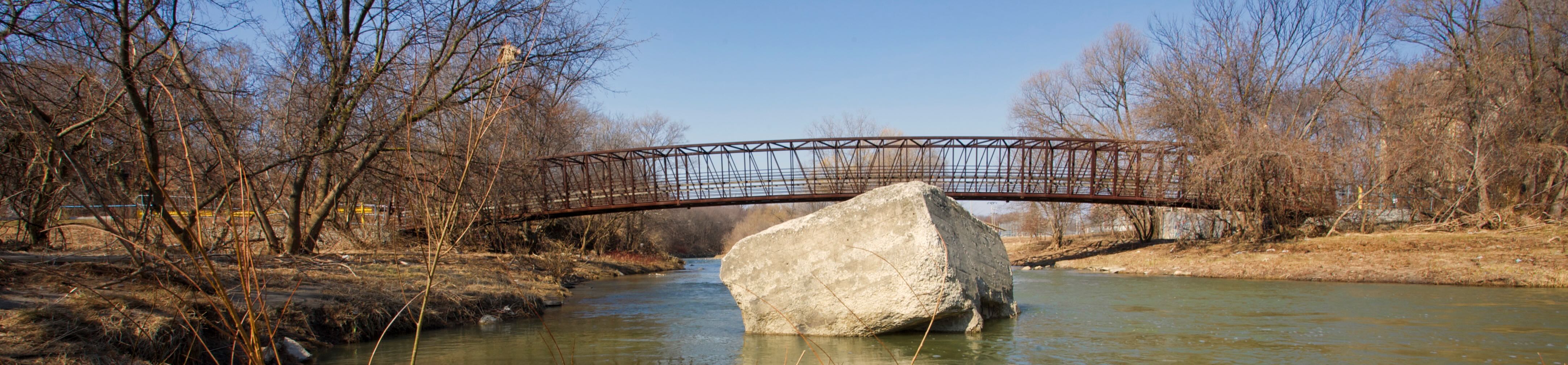
When Hurricane Hazel struck in 1954, a four-year-old footbridge over the Humber was swept away. This link between Westmount and the stores in Weston wasn’t replaced until 1995 some 41 years later. The bridge gets a substantial amount of use from cyclists, sightseers and commuters who can be whisked to the airport or downtown in about 15 minutes via the UP Express on Weston Road.
Read this excellent article on the three Weston footbridges from the Weston Historical Society.
The bridge with an abutment of the 1950 version in the foreground; looking upstream in March 2009.
3. Garbage Containers.
Garbage containers were either lined wire-mesh bins or the occasional re-purposed oil drum back in the 20th Century. There were no recycling containers back then – just open-topped receptacles that went uncollected during the winter. The cans and baskets weren’t replaced with the current wheeled carts until 2012.
Even with our clearly marked carts, park users are fairly indiscriminate where they toss their waste, so the recycling bins become contaminated and their contents worthless. As a result, garbage and recycling are collected by the same truck and the contents lumped in altogether.
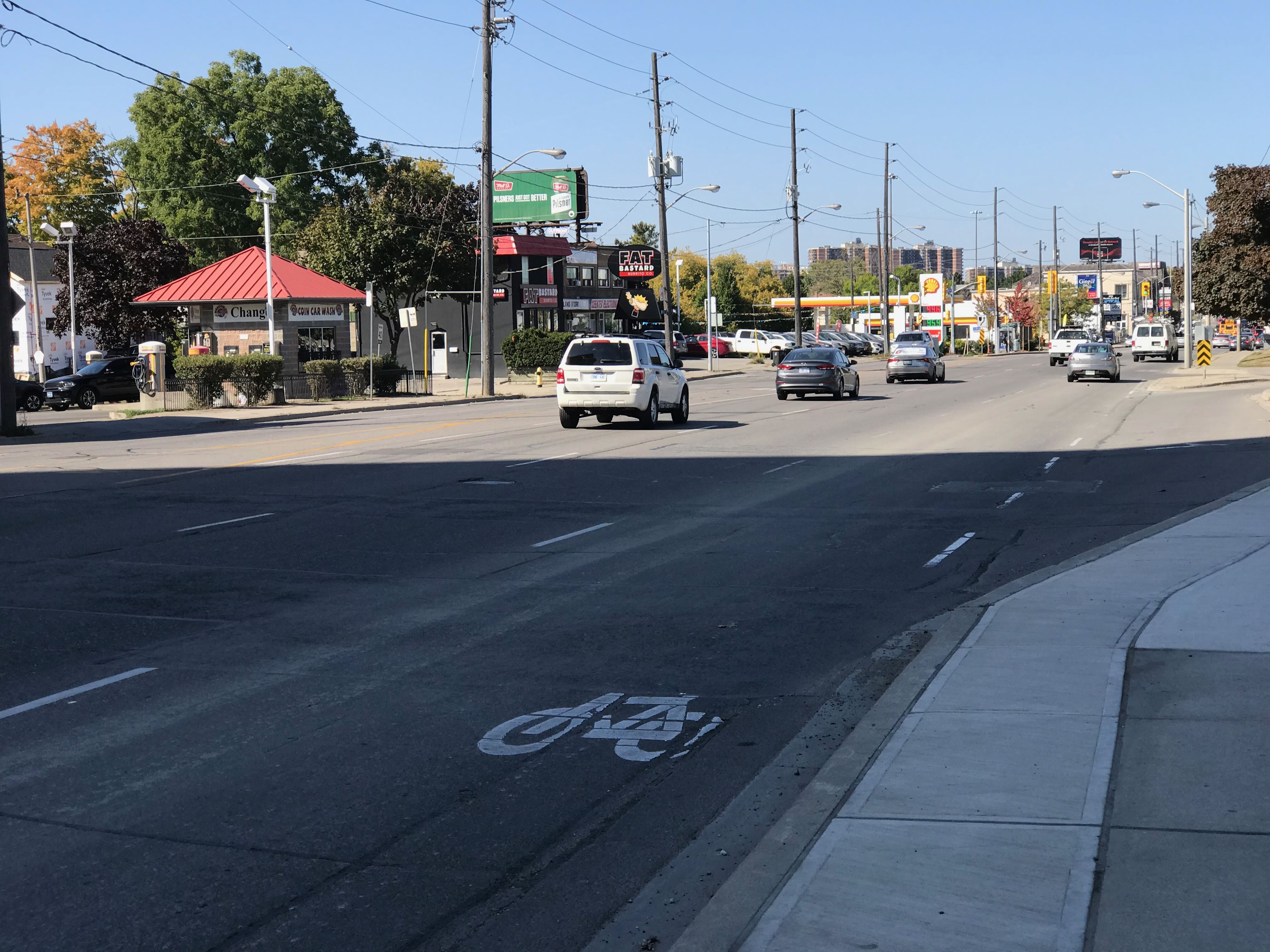
The Humber Gap is the name of the missing segment of the Humber Trail between Mallaby Park and Cardell Avenue. Apart from the infamous gap, the Trail connects Brampton to Lake Ontario. At the moment, cyclists wishing to proceed north must climb a hefty set of stairs then risk life and limb on busy Weston Road which is optimistically painted with sharrows. These indicate that cyclists are to share the road with other vehicles without barriers or protection.
The perilous stretch of Weston Road with an actual sharrow in September 2020.
The Trail can be re-joined after deking into Cardell Avenue opposite the Loblaws Supercentre.
With much public encouragement, Toronto city planners have tried to solve the problem for years. Read this excellent blog post and the follow-up about the difficult choices that planners had to make. A ton of money went into designing alternative the routes, a Municipal Class Environmental Assessment and public consultations.
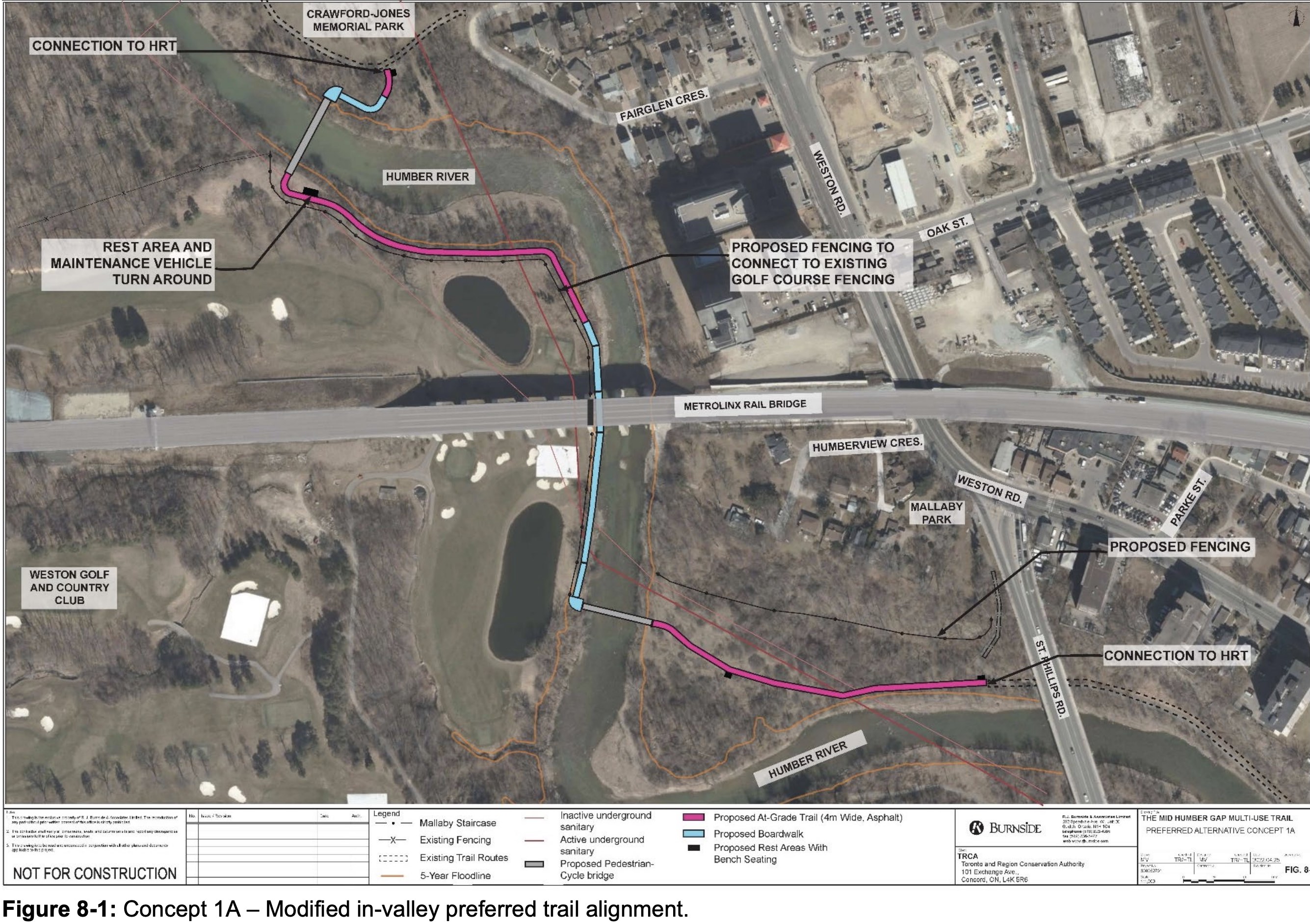
After receiving much input, a decision was made to create a path that stayed at river level, crossing the Humber twice as it navigated the patchwork of public and private properties along the way.
From: toronto.ca (click to enlarge)
One of the private properties affected is the Weston Golf and Country Club which had raised some concerns about safety of cyclists and pedestrians travelling along the edge of their property. WGCC were also concerned that flood events may wash away the new trail. The city assured them that fencing would be secure and that the trail would be built high enough to be safe from flooding. No doubt they weren’t keen on losing a strip of land as well as the issues that members of the public might bring to the course.
Luckily WGCC has friends in high places and out of the blue (literally) came word that:
“On January 18, 2023, the Minister of Environment Conservation, and Parks (David Piccini) (the “Minister”) issued an order requiring that the City and TRCA carry out an individual environmental assessment of the Project (the “Order”). The Order states that allowing the Project to proceed on the basis of the MCEA (Municipal Class Environmental Assessment) would not be consistent with the purposes of the Act.“
Conveniently, the reasons behind adding this additional environmental assessment are confidential but uncharitable speculators might assume that the WGCC membership doesn’t want the project to happen and they have pulled some strings. Not coincidentally, Premier Doug Ford lives about a kilometre away from the golf club.
That’s the thing with hiding behind confidentiality, people get to speculate. If I was a betting man I would speculate that the project is dead.
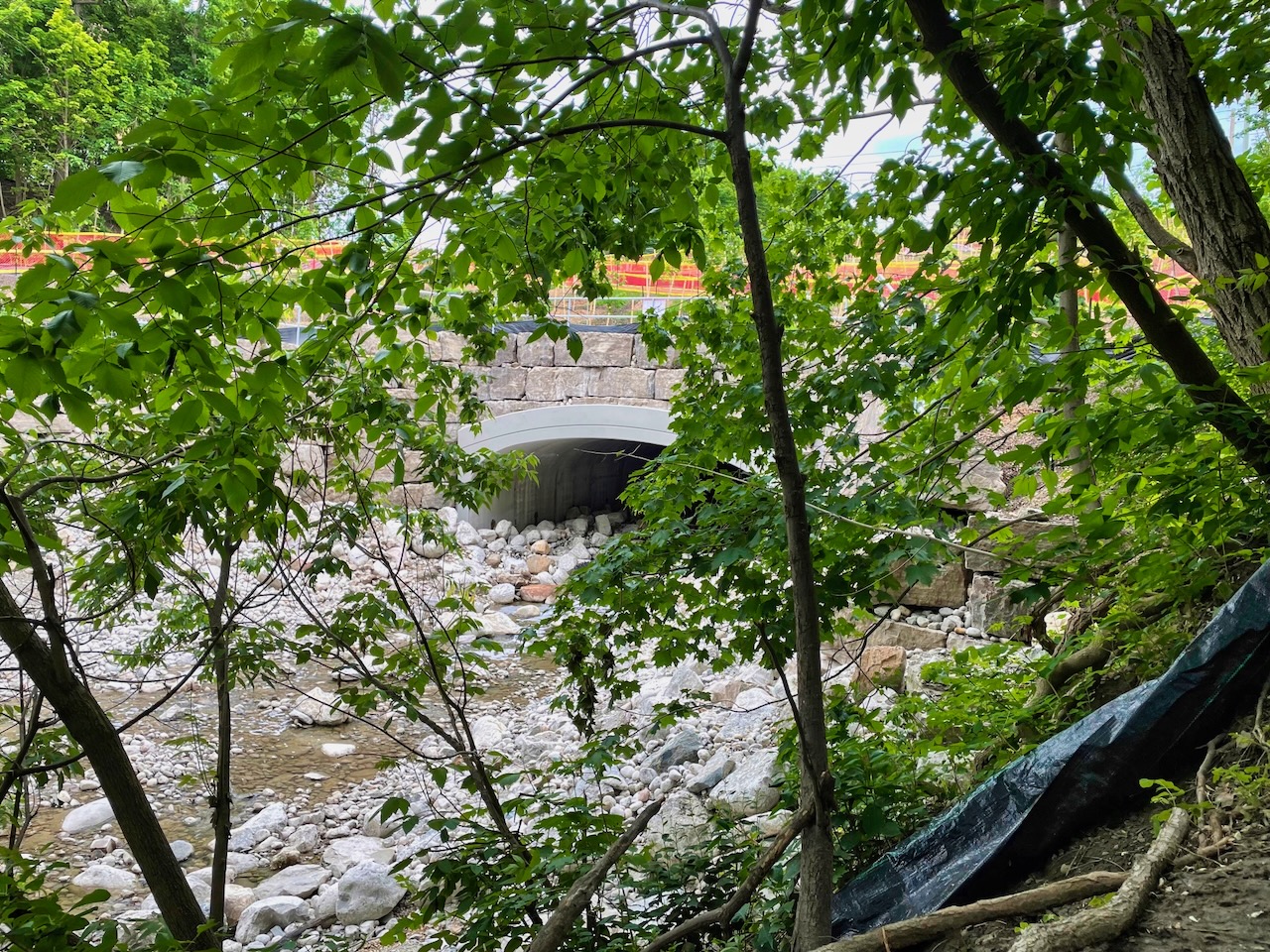
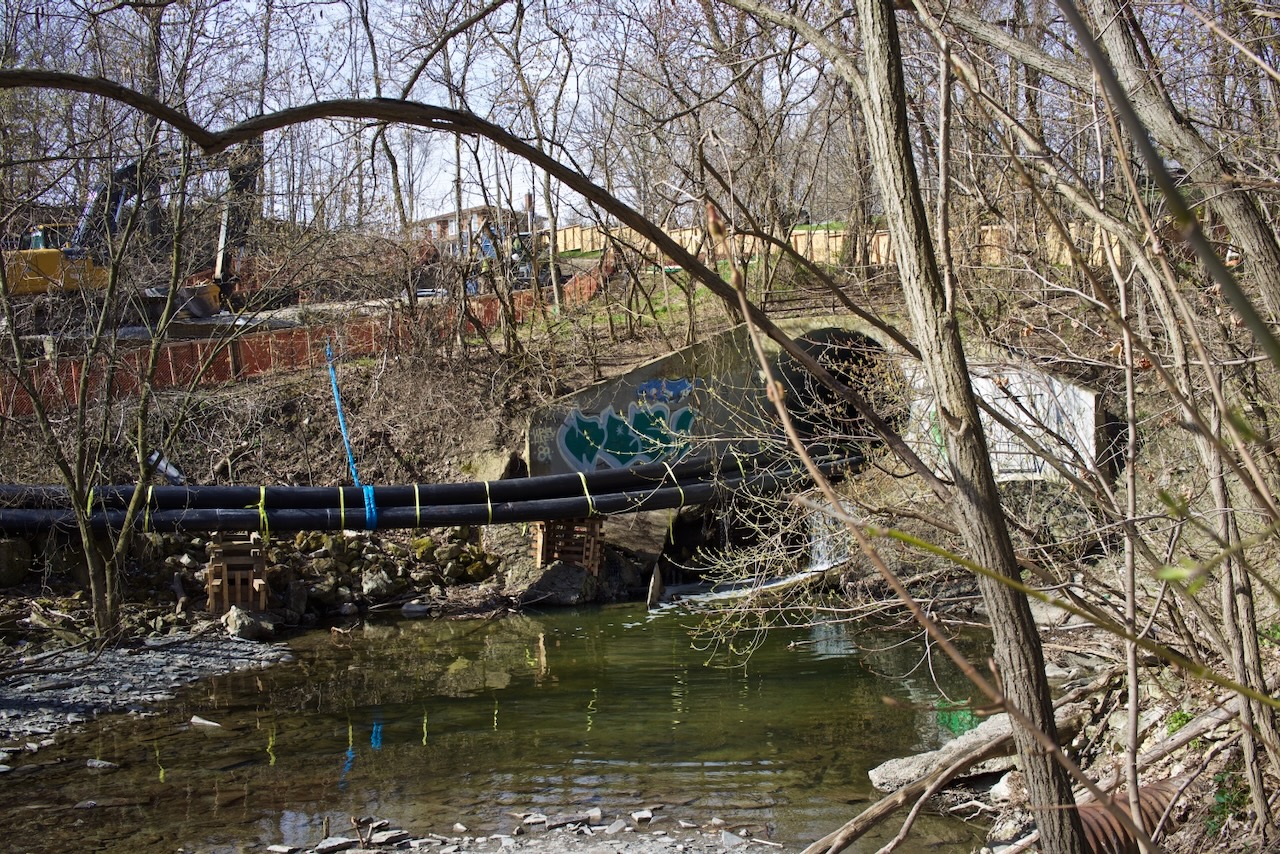
The culvert work under Scarlett road that brings Humber Creek to the Humber River is almost complete. I was able to get a look at it the other day and the eastern side is ready.
Through the trees…
The old culvert was quite something:
The old culvert during previous sewer repairs in April 2016.
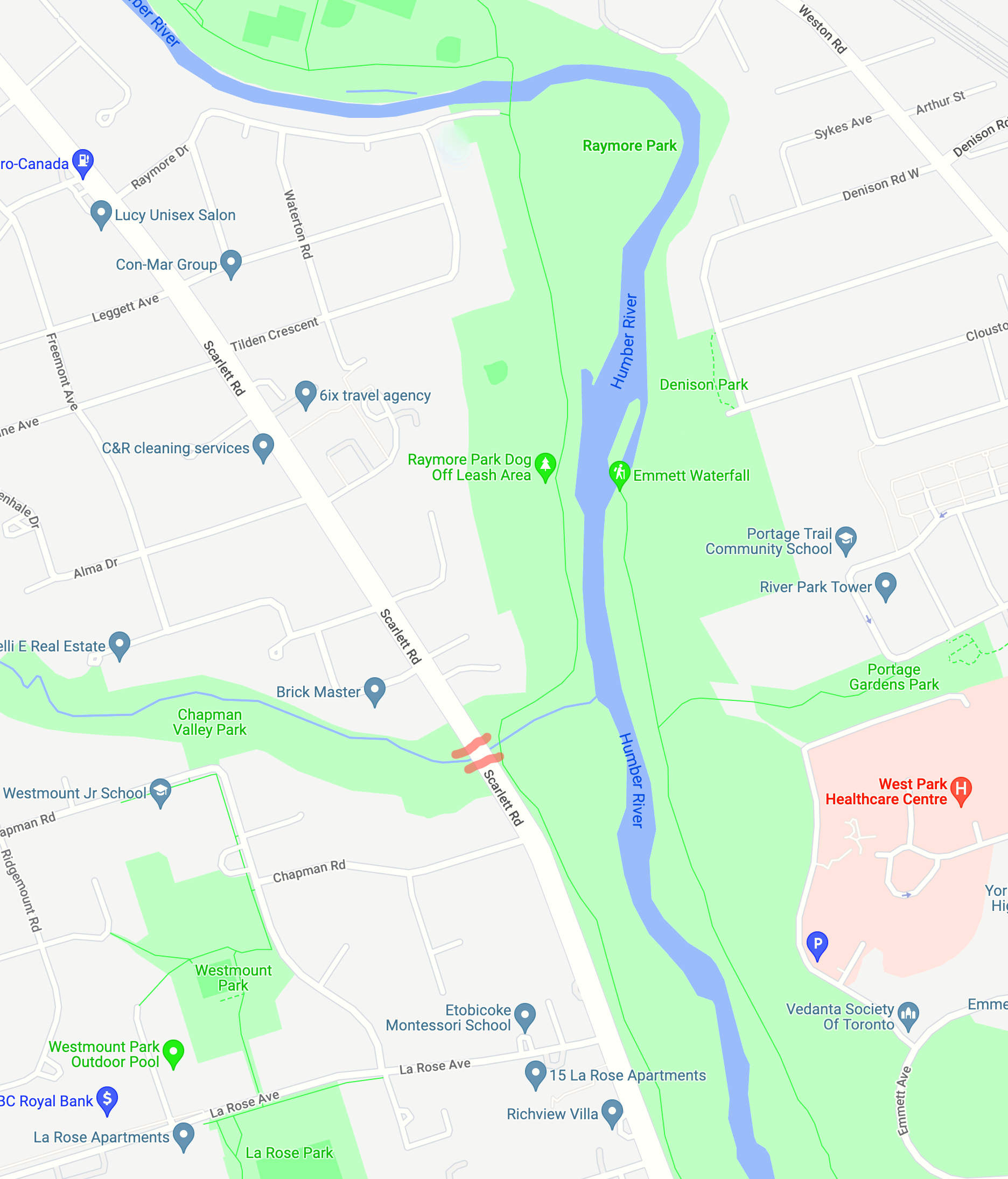
The old outlet was a good couple of metres above the creek which made for a spectacular and powerful jet of water after rainstorms. A deep pool formed as a result. Unfortunately, the height of the culvert made passage along the creek quite difficult for wildlife. The new lower bed has created a corridor that will link Raymore and Chapmen Valley Parks and lower the risk of deer and other animals running across Scarlett Road.
The soon to be linked Chapman Valley and Raymore Parks – From Google.
In addition to linking the parks, the terracing around the culvert has been landscaped. The other side of the culvert is supposed to be completed by this July or August.
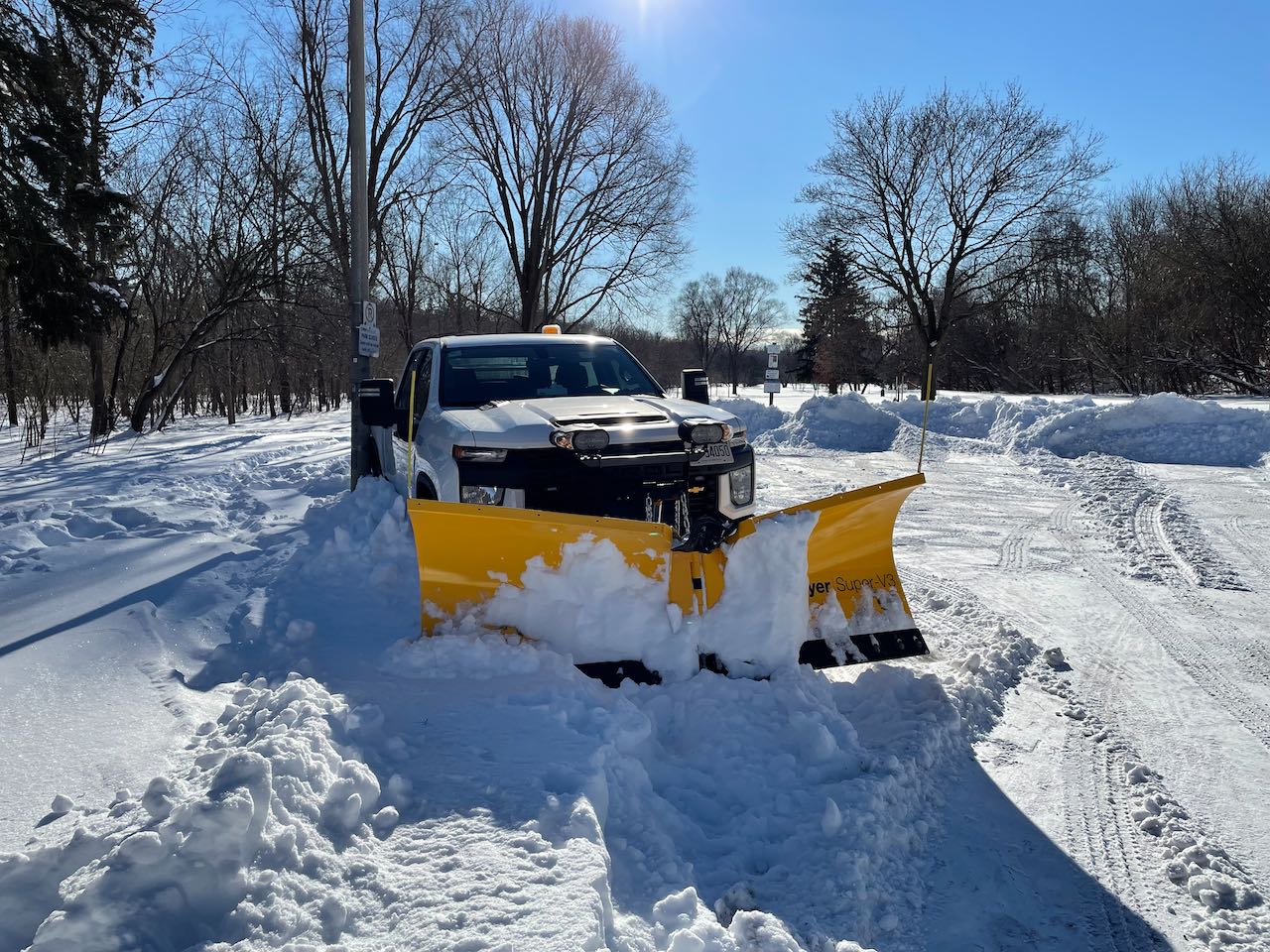
After a 32 cm snowfall on Monday, Winter Park Path Project crews ran into trouble trying to clear and grit the parking lot on Tuesday. This truck with plow attached hopped over a hidden curb and came to rest against a light pole. Extracting the truck, leaving the light pole standing will be a precision job.
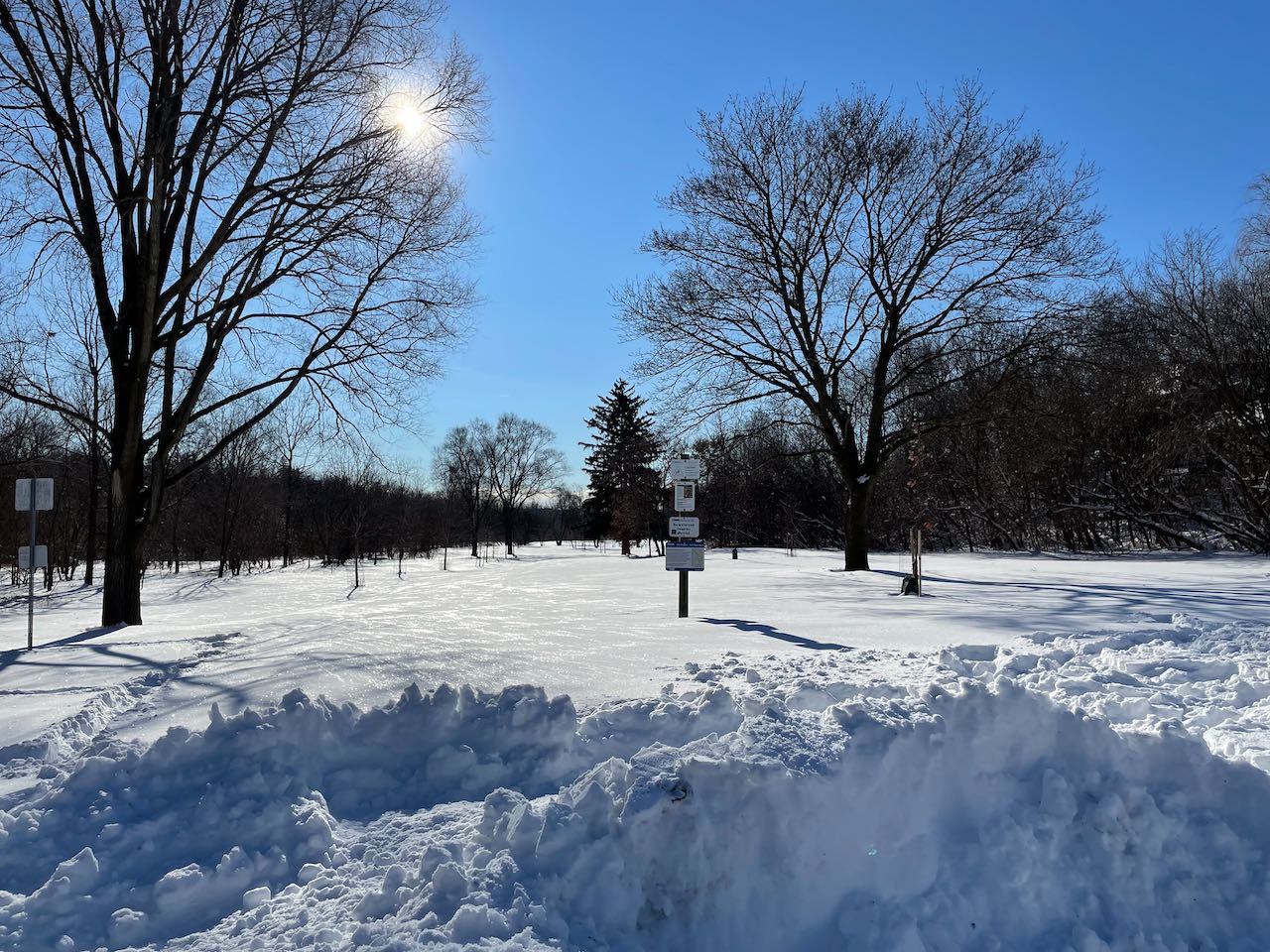
Looking south from the parking lot.
As is usual after a heavy snowfall, paths are formed by the first people to come along and a path has been carved through the wild area. The regular bike path to the dog off leash area is untouched.
The Toronto and Regional Conservation Authority has strict rules about salting pathways near water courses. Each winter, huge amounts of salt drain into our rivers and streams and toxic levels are routinely measured. As a result, the salting of pathways close to the Humber is not permitted. This makes for slippery journeys for the many people who rely on park pathways to get from A to B.
The City of Toronto’s Parks division is piloting a park path clearance project in our area. This winter, plows are clearing paths from Mallaby Park, through Cruickshank to the Raymore Park off-leash area then continuing from the Humber Creek culvert construction to James Gardens. After plowing, instead of salt, a black grit is being spread to assist with traction. Based on personal experience, it appears to work.
Let’s hope that when spring arrives, the grit will be hoovered up and recycled.
UPDATE: Parks supervisor Shane Rajapakse tells me that the grit is called LavaGrip and it’s being evaluated by the Parks people as well as TRCA. A report on its effectiveness will be sent to Toronto Council later this year. Apparently it is pet safe and made from small particles of actual lava from an extinct volcano in Quebec and it is supposed to break down at the end of the Winter.











 Friends of Raymore Park