Tag Archives: black walnut

Signs of Fall: tree planting

In the last 20 years, thanks to old age and disease, there has been a steady reduction in the number of mature trees in Raymore Park. Quite a number of these trees are invasive non-natives such as Siberian elm and Norway maple. While many hundreds of native saplings have been mass planted in the wild areas, no mature boulevard trees have been planted to line the pathway.

On Monday September 23rd, 43 trees were planted along the entrance and pathway as far down as the weir. This will make a big difference in years to come as the path is quite exposed in both winter and summer. I only have one slight quibble with the choice of trees; quite a number are black walnut and the park has no shortage of those already. There are quite a few water-loving weeping willows where the path comes near the river and some maples too.

A couple of Toronto Forestry workers were inspecting the trees yesterday and they told me that for the most part the trees were planted to the correct specifications by the contractor. A few have been planted too high and will need to  be adjusted and some look a little straggly, but for the most part it has been a successful planting.

This is the perfect time of year to plant trees as the ground is still warm and autumn rains will ensure lots of moisture for roots to grow.
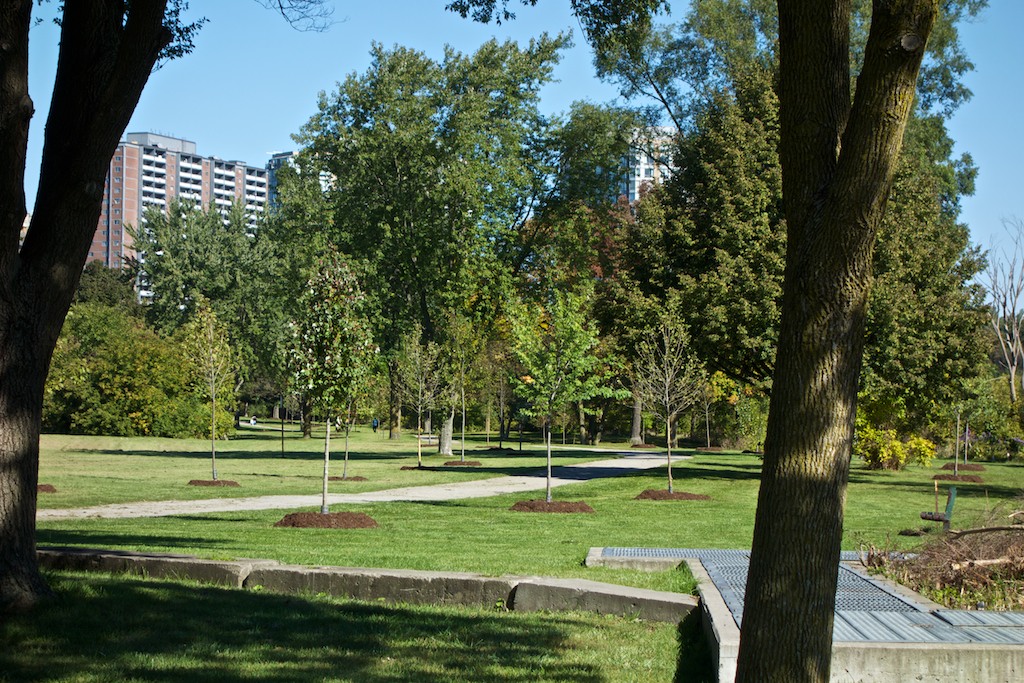
Count 'em - it's 43!

Count ’em – 43 new trees!

Signs of Fall: Black walnuts

Last night the first ground frost hit Raymore Park. This occurs when the temperature doesn’t go below zero but there is a touch of white on the grass. Hopefully the first air frost is some time away but there are unmistakeable signs of fall, even though most leaves are still green. One sign that is hard to miss is the fruit that seems to be everywhere. From crab apples to acorns, seeds for the next generation are ready to be distributed.

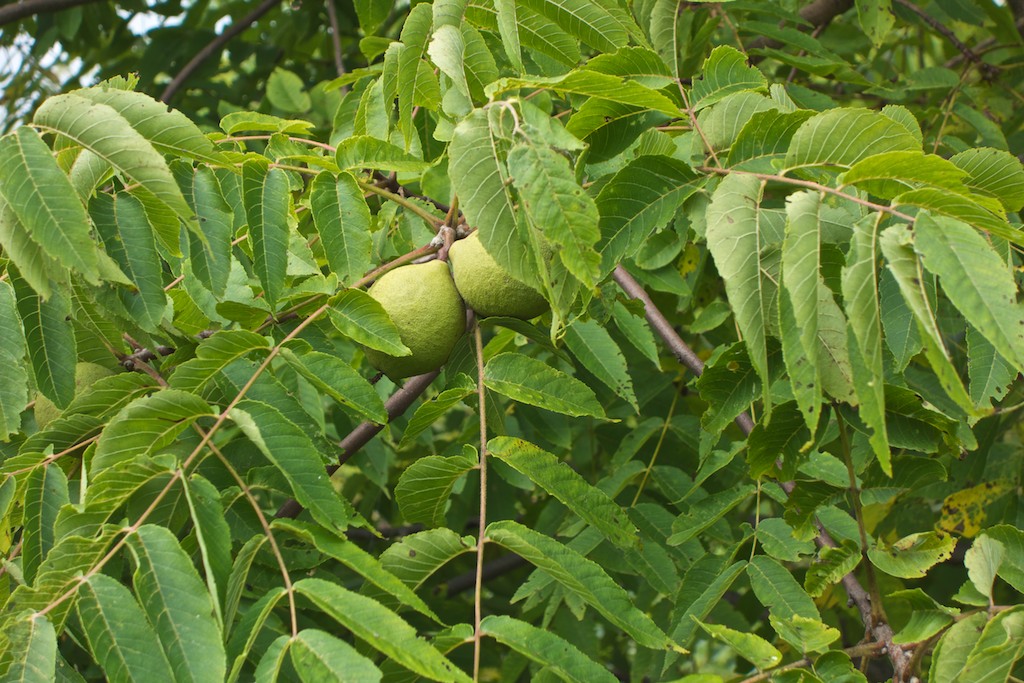
These exotic looking fruit are black walnuts.

These exotic looking fruit are black walnuts.

Black walnut trees are very common in Toronto and provide food for squirrels and the occasional curious human. They are native to Toronto but thrive in cold spots such as Quebec City because they avoid frost damage by leafing late in spring.  The walnuts themselves are surrounded by a fleshy outer skin and then an incredibly hard shell.

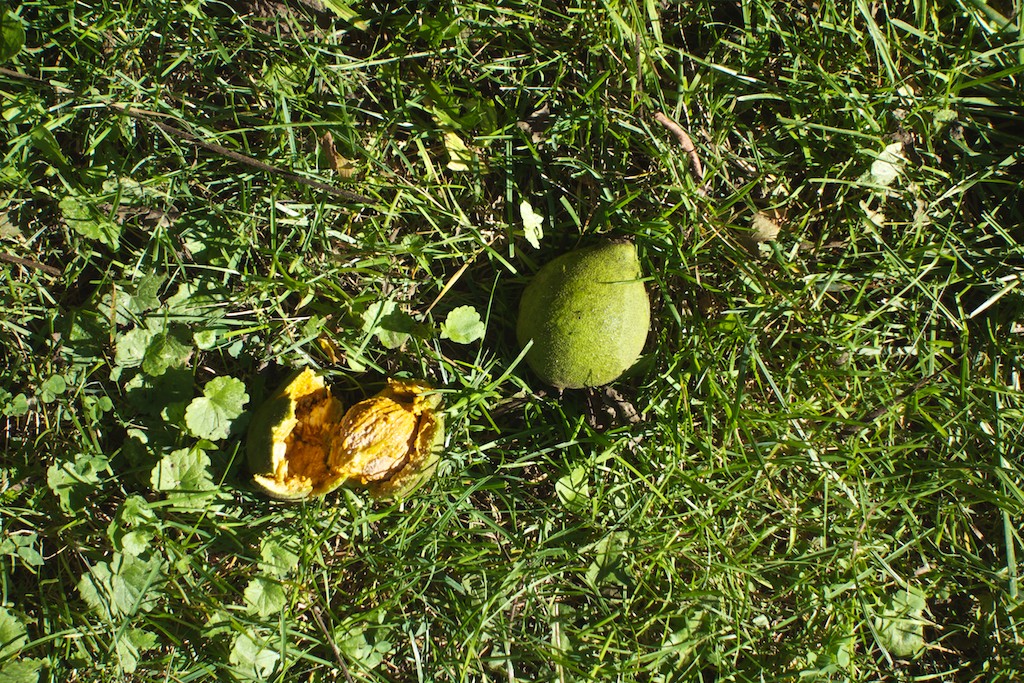
This walnut was run over by a car revealing the unbroken inner shell.

The walnut on the left was run over by a car revealing the unbroken inner shell.

Unlike Persian (aka English) walnuts that have been cultivated for millennia, black walnuts are pretty much as nature designed them and as a result are smaller and incrementally more difficult to harvest. Anyone who has attempted to extract a black walnut can only appreciate the skill and determination of squirrels. The trees dispense a natural herbicide called juglone which kills competing plants unlucky enough to be nearby. The toxicity is not isolated to plants; horses should be kept well away from black walnuts. Attempting to extract the nut from the flesh will leave hands turned dark orange by the chemical. The wood is much prized as a veneer.

Thanks to absent-minded squirrels, Raymore Park is a black walnut nursery with more and more planted every year. They grow quickly and can live on average 200 years. As time goes on, walnut trees will increasingly influence the variety of flora and fauna in the park.