Imagine, a nutritious salad ingredient just for the picking.
Ontario is filled with invasive species that have been released accidentally or deliberately. Alliaria petiolata, a native European plant was brought to North America in the 19th Century by settlers who liked its garlic taste and medicinal properties. It’s an evergreen that grows quite tall and since its natural enemies didn’t come along for the ride, Alliaria petiolata, positively thrives. It is better known as garlic mustard, poor man’s mustard or in the U.K., as Jack-by-the-hedge.
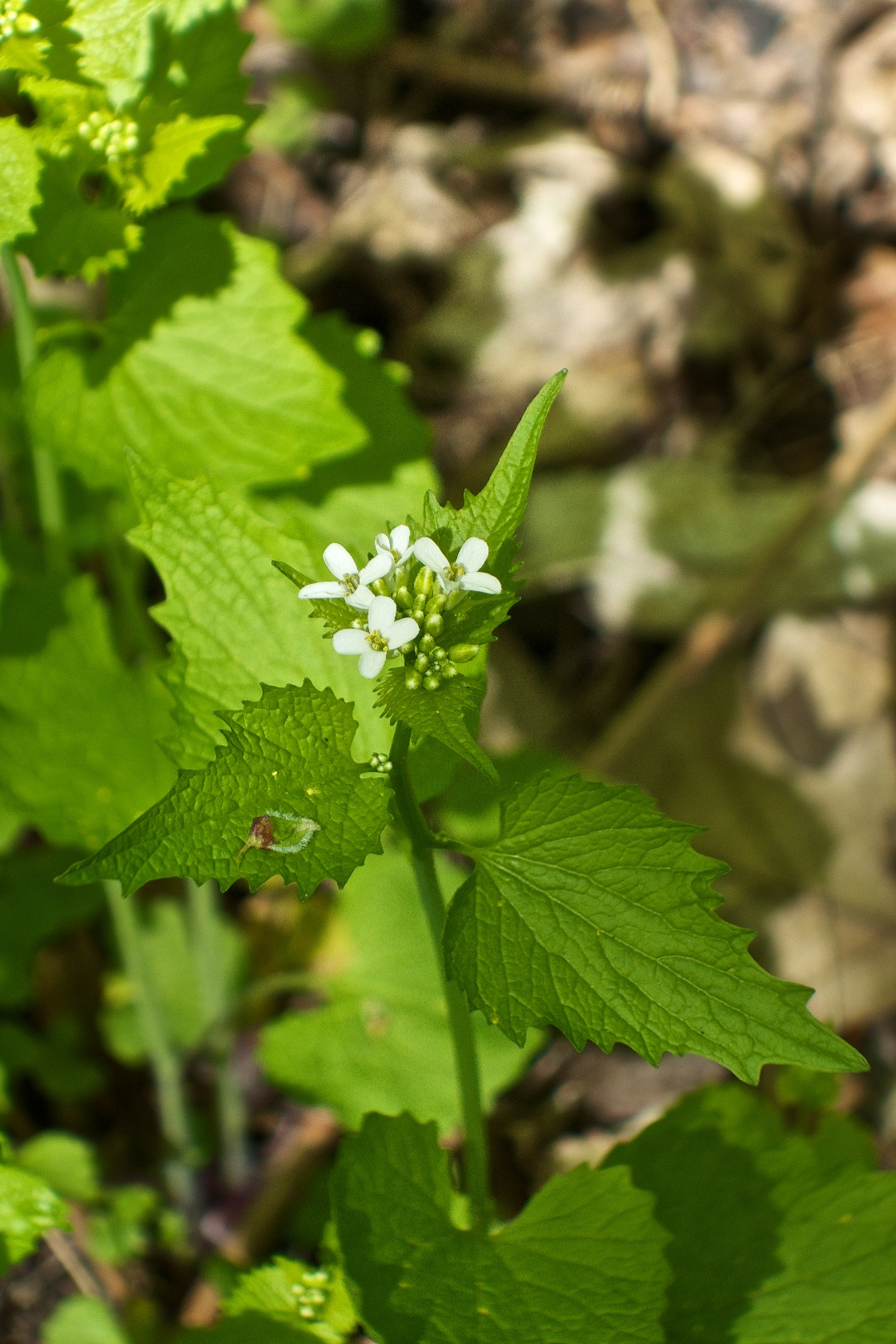
Tiny white flowers produce black seeds.
It can be used as a salad ingredient and is high in vitamins A and C. As the name suggests, it has a garlic flavour and apparently the small black seeds it produces are sprinkled on foods as a flavouring in France.
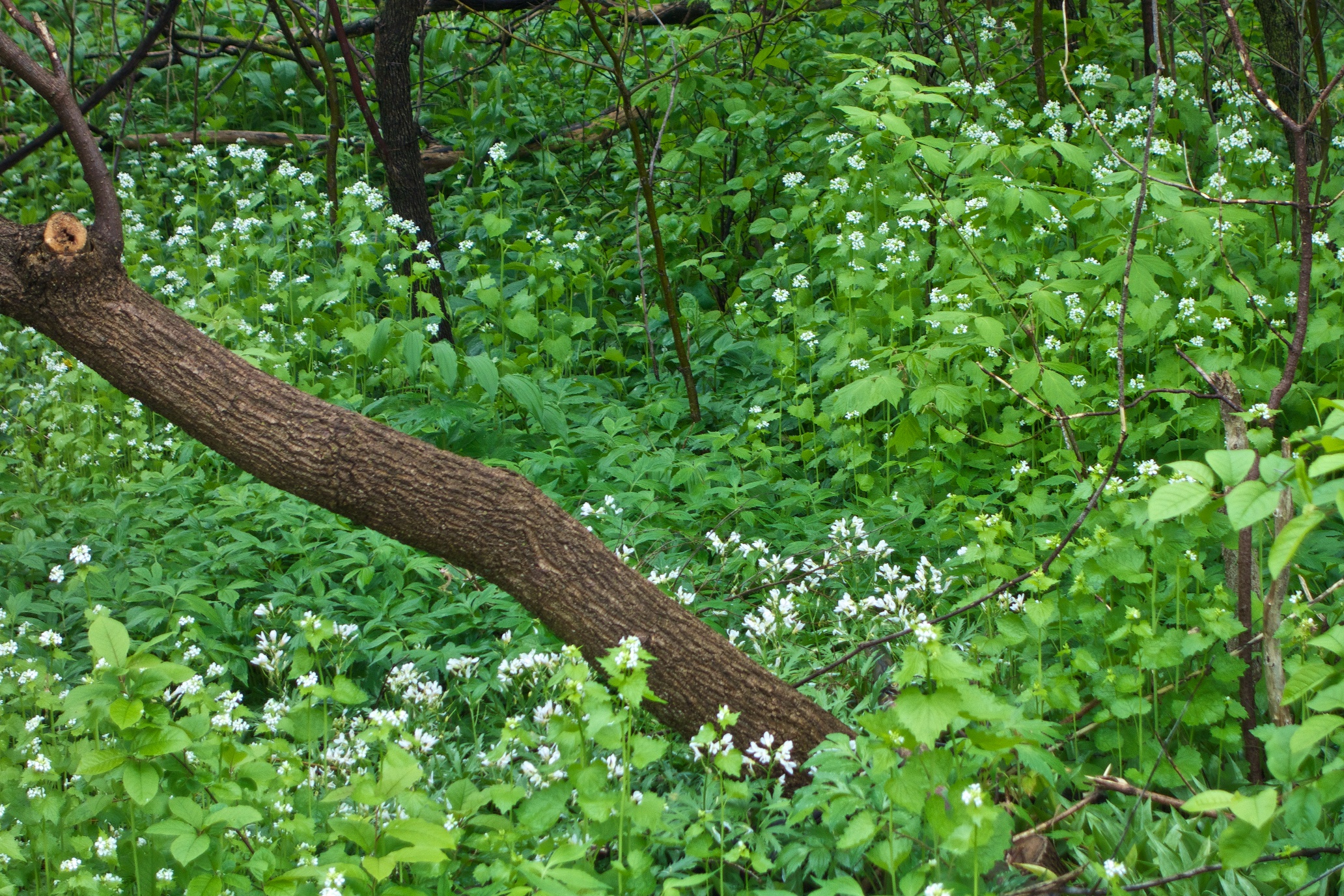
A patch of Broadleaf toothwort threatened by garlic mustard.
Like most invasive species, it looks as if we are stuck with this one and it’s not shy. It produces huge numbers of seeds and aggressively crowds out other plants; the lack of natural predators giving it an unfair advantage. To add insult to injury, deer avoid it, preferring native plants. It is therefore a real threat to native plants throughout Raymore Park and has spread rapidly in the park in the past few years. Eradicating it would require large numbers of people to cut it back regularly so that seeds cannot form and spread. A mammoth and probably futile task.
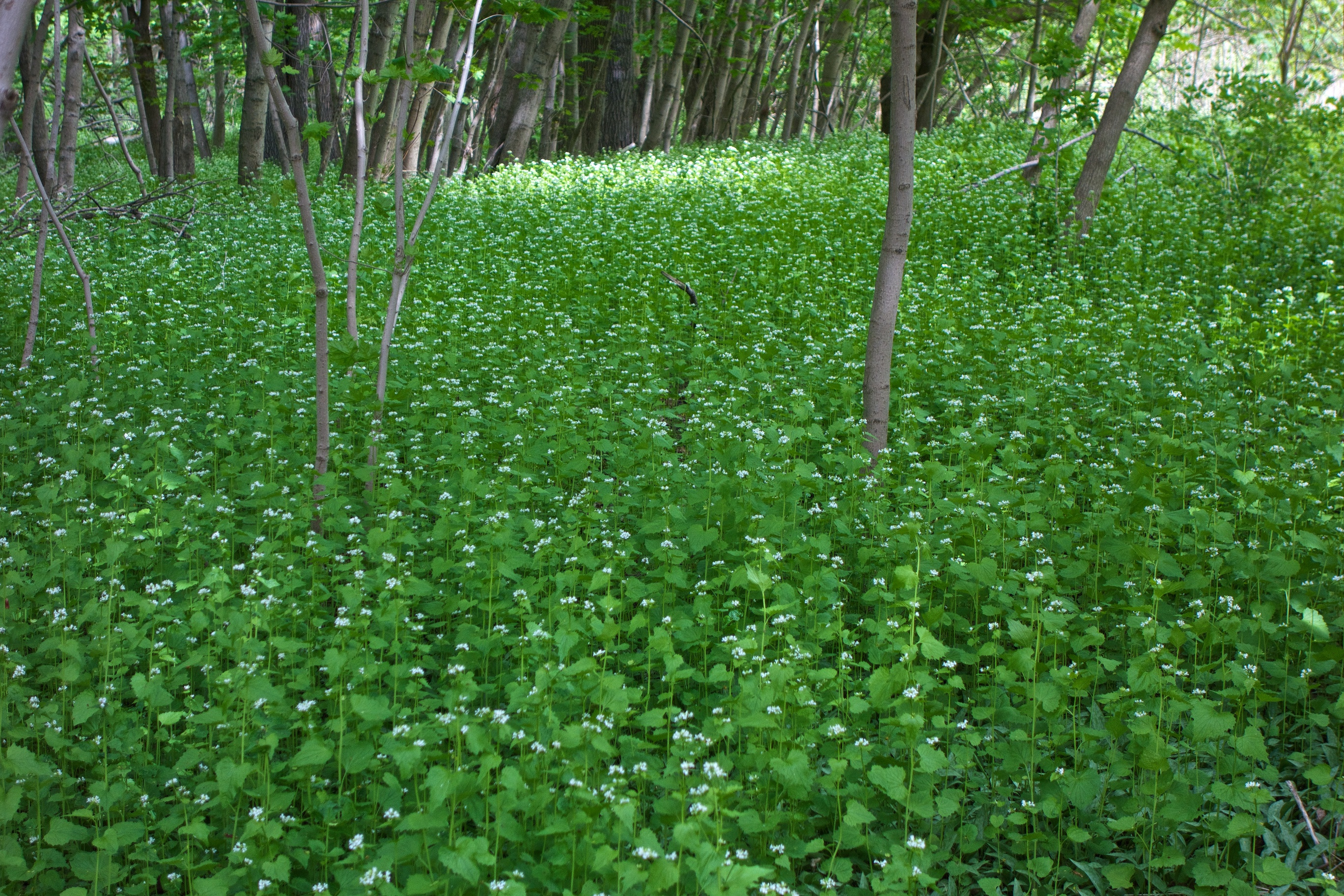
Garlic mustard is well on its way to monoculture status in this area.
There is a glimmer of hope. U.S. scientists are looking to Europe where garlic mustard has several predators that keep it in check. The hope is that through painstaking research, they can find one or more that will not threaten other flora and fauna once introduced. The prime candidate is a weevil, Ceutorhynchus scrobicollis, that feeds exclusively on GM and therefore will not be a threat to anything else.
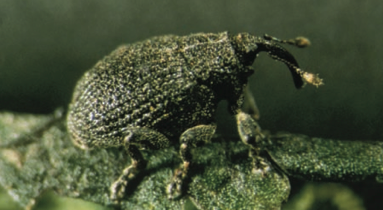
Could this tiny insect be the answer?
In the meantime, salad anyone?
Update: Dr. Frank S. Gilliam wrote asking for permission to use one of the photos in this article for his commentary on invasive species in The New Phytologist, a plant science publication. The article can be accessed here. The gist of it seems to be that invasive plants like garlic mustard create an advantage for themselves by releasing compounds that inhibit the growth of (often native) competitors.

 Friends of Raymore Park
To Whom It Concerns:
I would like to use the photo entitled, “” in a publication (a peer-reviewed botanical journal called The New Phytologist), and am asking permission to do so. If the answer is in the affirmative, I also need to know the proper acknowledgement. Thank you.
Frank S. Gilliam
LikeLike
Hi Dr. Gilliam,
Please feel free to use any of the the photos in the article. I have sent details in a separate email.
LikeLike