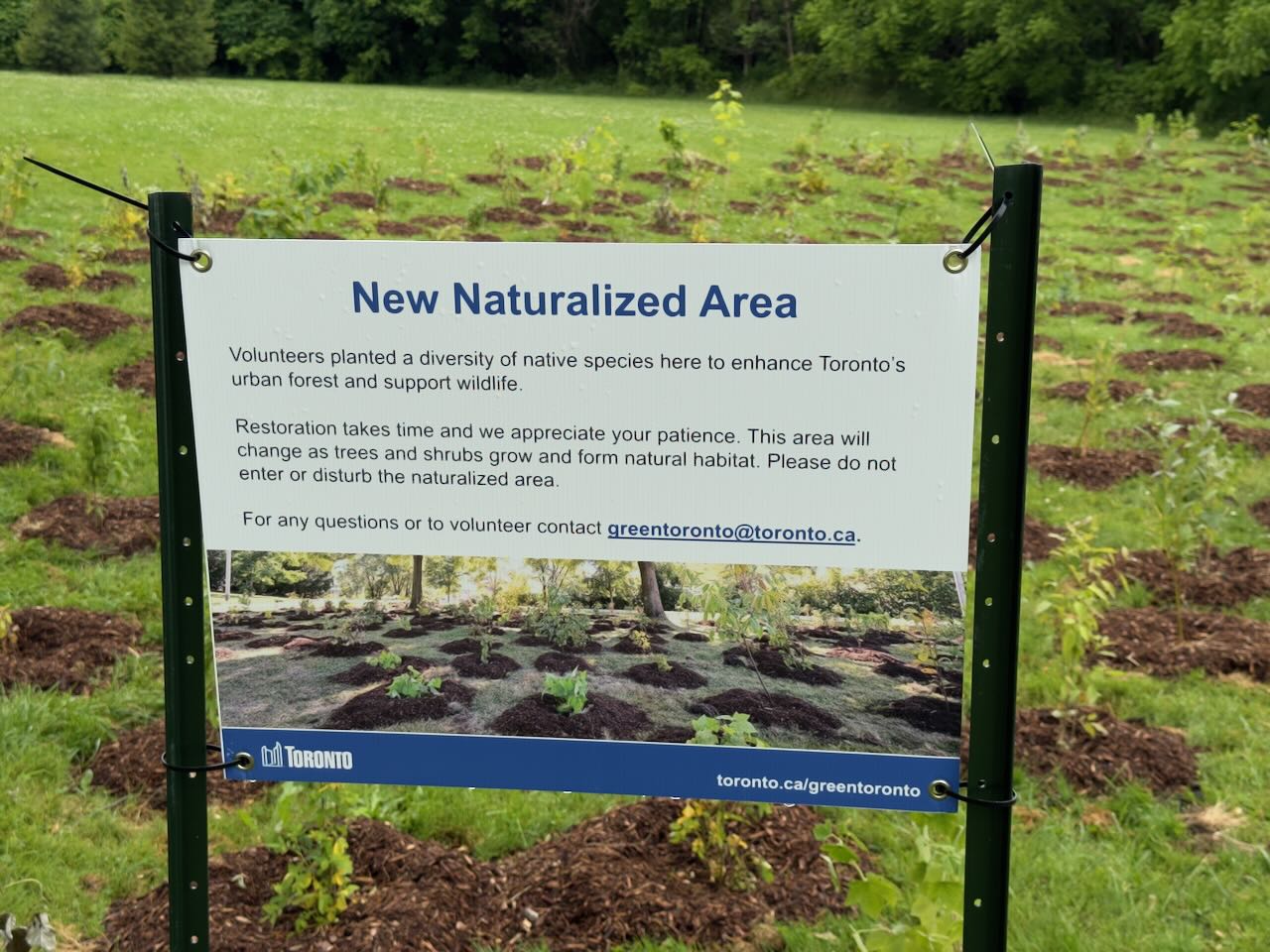
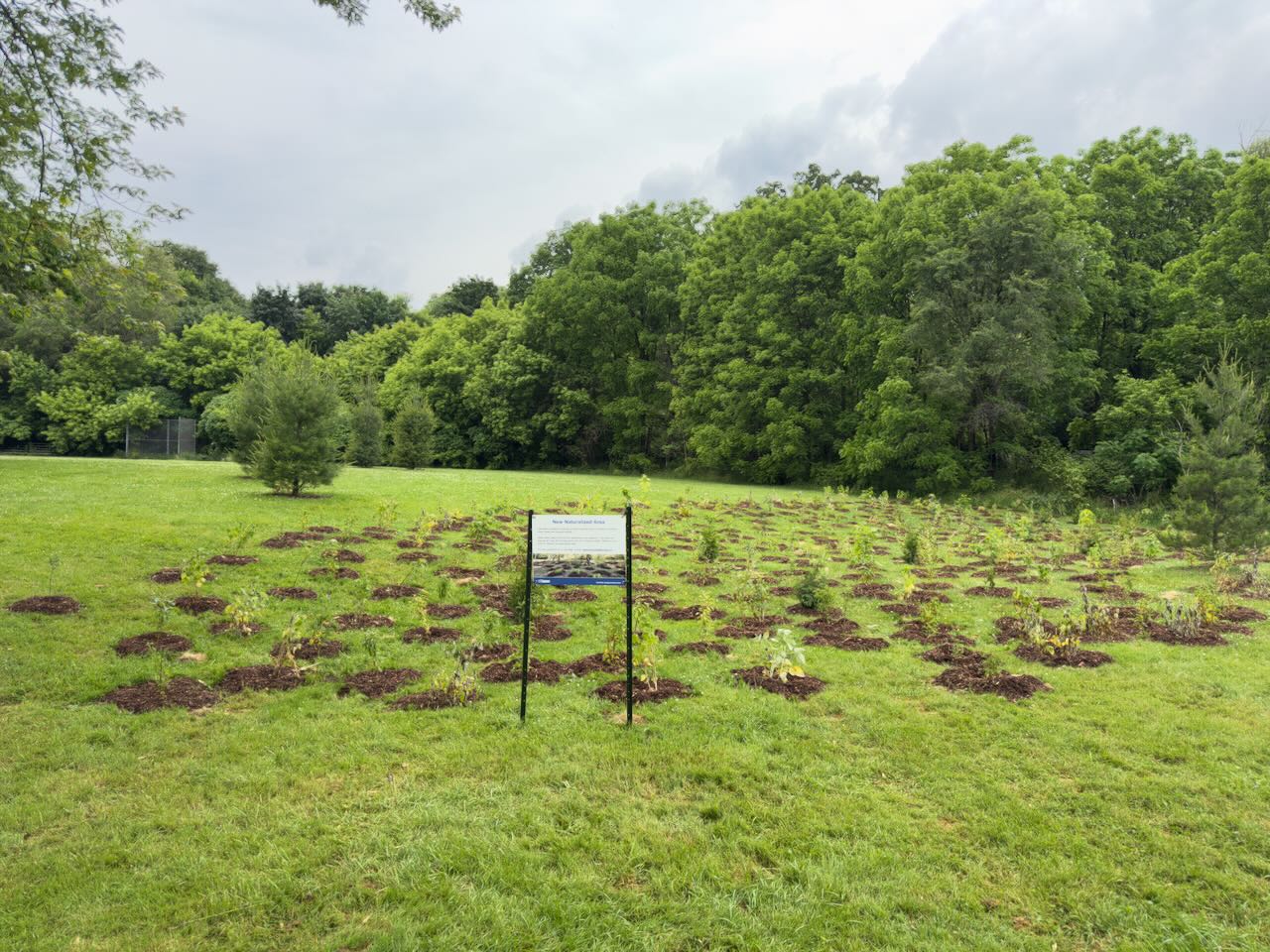
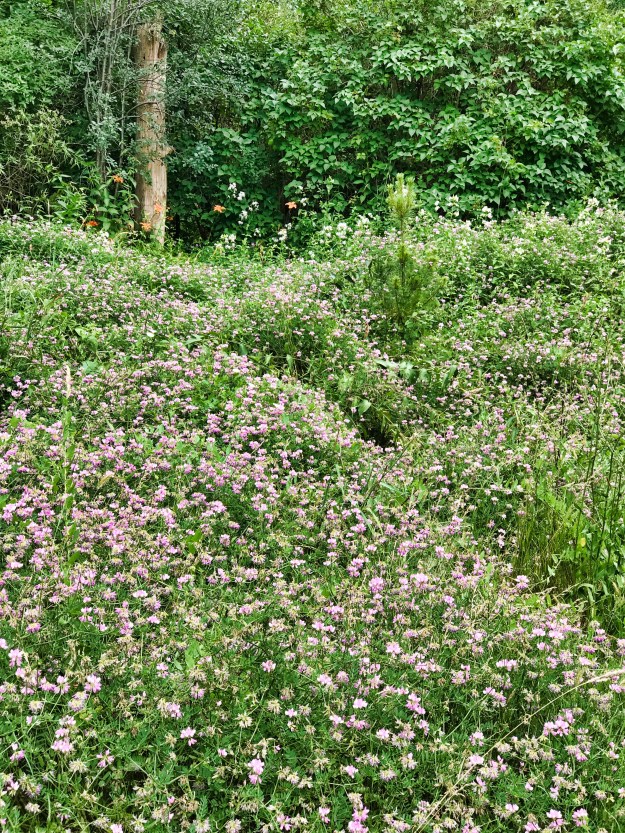
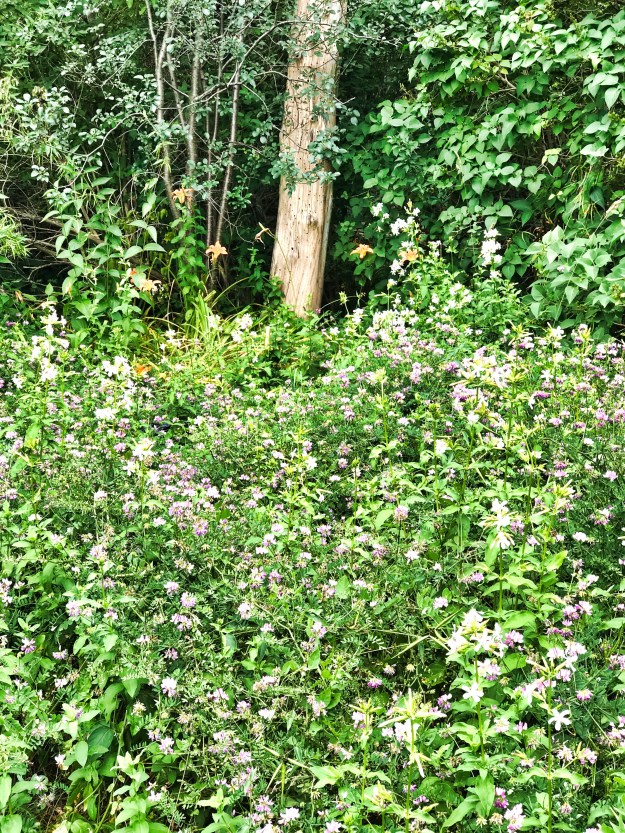
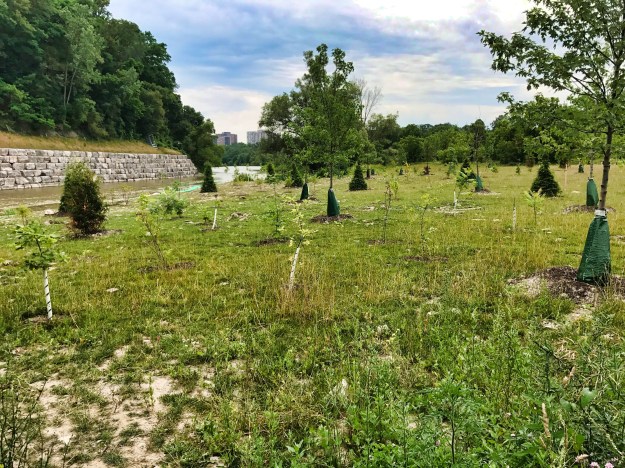
Earlier this month a group of volunteers planted a substantial number of native shrubs and trees in a swale approaching the dog off-leash area. Today’s rain might have saved some of these plants as they looked a bit stressed from the recent dry spell. Hopefully, more areas in the park can receive a similar upgrade.
Thanks to all the volunteers concerned.
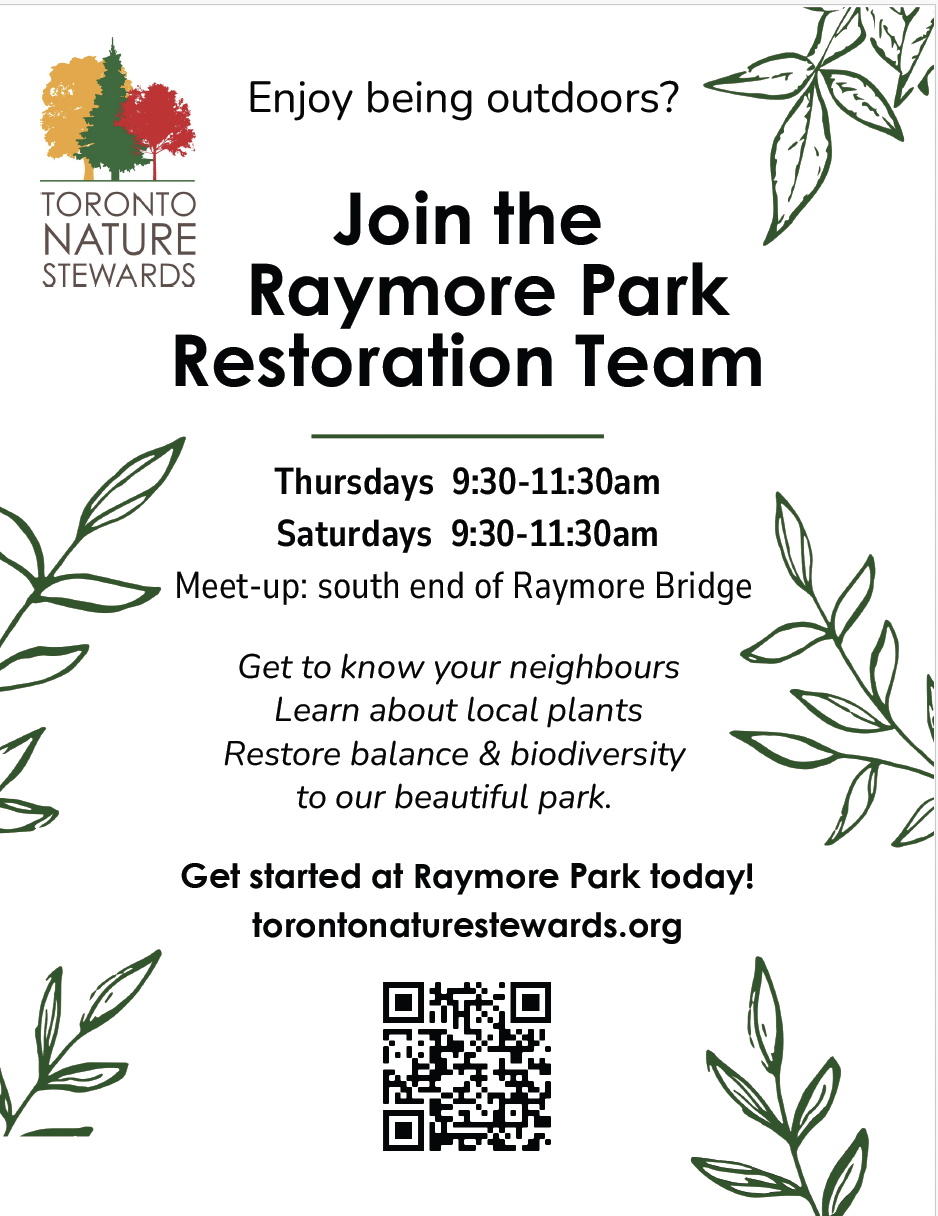
Postscript – Brian MacLean contacted me with information about volunteering in Raymore Park. He says, “a few of us trained with the Toronto Nature Stewards (https://torontonaturestewards.org) and volunteer to do stewardship in Raymore, and we meet twice weekly, Thursdays and Sundays, 9:30-11:30am, to work in the park. If it’s possible, we’d be delighted if you could extend our invitation to others interested in removing invasive plants and picking up litter in the park. Anyone who’s interested can drop in to help or sign up to volunteer at https://torontonaturestewards.org/get-involved/. We advise bringing a pair of work gloves and a bottle of water, and wear long sleeves and pants.”
Fall looks as if it’s here to stay as temperatures are set to lower sharply next week. The first dip below zero of the season is forecast for October 30 which is slightly earlier than Toronto’s average of November 1-10.
Here are some recent images of the park as it eases into the approaching winter.
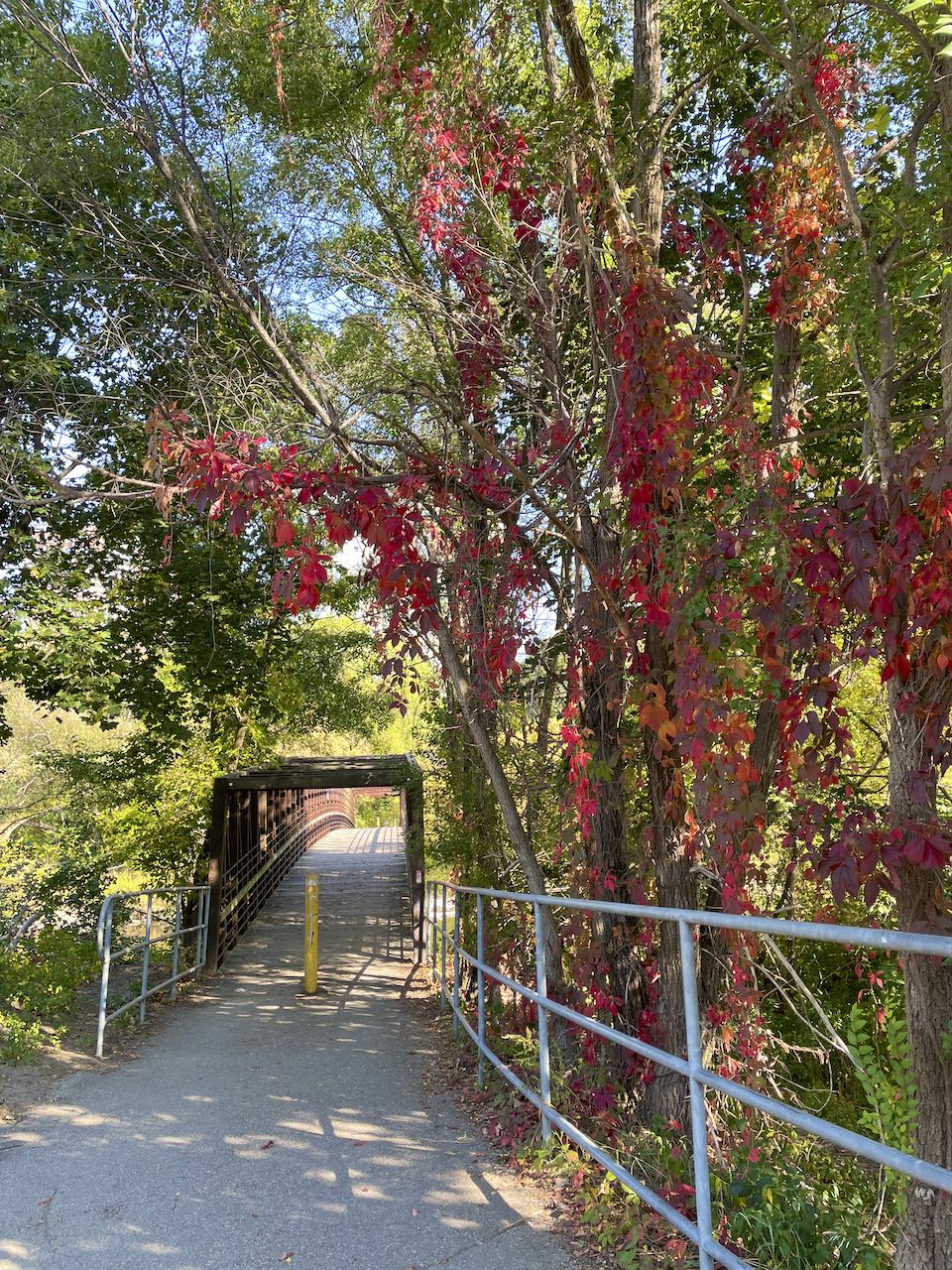
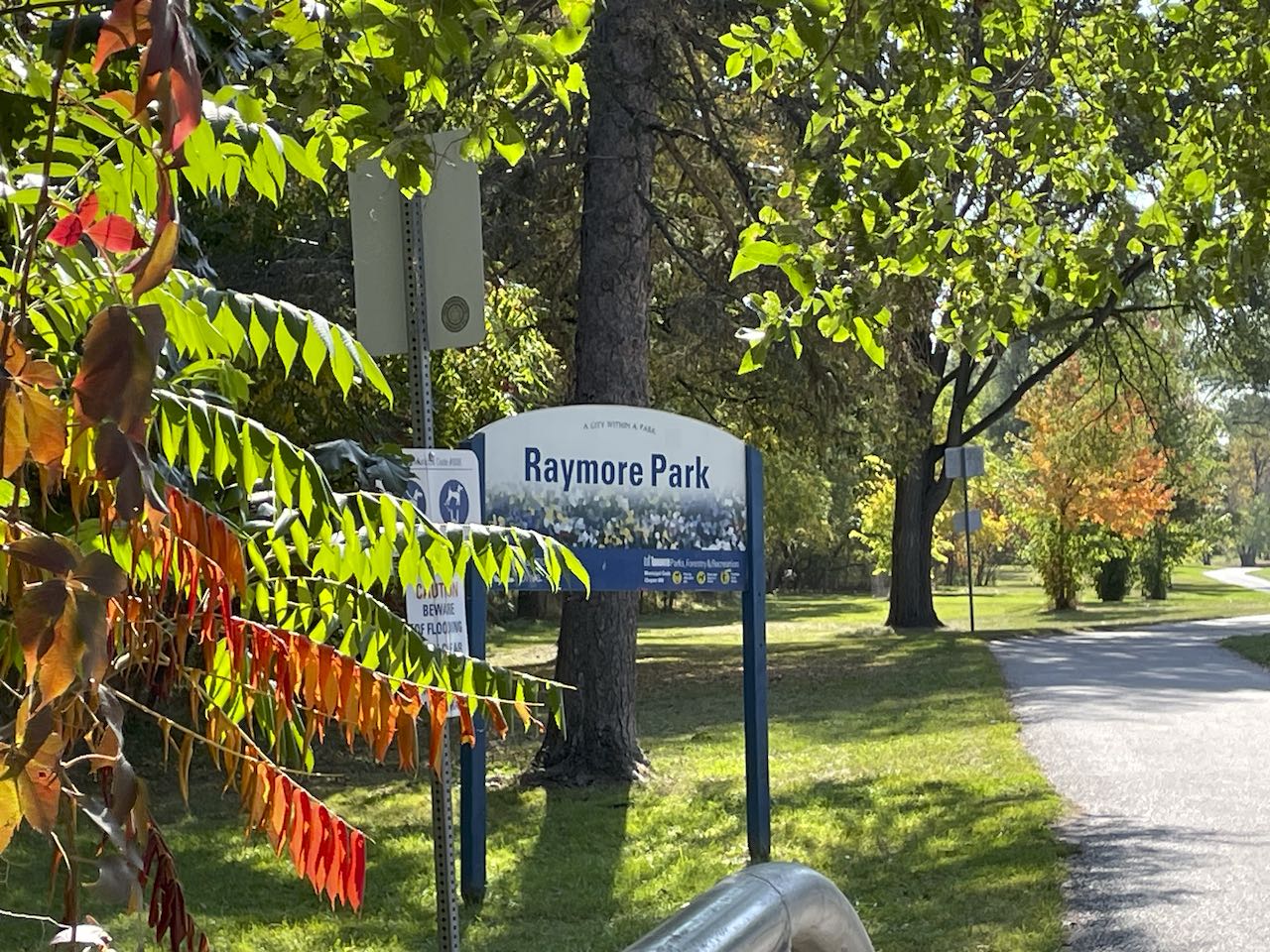
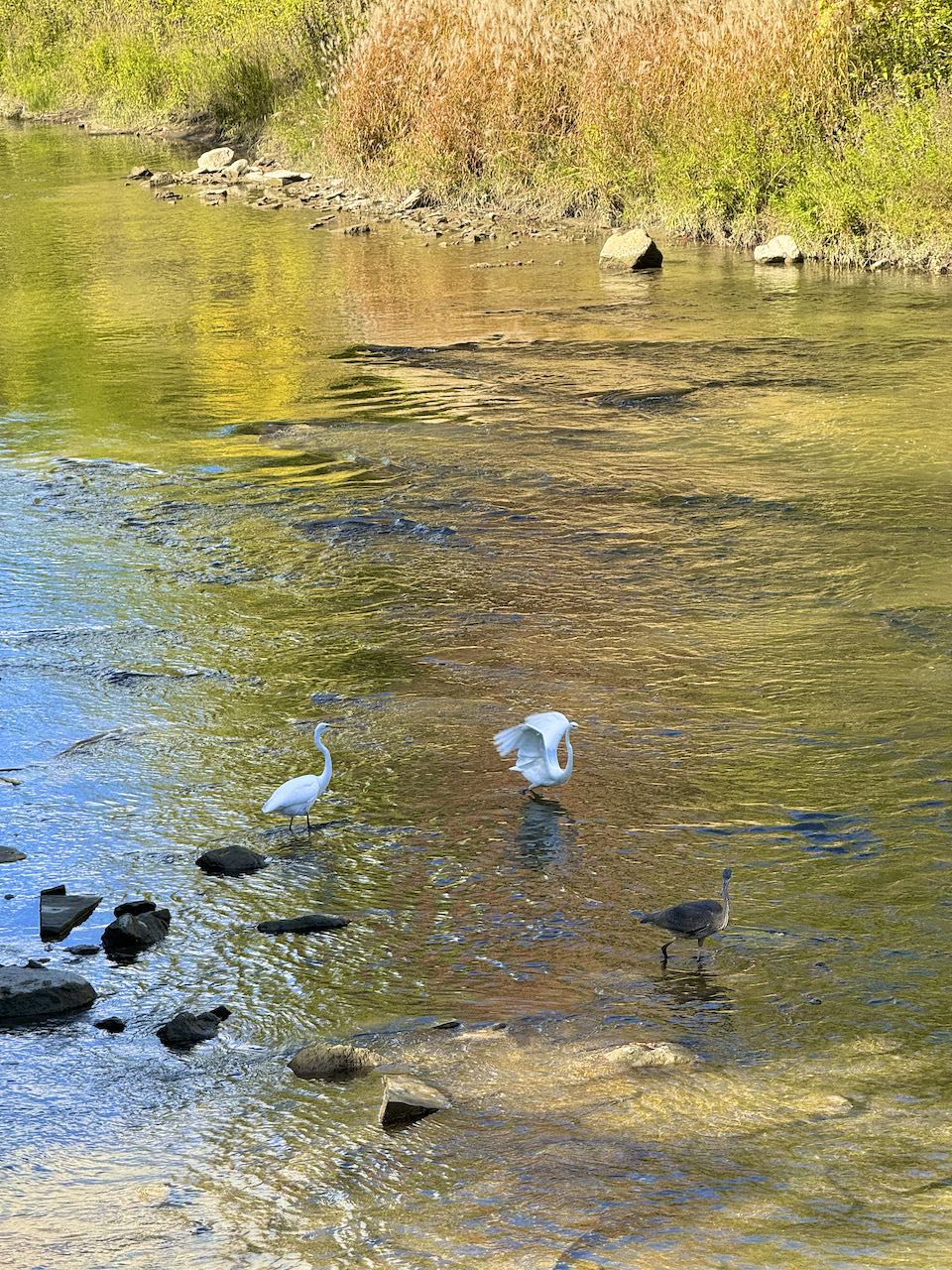
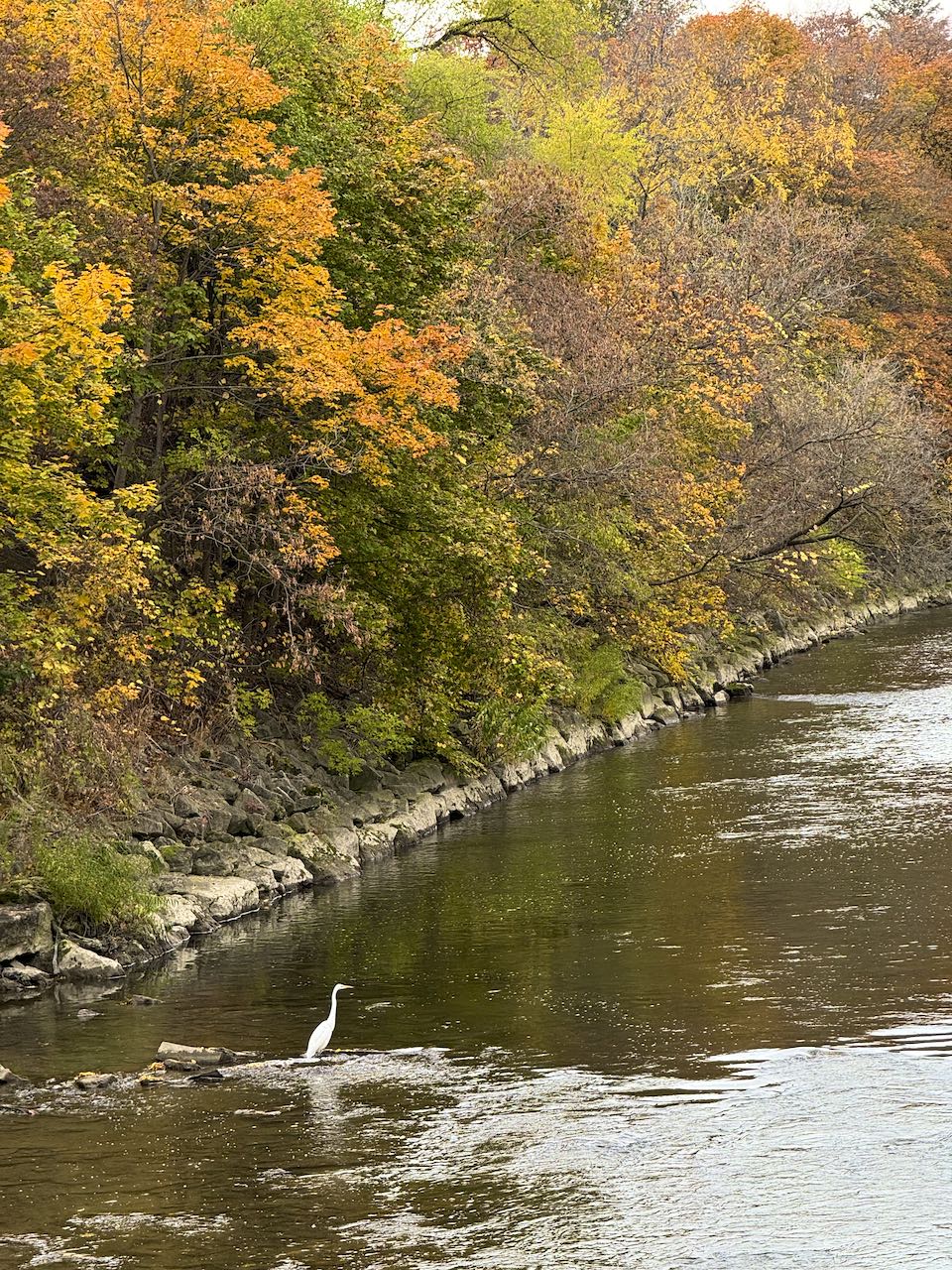
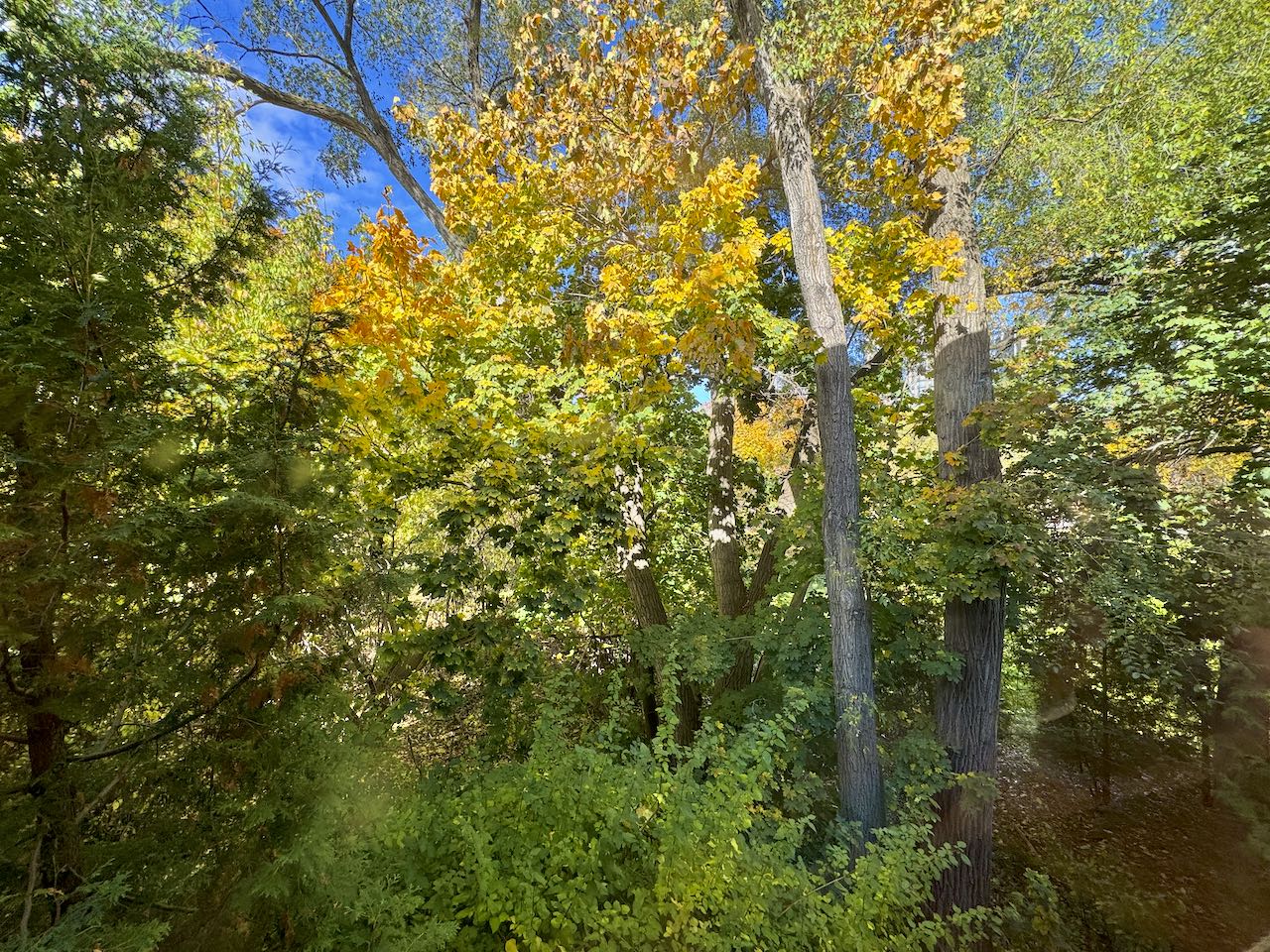
Colourful Boston ivy decorates the Humber footbridge entrance. October 2.Sumac beginning to turn colour by the park entrance. October 2.Two egrets and a blue heron. The egret (centre) was just about to chase the heron away. (October 12)A lone egret with fall colours in the background. (October 24)Norway Maple foliage is more colourful this year. October 28.
The earliest parks were created by Persian kings who used them as private hunting areas. The practice of game parks was carried on in medieval England and as in Persia, the public was excluded. The industrial revolution created large polluted cities and parks were seen as an escape from industrial grime. In modern times, parks have evolved to serve many purposes and city parks like Raymore preserve native flora and fauna while providing a place to relax, exercise and take in the beauty of nature. Raymore sits on a flood plain and so floods can occur relatively harmlessly.
Who are parks for?
There are many neighbourhoods in Toronto where detached homes are the norm. These homes are often surrounded by beautiful gardens with a back yard and tranquil space. Unfortunately, at a price of $1.27 million, for an average detached home and $1 million for a semi, homes with gardens are beyond the reach of most Toronto residents. Only about one in three people are able to enjoy a garden.
For most people in Toronto, parks are the only form of green space available to them and the best way to escape from stale indoor air. This is why adequate and varied parkland is a vital component of life in a city.
Carbon dioxide (CO2) is a natural product of breathing but is toxic at high levels. Fresh air contains around 420 parts per million of CO2. Without adequate ventilation (which is quite common in heated and air conditioned environments, levels of CO2 can build up. When carbon dioxide exceeds 1000 ppm, problems can arise such as headaches, nausea and dizziness.
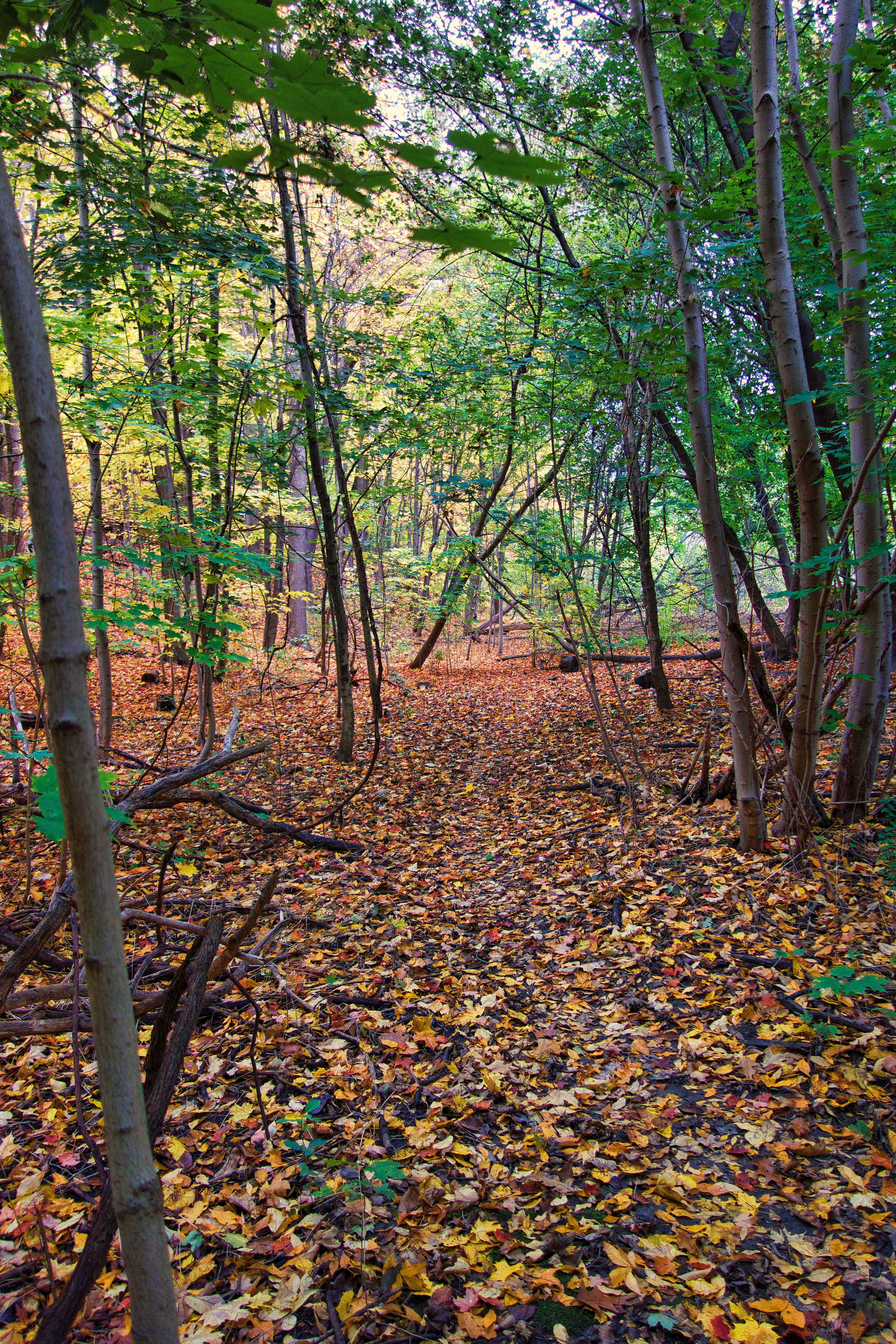
A carpet of fall colour in Raymore Park.
Park air is probably healthier than indoor air because it is likely cleaner and has lower CO2. In summer, parks turn carbon dioxide into oxygen. That’s not all. Being among trees reduces stress. A walk on a treadmill cannot duplicate the relaxation that comes from a walk in the woods. Sunshine can brighten a mood and in summer months, provide essential vitamin D.
In Canada, our cities are becoming more crowded and parks are a way for people to enjoy nature. People without gardens of their own depend on parks and open spaces as an escape from indoor air. This is why parkland in cities is precious and must be protected at all costs. Providing access to nature is more important than ever and should be considered a human right. Parks are not a frill; they’re an essential component of a healthy life.
As far as nature is concerned, the May 24th weekend is the worst possible time to have fireworks going off. Spring is the time when animals nurture their fragile young and research has shown the devastation that fireworks can cause in wildlife. Imagine several nights when random bangs and flashing lights are cannonading through our city. This is what happens on our Victoria Day weekend every year. These days fireworks are widely available and they’re not always used responsibly.
Particular shame must go to the people who set fireworks off in parks. Even though it is illegal, law enforcement has bigger fish to fry. Tonight loud booms were echoing through Raymore Park (and no doubt others) accompanied by bright flashes of light. Park gates were still open at 11pm allowing vehicles to enter resulting in the fireworks being set off in the parking lot.
Luckily rain ended the show but the thoughtlessness of these people has likely distressed and perhaps killed some young animals in our parks.
Most Toronto parks on a weekend are filled with people enjoying themselves. To paraphrase an old saying, Parks are the lungs of the city and a natural setting with trees and grass provides cleaner and fresher air along with a chance to relax.
There are parks that are ideal for picnics while others provide tranquility and a natural setting. Some Toronto parks have bathrooms and built in barbecue stands while others, like Raymore Park are more natural.
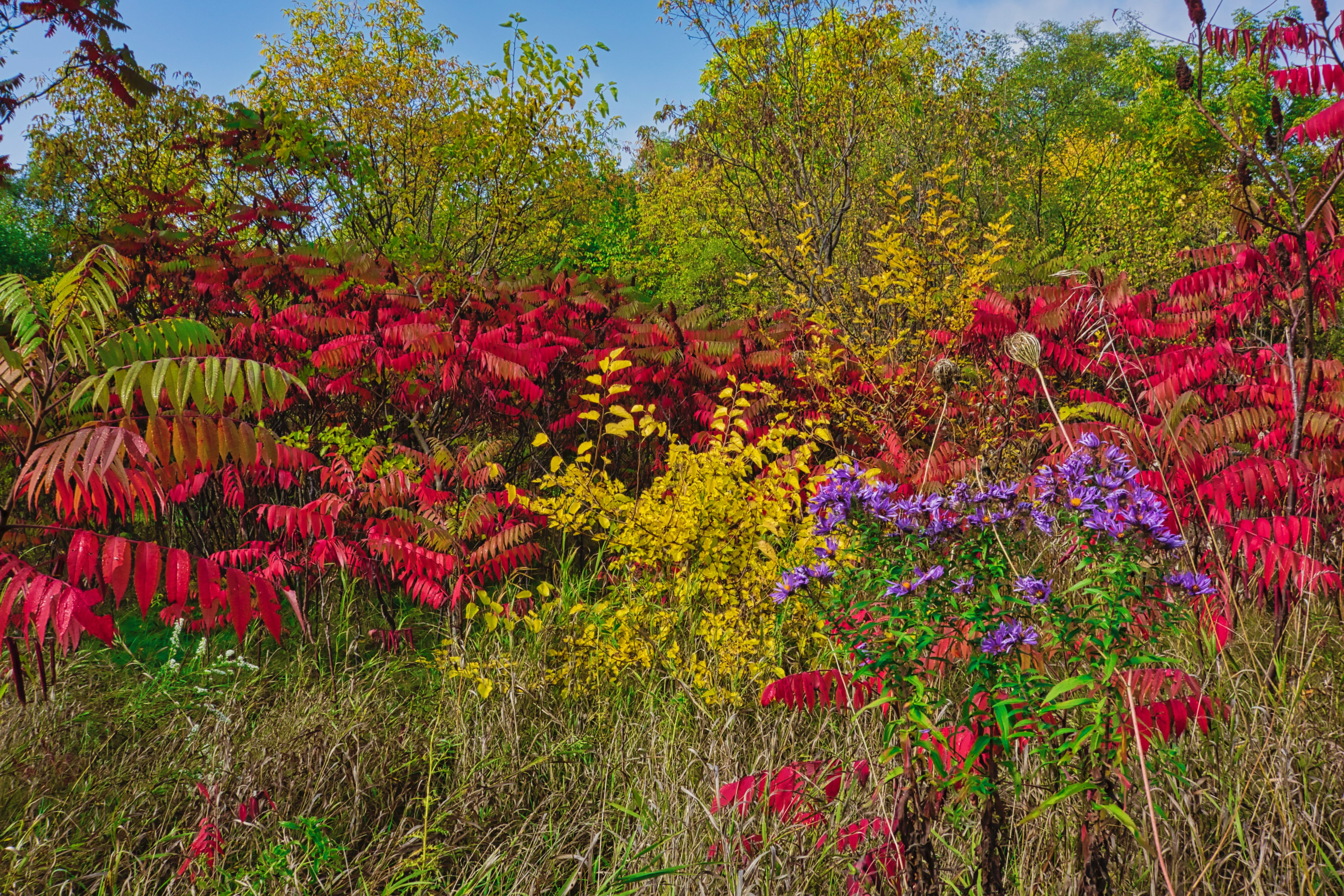
Glorious fall colours in Raymore Park’s wild area (October 2013).
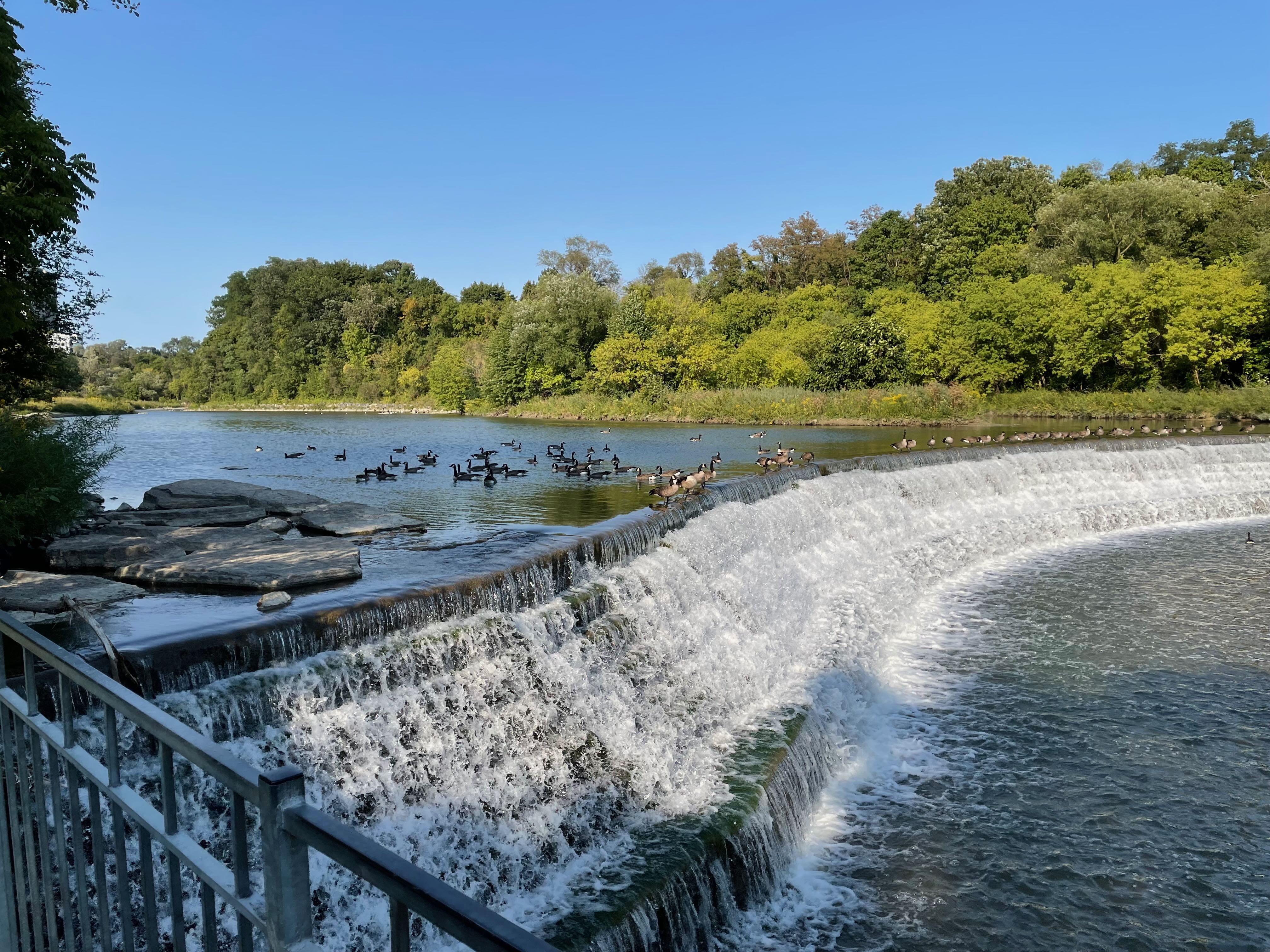
Raymore Park is quite large and there are areas where you can throw a ball, walk the dog, have a picnic or just sit on one of the many benches and contemplate. Watching the water going over the weir is mesmerizing and the negative ions created by falling water are said to be therapeutic. If you like shade, there are lots of trees – just be careful not to feed the summer mosquitoes! There’s even a rudimentary baseball diamond tucked away north of the dog off-leash area. We don’t have flower beds or seasonal plantings but we have a large variety of flora and fauna.
Geese enjoying the weir in September 2022.
In nearby Lions Park, people like to set up in groups and barbecue on warm weekends. They bring chairs and tables, awnings and coolers and relax by the river. Walking or cycling past these groups is a treat for the nose and if your hunger is stimulated, there’s an increasing number of fast (and slow) food locations a five-minute walk away on Weston Road.
Who are the people using parks? Every age group, athletic level and ethnicity are represented in Toronto’s green spaces and ravines; people looking for exercise, a meal or a relaxing stroll. There are no barriers or fees, everyone is welcome and people become more relaxed when they arrive. If you want to strike up a conversation, talk to a dog owner about their dog – or better yet, borrow a dog and walk it in the park (on leash of course). Dogs are instant ice-breakers. There are many volunteer organizations that help clean our parks after a long winter (locally it’s Humber River Pals) and get rid of accumulated litter while others look for invasive plants and remove them. Garlic mustard is a frequent target for those wanting some springtime greens and provide breathing room for native plants.
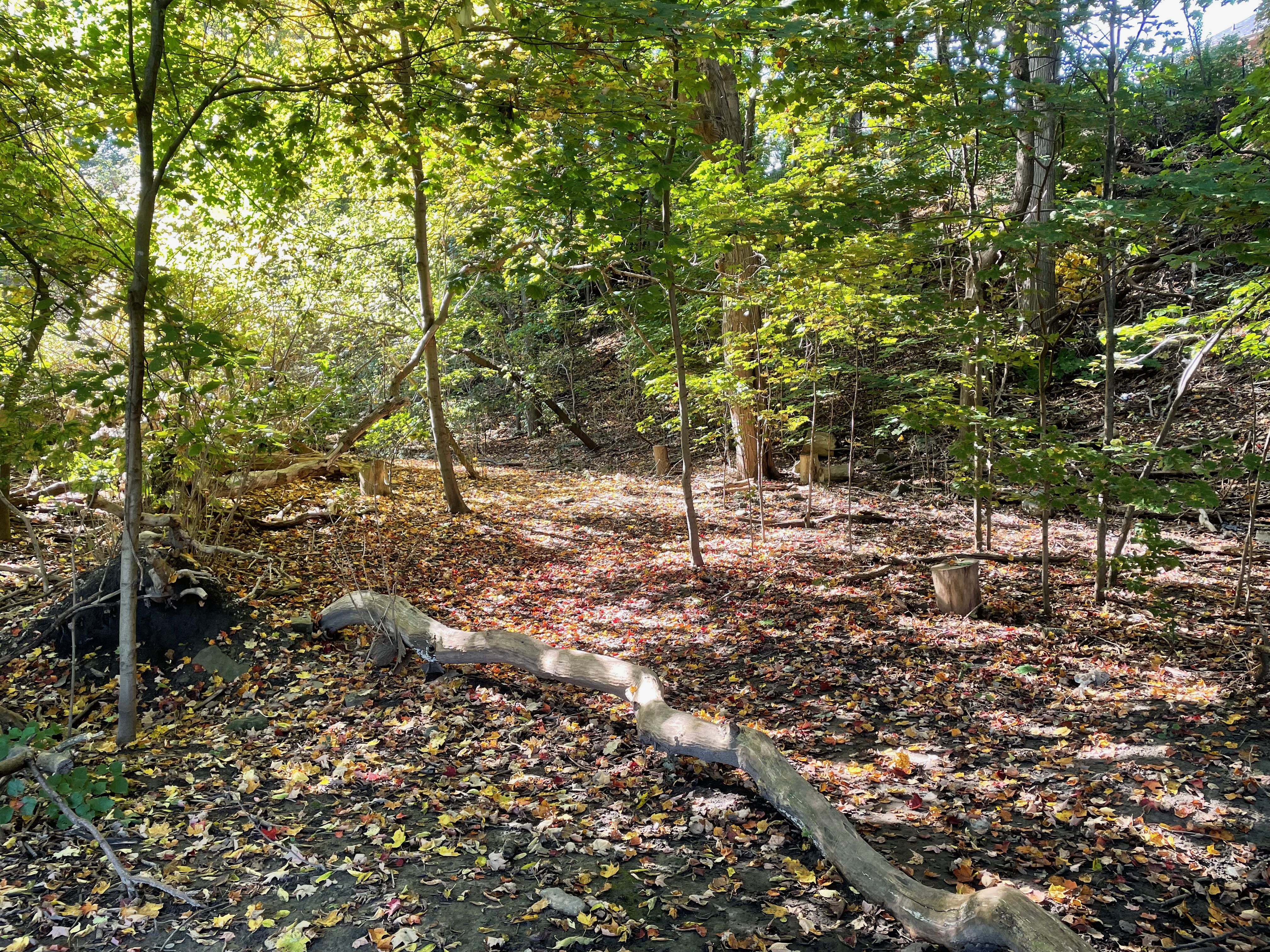
Raymore’s wooded area in October 2021.
It is possible to cycle from Raymore Park down to Lake Ontario with very few diversions onto side streets. The trail loosely follows the Humber to it’s mouth on the lake. Cycling through several parks on the way down to the lake reveals the variety of beautiful parks along the Humber.
The amount of wildlife in Toronto parks is quite amazing and we aren’t always aware of the secret lives of the animals who live alongside us. Yes, beavers are a presence in Raymore Park and although it’s rare to see them, we can often see signs of them.
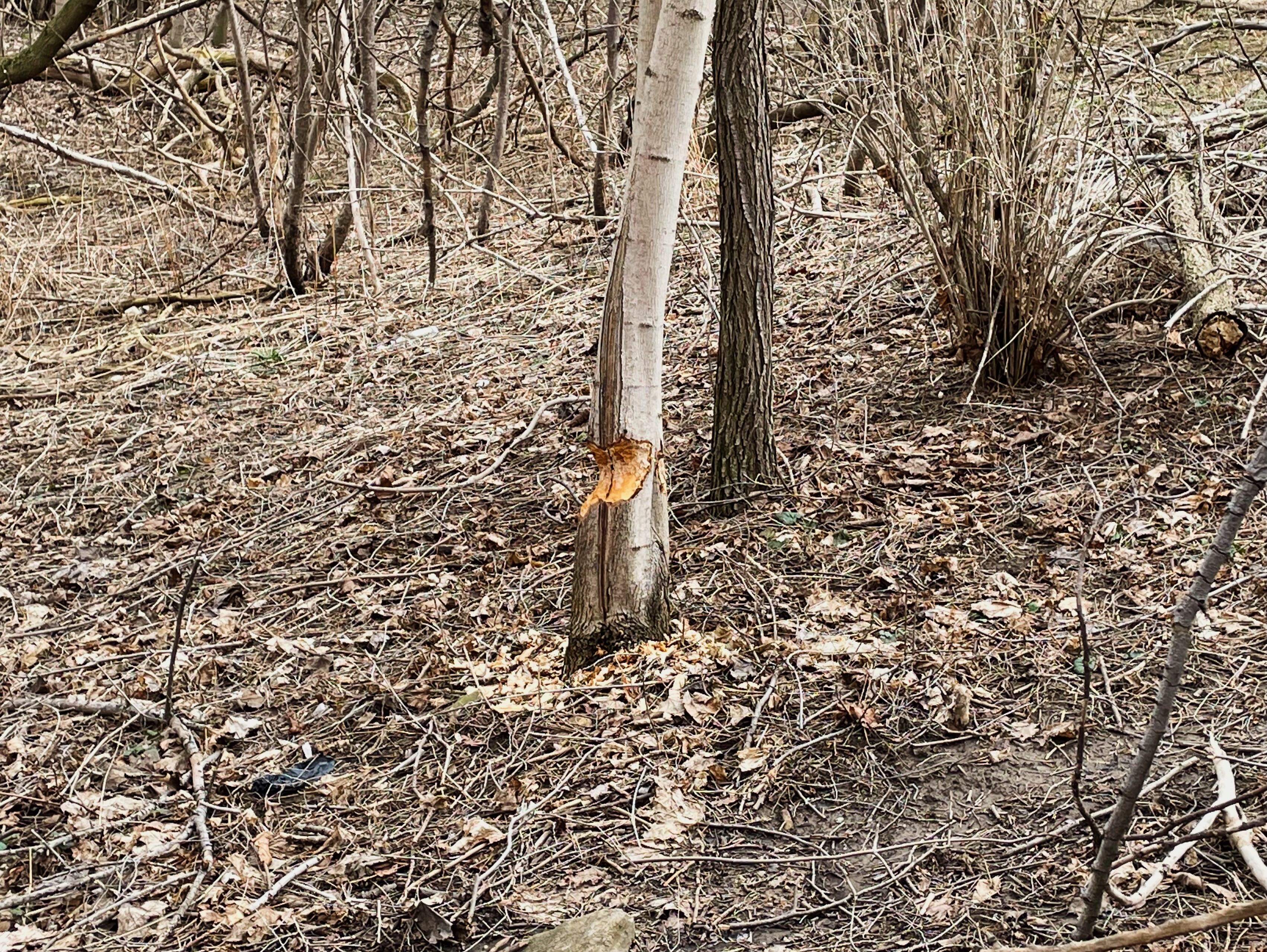
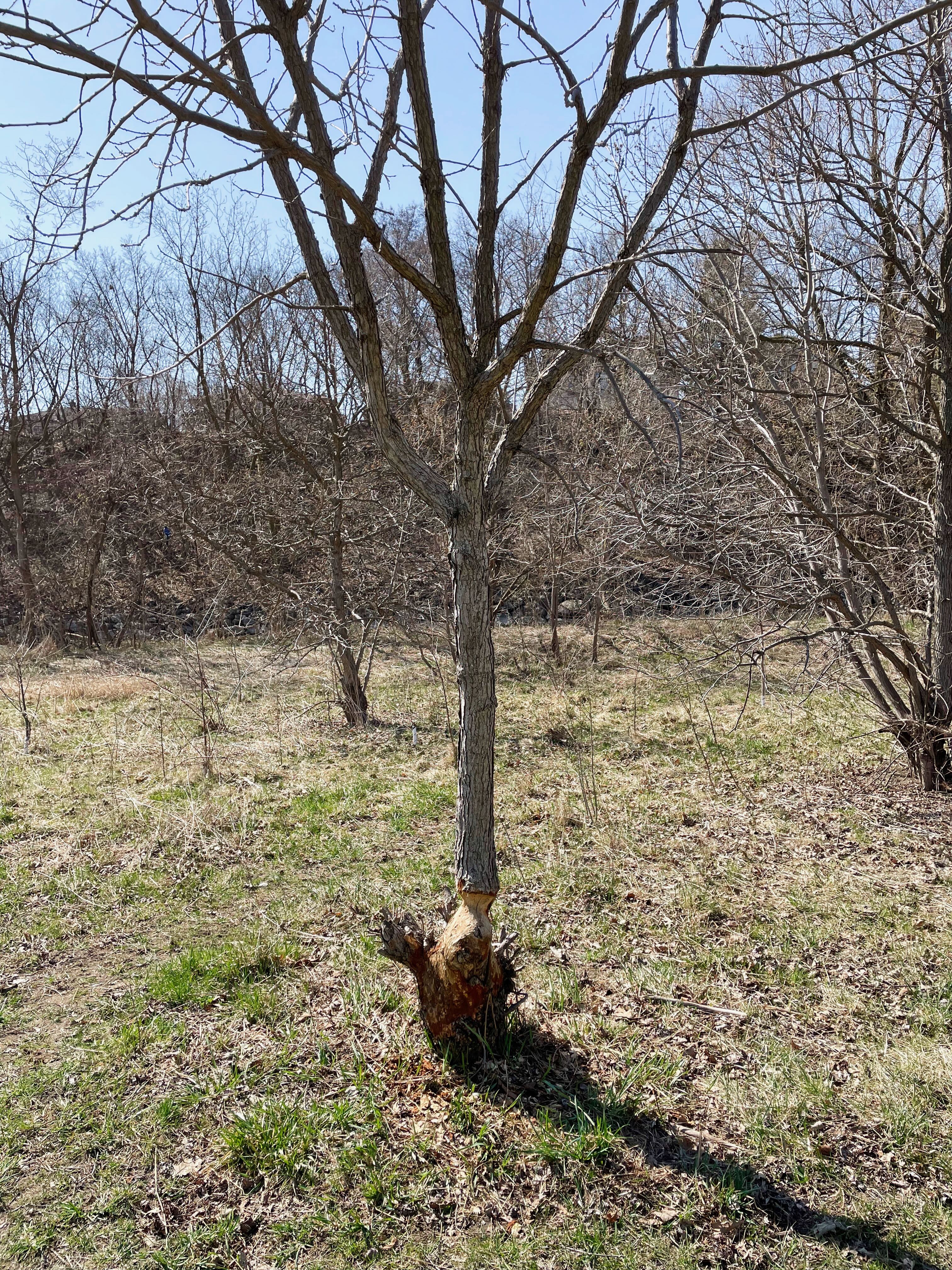
This young tree is close to the bike path by the footbridge. (April 2023)
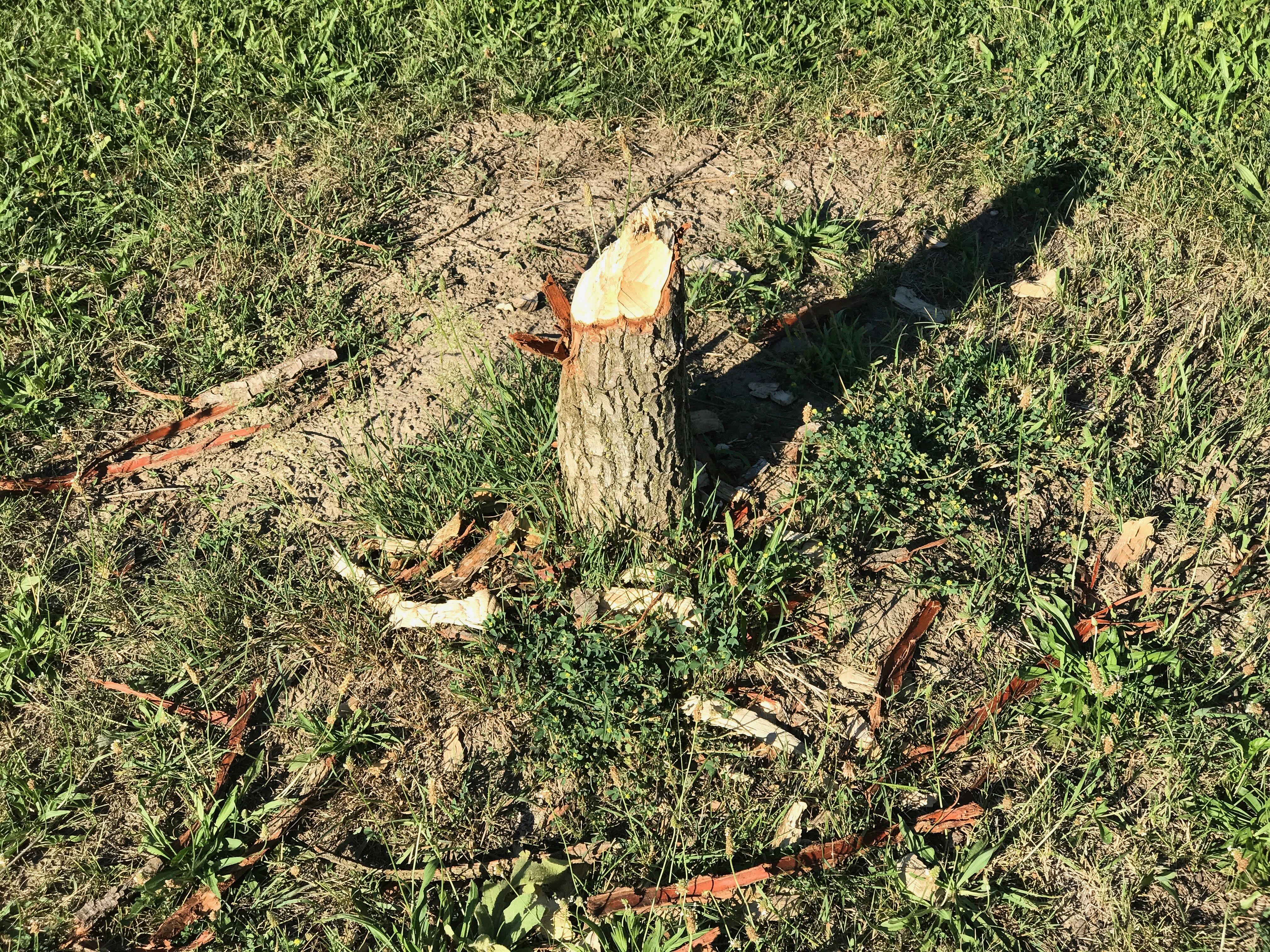
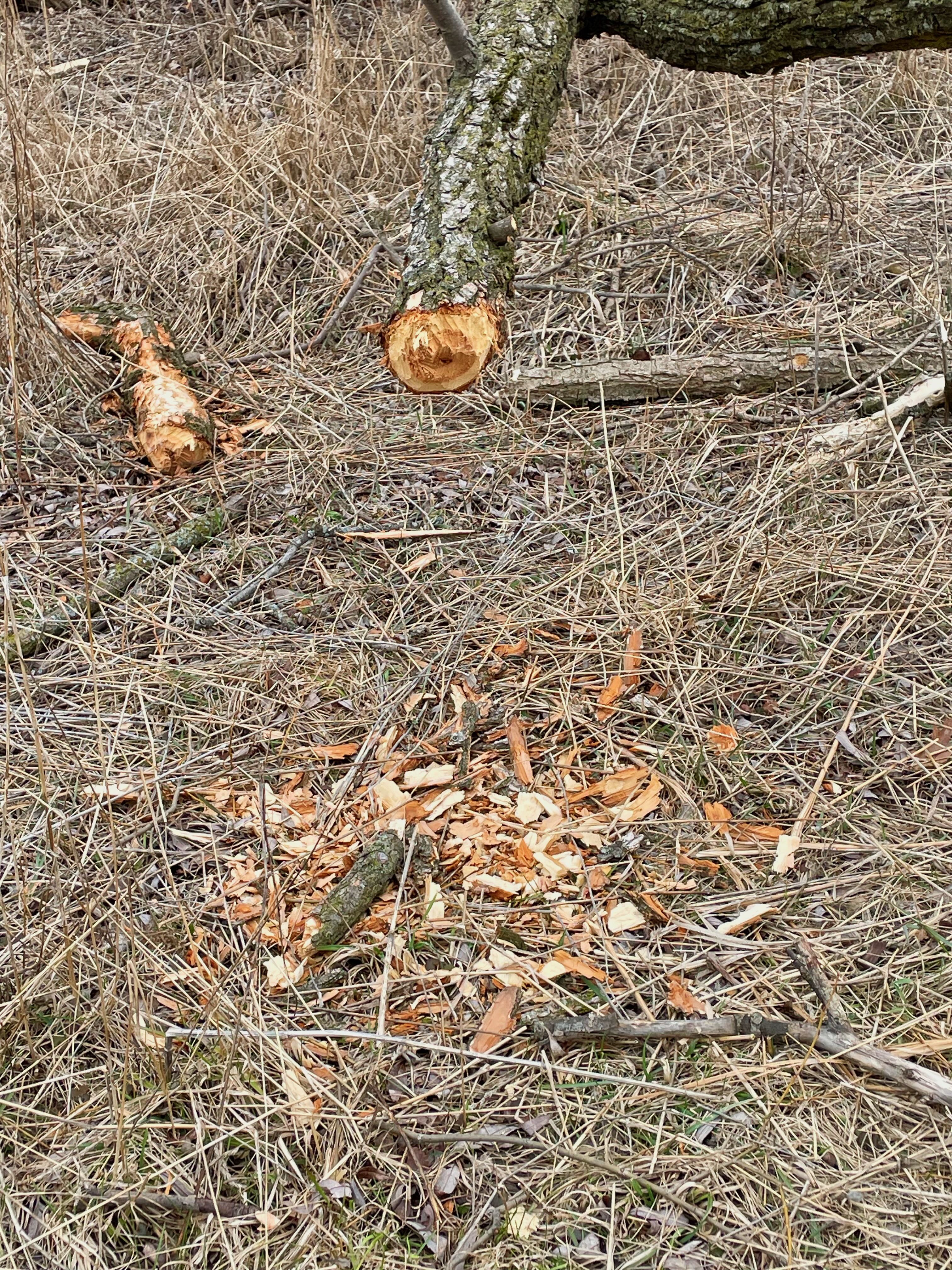
One sign is the tell-tale gnawing of tree trunks at about 30-40 cm above the ground – often leaving a stump with a conical point. When the city plants trees in Raymore Park, they have (usually) learned to protect the new trees’ trunks with wire cages or else beavers will make quick (and expensive) work of them. Another sign might be a noisy tail splash – used as a warning to other beavers as you approach the water. Sometimes a cluster of sticks on the riverbank is evidence of a lodge.
Protect it or else… (July 2018)
Beavers need to eat wood as part of their diet and since their rodent teeth are constantly growing, gnawing on wood helps keep them in trim. Beavers restrict the flow of rivers and therefore mitigate the impact of flooding. Other wildlife benefit from the presence of these native animals. Eurasian beavers (slightly different to our North American variety) were hunted to extinction in the U.K. a few centuries ago but have been re-introduced in several locations throughout the British Isles and particularly in Scotland.
A fallen branch suspended at the right height is being consumed by beavers. (April 2023).
Where can beavers be seen in Raymore Park? One place seems to be fairly constant from year to year. There is an island just above the weir where they often hang out as it’s relatively safe from disturbance from humans and especially dogs. The Humber is quite wide so rather than dam the river, beavers will create a riverbank lodge that accommodates several animals.
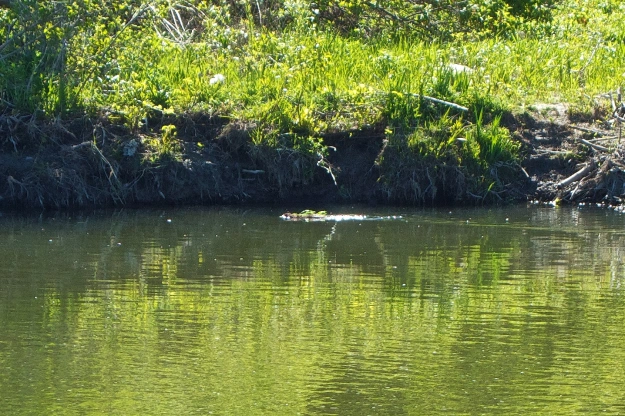
A beaver swimming upstream by the island in May 2013.
Be patient as beavers are shy and usually hide when humans are present. If a dog is swimming in the river, a beaver might attack (they have the advantage in the water) so it’s wise to follow park leash rules.
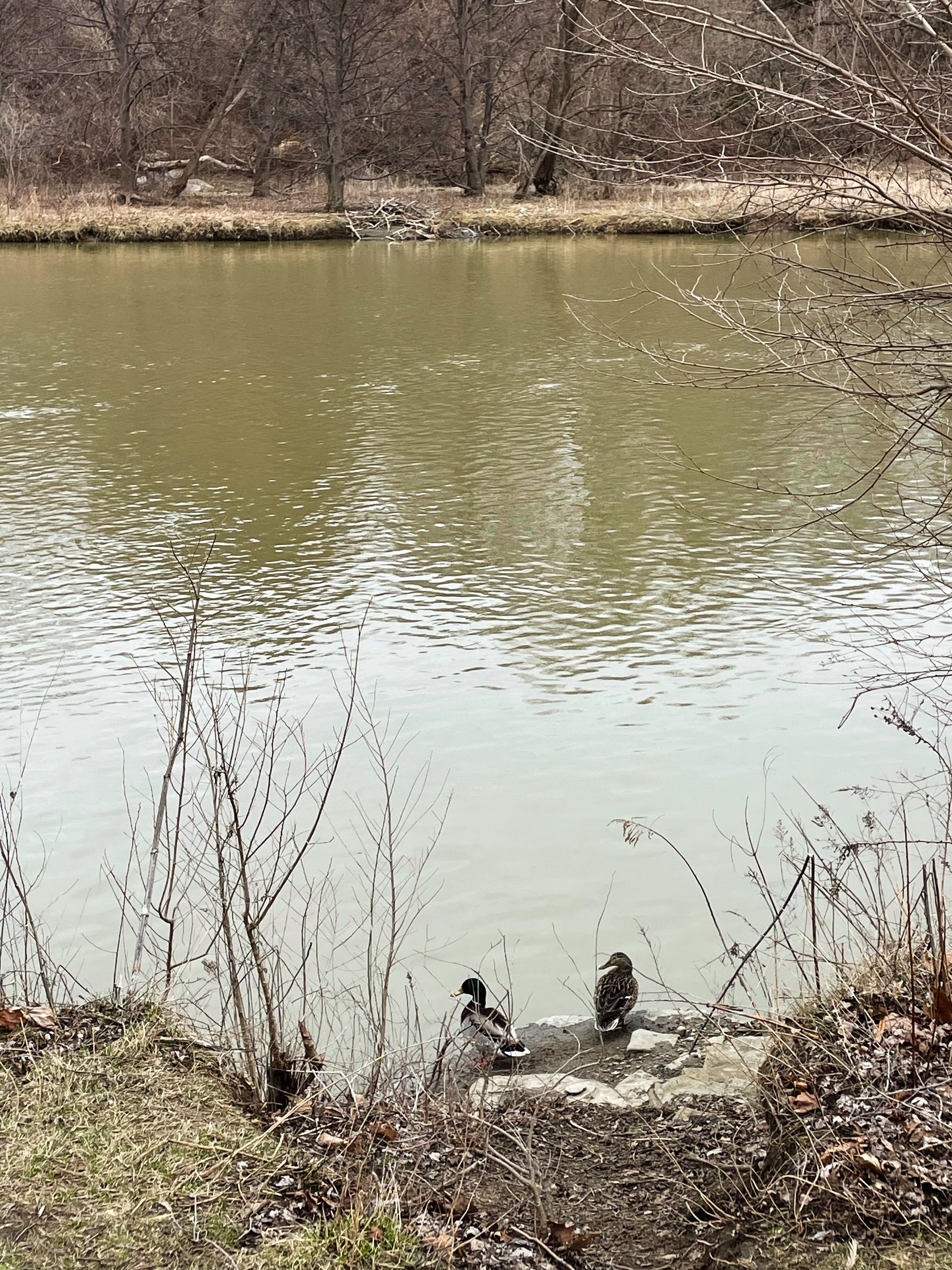
A pair of ducks across from the clearly visible beaver island lodge. (April 2023).‘Beaver Island lodge’ in summer (on the far bank). (August 2018) (click to enlarge)
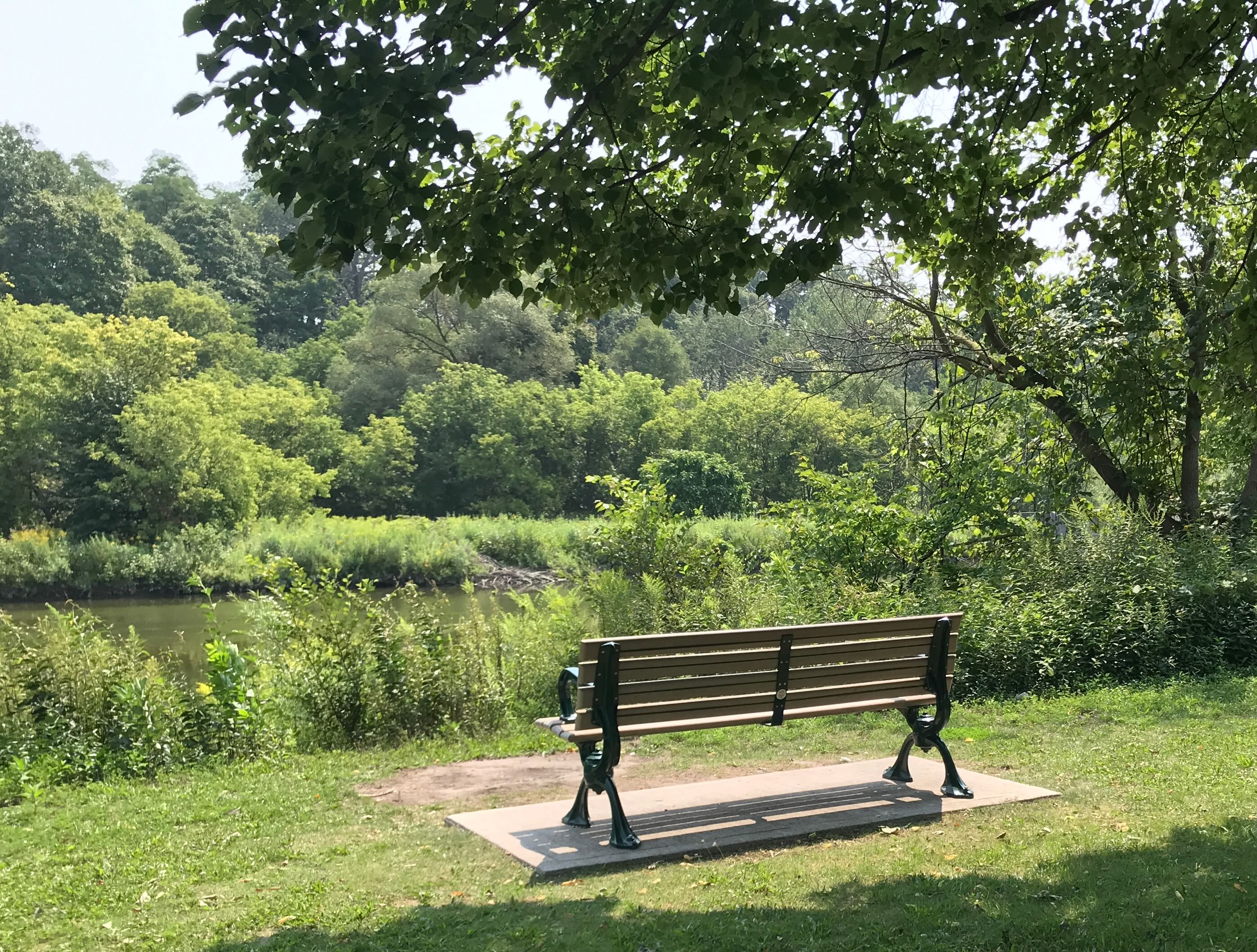
A bench above the dam can be a good observation spot. Early mornings and late evenings are the best times for catching a glimpse of these mainly nocturnal creatures.
A costly lesson in neighbouring Lions Park. This tree was planted just a few years ago. (April 2023)
Lastly, a piece of beaver trivia – the minster town of Beverley in Yorkshire, England – which gave its name to Beverley Massachusetts and subsequently Beverley Hills in California – was named because of the beavers once living there. The town’s coat of arms proudly sports a Eurasian beaver.
Beverly Town Council coat of arms (from Wikipedia).
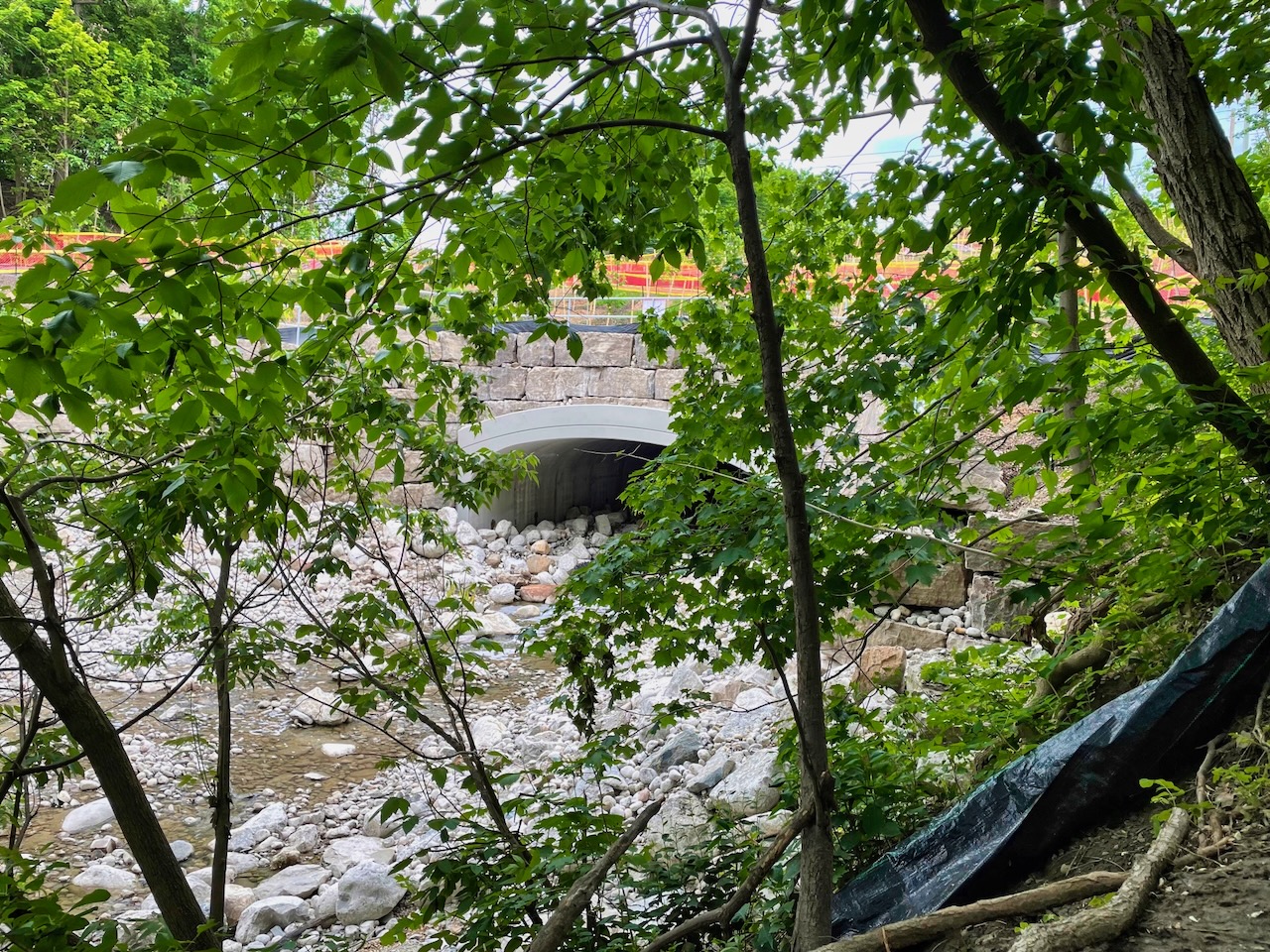
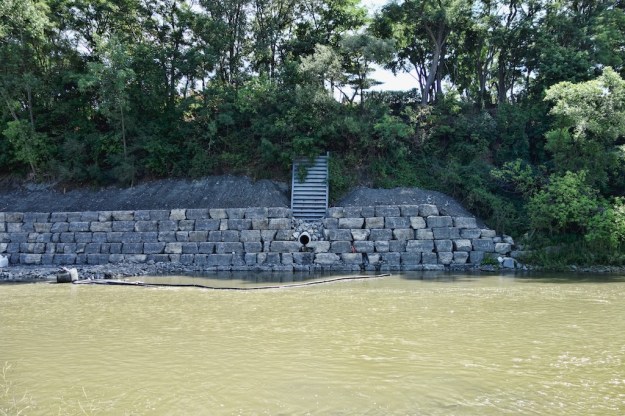
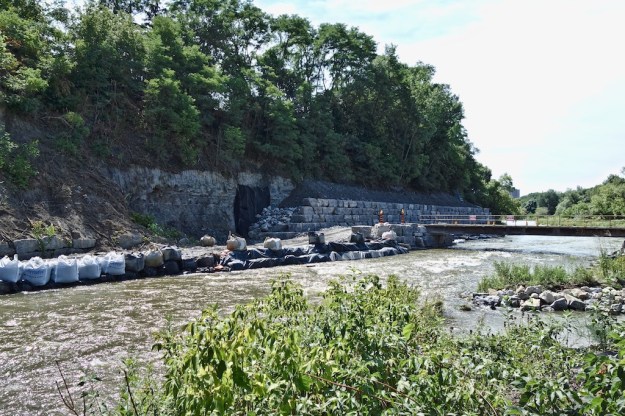
The culvert work under Scarlett road that brings Humber Creek to the Humber River is almost complete. I was able to get a look at it the other day and the eastern side is ready.
Through the trees…
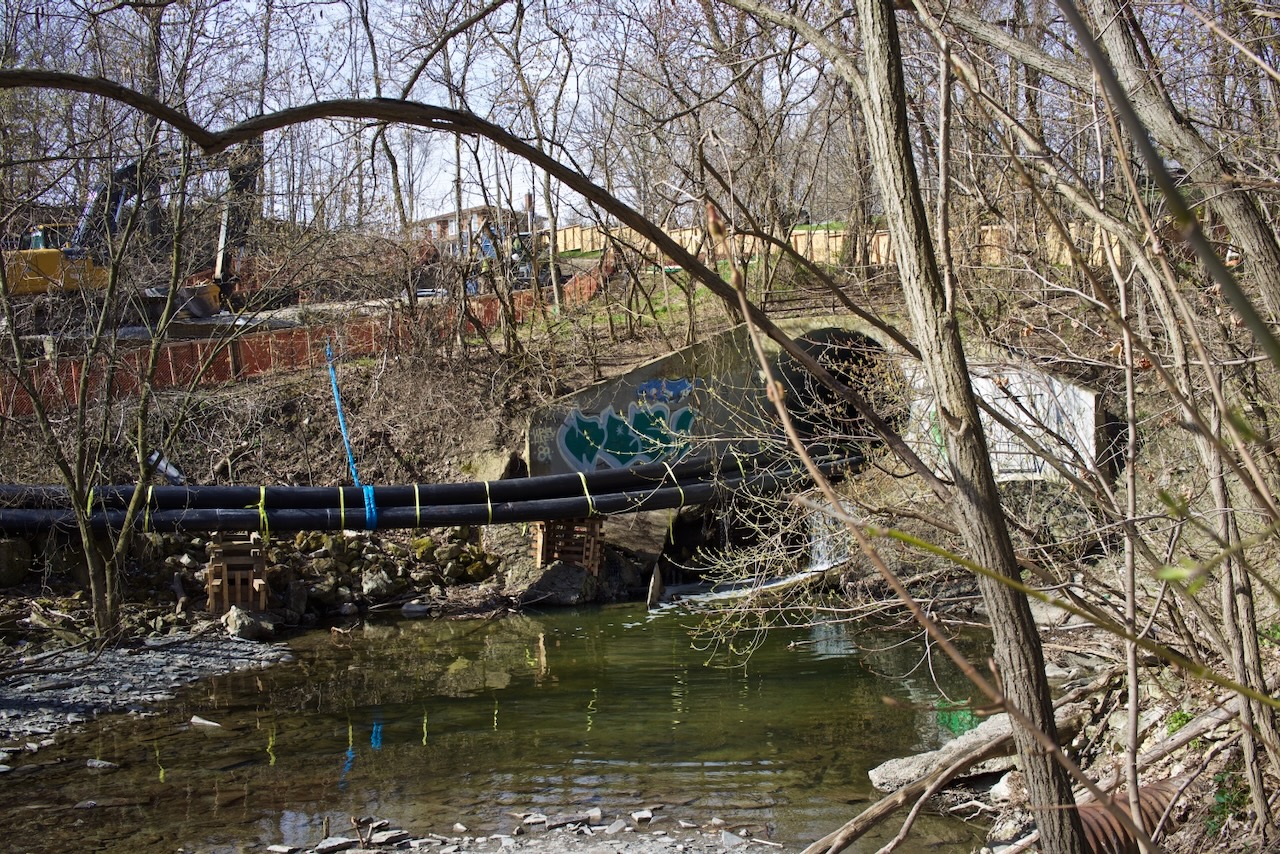
The old culvert was quite something:
The old culvert during previous sewer repairs in April 2016.
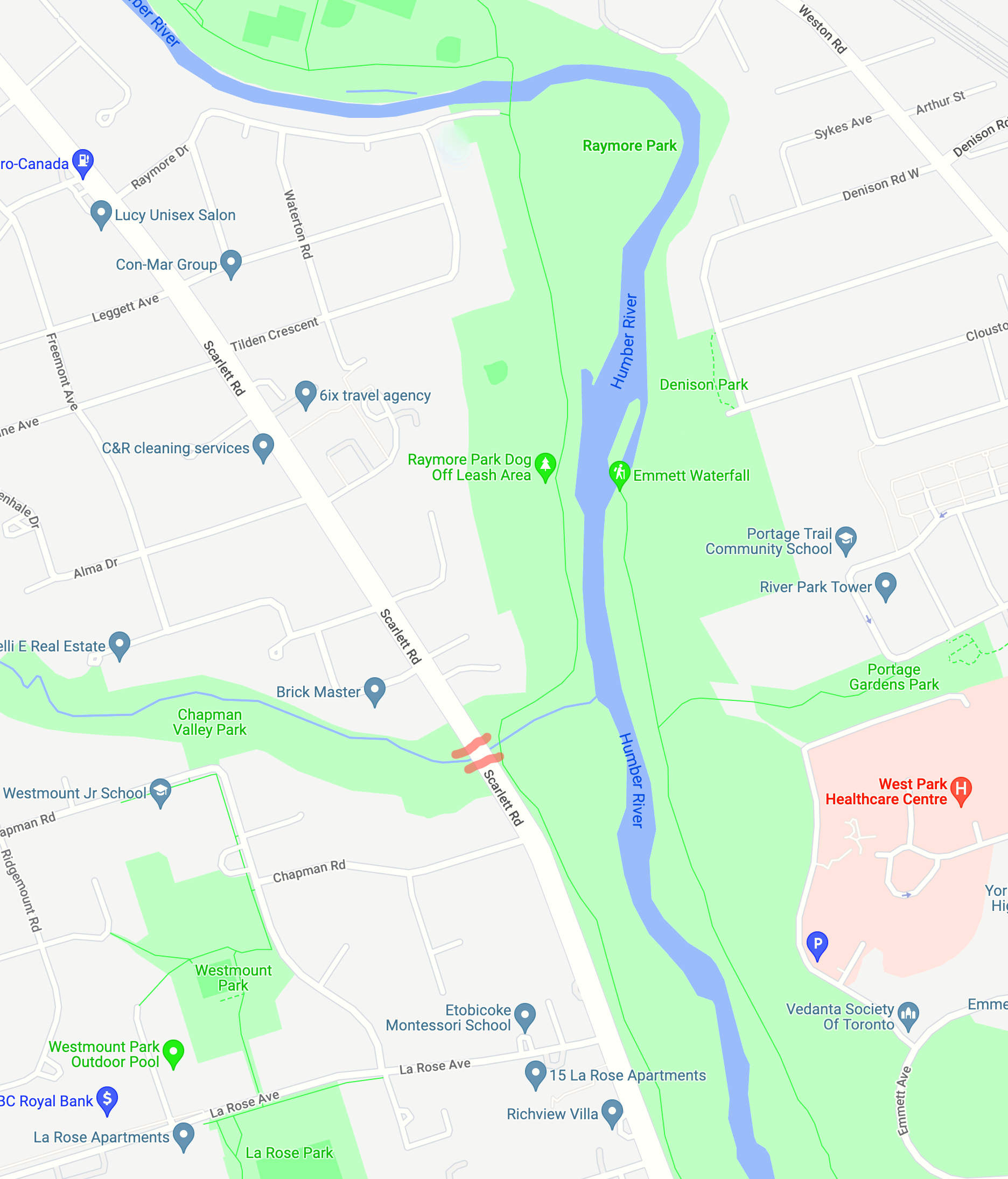
The old outlet was a good couple of metres above the creek which made for a spectacular and powerful jet of water after rainstorms. A deep pool formed as a result. Unfortunately, the height of the culvert made passage along the creek quite difficult for wildlife. The new lower bed has created a corridor that will link Raymore and Chapmen Valley Parks and lower the risk of deer and other animals running across Scarlett Road.
The soon to be linked Chapman Valley and Raymore Parks – From Google.
In addition to linking the parks, the terracing around the culvert has been landscaped. The other side of the culvert is supposed to be completed by this July or August.
The new leash free zone has taken some of the pressure off the wild area. The evidence for this is the fact that the old path is quite overgrown.
The old path is visible as a mild depression in the undergrowth.
There is a path there somewhere.
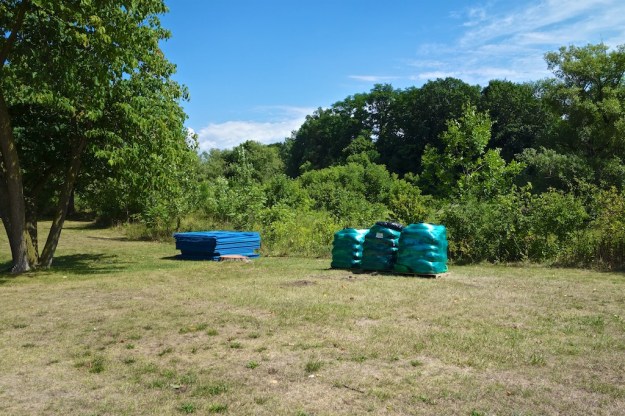
The lack of dogs and humans is also helpful to new plantings that are part of the rehabilitation of the former staging area. The bags at the base of some of the trees are containers which allow water to be released slowly (I always wondered). The brand name is Tree Gator.
New plantings of trees and grass. Our plentiful rainfall this summer is helping. Let’s hope winter ice is kind.
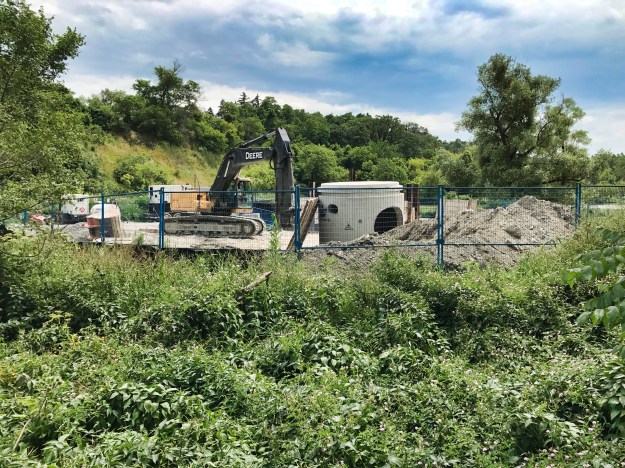
In the meantime, work continues on re-lining the sewage pipes that run along the Humber. The project has blown past its announced completion date of July 2017.
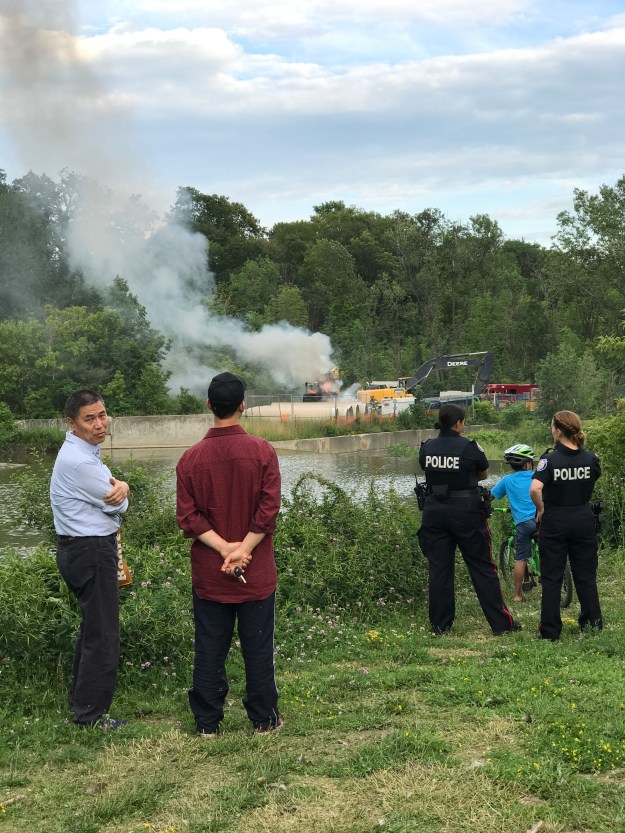
This equipment fire across the river on July 9th may not have helped the project timeline.
Much has been going on in Raymore Park over the summer although progress on the retaining wall seems to be slow. The dog leash enclosures are partly complete but not without controversy.
The retaining wall is looking quite magnificent and it looks as if it will do the job for centuries. It looks as if the wall will be curtailed, ending before its planned end-point. This is apparently because riparian rights for the end property extend to the river and the owner feels that remediation will cause further erosion.
The wall in a completed section.
A view of the total wall so far.
2. The off leash areas.
Two areas are being built, one for smaller dogs and one for larger breeds. One section has been built (topsoil removed, drainage completed and topped with limestone chippings).
Sadly, a sanctuary for birds and small animals has been removed to create the area. It was basically a couple of trees surrounded by dense shrubs that were impenetrable to all but small animals. It was a bit of an island or small thicket in the park but it has been removed in what seems like callous disregard for wildlife. Surely there was room to place the leash free zones without destruction of a natural resource like this? It speaks to a lack of care for the environment and a distinct lack of planning. Let’s hope there are no more unpleasant surprises from Toronto Parks who don’t own but manage Raymore Park.
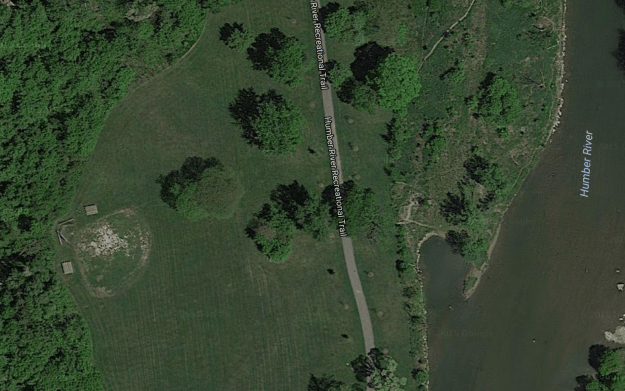
The shrub island (to the right of the old baseball diamond) from Google Earth.
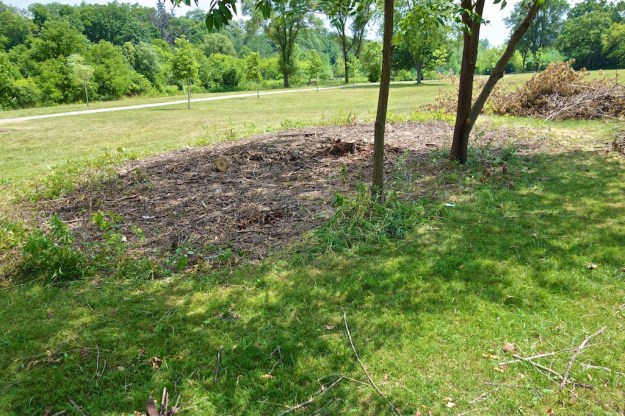
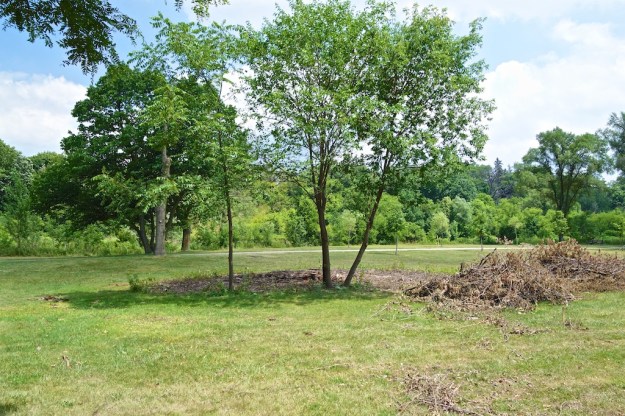
This thicket is no more, sacrificed for the dog enclosure.
The island site shortly after its destruction.
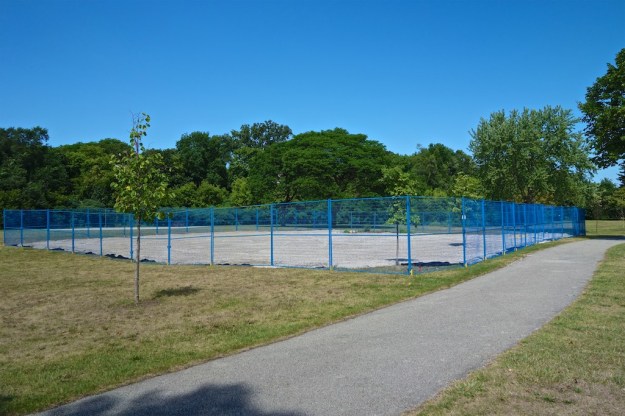
One of the dog enclosures; further north than anticipated.
More temporary fencing and drainage pipes for the next area.











 Friends of Raymore Park