Category Archives: Park view

Exploring Toronto’s Aerial History: Raymore Park Before Hurricane Hazel

In the City of Toronto Archives there are extensive aerial photos of the city taken between 1947 and 1992. They are black and white images but reasonably detailed. While researching Hurricane Hazel I was able to download an image of what is now Raymore Park to reveal the community that existed just over a year before Hurricane Hazel struck in October 1954. Colourizing and sharpening the photo makes it resemble today’s satellite images (details are unchanged but colours are arbitrary and not historically accurate) from Google and help appreciate the extent of community that existed back then. I have labelled relevant streets.

Raymore Drive extended into what is now the park, hugging the river’s edge before heading south and looping back onto Gilhaven Avenue.
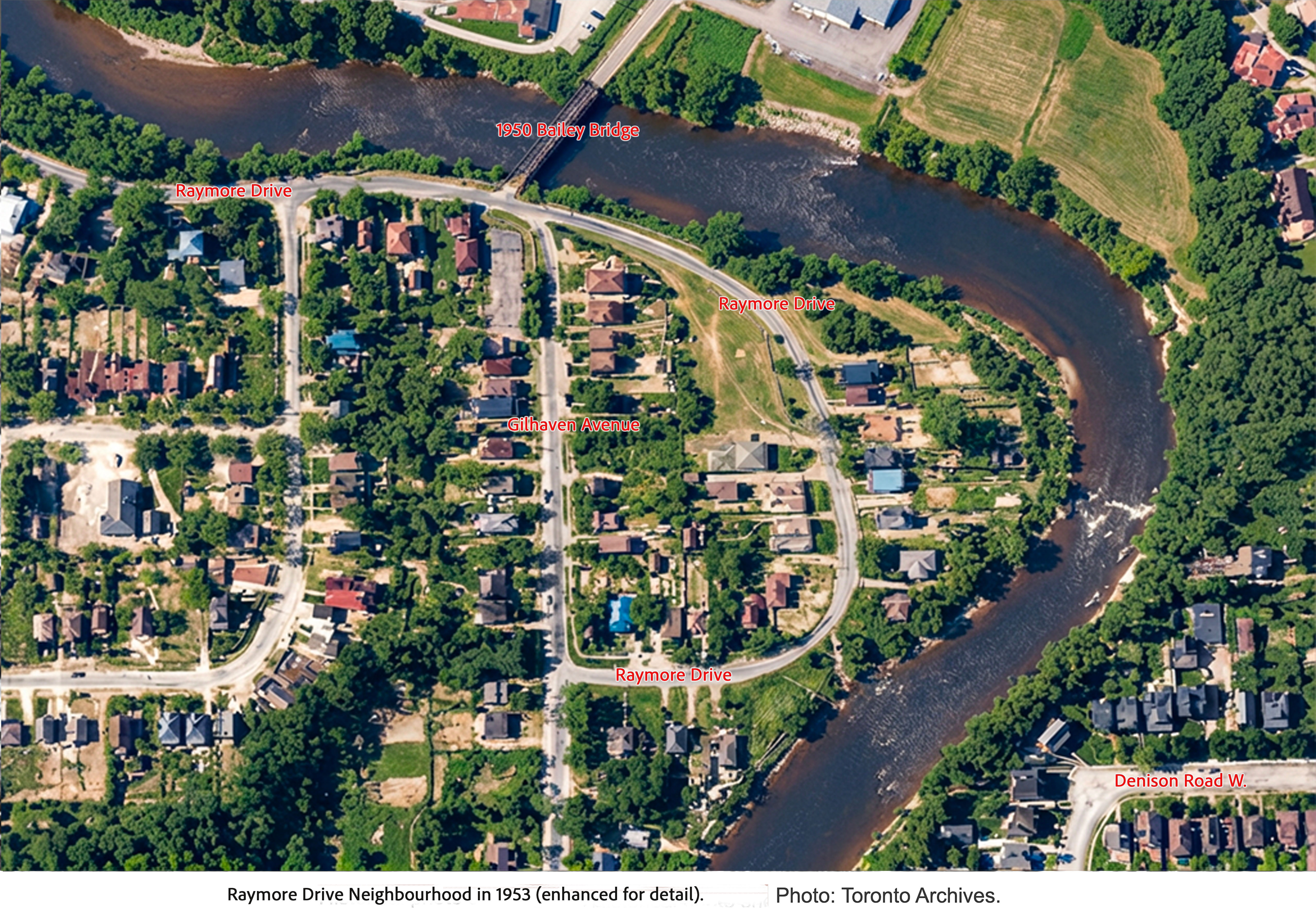
Click to enlarge.

I was surprised at the size of the community with houses occupying much of the flood plain land and stretching a considerable way down Gilhaven Avenue (now the approximate location of the bike path). It looks as if it was an idyllic place to live – riverside dwellings but with city amenities. There was even a beach for the kids. Many of the homes were cottage style on blocks while some had full basements. Most are a lot smaller than our modern dwellings. The homes destroyed seem to have been along the river’s edge at the far right and lower edge of the peninsula. The people who died lived on this stretch of Raymore.

At the top of the image, on the other bank of the river, parts of the (now demolished) water filtration plant can be seen.

Below is a recent satellite image and I have adjusted the size and rotation to match that of the 1953 photo.
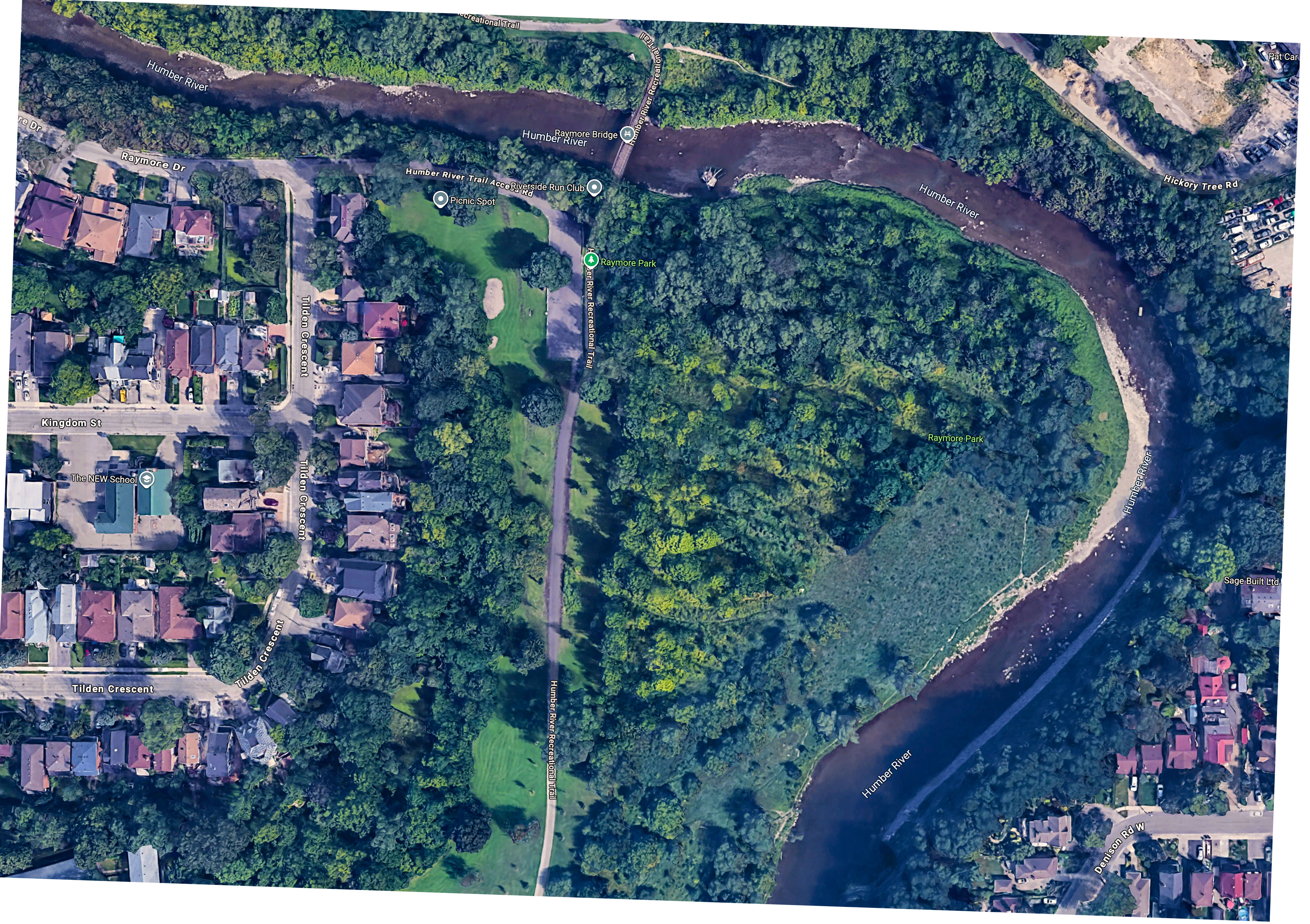
From Google. Click to enlarge.

The Bailey Bridge seen in the upper photo was put there in 1950 and both of the old abutments can be seen to this day. The current footbridge was installed in 2005.

Some of the homes along what is now the bike path were undamaged apart from flooded basements but authorities at the time elected to remove all homes in the flood plain leaving only Tilden Crescent intact. Raymore Drive was ended at Tilden and Gilhaven Avenue ceased to exist.

Very few of the buildings on surviving streets from 1953 exist today – I recognize the house that once stood at the east corner of Raymore and what is now Tilden, Westmount Gospel Chapel on Kingdom and some homes on Denison. Readers are welcome to add discoveries of their own.

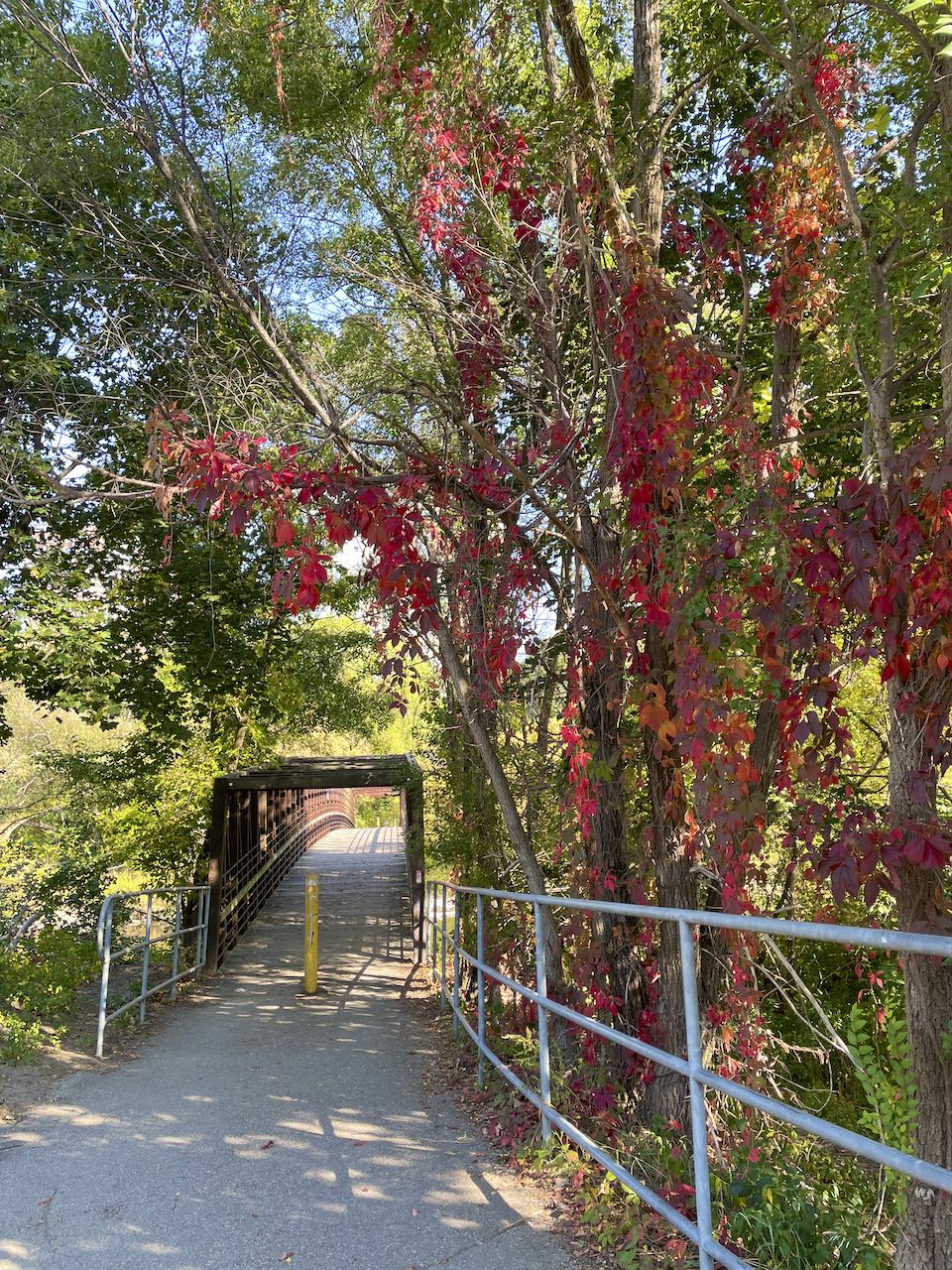
Signs of Fall

Fall looks as if it’s here to stay as temperatures are set to lower sharply next week. The first dip below zero of the season is forecast for October 30 which is slightly earlier than Toronto’s average of November 1-10.

Here are some recent images of the park as it eases into the approaching winter.

Colourful Boston ivy decorates the Humber footbridge entrance. October 2.
Sumac beginning to turn colour by the park entrance. October 2.
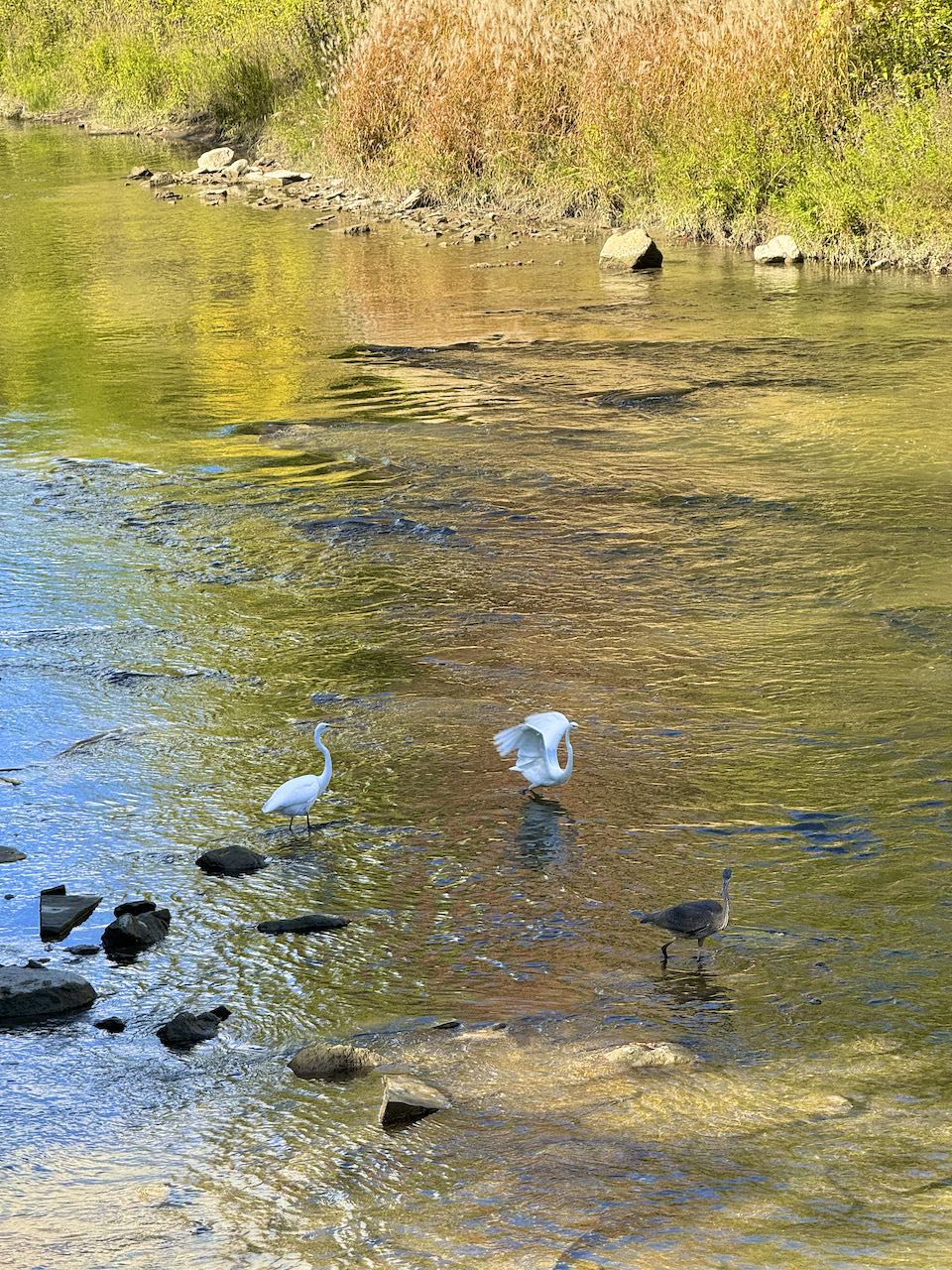
Two egrets and a blue heron. The egret (centre) was just about to chase the heron away. (October 12)
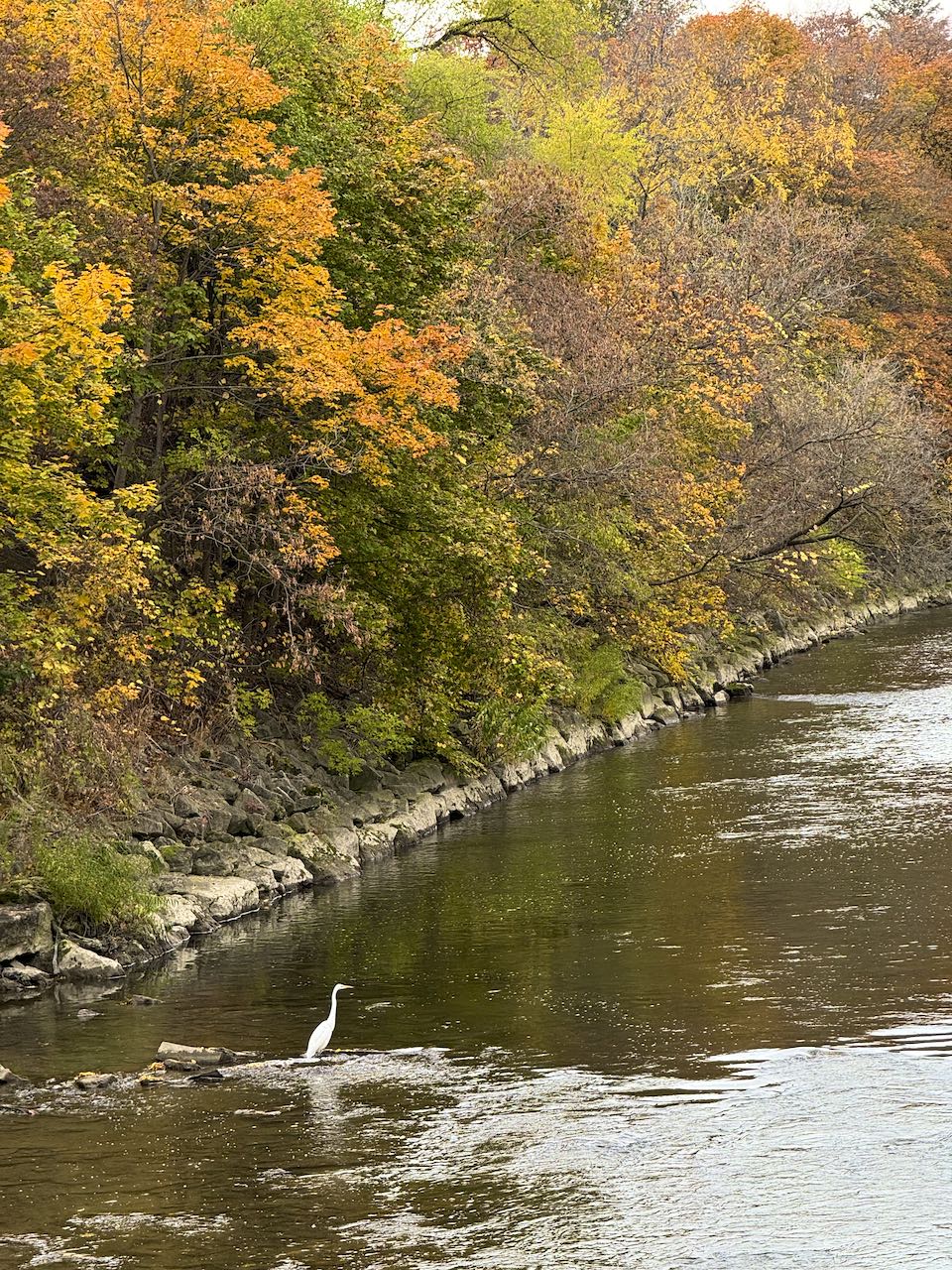
A lone egret with fall colours in the background. (October 24)
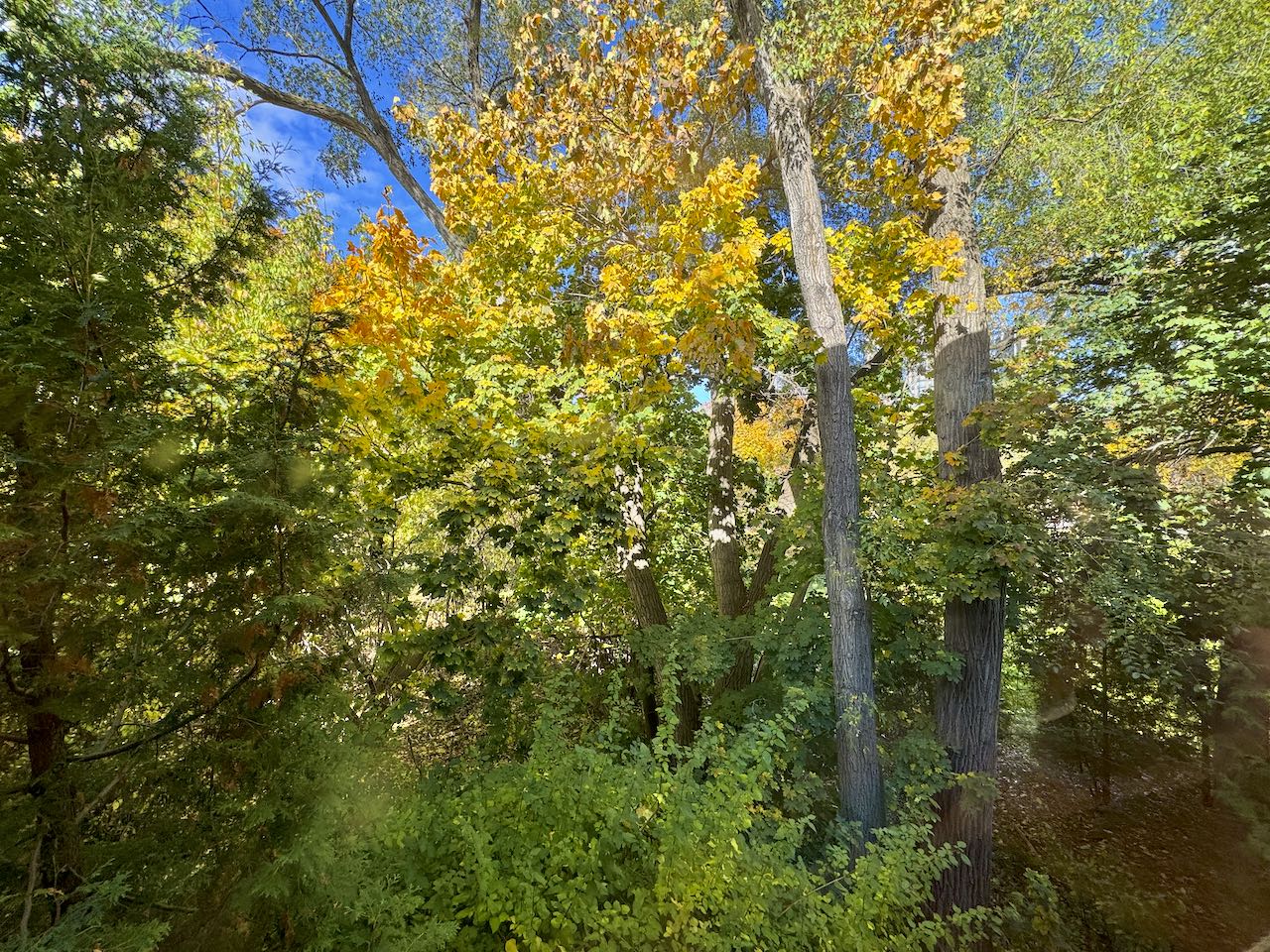
Norway Maple foliage is more colourful this year. October 28.

Spring Runoff

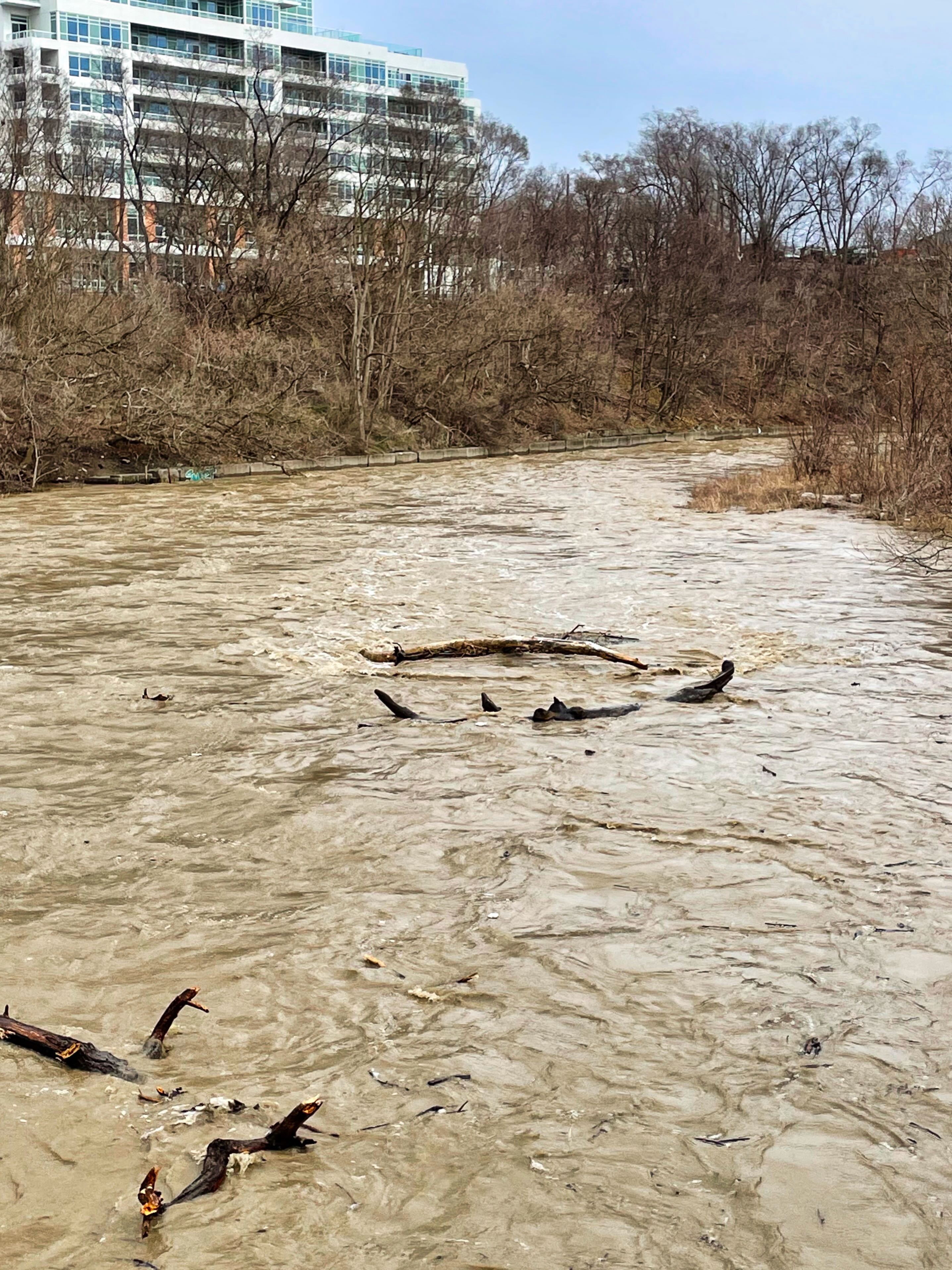
Temperatures hit the mid-teens today and with yesterday’s rain adding to melting snow coming from further north, the Humber river is running high. A good benchmark is the old footbridge abutment and today it was almost underwater. Adding to the drama, logs and dead trees were cascading down the river – probably after being blown over during this winter’s storms, having waited for a good flood to float them and flush them down to Lake Ontario.

The abutment can just be seen slightly to the right of centre behind the farthest log. Click to enlarge.

The Condo building called ‘The Humber’ is almost ready for occupancy and residents facing the river will soon have a ringside seat for the ever-changing river landscape as it makes a 90° turn in front of the building.

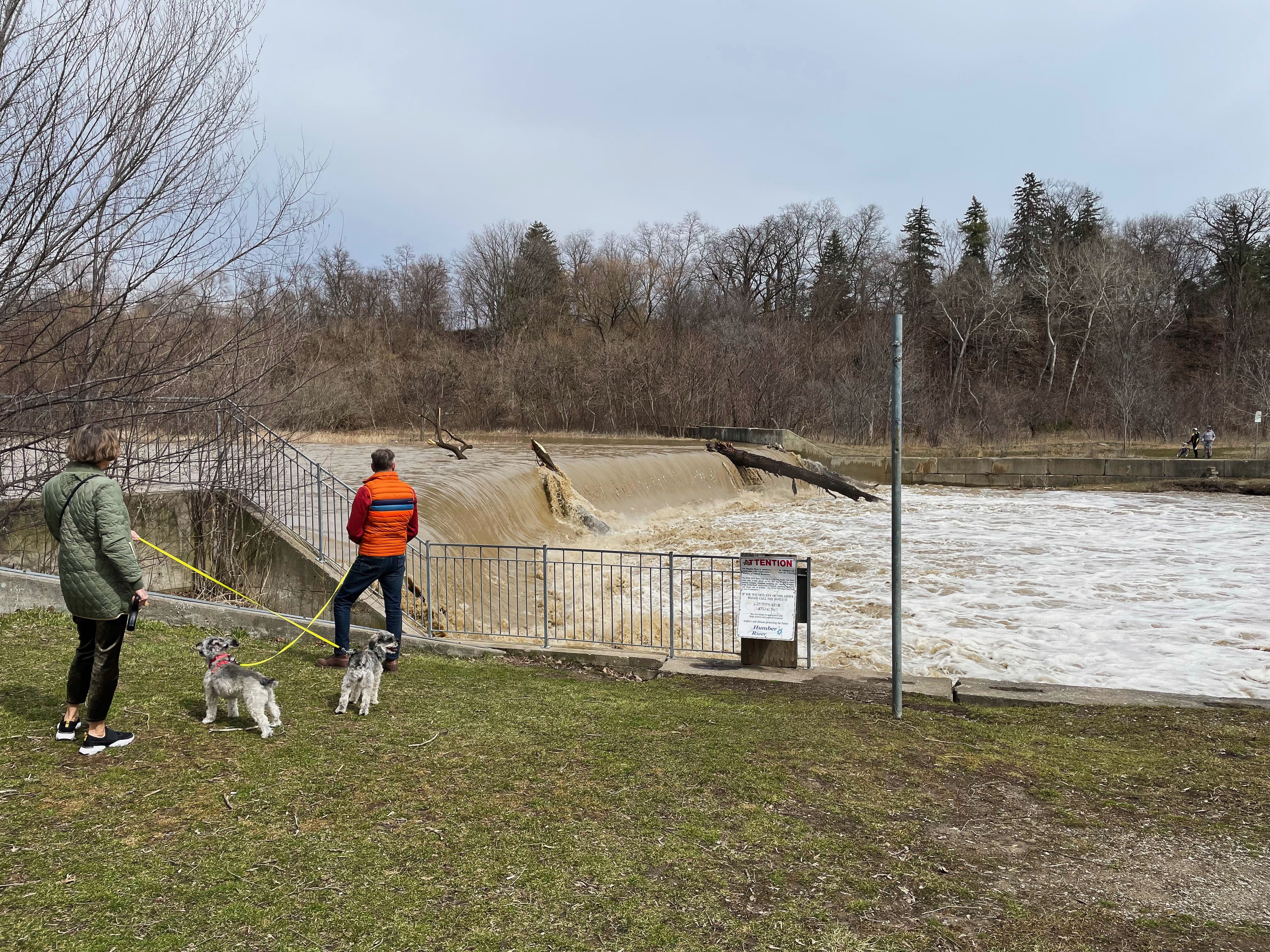
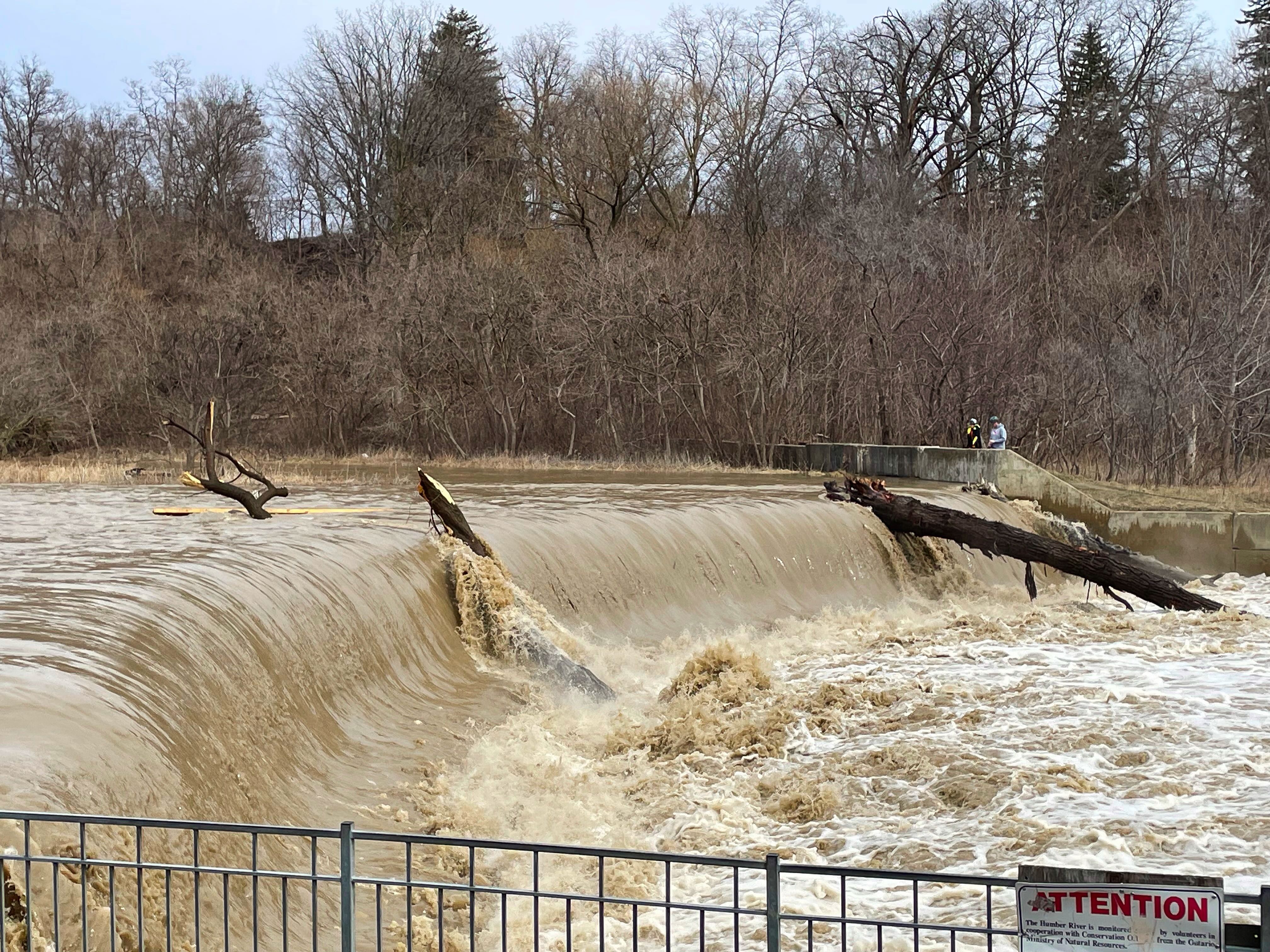
A few hundred metres downriver at the weir, some large trees were stuck as they lumbered over the edge. The roar of the river by the weir is quite something. People were standing mesmerized, soaking up the vibrations.

A couple witness the power of the river with their dogs. Click to enlarge.
Two people watch from the Mount Dennis side as trees get stuck on the weir’s edge. Click to enlarge.

Water levels should go down tomorrow during a one-day temperature dip but inevitably, spring is pushing its way north.

No doubt we’ll be complaining about the heat soon.

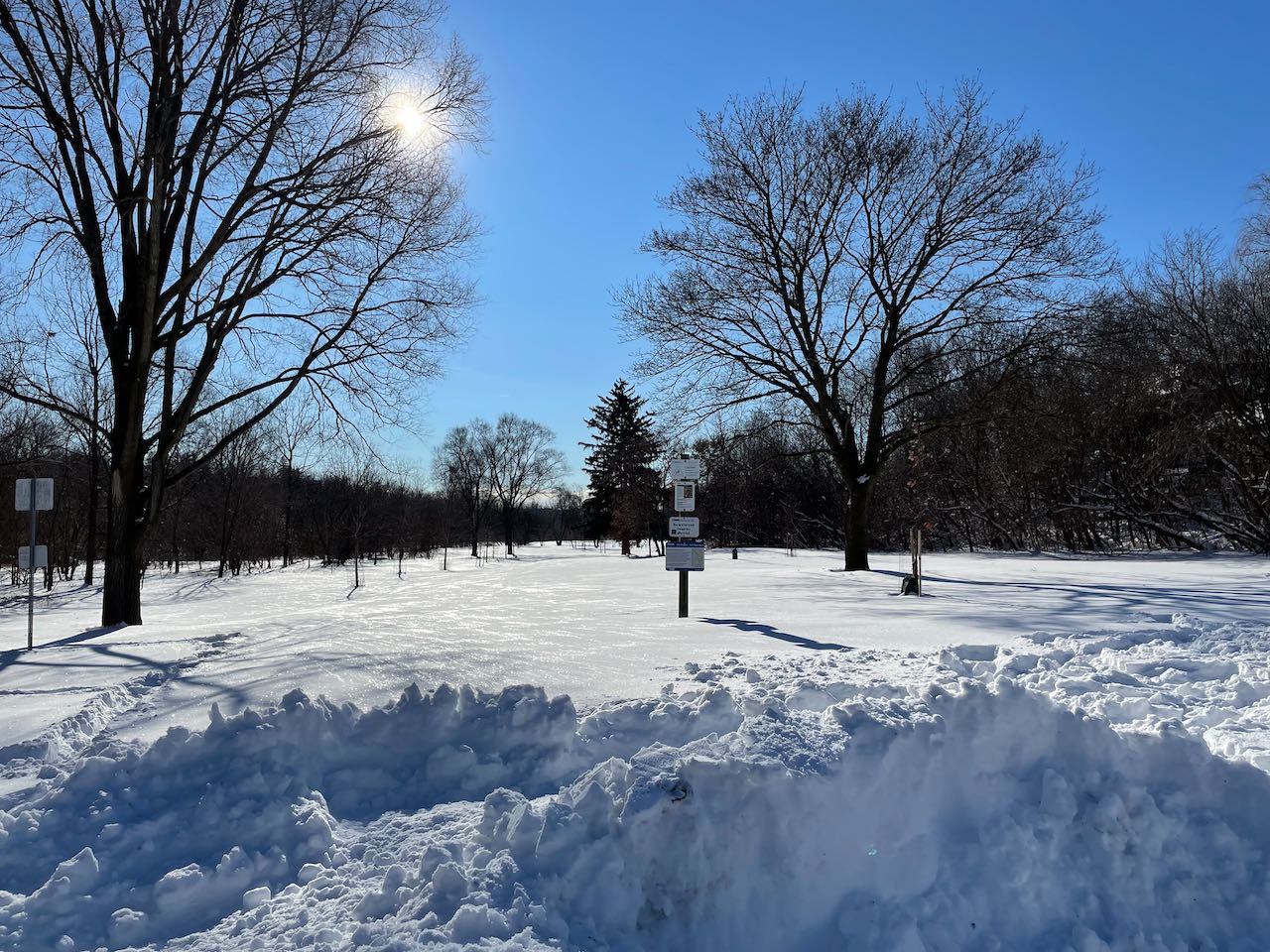
Deep snow hits Raymore Park

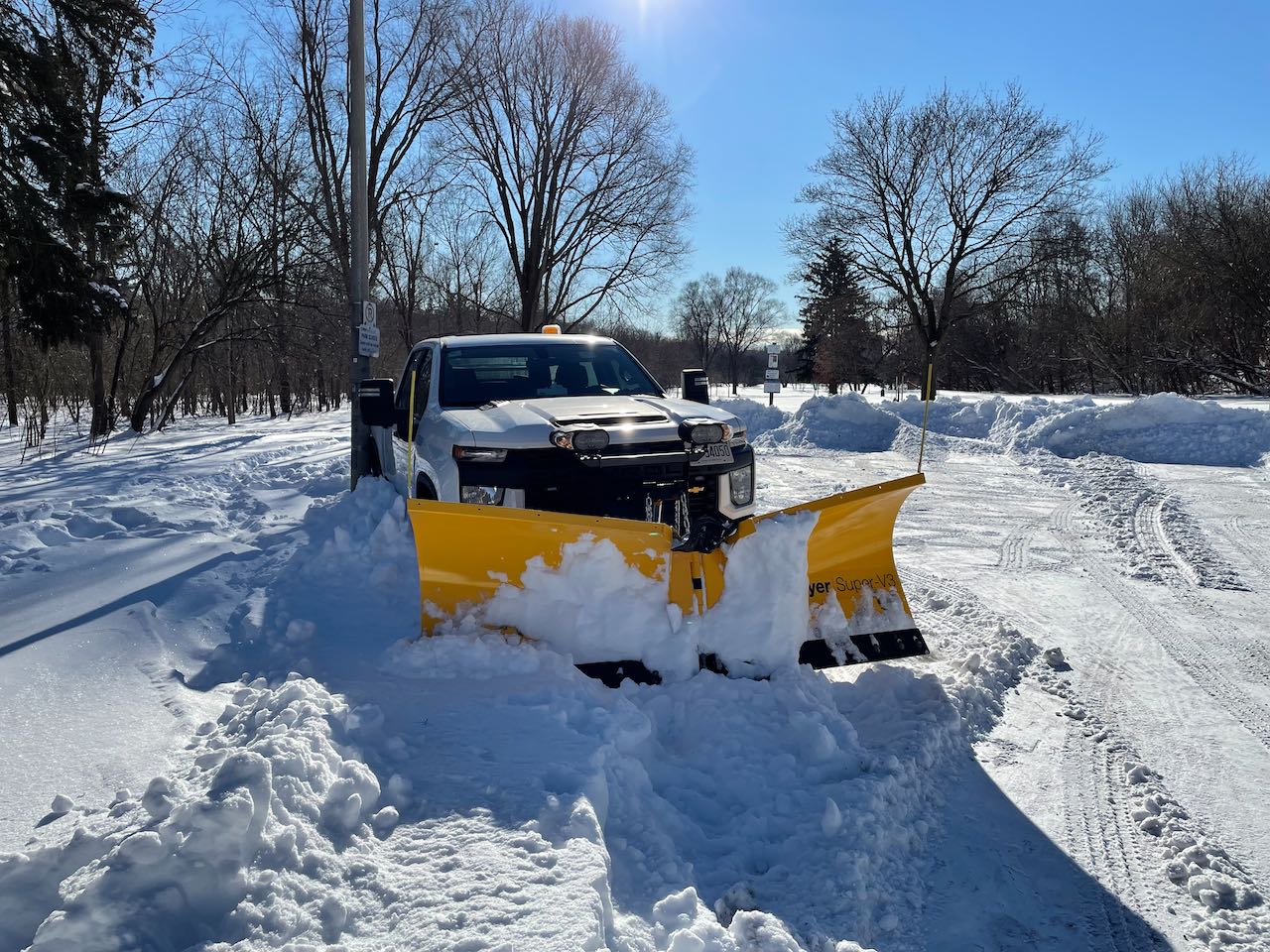
After a 32 cm snowfall on Monday, Winter Park Path Project crews ran into trouble trying to clear and grit the parking lot on Tuesday. This truck with plow attached hopped over a hidden curb and came to rest against a light pole. Extracting the truck, leaving the light pole standing will be a precision job.

Looking south from the parking lot.

As is usual after a heavy snowfall, paths are formed by the first people to come along and a path has been carved through the wild area. The regular bike path to the dog off leash area is untouched.

Looking south towards the DOLA.

Sewer work winding up (finally)

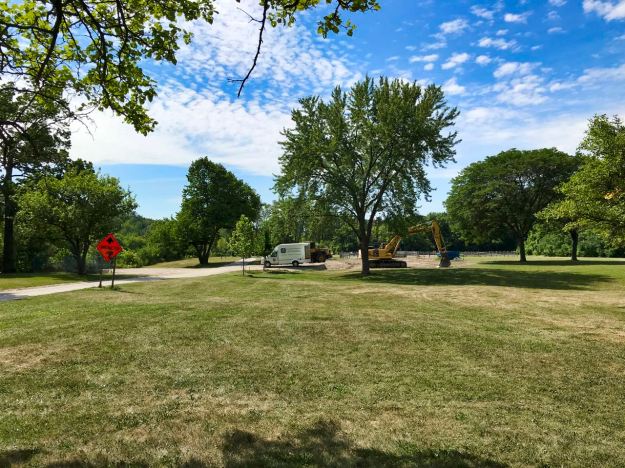
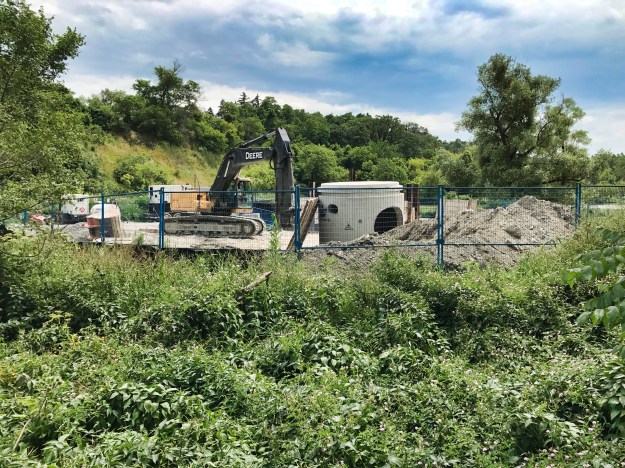
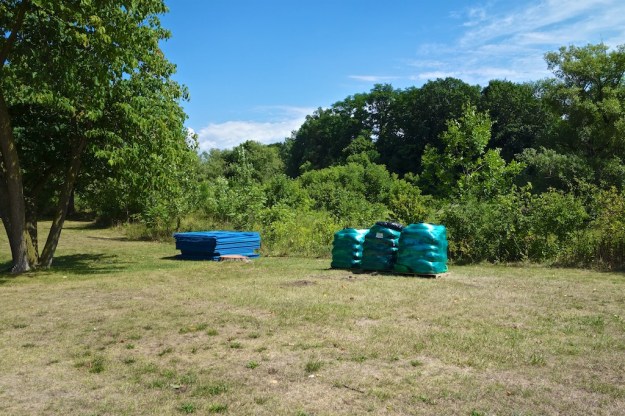
The staging area is no longer fenced off and various bits of equipment await removal.

The work to reline sewers buried along the Humber is almost over. The staging area north of the weir has been dismantled and will be restored to its natural state in the next few weeks. If all goes according to plan, the cycle / pedestrian path will be restored and widened to the standard width of 2.5 metres.

Between the retaining wall construction, the dog off-leash area and the sewer relining, Raymore Park has been in a state of construction since early 2016 so it will be nice to have peace and quiet once more. There’s still more work going on further south but that should be completed by the fall.

One side benefit of the leash free zone.

The new leash free zone has taken some of the pressure off the wild area. The evidence for this is the fact that the old path is quite overgrown.
The old path is visible as a mild depression in the undergrowth.

There is a path there somewhere.

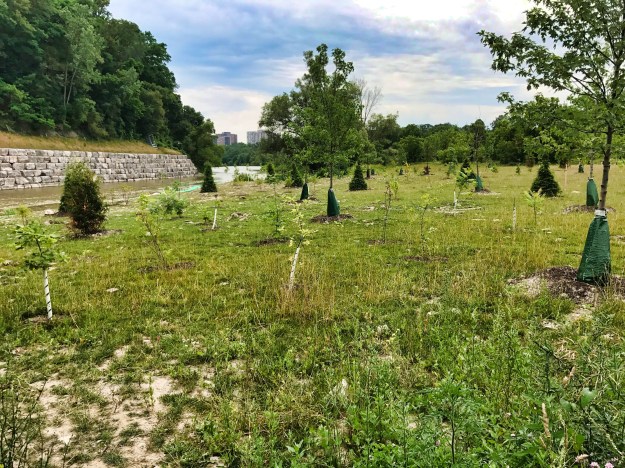
The lack of dogs and humans is also helpful to new plantings that are part of the rehabilitation of the former staging area. The bags at the base of some of the trees are containers which allow water to be released slowly (I always wondered). The brand name is Tree Gator.

New plantings of trees and grass. Our plentiful rainfall this summer is helping. Let’s hope winter ice is kind.

In the meantime, work continues on re-lining the sewage pipes that run along the Humber. The project has blown past its announced completion date of July 2017.

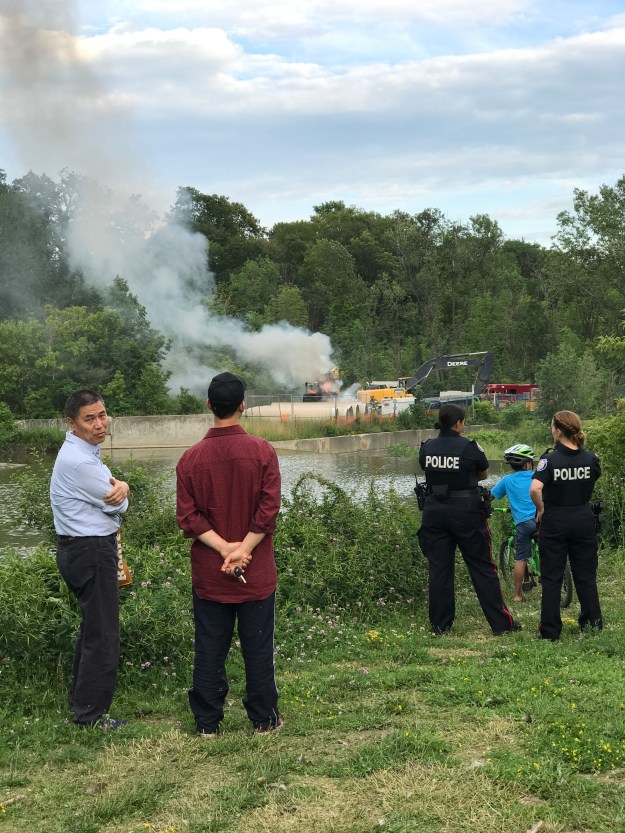
This equipment fire across the river on July 9th may not have helped the project timeline.

Fall – as it happened.

Autumn is the time when leaves fall from the trees. It may seem like a gradual process but often, leaf loss can be sudden; especially after an overnight frost or during gale force winds.

As summer winds down, deciduous trees produce cells at the base of each leaf stem called the abscission layer. This layer weakens the attachment of the leaf to its tree while blocking nutrients from nourishing the leaf causing its chlorophyll to degrade. Since chlorophyll is green, other colours such as red or yellow can then become more prominent.

Frost can accelerate the process by further weakening the abscission layer so that leaves are very loosely attached and will fall at a slight breeze. Early frosts are the enemy of glorious fall colours as they can send leaves to the ground before colours can develop.

This video was taken in Raymore Park on the morning of November 12, 2013 and illustrates how quickly leaves can fall from trees when conditions are right. There had been an overnight temperature of -4°C the night before, severely weakening abscission layers and even the gentlest breeze was enough to send large numbers of leaves to the ground.


September 2016 Construction Progress Report.

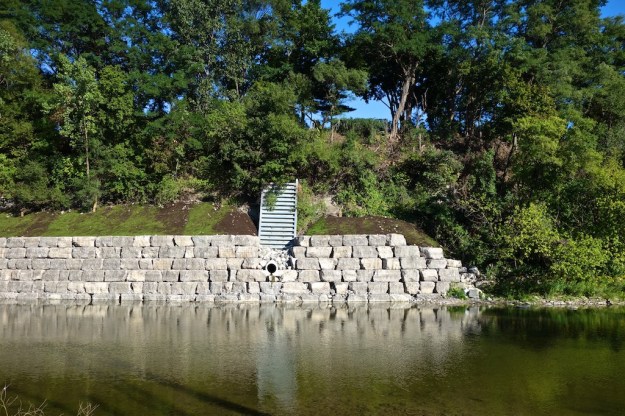
The finished product - at this end anyway.

The finished product – at this end anyway.

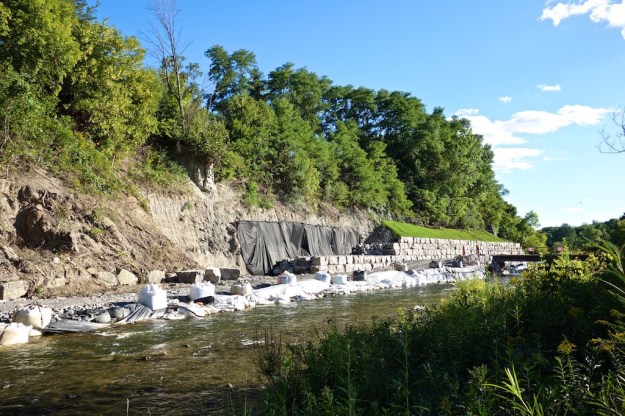
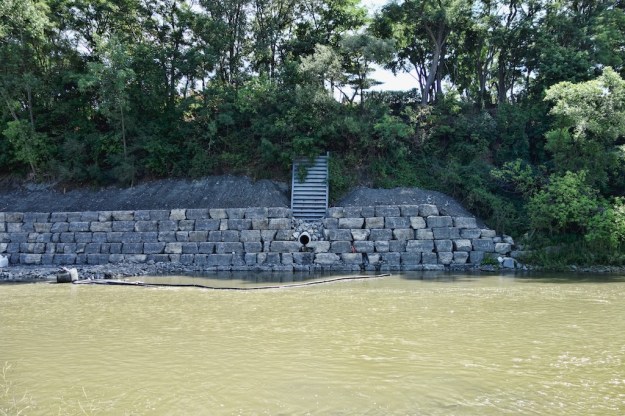
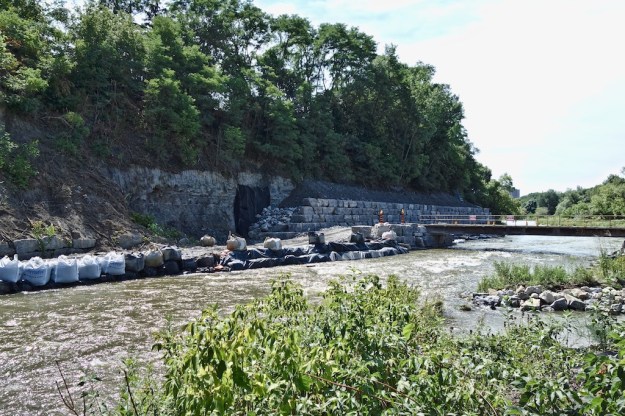
The finished appearance of the retaining wall is now evident at its southern end with a green vegetative planting just starting to sprout on the slope at the top of the wall. Regardless, there’s still a long way to go. It also looks as if the homeowner with riparian rights has now wisely decided to take advantage of the opportunity and so construction has begun further upstream. The original intent was to construct the wall along the full length and that now seems to be the plan.

dsc05907

A nice cross-section is visible from the northern end of the wall. (click to enlarge)

Astonishingly, even after all this effort, the work looks as if it’s only about 40% done and so there is a long, long way to go before this project can be signed off. The wall construction was originally scheduled for completion this past spring with brick removal from the access area and subsequent landscaping to take place this fall. Obviously, that ain’t gonna happen. My estimate at the current rate of construction is that they’ll be lucky to have the project completed and everything restored by the end of 2017. This seems to have been quite a miscalculation by the planners. The project was to cost a maximum of $250,000.

I’ll bet that marker was skated past months ago.

Construction Progress Report

Much has been going on in Raymore Park over the summer although progress on the retaining wall seems to be slow. The dog leash enclosures are partly complete but not without controversy.

  1. The retaining wall is looking quite magnificent and it looks as if it will do the job for centuries. It looks as if the wall will be curtailed, ending before its planned end-point. This is apparently because riparian rights for the end property extend to the river and the owner feels that remediation will cause further erosion.

The wall in a completed section.

The wall in a completed section.

A view of the total wall so far.

A view of the total wall so far.

2. The off leash areas.

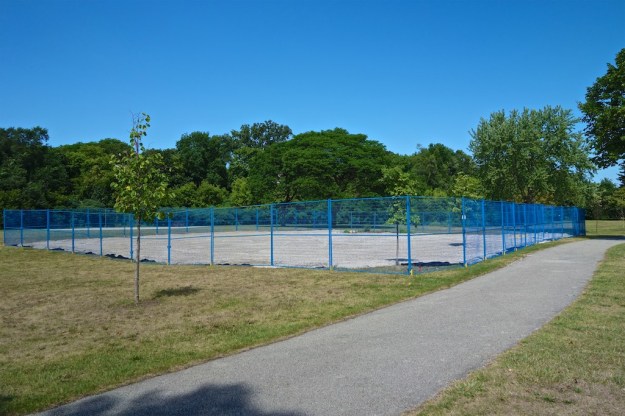
Two areas are being built, one for smaller dogs and one for larger breeds. One section has been built (topsoil removed, drainage completed and topped with limestone chippings).

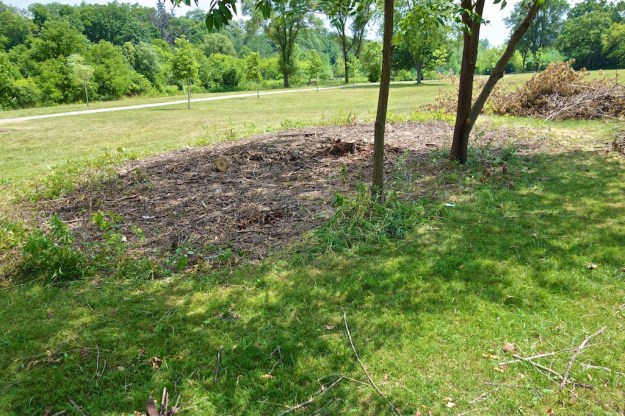
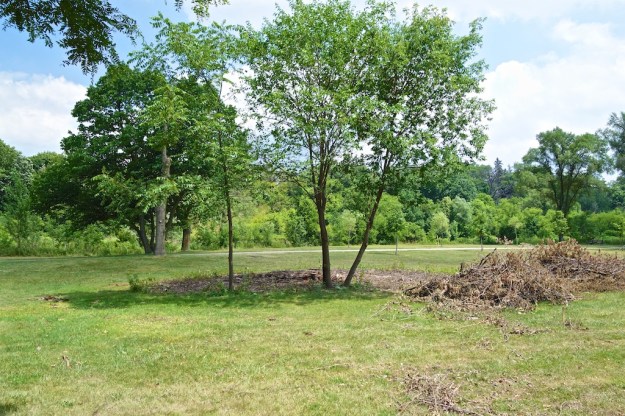
Sadly, a sanctuary for birds and small animals has been removed to create the area. It was basically a couple of trees surrounded by dense shrubs that were impenetrable to all but small animals. It was a bit of an island or small thicket in the park but it has been removed in what seems like callous disregard for wildlife. Surely there was room to place the leash free zones without destruction of a natural resource like this?  It speaks to a lack of care for the environment and a distinct lack of planning. Let’s hope there are no more unpleasant surprises from Toronto Parks who don’t own but manage Raymore Park.

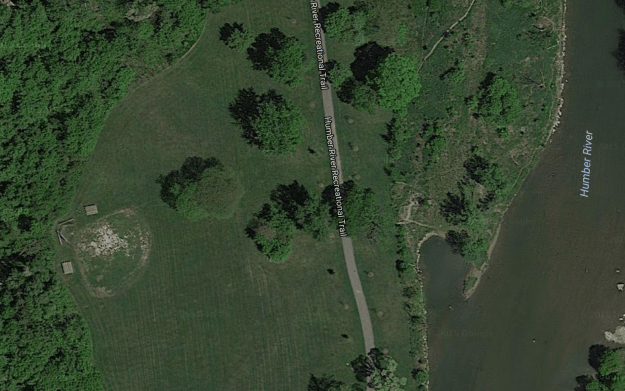
The island in from Google Earth.

The shrub island (to the right of the old baseball diamond) from Google Earth.

This thicket is no more, sacrificed for the dog enclosure.

This thicket is no more, sacrificed for the dog enclosure.

The island site shortly after its removal.

The island site shortly after its destruction.

One of the dog enclosures; further north than anticipated.

One of the dog enclosures; further north than anticipated.

More fencing and drainage pipes for the next area.

More temporary fencing and drainage pipes for the next area.


Not much progress

There seems to be little going on at the retaining wall site these days. It may have to do with negotiations ongoing with the owner at the north end of the wall. If the owner withholds permission for the wall to be completed on the end property, plans will need to be adjusted.

Old retaining wall blocks are stacked along the opposite shore.

Old retaining wall blocks are stacked along the opposite shore.

Part of the

The old retaining wall is being removed in preparation for a newer taller model.

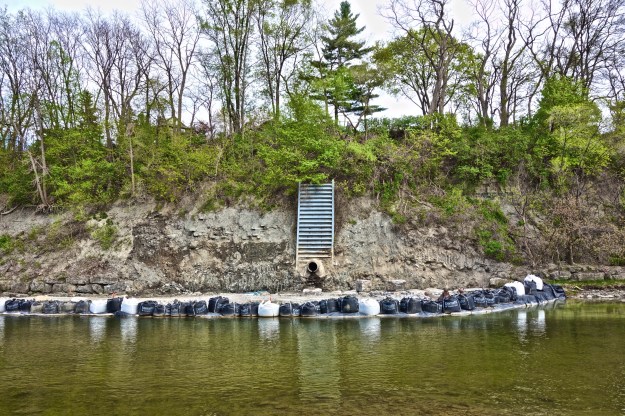
Incidentally, the storm sewer pipe that is visible in the second image is one of hundreds that flow into the Humber. The structure above it may serve to prevent slope erosion.