
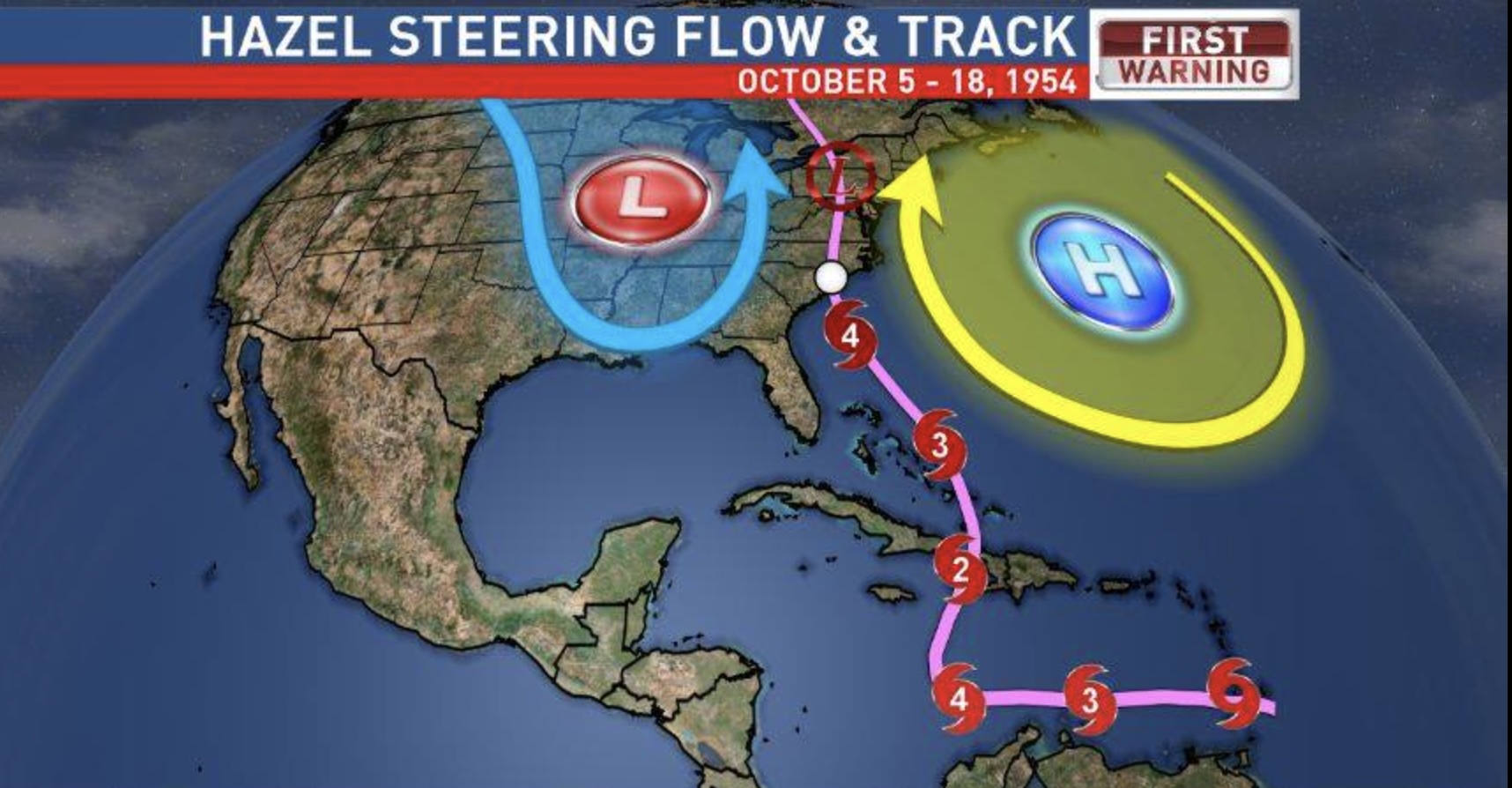
Hurricane Hazel began its trail of devastation as a category 2 hurricane in the Caribbean, killing more than a thousand people in Haiti. It moved northwards hitting the Carolinas as a category 3 thanks to warm waters off Florida. As it passed over land, it weakened to a tropical storm and then became a depression but thanks to a merger with a cold front, Hazel was re-energized and the resulting system started dumping water on the GTA on the 15th and 16th of October 1954.
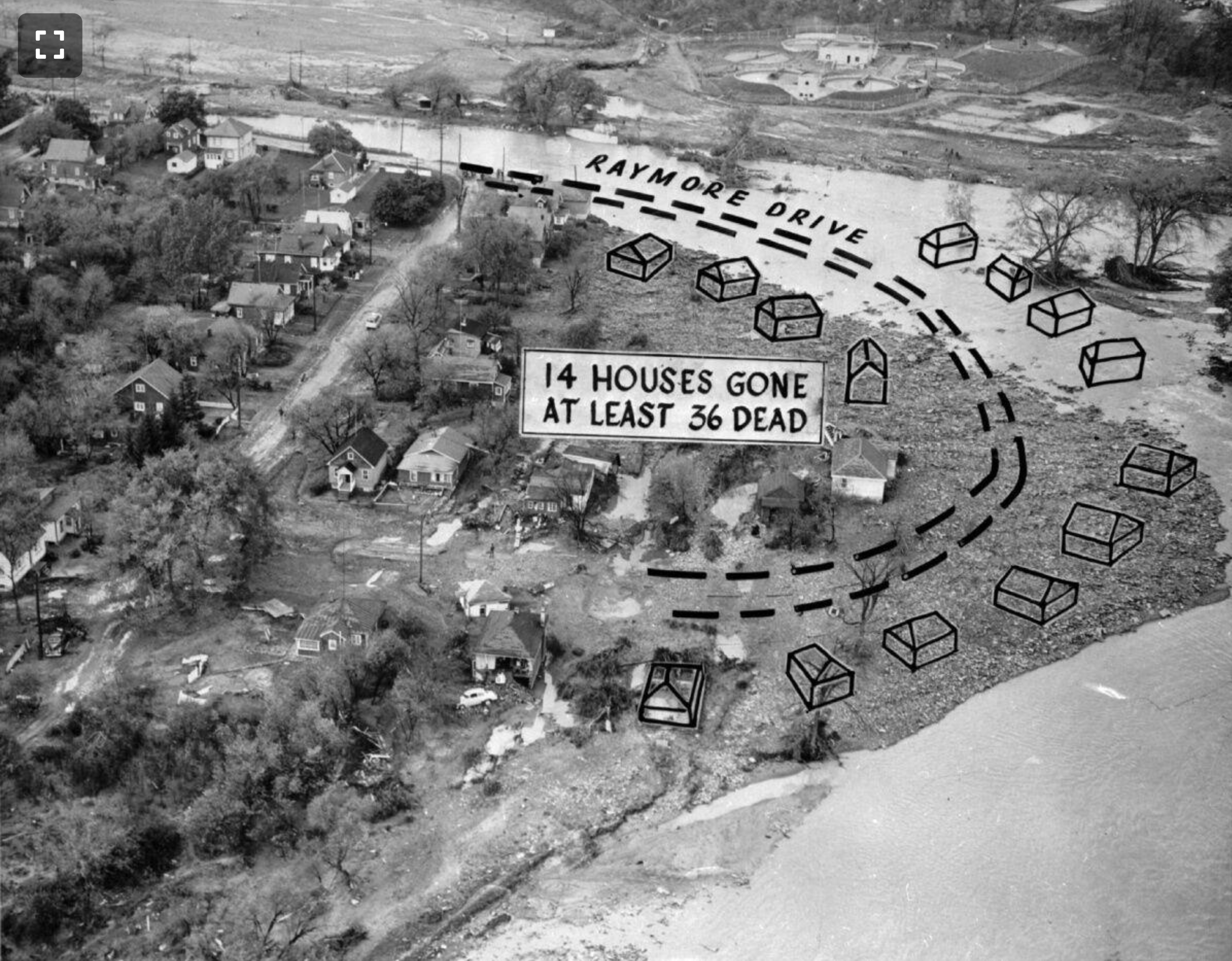
Local historian Madeleine McDowell correctly points out that the Humber River has the sharpest drop from source to mouth of any river in North America. As a result, when heavy rains fall, the river becomes fills up quickly. Events similar to Hazel have occurred in the past. In fact, in the 19th Century, Weston was moved to the east bank of the Humber after several catastrophic floods. Weston Golf and Country Club now occupies the site of the old settlement.
Raymore Park was one of many created after Hazel as part of an effort to clear flood plain lands and give rivers space where excess water can be absorbed.
Read more about Hazel’s legacy here.
Topologically, the Humber catchment area is relatively unchanged since the glaciers left about ten thousand years ago. The valleys are the same width, and the drainage area is the same. Rare events like Hazel will continue to happen. The problem is that since 1954, a good portion of the Humber watershed has been paved over.
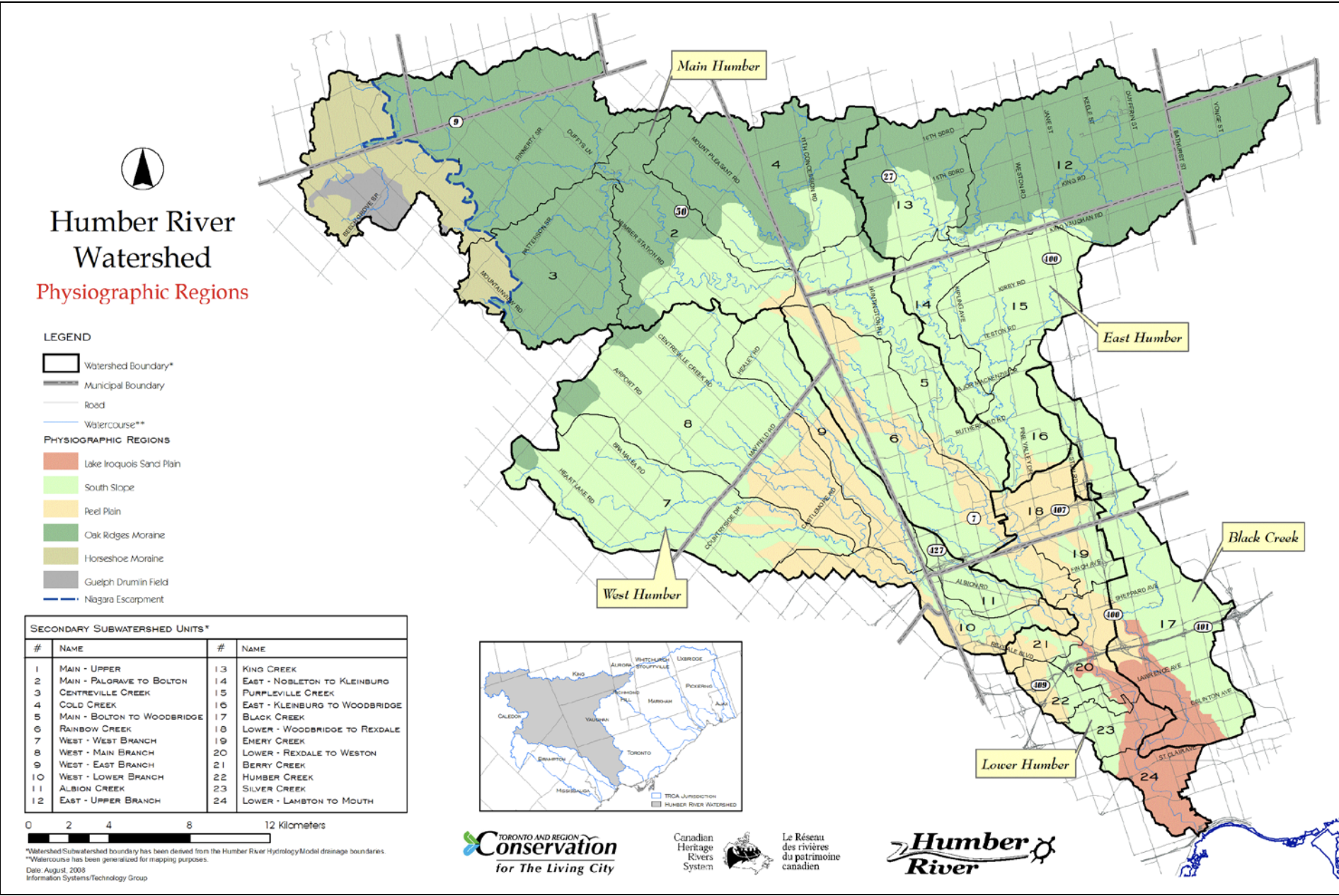
In 2002, urban land occupied 20.7% of the watershed. By 2020 that amount was 26.7%, a significant increase. Natural cover is also decreasing although forest canopy is relatively stable at 29%. Because there is less land and vegetation to absorb rainfall, water enters the Humber faster causing river levels to rise quicker and higher than in the past. In addition runoff from paved land is dirtier affecting animal habitats and our drinking water. When the next Hazel type storm drenches our area (and it will), the effects may be far more severe.
Q: Is climate change a factor in events such as Hazel?
A: We can speculate, however, urbanization is a far more immediate danger. For example, the proposed Highway 413 is a huge threat to the watersheds of both the Humber and Credit rivers.
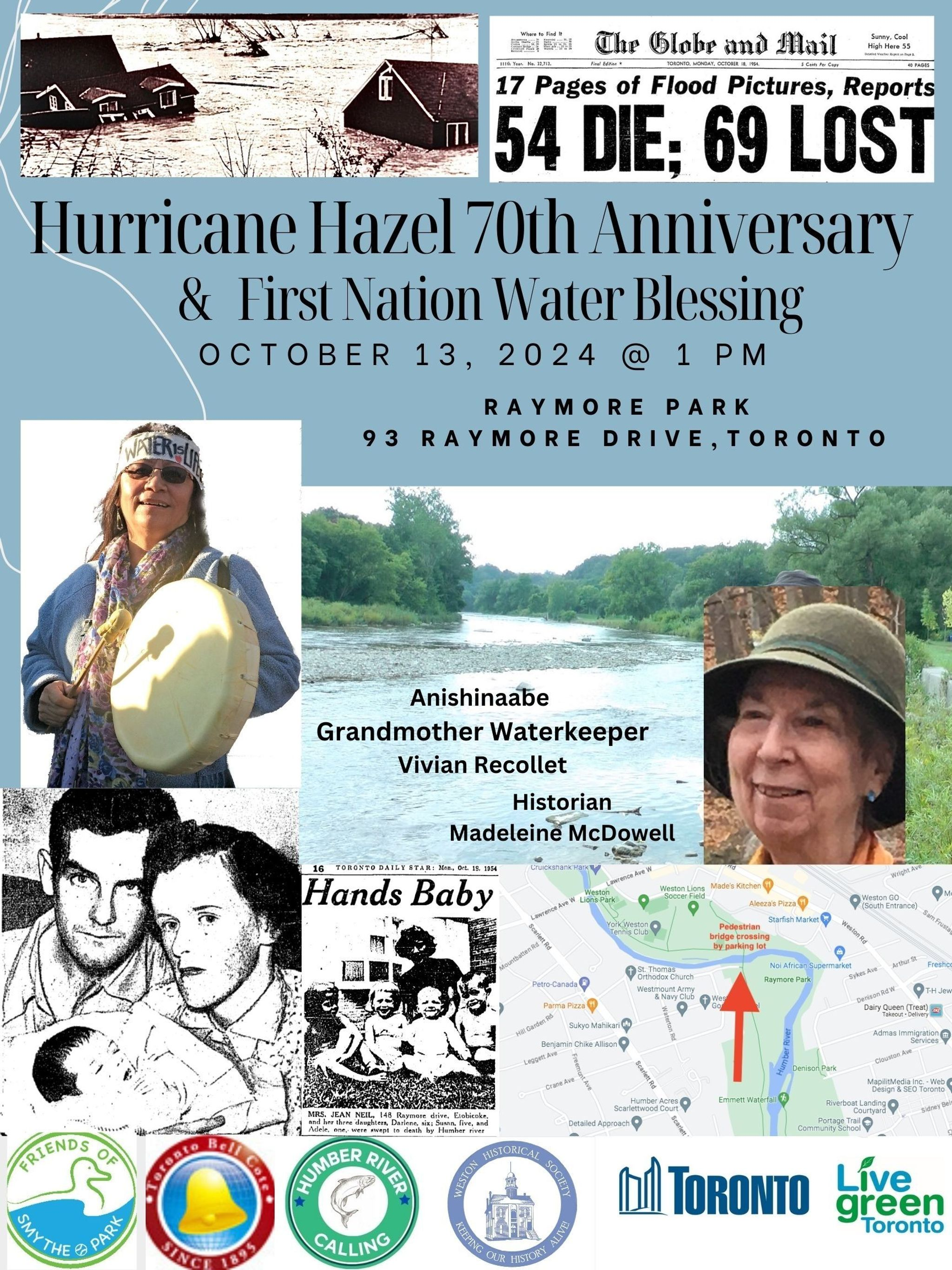
If you would like to commemorate the 70th anniversary of Hazel, meet in Raymore Park on Sunday October 13 between 1 and 3pm. Historian Madeleine McDowell will be there to talk about the event.

 Friends of Raymore Park