Tag Archives: trees

It’s fall again!

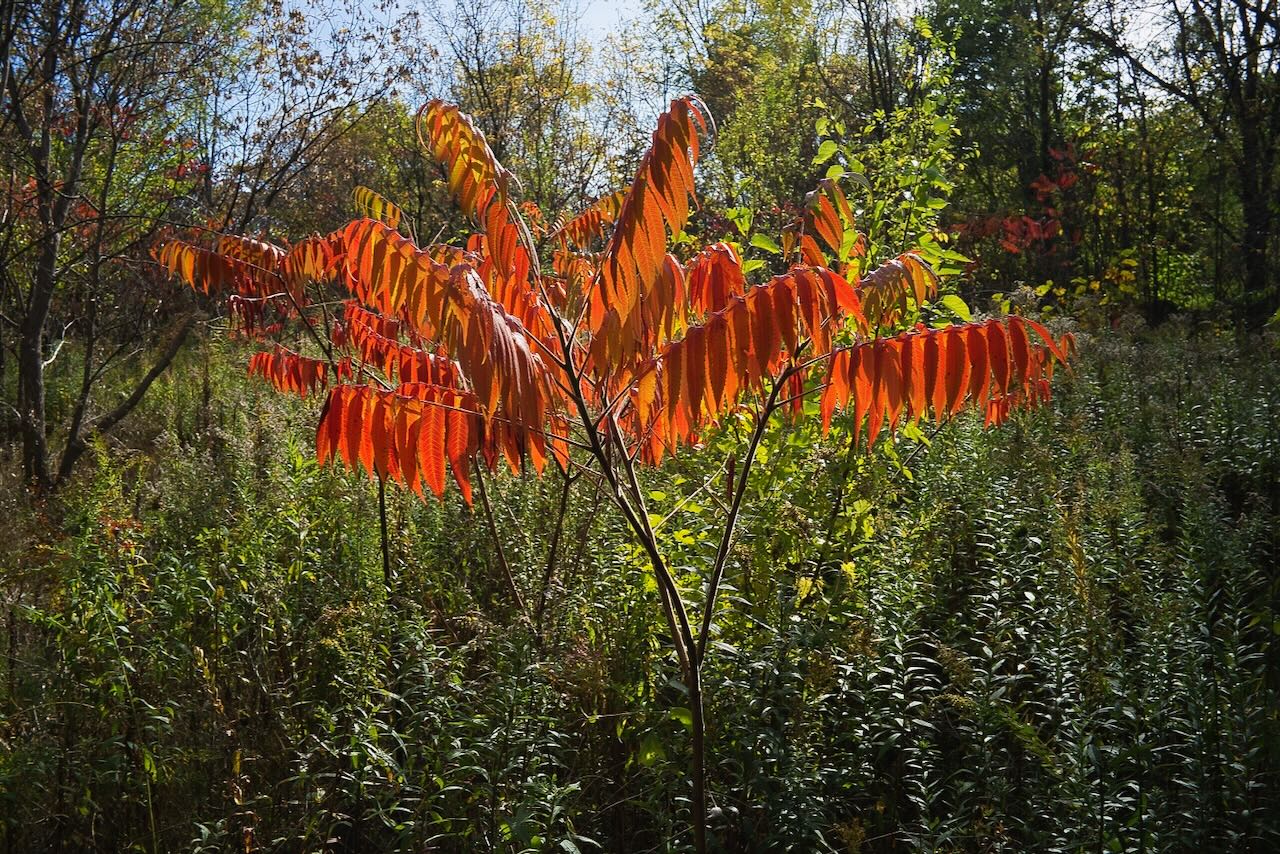
Unlike some other Toronto parks, Raymore Park isn’t spectacular in the fall. Its vegetation is fairly drab at this time of year because there are few mature red maples and other showy trees. The main splashes of orangey-red come from sumac.
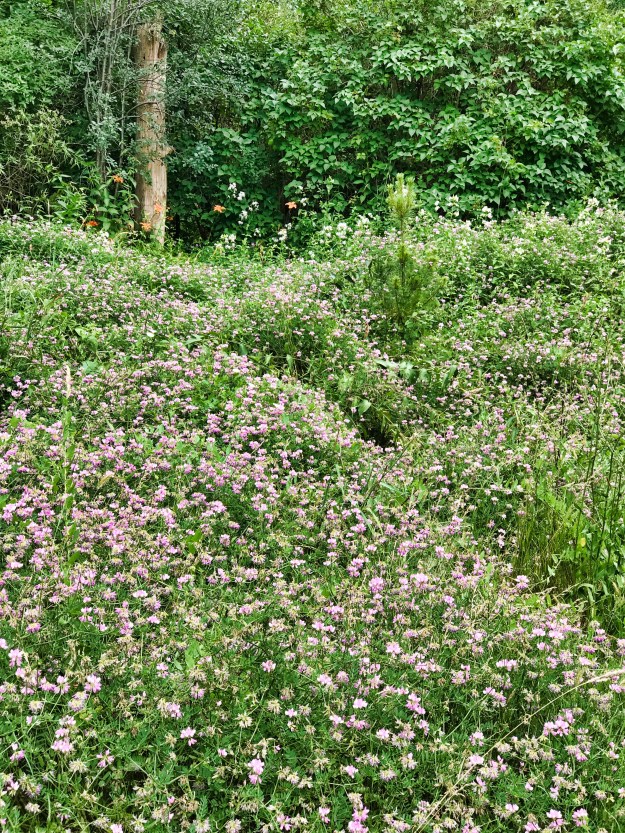
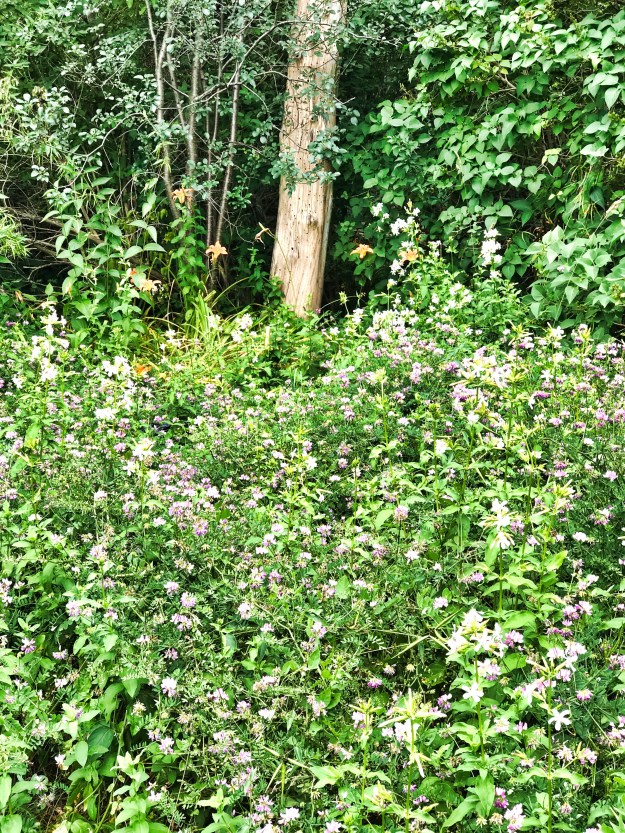
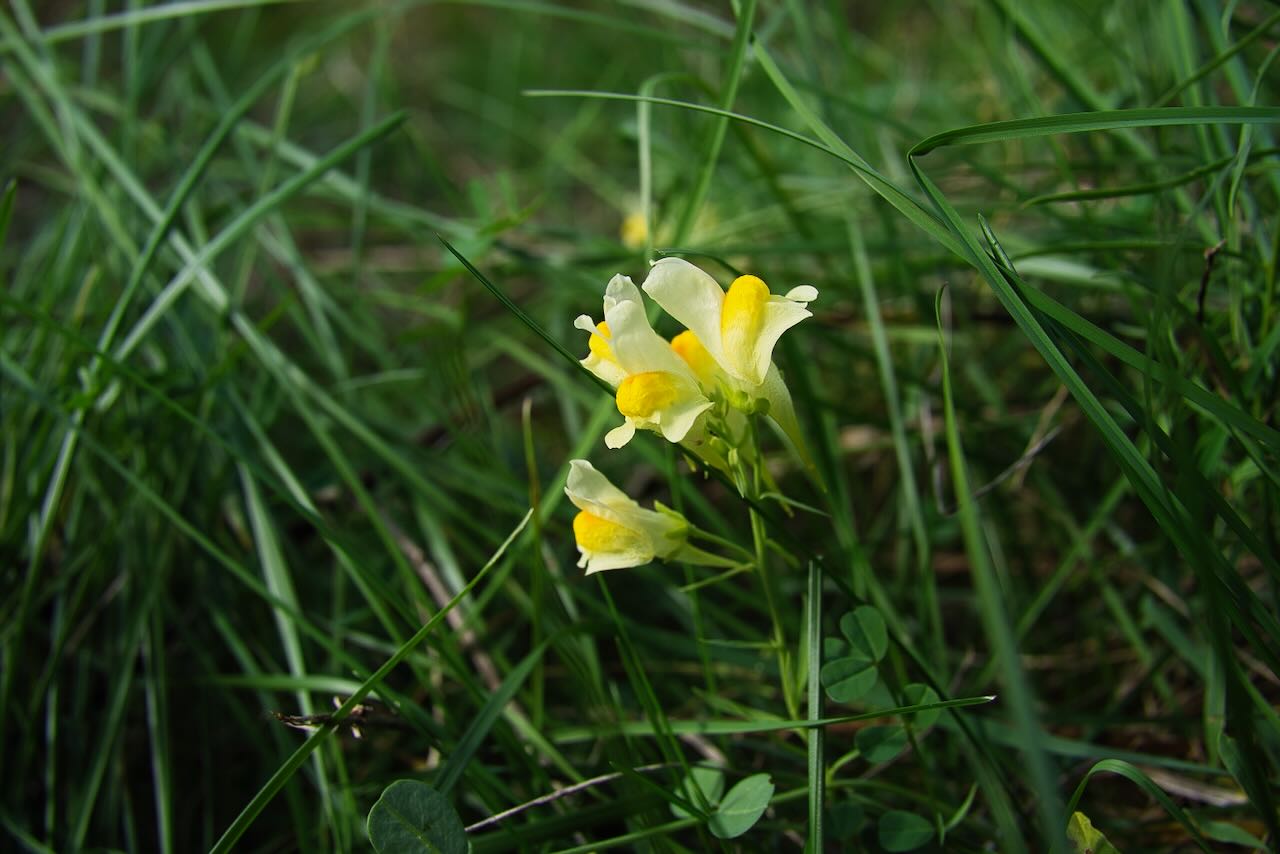
There are still a few splashes of colour on the ground. This birdsfoot trefoil is still flowering close to the ground in mid-October.
Something that has seen a dramatic increase in the last few years is the number of black walnut trees and fruit that support growing numbers of squirrels in the park. Several black walnut trees were planted by the city a few years ago while many just planted themselves thanks to forgetful squirrels. Black walnuts are edible by humans but require an elaborate dehusking and drying process – unlike their better-known cousins. Walnuts are able to poison their surroundings by emitting juglone from their root system. Many plants cannot survive the toxin emitted by its roots. Even the hulls are toxic and must be kept away from horses as they can contaminate bedding made from hay at this time of year.
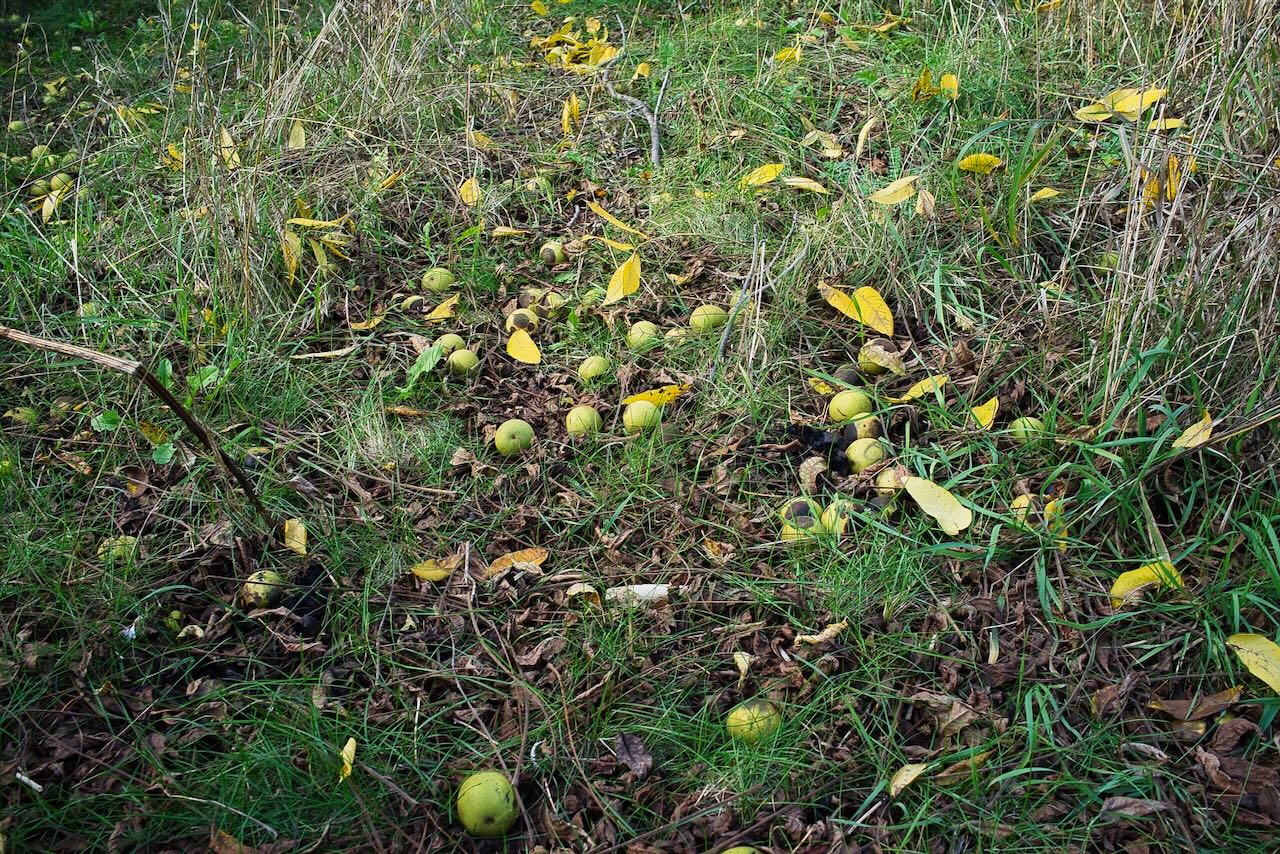
The husks are green when they fall but juice from these husks will stain hands and clothing.

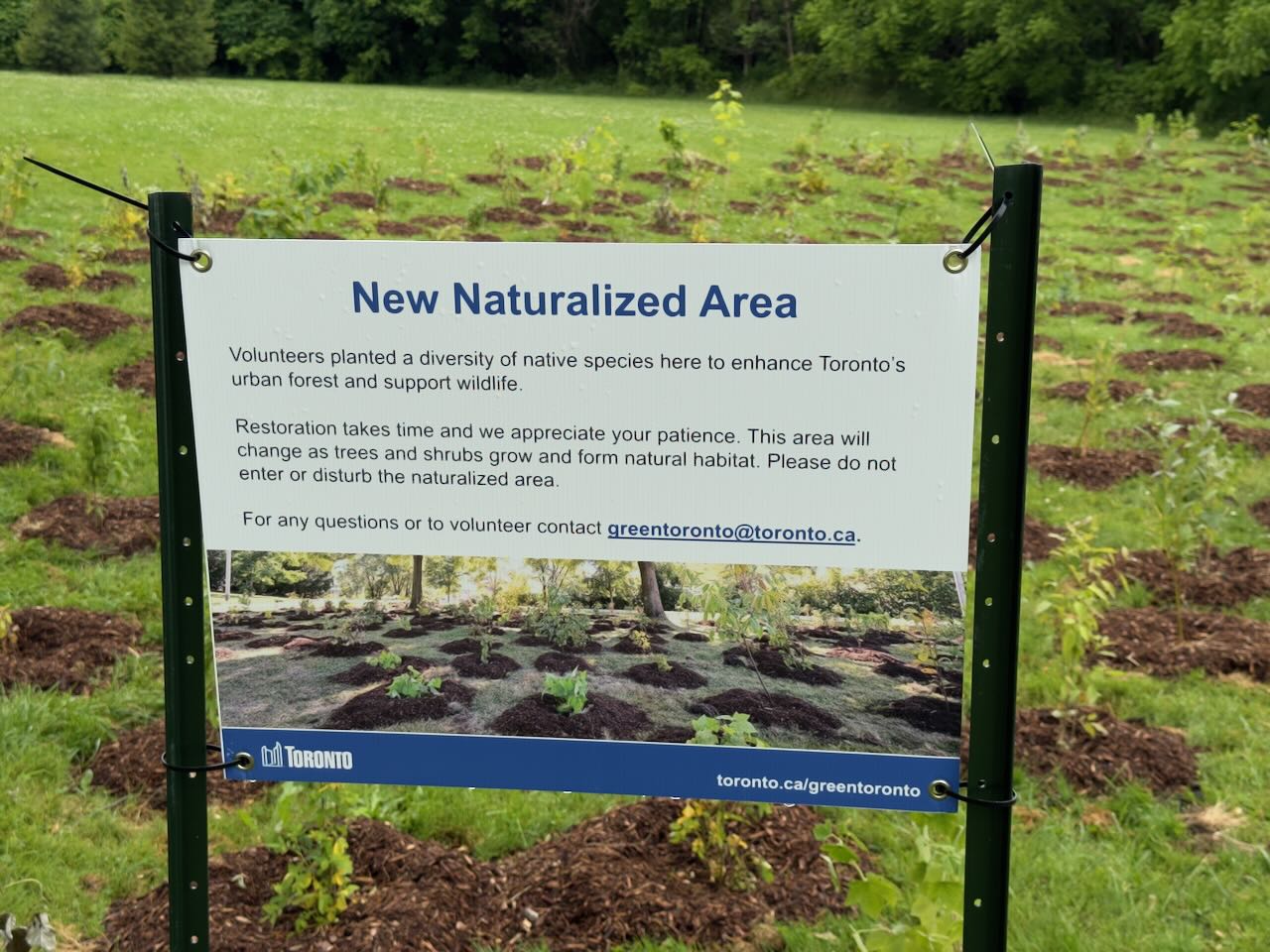
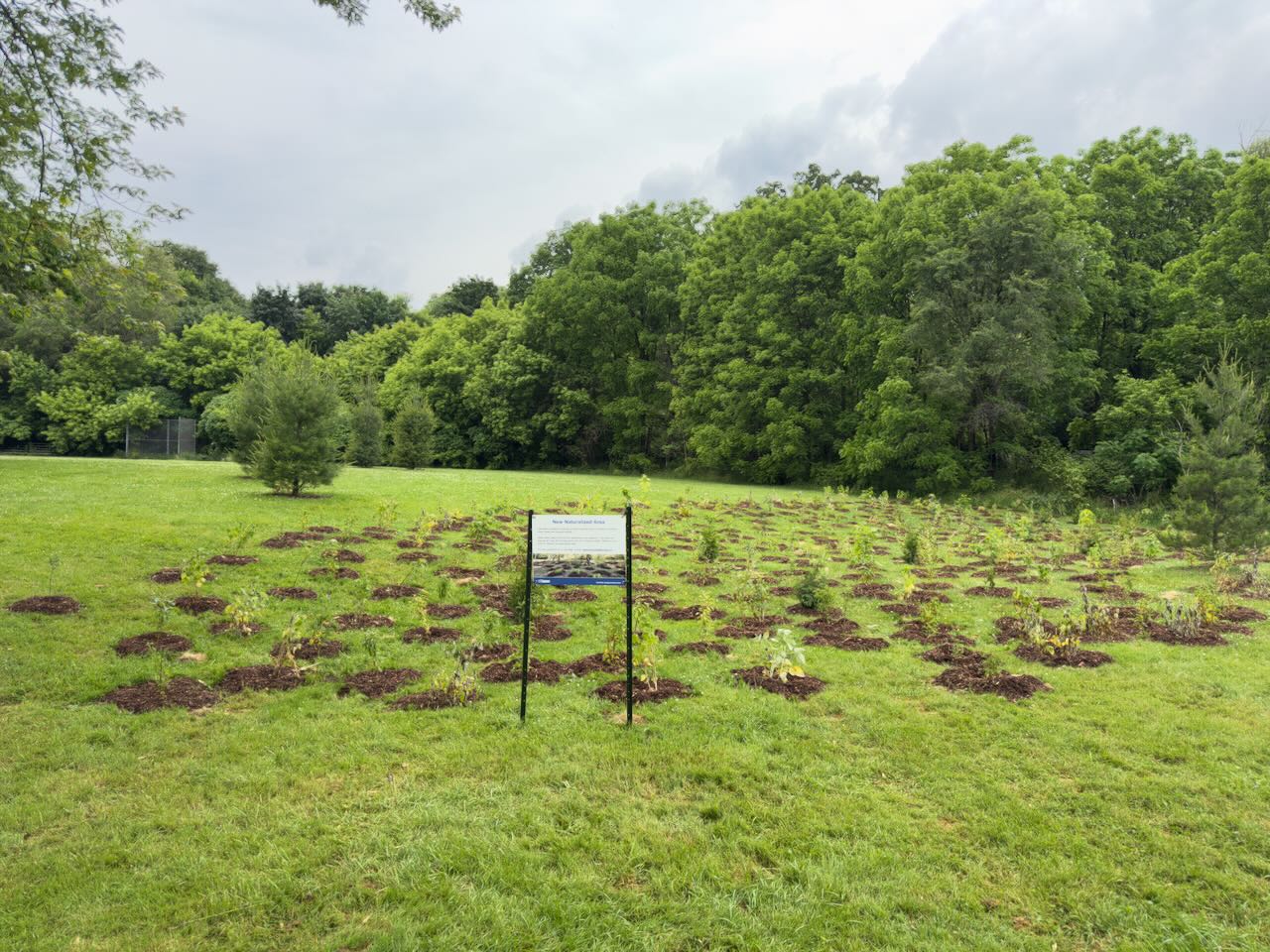
Naturalized area added in Raymore Park

Earlier this month a group of volunteers planted a substantial number of native shrubs and trees in a swale approaching the dog off-leash area. Today’s rain might have saved some of these plants as they looked a bit stressed from the recent dry spell. Hopefully, more areas in the park can receive a similar upgrade.

Thanks to all the volunteers concerned.

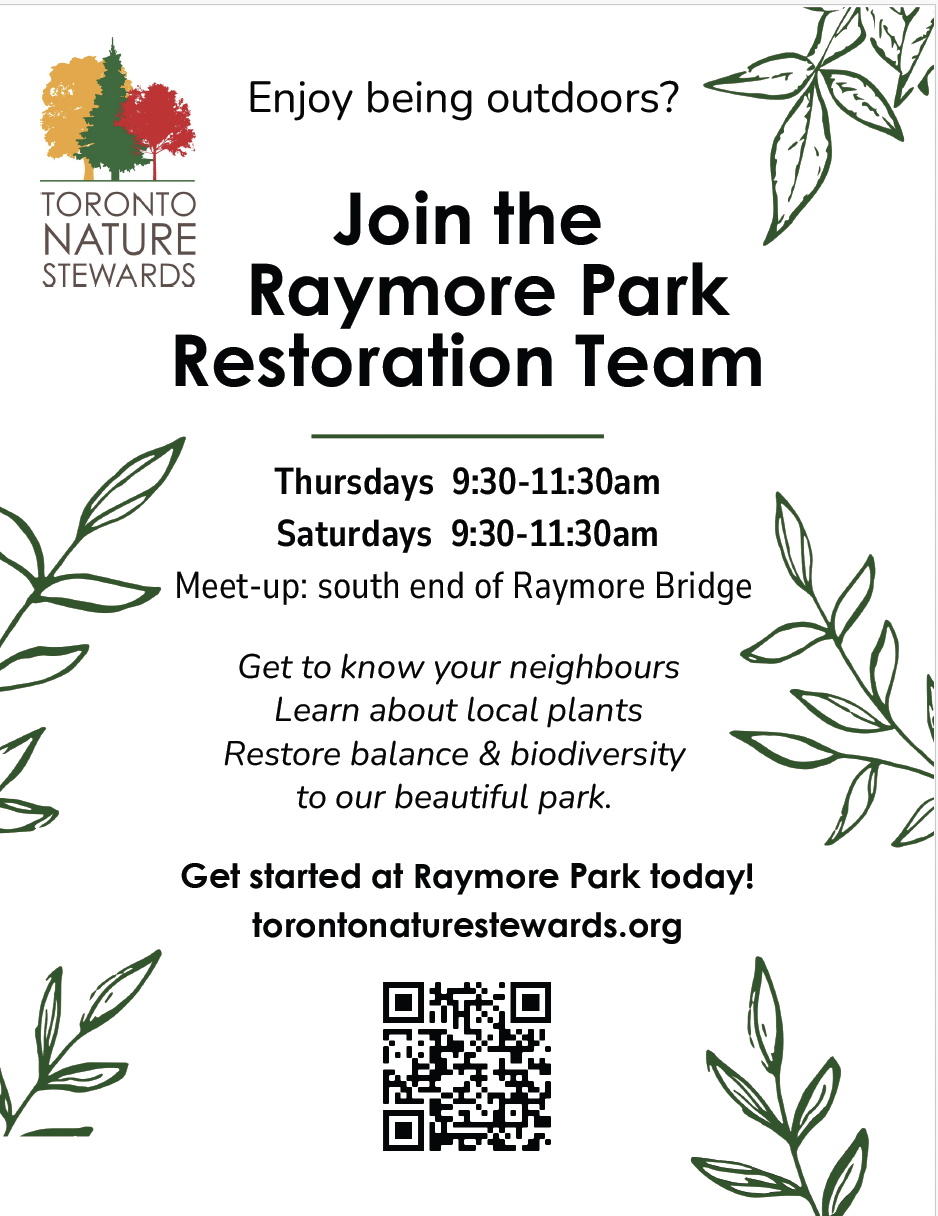
Postscript – Brian MacLean contacted me with information about volunteering in Raymore Park. He says, “a few of us trained with the Toronto Nature Stewards (https://torontonaturestewards.org) and volunteer to do stewardship in Raymore, and we meet twice weekly, Thursdays and Sundays, 9:30-11:30am, to work in the park. If it’s possible, we’d be delighted if you could extend our invitation to others interested in removing invasive plants and picking up litter in the park. Anyone who’s interested can drop in to help or sign up to volunteer at https://torontonaturestewards.org/get-involved/. We advise bringing a pair of work gloves and a bottle of water, and wear long sleeves and pants.”

Here is a poster from the group.

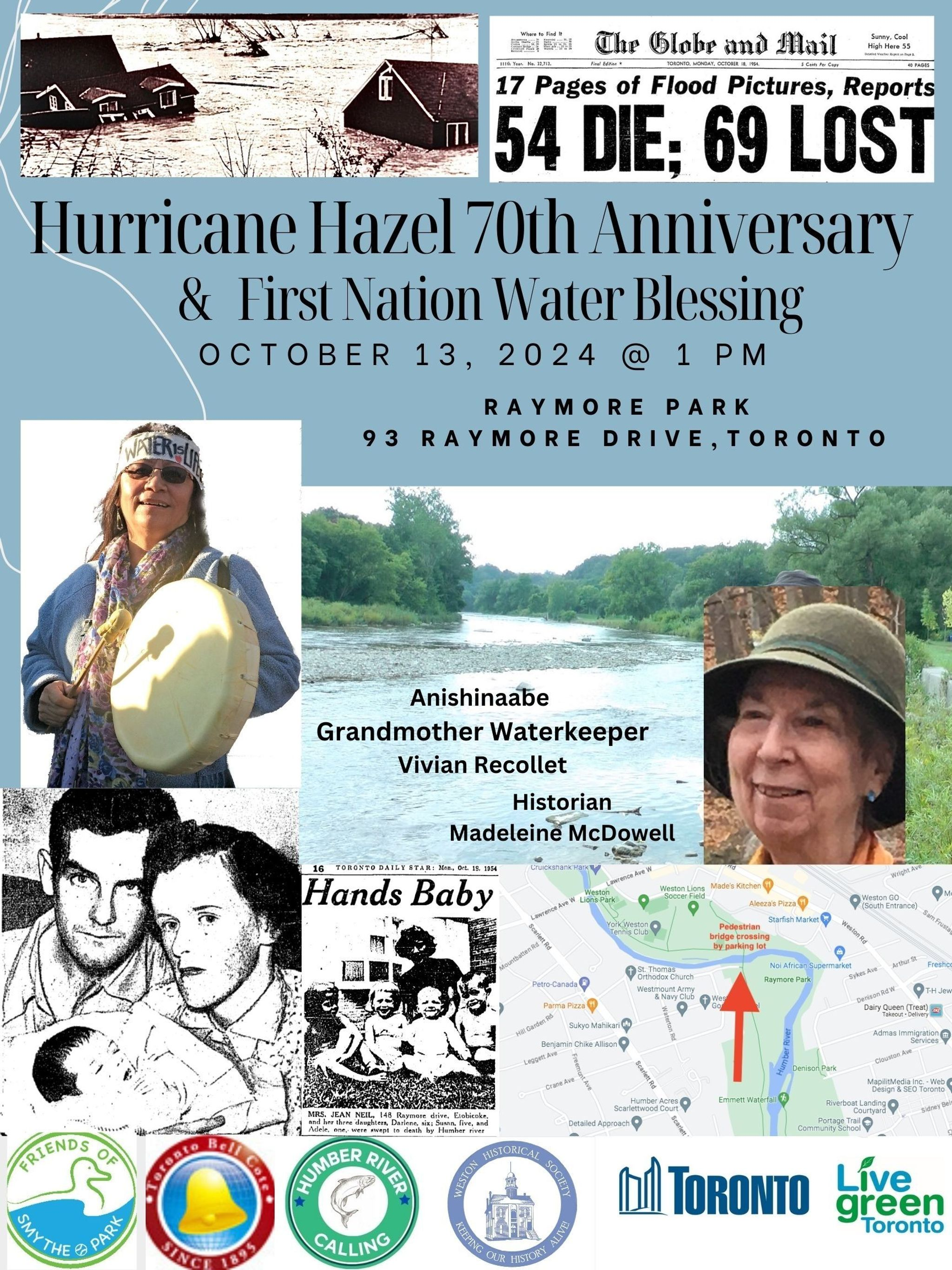
Hazel: 70 years on.

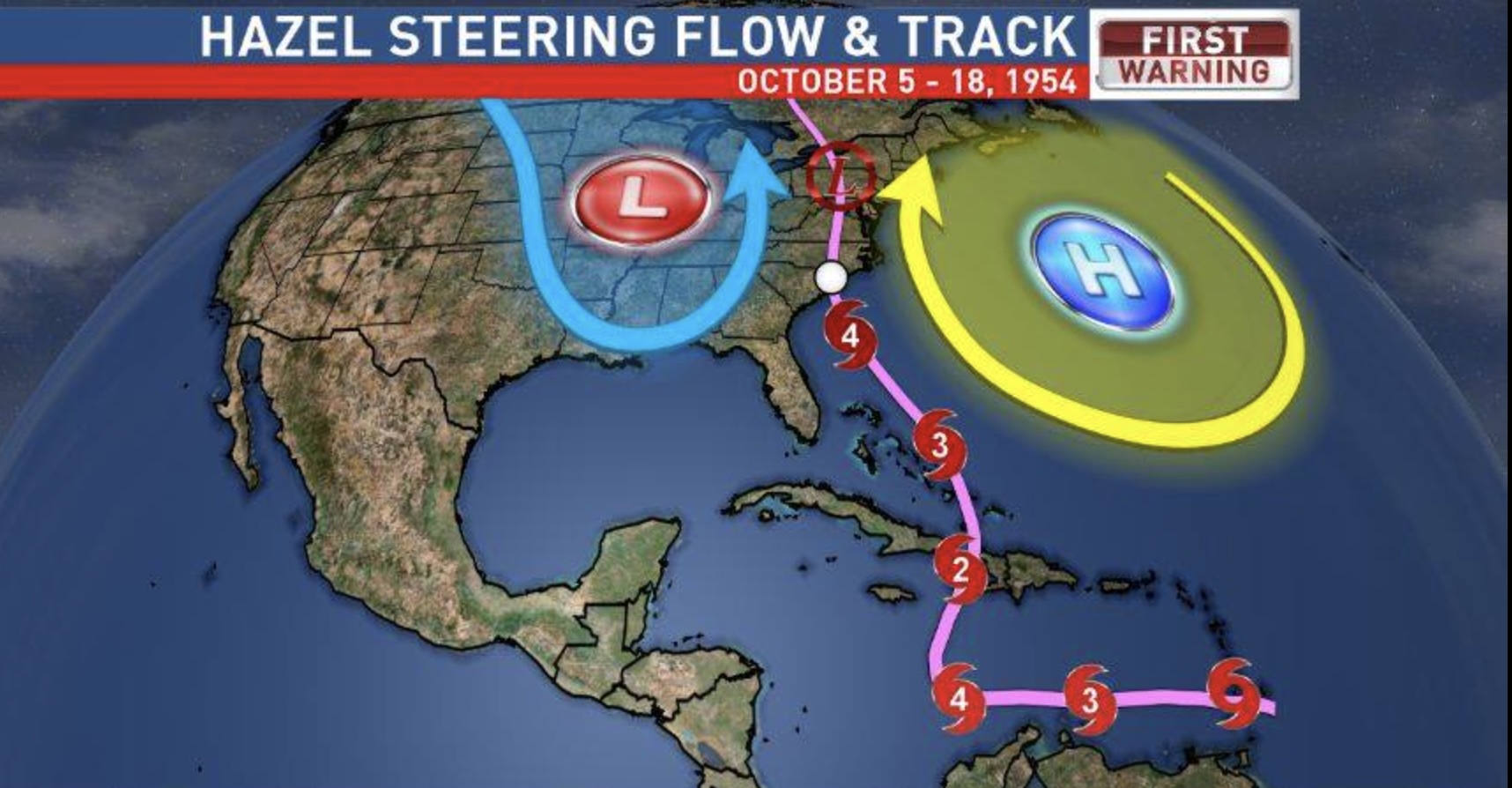
Hurricane Hazel began its trail of devastation as a category 2 hurricane in the Caribbean, killing more than a thousand people in Haiti. It moved northwards hitting the Carolinas as a category 3 thanks to warm waters off Florida. As it passed over land, it weakened to a tropical storm and then became a depression but thanks to a merger with a cold front, Hazel was re-energized and the resulting system started dumping water on the GTA on the 15th and 16th of October 1954.

High pressure pushed Hazel over Toronto where it combined with a low-pressure area and cold front.

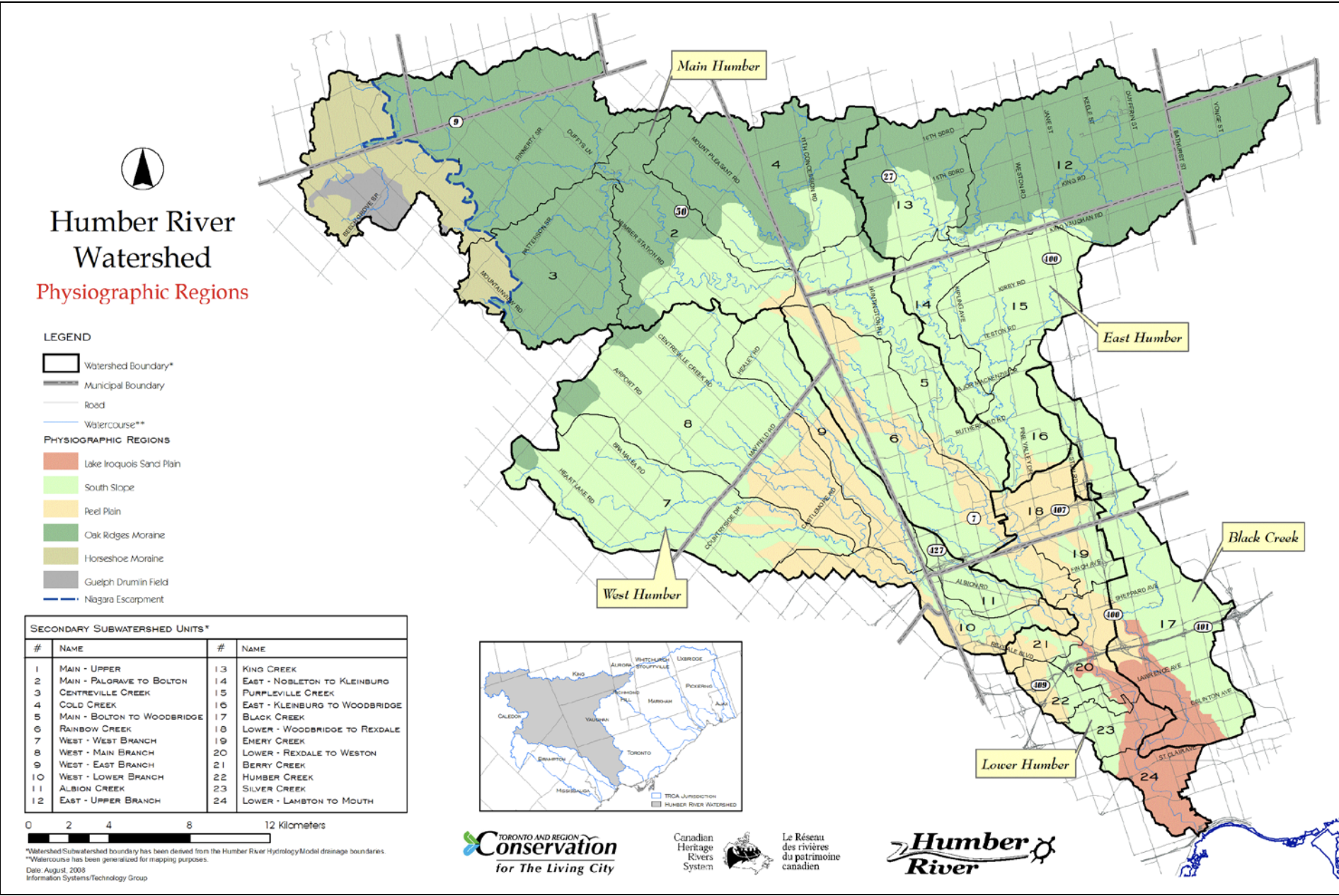
Local historian Madeleine McDowell correctly points out that the Humber River has the sharpest drop from source to mouth of any river in North America. As a result, when heavy rains fall, the river becomes fills up quickly. Events similar to Hazel have occurred in the past. In fact, in the 19th Century, Weston was moved to the east bank of the Humber after several catastrophic floods. Weston Golf and Country Club now occupies the site of the old settlement.

Raymore Park was one of many created after Hazel as part of an effort to clear flood plain lands and give rivers space where excess water can be absorbed.

Read more about Hazel’s legacy here.

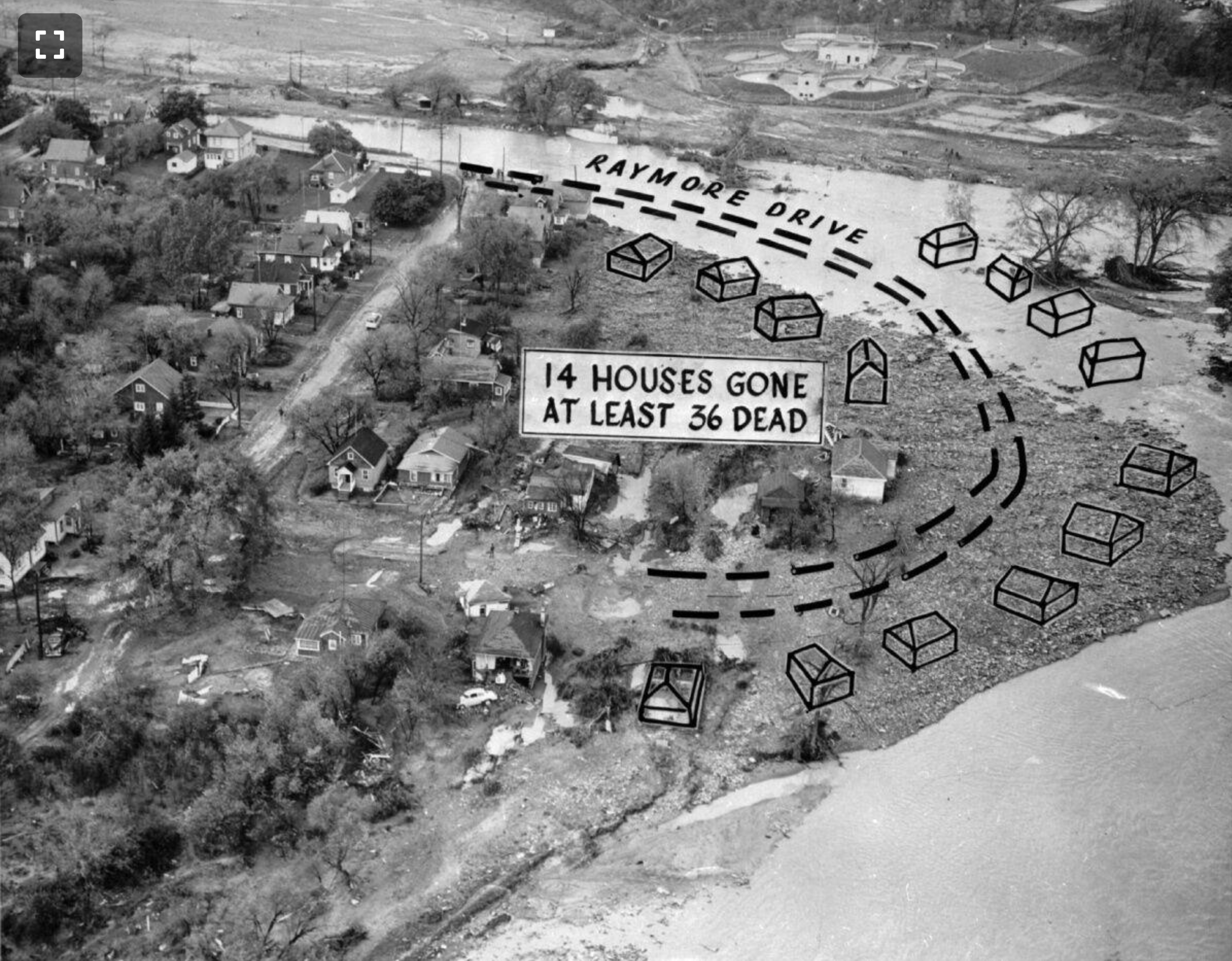
The old location of Raymore Drive. Present day Tilden Crescent begins below the square in the top left. Gilhaven Avenue (running from bottom left) is now occupied by Raymore Park’s parking lot.

Topologically, the Humber catchment area is relatively unchanged since the glaciers left about ten thousand years ago. The valleys are the same width, and the drainage area is the same. Rare events like Hazel will continue to happen. The problem is that since 1954, a good portion of the Humber watershed has been paved over.

Click to enlarge.

In 2002, urban land occupied 20.7% of the watershed. By 2020 that amount was 26.7%, a significant increase. Natural cover is also decreasing although forest canopy is relatively stable at 29%. Because there is less land and vegetation to absorb rainfall, water enters the Humber faster causing river levels to rise quicker and higher than in the past. In addition runoff from paved land is dirtier affecting animal habitats and our drinking water. When the next Hazel type storm drenches our area (and it will), the effects may be far more severe.

Q: Is climate change a factor in events such as Hazel?

A: We can speculate, however, urbanization is a far more immediate danger. For example, the proposed Highway 413 is a huge threat to the watersheds of both the Humber and Credit rivers.

Read more here and here.

If you would like to commemorate the 70th anniversary of Hazel, meet in Raymore Park on Sunday October 13 between 1 and 3pm. Historian Madeleine McDowell will be there to talk about the event.

Tree planting a success

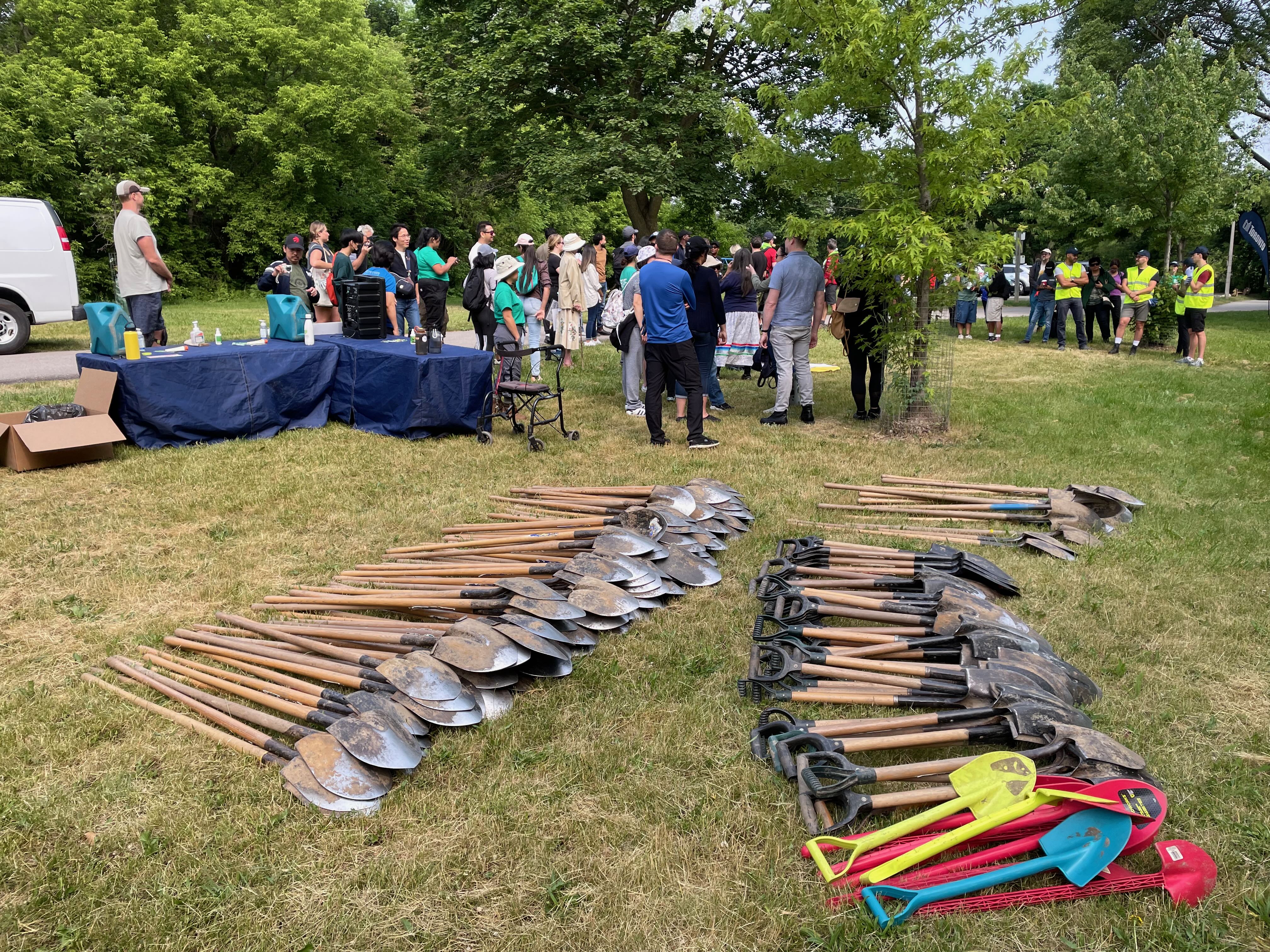
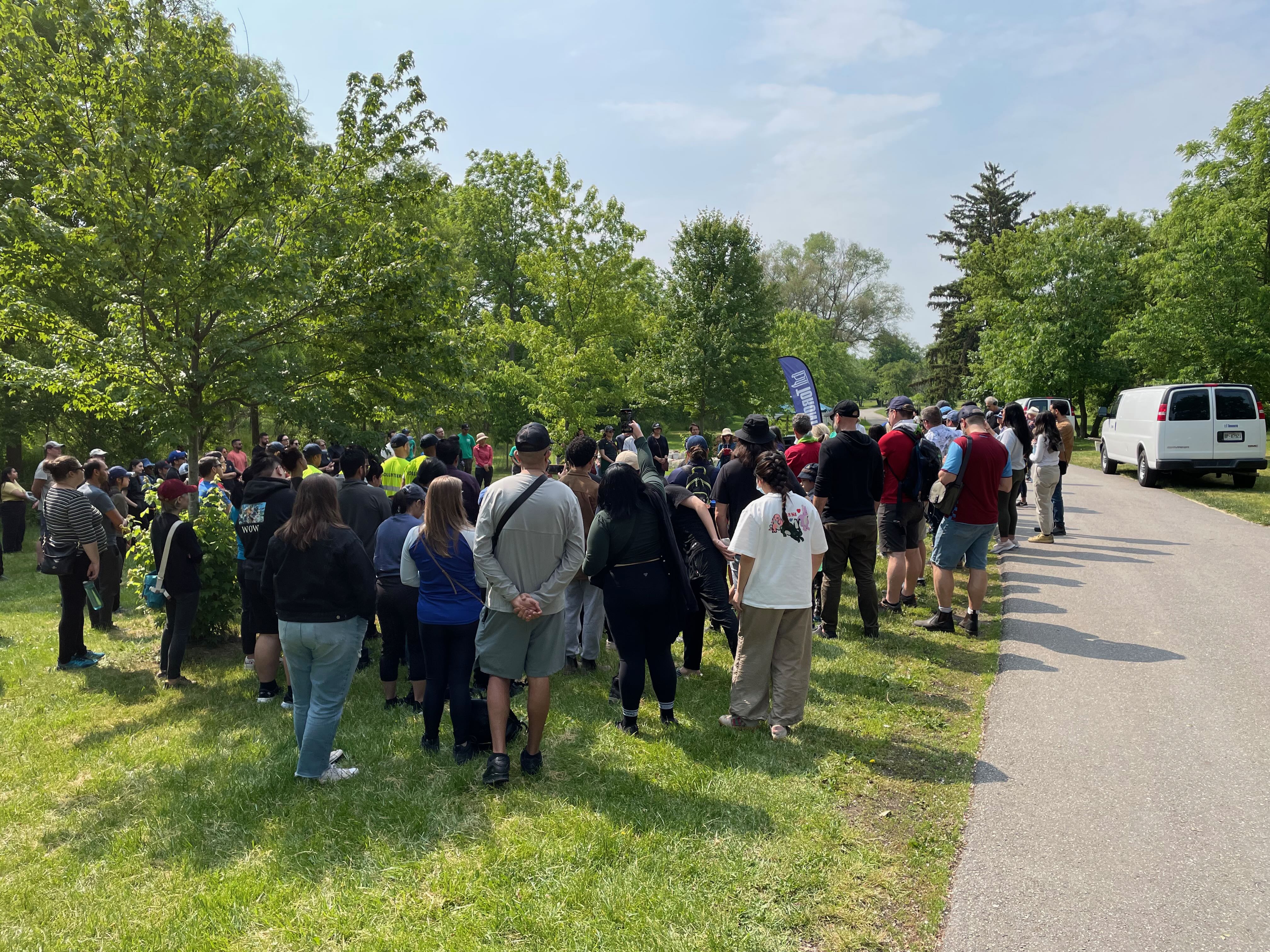
A large number of people gathered on the morning of Saturday June 10 to plant 325 native trees and shrubs in the wild area just south of the parking lot.

Shovels of all sizes at the ready.
An impressively large crowd attended.

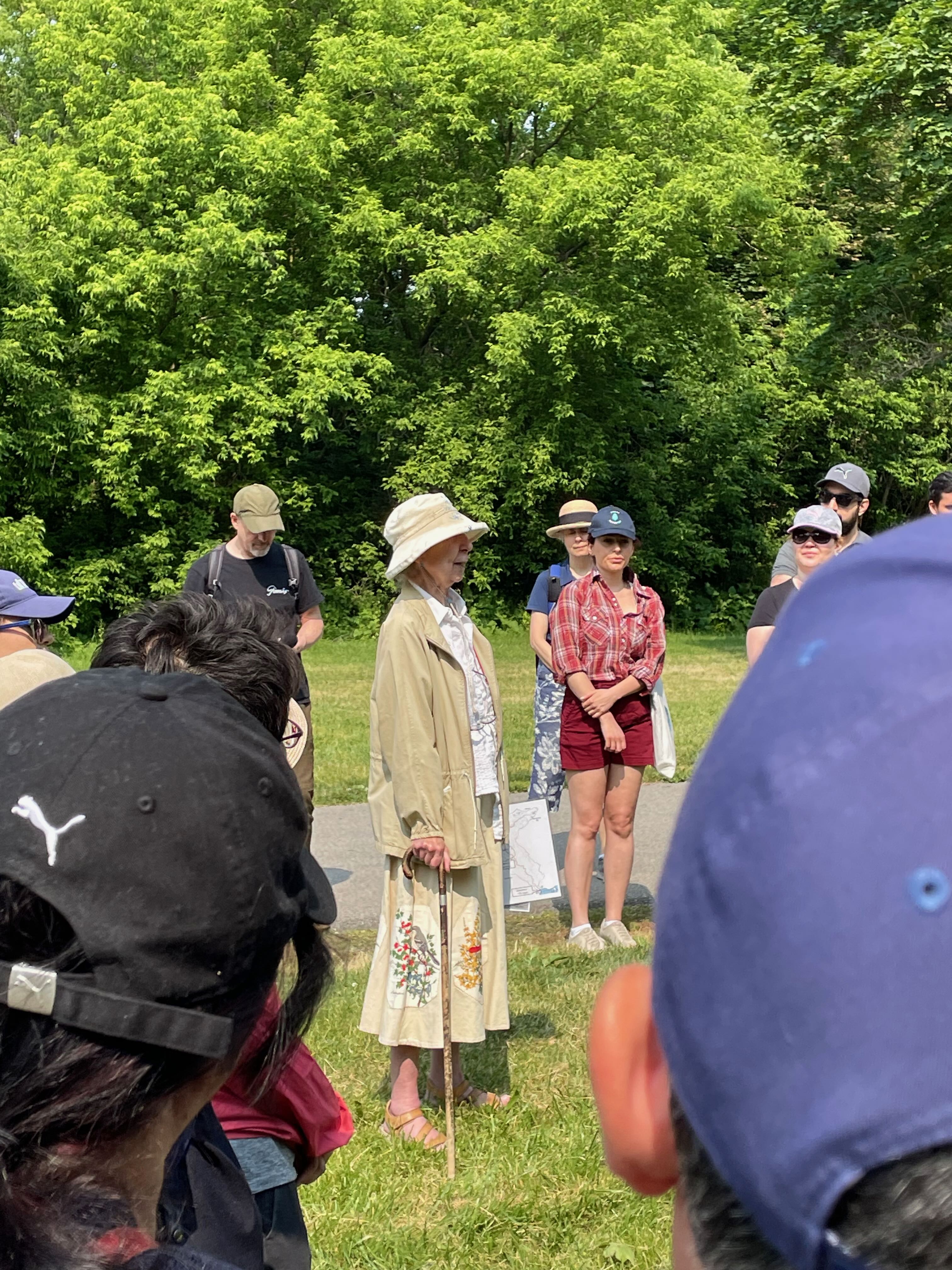
The event organized by The Humber River Citizens’ Alliance and the City of Toronto was begun by a talk from Toronto historian Madeleine McDowell who gave an outline of the events of Hurricane Hazel which eventually prompted the establishment of conservation areas throughout the GTA.

Madeleine McDowell outlines the story of Hurricane Hazel and Raymore Park.

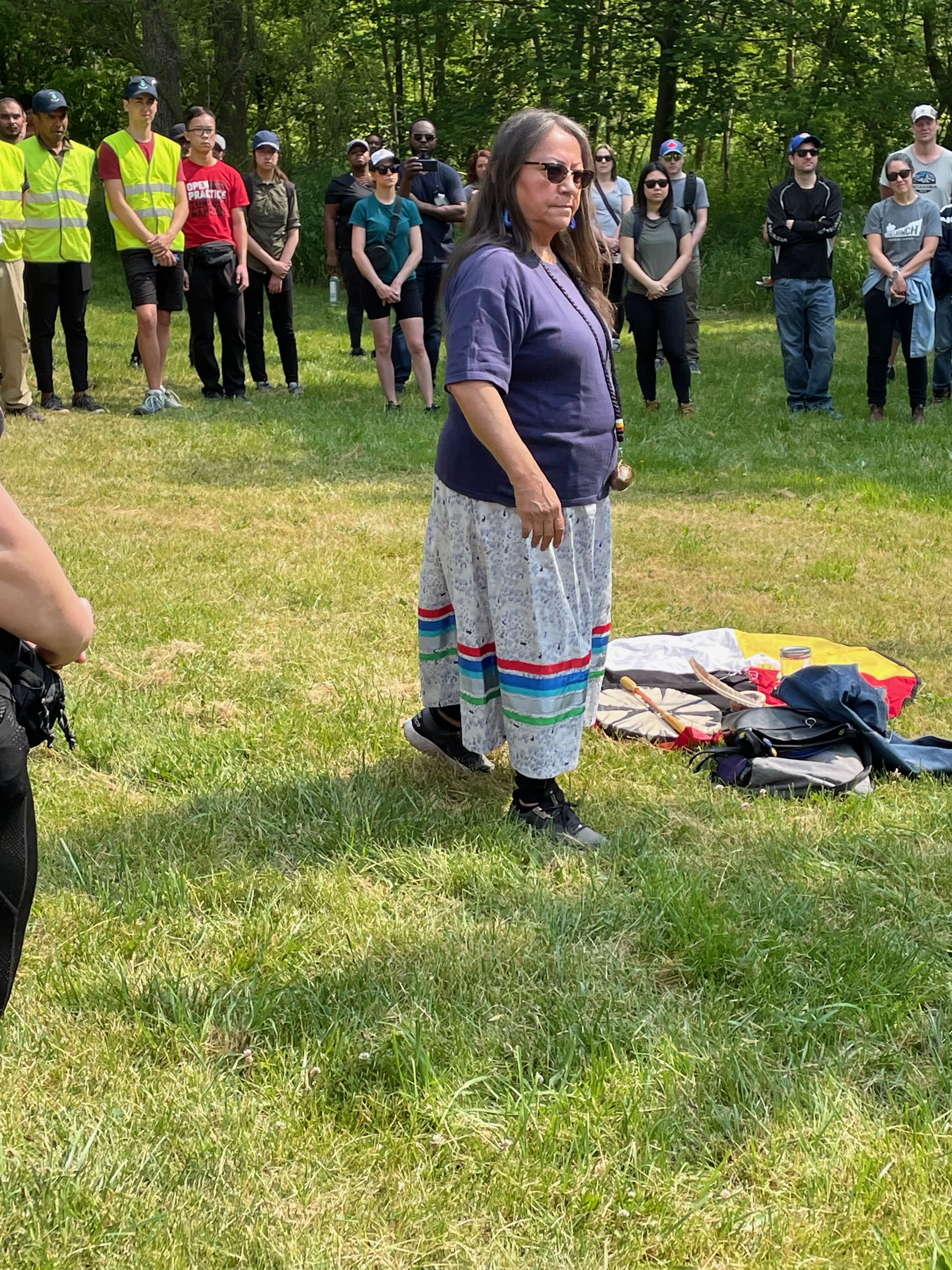
Anishnaabe Grandmother Waterkeeper Vivian Recollet spoke of the value of nature and the need to respect growing things.

Vivian Recollet talks about native traditions and respect for the land.

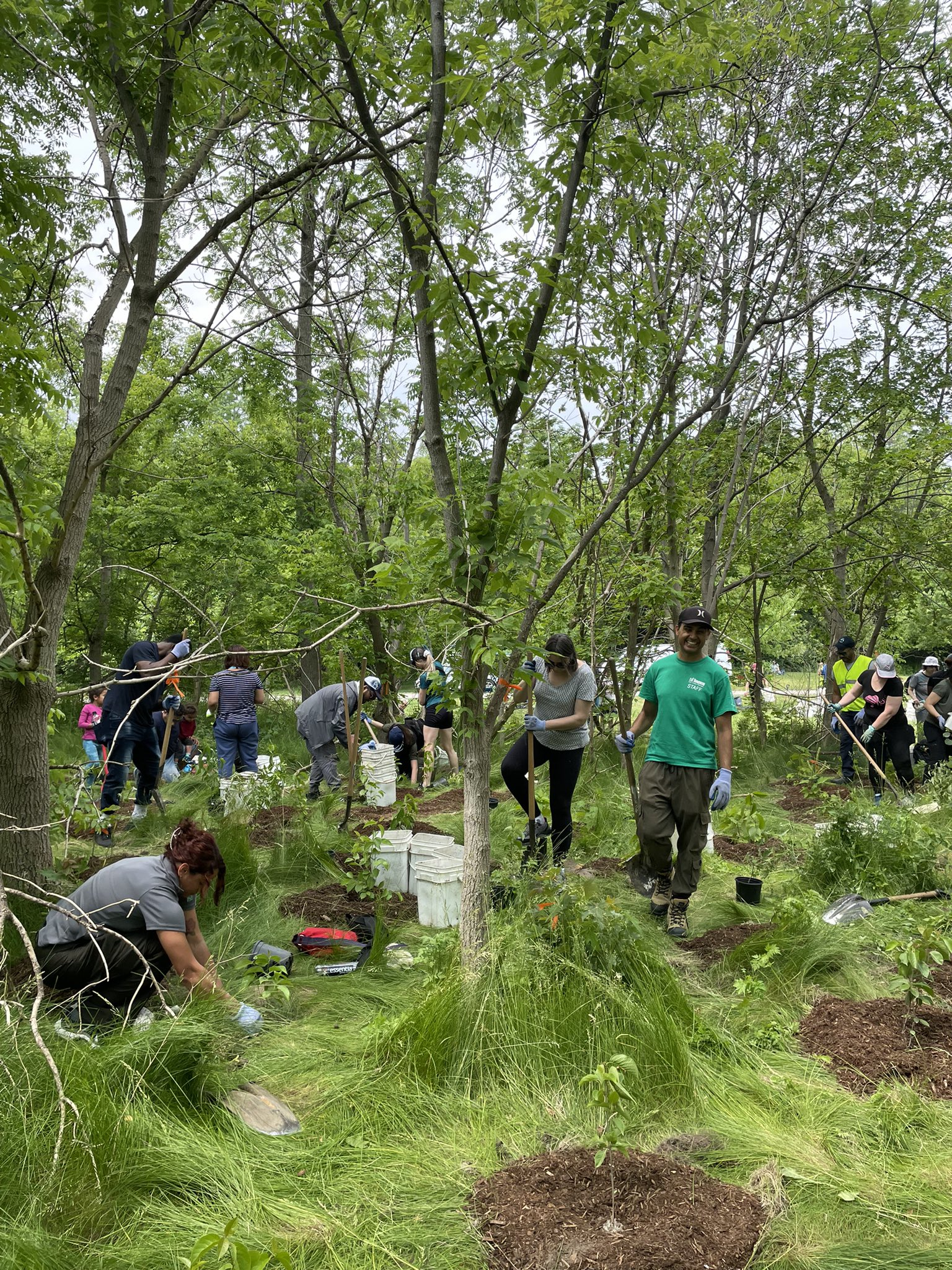
The event was well organized and the work went quickly.

Volunteers hard at work. From Toronto Forestry Twitter account.

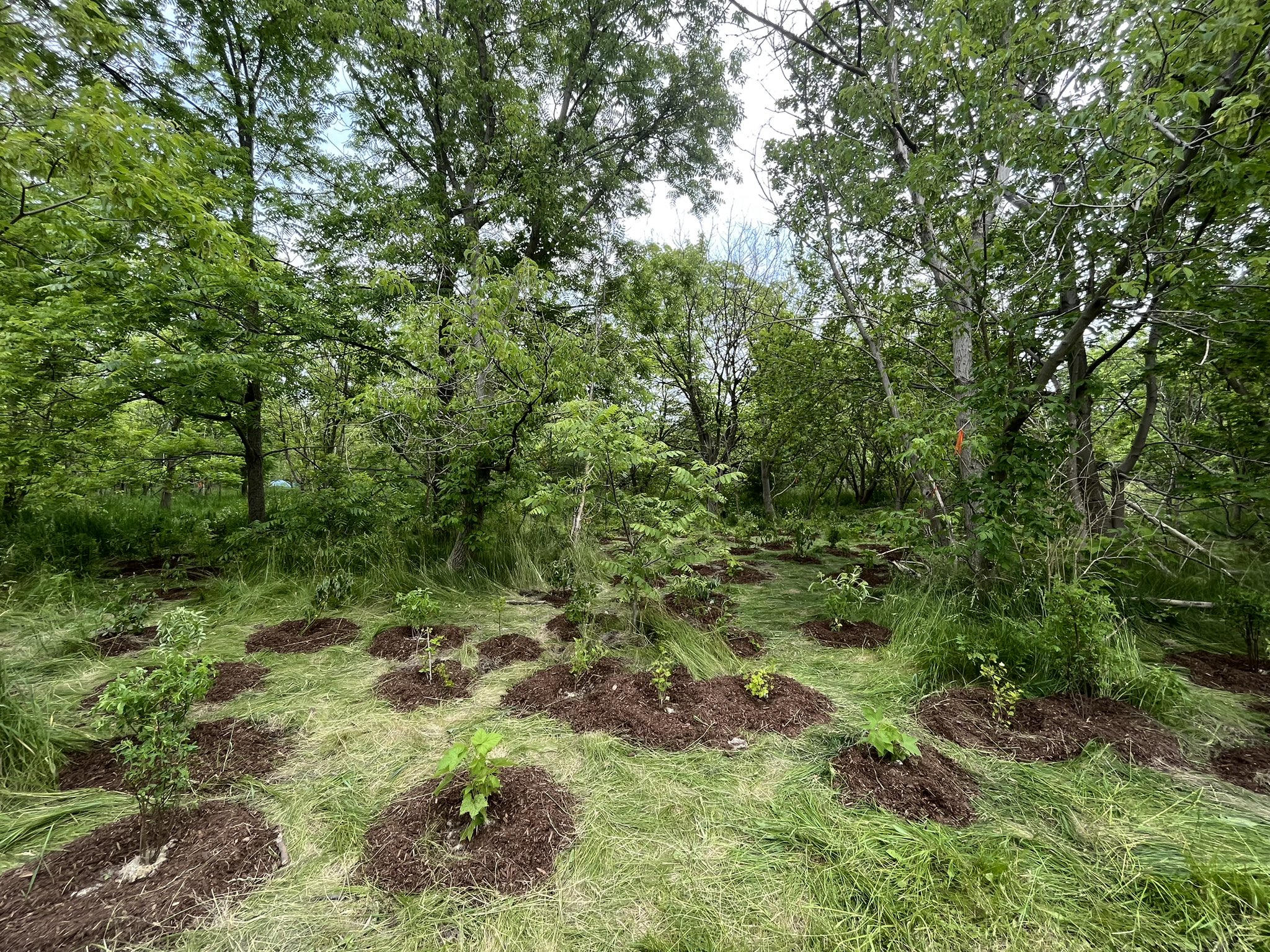
As mentioned, a total of 325 trees and shrubs were planted and the recent rain will no doubt help considerably with their establishment.

Trees and shrubs in their new home along with lots of mulch. From Toronto Forestry Twitter account.

Milky Chance, Sierra Club and Greenpeace to fight Metrolinx destruction.

On Wednesday, May 31, German Rock group Milky Chance will be joining representatives from the Sierra Club and Greenpeace to protest the planned destruction of almost 1500 trees and a large wildlife habitat by Metrolinx.

According to Stop The Trains In Our Parks, The plan is to, “join Milky Chance, Sierra Club Canada, Greenpeace and our Indigenous-led coalition that includes ENAGB Indigenous Youth Agency, Turtle Island Carers of Fire, Edge of the Bush, American Indian Movement, Stop the Trains in Our Parks (STOP), Mount Dennis Community Association (MDCA) and the Mount Dennis eco-Neighbourhood Initiative (MDeNI).”

This will be a, “Demonstration of solidarity and protest against Metrolinx’s plan to build an 1.5 km elevated section of the LRT line through parkland north of Eglinton Avenue West between Scarlett Road and Weston Road. There will also be a ceremonial ribbon tying of trees with Milky Chance.

When: Wednesday, May 31, 1:30-2:30 PM

Where: Pearen Park, 30 Pearen Street in Toronto, ON

Why: To show public opposition to Metrolinx’s plan, come together in ceremony as allies in honouring the trees, and support action towards Canada’s reconciliation for First Nations Peoples.

About the parks

The parkland in question—Pearen Park, Fergy Brown Park, Eglinton Flats and the Humber River area—is a sensitive ecosystem, wildlife corridor, migratory bird route and is home to Threatened and Endangered species. The naturalized urban forest is a flood and erosion protector, natural cooler and sound barrier. The parkland is used for many cultural activities and sacred ceremonies for Indigenous Peoples, as well as recreational, sport and social activities. The Humber River is a Canadian Heritage River and an urban river valley protected by the Ontario Greenbelt.

Learn more at www.stopthetrainsinourparks.ca or email stopthetrainsinourparks@gmail.com.

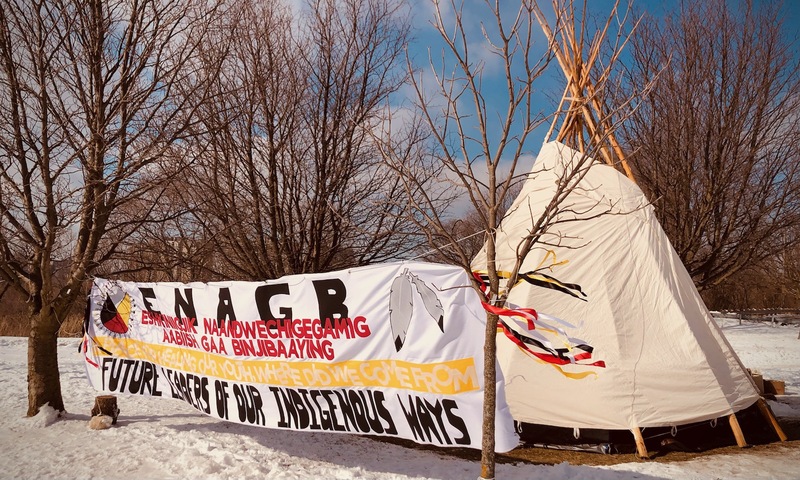
A photo of the tipi in Pearen Park in January.

Stop the Trains in Our Parks started this petition on Leadnow.ca. If there’s an issue close to your heart that you’d like to campaign on, you can start your campaign here.

If you haven’t already, sign the petition “Tell Metrolinx & Ford Government to Keep the Eglinton Crosstown West Extension Underground in YSW“.

Parks as equity creators.

What is a park?

The earliest parks were created by Persian kings who used them as private hunting areas. The practice of game parks was carried on in medieval England and as in Persia, the public was excluded. The industrial revolution created large polluted cities and parks were seen as an escape from industrial grime. In modern times, parks have evolved to serve many purposes and city parks like Raymore preserve native flora and fauna while providing a place to relax, exercise and take in the beauty of nature. Raymore sits on a flood plain and so floods can occur relatively harmlessly.

Who are parks for?

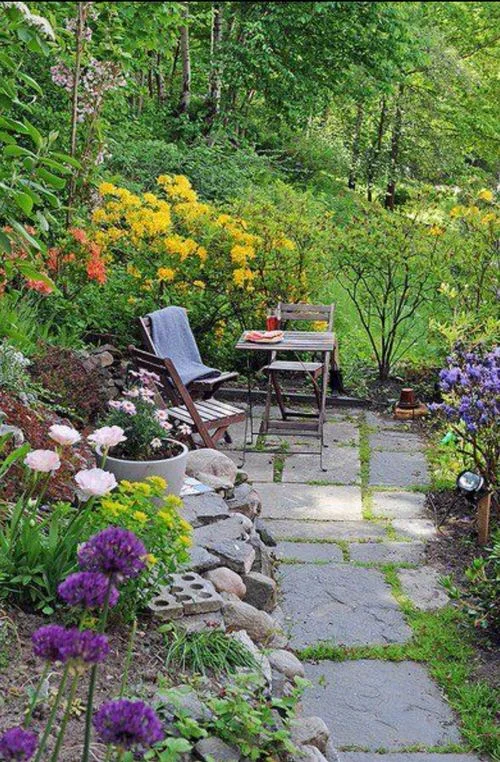
There are many neighbourhoods in Toronto where detached homes are the norm. These homes are often surrounded by beautiful gardens with a back yard and tranquil space. Unfortunately, at a price of $1.27 million, for an average detached home and $1 million for a semi, homes with gardens are beyond the reach of most Toronto residents. Only about one in three people are able to enjoy a garden.

From https://balconygardenweb.com/

For most people in Toronto, parks are the only form of green space available to them and the best way to escape from stale indoor air. This is why adequate and varied parkland is a vital component of life in a city.

Carbon dioxide (CO2) is a natural product of breathing but is toxic at high levels. Fresh air contains around 420 parts per million of CO2. Without adequate ventilation (which is quite common in heated and air conditioned environments, levels of CO2 can build up. When carbon dioxide exceeds 1000 ppm, problems can arise such as headaches, nausea and dizziness.

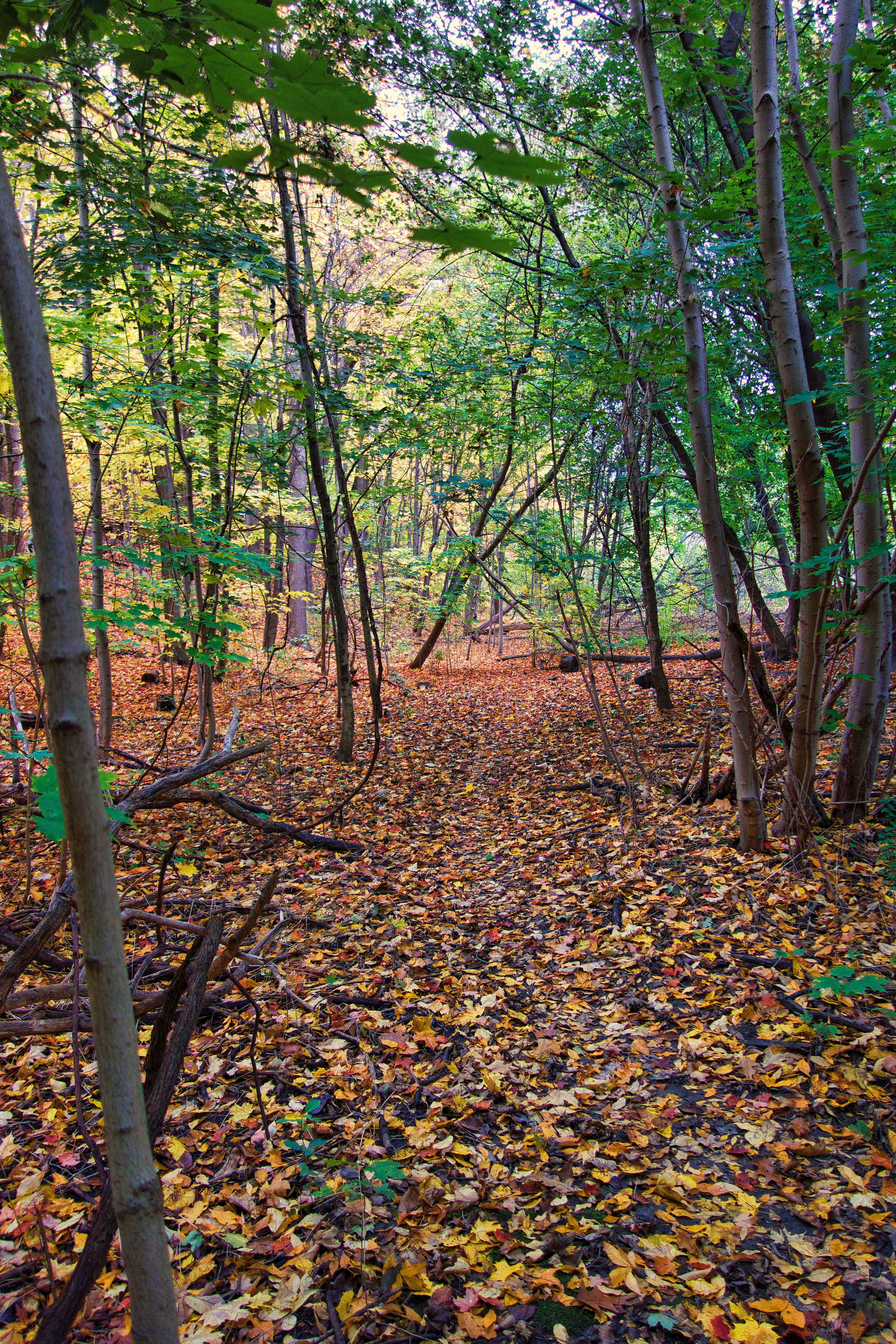
A carpet of fall colour in Raymore Park.

Park air is probably healthier than indoor air because it is likely cleaner and has lower CO2. In summer, parks turn carbon dioxide into oxygen. That’s not all. Being among trees reduces stress. A walk on a treadmill cannot duplicate the relaxation that comes from a walk in the woods. Sunshine can brighten a mood and in summer months, provide essential vitamin D.

In Canada, our cities are becoming more crowded and parks are a way for people to enjoy nature. People without gardens of their own depend on parks and open spaces as an escape from indoor air. This is why parkland in cities is precious and must be protected at all costs. Providing access to nature is more important than ever and should be considered a human right. Parks are not a frill; they’re an essential component of a healthy life.

That is why the loss of parkland in a city is an attack on the health of its people.

Raymore Park: changes over the years – Part 2.

Read Part 1 here.

This year marks 30 years since I started coming to Raymore Park. During that time many changes have occurred, most of them reflecting adjustments in park philosophy and management.

4. Areas under grass.

After Hurricane Hazel hit the Humber Valley in 1954, it was decided that flood plain and ravine land should be cleared of settlement to avoid further loss of life. Residents of Raymore Drive and Gilhaven Drive who survived were compensated for the purchase of their homes or lots. Gilhaven drive was approximately where the parking lot is today. Lands were then made part of what is now the Toronto and Region Conservation Authority (TRCA) and homes were bulldozed to create wide expanses of grass. Slowly, thanks to diminishing budgets, some grassed areas have been allowed to naturalize and sumac bushes have advanced, allowing trees to spring up in their midst. Currently, there is no grass cutting south of the weir apart from a strip on either side of the bike path.

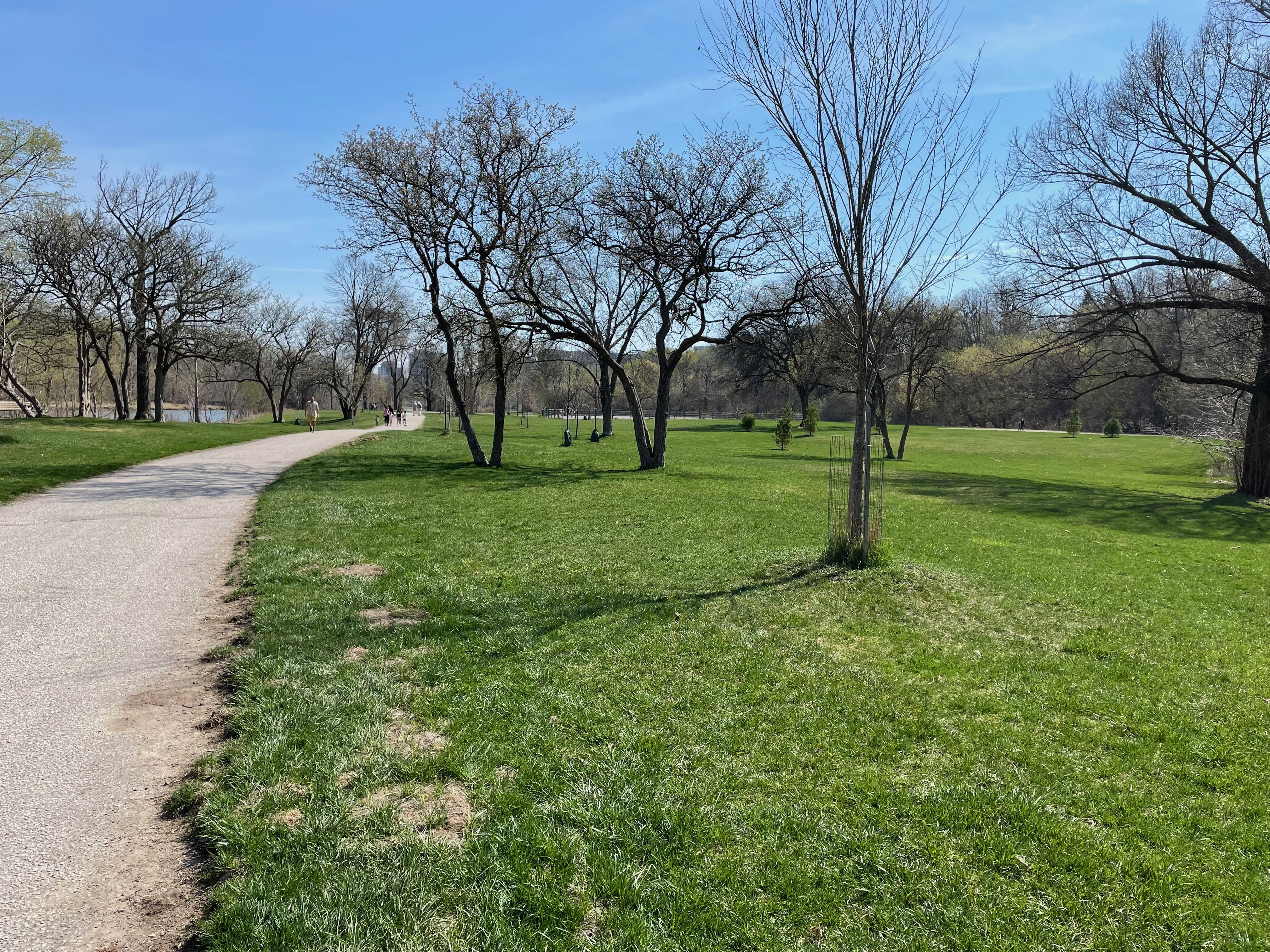
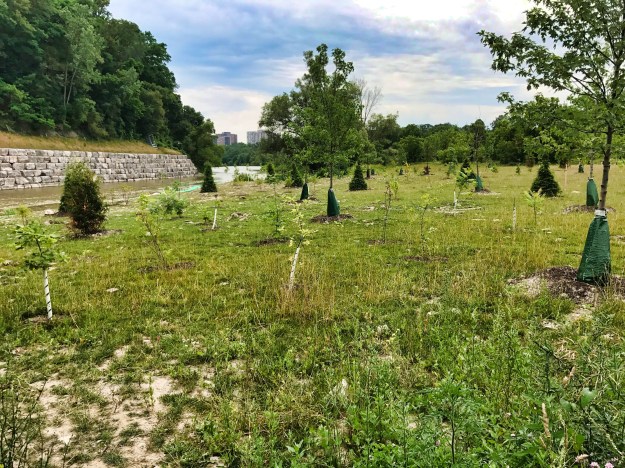
Looking south towards the weir. Lots of grass with some recent tree plantings.

5. Dogs.

Raymore has been a popular park for local dog owners for decades. When the condos at Hickory Tree opened, residents were allowed to keep dogs and used Raymore Park once the footbridge opened in 1995. The wild area was popular and a path was carved out by dogs and their owners as they followed the Humber through the bush.

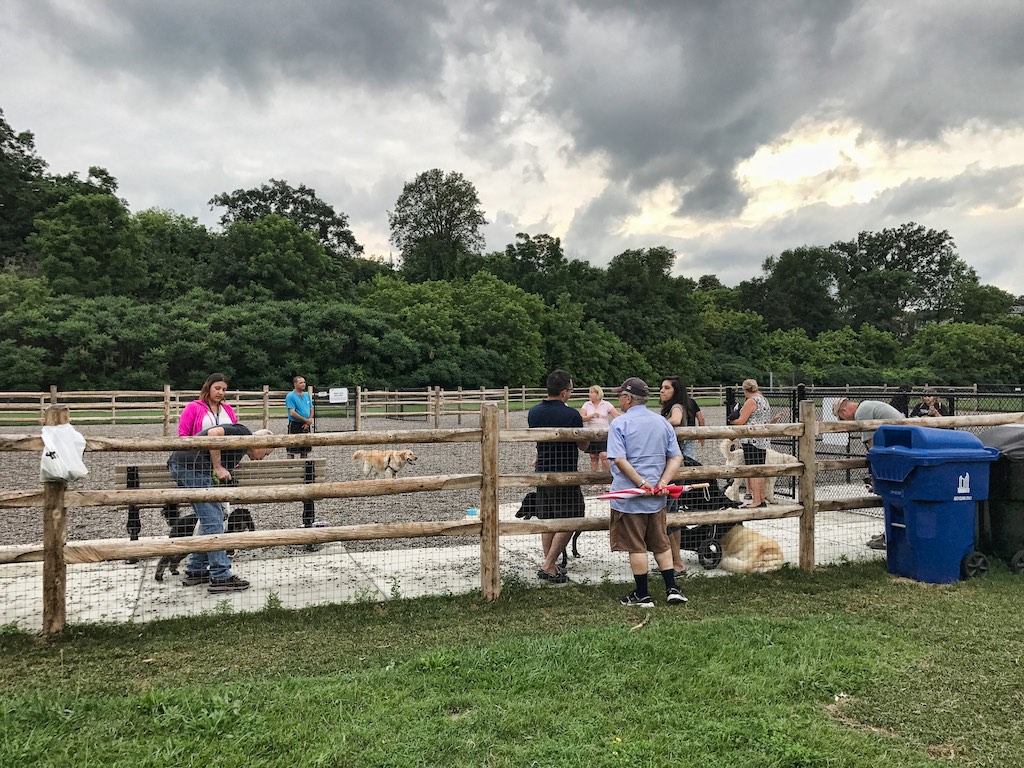
In 2017, an area near one of the baseball diamonds was converted into a dog off-leash area (DOLA). The ground was fitted with weeping tile to improve drainage, bulldozed and covered with the aptly named pea gravel. It was then fenced off from the rest of the park. The pea gravel is supposed to allow for better drainage but many owners say that it makes their dogs’ paws uncomfortable.

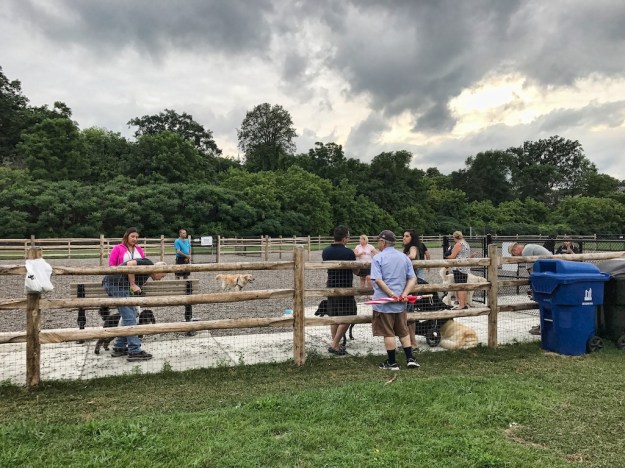
Residents and their dogs gather Monday, July 10 2017 for the official Raymore Park DOLA opening.

The DOLA took a few years to become popular but is now widely used and is popular with professional dog walkers who can be seen with up to six dogs at a time.

Some owners avoid the DOLA, instead preferring to allow their dogs to run free in places like the wild area. They play a cat and mouse game with city by-law enforcement officers and occasionally have encounters with wildlife that are unfortunate.

One side benefit of the leash free zone.

The new leash free zone has taken some of the pressure off the wild area. The evidence for this is the fact that the old path is quite overgrown.

The old path is visible as a mild depression in the undergrowth.

There is a path there somewhere.

The lack of dogs and humans is also helpful to new plantings that are part of the rehabilitation of the former staging area. The bags at the base of some of the trees are containers which allow water to be released slowly (I always wondered). The brand name is Tree Gator.

New plantings of trees and grass. Our plentiful rainfall this summer is helping. Let’s hope winter ice is kind.

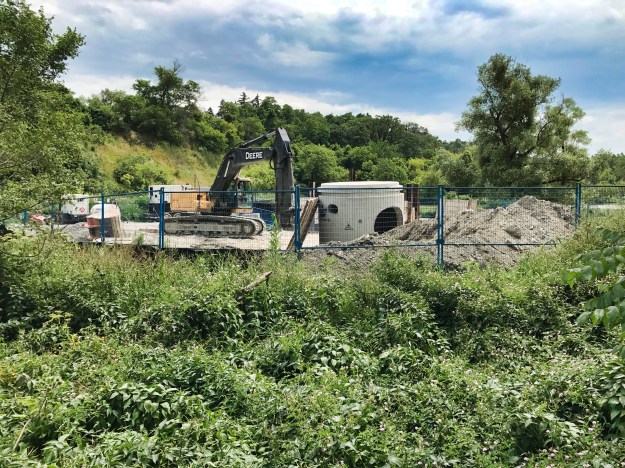
In the meantime, work continues on re-lining the sewage pipes that run along the Humber. The project has blown past its announced completion date of July 2017.

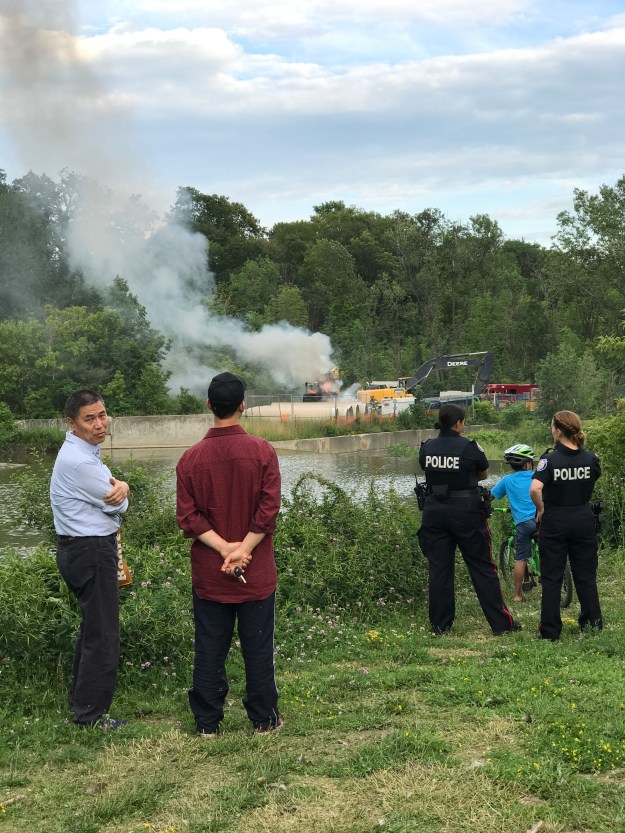
This equipment fire across the river on July 9th may not have helped the project timeline.

Dog Zone Official Opening

Residents and their dogs gather Monday July 10 for the official Raymore Park leash-free zone opening. Note the entrance to the small dog zone (black gate) is not directly accessible from the park.

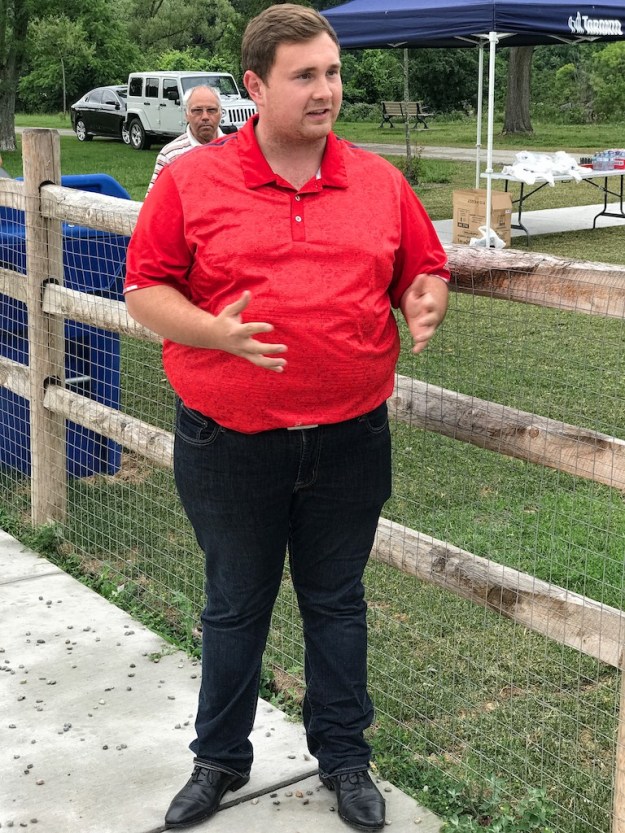
Quite a few dog owners and their pets were present on Monday evening for the official opening of Raymore Park’s leash free zone. Councillor Mike Ford had organized the event and worked the crowd, introducing himself informally to residents and later made a short speech. People seemed pleased with the facility but the councillor heard a few concerns; namely that the topping of ‘pea gravel’ used to improve drainage seems to bother some pets. The lack of shade was another issue as was access to the small dogs’ zone (currently entered from the large dogs’ zone).

Ward 2 Councillor Mike Ford speaks to the assembled crowd.

Councillor Ford seemed sympathetic to these and other concerns and promised some consultation with the people from Toronto Parks (Parks Supervisor Lynn Essensa was in attendance). He also sympathized with the patience of residents who have put up with Raymore Park’s long period of being a construction zone and said he was working on getting the last remaining project (sewer pipe re-lining) expedited.

Spring advances slowly.

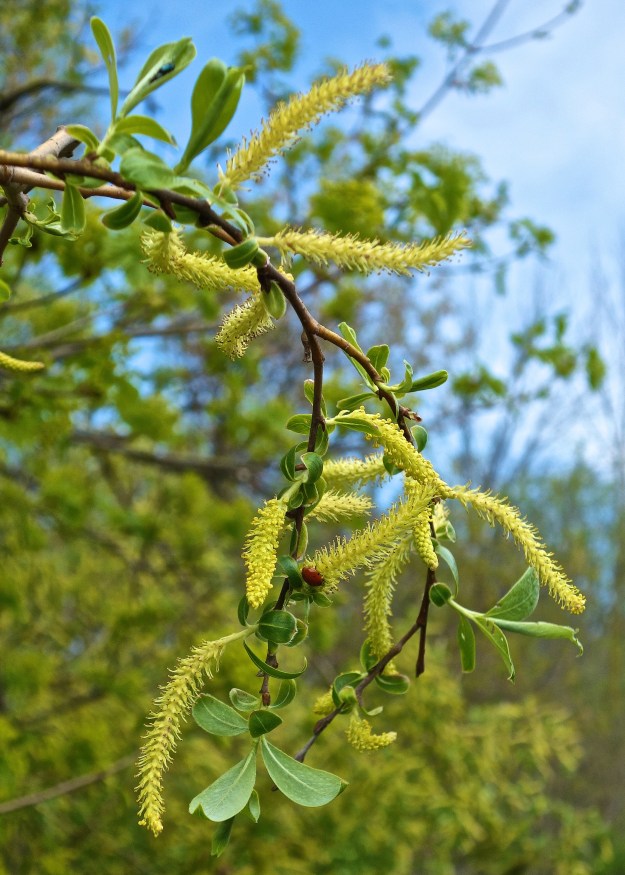
An Asian ladybug checks out some fragrant Willow blossoms.

An Asian ladybug clambers over some fragrant willow flowers by the Humber in Raymore Park.

Cool weather continues to make spring a long season this year. The upside to this is the ability to watch plants come to life in slow motion.

Willow trees (Latin name, Salix) are common in Raymore Park and they are native to Canada. They love watery environments and are easily propagated. They can be seen planted throughout the park, although, like walnuts, they don’t need much encouragement. Their flowers are particularly fragrant and have a lilac type smell.

The ancient Greeks knew about the medicinal abilities of willow bark extract to cut pain and reduce a fever. Native Canadians also used it in the same way. Scientists in the 19th Century extracted a chemical, which they named salicin, from the bark and converted it to salicylic acid and later still, to acetylsalicylic acid. The drug in this form is still in wide use today and more commonly known as ASA or aspirin.

As for the Asian ladybug, this was introduced by farmers in the U.S. to fight aphids and they do that job very well. Unfortunately they are not as benign as our native ladybugs and tend to find crevices in homes as well as contaminate grapes used in wines. They have to a large extent displaced our native bug. One year at a Niagara winery I drank some red wine which was ‘flavour enhanced’ with large numbers of the creatures accidentally harvested with the grapes. They have an unforgettable and bitter taste! It didn’t seem to bother anyone else so I let it go. Canadians can be very polite and forgiving.

Wineries now take precautions not to harvest ladybugs along with their grapes.