Tag Archives: nature

Hazel: 70 years on.

Hurricane Hazel began its trail of devastation as a category 2 hurricane in the Caribbean, killing more than a thousand people in Haiti. It moved northwards hitting the Carolinas as a category 3 thanks to warm waters off Florida. As it passed over land, it weakened to a tropical storm and then became a depression but thanks to a merger with a cold front, Hazel was re-energized and the resulting system started dumping water on the GTA on the 15th and 16th of October 1954.
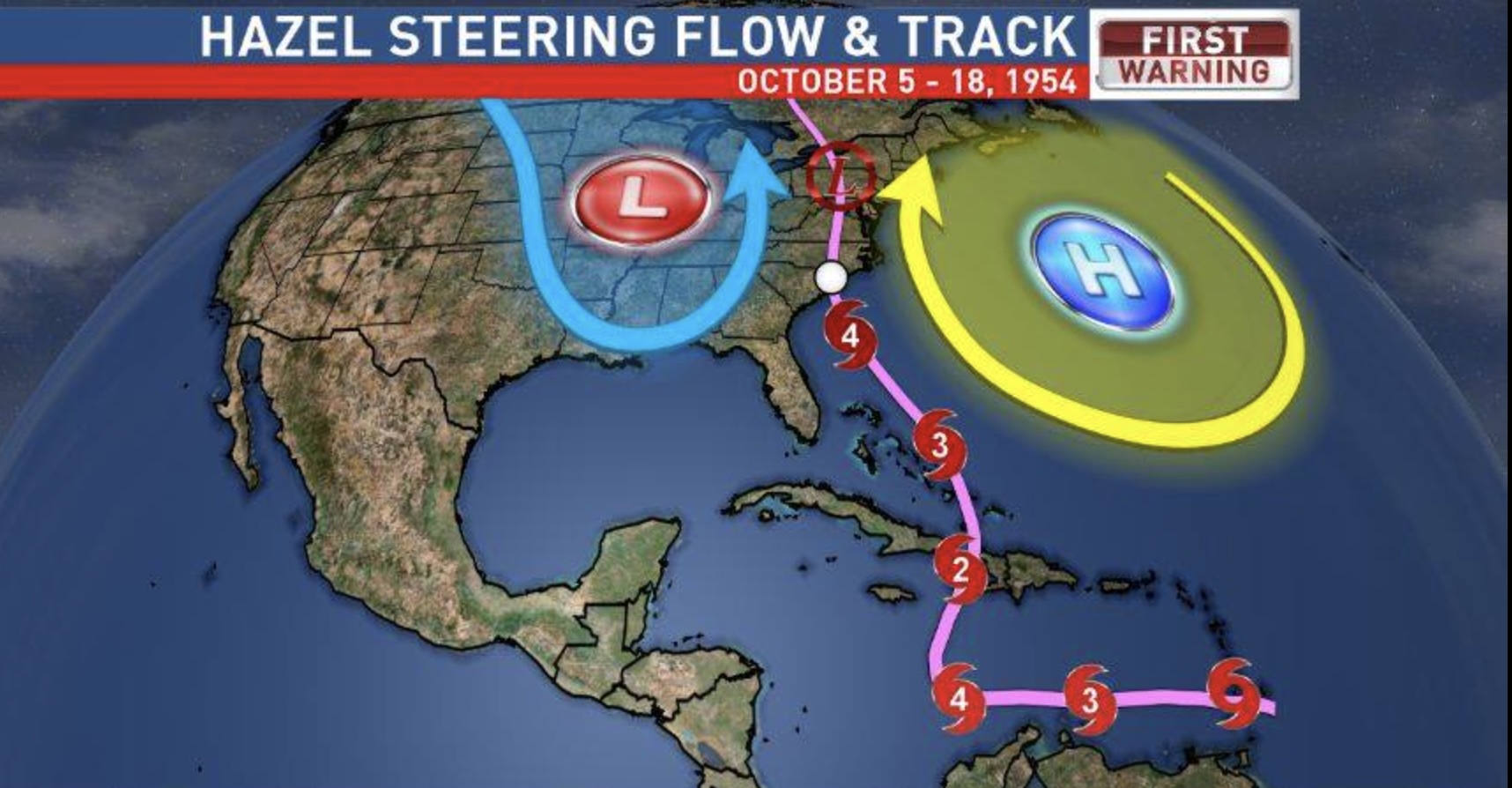
High pressure pushed Hazel over Toronto where it combined with a low-pressure area and cold front.

Local historian Madeleine McDowell correctly points out that the Humber River has the sharpest drop from source to mouth of any river in North America. As a result, when heavy rains fall, the river becomes fills up quickly. Events similar to Hazel have occurred in the past. In fact, in the 19th Century, Weston was moved to the east bank of the Humber after several catastrophic floods. Weston Golf and Country Club now occupies the site of the old settlement.

Raymore Park was one of many created after Hazel as part of an effort to clear flood plain lands and give rivers space where excess water can be absorbed.

Read more about Hazel’s legacy here.
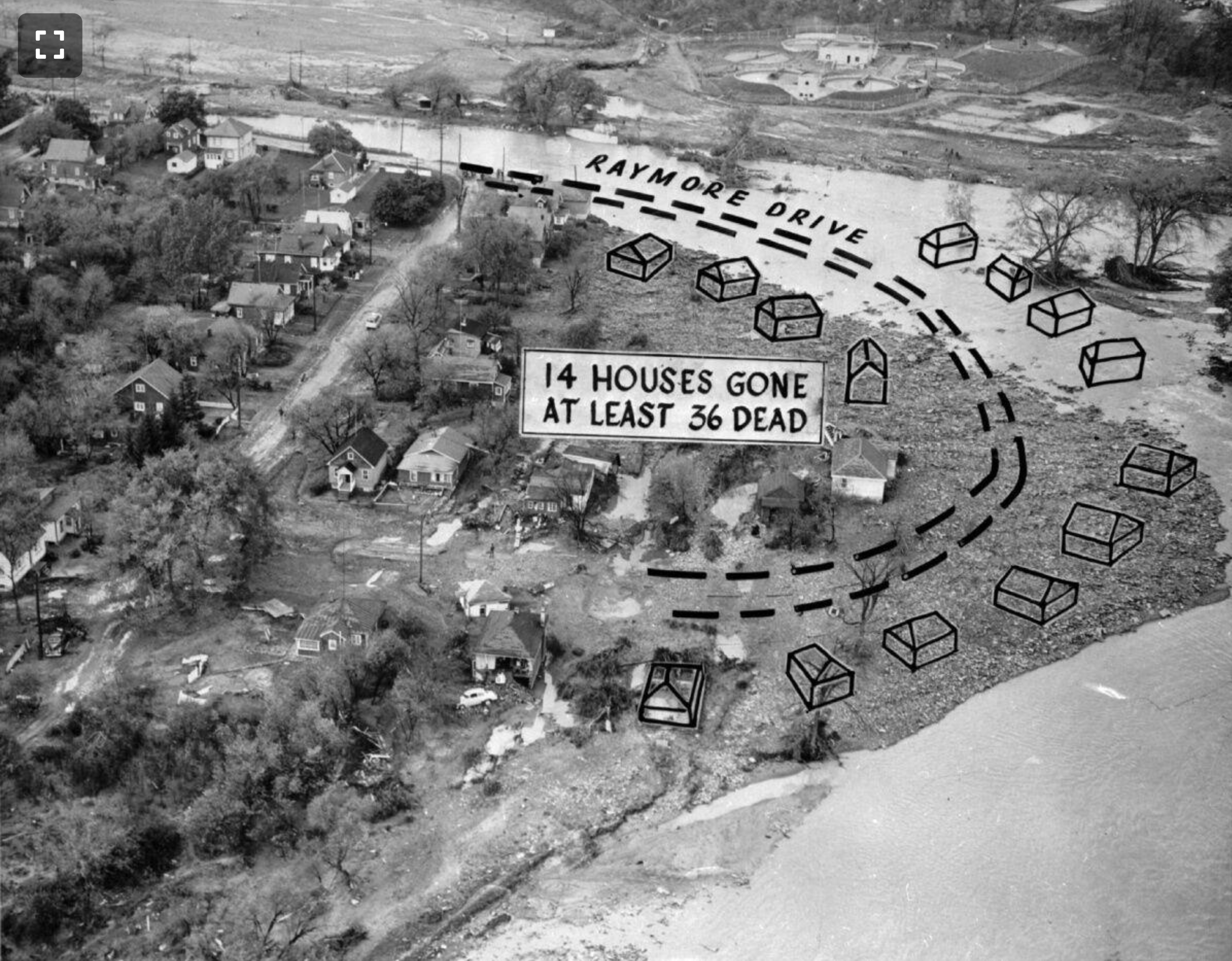
The old location of Raymore Drive. Present day Tilden Crescent begins below the square in the top left. Gilhaven Avenue (running from bottom left) is now occupied by Raymore Park’s parking lot.

Topologically, the Humber catchment area is relatively unchanged since the glaciers left about ten thousand years ago. The valleys are the same width, and the drainage area is the same. Rare events like Hazel will continue to happen. The problem is that since 1954, a good portion of the Humber watershed has been paved over.
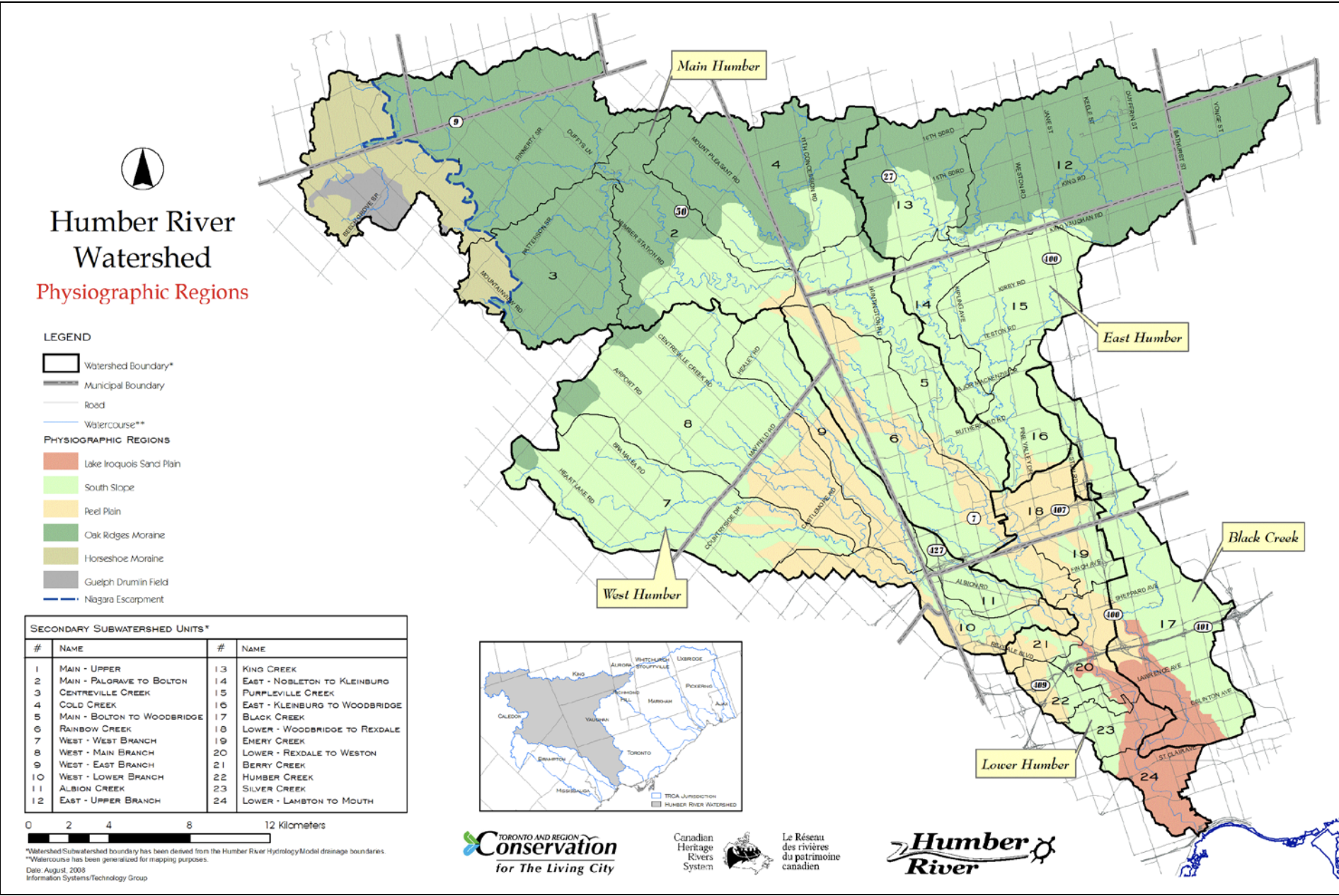
Click to enlarge.

In 2002, urban land occupied 20.7% of the watershed. By 2020 that amount was 26.7%, a significant increase. Natural cover is also decreasing although forest canopy is relatively stable at 29%. Because there is less land and vegetation to absorb rainfall, water enters the Humber faster causing river levels to rise quicker and higher than in the past. In addition runoff from paved land is dirtier affecting animal habitats and our drinking water. When the next Hazel type storm drenches our area (and it will), the effects may be far more severe.

Q: Is climate change a factor in events such as Hazel?

A: We can speculate, however, urbanization is a far more immediate danger. For example, the proposed Highway 413 is a huge threat to the watersheds of both the Humber and Credit rivers.

Read more here and here.

If you would like to commemorate the 70th anniversary of Hazel, meet in Raymore Park on Sunday October 13 between 1 and 3pm. Historian Madeleine McDowell will be there to talk about the event.

Signs of spring

Winter is finally over – the signs are everywhere but interestingly, native plants are some of the last to leaf and bloom, possibly as a protection from our continental climate’s treacherous ability to produce late snowfalls and frosts.

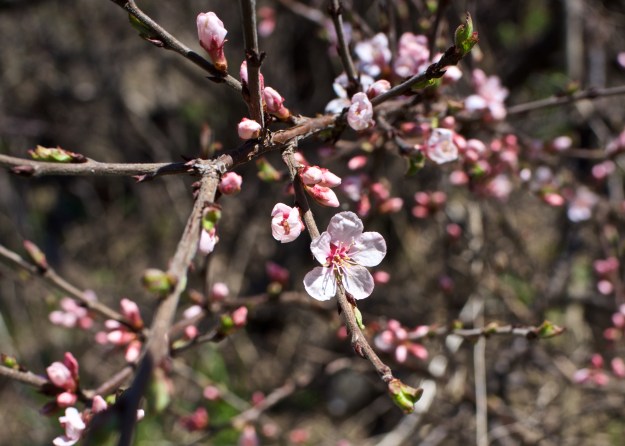
Imports feel no such constraint. Alongside the old path that follows the curve of the river, some old exotic plants remain from the days when people had homes by the water. Many of these remnants of domestication are unnoticed but somehow they have survived and stand as a mute testament to the victims of Hurricane Hazel in 1954.

An exotic tiny blossom.

An exotic tiny blossom.

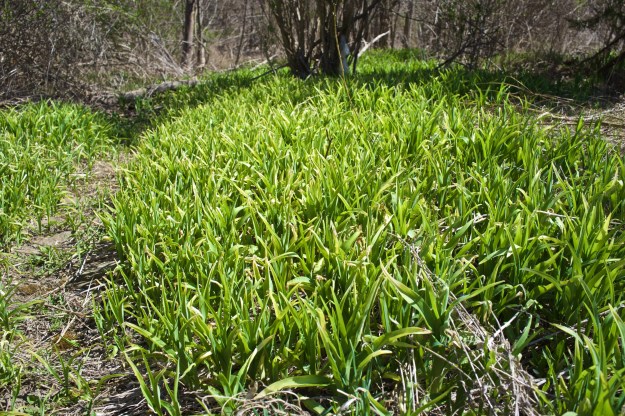
Day lilies carpet this fertile flood-prone corner of the park.

Day lilies carpet this fertile flood-prone corner of the park.

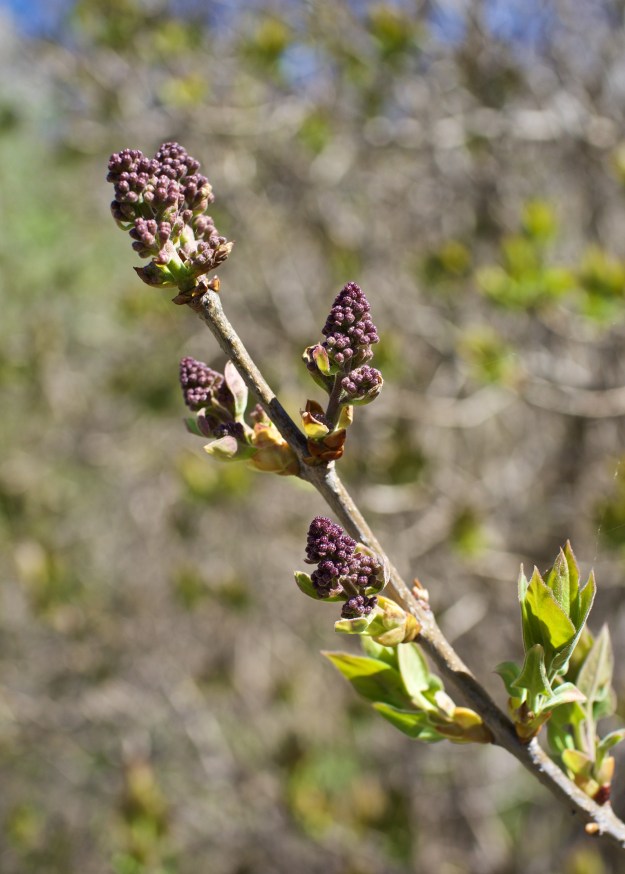
A lilac bush has begun to leaf and flower buds are set to bloom in a couple of weeks.

A lilac bush has begun to leaf and flower buds are set to bloom in a couple of weeks.

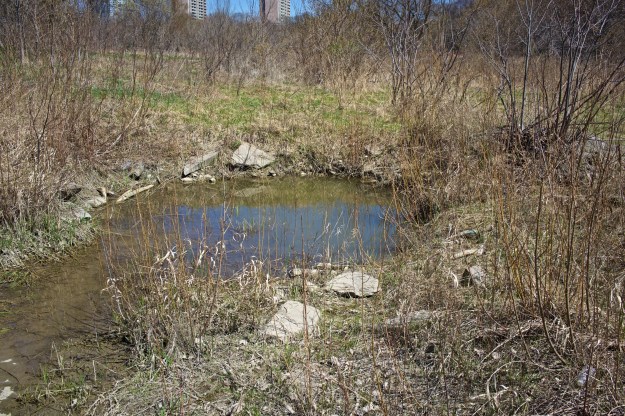
This pond was eroded out of the ground a few years ago as a result of an ice-jam temporarily diverting the river. It was promptly occupied by eastern American toads. No sign of the eggs or tadpoles yet.

This pond was carved out of the ground a few years ago as a result of an ice-jam temporarily diverting the river. It was promptly occupied by eastern American toads. No sign of this year’s eggs or tadpoles yet.

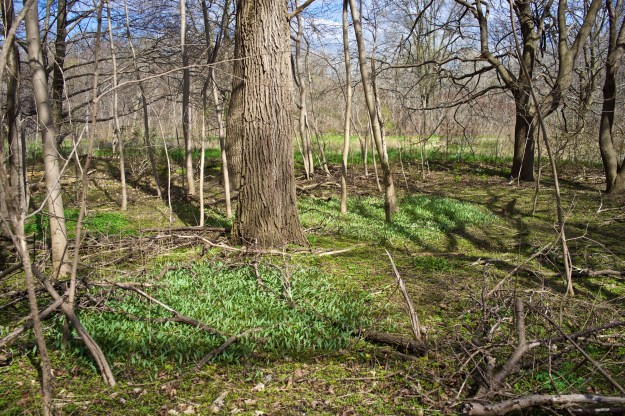
A carpet of toad lilies has sprung up in the woods south of the weir.

A carpet of toad lilies has sprung up in the woods south of the weir.

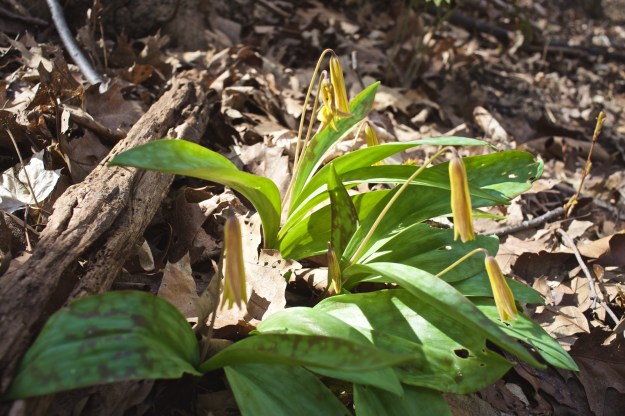
Toad lilies up close.

Toad lilies up close.

Toad lilies.

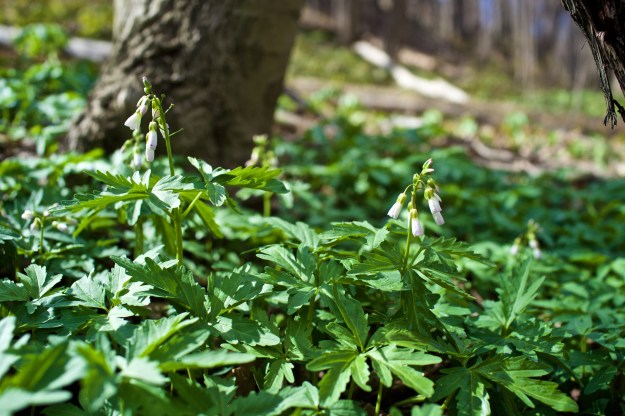
Cut leaved toothwort in the woods.

Signs of Fall: Wooly Bear Caterpillar

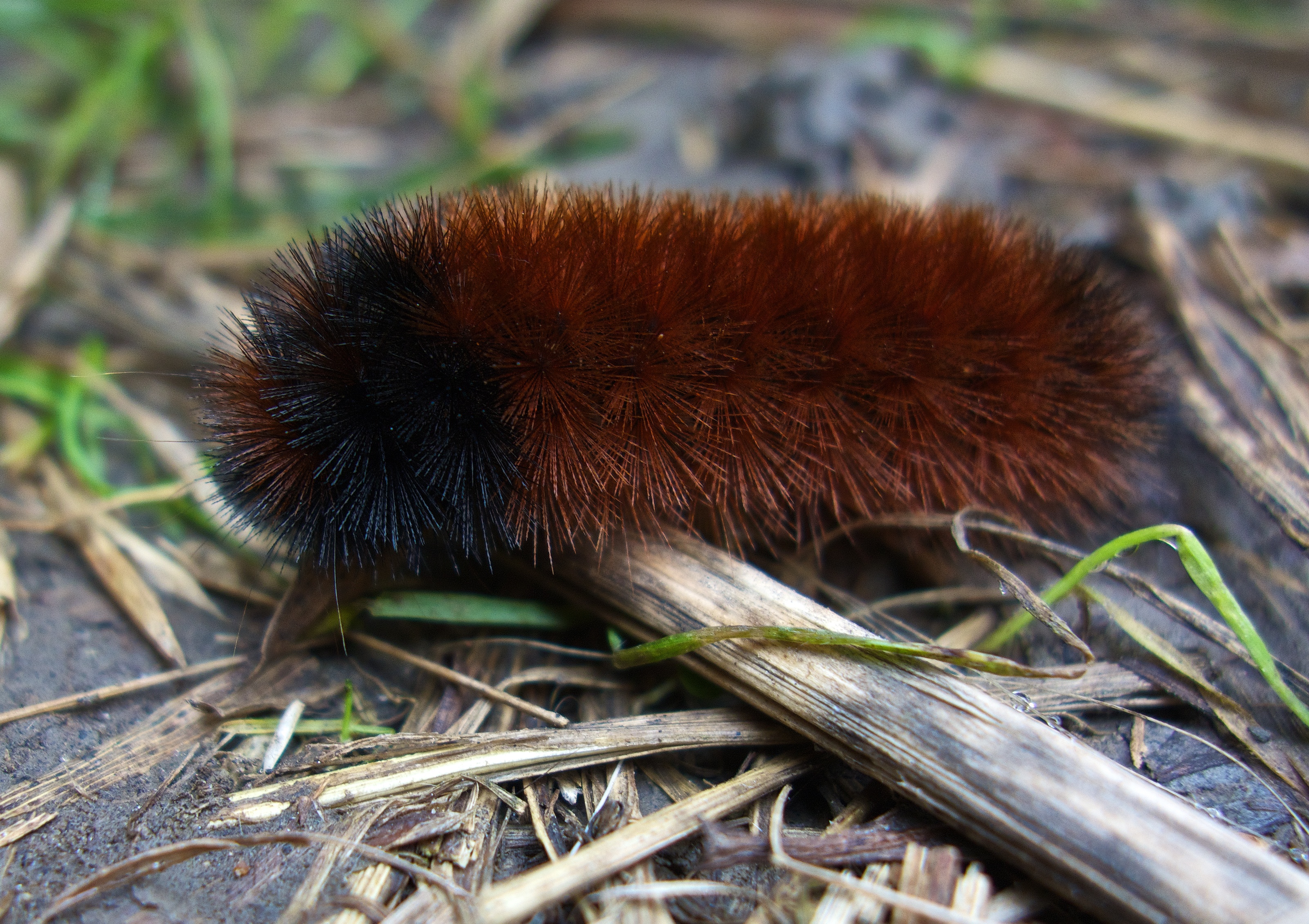
This insect  is a common sight in Raymore Park at this time of year inching its way along pathways and clearings. The freshly hatched wooly bear caterpillar is often seen moving along the ground looking for a hibernation spot. This one will pupate; in spring and its offspring will pupate in summer. Eggs from the summer generation hatch to become the overwintering caterpillar.

Pyrrharctia isabella; the banded wooly bear caterpillar

Pyrrharctia isabella; the banded wooly bear caterpillar trundling to a winter refuge.

These benign caterpillars have 13 segments and feed on plants such as clover and milkweed. Despite a spiky rather than wooly appearance, they contain no poison although handling them may trigger allergies in sensitive folk. If disturbed, they curl into a ball and stay still. Folk legends say that if the brown stripe on the caterpillar is narrow, winter will be cold and long. According to this little guy photographed today, we appear to be in for a mild time of things. The forecast is no doubt as accurate as those provided by Wiarton Willie. Regardless, this creature is able to manufacture its own anti-freeze and stop its heart before freezing solid during the winter. When spring arrives it thaws out and through metamorphosis, becomes a pupa and then a moth. Incredibly the Arctic version of the Wooly Bear Caterpillar needs several seasons to gather the food to become mature enough to pupate.

Beautiful September day

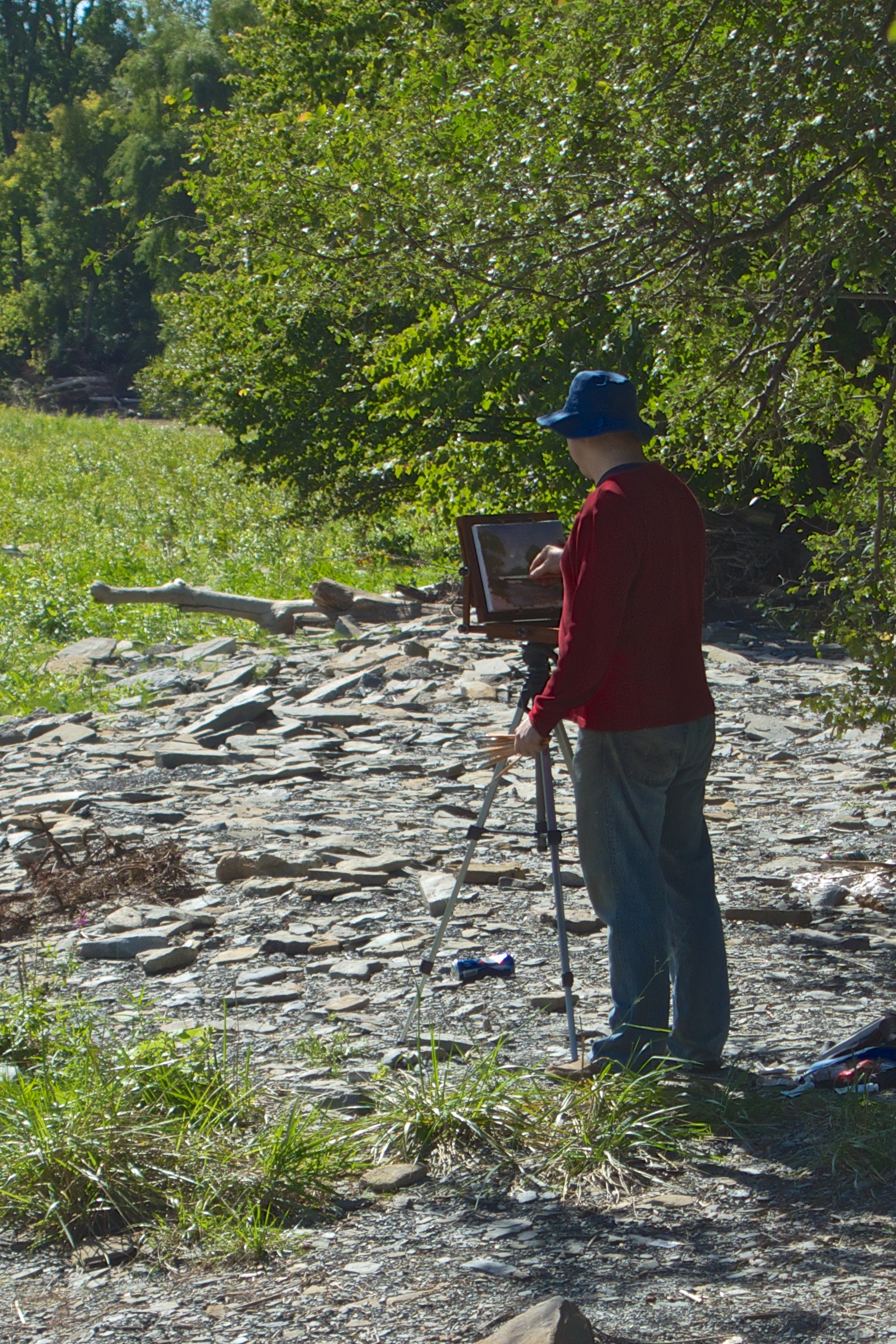
It’s Sunday and after yesterday’s decent rainfall, the park is washed clean and cooler dryer air has pushed its way through. Today, a group of painters scattered themselves throughout the park to various locations and were tackling some landscapes.

This gentleman was just south of the Humber Creek. Hope he takes that can with him!

This gentleman was capturing the view just south of the Humber Creek. Hope he takes that can (near his tripod) with him!

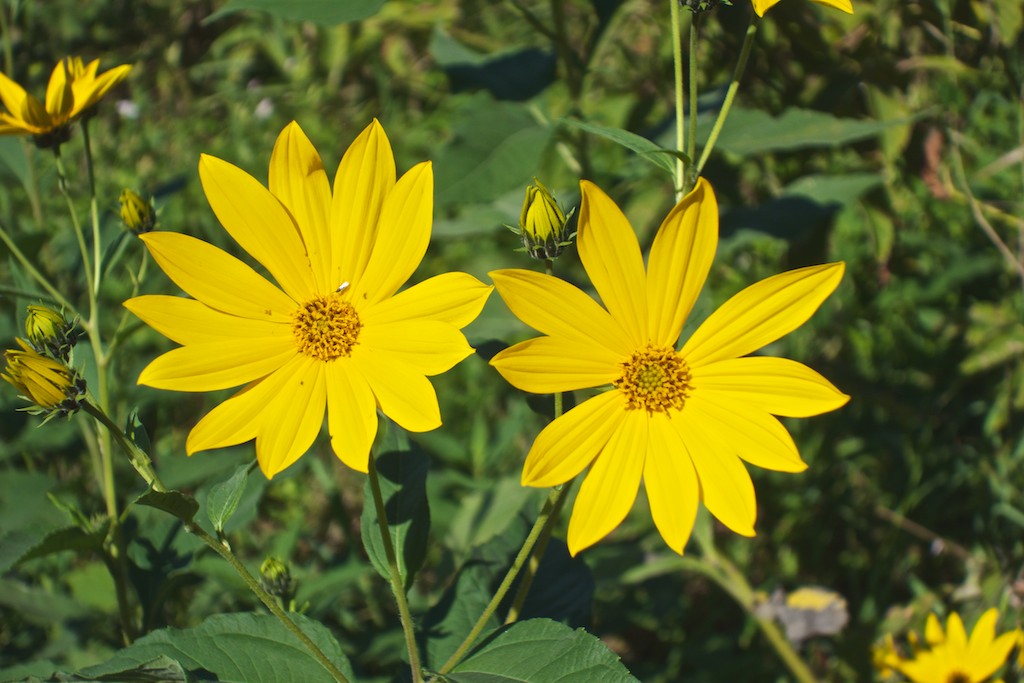
Elsewhere, these tall yellow flowers are hitting their peak.

Ragwort, not to be mistaken for ragweed.

Balsam Ragwort.

Balsam Ragwort is a member of the aster family and may actually be native to the area.

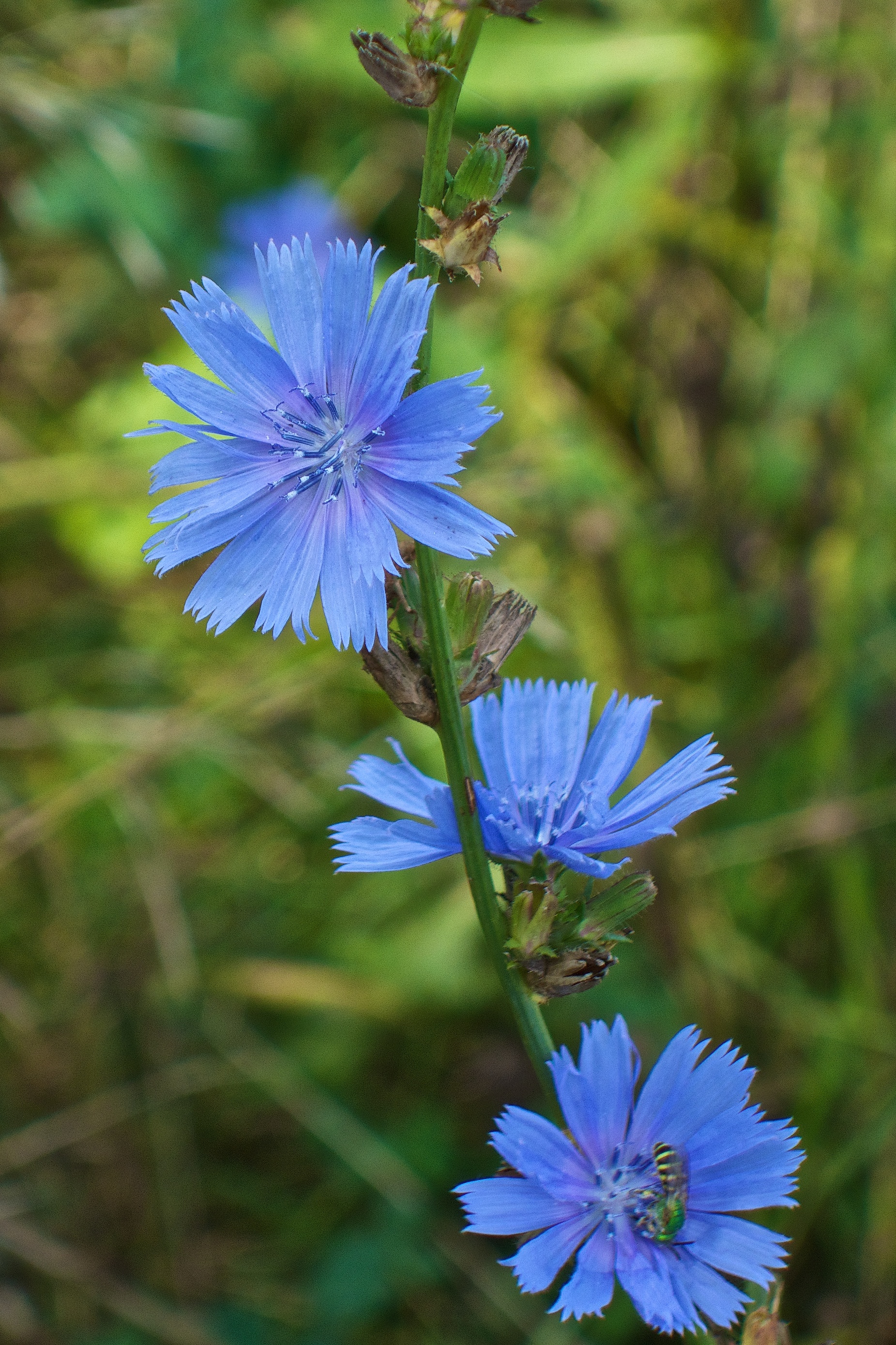
Chicory and its distinctive blue flowers.

Chicory and its distinctive blue flowers by the Humber.

Chicory is an interesting plant. As with many wildflowers in Raymore Park, it is not native. Probably brought over by settlers from Europe, it has a taproot that after baking, can be finely chopped and used as a caffeine-free coffee substitute. Chicory has been substituted for the real  thing whenever coffee supplies have been interrupted such as in wartime. My mother lived through World War II and tolerated the occasional chicory coffee. Many people acquired a taste for chicory and retained the habit but she refused to drink it after the war, regarding it as a bit too much like ‘dishwater’.

Other varieties of chicory have leaves that can be used in salads, some variants being radicchio and Belgian endive.

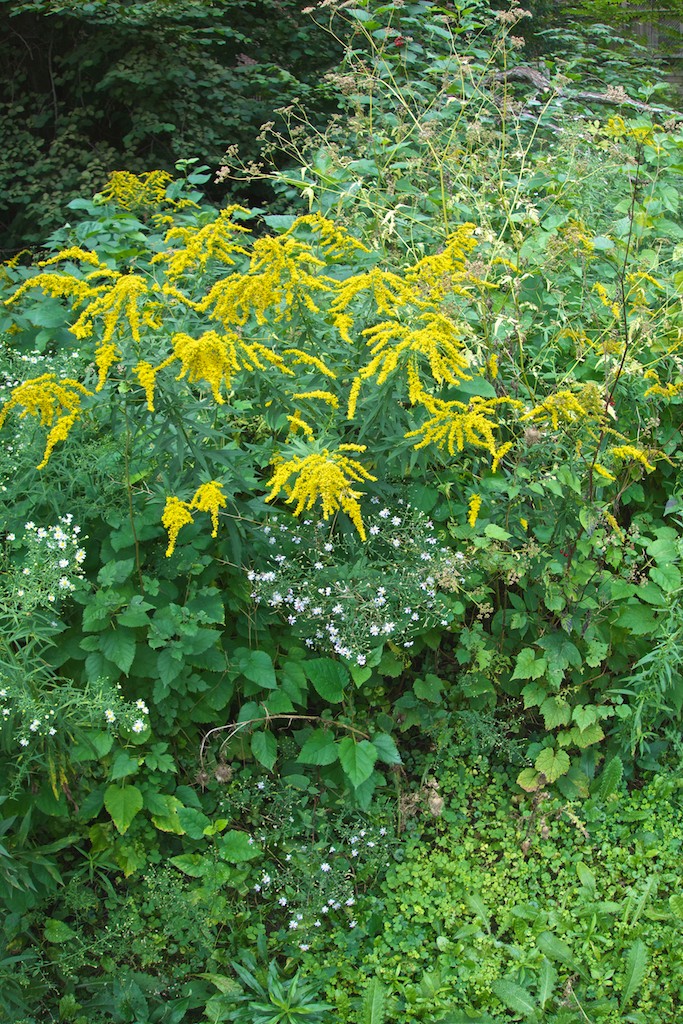
Finally, some goldenrod – a sure sign of the approaching fall season. It looks like an allergy sufferer’s nightmare but in fact releases no pollen.

Goldenrod mixed in with some wild asters.

Goldenrod mixed in with some wild asters.

Dog strangling vine

North America is a continent with many points of entry for invading plants and animals. Its climate zones go from Arctic to tropical so there is a comfortable zone somewhere for any invader. If the newcomer has left its enemies behind, a veritable breeding frenzy ensues. Once the continent has been breached, with the current state of biology, we’re stuck with the invader forever.

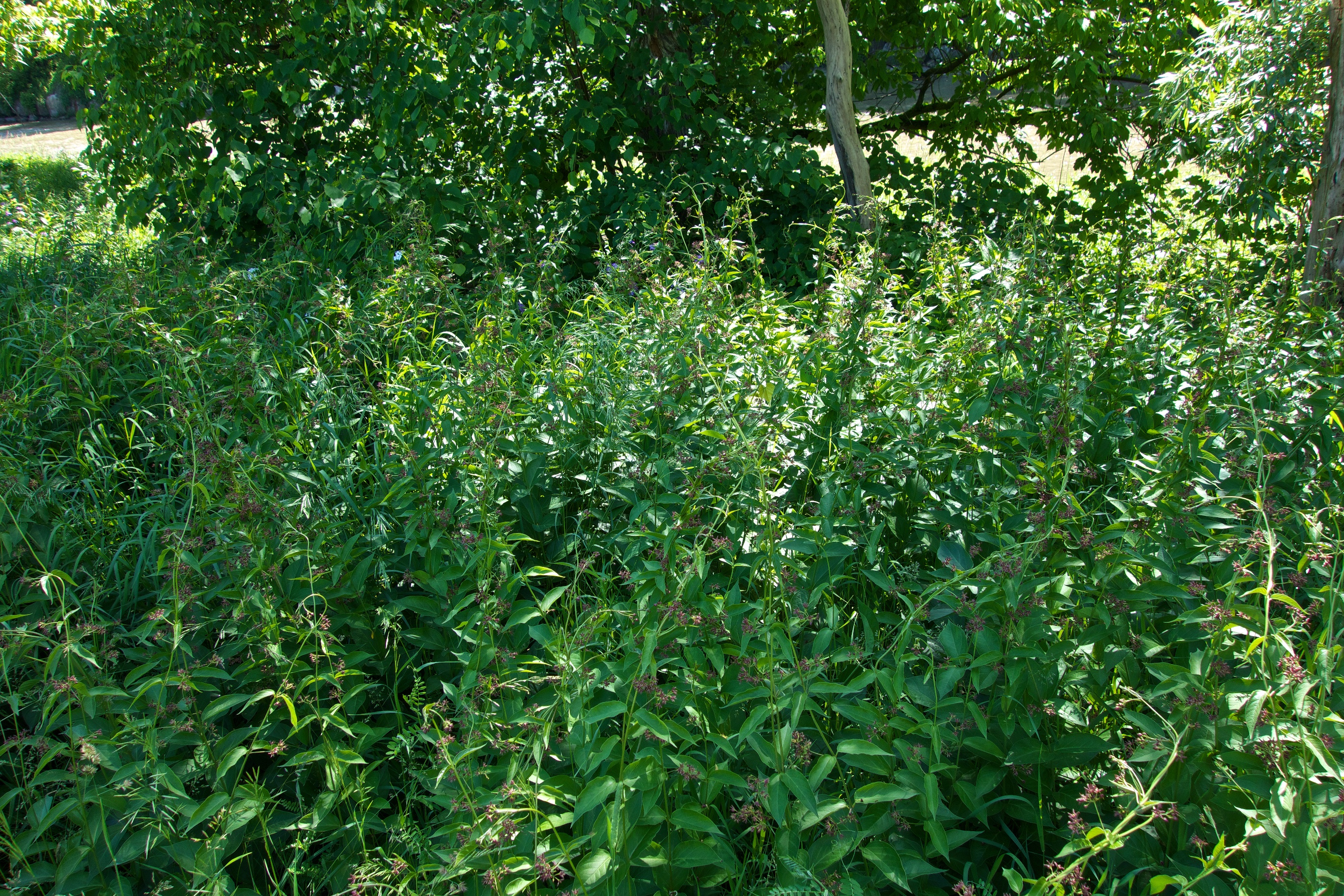
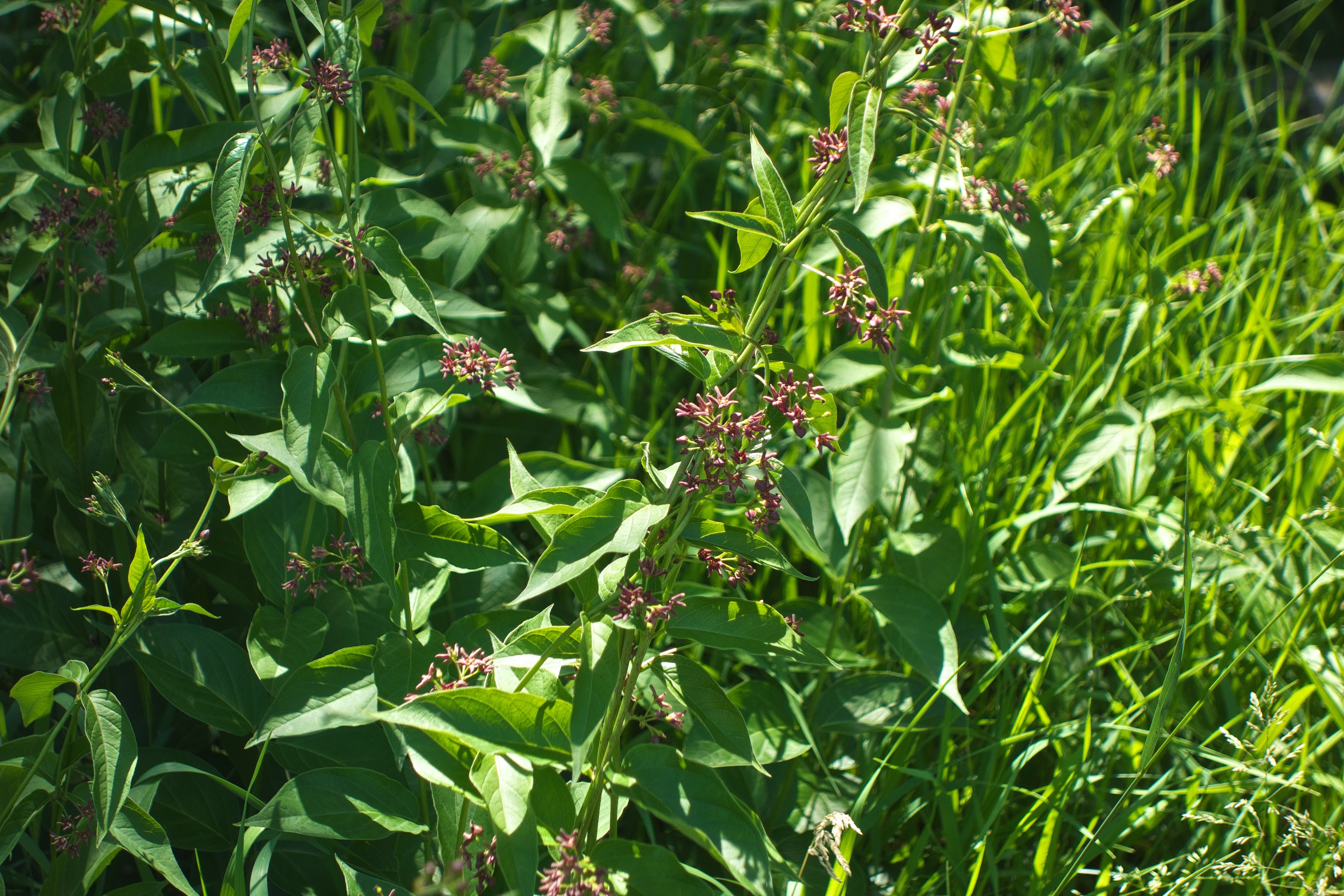
A relative newcomer is once again sweeping North America since its introduction (probably accidentally) from Europe where it is native. Dog strangling vine or swallow wort (Cynanchum rossicum) is related to milkweed and grows almost to 2m in dense clumps, hence its common name. Quite at home in southern Ontario, it has been around for decades and is regarded as a bigger menace than garlic mustard by many. In Toronto’s High Park, desperate measures (using Roundup) have been used after physical attempts to remove the plant failed.

This dense patch is by the river in the wild area.

This dense patch by the river in the wild area has already out-muscled the competition.

The seeds look a little like milkweed seeds and in fact the plant can confuse Monarch butterflies into laying eggs on it. Given a choice, Monarchs will lay eggs on DSV 25% of the time. Monarch eggs laid on DSV will not survive.

DSC02235

Flowers are tiny but produce lots of seeds.

This plant seems to have few redeeming features although cattle will eat it.

The answer to this problem (once again) seems to lie in biological control through careful importation of benign enemies. This takes time to ensure that adding another import to the long list doesn’t backfire.

One can only wonder which other invaders are waiting in the wings.

Against the light.

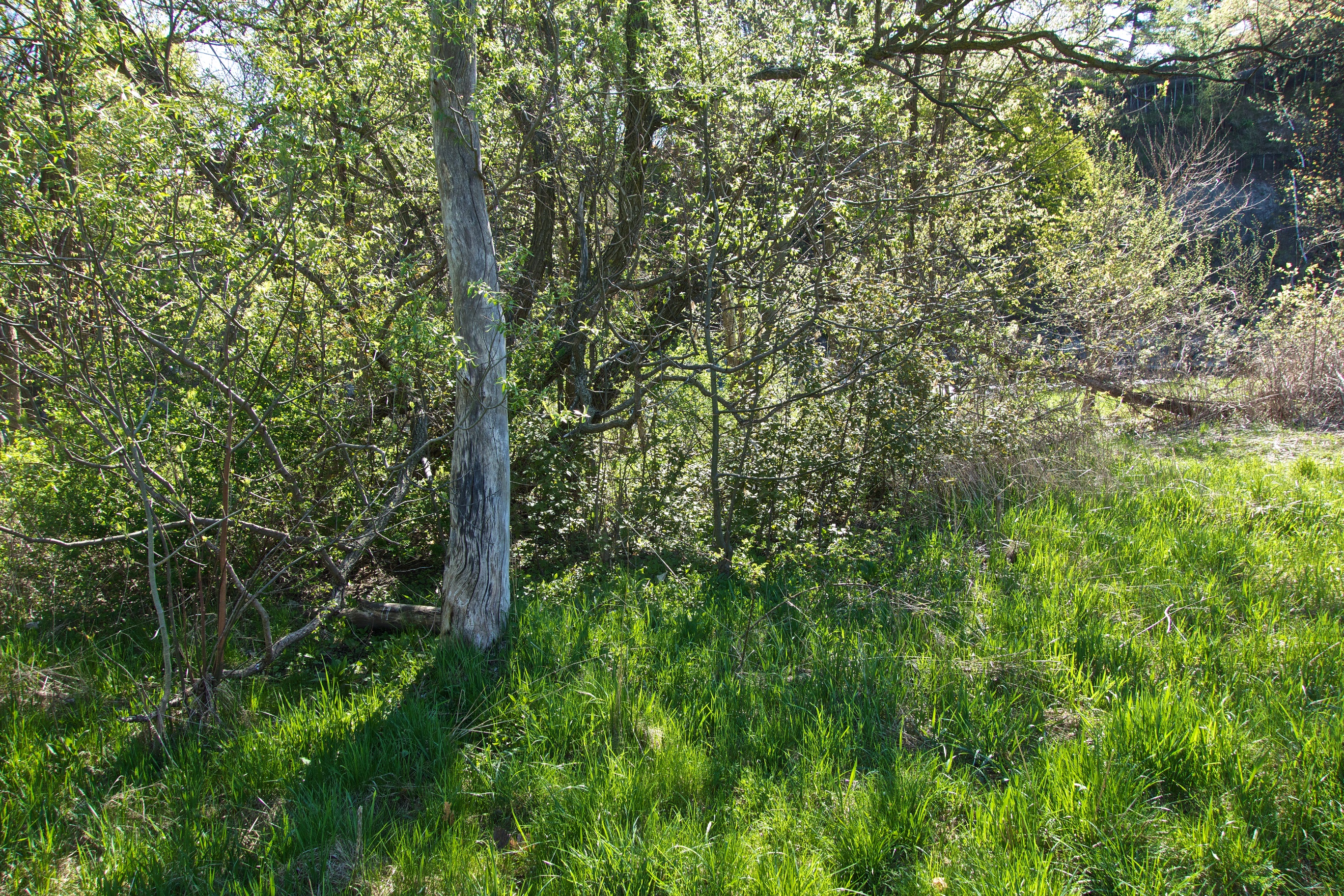
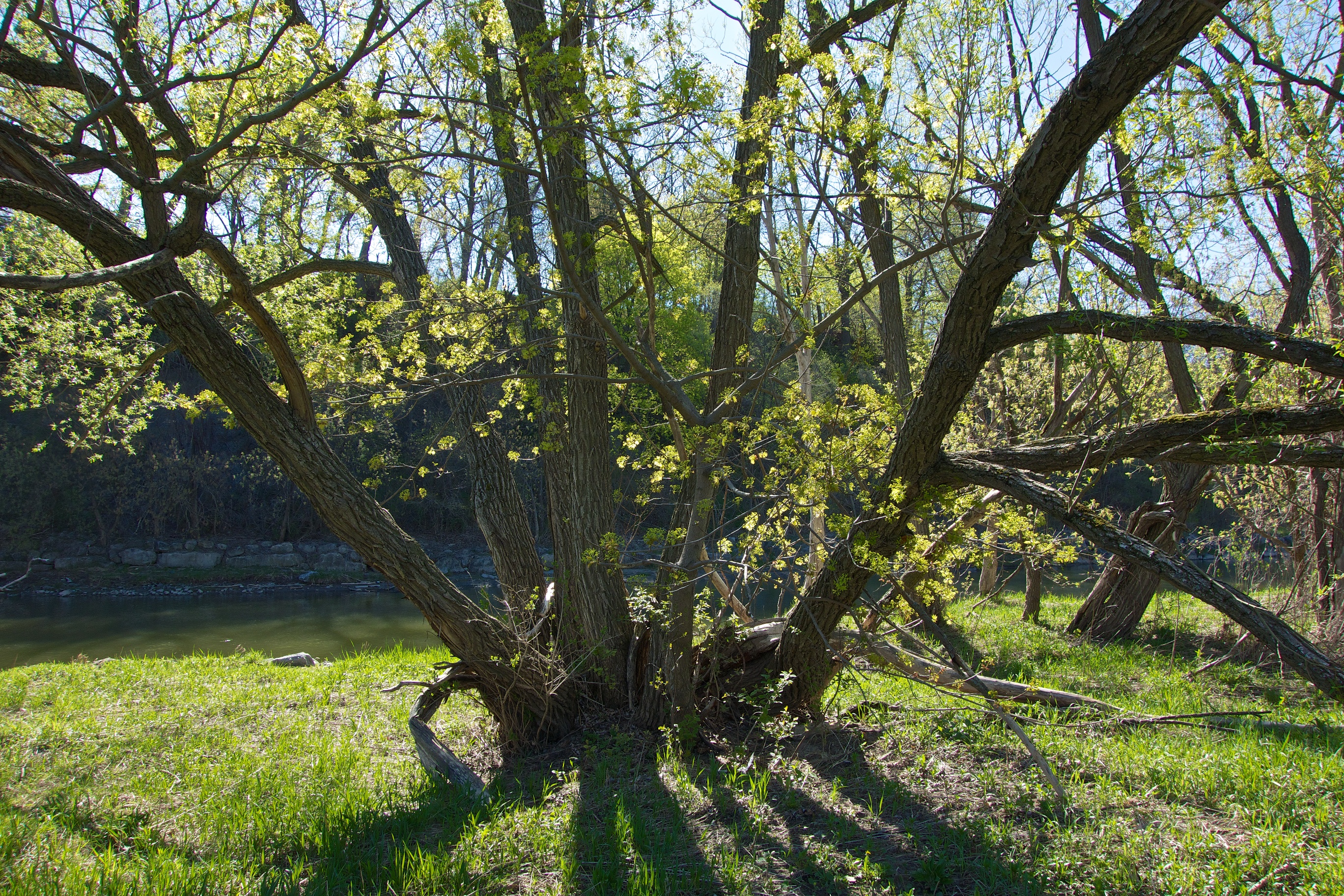
I love taking shots against the light. It can be a challenge to avoid glare and burnouts but the rewards are worth the effort in terms of contrast and vivid colour. Today was a continuation of several days of sun , mild temperatures and low humidity which lends even more clarity to such images.

DSC01794

Fresh blades of grass are backlit and the air is clear on this day of low humidity.

DSC01800

The texture of the tree trunks makes a nice contrast with the blades of grass while the shadows continue the tree lines.

DSC01807

Flowers from the trees dot the water by the peninsula. Lots of green shades contrast nicely with the sky reflection.