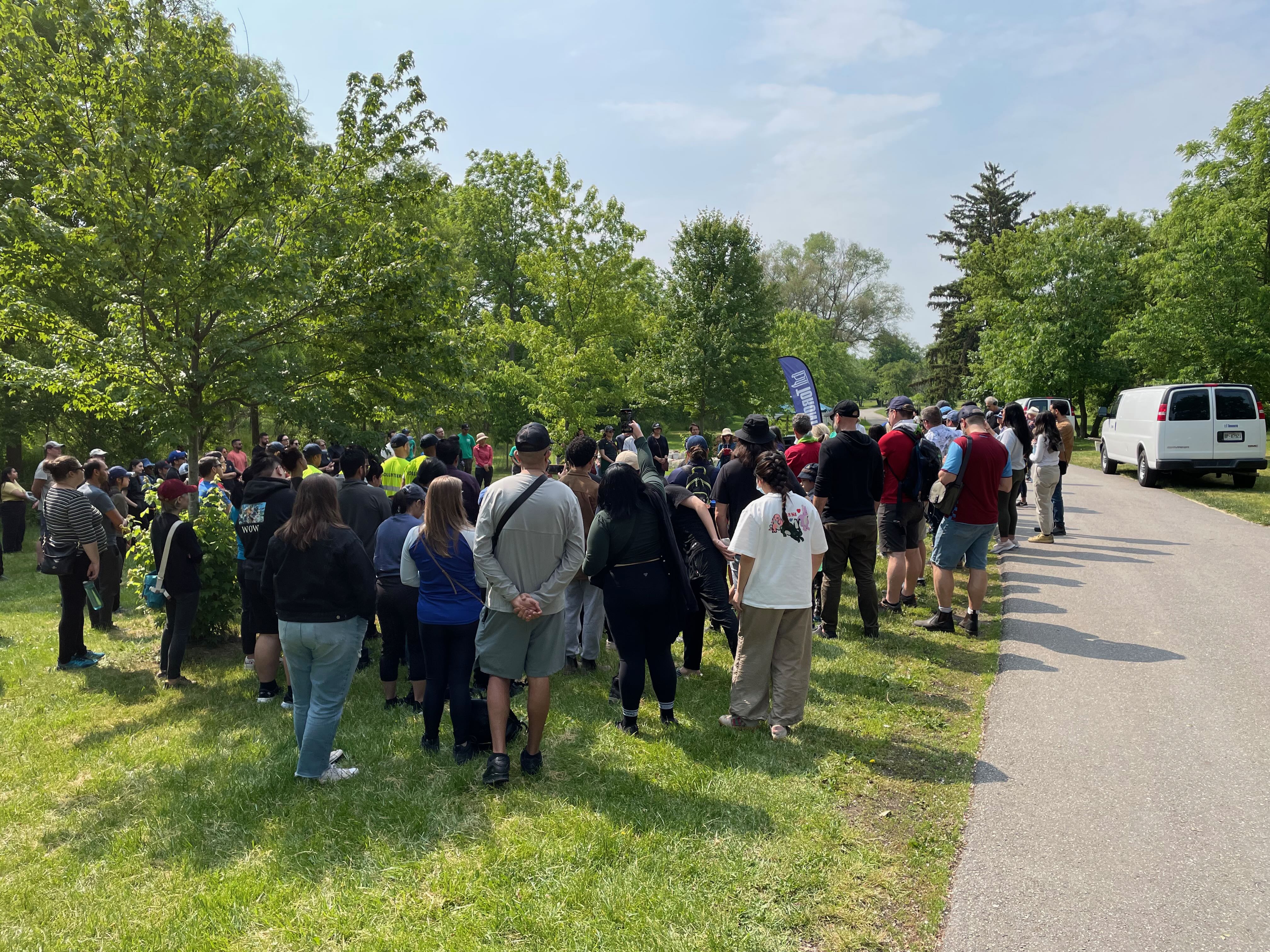
A large number of people gathered on the morning of Saturday June 10 to plant 325 native trees and shrubs in the wild area just south of the parking lot.
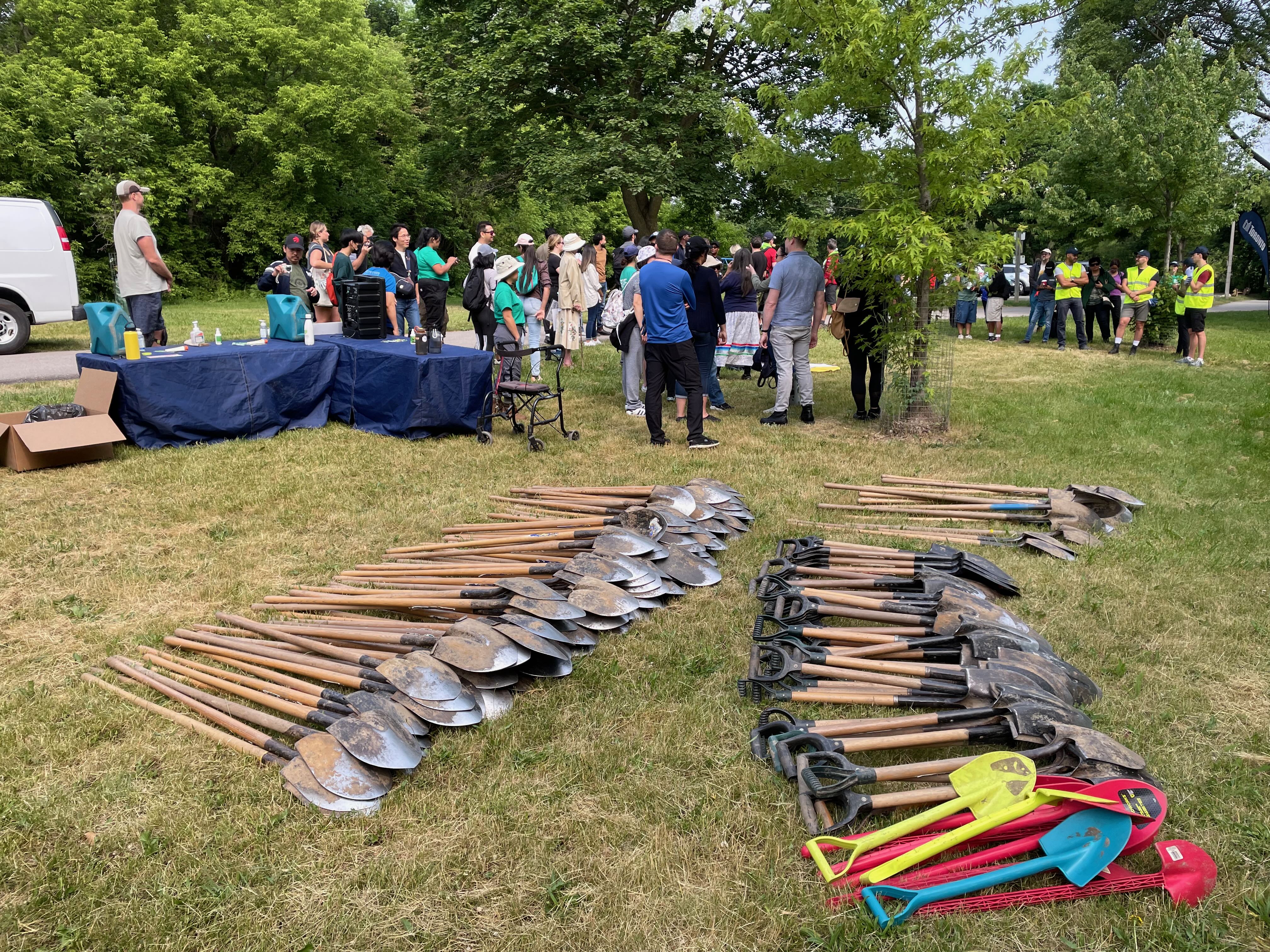
Shovels of all sizes at the ready.An impressively large crowd attended.
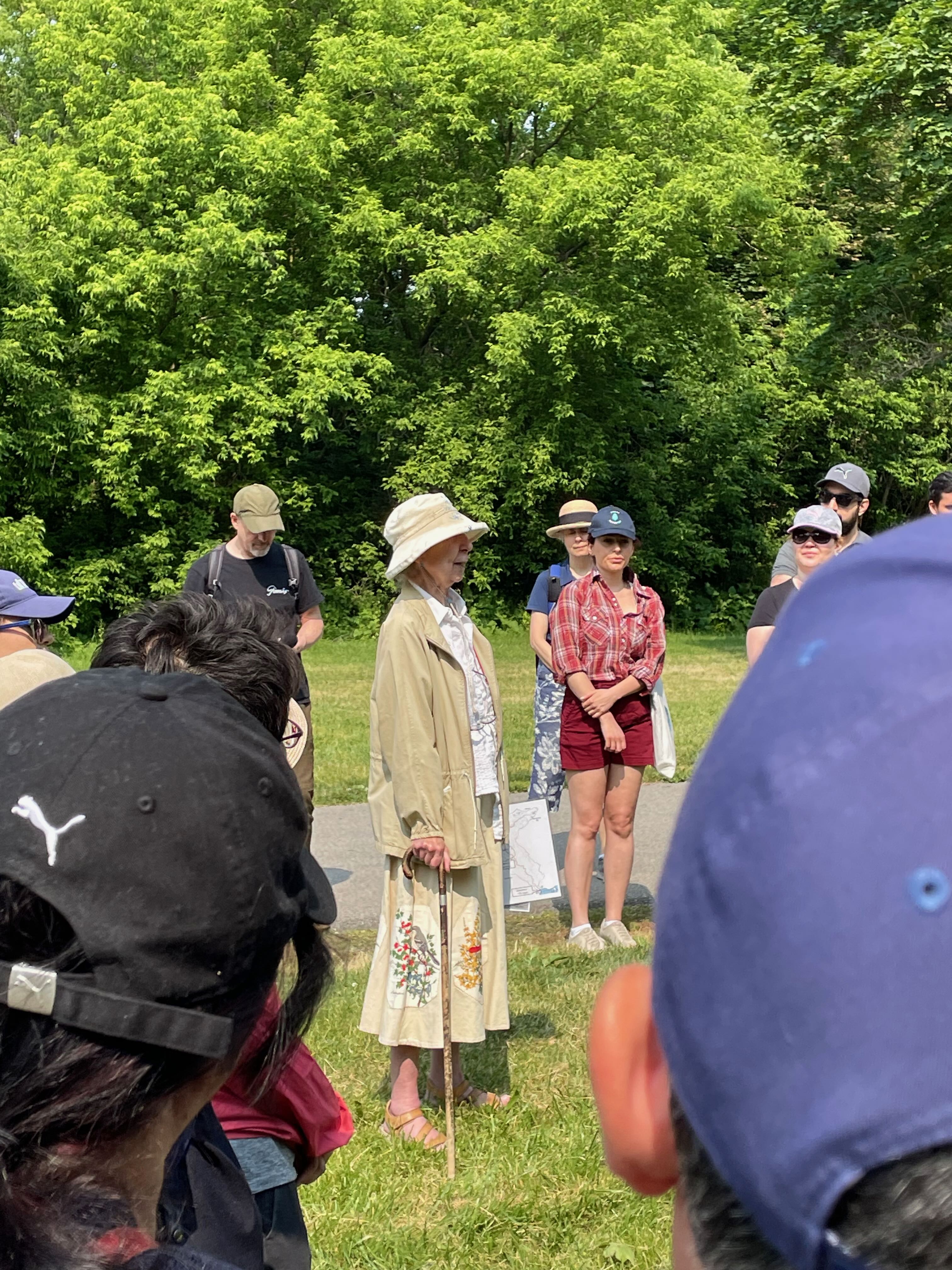
The event organized by The Humber River Citizens’ Alliance and the City of Toronto was begun by a talk from Toronto historian Madeleine McDowell who gave an outline of the events of Hurricane Hazel which eventually prompted the establishment of conservation areas throughout the GTA.
Madeleine McDowell outlines the story of Hurricane Hazel and Raymore Park.
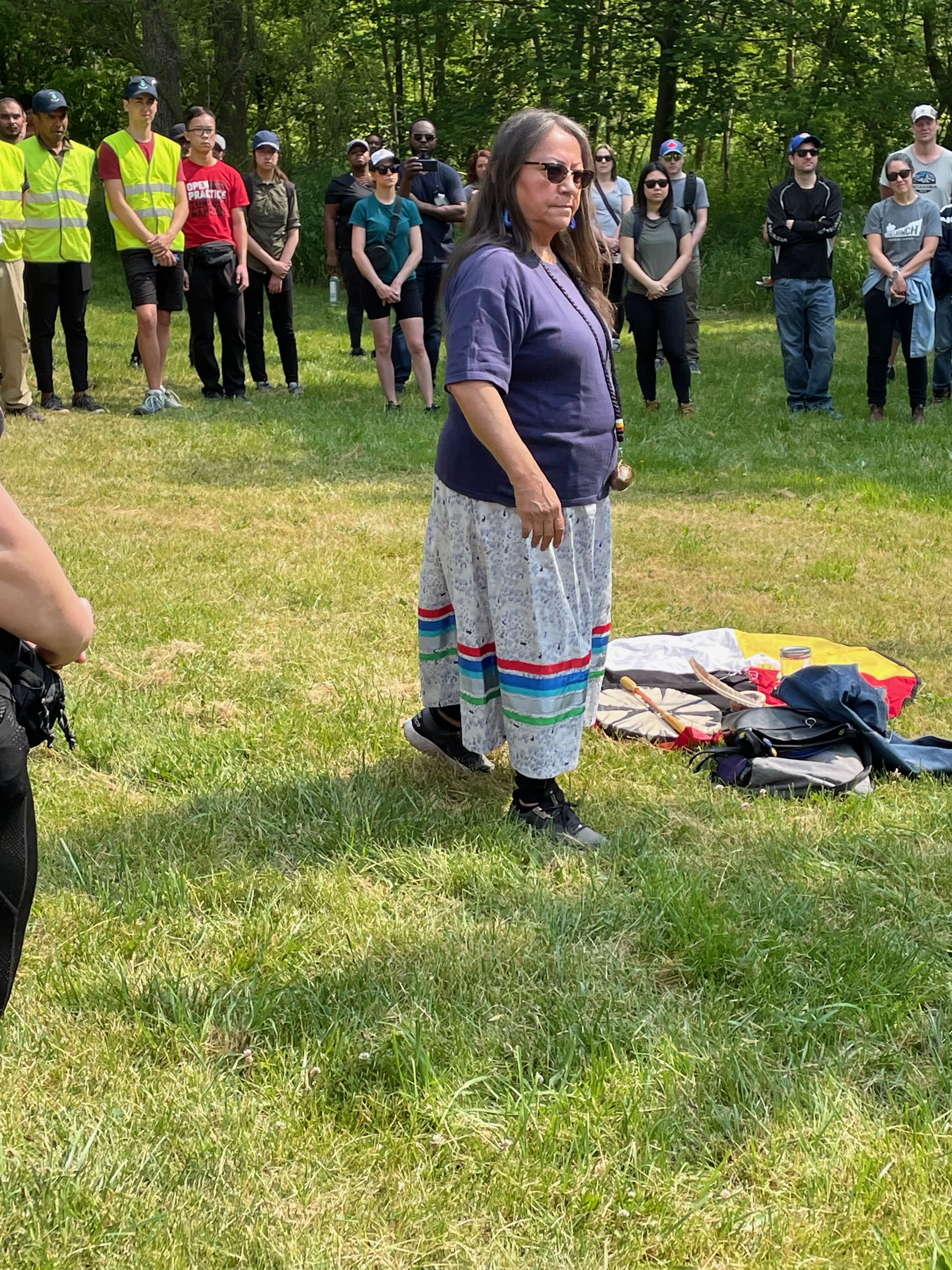
Anishnaabe Grandmother Waterkeeper Vivian Recollet spoke of the value of nature and the need to respect growing things.
Vivian Recollet talks about native traditions and respect for the land.
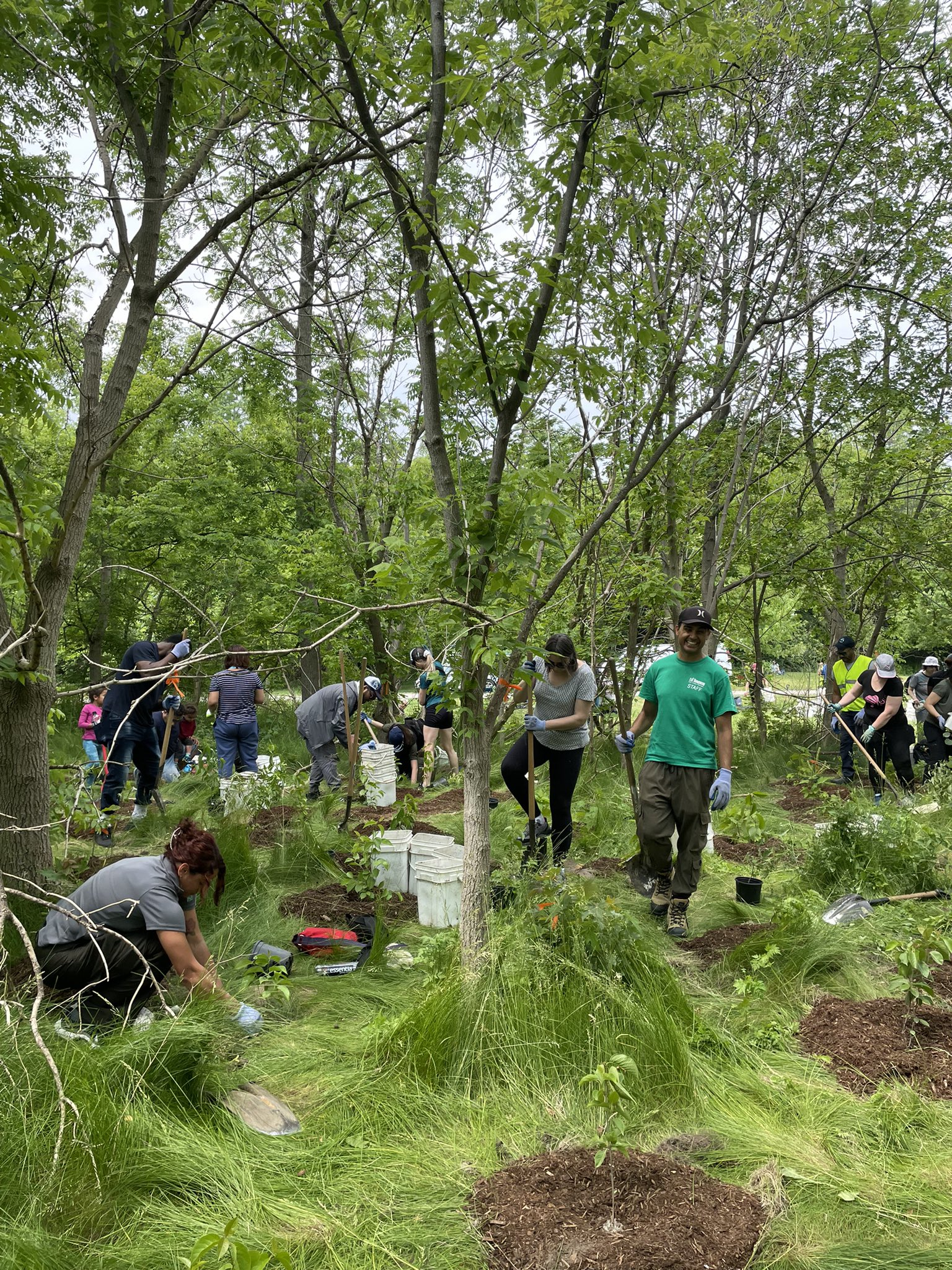
The event was well organized and the work went quickly.
Volunteers hard at work. From Toronto Forestry Twitter account.
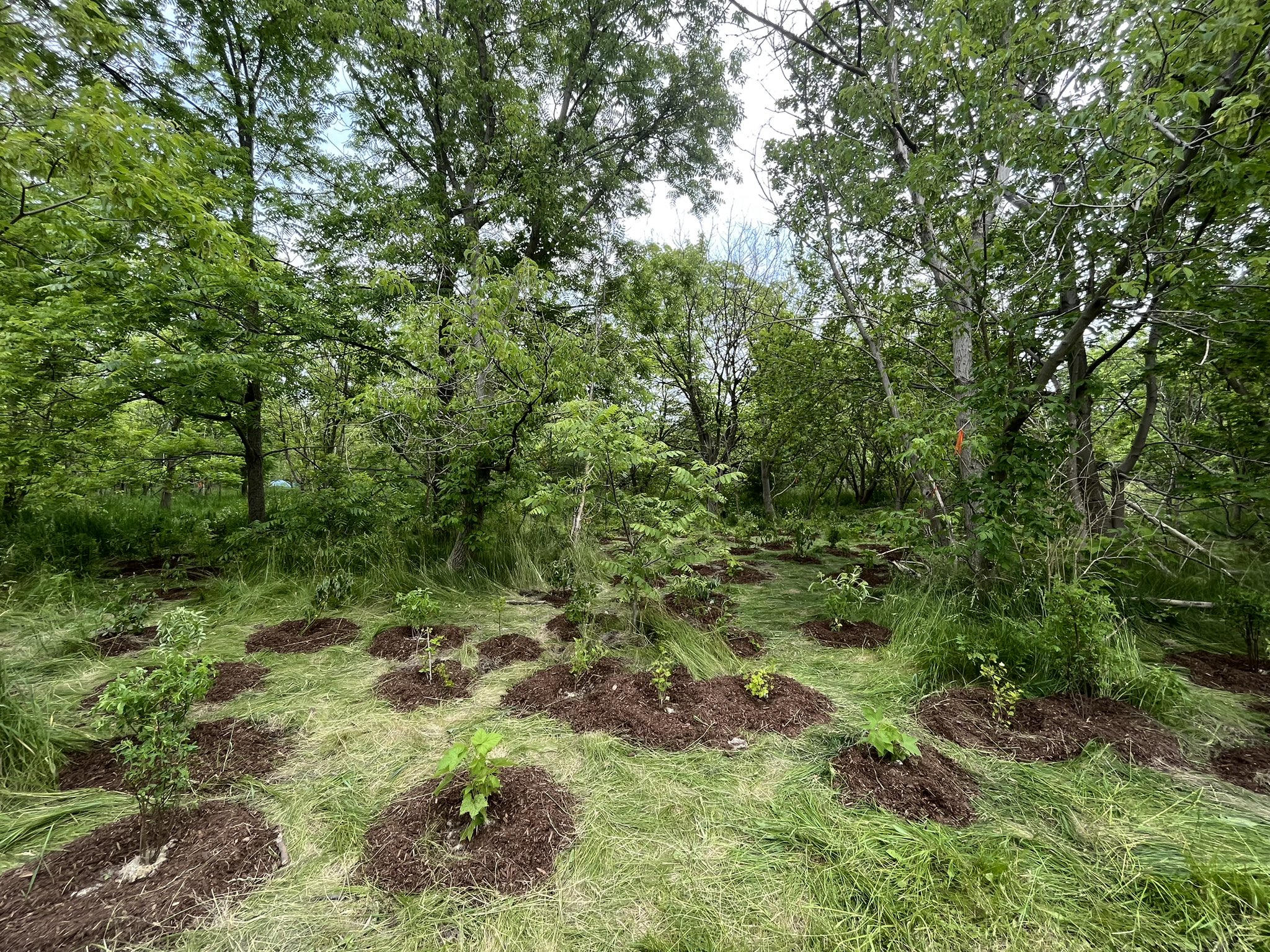
As mentioned, a total of 325 trees and shrubs were planted and the recent rain will no doubt help considerably with their establishment.
Trees and shrubs in their new home along with lots of mulch. From Toronto Forestry Twitter account.
Trees are great at cleaning the air and capturing carbon. They also moderate the extremes of weather and keep wind speeds down year-round. They also smooth out temperatures, keeping them lower in summer and higher in winter. Recognizing this, Prime Minister Trudeau promised that Canada would plant 2 billion trees by 2030. This was during the 2019 election campaign and we all know the value of campaign promises.
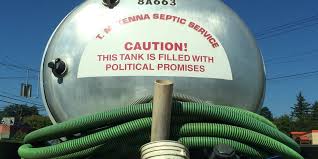
From Democrat and Chronicle.
The idea for a mass tree planting may have come from New Zealand and Australia which had announced similar ambitious goals in 2018 and 2019. The U.S. is also promising to plant 4.1 billion trees in the same timeline as Canada. All told, Canada has around 318 billion trees so adding two billion to the total won’t be a big increase. In fact it won’t even replace the trees that will be cut down by then. Even so, two billion has a nice ring to it.
Presumably the Liberals thought they would be safely out of office by 2030 and wouldn’t have to worry about actually achieving the target. According to lots of news outlets, the number of trees planted thus far is pretty dismal. The government says it planted about 29 million trees in 2021. At that rate the two billionth tree will be planted around the year 2092. The job of planting and monitoring the trees has been entrusted to Natural Resources Canada but tellingly, the 2BT initiative isn’t high enough of a priority to make the front page of their website.
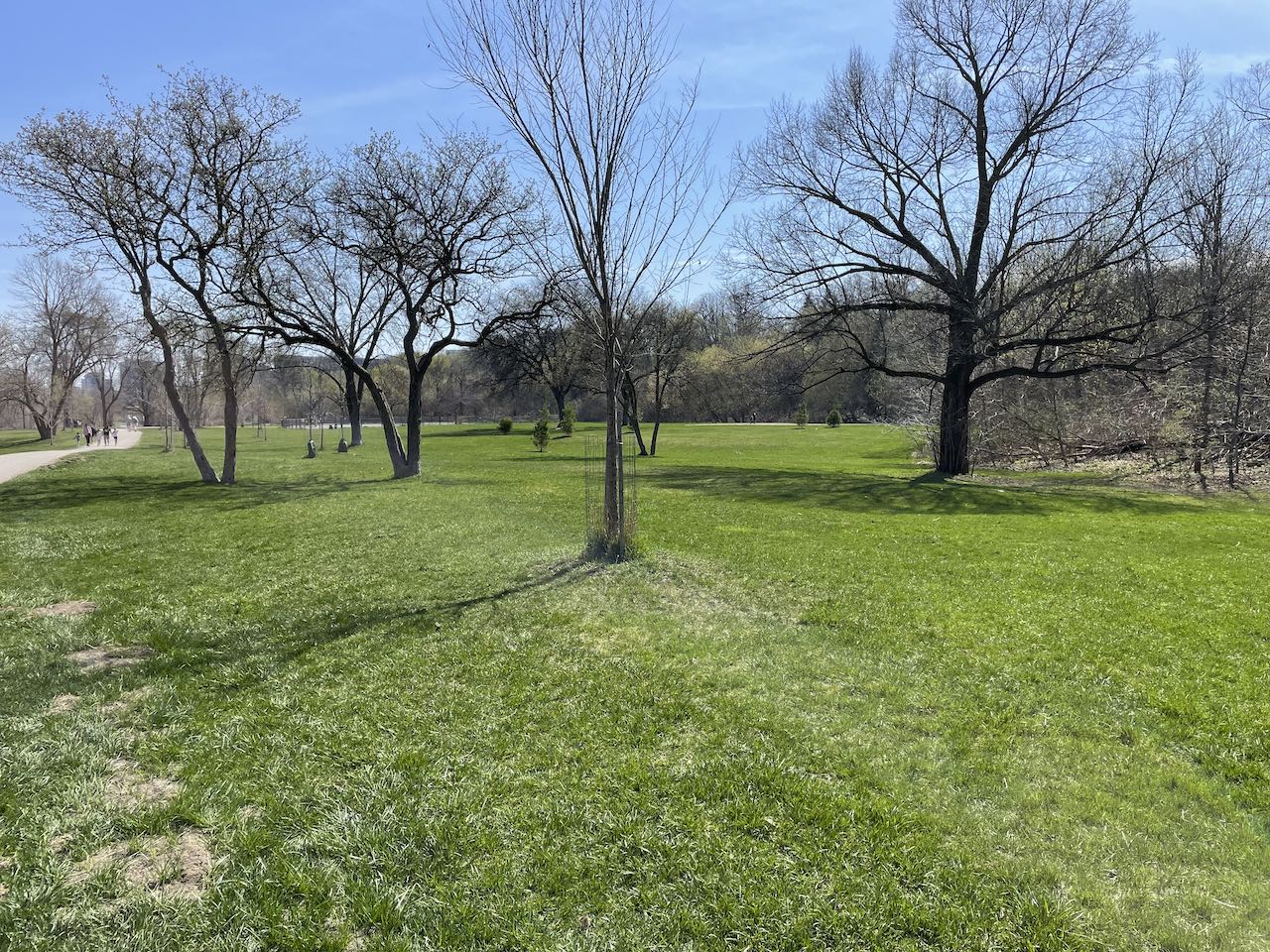
Obviously vast tracts of land will need to be planted in order to achieve the two billion target. Even so, Raymore Park stands ready to play its part – there’s lots of room at the park entrance and around the dog off-leash area (both of which could do with some shade in summer).
Looking south towards the dog off-leash area. April 16, 2023.
Whatever we do, let’s make sure we protect any new trees from our local beavers!
UPDATE, June 14, 2023:
According to Blacklock’s Reporter, the federal government was never in a position to plant billions of trees as it’s the provinces that do most of the tree planting in Canada. On June 13, 2023, Environment Commissioner Jerry DeMarco testified at the Commons natural resources committee that, “We found that given the number of trees planted so far, this program is unlikely to succeed unless significant changes are made.”
Auditor Kimberly Leach said that provinces would have to do most of the planting and that Cabinet had not signed up all provinces to do so.
According to Blacklock’s, “The program originally budgeted at $3.16 billion over ten years is now expected to cost $5.94 billion, by Budget Office estimate.”
Call me old-fashioned but I think if I had responsibility for a park or two, I might visit them once in a while.
Garbage issues continue to plague Lions Park and the reason is because there is no follow-up by anyone in charge. Phoning 311 gets someone to do something immediately but after that nobody follows through to see if the problem remains solved.
The City manages TRCA parks in Toronto. Management and garbage collection are performed by separate departments and nobody seems to talk to each other.
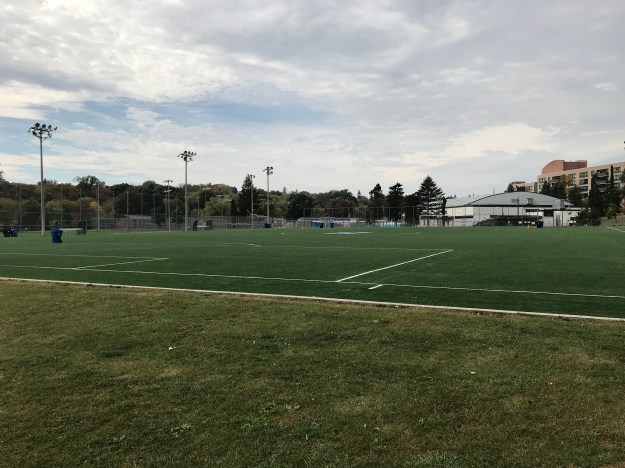
The problem remains with garbage bin placements. Because there is a soccer field, players practise using the bins as movable goalposts. Each time the problem is reported, a fix is made but it never lasts. Currently there are over a dozen bins scattered around the field but empty spots where they should be.
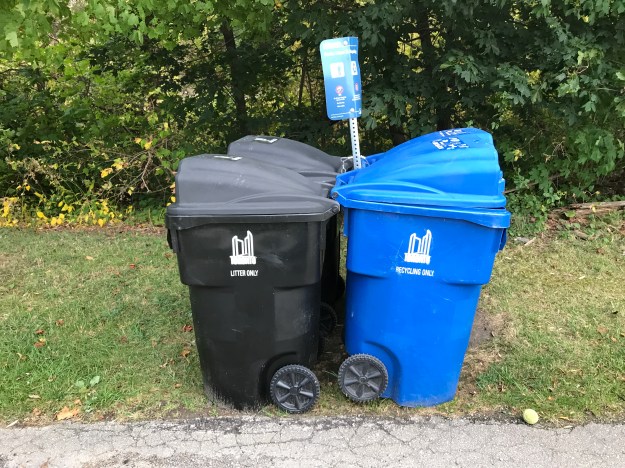
Bins galore! I count 9 on the field and 2 off.
WTF?
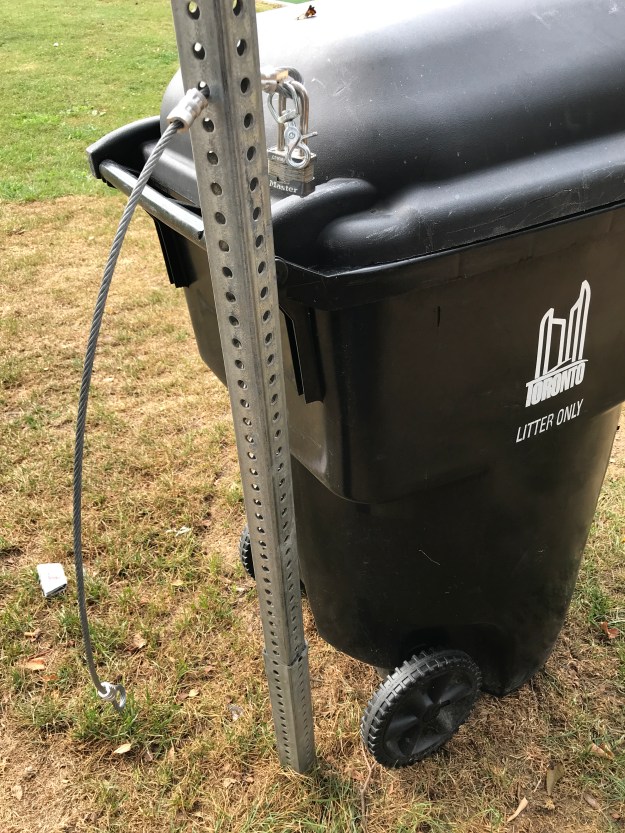
I have reminded the folks at the City that bins need to be chained to a well-secured post if they are to be useful in Lions Park. Here’s the latest response for bins at the bottom of the new steps:
Where’s the recycling bin? Post in ground – check. Padlock and cable – check.
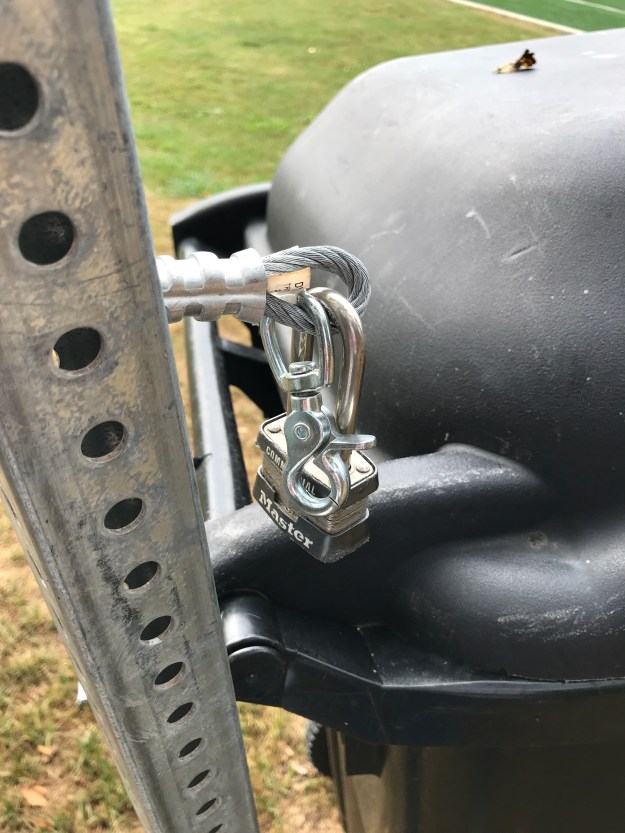
Loop cable and attach with padlock – fail.
The padlock is still locked because the people who empty the bins probably can’t be bothered to use a key and so they re-secure the bins with the quick release rather than the padlock.
I won’t bother phoning 311 – it’s a waste of time.
The weir in Raymore Park is an insurmountable barrier to all fish. It’s about 3 metres from the base to the top and that makes it the tallest weir on the Humber. Recently, an attempt is being made to revive sustainable populations of Atlantic salmon and rainbow trout and fingerlings have been released for a few years in places like Bolton and Palgrave in the hopes that they would return annually once established.
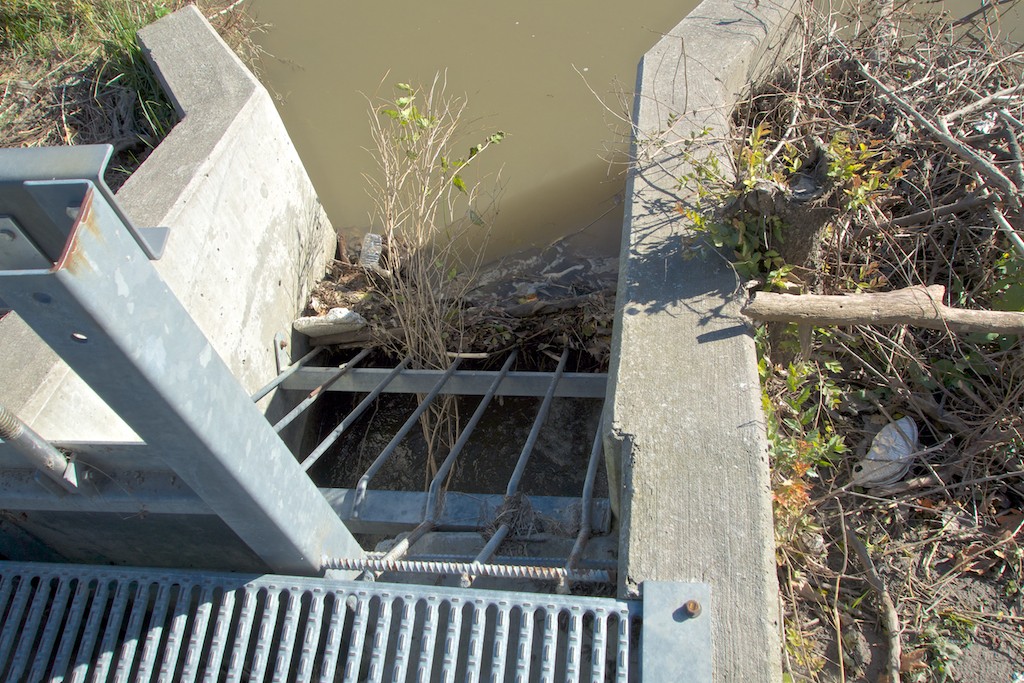
The Denil fishway at the weir was constructed with that purpose in mind. It took months to build and cost several hundred thousand dollars. Fish are able to climb the three metres by finding their way through a modified sluice that eases the climb while slowing the current. As previously mentioned, it is prone to blockages from wildlife and even floating twigs thus denying returning fish a chance to spawn where they were released. Today is no exception; the fishway is totally plugged.
We can’t even blame the beavers for this blockage.
Four or five years from now, fishing folk in Bolton and Palgrave will be wondering what happened to the salmon.
All is not lost. A study of all weirs along the Humber has been under way and soon, a TRCA report will detail what to do with the Raymore Park weir and its associated fishway. Let’s hope for a natural and unblockable solution for migrating fish.




 Friends of Raymore Park