Tag Archives: Atlantic salmon

Fishing on the Humber

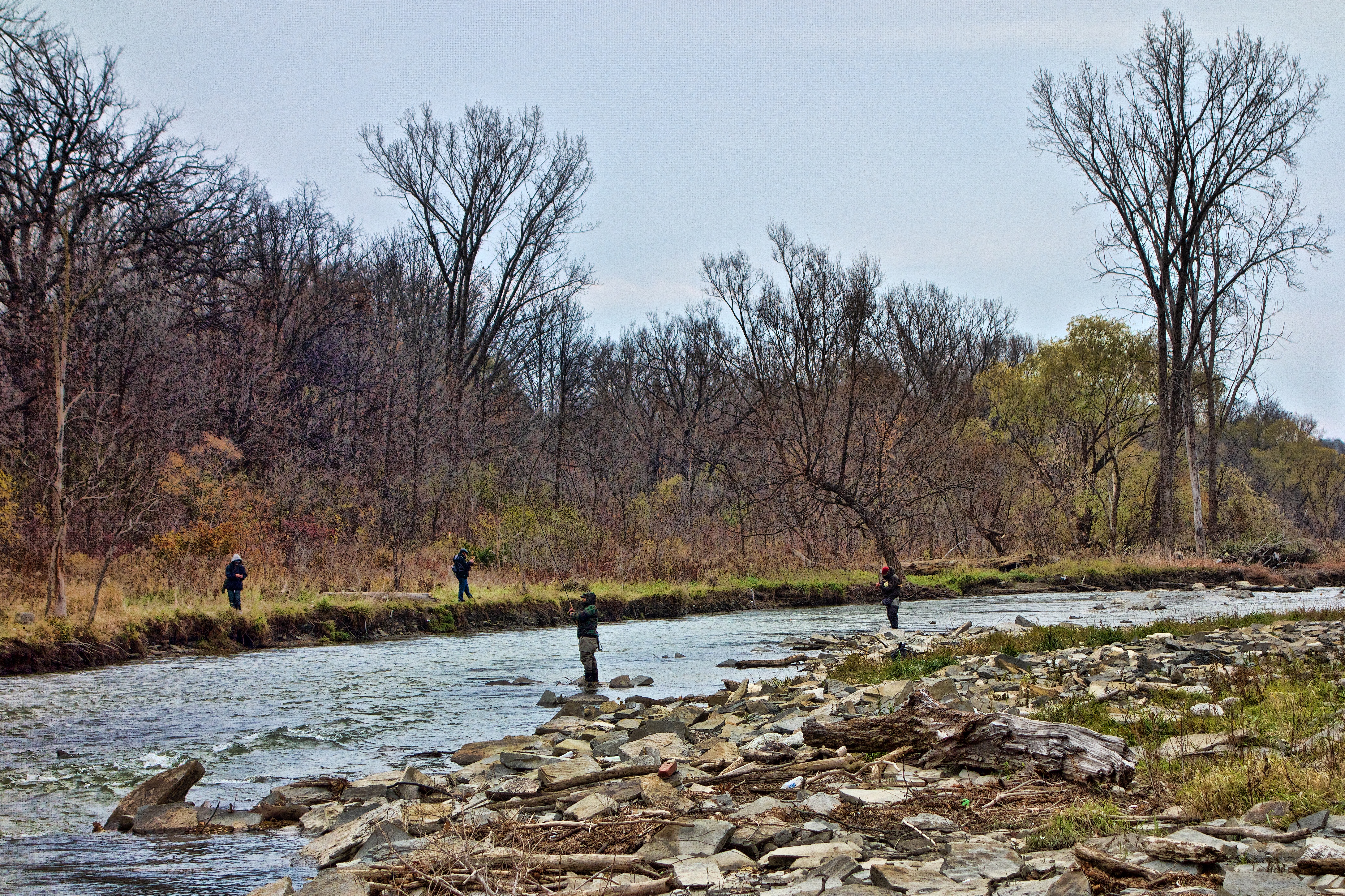
These fishermen formed a group along the Humber this weekend.

DSC03766

Click for closer view.

Contrary to common belief, migratory fish caught in the Humber are edible with no health concerns.

I was talking to a fisherman the other day and apparently the Ministry of Natural Resources is quite active along the Humber. Ministry officials go so far as to lurk in the bushes in camouflage gear waiting to charge people who fish too close to dams or use other illegal methods such as snagging or netting. Personally, it just seems like hard work for little reward, plus I’m not so keen on ending the life of such an amazing creature. There are others who catch and release but to me that’s pointless and cruel.

The downside of fish ladders.

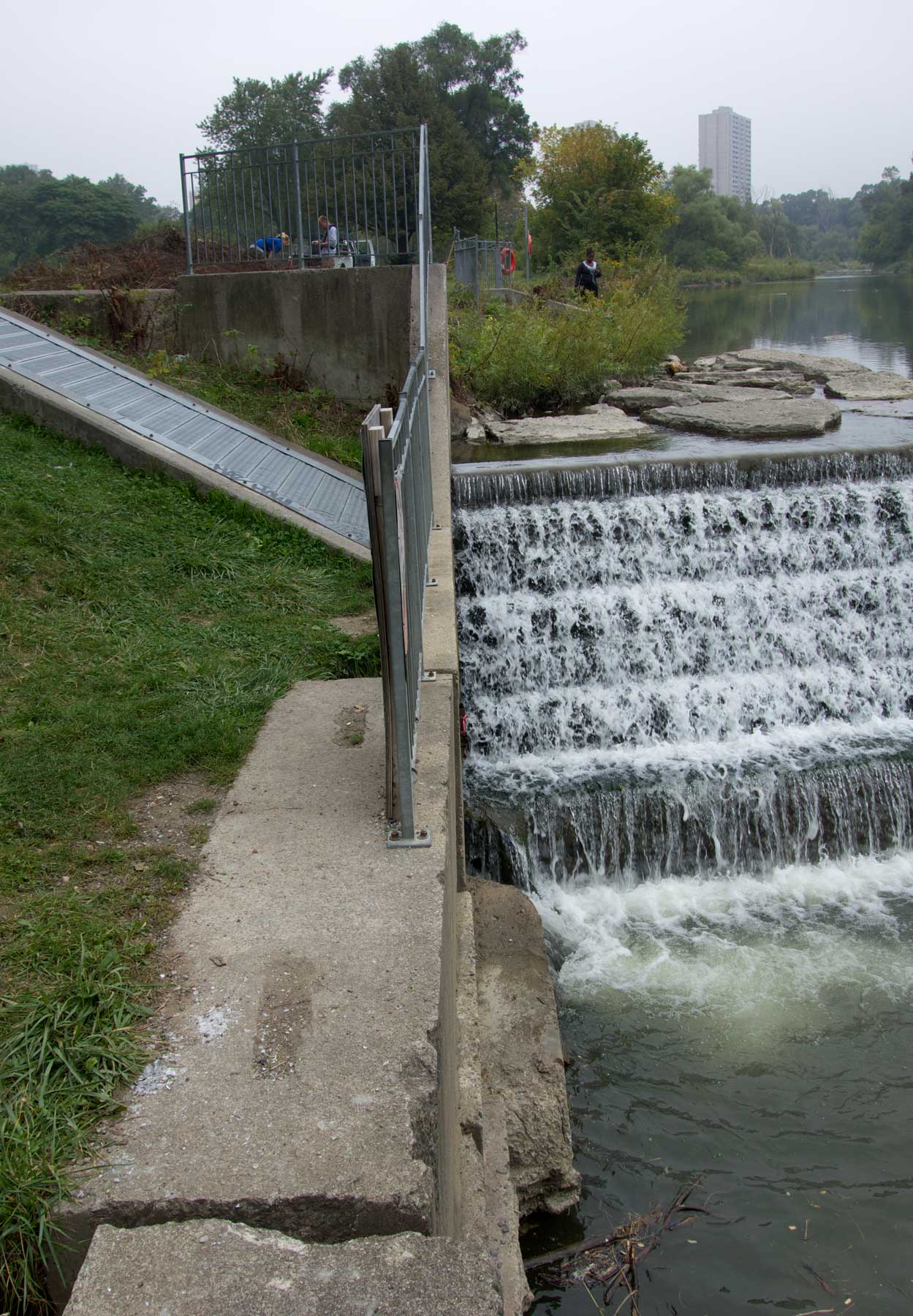
The weir in Raymore Park is an insurmountable barrier to all fish. It’s about 3 metres from the base to the top and that makes it the tallest weir on the Humber. Recently, an attempt is being made to revive sustainable populations of Atlantic salmon and rainbow trout and fingerlings have been released for a few years in places like Bolton and Palgrave in the hopes that they would return annually once established.

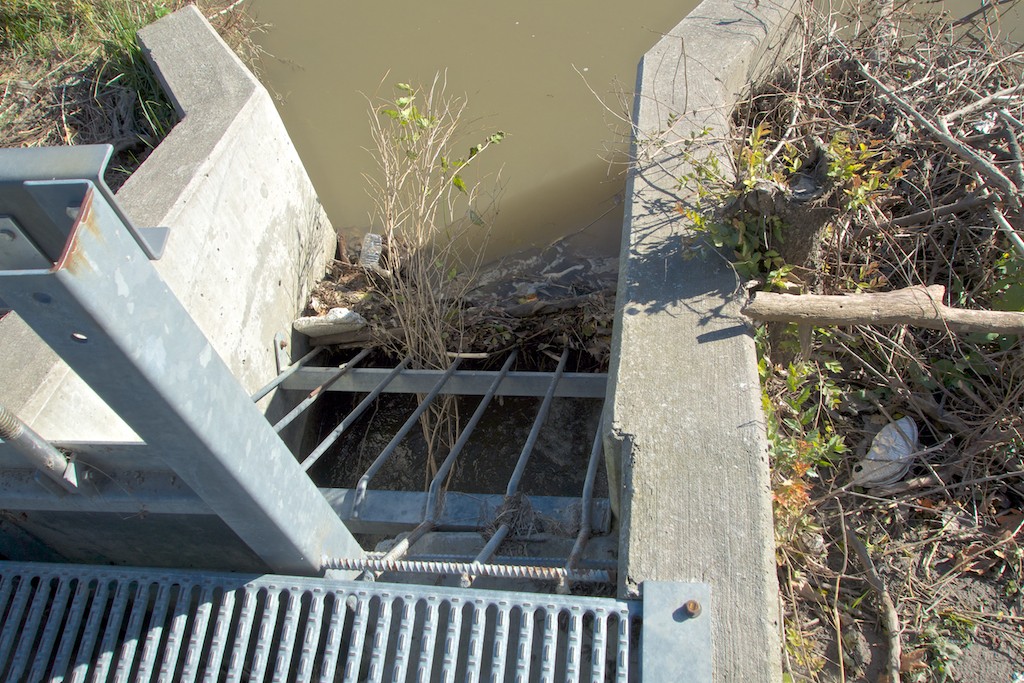
The Denil fishway at the weir was constructed with that purpose in mind. It took months to build and cost several hundred thousand dollars. Fish are able to climb the three metres by finding their way through a modified sluice that eases the climb while slowing the current. As previously mentioned, it is prone to blockages from wildlife and even floating twigs thus denying returning fish a chance to spawn where they were released. Today is no exception; the fishway is totally plugged.

We can't even blame the beavers for this one.

We can’t even blame the beavers for this blockage.

Four or five years from now, fishing folk in Bolton and Palgrave will be wondering what happened to the salmon.

All is not lost. A study of all weirs along the Humber has been under way and soon, a TRCA report will detail what to do with the Raymore Park weir and its associated fishway. Let’s hope for a natural and unblockable solution for migrating fish.

Signs of Fall: Atlantic Salmon are climbing the ladder.

Two hundred years ago, Atlantic salmon along with many other varieties of fish were plentiful in the Humber. Gradually, settlers built dams and toxic waste from sewers, factories and pulp mills was dumped into the river. The combination killed just about everything in the water and Atlantic salmon were extirpated from the Humber as a result. In 1959, the opening of the St Lawrence Seaway saw the accidental introduction of the parasitic sea lamprey which killed the rest. An ambitious program lasting several years aims to restore a self-sustaining wild Atlantic salmon population to the Humber. Each spring until 2015, salmon fry are being released all along the Humber. Most weirs along the river have been adjusted to be too high for lamprey but low enough for migrating fish.

In Raymore Park, the 3 metre weir remains an insurmountable barrier to all aquatic life and to work around that, a denil fishway, (better known as a fish ladder) was built around 13 years ago.
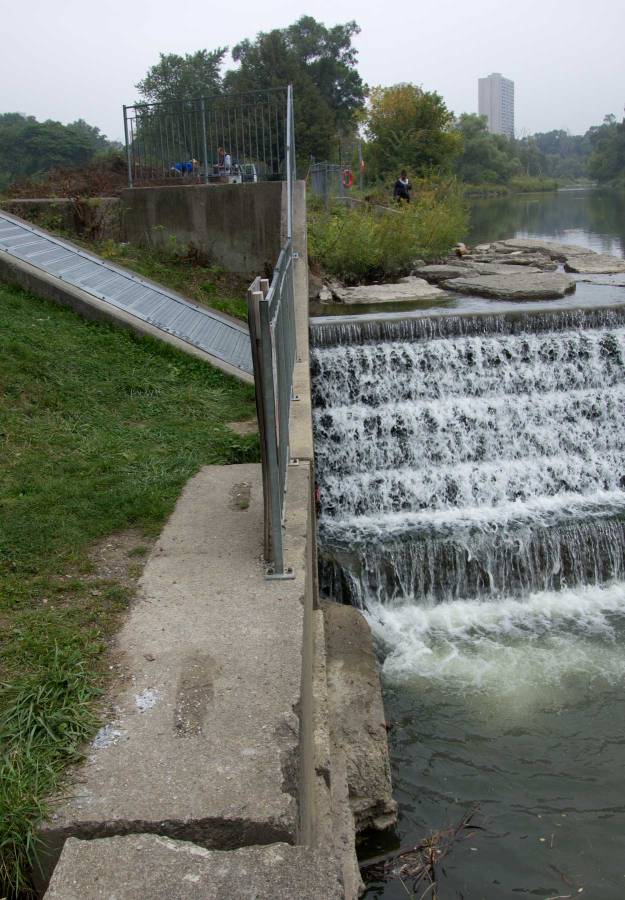
The fish ladder entrance is on the left just below the weir.

The fish ladder entrance is on the left just below the weir.

The fishway provides a gentler current and slope so that large fish can make their way up the ‘ladder’ with rest stops along the way. Unfortunately, beavers stuff the fishway with wooden debris in the hopes of creating a dam. Needless to say, the blockages need to be cleared several times a year so that fish can migrate to their spawning grounds.

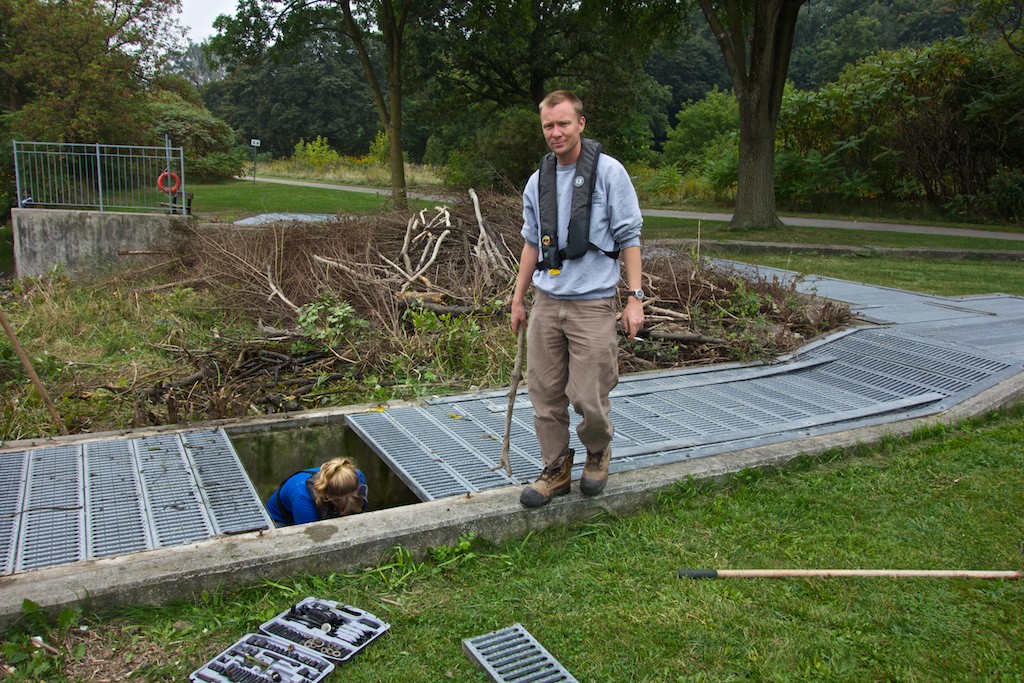
On Friday, two workers were clearing the way for the salmon and told me that when water levels rise (as they did on Saturday), these large Lake Ontario fish will be able to access and use the ladder. From there they will swim upstream to their birthplace, spawn and return to the lake – assuming they can run the gauntlet of people out to get them.
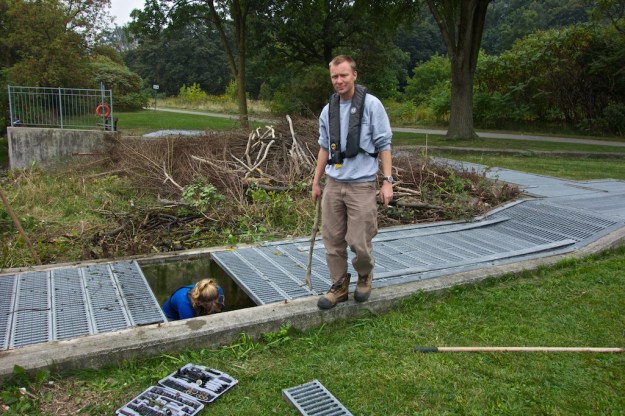
TRCA workers clear the top of the fishway.

Toronto and Region Conservation Authority workers clear the top of the fishway.

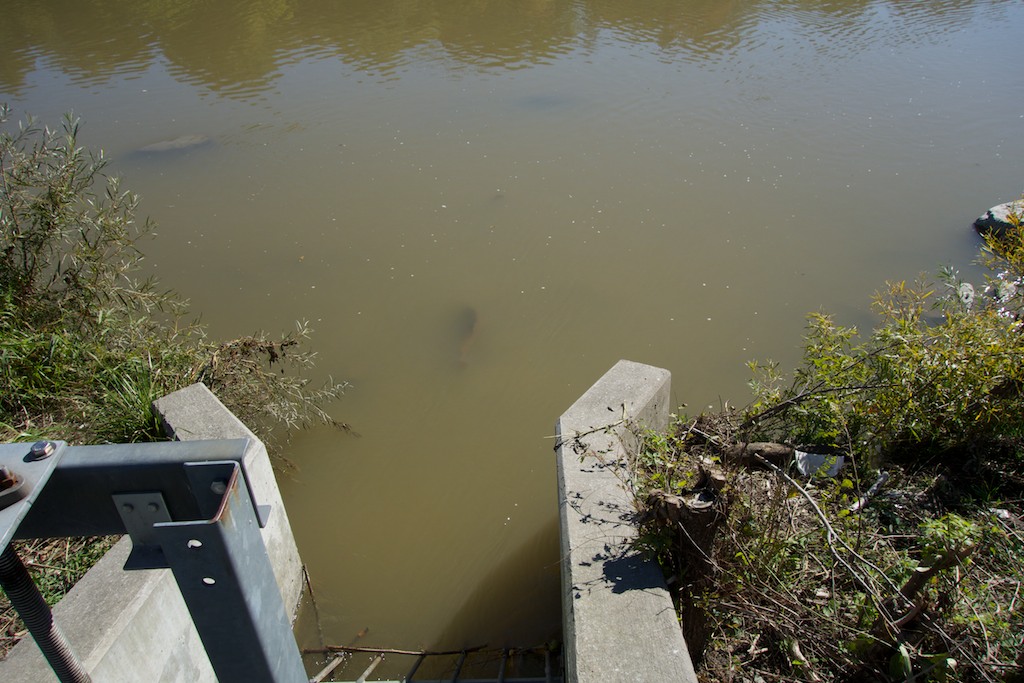
Since the ladder was built I have watched in vain for a fish to appear at the exit. Today, (Tuesday September 24th) I had a premonition and with the camera ready, just like that, a fish emerged. The water was a little murky and I was a little late but here’s the evidence; the ladder works.
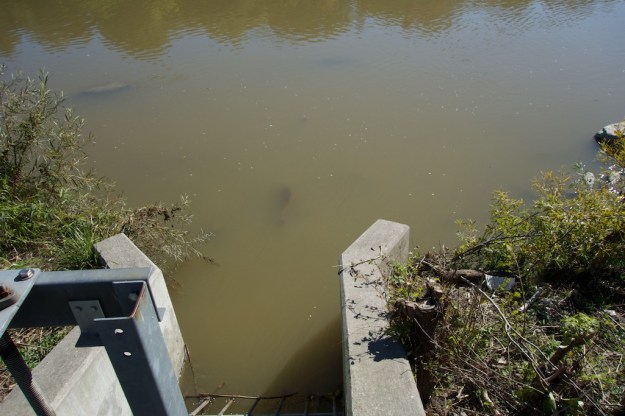
The salmon continues its journey up the river.

The salmon (middle top of photo) continues its journey up the river.

In spite of their impressive size, salmon will soon be seen along the Humber as far upstream as Bolton and Palgrave.

For its part, the TRCA is studying the further removal of obstacles to fish migration along the Humber and the weir in Raymore Park is the highest. Lowering and notching of the weir will allow the fish to leap upstream the old-fashioned and low-tech way. This will end the high maintenance costs of the fishway and finally allow the beavers to block it to their hearts’ content.
Transition time.

Raymore Park is at the exact latitude of Florence in Italy. Despite this, our climate is about 12°C (22°F) colder in winter because Florence has the Alps blocking the path of arctic weather. Our closest mountains of influence (the Rockies) usually block mild westerlies from the Pacific, leaving us vulnerable to cold northerly winds in winter. Although the Great Lakes provide a moderating influence, ours is a continental climate with short transitions between seasons. Land warms and cools quickly and seasons tend to advance (and retreat) without too much fanfare.

Wildlife is poised to return in force. Many animals are already on their way through migration. Monarch butterflies for example have already begun the trek from Mexico, each generation moving north as conditions permit. Billions of creatures in the park will spring to life from the seeds and eggs left behind by their ancestors, killed in the mass extinction that occurs every Fall. Atlantic salmon are preparing to spawn, triggered by rising water temperatures. Geese and other water birds are pairing up and aimlessly mooching around the river like teenagers in a shopping mall while plants are awaiting the signal that tells them it’s safe to emerge.

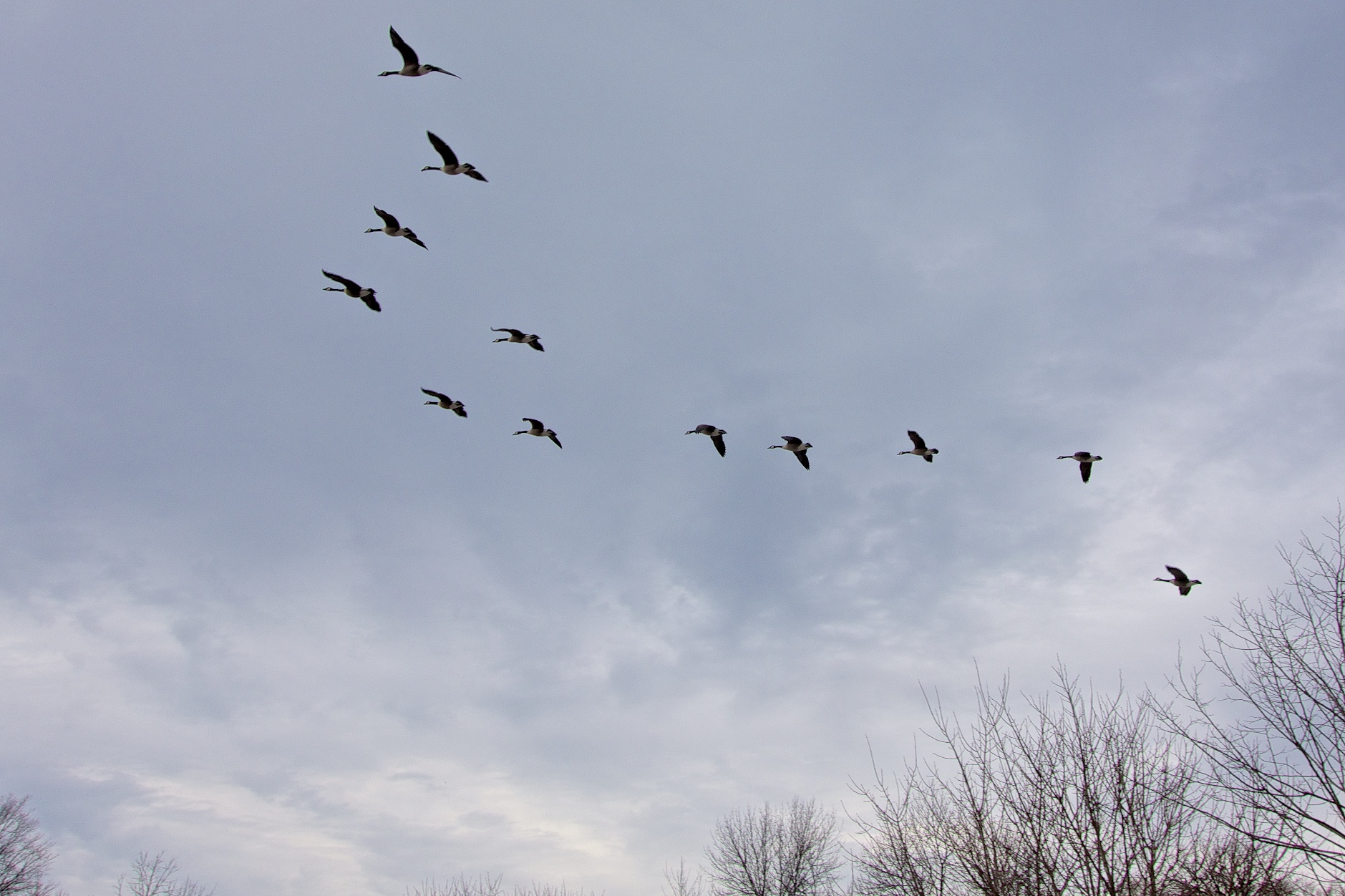
Mooching geese.

Mooching geese under a leaden sky.

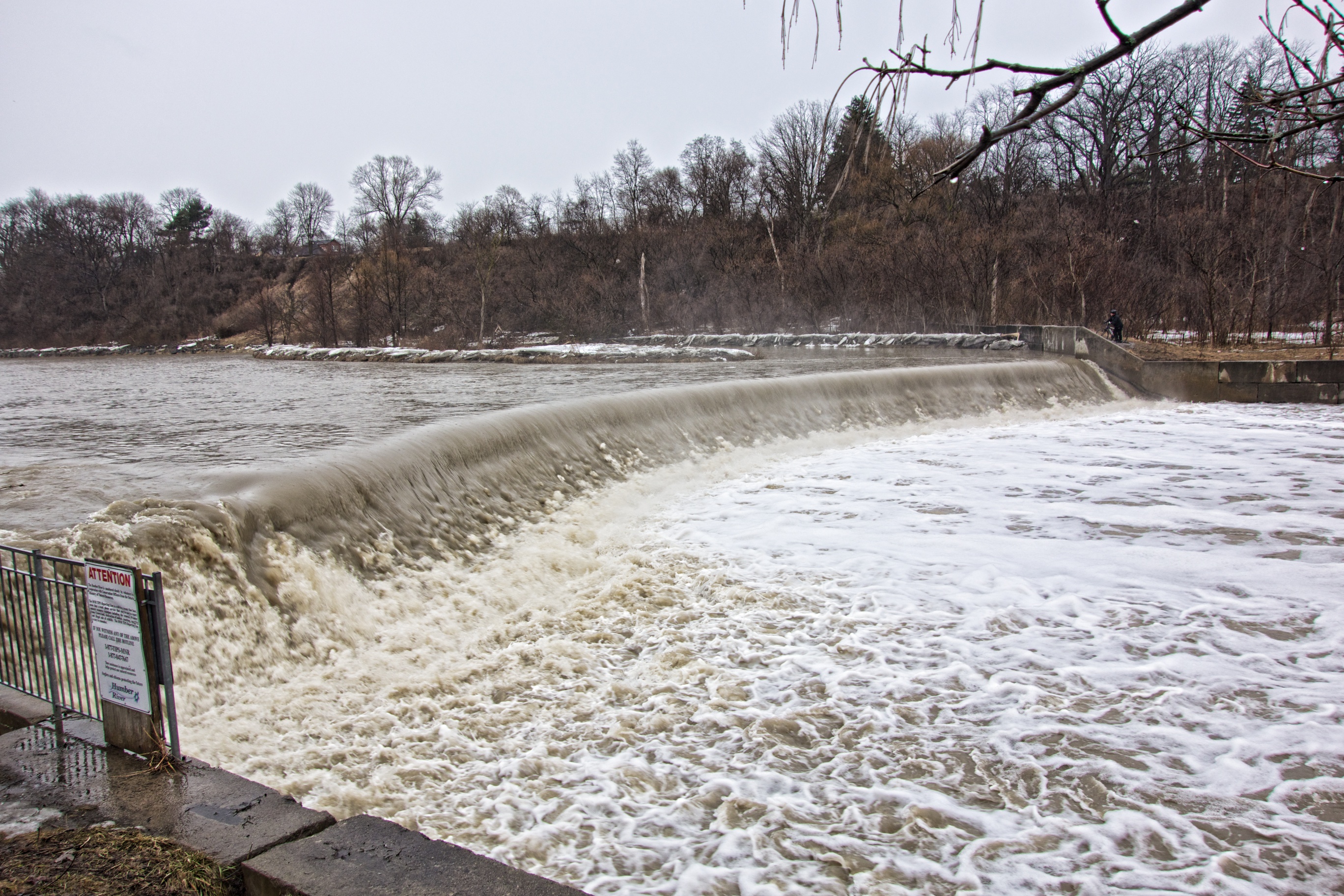
Huge amounts of sediment laden water are draining off the land from tributaries all along the Humber. The ground is fully saturated ready to nourish plants when they start growing.

Huge amounts of water drain into the Lower Humber.

Huge amounts of water are draining into the Lower Humber.

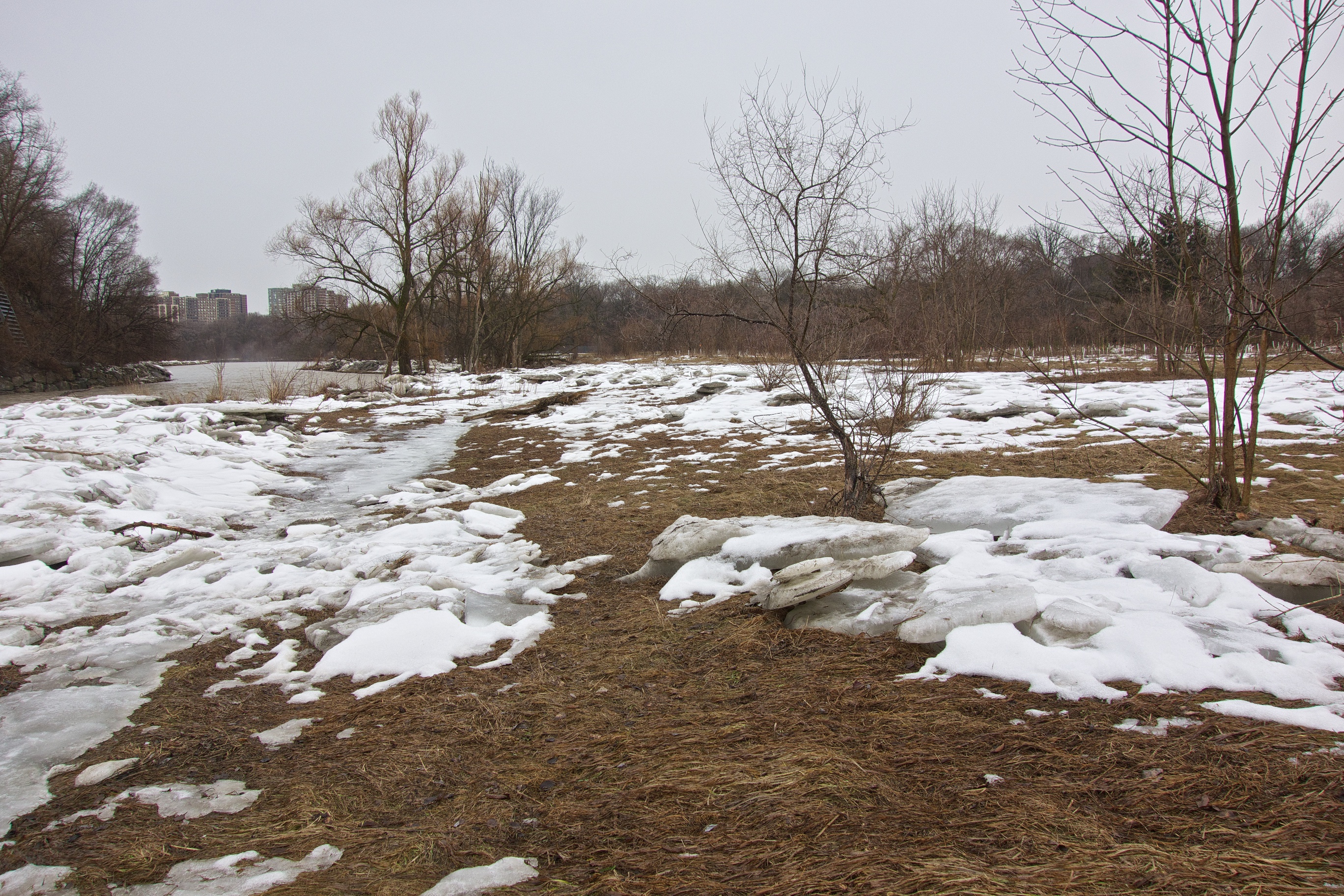
The land is saturated.

The land is saturated as snow and ice melt.

For now though, it’s quiet.