Category Archives: Dogs

Off-Leash Area, six years later.

The Raymore Park dog off-leash area (DOLA) was opened with some fanfare by Premier Doug Ford’s nephew six years ago. Its design followed standard Toronto Parks and Forestry protocols, namely removal of vegetation and topsoil then replacement with pea-gravel and fenced with rustic poles and rails backed up by a wire containment fence. The aim was to provide an off-leash area where dogs could exercise and socialize safely. The idea, sold at a community presentation was that the DOLA would be used mainly by local residents and that any extra traffic would be minimal.
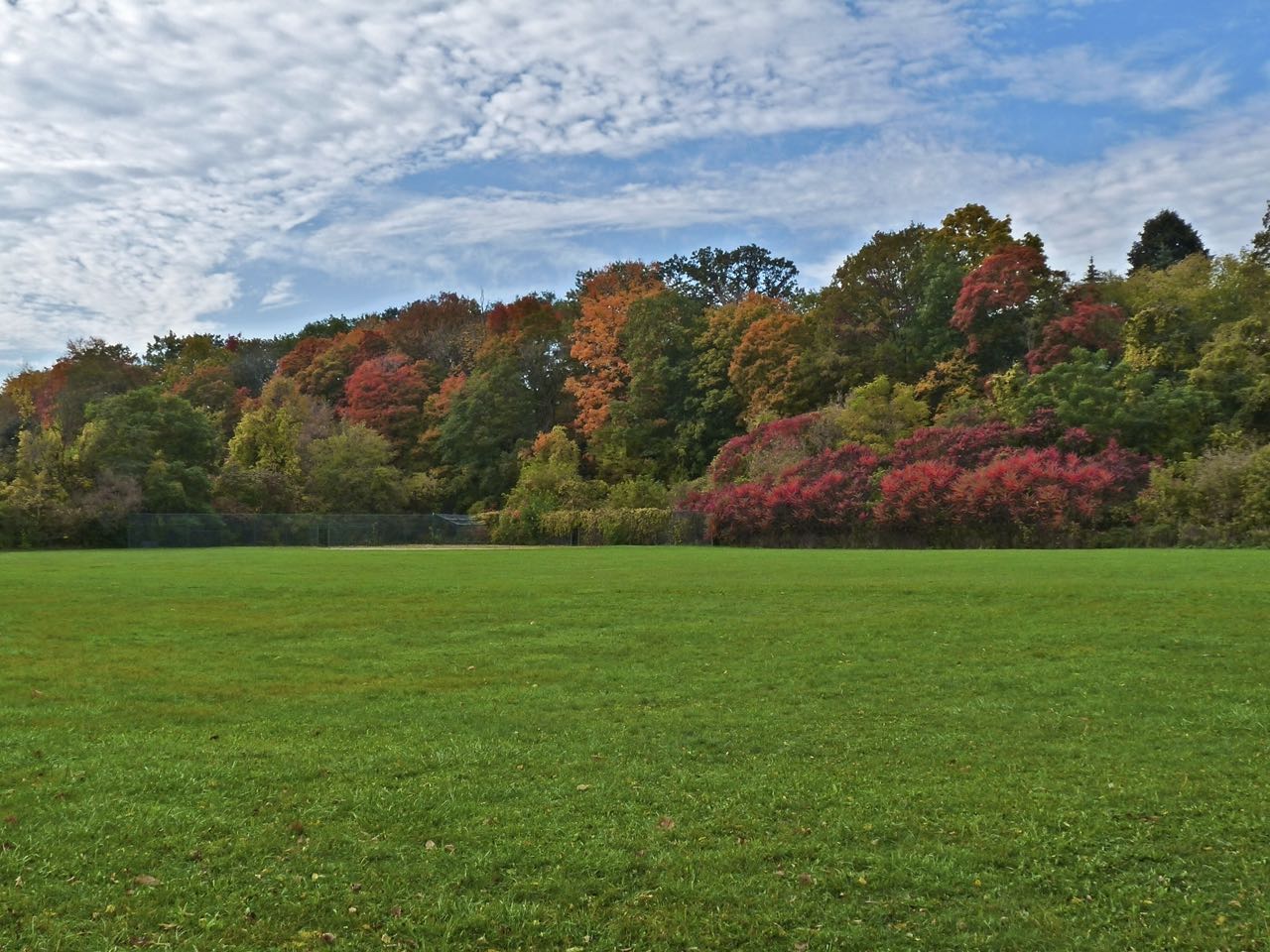
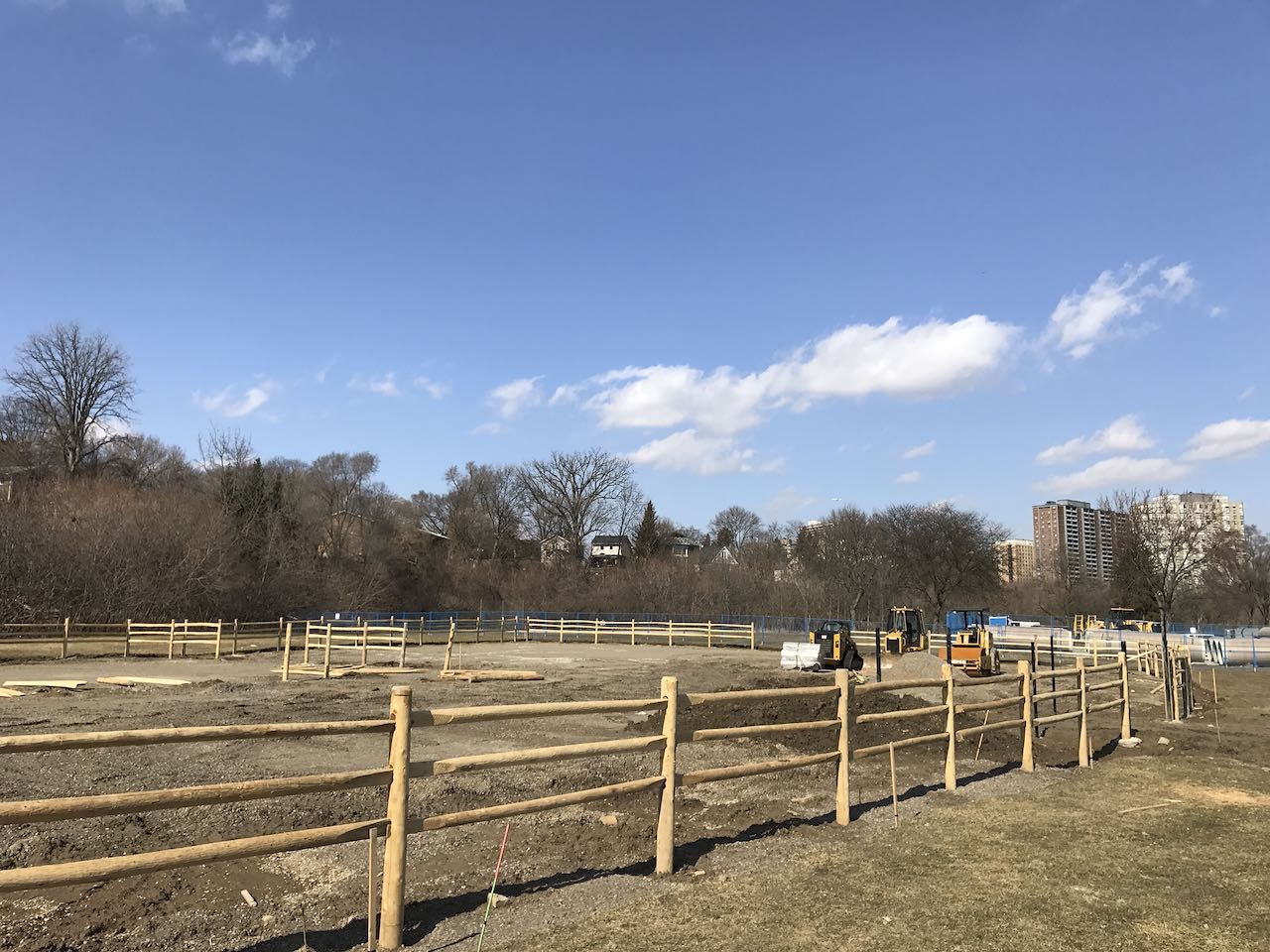
The site of the present-day DOLA back in October 2008 looking south-west..
The DOLA under construction in February 2017 looking north-west.
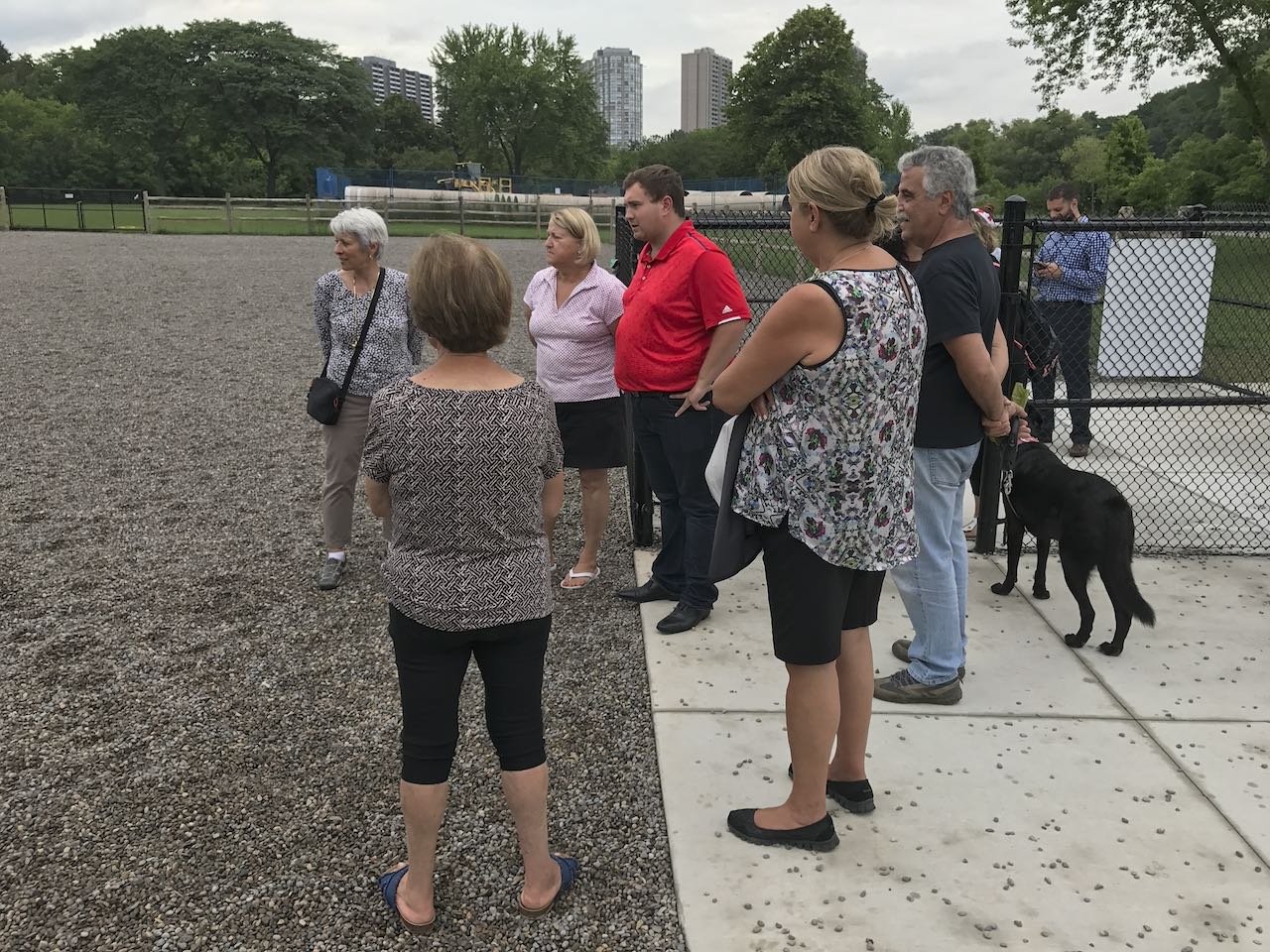
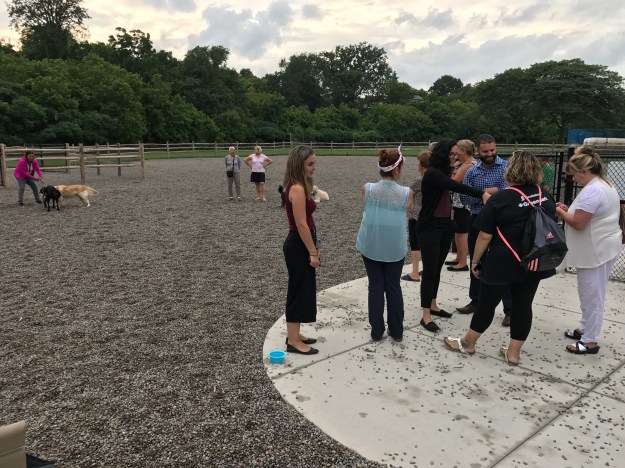
Then councillor (red top) Mike Ford at the opening ceremony on July 10, 2017.

The DOLA was built with several design flaws.

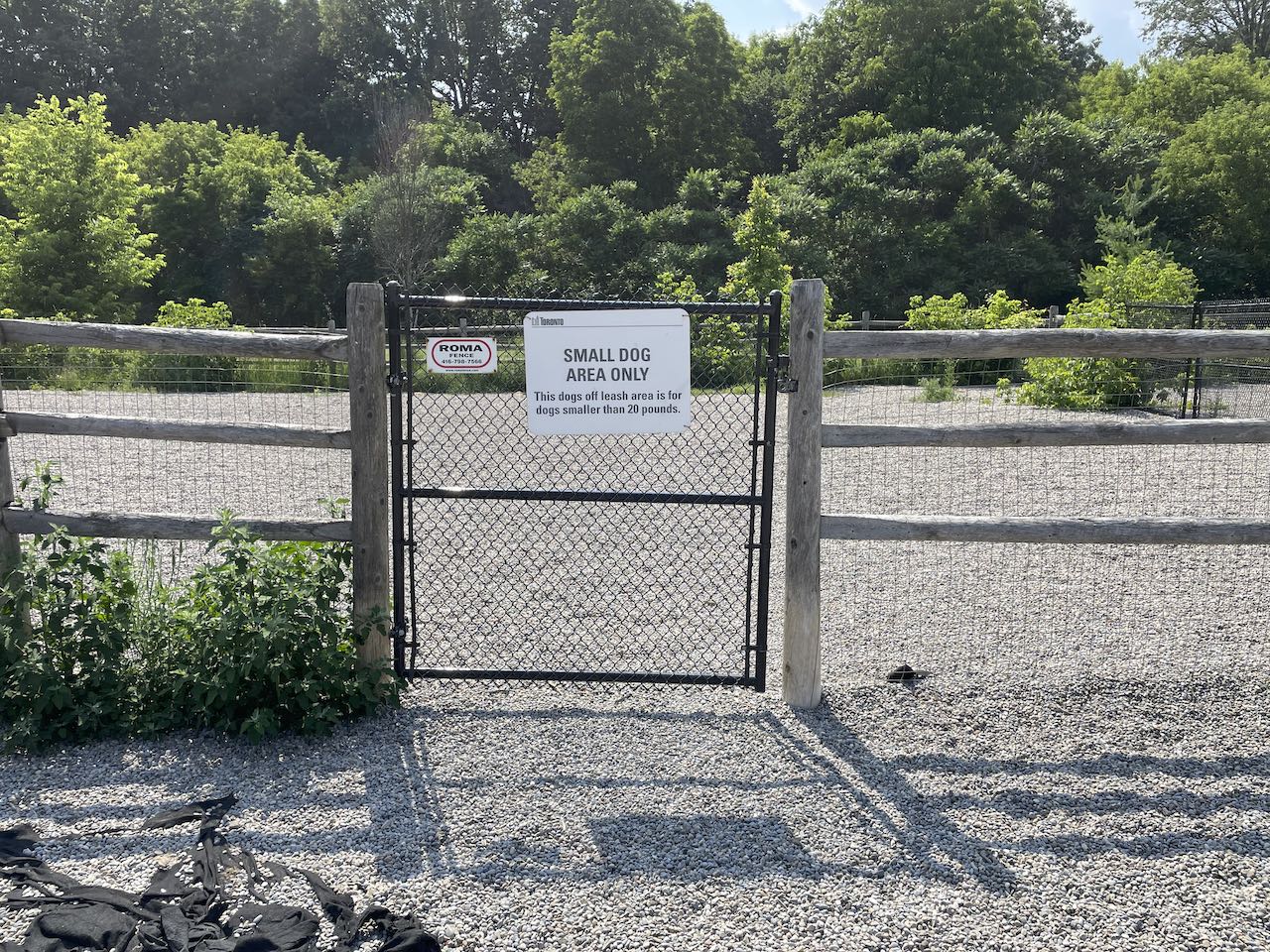
1. The small dog enclosure is only accessible by passing through the large dog enclosure.
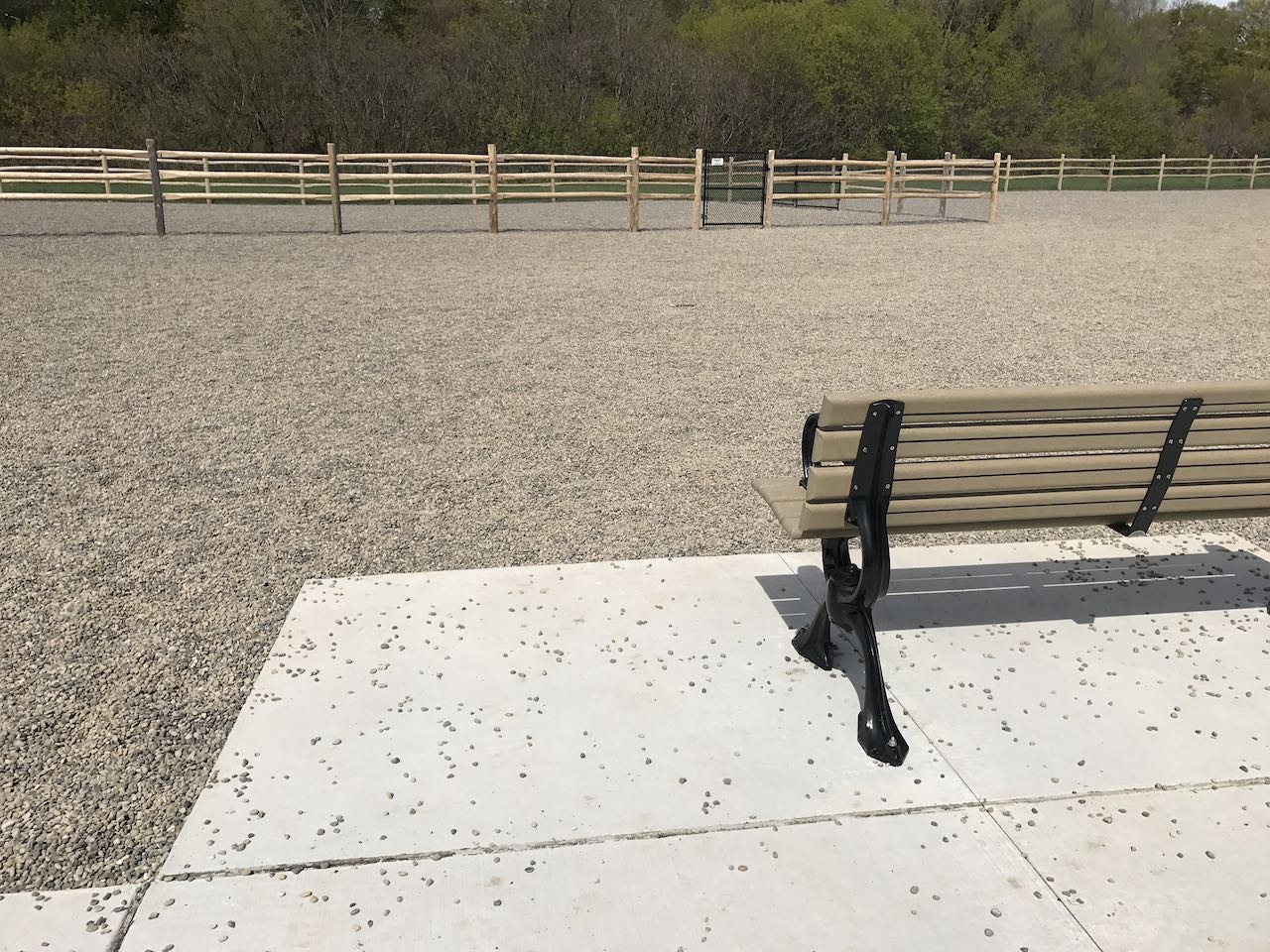
Small dogs must run the gauntlet to get to their enclosure. July 2017.
The small dog area with landscape fabric in the foreground. July 2023.

2. The pea gravel surface irritates dog paws making exercise out of the question for most.

3. No shade for dogs and owners. A few trees have been planted but these will take many years to mature.
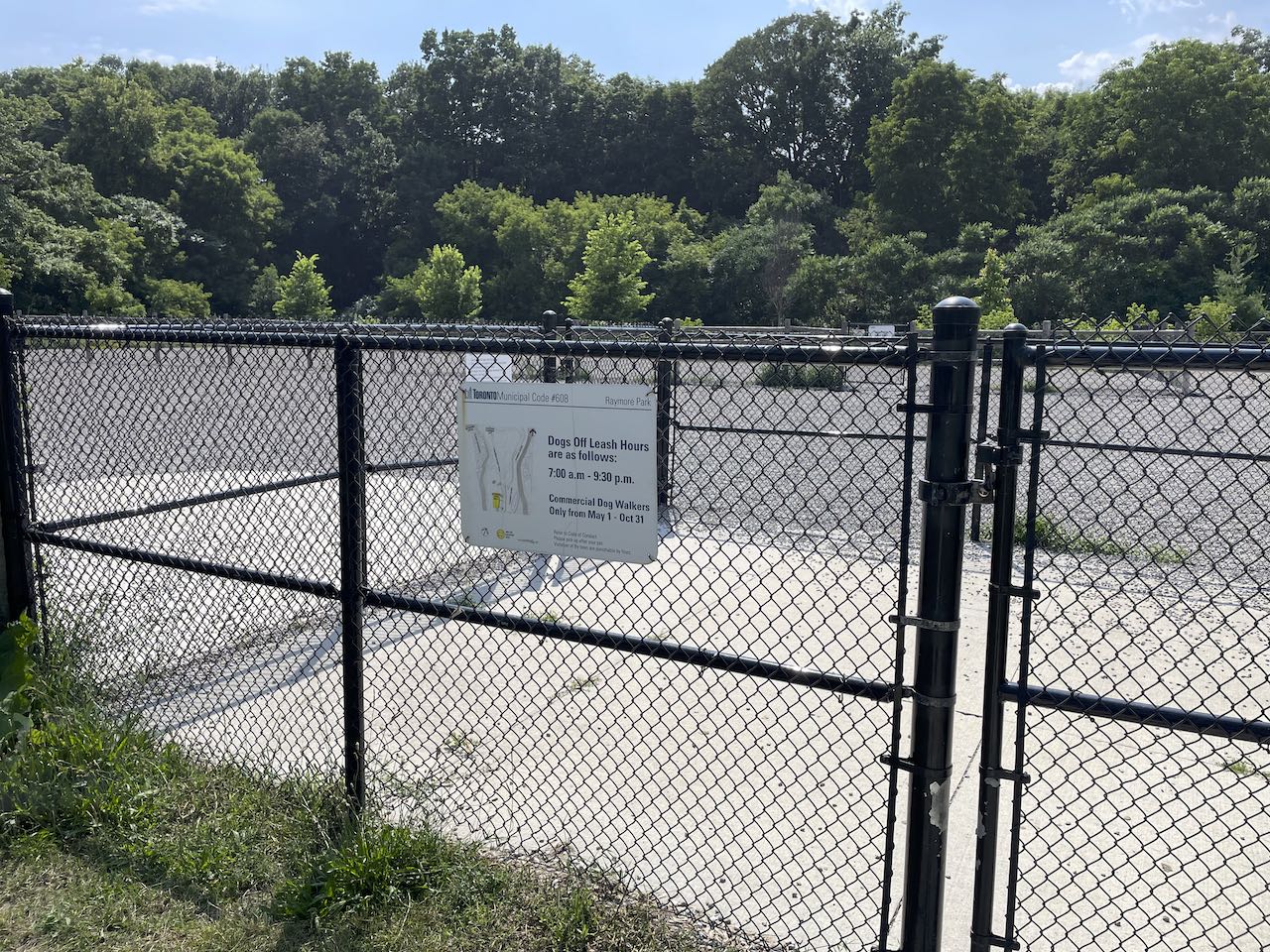
Some trees have been planted but no shade – and harsh pea gravel. July 2023.

4. The space is totally alienated from nature and looks more like a cattle feedlot.
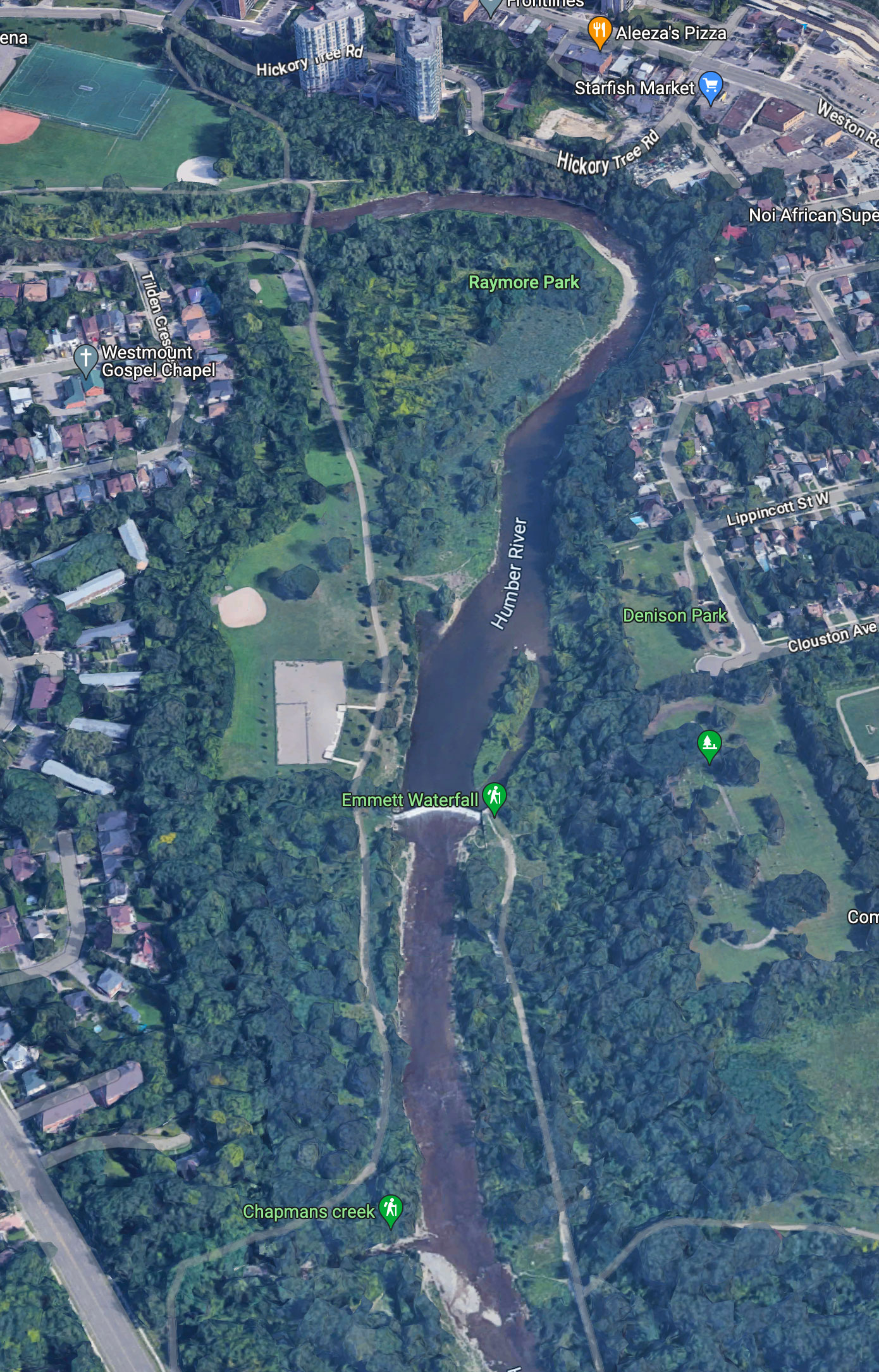
The DOLA and remaining (unused) baseball diamond just north of Emmet Waterfall. Google Maps.

A few observations:

  1. The DOLA is empty most of the day.
  2. The DOLA is popular with commercial dog walkers but a majority of individual owners seem to prefer other parts of Raymore park.
  3. Commercial dog walkers are banned from November through May but many of them use the park year-round.
  4. Compared to the rest of the park, the off-leash section is a barren wasteland.
  5. Thanks to pea gravel making running uncomfortable, dogs get little exercise.
  6. Many people ignore leash by-laws in the park.
  7. The DOLA has done little to protect park wildlife from off-leash dogs.
  8. By-law enforcement seems to have disappeared since Covid.
  9. The DOLA seems to have been a huge waste of money and resources.

Overall Grade: D-

Public Consultation:

A Toronto-wide consultation process was begun in June 2019 to gather feedback on how to improve DOLA design with stakeholder meetings and public surveys. The effort seems to have ground to a halt during Covid as there are no updates beyond this one in 2020.

My two cents: The DOLA should never have been built as there was no demand for it – especially for one so flawed. Far better, cheaper and less disruptive, to have allowed the huge open space between the two unused baseball diamonds to be planted with native trees and create a woodland / wildlife corridor that would join with the one south of the weir.
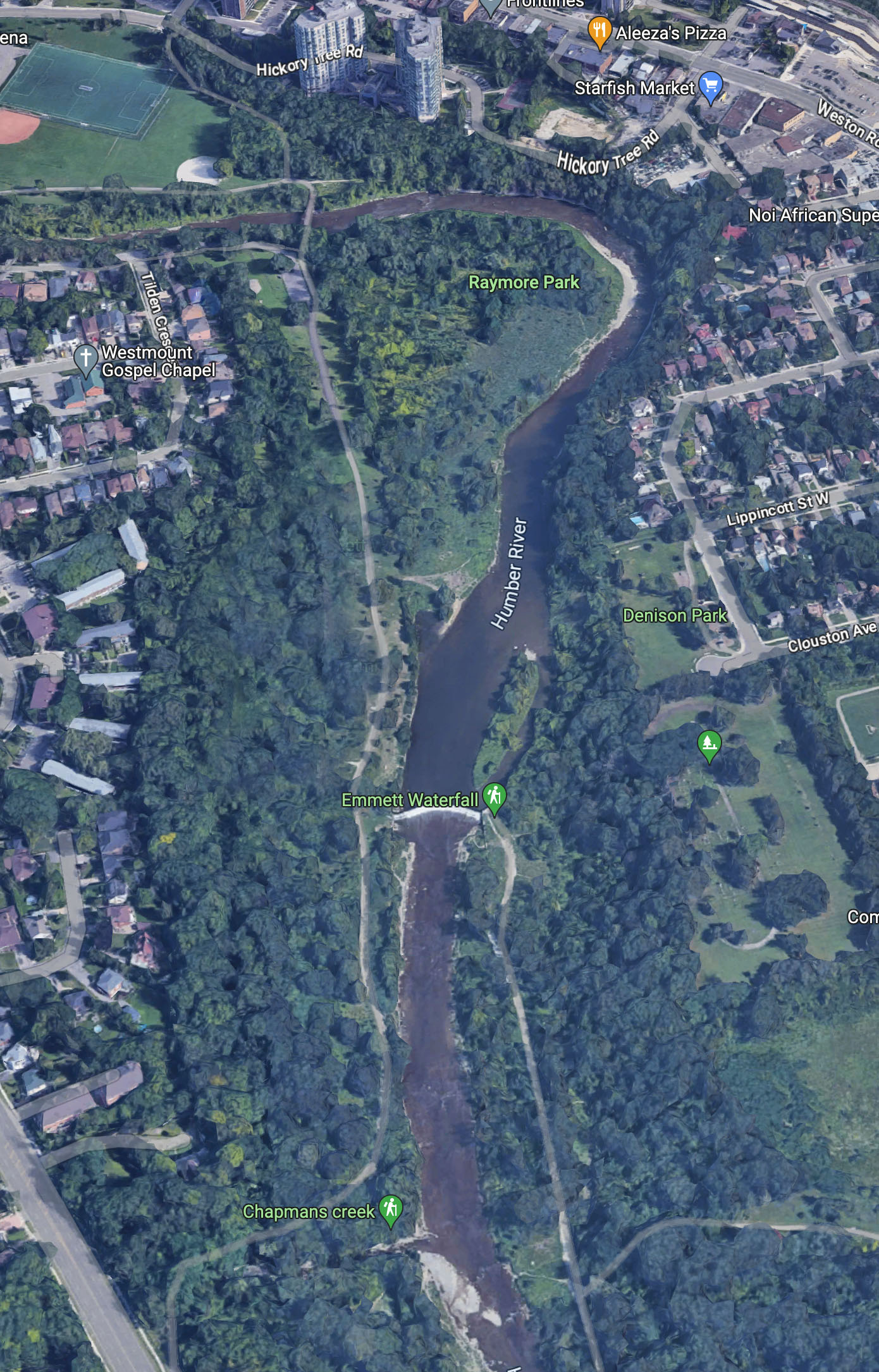
What might have been – extending the woods north beyond the falls to form a wildlife corridor. Google Maps.

Extra Credit: Read Maria Kwok’s thorough review of Raymore Park’s DOLA here.

Bike Path in bad shape.

Back when Mugsey was alive, I was walking with a fellow dog-walking friend when she slipped on ice that had formed in a bike path depression south of the weir. A thin layer of snow had concealed the ice lurking beneath and down she went, breaking an arm.

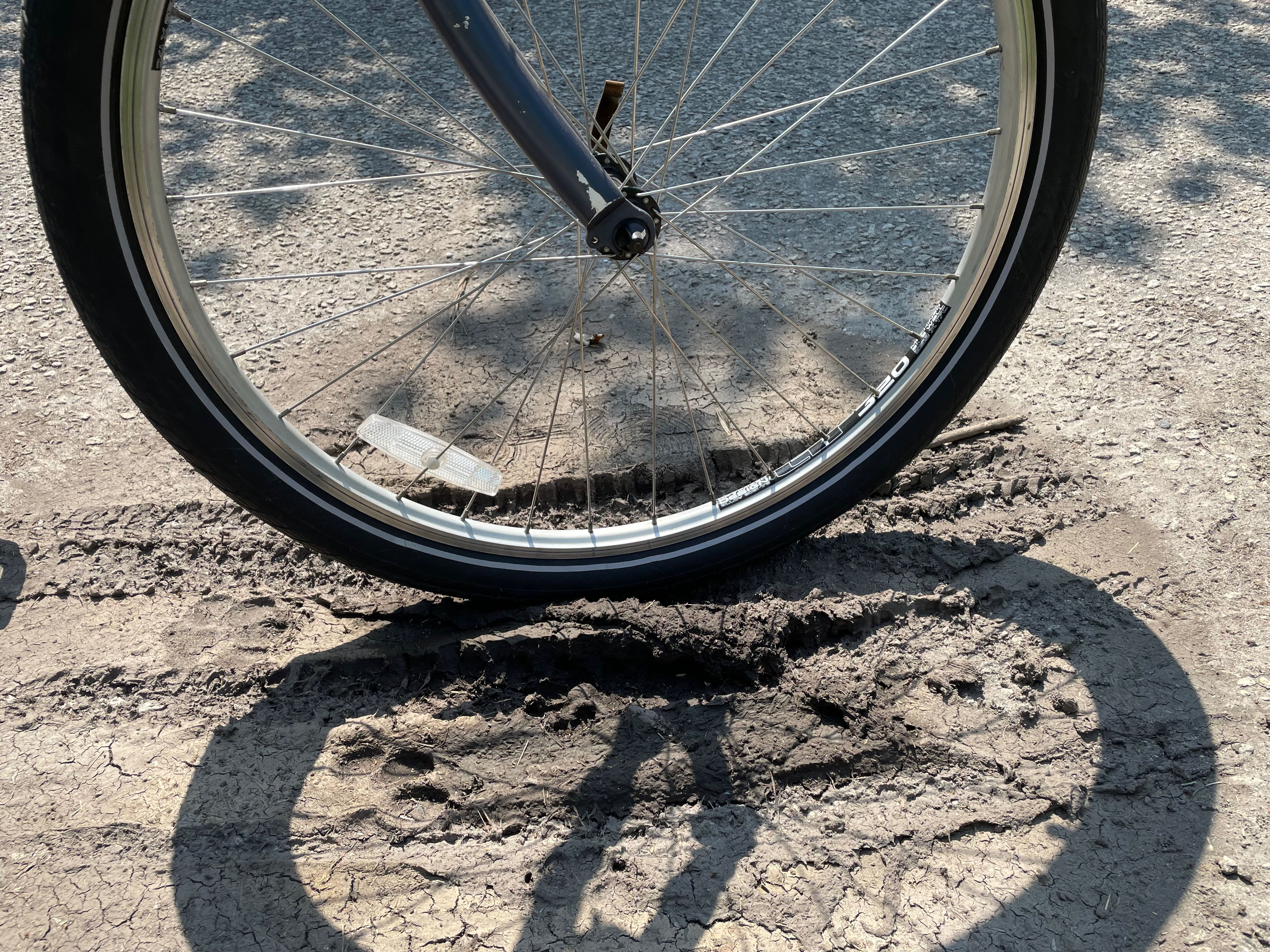
This was around 2011. The depression is still there along with several others. Some of them are quite deep and could cause a serious accident if a cyclist was caught unawares.

This one is filled with mud. July 2023.

The bike path is in need of levelling and repaving to today’s standards but for some reason, it’s not been a priority.

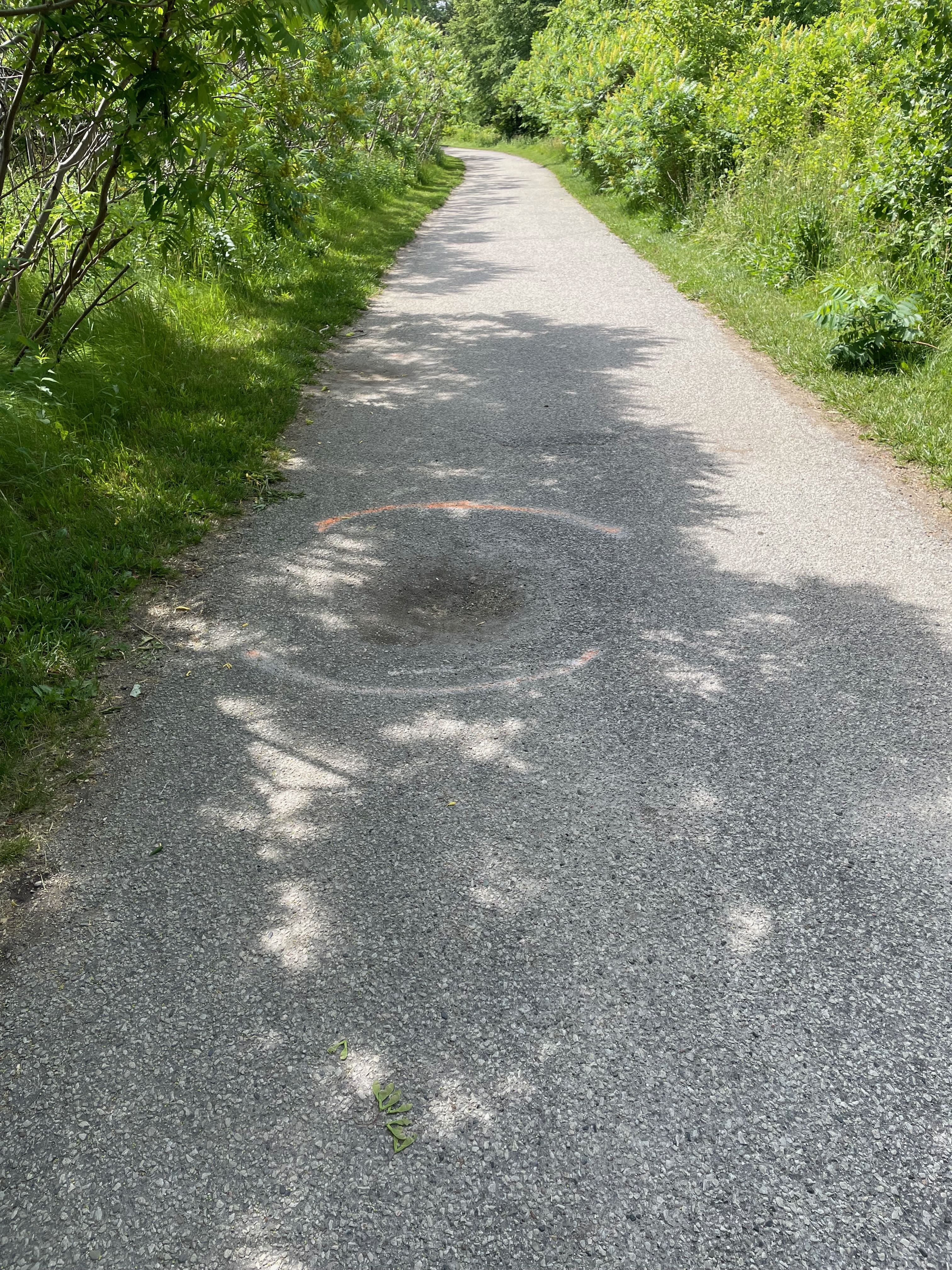
The photo doesn’t do the depth of the depression justice. June 2023.

Someone has helpfully used spray paint to outline the depression (and a few others in the vicinity) but nothing has been done since 2011. Maybe if Toronto is serious about creating a network of bike lanes around our city, these dangerous depressions can either be repaired or the bike path repaved and brought up to standard.

Raymore Park: changes over the years – Part 2.

Read Part 1 here.
This year marks 30 years since I started coming to Raymore Park. During that time many changes have occurred, most of them reflecting adjustments in park philosophy and management.

4. Areas under grass.

After Hurricane Hazel hit the Humber Valley in 1954, it was decided that flood plain and ravine land should be cleared of settlement to avoid further loss of life. Residents of Raymore Drive and Gilhaven Drive who survived were compensated for the purchase of their homes or lots. Gilhaven drive was approximately where the parking lot is today. Lands were then made part of what is now the Toronto and Region Conservation Authority (TRCA) and homes were bulldozed to create wide expanses of grass. Slowly, thanks to diminishing budgets, some grassed areas have been allowed to naturalize and sumac bushes have advanced, allowing trees to spring up in their midst. Currently, there is no grass cutting south of the weir apart from a strip on either side of the bike path.

Looking south towards the weir. Lots of grass with some recent tree plantings.

5. Dogs.

Raymore has been a popular park for local dog owners for decades. When the condos at Hickory Tree opened, residents were allowed to keep dogs and used Raymore Park once the footbridge opened in 1995. The wild area was popular and a path was carved out by dogs and their owners as they followed the Humber through the bush.

In 2017, an area near one of the baseball diamonds was converted into a dog off-leash area (DOLA). The ground was fitted with weeping tile to improve drainage, bulldozed and covered with the aptly named pea gravel. It was then fenced off from the rest of the park. The pea gravel is supposed to allow for better drainage but many owners say that it makes their dogs’ paws uncomfortable.

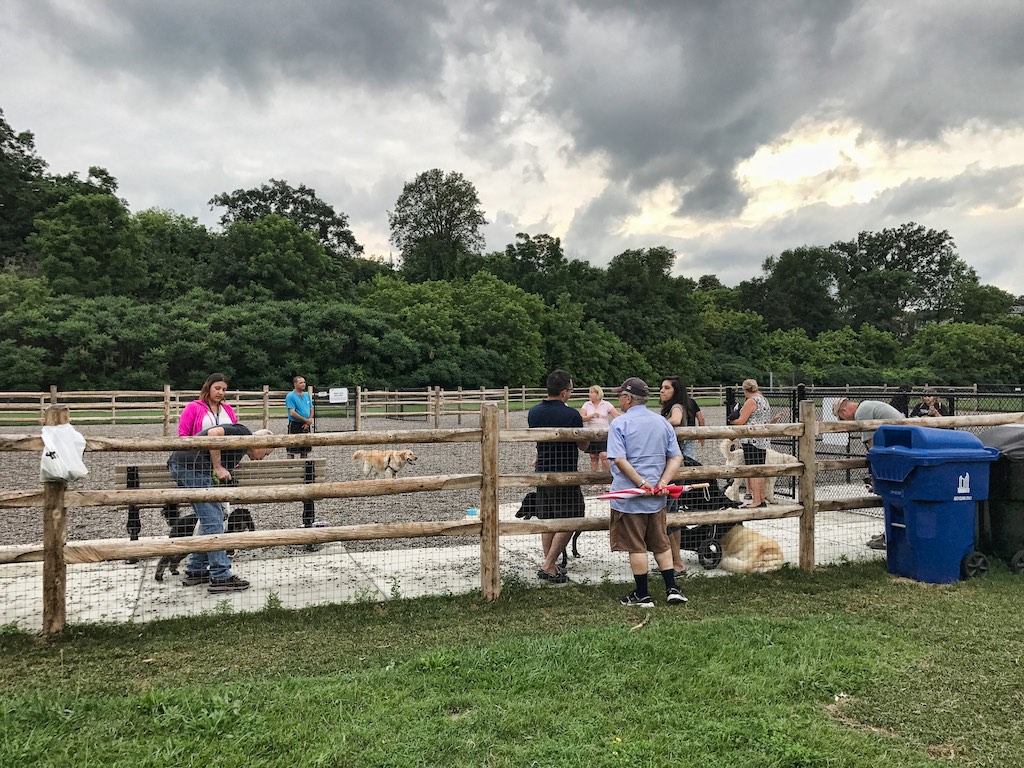
Residents and their dogs gather Monday, July 10 2017 for the official Raymore Park DOLA opening.

The DOLA took a few years to become popular but is now widely used and is popular with professional dog walkers who can be seen with up to six dogs at a time.

Some owners avoid the DOLA, instead preferring to allow their dogs to run free in places like the wild area. They play a cat and mouse game with city by-law enforcement officers and occasionally have encounters with wildlife that are unfortunate.

Parks are for everyone.

Most Toronto parks on a weekend are filled with people enjoying themselves. To paraphrase an old saying, Parks are the lungs of the city and a natural setting with trees and grass provides cleaner and fresher air along with a chance to relax.

There are parks that are ideal for picnics while others provide tranquility and a natural setting. Some Toronto parks have bathrooms and built in barbecue stands while others, like Raymore Park are more natural.

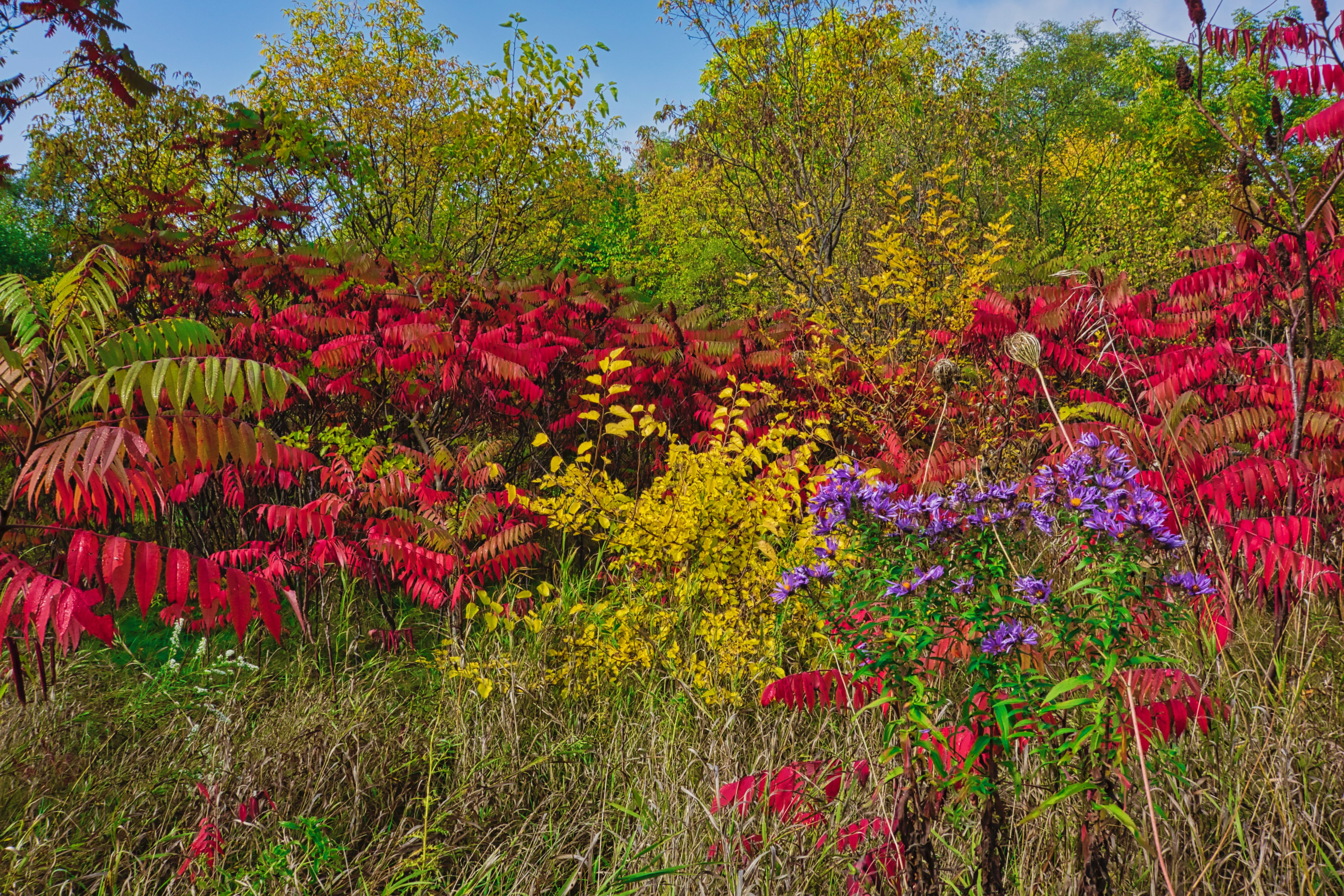
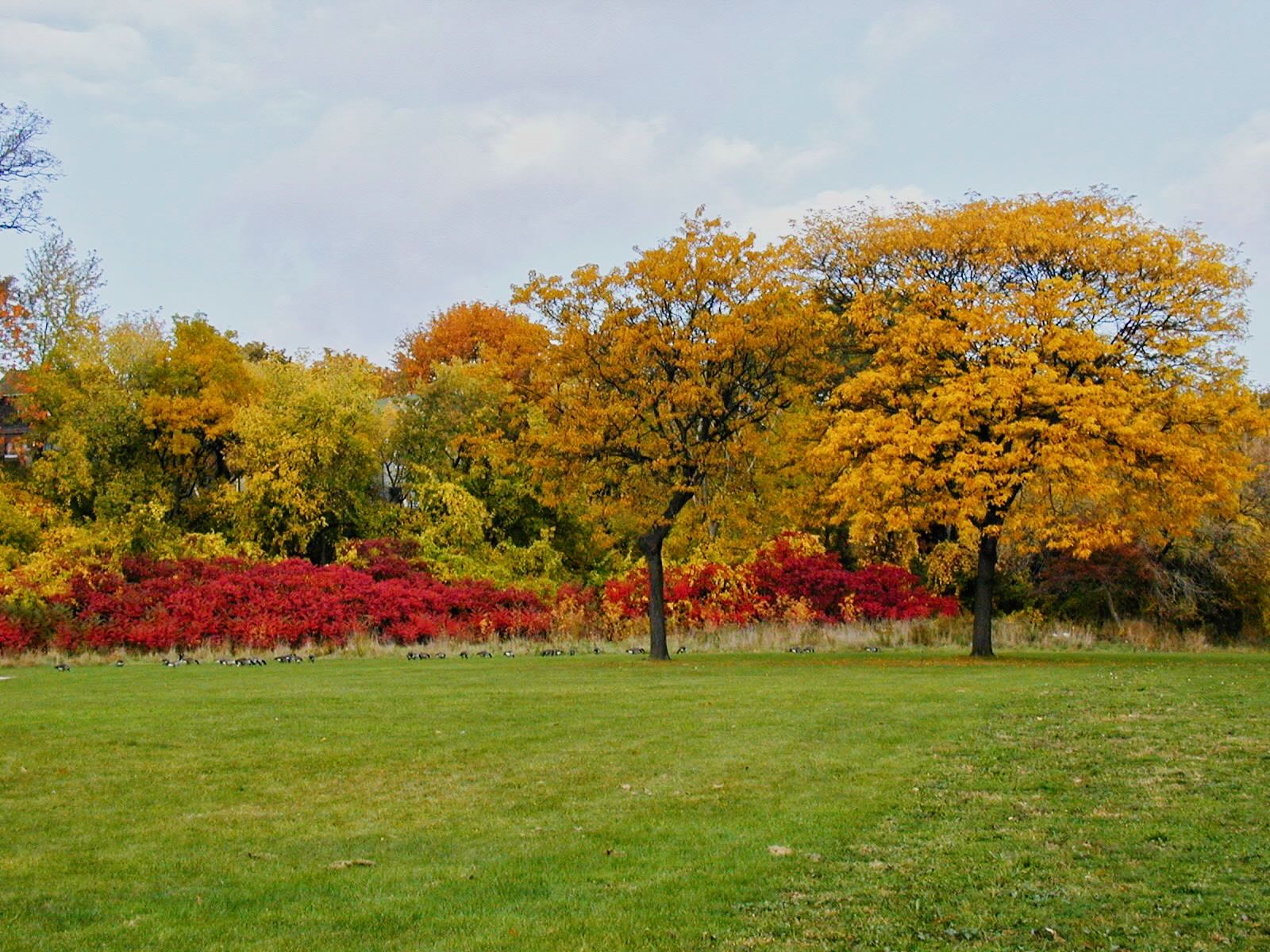
Glorious fall colours in Raymore Park’s wild area (October 2013).

Raymore Park is quite large and there are areas where you can throw a ball, walk the dog, have a picnic or just sit on one of the many benches and contemplate. Watching the water going over the weir is mesmerizing and the negative ions created by falling water are said to be therapeutic. If you like shade, there are lots of trees – just be careful not to feed the summer mosquitoes! There’s even a rudimentary baseball diamond tucked away north of the dog off-leash area. We don’t have flower beds or seasonal plantings but we have a large variety of flora and fauna.

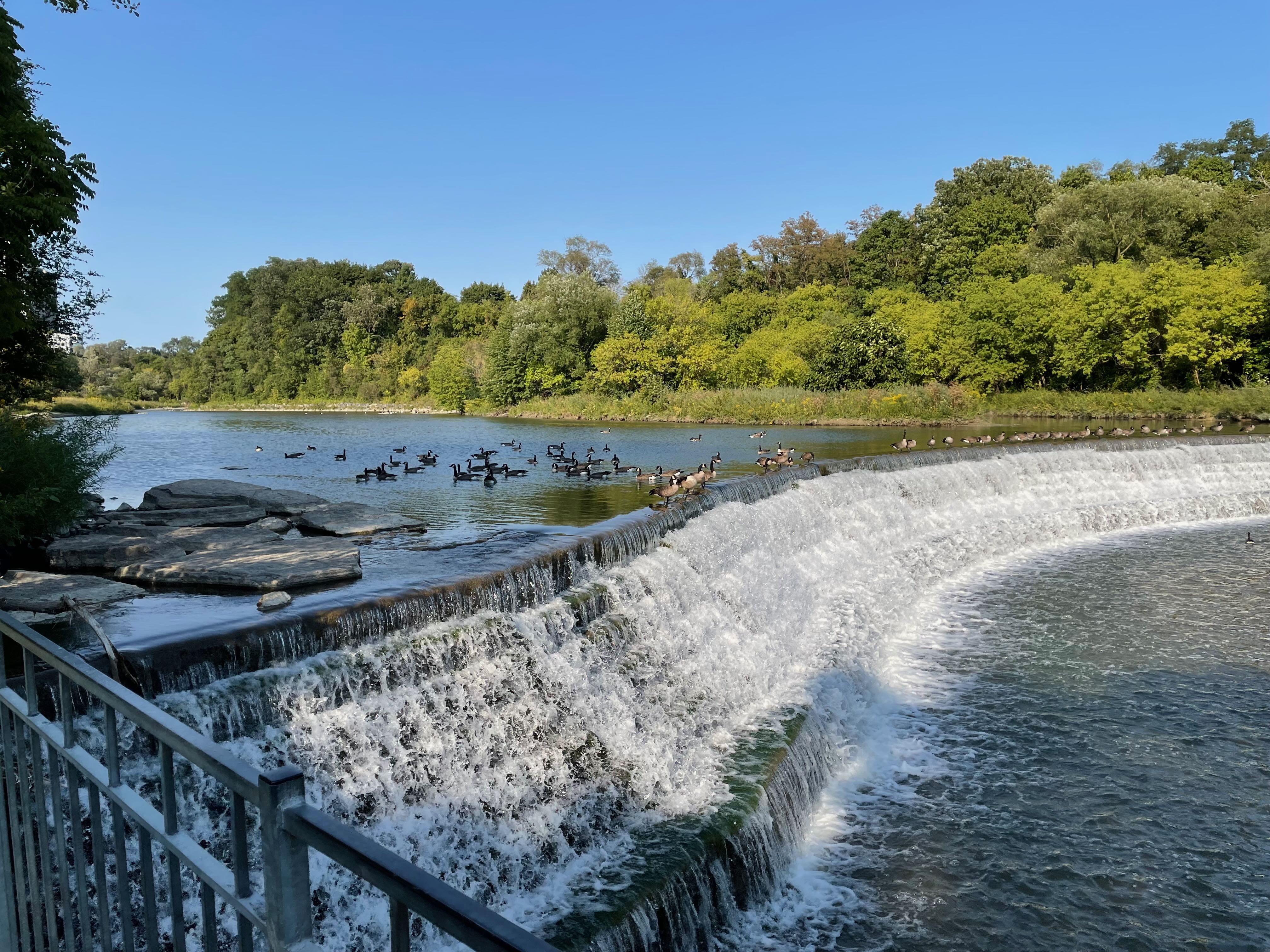
Geese enjoying the weir in September 2022.

In nearby Lions Park, people like to set up in groups and barbecue on warm weekends. They bring chairs and tables, awnings and coolers and relax by the river. Walking or cycling past these groups is a treat for the nose and if your hunger is stimulated, there’s an increasing number of fast (and slow) food locations a five-minute walk away on Weston Road.

Who are the people using parks? Every age group, athletic level and ethnicity are represented in Toronto’s green spaces and ravines; people looking for exercise, a meal or a relaxing stroll. There are no barriers or fees, everyone is welcome and people become more relaxed when they arrive. If you want to strike up a conversation, talk to a dog owner about their dog – or better yet, borrow a dog and walk it in the park (on leash of course). Dogs are instant ice-breakers. There are many volunteer organizations that help clean our parks after a long winter (locally it’s Humber River Pals) and get rid of accumulated litter while others look for invasive plants and remove them. Garlic mustard is a frequent target for those wanting some springtime greens and provide breathing room for native plants.

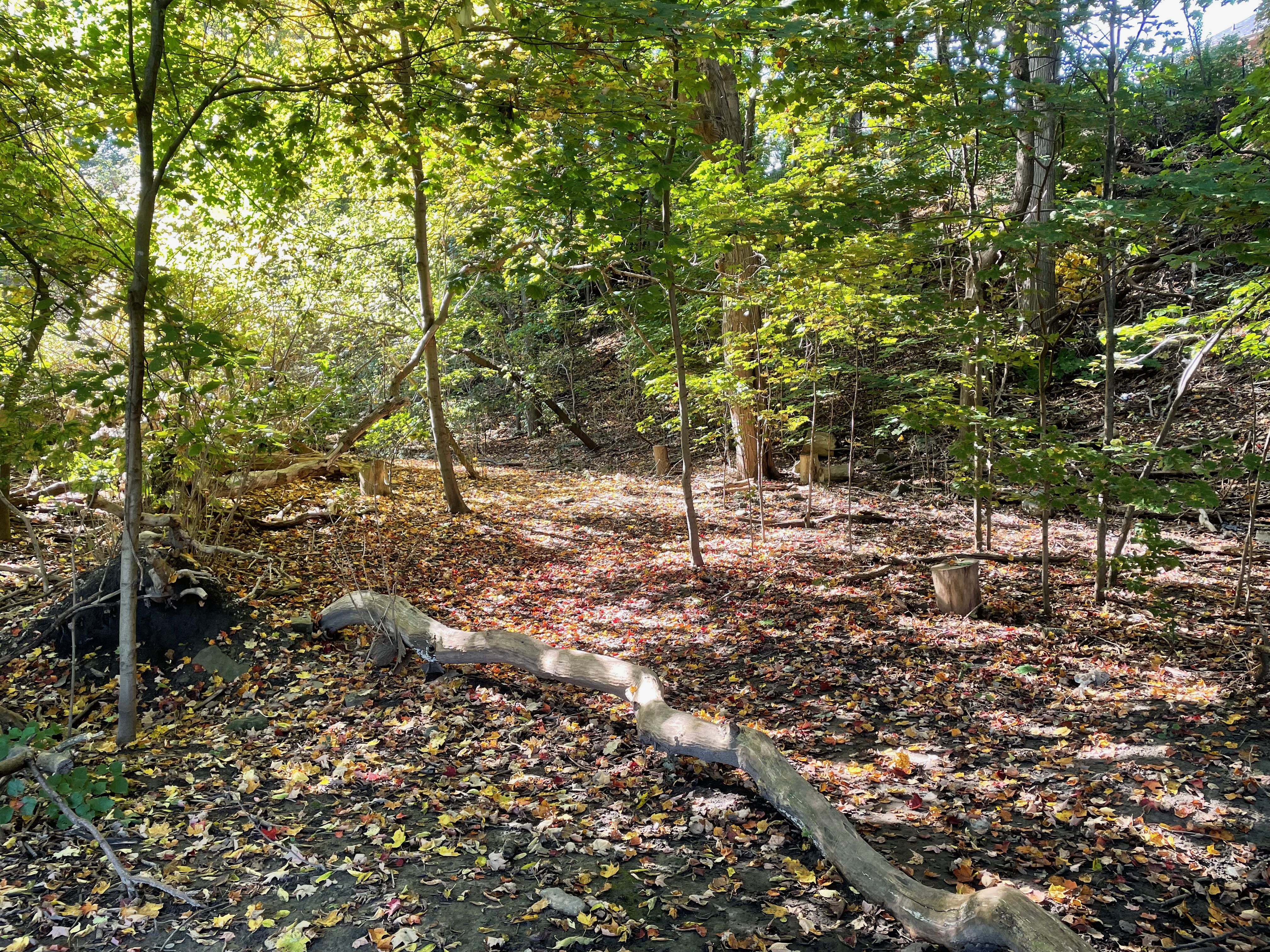
Raymore’s wooded area in October 2021.

It is possible to cycle from Raymore Park down to Lake Ontario with very few diversions onto side streets. The trail loosely follows the Humber to it’s mouth on the lake. Cycling through several parks on the way down to the lake reveals the variety of beautiful parks along the Humber.

So what’s stopping you? Get out and enjoy.

Raymore Park: changes over the years – Part 1.

This year marks 30 years since I started coming to Raymore Park. During that time many changes have occurred, most of them reflecting adjustments in park philosophy and management.

1. Pesticides:

Herbicides were sprayed here – just north of the current off-leash area. October 2000.

Back in 1993, park staff would spray grassy areas with herbicide in order to keep weeds down and in particular, poison ivy. They used Roundup (Glyphosate) which is pretty potent. Caution notices were placed on the grass informing people that weedkiller had been sprayed but these didn’t last long. At that time, much more of the park was grass (more on that in another article). Despite the claims of Monsanto, Roundup when sprayed over such a wide area is probably terrible for wildlife and dogs. The City banned pesticides in theory in late 1998 but the practice continued for a while after that according to this article from 2000.

2. The Humber Footbridge.

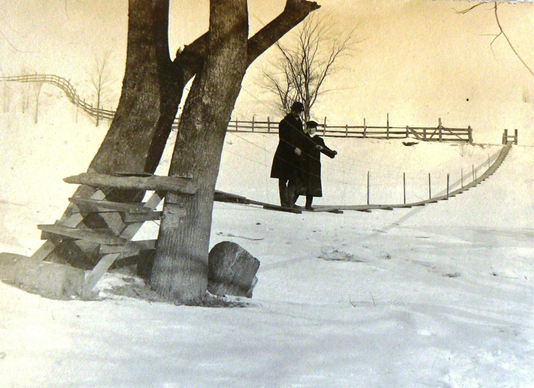
The 1917 ‘swing’ footbridge that was condemned and replaced in 1950. Photo via Weston Historical Society.

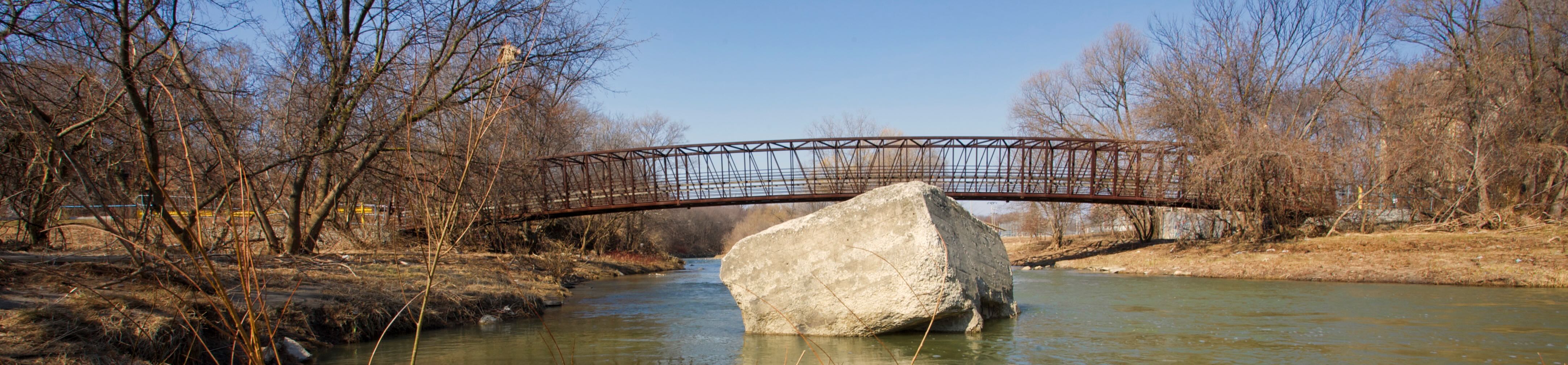
When Hurricane Hazel struck in 1954, a four-year-old footbridge over the Humber was swept away. This link between Westmount and the stores in Weston wasn’t replaced until 1995 some 41 years later. The bridge gets a substantial amount of use from cyclists, sightseers and commuters who can be whisked to the airport or downtown in about 15 minutes via the UP Express on Weston Road.

Read this excellent article on the three Weston footbridges from the Weston Historical Society.

The bridge with an abutment of the 1950 version in the foreground; looking upstream in March 2009.

3. Garbage Containers.

Garbage containers were either lined wire-mesh bins or the occasional re-purposed oil drum back in the 20th Century. There were no recycling containers back then – just open-topped receptacles that went uncollected during the winter. The cans and baskets weren’t replaced with the current wheeled carts until 2012.

Even with our clearly marked carts, park users are fairly indiscriminate where they toss their waste, so the recycling bins become contaminated and their contents worthless. As a result, garbage and recycling are collected by the same truck and the contents lumped in altogether.

From February 2004.

Billions of trees!

Trees are great at cleaning the air and capturing carbon. They also moderate the extremes of weather and keep wind speeds down year-round. They also smooth out temperatures, keeping them lower in summer and higher in winter. Recognizing this, Prime Minister Trudeau promised that Canada would plant 2 billion trees by 2030. This was during the 2019 election campaign and we all know the value of campaign promises.

From Democrat and Chronicle.

The idea for a mass tree planting may have come from New Zealand and Australia which had announced similar ambitious goals in 2018 and 2019. The U.S. is also promising to plant 4.1 billion trees in the same timeline as Canada. All told, Canada has around 318 billion trees so adding two billion to the total won’t be a big increase. In fact it won’t even replace the trees that will be cut down by then. Even so, two billion has a nice ring to it.

Presumably the Liberals thought they would be safely out of office by 2030 and wouldn’t have to worry about actually achieving the target. According to lots of news outlets, the number of trees planted thus far is pretty dismal. The government says it planted about 29 million trees in 2021. At that rate the two billionth tree will be planted around the year 2092. The job of planting and monitoring the trees has been entrusted to Natural Resources Canada but tellingly, the 2BT initiative isn’t high enough of a priority to make the front page of their website.

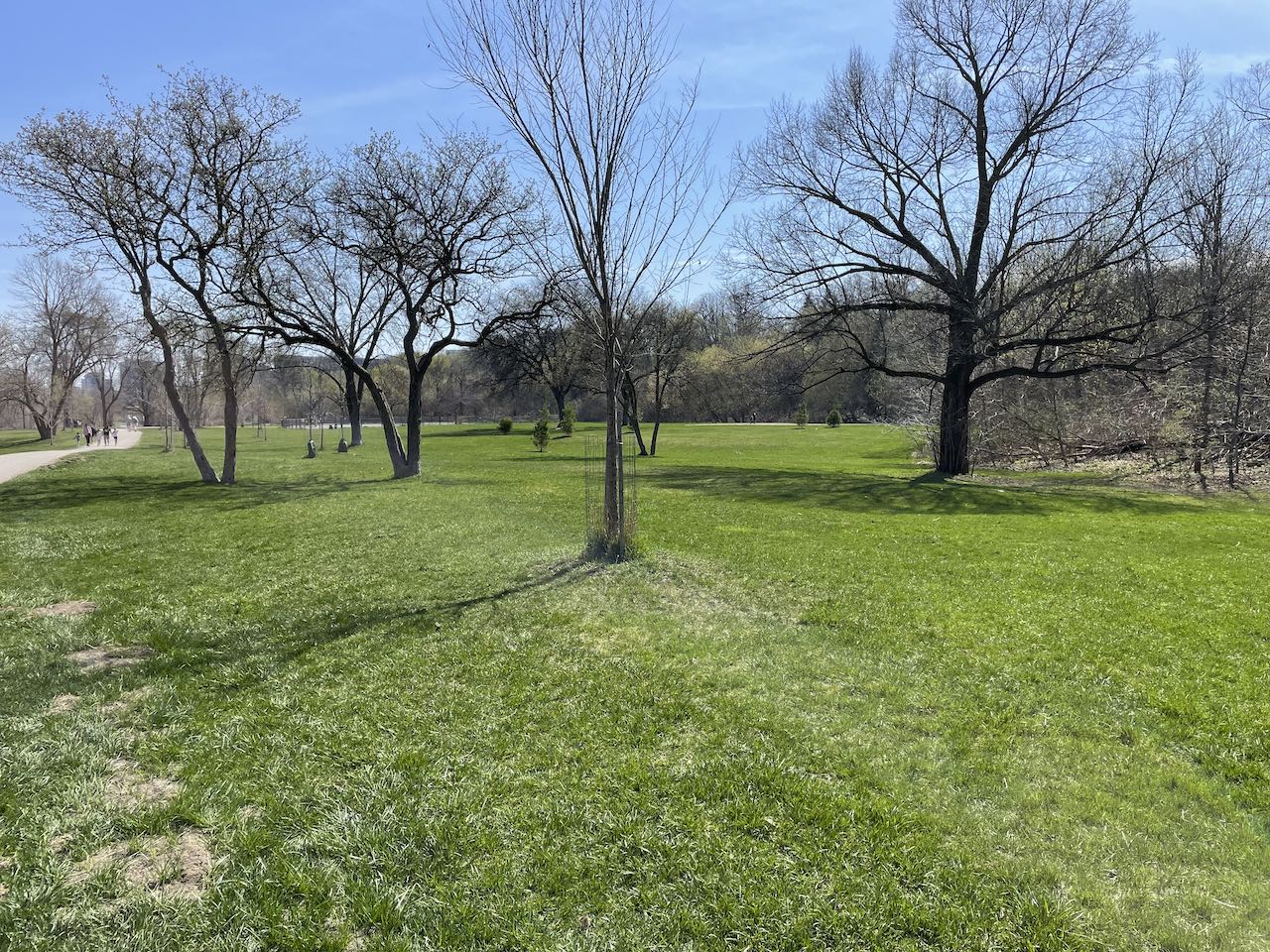
Obviously vast tracts of land will need to be planted in order to achieve the two billion target. Even so, Raymore Park stands ready to play its part – there’s lots of room at the park entrance and around the dog off-leash area (both of which could do with some shade in summer).

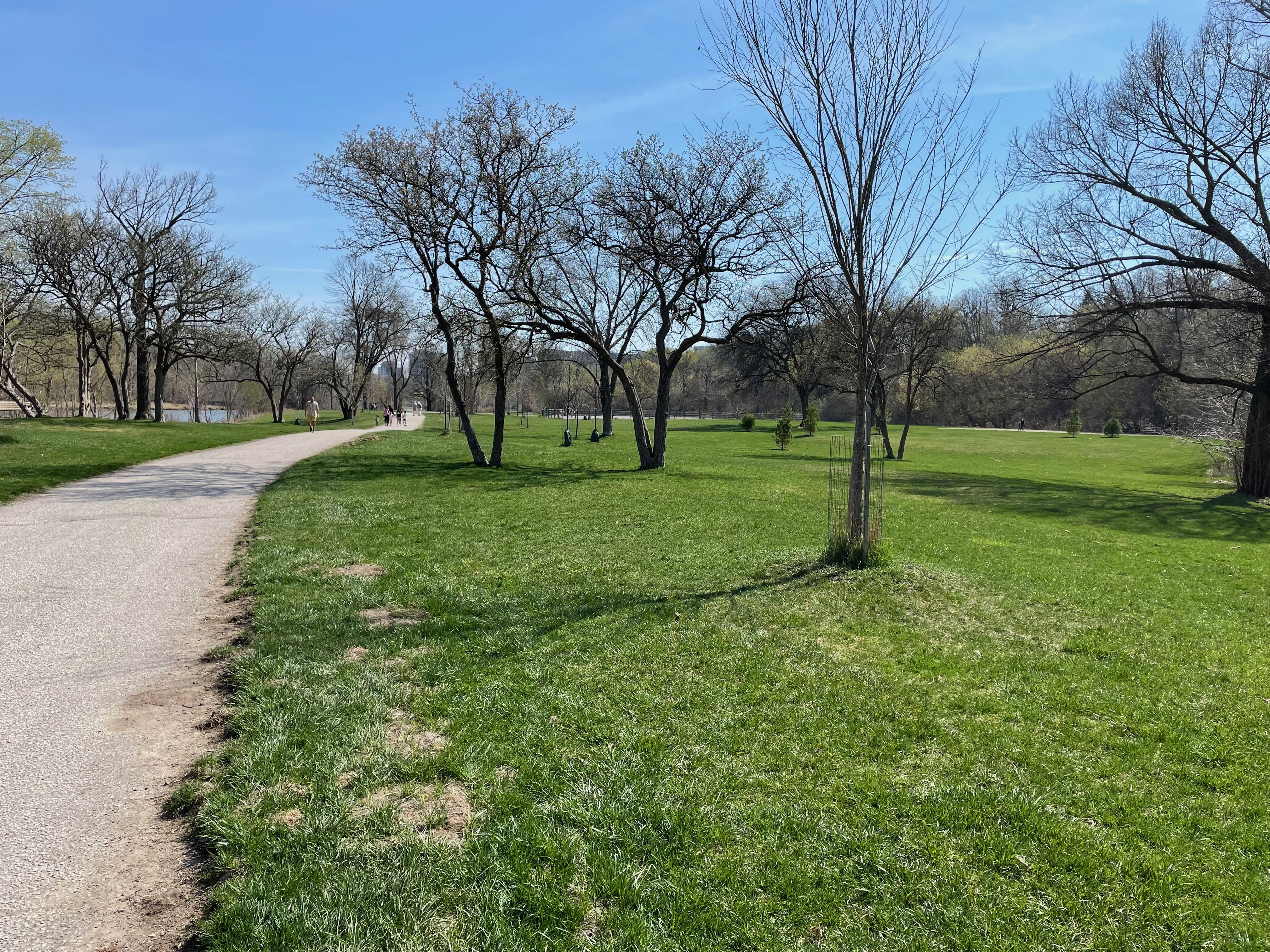
Looking south towards the dog off-leash area. April 16, 2023.

Whatever we do, let’s make sure we protect any new trees from our local beavers!

UPDATE, June 14, 2023:

According to Blacklock’s Reporter, the federal government was never in a position to plant billions of trees as it’s the provinces that do most of the tree planting in Canada. On June 13, 2023, Environment Commissioner Jerry DeMarco testified at the Commons natural resources committee that, “We found that given the number of trees planted so far, this program is unlikely to succeed unless significant changes are made.”

Auditor Kimberly Leach said that provinces would have to do most of the planting and that Cabinet had not signed up all provinces to do so.

According to Blacklock’s, “The program originally budgeted at $3.16 billion over ten years is now expected to cost $5.94 billion, by Budget Office estimate.”

Are there beavers in Raymore Park?

The amount of wildlife in Toronto parks is quite amazing and we aren’t always aware of the secret lives of the animals who live alongside us. Yes, beavers are a presence in Raymore Park and although it’s rare to see them, we can often see signs of them.

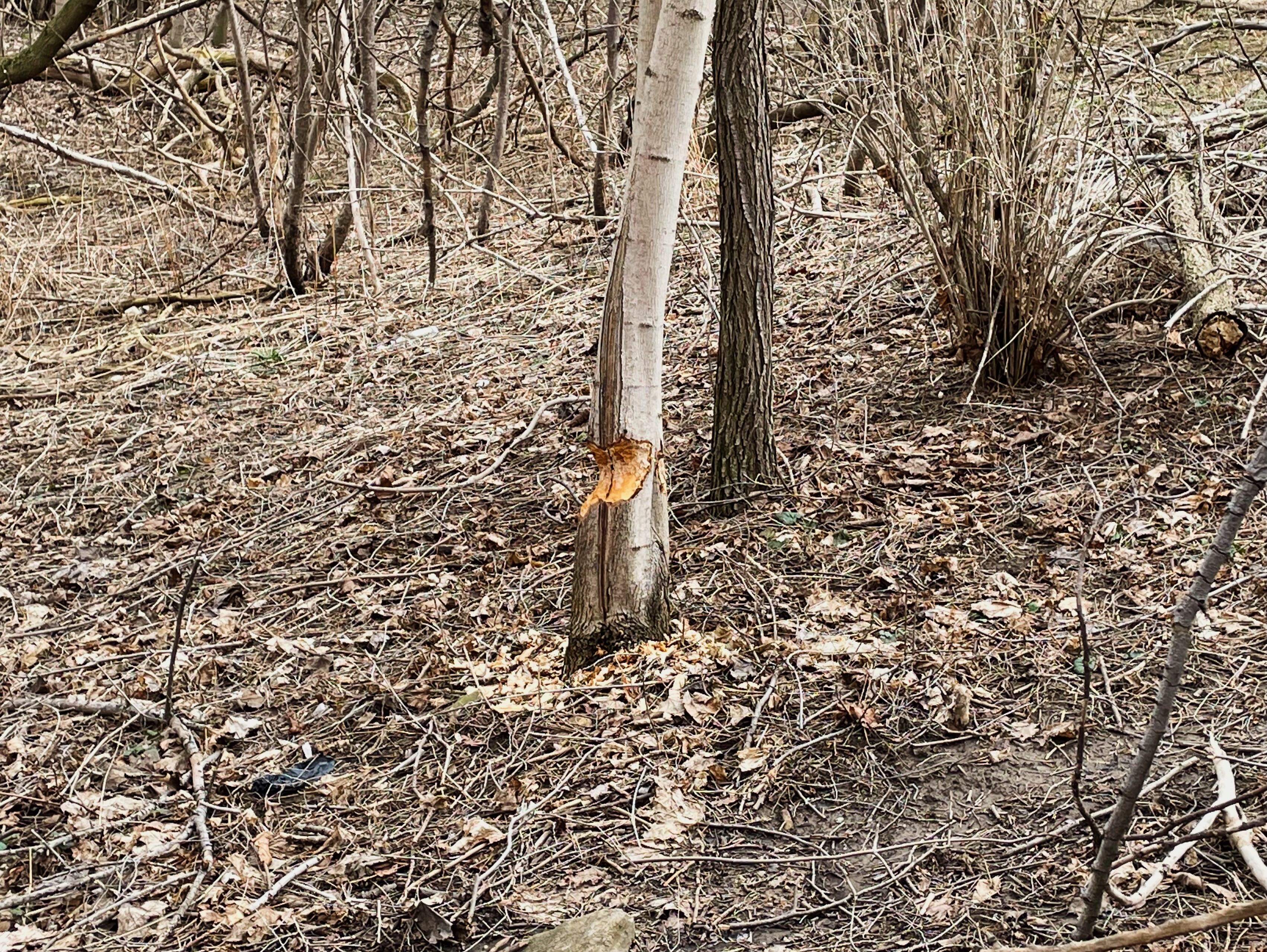
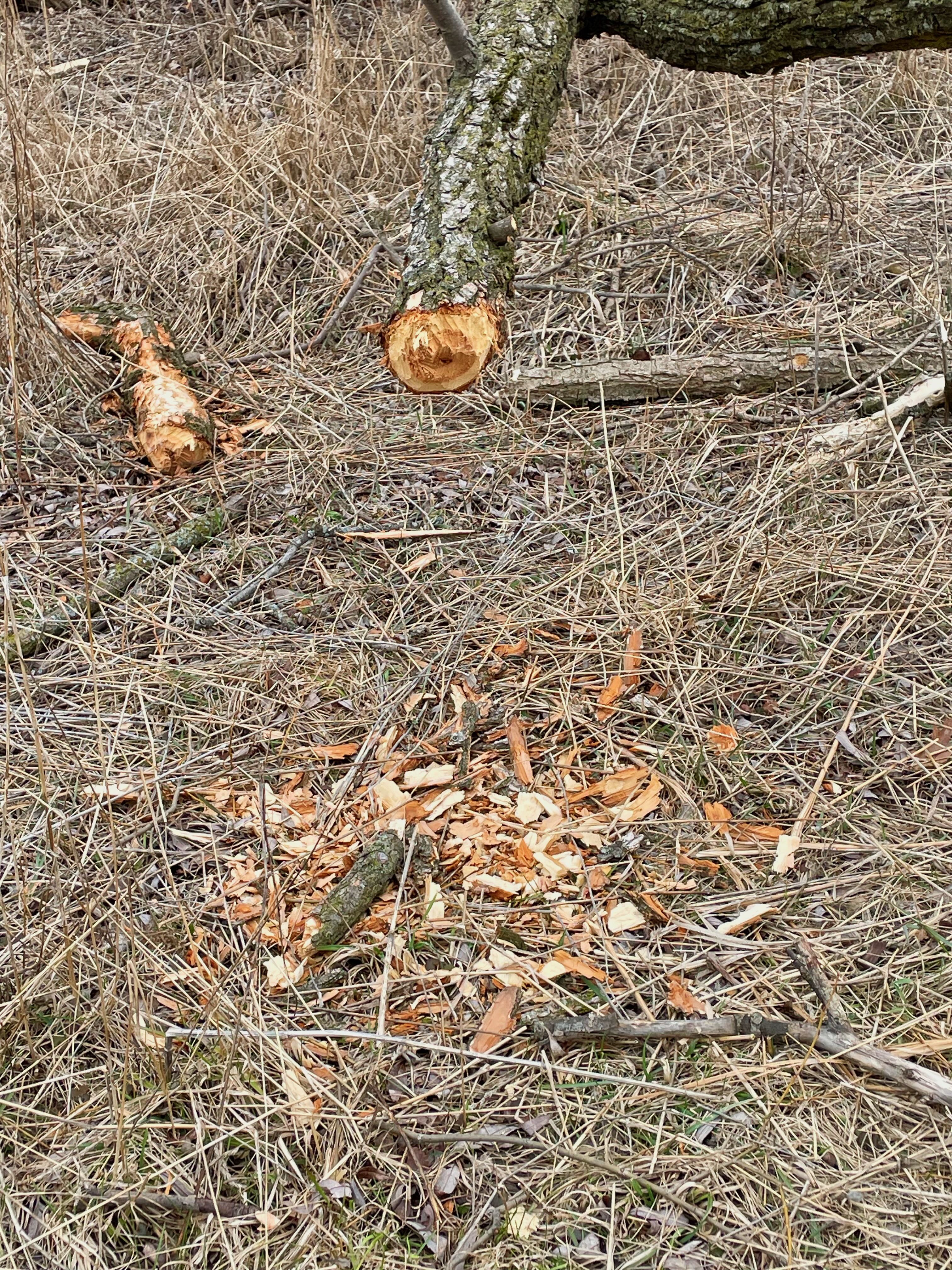
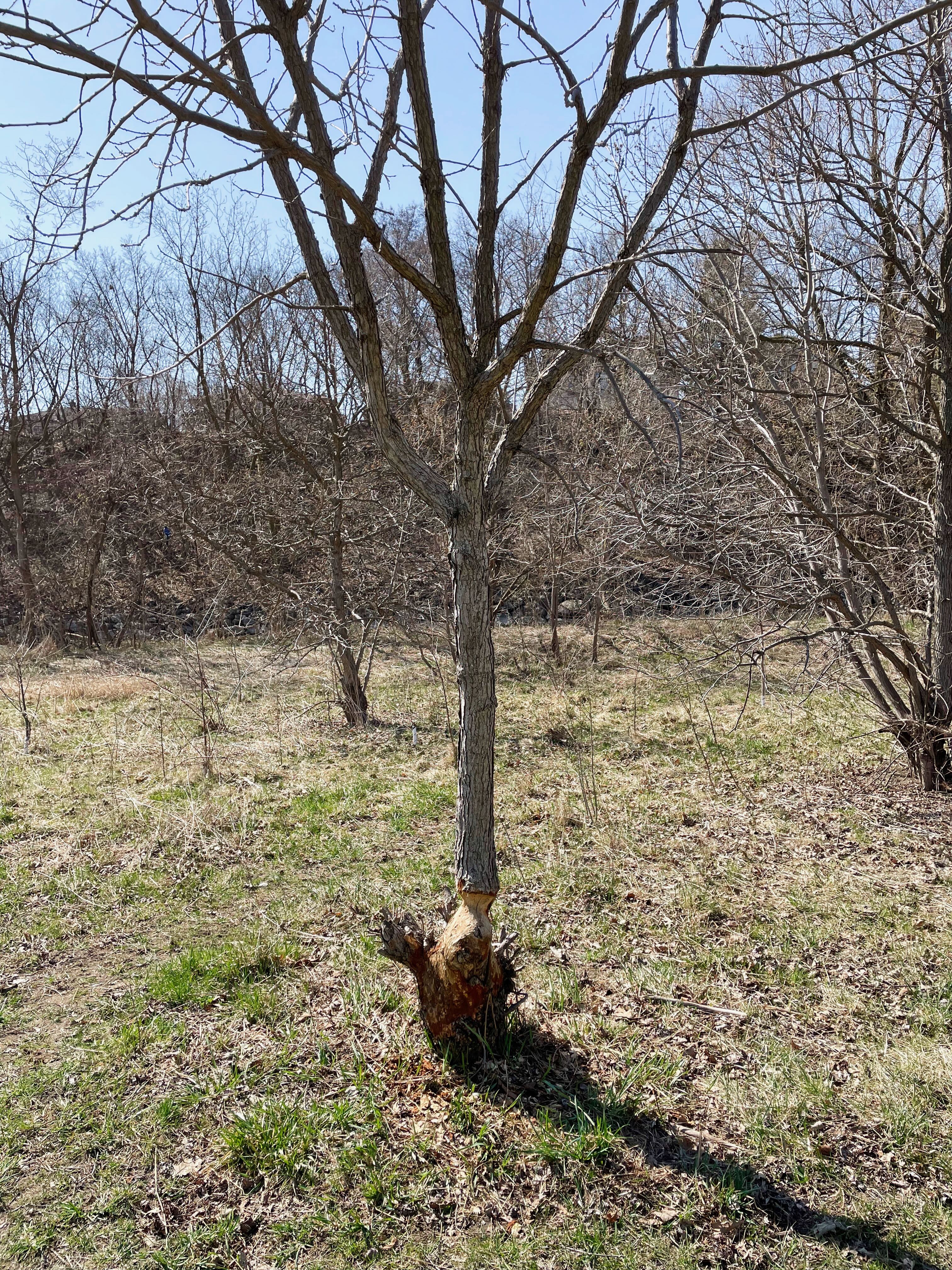
This young tree is close to the bike path by the footbridge. (April 2023)

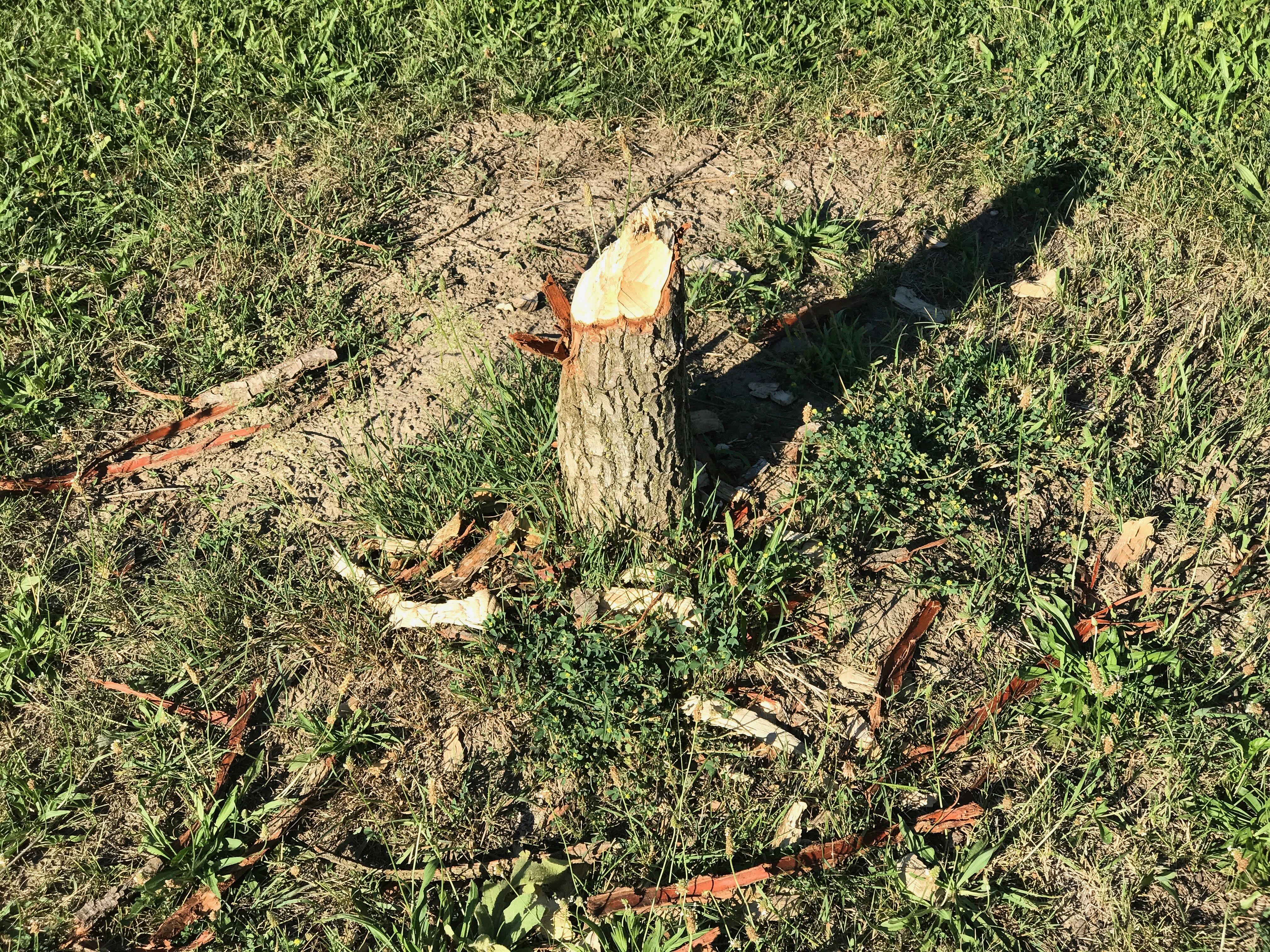
One sign is the tell-tale gnawing of tree trunks at about 30-40 cm above the ground – often leaving a stump with a conical point. When the city plants trees in Raymore Park, they have (usually) learned to protect the new trees’ trunks with wire cages or else beavers will make quick (and expensive) work of them. Another sign might be a noisy tail splash – used as a warning to other beavers as you approach the water. Sometimes a cluster of sticks on the riverbank is evidence of a lodge.

Protect it or else… (July 2018)

Beavers need to eat wood as part of their diet and since their rodent teeth are constantly growing, gnawing on wood helps keep them in trim. Beavers restrict the flow of rivers and therefore mitigate the impact of flooding. Other wildlife benefit from the presence of these native animals. Eurasian beavers (slightly different to our North American variety) were hunted to extinction in the U.K. a few centuries ago but have been re-introduced in several locations throughout the British Isles and particularly in Scotland.

A fallen branch suspended at the right height is being consumed by beavers. (April 2023).

Where can beavers be seen in Raymore Park? One place seems to be fairly constant from year to year. There is an island just above the weir where they often hang out as it’s relatively safe from disturbance from humans and especially dogs. The Humber is quite wide so rather than dam the river, beavers will create a riverbank lodge that accommodates several animals.

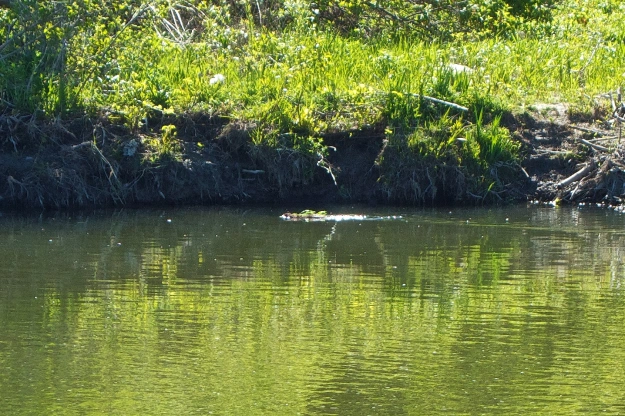
A beaver swimming upstream by the island in May 2013.

Be patient as beavers are shy and usually hide when humans are present. If a dog is swimming in the river, a beaver might attack (they have the advantage in the water) so it’s wise to follow park leash rules.

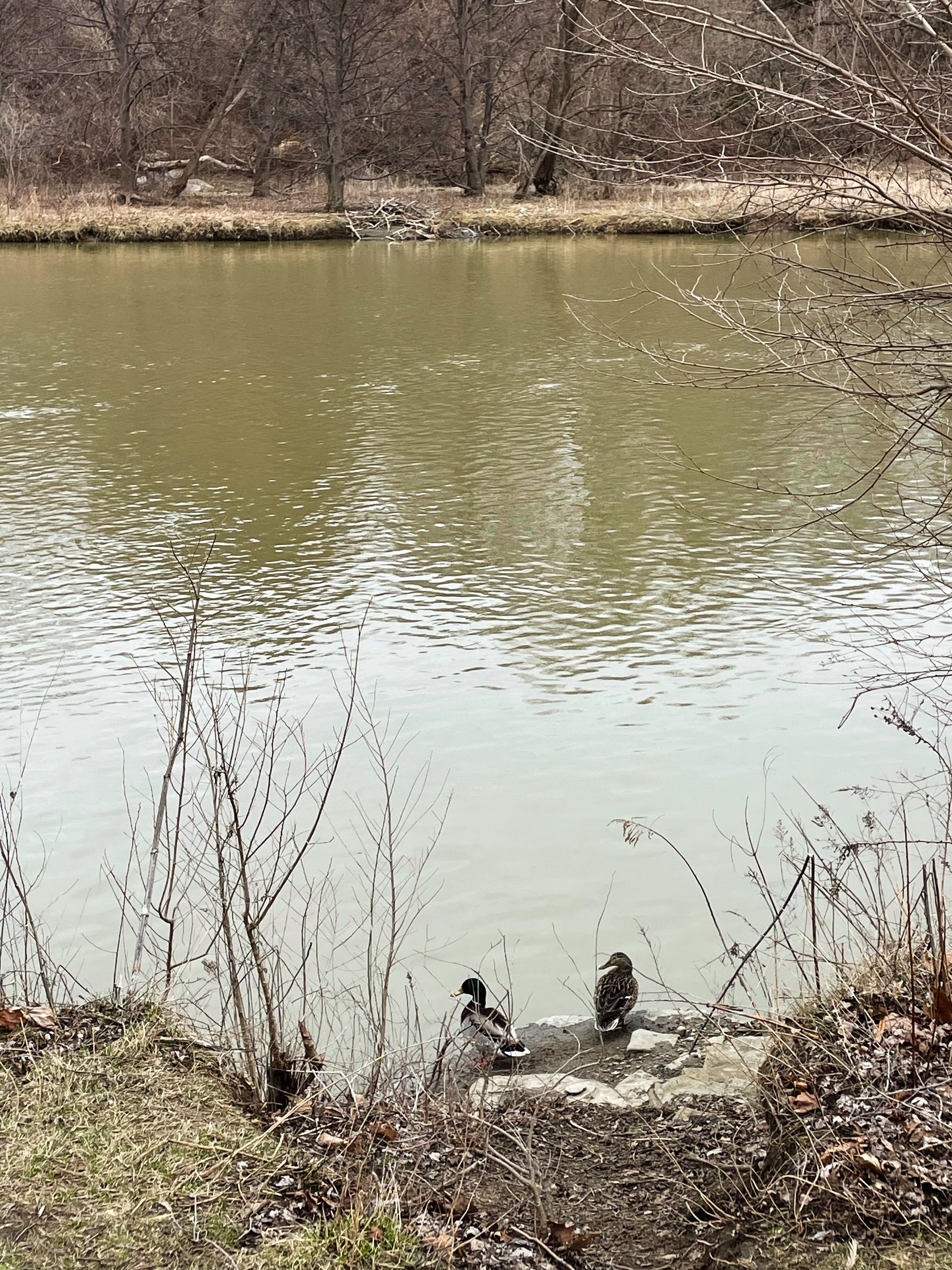
A pair of ducks across from the clearly visible beaver island lodge. (April 2023).
‘Beaver Island lodge’ in summer (on the far bank). (August 2018) (click to enlarge)

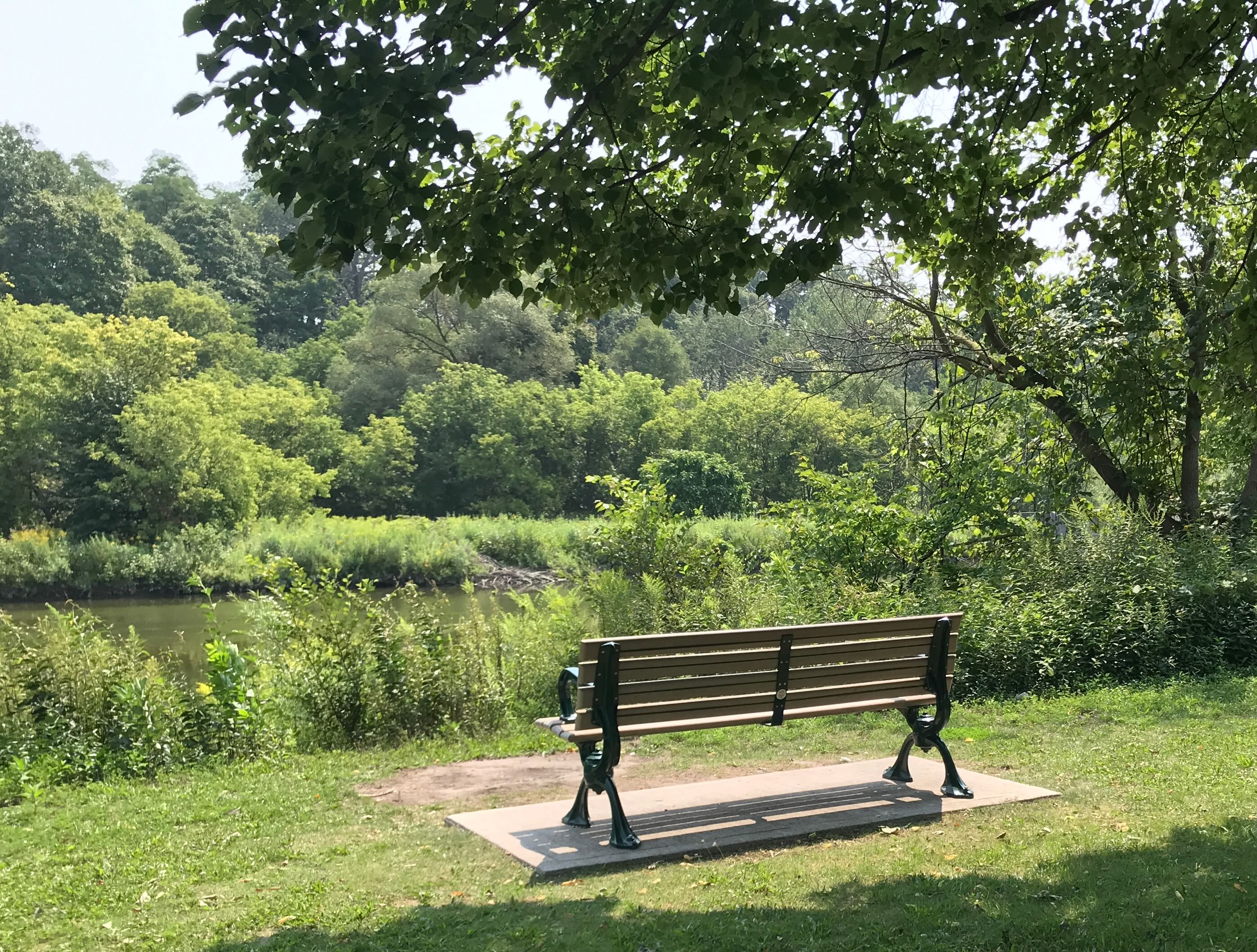
A bench above the dam can be a good observation spot. Early mornings and late evenings are the best times for catching a glimpse of these mainly nocturnal creatures.

A costly lesson in neighbouring Lions Park. This tree was planted just a few years ago. (April 2023)

Lastly, a piece of beaver trivia – the minster town of Beverley in Yorkshire, England – which gave its name to Beverley Massachusetts and subsequently Beverley Hills in California – was named because of the beavers once living there. The town’s coat of arms proudly sports a Eurasian beaver.

Beverly Town Council coat of arms (from Wikipedia).

Spring Runoff

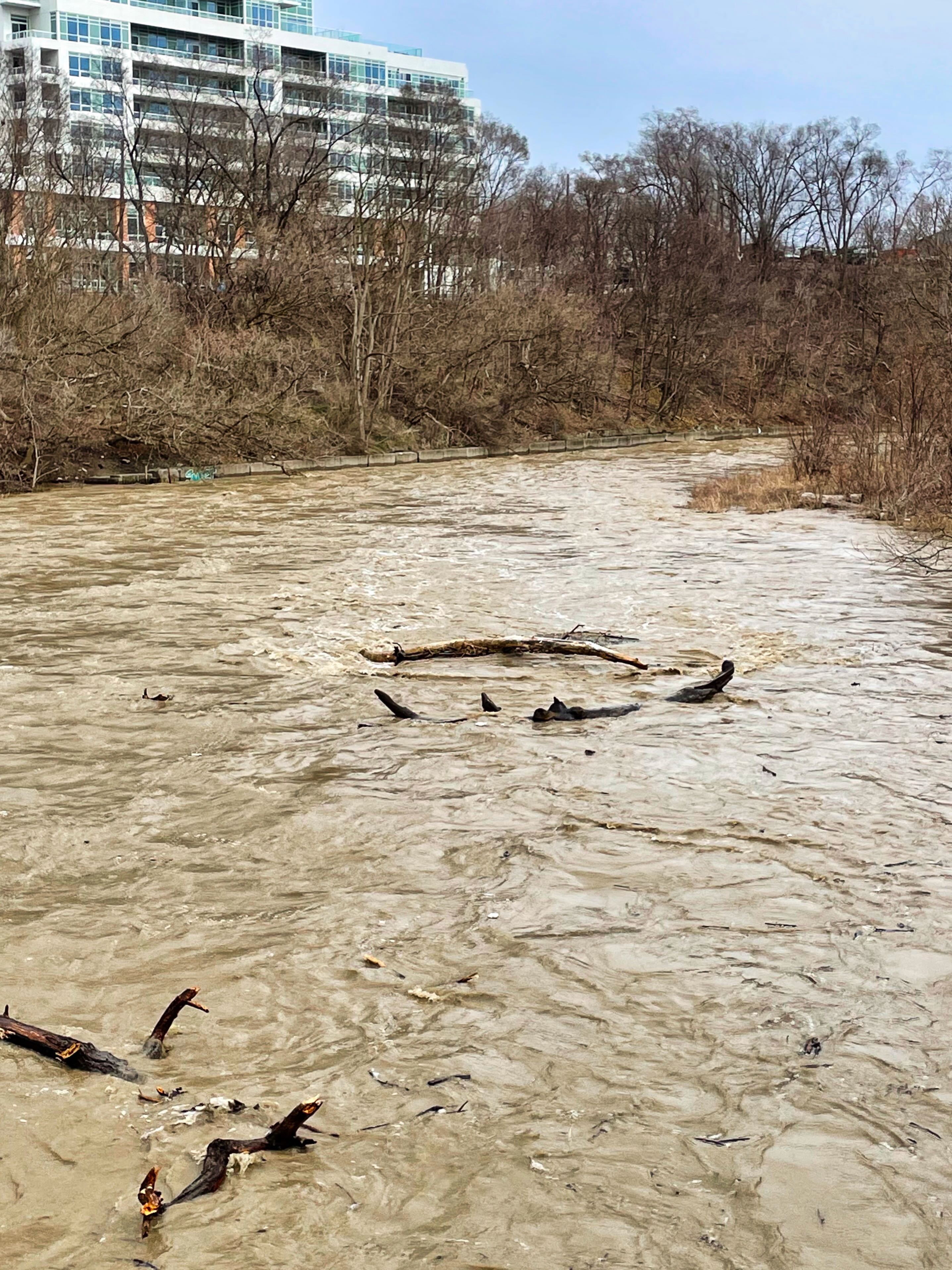
Temperatures hit the mid-teens today and with yesterday’s rain adding to melting snow coming from further north, the Humber river is running high. A good benchmark is the old footbridge abutment and today it was almost underwater. Adding to the drama, logs and dead trees were cascading down the river – probably after being blown over during this winter’s storms, having waited for a good flood to float them and flush them down to Lake Ontario.

The abutment can just be seen slightly to the right of centre behind the farthest log. Click to enlarge.

The Condo building called ‘The Humber’ is almost ready for occupancy and residents facing the river will soon have a ringside seat for the ever-changing river landscape as it makes a 90° turn in front of the building.

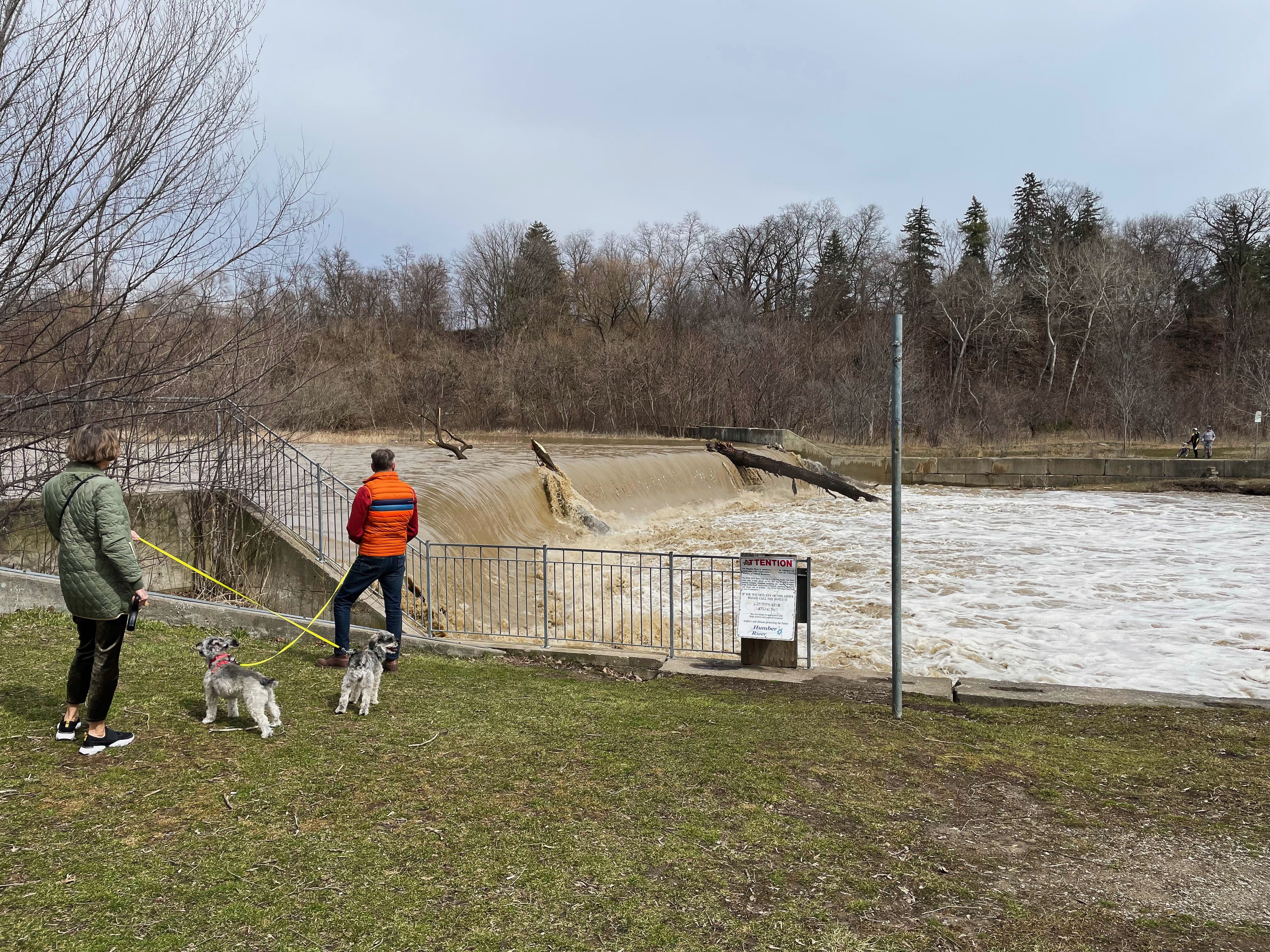
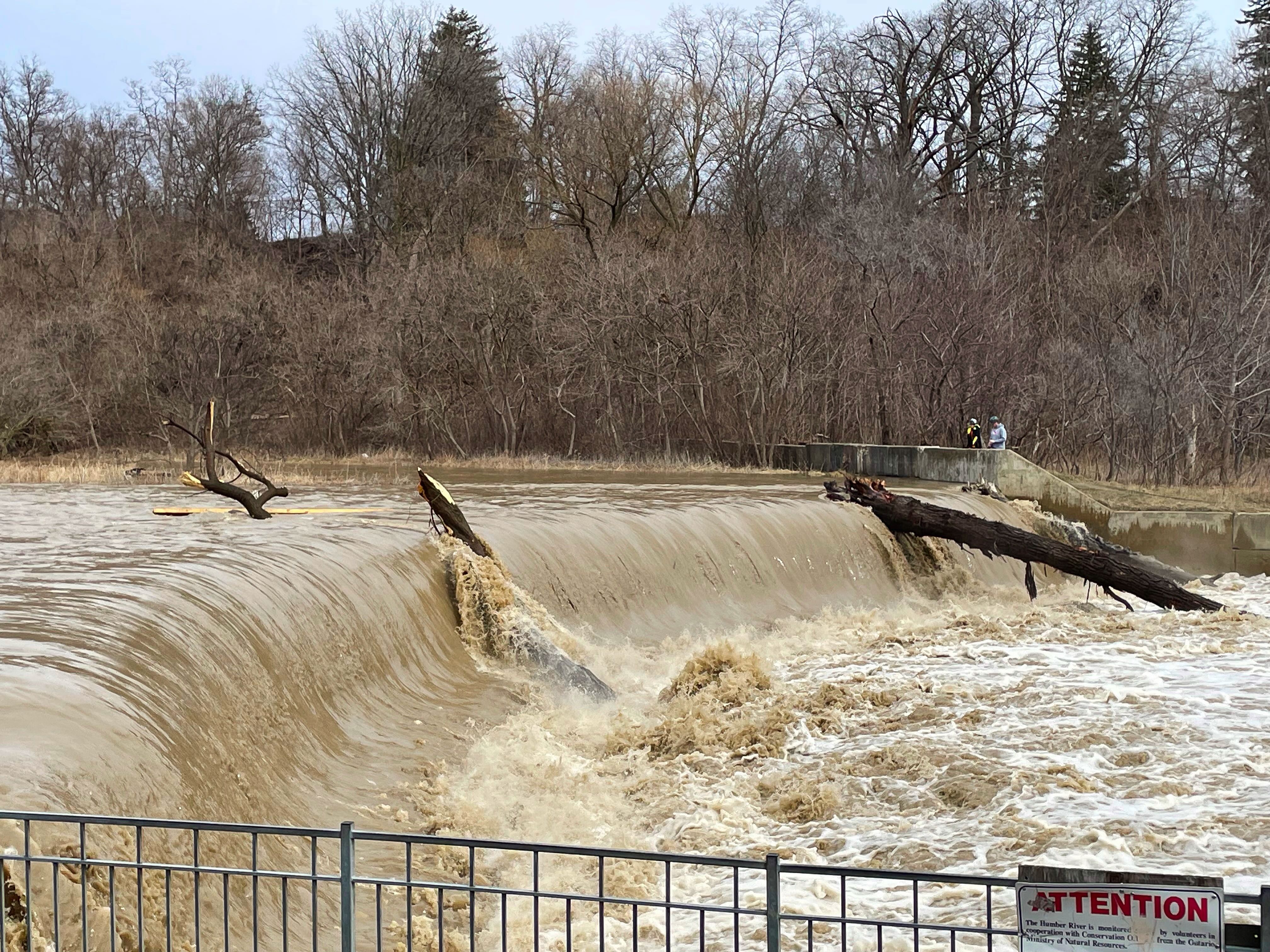
A few hundred metres downriver at the weir, some large trees were stuck as they lumbered over the edge. The roar of the river by the weir is quite something. People were standing mesmerized, soaking up the vibrations.

A couple witness the power of the river with their dogs. Click to enlarge.
Two people watch from the Mount Dennis side as trees get stuck on the weir’s edge. Click to enlarge.

Water levels should go down tomorrow during a one-day temperature dip but inevitably, spring is pushing its way north.

No doubt we’ll be complaining about the heat soon.

Pea gravel an issue for Leslieville dog owner.

Raymore Park’s DOLA and its pea gravel at the official opening in July 2017.

A couple of things that seemed clear when the Raymore Park dog off leash area (DOLA) was first proposed were;

1. The DOLA was a done deal regardless of input.

2. Pea gravel would be the surface of choice rather than more paw-friendly wood chips.

At the community meetings to discuss the DOLA, residents brought up the issue of the pea gravel as being irritating.

SInce the DOLA was constructed, two main issues have been pointed out to Toronto Parks directly and also through Councillor Mike Ford, namely that the pea gravel irritates dog paws to the point where some simply shut down. The other issue is that access to the small dog enclosure requires running the gauntlet through the large dog area. These two factors may well explain the unexpectedly low numbers using Raymore Park’s DOLA.

Neither issue seemed likely to be acted upon but now there is a glimmer of hope at least for those who dislike the irritating pea gravel.

According to the Toronto Star, a partially blind woman in the east end of Toronto found the pea gravel of her local DOLA irritating to her dog and also fell and broke her cane on the uneven surface. Instead of using the DOLA, she regularly allowed her dog to run off-leash outside the permitted area and eventually received a $261 ticket.

The lady has decided to take the city to court over the fine stating that the gravel is an unsuitable surface and has demanded that it be replaced. Ironically, the local park association raised $20,000 in order to replace the original but unsuitable crushed granite surface. The city opted to spend the community’s money on pea gravel.

The whole point of a leash free zone is to allow dogs to socialize and get some playful exercise. While pea gravel may be wonderful for drainage, if dogs can’t or won’t use the surface, there’s no point in having a DOLA.

If this lady wins her argument in court, there may be a case for replacing the pea gravel throughout Toronto’s DOLAs.

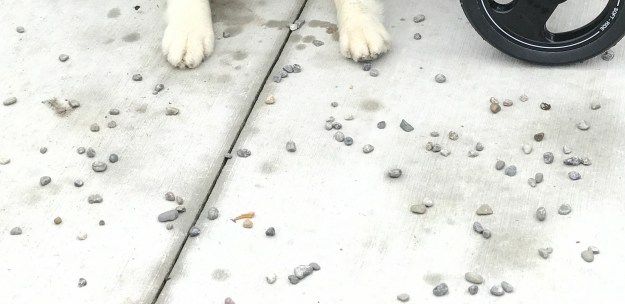
A close-up of the non-rounded ‘pea gravel’ used with a pair of husky paws for scale.

Off-Leash Area Update

Raymore-Proposed-Leash-Free-Zone

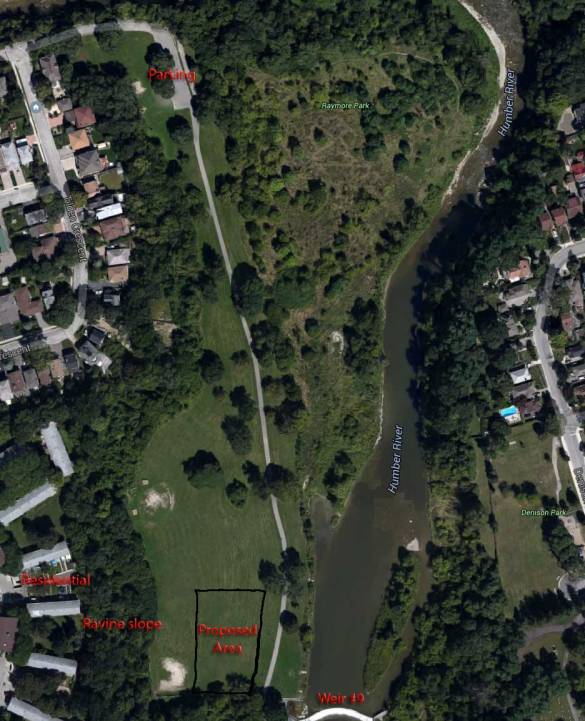
The proposed area may have grown (probably northwards) by a small amount because of the addition of a separate small dog section. There was some discussion as to the nature of the surface of the area which apparently will be 4-6″ of pea gravel on top of a mesh filter which will help with drainage. As mentioned, plans are to divide the area into two parts for small and large dogs so there will be two gates and two paved pathways from the Pan-Am Trail for access. The small dog area would be for dogs 20 lbs and under. Regardless, all dogs should be under the owner’s control at all times. Dangerous dogs should not use the area. See Code of Conduct below.*

Fencing will be post and paddle, 1.5 m tall and made of northern pine. It will be reinforced with wire mesh 4-6″ deep to deter dogs that dig. Benches will be installed for owners.

There will be a delay in the opening of the area because of work currently ongoing on the retaining wall. This is taking longer than expected. There is only one entrance to the park and so the retaining wall and another job – an upgrade to the path will be done first; after that, sewer work will be ongoing. The reckoning is that the area will take about a month to set up and will be open by ‘Thanksgiving at the latest’.

One piece of good news is that TRCA has plans to plant trees along the north end of the area and between the area and the ravine slope. This will provide storm runoff relief and shade for the area (and perhaps some sound mitigation for nearby homes).

Hours of operation: 7 am – 9 pm but locals will be able to access the area at any time. The parking lot will continue to be locked at 9:30pm daily and re-open at 8:00am and will be closed for the Winter between November 1st and April 30.

There was a reminder to residents that the area will be self-policing and that they should supervise and pick up after their pets. There was confusion as to where to put dog waste – in the garbage or the recycling. This will be cleared up later (the location not the waste).

Sadly there is still no link on the City website to the plans or even the current state of off-leash parks.

*Code of Conduct for Off Leash Area

Municipal Code Chapter #608

  1. Comply with all signs and boundaries.
  2. Dog(s) must be on leash at all times except when in the designated off-leash area.
  3. All dog(s) must have a visible municipal license affixed to the dog(s).
  4. Dog(s) must remain in off-leash area so as not to trample or endanger plant material and other park resources.
  5. Dog(s) excluded from off-leash areas include:
    1. Pit Bulls or other dangerous animal
    2. Female dogs in heat
    3. Any dog(s) that has been issued a muzzle order by the Medical Officer of Health.
  6. Dogs shall not chase wildlife.
  7. Pick up after your dog(s) and place waste in receptacle or take home for disposal.
  8. Keep dogs in sight and under control at all times.
  9. Do not leave dog(s) unattended while in off-leash area.
  10. Repair holes dug by the dog(s) under your control.

Violation of Bylaws are punishable by fines.