2013 vs 1999

2013 01 09

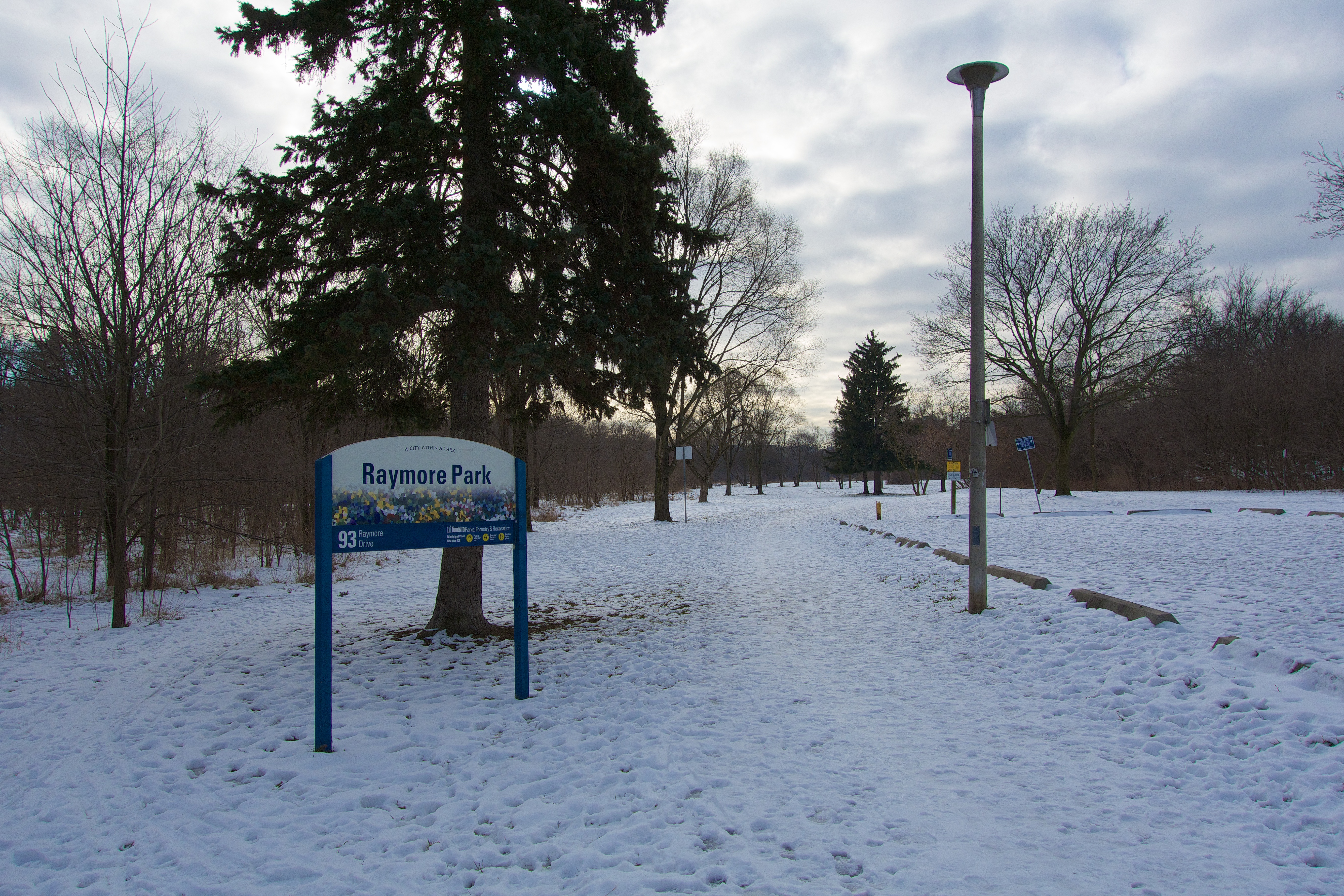
Here’s a view down the length of the park from the sign at the bridge looking towards Eglinton.

Copyright © 2013 by Roy Murray, all rights reserved.

Photographed in January 2013 with a 5472 x 3648 (20.2 megapixels), Sony RX100.

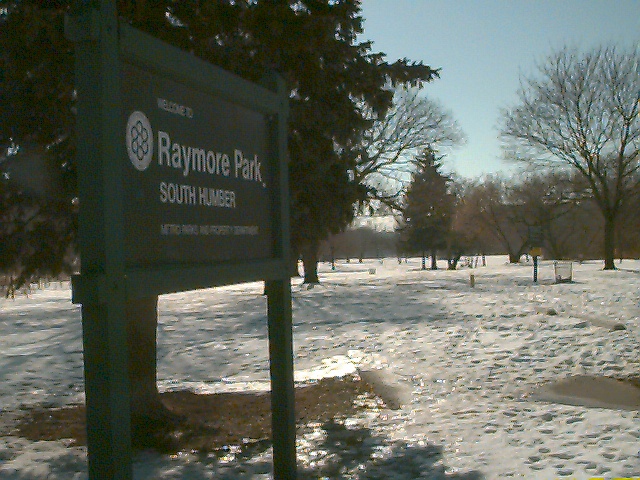
When compared to the same view taken (with an early digital camera) in February 1999, nothing much seems to have changed other than the sign. In fact a fair amount has changed. More details tomorrow.

Copyright © 2013 by Roy Murray, all rights reserved.

Photographed in February 1999 using a 640 x 480 (0.3 megapixels), Apple QuickTake 100 (made by Kodak).

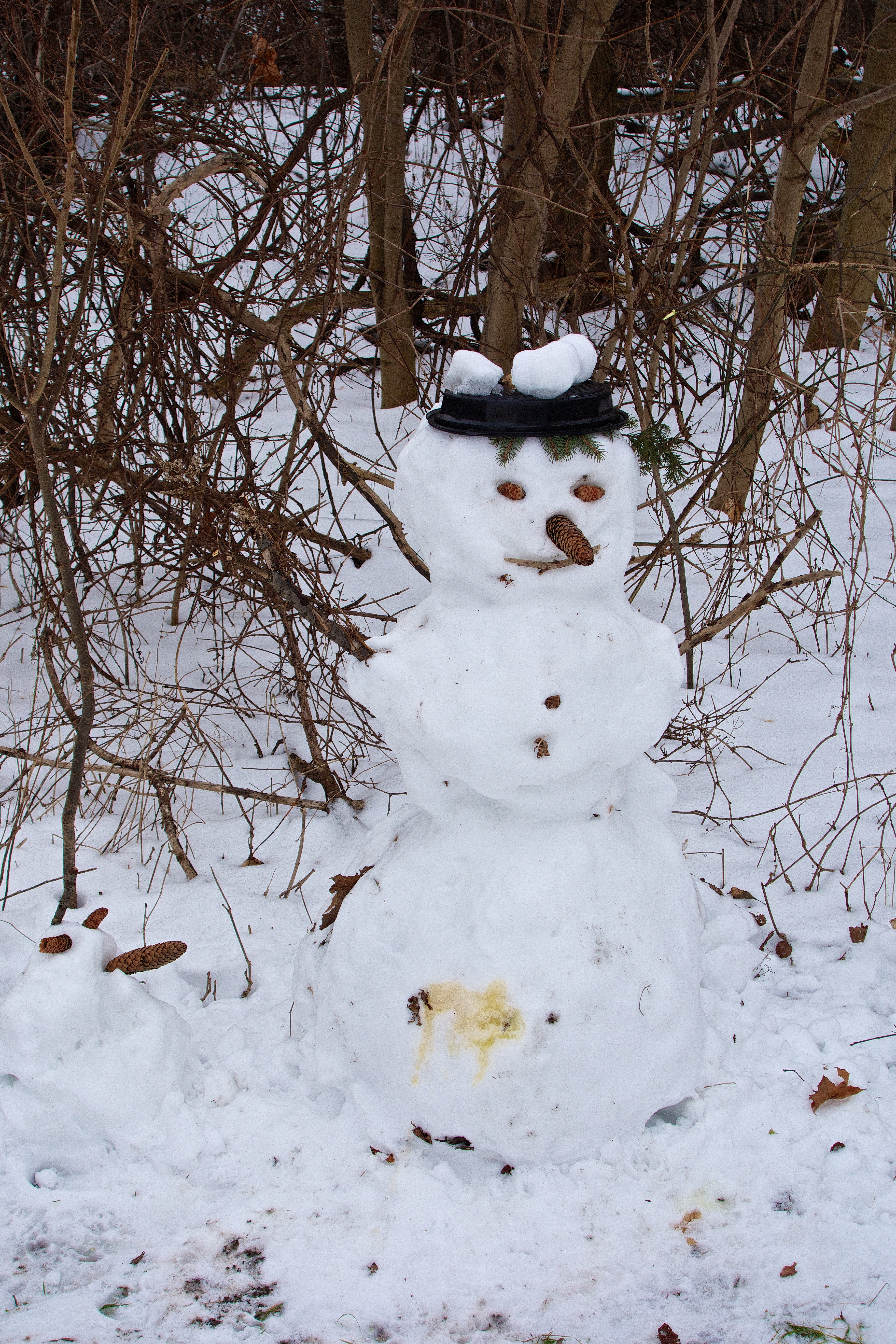
A marked (snow)man.

Copyright © 2013 by Roy Murray, all rights reserved.

2013 01 07

Snowmen don’t last long in Raymore Park; they usually perish at the hands of unsympathetic humans. Today’s must have been fresh as it was intact, but – judging by the colour, ownership had been claimed by a dehydrated dog! This one was just before the hill up to Scarlett Road.

A tale of two seasons.

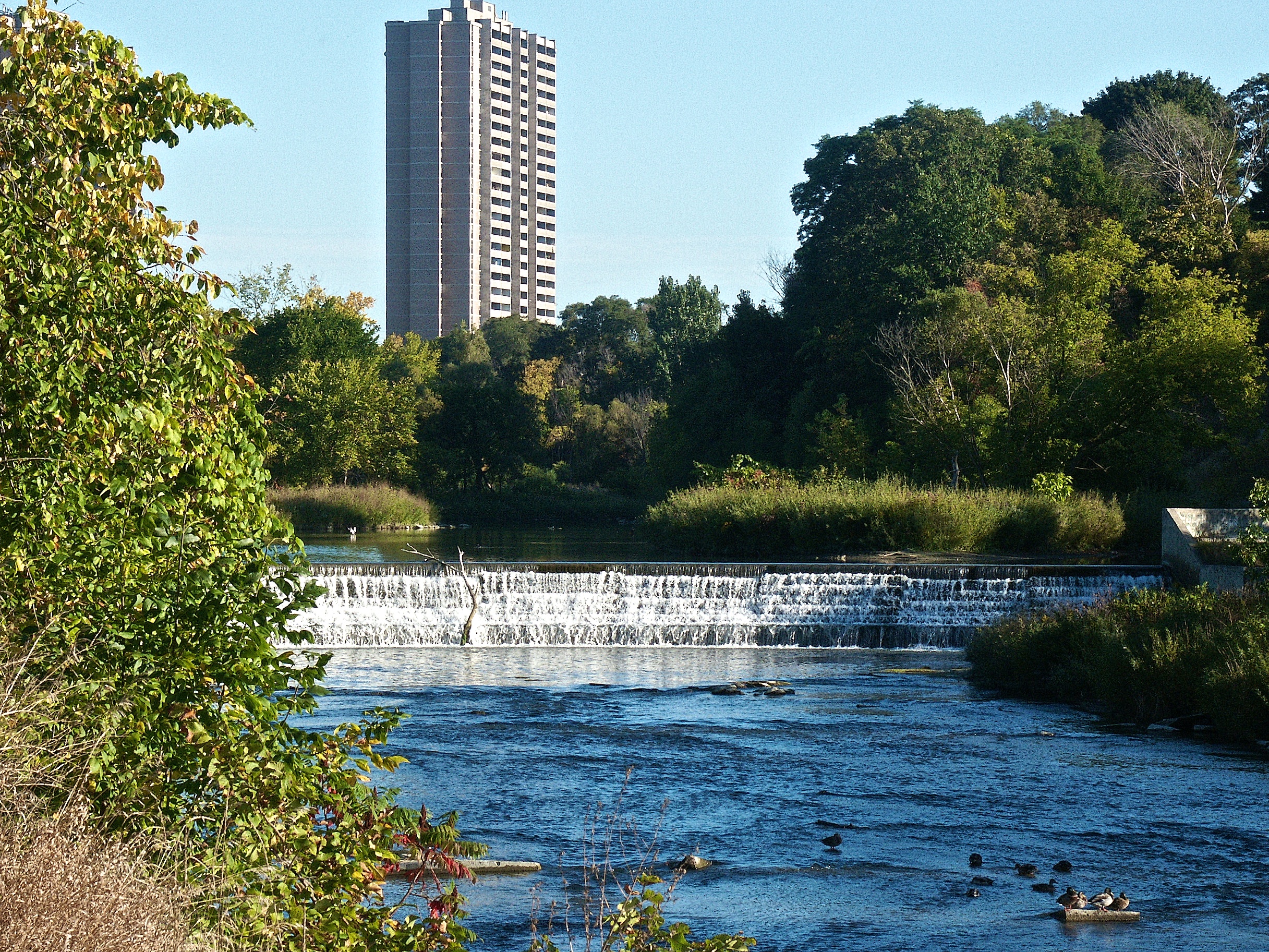
The difference between early fall and early winter is illustrated in these two photographs; no prizes for guessing which one was taken today. The park literally teems with billions of creatures (mainly insects) at the end of summer while on a day like today wildlife seems strangely absent, even though a fair number of animals stick around by hibernating or finding winter food.

In addition to seasonal differences, the two photographs are about 8 years apart which can be seen by the growth of the bushes on the left.

Copyright © 2013 by Roy Murray, all rights reserved.

29 September 2004.

Looking at today’s image, it’s hard to imagine anything surviving but in less than three months, the park will begin to stir as the sun’s warmth returns.

Copyright © 2013 by Roy Murray, all rights reserved.

6 January 2013.

Off topic rant/ The apartment building in the photographs is one of a pair of notorious carbuncles built on Weston Road in the 1970s. These have been the subject of many a city compliance order and have become in some ways too big to fail. The landlord was recently given $1.8 million of taxpayers’ money to fix up the place. Hopefully the gift of a GO Station moving onto the doorstep should spare the taxpayer from further assistance to this alleged capitalist enterprise. /rant

Dog owners

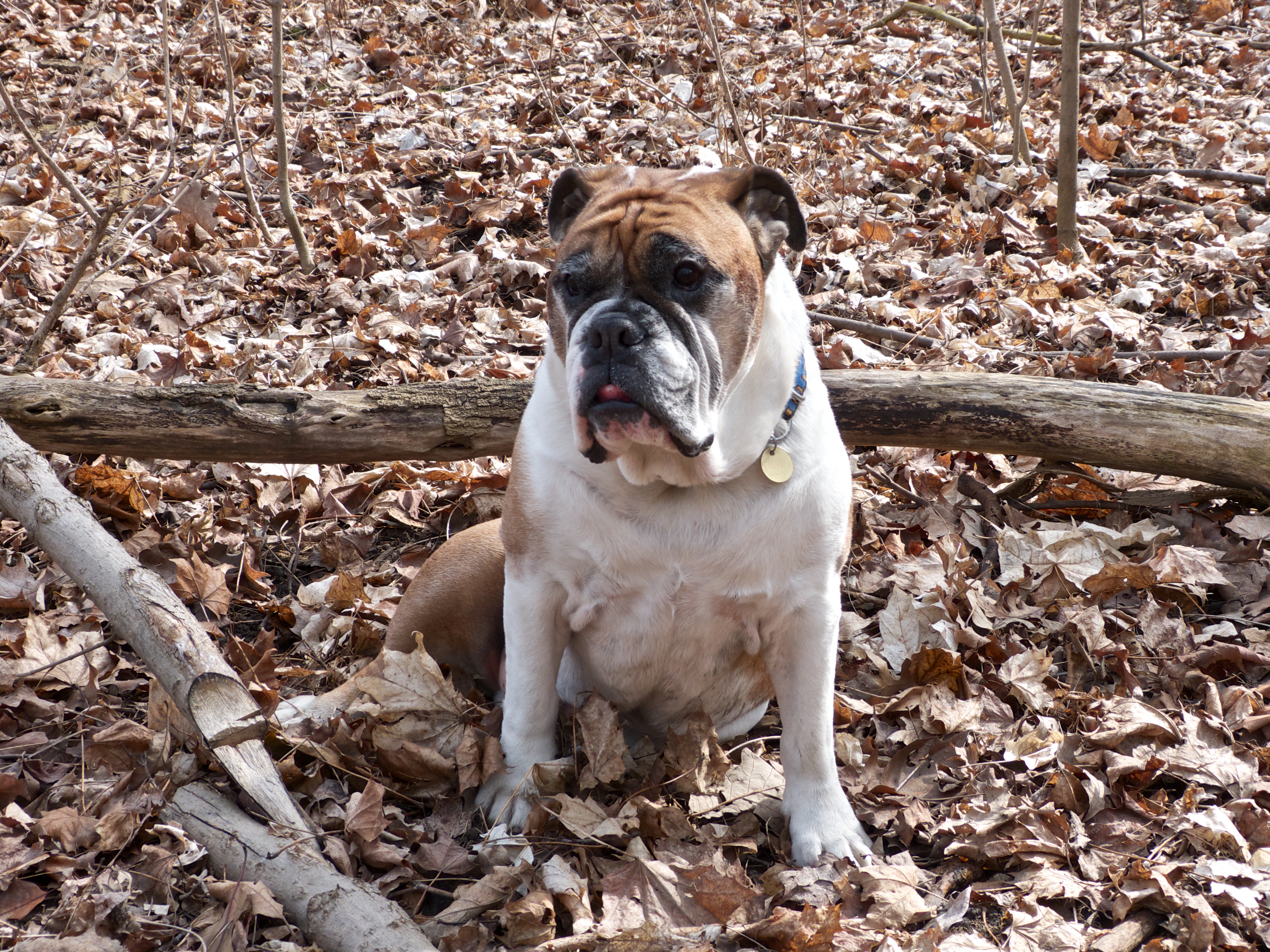
My dog.

My dog, Mugsey

I’m a dog owner and I try to be responsible. The park is a wonderful resource for dog owners and many of us use Raymore Park quite a lot (hence my daily photographs). Some are very responsible while others are a pain allowing their little (or not so little) precious to run amok, chasing wildlife and bothering people or attacking dogs on leash. Then there is the delicate matter of dog poo. You know that when someone brings more than one dog to the park and then lets them off leash, there will be no poo pick up. Not that this is necessarily a problem. Poo is part of nature and it acts as a fertilizer if the dog is healthy and the poo has been carefully placed in the right location. When it’s allowed to drop and fester on park pathways, or left where people are in danger of stepping in it, that’s just wrong, not to mention anti-social. There’s another pet peeve while I’m in rant mode. Some mental midget diligently picks up their (large) dog’s droppings, placing it in white plastic bags. These bags are then carelessly left lying around thus preventing the contents from returning to nature, and littering at the same time. What a douche!

I’d love to catch them doing this! Just once!

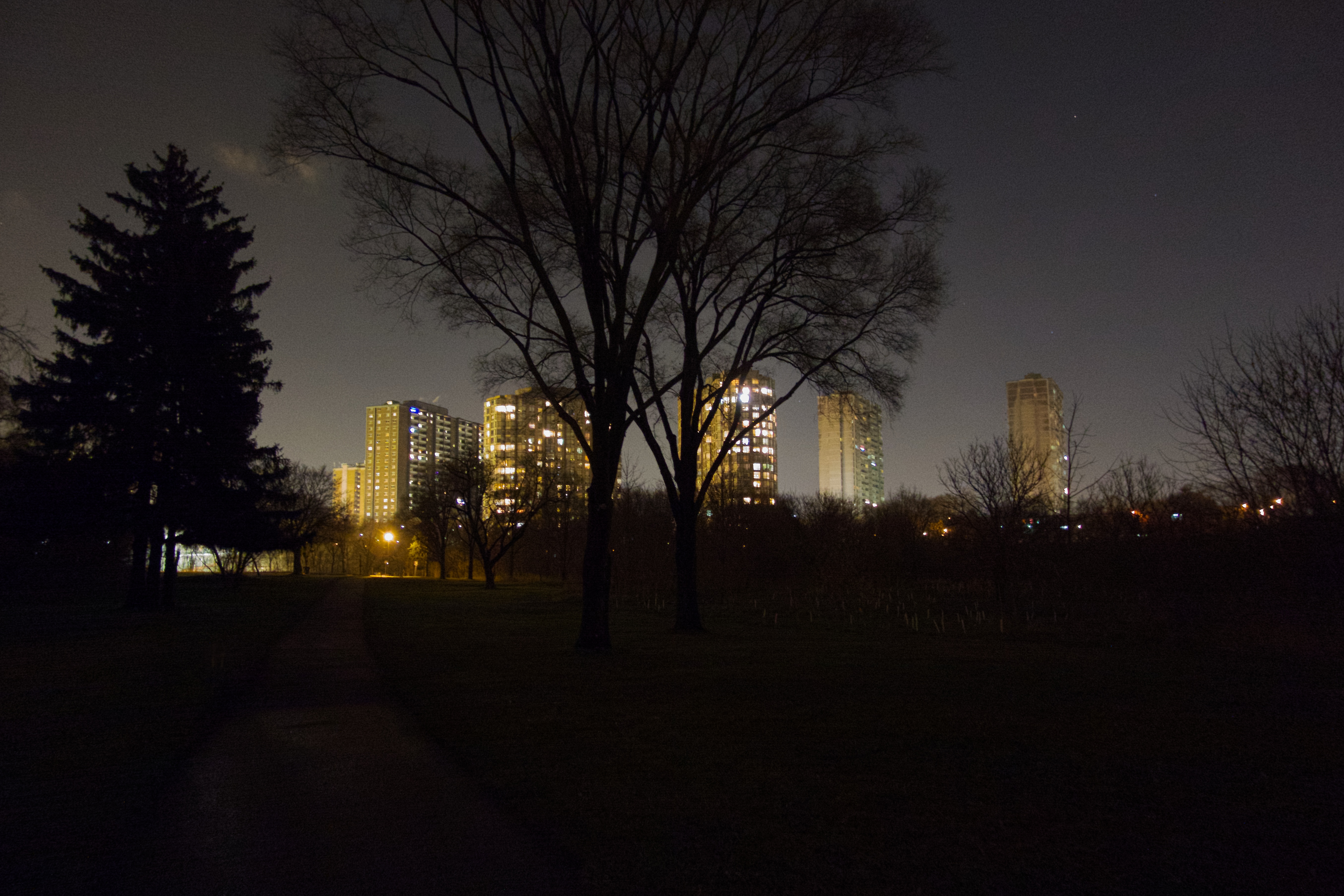
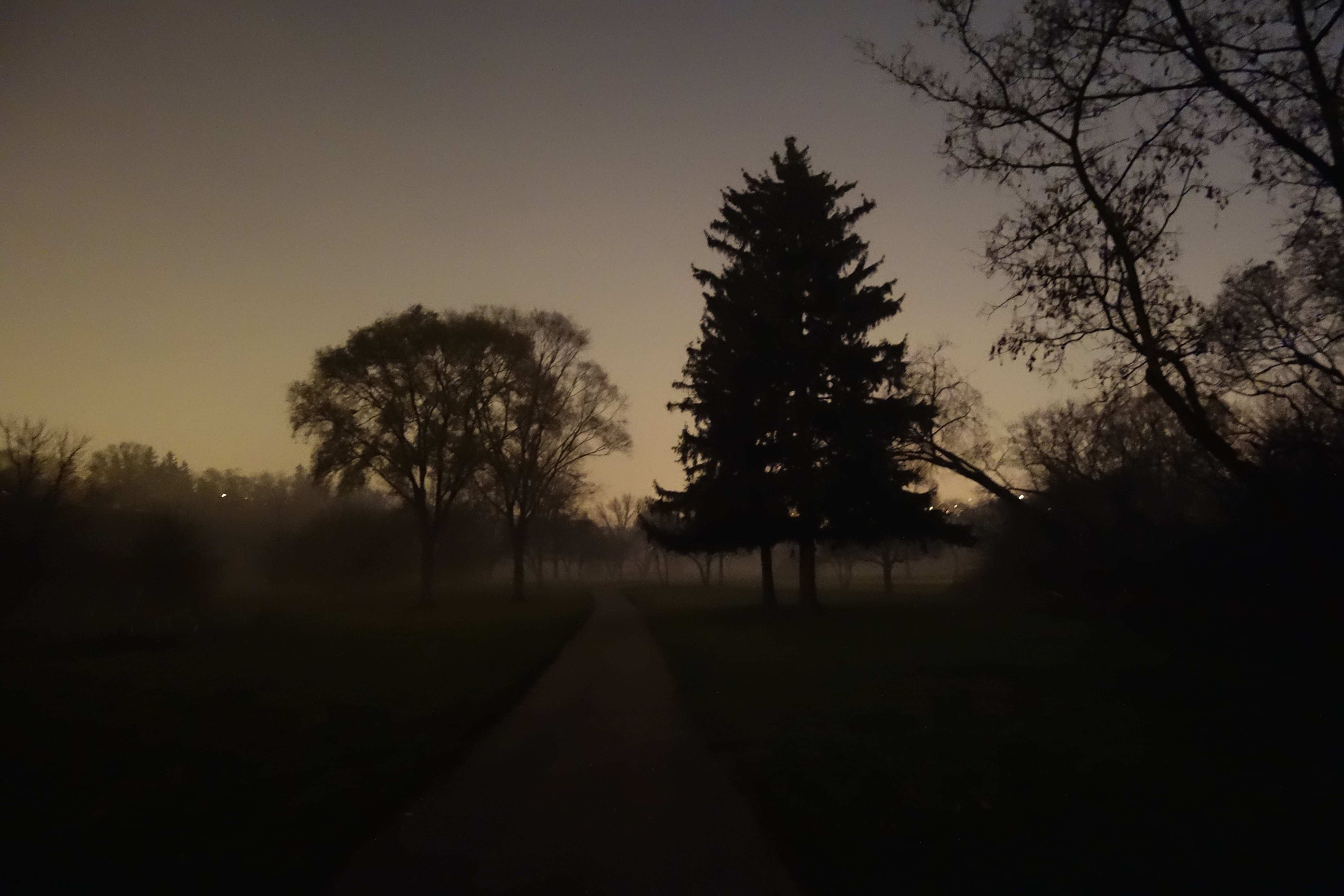
Raymore Park never sleeps

Copyright © 2013 by Roy Murray, all rights reserved.

Bright lights looking north towards Weston but dark in the park.

Copyright © 2013 by Roy Murray, all rights reserved.

Looking south, all is dark.

In winter, deer, muskrats, coyotes and foxes are seen occasionally in daylight; especially when the river is frozen. In fact, we get pretty well everything you would expect in the countryside, except for bears and wolves since the river valley acts as a wildlife corridor.

Even in daylight, few people use the park. Although there is a large population surrounding it, most people just aren’t interested. At night, especially in colder weather and with longer hours of darkness, people are even more scarce and wildlife is able to relax a little more.

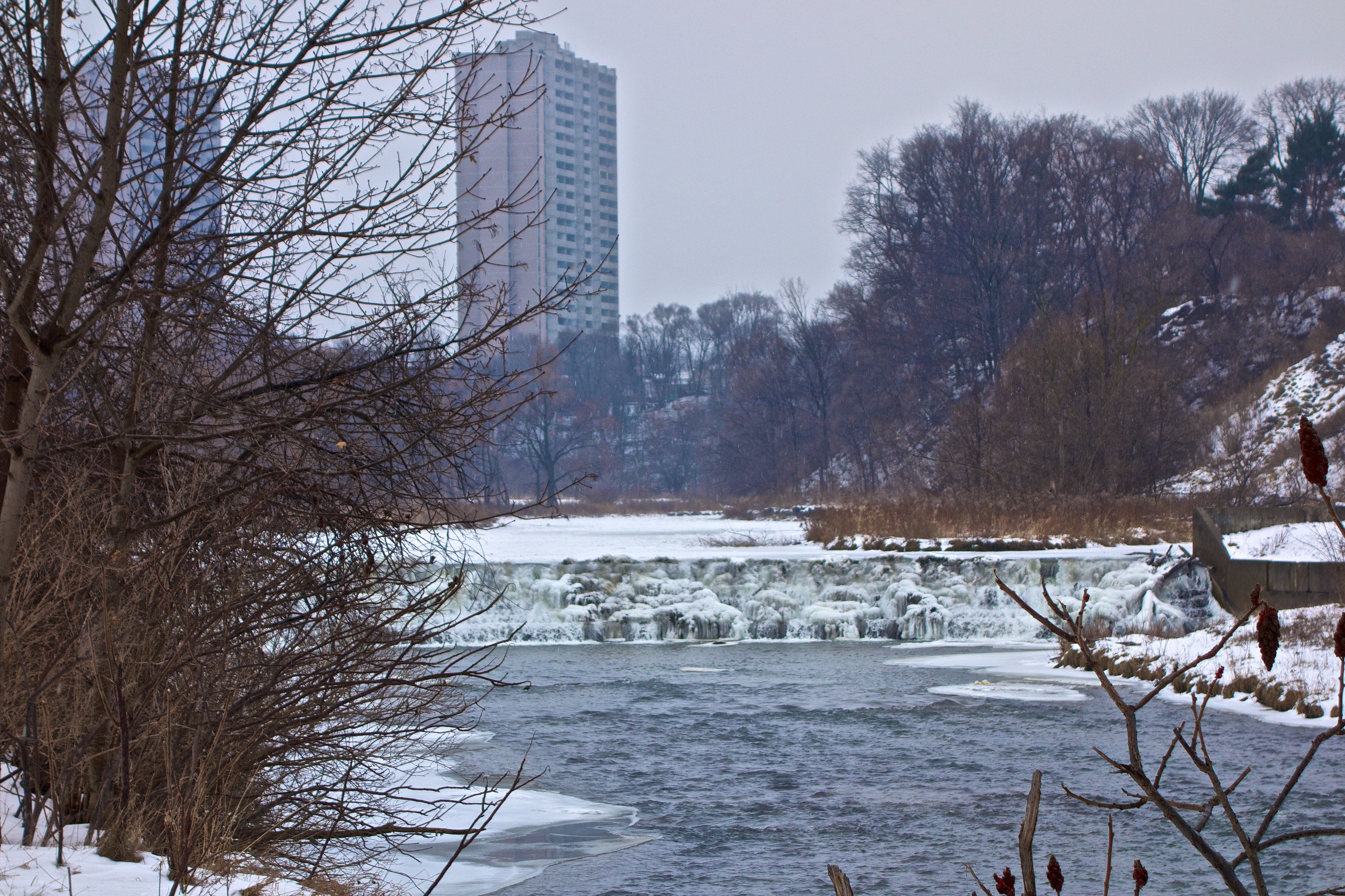
Down by the dam.

Copyright © 2013 by Roy Murray, all rights reserved.

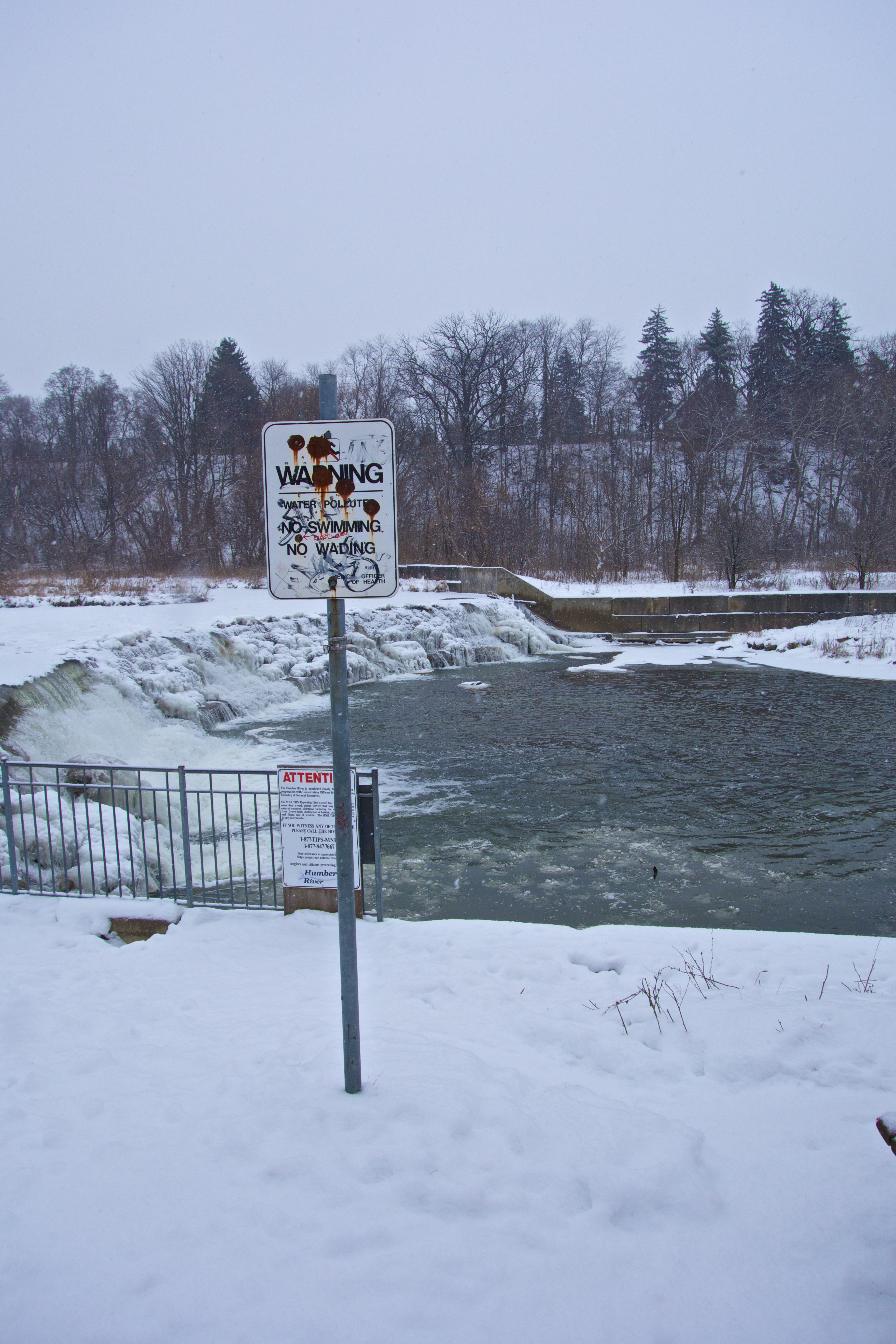
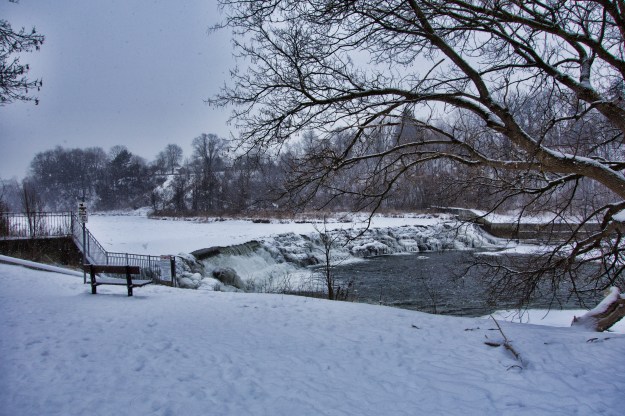
Frozen spray builds up on the steps of the dam. Can you see the sign to the left of the bench?

2013 01 03.

The dam in Raymore Park was one of several constructed after Hurricane Hazel in 1954. Designed to come into action during times of heavy rains, it’s purpose is to ease the pressure on downstream areas by flooding the nearby plain upstream. Unfortunately, this dam is so tall it blocks the passage of migrating fish. To solve this problem, a denil fishway (better known as a fish ladder) was constructed around 2000 at a cost of around $250,000. The idea is to allow migrating salmon and trout to climb this otherwise insurmountable barrier by building a series of easily managed concrete steps. Water flow is moderated using metal baffles at each step. The entrance to the fish ladder is on this side of the dam at the base of the falls and fish can be seen congregating there in spring and fall migrations (along with unscrupulous fishermen). The ladder was expensive and considerable ongoing maintenance is required before each migration to clear twigs and other debris placed there by opportunistic beavers. I always joke that it would have been cheaper to transport the fish by taxi.

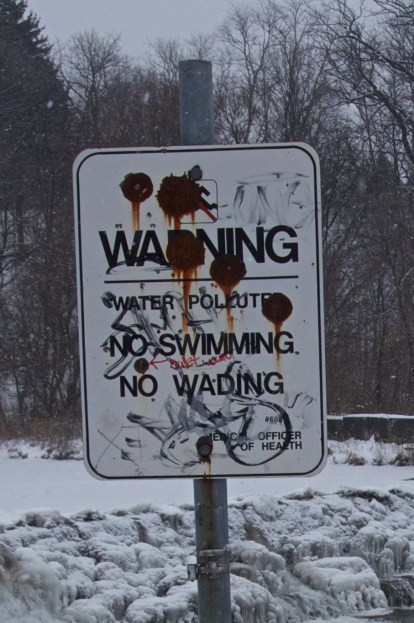
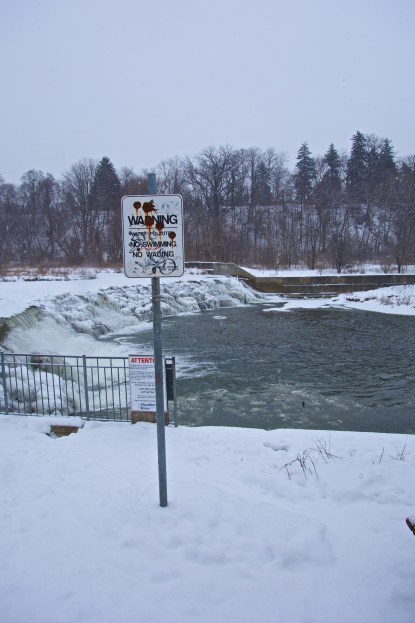
The dam is a pretty sight in all seasons. However, just as people might think they are in some idyllic place – a nirvana in the city, the sign by the dam is designed to knock all that nonsense out of you.
Copyright © 2013 by Roy Murray, all rights reserved.

How many bullet holes can you count?

In addition to informing us that the water is polluted, somebody has told us that the sign is riddled with bullet holes by helpfully pointing out one of them. In other words, if the pollution in this beauty spot doesn’t get you; a cap in your ass might. I wonder who’s doing the polluting or if this ancient sign is relevant any more? Obviously this sign has just faded into the background and park officials no longer see it.
Copyright © 2013 by Roy Murray, all rights reserved.

This tourist moment is brought to you by…

That sounds like a job for me – phone the city and get it removed.
Happy New Year!

Copyright © 2013 by Roy Murray, all rights reserved.

Looking south towards the apartments at Scarlett and Eglinton.

2013 01 02

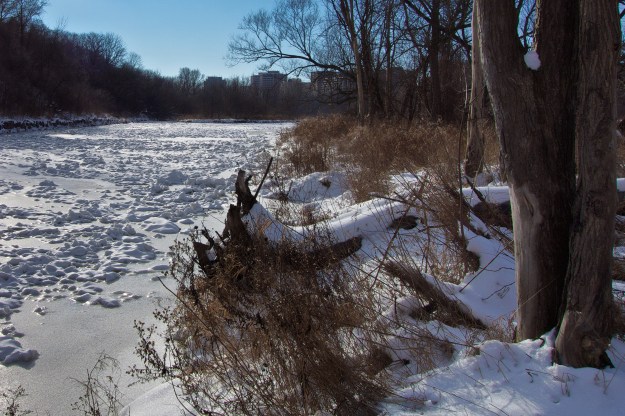
The cold continues and the Humber River ice is thickening. At this part of the river, water never freezes with a smooth surface – it’s just lumps of ice that have floated downstream and frozen together at this point. As winter progresses, the thickening process continues, snow and sometimes rain will be added. During a thaw, water flow increases and the ice forms a dam. Eventually, the ice breaks up and floats ashore in huge thick chunks (which I have never managed to witness).The trees along the bank bear the scars of previous years’ breakups.

31st December 2012; Not so welcome ‘wildlife’.

DSC00344

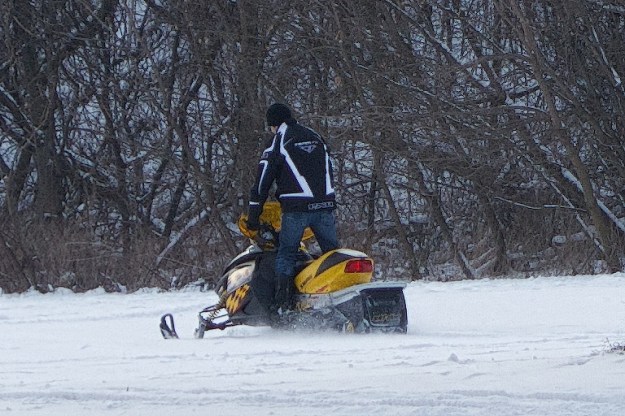
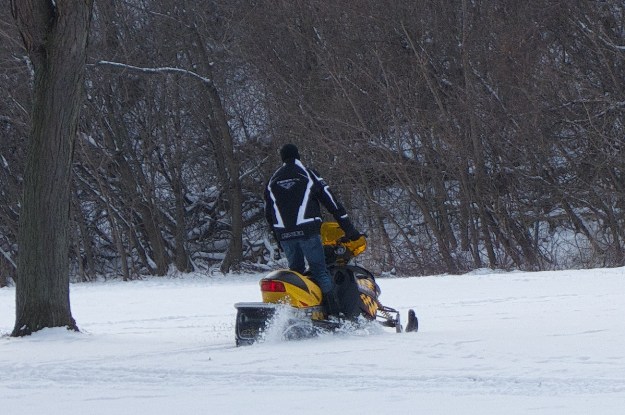
The lesser spotted Ski-donkey.

A disturbance in sight, sound and smell today as the calm of the park was shattered so that the gentleman riding could possibly compensate for his small penis.

DSC00343

This is the second occasion on which he has made a foray into the park (which clearly prohibits motorized vehicles). He focussed on driving around the baseball diamonds and stayed well clear when he caught sight of my camera; thinking he was safe from photography at this distance! He seems to be entering the park from the southern end.

More on the camera later.

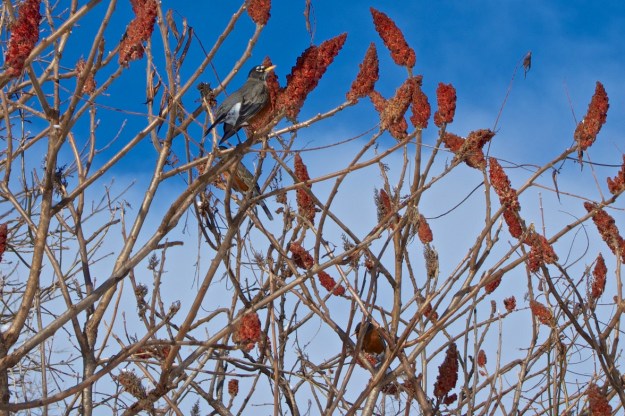
30 December 2012; Robins are still around

Copyright © 2012 by Roy Murray, all rights reserved.

Last winter was unusually mild and the robins never left. Today there was a few of them feeding on sumac flowers about half way down the park and not at all bothered by my presence. After a couple more centimetres of snow yesterday, the park is looking at its winter finest.

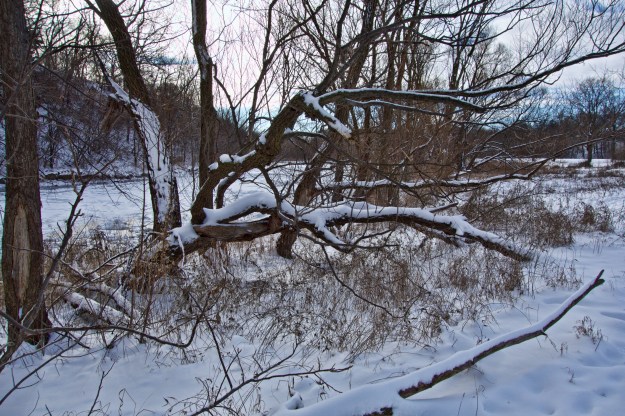
Copyright © 2012 by Roy Murray, all rights reserved.Down along the Humber, there is a tangle of trees that have been battered by river ice over the years. A fresh covering of snow always adds to the charm.

Winter digs in; 29 December 2012

Copyright © 2012 by Roy Murray, all rights reserved.

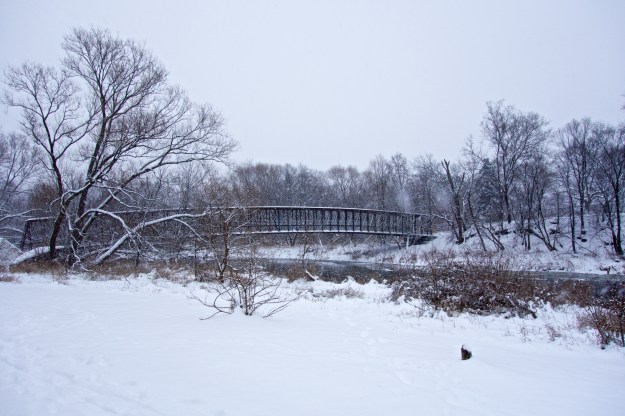
Humber River footbridge with an abutment of the old suspension footbridge bridge visible on the far left.

Another snowfall today and the view towards Raymore Park is very ‘picture postcard’ seasonal. This shot is taken during snow from Lions Park on the other side of the footbridge. This crossing over the Humber, installed in 1995 replaced the suspension footbridge that was swept away during Hurricane Hazel in 1954. The old footbridge was actually blamed for many of the deaths during the hurricane as it formed a dam and directed the flow of water towards housing on lower sections of Raymore and Gilhaven Drives. Interestingly, the abutments of what is probably the old bridge are close by the footbridge and still visible.

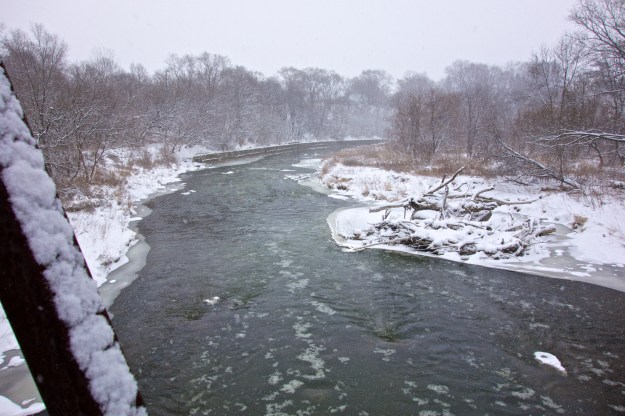
One abutment is on the Weston side and the other is currently hidden under the driftwood on the right bank in the second photograph.

The river flows quite quickly under the bridge and will take a few more days of these temperatures before freezing over. Downstream, around the bend, the river is already covered with ice.

Driftwood covers the abutment; centre right of the picture.

Looking downstream from the bridge.