Category Archives: Raymore Park Footbridge

Exploring Toronto’s Aerial History: Raymore Park Before Hurricane Hazel

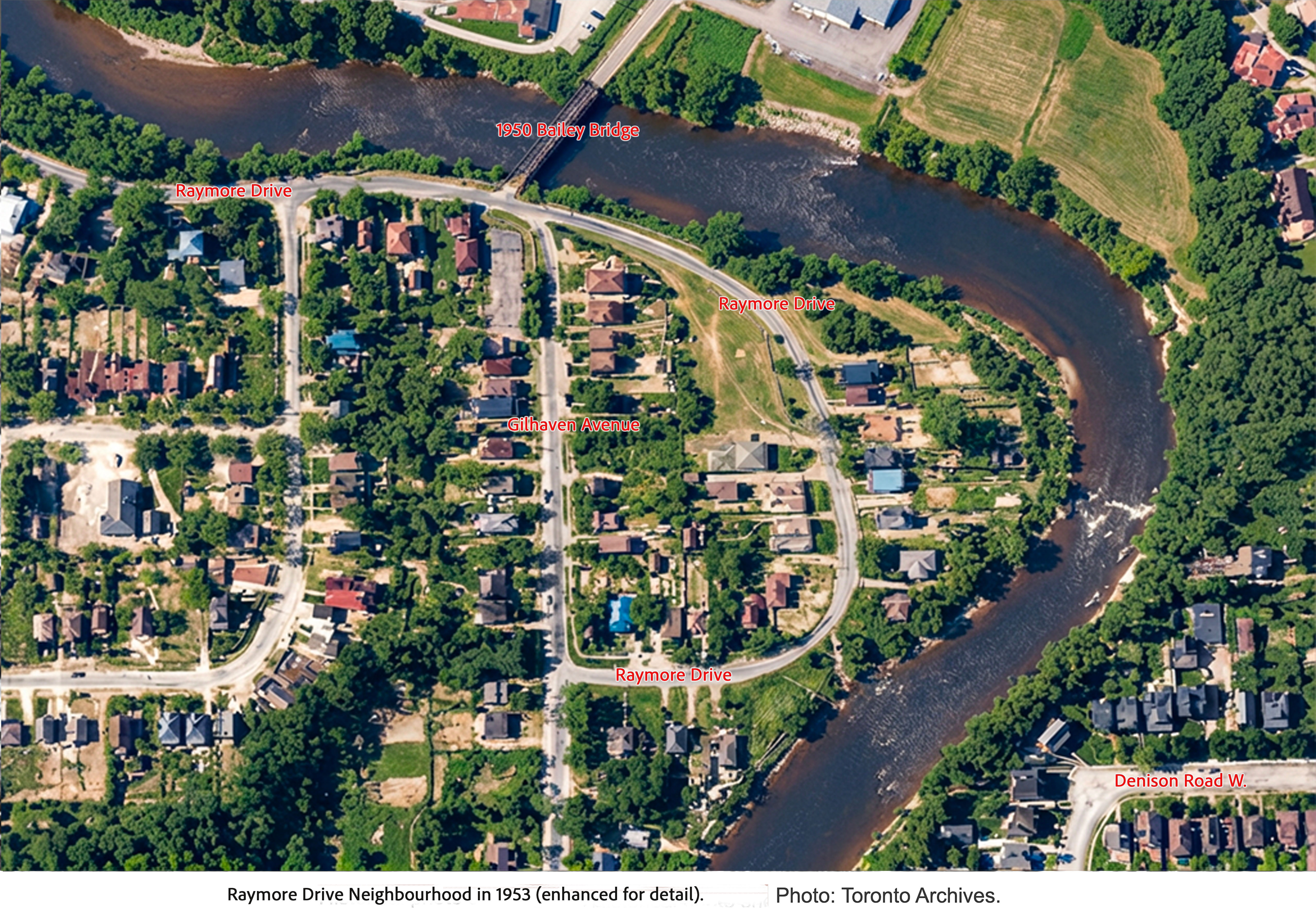
In the City of Toronto Archives there are extensive aerial photos of the city taken between 1947 and 1992. They are black and white images but reasonably detailed. While researching Hurricane Hazel I was able to download an image of what is now Raymore Park to reveal the community that existed just over a year before Hurricane Hazel struck in October 1954. Colourizing and sharpening the photo makes it resemble today’s satellite images (details are unchanged but colours are arbitrary and not historically accurate) from Google and help appreciate the extent of community that existed back then. I have labelled relevant streets.

Raymore Drive extended into what is now the park, hugging the river’s edge before heading south and looping back onto Gilhaven Avenue.
Click to enlarge.

I was surprised at the size of the community with houses occupying much of the flood plain land and stretching a considerable way down Gilhaven Avenue (now the approximate location of the bike path). It looks as if it was an idyllic place to live – riverside dwellings but with city amenities. There was even a beach for the kids. Many of the homes were cottage style on blocks while some had full basements. Most are a lot smaller than our modern dwellings. The homes destroyed seem to have been along the river’s edge at the far right and lower edge of the peninsula. The people who died lived on this stretch of Raymore.

At the top of the image, on the other bank of the river, parts of the (now demolished) water filtration plant can be seen.

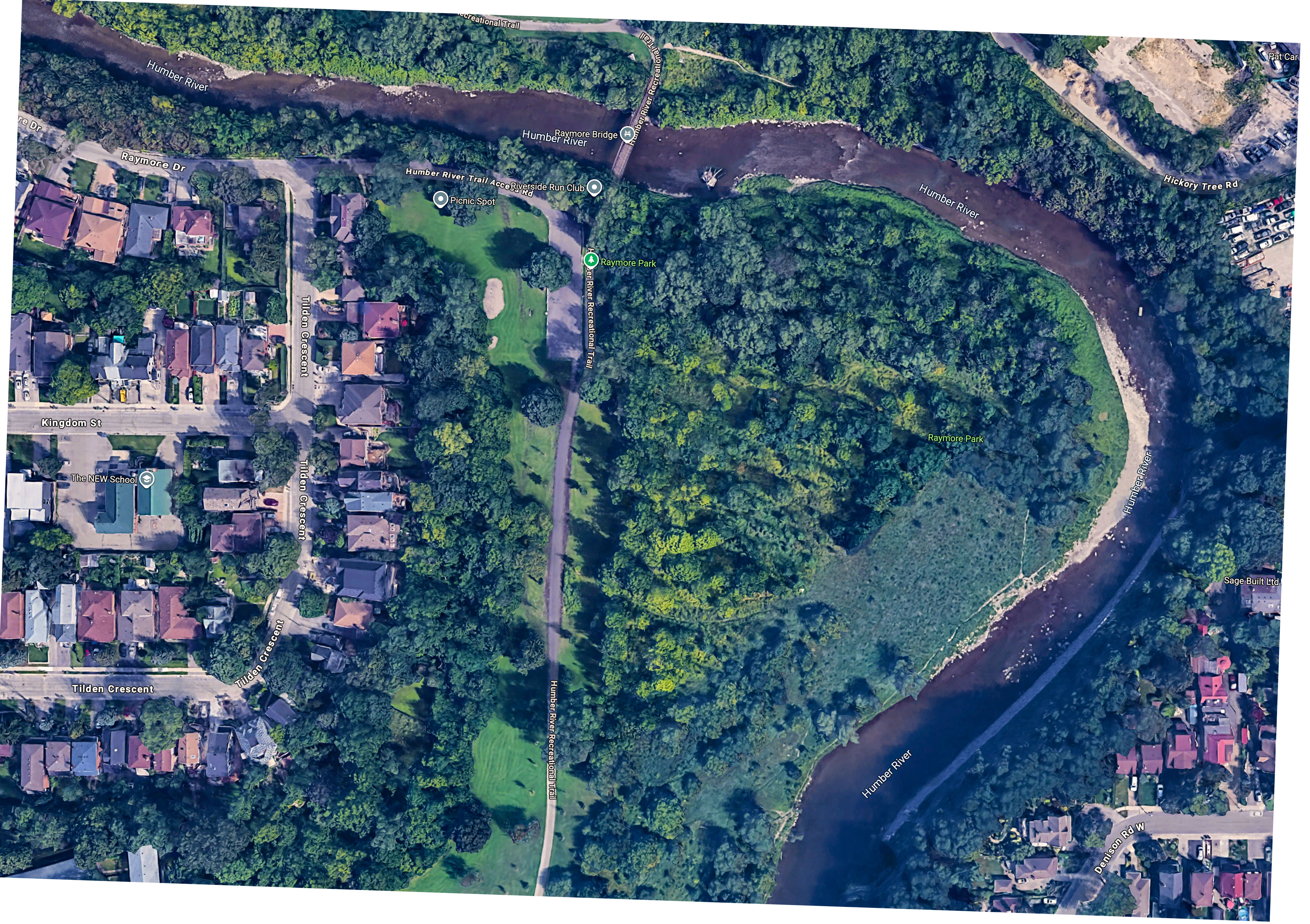
Below is a recent satellite image and I have adjusted the size and rotation to match that of the 1953 photo.
From Google. Click to enlarge.

The Bailey Bridge seen in the upper photo was put there in 1950 and both of the old abutments can be seen to this day. The current footbridge was installed in 2005.

Some of the homes along what is now the bike path were undamaged apart from flooded basements but authorities at the time elected to remove all homes in the flood plain leaving only Tilden Crescent intact. Raymore Drive was ended at Tilden and Gilhaven Avenue ceased to exist.

Very few of the buildings on surviving streets from 1953 exist today – I recognize the house that once stood at the east corner of Raymore and what is now Tilden, Westmount Gospel Chapel on Kingdom and some homes on Denison. Readers are welcome to add discoveries of their own.

Signs of Fall

Fall looks as if it’s here to stay as temperatures are set to lower sharply next week. The first dip below zero of the season is forecast for October 30 which is slightly earlier than Toronto’s average of November 1-10.

Here are some recent images of the park as it eases into the approaching winter.

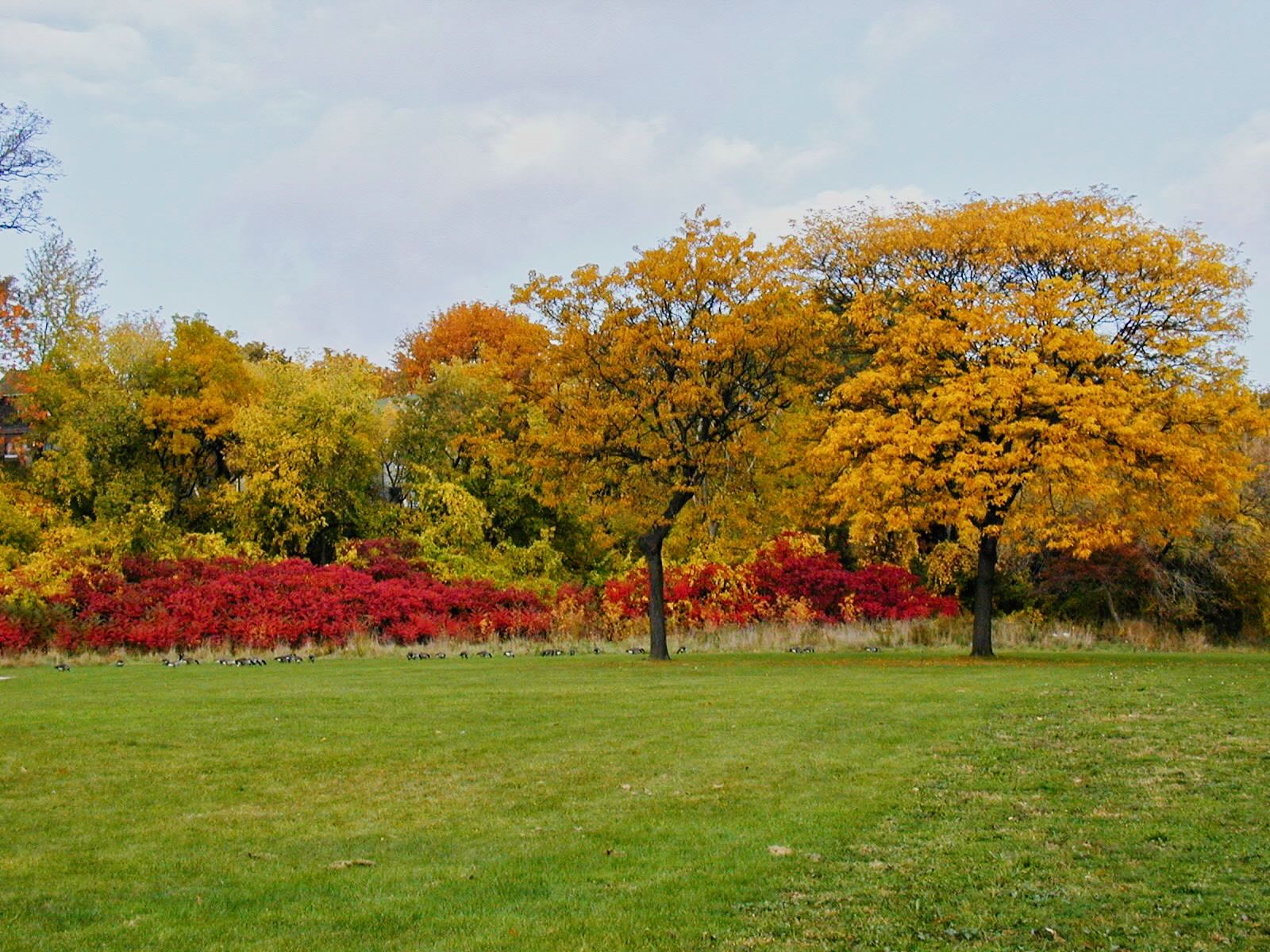
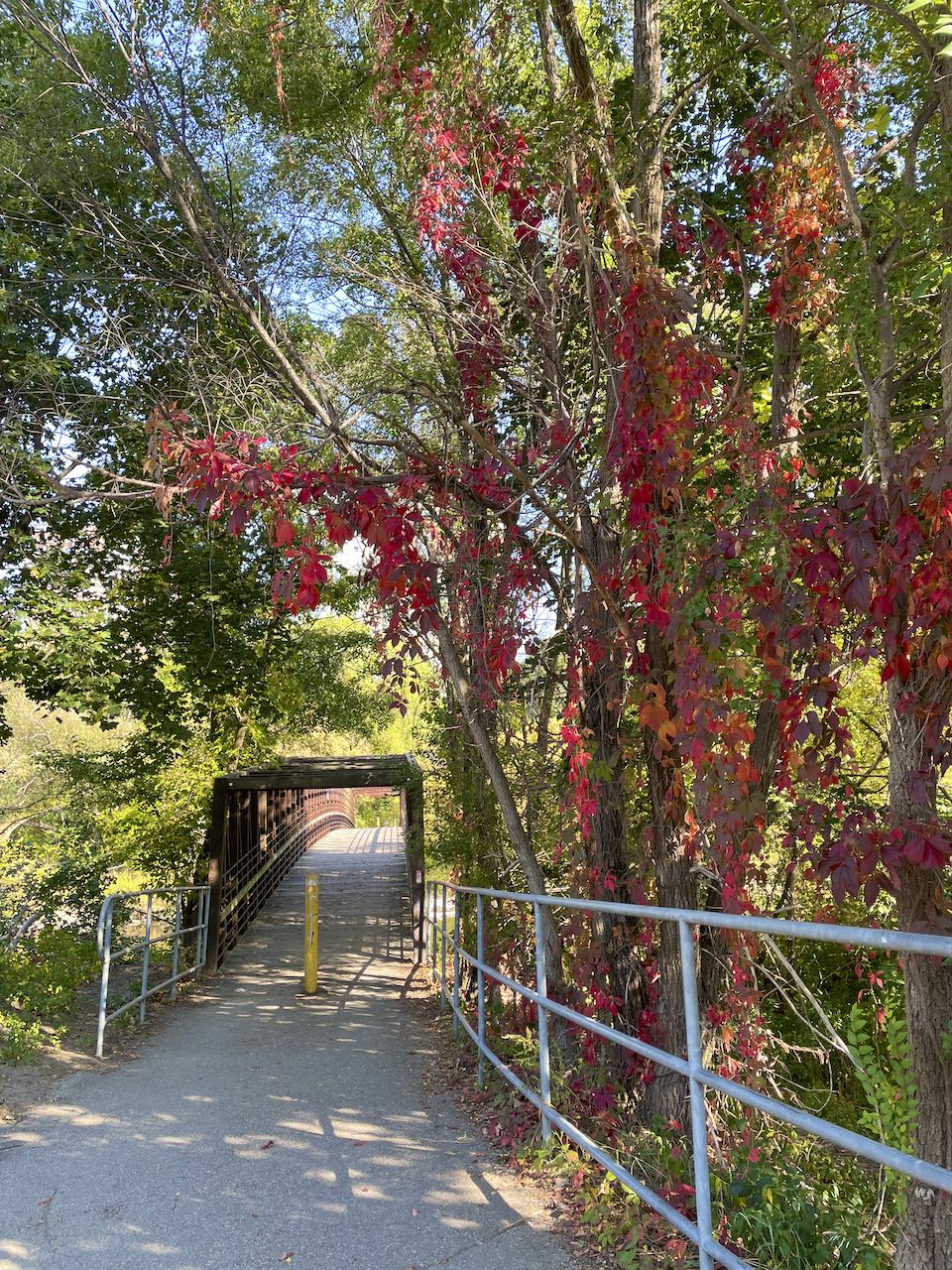
Colourful Boston ivy decorates the Humber footbridge entrance. October 2.
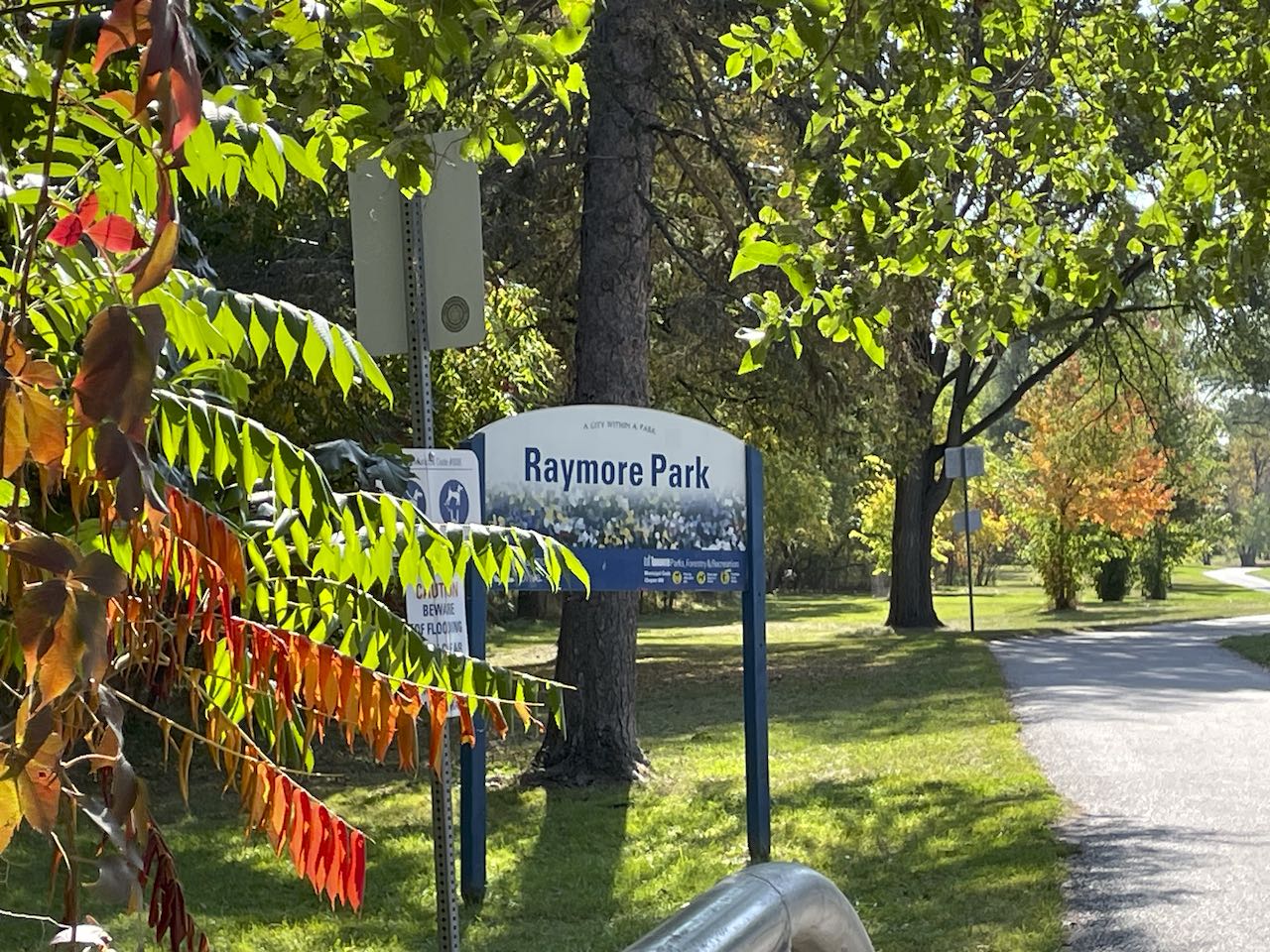
Sumac beginning to turn colour by the park entrance. October 2.
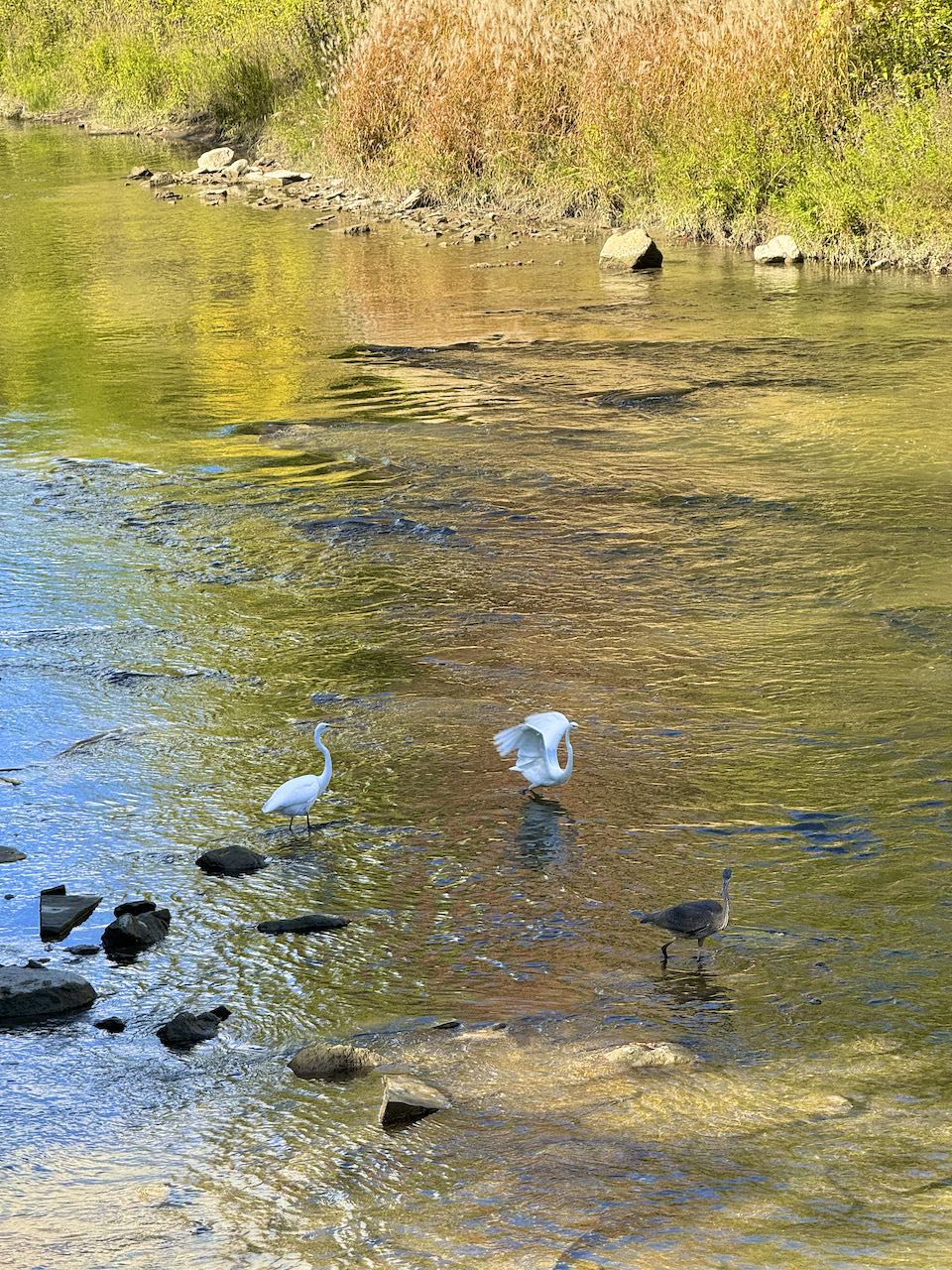
Two egrets and a blue heron. The egret (centre) was just about to chase the heron away. (October 12)
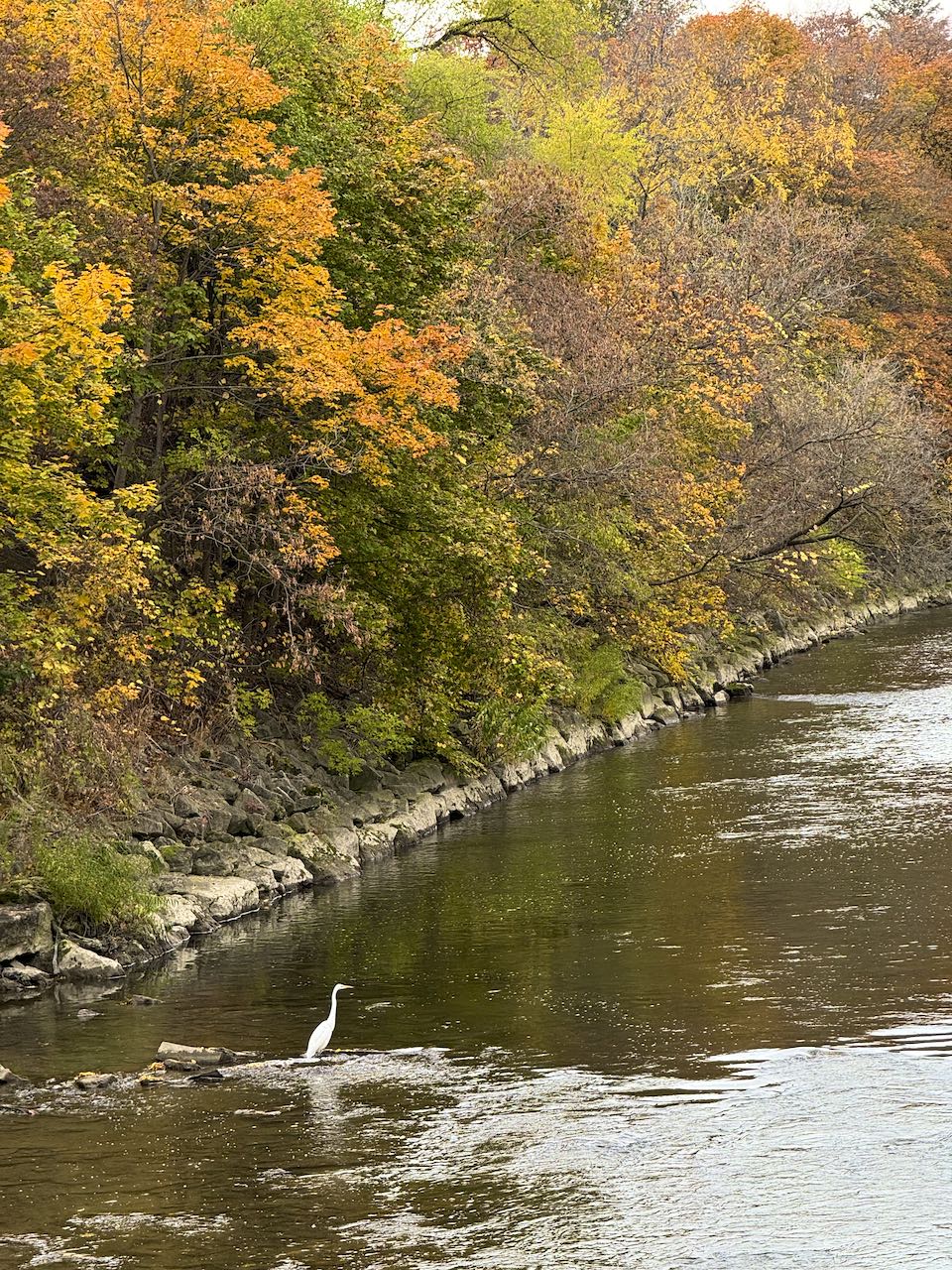
A lone egret with fall colours in the background. (October 24)
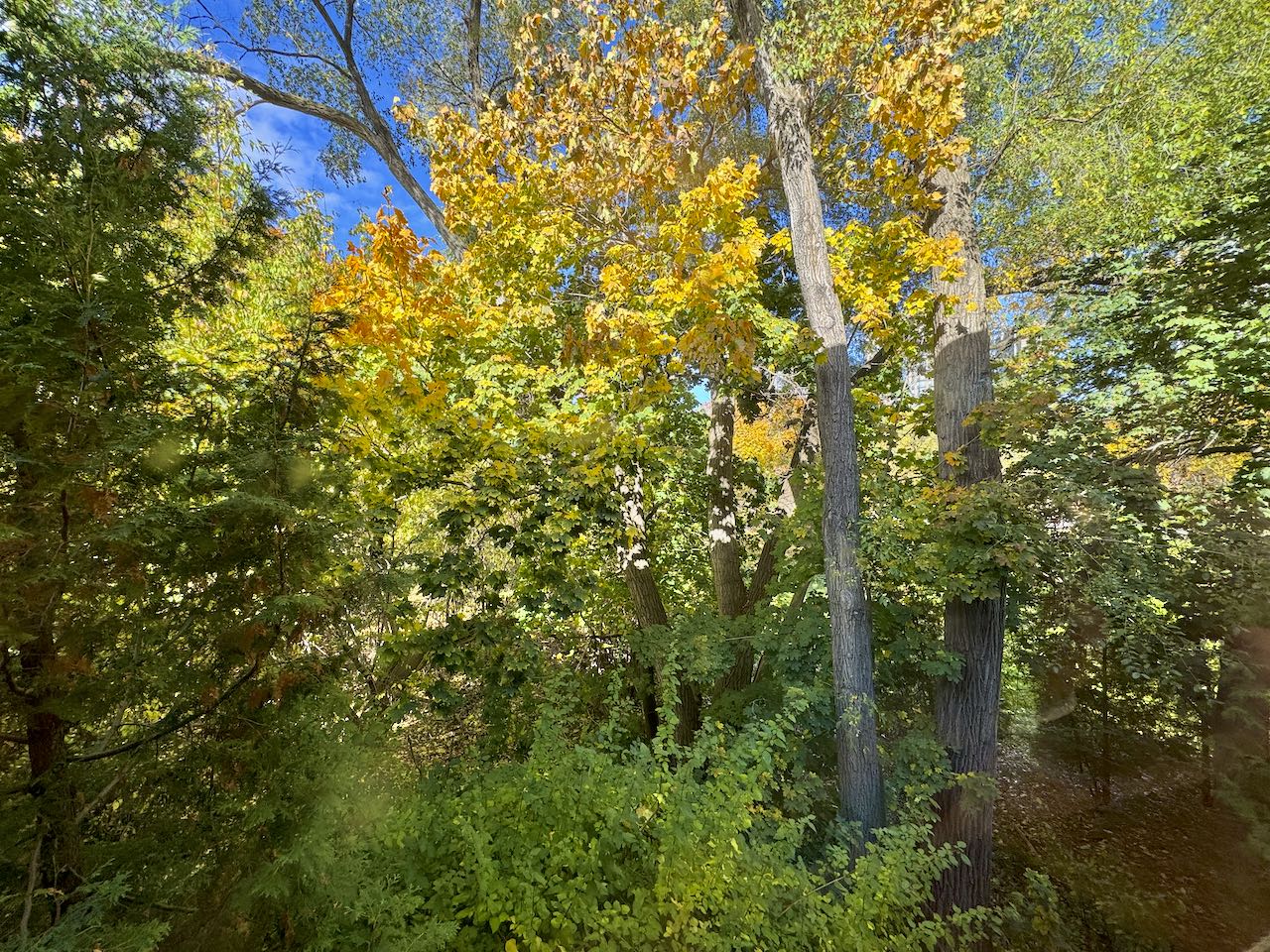
Norway Maple foliage is more colourful this year. October 28.

Raymore Park: changes over the years – Part 1.

This year marks 30 years since I started coming to Raymore Park. During that time many changes have occurred, most of them reflecting adjustments in park philosophy and management.

1. Pesticides:

Herbicides were sprayed here – just north of the current off-leash area. October 2000.

Back in 1993, park staff would spray grassy areas with herbicide in order to keep weeds down and in particular, poison ivy. They used Roundup (Glyphosate) which is pretty potent. Caution notices were placed on the grass informing people that weedkiller had been sprayed but these didn’t last long. At that time, much more of the park was grass (more on that in another article). Despite the claims of Monsanto, Roundup when sprayed over such a wide area is probably terrible for wildlife and dogs. The City banned pesticides in theory in late 1998 but the practice continued for a while after that according to this article from 2000.

2. The Humber Footbridge.

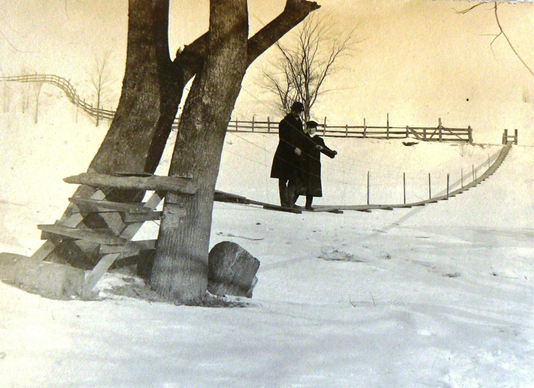
The 1917 ‘swing’ footbridge that was condemned and replaced in 1950. Photo via Weston Historical Society.

When Hurricane Hazel struck in 1954, a four-year-old footbridge over the Humber was swept away. This link between Westmount and the stores in Weston wasn’t replaced until 1995 some 41 years later. The bridge gets a substantial amount of use from cyclists, sightseers and commuters who can be whisked to the airport or downtown in about 15 minutes via the UP Express on Weston Road.

Read this excellent article on the three Weston footbridges from the Weston Historical Society.

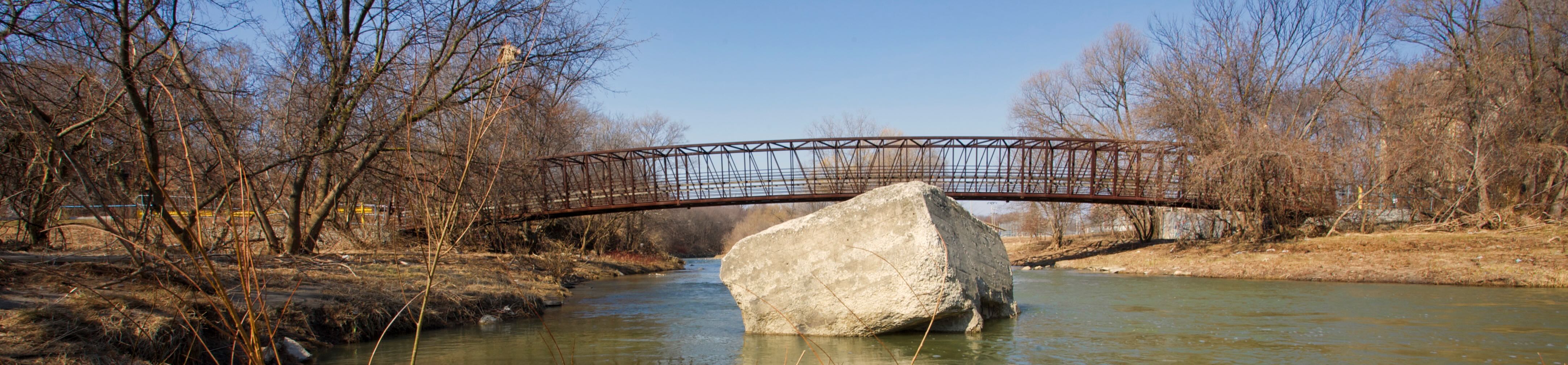
The bridge with an abutment of the 1950 version in the foreground; looking upstream in March 2009.

3. Garbage Containers.

Garbage containers were either lined wire-mesh bins or the occasional re-purposed oil drum back in the 20th Century. There were no recycling containers back then – just open-topped receptacles that went uncollected during the winter. The cans and baskets weren’t replaced with the current wheeled carts until 2012.

Even with our clearly marked carts, park users are fairly indiscriminate where they toss their waste, so the recycling bins become contaminated and their contents worthless. As a result, garbage and recycling are collected by the same truck and the contents lumped in altogether.

From February 2004.

Humber Gap project gets deep-sixed by Ford government.

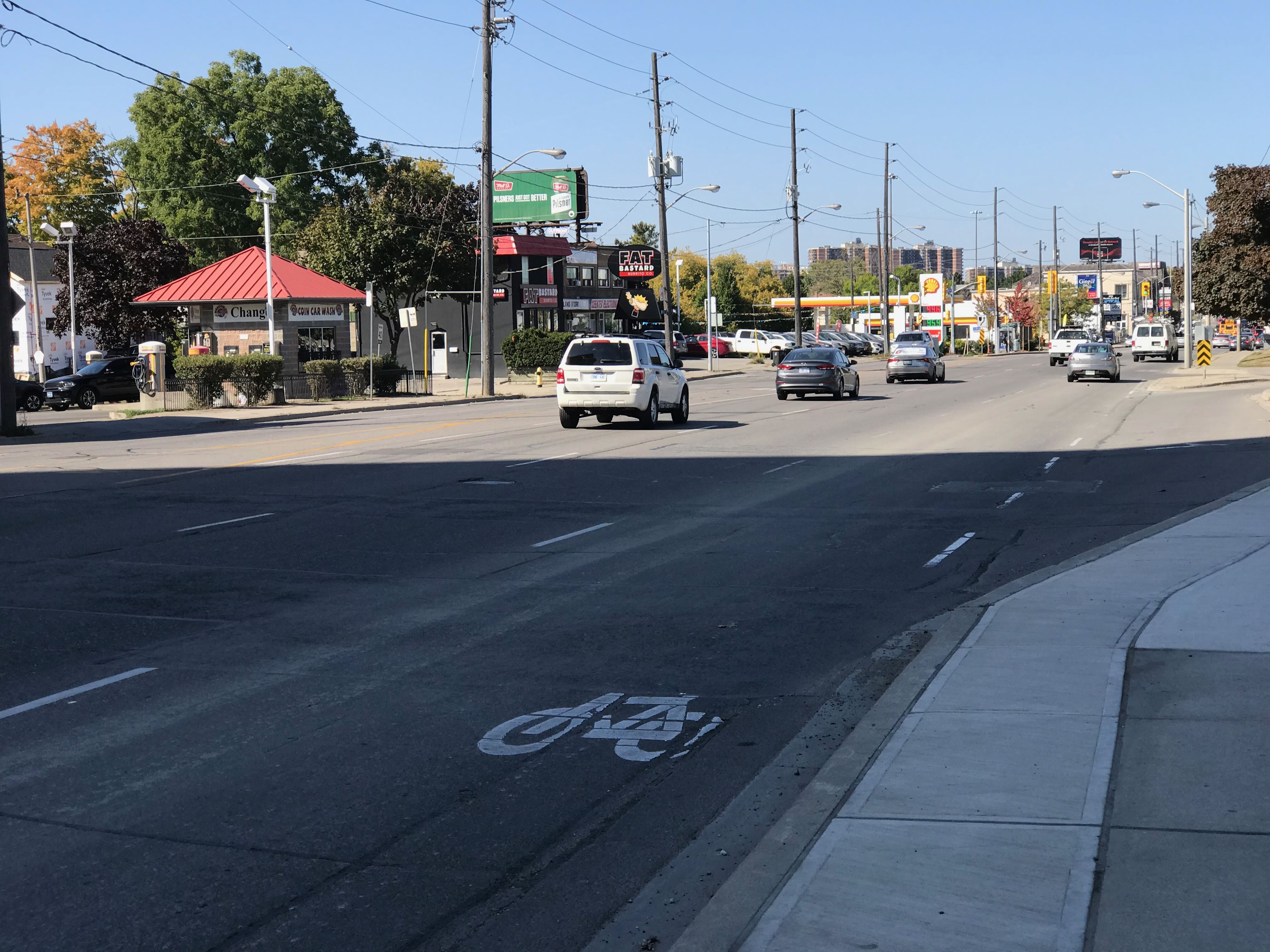
The Humber Gap is the name of the missing segment of the Humber Trail between Mallaby Park and Cardell Avenue. Apart from the infamous gap, the Trail connects Brampton to Lake Ontario. At the moment, cyclists wishing to proceed north must climb a hefty set of stairs then risk life and limb on busy Weston Road which is optimistically painted with sharrows. These indicate that cyclists are to share the road with other vehicles without barriers or protection.

The perilous stretch of Weston Road with an actual sharrow in September 2020.

The Trail can be re-joined after deking into Cardell Avenue opposite the Loblaws Supercentre.

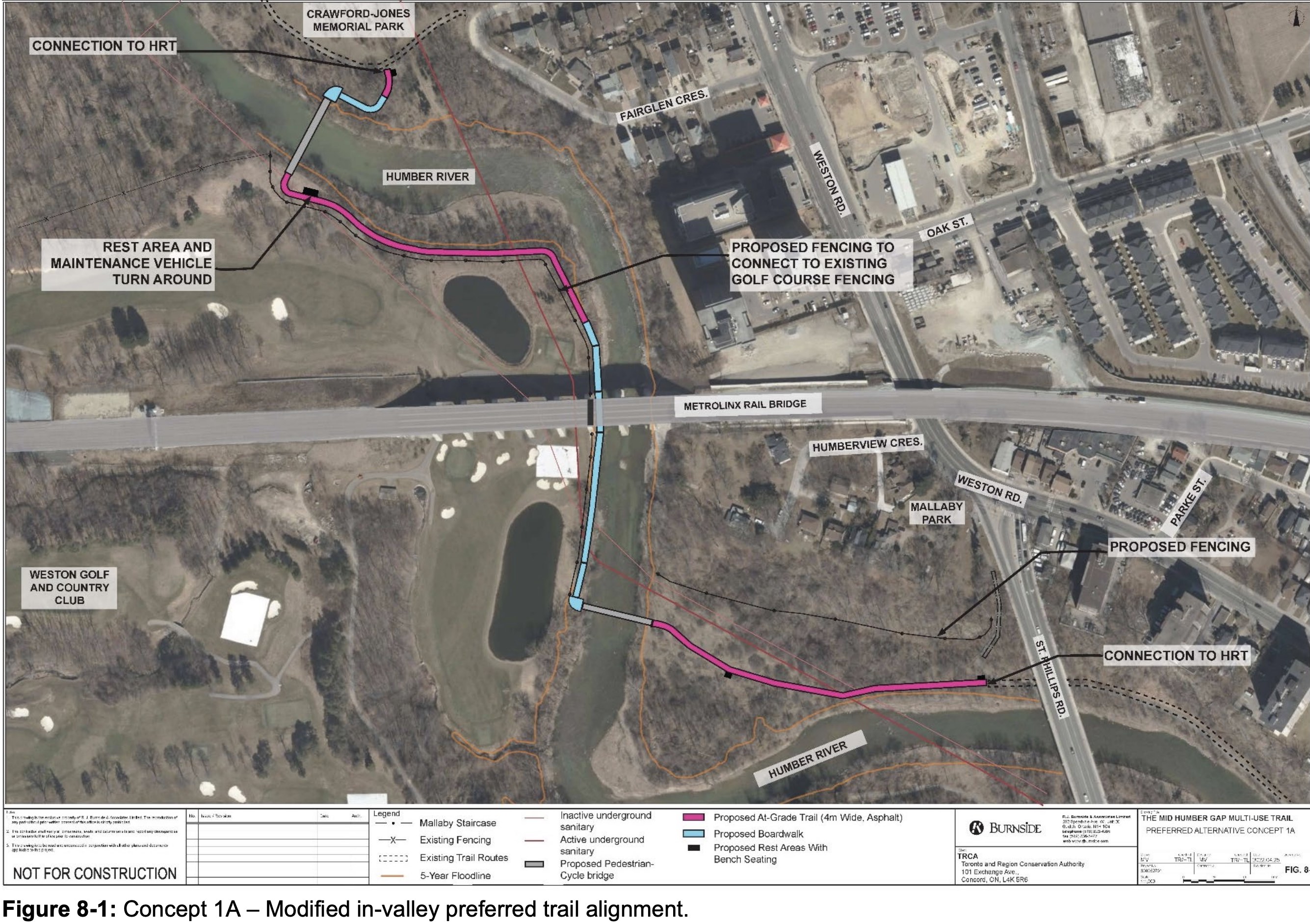
With much public encouragement, Toronto city planners have tried to solve the problem for years. Read this excellent blog post and the follow-up about the difficult choices that planners had to make. A ton of money went into designing alternative the routes, a Municipal Class Environmental Assessment and public consultations.

After receiving much input, a decision was made to create a path that stayed at river level, crossing the Humber twice as it navigated the patchwork of public and private properties along the way.

From: toronto.ca (click to enlarge)

One of the private properties affected is the Weston Golf and Country Club which had raised some concerns about safety of cyclists and pedestrians travelling along the edge of their property. WGCC were also concerned that flood events may wash away the new trail. The city assured them that fencing would be secure and that the trail would be built high enough to be safe from flooding. No doubt they weren’t keen on losing a strip of land as well as the issues that members of the public might bring to the course.

Luckily WGCC has friends in high places and out of the blue (literally) came word that:

On January 18, 2023, the Minister of Environment Conservation, and Parks (David Piccini) (the “Minister”) issued an order requiring that the City and TRCA carry out an individual environmental assessment of the Project (the “Order”). The Order states that allowing the Project to proceed on the basis of the MCEA (Municipal Class Environmental Assessment) would not be consistent with the purposes of the Act.

Conveniently, the reasons behind adding this additional environmental assessment are confidential but uncharitable speculators might assume that the WGCC membership doesn’t want the project to happen and they have pulled some strings. Not coincidentally, Premier Doug Ford lives about a kilometre away from the golf club.

That’s the thing with hiding behind confidentiality, people get to speculate. If I was a betting man I would speculate that the project is dead.

Raymore Park clean-up this Sunday.

On Sunday April 24, there will be a park clean-up organized by Brian MacLean who is also leading a campaign to set up a permanent memorial to the Hurricane Hazel victims, many of whom perished in a community now occupied by Raymore Park.

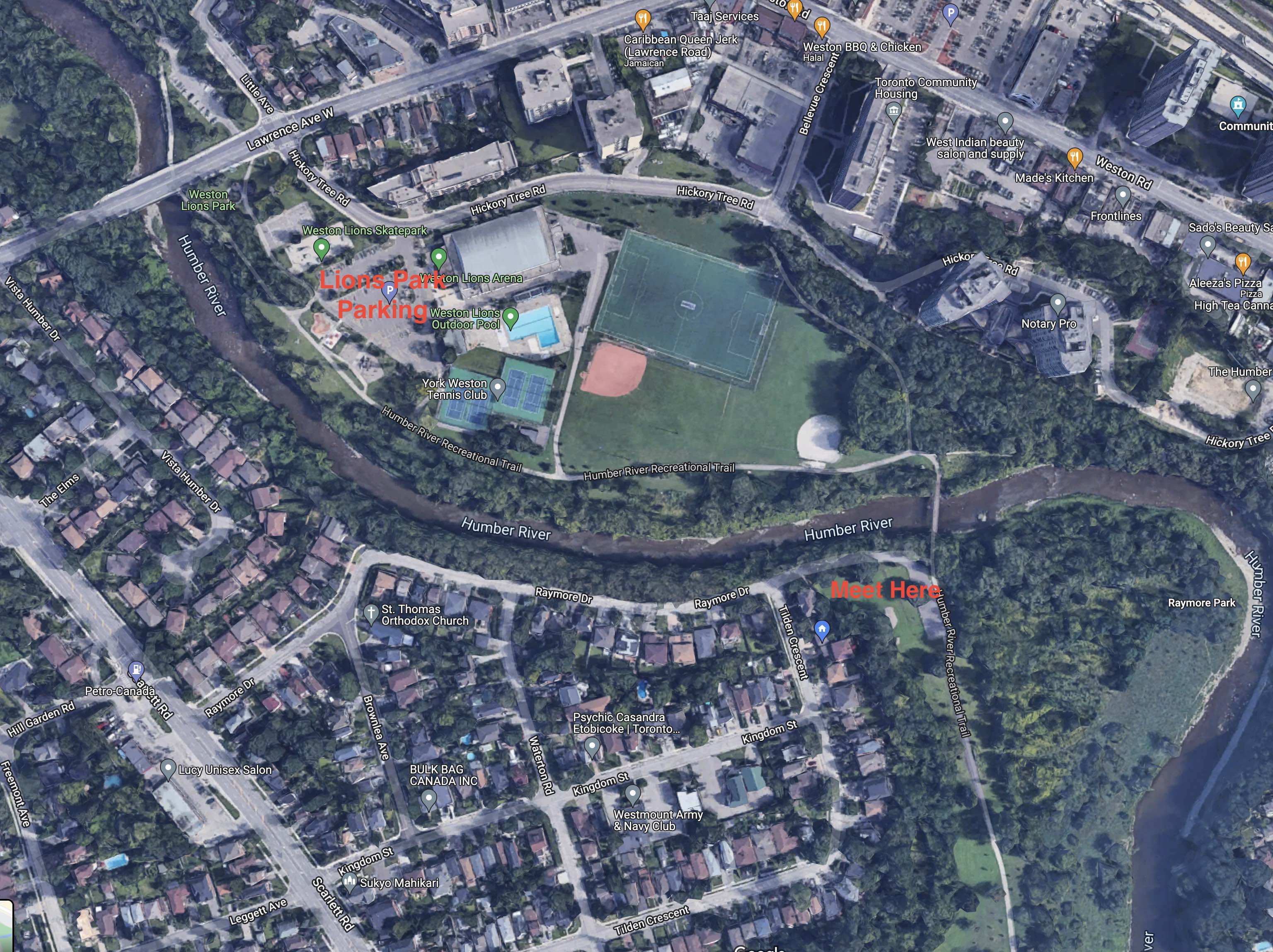
Please meet by the pedestrian bridge across the Humber between Raymore and Lions parks at 10:00 a.m. Note – the Raymore parking lot is closed to traffic. There is street parking on Tilden Crescent or the Lions Park lot is open – it’s a short walk from there to the footbridge that crosses into Raymore.

Area Map – from Google. Click to enlarge.

For more information contact Brian MacLean at EtobicokeCommunityFutures@gmail.com

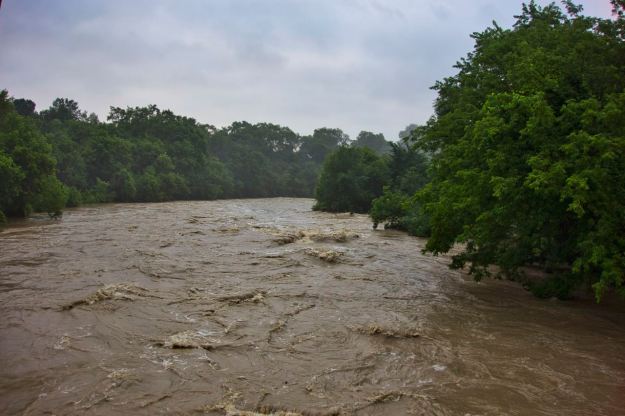
Daytime rain brings a quick rise in the Humber.

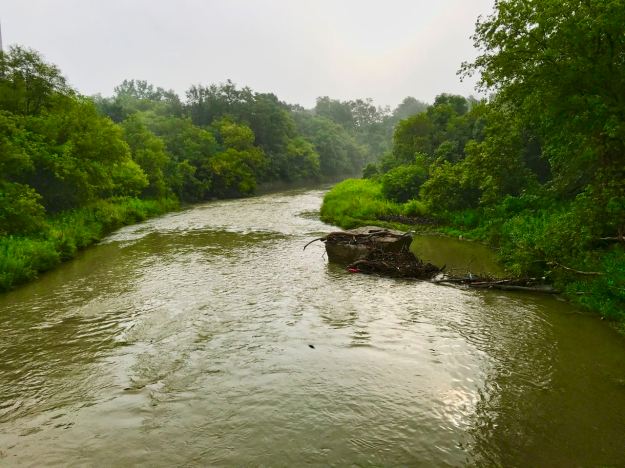
There was heavy rain in Toronto last night but unlike the flood events of 1954 and 2013, the overnight rain was relatively local and not spread over the Humber watershed. This morning I took a leisurely stroll in the humid morning air and was surprised to see the relatively low level of the water.

At 8:30 this morning, a relatively low level.

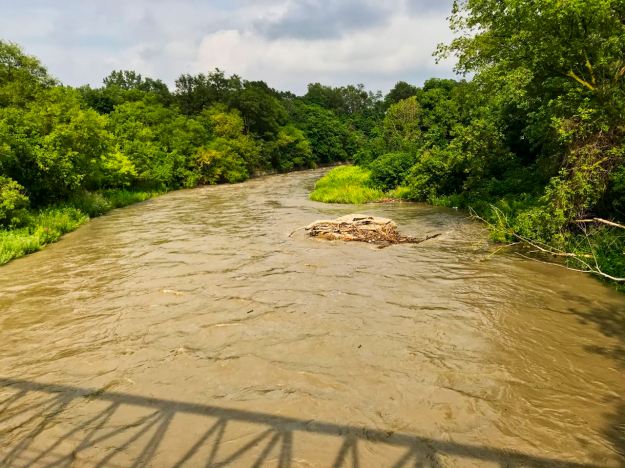
By the afternoon, things had changed. More rain had fallen in the broader catchment area and the river’s quick rise was apparent – not as spectacular as 2013 but impressive nevertheless.

By 5:30 this afternoon, there was a lot more water and sediment.

On July 9th, 2013, this is how the Humber looked from the same vantage point when the water was beginning to subside from the previous day’s rain.

July 9, 2013, 5:45 am. The old footbridge foundation is completely submerged and may have even been shifted by the current.

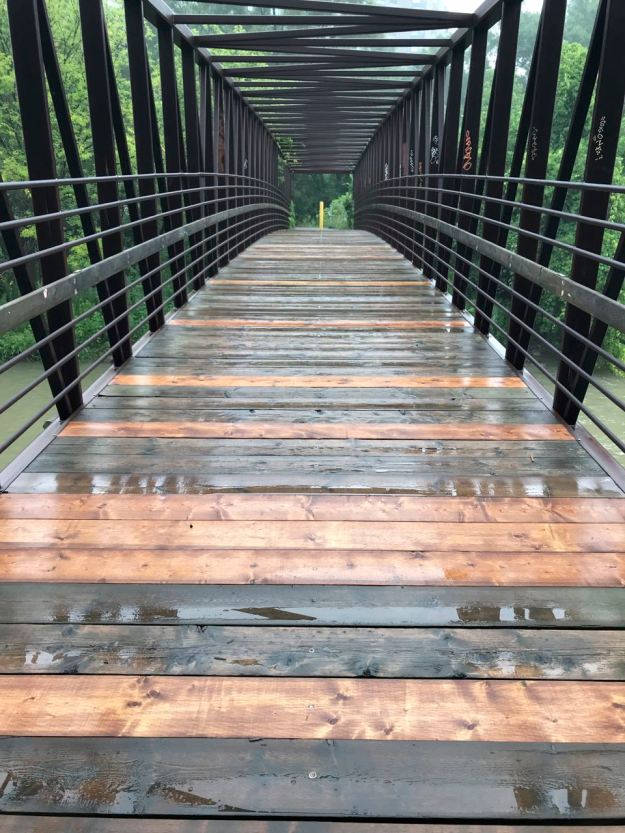
Incidentally, workers repairs the bridge boards yesterday – many were rotten through. I don’t understand why they don’t replace the wood with metal ‘boards’ that would last much longer.

Bridge boards don’t last long as they’re not chemically treated. This is because preserved wood leaches toxins into the river in wet weather and would harm aquatic life.

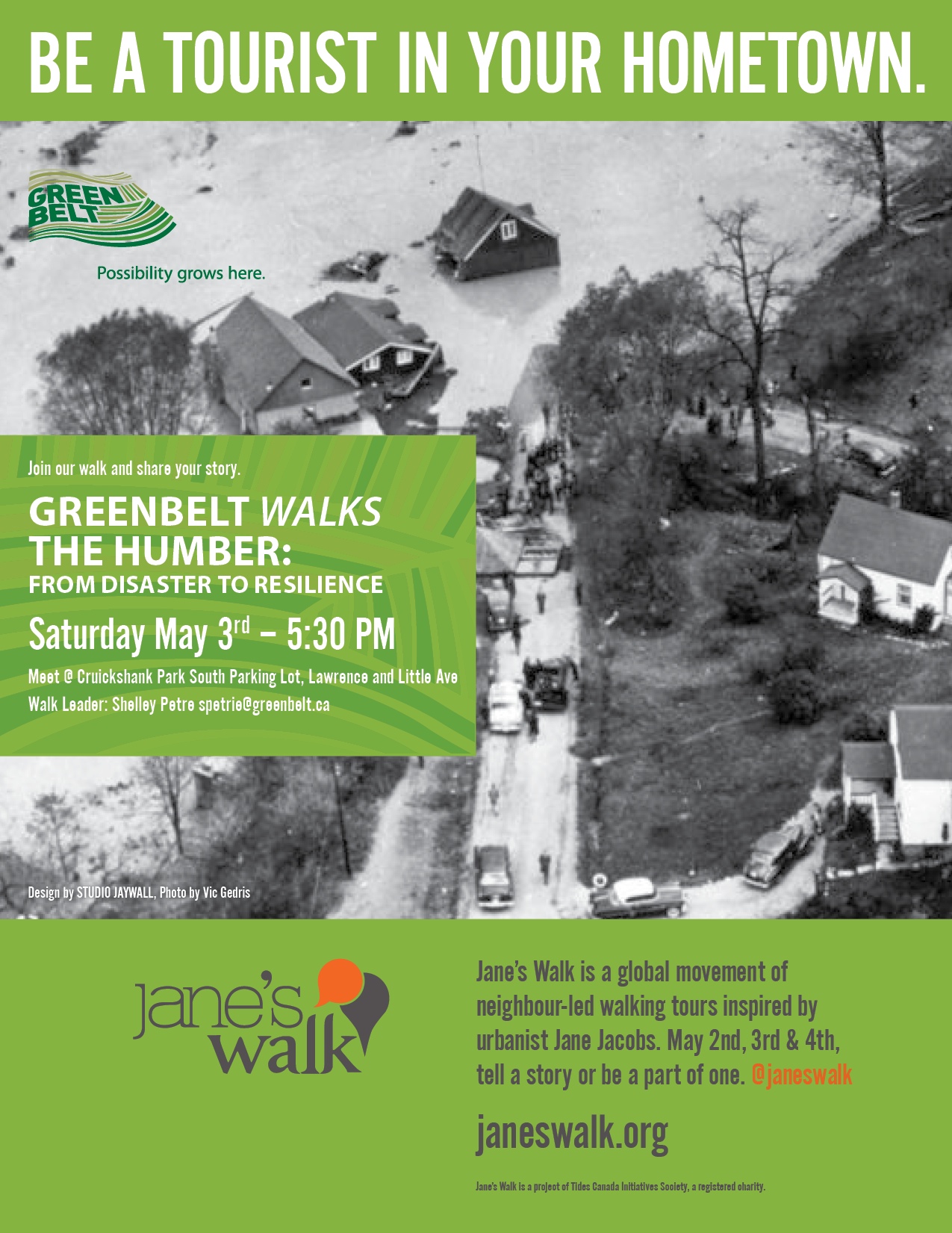
Jane’s Walk May 3rd at 5:30pm

Jane's Walk2014-GB

On Saturday, May 3rd, a ‘Jane’s Walk’ will feature the Humber between Lions Park and the weir in Raymore Park. The emphasis will be on Hurricane Hazel and its effects on the environment both natural and human. Some of the stops along the way will be:

Stop 1: Lawrence Avenue Bridge

The effects of Hurricane Hazel and its deluge of water on the bridge and surroundings.

Stop 2: Lion’s Park / Weston Fairground

Stop 3: Raymore Foot Bridge

The history of the footbridge that once existed at this point and its current successor.

Stop 4: Raymore Drive (across bridge)

The ground where 36 people lost their lives; the role of the old bridge. View traces of the settlement that was destroyed.

Stop 5: Raymore Park

The aftermath of Hazel and the organization set up to acquire and manage flood plain land.

Stop 6: Raymore Park dam

The fish ladder and migrating trout. The future of weirs along the Humber.

Stop 7: Chapman Valley Park / Humber Creek

The flooding that occurred at the top of this creek on July 8 2013, and the impact development has had on rivers across the city

Stop 8:

Urban river valleys, the Greenbelt, and the upcoming staff report and vote in city council to add the Humber, Don, and Etobicoke Creek to the Greenbelt.

  • Option 1: Retrace our steps along the Humber path,
  • Option 2: walk through the streets, past the wooden church at Scarlett and Kingdom, down Raymore Drive, crossing back over Raymore bridge and ending back up at Lion’s Park.

Walk Leaders:

Mary Louise Ashbourne (Weston Historical Society)
Gaspar Horvath (TRCA)
Roy Murray (Humber Watershed Alliance)
Shelley Petrie (Friends of the Greenbelt)
Michael Cook (Lost Rivers)

Meeting point: Car park at Lawrence Avenue and Little Avenue (Cruickshank Park) at 5:30pm.


More hints of the past

Housing was once scattered along the length of the Humber. Quite a few were built on the valley floor in present day Raymore Park. Raymore Drive used to stretch down into the present-day parking lot and Gilhaven Avenue. It must have been an idyllic location with nature close at hand, rich flood plain soil and an easy walk to the shops and transportation links in Weston. Interestingly, I was talking to long time Weston resident Douglas Tucker and he mentioned that until the mid-1960s, Weston was a shopping destination for people from as far away as Palgrave and Bolton thanks to a regular train service.

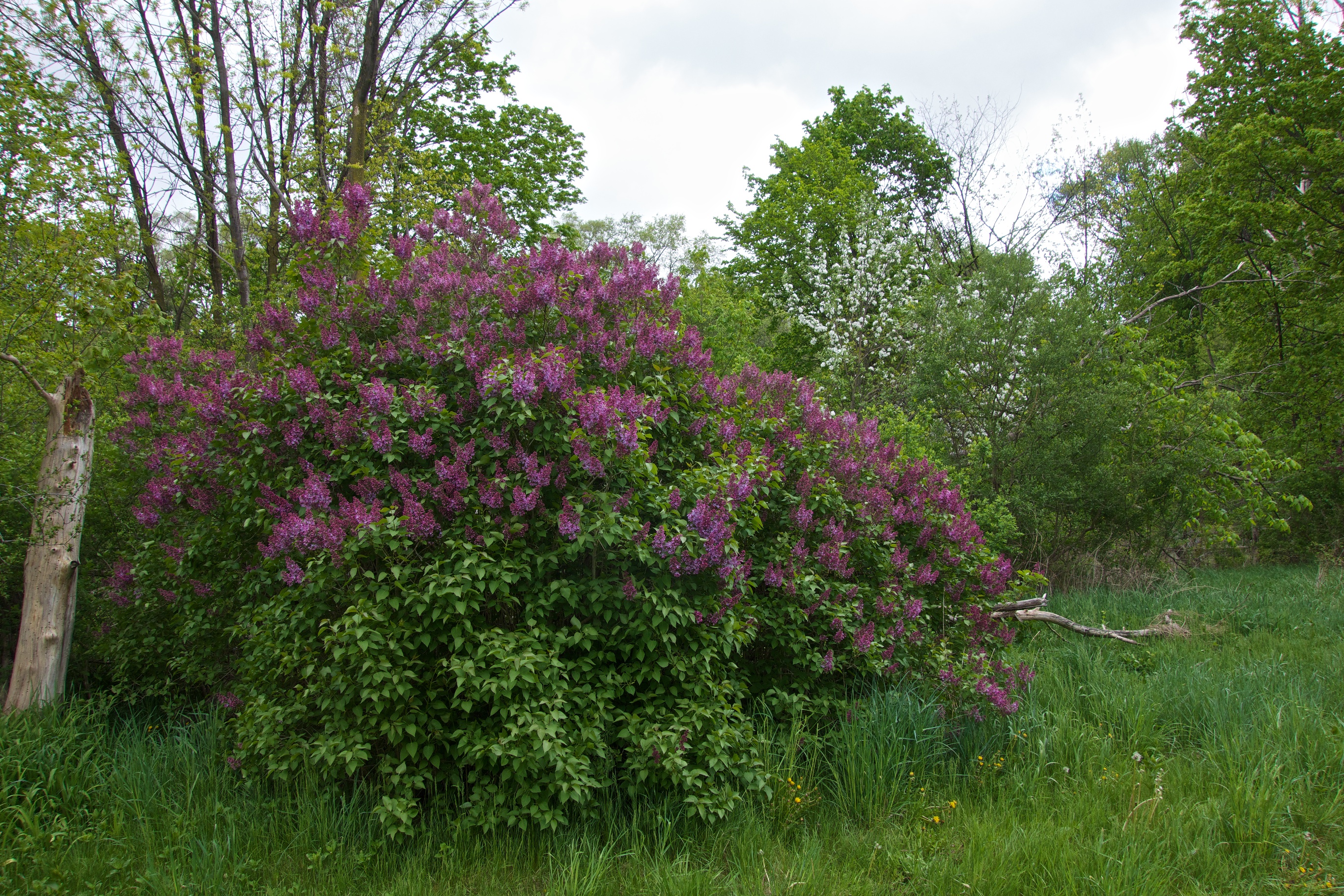
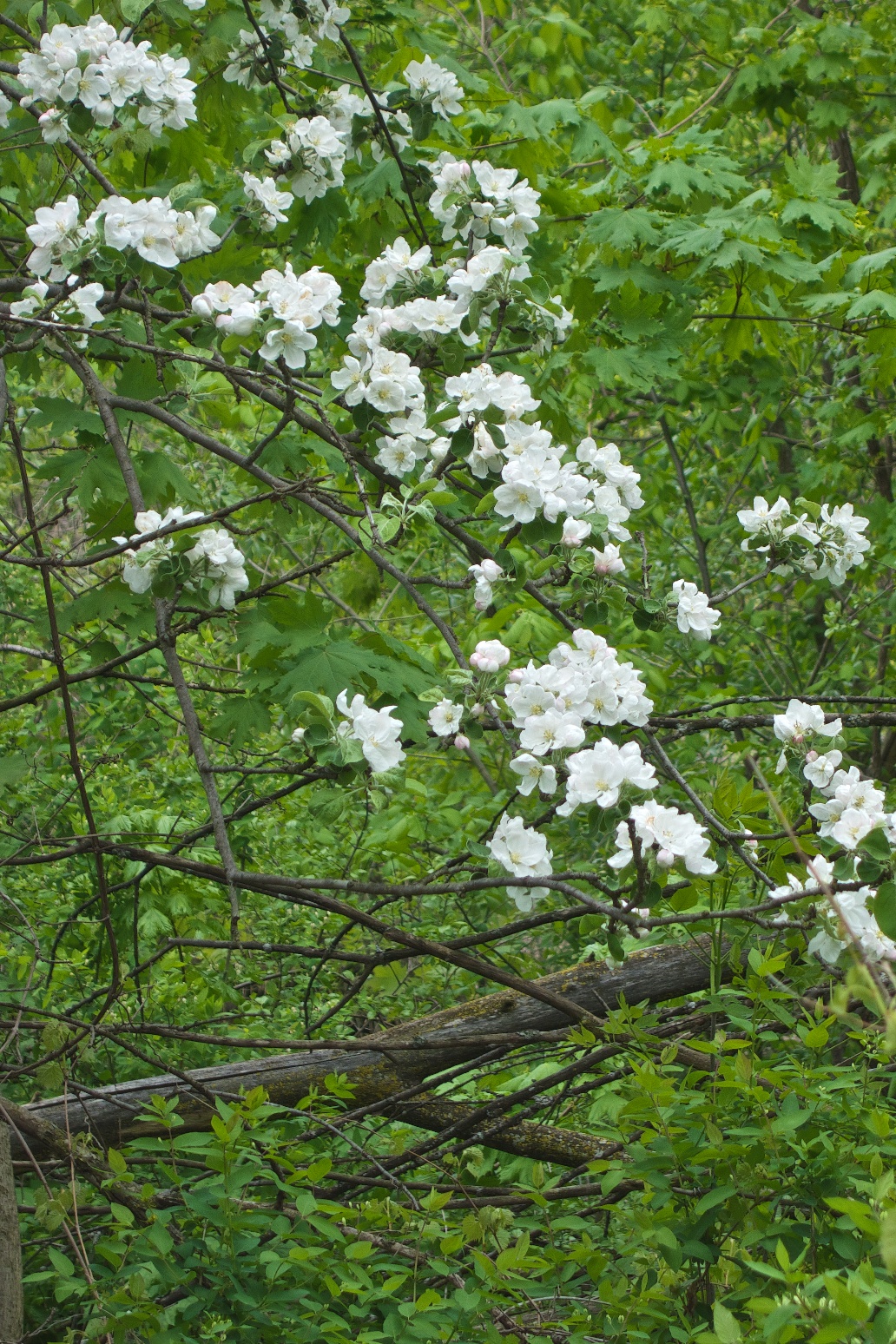
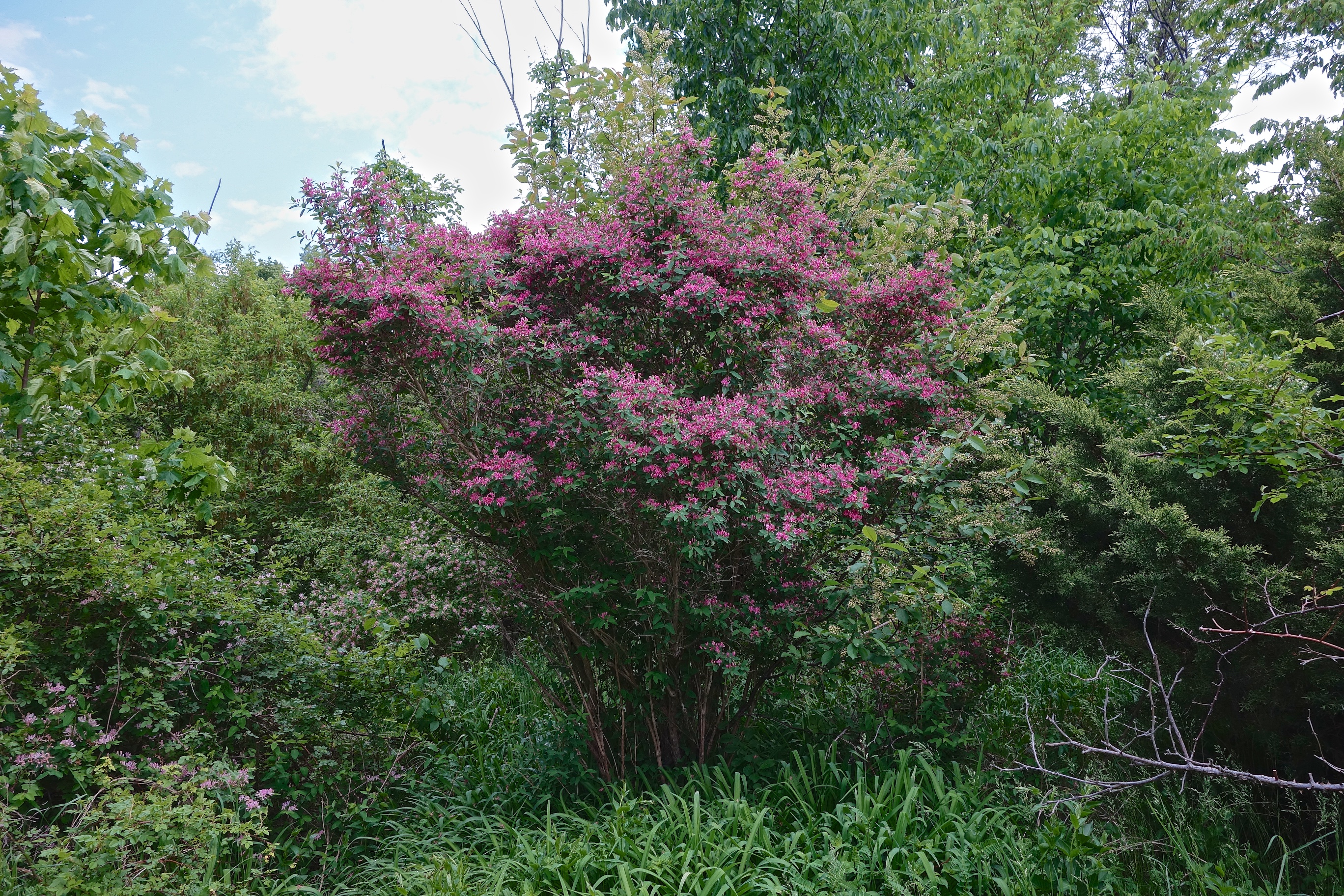
In Raymore Park, few traces remain of the houses once located here before they were either swept away during Hurricane Hazel or demolished by authorities in the aftermath. Every spring however, flowering shrubs are living reminders of the families who cultivated gardens here more than fifty years ago.

This beautiful lilac blooms faithfully every year.

This is one of two beautiful lilacs that bloom faithfully every year.

Apple blossom pokes its way through the surrounding trees.

Apple blossom pokes its way through the surrounding trees.

A beautiful American Honeysuckle towers over day lilies.

Along with the day lilies in front of it, I don’t know if this beautiful honeysuckle is a remnant or not.

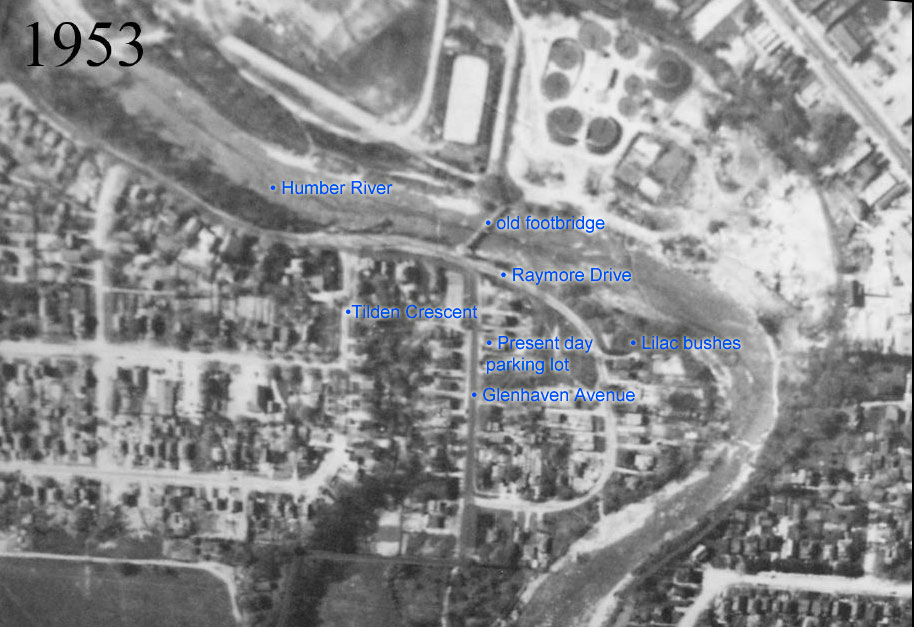
This City of Toronto Archive aerial view has been labelled to show the location of some of the streets including Gilhaven Avenue which no longer exists. The present-day lilac bush and parking lot locations are marked. The Humber still follows the same approximate course.

Aerial view of Raymore and Glenhaven in 1953.

Aerial view of Raymore and Gilhaven in 1953.

Warm weather brings problems

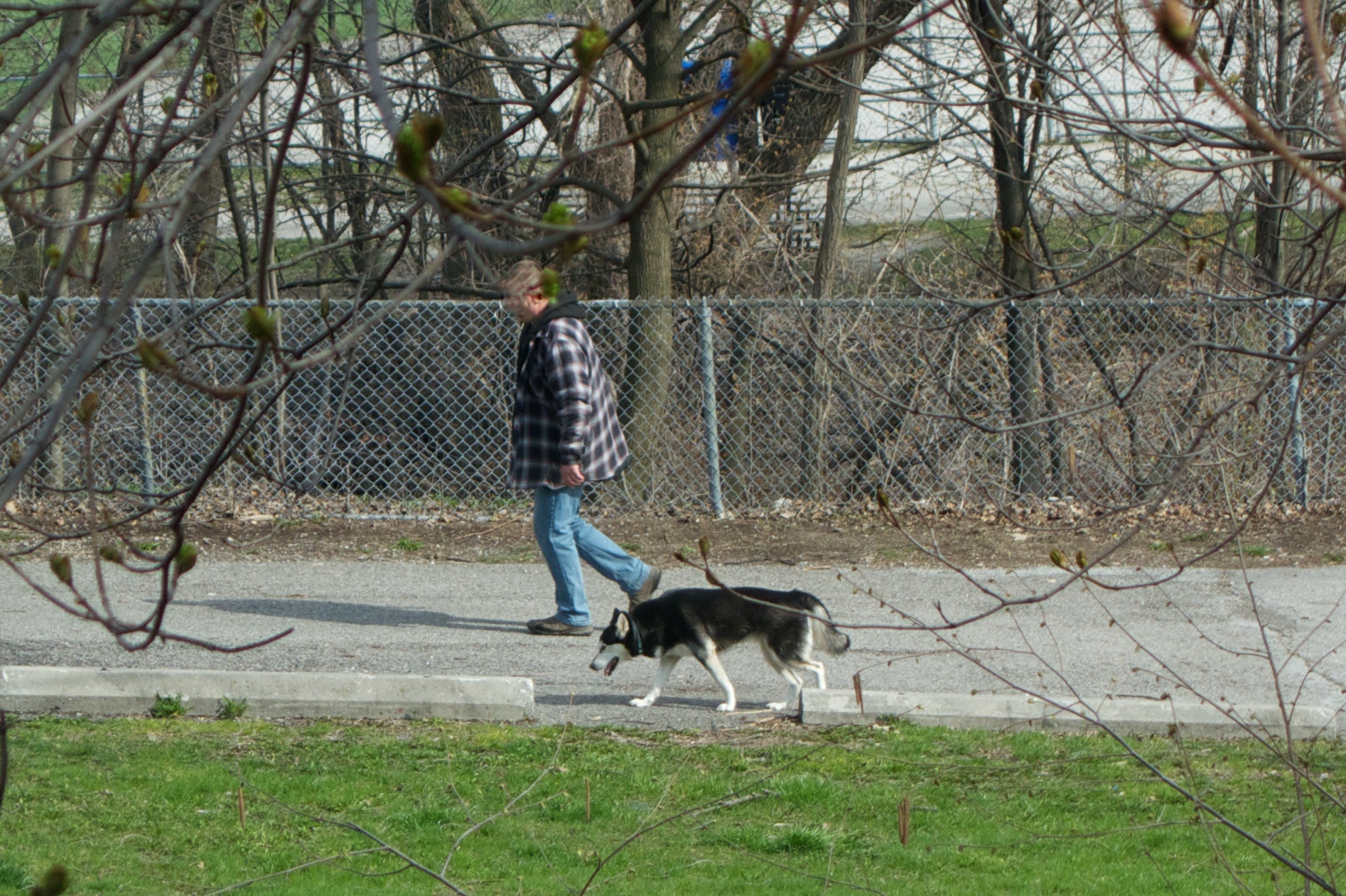
The onset of  warmer weather is the worst possible time for wildlife in the park. Many animals are in the most crucial part of their reproductive cycle and increased numbers of people add a considerable burden to their lives. Fortunately, numbers decrease as the season progresses and the novelty wears off. Today, this gentleman let his very active dog off leash at the entrance of the park and it ran to the footbridge flushing out wildlife as it went, causing considerable distress to wildlife, pedestrians and cyclists. Many people seem to regard the park as a leash free zone.

DSC01641

Face obscured.

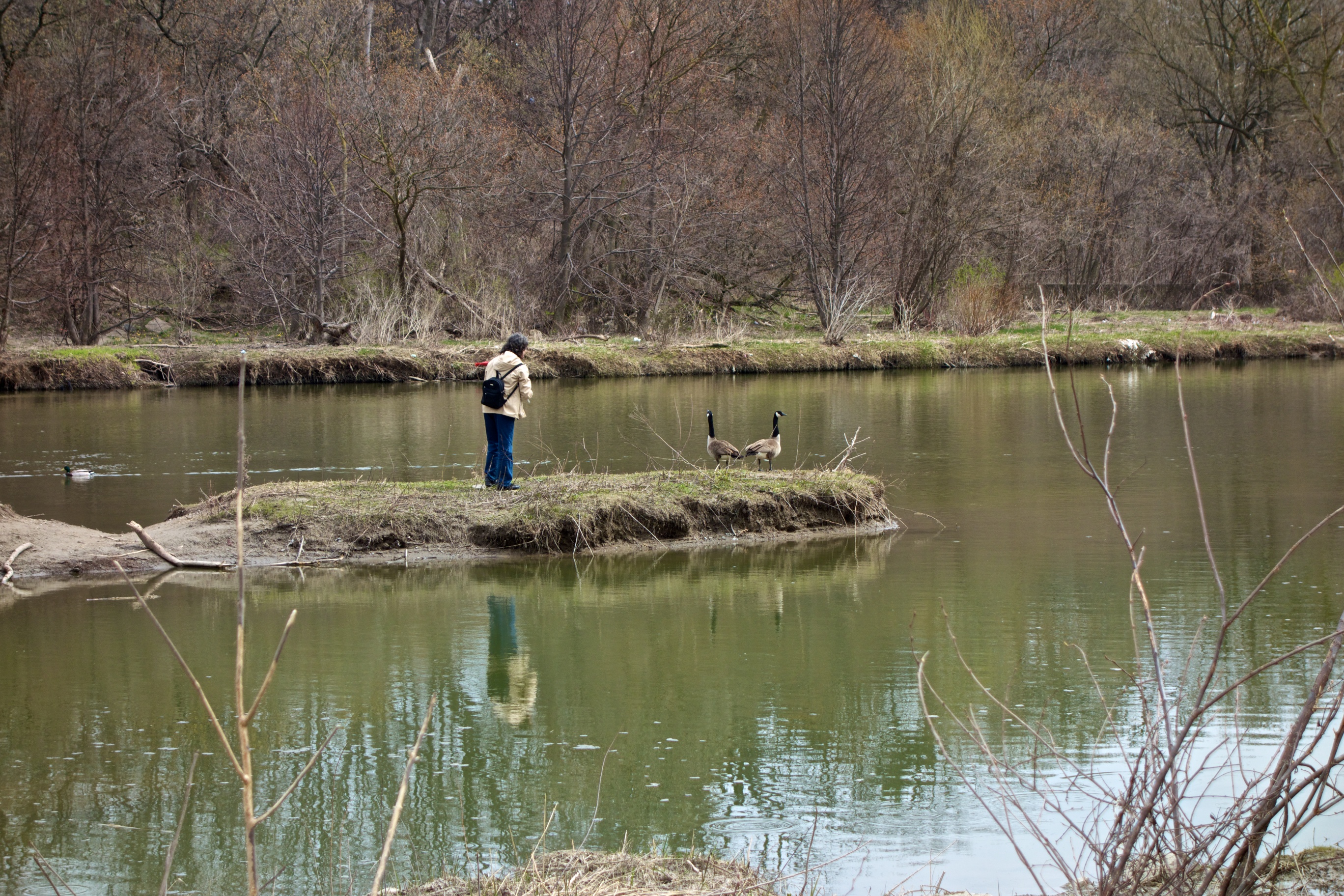
This lady decided that the zoom on her camera was insufficient so she had to impose herself on these poor geese, giving them no option but to leave their peninsula. The small island in the distance is about the only safe place for nesting birds and other animals.

DSC01649

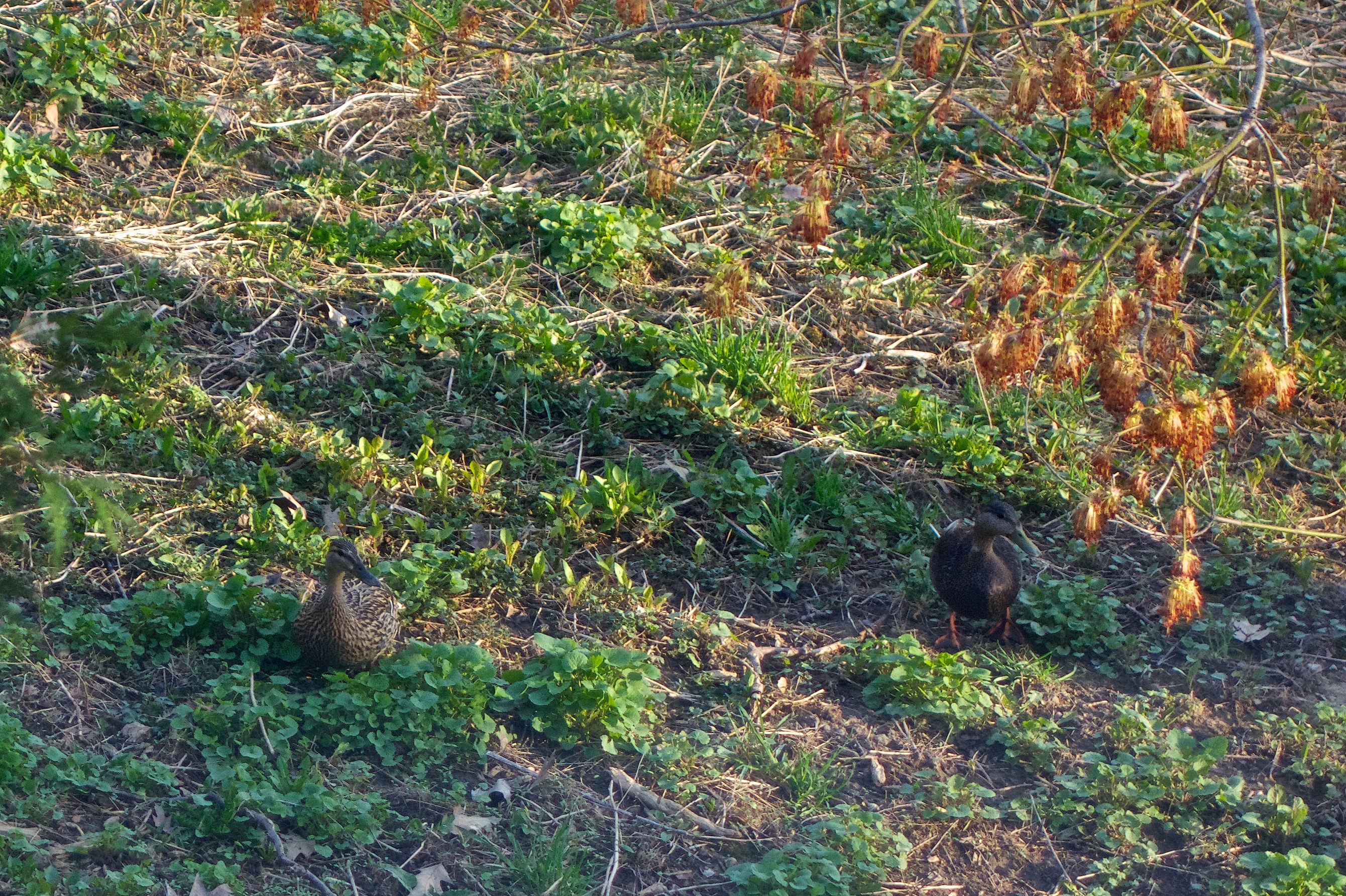
On a happier note a pair of American Black Ducks were waddling in a corner of the park this morning, snacking on new growth and happily out of sight of unleashed dogs. It’s possible that they are in the process of migrating from the southern U.S. to summer grounds further north although some stay here year-round.

DSC01632

Humber footbridge – alternate view

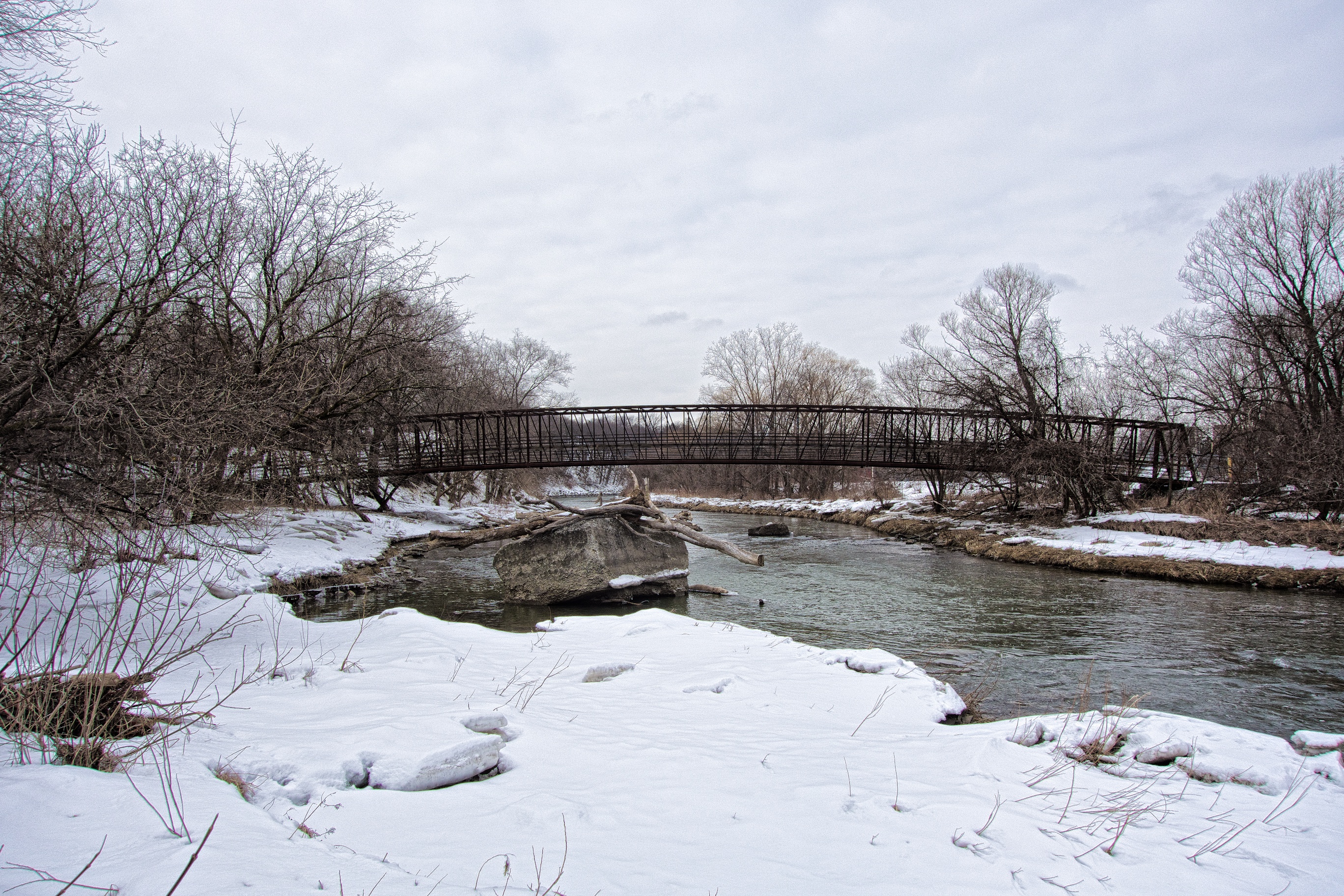
The Humber footbridge looks good from just about any direction but this view looking north features the old suspension footbridge abutment in the foreground.

The old abutment captures driftwood from upriver.

The Humber footbridge and the old bridge abutment on a late winter’s day.

The footbridge was installed in 1995 (after an absence of 41 years) with provincial help, as part of the goal to have a waters’ edge trail from Lake Ontario right up to the Humber’s source on the Oak Ridges Moraine. As part of this goal, this summer, a 600m extension will move the end of the trail from its current location in Cruickshank Park to a set of steps by Weston and St Philips Roads. At the moment there are negotiations around land ownership issues further along the riverbank – hopefully these will be resolved soon.