Category Archives: Park management

Mass planting in the park

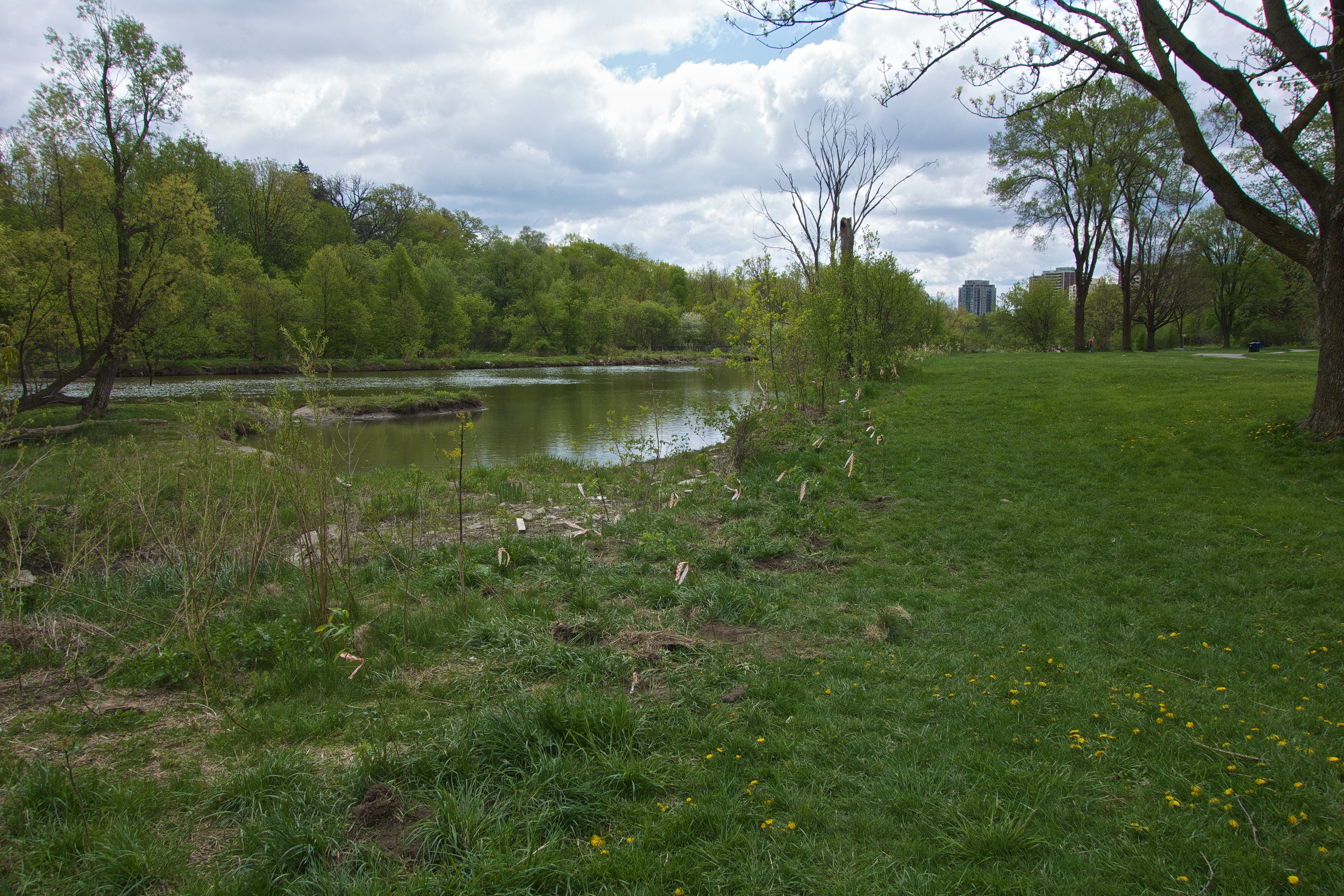
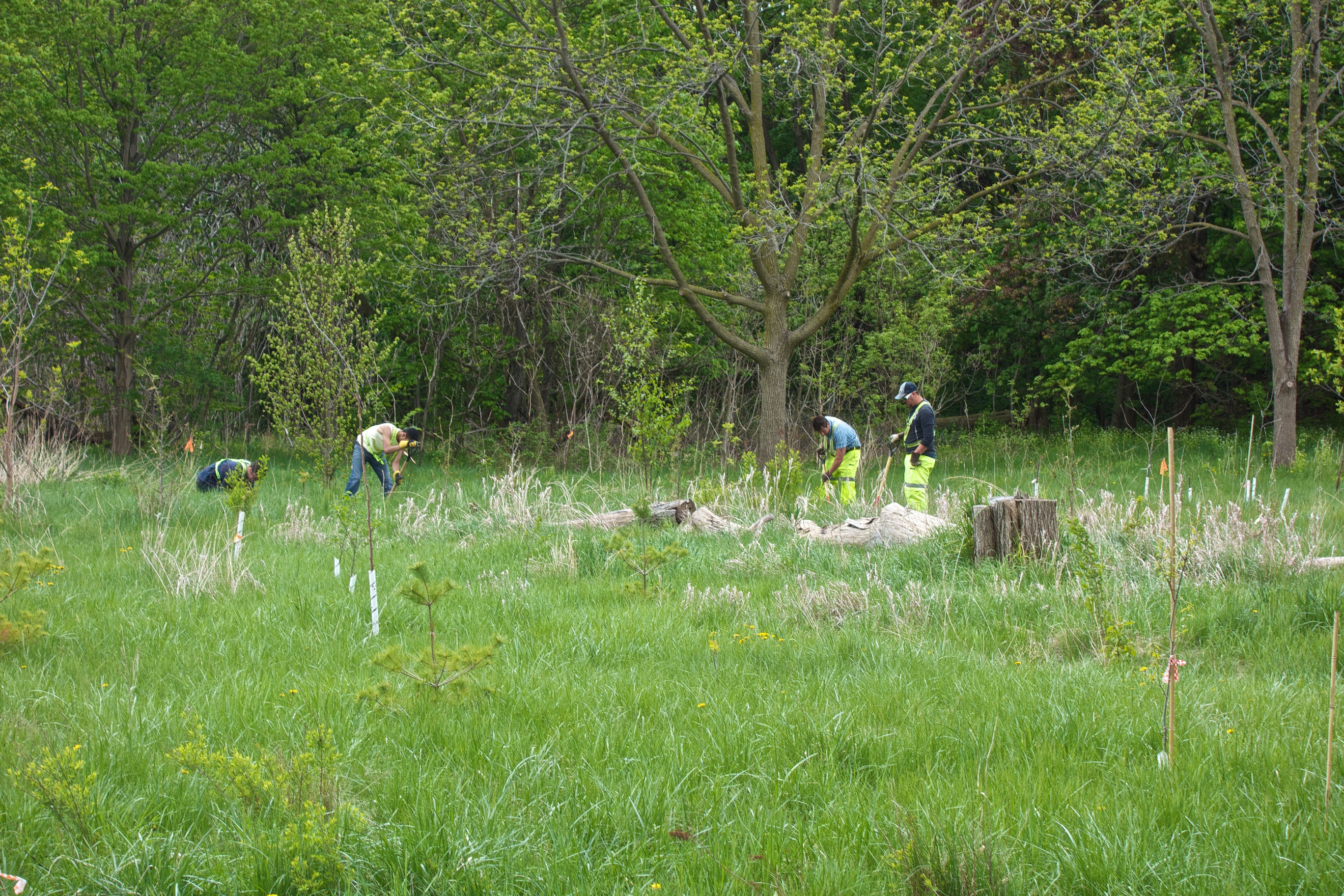
Hundreds of saplings were planted in the park yesterday. Beginning where the river comes close to the trail and continuing to the bottom of the hill towards Scarlett, lots of willow, red hawthorn, elm, and oak have been planted. This is a good time to plant – last year, a planting was done in July and most of the saplings were dead on arrival after having endured a hot day in a plastic bag in the sun.

Lots of willow by the riverbank.

Looking south, lots of willow by the riverbank.

The field past the weir was planted and will be a veritable forest in a few years.

Workers planting hundreds of saplings.

Workers planting hundreds of saplings in the field past the weir.

Today a tanker truck was watering them in thoroughly. Let’s hope for a wet spring so they can establish themselves.


Coming to Raymore – Urban Park Rangers

Screen-Shot-2013-04-18-at-2.02.33-PM

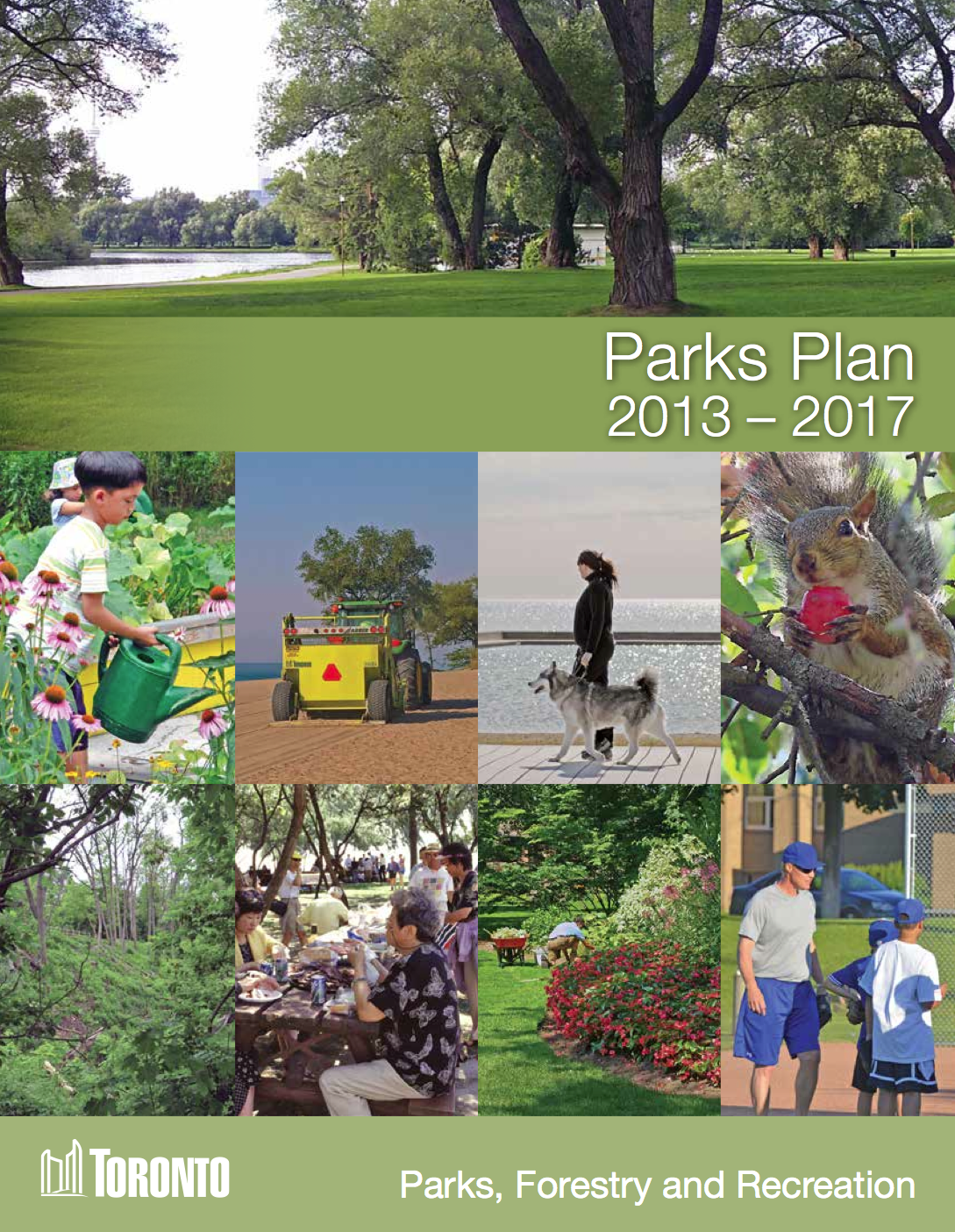
After much study and consultation, Toronto Parks, Forestry and Recreation has produced a five-year parks plan to be implemented, beginning this year (subject to City Council approval).

Extensive consultation of citizens, staff and industry experts determined four basic functions of parks management:

1. Communicate and connect with users
2. Preserve and promote nature
3. Maintain quality parks
4. Improve system planning

One of the more interesting proposals under Item 1 is the introduction of an Urban Park Ranger who would be a more visible presence in parks and would be a

‘primary point of contact for individuals and groups wanting to engage with the parks system and build relationships with community stakeholders’

Combing through the corporate jargon of relationships and stakeholders (are community stakeholders the people using the park barbecues? Ed.), it appears that park rangers will be the human face of the park system and will be tasked with ensuring that City and park by-laws are more more rigorously enforced. A commitment to providing or improving park amenities such as washrooms, signage, shade areas and benches is also proposed. Another interesting idea is the establishment of a centralized parks volunteer and donations system. Businesses and people might like to donate money, land or time to the parks system but at the moment there is no formal system in place.

This will be a timely intervention for our local parks that can sometimes look a bit neglected when compared to the elaborate facilities and displays found in more upscale areas of Toronto.

The plan is a long read but well worth the effort. Comments on the proposal can be directed here.

Park Clean Up

Aren't people wonderful!

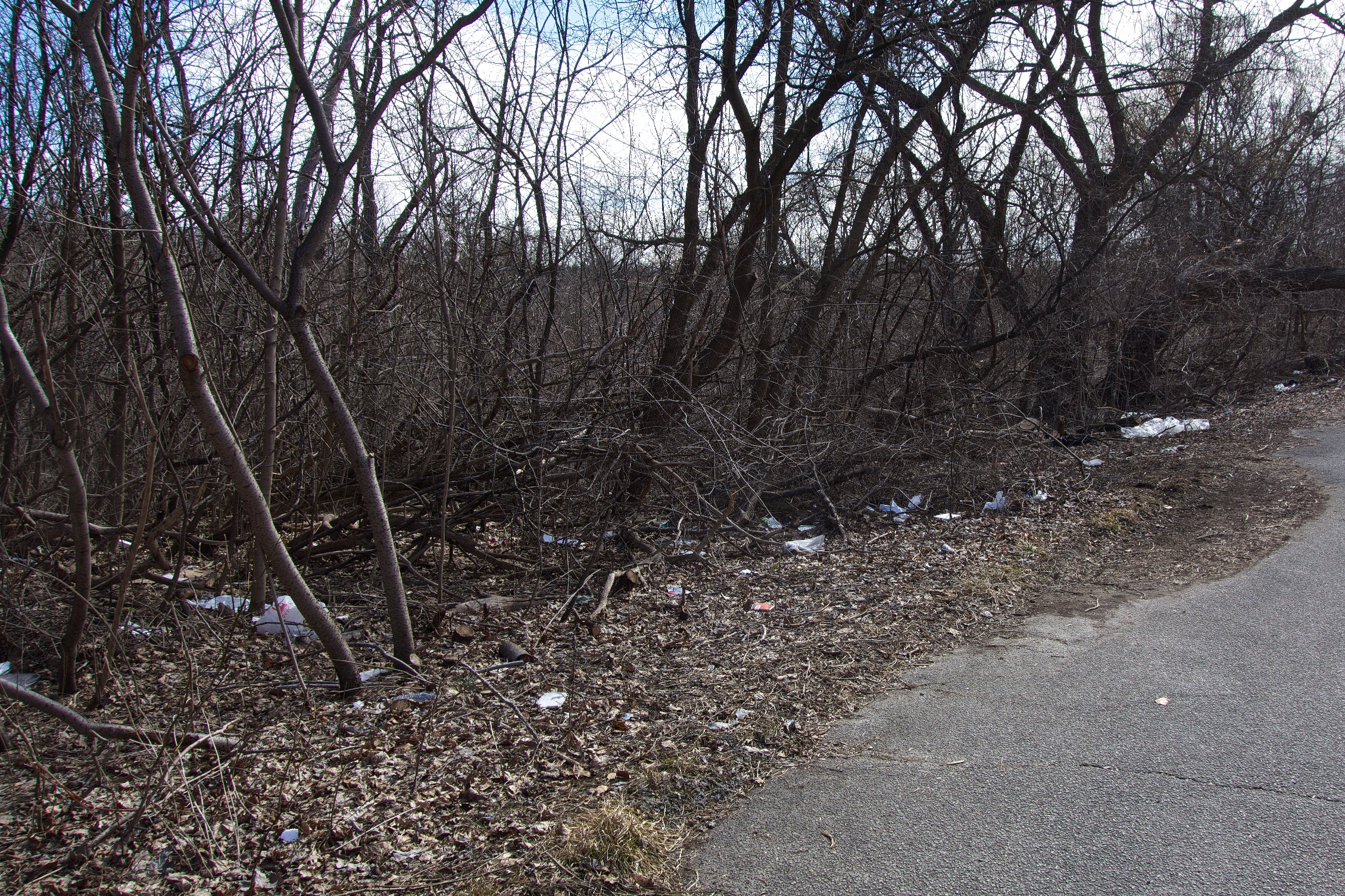
Aren’t people wonderful! All within easy reach of garbage cans too. Cycle path at Scarlett just north of La Rose.

On Tuesday I emailed local Councillor Doug Ford about the huge amount of litter along the cycle path just north of Eglinton.  Yesterday a clean-up crew came to this end of the park and unfortunately they missed most of the litter since they didn’t bother reaching over the 4′ fence or walking into the wild area. I called the park supervisor today today and he sent them out again very quickly.  The original concern i.e. the litter on the cycle path remains unaddressed.
Here is the email:

Hi Doug,

Now that the snow has gone, I notice there is a huge amount of garbage along the cycle path from just above Eglinton to just north of La Rose. I try and pick up the odd pieces of trash but this is beyond my abilities. I enclose a photograph for illustration purposes. I was wondering if a crew could be sent out to take care of this…

We have had a long winter and the snow has only just cleared. Regardless, there must be a way to keep on top of litter throughout the winter months. God forbid that a city worker should occasionally have to walk along the trail.

Some councillors organize community clean-up days where people in a neighbourhood spend a couple of hours hauling trash from local parks. I think this is passing the buck and neighbourhoods that aren’t so cohesive or those without strong community involvement end up being compromised even further.

Beauty in a mass extinction.

Coming to an ash tree near you.

The terrible beauty in an insect’s destruction.

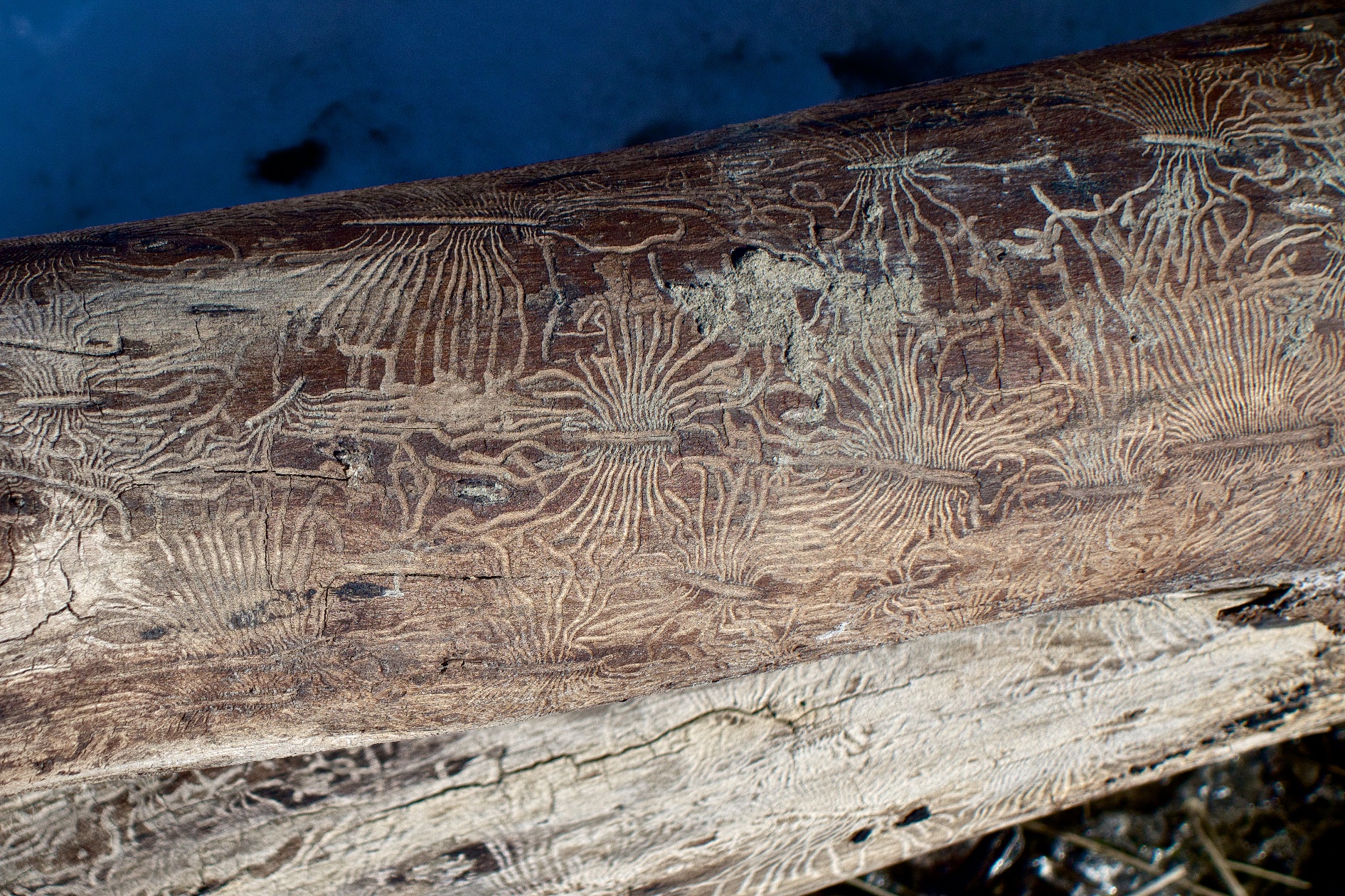
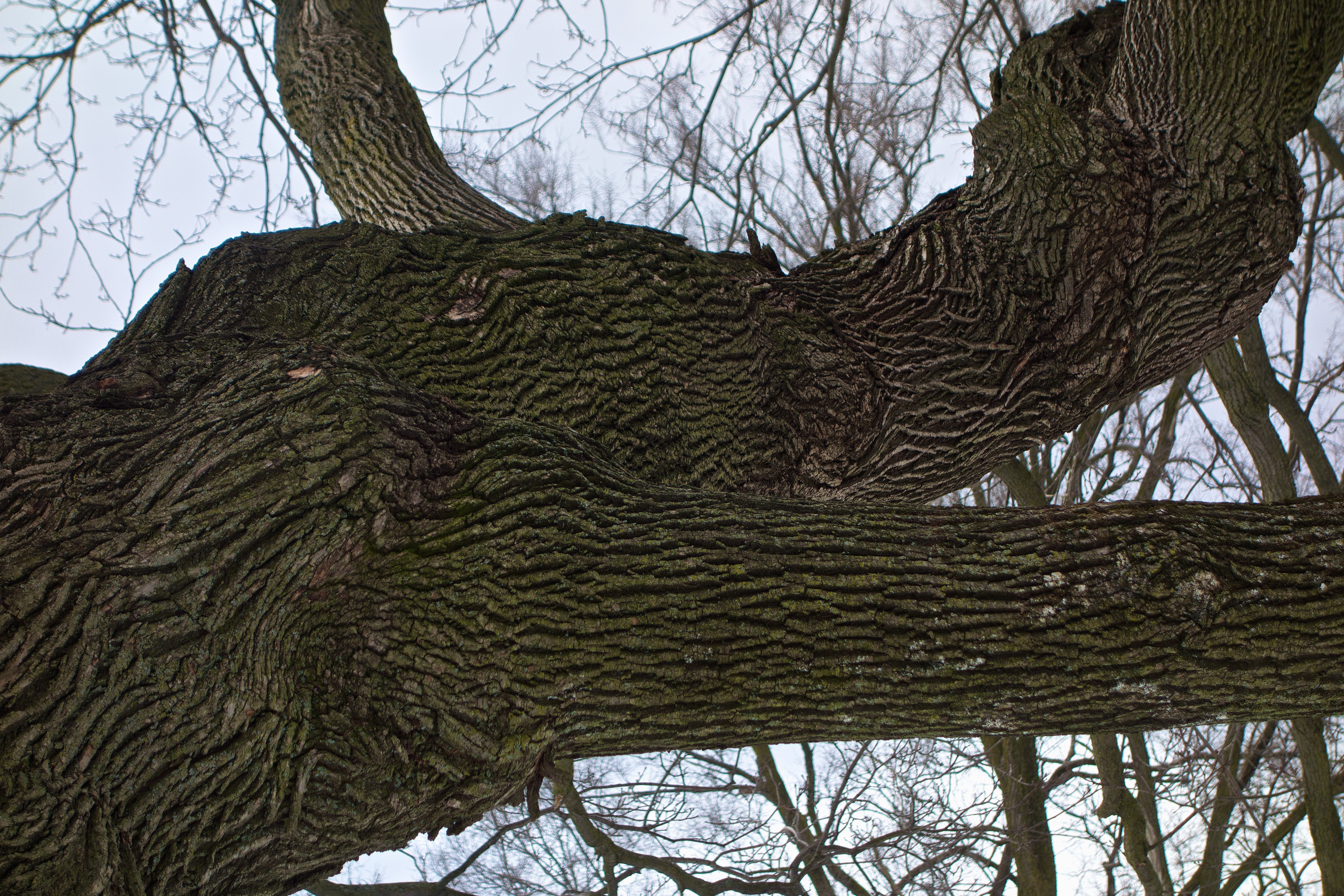
I found this piece of wood a couple of days ago and photographed it again today. The patterns carved into the wood are beautiful and resemble Australian aboriginal art but their origin is quite sinister. This wood has been infested by a creature known as the Smaller European elm bark beetle. Although this beetle (like many other bark beetles) doesn’t kill the trees it infests, it is the invasive species that carried and spread Dutch Elm Disease throughout North America, destroying billions of elm trees throughout the continent.

An equally dangerous tree pest which has established itself is the emerald ash borer, an invasive species brought to North America in the 1990s probably in wooden pallets. This insect kills the trees it infests directly. At first there was a desperate attempt to contain the pests but the battle is lost with every ash tree on the continent now in jeopardy. Imagine the effect on the environment if you could plant 50 to 100 million trees over a few years. Now imagine the reverse because that’s the number of trees that this creature has killed so far with the rest of the continent’s 7.5 billion ash trees firmly in its sights.

Thanks to increasing levels of world trade, North America is under siege from non-native plants and animals. The St Lawrence Seaway opening in 1959 brought the Lamprey eel, a parasite that feeds on fish. The weir in the park was constructed to act as a barrier to the lamprey. Asian carp are thought to have recently established themselves in the Great Lakes and could devastate fishing stocks here as they have no natural predators and thus there is no defence against them.

Unfortunately, government agencies on both sides of the border are slow to react to such invasions and by the time we take preventative or remedial action, the battle is lost.

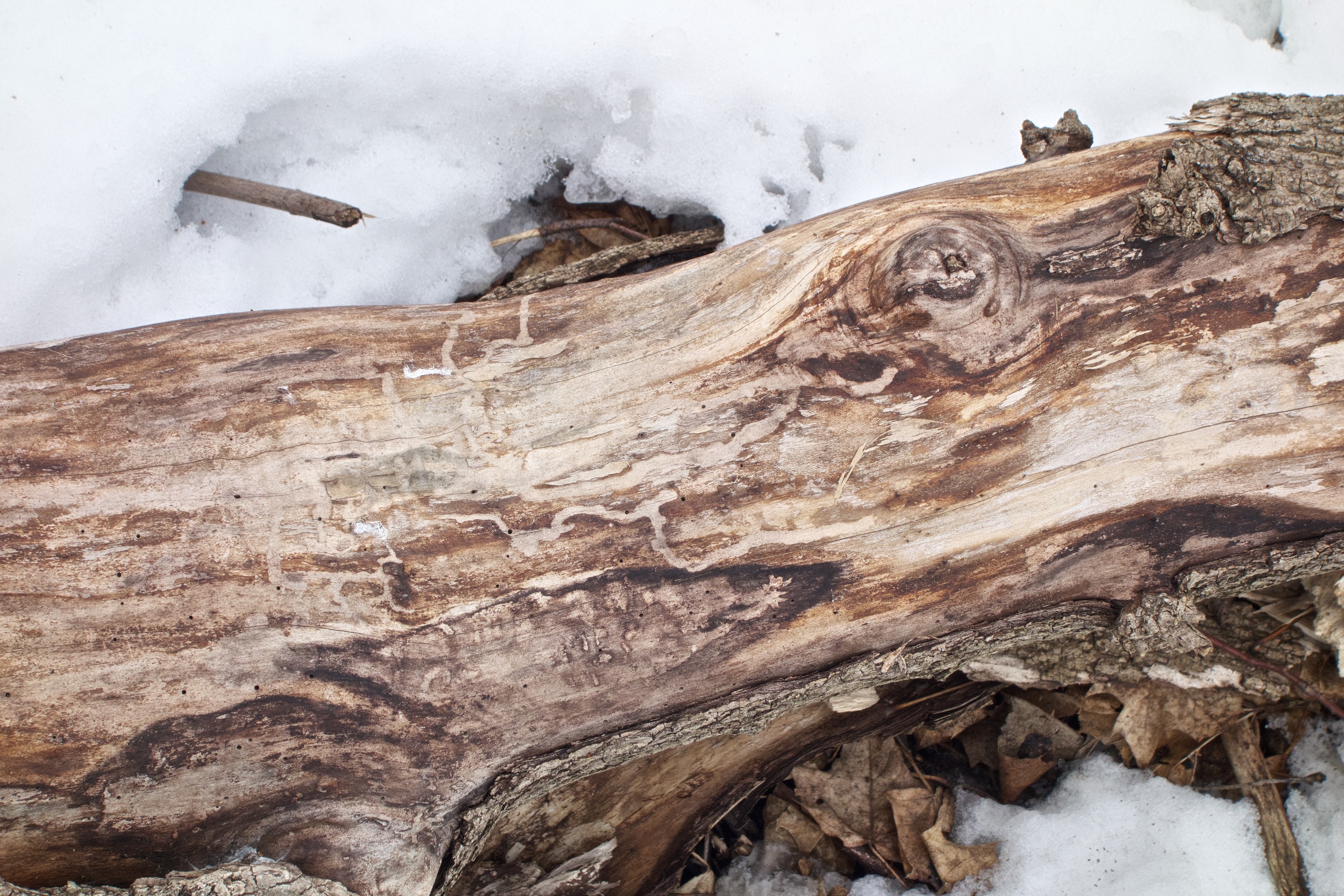
Traces of pine bark beetles.

More evidence of bark beetles, probably pine bark beetles.

Textures, invaders and regeneration

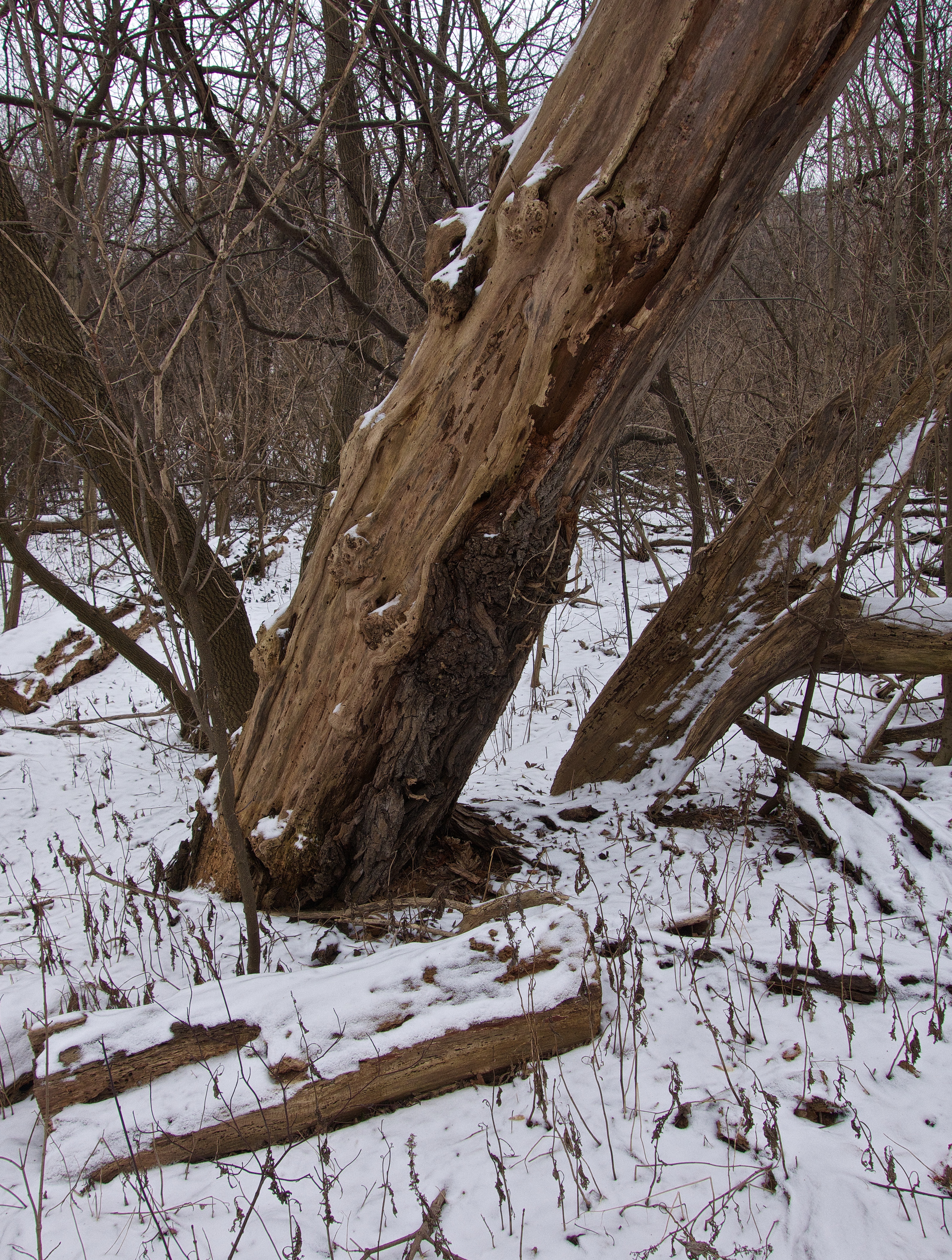
Trees come and go in the park whether they are felled by old age, ice or by the latest foreign invader, new ones rise up and take their place. Many of the new ones are foreign invaders themselves.

Old wood returns to the earth surrounded by new growth.

Old wood slowly returns to the earth and feeds new growth.

Norway Maples have become ubiquitous in Eastern Canada – even to the point of having their leaf on our currency. They have been in Canada for hundreds of years and are able to grow more quickly and produce leaf earlier in the season than native trees. In addition, their shallow roots and dense shade have a smothering effect on native tree seedlings. As for Siberian / Chinese Elm, I can honestly say I must have killed thousands of saplings in their attempts to establish a beachhead in my back yard.

An old Norway Maple whose days are numbered.

An old Norway Maple with beautiful textured bark.

This old Norway Maple provides wonderful summer shade to cars in the Raymore parking lot but its age is showing and its hollowing interior has become home to more than a few squirrels. It drops the occasional limb now and then and will soon become a victim of old age. Unfortunately its replacement (if any) will take many years to provide the same cover. Hopefully the replacement will be from a native species.

Across the path from the parking lot attempts have been made to mass plant native trees and shrubs with varying degrees of success. Part of the problem is that the saplings (thanks to the availability of student labour) are planted at the hottest time of year. Last summer, a substantial batch of saplings was delivered to the planting site and left in plastic bags for a day in hot sunshine before being carefully planted. Needless to say, thanks to bad planning, only a tiny fraction survived, wasting a whole lot of time, effort and money.

If you build it, they (still) won’t come.

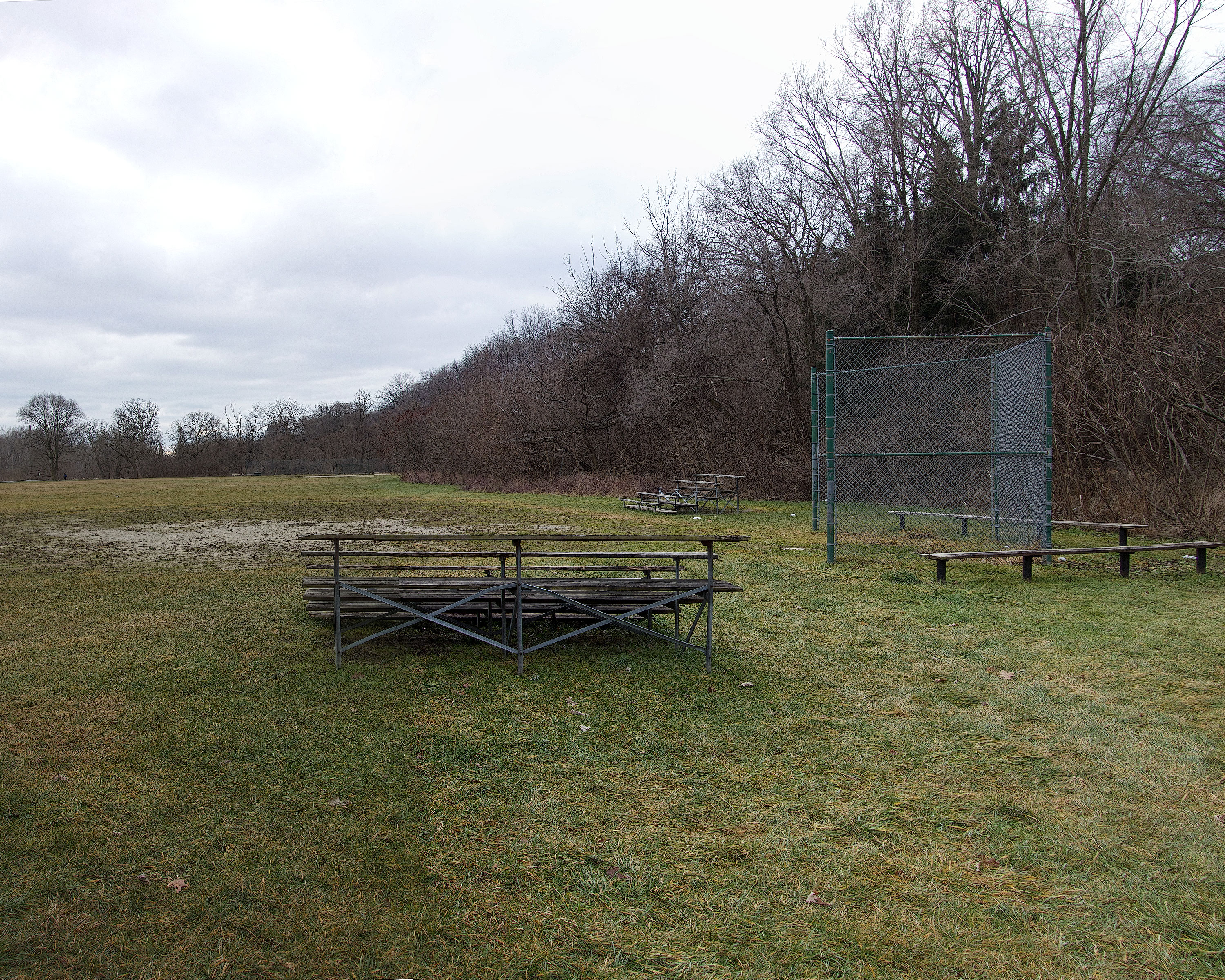
Smack in the middle of Raymore Park is a pair of baseball diamonds occupying a space that extends from the valley walls almost to the river. They have sat unused for the past 6 years. In spite of this, the grass is cut regularly and the infields have been graded until recently.
Looking south from the smaller diamond.

Looking south from the smaller diamond. The bleachers are falling apart.

I emailed our Councillor (Doug Ford) last March about the lack of use:

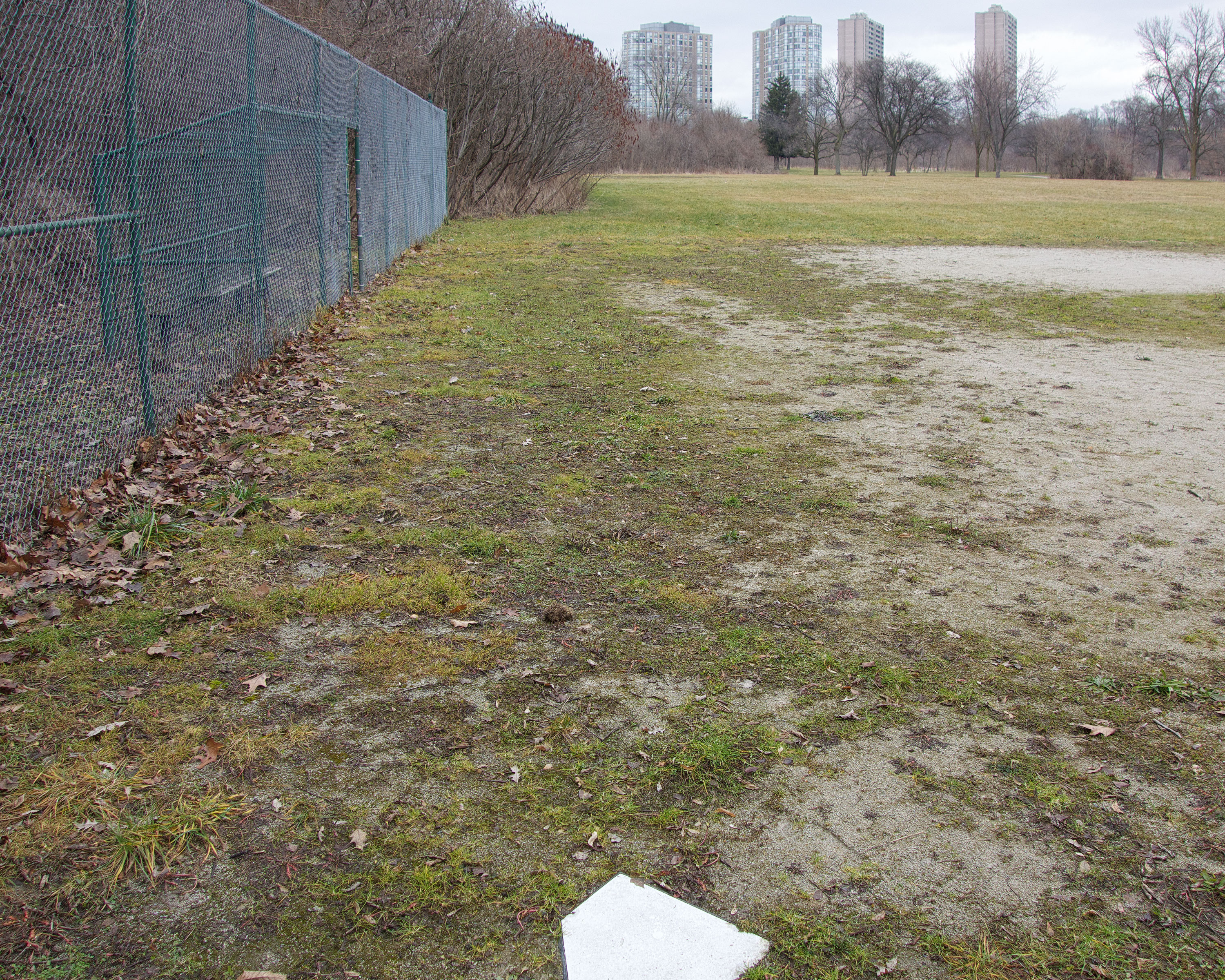
The south end of Raymore Park has a couple of baseball diamonds that have sat unused for at least 5 years. The bleachers beside the north diamond are in a dangerous condition and attract an assorted collection of drinkers and pot smokers as well as lots of garbage. In spite of this, the diamonds are faithfully graded several times a season even though nobody books or uses them and it would be impossible to play there because the base lines are obstructed by 20′ tall sumac.This whole field comprises several acres and is never used as it is too far away from the parking lot. It is however mowed several times a season.

Perhaps it might be a good spot to let nature take over (as has been done in the field to the south) as well as stop grading the diamonds.

I enclose some photographs to illustrate the situation.

The park manager phoned me and said that there may be plans to replace the diamonds with either a soccer field or a cricket pitch (there is a FIFA quality soccer field in Lions Park across the bridge and lots of cricket pitches in the Humber Flats). During the summer a team of workers cleared the bush away from the large diamond. Several workers spent at least 5 days on this task.
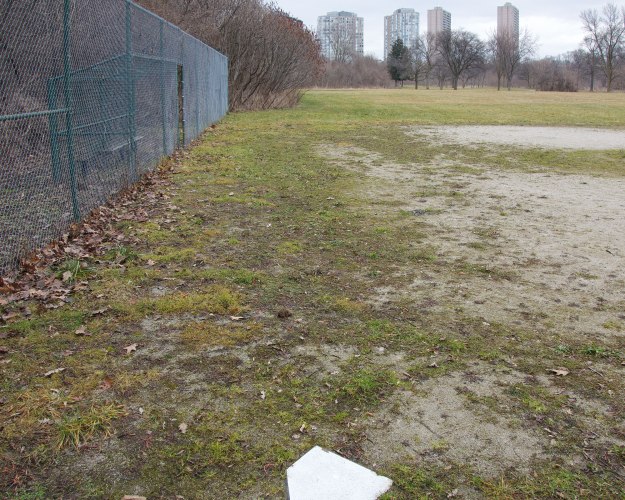
Looking north from the larger diamond.

Looking north from the larger diamond. Brush was cleared from behind the chain link.

This is a huge piece of land and could be an amazing wildlife haven along the Humber corridor. If planted with native trees it could be an attractive wooded area in a few decades. Believe it or not, until 2000, the enlightened minds in the parks system used to spray this area with Roundup (weed killer from the lovely people at Monsanto) until the practice was banned by City Council.

Hopefully, some more enlightenment will trickle down.