Category Archives: baseball diamonds

Raymore Park: changes over the years – Part 2.

Read Part 1 here.

This year marks 30 years since I started coming to Raymore Park. During that time many changes have occurred, most of them reflecting adjustments in park philosophy and management.

4. Areas under grass.

After Hurricane Hazel hit the Humber Valley in 1954, it was decided that flood plain and ravine land should be cleared of settlement to avoid further loss of life. Residents of Raymore Drive and Gilhaven Drive who survived were compensated for the purchase of their homes or lots. Gilhaven drive was approximately where the parking lot is today. Lands were then made part of what is now the Toronto and Region Conservation Authority (TRCA) and homes were bulldozed to create wide expanses of grass. Slowly, thanks to diminishing budgets, some grassed areas have been allowed to naturalize and sumac bushes have advanced, allowing trees to spring up in their midst. Currently, there is no grass cutting south of the weir apart from a strip on either side of the bike path.
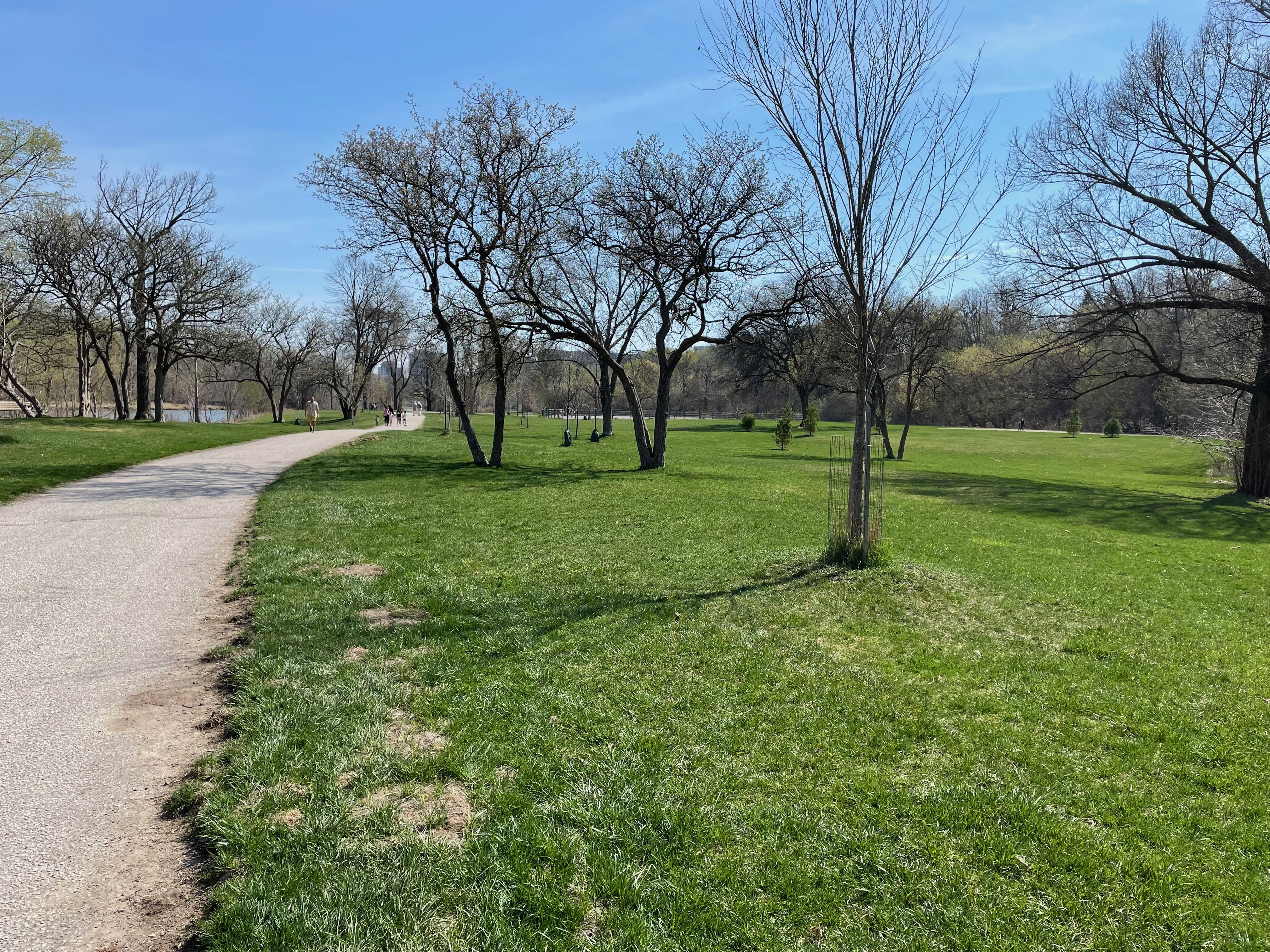
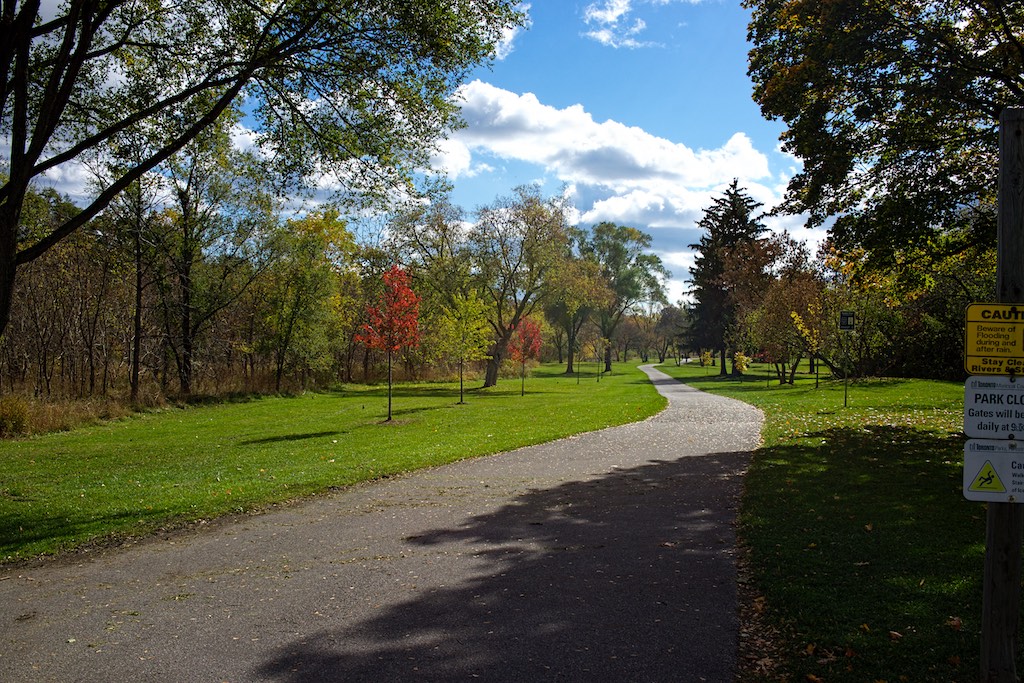
Looking south towards the weir. Lots of grass with some recent tree plantings.

5. Dogs.

Raymore has been a popular park for local dog owners for decades. When the condos at Hickory Tree opened, residents were allowed to keep dogs and used Raymore Park once the footbridge opened in 1995. The wild area was popular and a path was carved out by dogs and their owners as they followed the Humber through the bush.

In 2017, an area near one of the baseball diamonds was converted into a dog off-leash area (DOLA). The ground was fitted with weeping tile to improve drainage, bulldozed and covered with the aptly named pea gravel. It was then fenced off from the rest of the park. The pea gravel is supposed to allow for better drainage but many owners say that it makes their dogs’ paws uncomfortable.
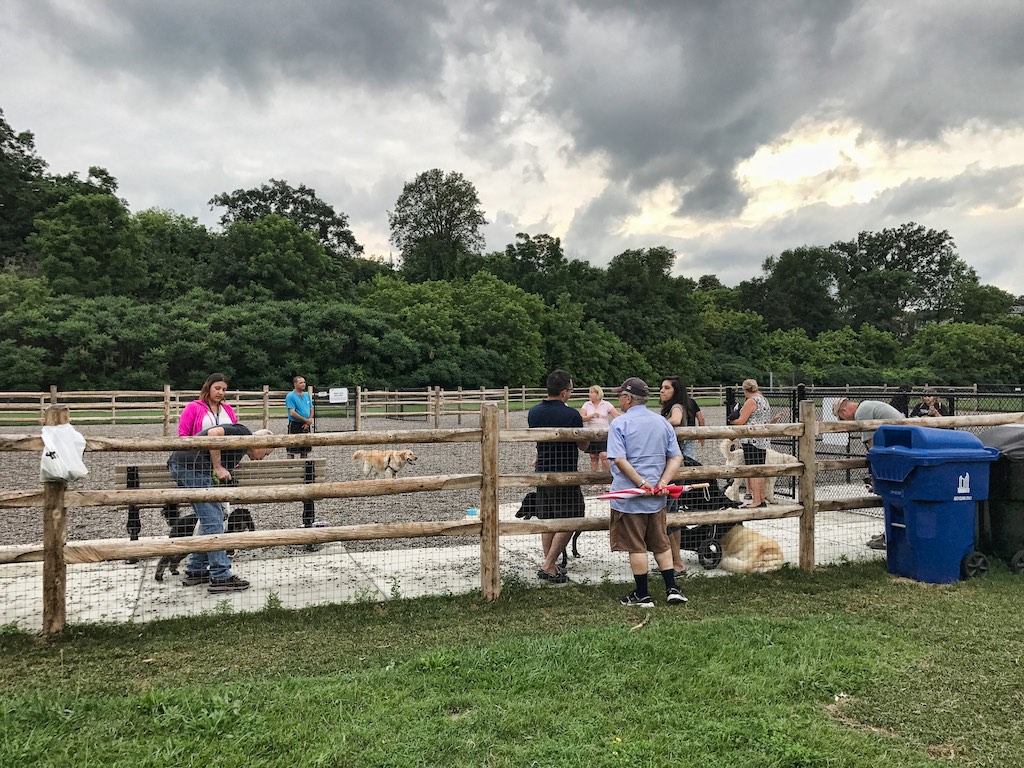
Residents and their dogs gather Monday, July 10 2017 for the official Raymore Park DOLA opening.

The DOLA took a few years to become popular but is now widely used and is popular with professional dog walkers who can be seen with up to six dogs at a time.

Some owners avoid the DOLA, instead preferring to allow their dogs to run free in places like the wild area. They play a cat and mouse game with city by-law enforcement officers and occasionally have encounters with wildlife that are unfortunate.

Parks are for everyone.

Most Toronto parks on a weekend are filled with people enjoying themselves. To paraphrase an old saying, Parks are the lungs of the city and a natural setting with trees and grass provides cleaner and fresher air along with a chance to relax.

There are parks that are ideal for picnics while others provide tranquility and a natural setting. Some Toronto parks have bathrooms and built in barbecue stands while others, like Raymore Park are more natural.

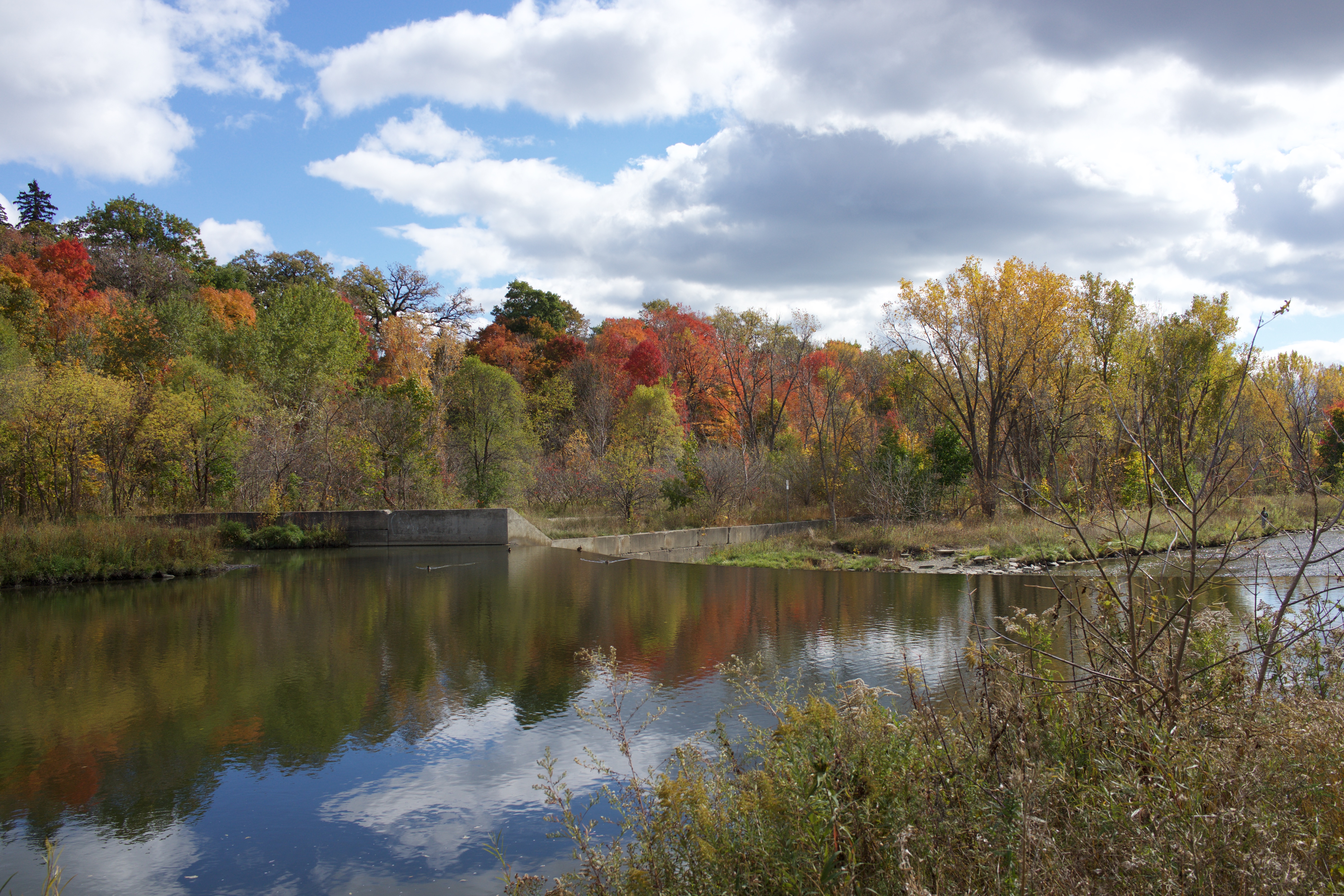
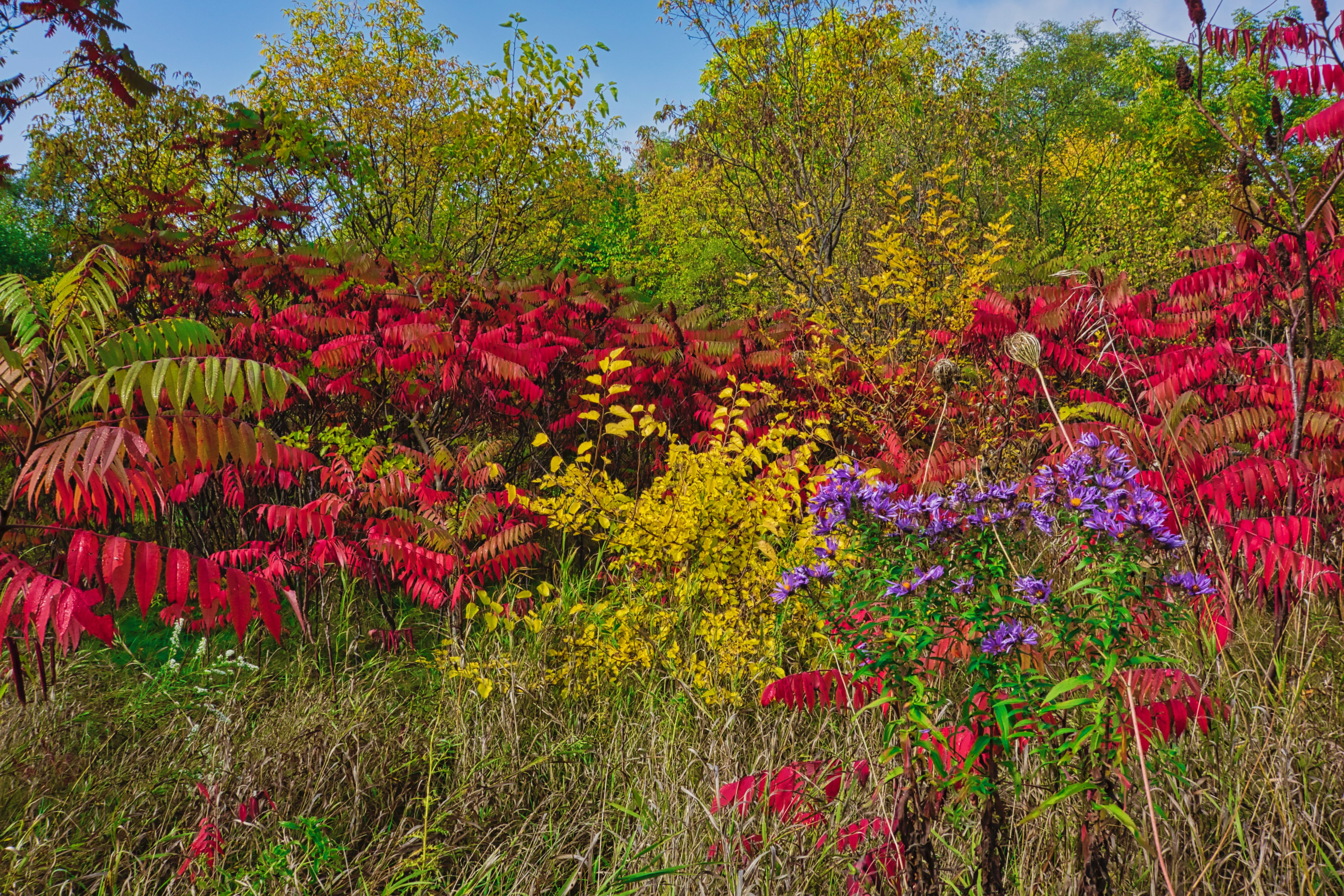
Glorious fall colours in Raymore Park’s wild area (October 2013).

Raymore Park is quite large and there are areas where you can throw a ball, walk the dog, have a picnic or just sit on one of the many benches and contemplate. Watching the water going over the weir is mesmerizing and the negative ions created by falling water are said to be therapeutic. If you like shade, there are lots of trees – just be careful not to feed the summer mosquitoes! There’s even a rudimentary baseball diamond tucked away north of the dog off-leash area. We don’t have flower beds or seasonal plantings but we have a large variety of flora and fauna.

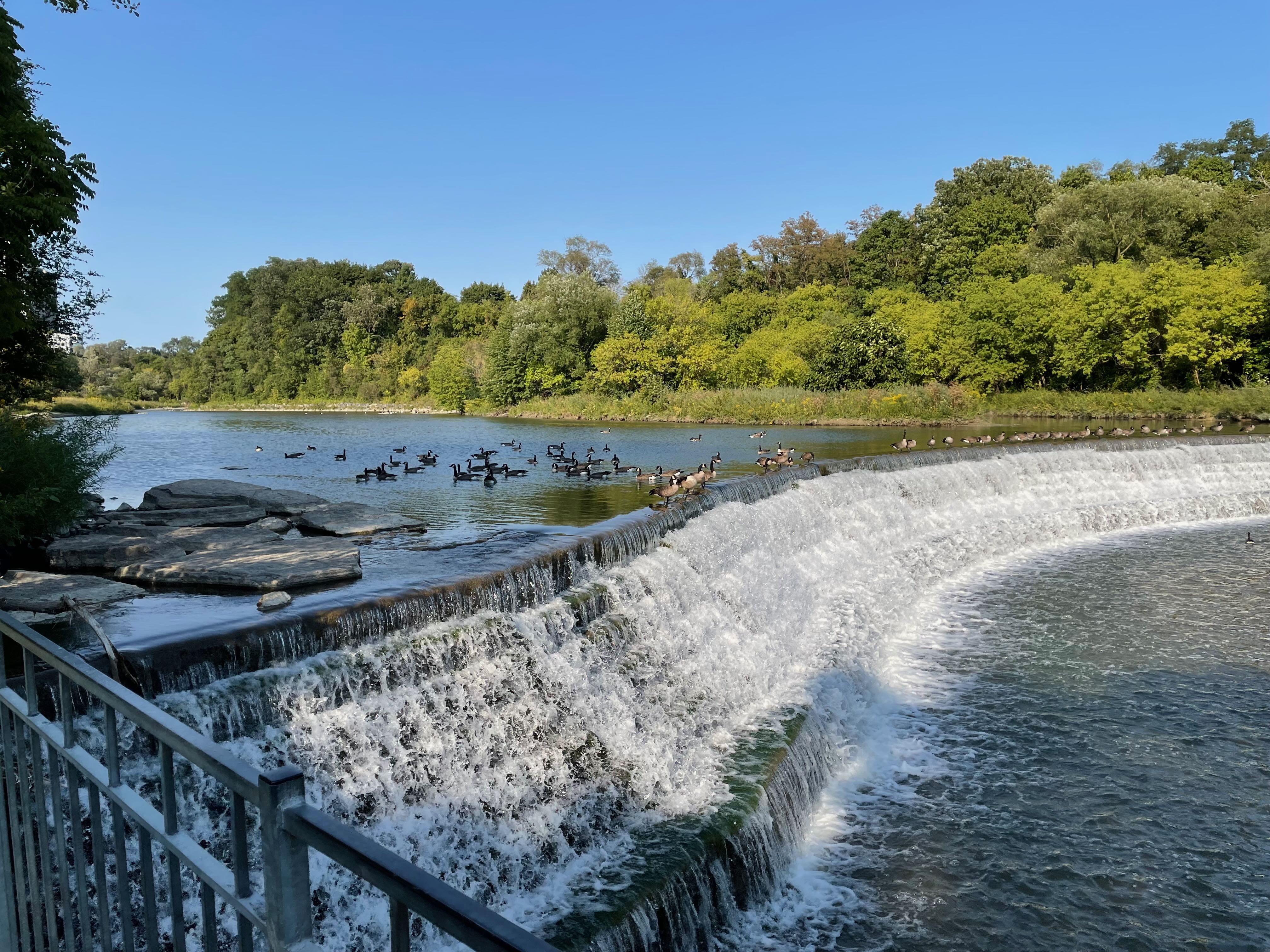
Geese enjoying the weir in September 2022.

In nearby Lions Park, people like to set up in groups and barbecue on warm weekends. They bring chairs and tables, awnings and coolers and relax by the river. Walking or cycling past these groups is a treat for the nose and if your hunger is stimulated, there’s an increasing number of fast (and slow) food locations a five-minute walk away on Weston Road.

Who are the people using parks? Every age group, athletic level and ethnicity are represented in Toronto’s green spaces and ravines; people looking for exercise, a meal or a relaxing stroll. There are no barriers or fees, everyone is welcome and people become more relaxed when they arrive. If you want to strike up a conversation, talk to a dog owner about their dog – or better yet, borrow a dog and walk it in the park (on leash of course). Dogs are instant ice-breakers. There are many volunteer organizations that help clean our parks after a long winter (locally it’s Humber River Pals) and get rid of accumulated litter while others look for invasive plants and remove them. Garlic mustard is a frequent target for those wanting some springtime greens and provide breathing room for native plants.

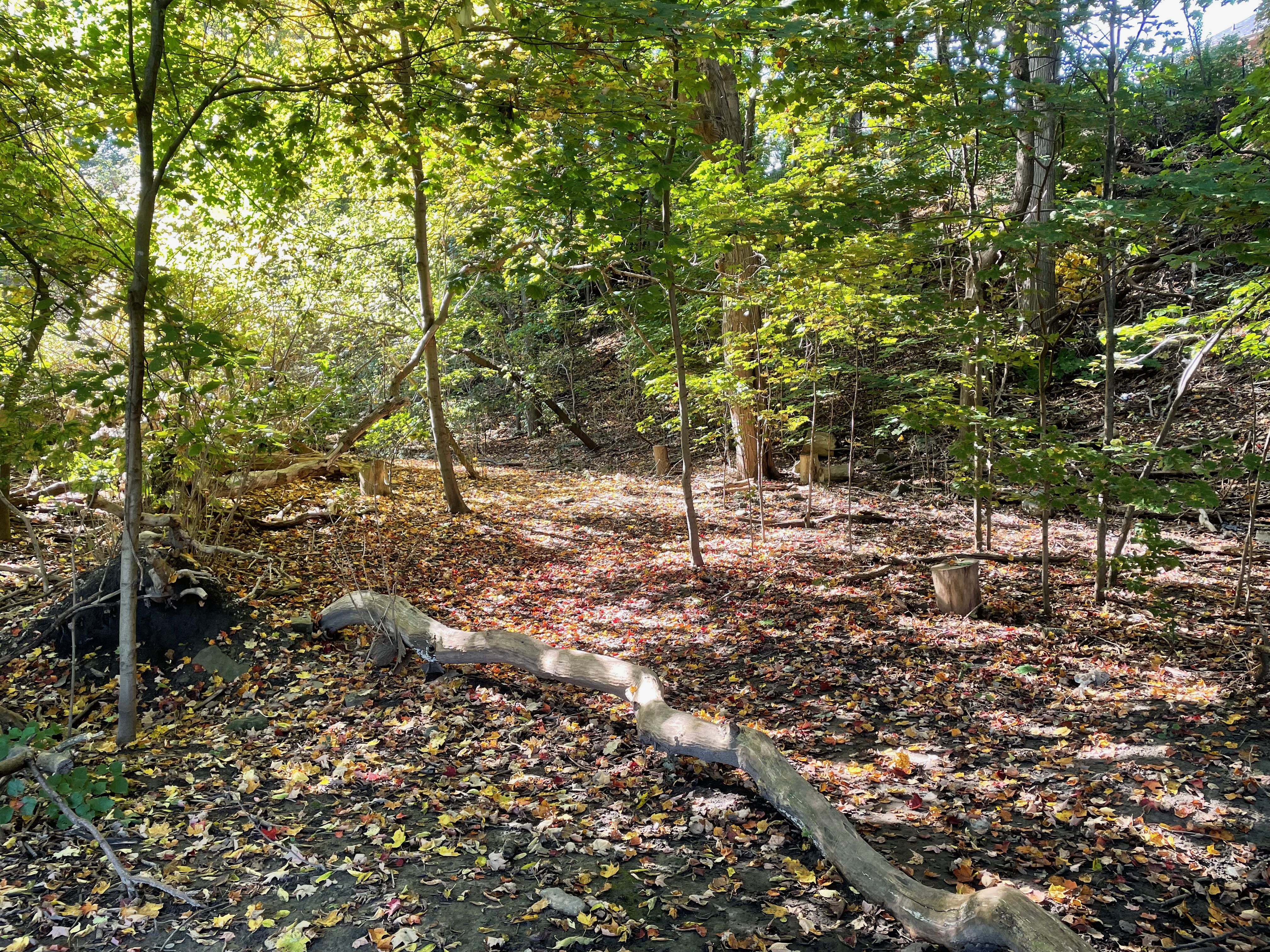
Raymore’s wooded area in October 2021.

It is possible to cycle from Raymore Park down to Lake Ontario with very few diversions onto side streets. The trail loosely follows the Humber to it’s mouth on the lake. Cycling through several parks on the way down to the lake reveals the variety of beautiful parks along the Humber.

So what’s stopping you? Get out and enjoy.

Early Autumn

Sorry about the late posting – this one from October escaped!

The climate around Toronto seems to move in plateaux so that you have spells of warm weather and then, suddenly it’s cool outside. October is the month with the steepest temperature decline and we’re beginning to feel it. Yesterday was very cool and I took advantage of the leaves at their peak. Frost has nipped the park in the last two nights and many leaves will fall as a result.

The newer tree plantings are showing nice colour.

The newer tree plantings are showing nice colour.

Much of the park’s older trees are non-native such as Norway Maple. These trees at best turn yellow rather than the crimson of sumac or sugar maples. As the newer native plantings grow, Raymore’s colours will become more vivid.

A nice reflection in the waters of the weir.

A nice reflection in the waters of the weir.

Whoever keeps blocking the fish ladder with various sizes of lumber are completely ignoring the ‘no trespassing’ signs helpfully placed by the TRCA.

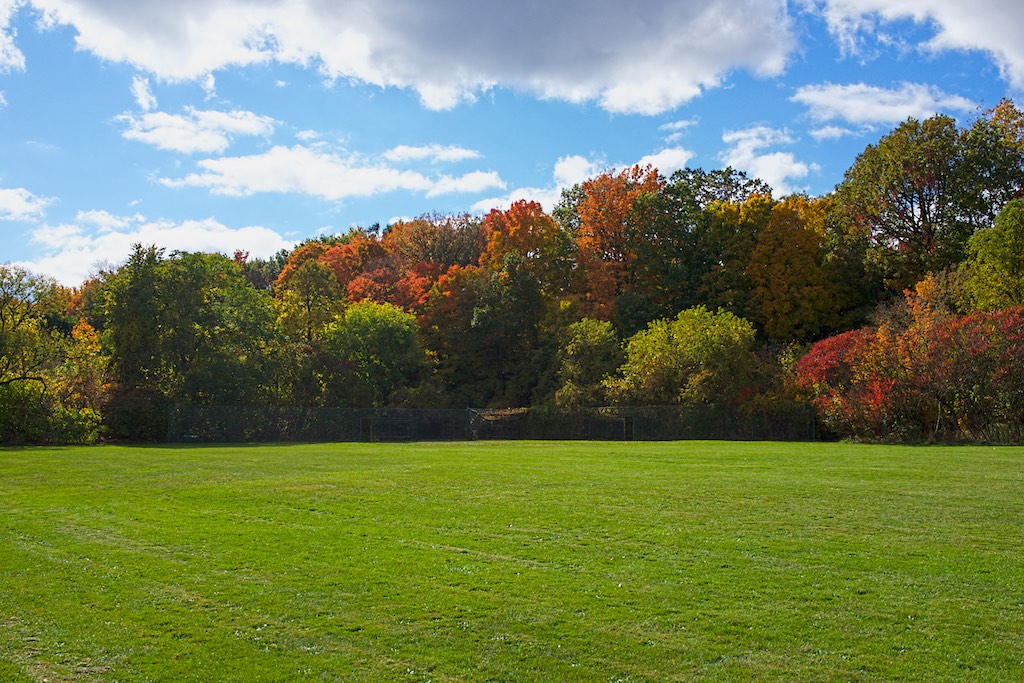
A nice backdrop to the southernmost baseball diamond. This is where the new leash free zone is planned.

A stunning backdrop to the southernmost baseball diamond. This is where the new leash free zone is planned.

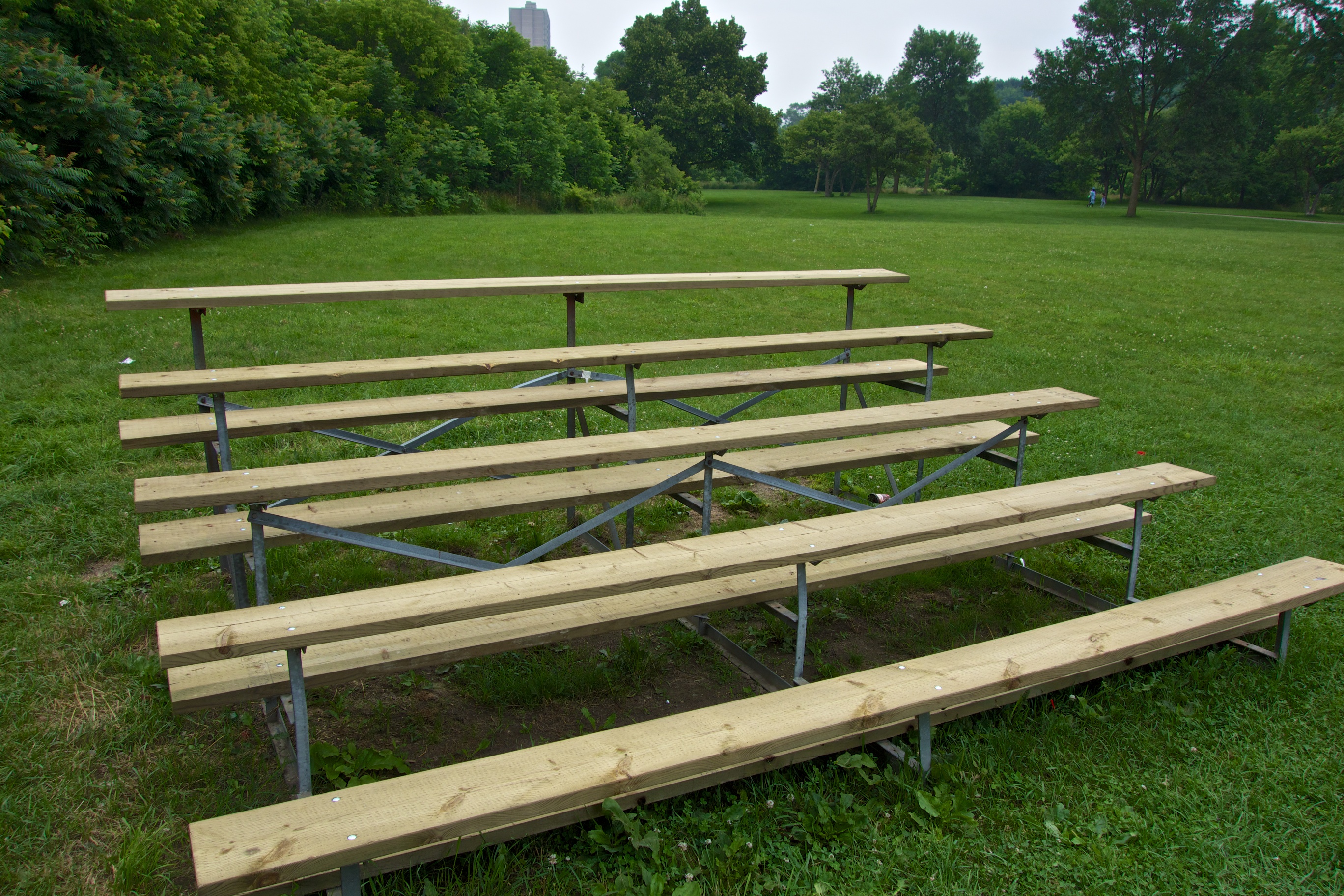
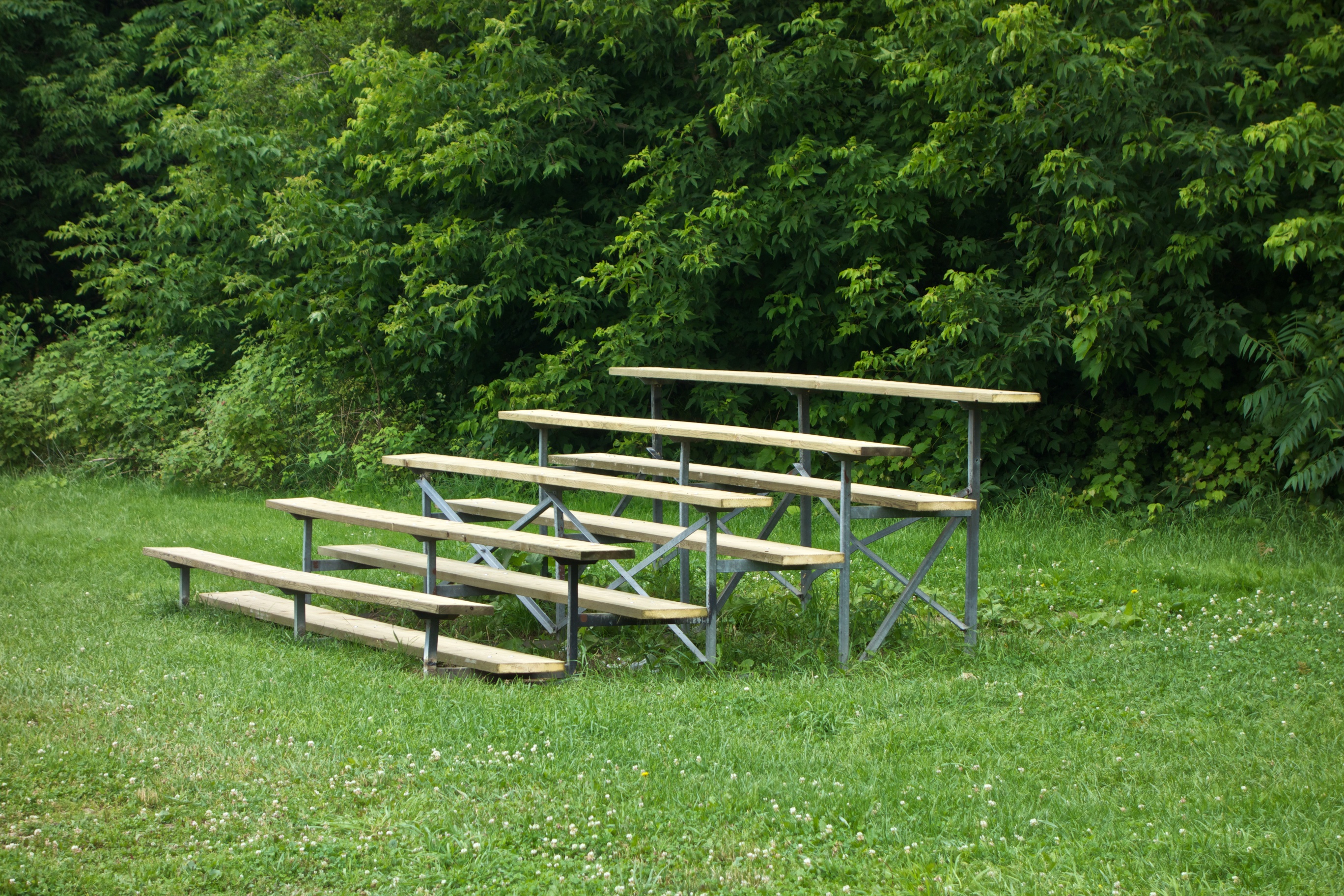
Bleachers are repaired

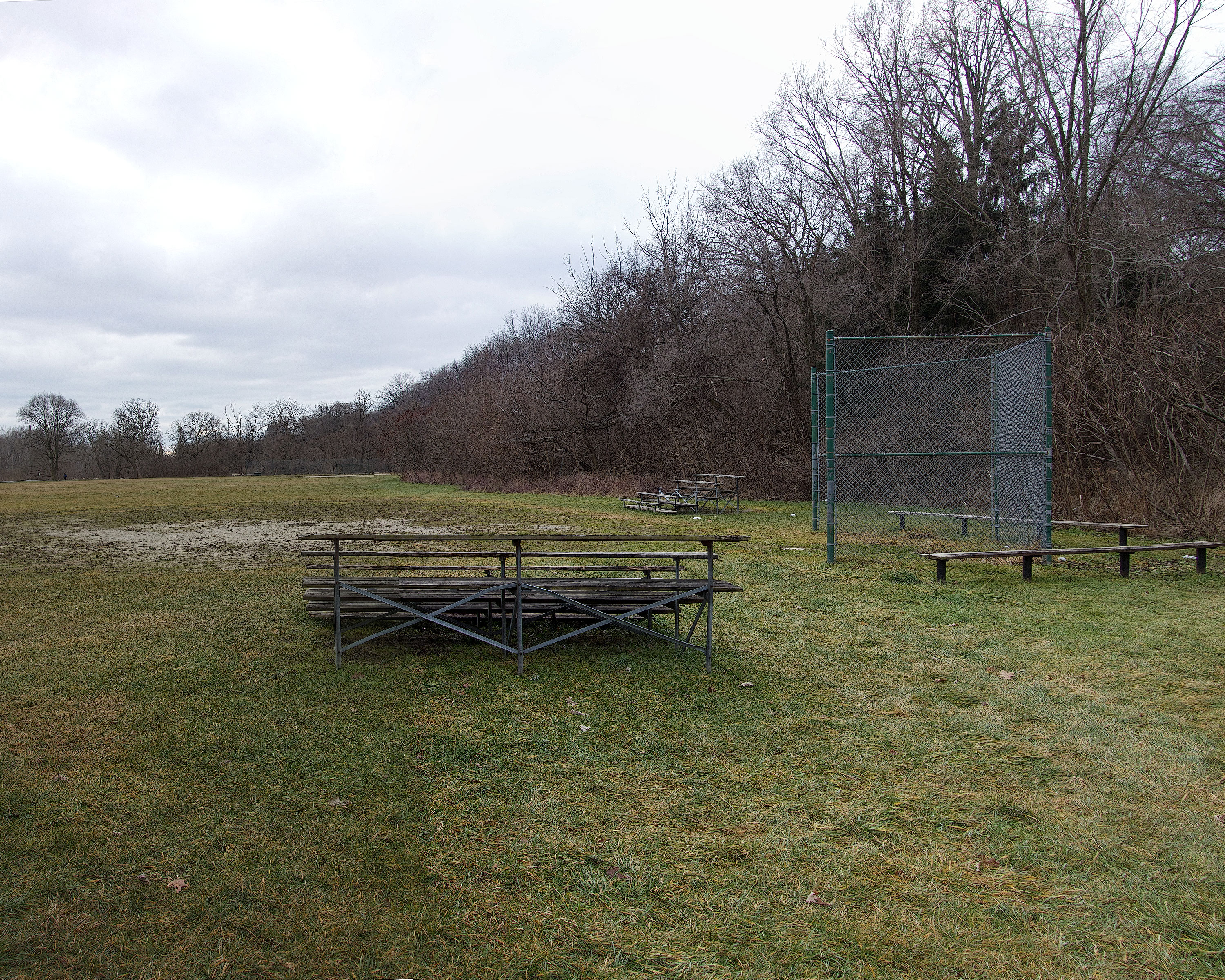
Not a particularly momentous occasion but the bleachers have been repaired by the smaller baseball diamond. New wood has been installed and while the bleachers’ principal use is to host late night drinking parties, at least they are safe and don’t add to the air of general air of dilapidation in that corner of the park.

It might be nice to install some garbage bins nearby.DSC02371 DSC02372

This ‘n that…

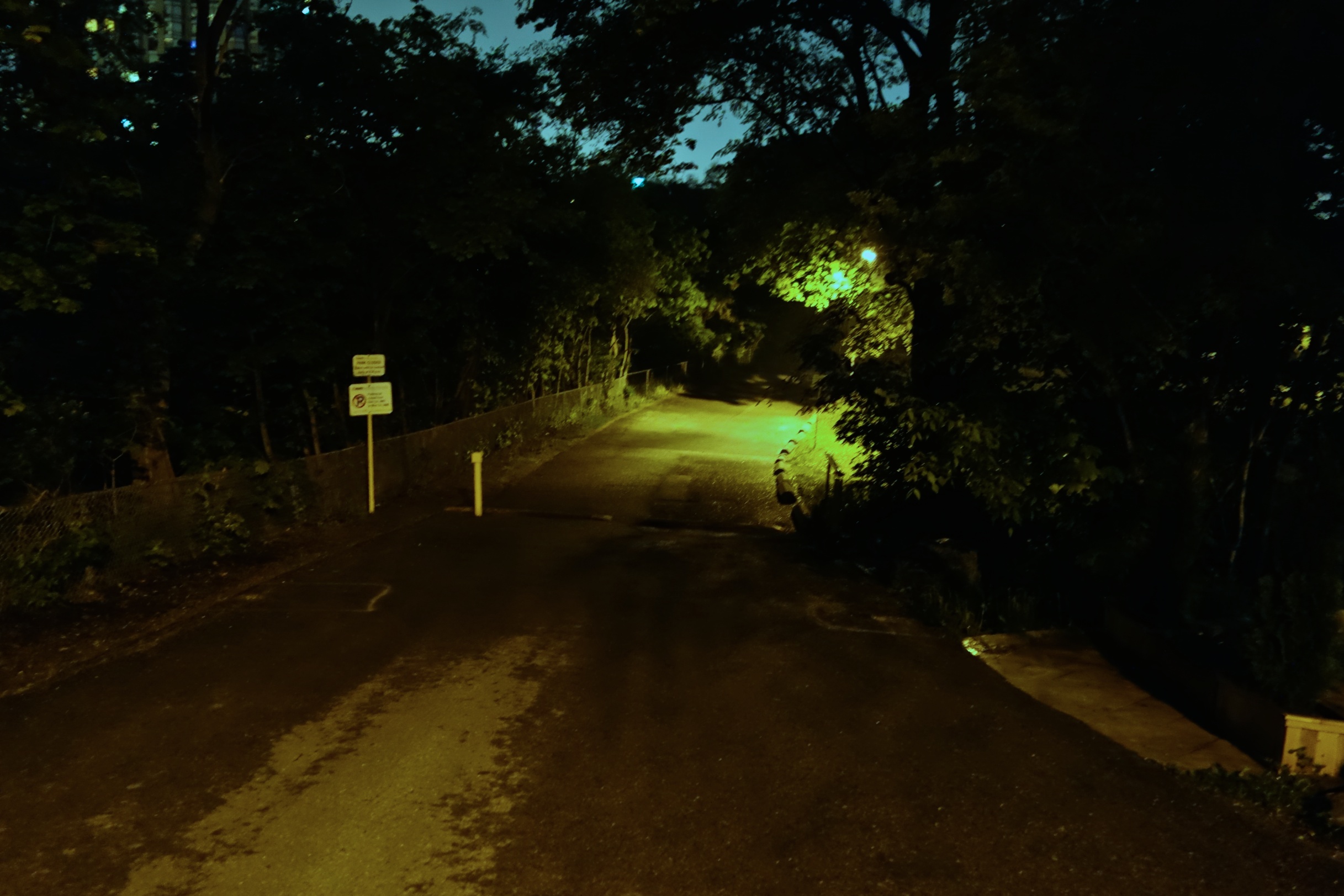
It’s already May 22nd and yet the gates to Raymore Park are left wide open every night. This despite a call to 311 last week.

Park gates open at 11:00 pm May 21st.

Park gates open at 11:00 pm May 21st.

May 20th was the Victoria Day holiday. Because the gates were left open, a group of people held a fireworks party on the grass by the parking lot.

Every year it’s the same. Surely the date cannot come by surprise? Gimme the friggin’ key and I’ll lock it up.

Postscript: As of early June, the park is being locked up regularly but interestingly it re-opens between 3 and 4 a.m.

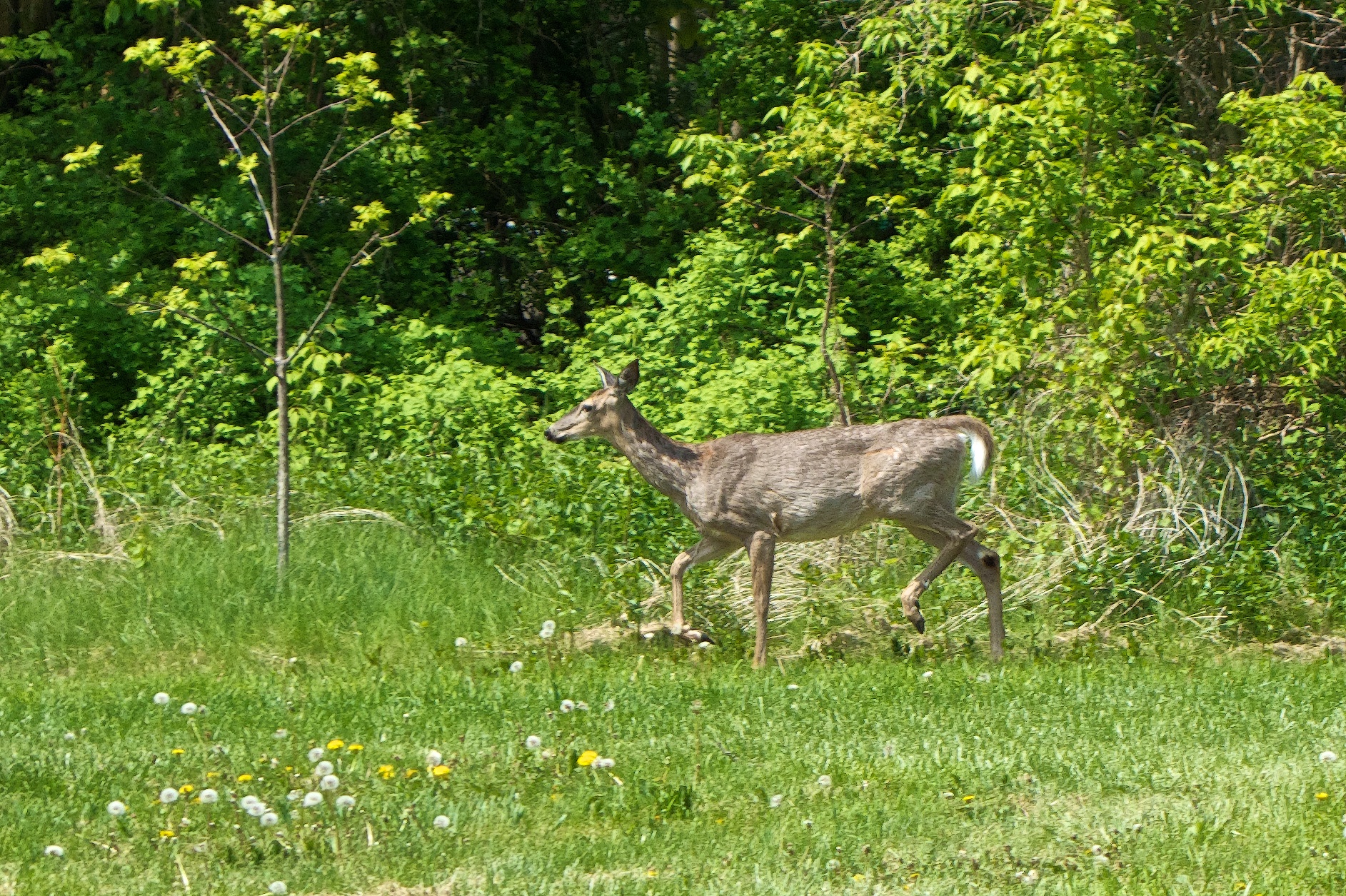
Earlier on the 20th, a young deer ambled down through the park quite unconcerned with the large numbers of people. A few people stopped to watch before it disappeared into the sumac behind the unused ball diamonds.

DSC02015

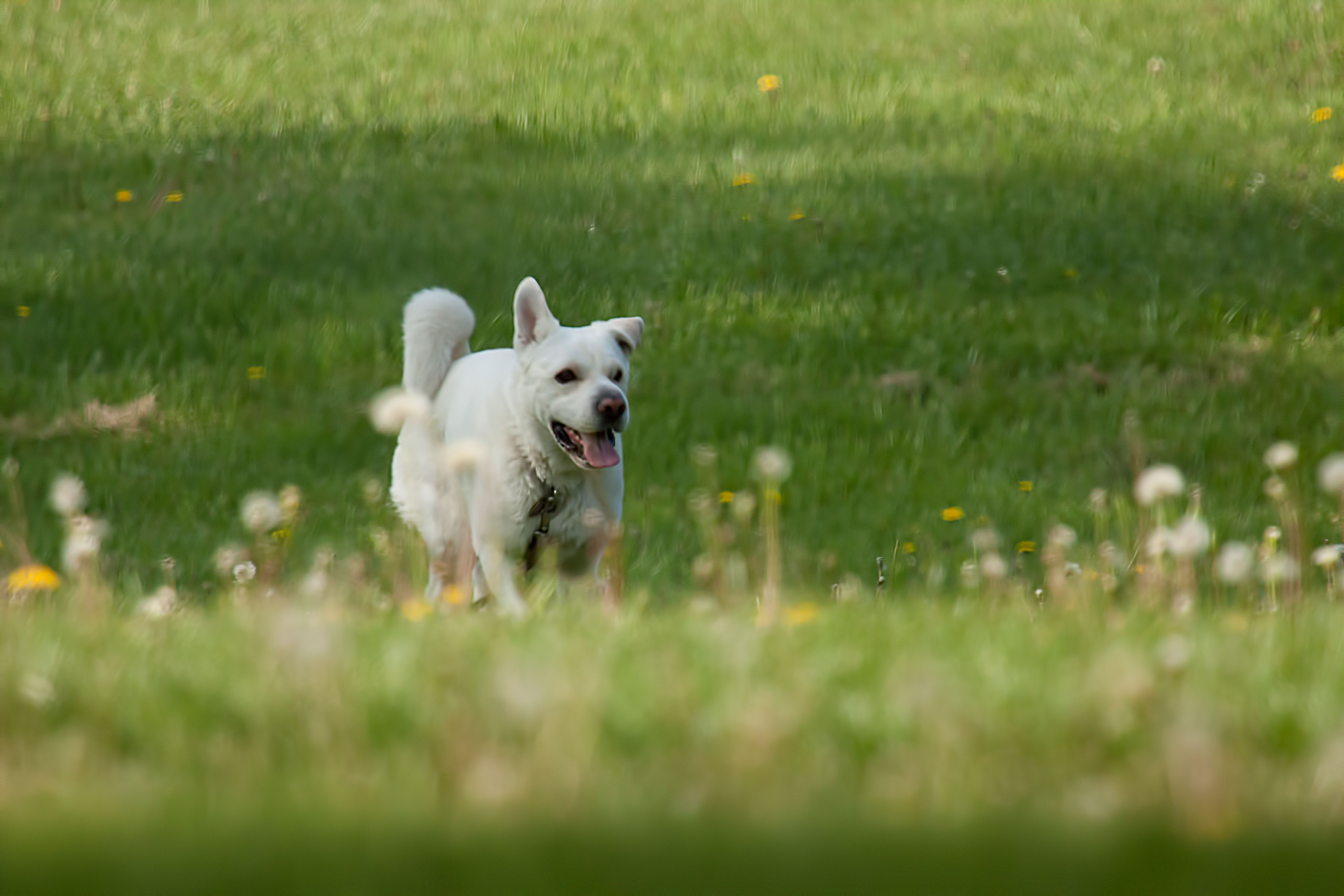
Fortunately there were no dogs on the loose – like this one that is allowed to chase park wildlife.

diablo

Image courtesy of Code Monkey.

On a further seasonal note, mosquitoes are back. The woods at the bottom of the park are home to some of the most aggressive bugs known to humanity. They managed to give me a matching welt on each arm.

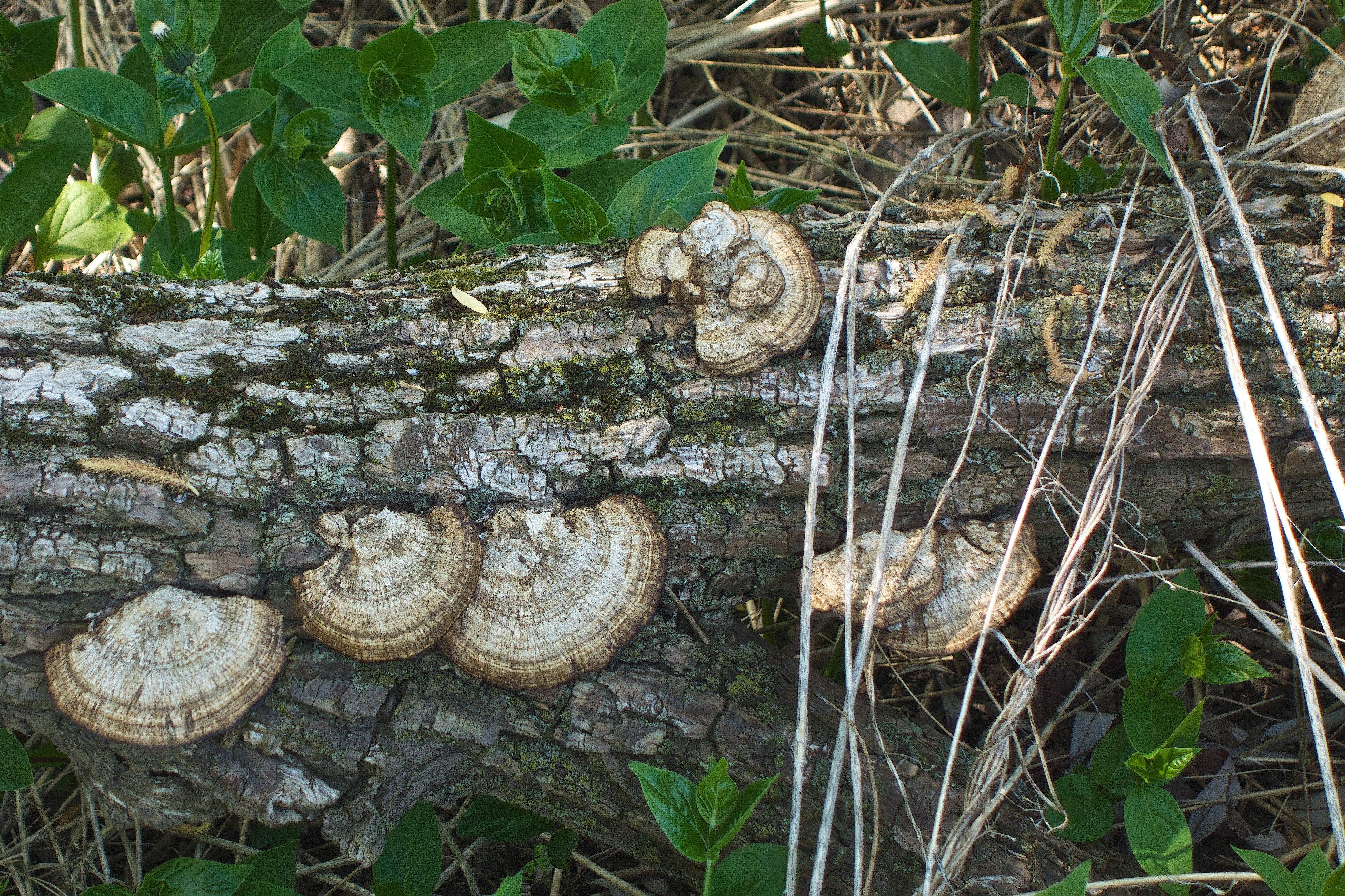
Lastly, some fungus caught my eye. It’s a type of bracket fungus commonly named Turkey Tail. It breaks down dead and diseased wood.

Trametes versicolor - Turkey Tail Fungus.

Trametes versicolor – Turkey Tail Fungus.

In praise of Staghorn Sumac

Staghorn sumac is a wonderful plant and there is lots of it in Raymore Park. What’s so wonderful?

For starters, it’s native and seems to be resistant to pests.

Second, it’s attractive with a kind of tropical look to it in the summer and a vivid red colouring in the fall. Its red flowers stay on the plant all winter.

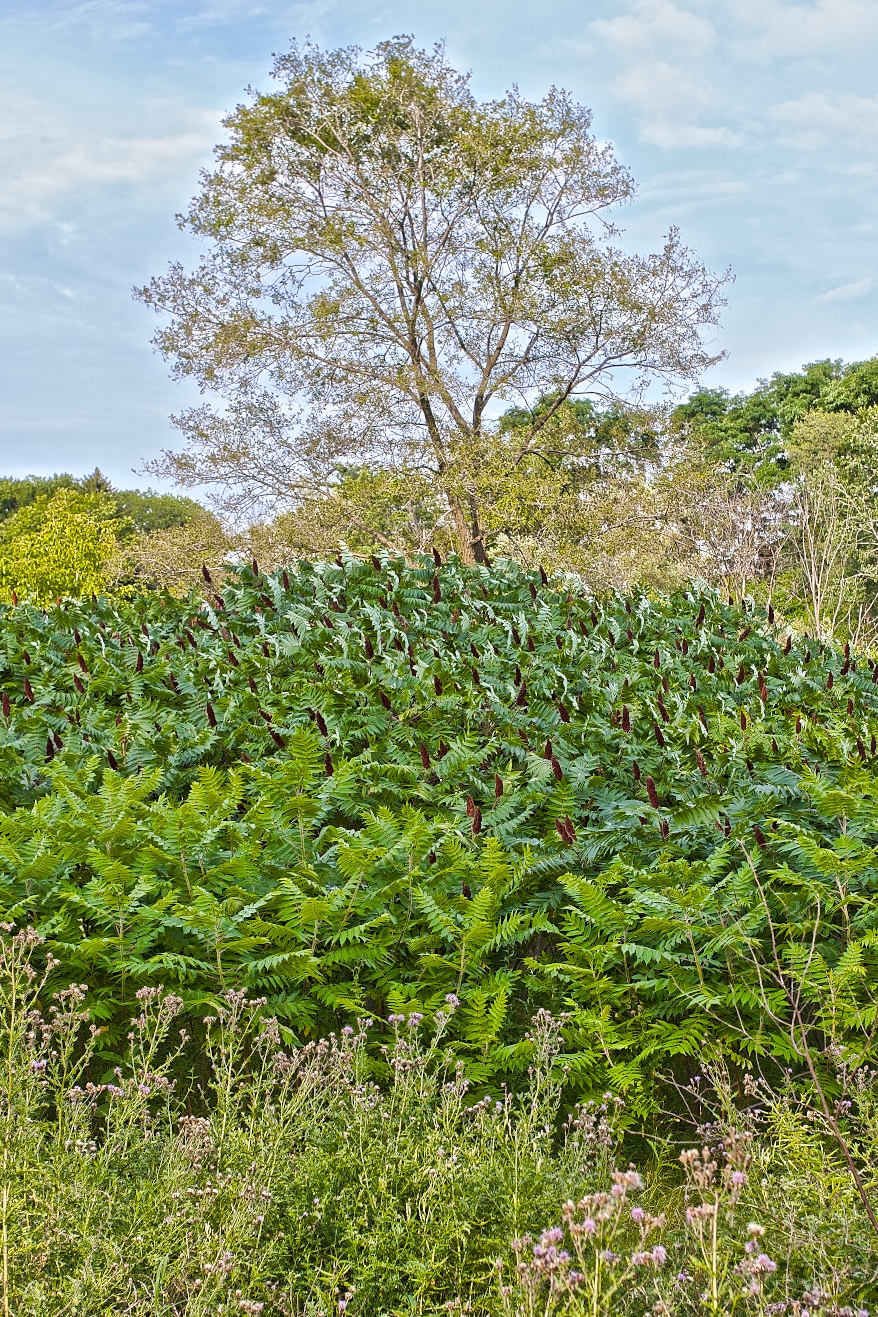
A stand of sumac in summer.

A stand of sumac in the wild area in August.

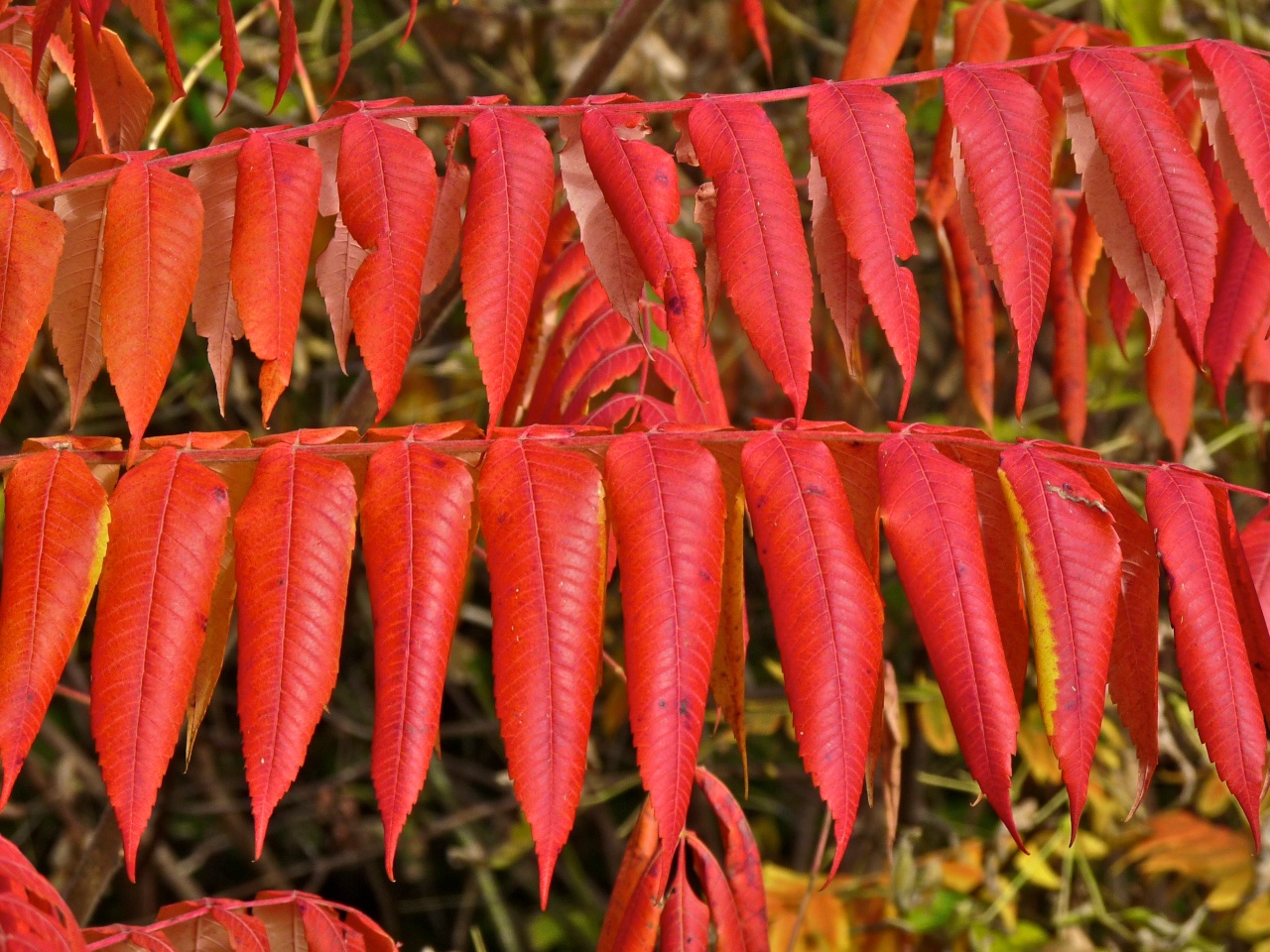
Sumac in mid-October.

Sumac, brilliant in mid-October.

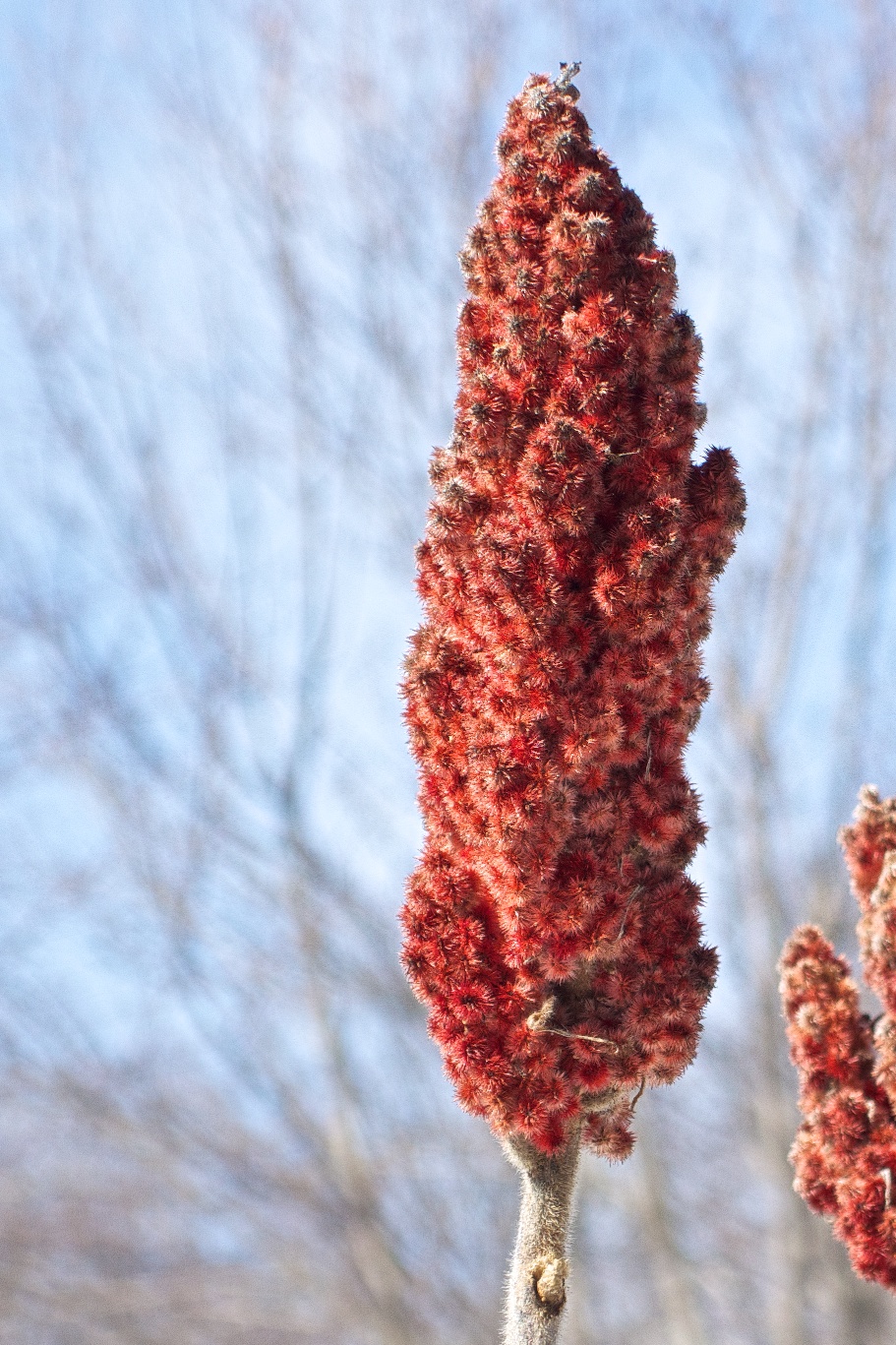
A sumac flower (March 9, 2013).

A sumac flower – note the velvet on the stem that gives the ‘staghorn’ name (March 9, 2013).

Third, it benefits wildlife by encroaching, in spite of human efforts to control it. Mowers have to give encroaching sumac an ever-wider berth as sumac leans out as it grows, allowing the roots to put out new shoots. Its deep shade starves less worthy plants of sunshine.

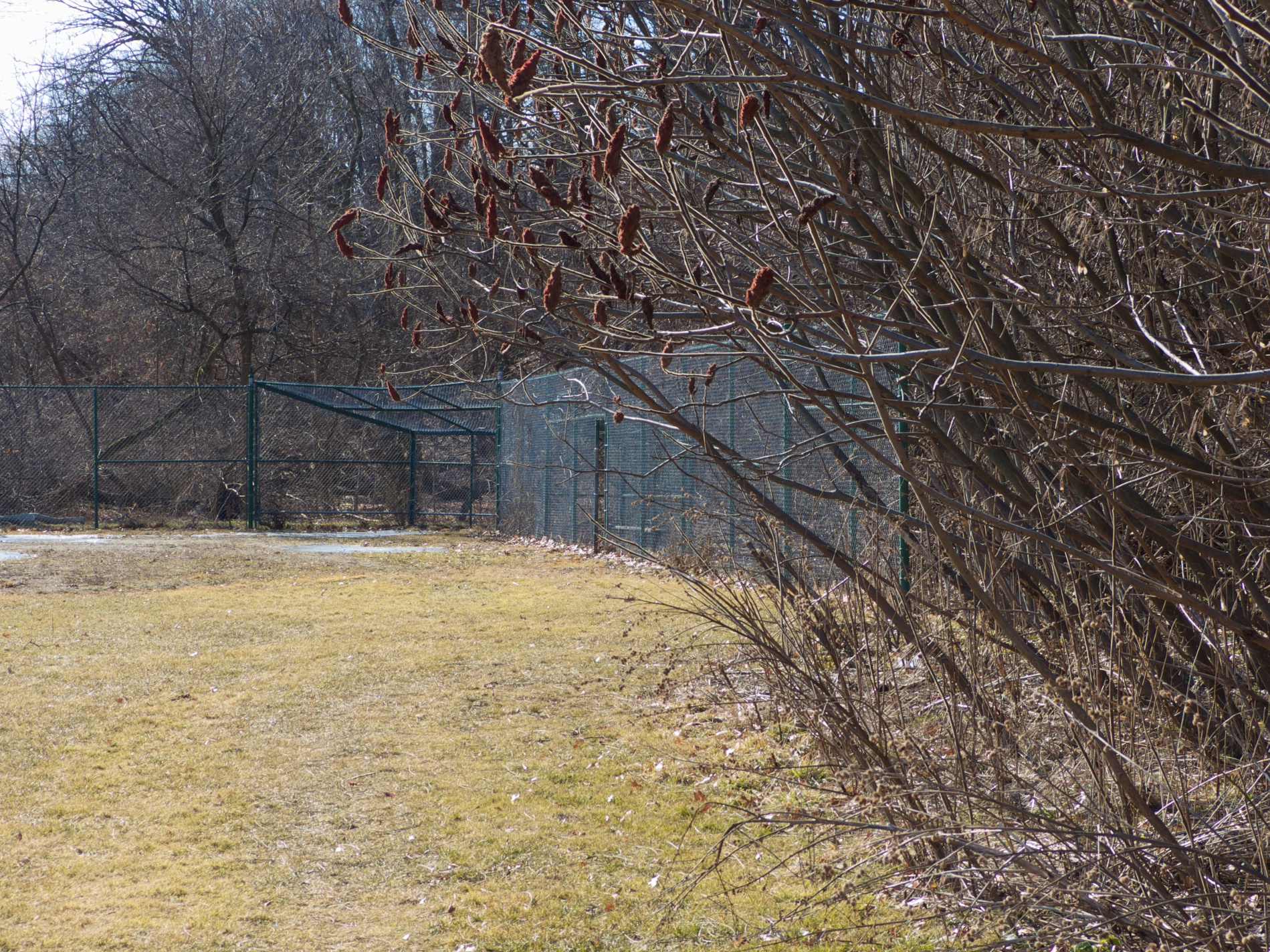
This disused baseball diamond is turning into woodland (slowly).

This disused baseball diamond is turning into woodland (slowly).

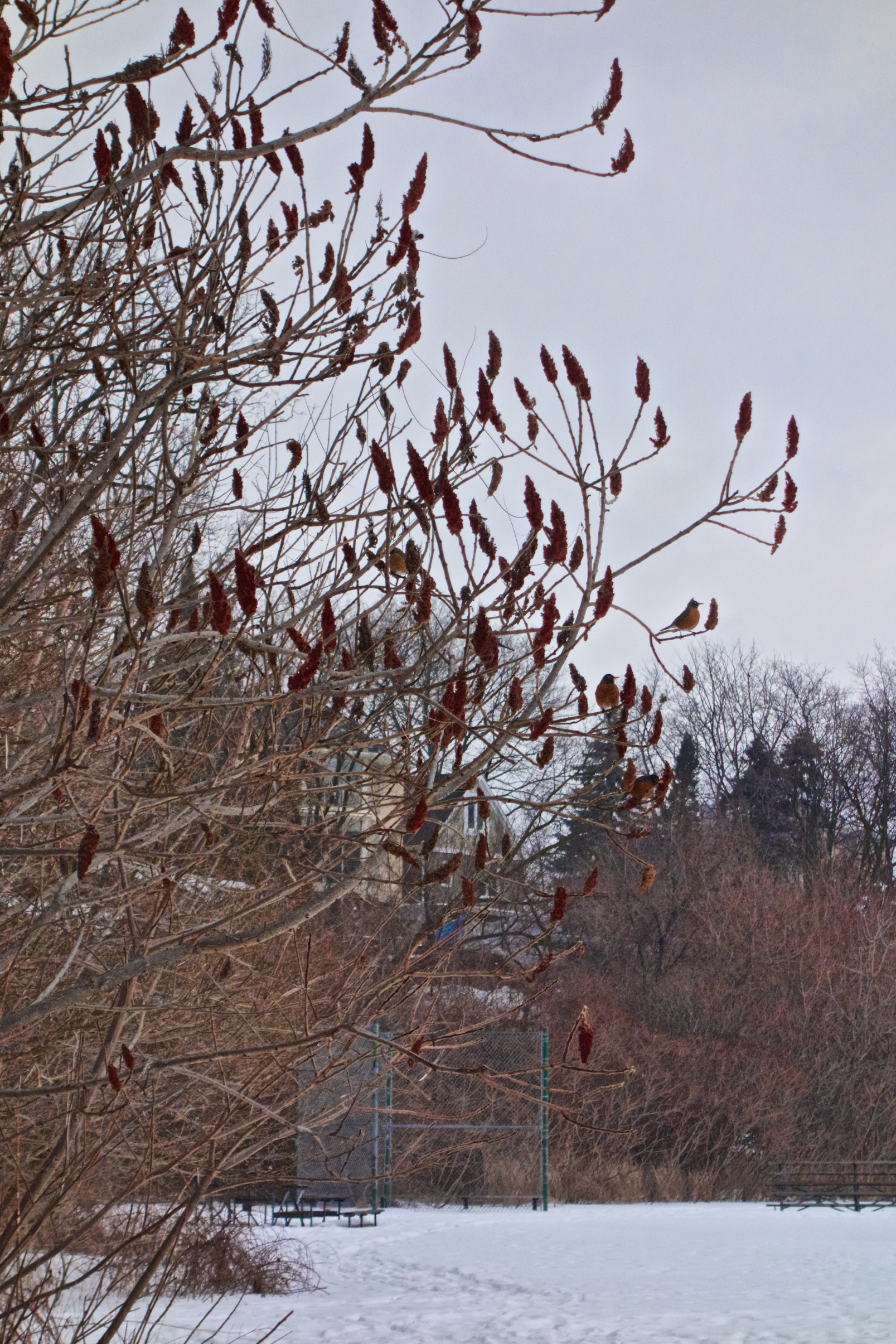
Fourth, it supports a variety of native wildlife from the insects that feed on its nectar to birds feeding on the flowers that stay throughout the winter. Deer along with other mammals eat the foliage and branches.

Count the robins enjoying a winter meal.

Count the overwintering robins enjoying a meal.

A couple of views…

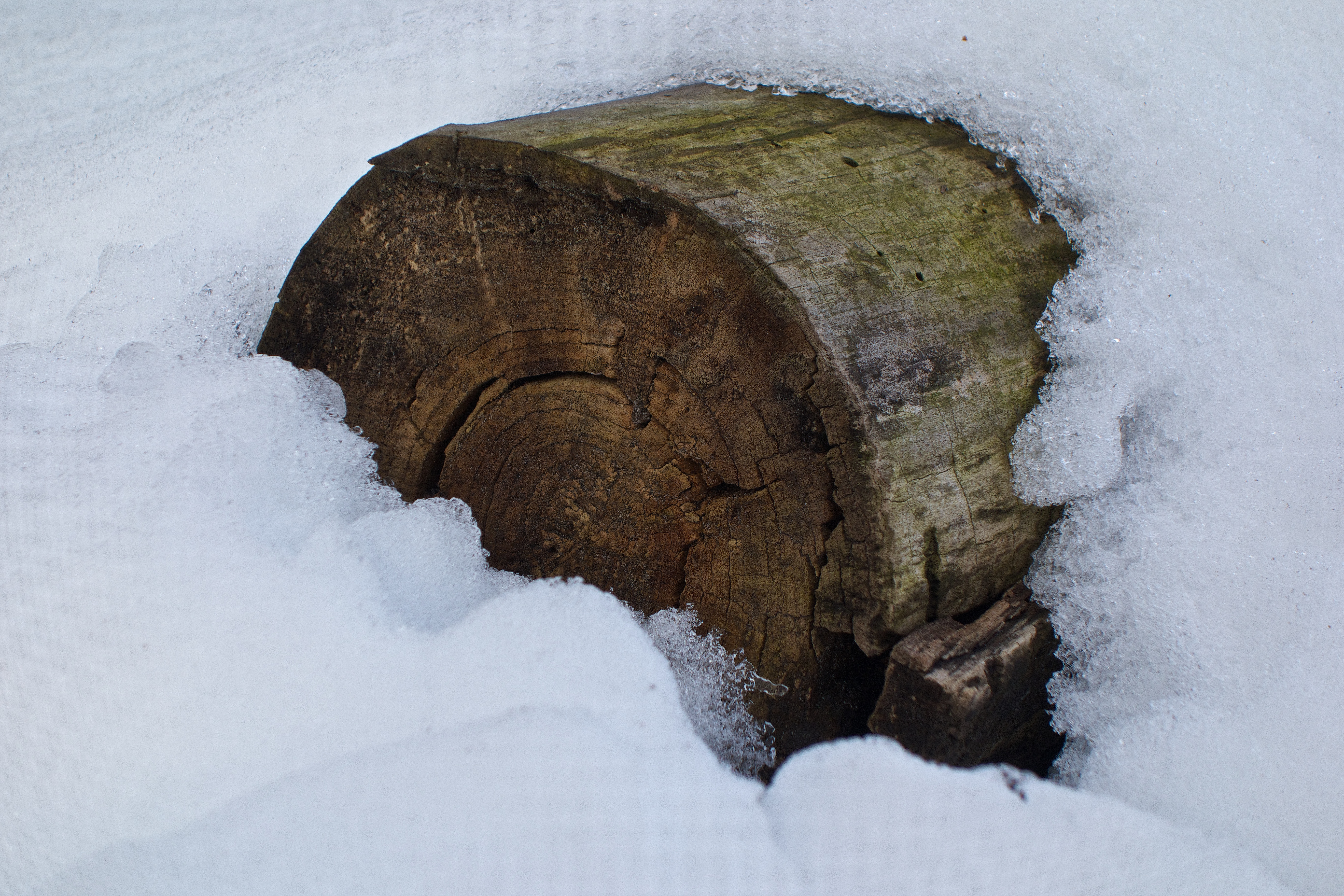
Here are a couple of shots taken today. The first is a log in the snow that had a surprising amount of colour in it. The snow is granular now and adds a nice contrast in texture.

DSC00925

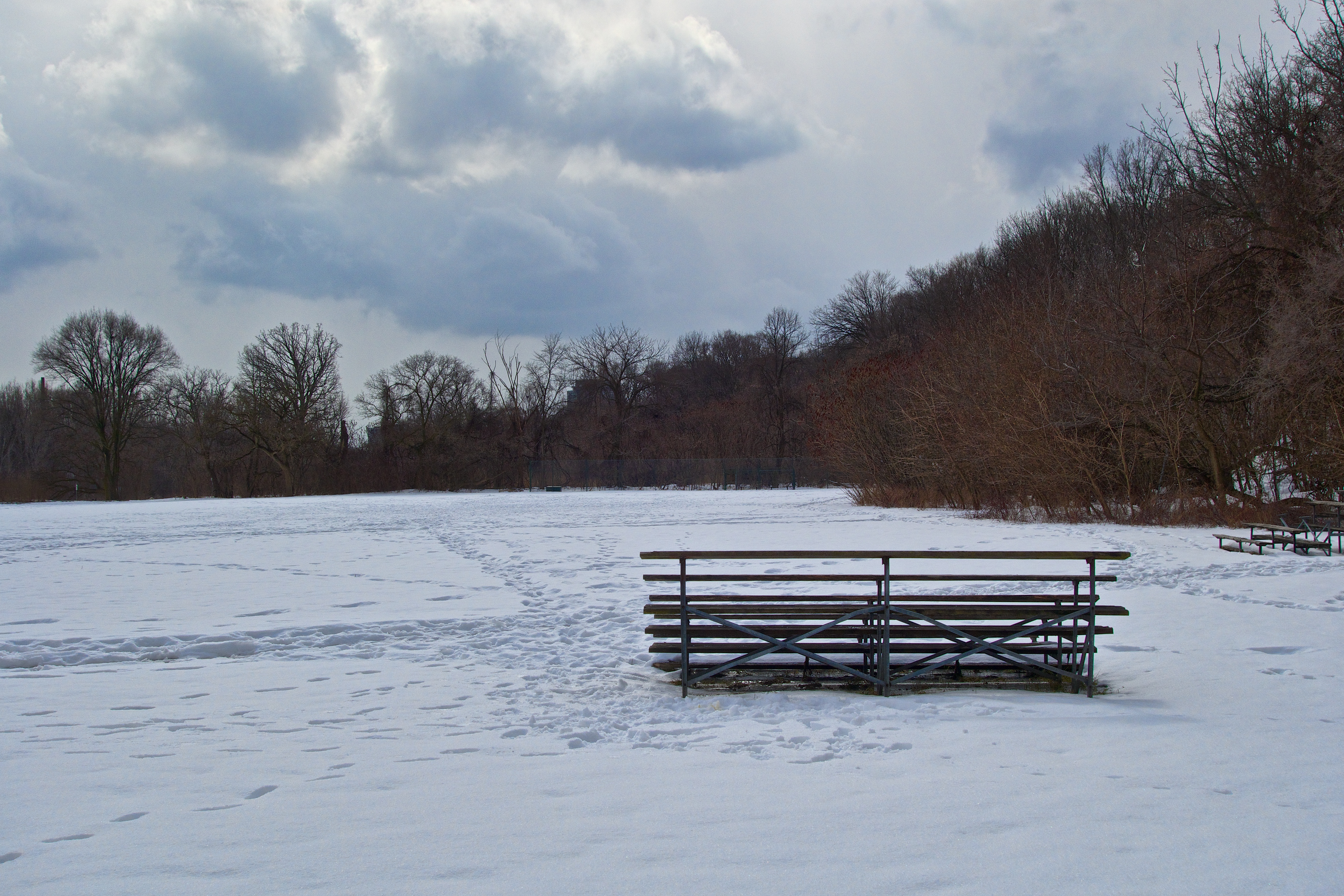
The next shot is pretty desolate – the old bleachers set against some ominous clouds, the trees of the park and the patterns of foot traffic in the snow

DSC00938.


If you build it, they (still) won’t come.

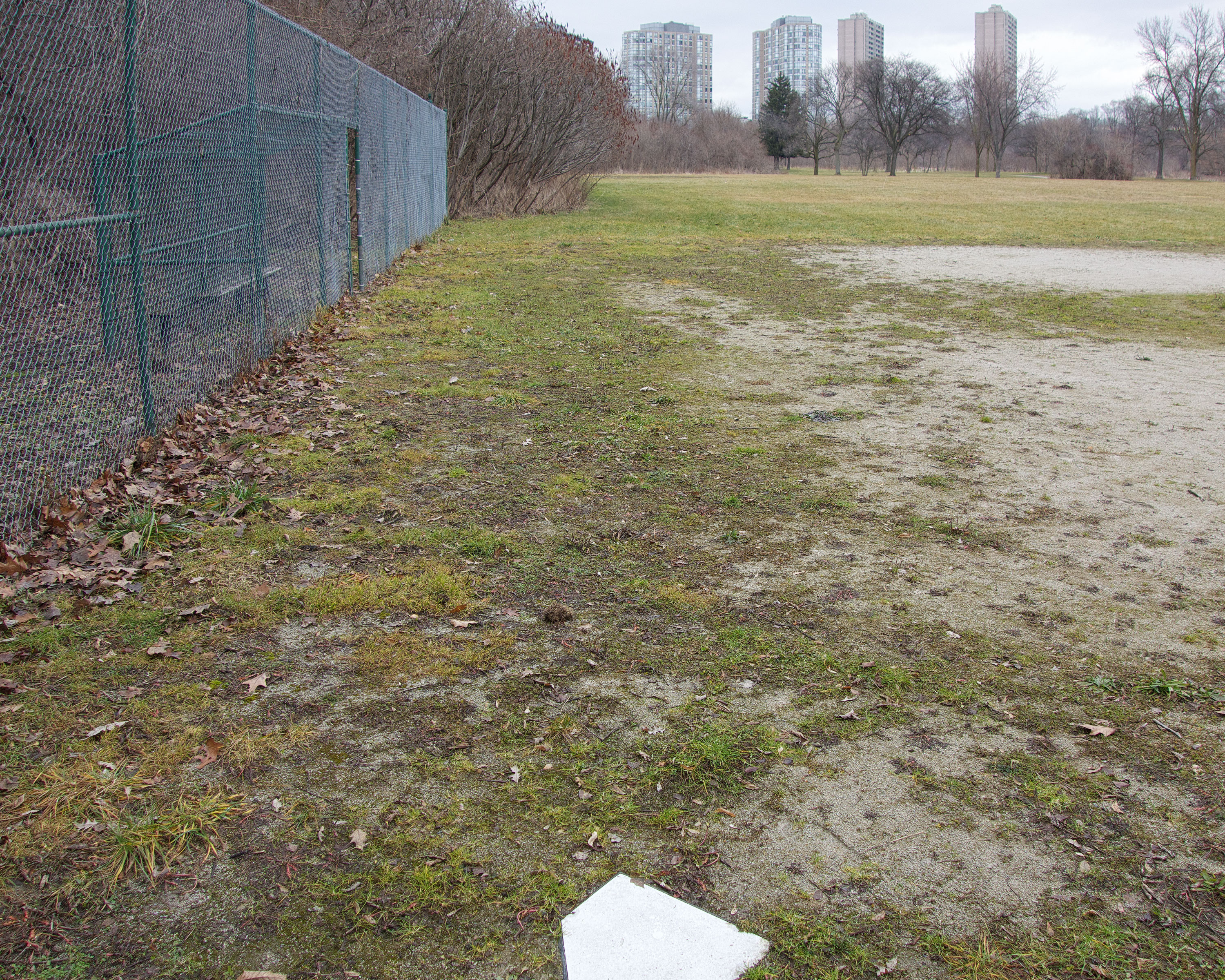
Smack in the middle of Raymore Park is a pair of baseball diamonds occupying a space that extends from the valley walls almost to the river. They have sat unused for the past 6 years. In spite of this, the grass is cut regularly and the infields have been graded until recently.

Looking south from the smaller diamond.

Looking south from the smaller diamond. The bleachers are falling apart.

I emailed our Councillor (Doug Ford) last March about the lack of use:

The south end of Raymore Park has a couple of baseball diamonds that have sat unused for at least 5 years. The bleachers beside the north diamond are in a dangerous condition and attract an assorted collection of drinkers and pot smokers as well as lots of garbage. In spite of this, the diamonds are faithfully graded several times a season even though nobody books or uses them and it would be impossible to play there because the base lines are obstructed by 20′ tall sumac.This whole field comprises several acres and is never used as it is too far away from the parking lot. It is however mowed several times a season.

Perhaps it might be a good spot to let nature take over (as has been done in the field to the south) as well as stop grading the diamonds.

I enclose some photographs to illustrate the situation.

The park manager phoned me and said that there may be plans to replace the diamonds with either a soccer field or a cricket pitch (there is a FIFA quality soccer field in Lions Park across the bridge and lots of cricket pitches in the Humber Flats). During the summer a team of workers cleared the bush away from the large diamond. Several workers spent at least 5 days on this task.

Looking north from the larger diamond.

Looking north from the larger diamond. Brush was cleared from behind the chain link.

This is a huge piece of land and could be an amazing wildlife haven along the Humber corridor. If planted with native trees it could be an attractive wooded area in a few decades. Believe it or not, until 2000, the enlightened minds in the parks system used to spray this area with Roundup (weed killer from the lovely people at Monsanto) until the practice was banned by City Council.

Hopefully, some more enlightenment will trickle down.