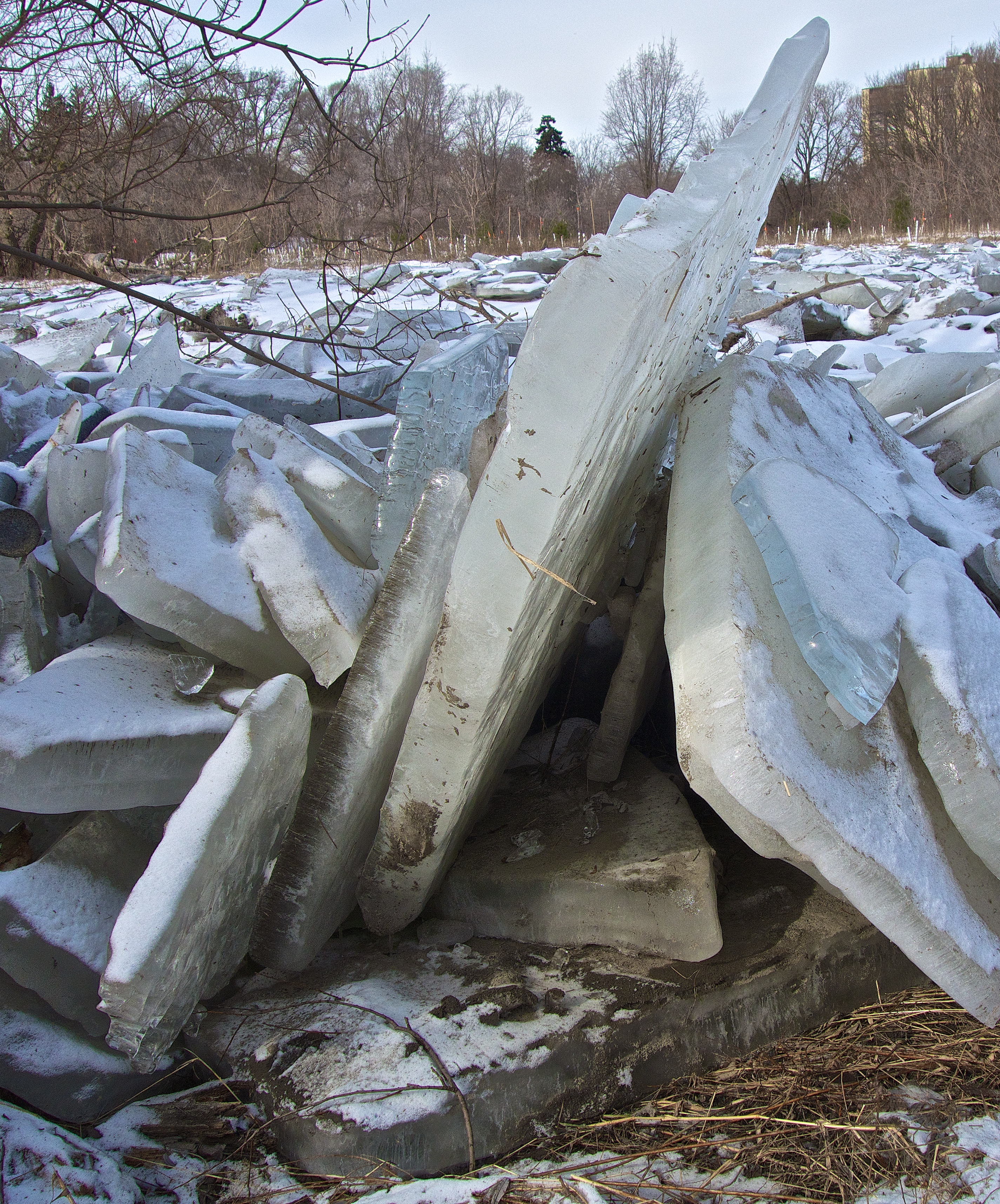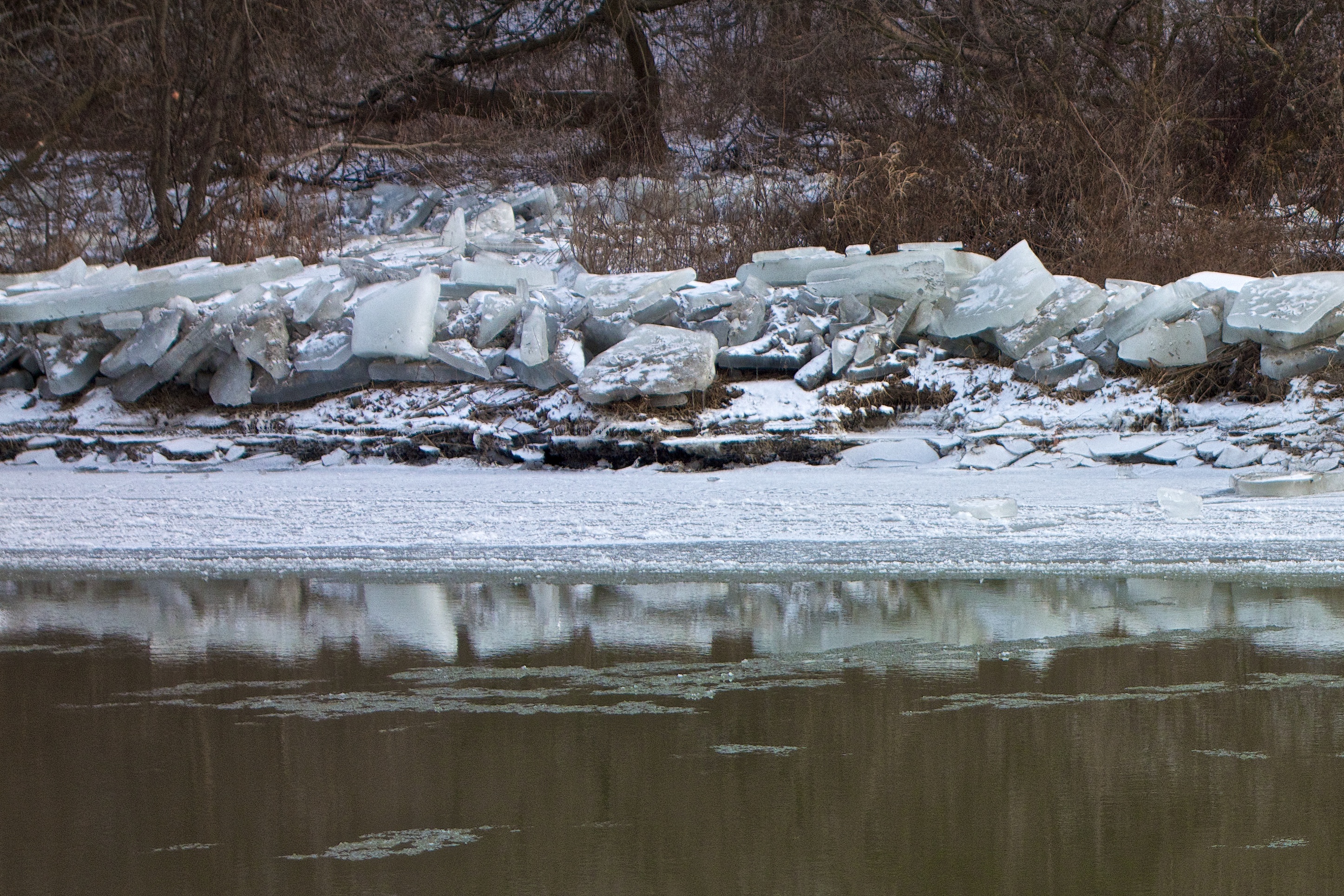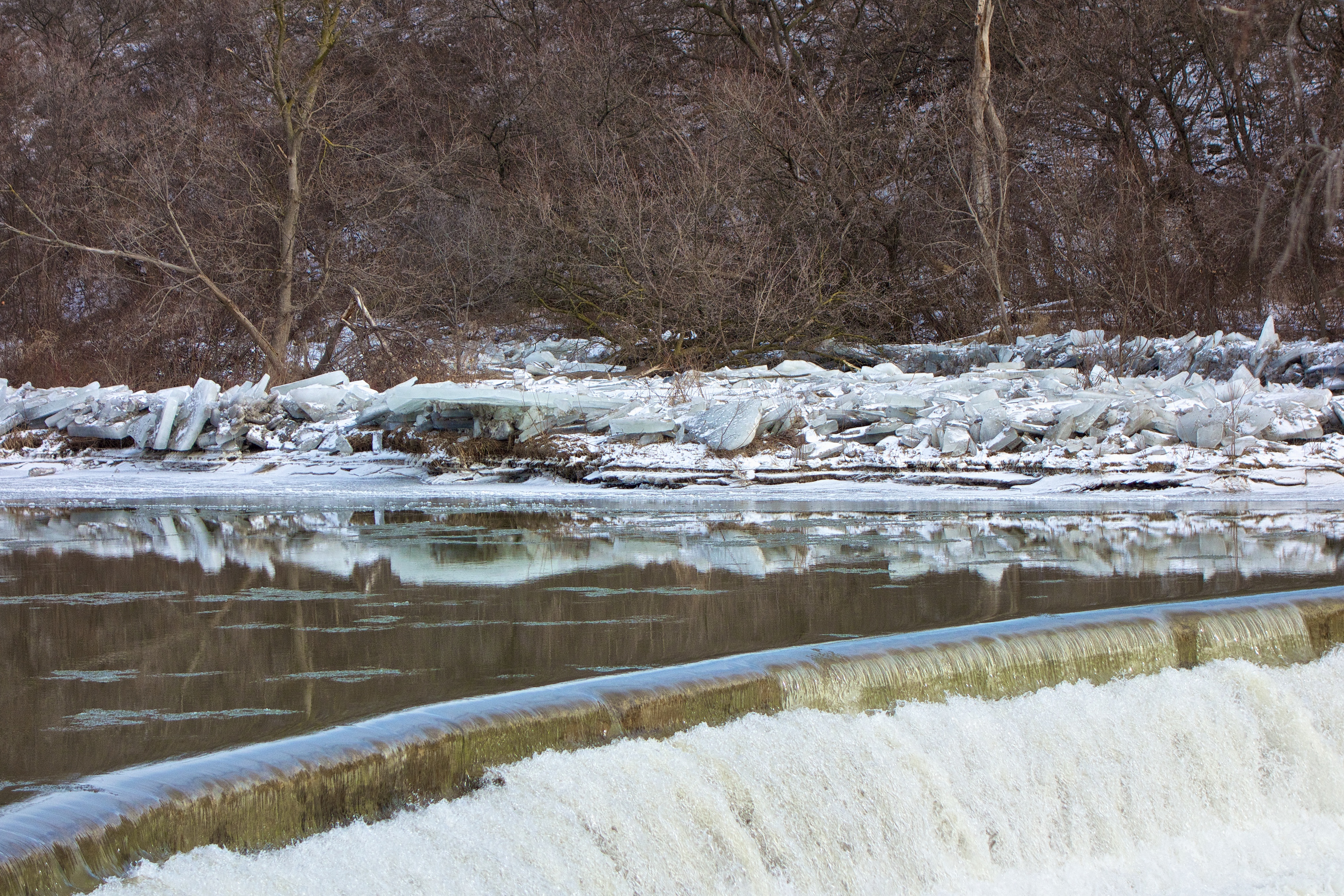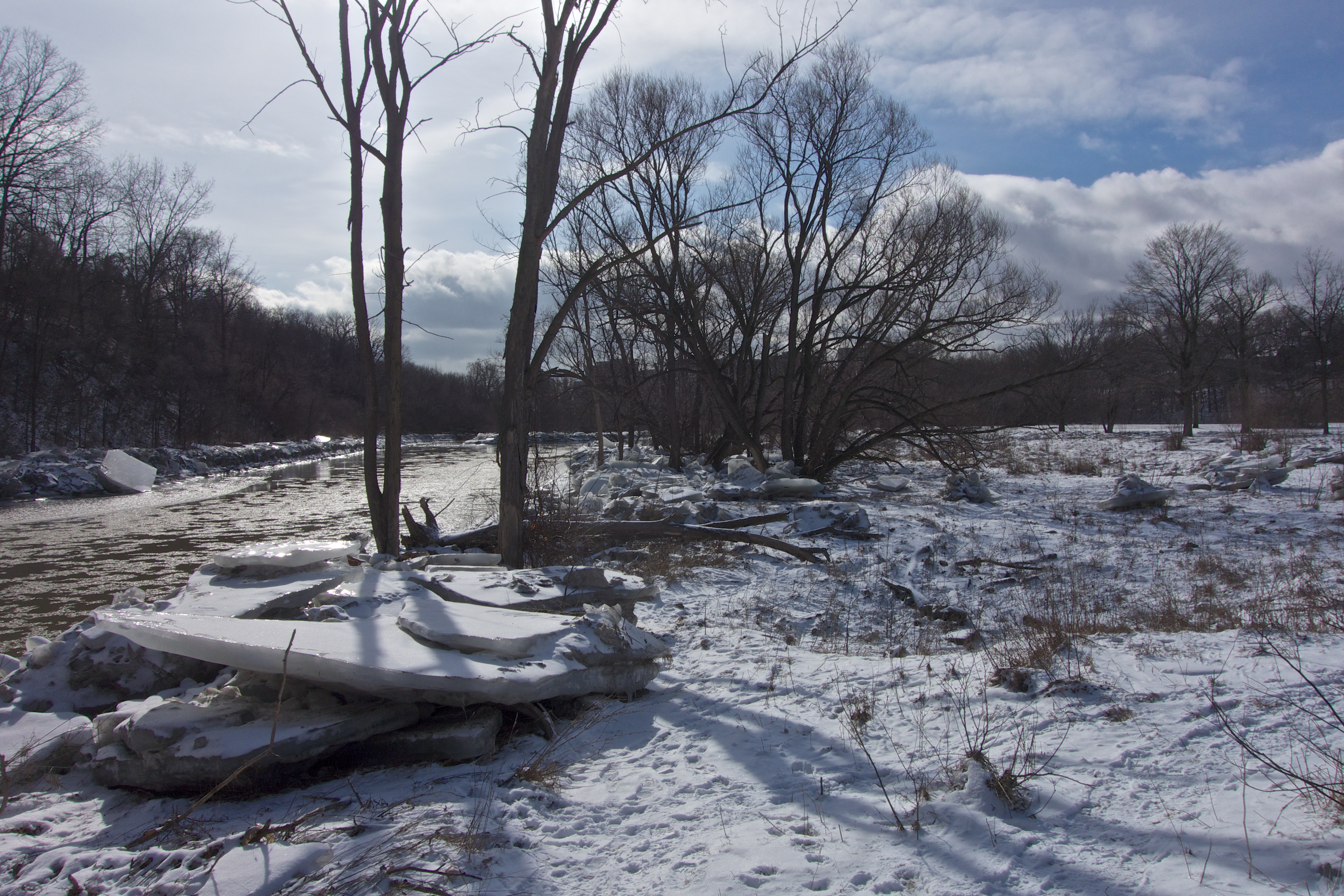
A load of rubbish.

A sad sight in any park is litter. This morning I noticed a Coke can embedded in a block of ice. There it lay, eventually destined to be pressed into the earth (were it not for my intervention) where it would stay for the next few hundred years.
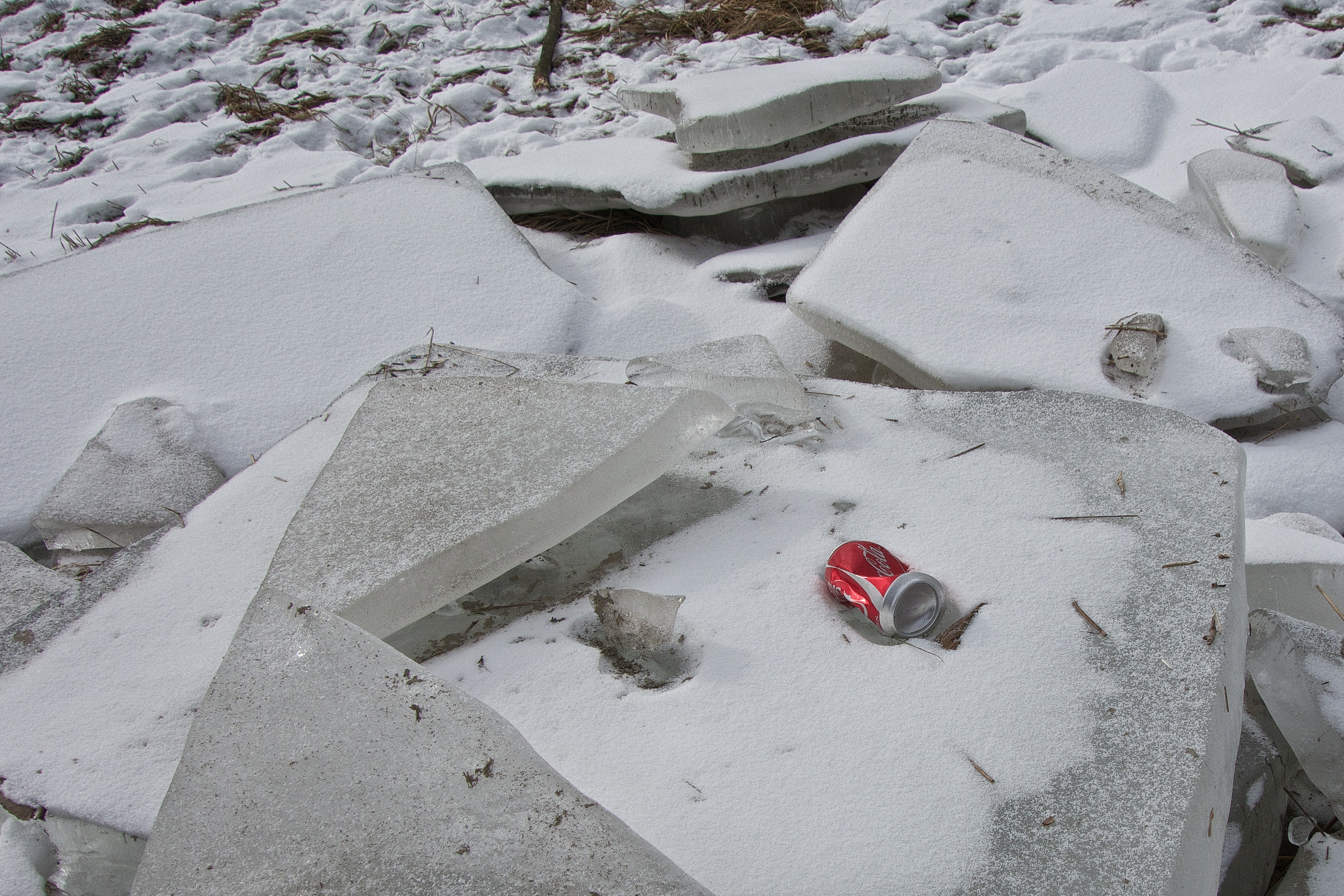
Used once, life expectancy: 500 years.

Used once, life expectancy: 500 years.

We marvel today at Roman ruins that are buried several feet underground and wonder how this happened. The secret is that over the years, people threw waste where they liked. Back then, it was largely organic and when mixed in with the occasional broken crockery eventually became part of the soil. Nowadays, most organic waste ends up in the sewer while our garbage is metal or plastic and does not break down easily.
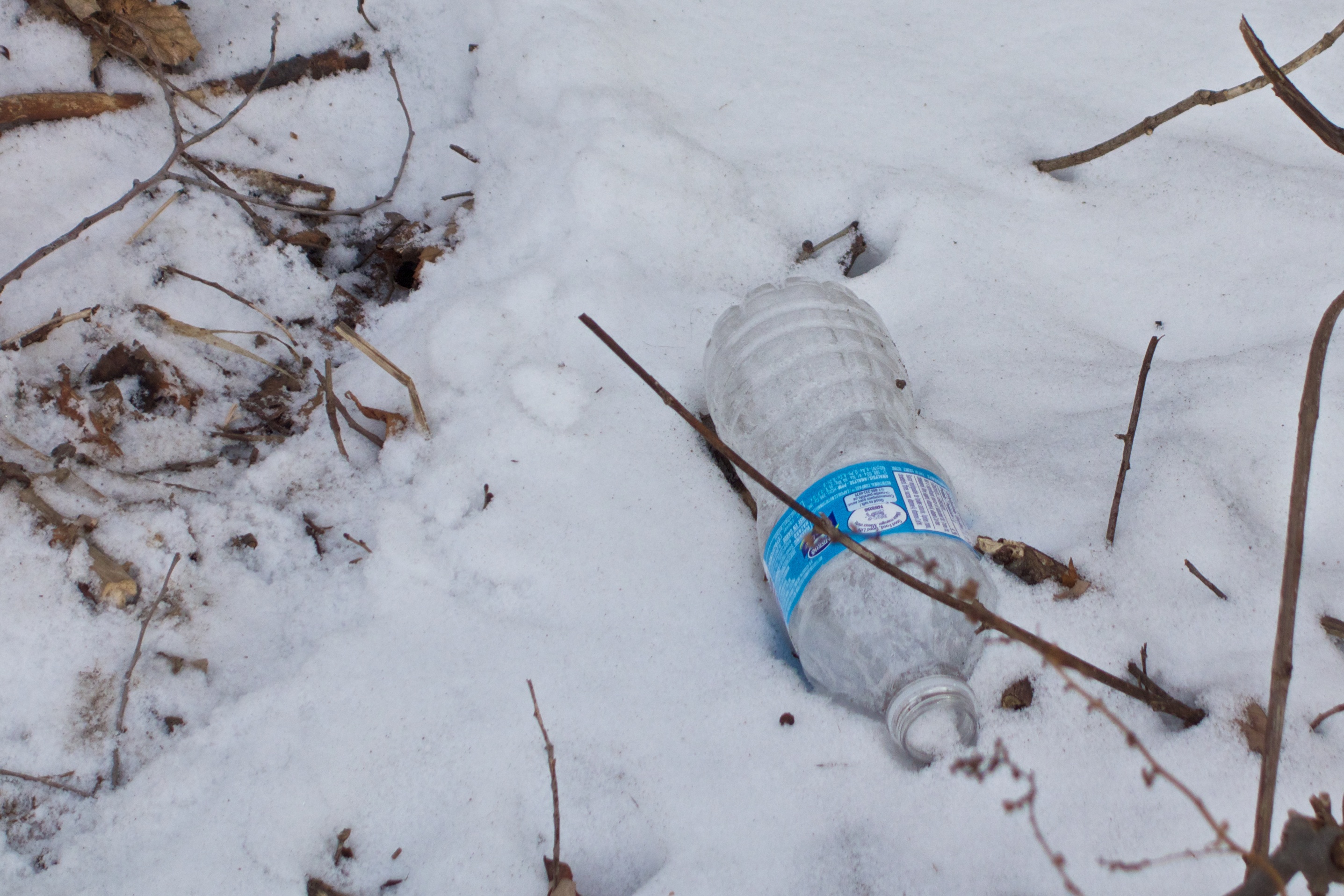
Plastic bottles - the triumph of marketing over need.

Plastic bottles – the triumph of marketing over need.

Soft drink corporations have lobbied hard to ensure that there is no deposit paid on bottles or cans. They surely know that many of their empty containers end up as litter but are unwilling to be good corporate citizens as this would cost money. Corporate money pays for political campaigns so we all know the chances of anything being done by politicians.
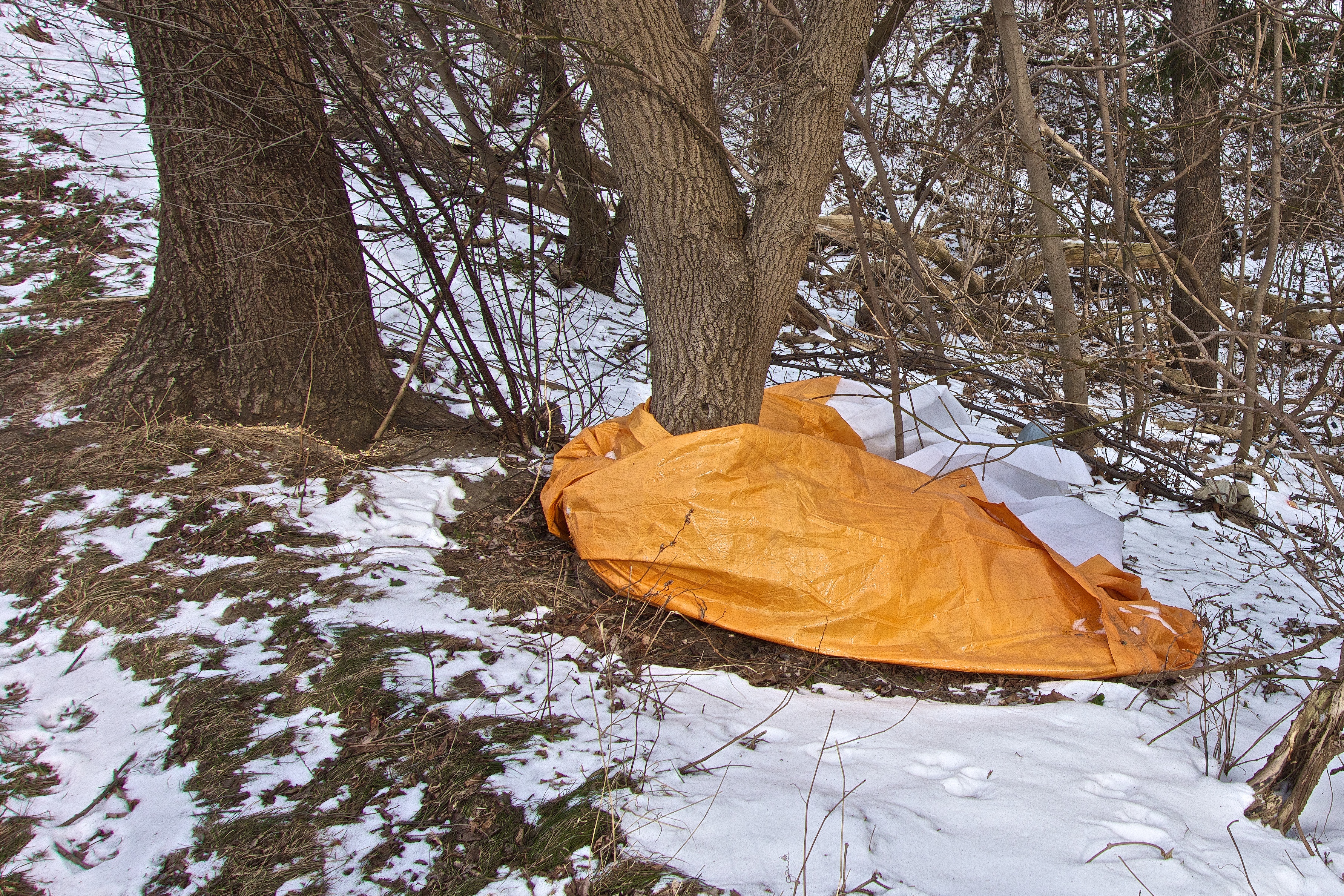
A tarp from a building site wraps around a tree.

A tarp from a building site wraps around a tree.

Adapting the broken window theory, it’s easy to see that litter attracts more litter. Unfortunately, this view is not shared by our park managers. They seem to wait until litter has reached a certain level before sending out a crew to clean it up. Most of us will pick up a can or two and drop it in a garbage can but things like tarps are likely there for keeps without council intervention.
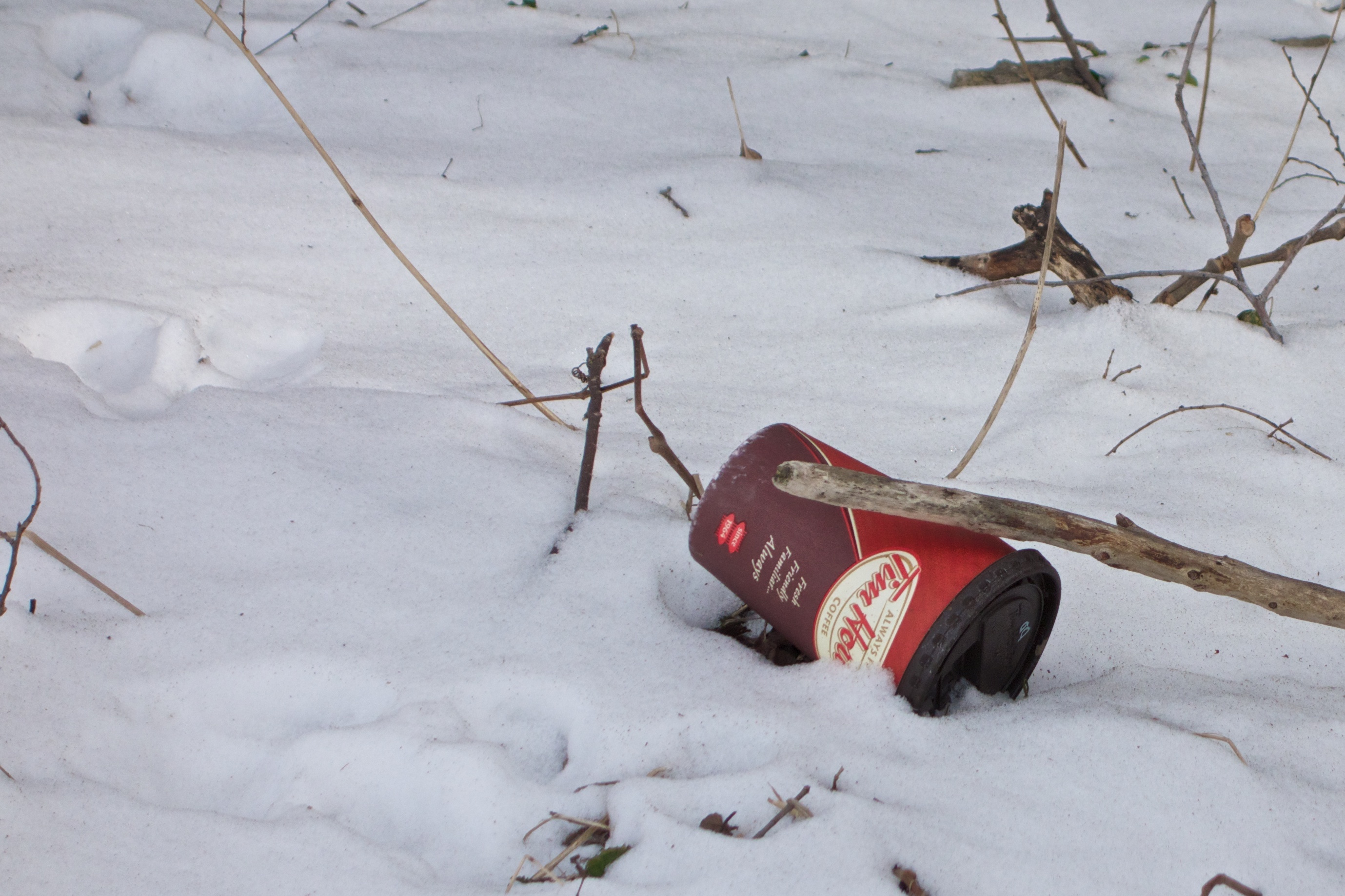
At least this coffee cup is made of paper.

I used to think coffee cups were made of paper. They are but lined with plastic; the lid is entirely plastic.

Litter is a big threat to parks – not just aesthetically but things like plastic bags and can holders are detrimental to wildlife. It’s up to park users to ensure that we clean up after ourselves (and occasionally others). It should also become a higher priority for park managers.

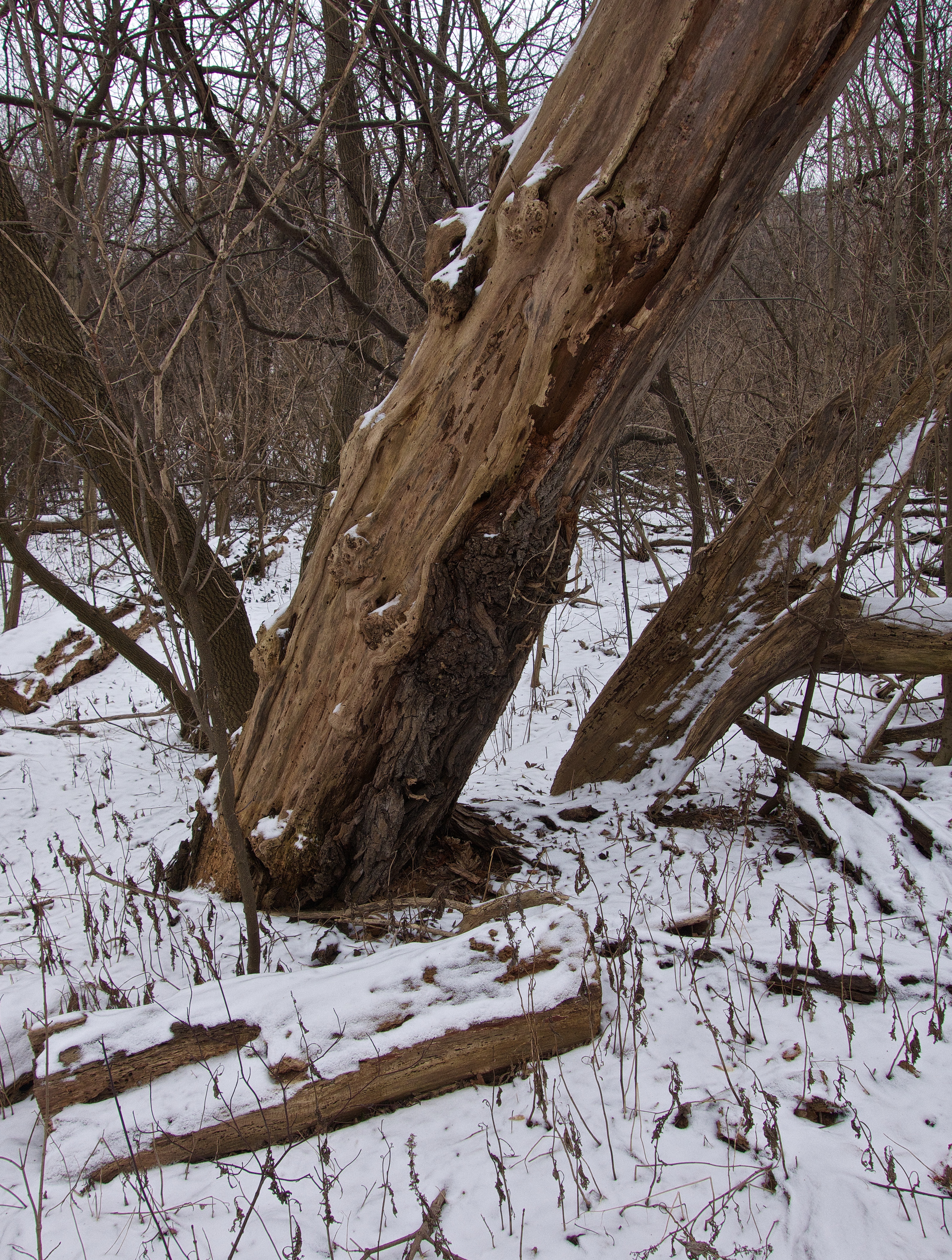
Textures, invaders and regeneration

Trees come and go in the park whether they are felled by old age, ice or by the latest foreign invader, new ones rise up and take their place. Many of the new ones are foreign invaders themselves.

Old wood returns to the earth surrounded by new growth.

Old wood slowly returns to the earth and feeds new growth.

Norway Maples have become ubiquitous in Eastern Canada – even to the point of having their leaf on our currency. They have been in Canada for hundreds of years and are able to grow more quickly and produce leaf earlier in the season than native trees. In addition, their shallow roots and dense shade have a smothering effect on native tree seedlings. As for Siberian / Chinese Elm, I can honestly say I must have killed thousands of saplings in their attempts to establish a beachhead in my back yard.

An old Norway Maple whose days are numbered.

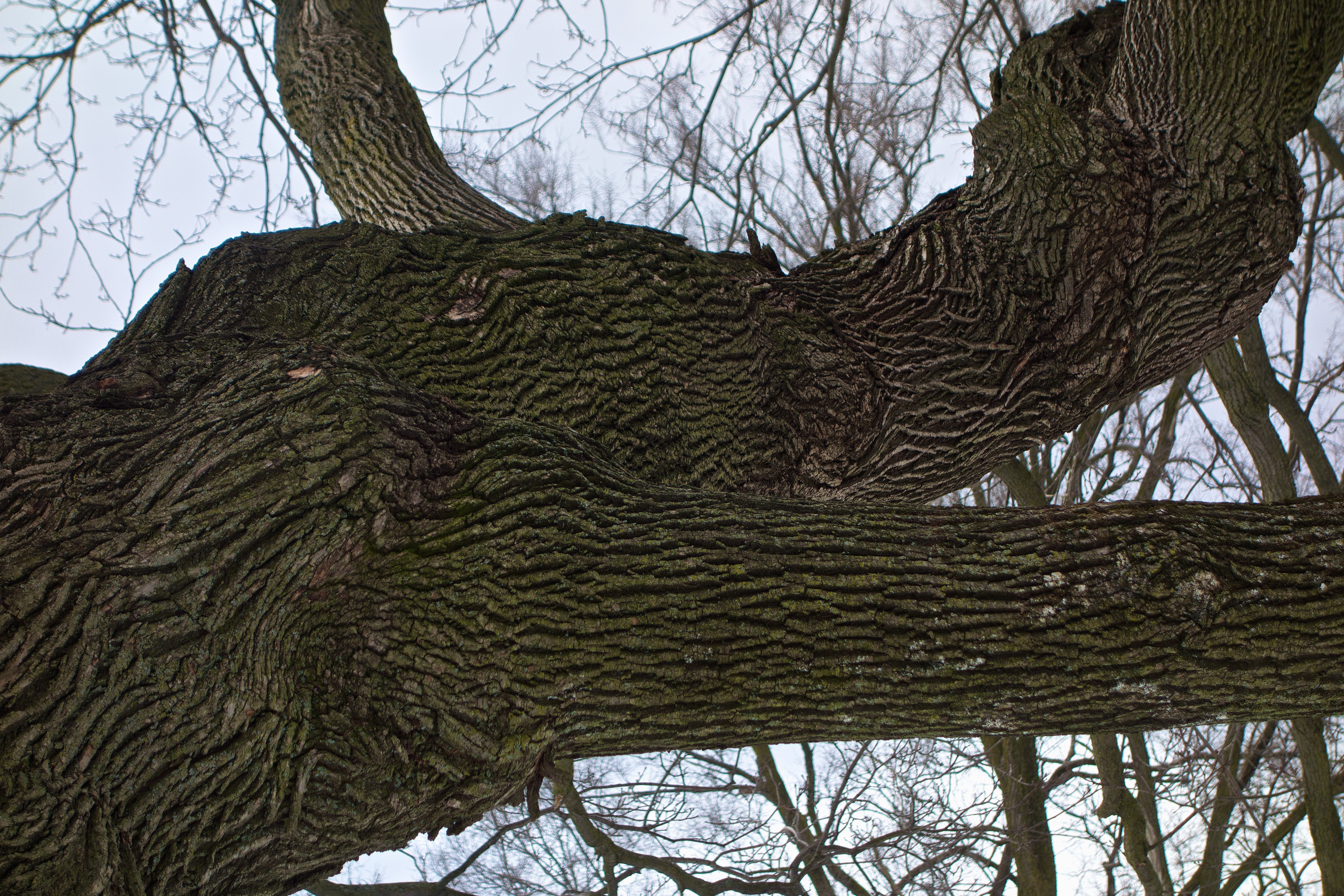
An old Norway Maple with beautiful textured bark.

This old Norway Maple provides wonderful summer shade to cars in the Raymore parking lot but its age is showing and its hollowing interior has become home to more than a few squirrels. It drops the occasional limb now and then and will soon become a victim of old age. Unfortunately its replacement (if any) will take many years to provide the same cover. Hopefully the replacement will be from a native species.

Across the path from the parking lot attempts have been made to mass plant native trees and shrubs with varying degrees of success. Part of the problem is that the saplings (thanks to the availability of student labour) are planted at the hottest time of year. Last summer, a substantial batch of saplings was delivered to the planting site and left in plastic bags for a day in hot sunshine before being carefully planted. Needless to say, thanks to bad planning, only a tiny fraction survived, wasting a whole lot of time, effort and money.

Reflection, refraction and resistance.

Another cold day and the ice left behind after the recent thaw continues to impress.

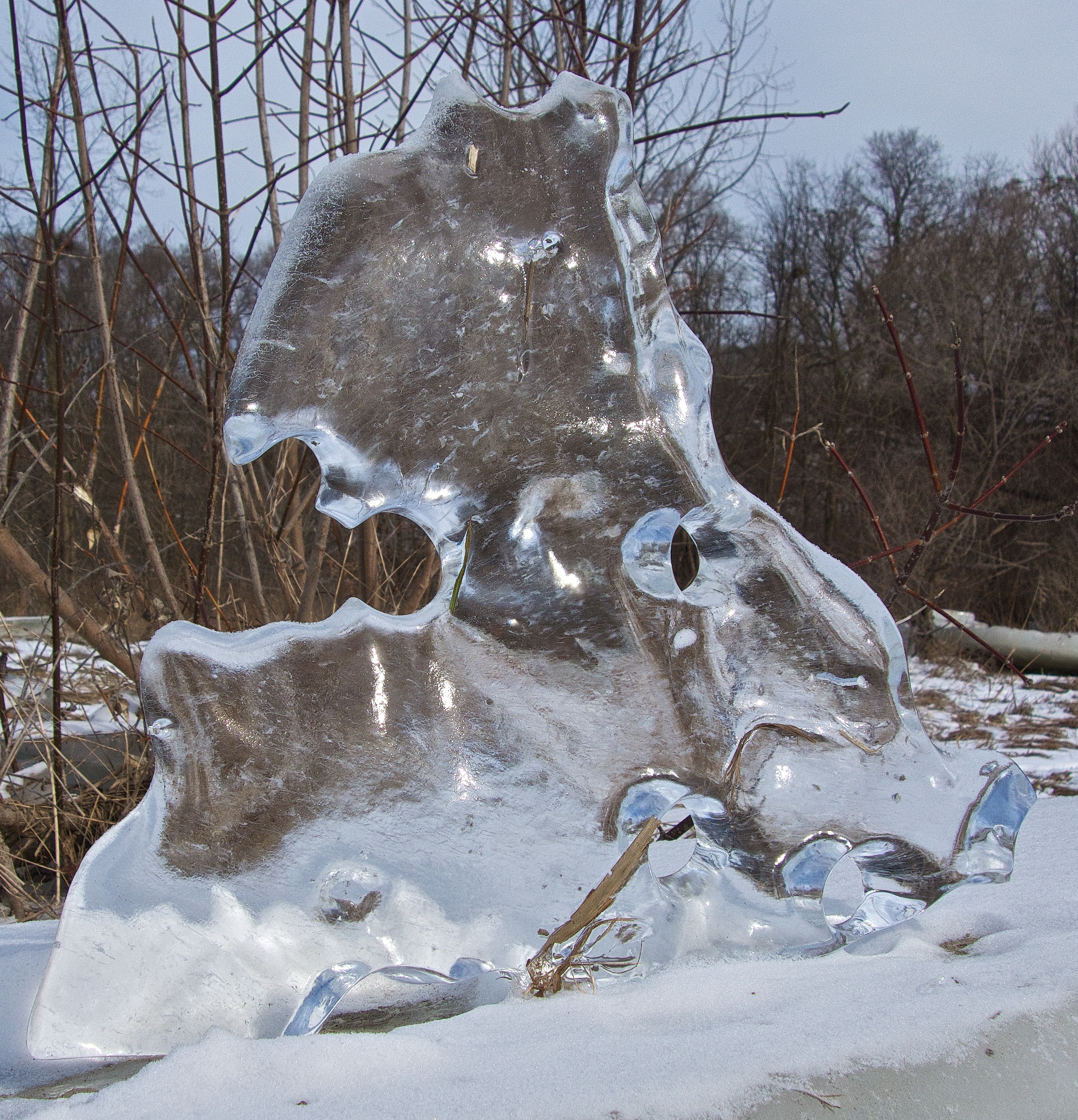
Someone might have propped this up but it still looks interesting.

I suspect someone might have arranged this; it looks like some kind of abstract ice sculpture.

DSC00777

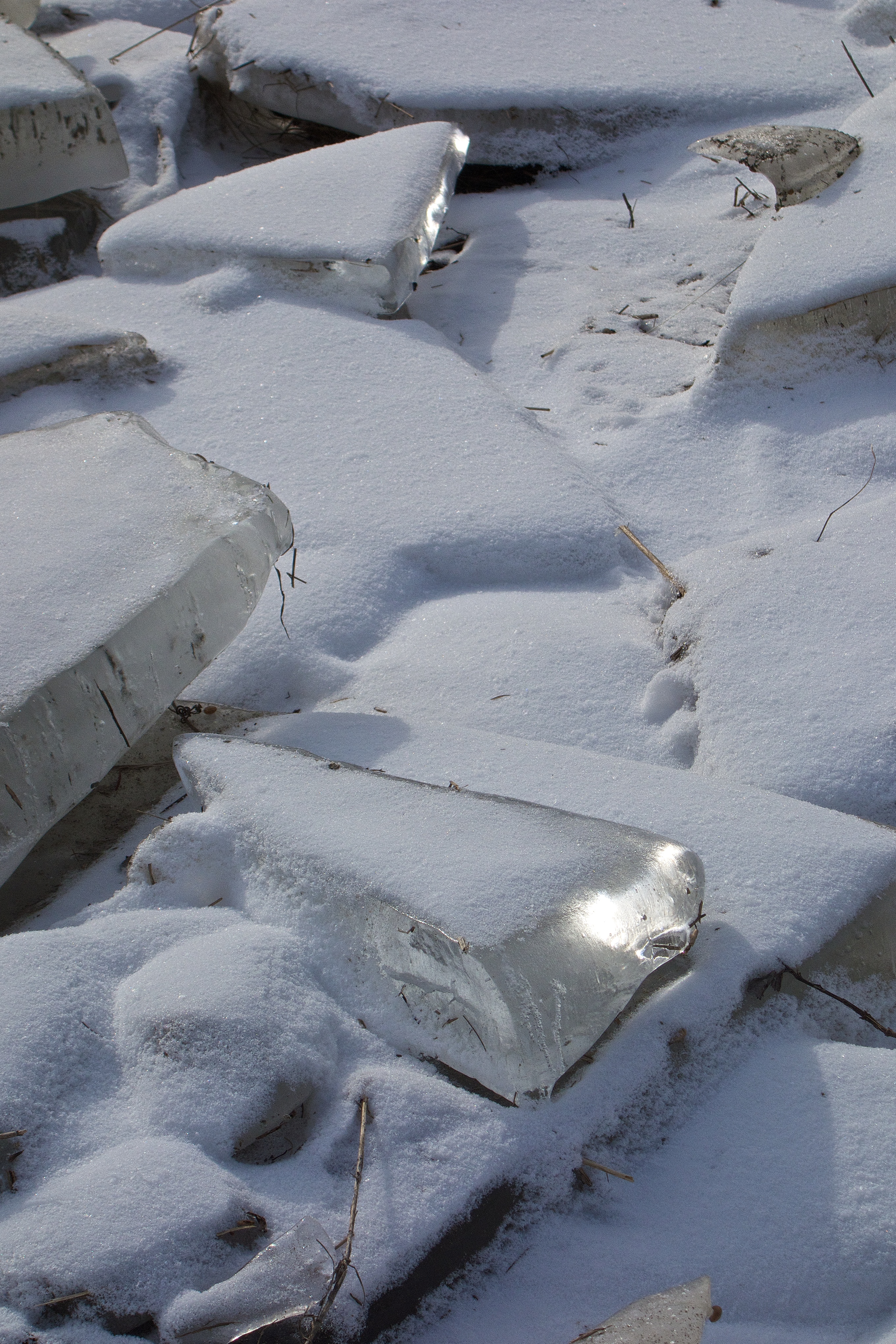
The sun lit up these clear ice blocks quite dramatically.

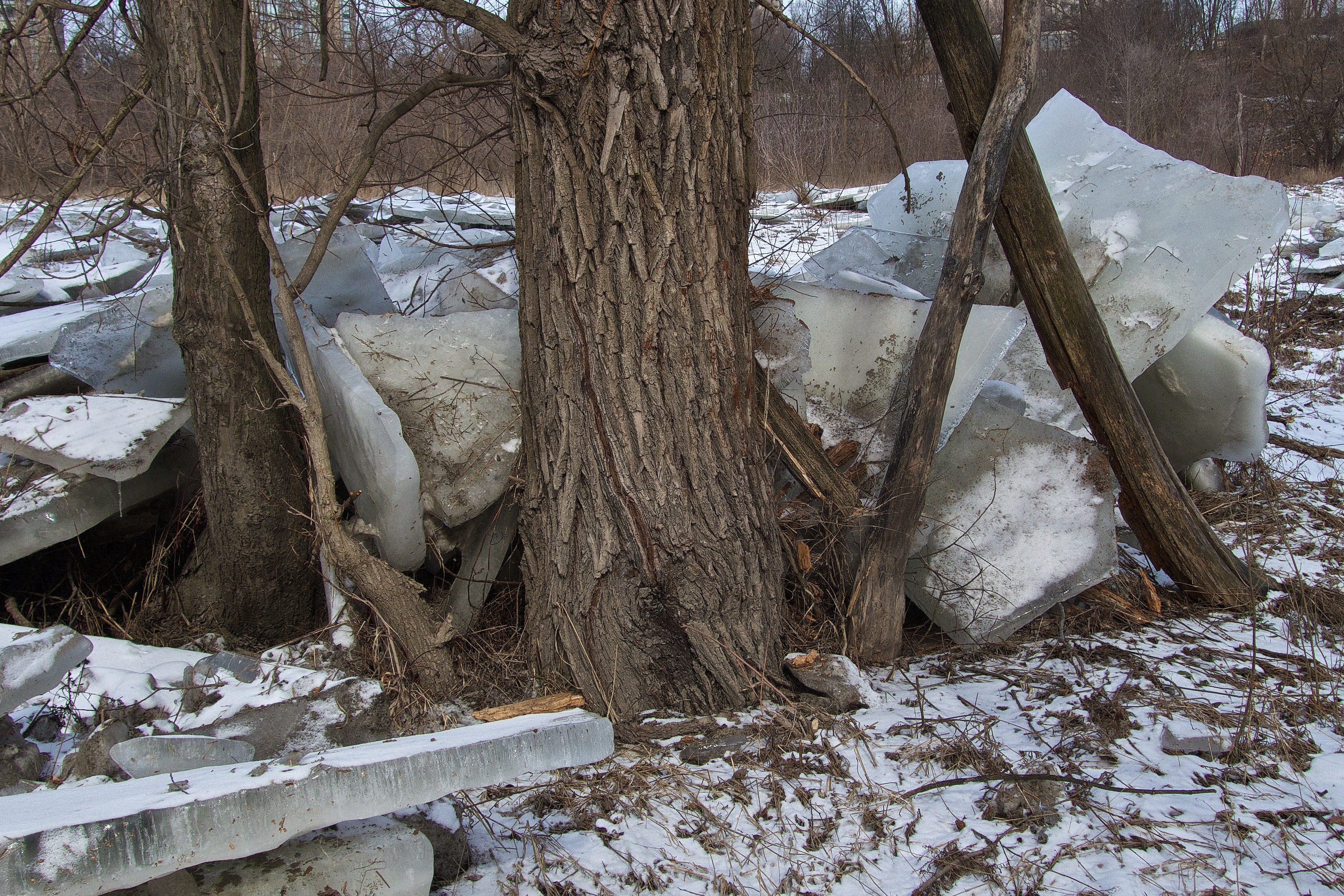
Trees hold back the ice - at some cost to themselves.

Trees have resisted the march of the ice – at some cost to themselves.

Strong forces pushed these blocks together.

Strong forces pushed these blocks upright to form an ice cave.

Interesting reflections in the river.

Interesting reflections in the river.

The island is covered in ice which reflects by the weir.

The ice-covered island is reflected in the smooth waters above the weir.

I can see clearly now…

Now that the snow has stopped, here are some clearer pictures of the latest ice encroachment.

DSC00748

Trees have had a tough time here since the weir was installed and raised water levels.

The Humber is narrow yet deep here and ice dams form regularly at this point and beyond. If you look at the right of the above image, it’s possible to see where water floods in occasionally and has carved a depression that will one day create an island here.

Ice covers the footpath - but wait, there's more.

Ice covers the footpath – but wait, there’s more…

Ice stretching at least 100m from the river.

The ice continues from the footpath at least 100m from the river.

DSC00761

New ice begins to form.

We’re in for a few days of cold weather so the process is likely to start all over again.

D’oh! Missed it.

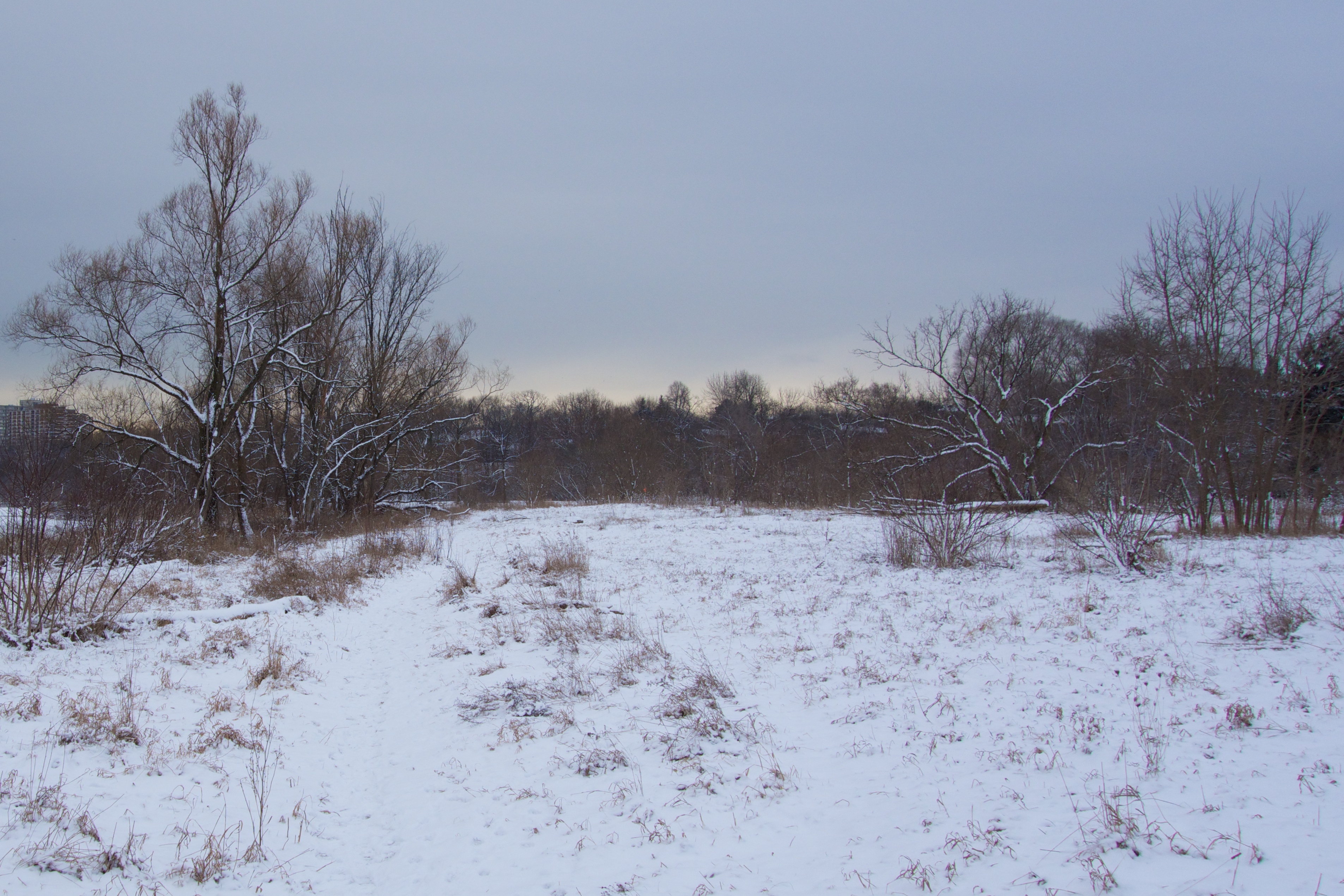
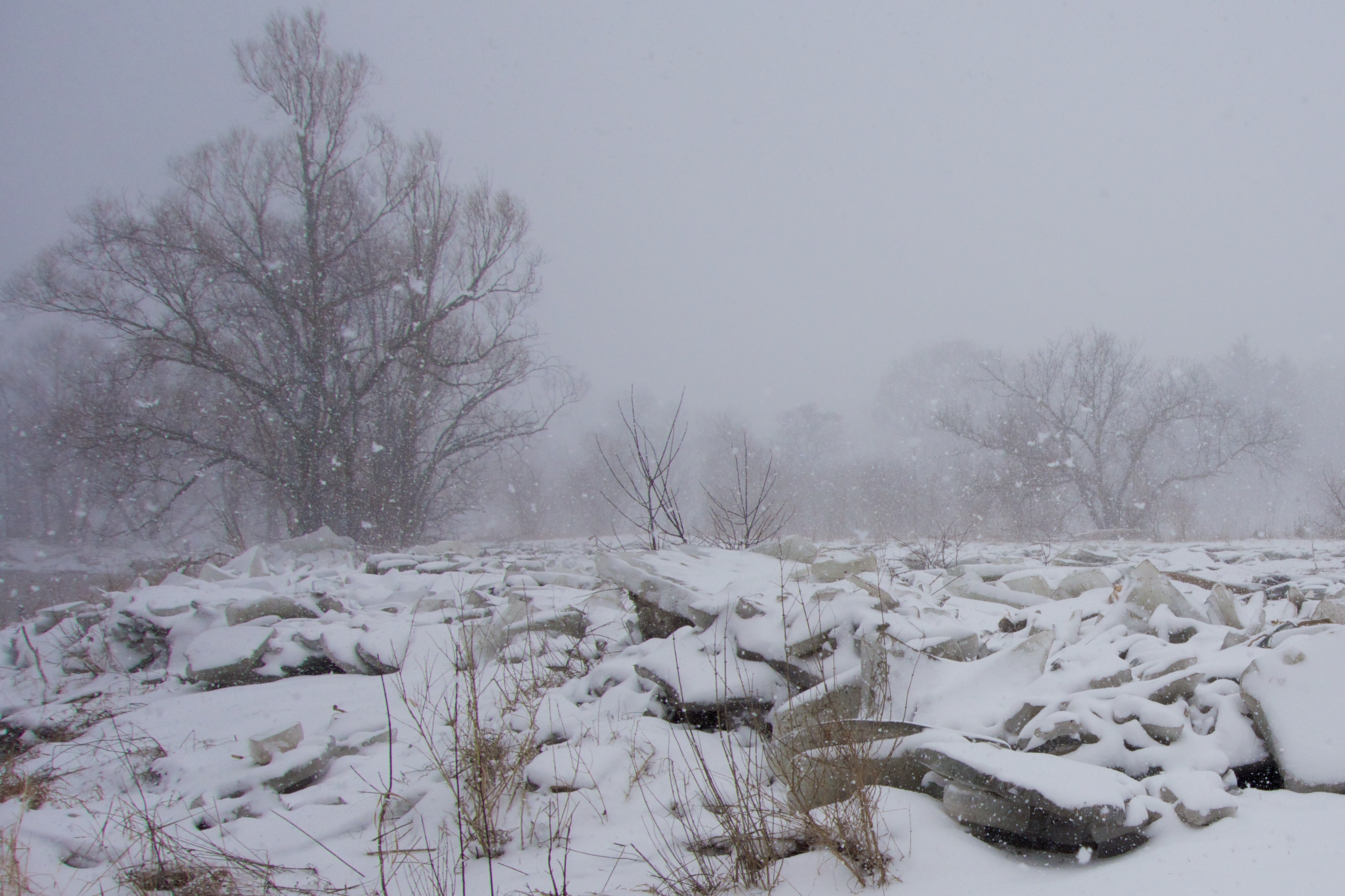
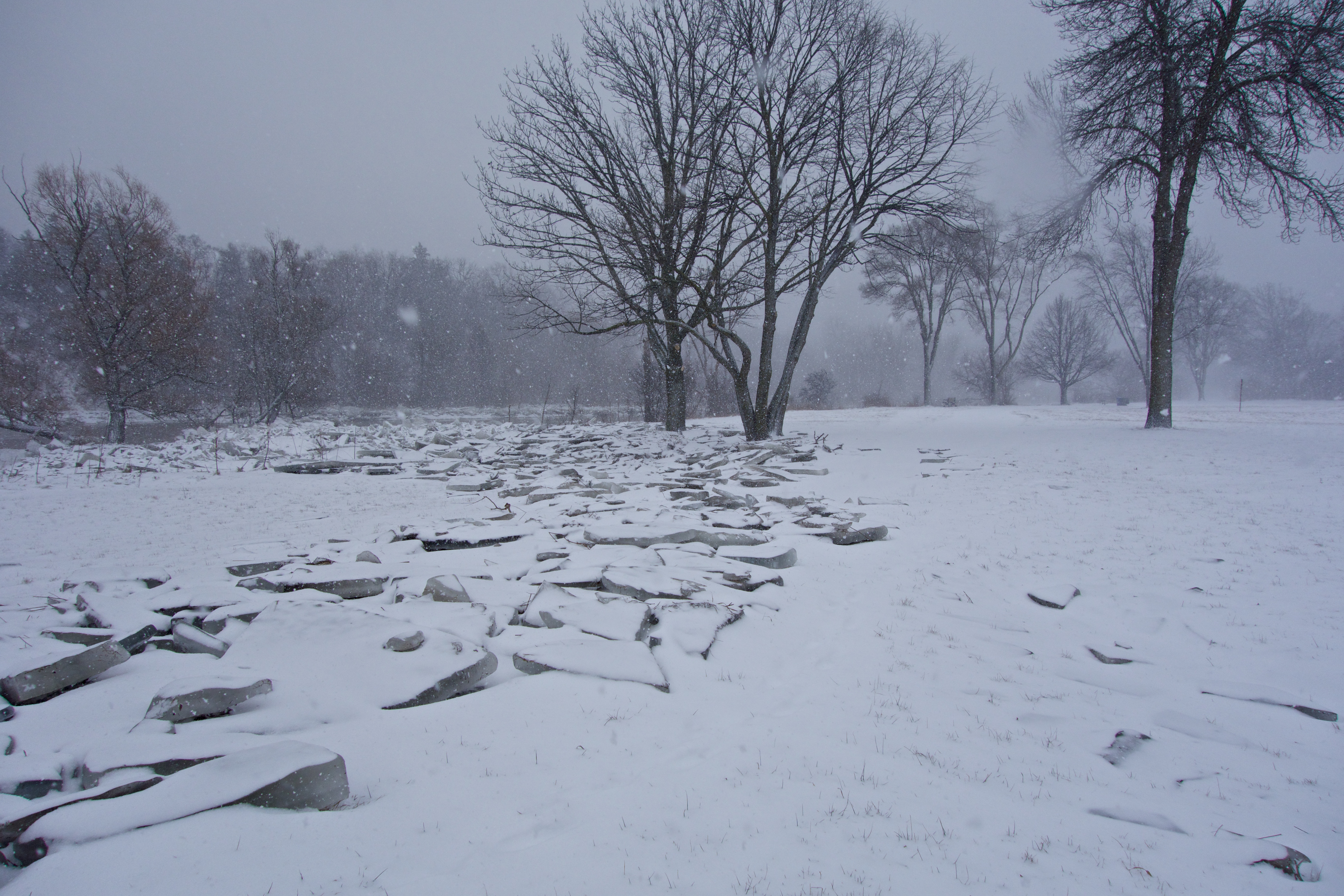
Every year it’s the same old whine – “I wish I could be there when the ice breaks up on the river”. Well, I could have been there and I wasn’t. While I was home, the rest of the ice decided to move off without anyone to witness it. I took some shots today while a streamer from Lake Huron was busy dumping a surprising amount of snow onto the park.

Some comparisons are in order to show the changes:

DSC00611

January 29, 2013

DSC00679

January 31, 2013 the grass has been demolished by ice moving ashore.

DSC00542

January 29, 2013; track through the wild area. Houses once occupied land to the right of this photograph.

DSC00682

January 31, 2013; track is buried.

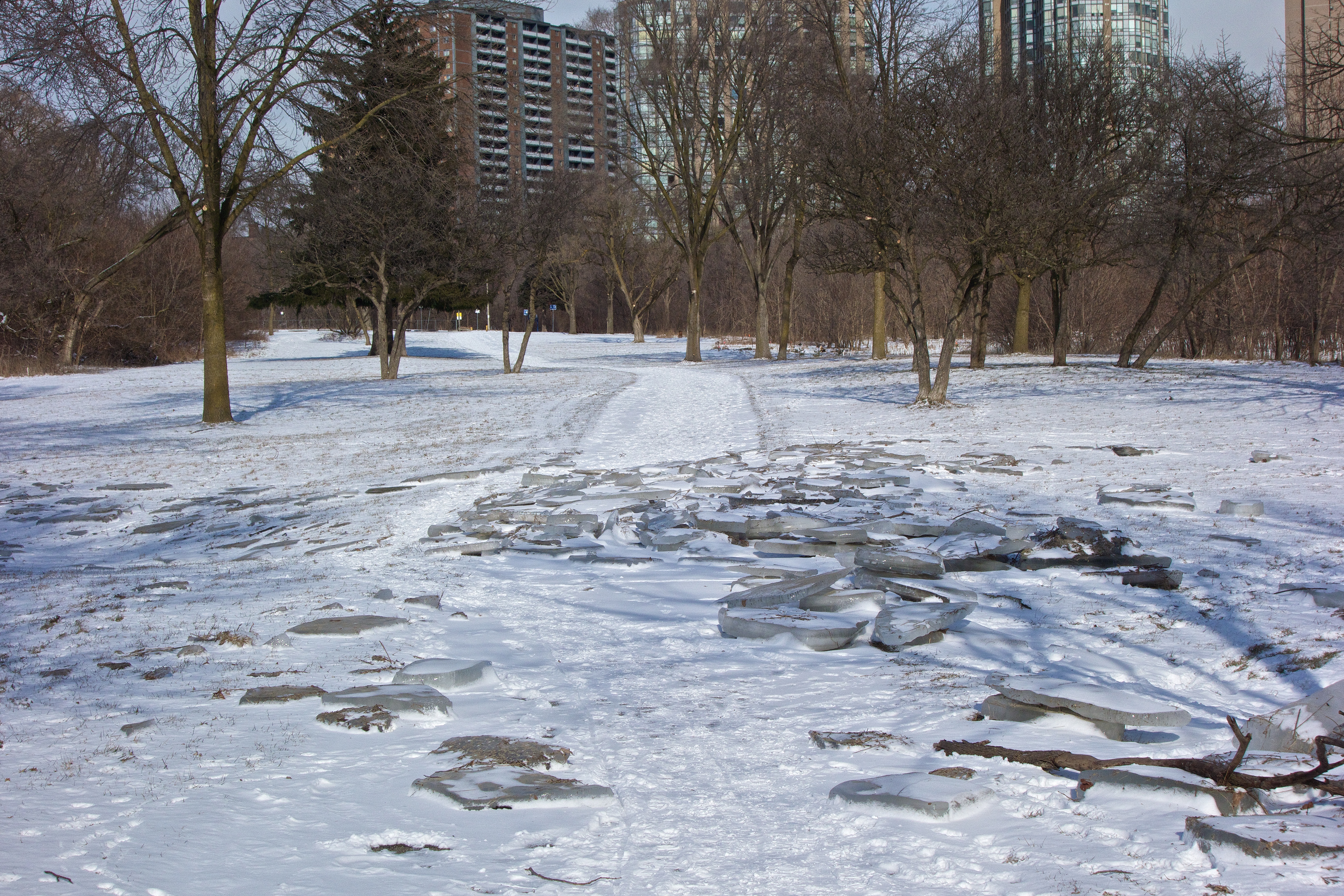
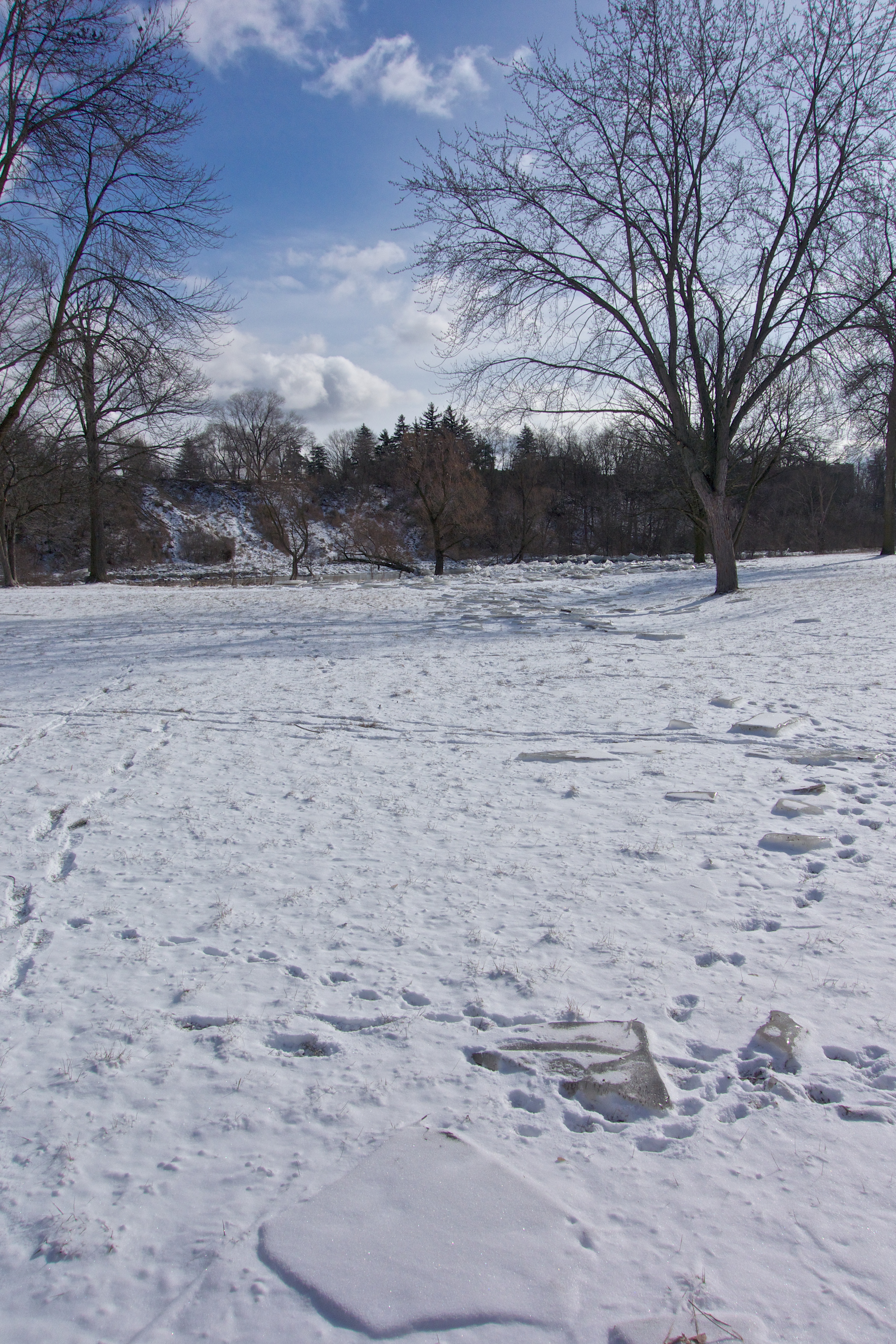
Until 1954 and the Hurricane Hazel disaster, more than a few homes were quite near this location  by the Humber. I wonder how regular incursions of ice affected them and their properties. Residents at the time must have had some pretty close calls.This is a fairly average depth of ice to float ashore but the extent of it is quite surprising – further along, the ice actually covers the bike path.

Hard to tell but ice covers the bike path.

Hard to see where it is but ice now covers the bike path.

Thaw brings ice and fog.

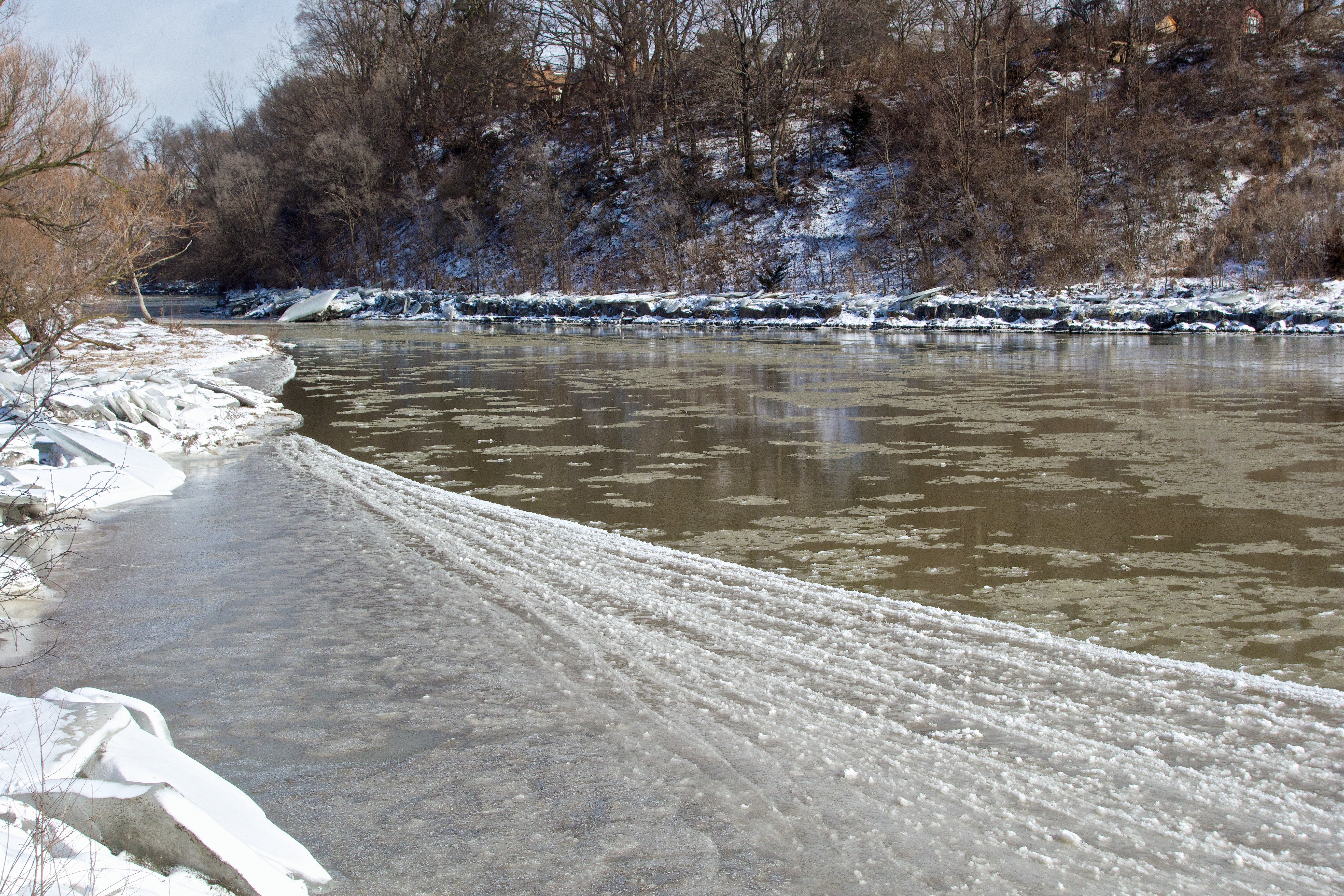
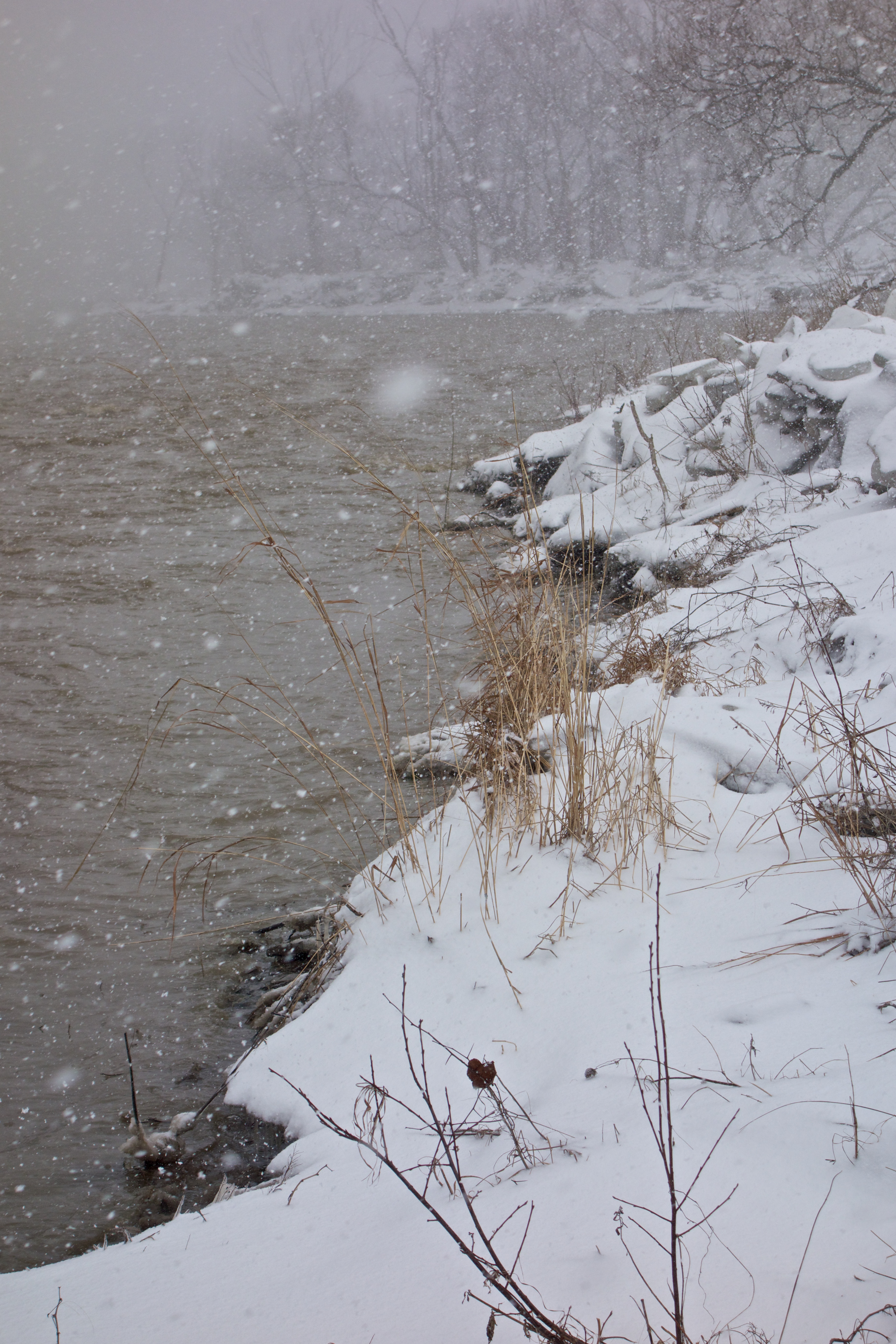
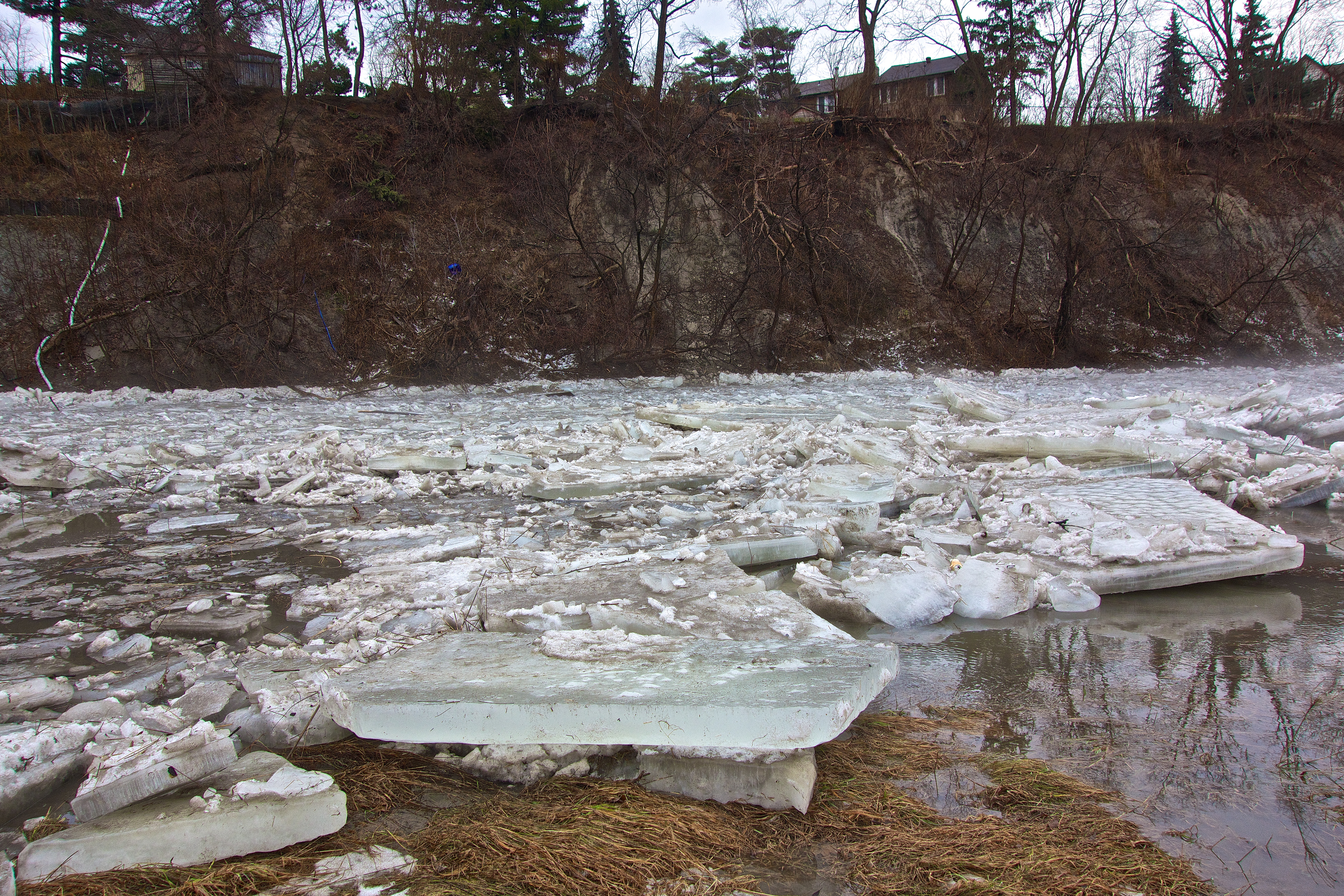
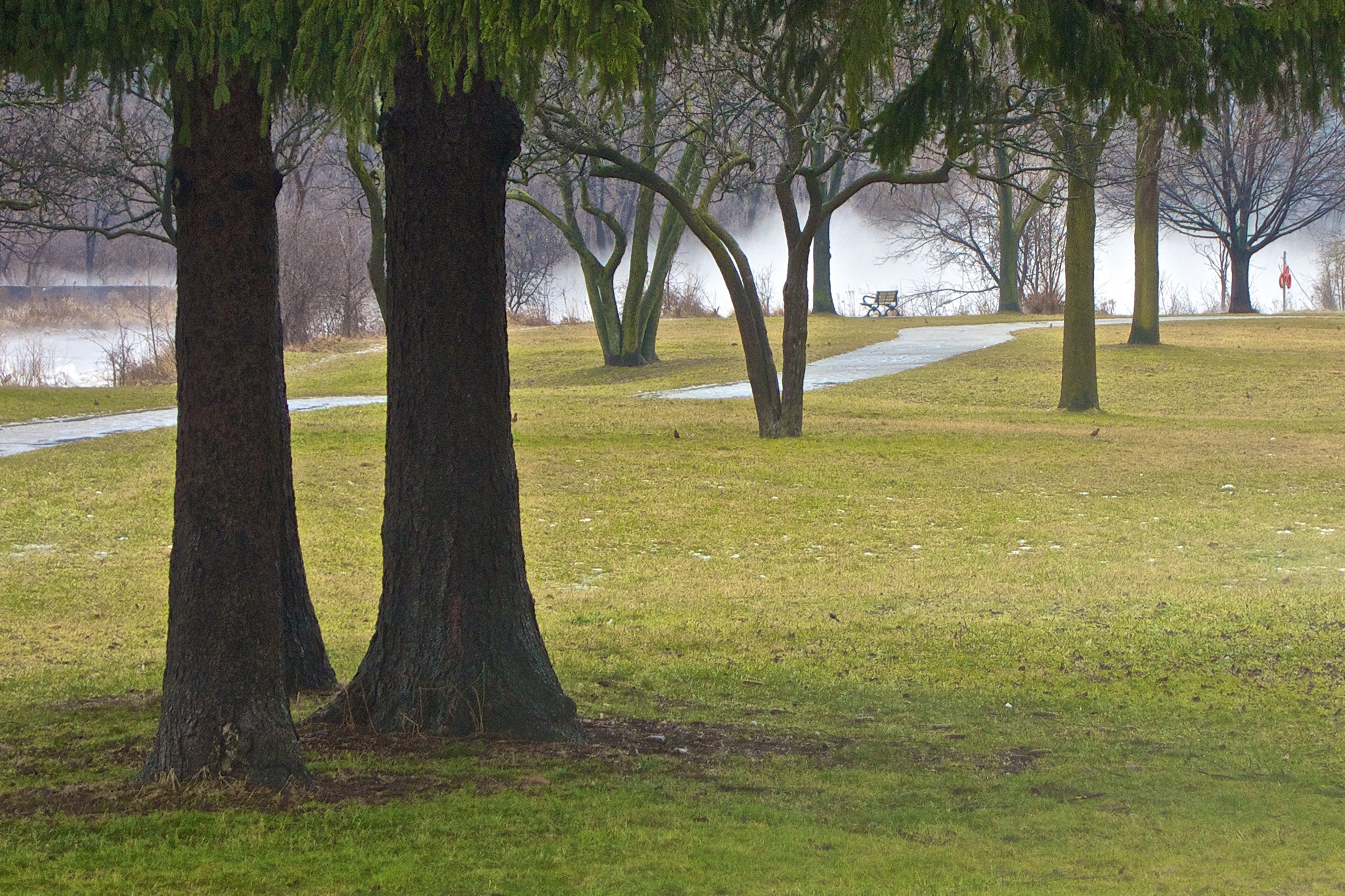
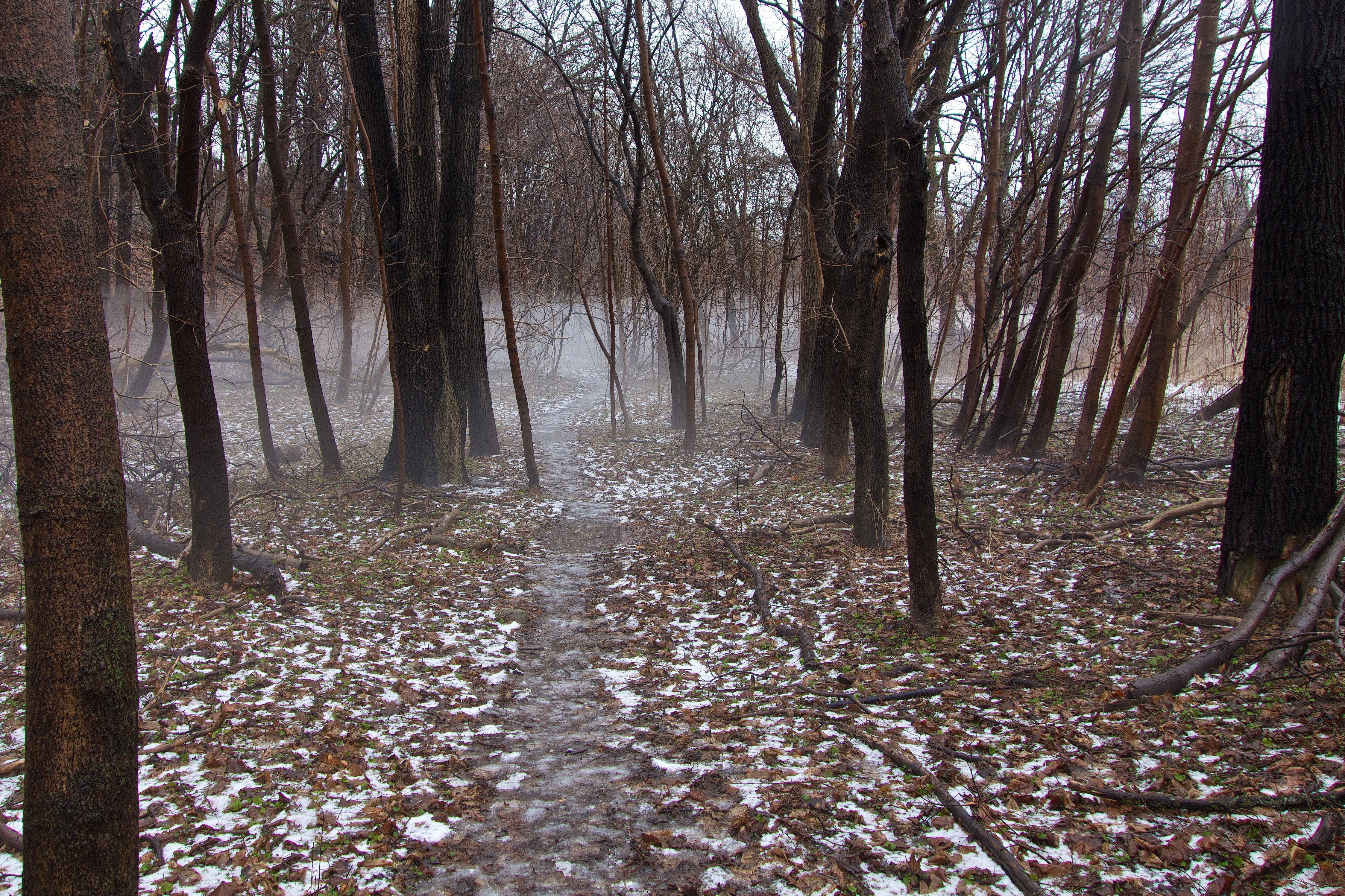
A mild night and as expected, the rising river broke up the ice and floated some of it ashore overnight. I have been waiting for years to see this event but it always seems to happen overnight for some reason. One spectacular thing about today from a photographer’s standpoint is the fog that formed as warm air hit the relatively cold ground and river. This came and went in a low-lying layer and changed quickly so that you could actually wait for the most photogenic formation.

Ice pushed ashore - not very thick compared to some years.

Ice pushed ashore – not very thick compared to some years.

As this is a fairly brief thaw, much of the ice above the weir has remained in place and will create a large dam once the weather turns colder. Spring might bring the promise of a spectacular flood.

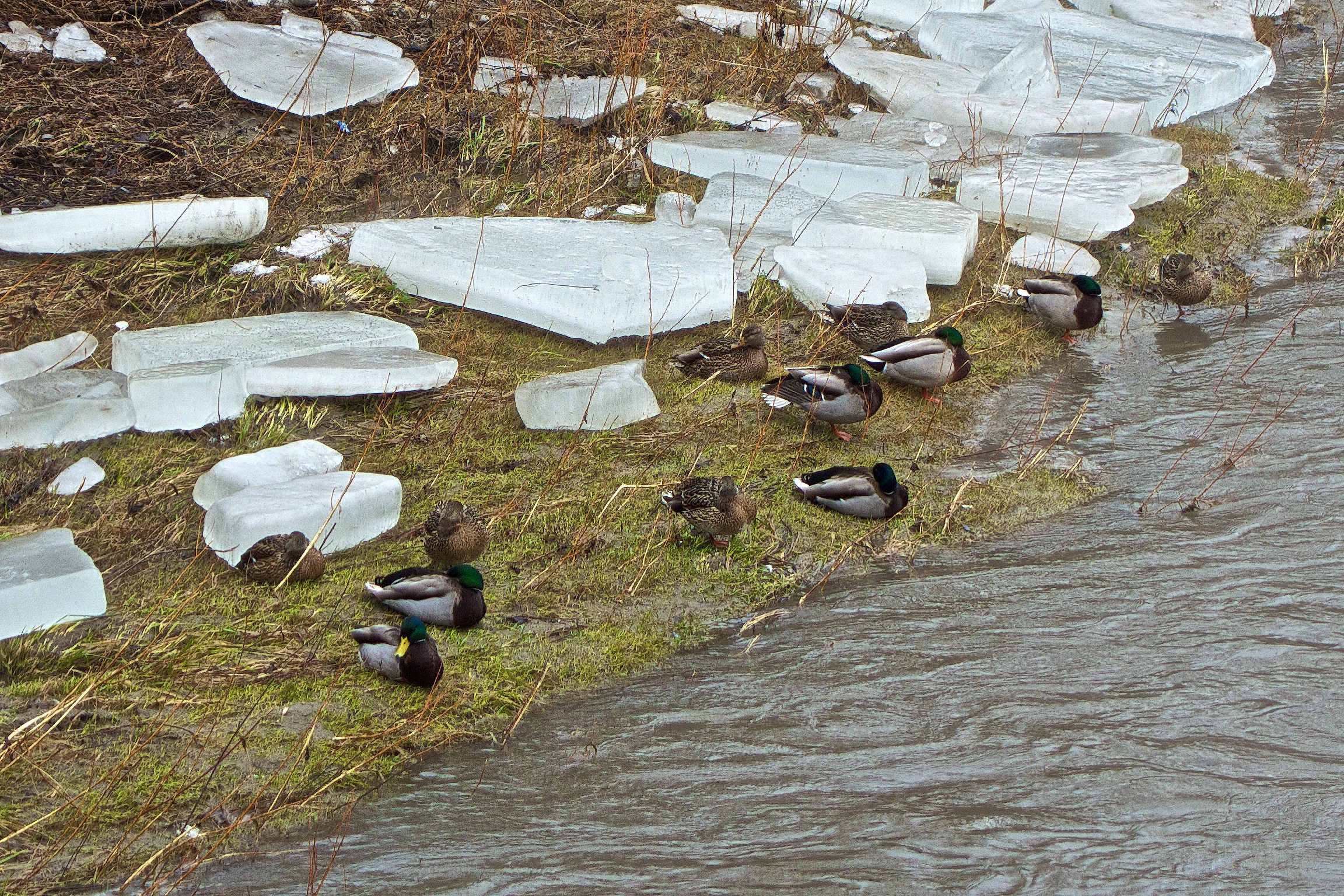
Ducks wait onshore for calmer waters.

Ducks wait onshore for calmer waters.
Birds were very much in evidence today with starlings and robins foraging in the newly visible grass while ducks found open water a bit too rough.

Robins look for food.

Robins look for food as fog ebbs and flows over the cold water.

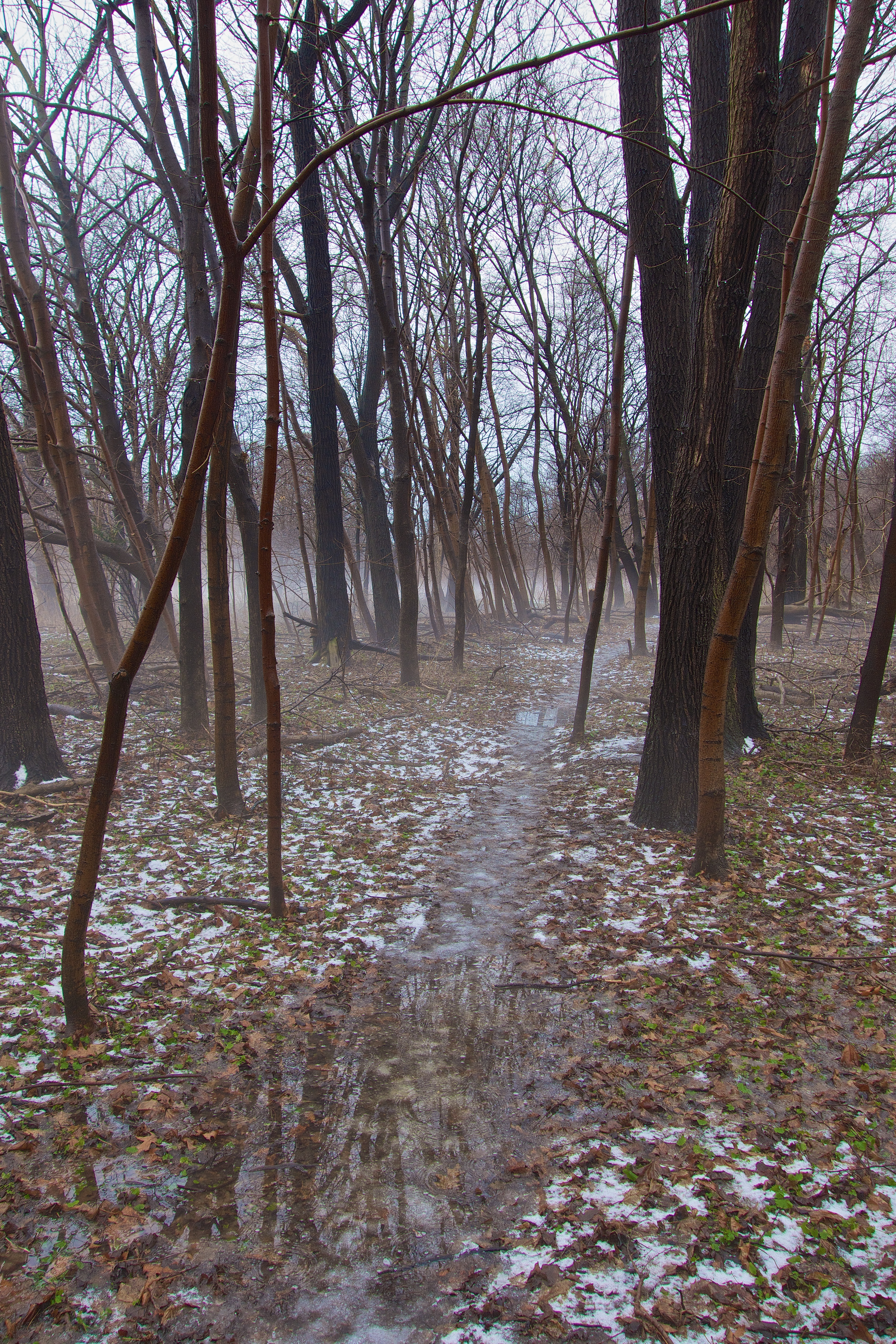
A small pool catches a reflection in the woods.
A light layer of mist adds an air of mystery to the woods.
Trees reflect in the saturated ground.

Trees reflect in the saturated ground.

Back to winter tomorrow!

Foreground colour on a gloomy day

In the spring, everything turns green, the weather becomes pleasant and the park gets crowded. Today is gloomy, slushy and mild with rain. In spite of that, I was blown away by the amount of colour still to be seen. Better still, I had the place to myself.

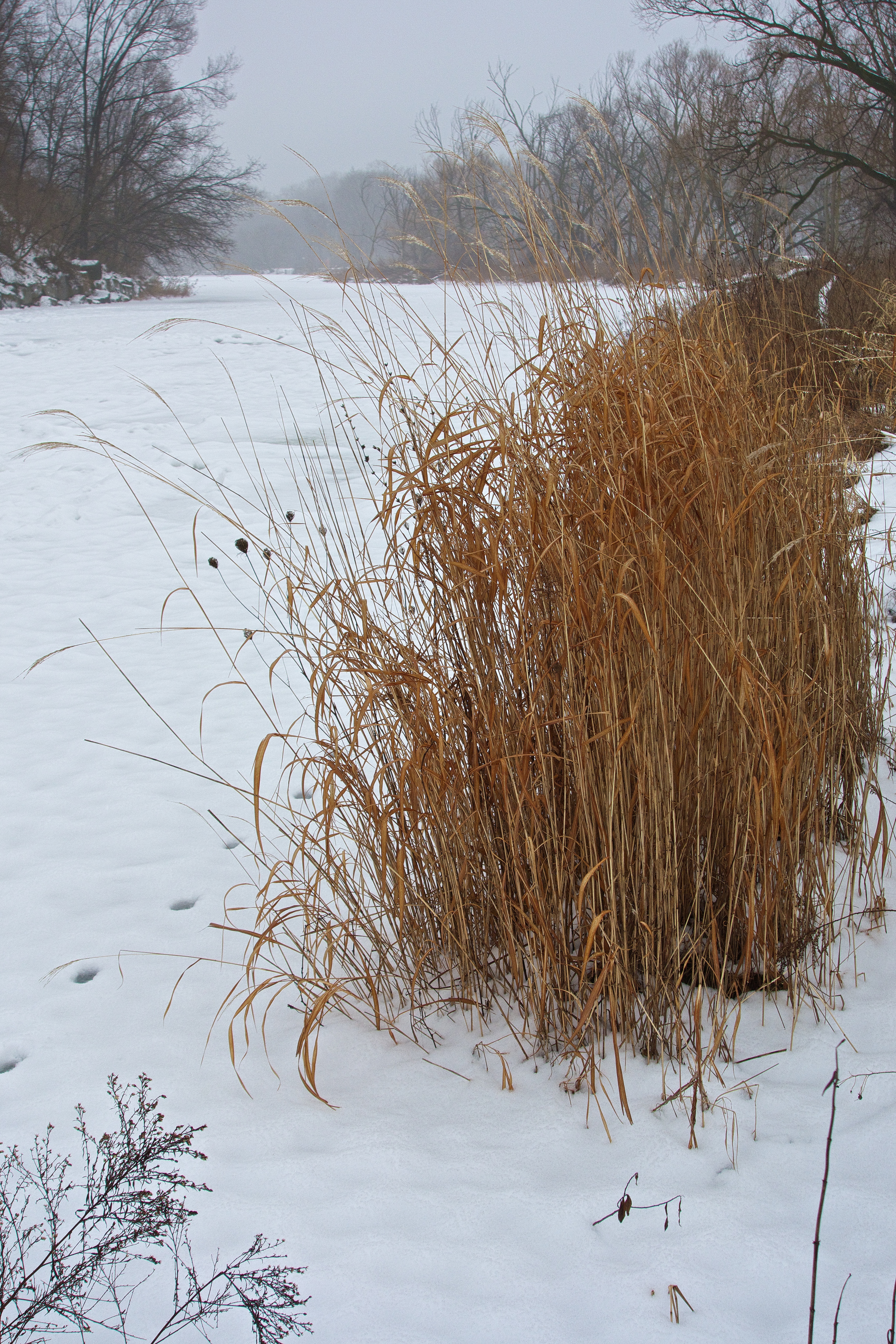
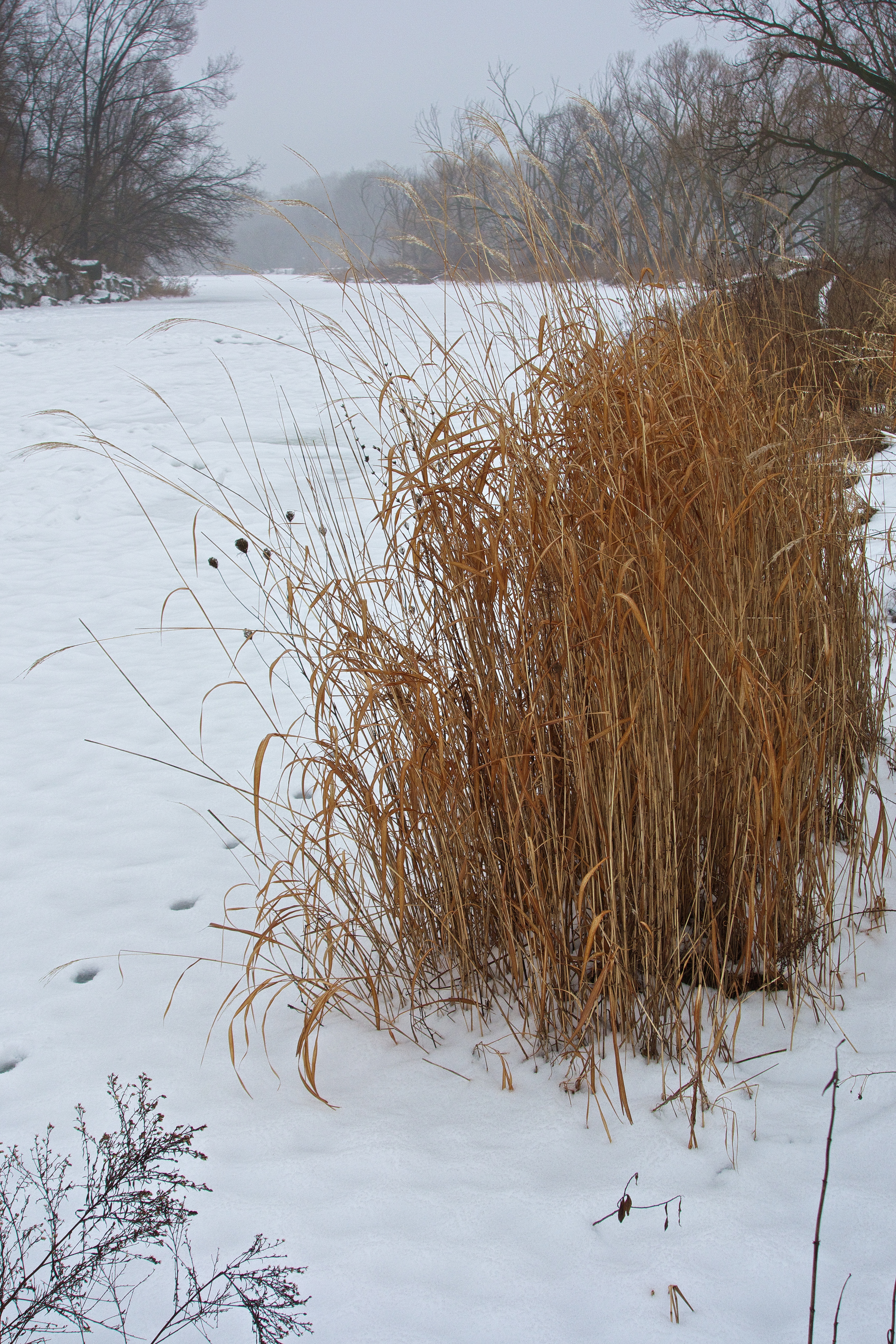
It's probably an invasive species of grass but it does look nice by the river.

It’s probably an invasive species of grass but it does look nice by the river.

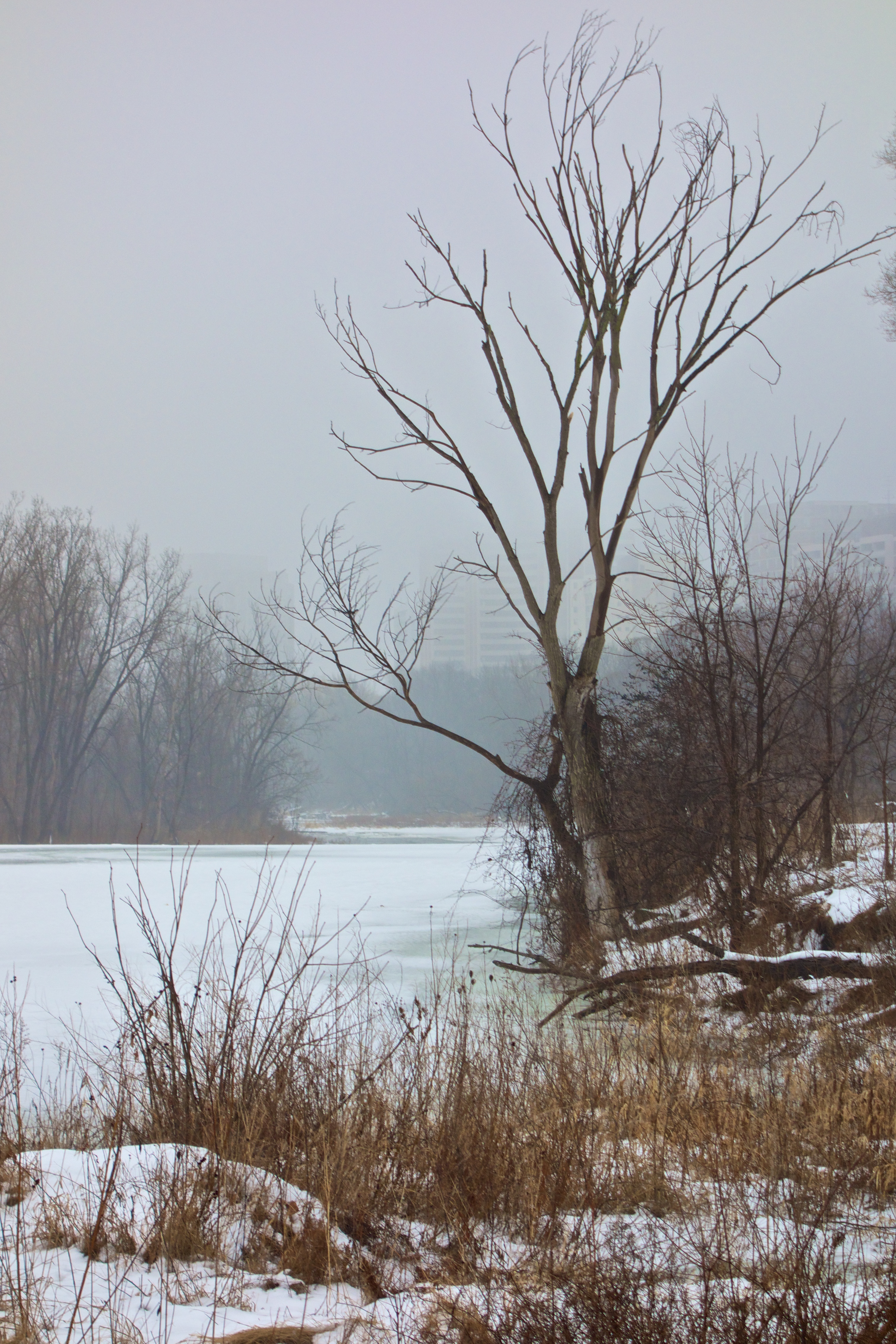
Because of the mild weather, a mist was hiding much of the horizon.

Looking south towards the weir.

Looking south towards the weir.

I guess it’s an accentuation of the fainter and bluer shift that distance provides; no matter, it’s a great look, especially when the apartments at Eglinton are less prominent.

In the woods.

In the woods, colour meets texture.

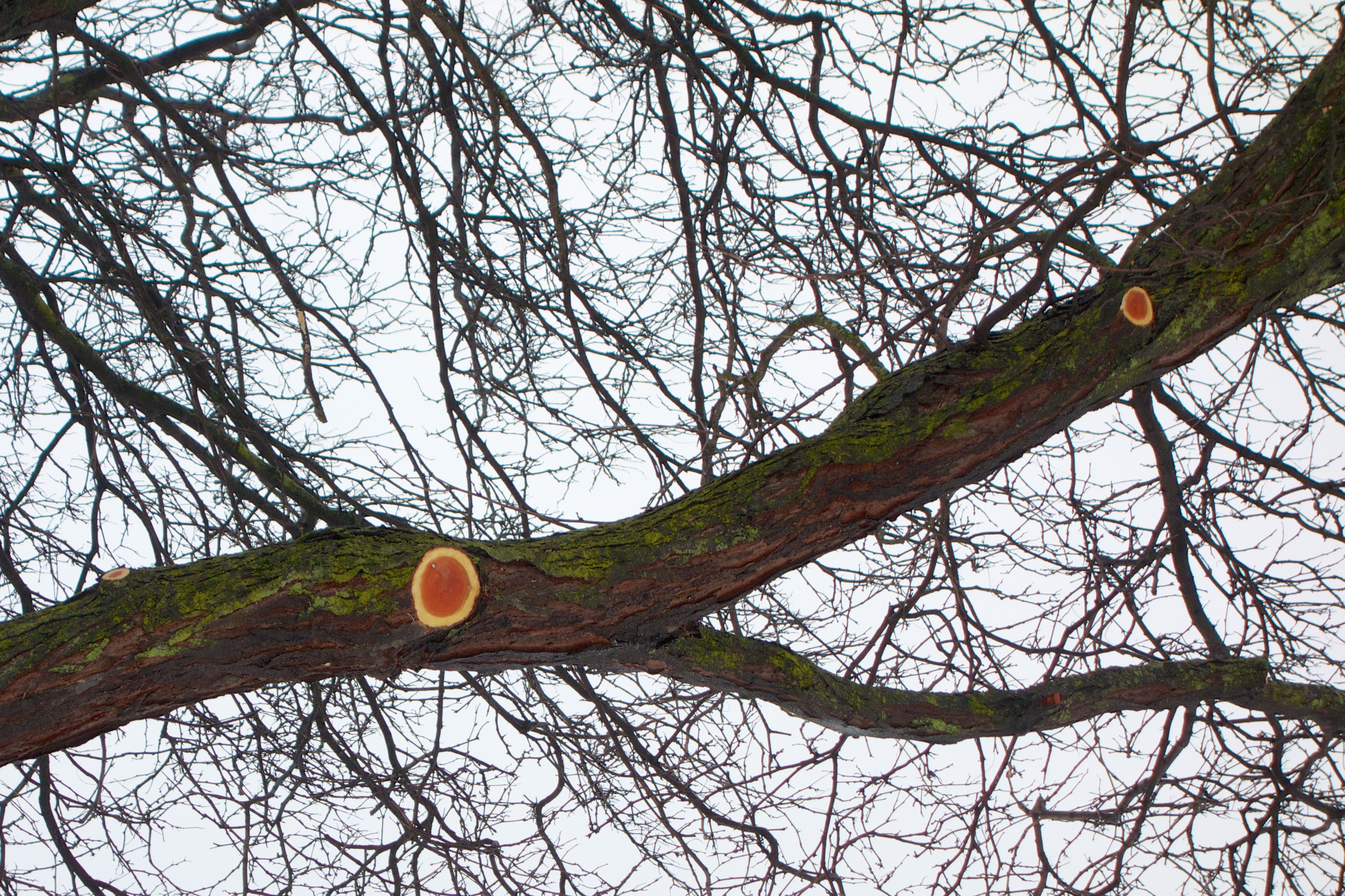
Finally, the handiwork of the tree pruning company that spent long days in the park recently searching high and low for things to cut. The red of the cuts contrasts nicely with the green of the lichen. I had to check the images on the camera at the time and yes, the colours really were like that today!

Colour by Davey.

Colour by Davey and nature.

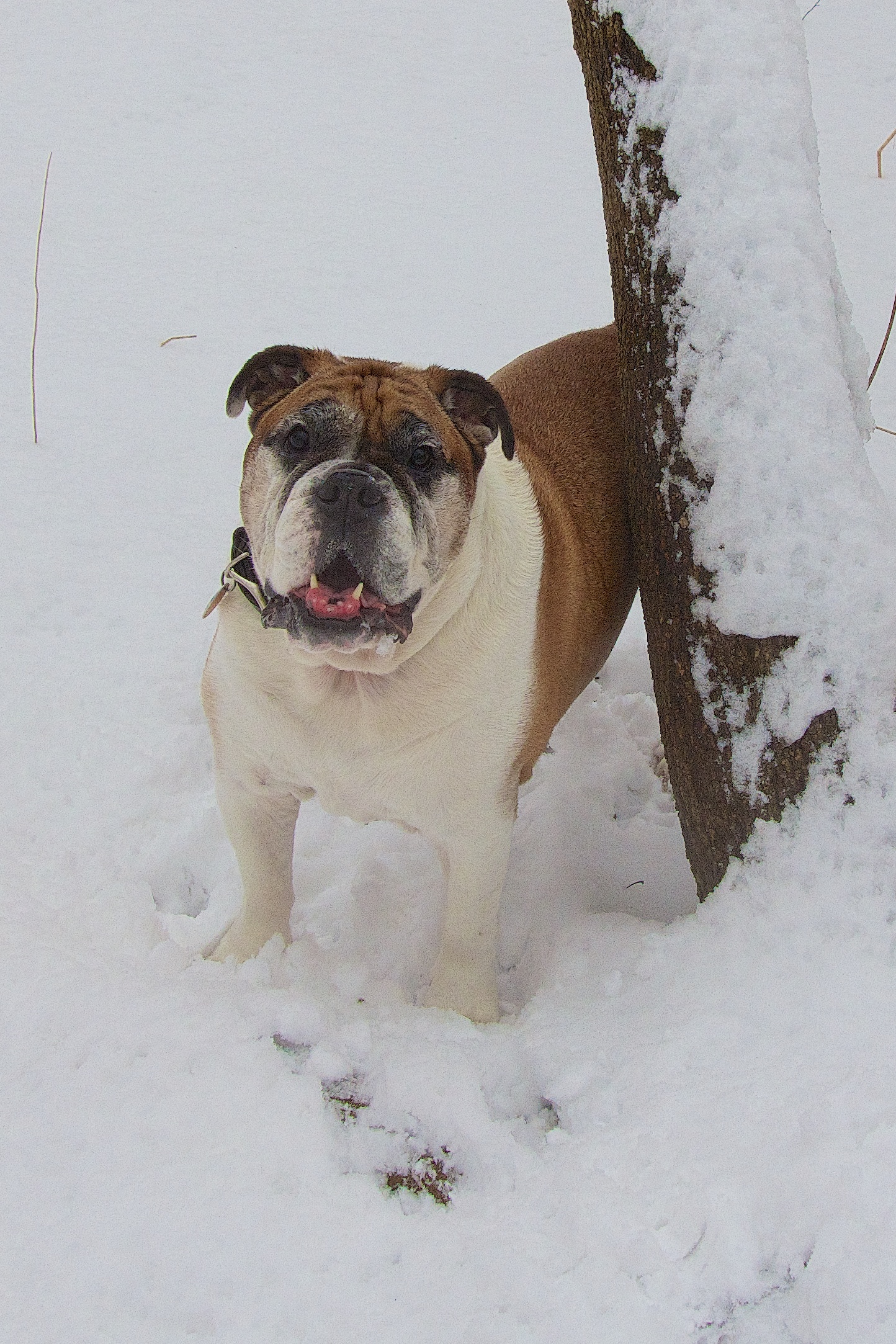
Mugsey mugs for the camera.

Today is a grey and misty day as the latest warm front has arrived dumping snow, freezing rain and now plain old rain. Mugsey decided he would scratch himself on a tree and he posed nicely for the camera.

Mugsey loves the snow - can you tell?

Mugsey loves the snow – can you tell?

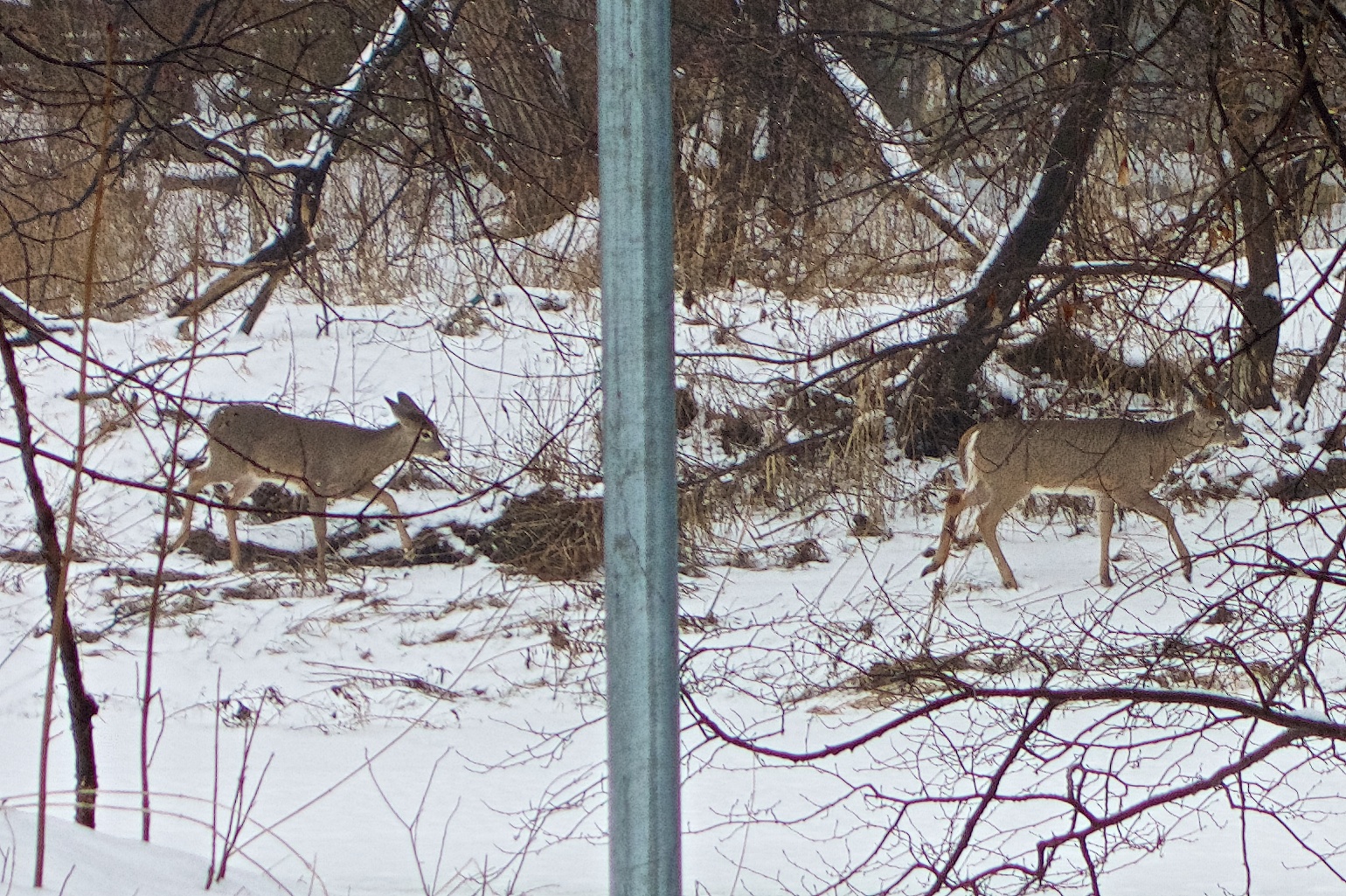
As we were passing by the bridge, a pair of young white-tailed deer moved silently past on the other side and cautiously crossed over the ice into Raymore Park. Even though the zoom on the RX100 is only 3.6, the sheer number of pixels (5472 x 3080) allows for some zooming at home – especially in this medium.

Sorry about the pole in the middle of the picture.

Apologies for the pole in the middle of the picture.

There is lots of feed above the shallow layer of snow to keep them going – we’ve had a pretty easy winter so far with rain and mild temperatures predicted for tomorrow and especially Wednesday (13°C).

A magical day and the MNR.

Today was the calm before the storm and it was perfect with little wind and a bright warm sun.

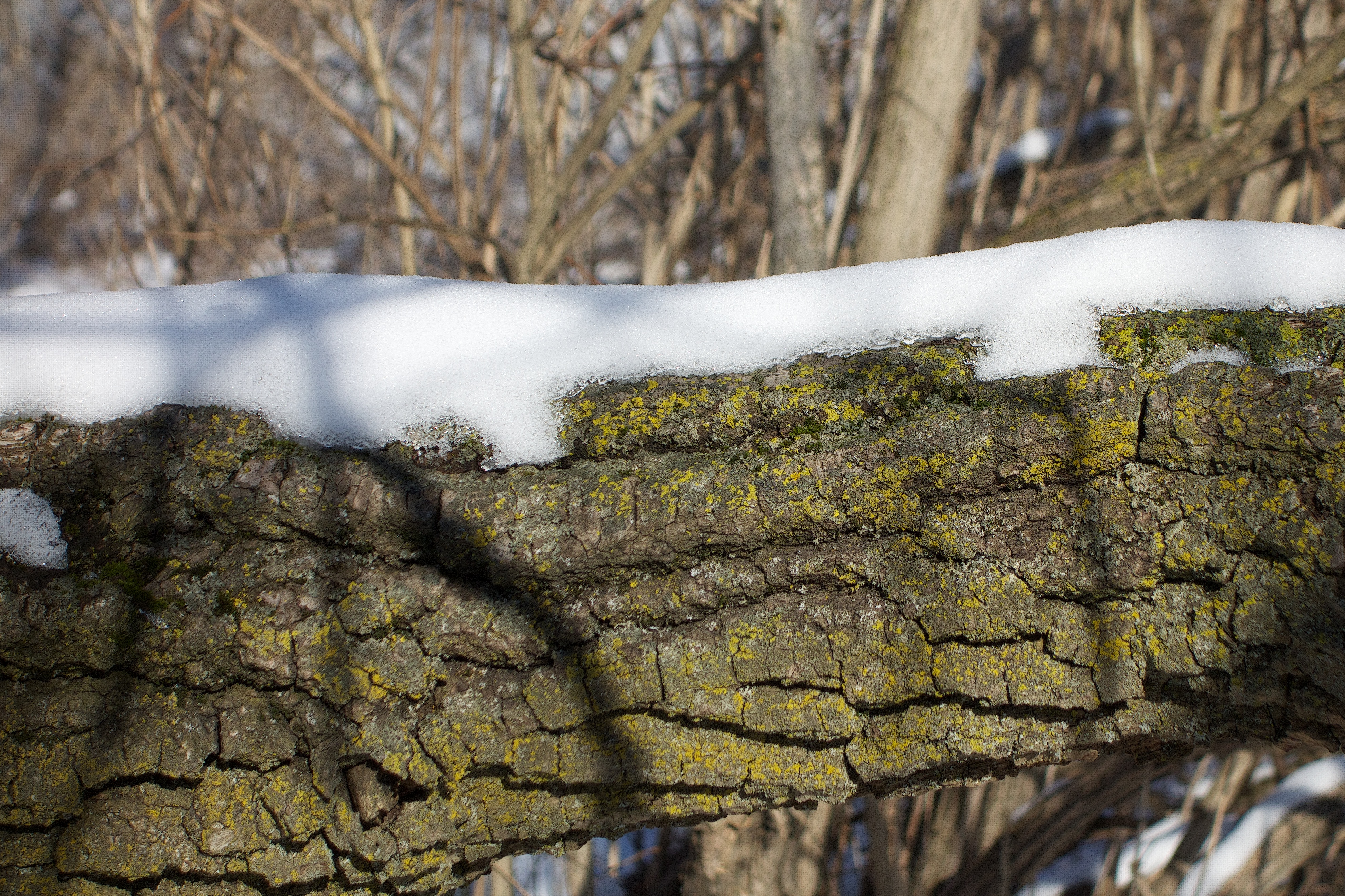
Snow on log and lichen.

Snow on log and lichen.

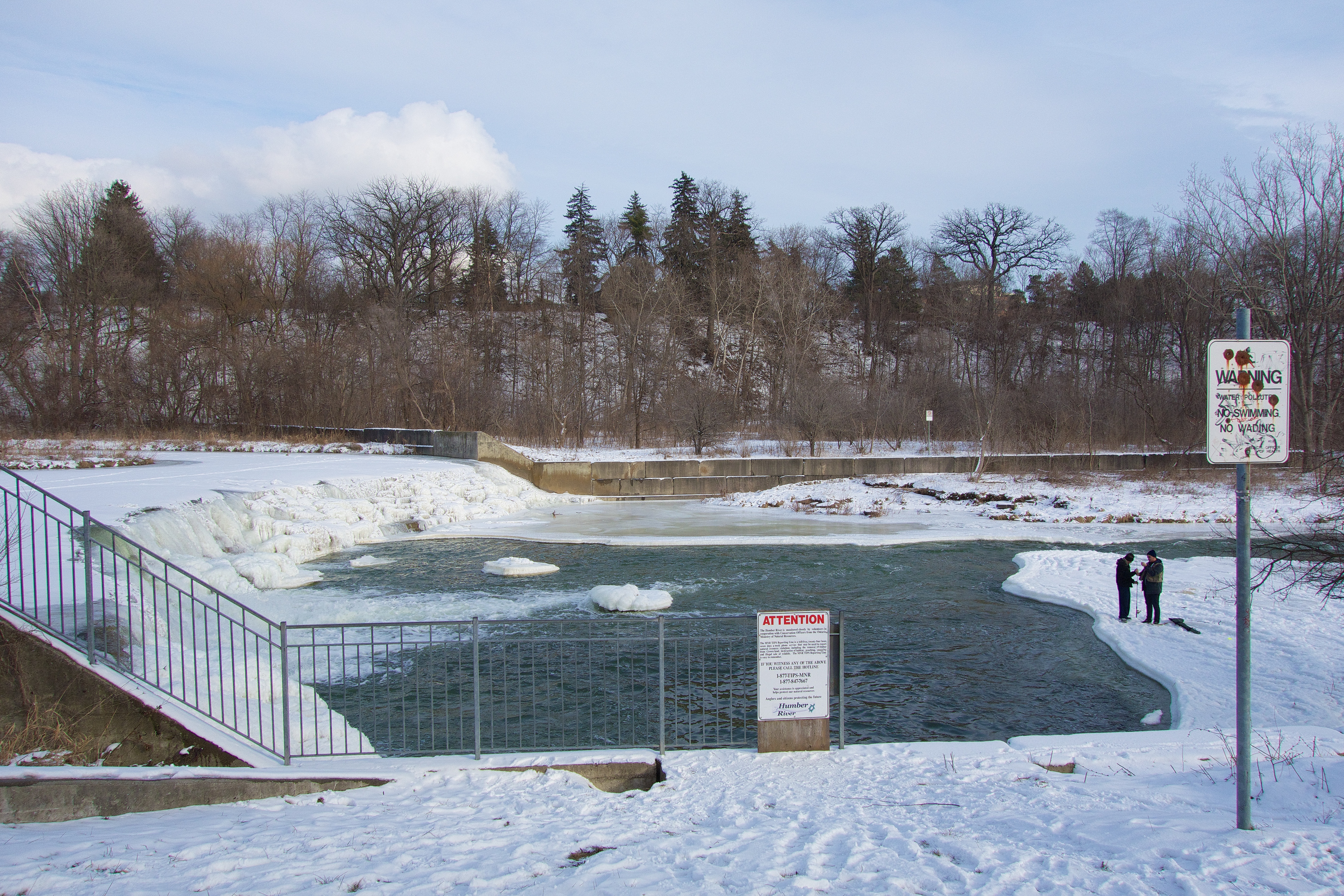
By the weir, a couple of fishermen were preparing to catch something – I’m sure they were too close to the weir and probably gaining an unfair advantage thanks to the ice enclosing the river at that point. Personally, I don’t see the attraction of eating fish that will have spent several years gathering Great Lakes pollutants from lower down in the food chain.

Do people really like fish this much?

The unspeakable in search of the inedible (apologies to Oscar Wilde).

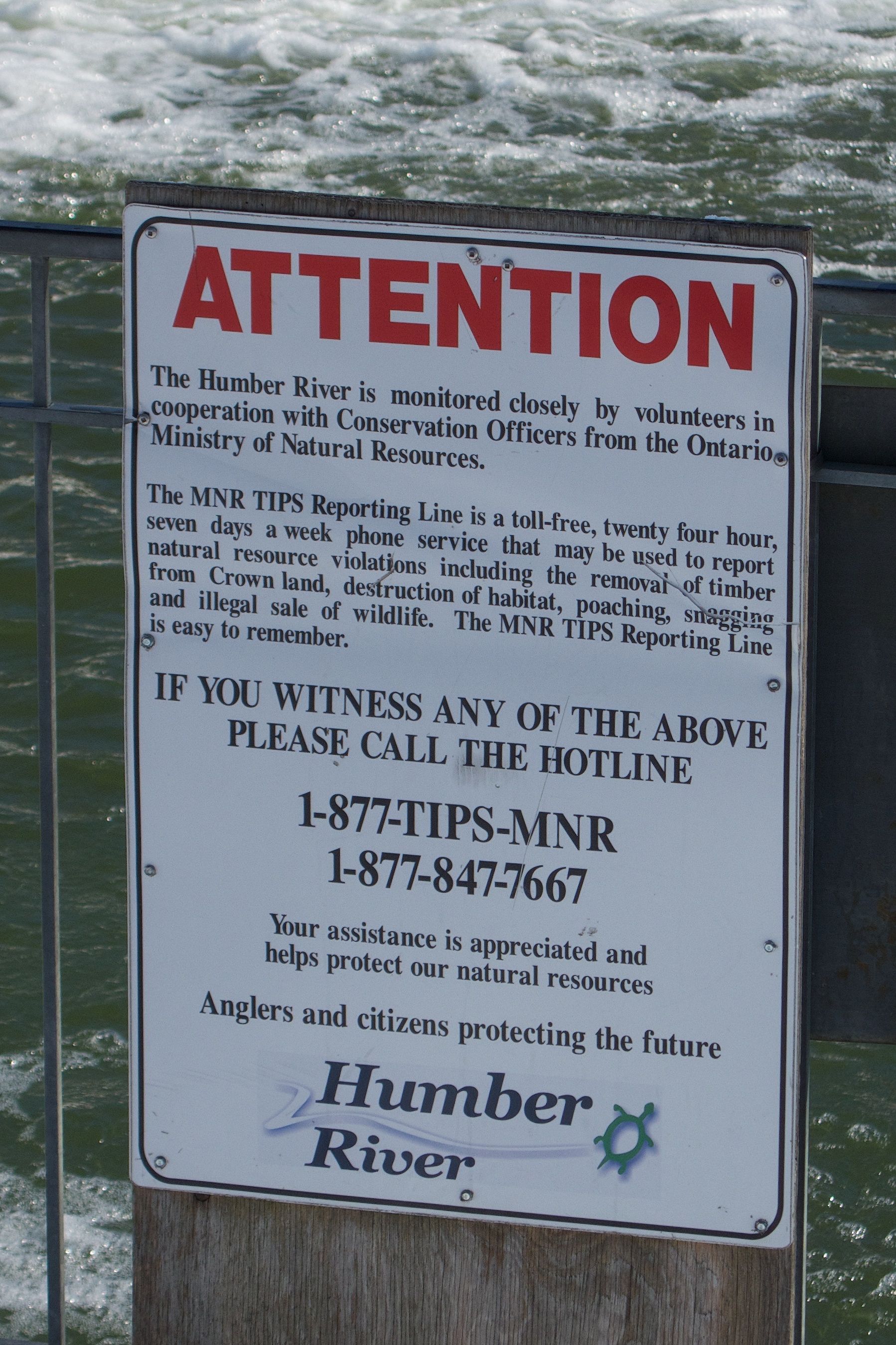
There is a hotline to call if wildlife regulations are being broken. I looked at the Ministry of Natural Resources site to attempt to find out if people can fish this close to the weir but navigating the site to find that information requires more tenacity than I possess.

Hello, Sault Sainte Marie!

Hello, Sault Sainte Marie!

A fellow dog walker tells me that on one occasion he phoned the line to report people who were helping themselves to large quantities of wood (after they had arrived in the park by leaving Scarlett Road by the Ukrainian War Memorial and driving about 1km along the bike path ). He was trying to describe the location to the MNR employee but she was totally unfamiliar with the area as she was in Sault Sainte Marie! My friend used his phone to photograph them and their truck and that seemed to deter them from further plunder.

One time I saw a well-heeled matron and her daughter carrying armfuls of tall grasses, bulrushes and wildflowers from the park up to their SUV. I challenged the lady and she indignantly retorted that she had the right to do this as it was a public place and she ‘paid taxes’! Great example for the daughter who was no doubt mortified by the mother’s actions. I haven’t seen them since so hopefully I shamed them into obtaining their next nature displays from legitimate sources.

Ice builds

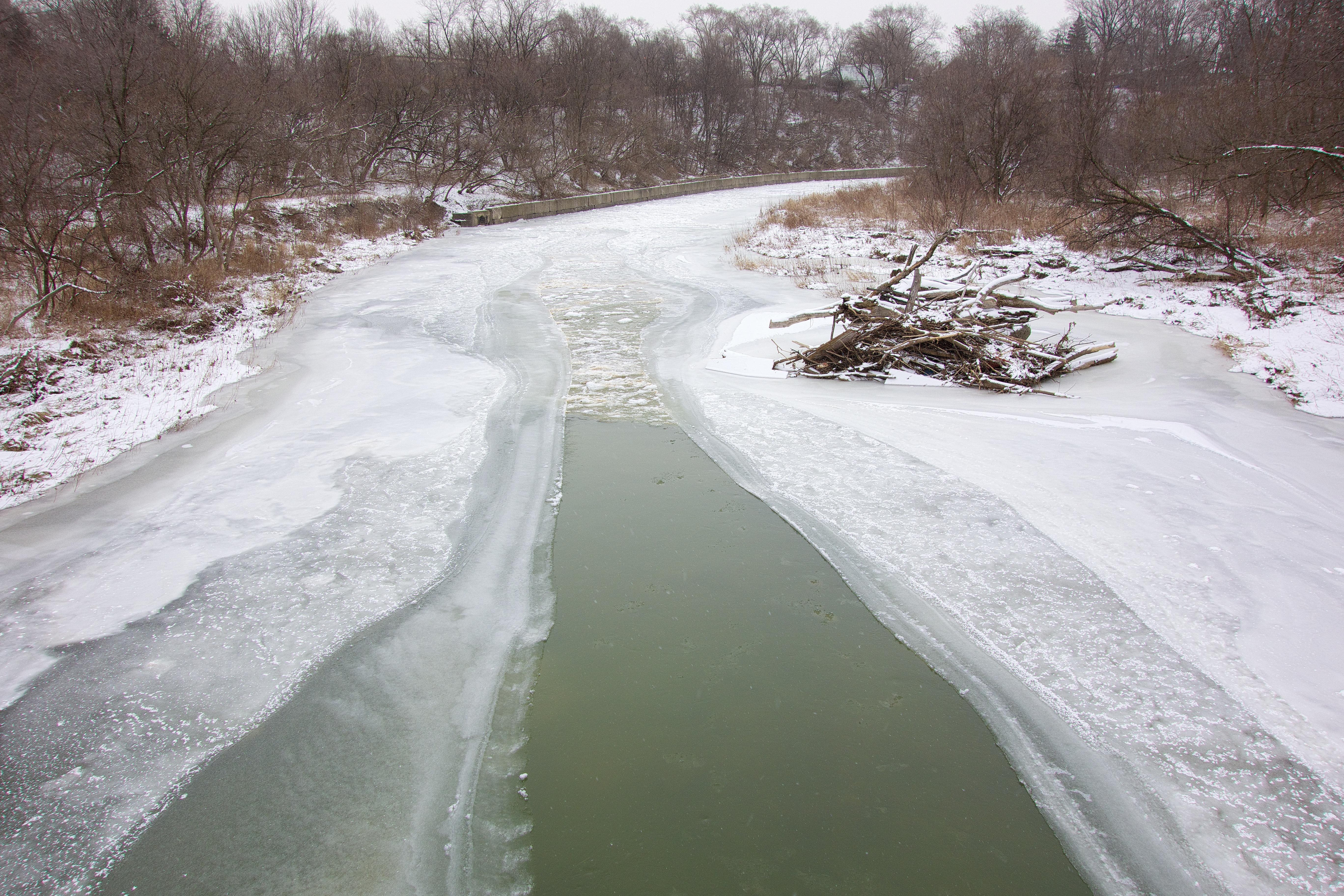
Ice doesn’t appear on the Humber in sheets, it forms in chunks, especially where the water moves quickly. Near the bridge the formation process can be seen as chunks moving downriver are trapped by an ice dam. The chunks flow under at first and this seems to raise the level of the river as the water’s progress is blocked. It’s probably a good thing for aquatic wildlife too, ensuring a good layer of insulation as water flows underneath.

Ice chunks gather together and form a frozen surface.

Ice chunks gathering together to form a frozen surface.

Further down by the wild area and especially towards the weir, the ice is already solid. You’d never be able to skate on it but it’s quite thick after some cold days and nights.

The river level is higher than normal as a result of ice damming.

The river level is higher than normal as a result of ice damming.

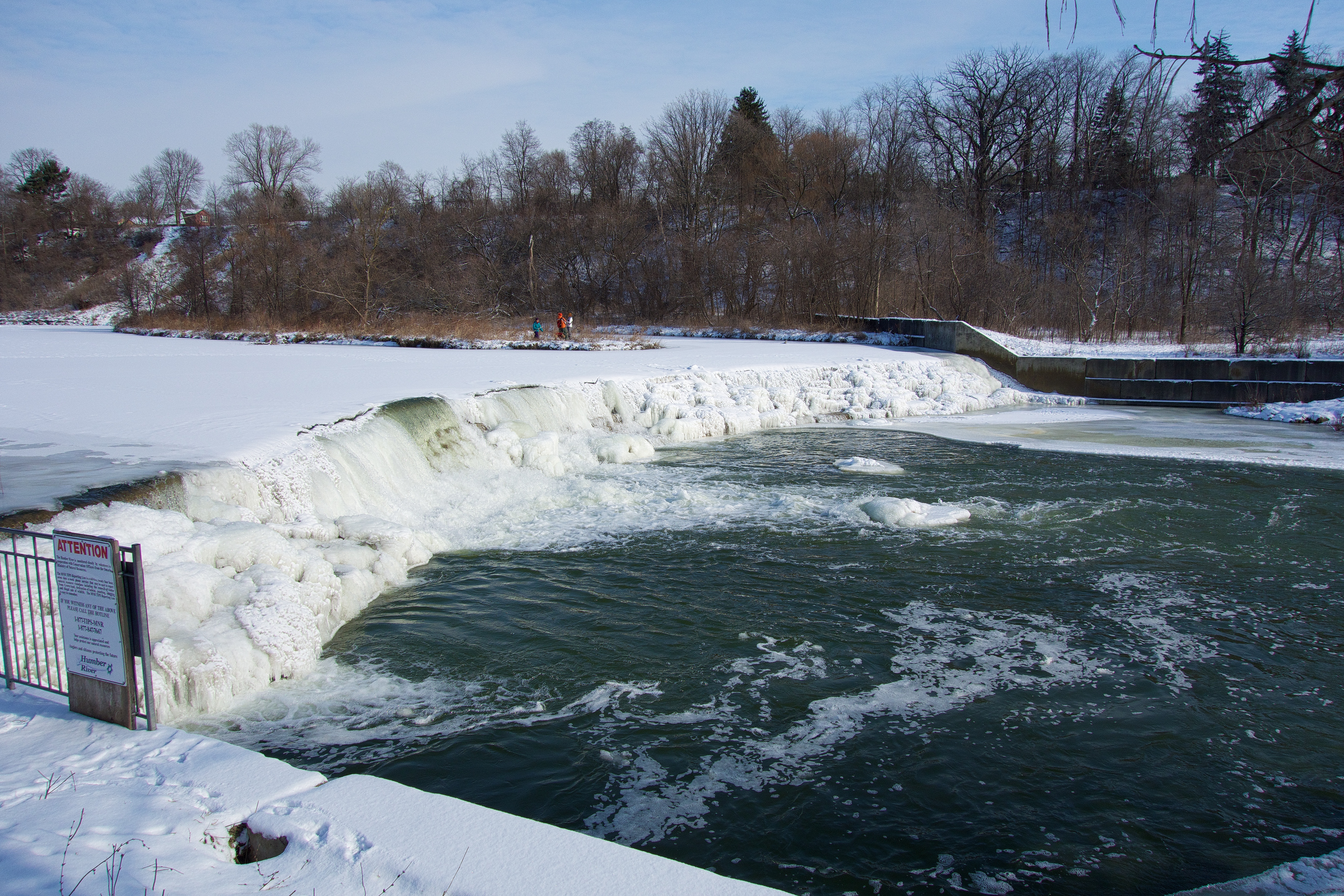
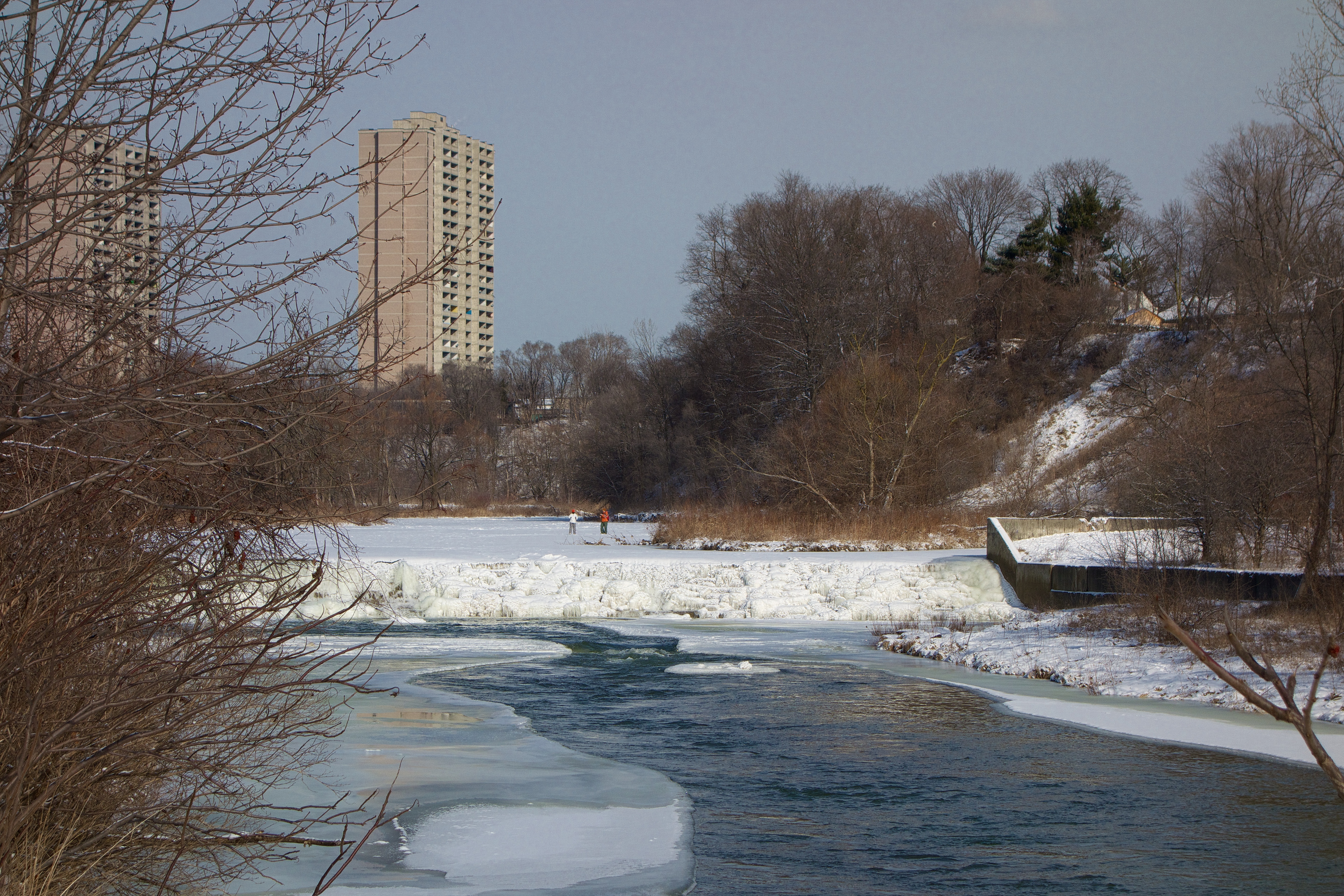
Down by the dam, a family felt the ice was safe enough to explore the island.

Down by the dam, a family felt the ice was safe enough to cross from Denison Park to the island.

Brave people test the ice.

Brave people test the ice.

We’re expecting a thaw mid-week along with lots of rain. Much of the ice will end up in huge piles by the shore.