Author Archives: Roy Murray

Unknown's avatar

About Roy Murray

I live near Raymore Park and have been visiting the park since 1993 and began blogging about it since 2012.

Bring on the Zamboni!

A steely-grey cloud deck, fast moving clouds being pushed along by a raw east wind can only mean one thing; snow is coming. This time we’re getting off lightly with just a couple of centimetres while temperatures will rise above the zero mark for the next few days.

Above the weir, a large natural ice surface has magically appeared that (with some smoothing from a handy Zamboni or some strategic flooding) could be a fantastic outdoor rink. These two photographs were taken from the same spot.
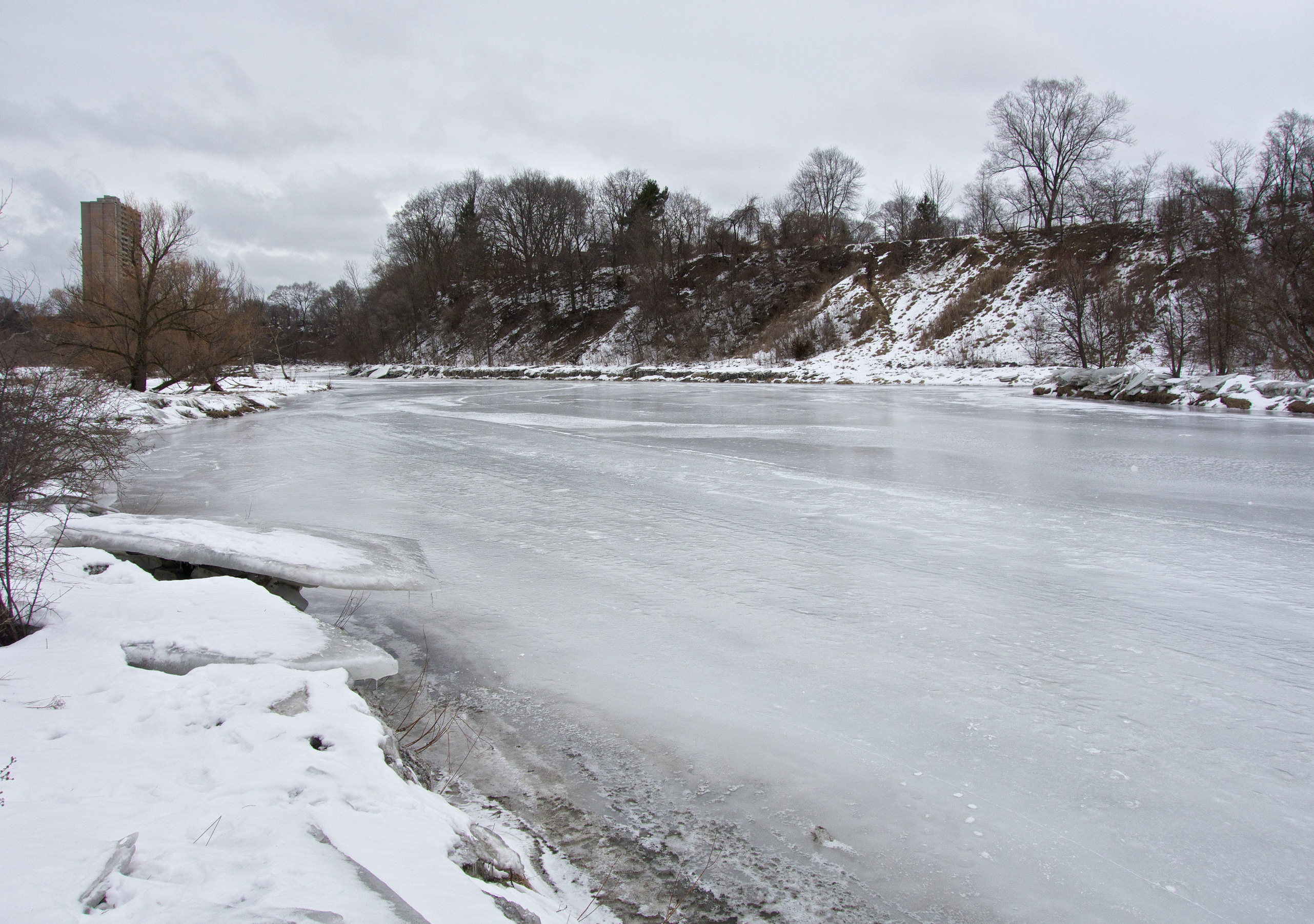
Looking upriver towards Weston.
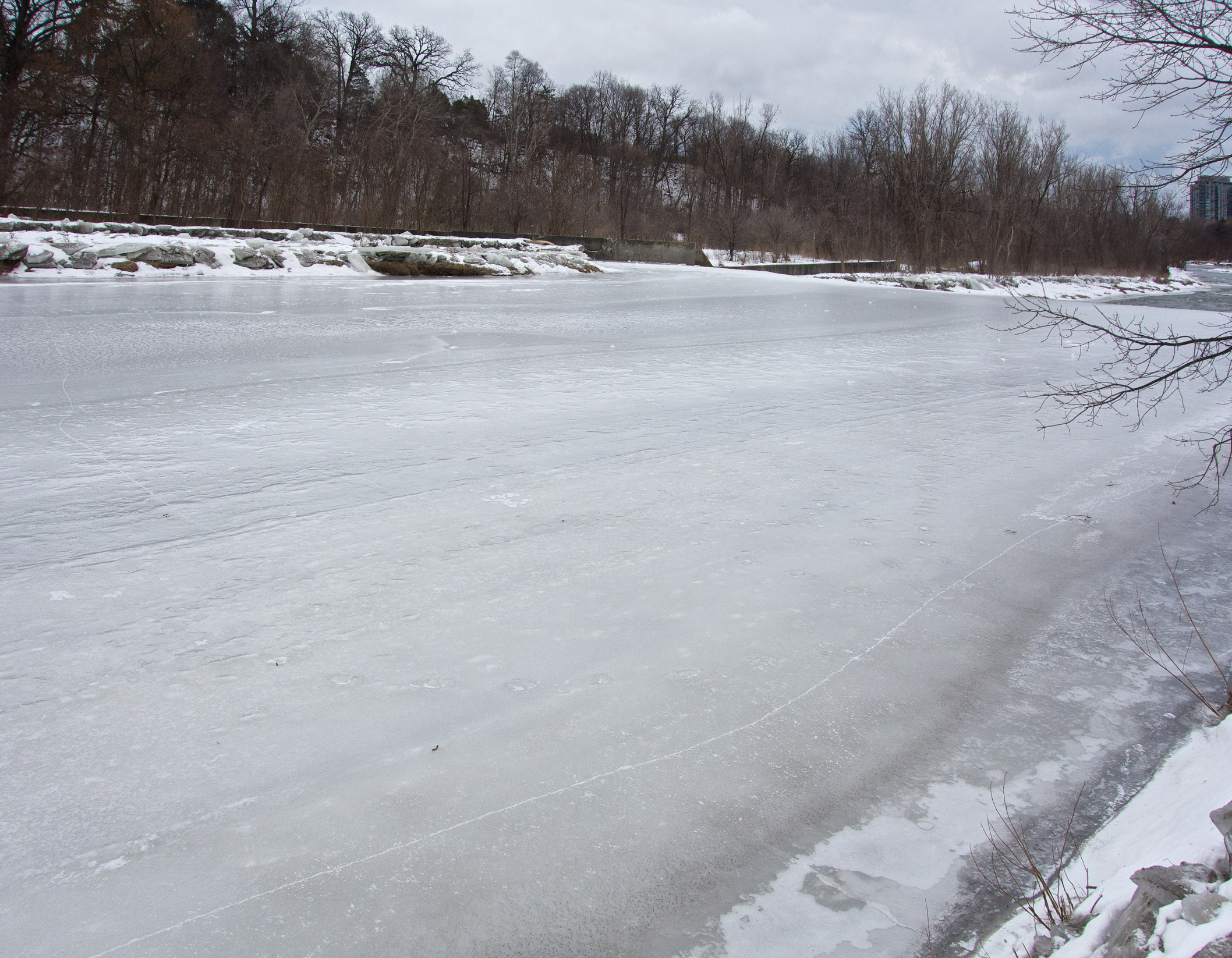
Looking upriver towards Weston.

Looking downriver over the weir.

Looking downriver over the weir.

Since the icy conditions have taken over and glazed the pathways, very few people are using the park as the entrance (closed to traffic for the winter) from Raymore Drive is on a steep slope. Only the die-hards with footwear designed for ice are braving these treacherous conditions. Even the extreme weather cyclists have admitted defeat. Not a square centimetre of spandex in sight!

I must admit it’s nice to have the place to yourself and no doubt wildlife prefers it too.

Stark beauty

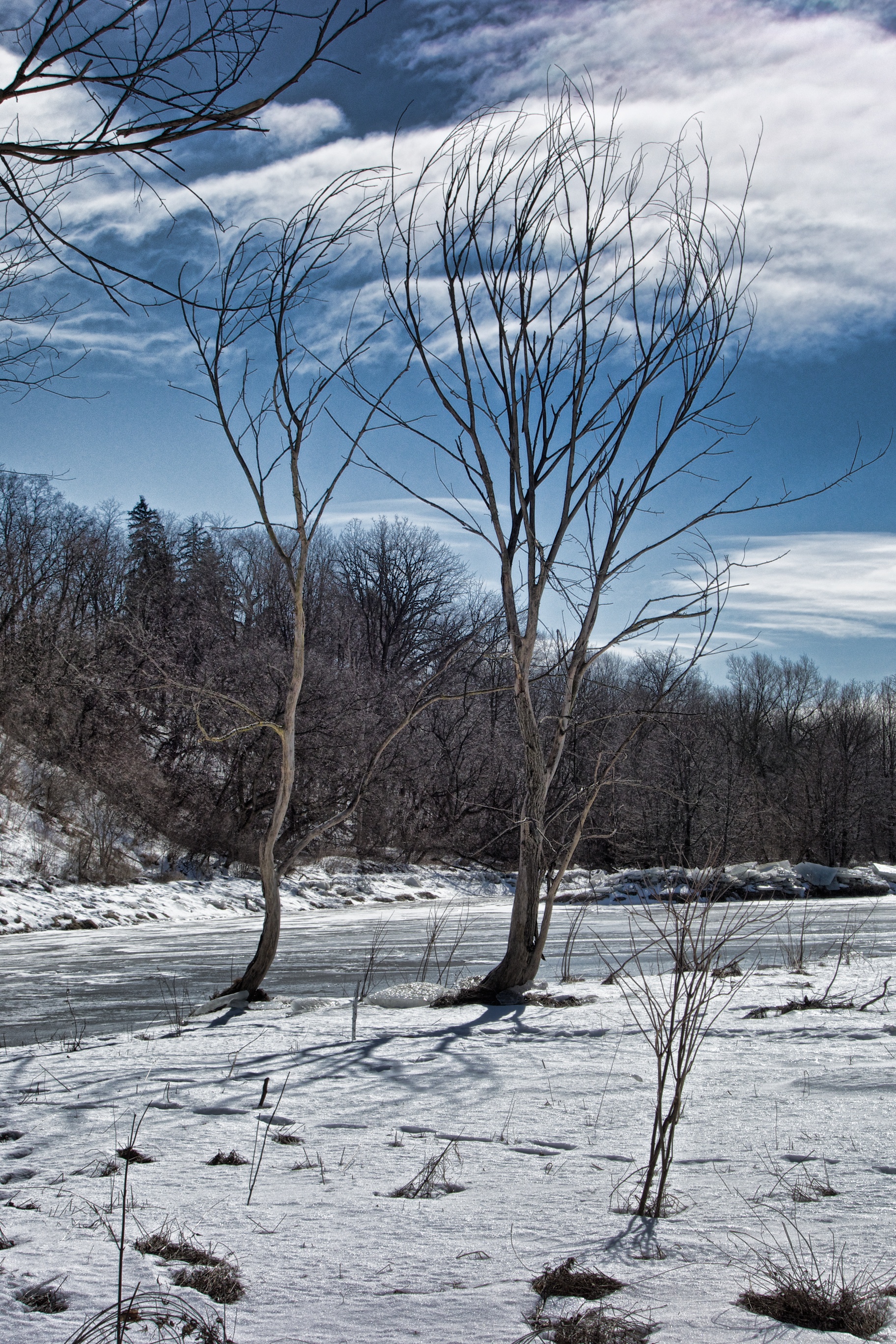
There’s something sad yet majestic about a dead tree. To look at the living organism that once was evokes sadness. Trees along this stretch of the Humber are constantly being damaged by ice stripping away their bark. I liked the way light from the snow is reflecting onto the branches.

These trees are stark reminders of the power of ice.

These trees are stark reminders of the power of ice along low-lying stretches  of the Humber.

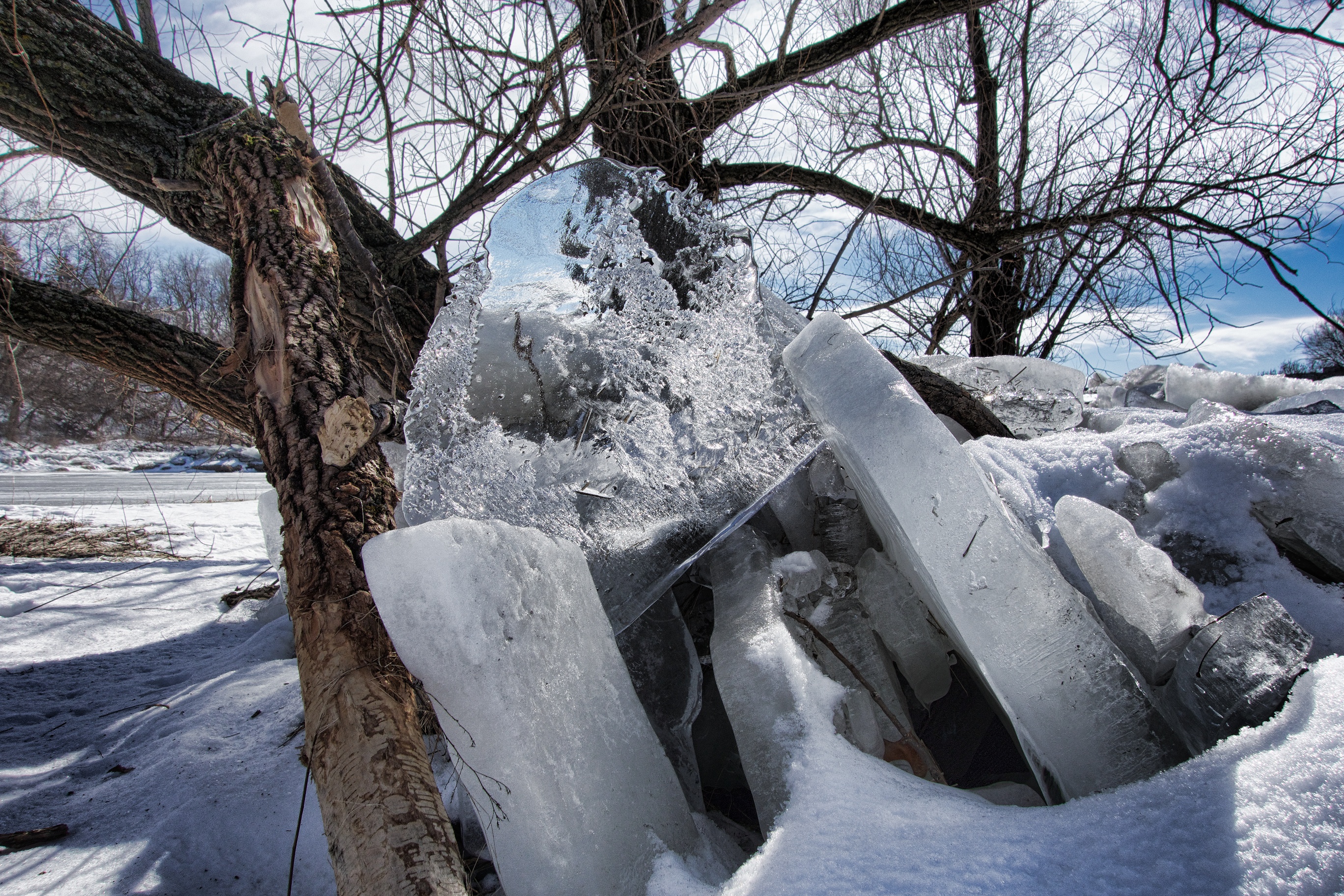
Ice comes in a huge number of forms.

River ice comes in a huge number of forms.

This large pile-up of ice is crowned by a beautiful clear chunk which caught my eye.

OK Freeze.

At this time of year in the park, the weather fluctuates. It’s nowhere near time for spring but every few days, little tongues of mild air push northwards across the lake often accompanied by rain, making life quite treacherous once the freeze returns. Where the snow has been compressed, e.g. a path, rain transforms it into ice with a nice slick sheen on top. Powder snow becomes coarse and granular.

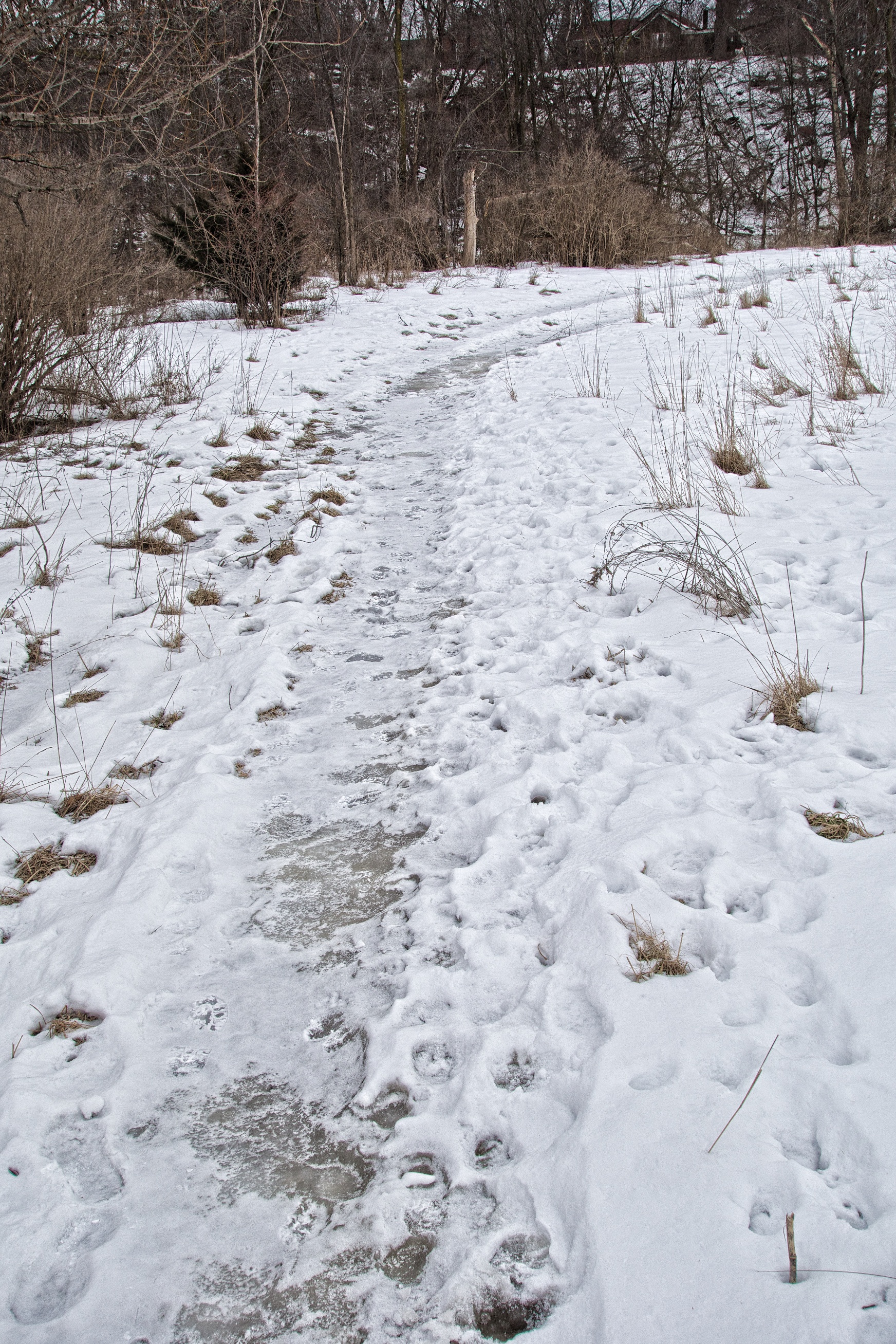
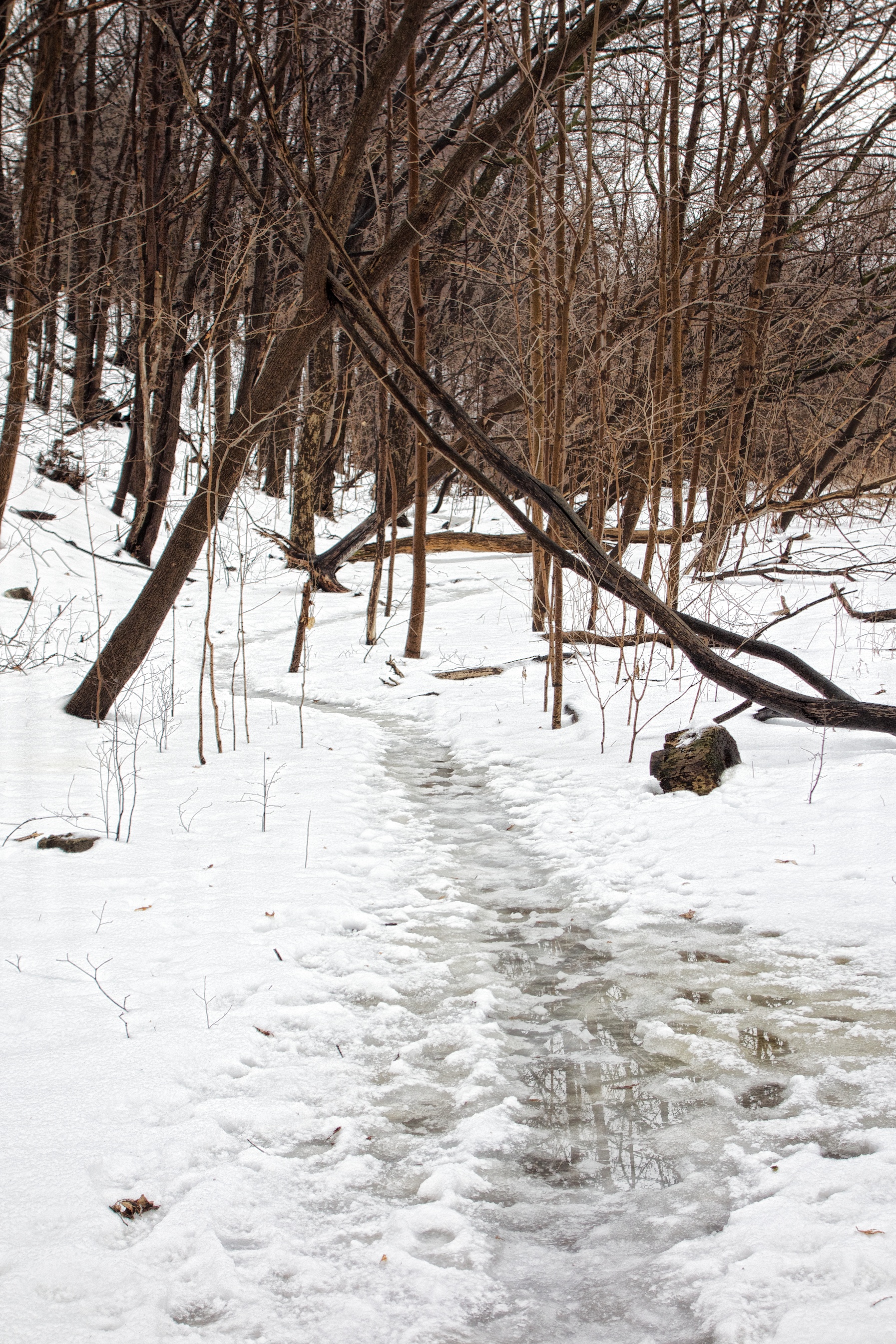
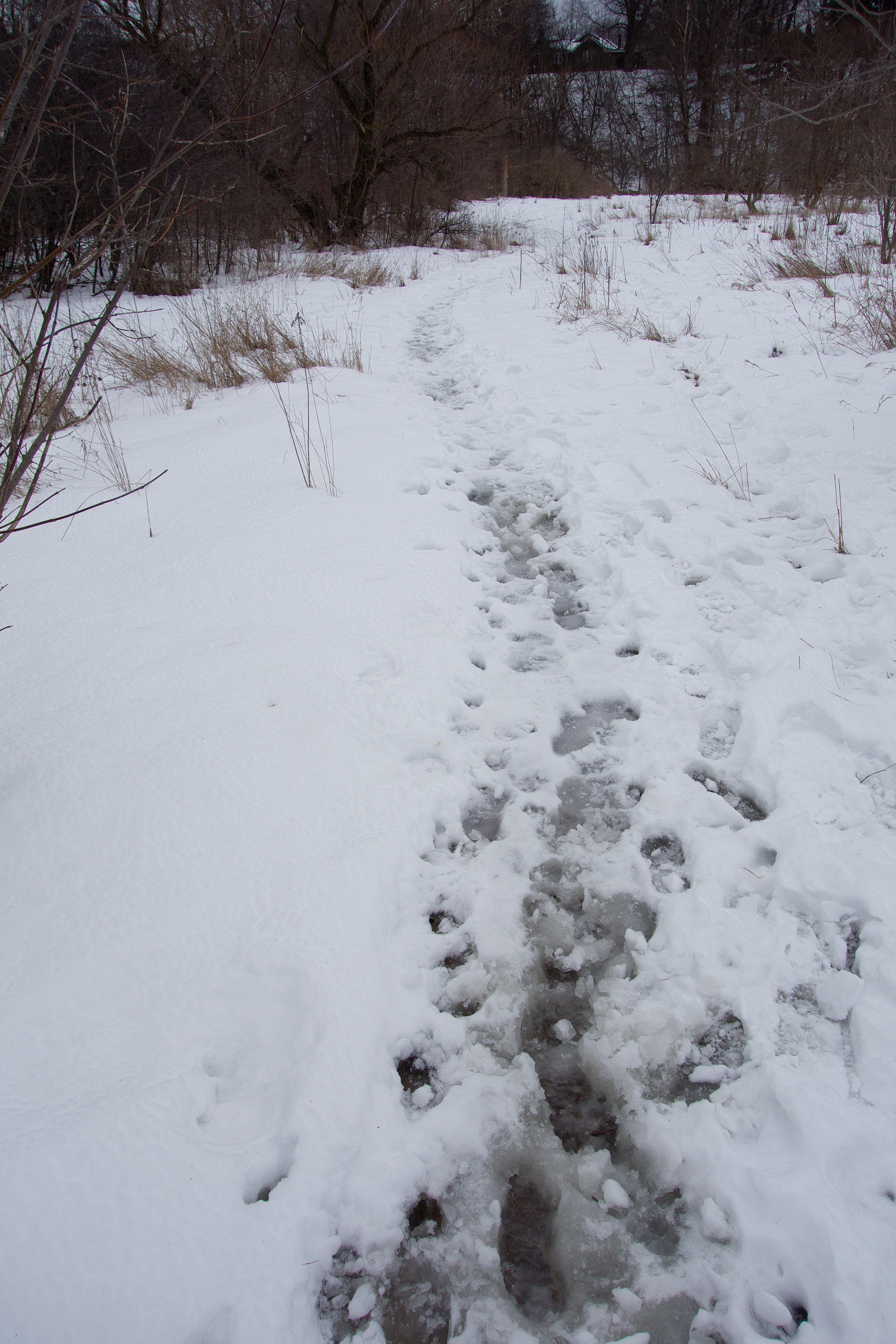
Yesterday one of those mild spells brought rain, today, it’s back to the deep freeze. Here is the now frozen footpath that winds through the wild area:

The path has been transformed into a ribbon of ice.

The path has been transformed into a ribbon of ice. A dusting of snow is added to trick the unsuspecting.

Without a decent pair of soles designed for ice, it’s best to keep to the snow on either side of the path which yields to the foot with a texture resembling cinder toffee, or to use the commercial term, Crunchie.

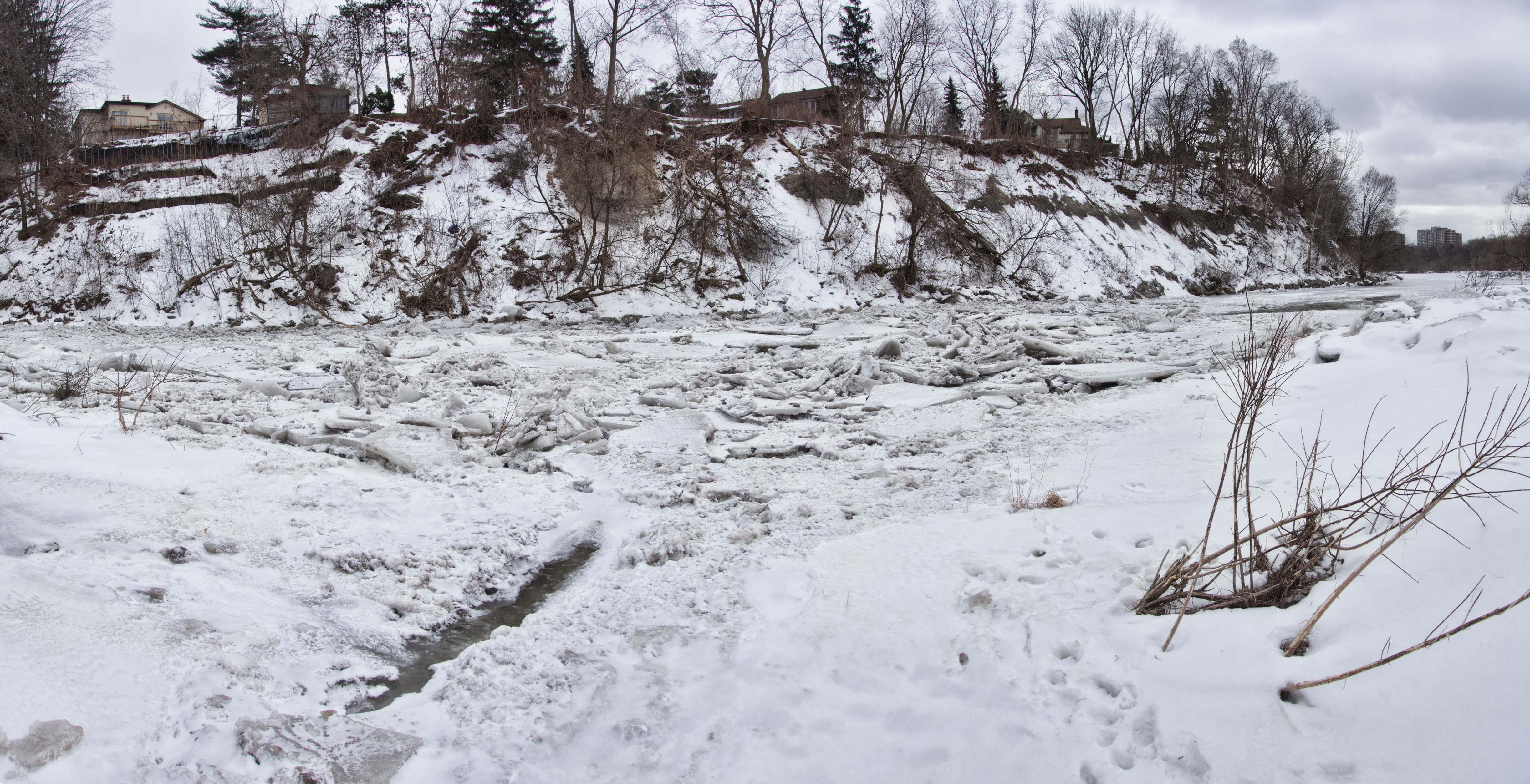
On the river, just past the curve, an ice jam has formed (I’m still waiting to see this happen). Ice blocks are piled up and will stick around until gradually melting away or, more dramatically, are lifted and dumped ashore by the rising river.

This is a panorama made of six images so there is a bit of distortion.

This panorama made from six images shows the end of the ice jam.

In summer when rain falls, much of it is absorbed by the ground. When ground is frozen or saturated, water drains quickly and river levels can rise dramatically thus precipitating the rapid break-up of an ice jam.

Reflections

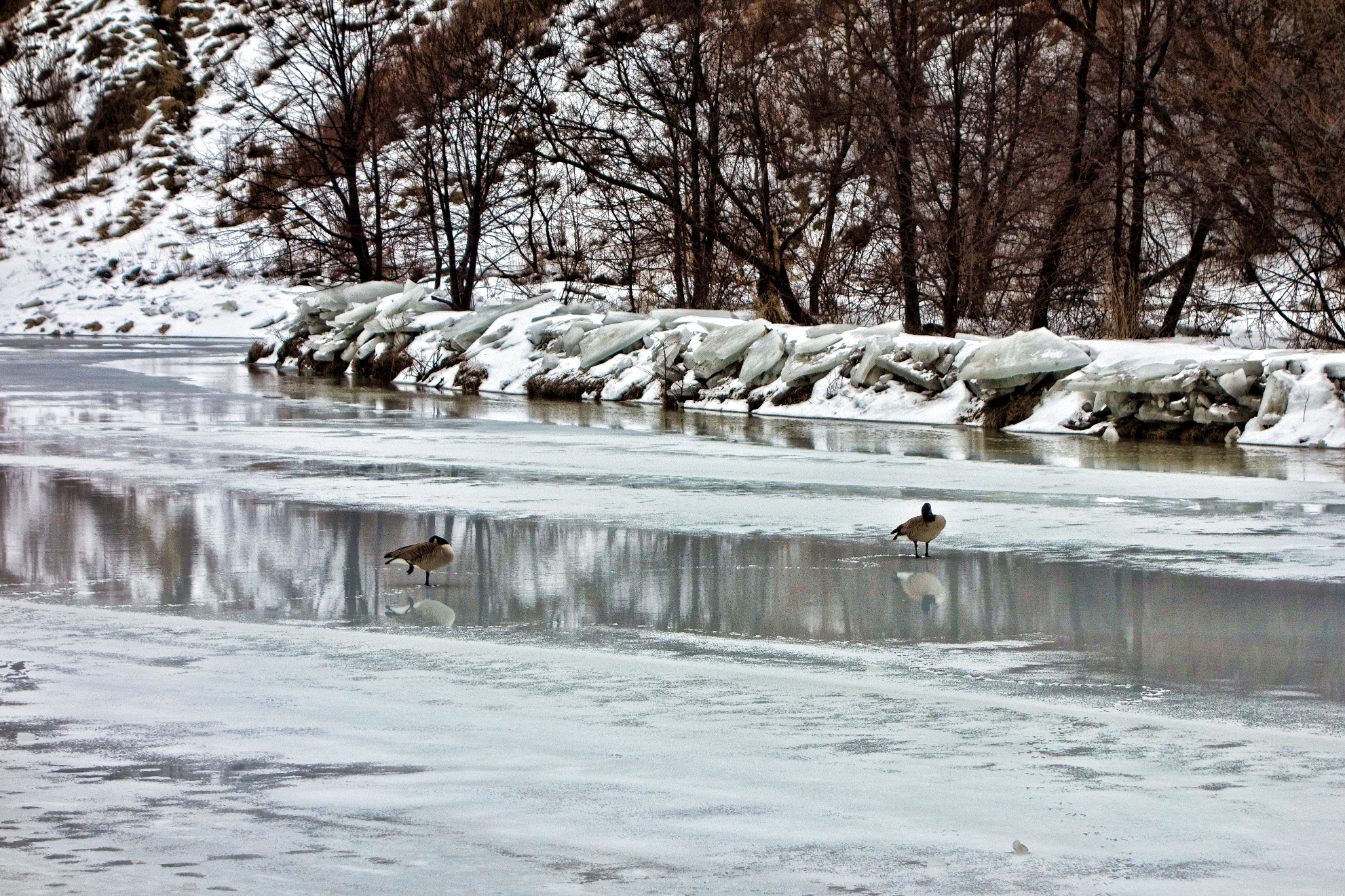
Yesterday was a sloppy slushy rainy day with rain and mild temperatures. A pair of geese standing on wet ice in the river prompted a quest for reflections. The closer one was quite relaxed and was in its sleeping position.

A pair of Canada Geese spend some quiet time on the river.

A pair of Canada Geese spend some quiet time on the river.

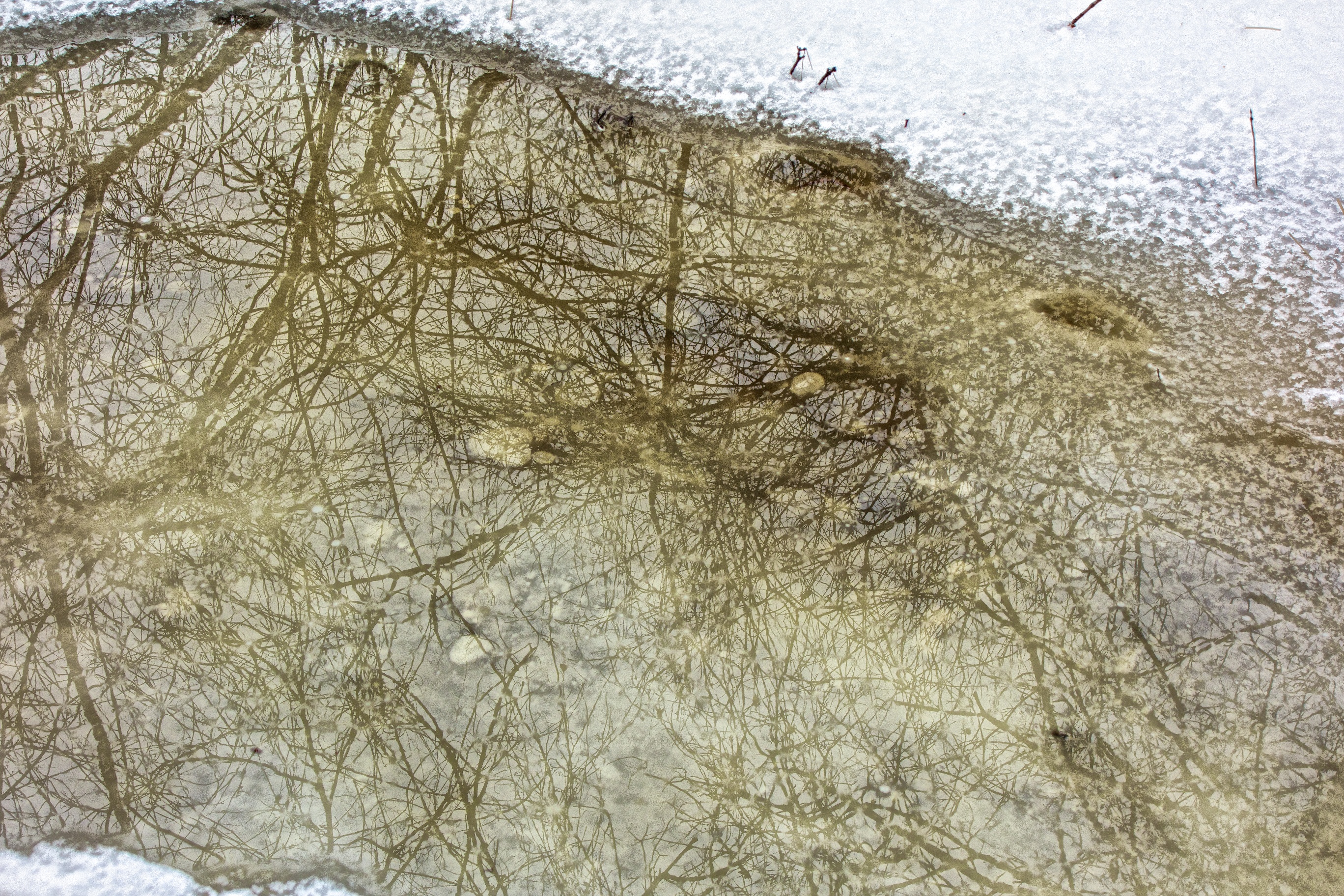
Large pools of water form in depressions.

Large pools of earth-tinted water form in depressions allowing another view of the trees.

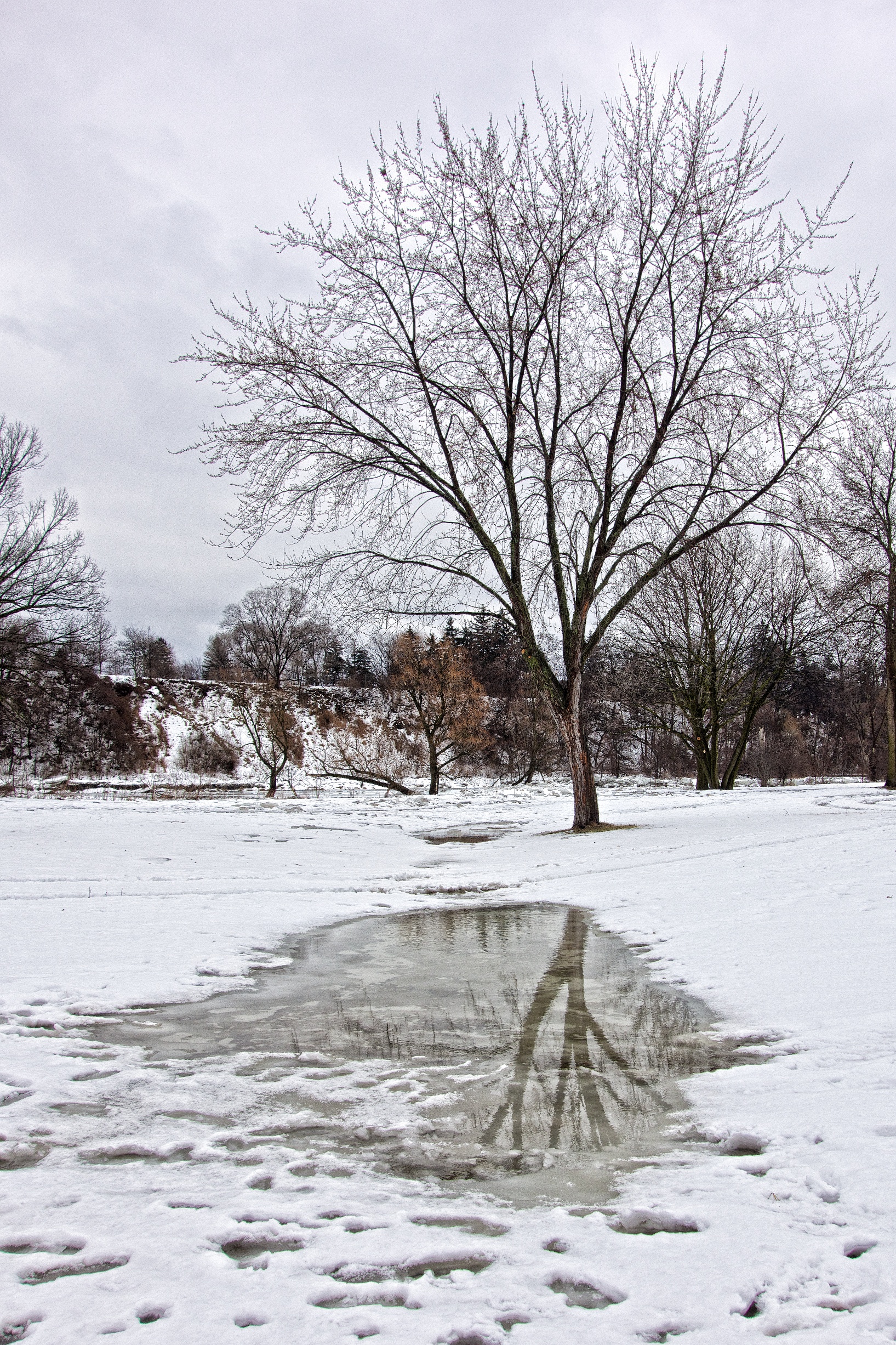
A maple is mirrored in slushy water.

A maple is mirrored in slushy water.

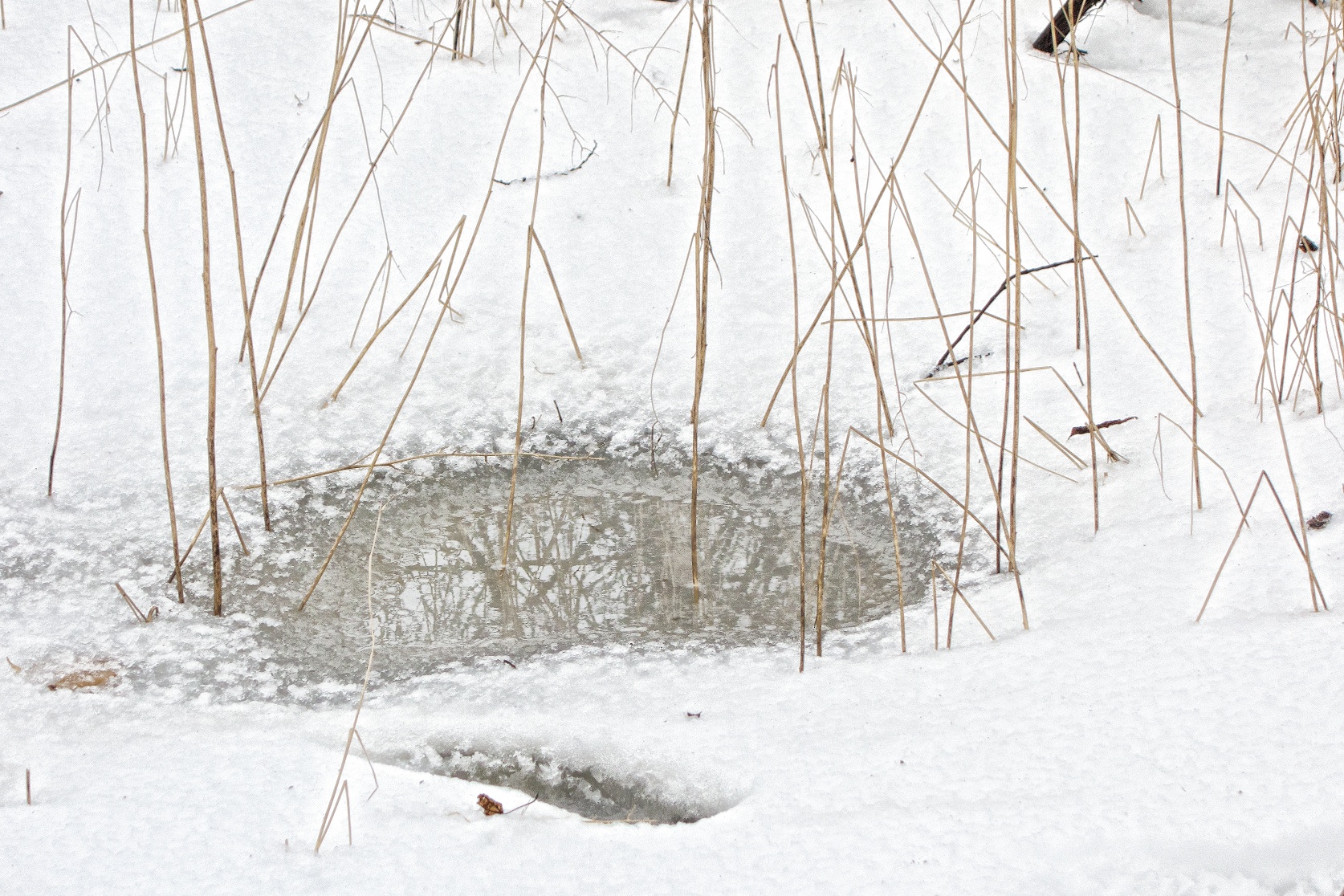
Last year's grasses stand by a small depression.

Last year’s grasses stand around a small depression.

Wet branches are more colourful in the rain.

Wet branches are darker and more colourful in the rain.

Tracks and textures

After a couple of days absence from the park it was good to be back outside again. The last couple of days were bone chilling with wind chill readings below -20°. Mugsey and I had to make do with the treadmill.

The sun feels so much stronger now – the U.V. index for today was 3 and you can pretty well double that when walking in snow. The temperature however ensures that only the ‘bare’ minimum of flesh is exposed.

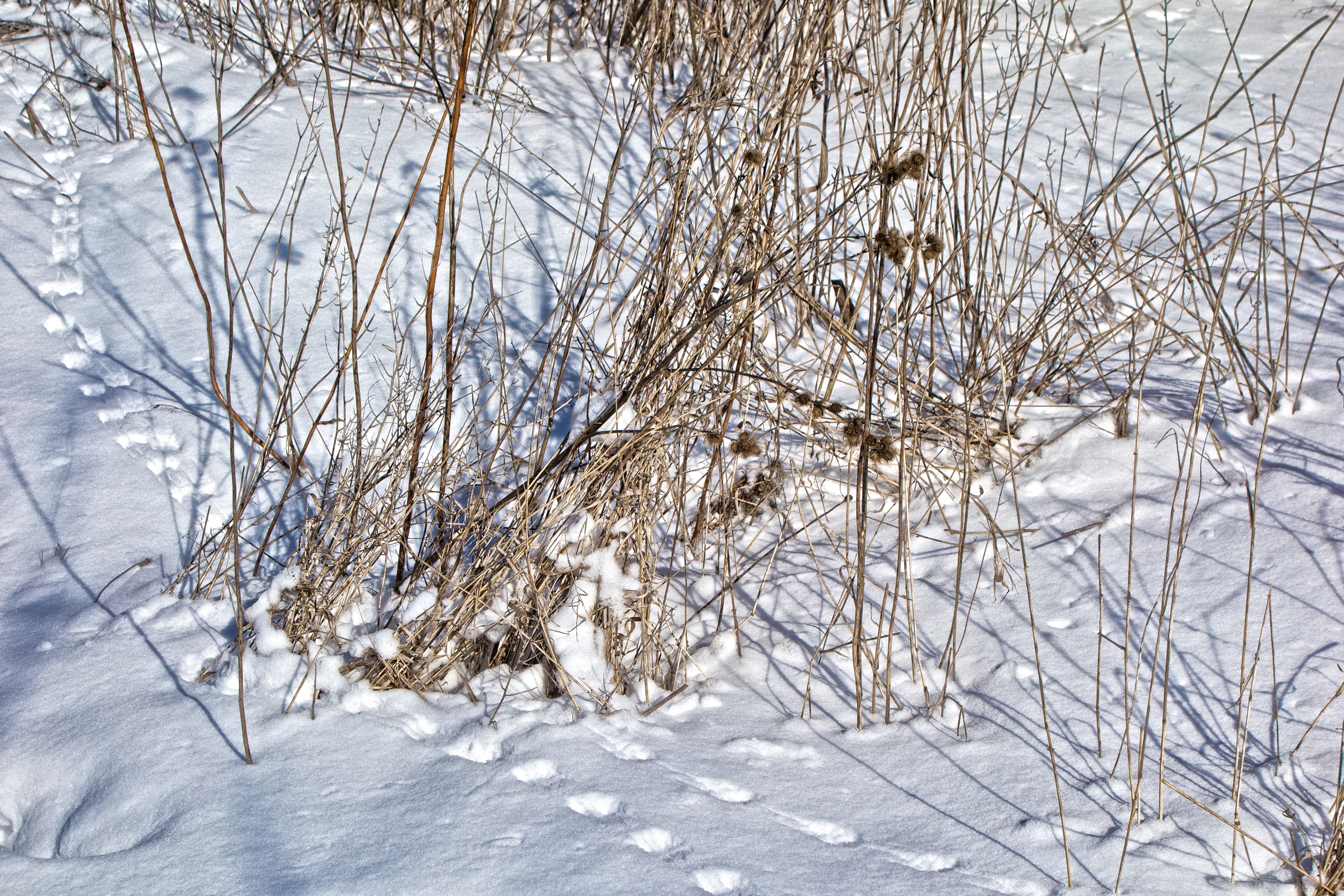
A fresh fall of snow allows a clean slate for tracks in the snow – these look to be from a mouse or other tiny creature.

One tiny animal with tail leaves tracks by some burdock and dog strangling vine

A tiny animal with a tail comes and goes through some burdock and dog strangling vine.

As with a large number of trees, many of the plants in the park are also foreign invaders. Dog strangling vine is one of these and unlike invasive species that are quite attractive such as purple loosestrife or phragmites (a tall feathery grass), DSV is as attractive as its name. More about invaders another time.

DSC00940

In the background, downed trees have been stacked by floodwaters to form a natural fence along the riverbank.

Old and new together.

Old and new together.

A couple of views…

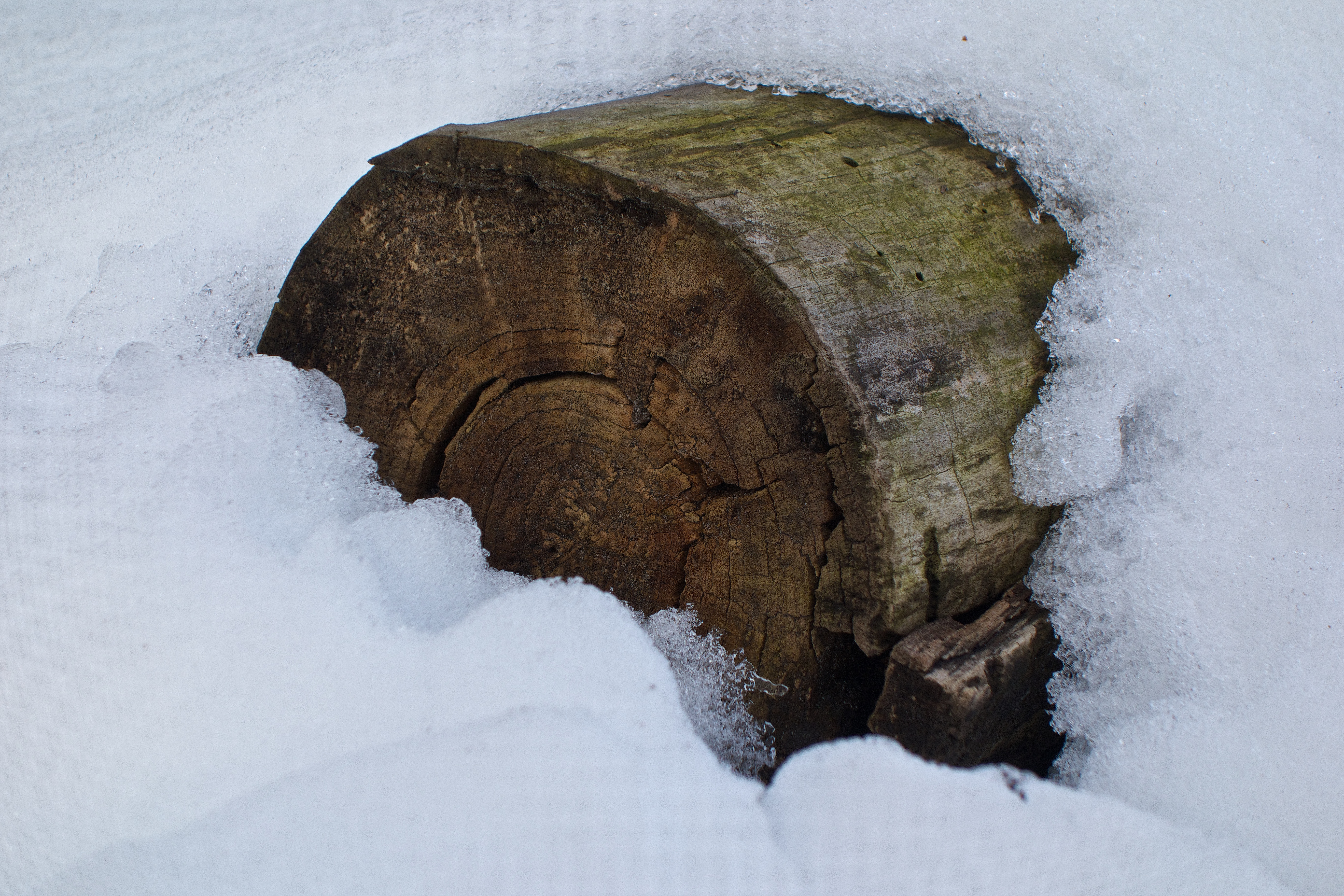
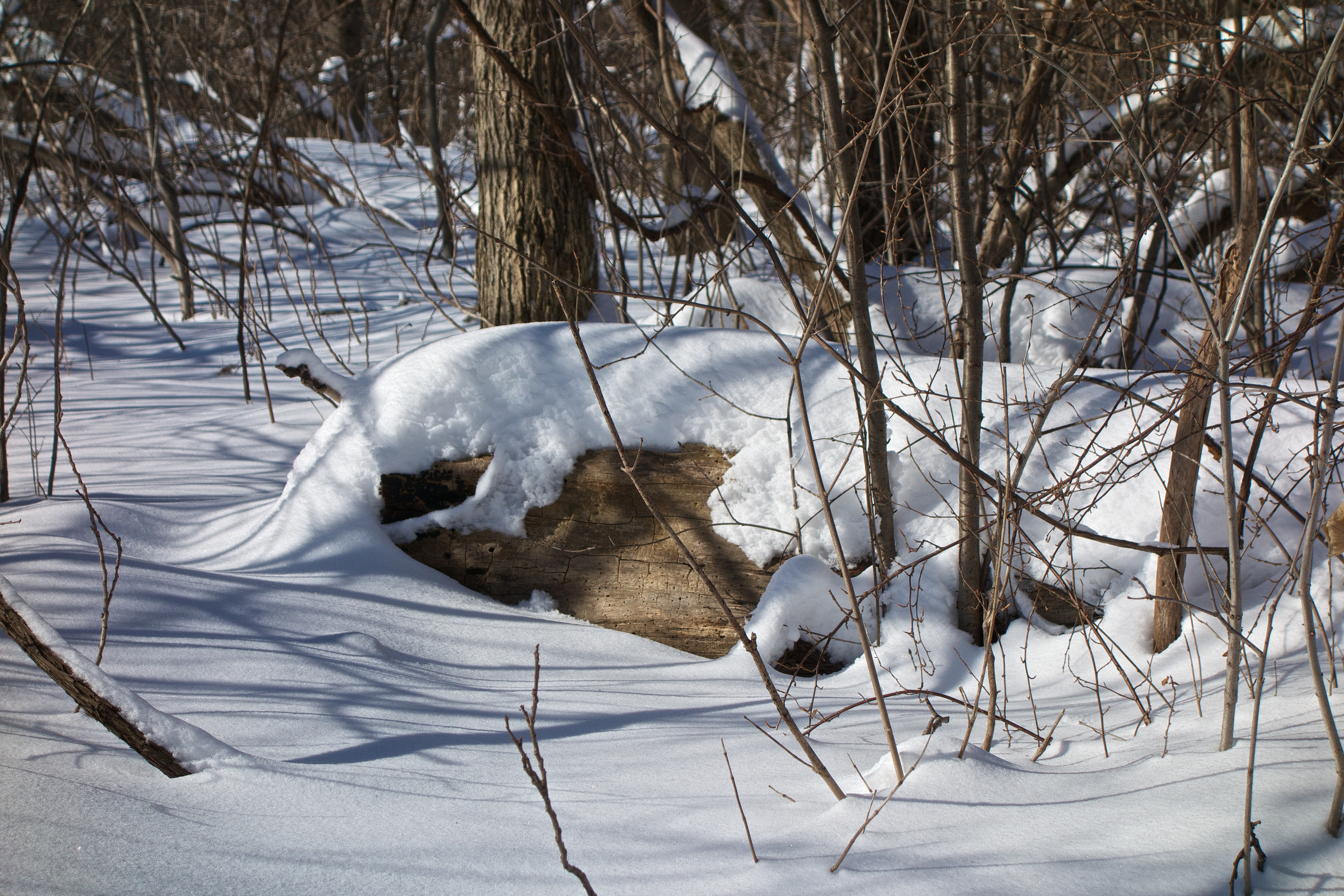
Here are a couple of shots taken today. The first is a log in the snow that had a surprising amount of colour in it. The snow is granular now and adds a nice contrast in texture.

DSC00925

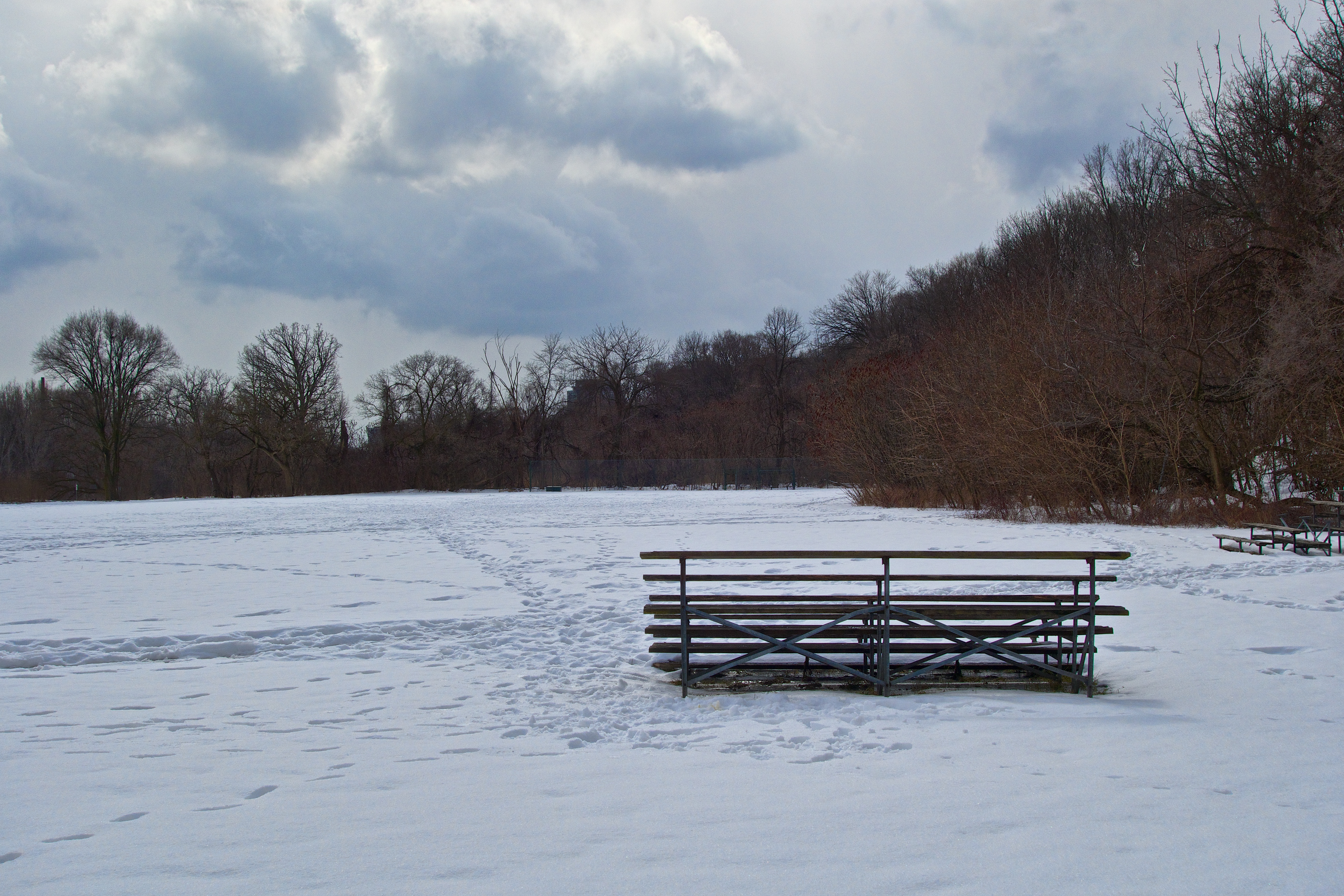
The next shot is pretty desolate – the old bleachers set against some ominous clouds, the trees of the park and the patterns of foot traffic in the snow

DSC00938.


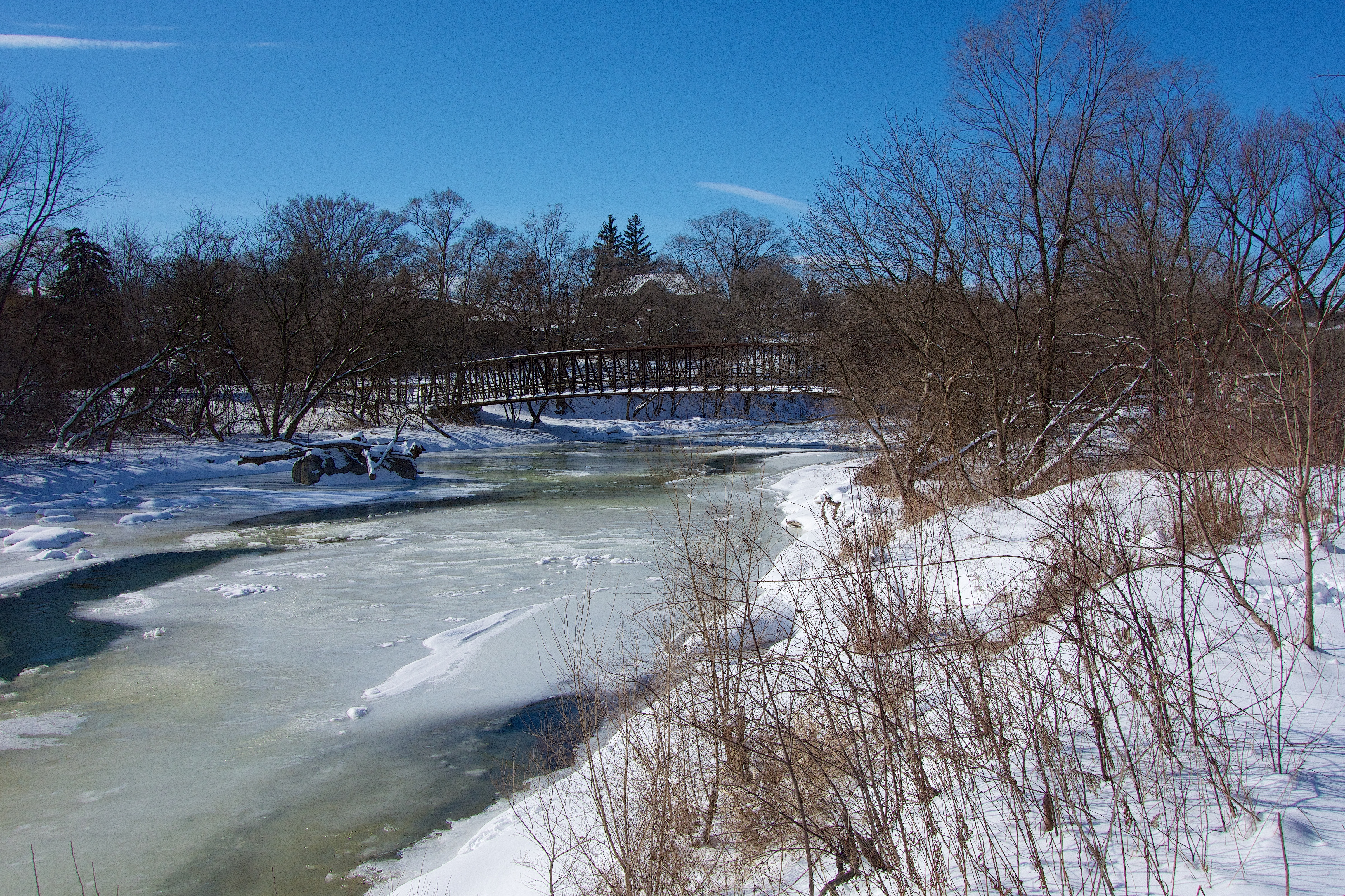
Another winter view of the footbridge.

This is the Humber footbridge from the other side of the river.

The old bridge abutment is in the left foreground.

The old bridge abutment is on the left centre of the photo.

More people were in the park today as the path has been beaten down by the pioneers! A nice sunny day with some interesting shadows on the snow.

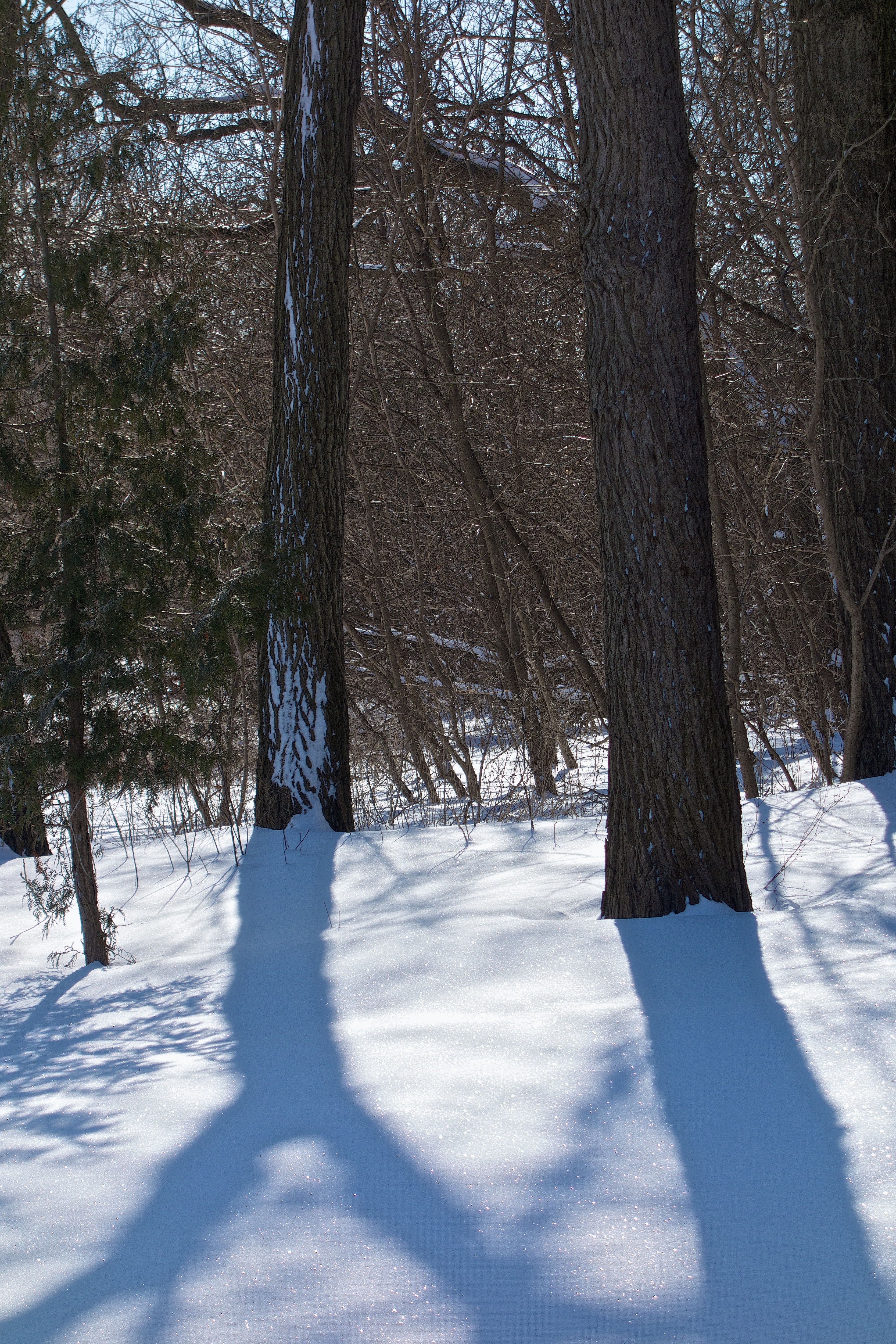
A couple of Siberian Elms cast their shadows.

A couple of Siberian Elms cast their shadows.


Winter wonderland

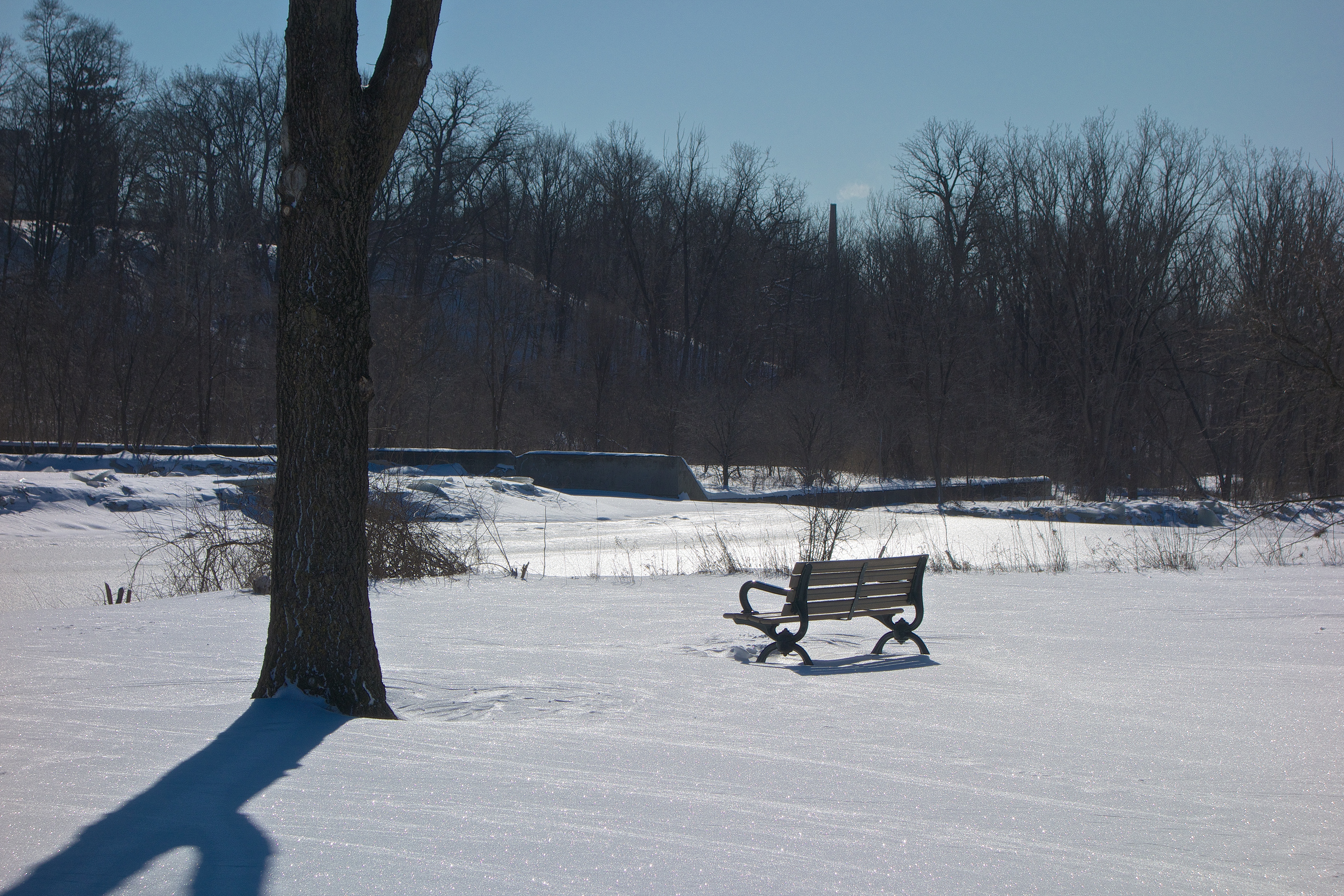
There’s nothing like a good old dumping of snow to hide imperfections; especially when the next day is sunny and calm. We had close to 30cm (a foot in old speak). Let’s get started with the bench – the ‘before‘ was drab and dismal compared to views from other times of year. Today, it’s a postcard.

The bench has had a makeover courtesy of the snow.

Notice the lines in the snow caused by strong winds overnight.

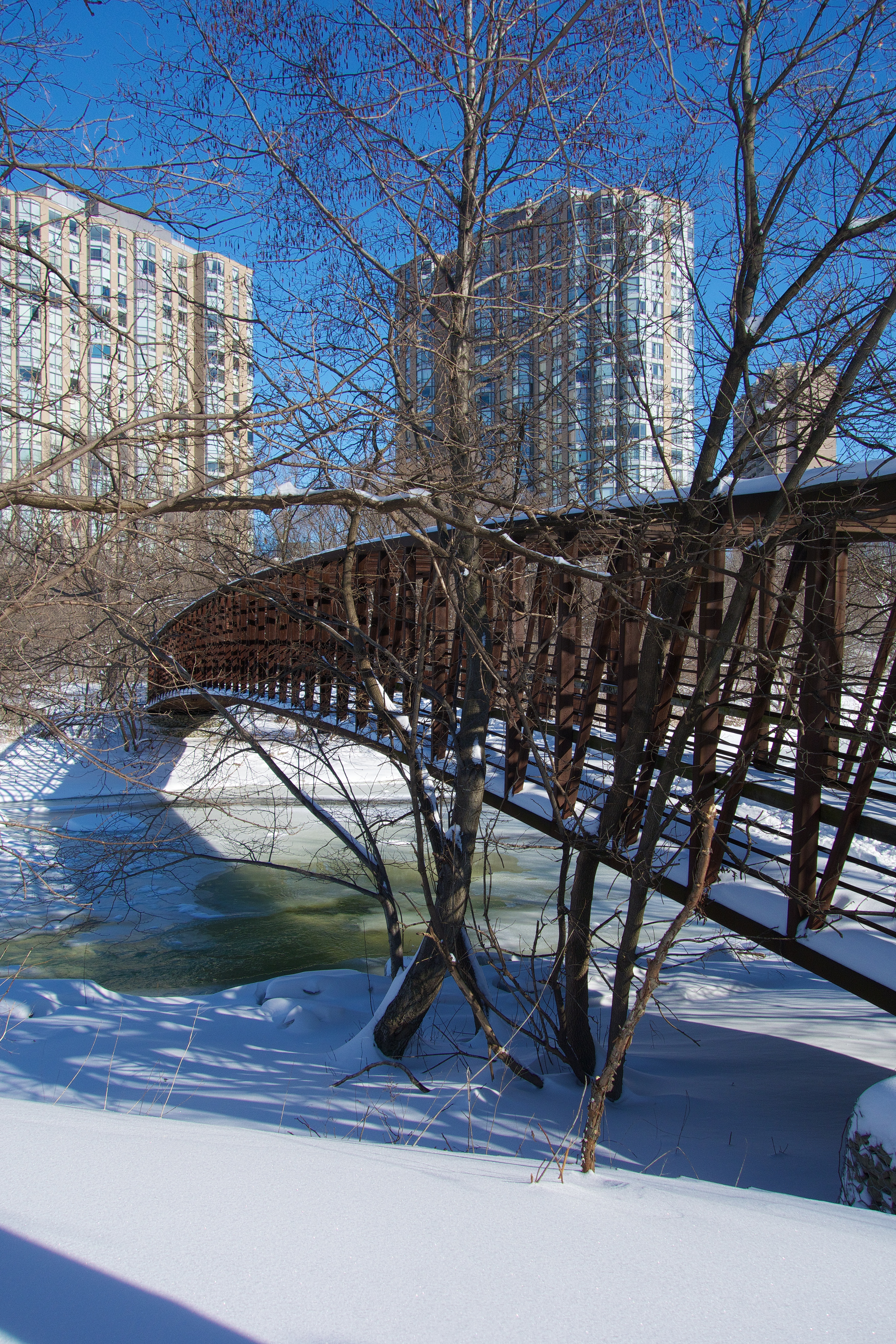
The bridge has many flattering angles. Photograph it from one side and you’d swear it was miles from anywhere. Here’s the other side set against condos in Weston. I like that the bridge and its shadow seem to form a loop over the Humber.

Nature and the hand of humankind working together.

Nature and the works of humanity together.

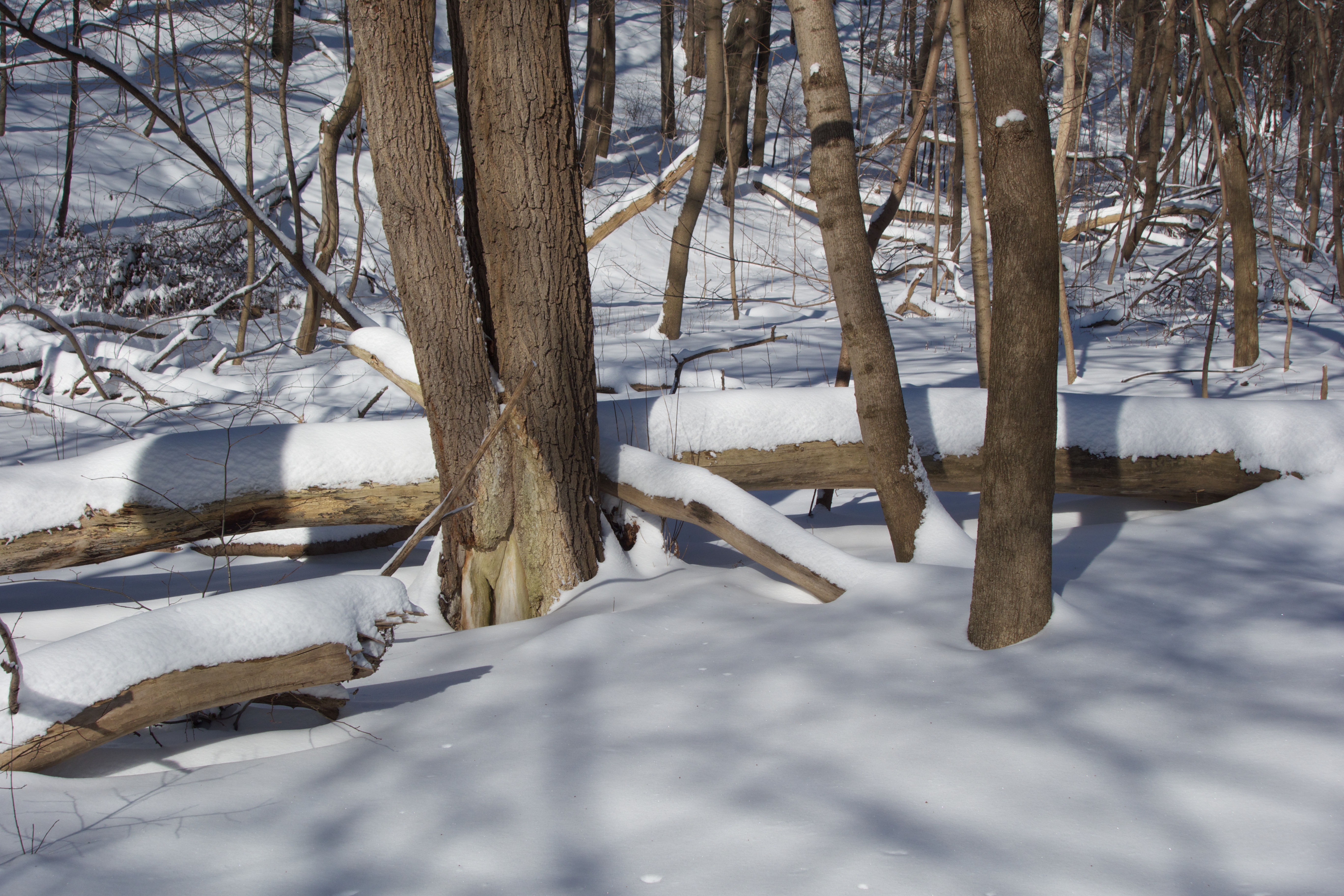
Next is a couple combining trees and snow – one of my favourite combos – especially on a sunny day and when the snow is fresh and deep as it is today.

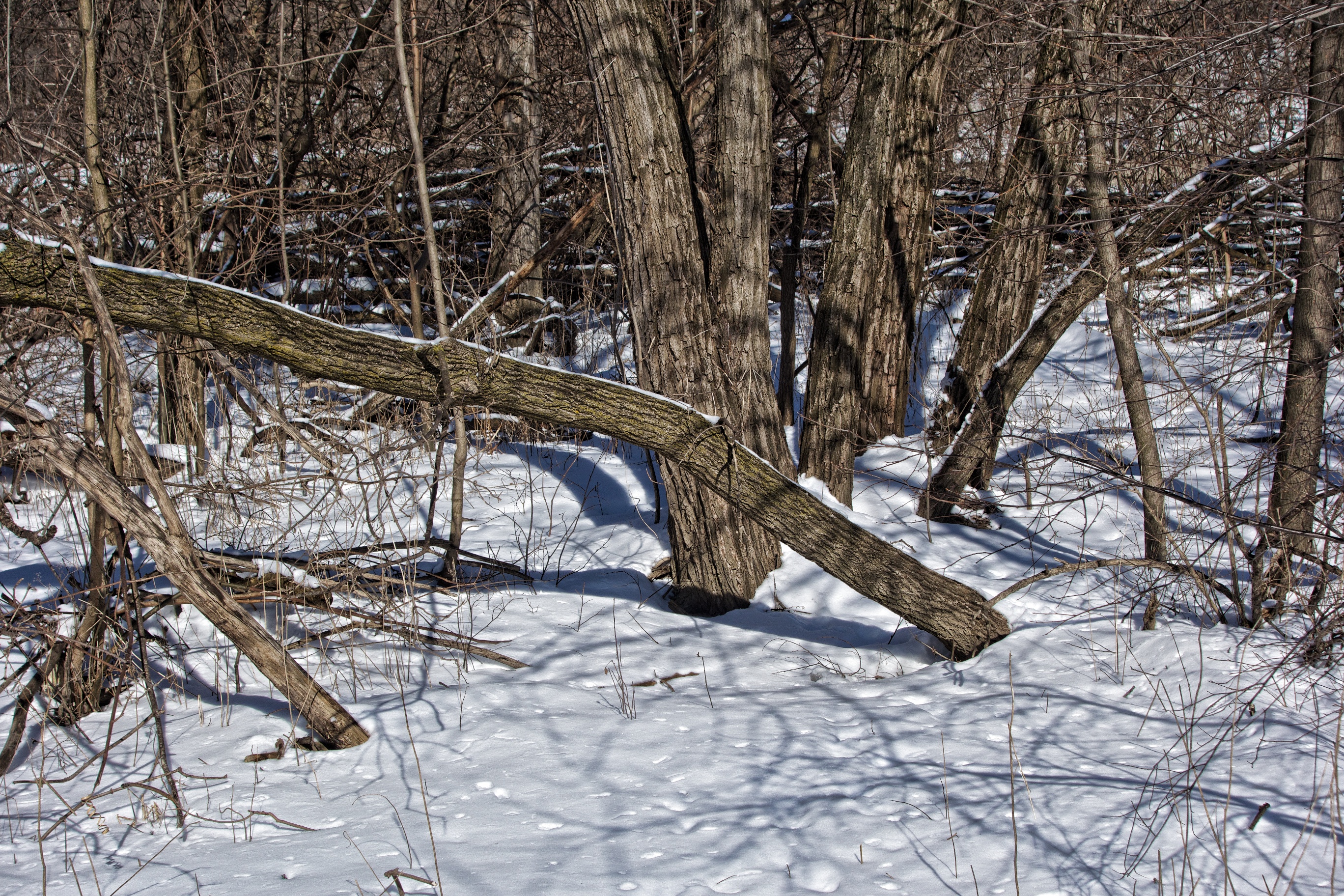
A downed tree.

Fallen trees litter the woods.

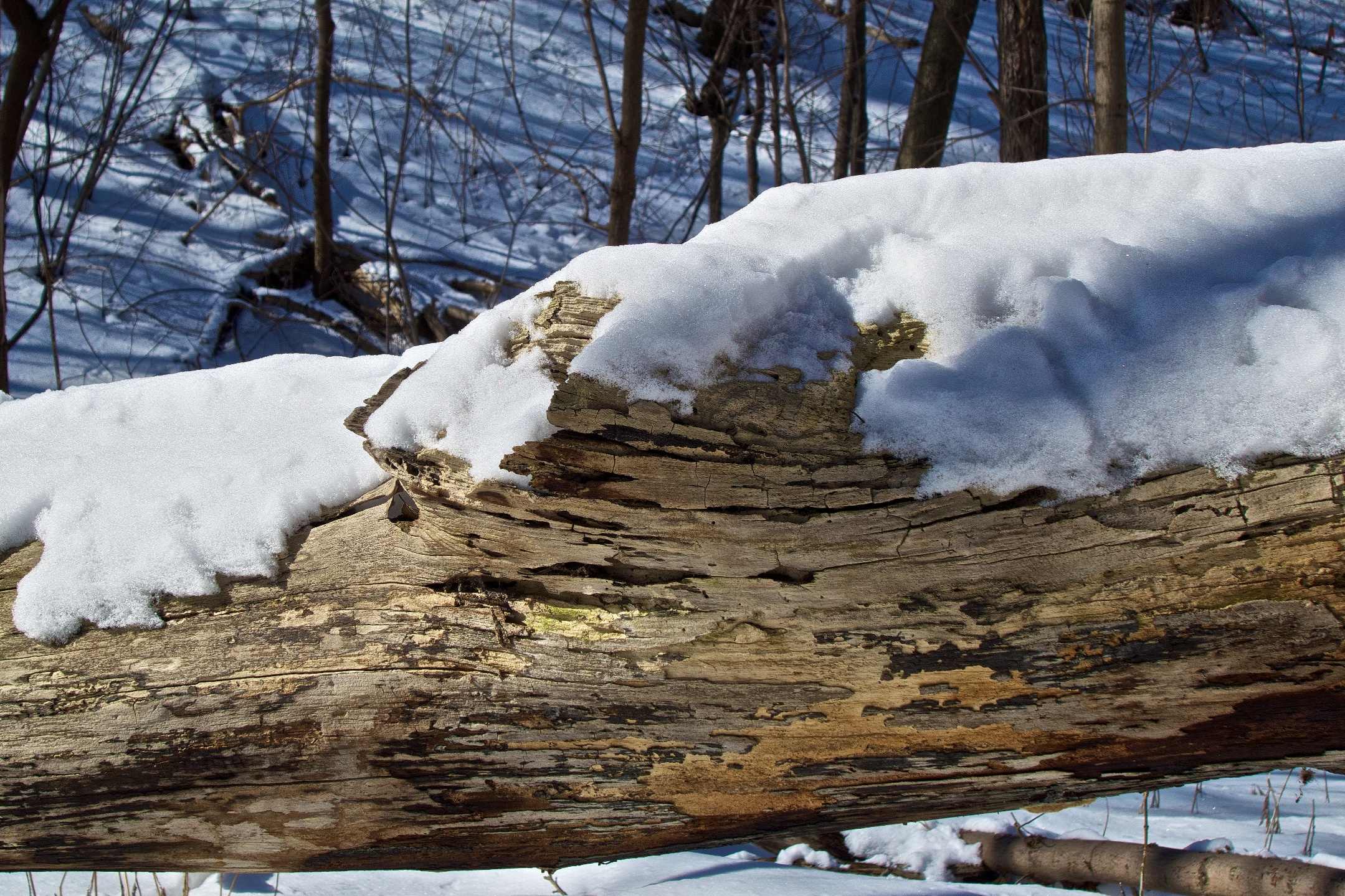
A large log is hugged by a coat of snow.

A large log looks as if it’s being hugged by a coat of snow.

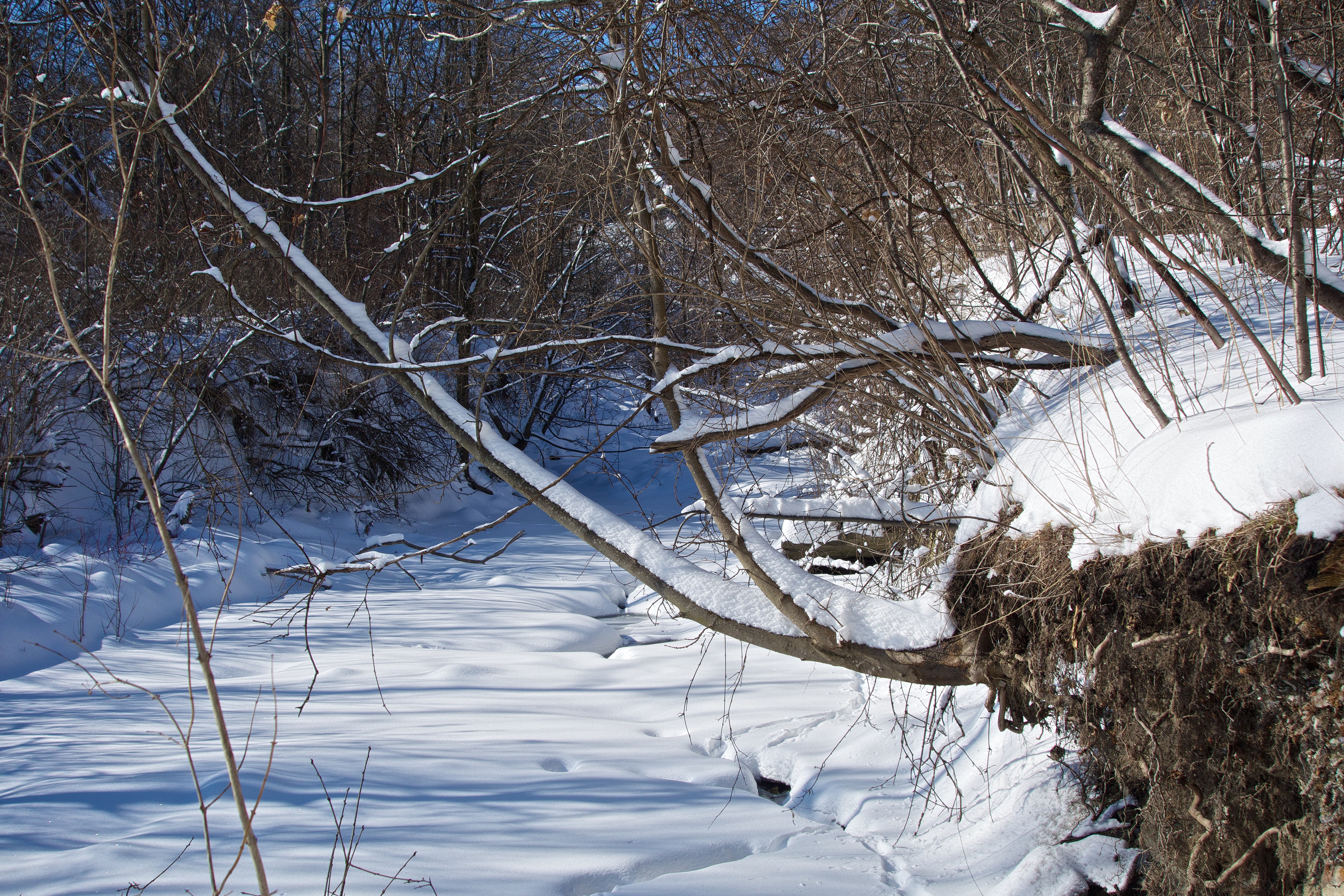
Lastly, I was able to clamber down to the Humber Creek in my snowshoes. The view did not disappoint.

Looking up Humber Creek towards Scarlett Road.

Looking up Humber Creek towards Scarlett Road.

Snow day.

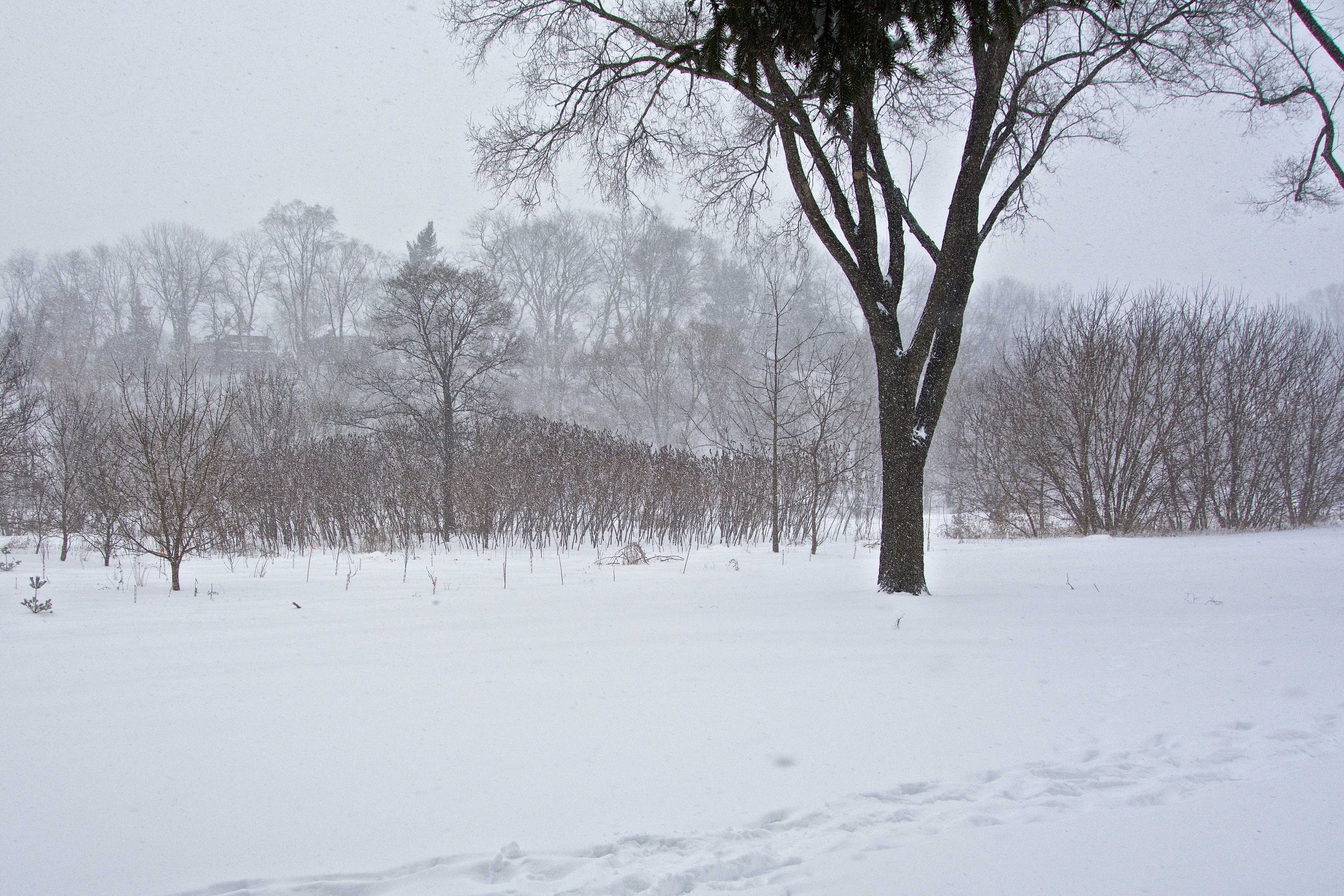
This morning snow was coming down thickly in the park. Over breakfast I watched a squirrel unerringly locate and then enjoy a treat it had stored last fall. This was a timely reminder of a show I watched on CBC this week demonstrating that squirrels don’t randomly bury food and forget about it. They can actually remember its location.

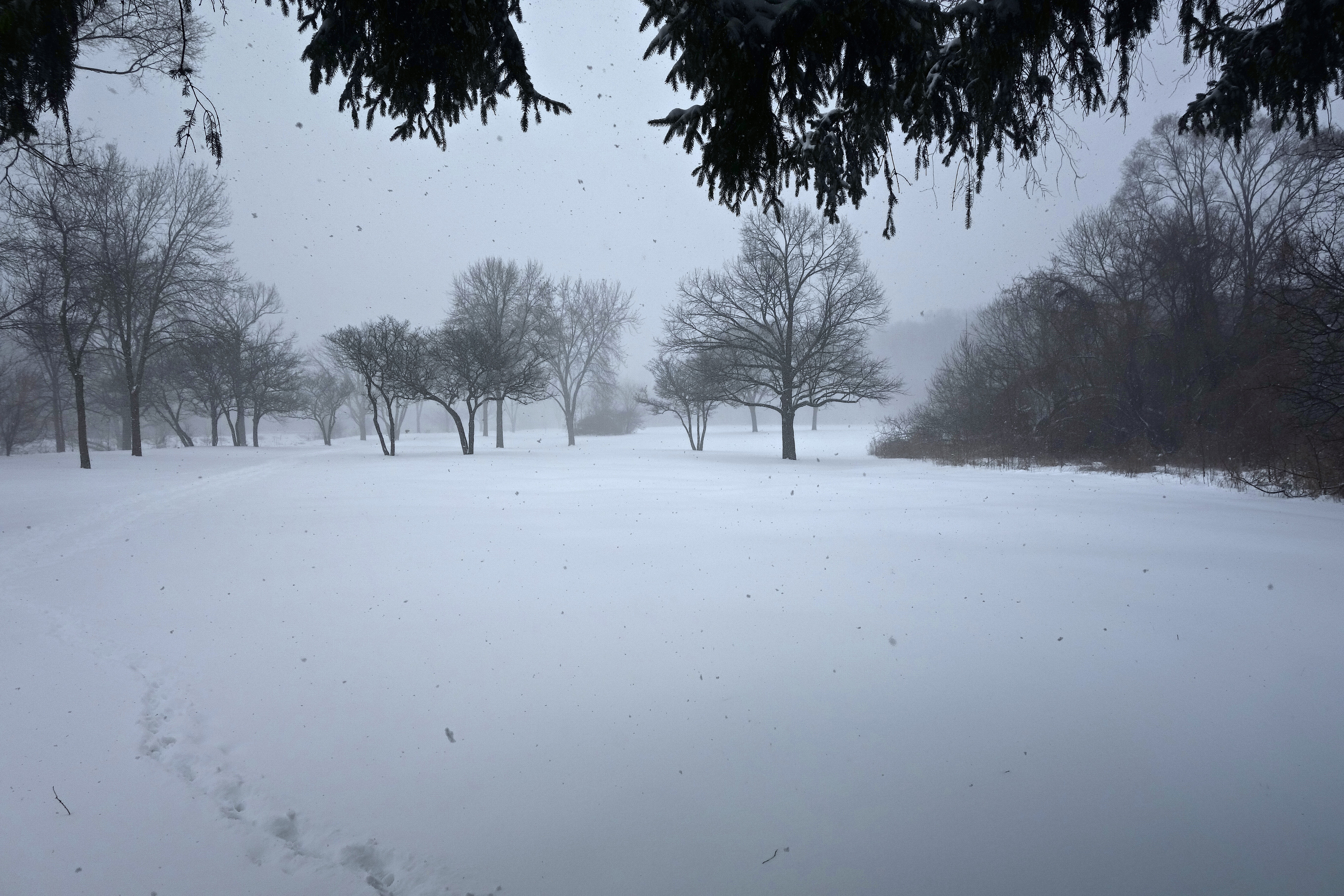
I experimented with the multiple shot feature of the Sony RX100 this morning. Normally when you take a photo during a snowstorm, the shutter speed isn’t fast enough to capture the flakes without blurring and you get a series of streaks. The multi-shot feature is designed to cut down on noise in night photography and the camera does this by shooting several images at high shutter speeds and combining them in camera. Here is one of the combination shots taken from the refuge of some spruce trees.

Looking south towards Eglinton.

Looking south towards Eglinton.

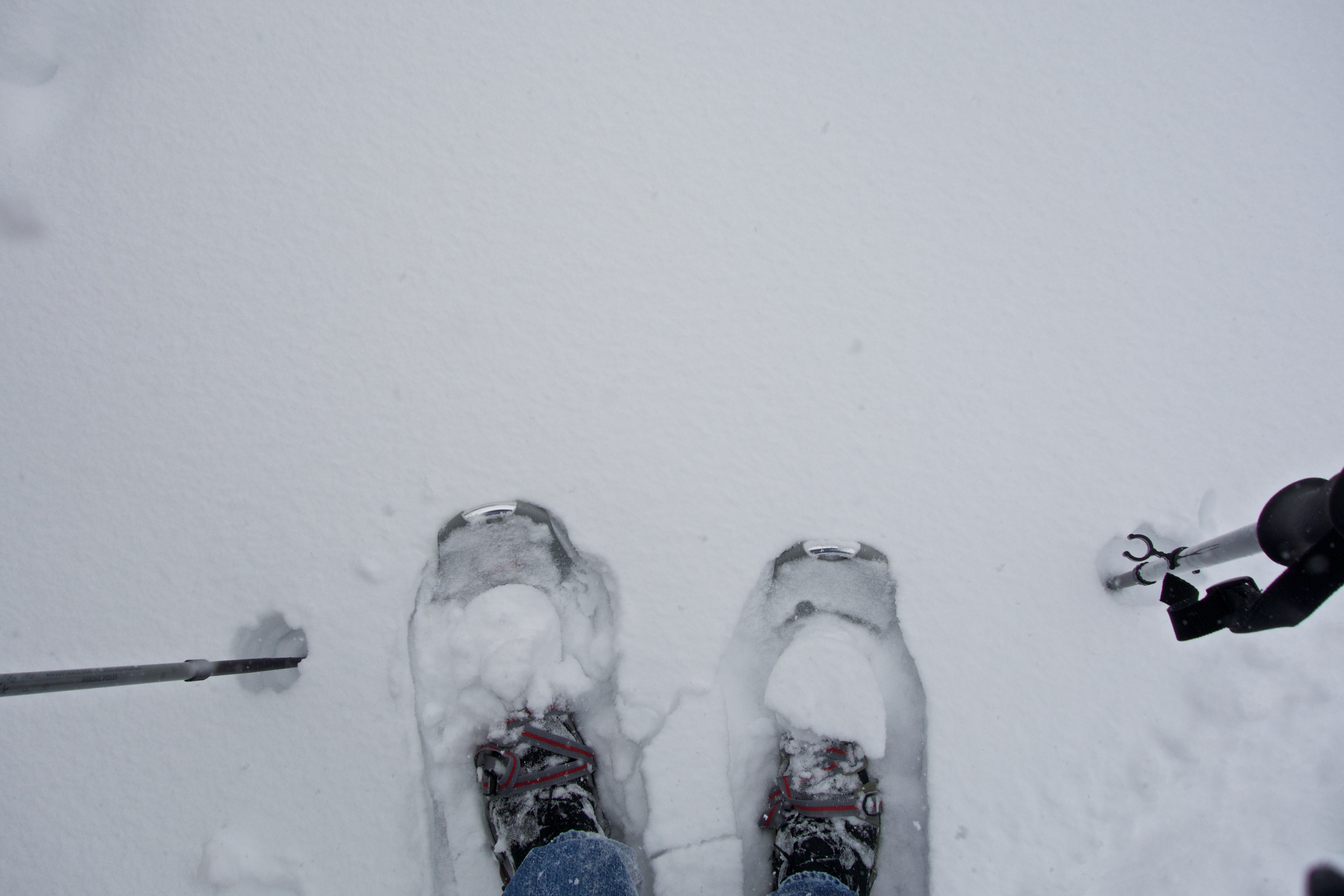
The snow was deep enough for snowshoes today and so they were dusted off. It took a few minutes to adjust all the straps make sure they were firmly attached to my feet and off we went. Wearing snowshoes takes a bit of getting used to as it’s quite easy to tread on your own feet. The good thing is that if you fall, it’s a soft landing.

Snowshoes at work.

Paging Ronald McDonald.

Since your body weight is spread out over a larger surface, the idea is that you don’t sink as far as you might otherwise. Another advantage is that they help keep snow from getting into your boots. I used to imagine that snow shoes allowed you to walk on top of the snow. Not so; you’d be surprised how far you sink. What they do provide is stability and perhaps a slight reduction in effort. Even so, deep snow gives you a good workout and I was very warm after a short time.

A stand of sumac in the snow.

A stand of sumac sticks out in the snow.

As you can see, I was not the first to walk through the park today. Since the construction of the footbridge over the Humber in 1995, the park path has provided a vital short cut for many people making their way to and from stores in Weston and has probably saved many a car trip. The GO train now operates from Weston Road south of Lawrence and is also an easy walk. Maybe one day, Toronto City Council will recognize this and clear these important pathways after a snowstorm.