Tag Archives: photography

Exploring Toronto’s Aerial History: Raymore Park Before Hurricane Hazel

In the City of Toronto Archives there are extensive aerial photos of the city taken between 1947 and 1992. They are black and white images but reasonably detailed. While researching Hurricane Hazel I was able to download an image of what is now Raymore Park to reveal the community that existed just over a year before Hurricane Hazel struck in October 1954. Colourizing and sharpening the photo makes it resemble today’s satellite images (details are unchanged but colours are arbitrary and not historically accurate) from Google and help appreciate the extent of community that existed back then. I have labelled relevant streets.

Raymore Drive extended into what is now the park, hugging the river’s edge before heading south and looping back onto Gilhaven Avenue.
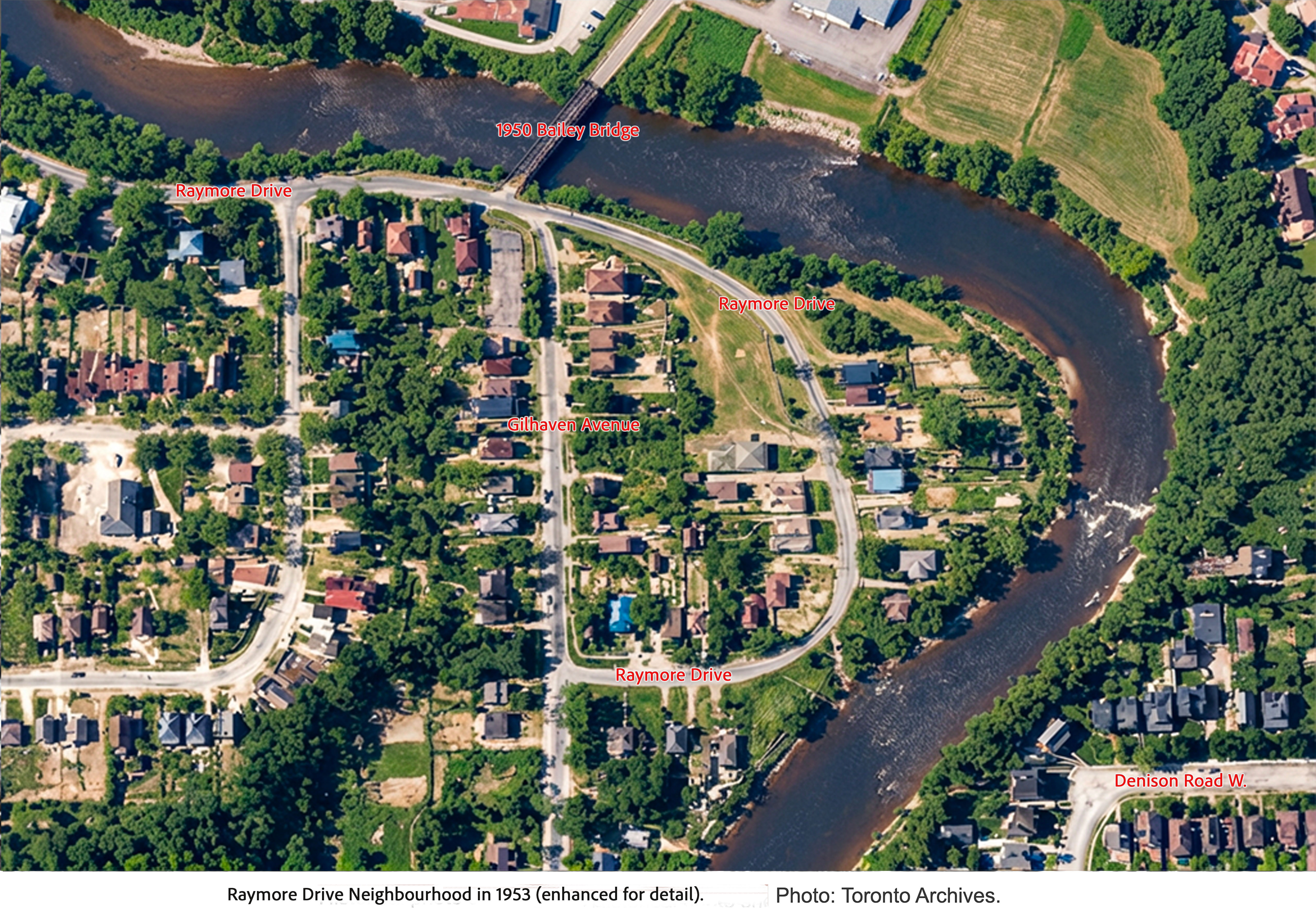
Click to enlarge.

I was surprised at the size of the community with houses occupying much of the flood plain land and stretching a considerable way down Gilhaven Avenue (now the approximate location of the bike path). It looks as if it was an idyllic place to live – riverside dwellings but with city amenities. There was even a beach for the kids. Many of the homes were cottage style on blocks while some had full basements. Most are a lot smaller than our modern dwellings. The homes destroyed seem to have been along the river’s edge at the far right and lower edge of the peninsula. The people who died lived on this stretch of Raymore.

At the top of the image, on the other bank of the river, parts of the (now demolished) water filtration plant can be seen.

Below is a recent satellite image and I have adjusted the size and rotation to match that of the 1953 photo.
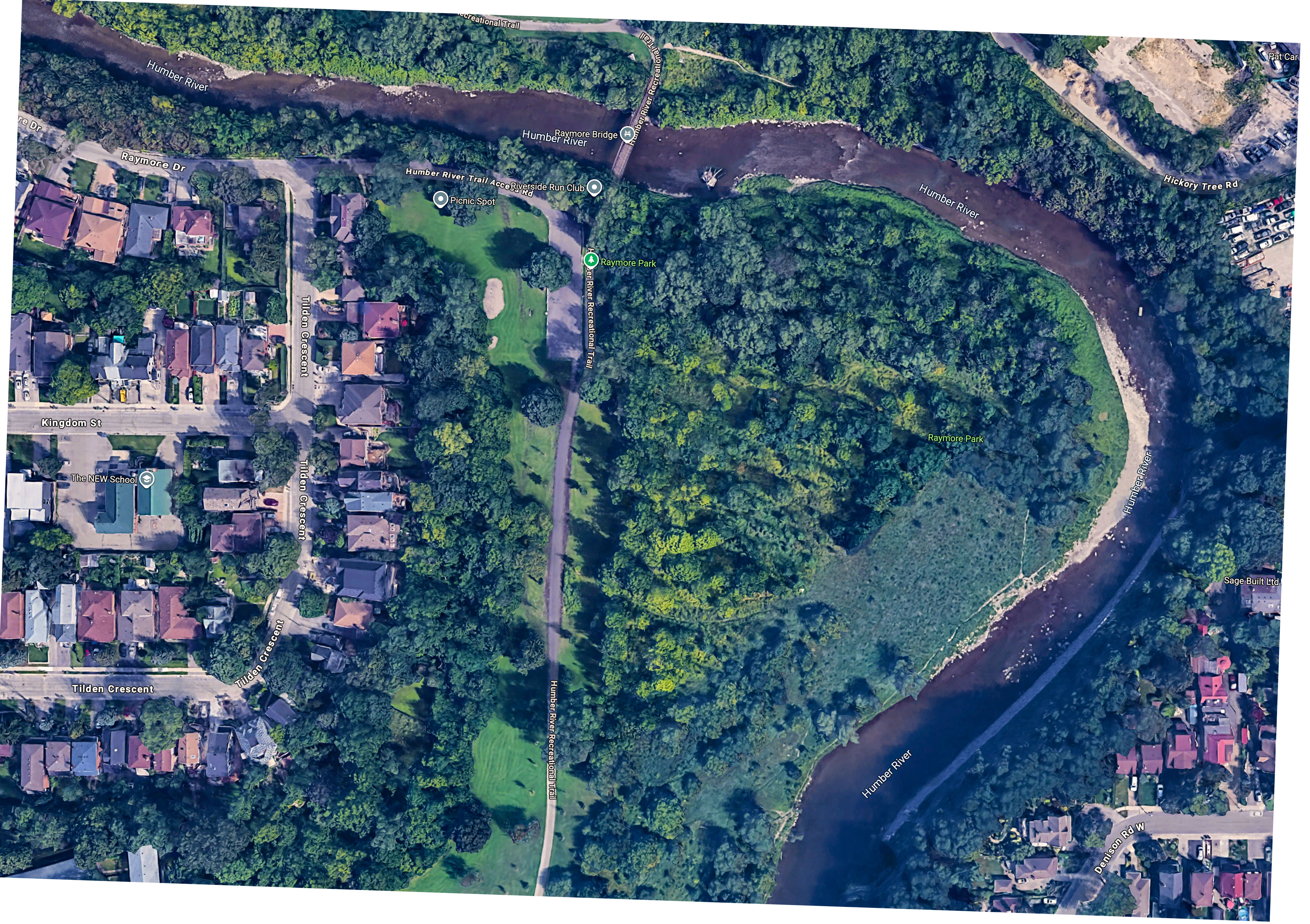
From Google. Click to enlarge.

The Bailey Bridge seen in the upper photo was put there in 1950 and both of the old abutments can be seen to this day. The current footbridge was installed in 2005.

Some of the homes along what is now the bike path were undamaged apart from flooded basements but authorities at the time elected to remove all homes in the flood plain leaving only Tilden Crescent intact. Raymore Drive was ended at Tilden and Gilhaven Avenue ceased to exist.

Very few of the buildings on surviving streets from 1953 exist today – I recognize the house that once stood at the east corner of Raymore and what is now Tilden, Westmount Gospel Chapel on Kingdom and some homes on Denison. Readers are welcome to add discoveries of their own.

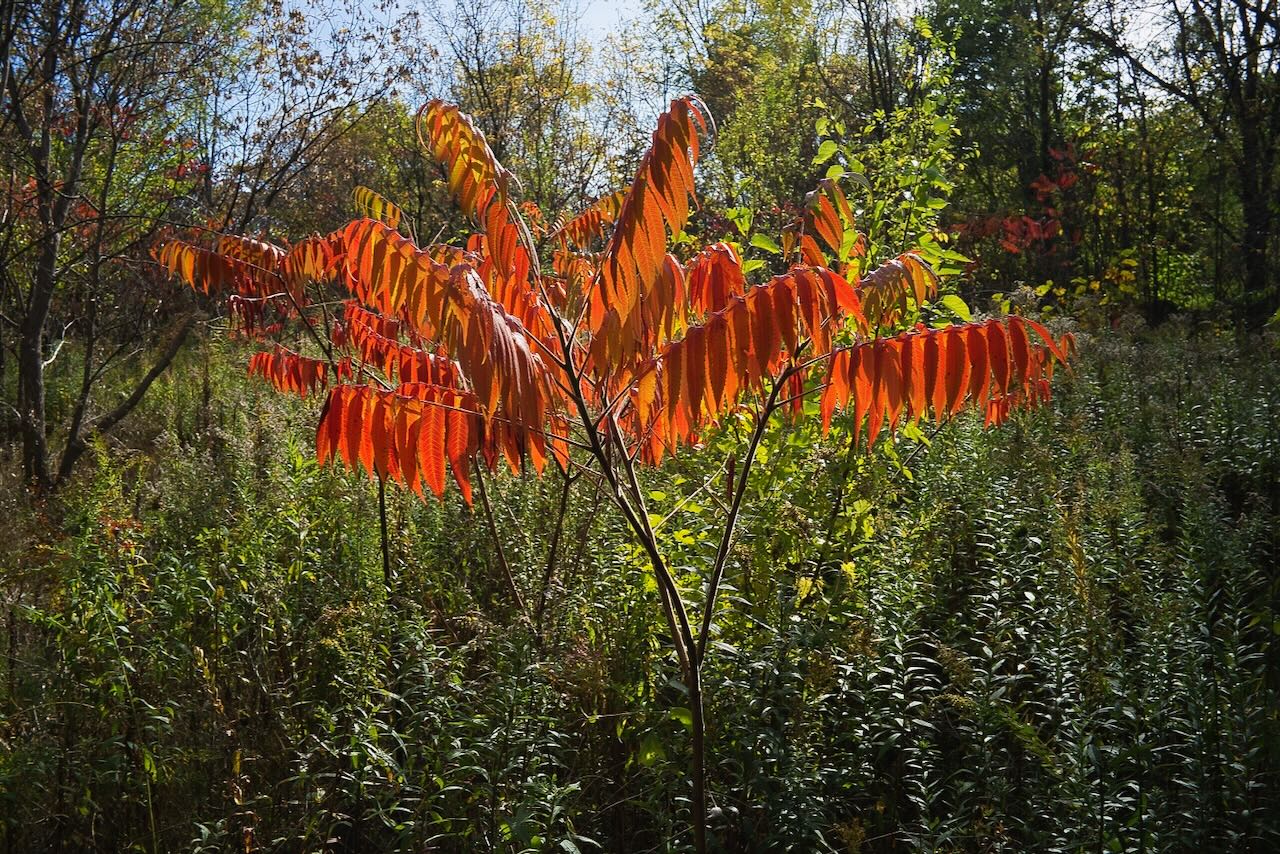
It’s fall again!

Unlike some other Toronto parks, Raymore Park isn’t spectacular in the fall. Its vegetation is fairly drab at this time of year because there are few mature red maples and other showy trees. The main splashes of orangey-red come from sumac.

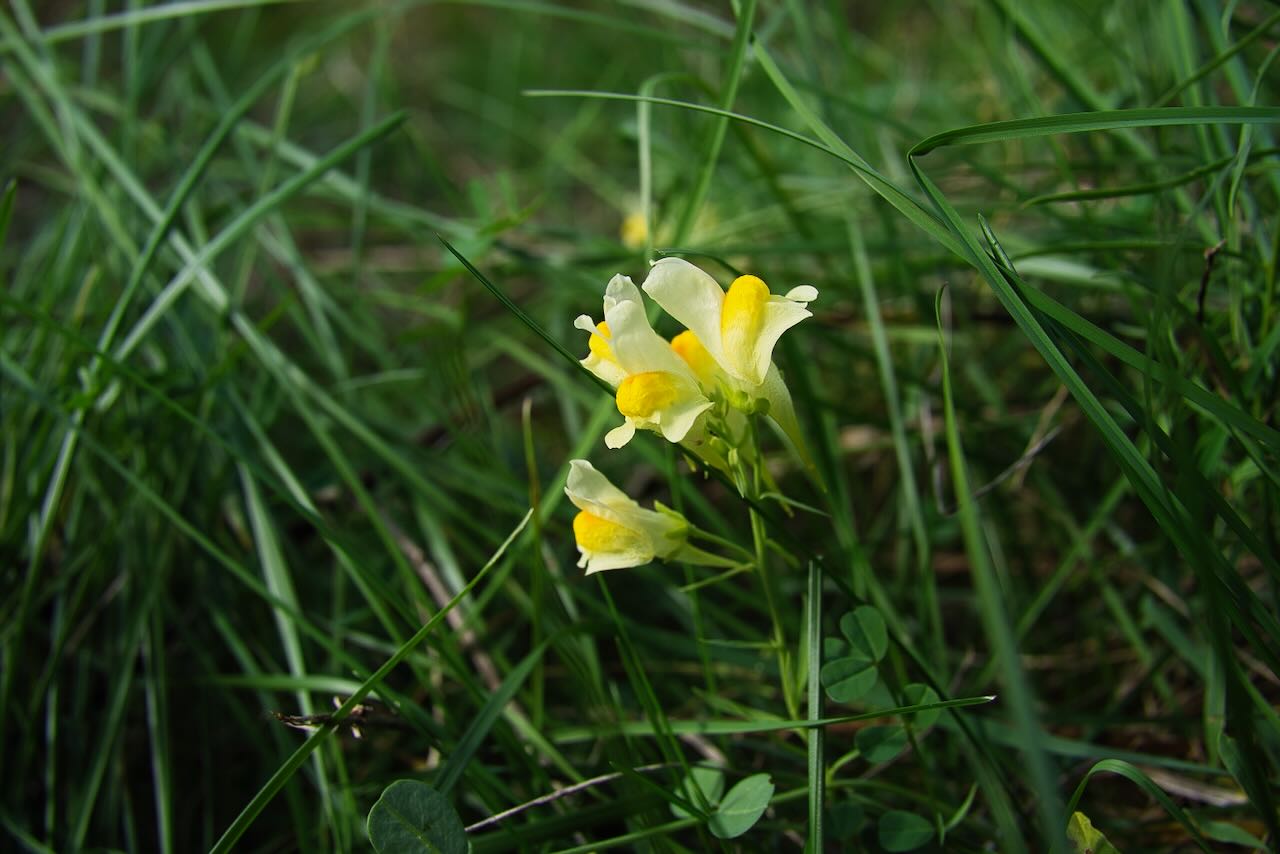
There are still a few splashes of colour on the ground. This birdsfoot trefoil is still flowering close to the ground in mid-October.

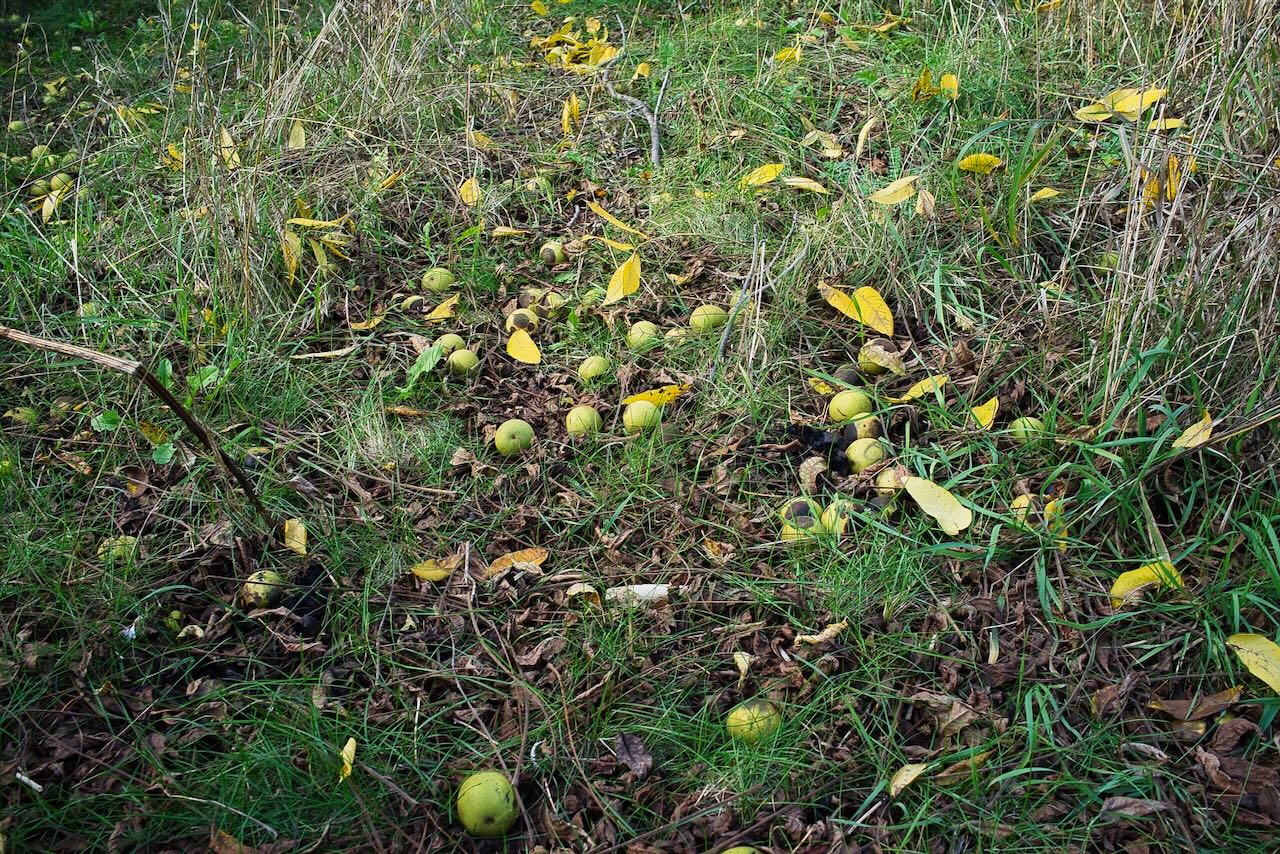
Something that has seen a dramatic increase in the last few years is the number of black walnut trees and fruit that support growing numbers of squirrels in the park. Several black walnut trees were planted by the city a few years ago while many just planted themselves thanks to forgetful squirrels. Black walnuts are edible by humans but require an elaborate dehusking and drying process – unlike their better-known cousins. Walnuts are able to poison their surroundings by emitting juglone from their root system. Many plants cannot survive the toxin emitted by its roots. Even the hulls are toxic and must be kept away from horses as they can contaminate bedding made from hay at this time of year.

The husks are green when they fall but juice from these husks will stain hands and clothing.

Spring advances slowly.

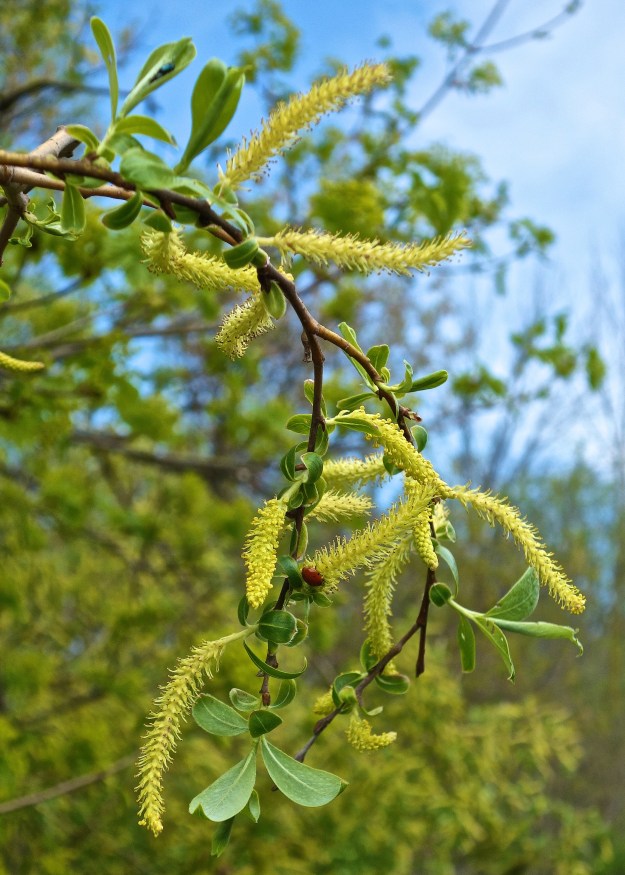
An Asian ladybug checks out some fragrant Willow blossoms.

An Asian ladybug clambers over some fragrant willow flowers by the Humber in Raymore Park.

Cool weather continues to make spring a long season this year. The upside to this is the ability to watch plants come to life in slow motion.
Willow trees (Latin name, Salix) are common in Raymore Park and they are native to Canada. They love watery environments and are easily propagated. They can be seen planted throughout the park, although, like walnuts, they don’t need much encouragement. Their flowers are particularly fragrant and have a lilac type smell.
The ancient Greeks knew about the medicinal abilities of willow bark extract to cut pain and reduce a fever. Native Canadians also used it in the same way. Scientists in the 19th Century extracted a chemical, which they named salicin, from the bark and converted it to salicylic acid and later still, to acetylsalicylic acid. The drug in this form is still in wide use today and more commonly known as ASA or aspirin.

As for the Asian ladybug, this was introduced by farmers in the U.S. to fight aphids and they do that job very well. Unfortunately they are not as benign as our native ladybugs and tend to find crevices in homes as well as contaminate grapes used in wines. They have to a large extent displaced our native bug. One year at a Niagara winery I drank some red wine which was ‘flavour enhanced’ with large numbers of the creatures accidentally harvested with the grapes. They have an unforgettable and bitter taste! It didn’t seem to bother anyone else so I let it go. Canadians can be very polite and forgiving.

Wineries now take precautions not to harvest ladybugs along with their grapes.

Signs of spring

Winter is finally over – the signs are everywhere but interestingly, native plants are some of the last to leaf and bloom, possibly as a protection from our continental climate’s treacherous ability to produce late snowfalls and frosts.

Imports feel no such constraint. Alongside the old path that follows the curve of the river, some old exotic plants remain from the days when people had homes by the water. Many of these remnants of domestication are unnoticed but somehow they have survived and stand as a mute testament to the victims of Hurricane Hazel in 1954.

An exotic tiny blossom.

An exotic tiny blossom.

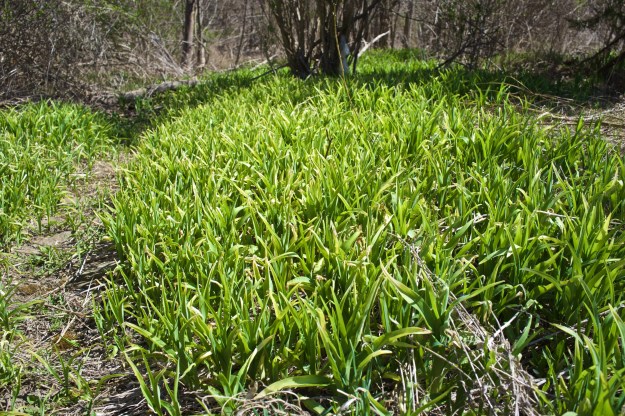
Day lilies carpet this fertile flood-prone corner of the park.

Day lilies carpet this fertile flood-prone corner of the park.

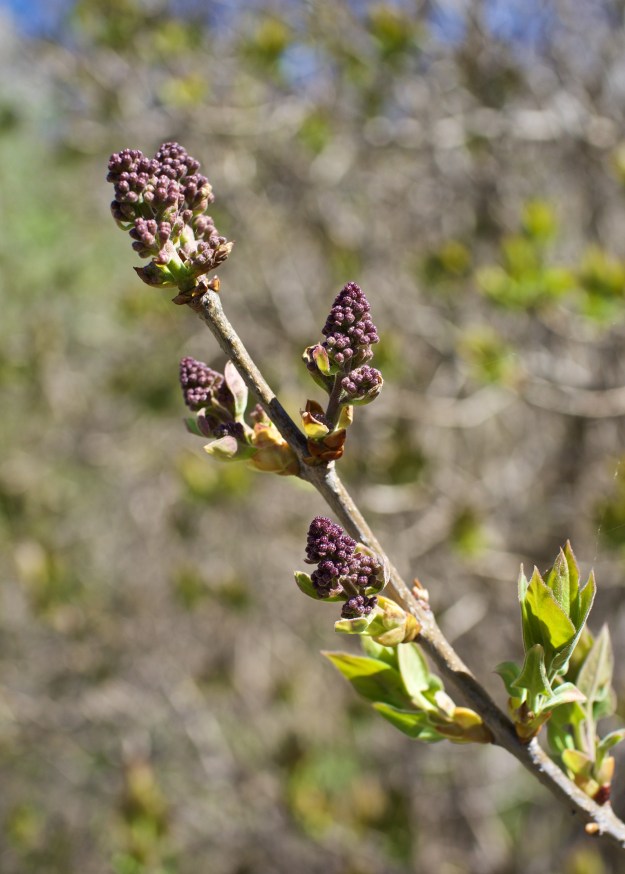
A lilac bush has begun to leaf and flower buds are set to bloom in a couple of weeks.

A lilac bush has begun to leaf and flower buds are set to bloom in a couple of weeks.

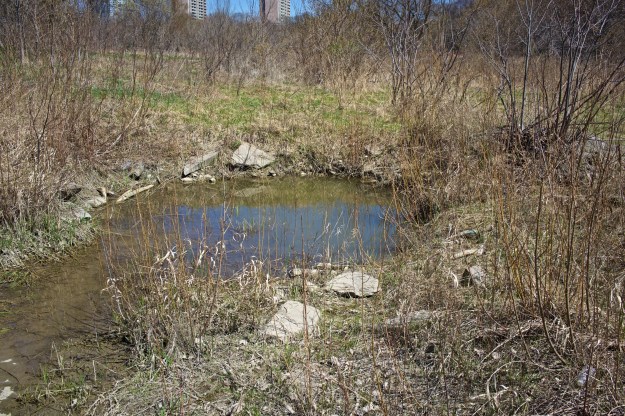
This pond was eroded out of the ground a few years ago as a result of an ice-jam temporarily diverting the river. It was promptly occupied by eastern American toads. No sign of the eggs or tadpoles yet.

This pond was carved out of the ground a few years ago as a result of an ice-jam temporarily diverting the river. It was promptly occupied by eastern American toads. No sign of this year’s eggs or tadpoles yet.

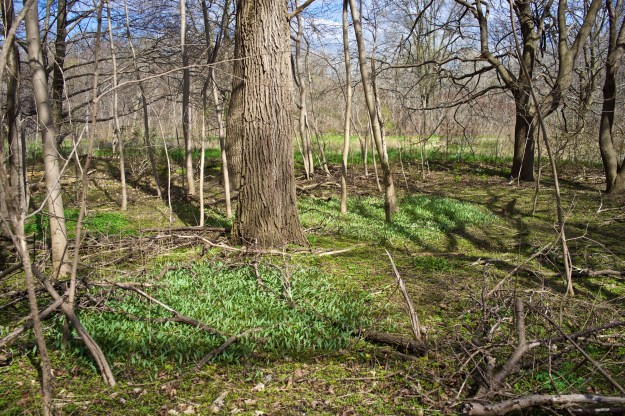
A carpet of toad lilies has sprung up in the woods south of the weir.

A carpet of toad lilies has sprung up in the woods south of the weir.

Toad lilies up close.

Toad lilies up close.

Toad lilies.

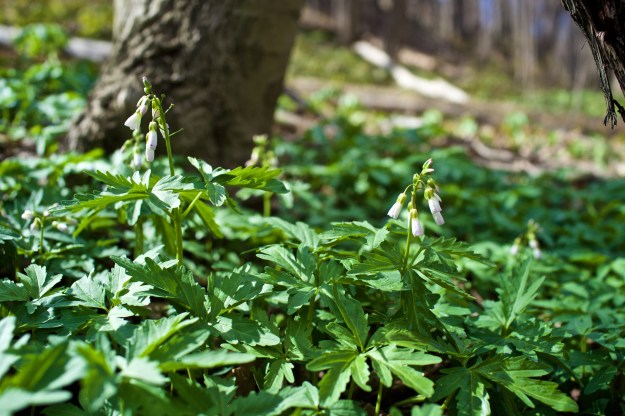
Cut leaved toothwort in the woods.

Retaining Wall Update March 16.

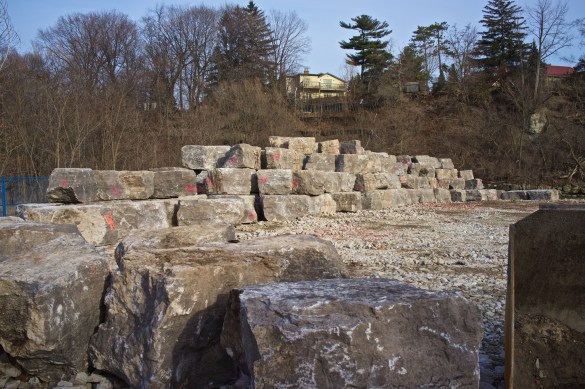
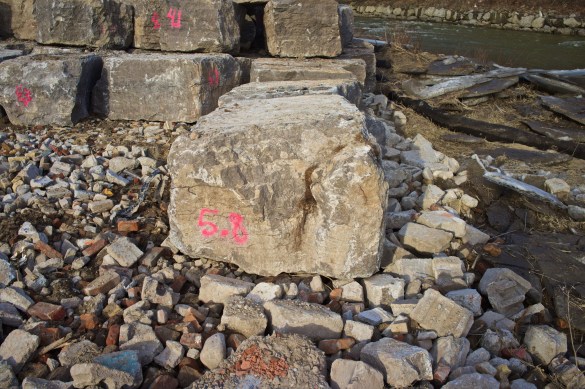
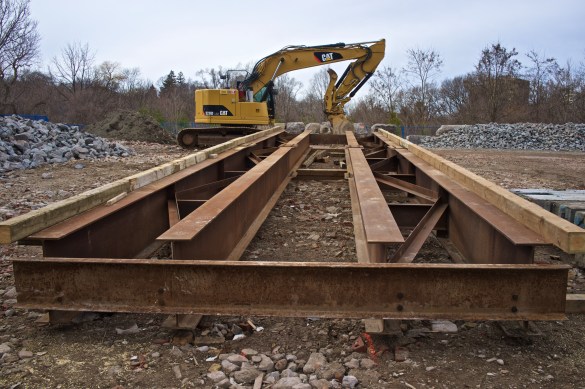
Work continues unabated at the site and the size and scope of the job is becoming apparent. More and more blocks are piling up in the staging area and the components for a temporary bridge that will straddle the river have arrived. The bridge will be placed across the river and support the crane that will build the retaining wall. Each block is labelled with its weight which is vital knowledge for the crane operator. The bridge will be re-positioned along the banks as required.

The project was originally scheduled for completion for the end of March but clearly there is still a massive task ahead.

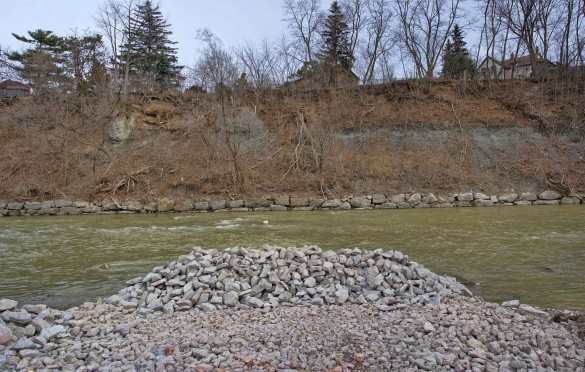
Interestingly, the second photo was taken on February 29th and in the top right of the image can be seen the very small amount of ice pushed ashore during the thaw. This is the smallest amount of ice I have seen in years and quickly melted.

Blocks are piling up awaiting placement.

Blocks are piled up awaiting placement.


Each block is labelled with its weight.

Each block is labelled with its weight. Notice the small amount of ice freshly deposited as a result of the thaw.


The bridge.

Girders that will be used to make a bridge to straddle the river.


The bridge and blocks in the background.

The bridge girders and limestone blocks in the background.


The bridge platform.

What looks like the beginnings of an abutment on which the bridge will rest.

Where’s Winter?

Warning: heavy geek content.

Meteorological winter is here as of December 1 and the sun has almost reached its lowest point in the sky. Even though we’re nearly 4 million km closer to the sun than we were in June, the low angle in the sky and short daylight hours ensure a limited amount of heat. There is an El Niño event occurring this year; rainfall amounts are down and temperatures have been considerably above average so far. Because the way the earth accelerates at this point on its way around the sun we have reached our earliest sunset time of 4:41pm while mornings will continue to darken until the end of the month.

The sun was 23.9° above the horizon at noon today.

Looking south towards the location of the proposed dog park. At celestial noon (12:09pm), the sun was 23.8° above the horizon. On December 22nd, it will appear to be only 23° above the horizon and then begin to recover until June 21 when it will peak at 69.8°.

Not a trace of ice by the river.

Not a trace of ice by the river.

As a result of the mild weather there are some plants that have not yet gone into dormancy and they are a probable indication of what global warming will bring to Toronto’s climate if temperatures continue to rise.

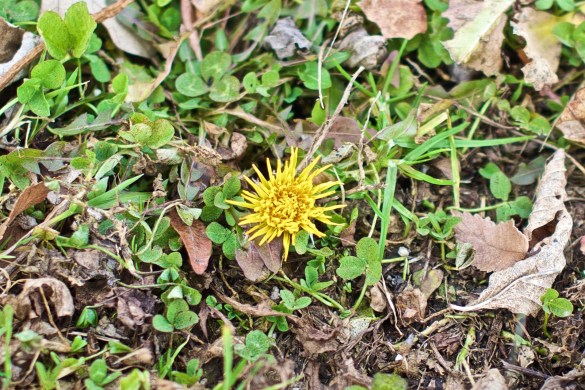
A dandelion in flower.

A dandelion in flower.

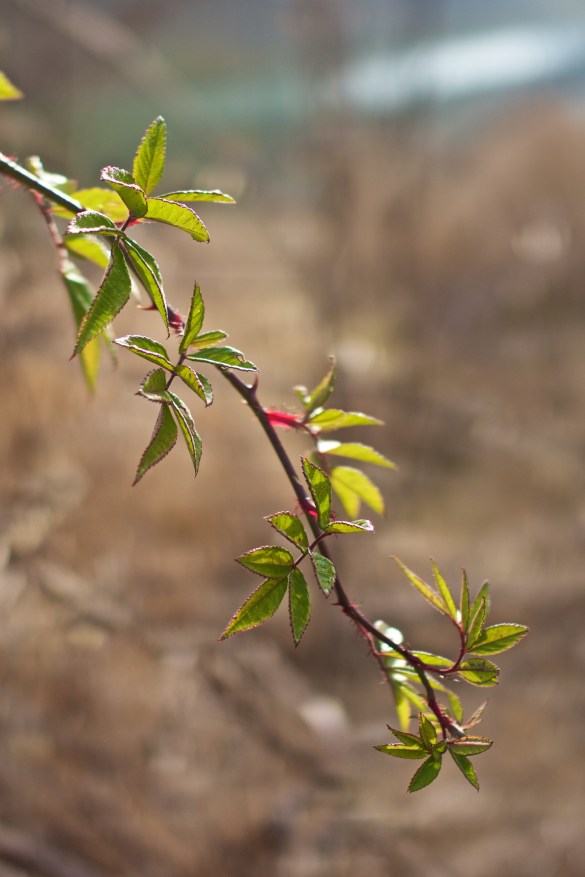
A wild rose has retained its leaves.

A wild rose has retained its leaves.

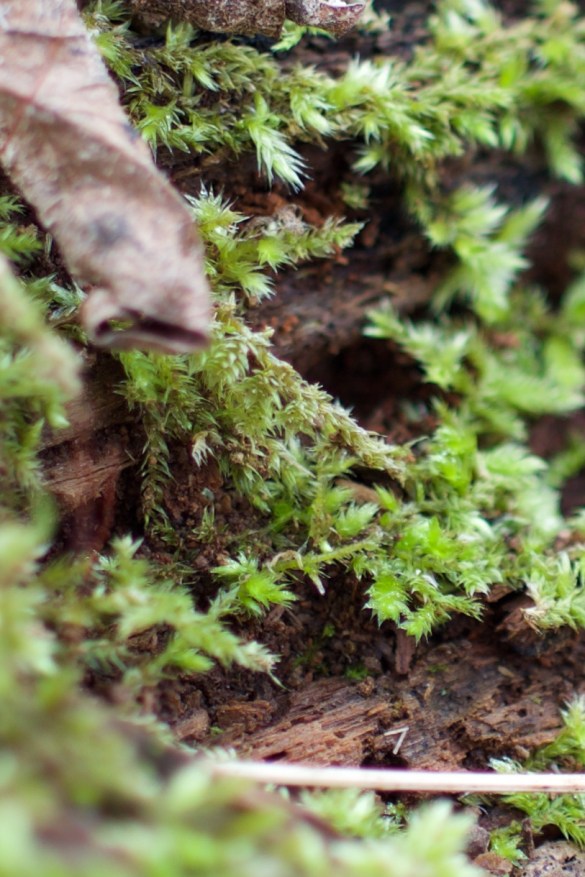
Moss feeds on an old tree stump.

Moss feeds on an old tree stump.

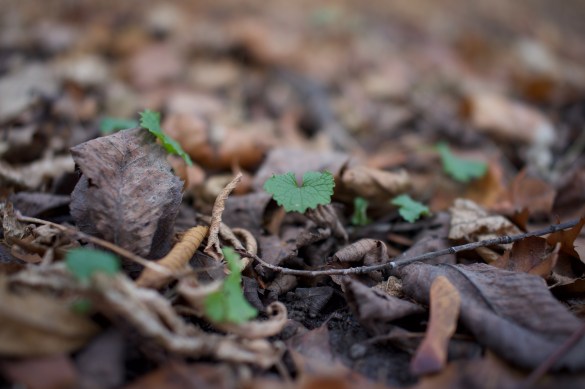
Garlic mustard lurks in the undergrowth.

Garlic mustard lurks in the undergrowth.

The downside of such mild weather is that in wooded areas, and especially if warming affects Canada’s boreal forest, leaves on the ground slowly decompose when in a normal winter they would be compressed by snow and their carbon content preserved. This decomposition releases carbon dioxide, reducing the natural carbon sink effect of the boreal forest.

On a lighter note, although it’s quite common in Toronto for winter to begin in earnest after Christmas, this winter there is a feeling that we may be getting off lightly.

After the last two winters, let’s hope so.

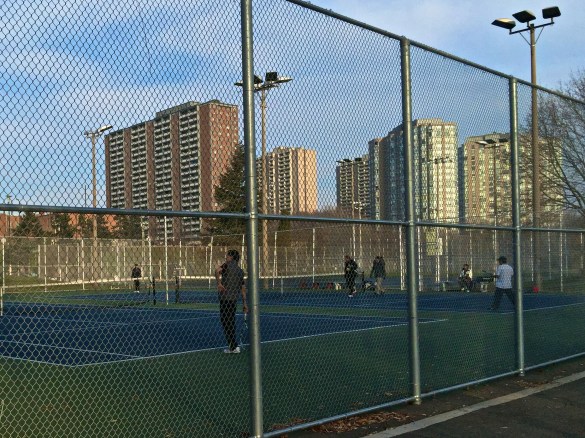
Tennis players enjoying a mild December in Lions Park.

Tennis players enjoying a mild December in neighbouring Lions Park.


Against the light.

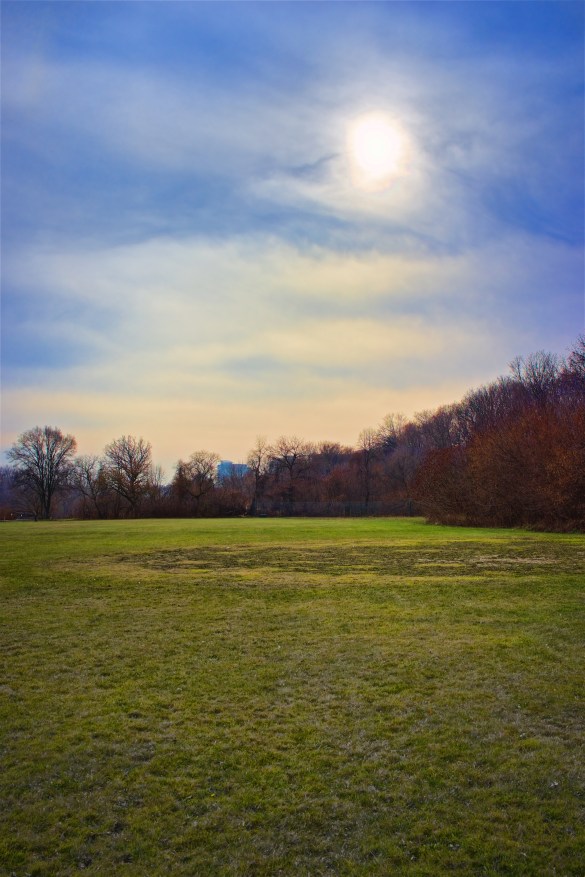
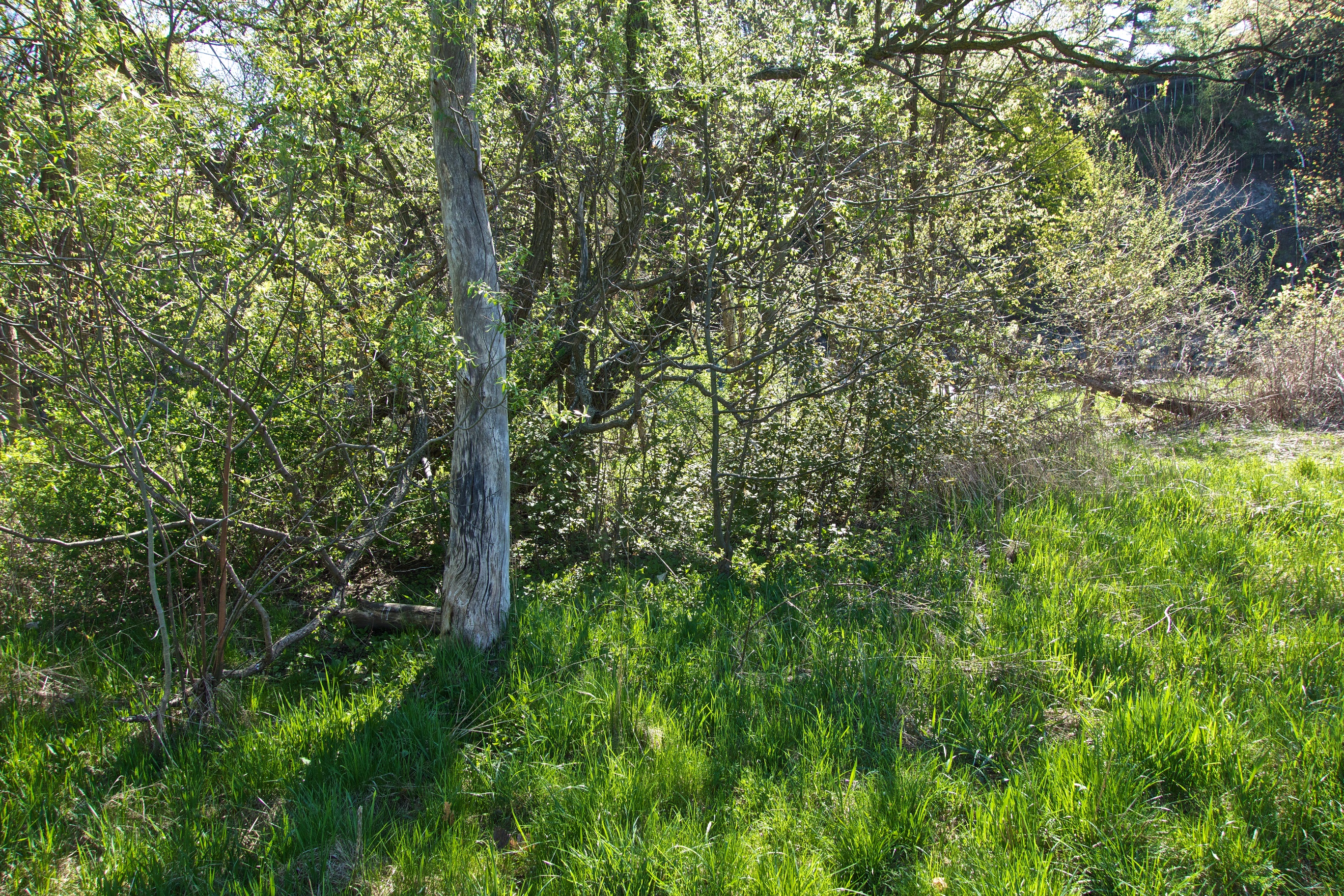
I love taking shots against the light. It can be a challenge to avoid glare and burnouts but the rewards are worth the effort in terms of contrast and vivid colour. Today was a continuation of several days of sun , mild temperatures and low humidity which lends even more clarity to such images.

DSC01794

Fresh blades of grass are backlit and the air is clear on this day of low humidity.

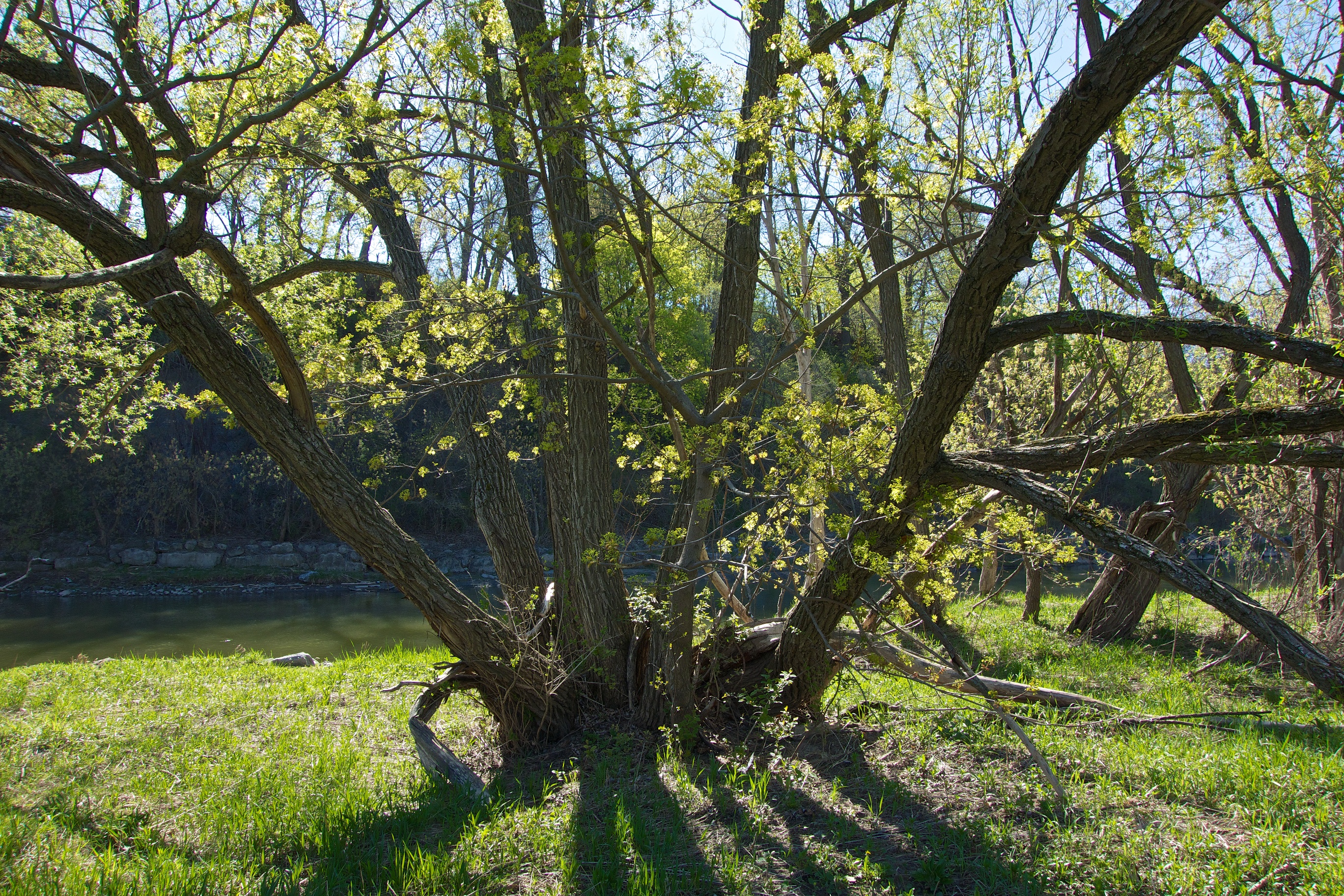
DSC01800

The texture of the tree trunks makes a nice contrast with the blades of grass while the shadows continue the tree lines.

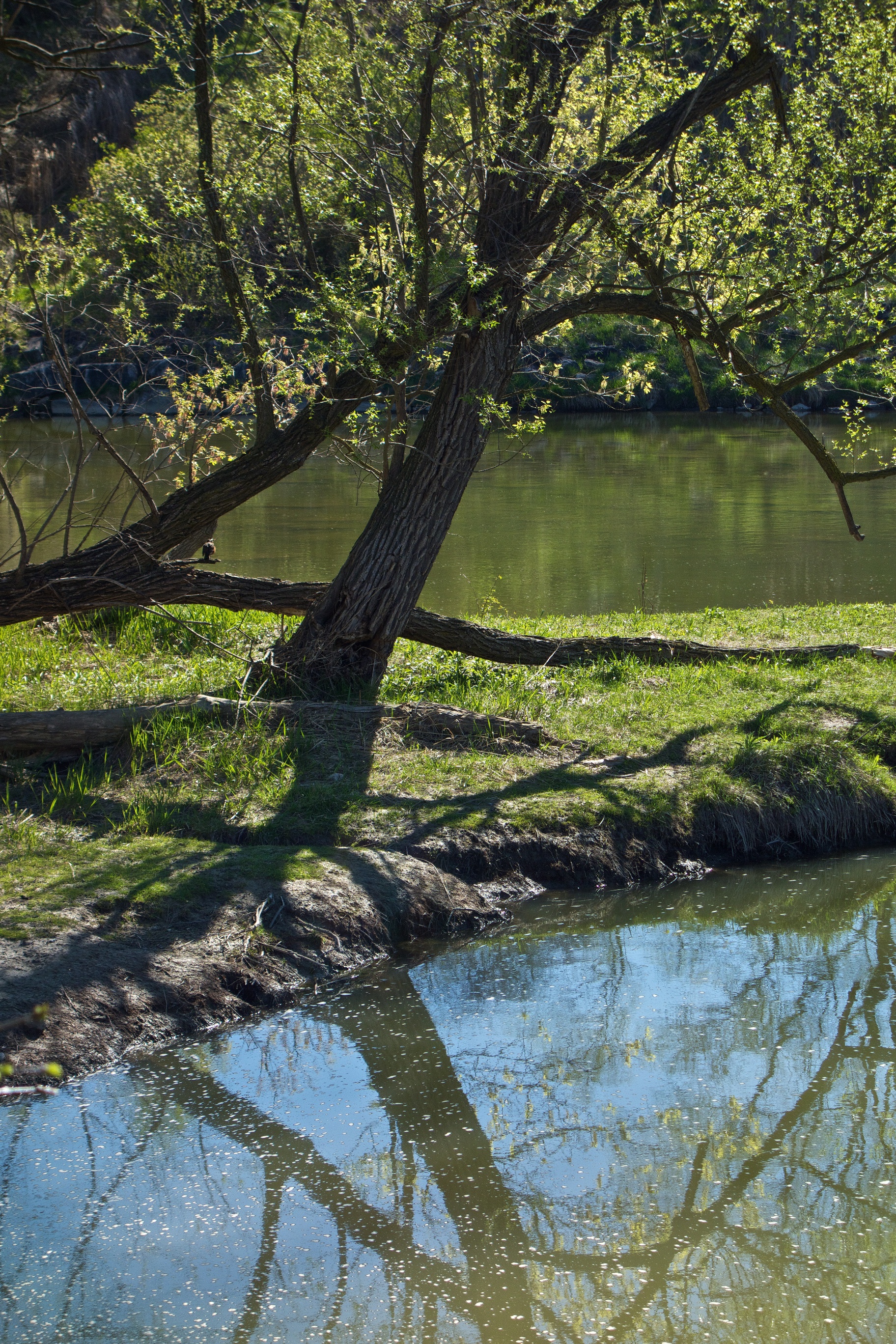
DSC01807

Flowers from the trees dot the water by the peninsula. Lots of green shades contrast nicely with the sky reflection.

Wildflowers make an appearance.

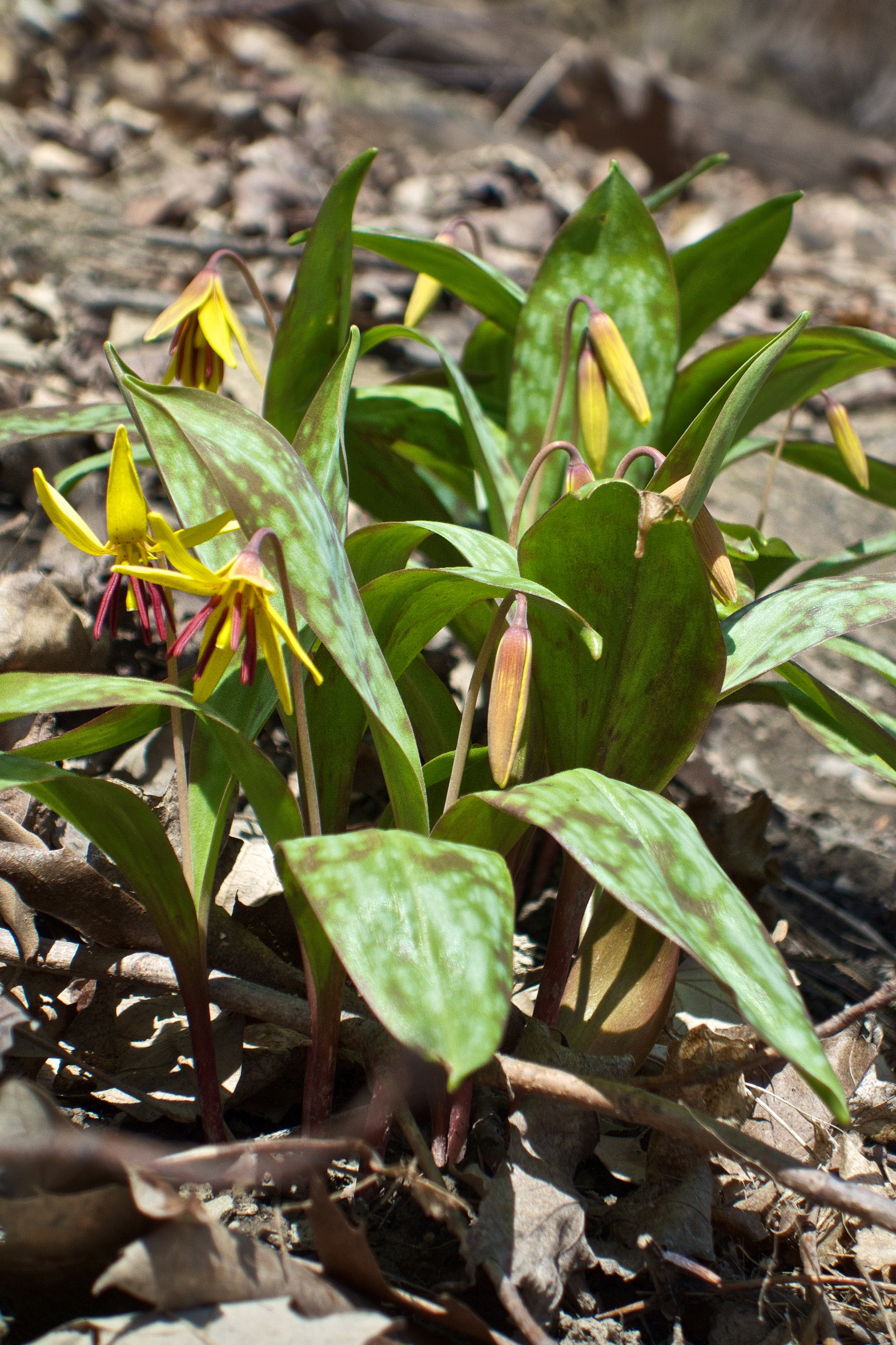
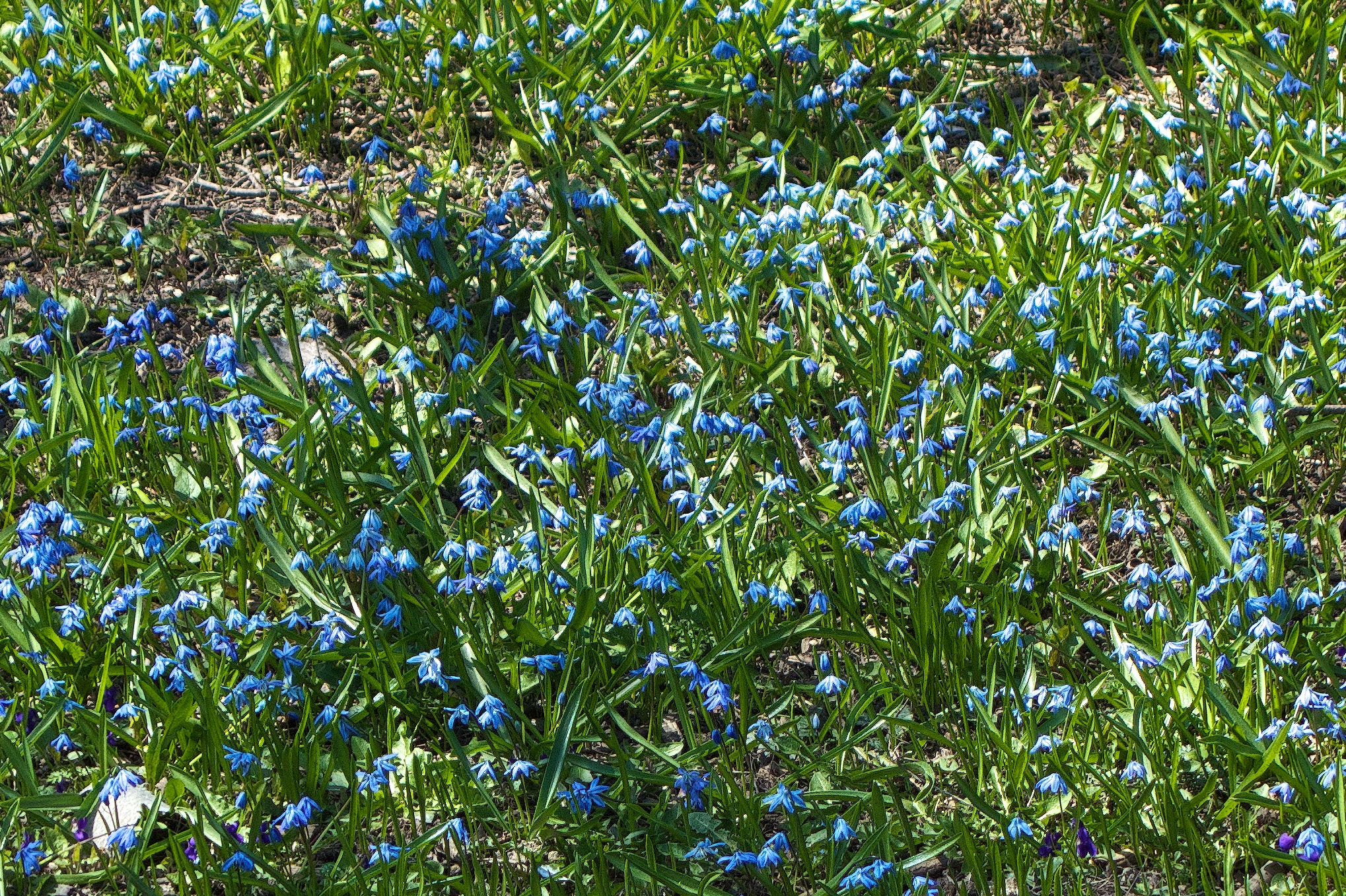
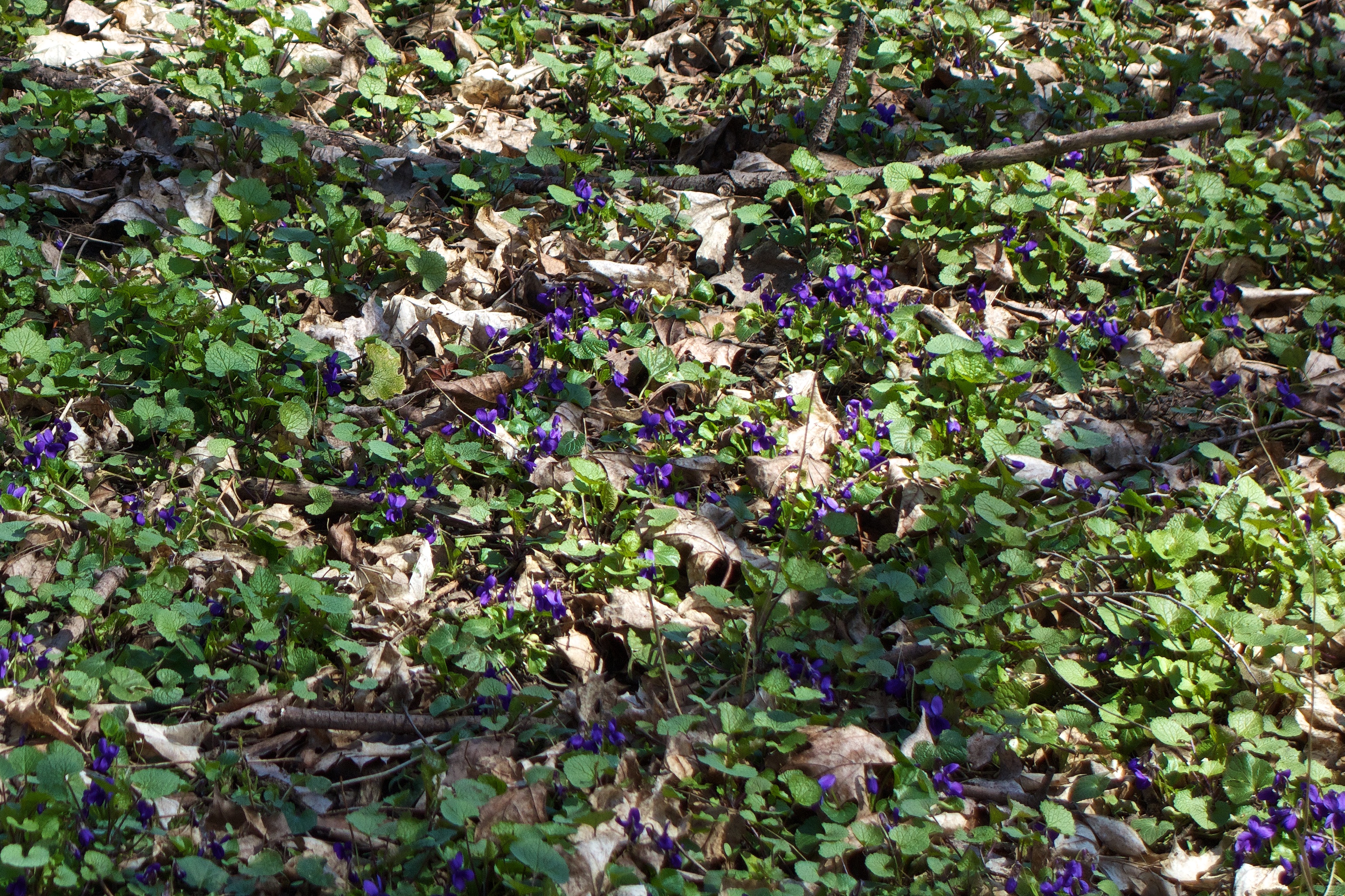
The ground has finally warmed and some spring wildflowers are making an appearance. A few years ago, some kind person planted a variety of wild flowers in the park and they have flourished.

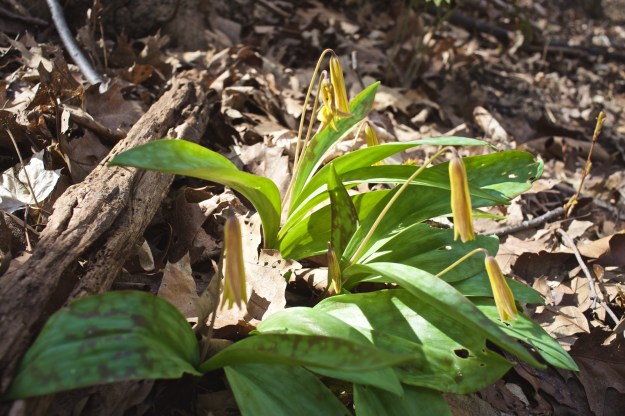
Trout lily is a beautiful and fascinating plant because it relies on ants to pollinate its flowers as well as spread its seeds.

Trout Lily

Trout Lily

These bluebells aren’t native but they add a vivid splash of colour.

Bluebells at the edge of the park.

Bluebells at the edge of the park.

Northern Blue Violets aren’t spectacular but are a welcome addition to the forest floor.

Northern Blue Violet

Northern Blue Violet

Not a trace of trilliums unfortunately. I suspect they were dug out long ago.


Finally, signs of spring.

Finally, spring has arrived – only a few weeks late. The grass has turned green. People are out in force and the weather is quite pleasant.

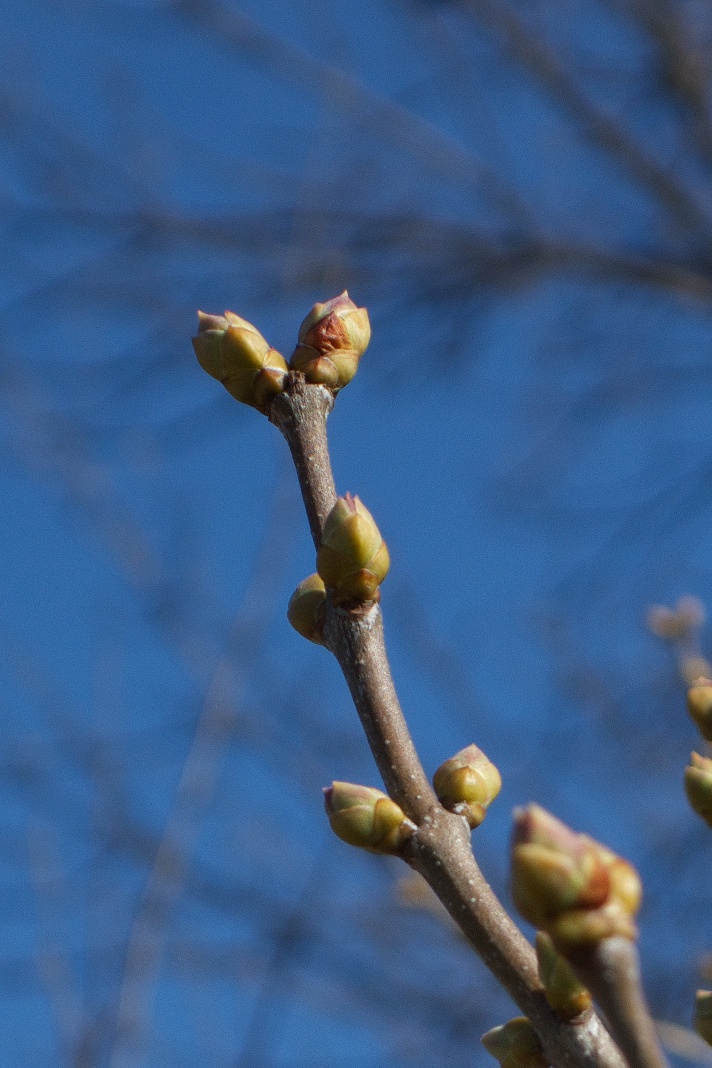
Lilac is starting to bud.

Lilac is starting to bud.

It will be a while before trees come into leaf but non-native trees such as Norway Maple and this lilac get a head start on their native cousins. We’ll probably have to wait another month before sumac and black walnut have leaves.

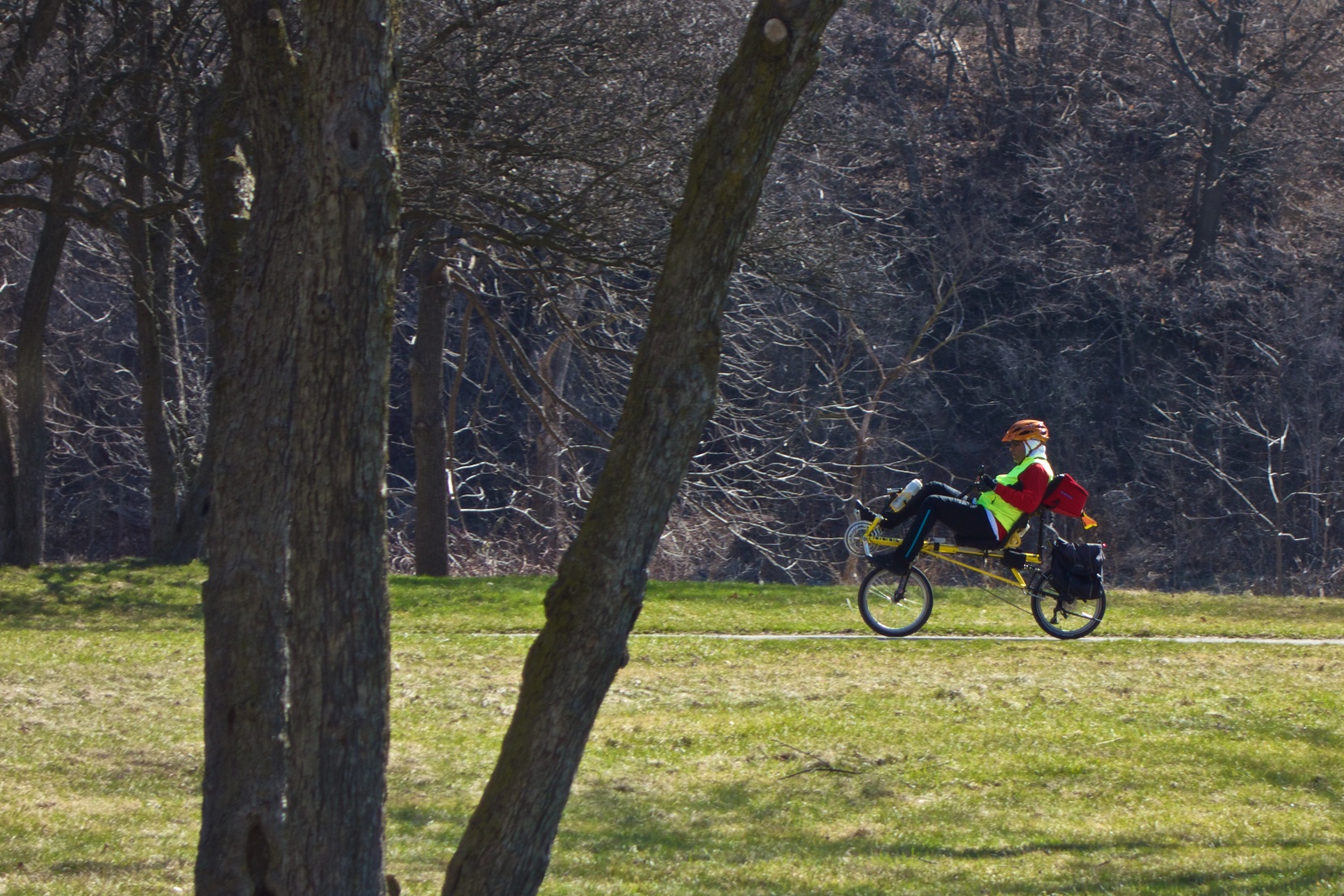
A recumbent cyclist makes his way through newly greened grass.

A recumbent cyclist makes his way through newly greened grass.

The cyclists are back – some more aggressive than others. I hate the weekend Spandex warriors who sneak up on you and ring their bell when quite close. My language often becomes quite blasphemous on those occasions.

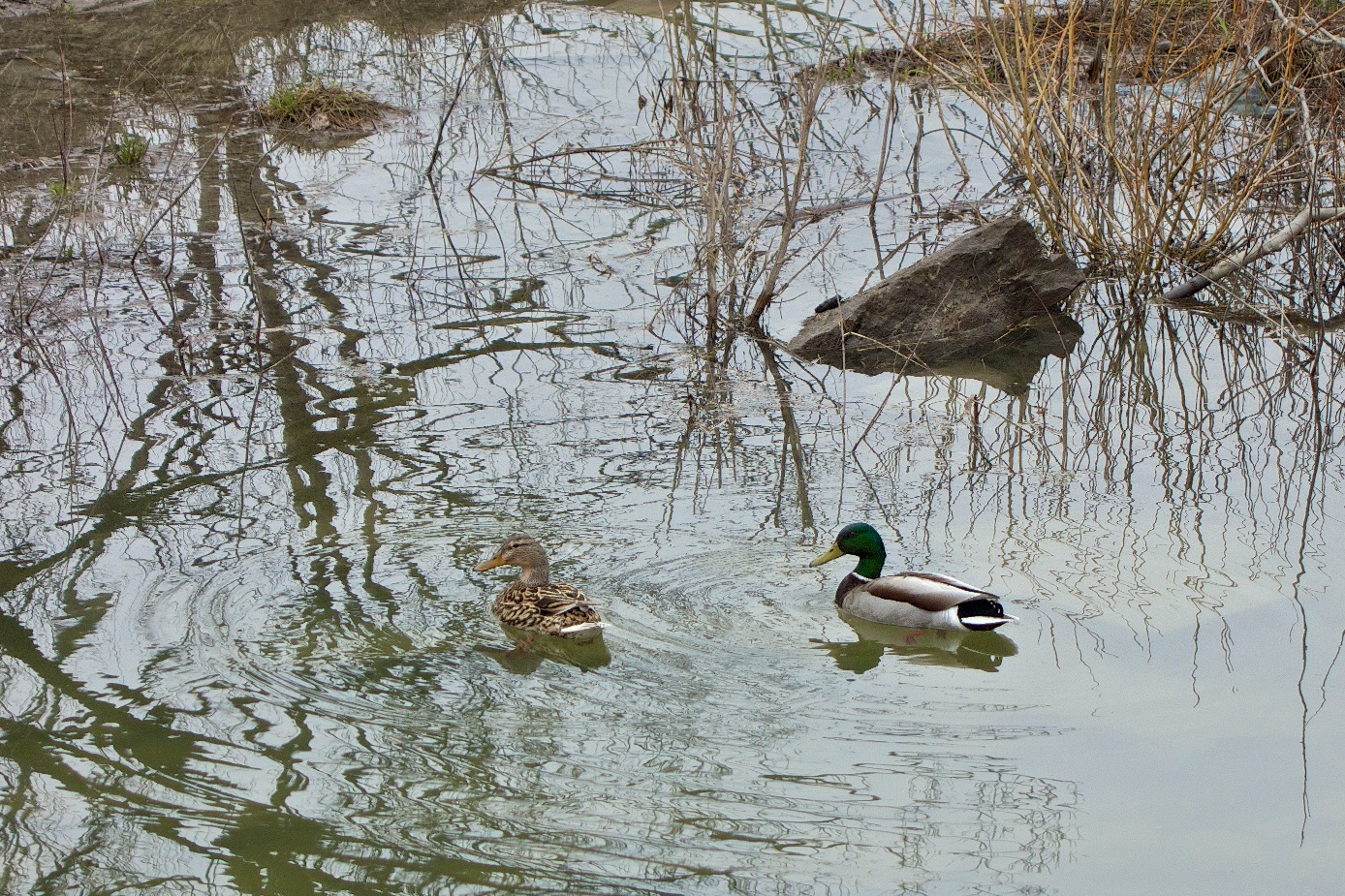
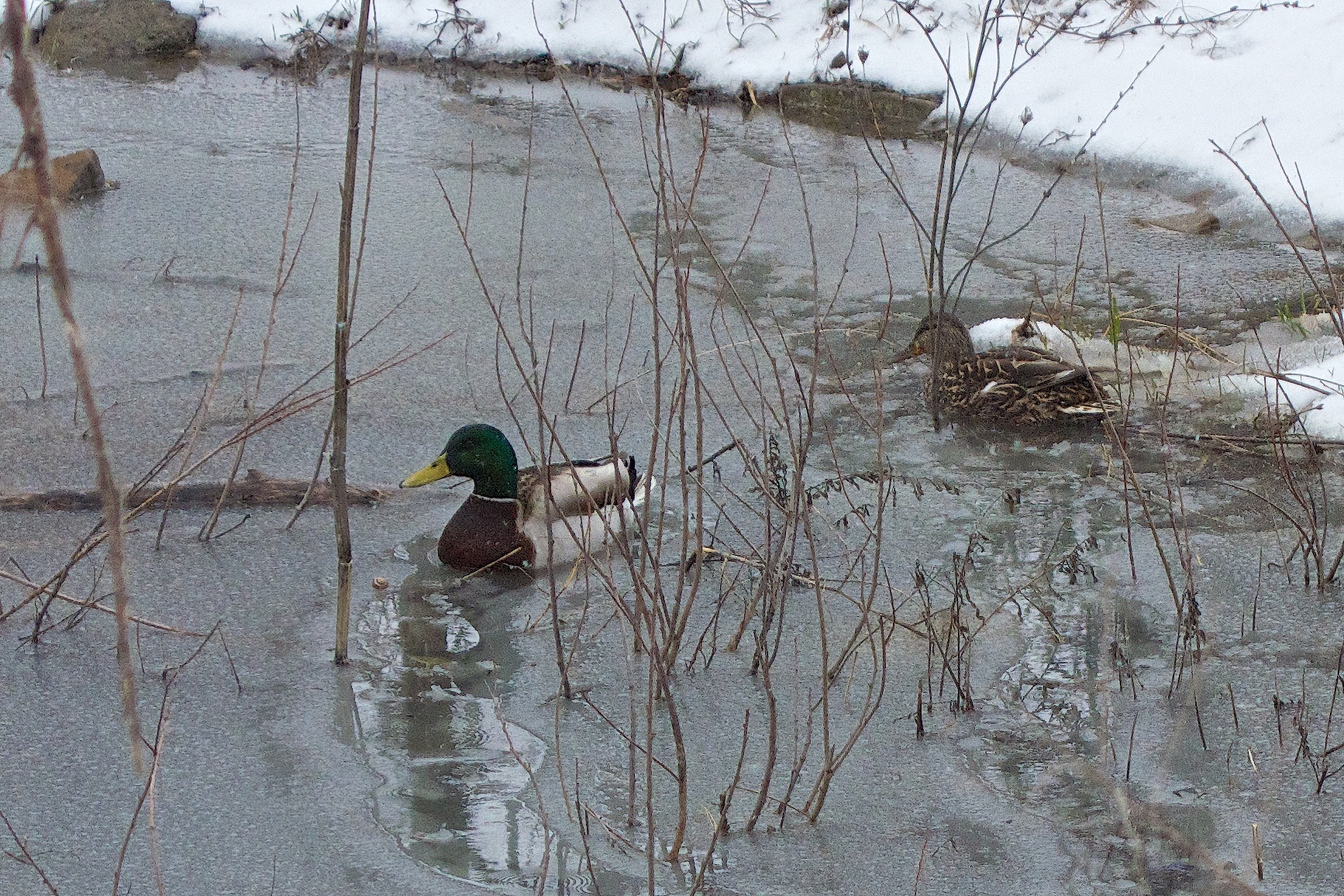
Ducks like their temporary pond.

Ducks like their temporary pond.

These mallards are still occupying the small pond that forms in the spring. I just hope the water level stays high for them.

Winter storm

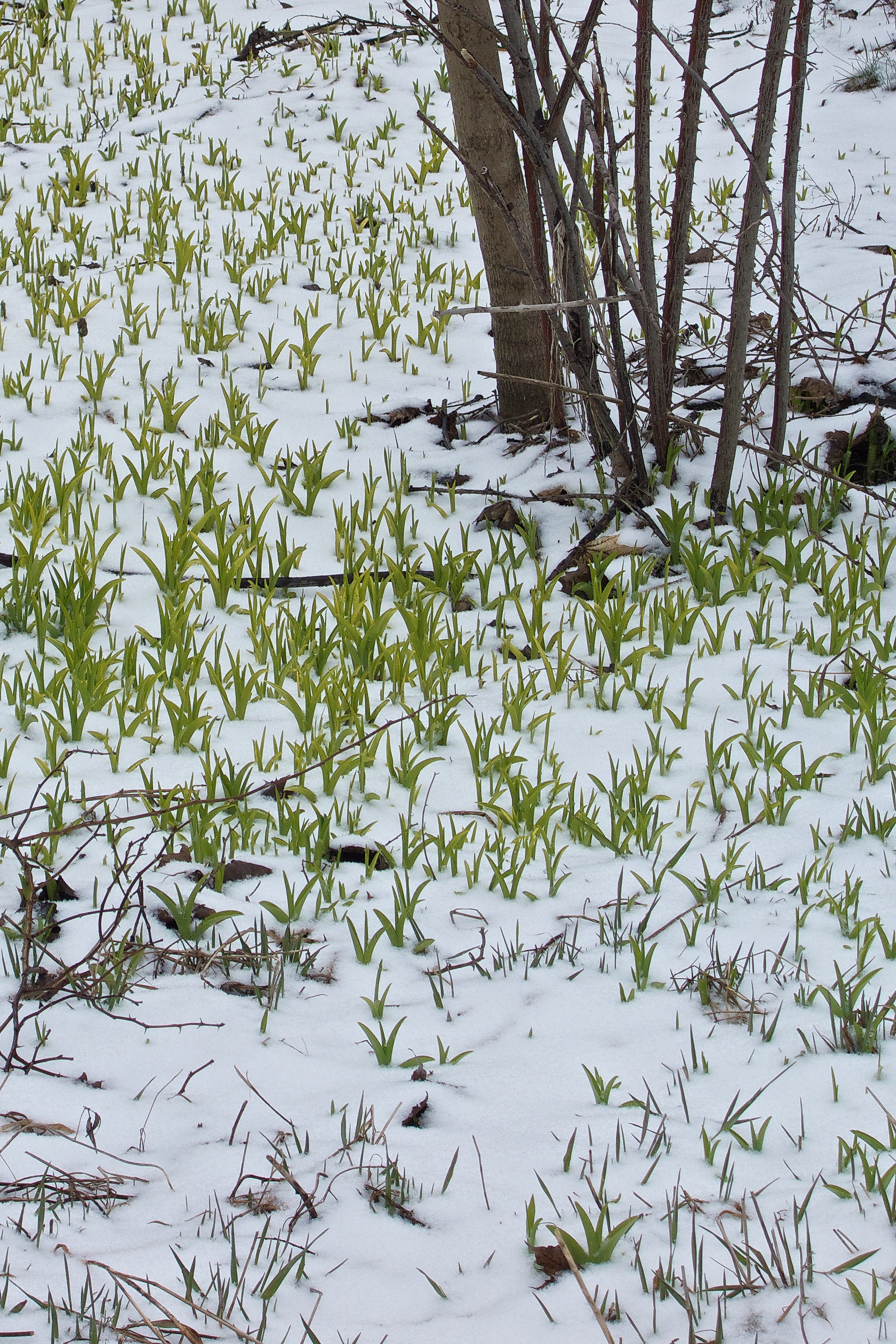
Day lilies are shocked I tell you.

Day lilies are shocked I tell you.

The park was cold and snowy today and a fresh covering made it look like January except for bright green new growth sticking out through the snow. These day lilies are probably remnants of gardens that belonged to homes destroyed during Hurricane Hazel.

A pair of Mallards swimming around a temporary pond were taking refuge from high water in the river. I was careful to stay well clear so that they weren’t disturbed.

Ice is forming in April!!

DSC01427