Tag Archives: Humber River

Ghosts of the past

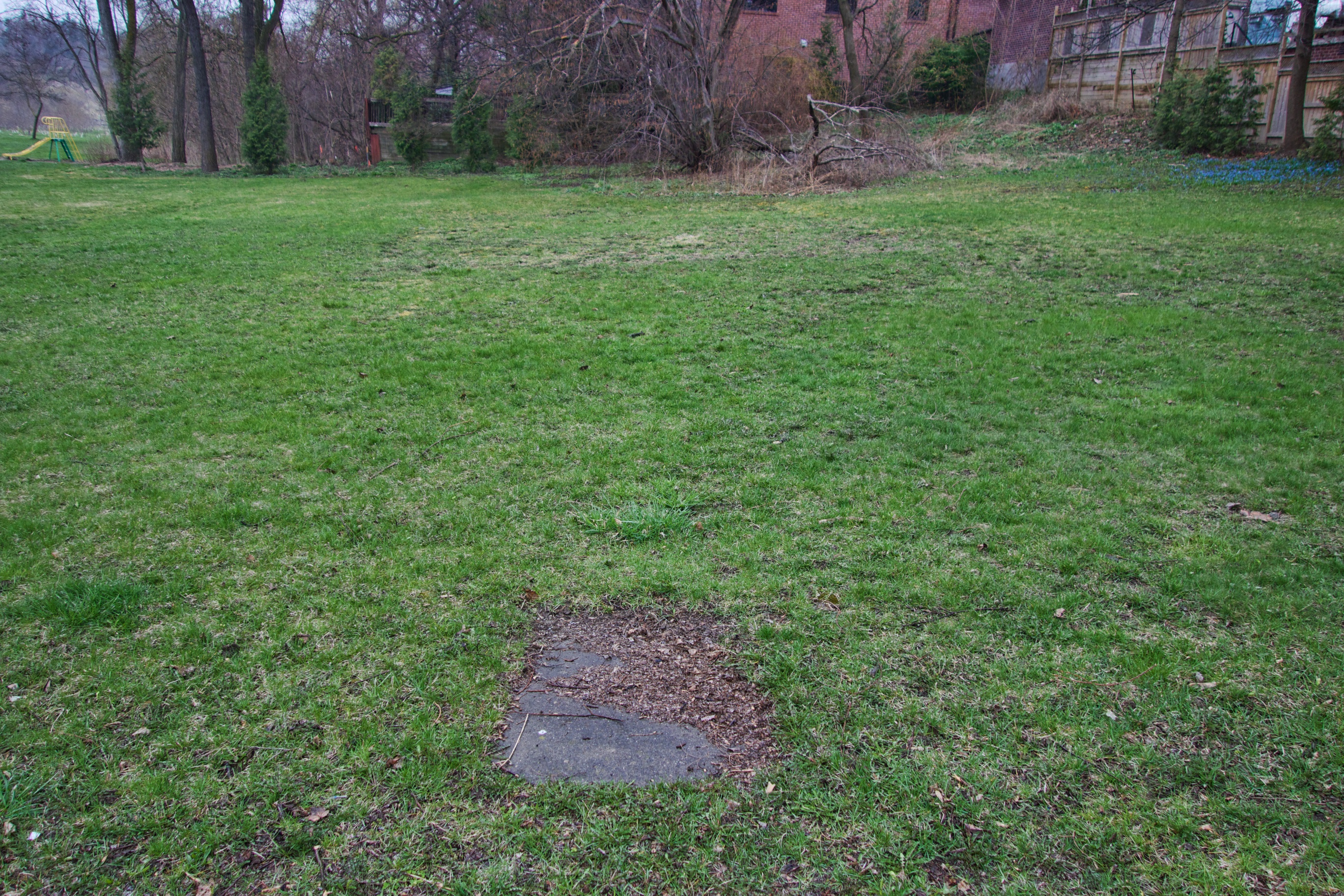
Every so often when weather conditions are just right, strange apparitions begin to form by the entrance to Raymore Park. These are the shapes of homes that lined Raymore and Gilhaven Drives until Hurricane Hazel brought devastation to the area in 1954. The houses at this location were untouched by the flooding but were purchased and demolished as a precaution. The basements were filled in and levelled. Part of an original concrete pathway still survives. The shape of the basements can be seen because the fill was different to the surrounding soil causing a variation in the plant cover. Based on the same principle, archaeologists often use aerial photographs when looking for ancient settlements.

The entranceway path and beyond, the faint basement outline.

An entranceway path and beyond, a faint basement outline.

Winter storm

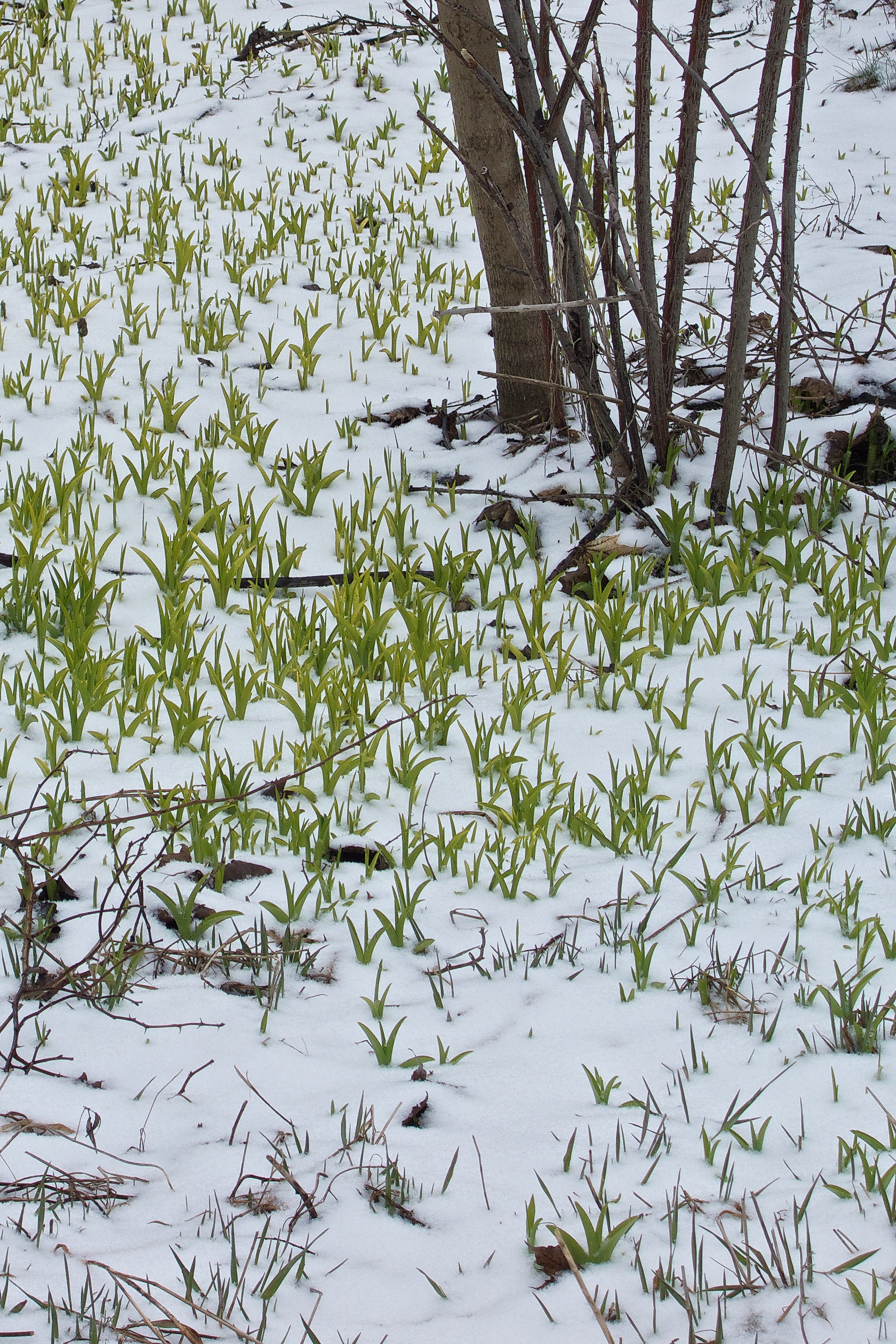
Day lilies are shocked I tell you.

Day lilies are shocked I tell you.

The park was cold and snowy today and a fresh covering made it look like January except for bright green new growth sticking out through the snow. These day lilies are probably remnants of gardens that belonged to homes destroyed during Hurricane Hazel.

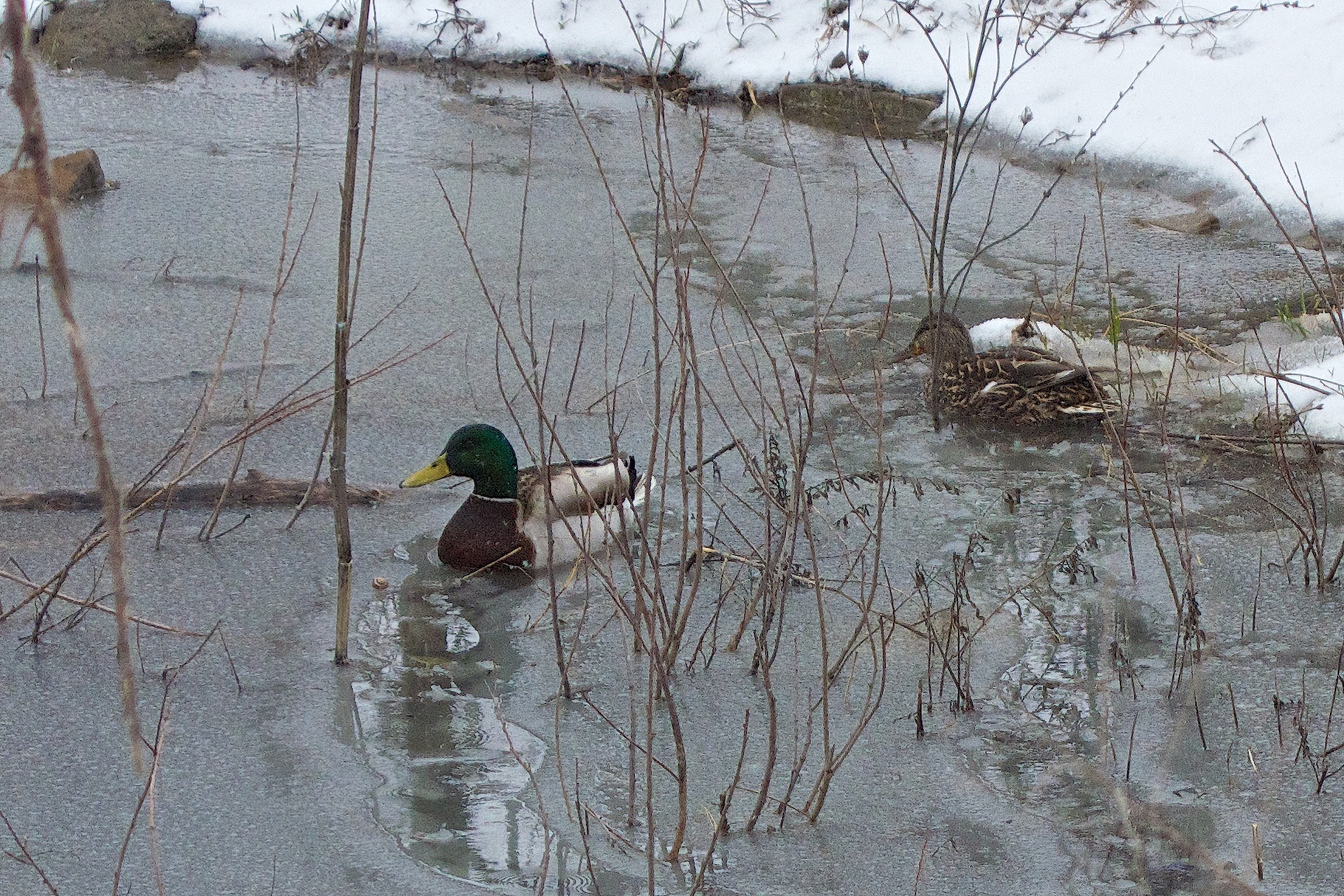
A pair of Mallards swimming around a temporary pond were taking refuge from high water in the river. I was careful to stay well clear so that they weren’t disturbed.

Ice is forming in April!!

DSC01427

Couple of shots

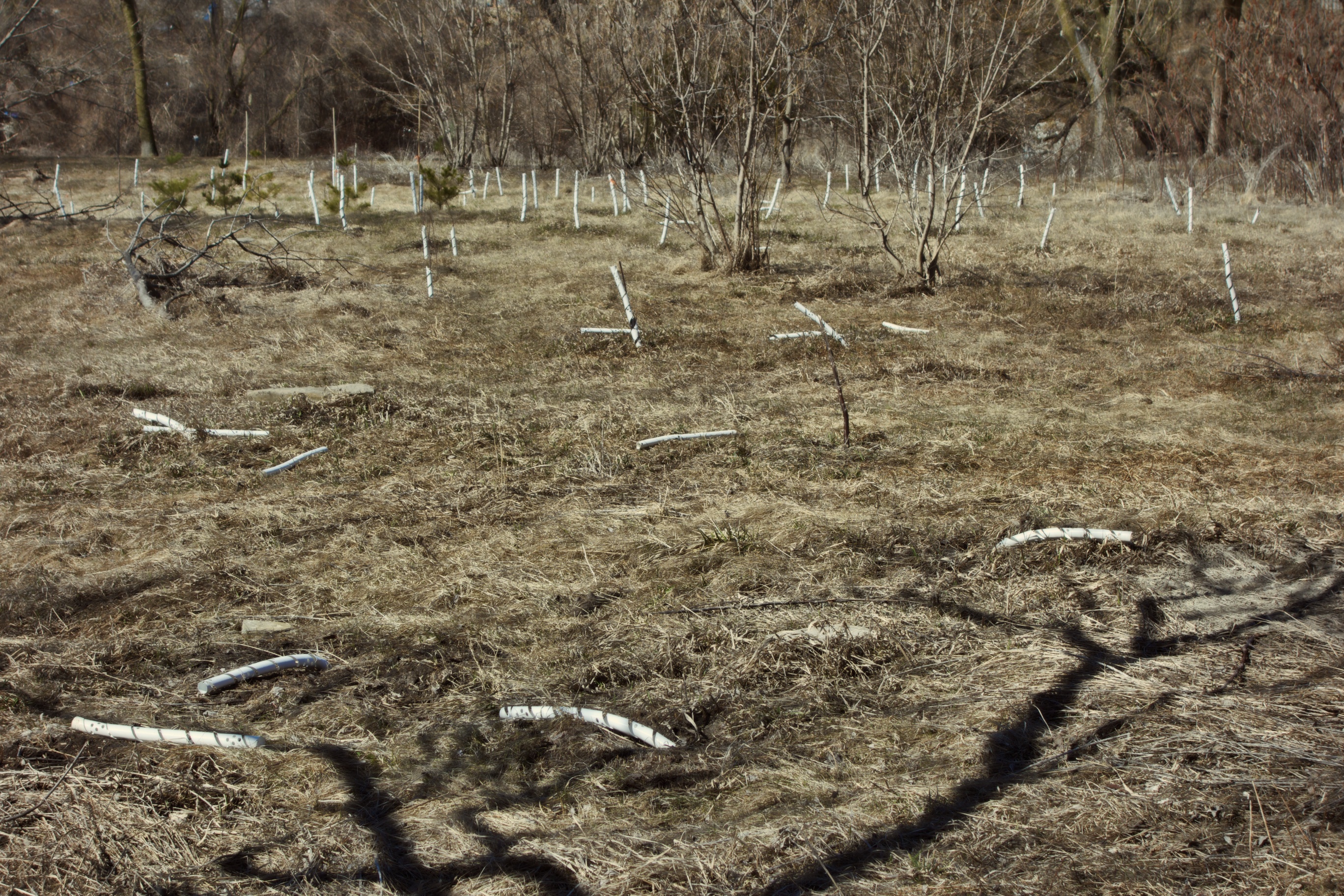
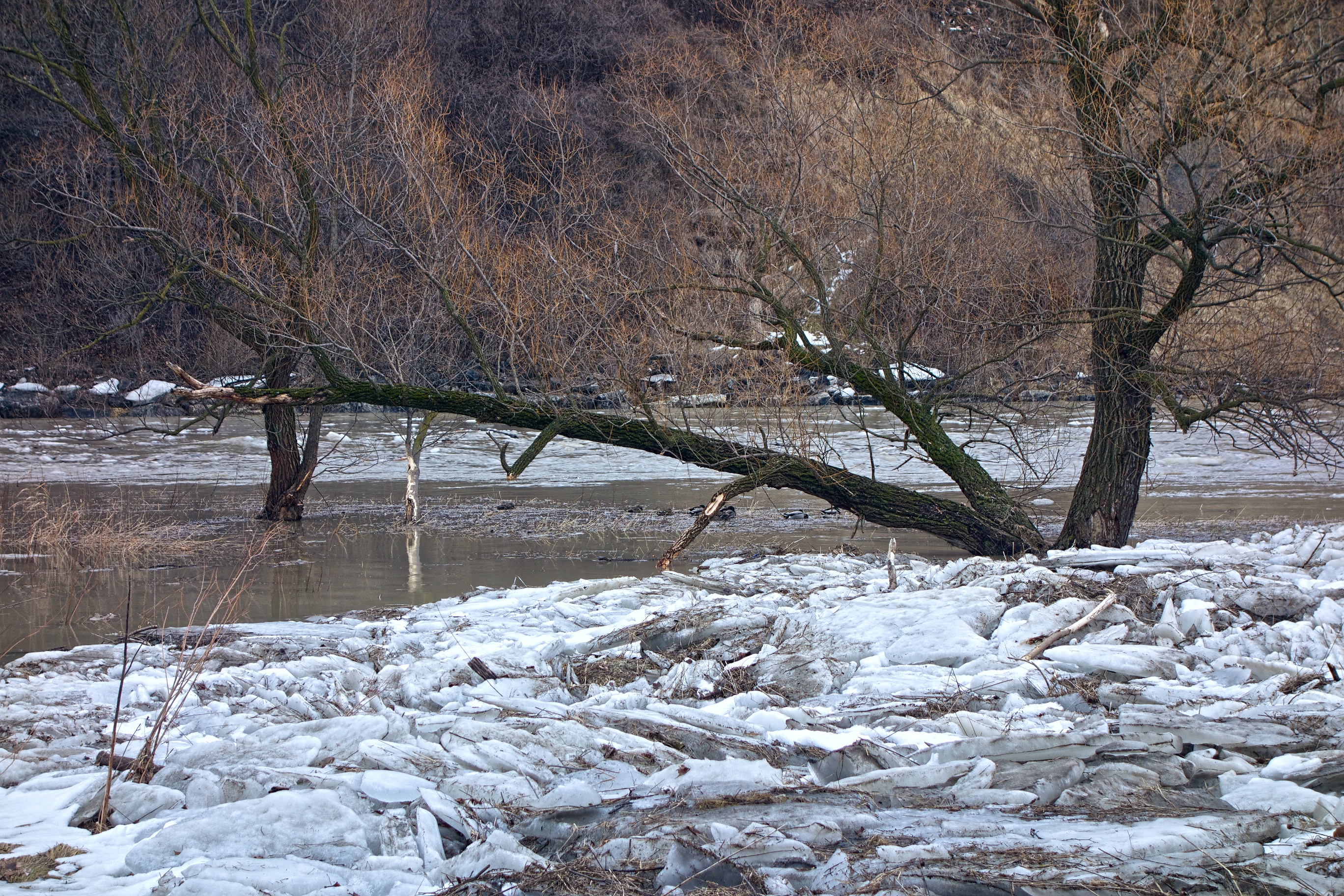
Spring has yet to impose itself on this part of the world although the ice left along the banks of the Humber has almost all melted. A sad testament to the nursery trees torn up by the ice is the spiral plastic protectors which somehow have remained.

Native trees were planted here two years ago - some didn't make it through the winter.

Native trees were planted here two years ago – some didn’t make it through the winter.

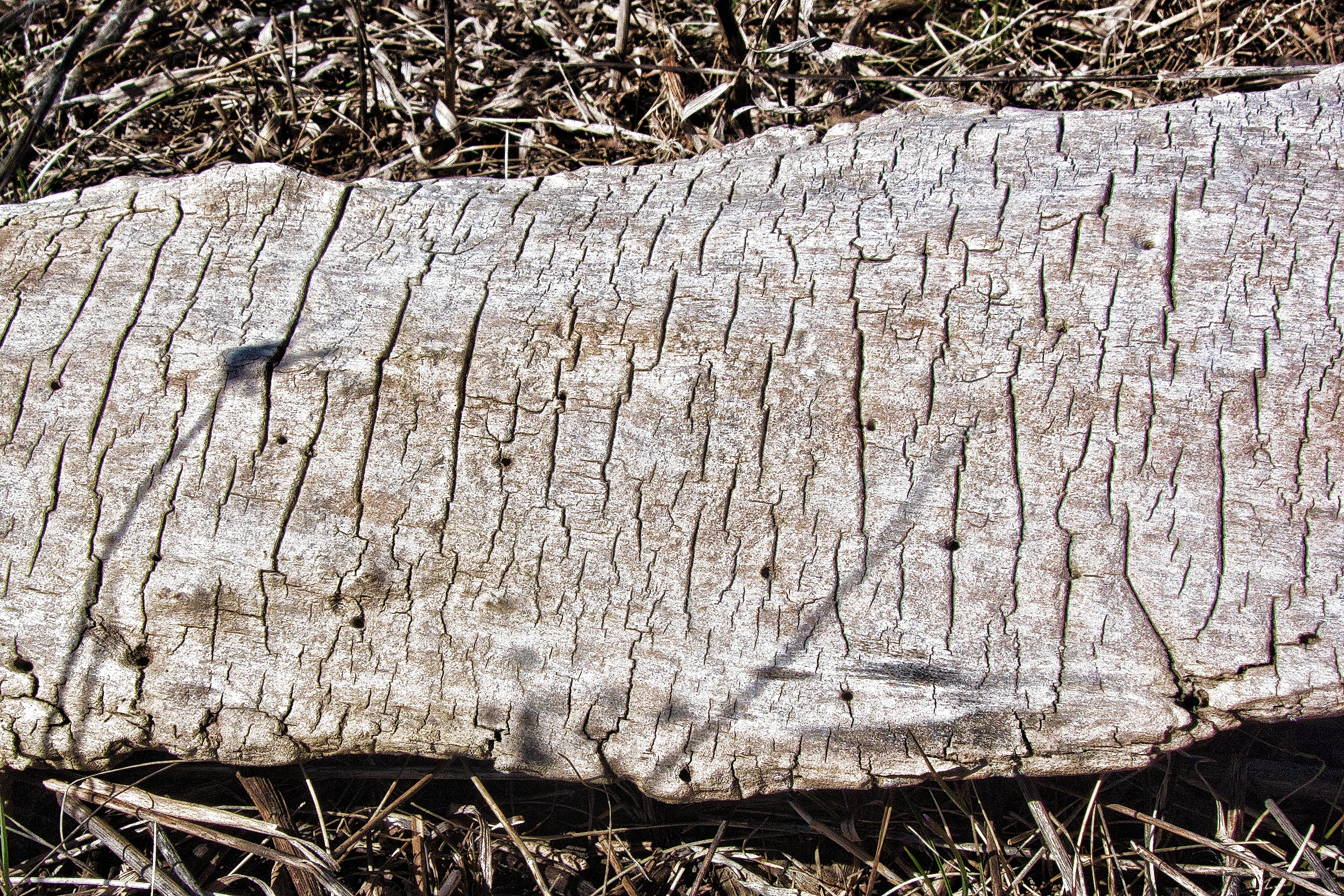
This weather-beaten piece of driftwood was left behind by melting ice and has a nice texture.

Tons of material gets left behind when the ice melts.

Shadows on driftwood.

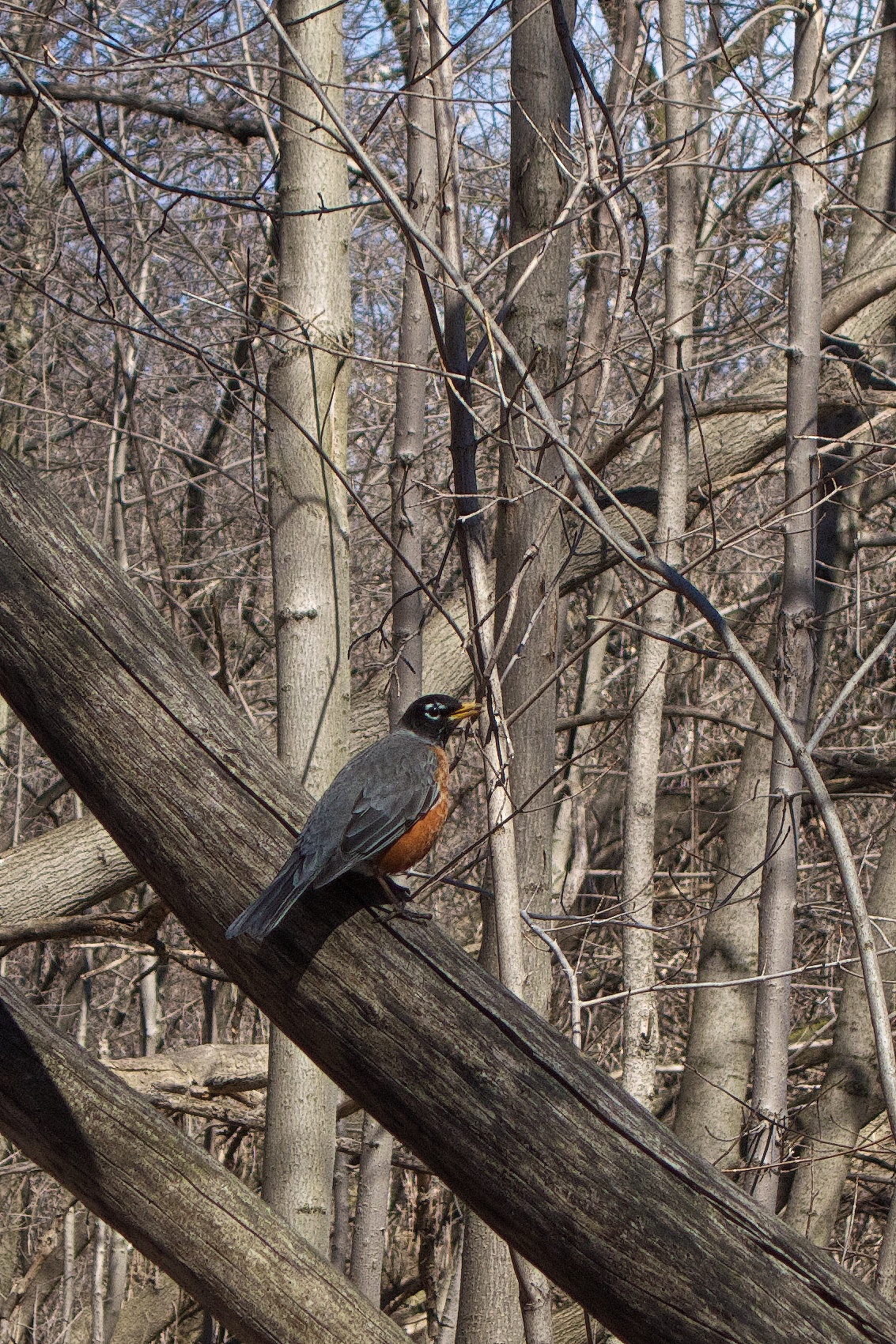
A good variety of birds was making the most of today’s strong sunshine. This robin posed nicely for me.

This one seems well fed!

This one seems well fed!

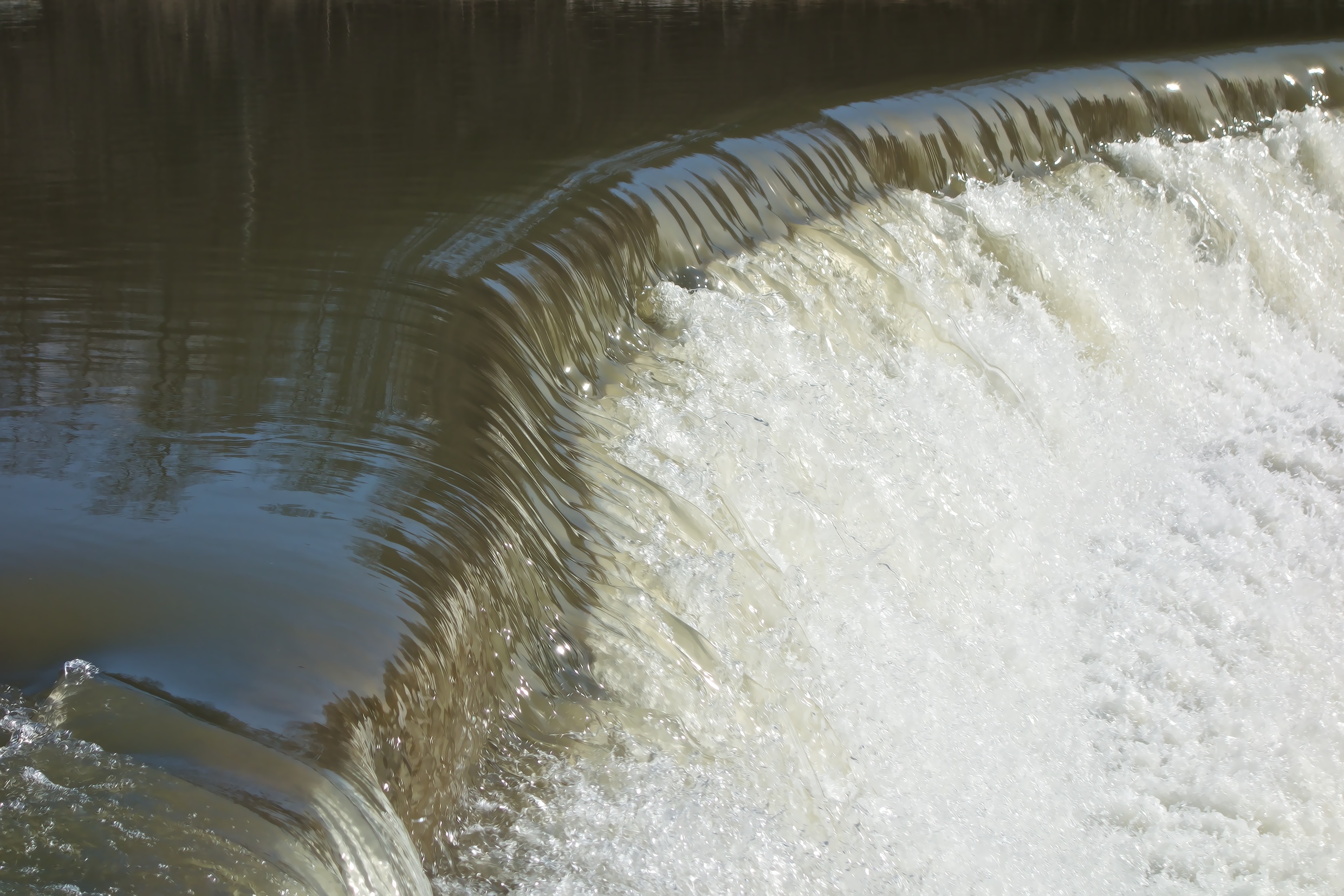
Dreamy water.

Dreamy water

Dreamy water

I continue to be fascinated by the sheen of the water as it slides over the weir and have stylized this image with the help of a Topaz filter or two.

The water is higher today as a result of melting snow further north.

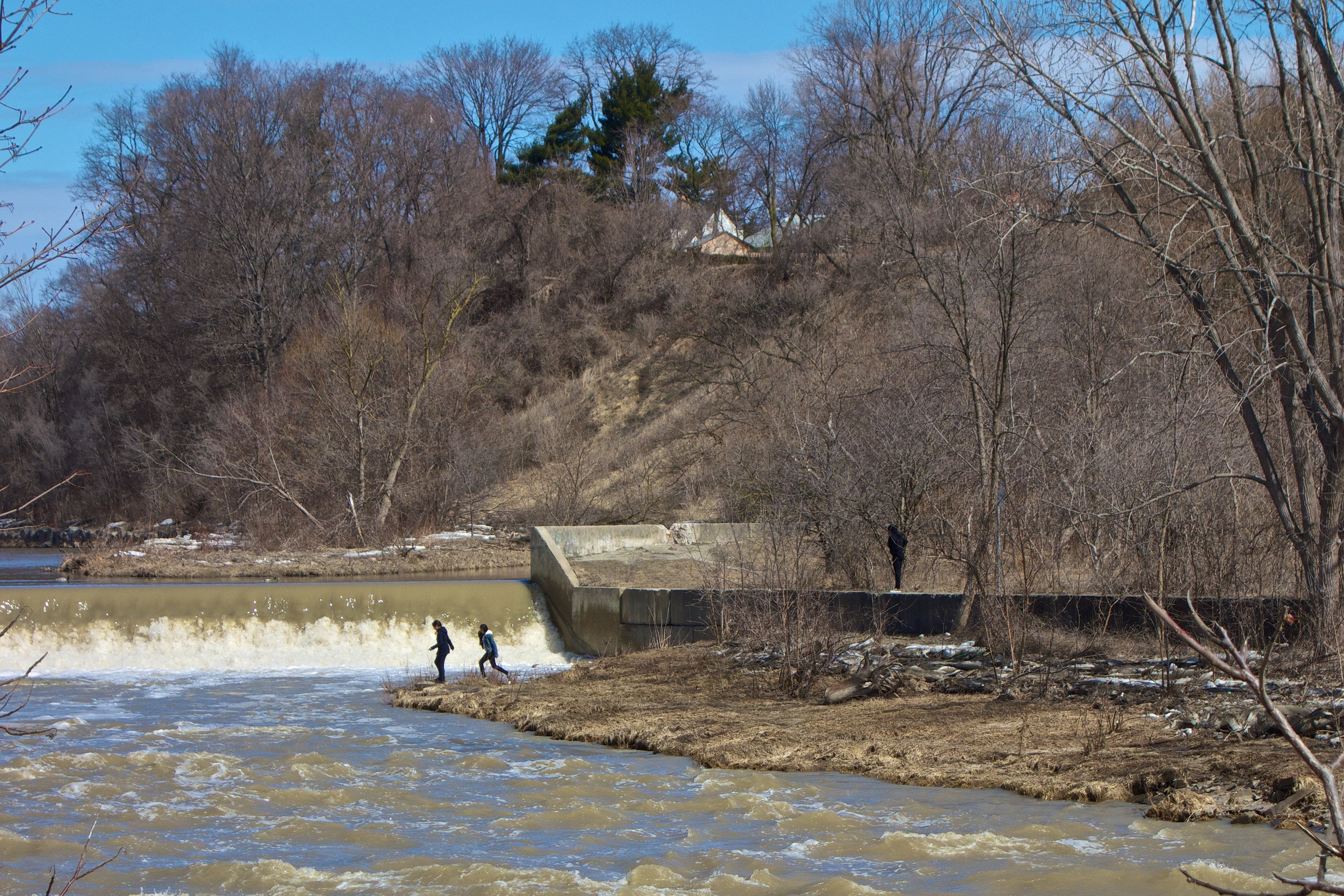
Students from a nearby school help give some scale to the weir.

Students from a nearby school help give some scale to the weir.

There was a coyote making its way upstream, probably getting out of the way of the students below the weir who were well, being kids. Snow has melted from all but the shadiest parts of the park and spring is off to a slow but long awaited start.

On the beach.

As the water and ice recede, a few interesting items are left along the small sand beach that is the shore of the Humber.

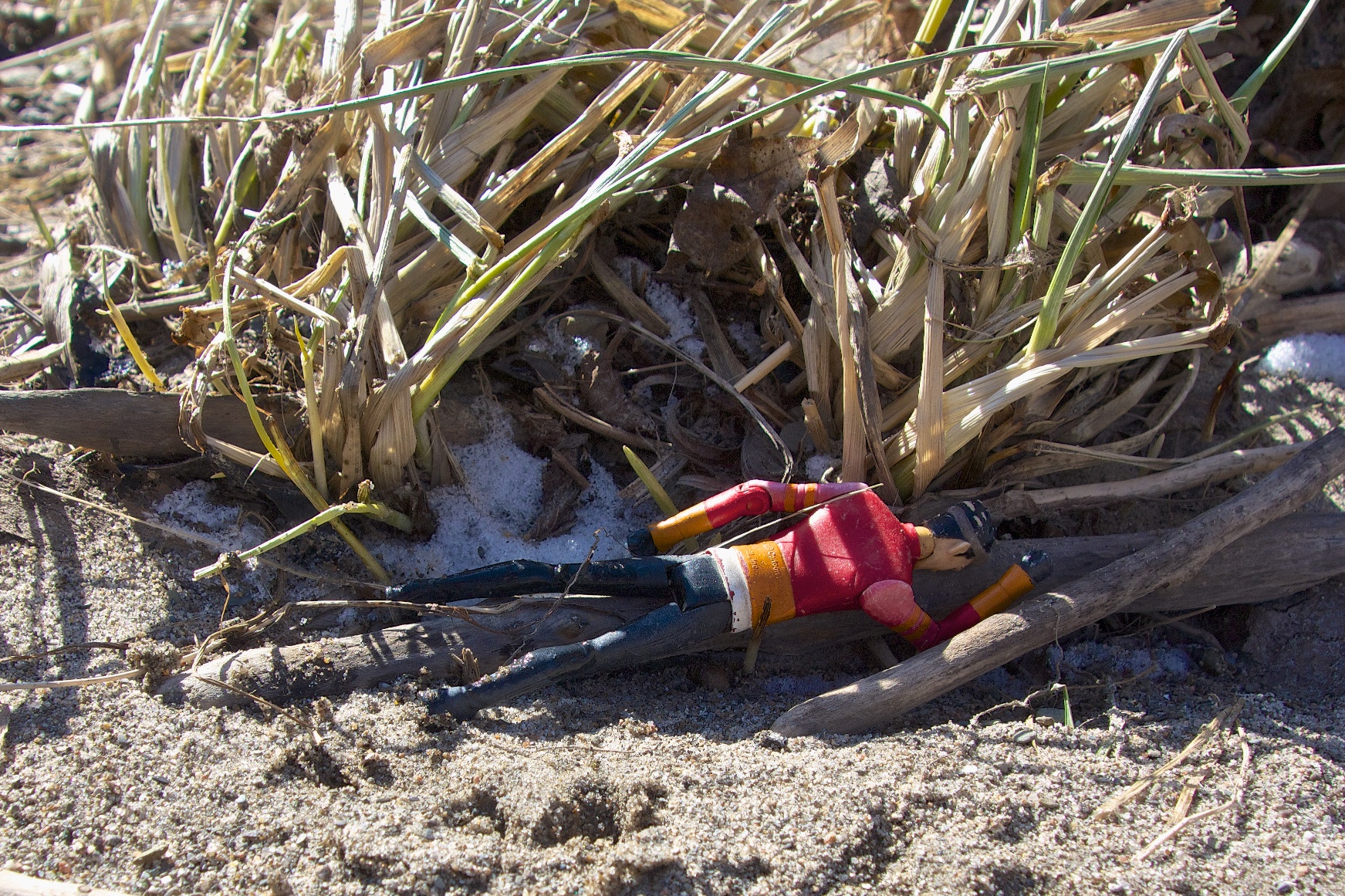
A toy figure seems to have thrown himself down in despair.

A toy figure seems to have thrown itself on a twig in despair.

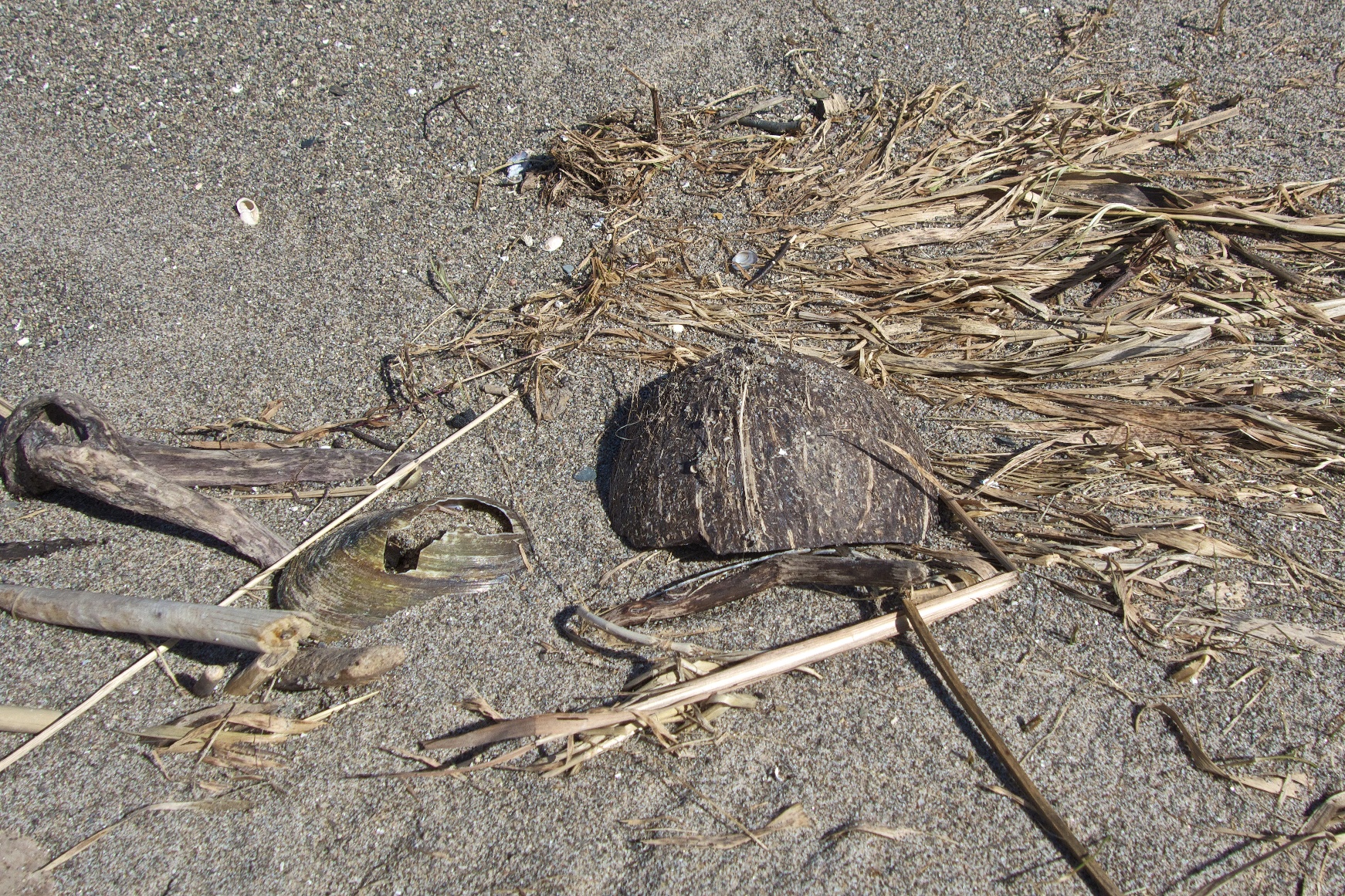
More shells and part of a coconut.

Some clam shells and part of a coconut.

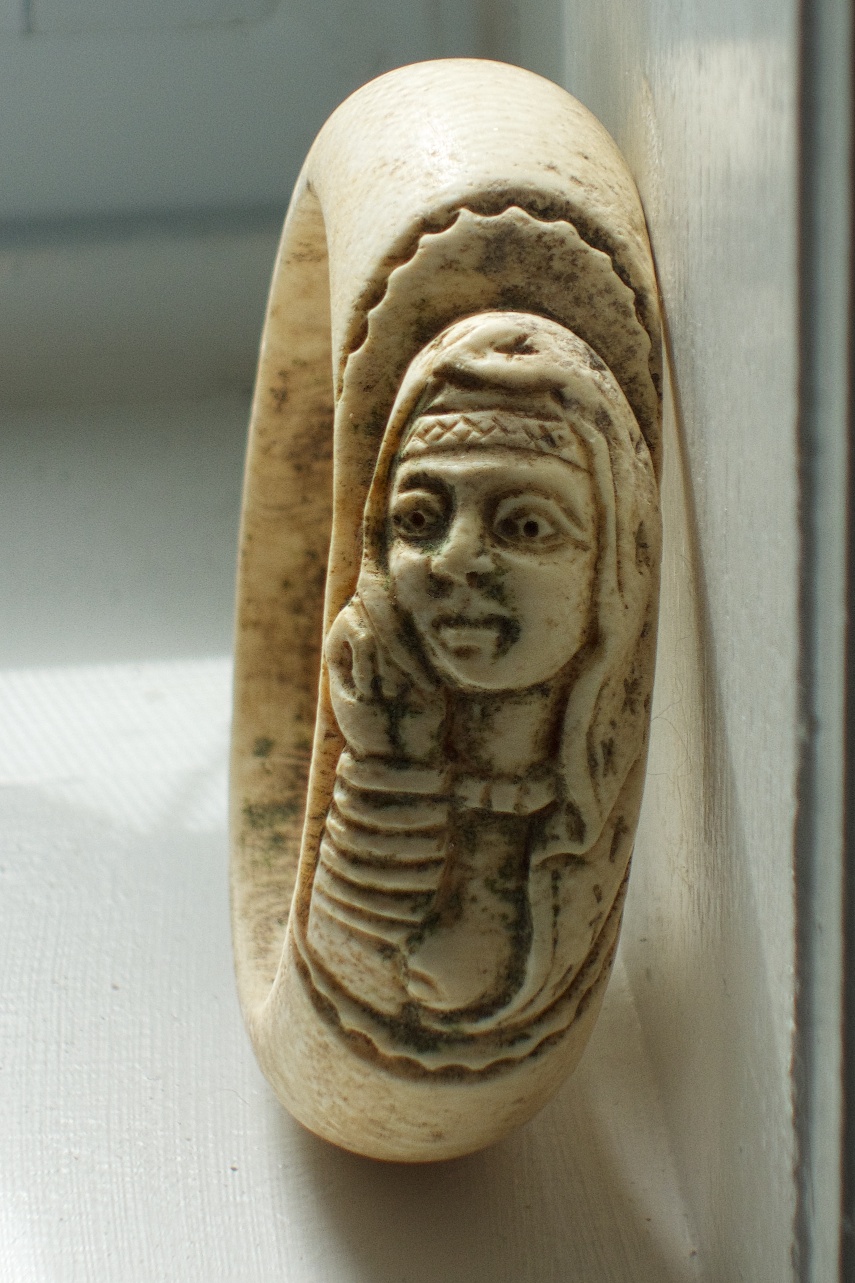
Having seen coconut shells scattered along the Humber for years, the source was a puzzle. Visions of coconut groves further upriver were easily but reluctantly dismissed. The mystery wasn’t solved until a few years ago when I witnessed an East Indian gentleman throw a something into the river and discovered that it’s customary for Hindus to make sacrifices to the river gods in this way. The following photograph may be of another such item.

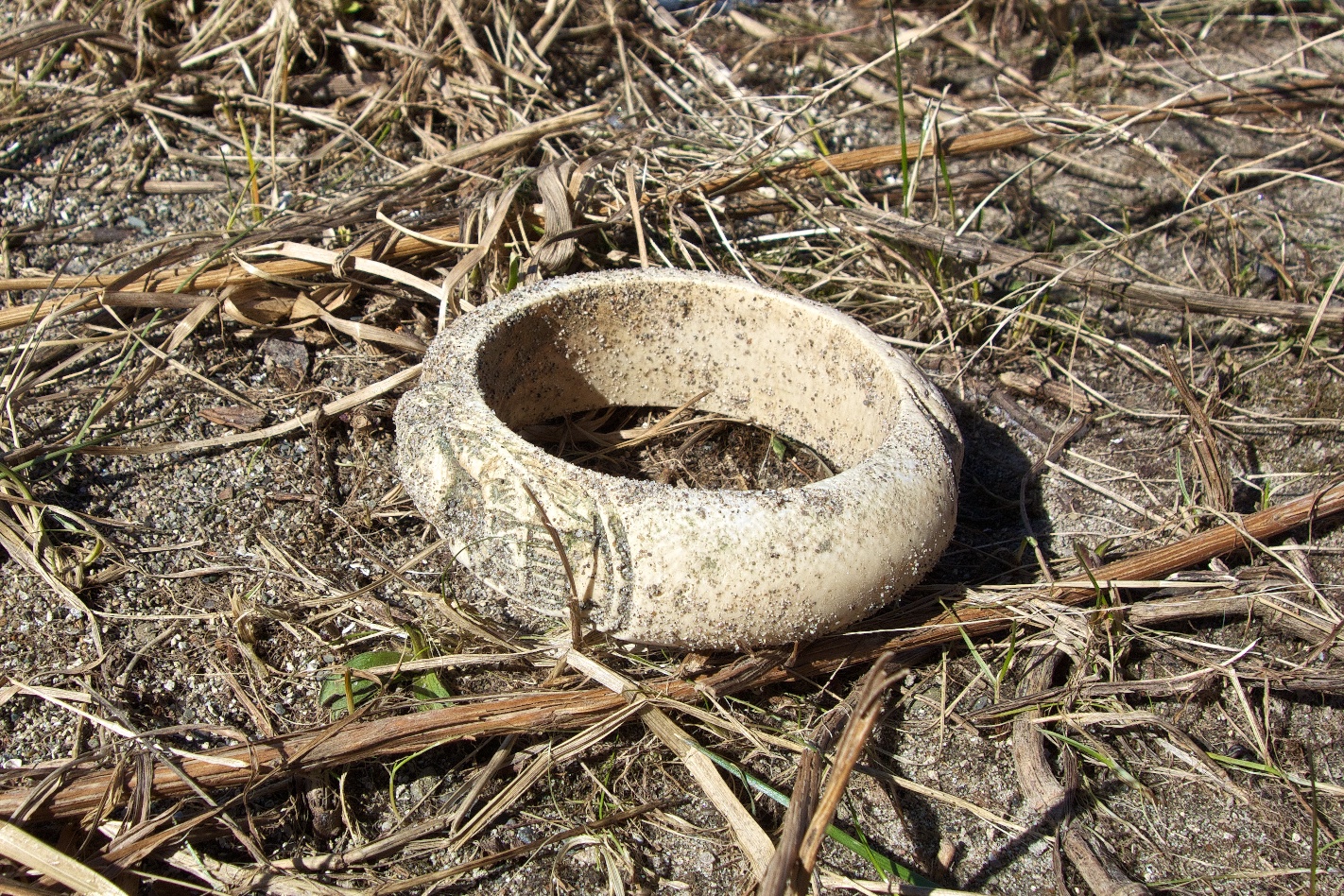
A carved bangle illustrating a couple of voluptuous ladies.

A carved bangle illustrating a couple of voluptuous ladies.

I brought the bangle home to examine it but not wishing for bad karma will return it tomorrow. It seems to have been hand carved from bone or horn. As long as it’s biodegradable along with the coconut, it shouldn’t be a problem.

After all, India is the home of the Kama Sutra...

Cleaned up a little. India is the home of the Kama Sutra…

A Powerful Force

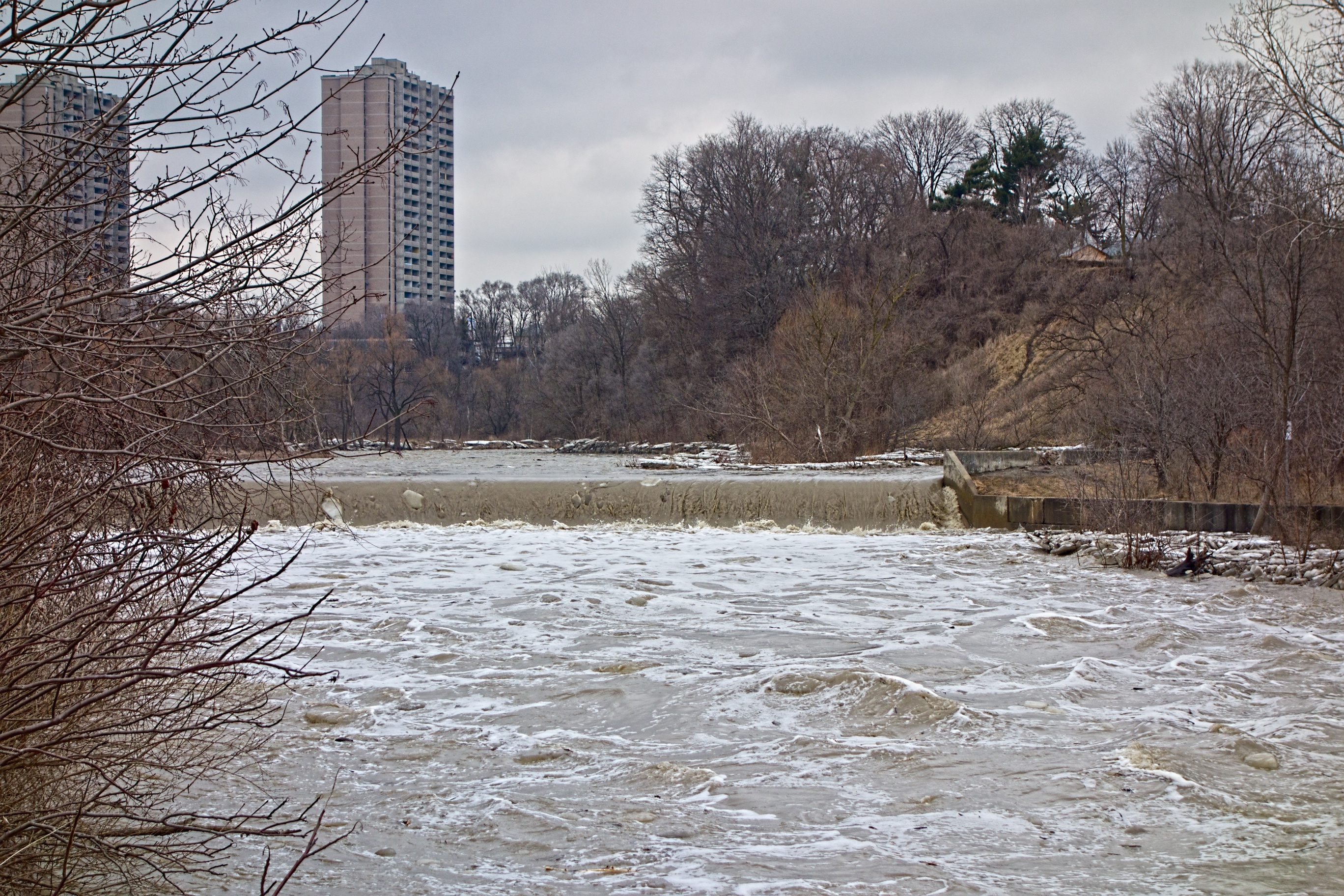
Flood waters are peaking and the Humber is sending billions of litres along with much flotsam and jetsam to Lake Ontario. Today’s photographs don’t do the event justice so here is a short movie together with some views of the raging torrent.

Let’s start with some wildlife – these ducks (in the centre of the image) are conserving energy by resting in a quiet eddy away from the maelstrom.

Ducks find refuge in calm waters.

Ducks find refuge in calm waters.

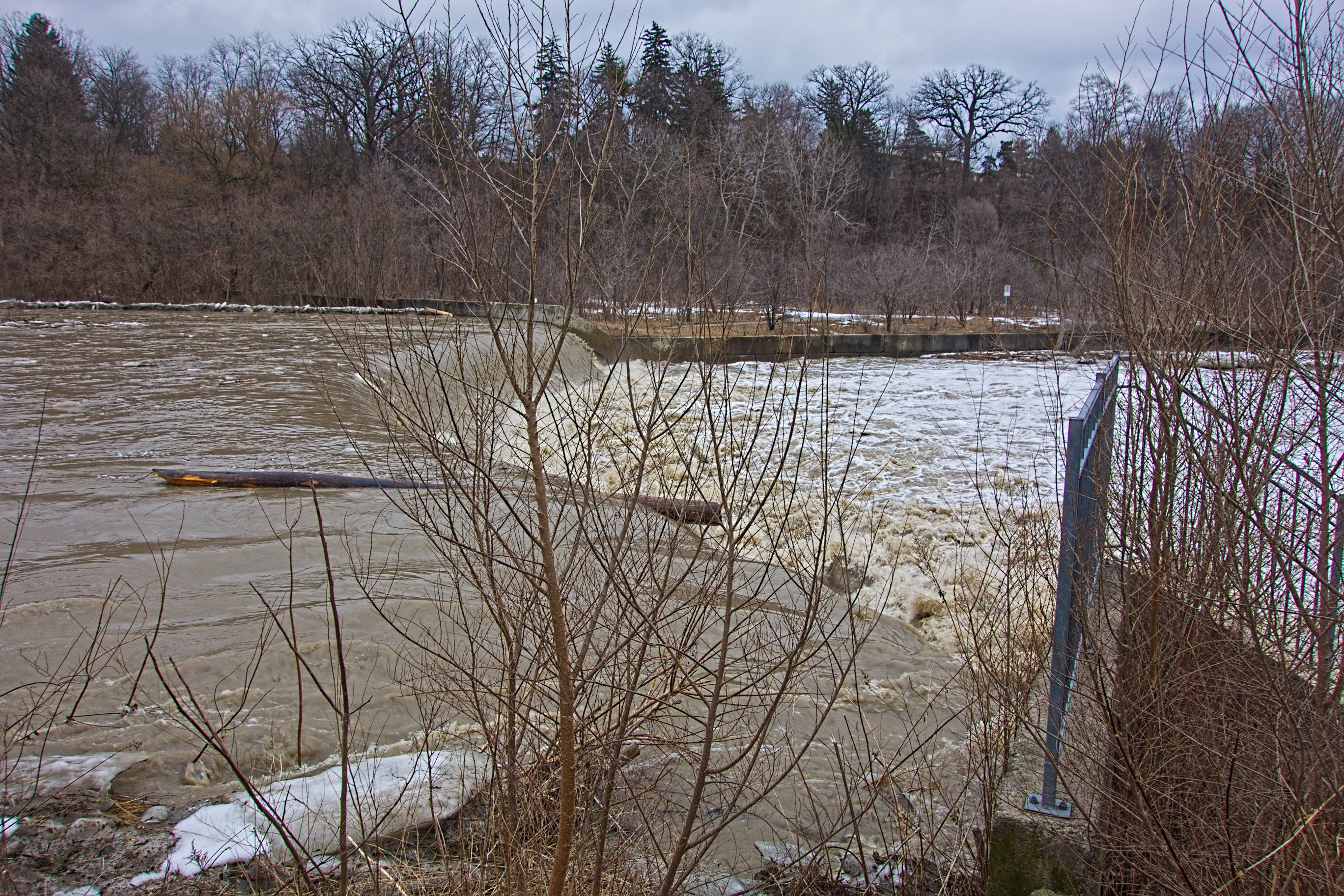
The amount of lumber going downriver is quite remarkable.

Huge amounts of lumber are being transported - a log is just about to go over the weir.

Huge amounts of lumber are being transported – a log is just about to go over the weir.

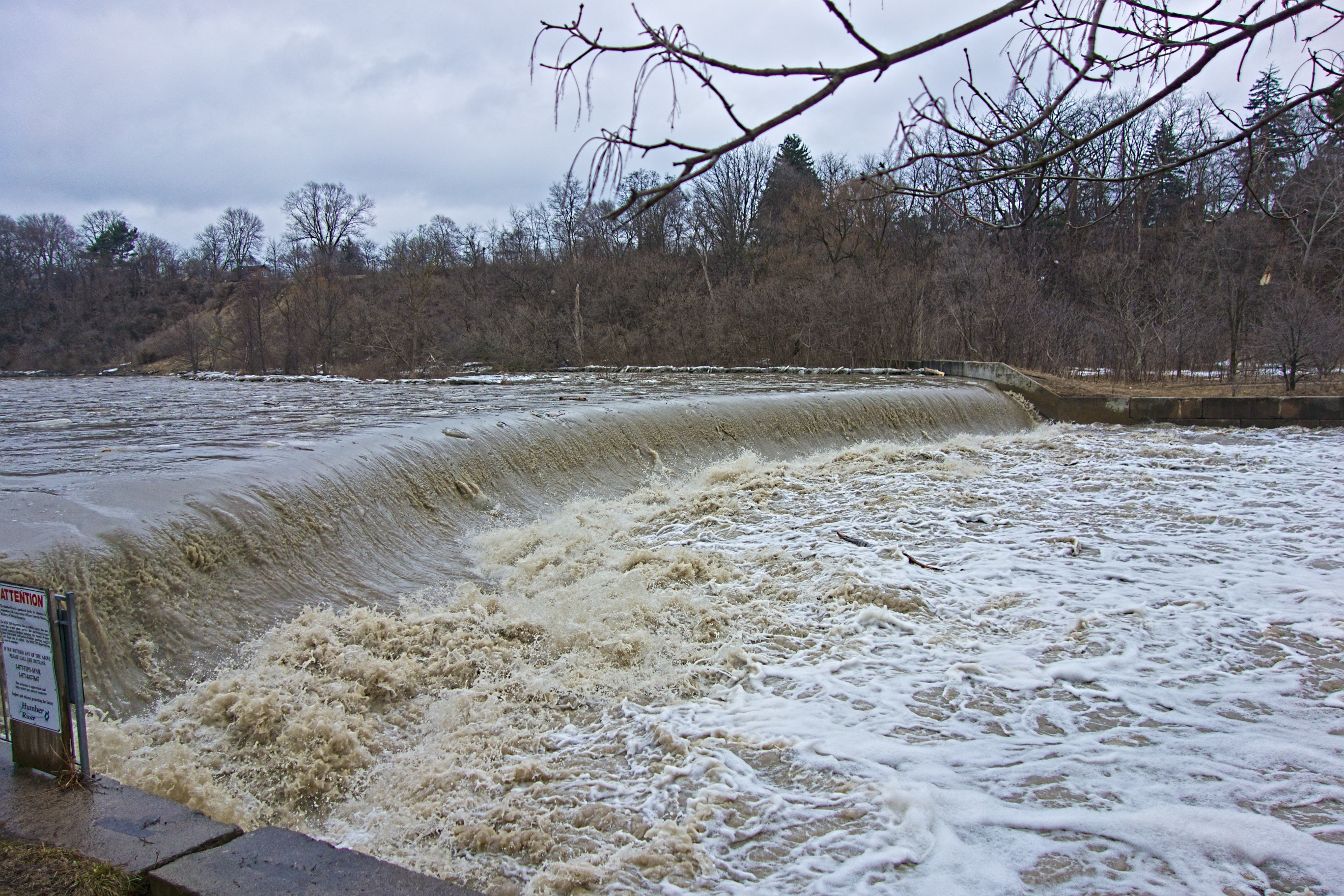
Standing close to the weir is quite the sensory experience with the thundering of the water (now much closer to bystanders) punctuated by the thumping of logs and ice blocks.

It's a very intense experience to stand close to the water.

It’s a very intense experience to stand close to the water.

Chunks of ice are carried over the weir.

The twin carbuncles bear witness as chunks of ice and other debris are carried over the weir.

In a few days, water levels will be back to normal but for now, the power of nature is a reminder of how puny we are.

Weir curtain

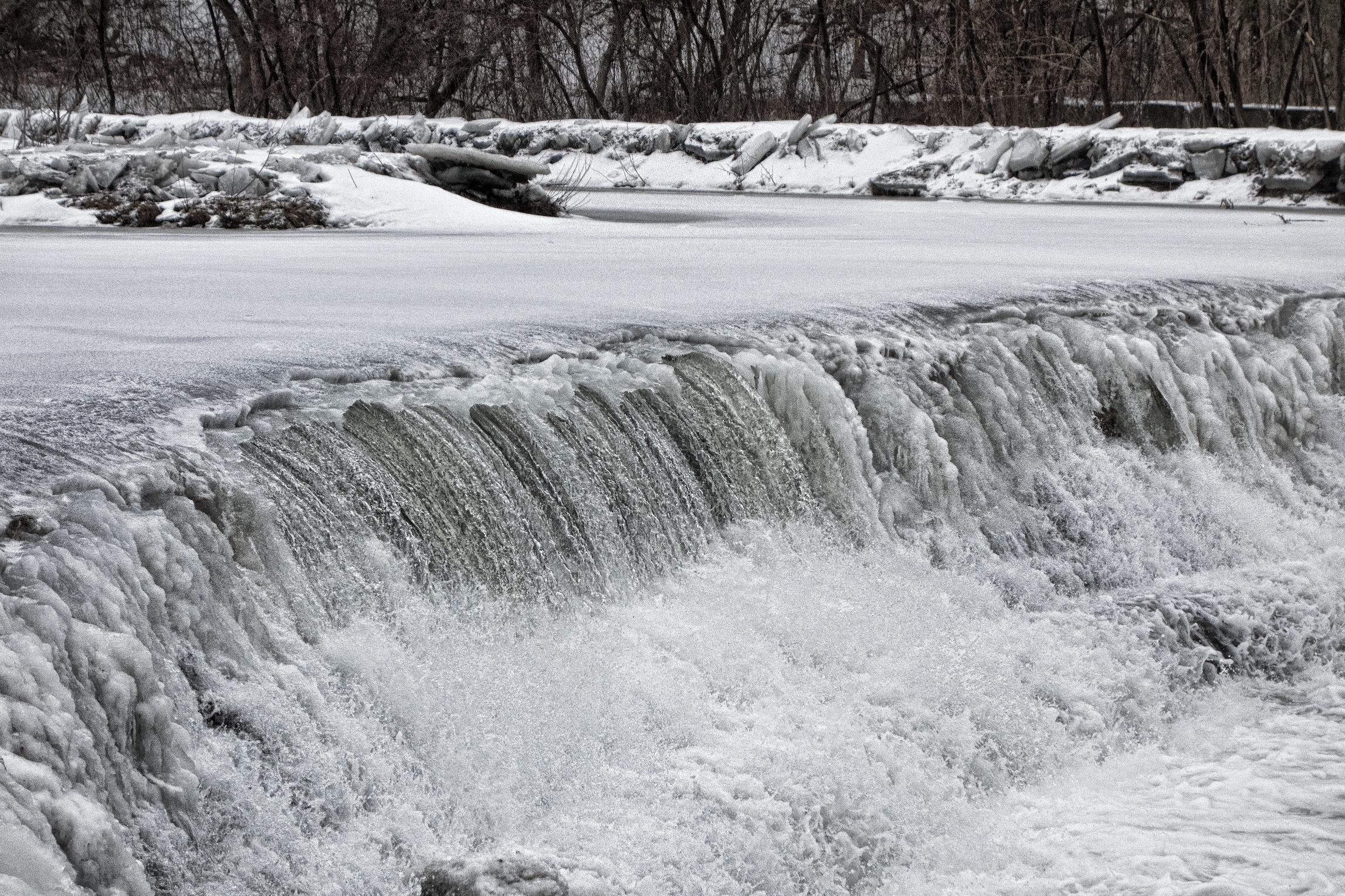
On some days, there’s a combination of ice and water that creates a curtain effect by the weir. The curtain is framed by spray and ice and calls out to the camera because it is so well defined. To make sure the curtain was photographed as it appeared, the camera was set to shutter priority and captured at 1/1600 second. I’m not a fan of those dreamy waterfall shots taken at a slow shutter speed but prefer a more realistic look.DSC00998

Reflections

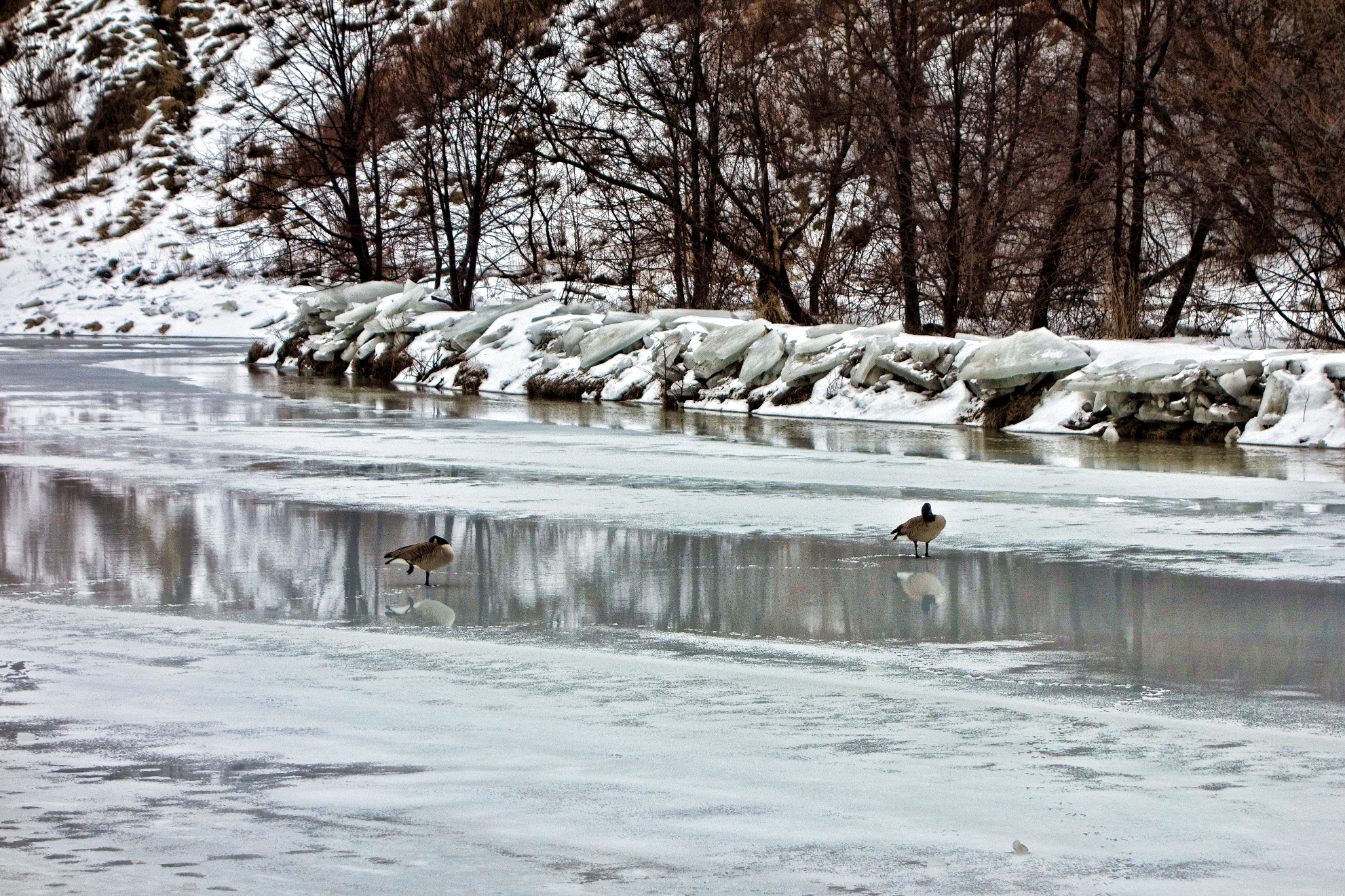
Yesterday was a sloppy slushy rainy day with rain and mild temperatures. A pair of geese standing on wet ice in the river prompted a quest for reflections. The closer one was quite relaxed and was in its sleeping position.

A pair of Canada Geese spend some quiet time on the river.

A pair of Canada Geese spend some quiet time on the river.

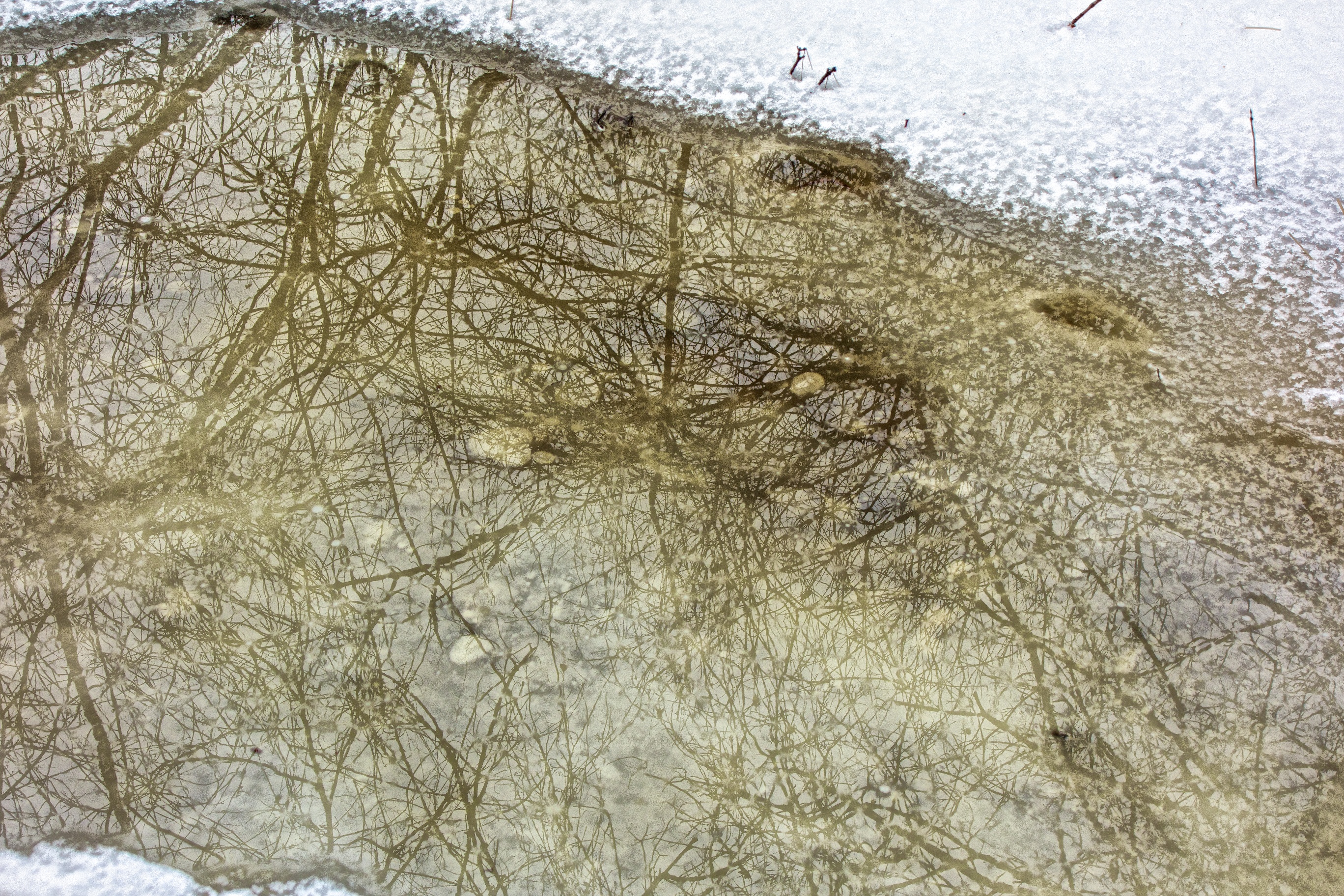
Large pools of water form in depressions.

Large pools of earth-tinted water form in depressions allowing another view of the trees.

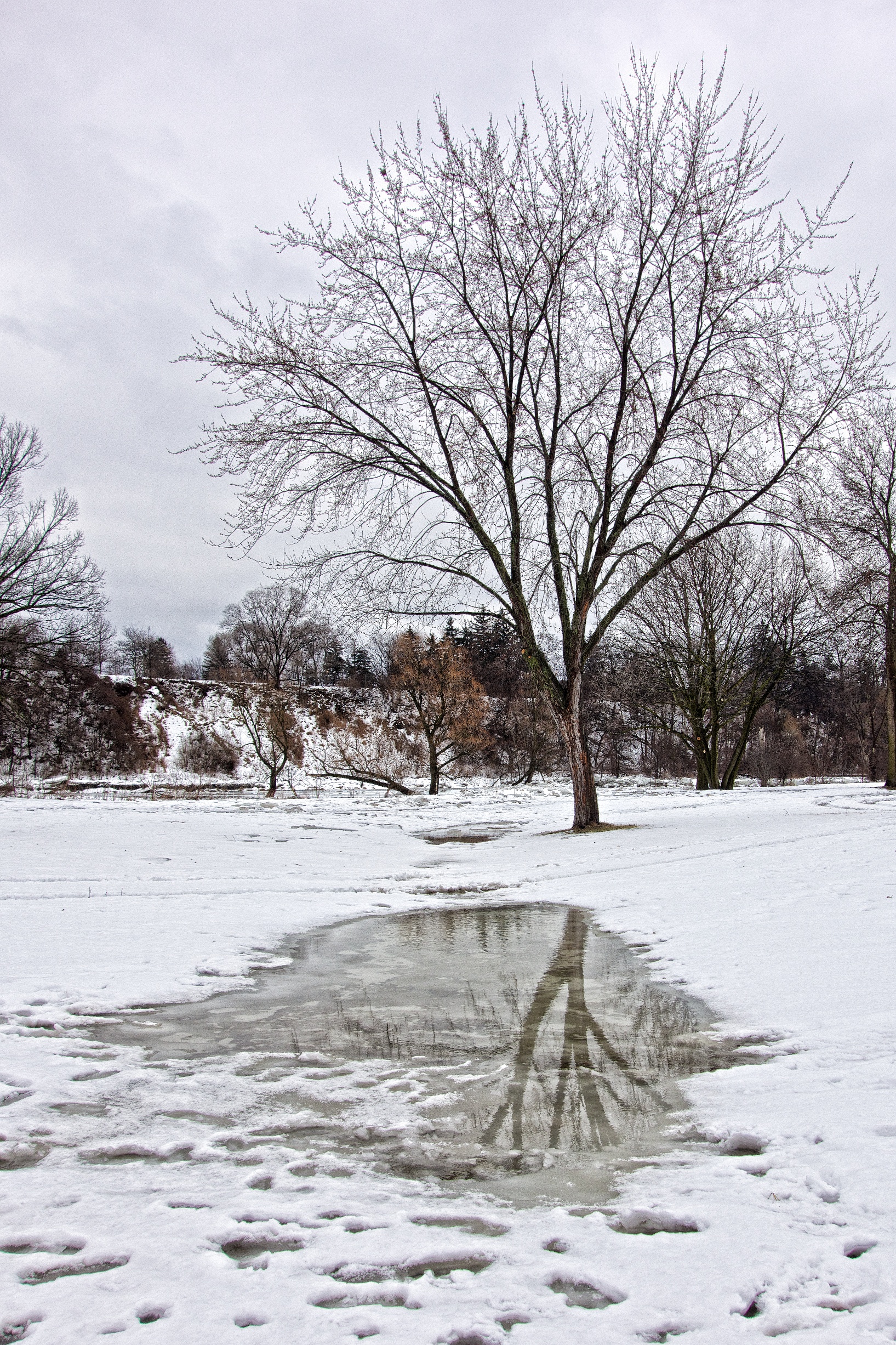
A maple is mirrored in slushy water.

A maple is mirrored in slushy water.

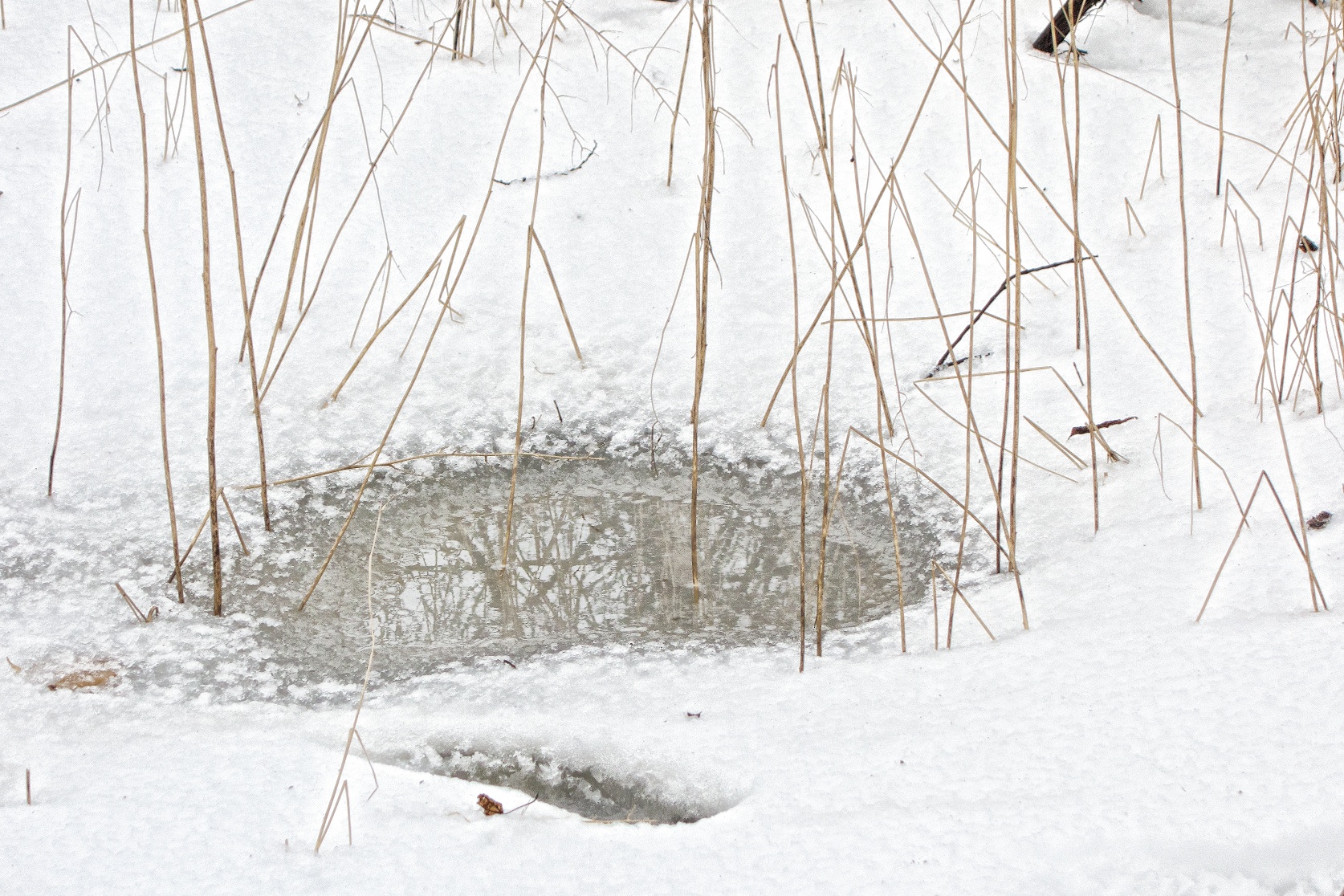
Last year's grasses stand by a small depression.

Last year’s grasses stand around a small depression.

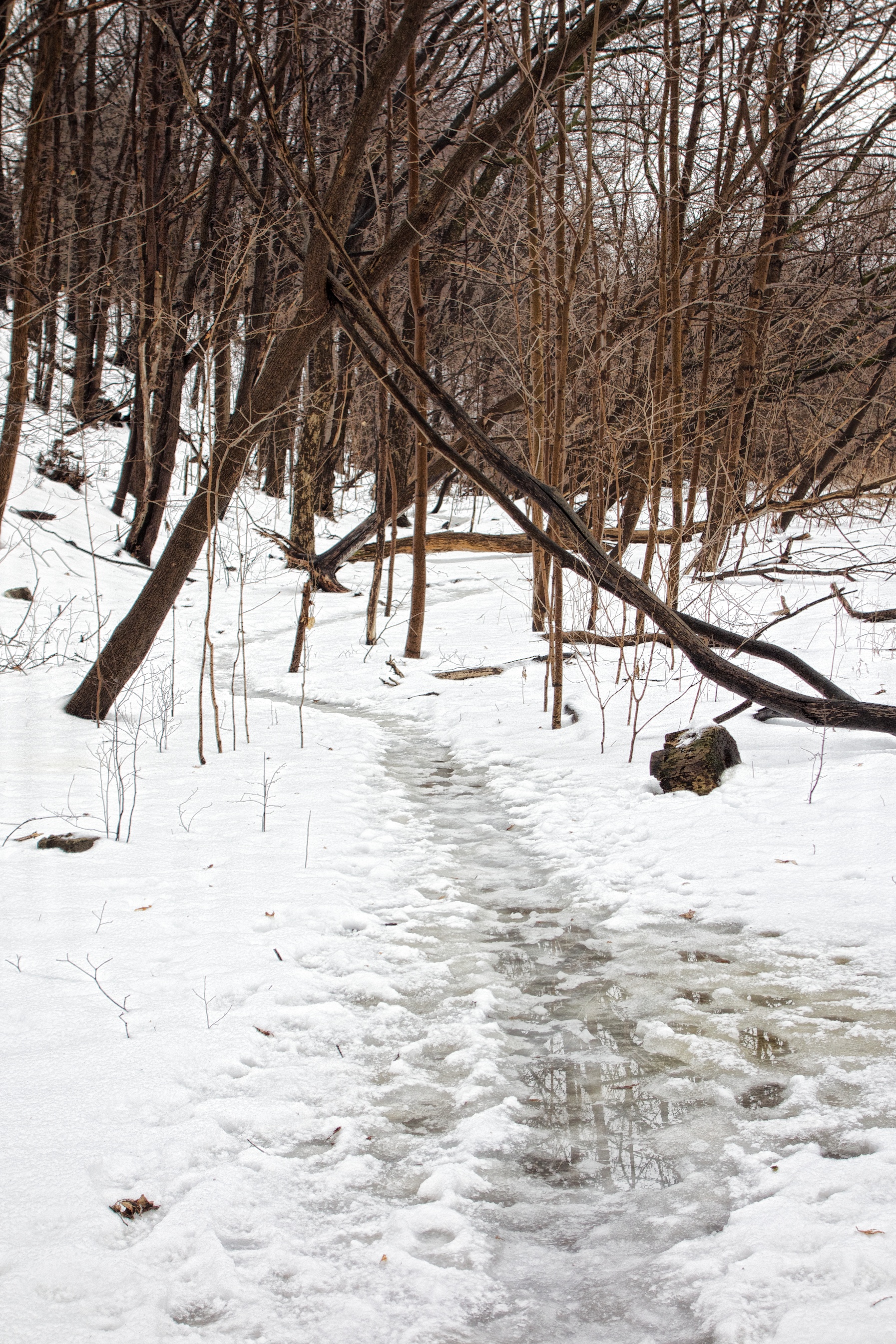
Wet branches are more colourful in the rain.

Wet branches are darker and more colourful in the rain.

A tale of two seasons.

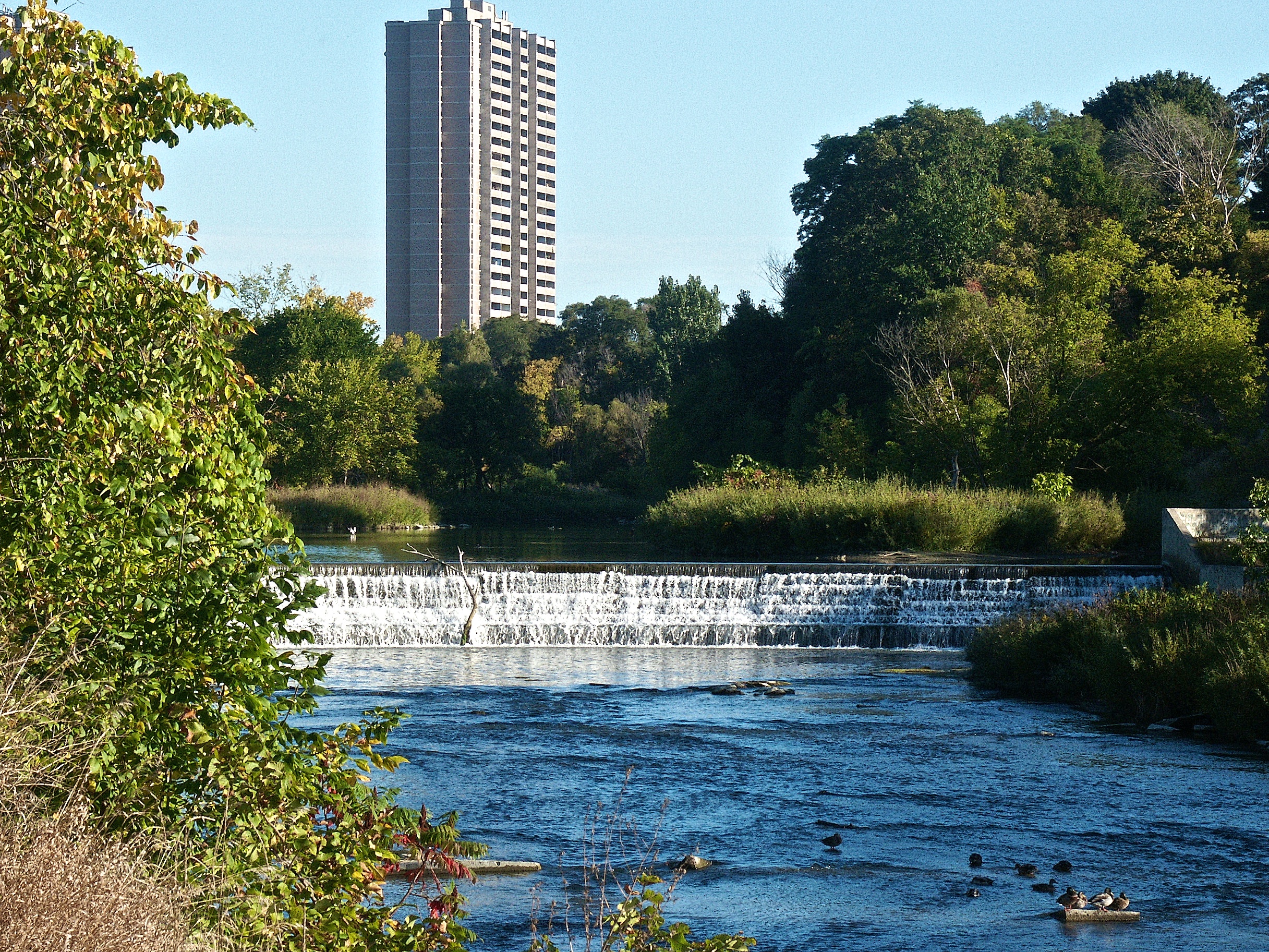
The difference between early fall and early winter is illustrated in these two photographs; no prizes for guessing which one was taken today. The park literally teems with billions of creatures (mainly insects) at the end of summer while on a day like today wildlife seems strangely absent, even though a fair number of animals stick around by hibernating or finding winter food.

In addition to seasonal differences, the two photographs are about 8 years apart which can be seen by the growth of the bushes on the left.

Copyright © 2013 by Roy Murray, all rights reserved.

29 September 2004.

Looking at today’s image, it’s hard to imagine anything surviving but in less than three months, the park will begin to stir as the sun’s warmth returns.

Copyright © 2013 by Roy Murray, all rights reserved.

6 January 2013.

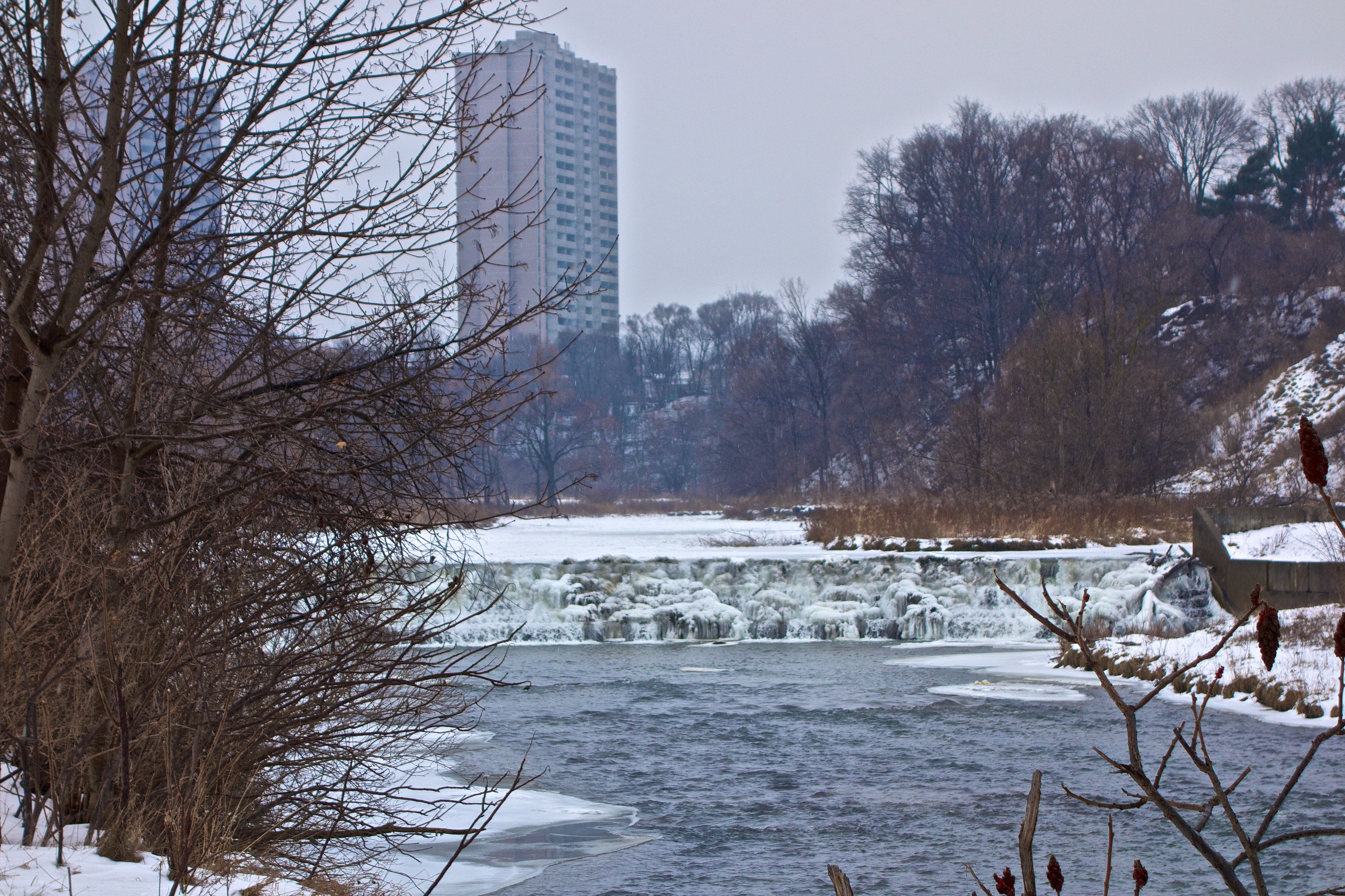
Off topic rant/ The apartment building in the photographs is one of a pair of notorious carbuncles built on Weston Road in the 1970s. These have been the subject of many a city compliance order and have become in some ways too big to fail. The landlord was recently given $1.8 million of taxpayers’ money to fix up the place. Hopefully the gift of a GO Station moving onto the doorstep should spare the taxpayer from further assistance to this alleged capitalist enterprise. /rant

Down by the dam.

Copyright © 2013 by Roy Murray, all rights reserved.

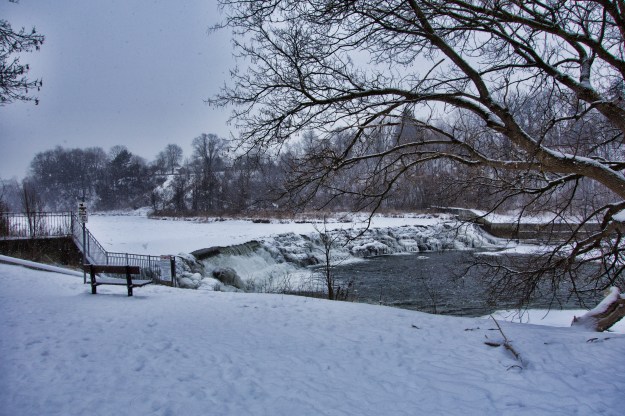
Frozen spray builds up on the steps of the dam. Can you see the sign to the left of the bench?

2013 01 03.

The dam in Raymore Park was one of several constructed after Hurricane Hazel in 1954. Designed to come into action during times of heavy rains, it’s purpose is to ease the pressure on downstream areas by flooding the nearby plain upstream. Unfortunately, this dam is so tall it blocks the passage of migrating fish. To solve this problem, a denil fishway (better known as a fish ladder) was constructed around 2000 at a cost of around $250,000. The idea is to allow migrating salmon and trout to climb this otherwise insurmountable barrier by building a series of easily managed concrete steps. Water flow is moderated using metal baffles at each step. The entrance to the fish ladder is on this side of the dam at the base of the falls and fish can be seen congregating there in spring and fall migrations (along with unscrupulous fishermen). The ladder was expensive and considerable ongoing maintenance is required before each migration to clear twigs and other debris placed there by opportunistic beavers. I always joke that it would have been cheaper to transport the fish by taxi.

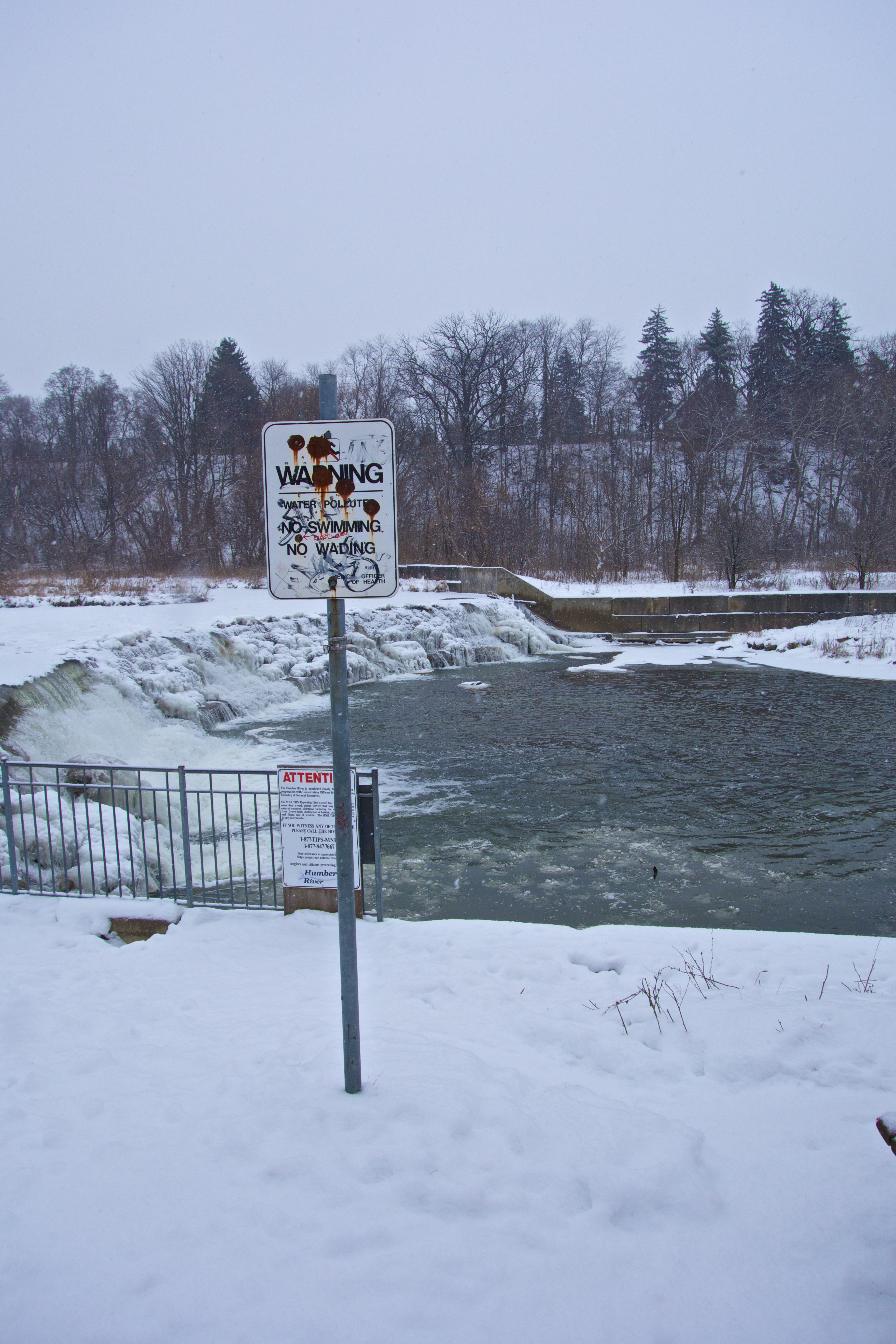
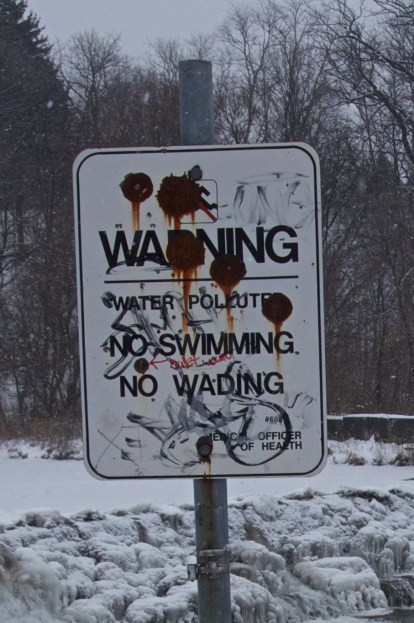
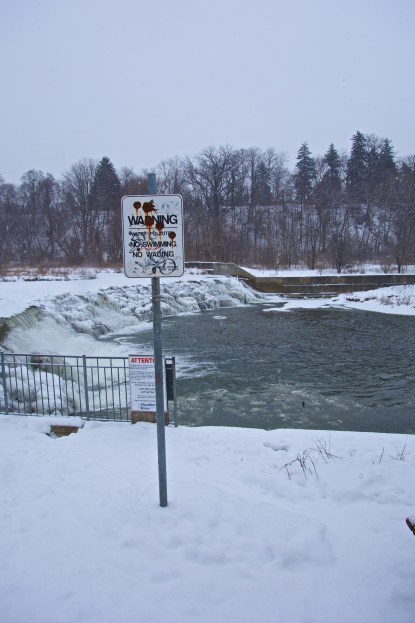
The dam is a pretty sight in all seasons. However, just as people might think they are in some idyllic place – a nirvana in the city, the sign by the dam is designed to knock all that nonsense out of you.
Copyright © 2013 by Roy Murray, all rights reserved.

How many bullet holes can you count?

In addition to informing us that the water is polluted, somebody has told us that the sign is riddled with bullet holes by helpfully pointing out one of them. In other words, if the pollution in this beauty spot doesn’t get you; a cap in your ass might. I wonder who’s doing the polluting or if this ancient sign is relevant any more? Obviously this sign has just faded into the background and park officials no longer see it.
Copyright © 2013 by Roy Murray, all rights reserved.

This tourist moment is brought to you by…

That sounds like a job for me – phone the city and get it removed.