Tag Archives: Humber River

Signs of Fall: Atlantic Salmon are climbing the ladder.

Two hundred years ago, Atlantic salmon along with many other varieties of fish were plentiful in the Humber. Gradually, settlers built dams and toxic waste from sewers, factories and pulp mills was dumped into the river. The combination killed just about everything in the water and Atlantic salmon were extirpated from the Humber as a result. In 1959, the opening of the St Lawrence Seaway saw the accidental introduction of the parasitic sea lamprey which killed the rest. An ambitious program lasting several years aims to restore a self-sustaining wild Atlantic salmon population to the Humber. Each spring until 2015, salmon fry are being released all along the Humber. Most weirs along the river have been adjusted to be too high for lamprey but low enough for migrating fish.

In Raymore Park, the 3 metre weir remains an insurmountable barrier to all aquatic life and to work around that, a denil fishway, (better known as a fish ladder) was built around 13 years ago.
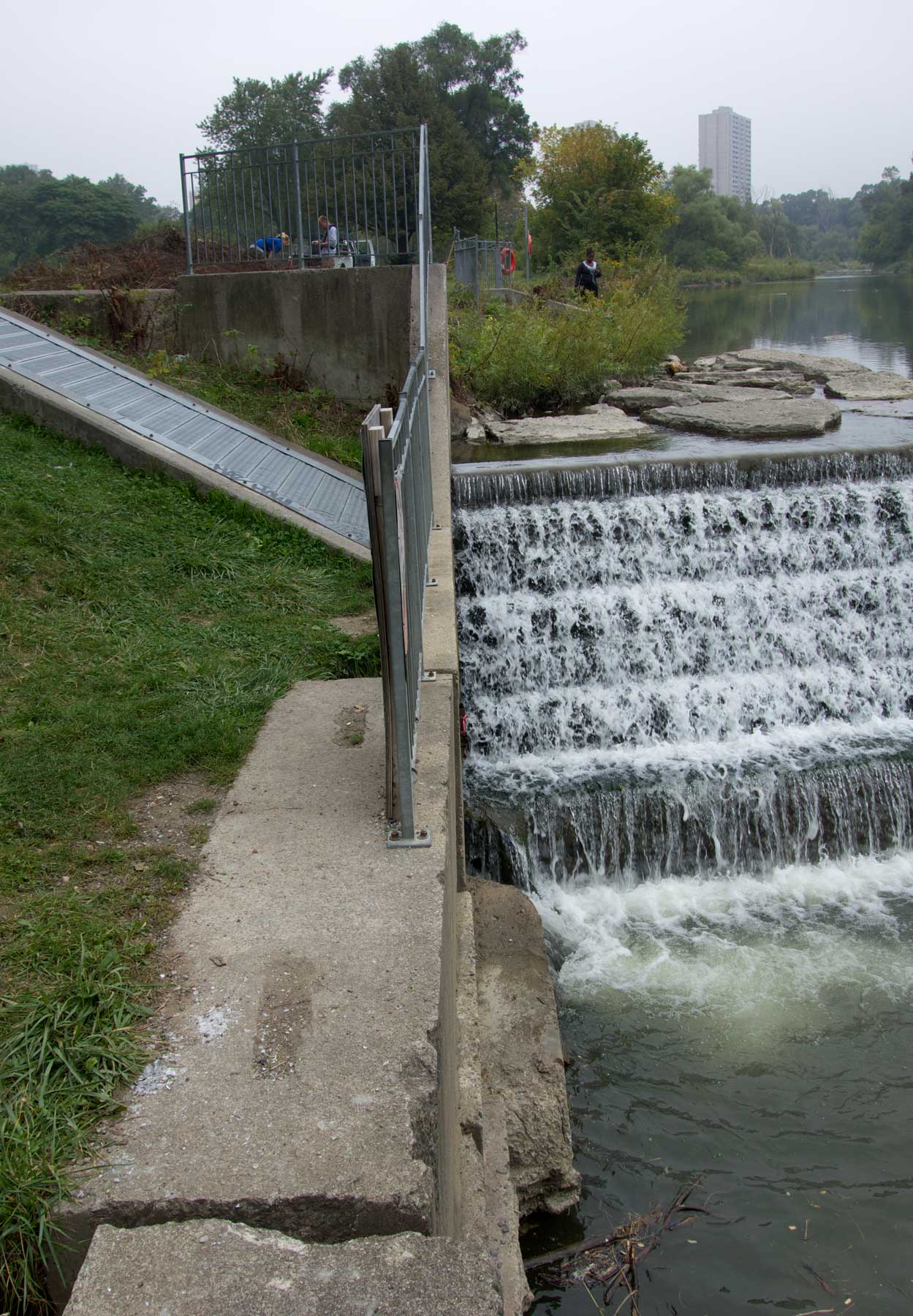
The fish ladder entrance is on the left just below the weir.

The fish ladder entrance is on the left just below the weir.

The fishway provides a gentler current and slope so that large fish can make their way up the ‘ladder’ with rest stops along the way. Unfortunately, beavers stuff the fishway with wooden debris in the hopes of creating a dam. Needless to say, the blockages need to be cleared several times a year so that fish can migrate to their spawning grounds.

On Friday, two workers were clearing the way for the salmon and told me that when water levels rise (as they did on Saturday), these large Lake Ontario fish will be able to access and use the ladder. From there they will swim upstream to their birthplace, spawn and return to the lake – assuming they can run the gauntlet of people out to get them.
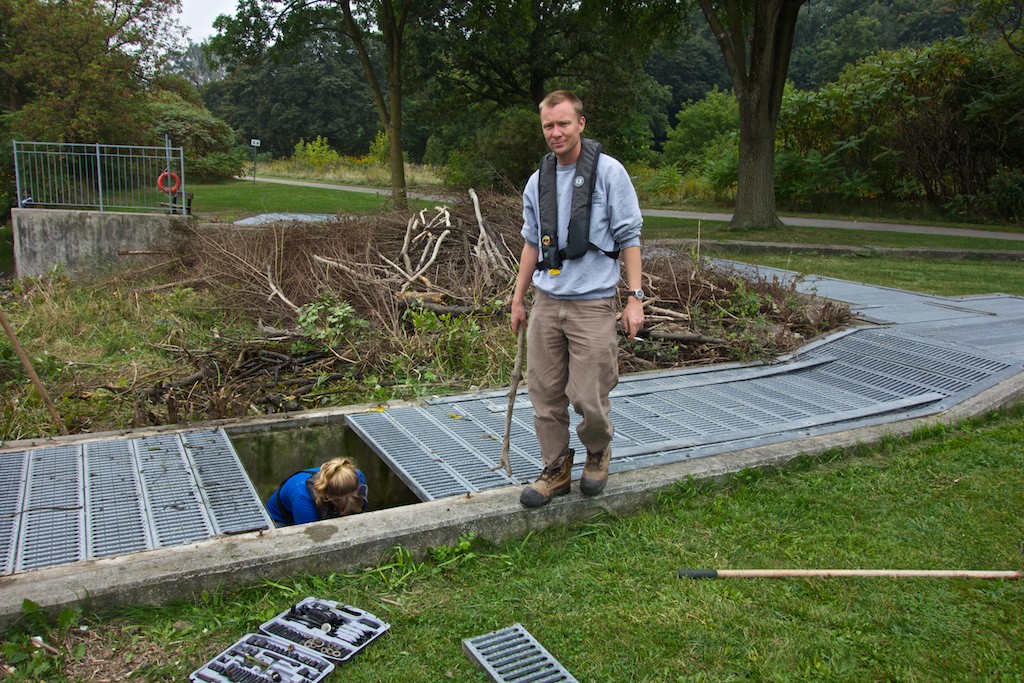
TRCA workers clear the top of the fishway.

Toronto and Region Conservation Authority workers clear the top of the fishway.

Since the ladder was built I have watched in vain for a fish to appear at the exit. Today, (Tuesday September 24th) I had a premonition and with the camera ready, just like that, a fish emerged. The water was a little murky and I was a little late but here’s the evidence; the ladder works.
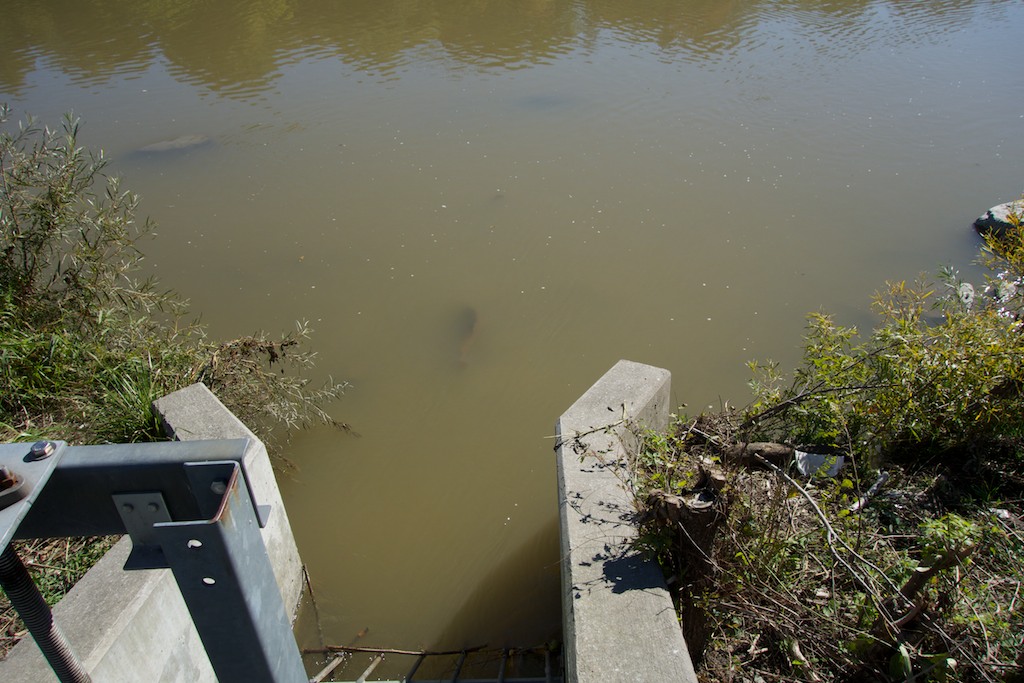
The salmon continues its journey up the river.

The salmon (middle top of photo) continues its journey up the river.

In spite of their impressive size, salmon will soon be seen along the Humber as far upstream as Bolton and Palgrave.

For its part, the TRCA is studying the further removal of obstacles to fish migration along the Humber and the weir in Raymore Park is the highest. Lowering and notching of the weir will allow the fish to leap upstream the old-fashioned and low-tech way. This will end the high maintenance costs of the fishway and finally allow the beavers to block it to their hearts’ content.

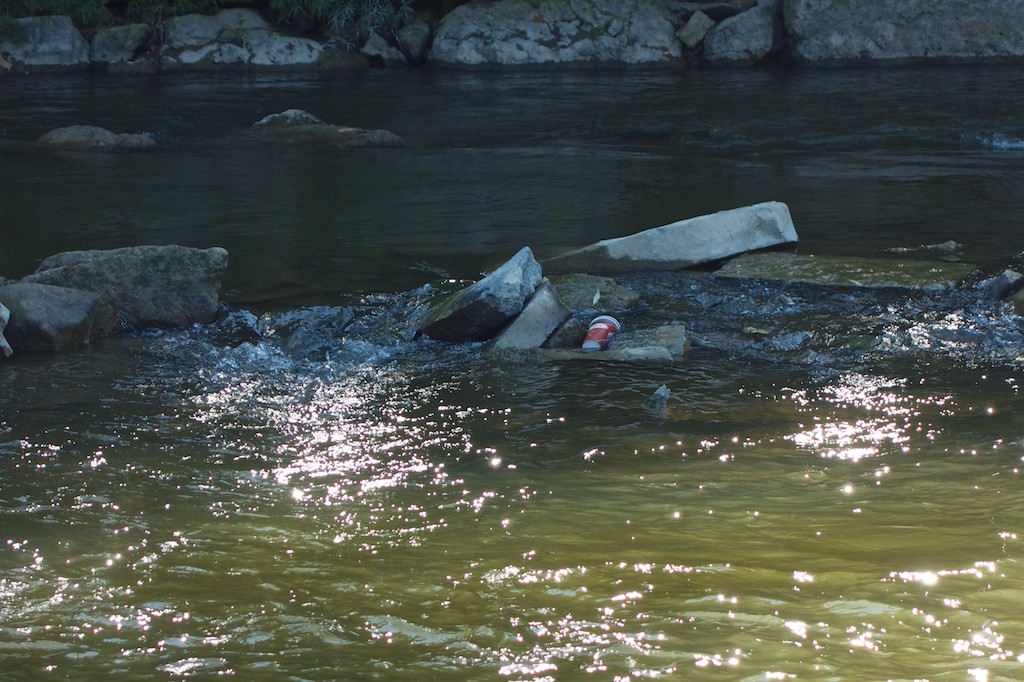
Who’s poisoning the Humber?

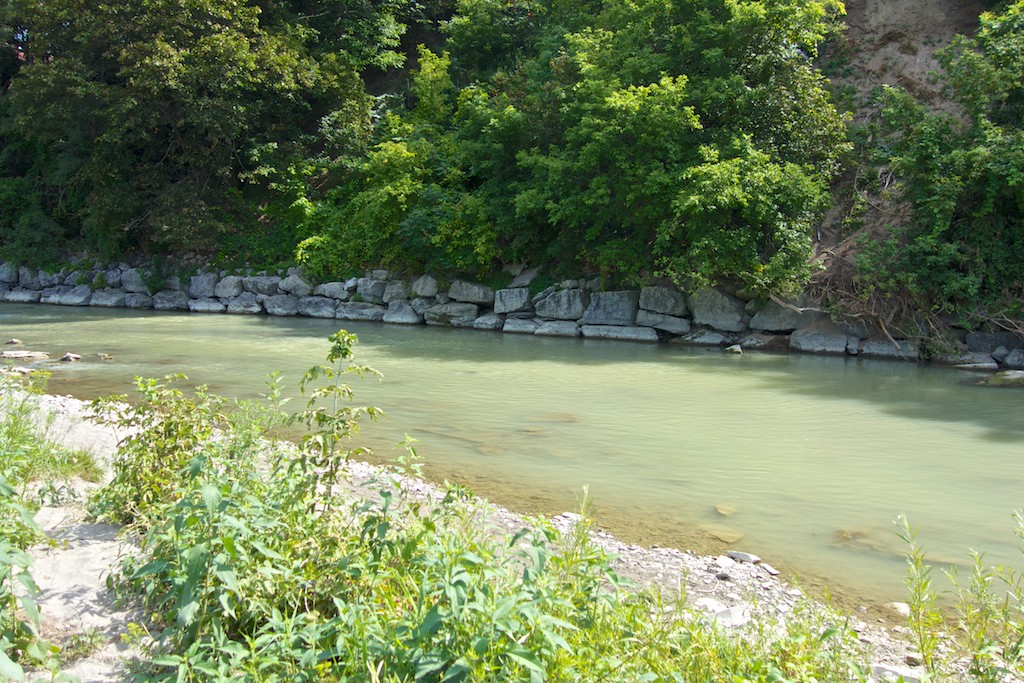
After a prolonged dry spell, it’s rare that water in the Humber is cloudy. Today, water in the river had an unpleasant opacity to it. I’ve seen this happen before under similar conditions and attempted to trace the source on my bike but it seems to be well north of Weston. You can see the comparison between today (August 25th) and last Monday (19th).

Notice that the spill is recent as water close to the shore is still clear.

Notice that the spill is recent as water close to the shore is still clear.

For comparison, Monday's view of the same spot.

For comparison, Monday’s view of the same spot.

Raymore Park has a beach

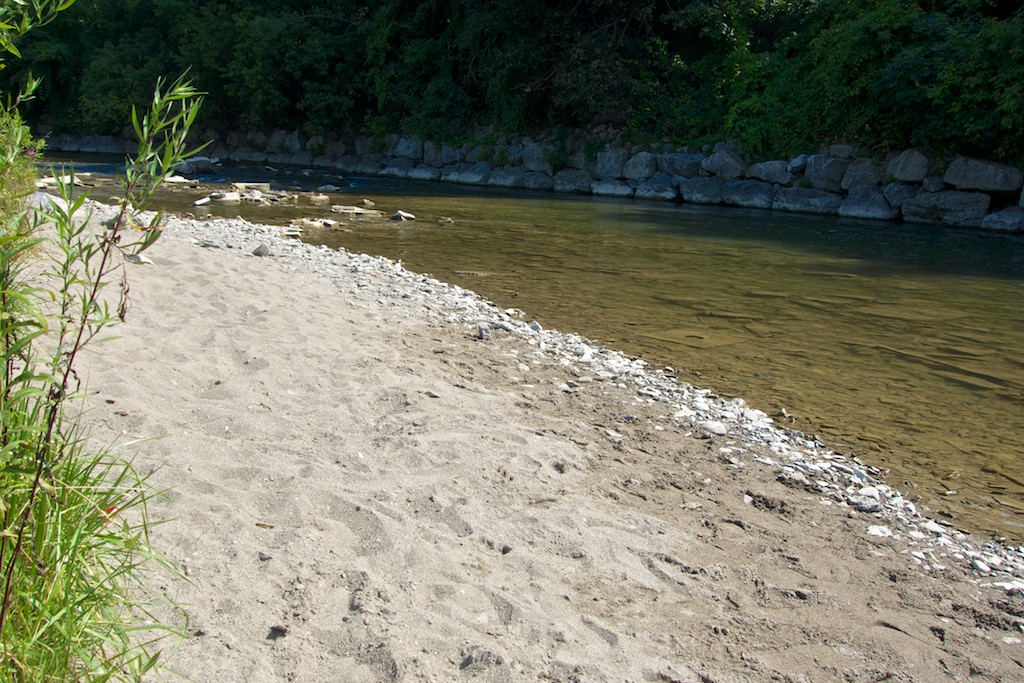
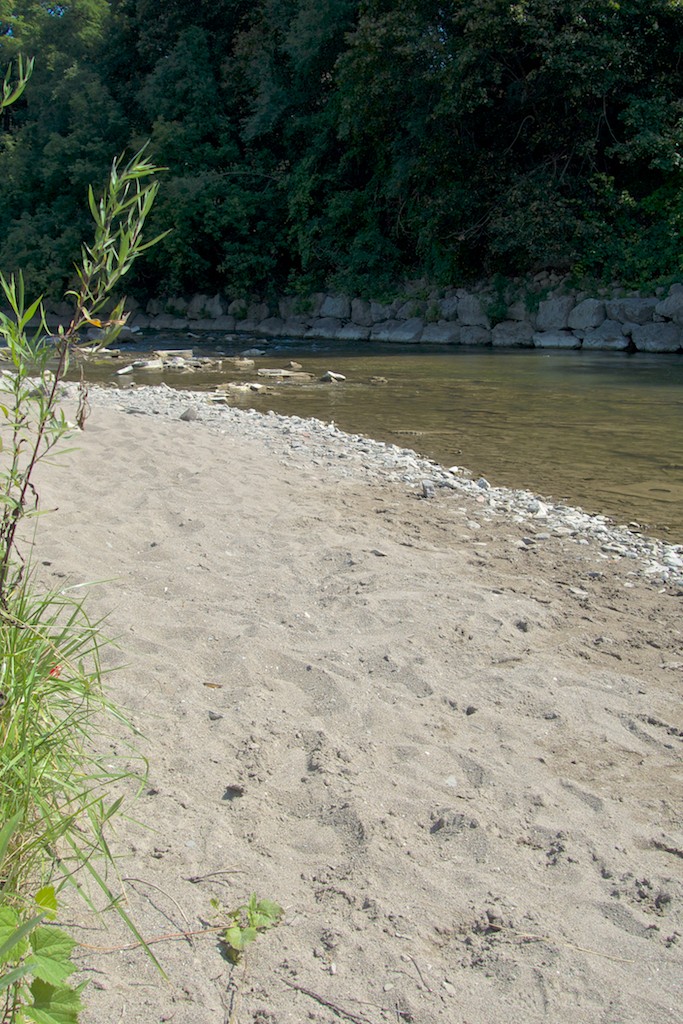
There are over 1400 Toronto parks, some tiny postage stamps just a few square metres while others cover vast ranges. The best known, High Park covers 161 hectares (400 acres) while Mimico Waterfront Park has over a kilometre of shoreline. Raymore Park, while not well known is larger than most, but to me its appeal lies in the sheer variety of features and habitats tucked away in various corners. One such feature is formed just past the inside of a very sharp curve in the Humber. After a rainfall, heavier sediment in the form of sand is carried along until the water slows and the sand is deposited. The beach actually gets built up after each storm and has been there for many years.

Looking north; the curve of the river allows sandy sediments to be deposited here.

Looking north; the curve of the river allows sandy sediments to be deposited here.

So it’s not Bondi or Waikiki. It is however a quiet and scenic place to sit and reflect in the middle of a big city. If you stay quiet for a few minutes, you’ll be amazed at the wildlife that will appear – take your pick from toads, egrets, hawks, blue herons, mallards, mink, beaver, fox, coyote, deer etc.

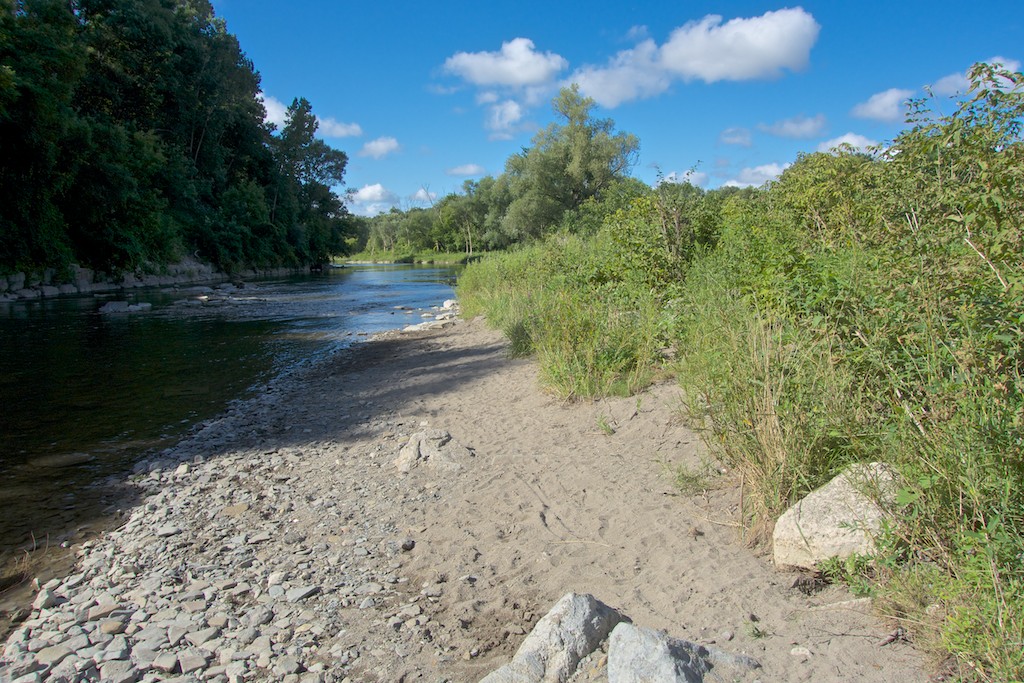
Before Hurricane Hazel in 1954, the small community living here would use the beach in summer for picnics and as a way for children to cool off.

Looking south along the shoreline.

Looking south along the shoreline.

Fossils

When I was growing up in England I spent many a happy hour looking for fossils in Weardale, the upper reaches of the river Wear (pronounced as in weir). Raymore Park has lots of river bed in which to go fossil hunting, especially in summer when water levels drop. Many of these fossils date from the time 450 million years ago when Toronto was below the equator, covered by a shallow sea and the days were only 22.5 hours long (ah nostalgia).

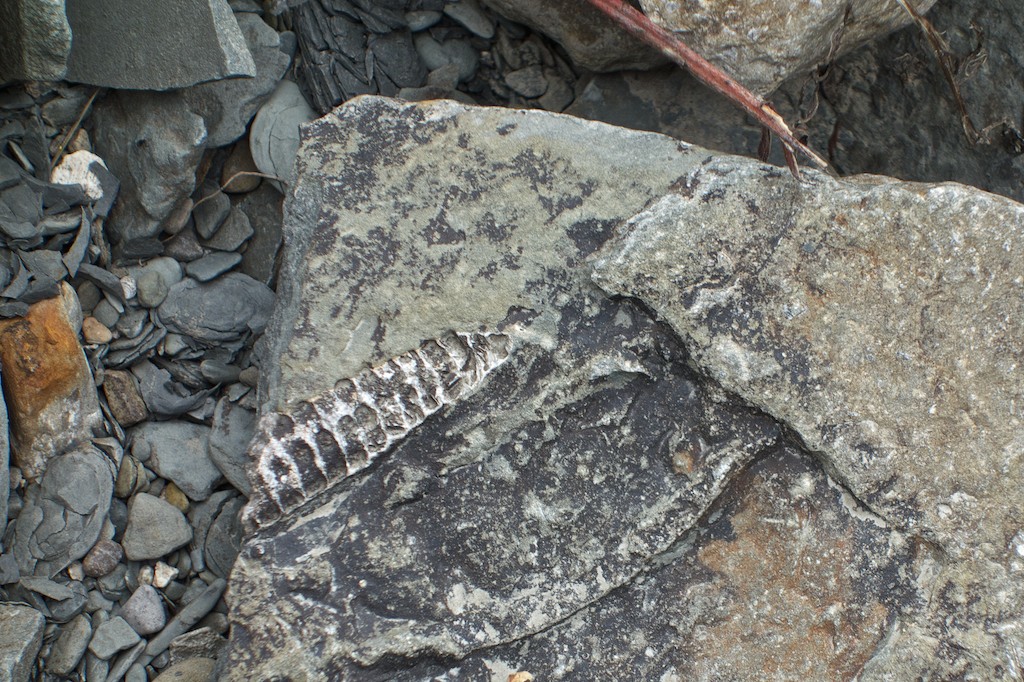
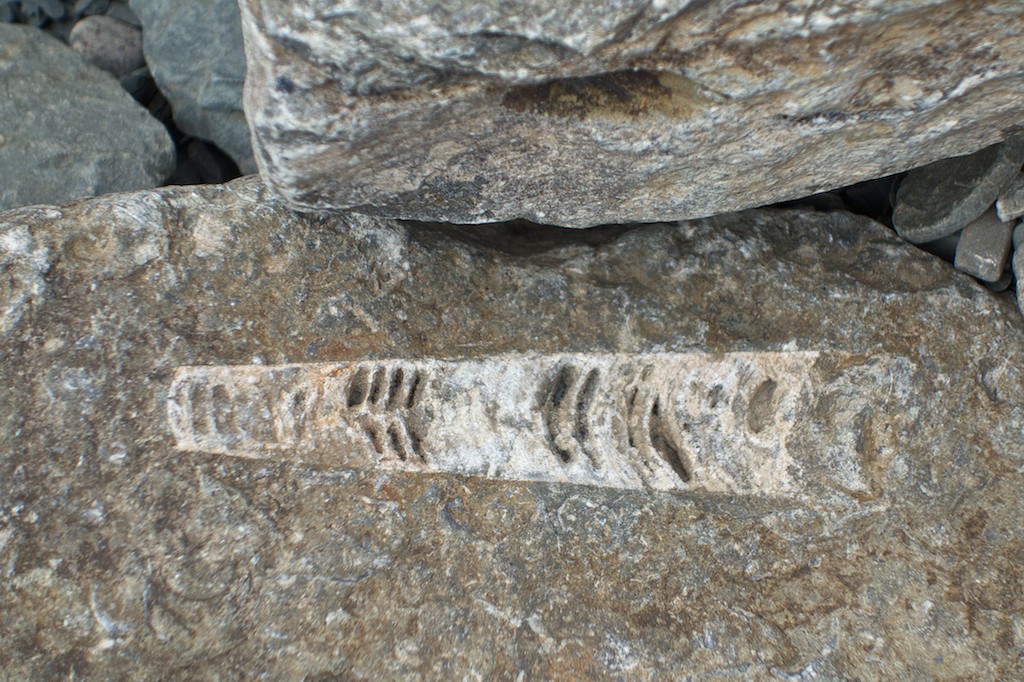
Once you go fossil hunting, your eye develops a sense for it and you really don’t have to look very hard. The constant churning of the river brings new rocks to the surface so there are new discoveries to be made with every visit. Here are a few that I photographed along the Humber the other day without too much effort.

Trilobite

A cephalopod, ancestor of squid and octopus.

Trilobite

Another cephalopod

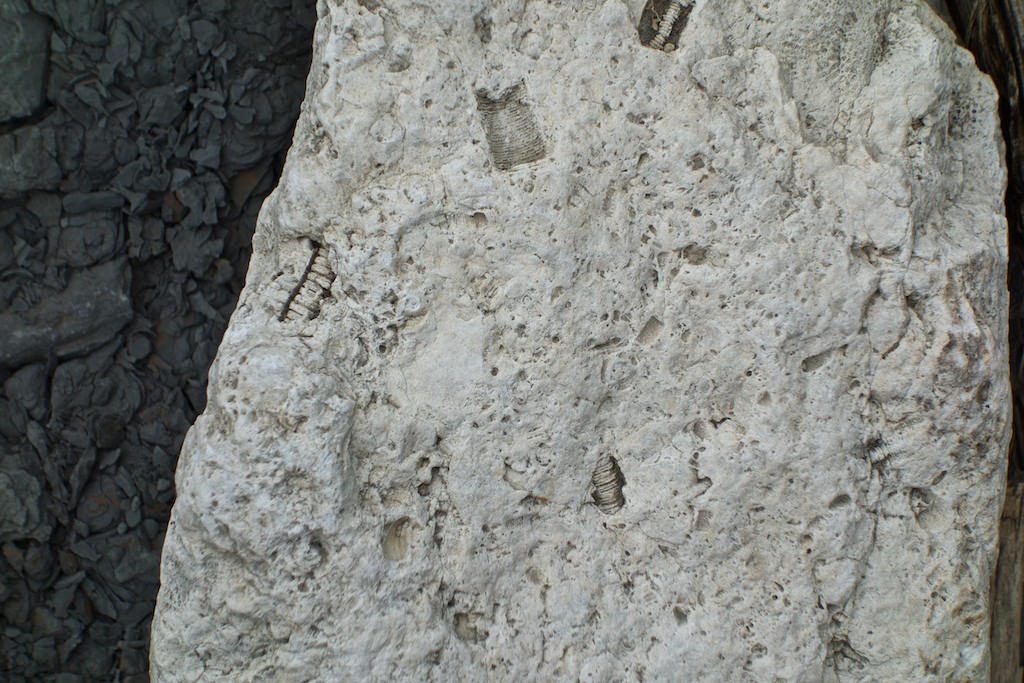
Calcium

This limestone rock possibly washed downstream from the upper reaches of the Humber contains the fossils of hundreds of creatures.

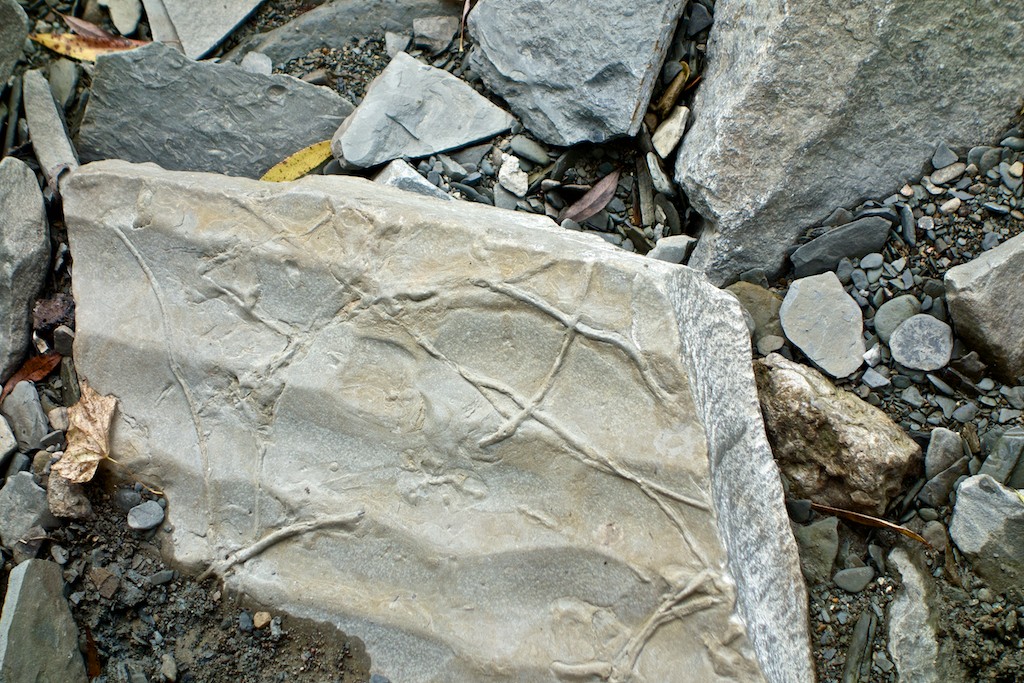
Worm tracks on a rippled surface.

Worm tracks on a rippled surface.

It’s a great adventure for kids to be able to find fossils and look at these exotic sea creatures who made their mark (literally) hundreds of millions of years ago.

A beautiful day in Raymore Park

We’re having a spell of mild weather and a refreshing change from the 27 degrees and humidity that we normally experience.

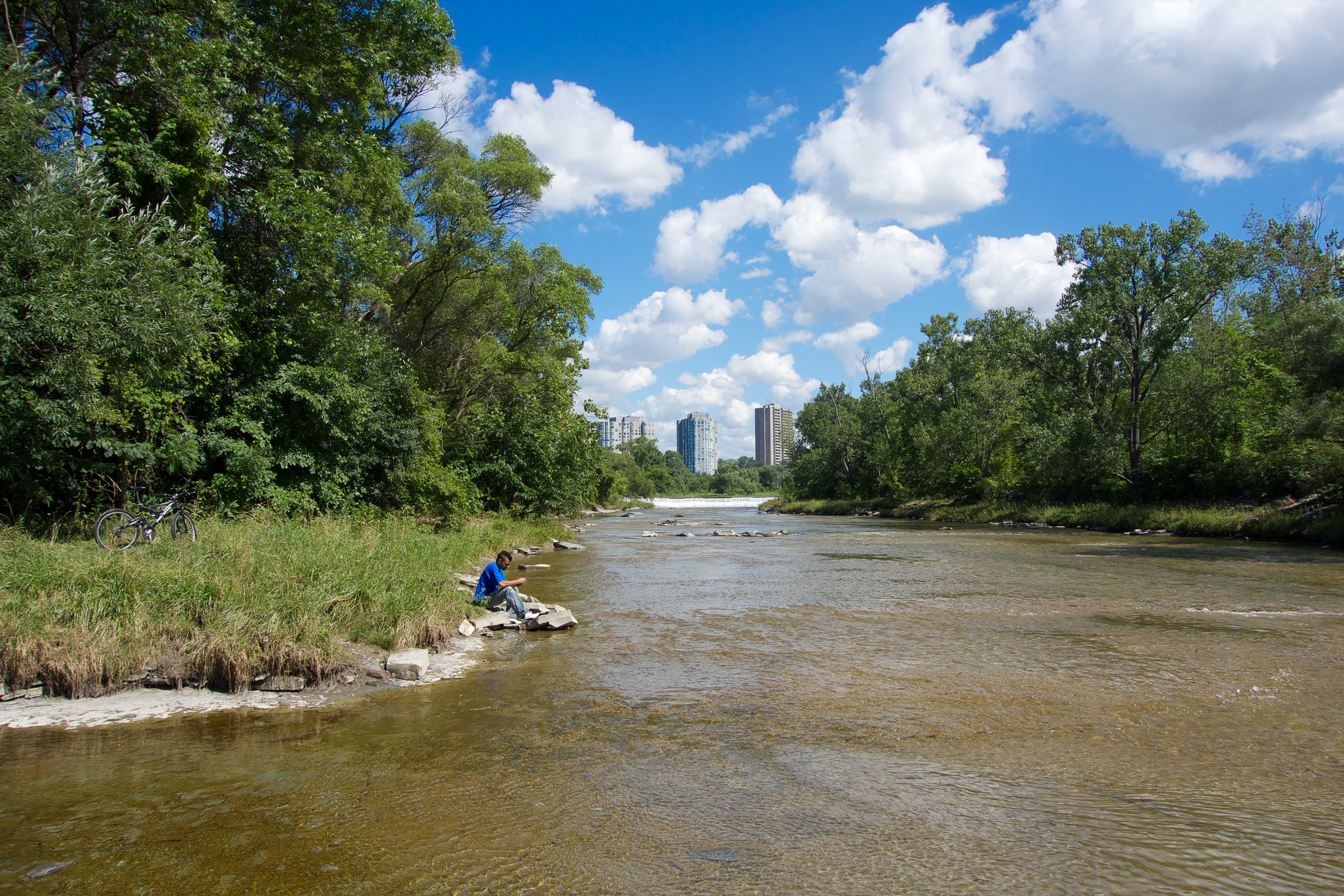
Today, Mugsey and I explored the river and came down to the Humber Creek. This gentleman had parked his bike and was checking his phone and it seemed like a good composition.

Forget about city life and sit by the water for awhile.

Forget about city life and sit by the water for awhile.

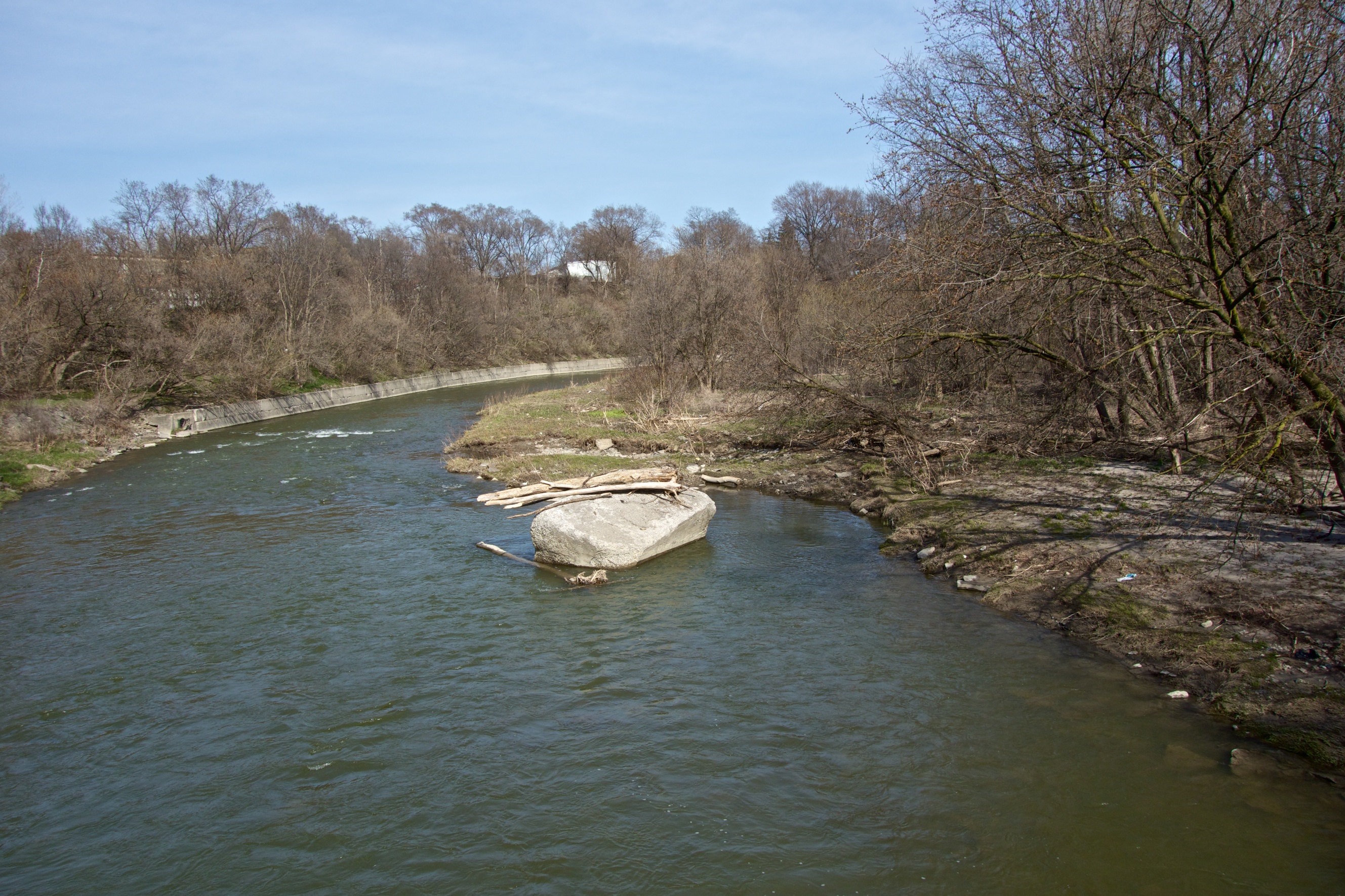
Old footbridge abutment turned by big storm.

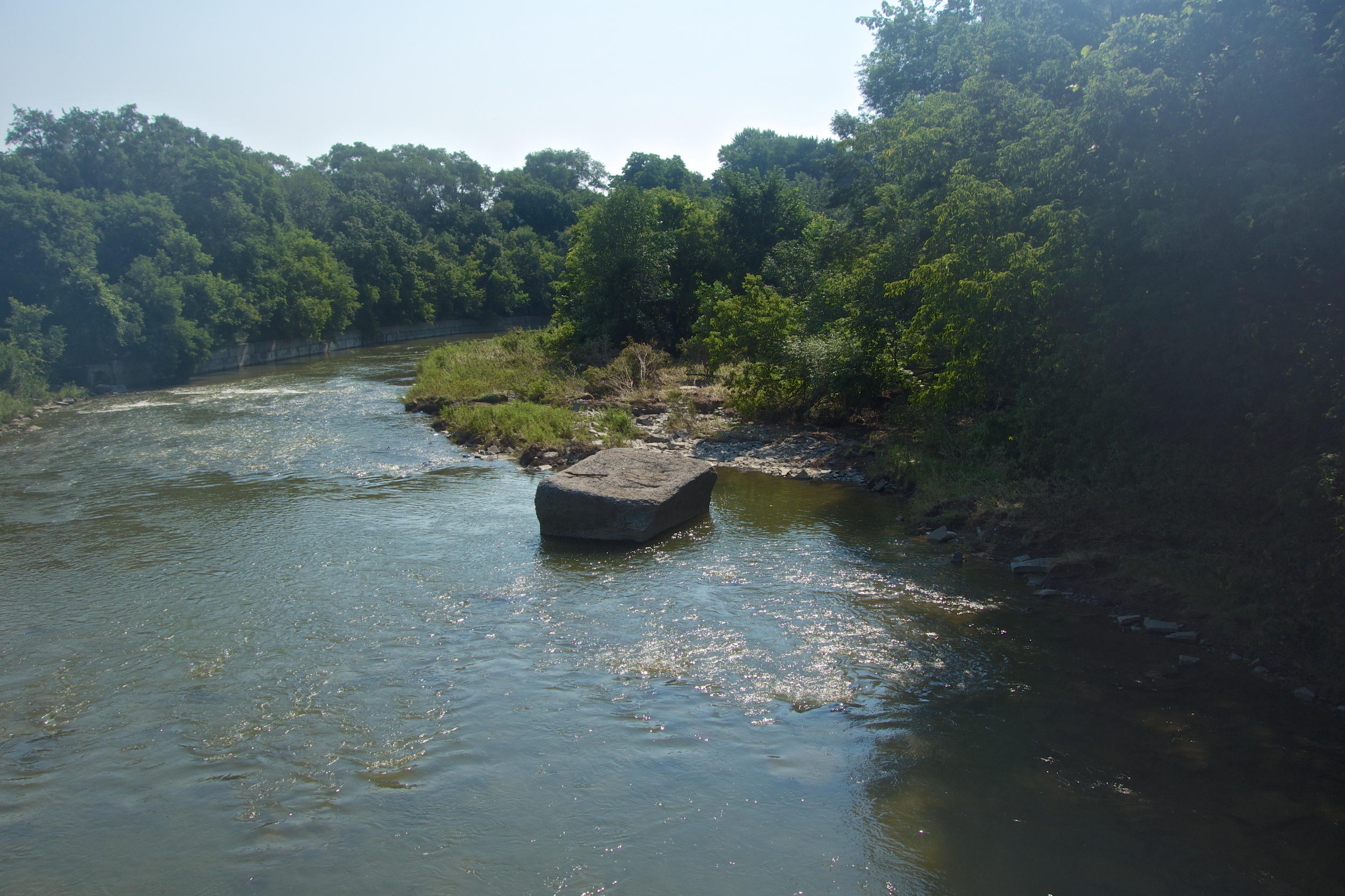
Its a subtle change but during the July 9th storm, the old bridge abutment was shifted backwards by the force of he river. The old bridge was destroyed in 1954 during Hurricane Hazel and the abutments have remained, more or less in place to this day. There is a strong theory that before its destruction, the bridge held together long enough to form a dam which sent the full force of the river from the bottom left of the picture into the small community living in the area to the right.

The before photo taken last April.

The ‘before’ photo taken this April.

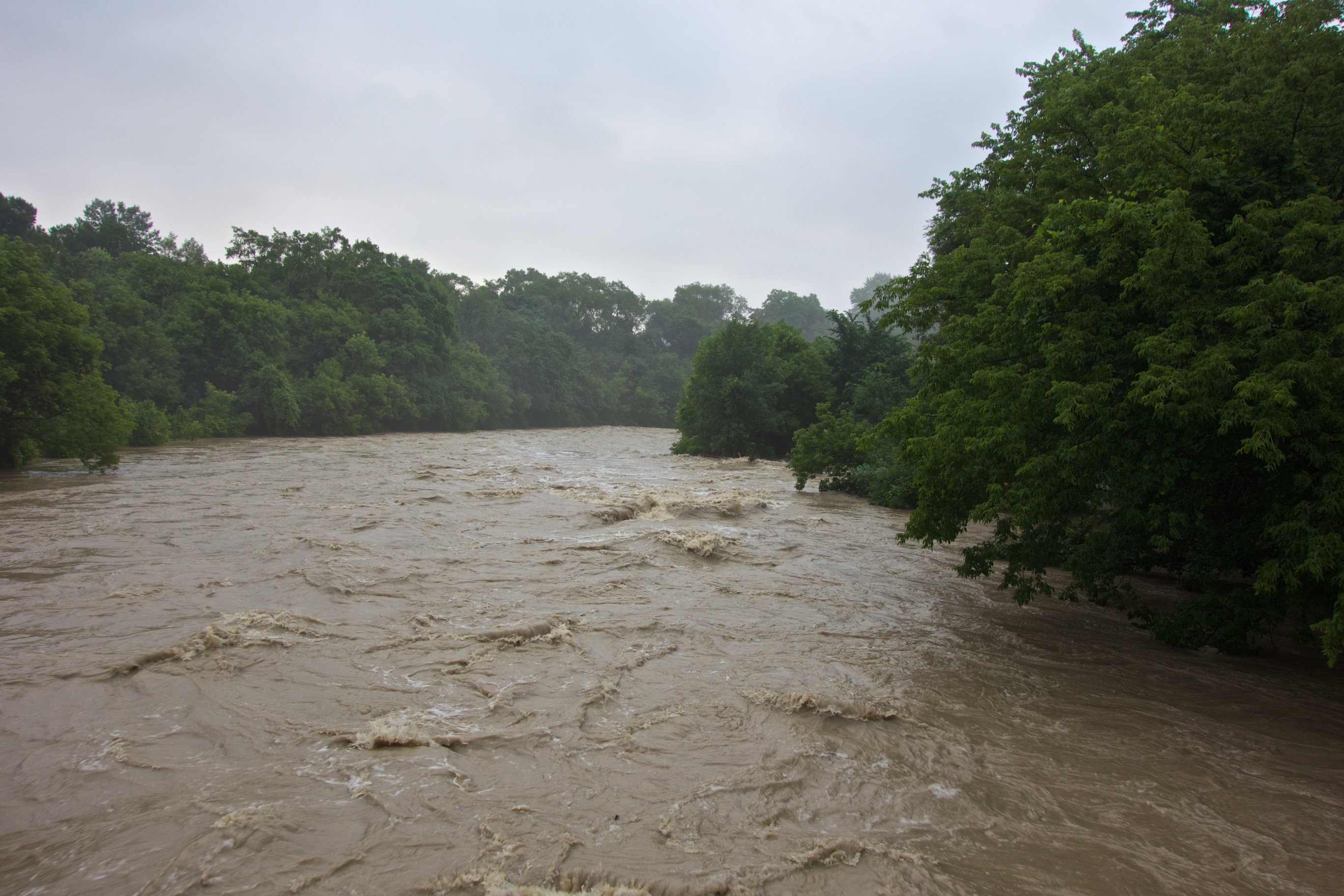
The Humber in full flood, July 9, 2013

The same view with the Humber in full flood, July 9, 2013

The after photo taken July 23.

The ‘after’ photo taken July 23.

I have tried to take the comparison shot from the same viewpoint and with water levels roughly the same. To my untrained eye it looks as if not only has the big lump of concrete been rotated backwards by the force of water, it also seems as if it is riding higher, perhaps having been pushed onto higher ground.

Or maybe it’s my imagination…

July 8th flood aftermath

At the end of Raymore Park is a hill that takes the path over a small tributary of the Humber. The tributary passes through a culvert under Scarlett Road. Quite a bit of shale was moved by the force of water and this was projected through the culvert and has created a dam.

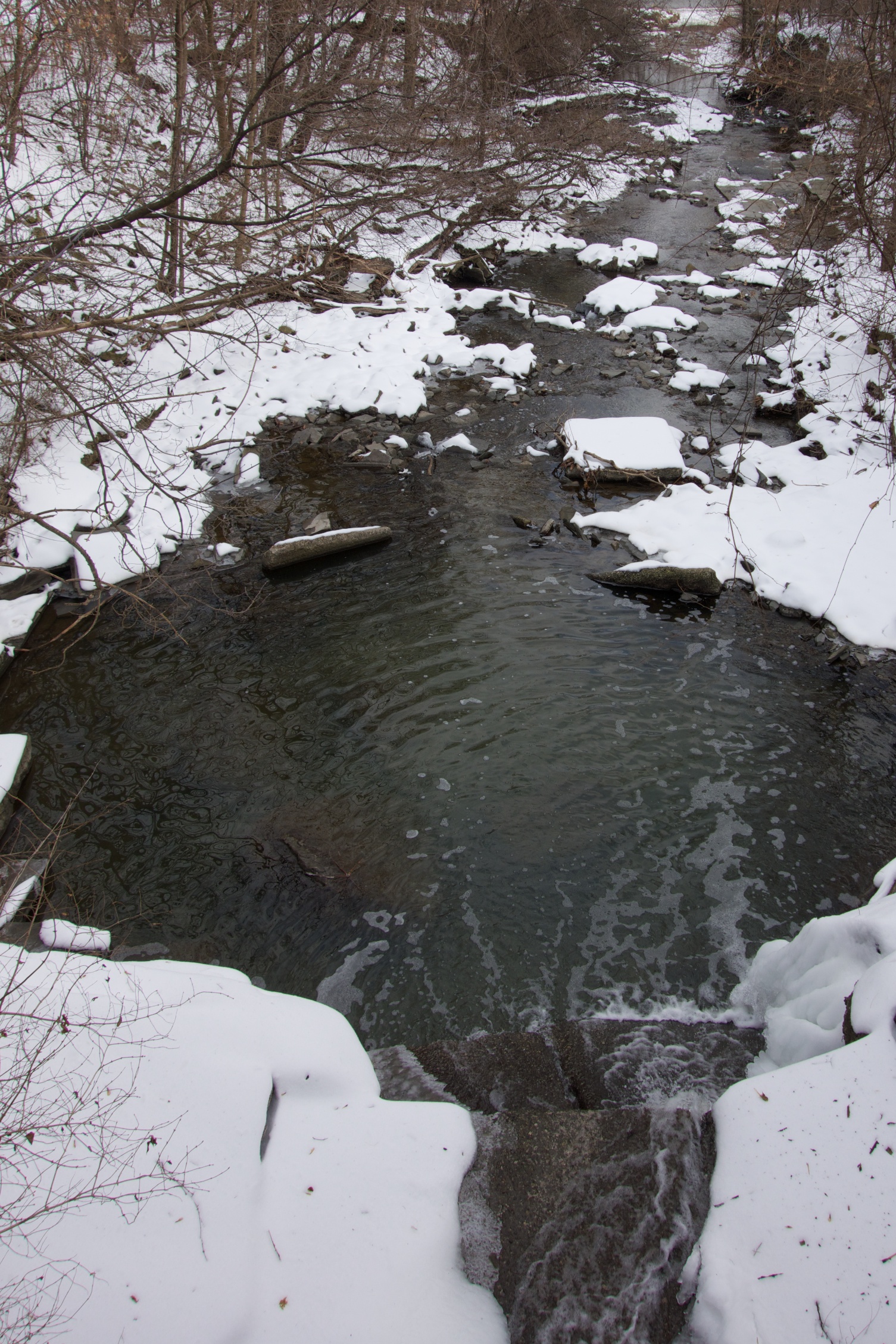
Humber Creek last January

Humber Creek last January

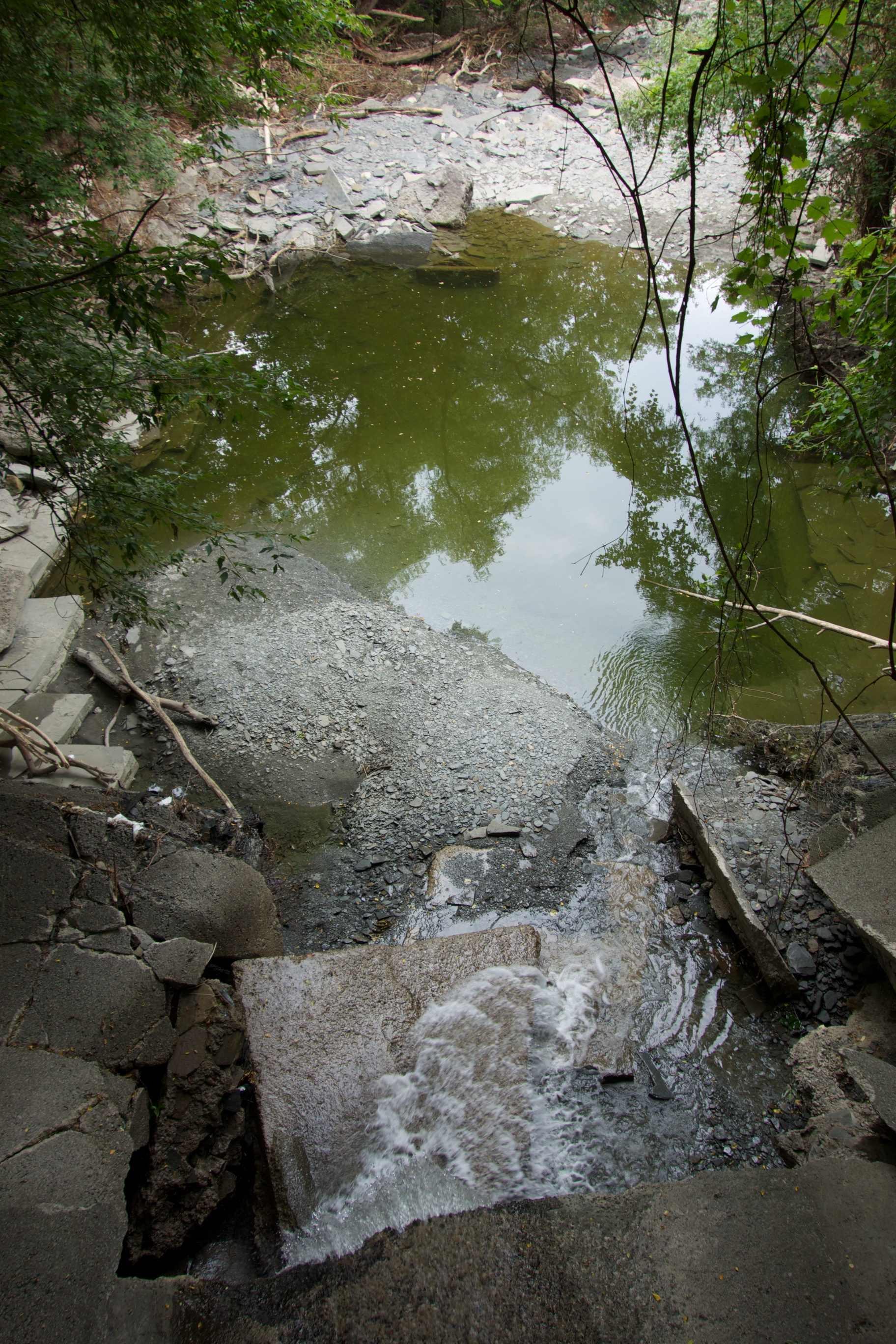
After the huge volume of water and silt projected onto the creek bed, the creek is dammed forming a large and quite deep pool.

July 2013, the creek is blocked with silt.

July 2013, the creek is blocked with silt (top of photo).

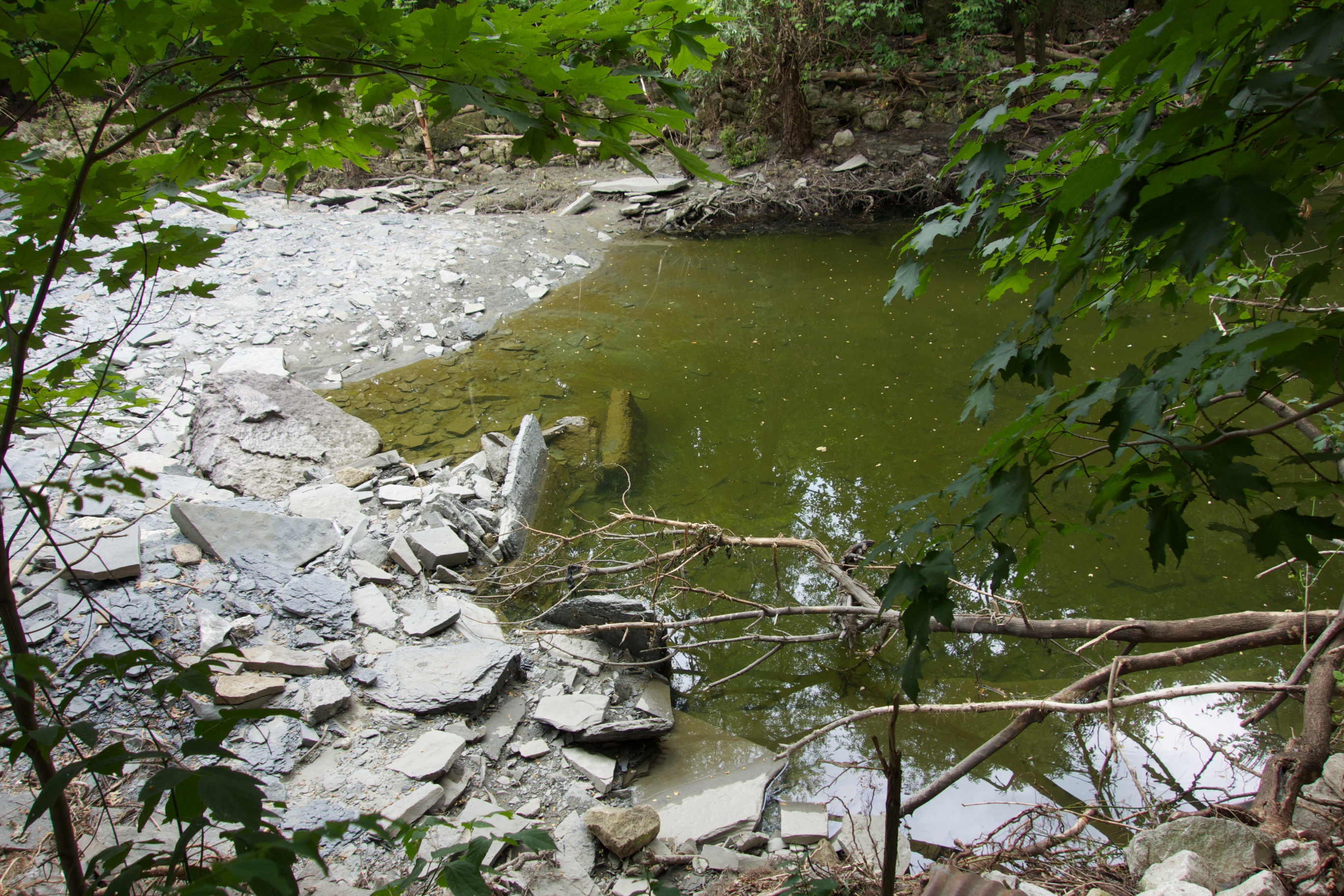
Silt forms a dam blocking passage of water creating a deep pool.

The new dam on the left blocking passage of water and creating a deep pool.

A new island.

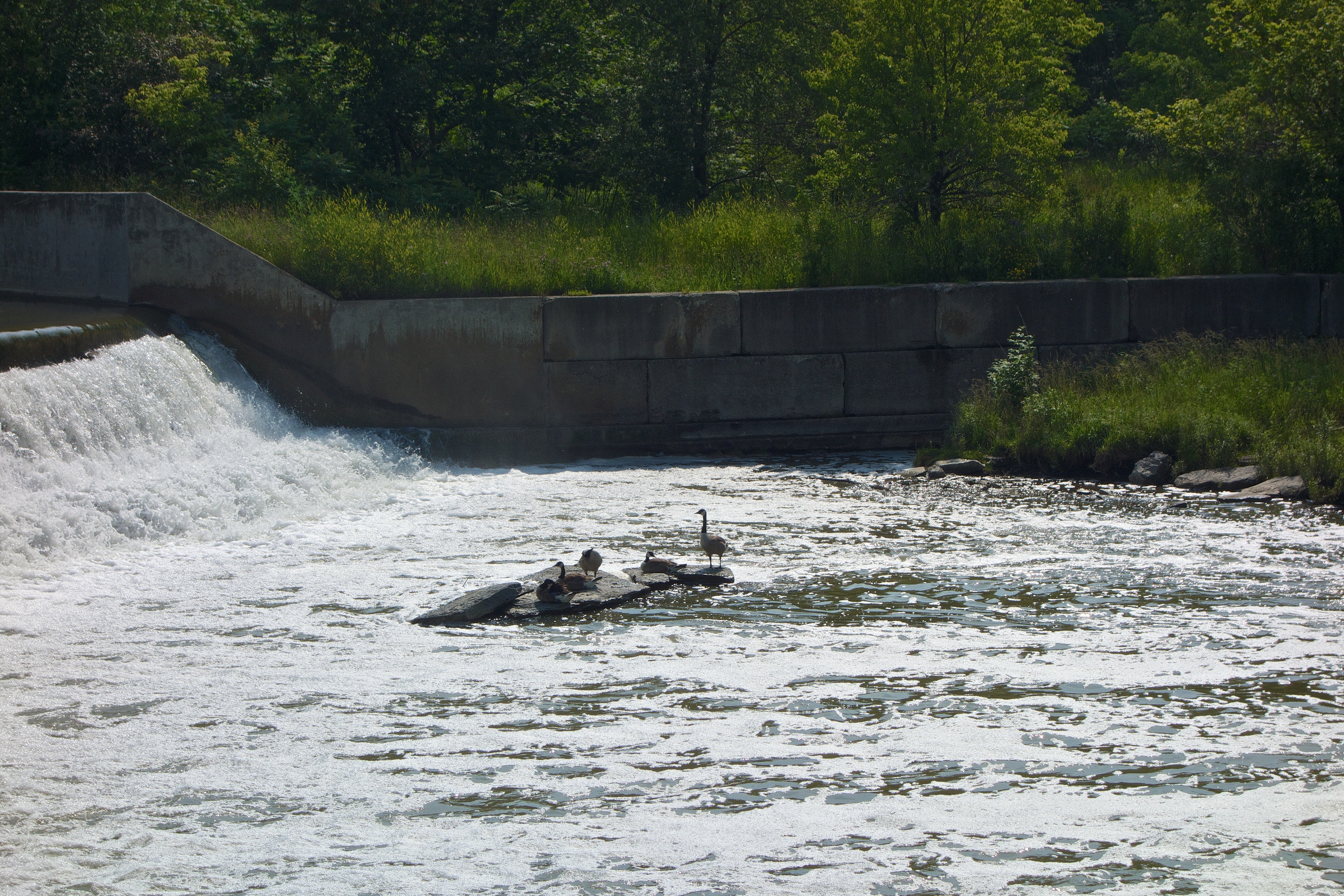
Last winter, huge amounts of ice and water coming over the weir seems to have pushed up some bedrock to form a small island.

These geese have a safe haven below the weir.

These geese have a safe haven below the weir.

It will be interesting to see if this will stay or be swept away next winter. For now, it’s a great spot for Canada Geese.

New toad habitat.

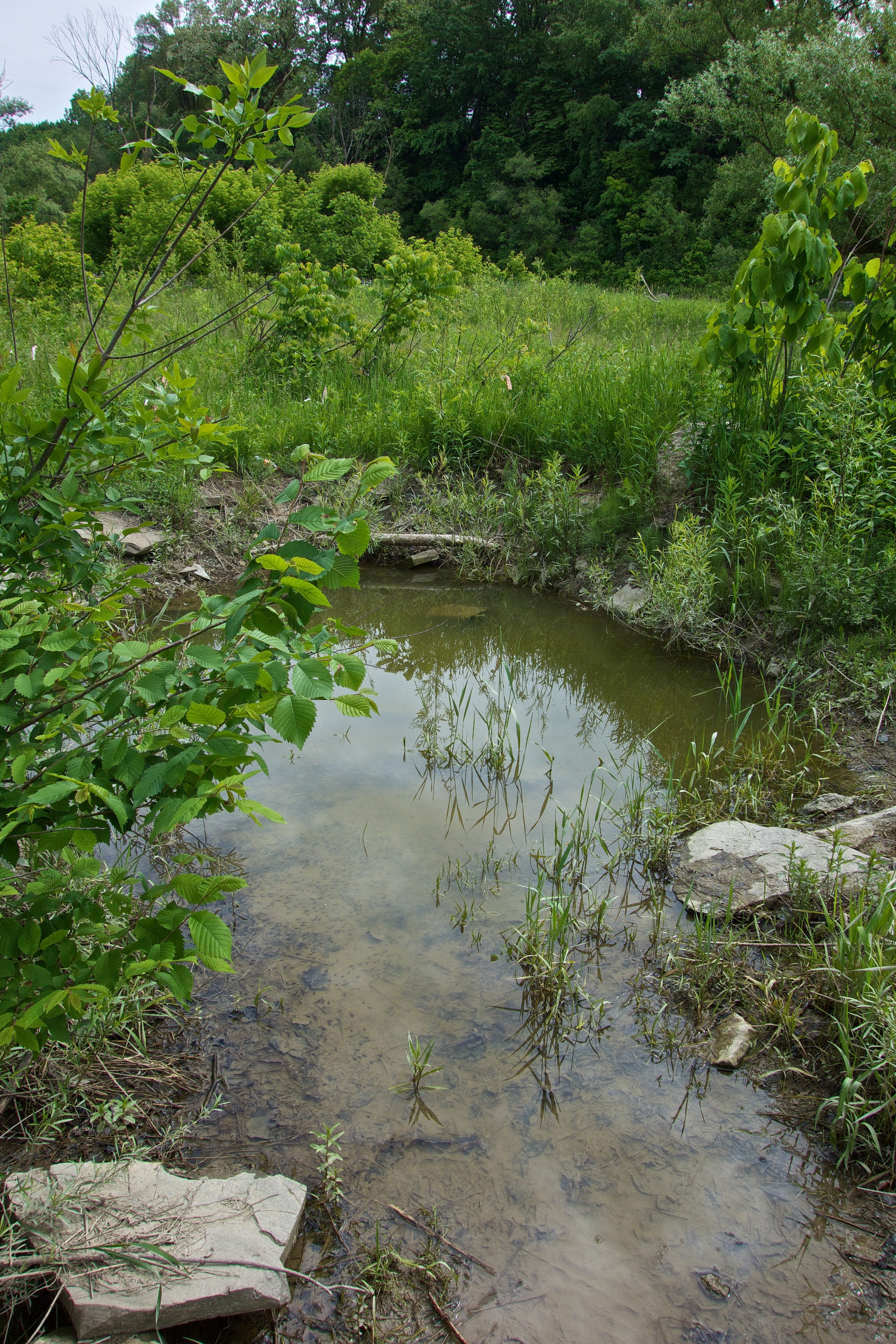
Last winter, an ice jam caused a diversion of the Humber and continued the creation of a channel that will eventually form a new island in the wild area. The force of the Humber moving over land at first strips away the topsoil and then sweeps aside stones and larger rocks. Close to the peninsula, material has been carved out to such a depth that a hollow has formed below the water line and can therefore sustain aquatic life throughout the year.

The newly carved pond.

The newly carved pond.

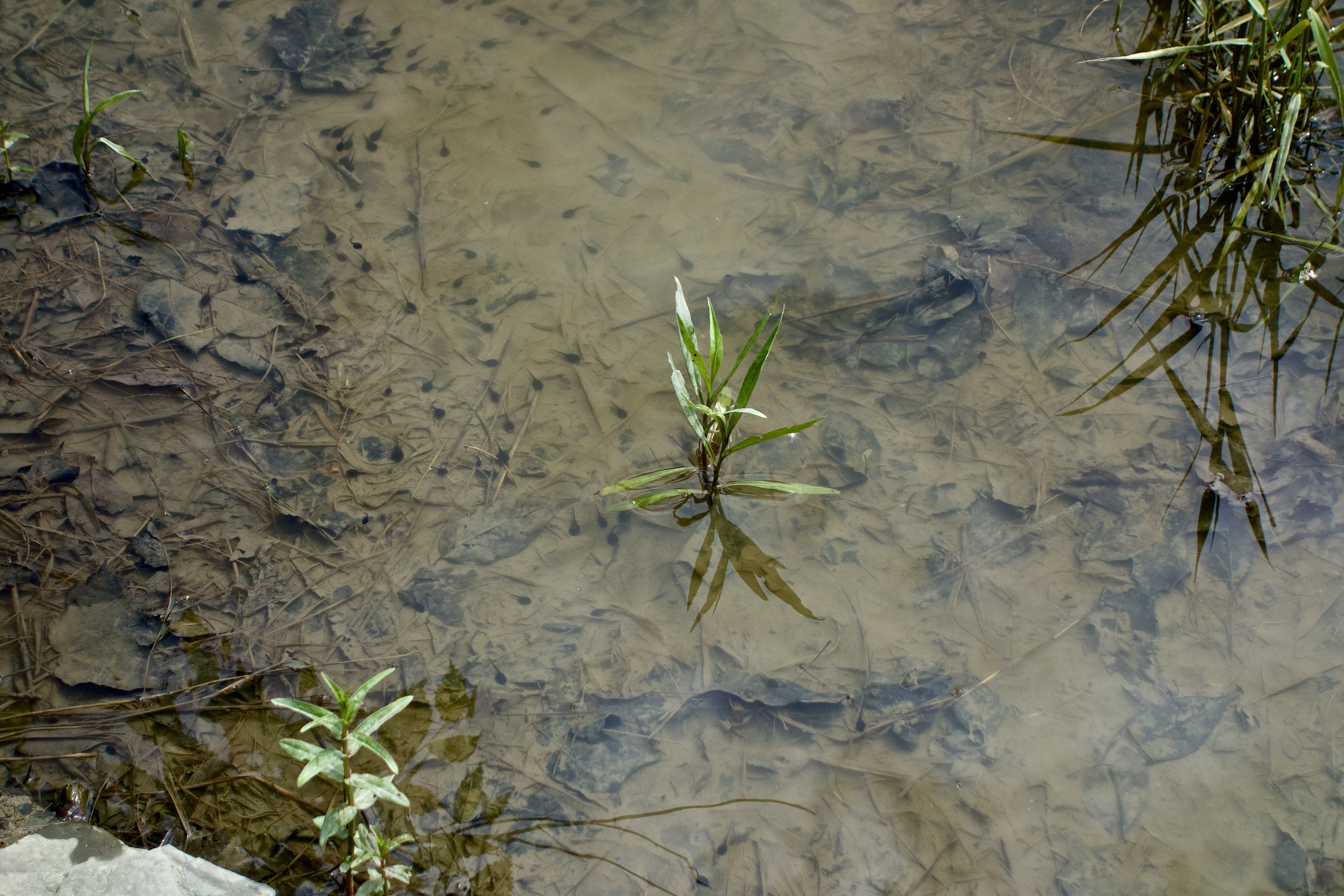
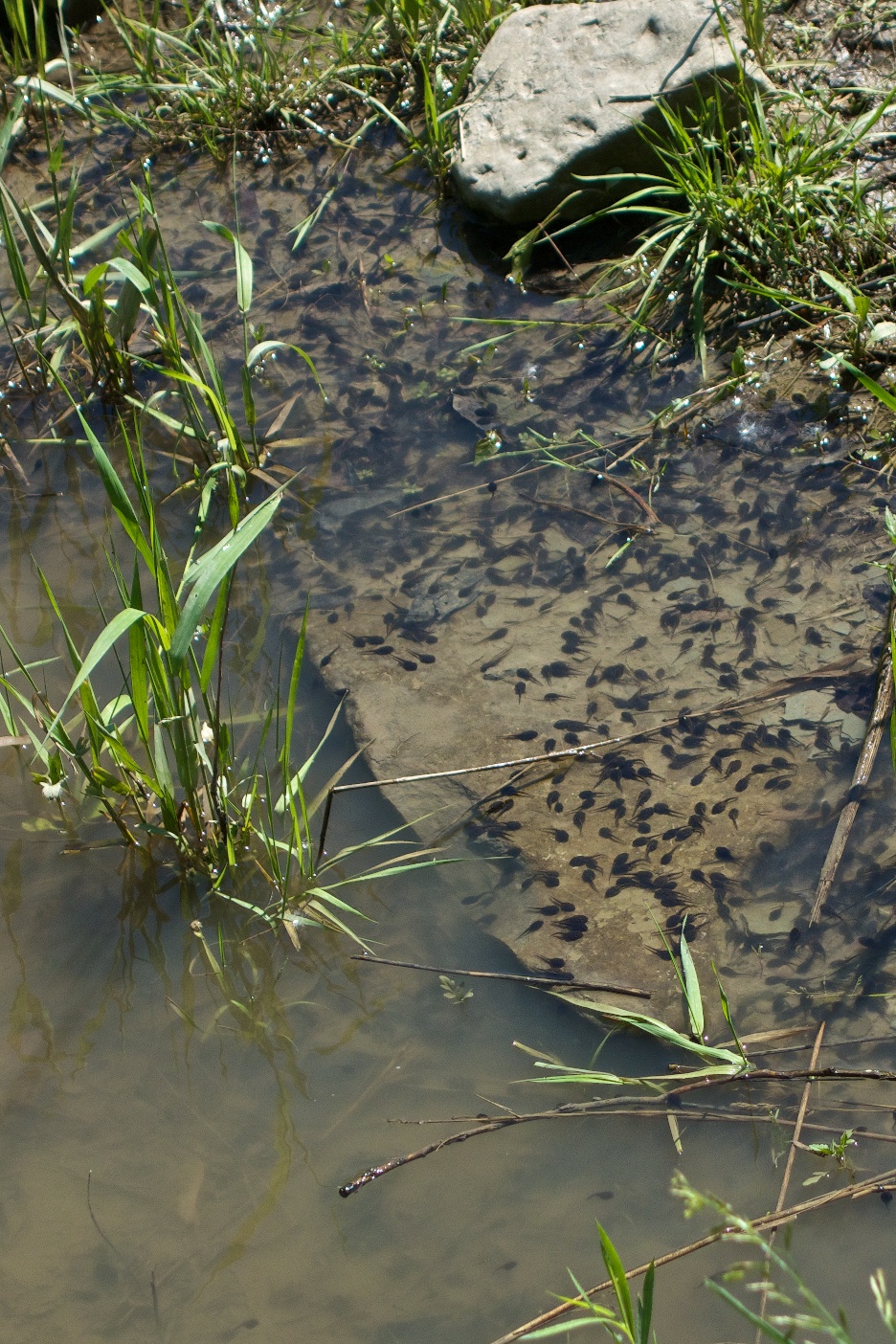
American Toads have exploited this new habitat and there are dozens of tadpoles happily swimming around in a fish-free environment.

American Toad tadpoles are the first generation to use this pond.

American Toad tadpoles are the first generation to use this pond.

This pond is well situated as it is quite small, hard to see from the bike path and difficult to access. With luck, large numbers of toads will start exploiting the food supply that will be available when they grow legs and leave the pond.

An ideal habitat has been created.

An ideal habitat has been created.