Tag Archives: TRCA

Chapman Road Sewers set to carve up Raymore Park

Once upon a time, when infrastructure repairs were carried out in a natural setting, not much thought was given to vegetation. It was assumed that plants would take care of themselves once land was allowed to return to a natural state post-construction. Today, we are far more thoughtful and city contracts are written to specifically protect vegetation when possible and restore it if destruction is necessary.
DSC03067

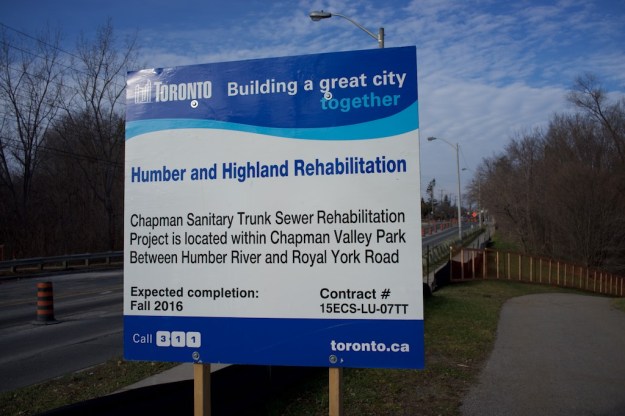
The sewer that runs along the Humber Creek has reached capacity and must be upgraded or ‘rehabilitated’. A stretch of vegetation has been cleared in preparation for the installation of a higher capacity sewer network that will serve residents of the area. The Chapman sanitary sewer as it is known runs from Royal York Road, roughly following the Humber Creek and crosses under Scarlett Road into Raymore Park before joining up with main sewer that runs alongside the Humber.

Amazingly, as part of the $9 million contract, every one of the hundreds of trees removed on public or private property for the project was catalogued and while only the native ones will be replaced, thousands of other native trees and shrubs will be planted. To get an idea of the modern-day eye for detail and care that will be taken, a set of plans for a small segment of the sewer can be found here.
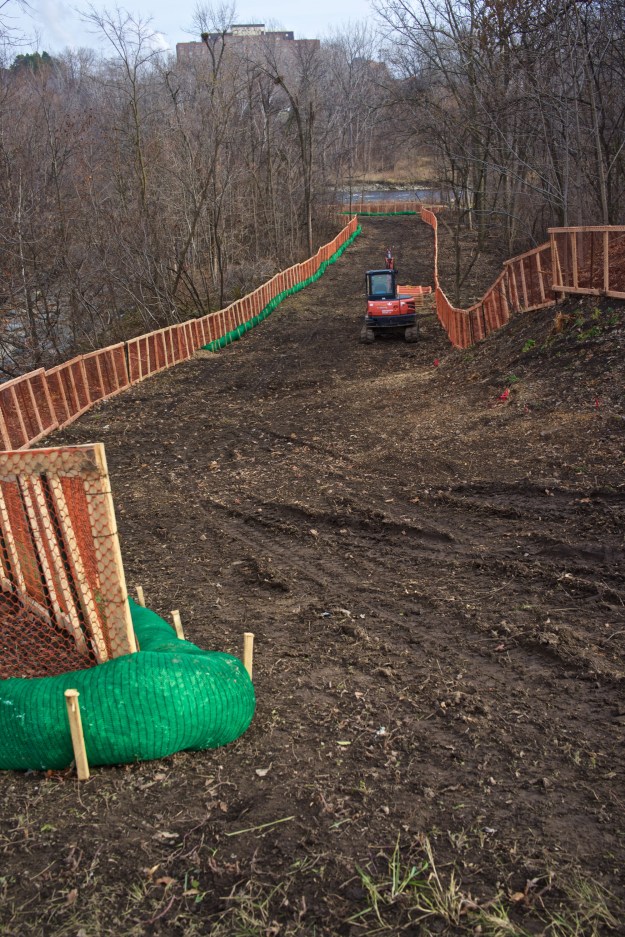
The swath of land cleared and ready for installation of new sewer pipe and pumping station.

A swath of land between Scarlett Road and the Humber River being prepared for installation of new sewer pipe and a pumping station. Notice how rich the soil is.

The work and re-planting should be completed by next fall and the replacement native trees and vegetation will eventually make the affected land better than before it was cleared (because non-natives will not be replaced). Of course the whole point of the work will be the prevention of sewage back-up into residents’ homes as happened in July 2013. Hopefully this will allow many decades of trouble free use.

 

Raymore Park Leash Free Zone Likely

In spite of the fact that Raymore Park was rejected as a candidate for leash free zone consideration as recently as June 2014, organizers of the recently held residents’ meeting seemed to confirm that the zone is a done deal. Apparently ‘someone’ applied last June, and the City must consider the site. Oddly the city’s reasons against a leash free zone in Raymore were the same as those for rejecting adjacent Lions Park, namely, ‘TRCA, ravine,  natural heritage’. The document may be accessed here.

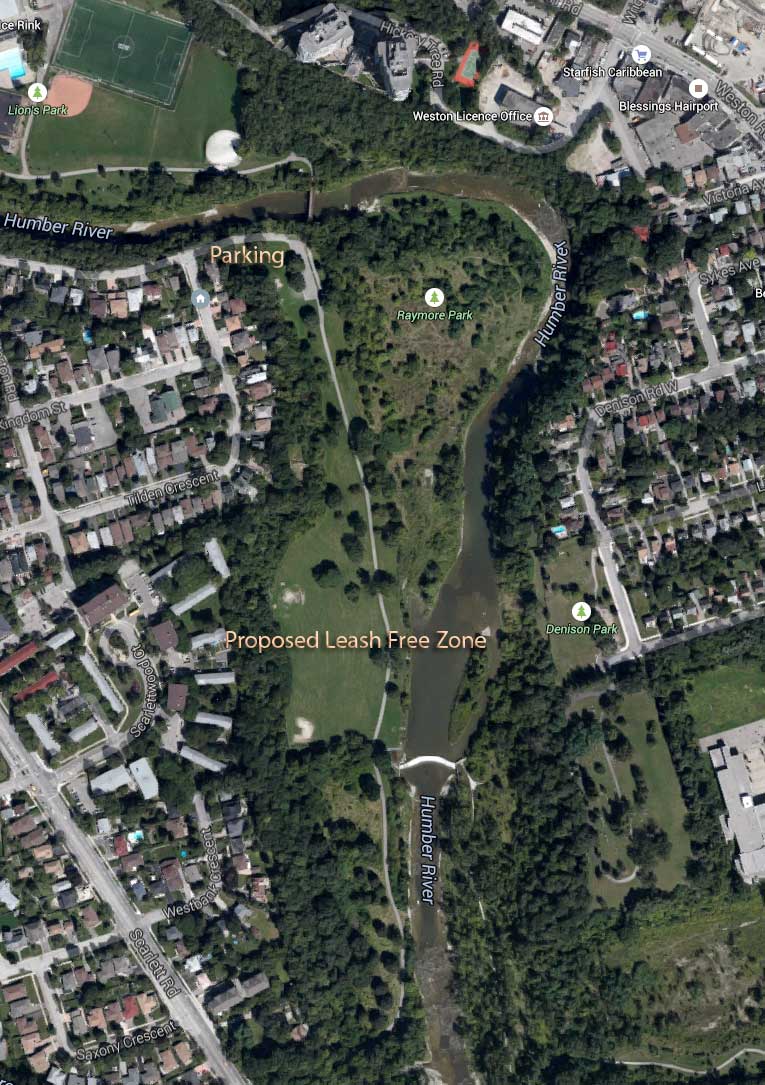
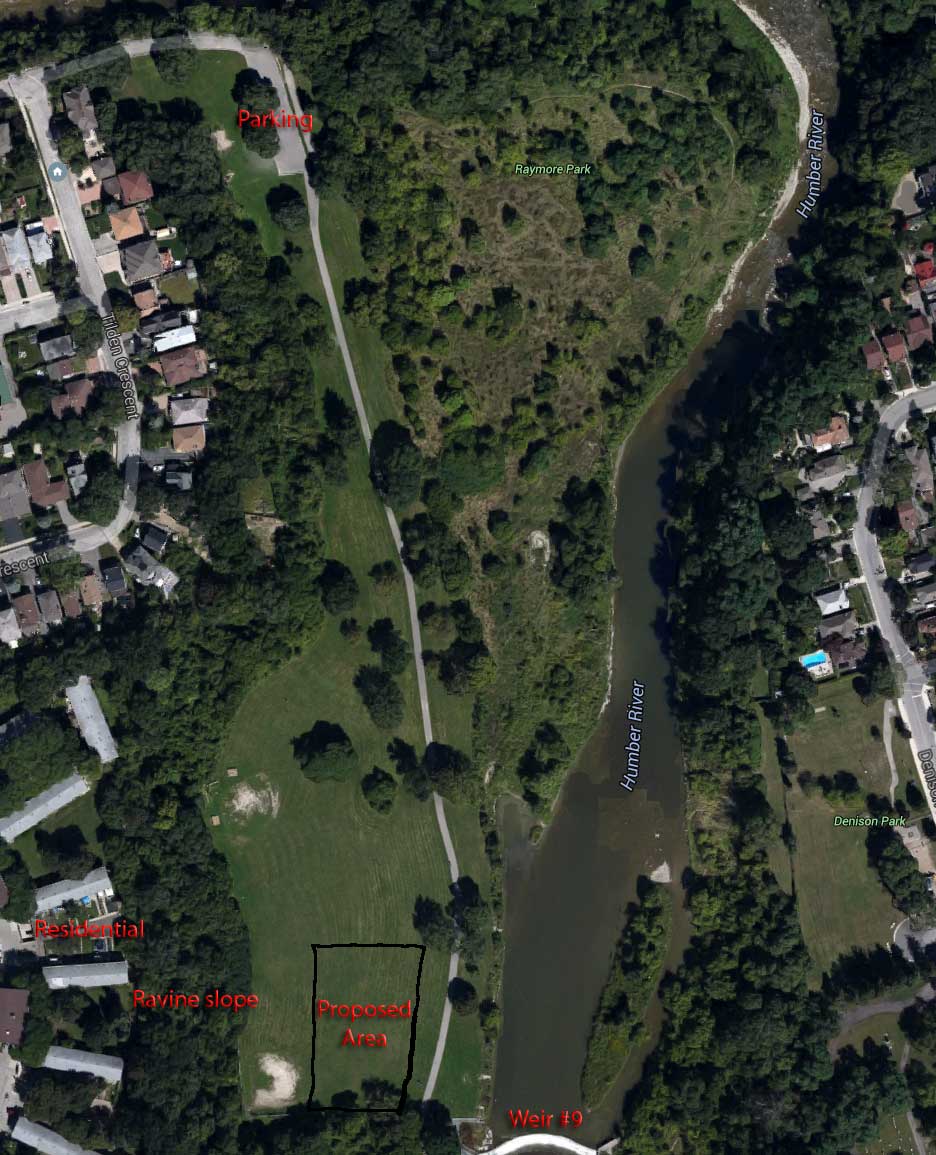
The meeting was attended by about 25 people and the proposed zone was illustrated – I have outlined an approximation as the organizers distributed no hard copy:

Raymore-Proposed-Leash-Free-Zone

Raymore Park showing the proposed off-leash zone. Google Earth.

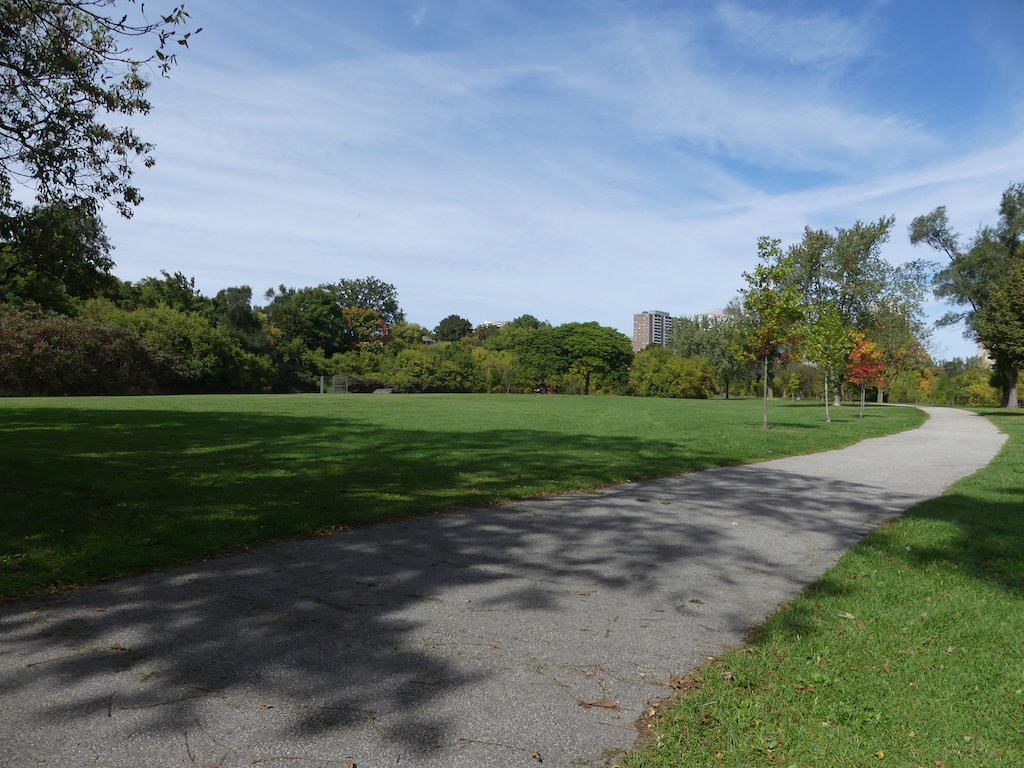
The site as it looks now (September 2015)

The site as it looks now (September 2015).

The zone will be about 450 metres from the parking lot yet only about 100 m from nearby residences (the fact they are TCH homes may have eased concerns). The baseball diamonds will remain in place as removing them would involve park owners, TRCA and it’s ‘too much hassle’ according to the meeting organizer. The zone will occupy ¾ of an acre down at the southern baseball diamond in a rectangle following the river about 15 feet from the far side of the path. It will be fenced with pine wood rail fences so at least it won’t look too bad. Its northernmost tip will be about half-way up the open field (perhaps a little further than what I have drawn). I did suggest planting trees to the north of the zone which would hopefully dampen the sound somewhat. The organizers’  positive response to this suggestion may have been a way of easing my concerns; we’ll see. Trees to the south will provide shade. Water and lighting will not be supplied as the location is too remote and the budget small. Supervision by city staff will be minimal thanks to budget restraints and may I cynically suggest, the long walk from the parking lot.

When I suggested that the majority of people using the zone will be with unlicensed dogs, the response was a bit of a metaphorical shrug. From what I gather, nobody will be checking for dog licenses – even in the early days of this thing. Professional dog walkers will be allowed to use the zone.

The proposed opening hours are 7:00 a.m. to 9:00 p.m. year-round (even though the park gates are locked from November until April). This will create parking issues along Raymore Drive and Tilden Crescent. Organizers then talked about keeping the gates open year-round which some in the crowd thought was unlikely as even the ploughs get stuck occasionally.

The zone will be installed by spring of next year.

The organizers claim that traffic and noise levels won’t increase by much but they don’t like getting complaints about the zones it will be up to residents to phone 311 if people are abusing the area or being noisy.

There will be one more meeting to discuss the plans based on community input.

Leash Free Zone Proposed for Raymore Park

Two baseball diamonds have occupied the middle of the park for years and have been virtually unused for almost a decade. In that time they have been regularly mowed, the infield regularly graded and a few years ago, the batters’ cages were replaced and bleachers renovated. Because of the lack of use over the years, I suggested that the park manager consider planting some native trees and extending the growing canopy that already exists to the south. This would create a wildlife corridor extending the length of the park. His response was that plans were in place for a cricket or soccer field.

Toronto is committed to increasing its tree cover from the current 28% to 40% over the next decade. It is widely recognized that flooding events are ameliorated by tree cover. As recently as July 8th 2013, a rain event caused considerable flooding throughout Toronto because the sheer volume of water overwhelmed the sewer system. Trees and the ground beneath them are natural sponges that absorb water and release it slowly. In addition to providing cover for deer and other animals, tree cover tempers the local climate making it cooler in summer and warmer in winter.

Now instead of trees, there is a proposal to establish a leash free zone for dogs in that location.

Aerial view of Raymore Park.

Aerial view of Raymore Park. (click to enlarge)

The ramifications of this proposal are huge.

  • The quiet nature of the park will be completely changed.
  • Wildlife (deer, waterfowl, foxes, coyotes, turtles, beaver etc.) will be adversely affected.
  • A considerable increase in car traffic into the park along with many more dogs.
  • Supervision will be difficult because of the distance from the parking lot to the proposed zone.
  • More dogs will be set loose as owners make their way to the zone.
  • The park is surrounded by homes; noise will be an issue for residents on both sides of the river.
  • An increase in motorized traffic along the Pan Am Path to empty garbage bins and provide enforcement.
  • Commercial dog walkers will be tempted to use the zone.
  • Raymore is a neighbourhood park in a quiet residential area; neighbourhood traffic levels will increase greatly.

As you can probably guess, I’m not in favour of the proposal. Councillor Rob Ford City Staff has have arranged a meeting to discuss the issue September 22, 2015 at 6:30 – 8:30pm in Hilltop Middle School’s Main Gym (35 Trehorne Drive). This City site outlines the process for allowing or denying an off leash zone.

Points of interest in the application process are:

  • The zone must also be approved by the Toronto and Regional Conservation Authority as Raymore Park is TRCA property
  • The zone would be fenced as it is adjacent to a tree planting area, a natural shoreline and not far from a playground
  • The number of licensed dogs in the area is taken into consideration
  • A shortage of off-leash zones in the area is not one of the criteria
  • Quote: “New off-leash areas will be considered in conjunction with capital redevelopment of existing parks or new park development against the policy criteria.”

In the meantime, the word needs to get out about this threat to the relatively tranquil and natural environment of Raymore Park. Please contact Councillor Ford to let him know what you think of this proposal.

Post Script: Dan Jacobs from Rob Ford’s Office contacted me with the following email:

Thank you for your e-mail.

A point of clarification – Councillor Ford was not involved in setting up this meeting, nor was he behind the proposal in the first place.  This has been initiated by City Staff.

Our office will be present at this meeting to make sure we hear directly from those affected by this proposal – there is no staff report that can substitute for input from the members of the community itself.

It would be greatly appreciated if you could amend or add to your blog post to reflect the above information.

Thank you in advance, and I look forward to meeting you on September 22nd.

So much for my reading skills! The info was in Rob’s newsletter and I put two and two together to get five.

Apologies to Councillor Ford and thanks to Dan Jacobs for the correction.

Signs of Fall: Atlantic Salmon are climbing the ladder.

Two hundred years ago, Atlantic salmon along with many other varieties of fish were plentiful in the Humber. Gradually, settlers built dams and toxic waste from sewers, factories and pulp mills was dumped into the river. The combination killed just about everything in the water and Atlantic salmon were extirpated from the Humber as a result. In 1959, the opening of the St Lawrence Seaway saw the accidental introduction of the parasitic sea lamprey which killed the rest. An ambitious program lasting several years aims to restore a self-sustaining wild Atlantic salmon population to the Humber. Each spring until 2015, salmon fry are being released all along the Humber. Most weirs along the river have been adjusted to be too high for lamprey but low enough for migrating fish.

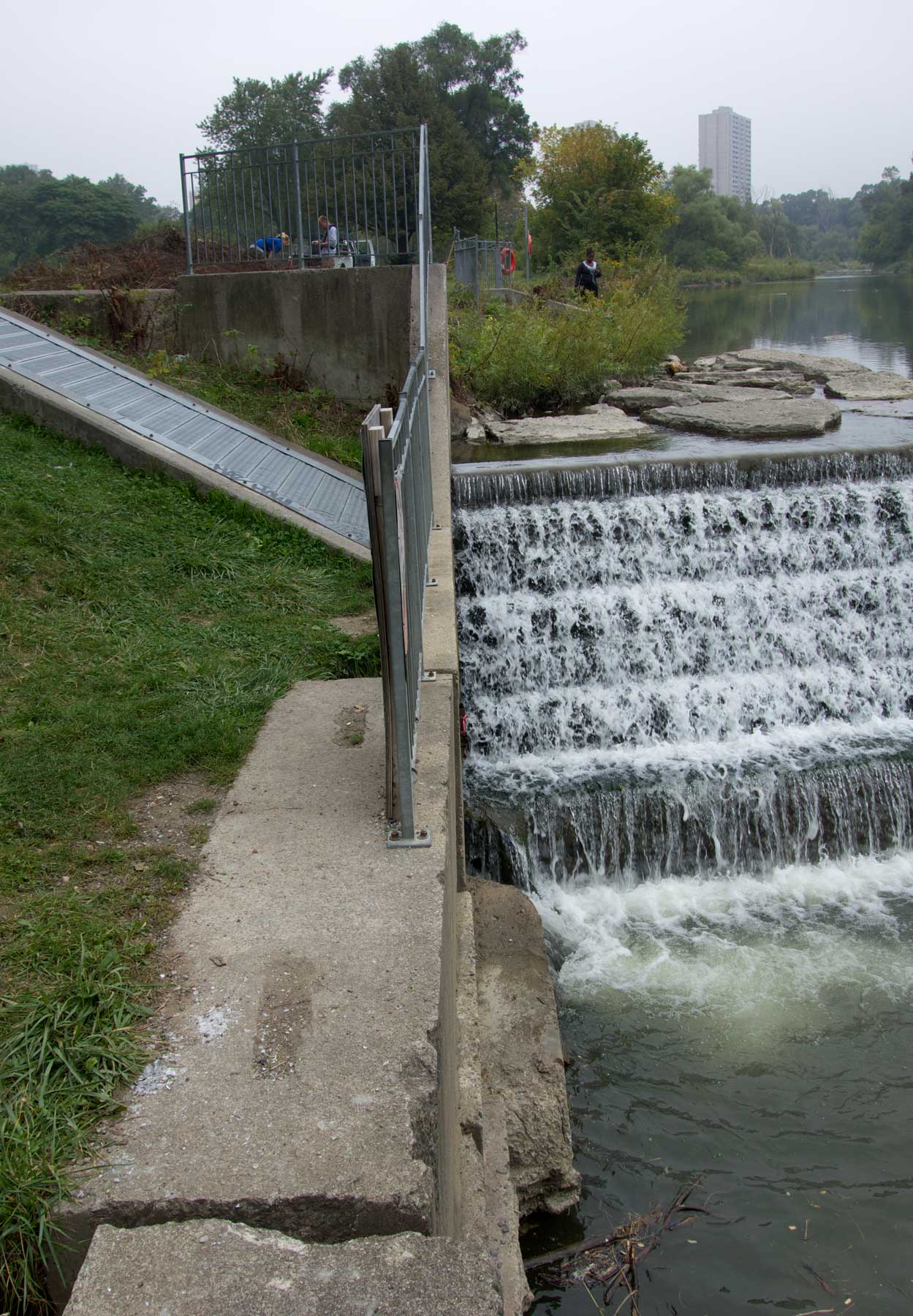
In Raymore Park, the 3 metre weir remains an insurmountable barrier to all aquatic life and to work around that, a denil fishway, (better known as a fish ladder) was built around 13 years ago.

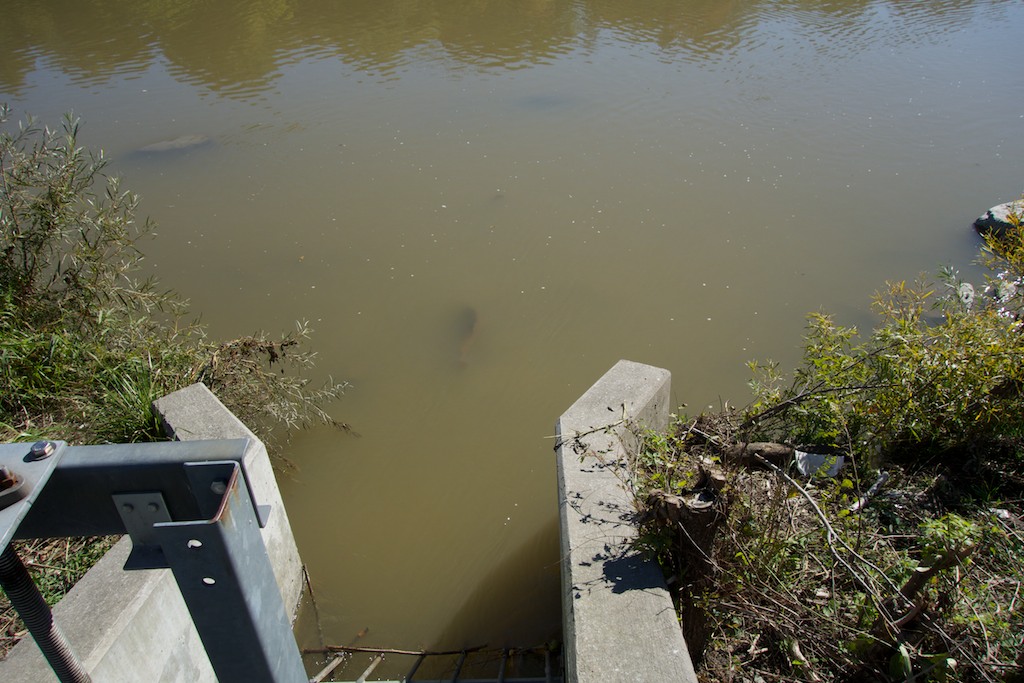
The fish ladder entrance is on the left just below the weir.

The fish ladder entrance is on the left just below the weir.

The fishway provides a gentler current and slope so that large fish can make their way up the ‘ladder’ with rest stops along the way. Unfortunately, beavers stuff the fishway with wooden debris in the hopes of creating a dam. Needless to say, the blockages need to be cleared several times a year so that fish can migrate to their spawning grounds.

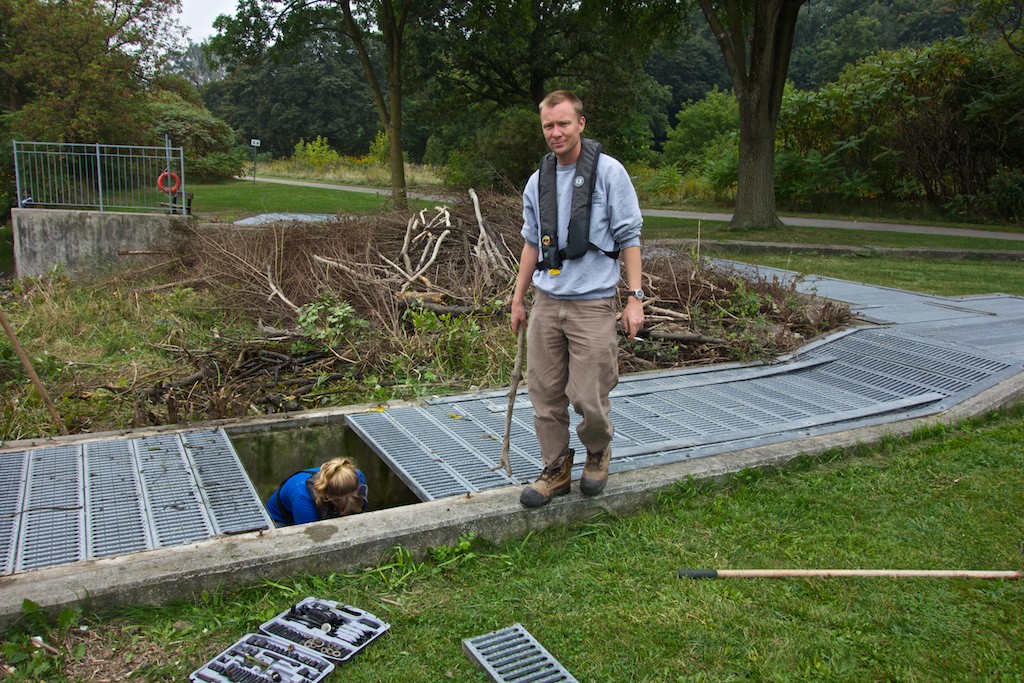
On Friday, two workers were clearing the way for the salmon and told me that when water levels rise (as they did on Saturday), these large Lake Ontario fish will be able to access and use the ladder. From there they will swim upstream to their birthplace, spawn and return to the lake – assuming they can run the gauntlet of people out to get them.

TRCA workers clear the top of the fishway.

Toronto and Region Conservation Authority workers clear the top of the fishway.

Since the ladder was built I have watched in vain for a fish to appear at the exit. Today, (Tuesday September 24th) I had a premonition and with the camera ready, just like that, a fish emerged. The water was a little murky and I was a little late but here’s the evidence; the ladder works.

The salmon continues its journey up the river.

The salmon (middle top of photo) continues its journey up the river.

In spite of their impressive size, salmon will soon be seen along the Humber as far upstream as Bolton and Palgrave.

For its part, the TRCA is studying the further removal of obstacles to fish migration along the Humber and the weir in Raymore Park is the highest. Lowering and notching of the weir will allow the fish to leap upstream the old-fashioned and low-tech way. This will end the high maintenance costs of the fishway and finally allow the beavers to block it to their hearts’ content.

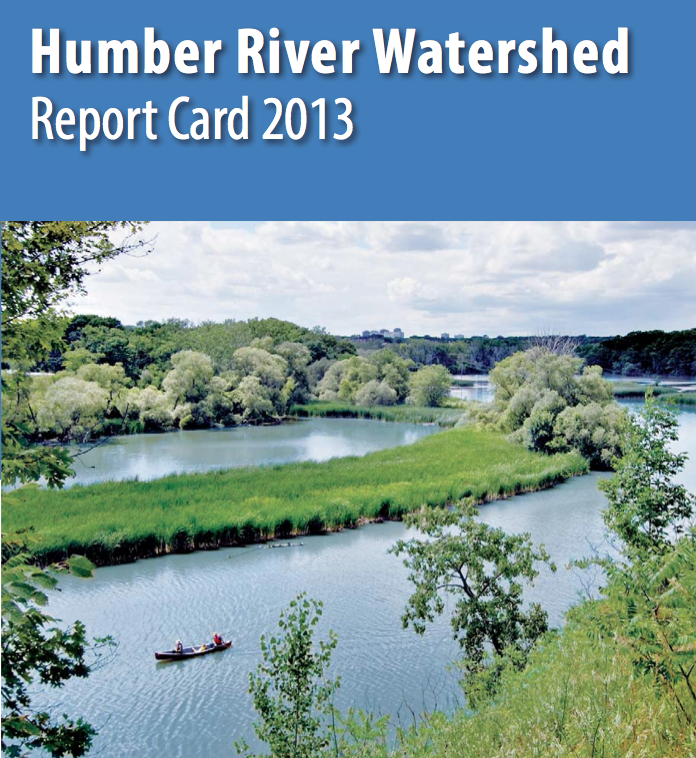
Humber River Watershed Report Card

Screen Shot 2013-04-25 at 5.05.34 PMAfter much study and gathering of data, the Toronto Region Conservation Authority (TRCA) has released its 2013 report card on each of the rivers in the Toronto watershed. Raymore Park is classified as being in the Lower Humber and understandably, nature along this most urban part of the river is under considerable pressure.

Four categories in each watershed are graded A-F.

Groundwater Quality……. Insufficient data.

Groundwater, especially in the Humber’s upper reaches can be contaminated by nitrates and nitrites from farm animals, septic systems and fertilizers while the more urbanized stretches can contain high chloride levels from winter road salt. TRCA needs to add more monitoring stations before a comprehensive grade can be given.

Surface Water Quality…..C

48 monitoring sites check for only three indicators of surface water quality; phosphorous, E.coli bacteria and Benthic Macroinvertebrates (BMI) (invertebrates that can be seen with the naked eye) The higher the BMI score the better. While the Humber as a whole gets an overall grade of C, as can be imagined, the lower down in the river, the poorer the results. On this basis, Black Creek and the Lower Humber are probably in the F range.

Forest Conditions………D

In the lower Humber, only 7% of the land is covered by trees. Nowhere in the Humber Watershed is the desired minimum of 30% achieved. Trees help with air quality, provide homes for many animals and protect and shade aquatic habitats.

Stormwater Management…..F

This category is directly related to Surface Water Quality and refers to the ability of municipalities to prevent rainwater emptying into the sanitary sewer system. Older municipalities (such as Toronto) operate combined storm and sanitary sewers and when rain falls, the system can overload, dumping raw sewage into the river. To combat this surge of water during rainstorms, municipalities are encouraging homeowners to disconnect their downspouts from storm sewers into rain barrels or onto land where it can be absorbed harmlessly. There are other ways to reduce this load; driveways made from interlocking brick absorb rain whereas sealed driveways (concrete, tarmac) add to the storm sewer load. Flat roofs can be made to absorb water using a membrane, then adding a soil equivalent and plants.

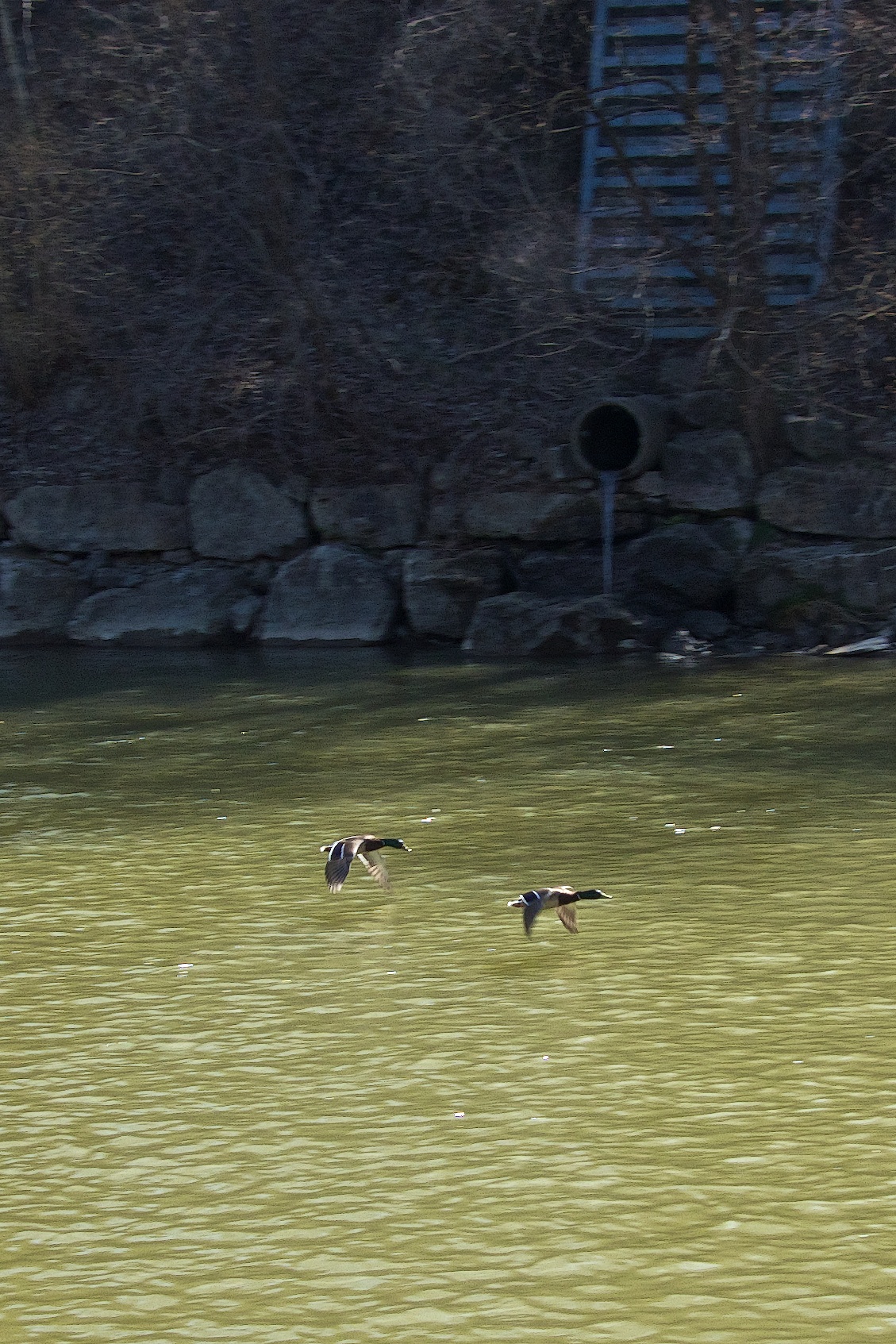
A pair of mallards passing a storm sewer outlet.

A pair of mallards pass in front of a mystery liquid gushing from a storm sewer outlet in Raymore Park.

This particular outlet spews forth its unknown liquid in both dry and wet weather seemingly with no particular reason.

Here’s what I think needs to happen in order to improve these scores and how residents can help.

TRCA needs to:

  • provide more opportunities for staff at all levels to observe, monitor and supervise what is happening in the watershed
  • set up more monitoring stations to detect sources of pollution
  • actively go after polluters and sources of pollution
  • plant more trees
  • acquire land in critical areas
  • educate people on the need to reduce pollution levels in rivers and streams

Municipalities need to:

  • find more efficient ways of using salt so that less ends up in rivers and streams
  • actively go after polluters and sources of pollution
  • plant more trees
  • continue downspout programs
  • encourage green roofs and permeable paving

Homeowners can:

  • avoid washing cars etc. on sealed driveways
  • take unwanted liquids and chemicals to a recycling depot
  • disconnect downspouts from sewers
  • buy low-flush toilets
  • plant trees
  • reduce or eliminate the use of weed killers, salt and pesticides

It’s easy to forget that Toronto’s drinking water comes entirely from Lake Ontario. It just makes sense to ensure that water entering the lake is pristine.

This could be a sign.

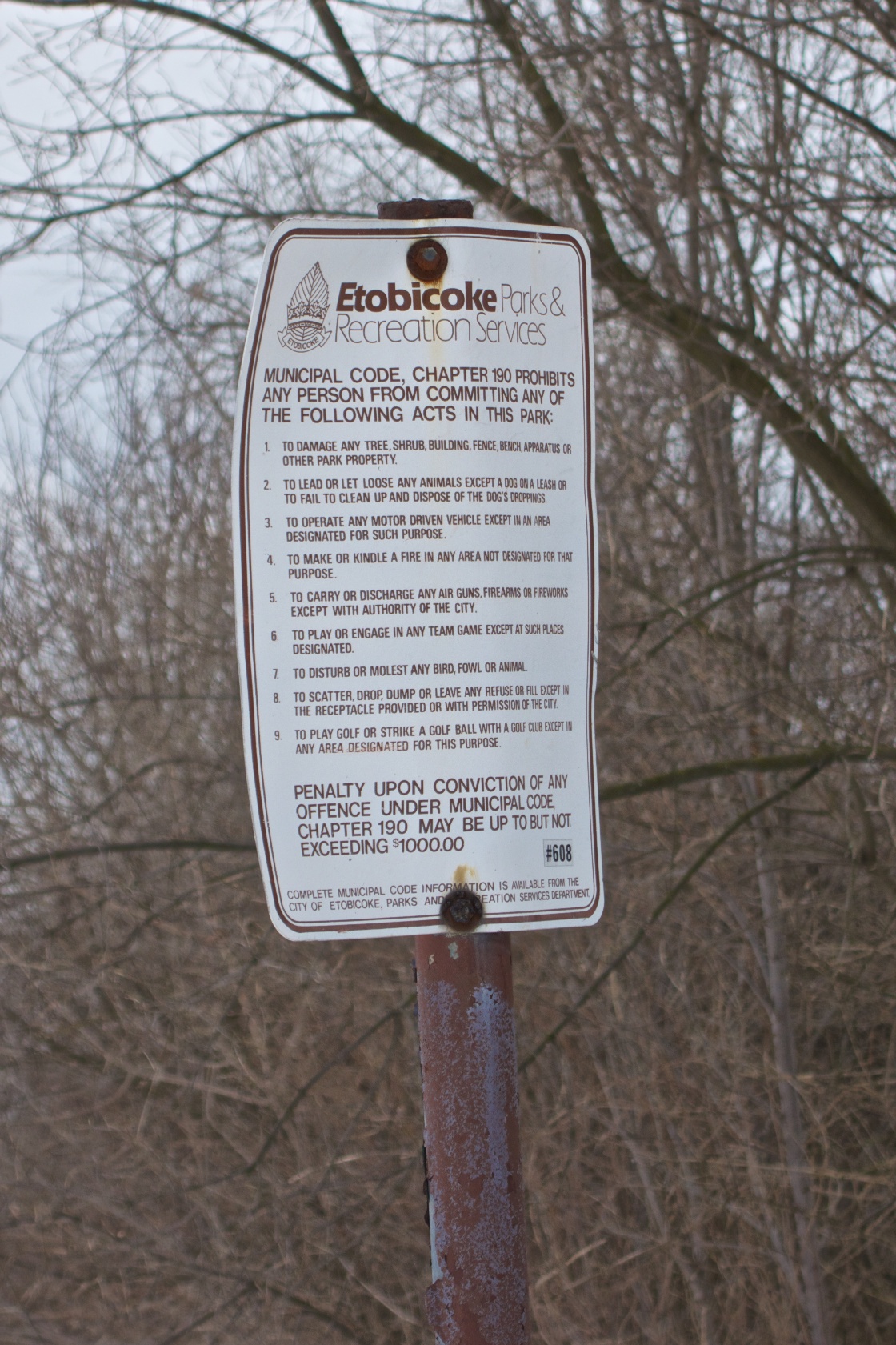
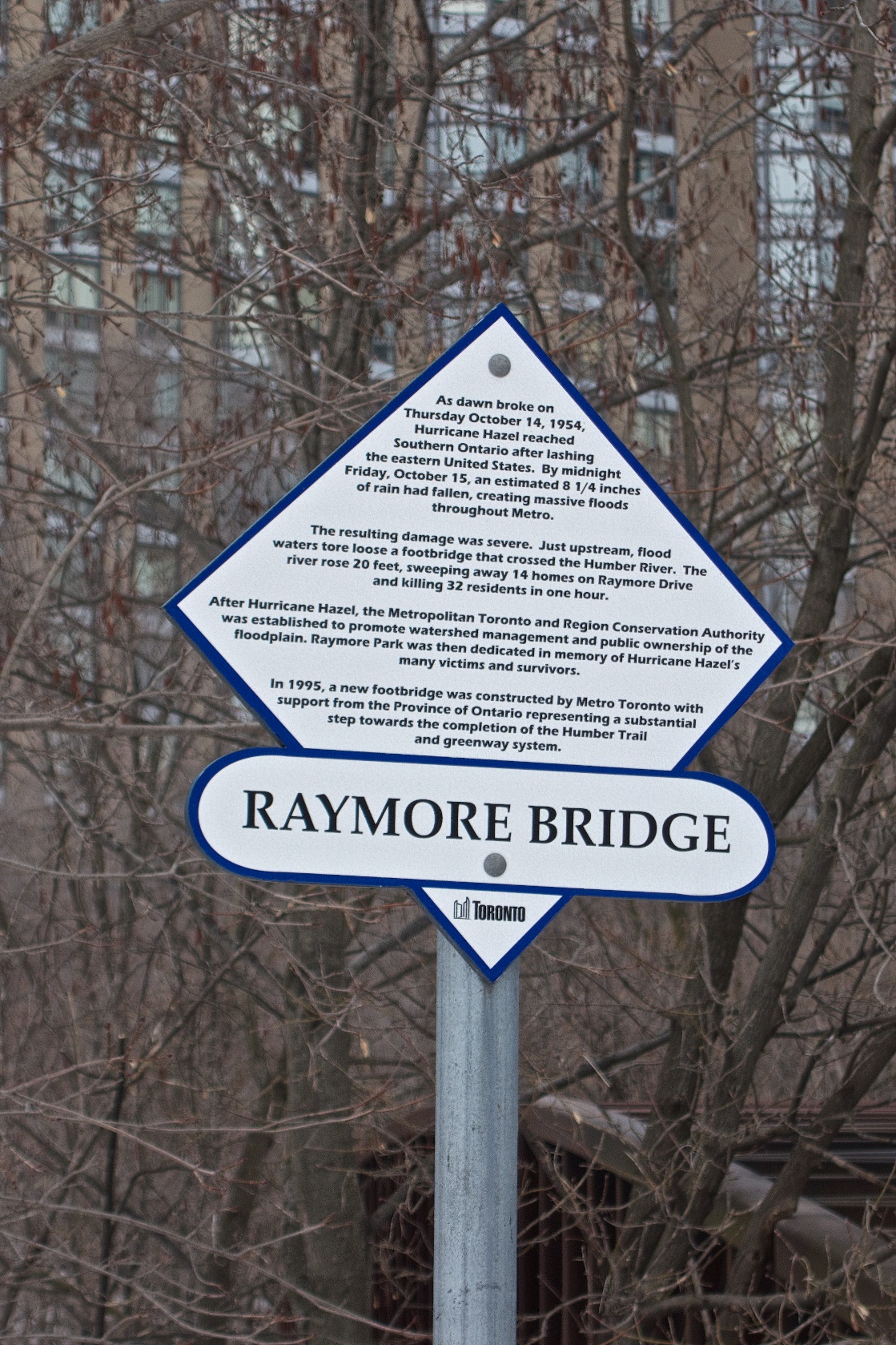
Raymore Park is under the jurisdiction of a variety of agencies. For example, the Federal government is in charge of how close you can fish to the weir. The provincial government controls other aspects of fishing – don’t ask me how that was decided. The city of Toronto takes care of by-laws concerning usage of the park and parking; the Toronto and Region Conservation Authority (TRCA) manages the watersheds around Toronto. Some park signs are relics of the past while others aren’t that carefully worded. It’s doubtful whether people creating the signs have given much thought to either the appearance or the wording. To announce in large letters the words, ‘Park Closed’ is misleading, not to mention unwelcoming.

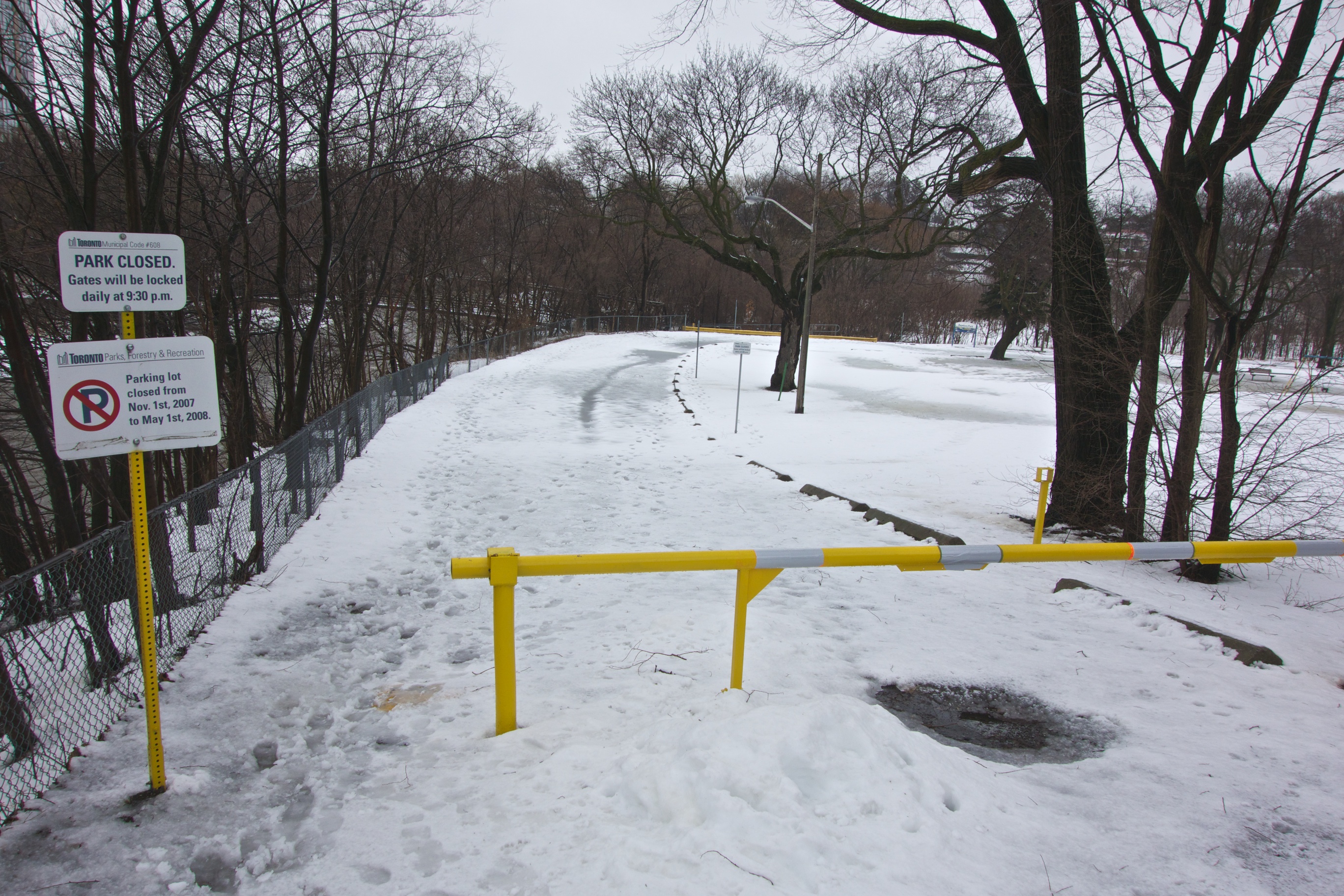
Inauspicious entrance to the park and a sign that has outlived it's specific timeframe.

The misleading and inauspicious road entrance to the park and a sign that has outlived its specific timeframe.

Somehow, the signmakers couldn’t figure out how to tell people that the park is closed to vehicles during winter and after 9:30pm. Another unstated point, the park is never closed to pedestrians. This is important to mention as Toronto is a city of immigrants and many newcomers need help understanding how parks operate.

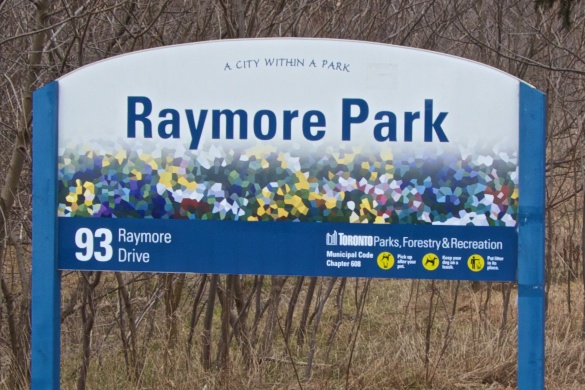
A city within a park? Where?

A city within a park? Where?

Thousands of dollars worth of city employee time was probably spent coming up with this trite little slogan. No doubt many committees spent hours labouring mightily over the five words. Unfortunately when viewed in context on the sign, people must wonder what it all means – there’s a city in Raymore Park?

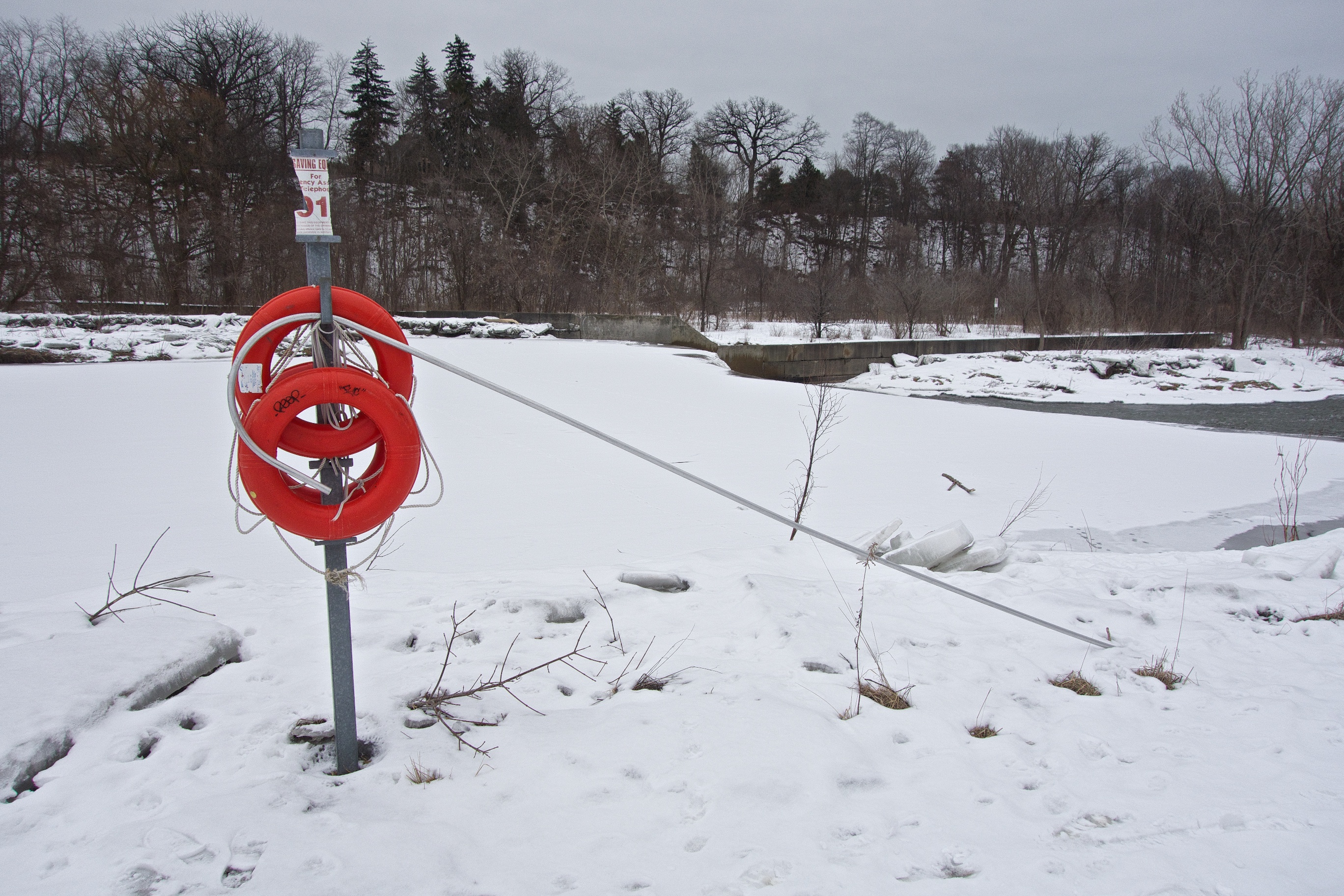
I'm not sure who manages this one but it could do with a bit of maintenance.

It’s not clear who manages this lifebuoy station by the weir but it sure could do with a bit of maintenance.

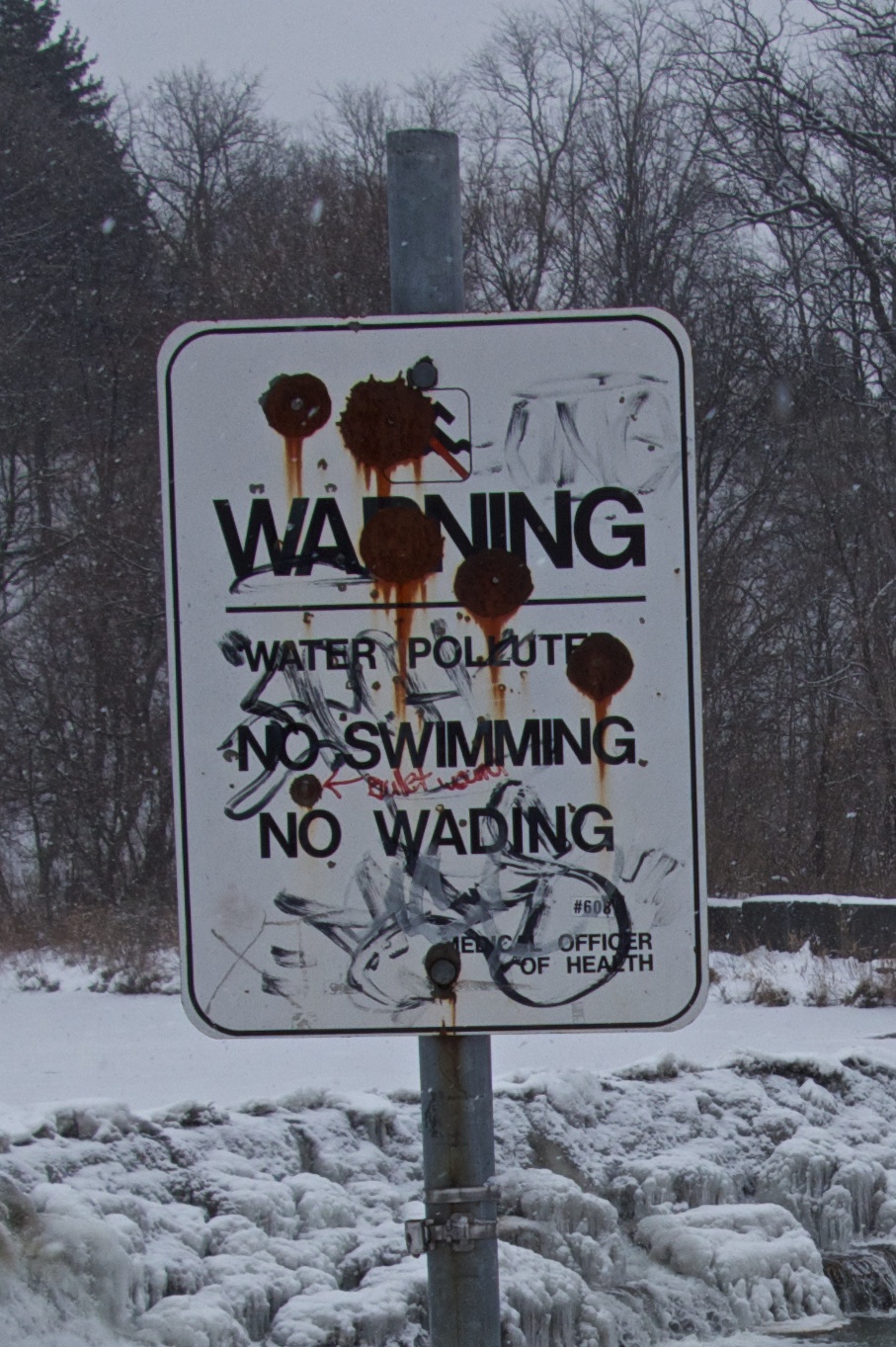
Dire warning - we're all gonna die!!!

OK, we get it – it’s an unmitigated shithole. If you survive the pollution, you’ll be shot.

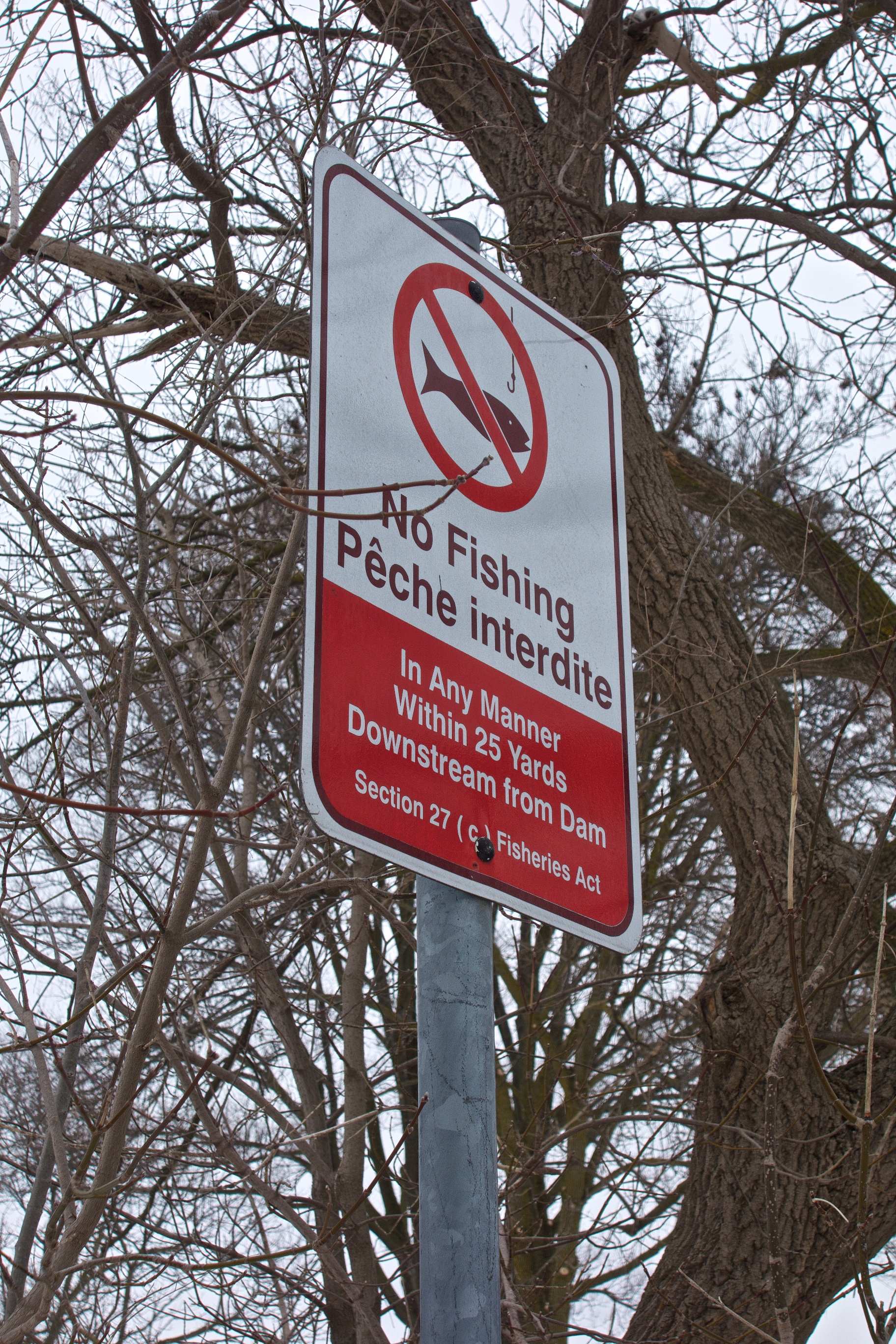
The feds bilingual sign seems to be 25 yards from the weir. It never seems to stop anyone though.

The Feds’ bilingual sign is (helpfully) 25 yards from the weir and faces the river although it never seems to stop anyone (didn’t we go metric?).

Toronto amalgamated in 1998 but this sign has stood the test of time.

Toronto amalgamated in 1998 but this sign is a relic that has stood the test of time.

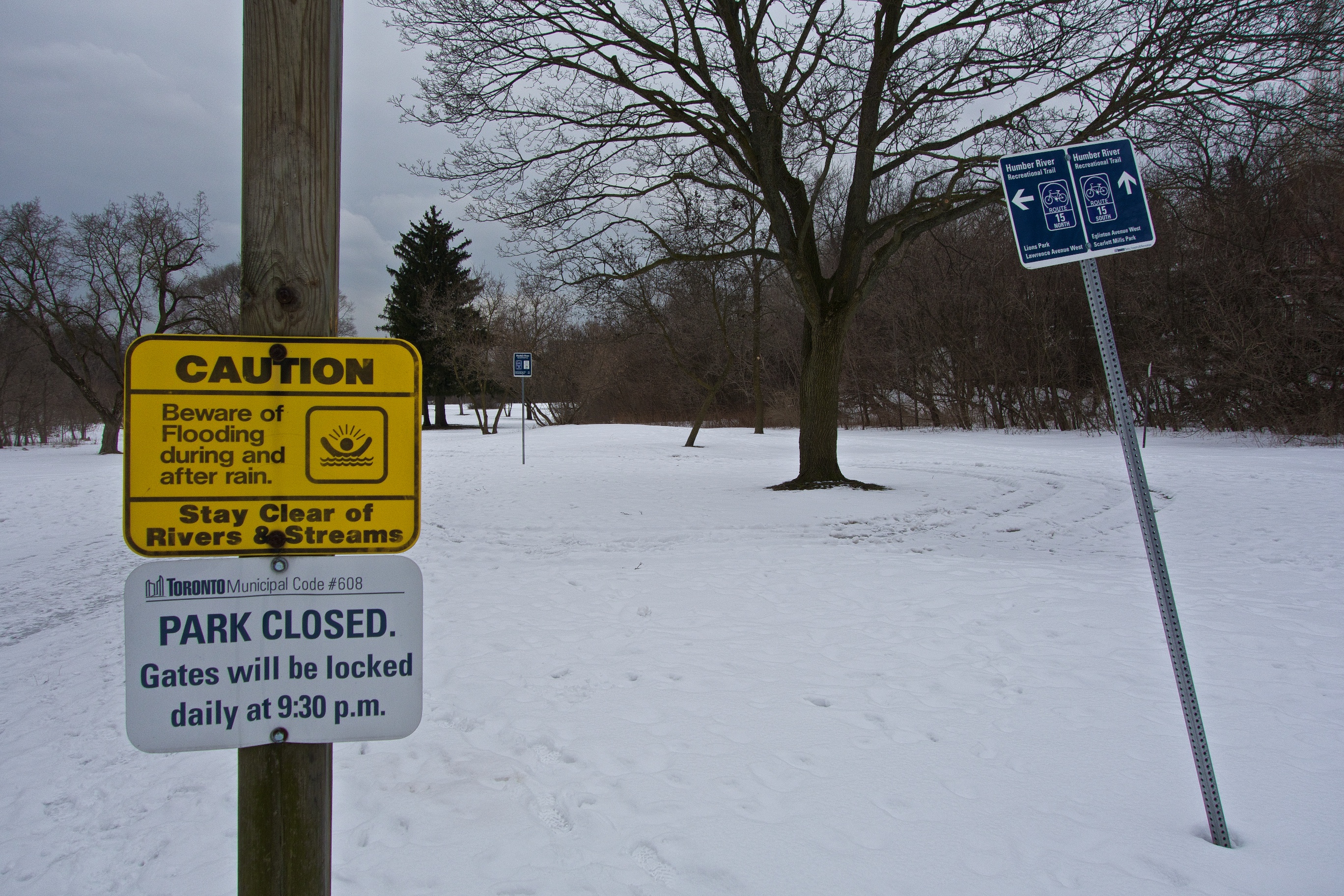
This set of signs face the parking lot. The 'Park Closed' sign is very misleading until you read the print below.

This dilapidated set of signs faces the parking lot. Another ‘Park Closed’ sign. The yellow one may be a TRCA sign while the blue signs help walkers and cyclists navigate the trails. There was another sign above the ‘caution’ one (outlining park by-laws) but it fell off months ago and has since disappeared.

This plastic sign replaces the original made from cast metal which was stolen within days of its appearance.

This plastic City of Toronto sign replaces the beautiful original made from cast metal which was stolen within days of its appearance.

I doubt that much thought has been given to many of the various signs that are scattered throughout the park; especially on the part of the people who order, design and write them. It would be a good idea to coordinate and consolidate signage so that there is a consistency of appearance. In addition, outdated and missing or damaged signs are actually harmful as they imply a lack of order that can encourage anti-social behaviour.