Tag Archives: Weston

More hints of the past

Housing was once scattered along the length of the Humber. Quite a few were built on the valley floor in present day Raymore Park. Raymore Drive used to stretch down into the present-day parking lot and Gilhaven Avenue. It must have been an idyllic location with nature close at hand, rich flood plain soil and an easy walk to the shops and transportation links in Weston. Interestingly, I was talking to long time Weston resident Douglas Tucker and he mentioned that until the mid-1960s, Weston was a shopping destination for people from as far away as Palgrave and Bolton thanks to a regular train service.

In Raymore Park, few traces remain of the houses once located here before they were either swept away during Hurricane Hazel or demolished by authorities in the aftermath. Every spring however, flowering shrubs are living reminders of the families who cultivated gardens here more than fifty years ago.
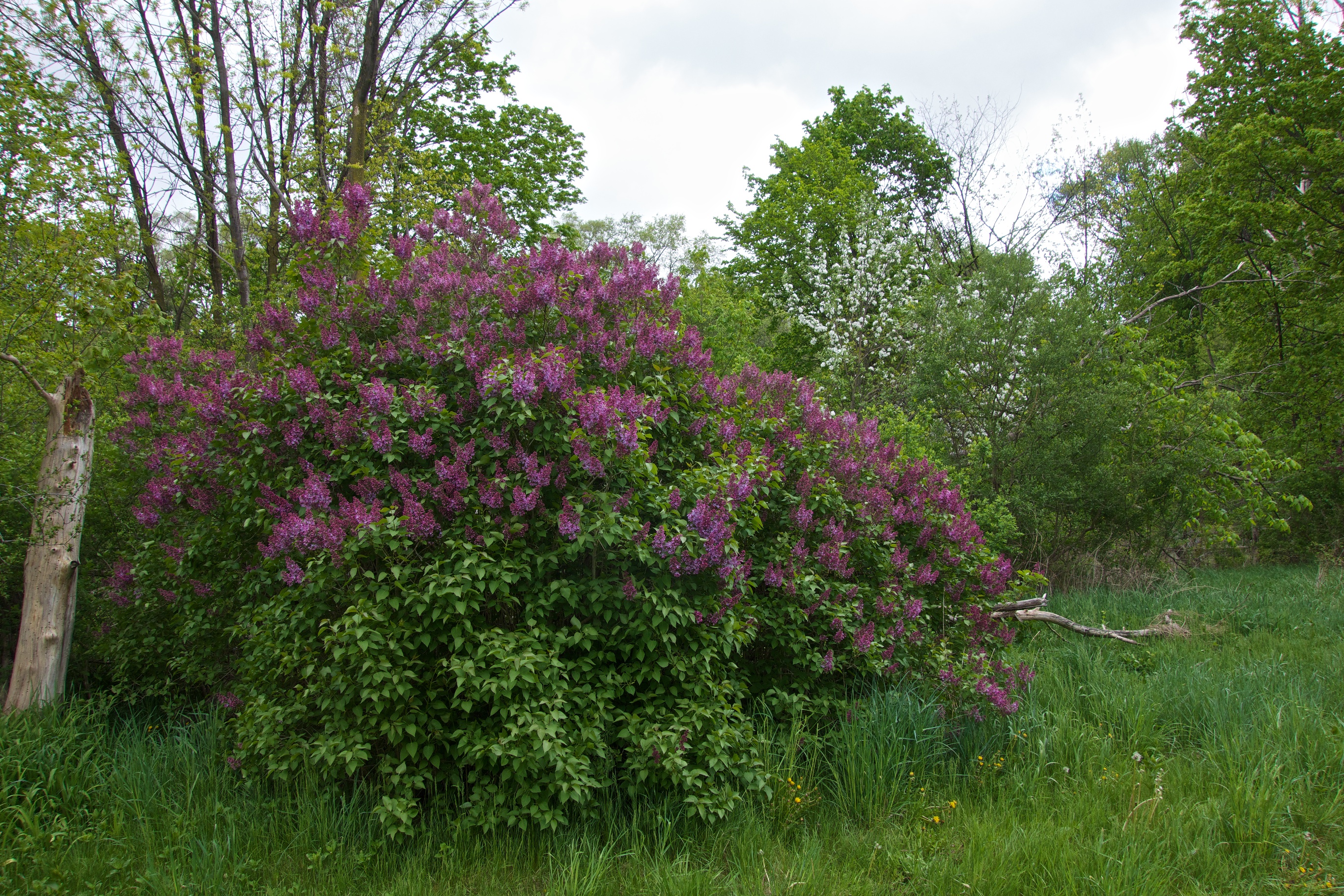
This beautiful lilac blooms faithfully every year.

This is one of two beautiful lilacs that bloom faithfully every year.
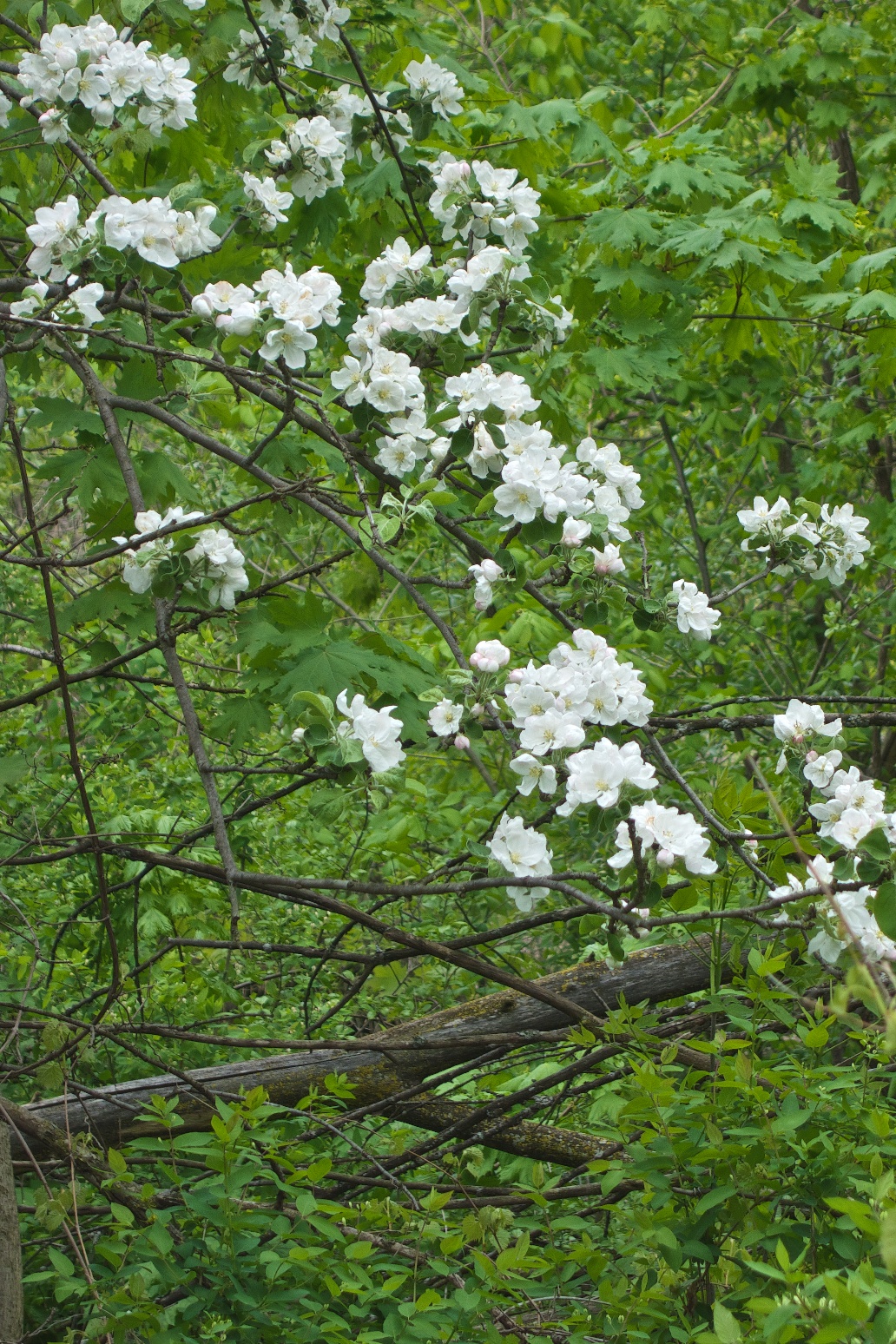
Apple blossom pokes its way through the surrounding trees.
Apple blossom pokes its way through the surrounding trees.

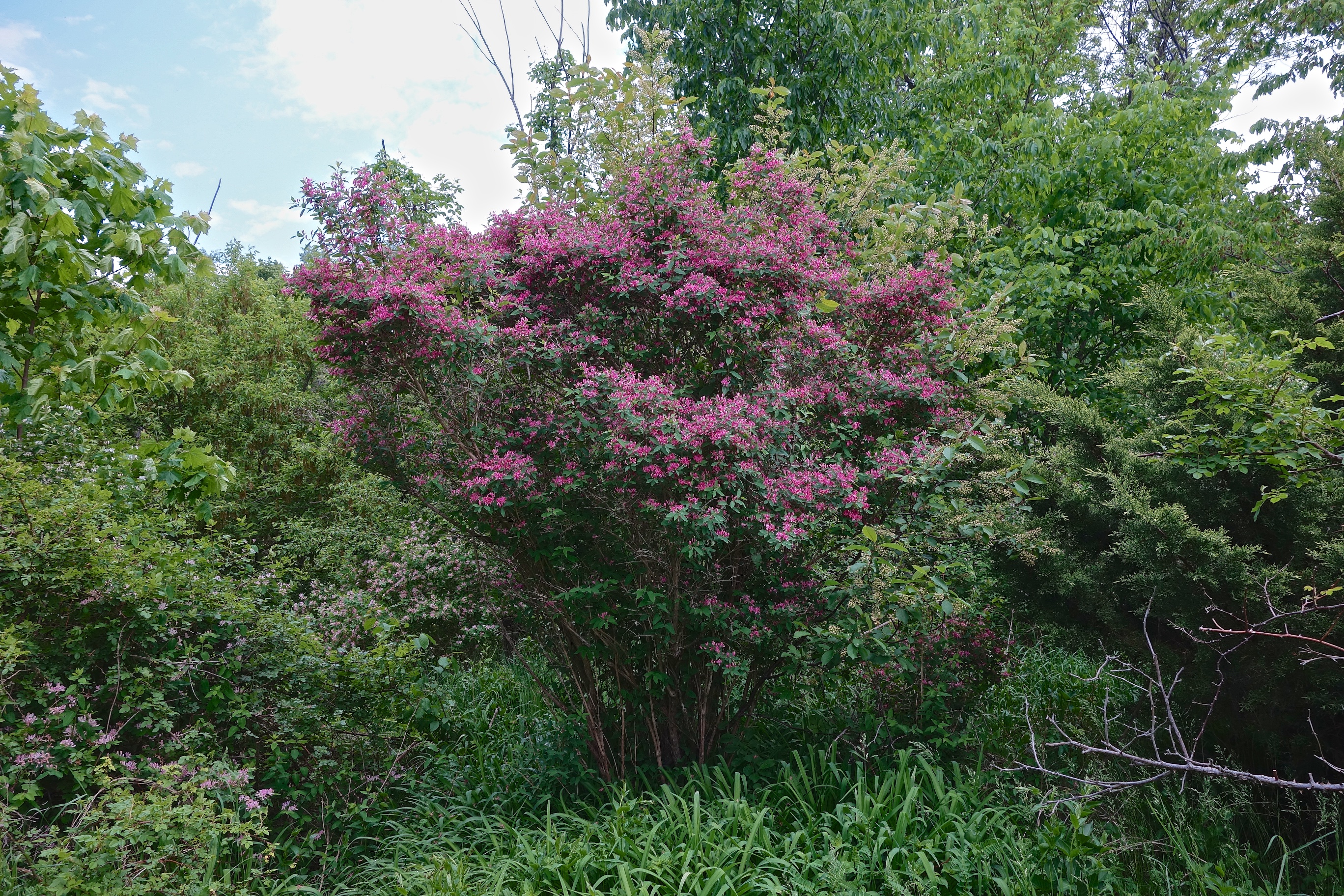
A beautiful American Honeysuckle towers over day lilies.

Along with the day lilies in front of it, I don’t know if this beautiful honeysuckle is a remnant or not.

This City of Toronto Archive aerial view has been labelled to show the location of some of the streets including Gilhaven Avenue which no longer exists. The present-day lilac bush and parking lot locations are marked. The Humber still follows the same approximate course.
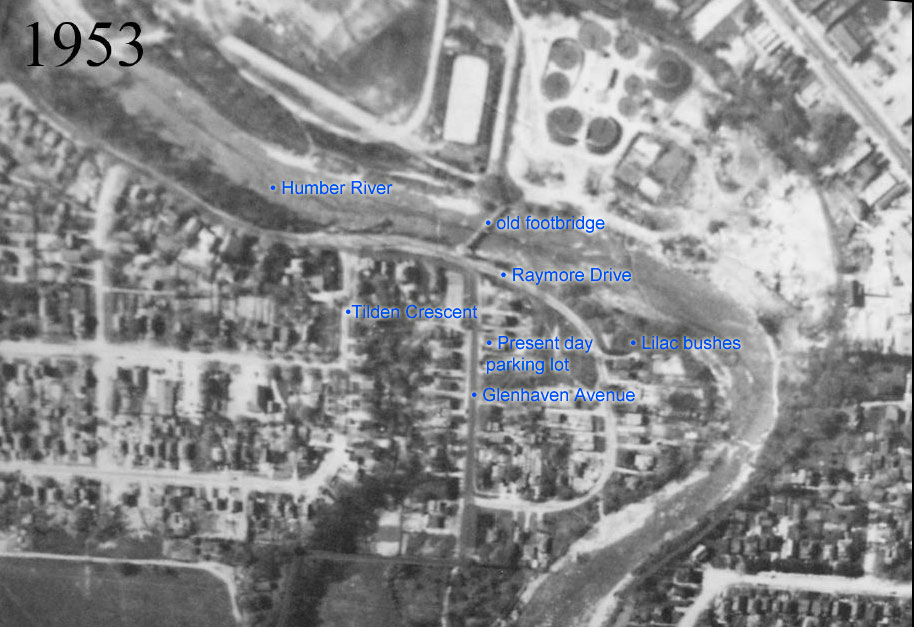
Aerial view of Raymore and Glenhaven in 1953.

Aerial view of Raymore and Gilhaven in 1953.

Dreamy water.

Dreamy water

Dreamy water

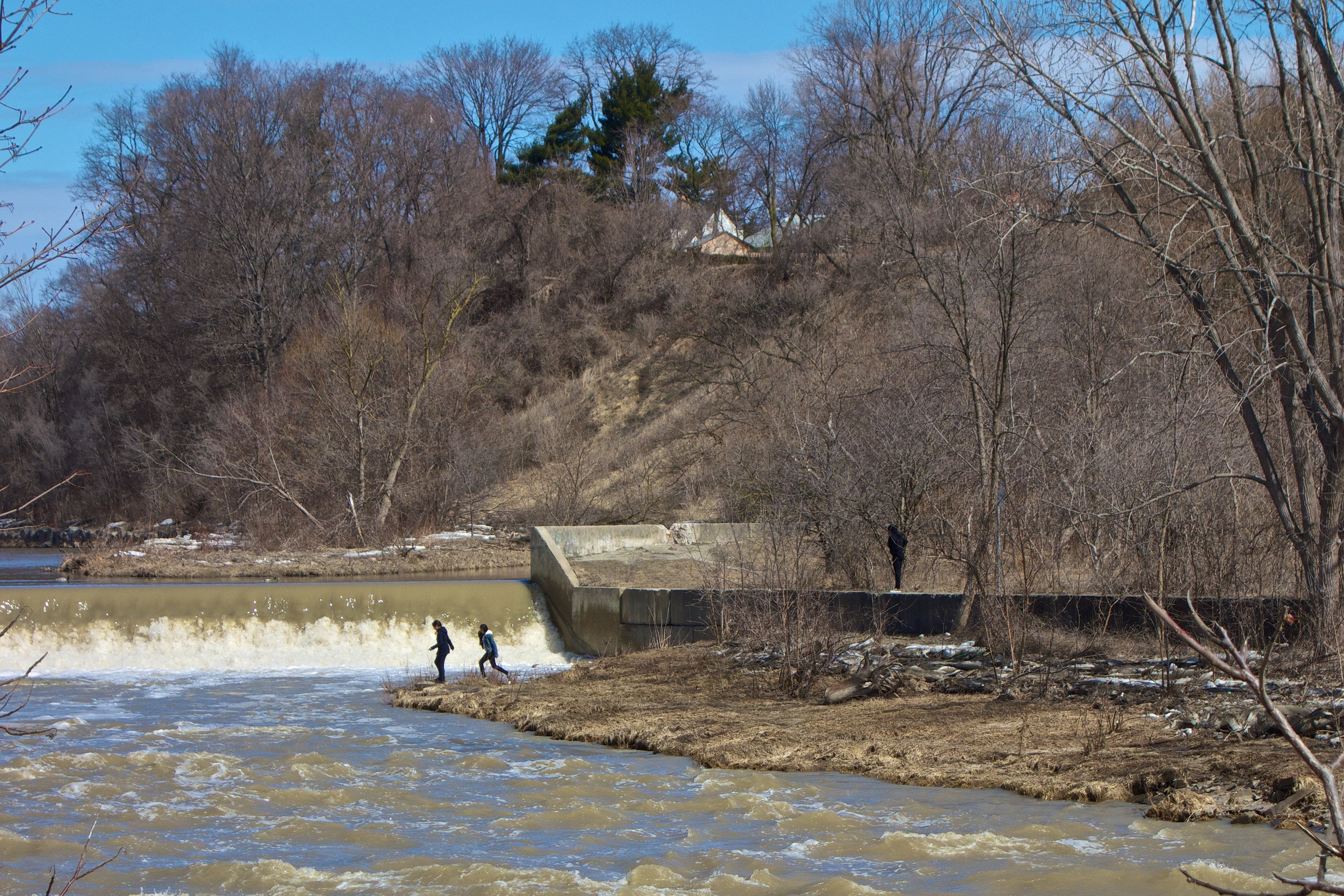
I continue to be fascinated by the sheen of the water as it slides over the weir and have stylized this image with the help of a Topaz filter or two.

The water is higher today as a result of melting snow further north.

Students from a nearby school help give some scale to the weir.

Students from a nearby school help give some scale to the weir.

There was a coyote making its way upstream, probably getting out of the way of the students below the weir who were well, being kids. Snow has melted from all but the shadiest parts of the park and spring is off to a slow but long awaited start.

Humber footbridge – alternate view

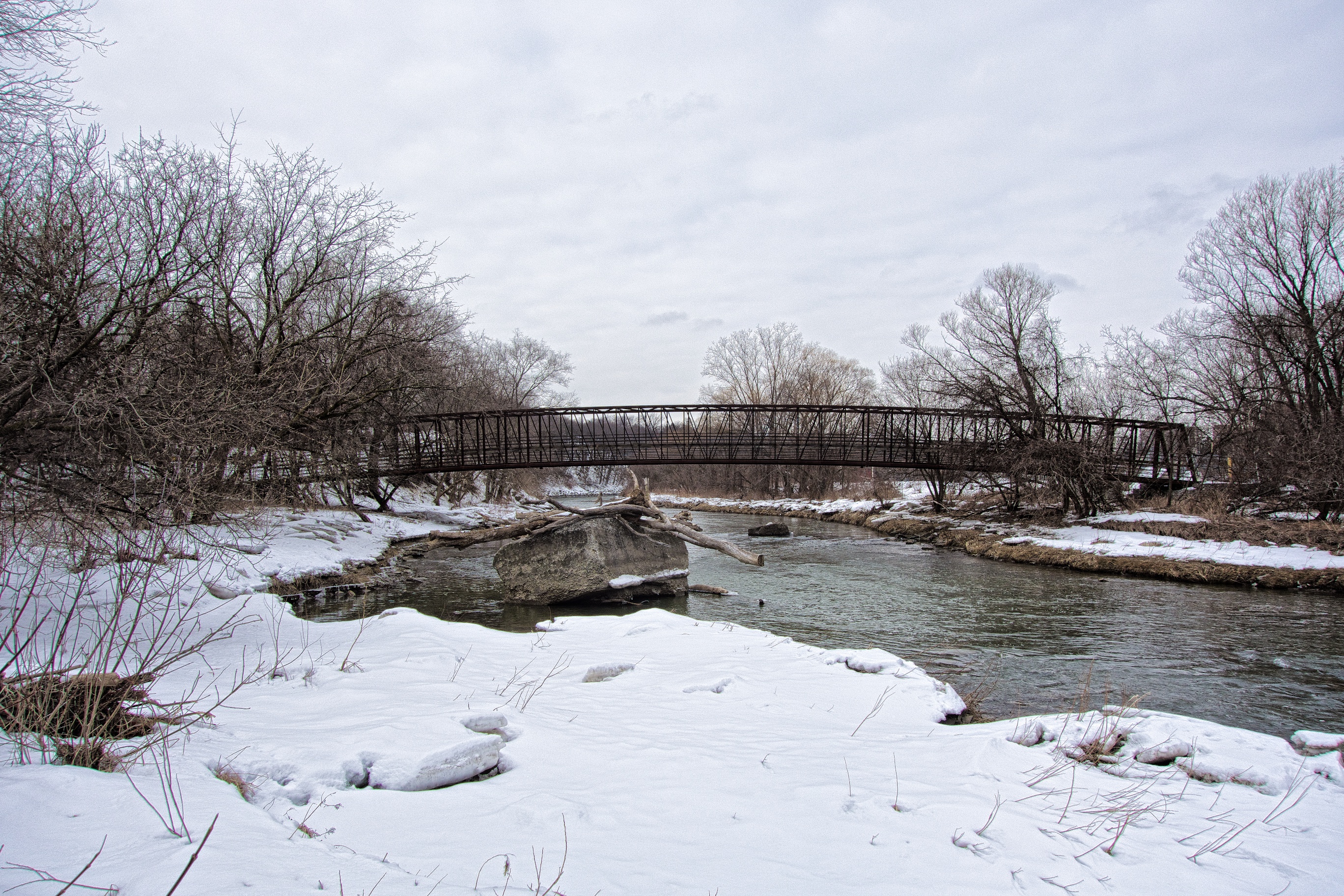
The Humber footbridge looks good from just about any direction but this view looking north features the old suspension footbridge abutment in the foreground.

The old abutment captures driftwood from upriver.

The Humber footbridge and the old bridge abutment on a late winter’s day.

The footbridge was installed in 1995 (after an absence of 41 years) with provincial help, as part of the goal to have a waters’ edge trail from Lake Ontario right up to the Humber’s source on the Oak Ridges Moraine. As part of this goal, this summer, a 600m extension will move the end of the trail from its current location in Cruickshank Park to a set of steps by Weston and St Philips Roads. At the moment there are negotiations around land ownership issues further along the riverbank – hopefully these will be resolved soon.

Winter wonderland

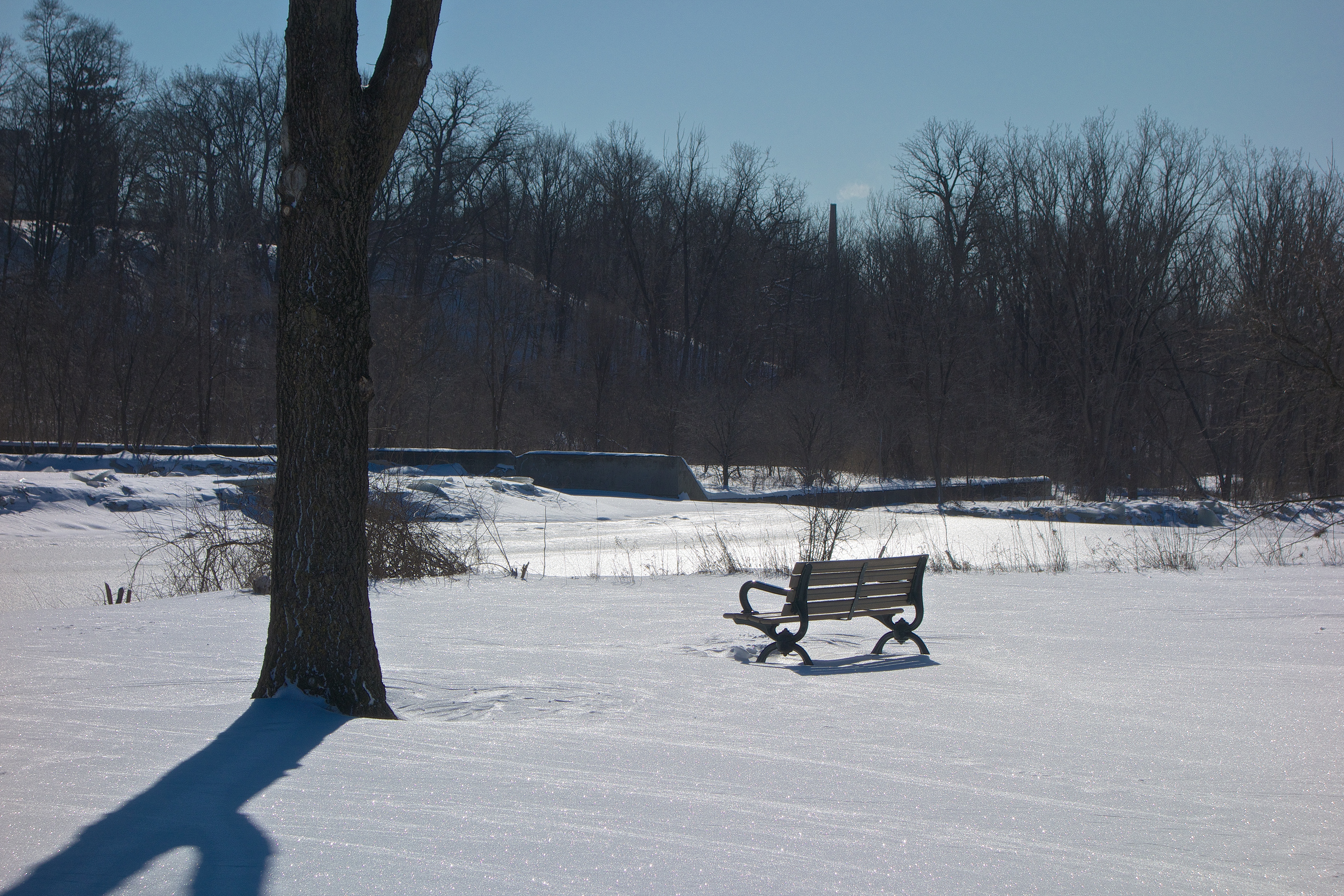
There’s nothing like a good old dumping of snow to hide imperfections; especially when the next day is sunny and calm. We had close to 30cm (a foot in old speak). Let’s get started with the bench – the ‘before‘ was drab and dismal compared to views from other times of year. Today, it’s a postcard.

The bench has had a makeover courtesy of the snow.

Notice the lines in the snow caused by strong winds overnight.

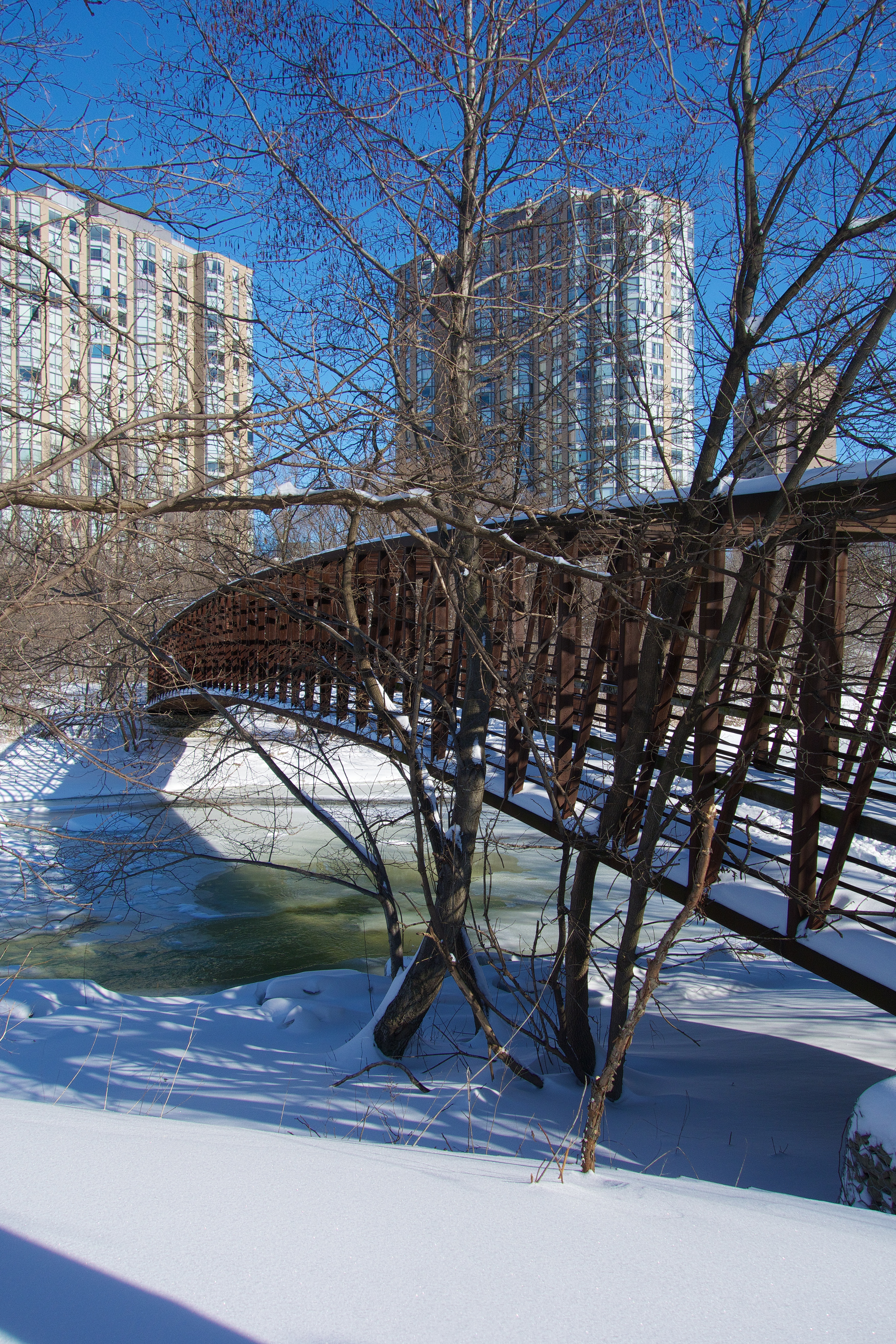
The bridge has many flattering angles. Photograph it from one side and you’d swear it was miles from anywhere. Here’s the other side set against condos in Weston. I like that the bridge and its shadow seem to form a loop over the Humber.

Nature and the hand of humankind working together.

Nature and the works of humanity together.

Next is a couple combining trees and snow – one of my favourite combos – especially on a sunny day and when the snow is fresh and deep as it is today.

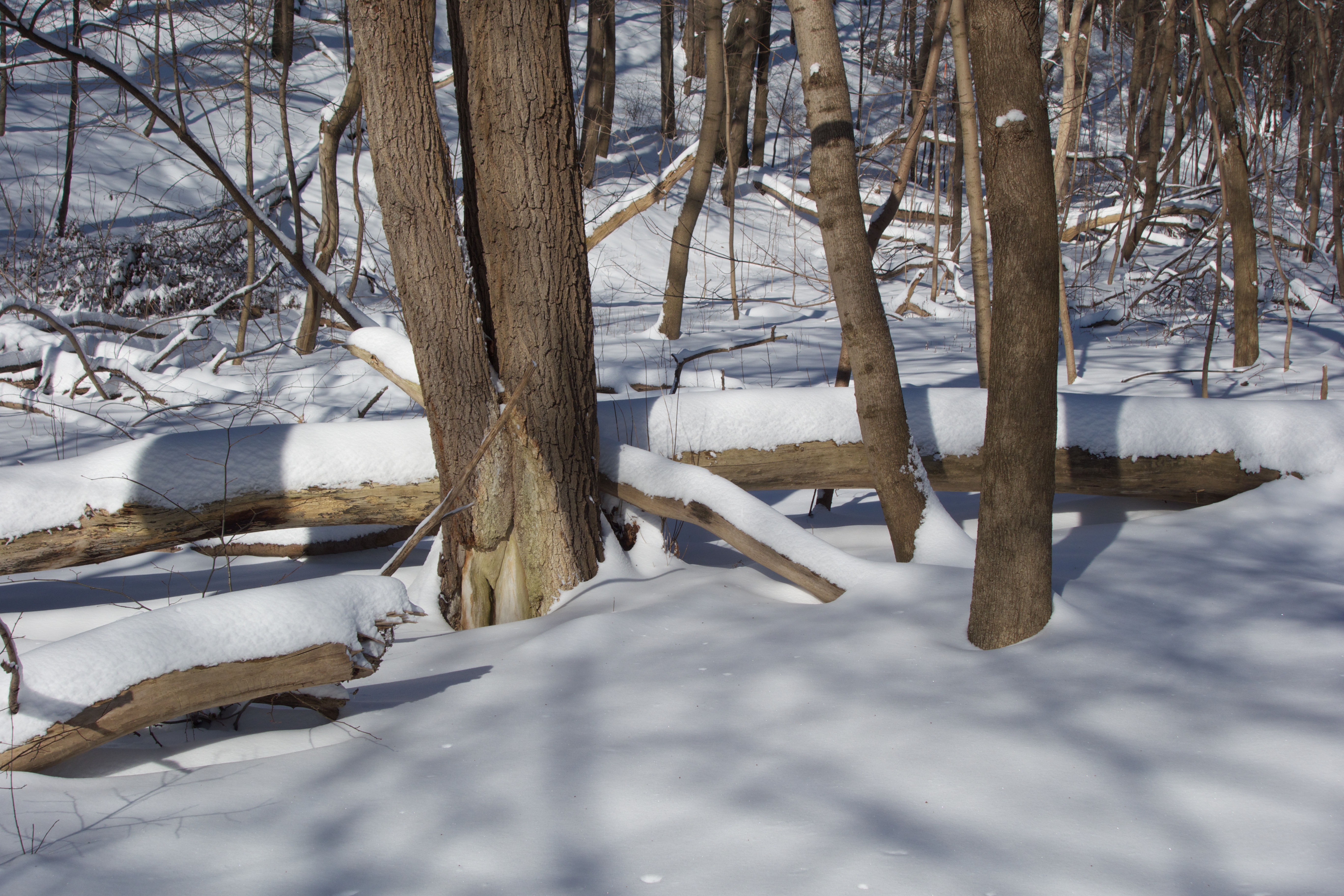
A downed tree.

Fallen trees litter the woods.

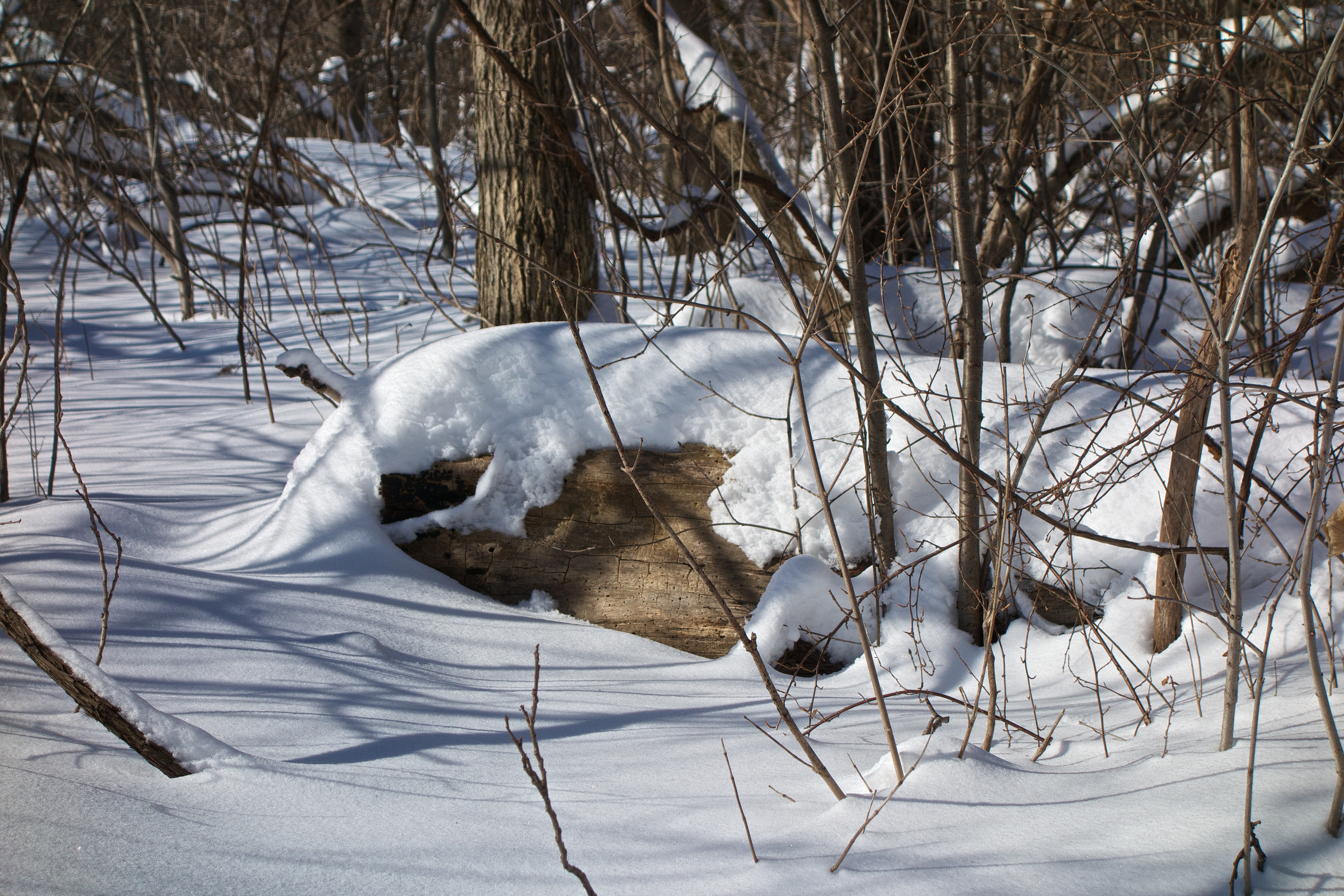
A large log is hugged by a coat of snow.

A large log looks as if it’s being hugged by a coat of snow.

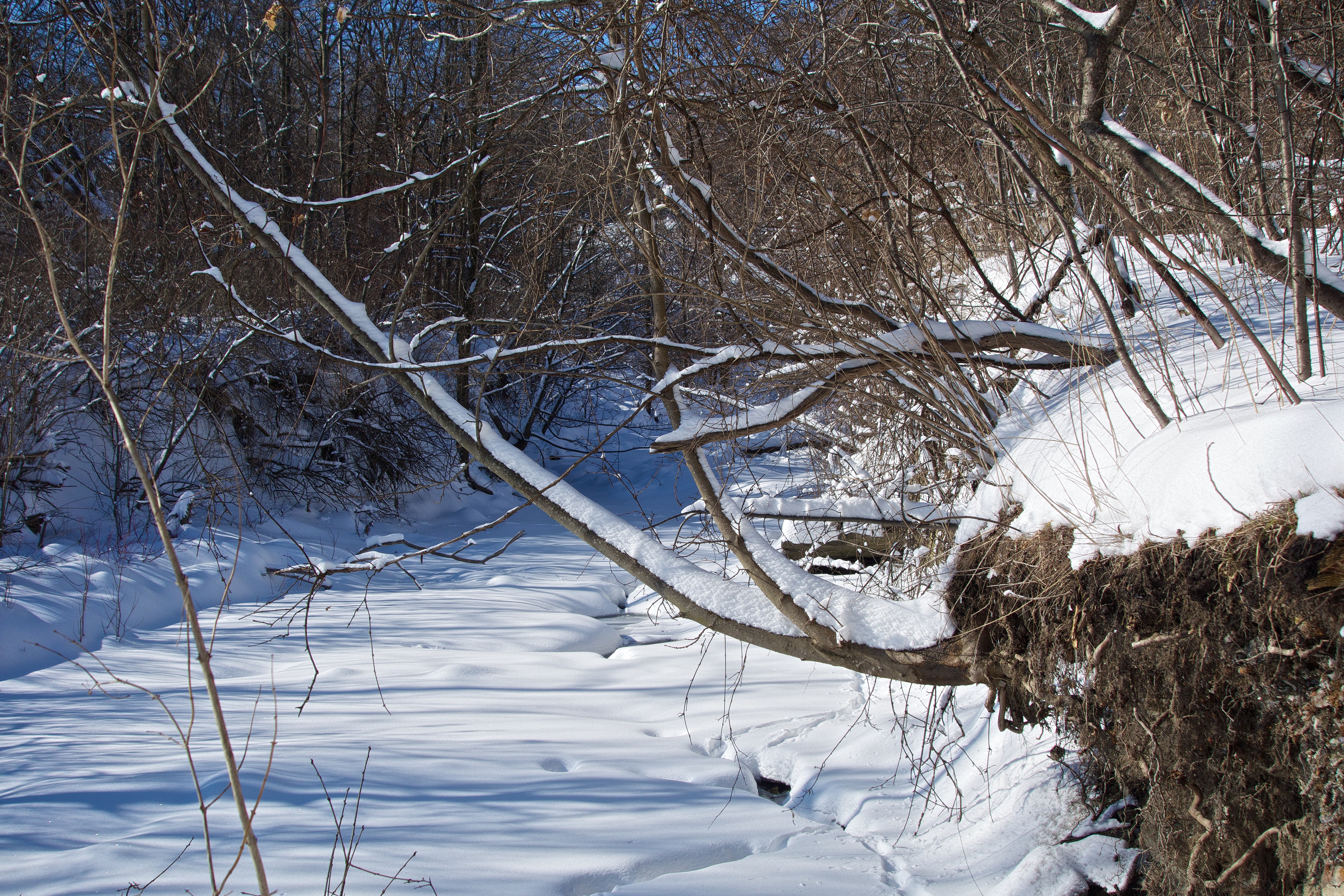
Lastly, I was able to clamber down to the Humber Creek in my snowshoes. The view did not disappoint.

Looking up Humber Creek towards Scarlett Road.

Looking up Humber Creek towards Scarlett Road.

Snow day.

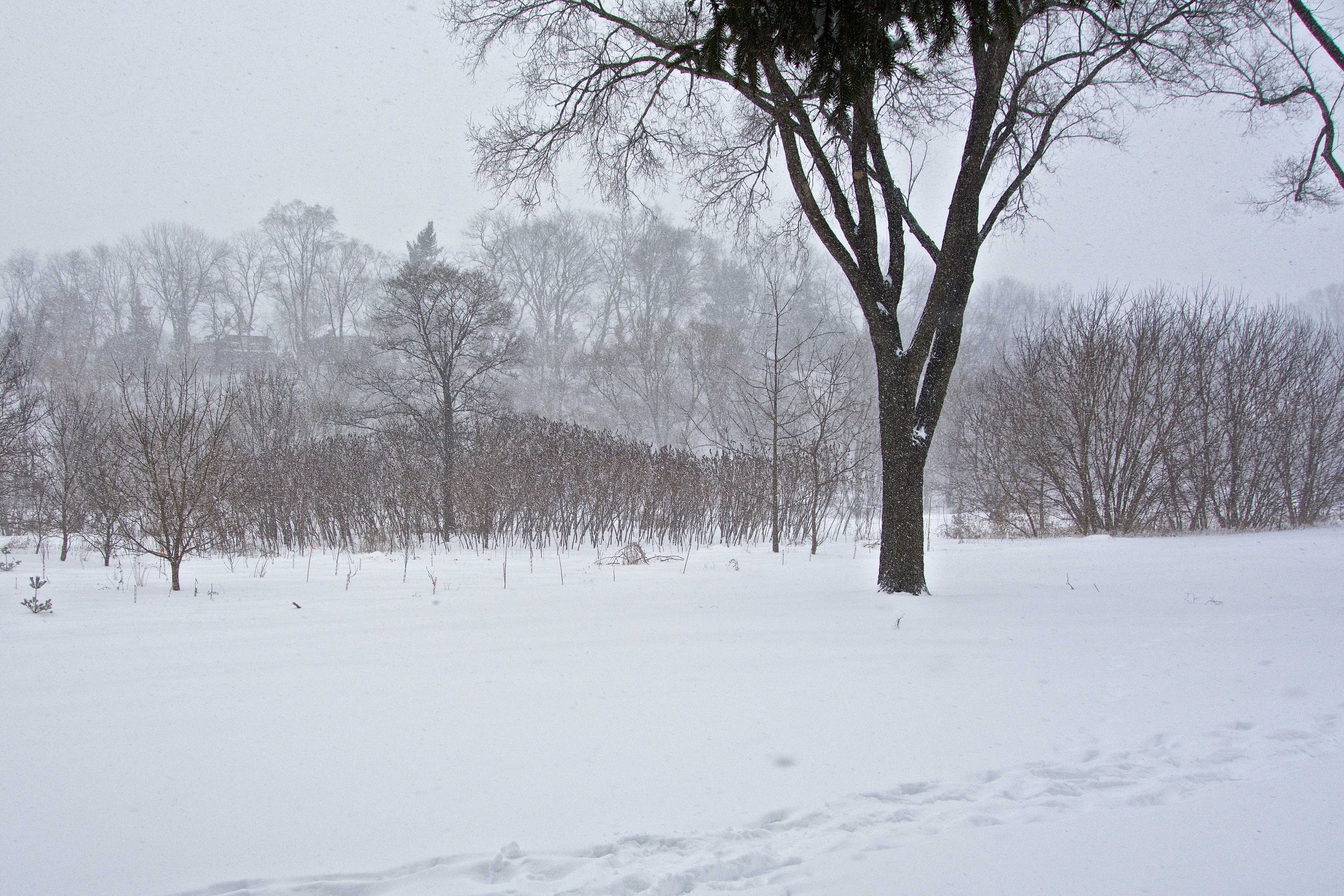
This morning snow was coming down thickly in the park. Over breakfast I watched a squirrel unerringly locate and then enjoy a treat it had stored last fall. This was a timely reminder of a show I watched on CBC this week demonstrating that squirrels don’t randomly bury food and forget about it. They can actually remember its location.

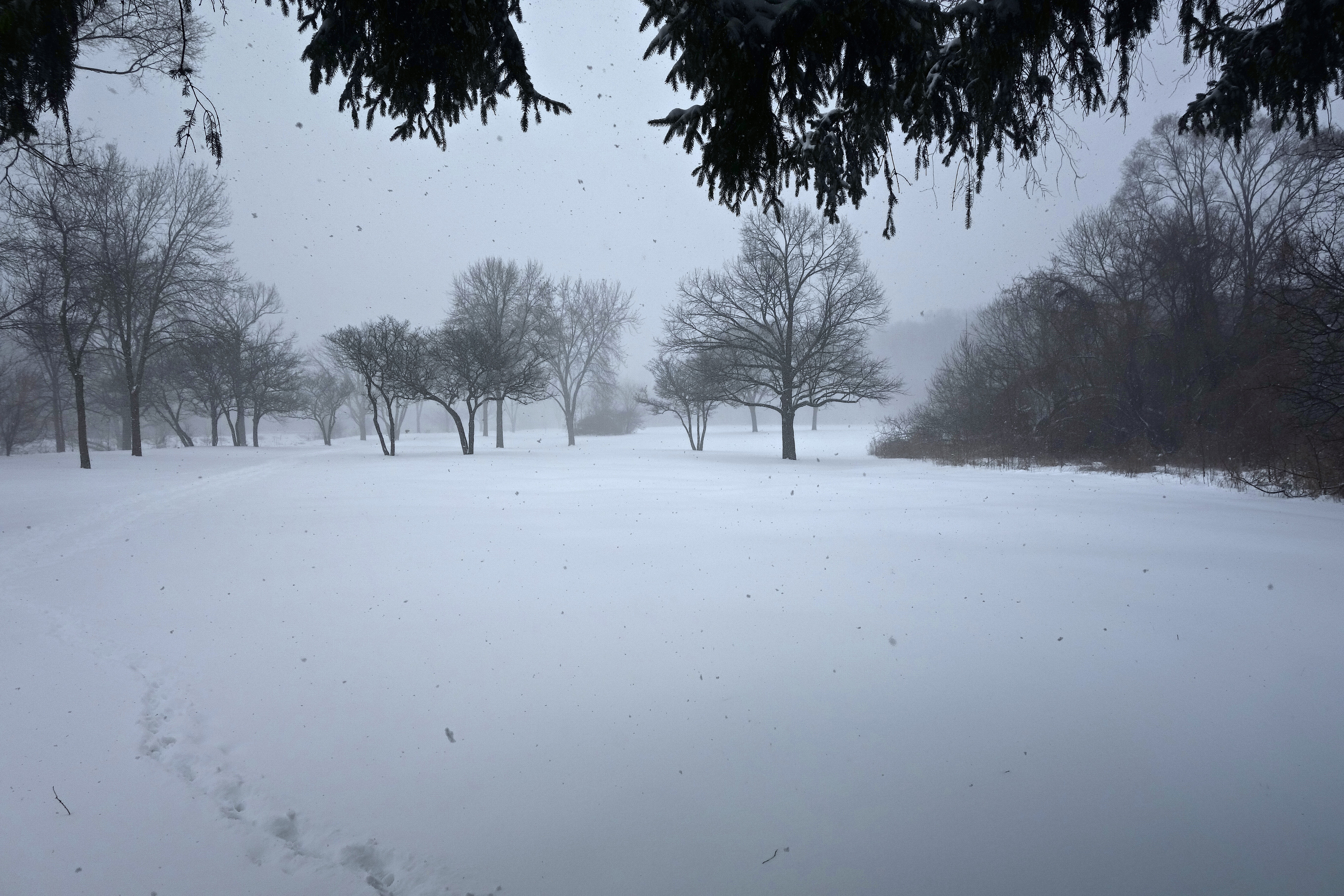
I experimented with the multiple shot feature of the Sony RX100 this morning. Normally when you take a photo during a snowstorm, the shutter speed isn’t fast enough to capture the flakes without blurring and you get a series of streaks. The multi-shot feature is designed to cut down on noise in night photography and the camera does this by shooting several images at high shutter speeds and combining them in camera. Here is one of the combination shots taken from the refuge of some spruce trees.

Looking south towards Eglinton.

Looking south towards Eglinton.

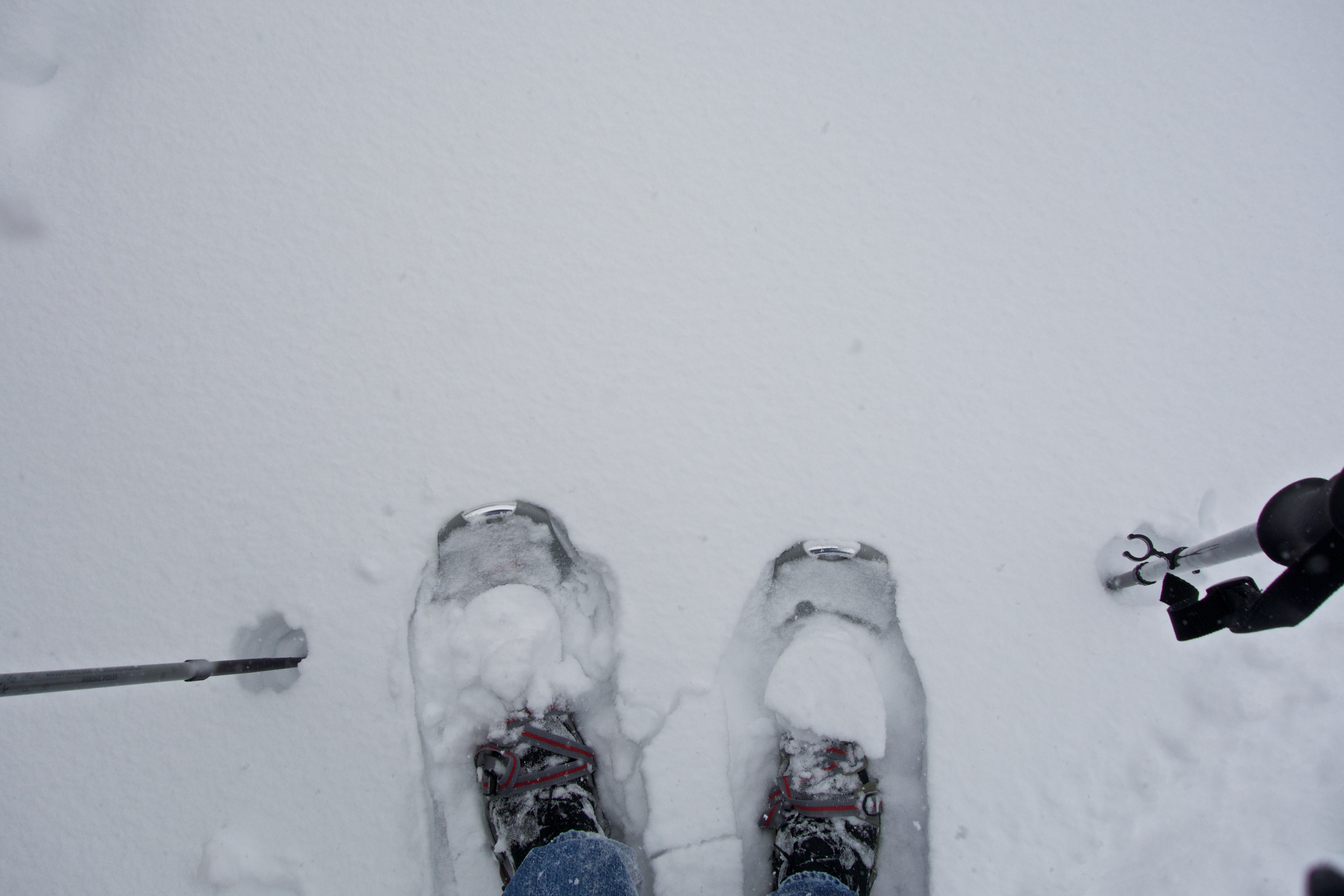
The snow was deep enough for snowshoes today and so they were dusted off. It took a few minutes to adjust all the straps make sure they were firmly attached to my feet and off we went. Wearing snowshoes takes a bit of getting used to as it’s quite easy to tread on your own feet. The good thing is that if you fall, it’s a soft landing.

Snowshoes at work.

Paging Ronald McDonald.

Since your body weight is spread out over a larger surface, the idea is that you don’t sink as far as you might otherwise. Another advantage is that they help keep snow from getting into your boots. I used to imagine that snow shoes allowed you to walk on top of the snow. Not so; you’d be surprised how far you sink. What they do provide is stability and perhaps a slight reduction in effort. Even so, deep snow gives you a good workout and I was very warm after a short time.

A stand of sumac in the snow.

A stand of sumac sticks out in the snow.

As you can see, I was not the first to walk through the park today. Since the construction of the footbridge over the Humber in 1995, the park path has provided a vital short cut for many people making their way to and from stores in Weston and has probably saved many a car trip. The GO train now operates from Weston Road south of Lawrence and is also an easy walk. Maybe one day, Toronto City Council will recognize this and clear these important pathways after a snowstorm.

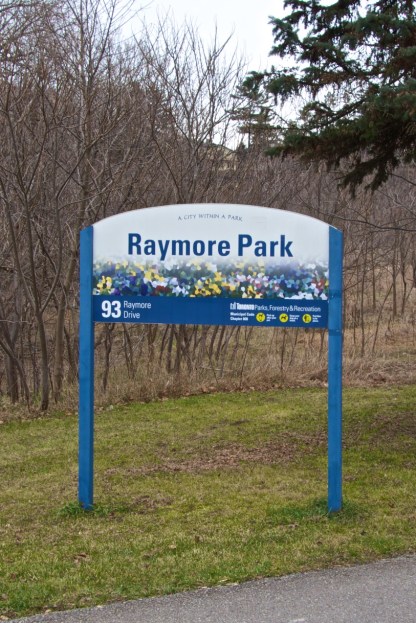
The Raymore Park Sign, December 26, 2012

Copyright © 2012 by Roy Murray, all rights reserved.

This is the sign that greets visitors arriving by car, and on foot from Weston. When I first saw it I was confused by the slogan ‘A city within a park’ as there is an implication that somewhere in this park is a city. If the slogan writers could only have come up with ‘A city within its parks’ it would have made more sense to visitors. The good thing is that the sign gives the address so that people on bikes and those needing emergency services know where they are.

Welcome

This is the first post of an advocacy site for Raymore Park here in Toronto. The idea is to celebrate the good things happening in the park and correct the bad. My focus will be on allowing nature to thrive by protecting the park’s flora and fauna. Since this is (for now) a one-person site, the content will be opinionated and arbitrary. It is hoped that like-minded people will bring their own agendas to the table and join in this effort to help the park be what it is meant to be.