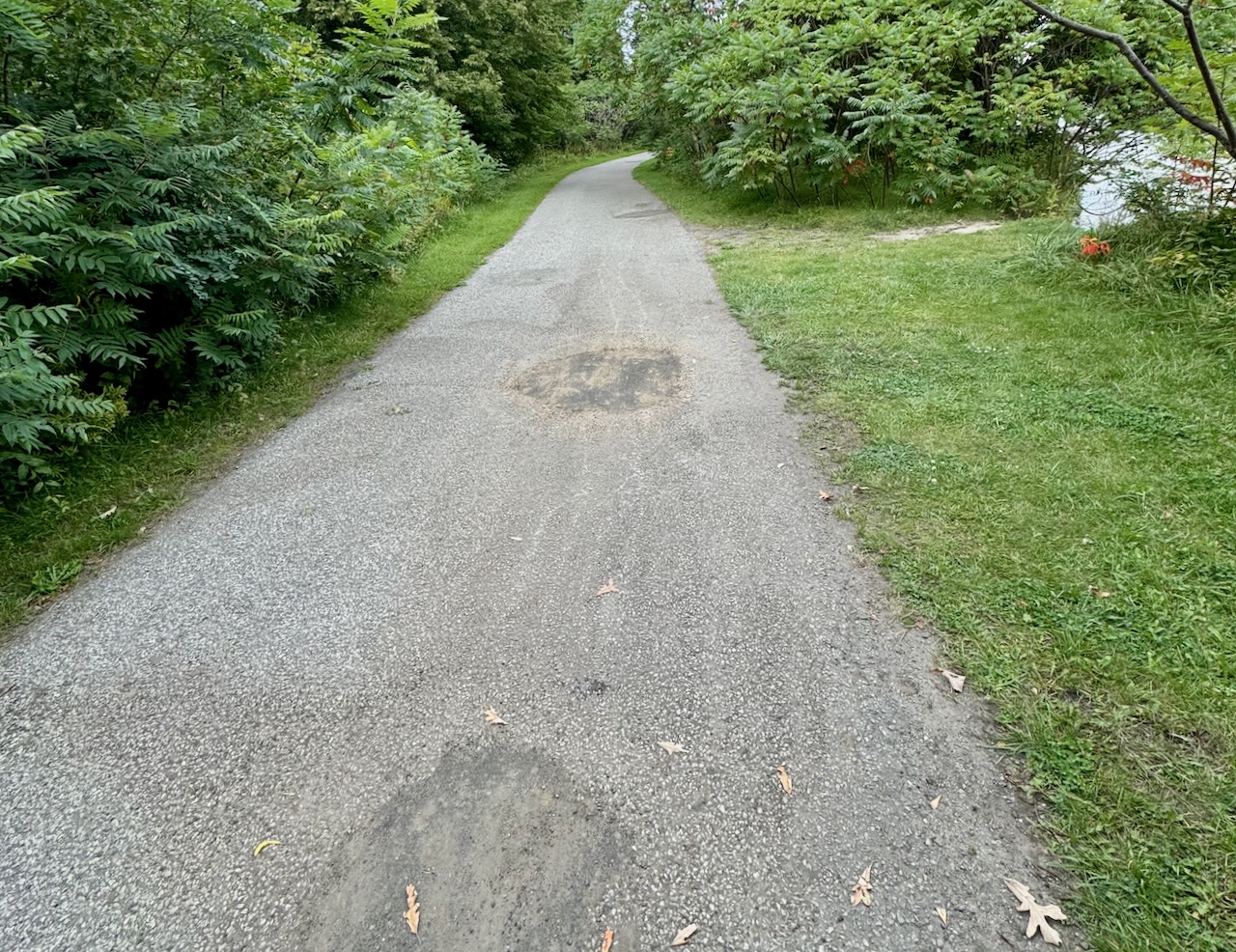
Looking north towards the weir along the Humber Trail in Raymore Park. August 2024.
Crews have finally repaired sinkholes in the bike path south of the Weir. Some of these were decades old, quite deep and particularly dangerous to inattentive cyclists. Often they would fill with water, freeze and a layer of snow would hide the slip hazard.
This section of the trail was newly paved at least 30 years ago.
Back when Mugsey was alive, I was walking with a fellow dog-walking friend when she slipped on ice that had formed in a bike path depression south of the weir. A thin layer of snow had concealed the ice lurking beneath and down she went, breaking an arm.
This was around 2011. The depression is still there along with several others. Some of them are quite deep and could cause a serious accident if a cyclist was caught unawares.
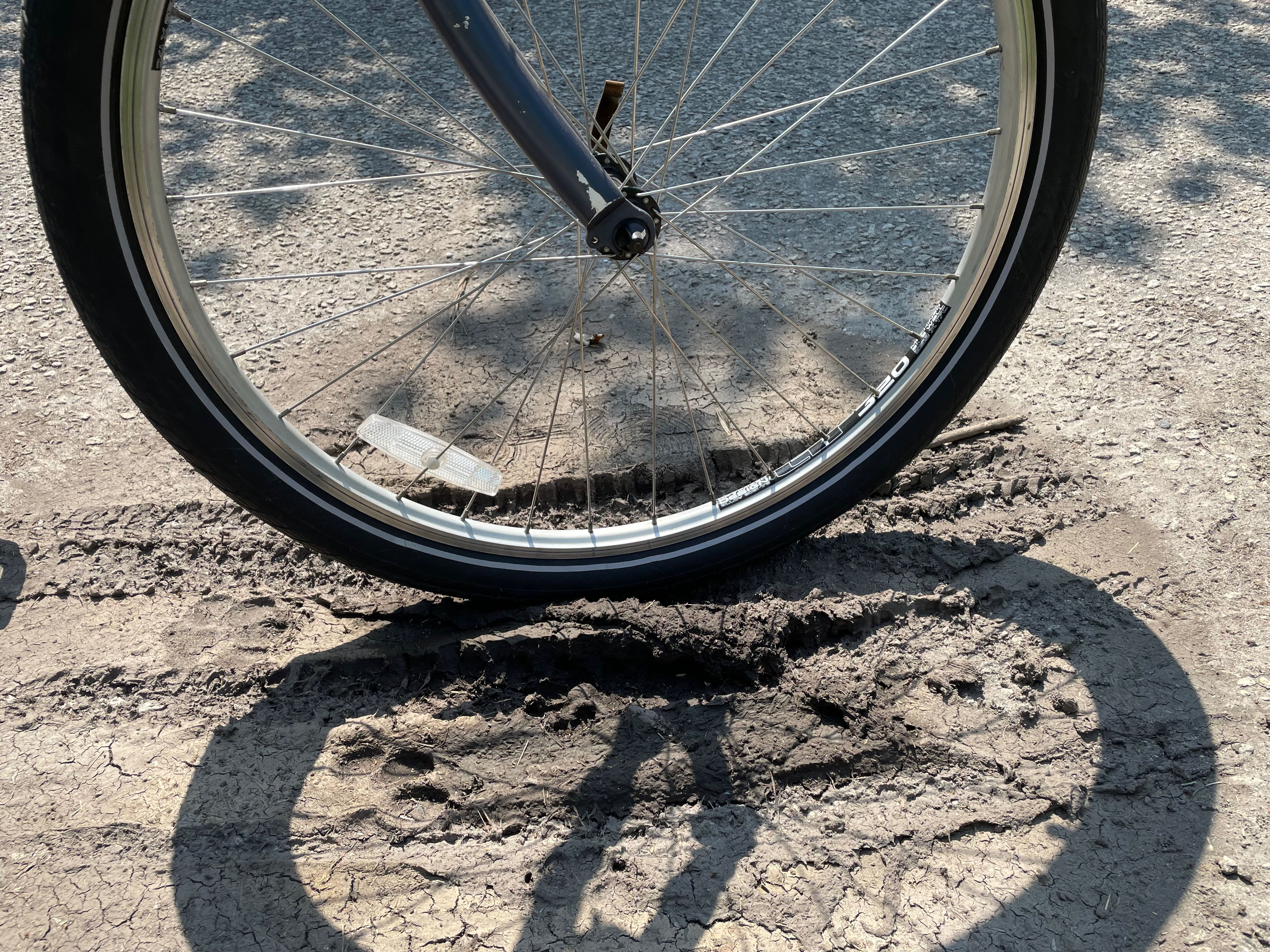
This one is filled with mud. July 2023.
The bike path is in need of levelling and repaving to today’s standards but for some reason, it’s not been a priority.
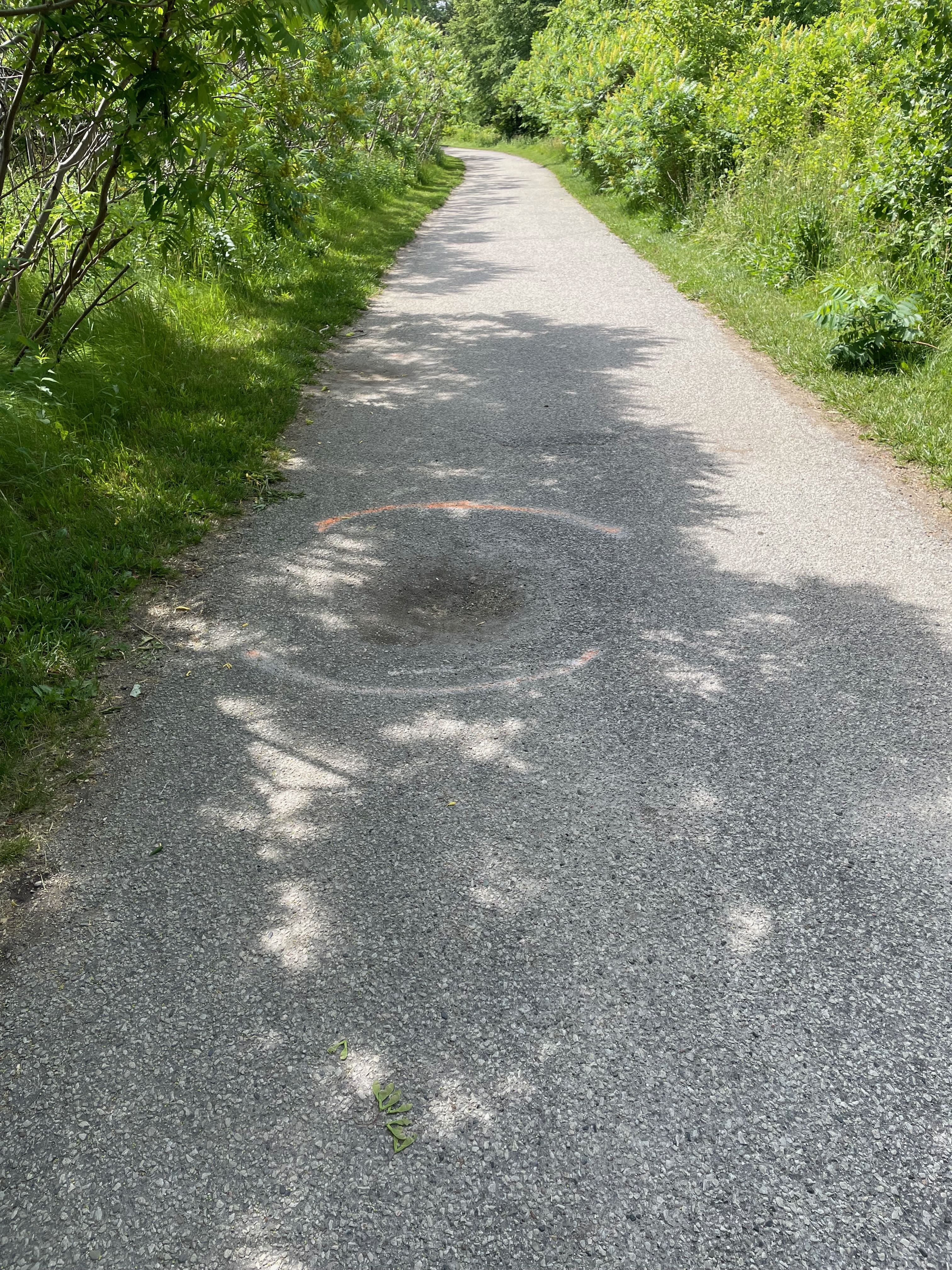
The photo doesn’t do the depth of the depression justice. June 2023.
Someone has helpfully used spray paint to outline the depression (and a few others in the vicinity) but nothing has been done since 2011. Maybe if Toronto is serious about creating a network of bike lanes around our city, these dangerous depressions can either be repaired or the bike path repaved and brought up to standard.
Readers may remember that the Humber cycle and pedestrian trail has a gap around the junction of Weston Road and St Phillips. The trail ends because the Humber’s banks are occupied by private property – mainly the Weston Golf and Country Club.
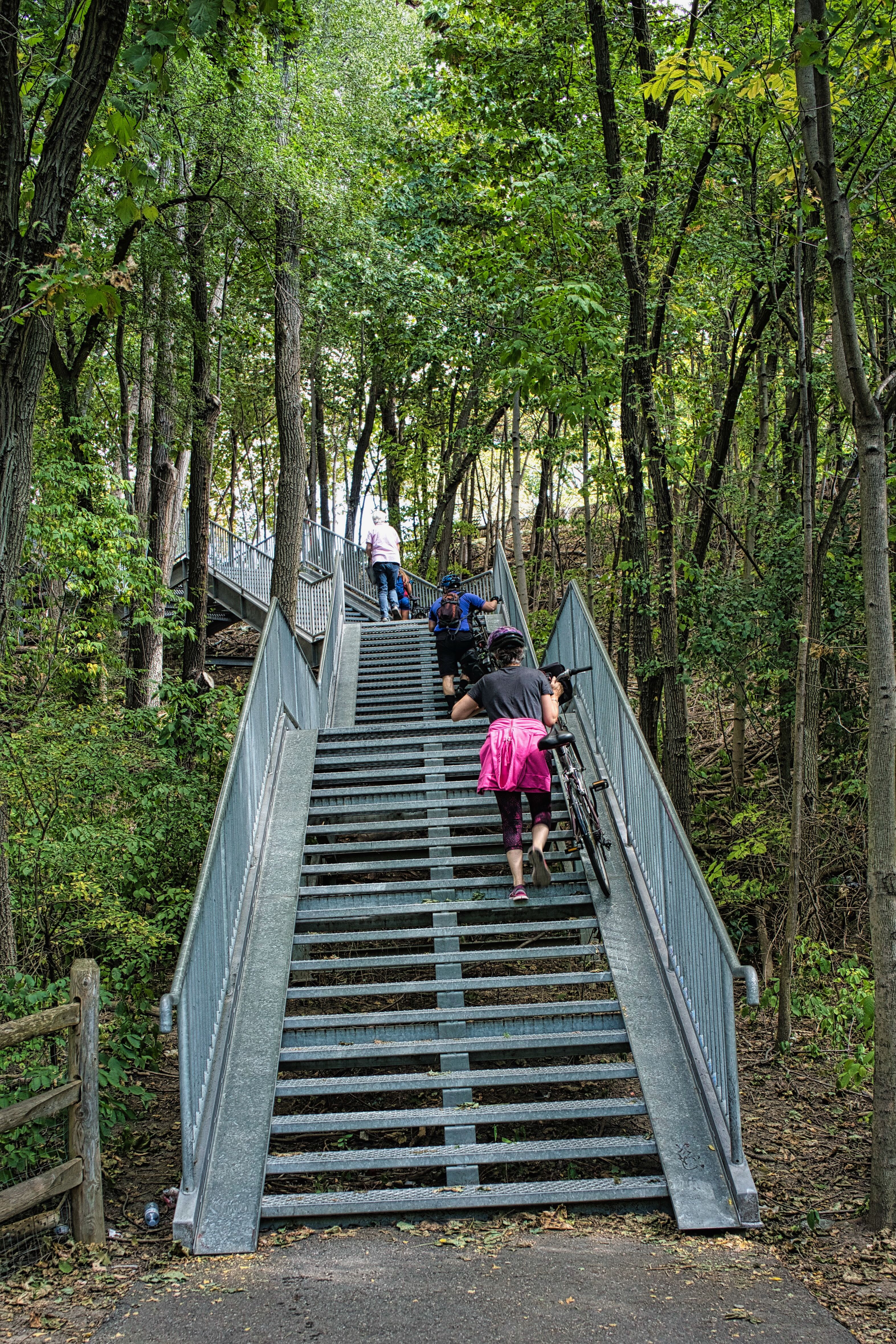
The gap in the trail forces able-bodied cyclists to lug their bikes up a huge flight of stairs and deters a huge number of others who are daunted by the danger of Weston Road and the physical exertion required to push a bike up several stories.
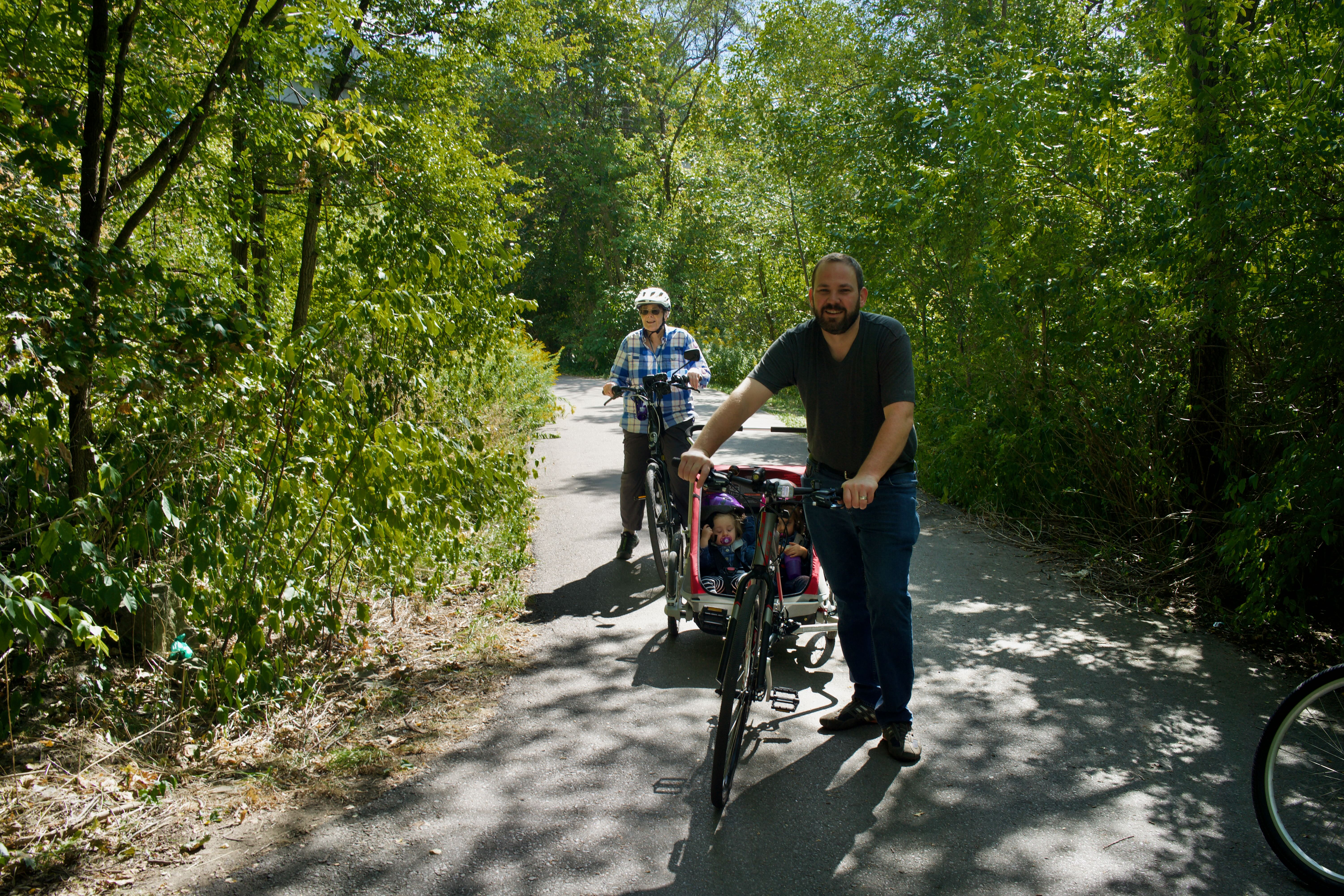
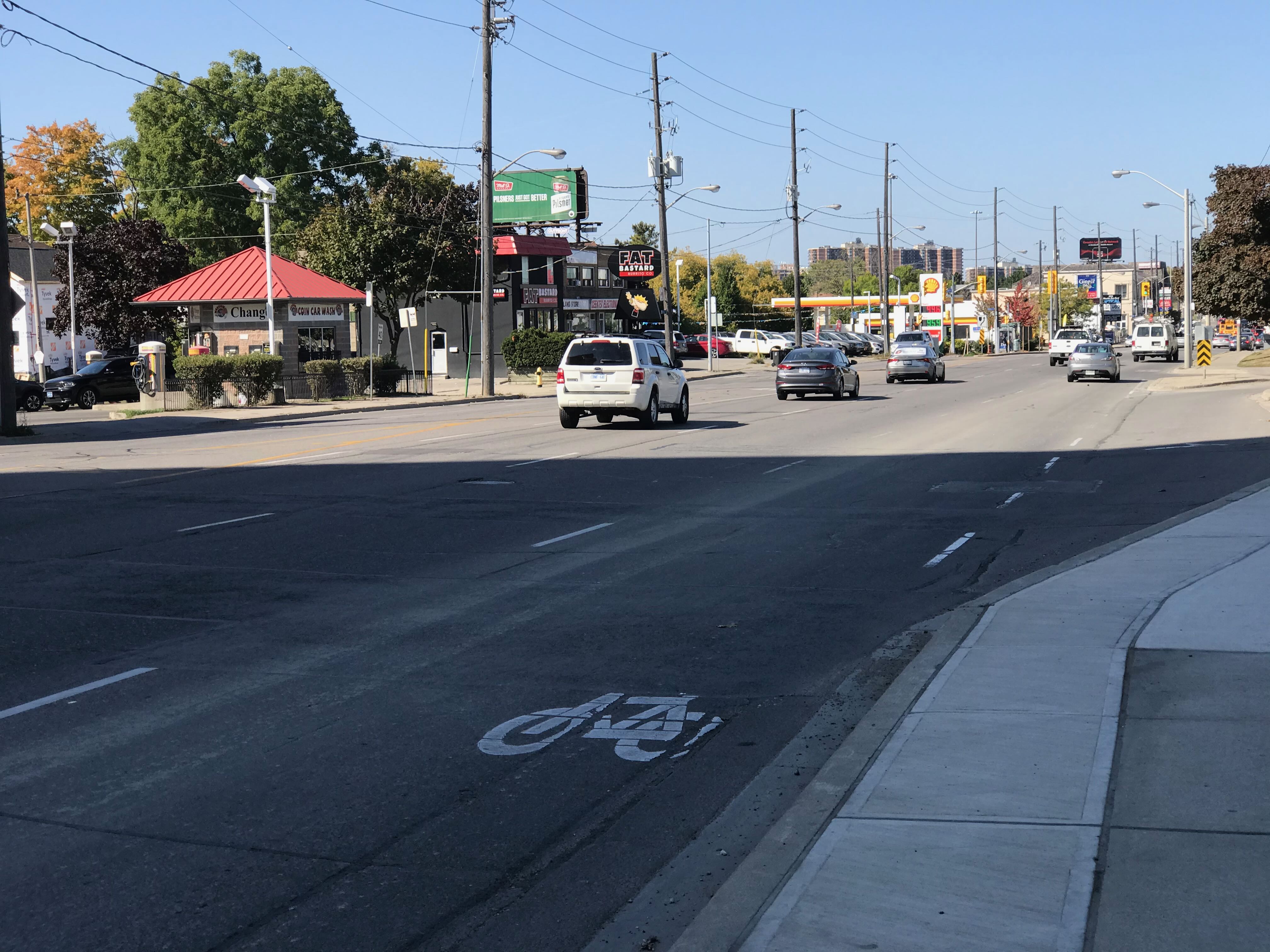
Cyclists climbing the stairs towards a dangerous trek along Weston Road.It’s the end of the trail for this family.The dangerous stretch of Weston Road that links two sections of the trail. Note the optimistic ‘sharrows’ indicating that vehicles share the road with cyclists.
After more than two decades of study and consultation, a solution was found out of several options that would allow the trail to continue its way alongside the Humber without encountering stairs or traffic. The solution involved a couple of bridges and some fencing where the golf club borders the river. After the final hurdle of an environmental assessment by the city and TRCA, the project was given the green light. Ominously, somewhere in the documents was the fact that the Weston Golf and Country Club was concerned about the safety of pedestrians and cyclists during flood events. Some of the great unwashed might find themselves in the Humber after a rainstorm. Think of the liability.
The WGCC is a popular club with a waiting list to get in. They have a decades-old arrangement with the city to defer a (confidential) percentage of their property taxes as long as they operate as a golf course. The club has powerful members who may or may not have the ear of Premier Ford who lives nearby.
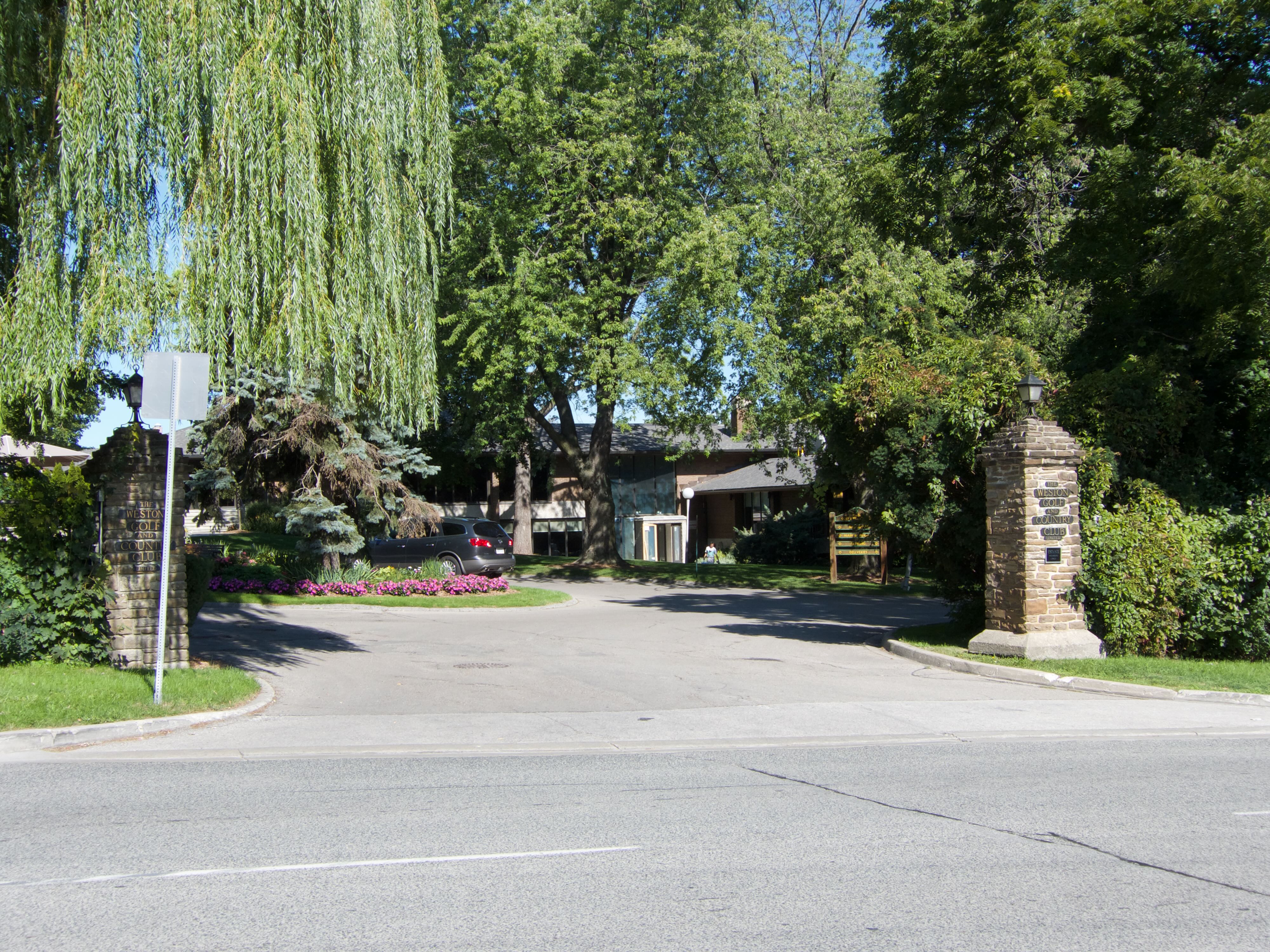
The entrance to Weston Golf and Country Club on St Phillips
Enter a pantomime villain in the shape of David Piccini, Ontario’s 34 year-old Environment Minister. Piccini has likely been told to kill the project and may well have done so. Piccini insists that the environmental assessment done by the city and TRCA is somehow inadequate. He has demanded a do-over, effectively stalling the project. In response, the city has commenced a Notice of Application for a Judicial Review in Divisional Court and is challenging the Province’s order for further study on the Mid Humber Gap Trail.
The hearing is scheduled for November 15, 2023.
Is it really the end of the trail?
I guess we’ll find out about the power of a publicly subsidized golf course and how easily due process in a democracy can be perverted – or we might be pleasantly surprised at the judiciary acting in the public interest.
Toronto’s new mayor may have something to say about this.
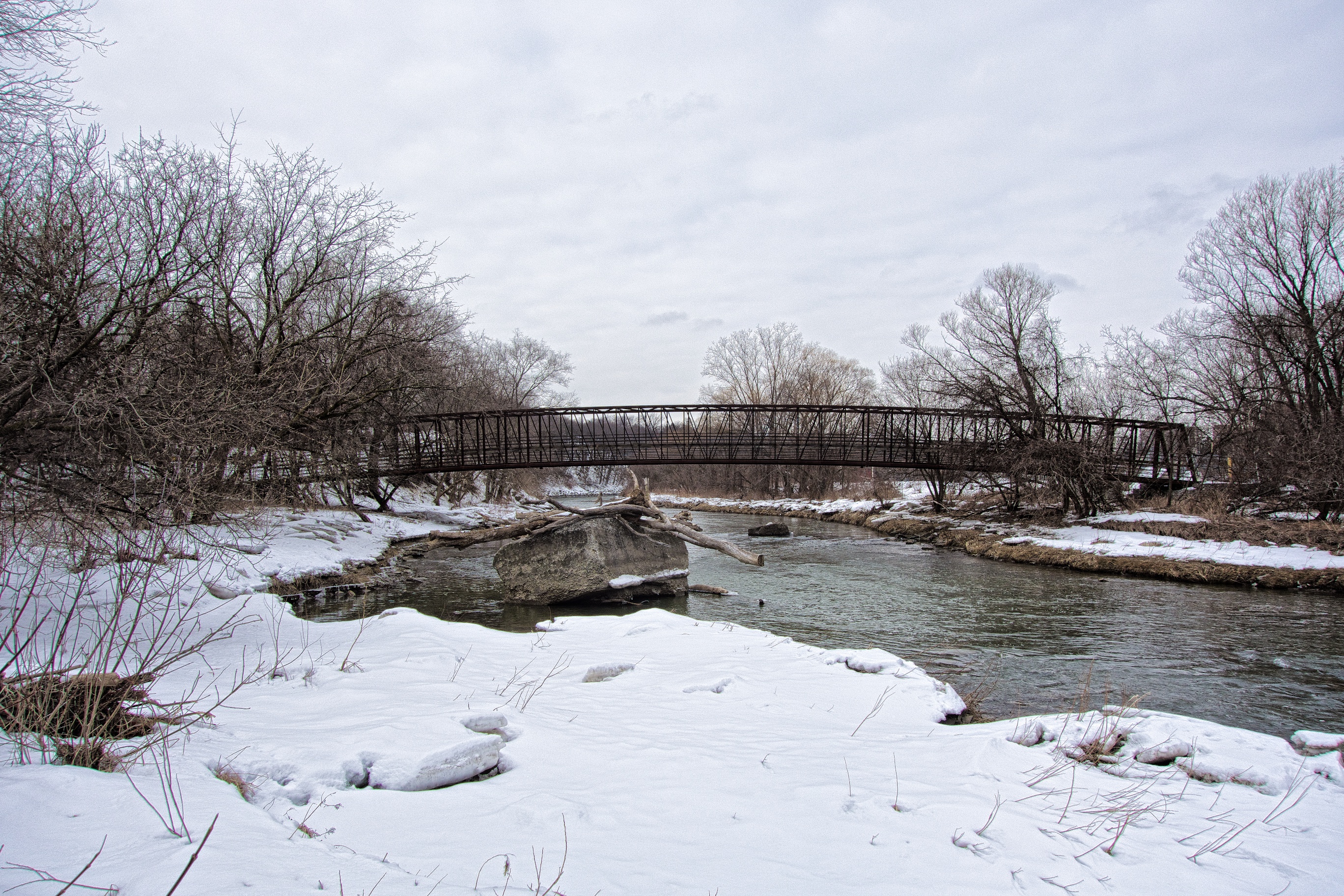
The Humber footbridge looks good from just about any direction but this view looking north features the old suspension footbridge abutment in the foreground.
The Humber footbridge and the old bridge abutment on a late winter’s day.
The footbridge was installed in 1995 (after an absence of 41 years) with provincial help, as part of the goal to have a waters’ edge trail from Lake Ontario right up to the Humber’s source on the Oak Ridges Moraine. As part of this goal, this summer, a 600m extension will move the end of the trail from its current location in Cruickshank Park to a set of steps by Weston and St Philips Roads. At the moment there are negotiations around land ownership issues further along the riverbank – hopefully these will be resolved soon.




 Friends of Raymore Park