Category Archives: Raymore Park

Raymore Park Leash Free Zone Likely

In spite of the fact that Raymore Park was rejected as a candidate for leash free zone consideration as recently as June 2014, organizers of the recently held residents’ meeting seemed to confirm that the zone is a done deal. Apparently ‘someone’ applied last June, and the City must consider the site. Oddly the city’s reasons against a leash free zone in Raymore were the same as those for rejecting adjacent Lions Park, namely, ‘TRCA, ravine,  natural heritage’. The document may be accessed here.

The meeting was attended by about 25 people and the proposed zone was illustrated – I have outlined an approximation as the organizers distributed no hard copy:
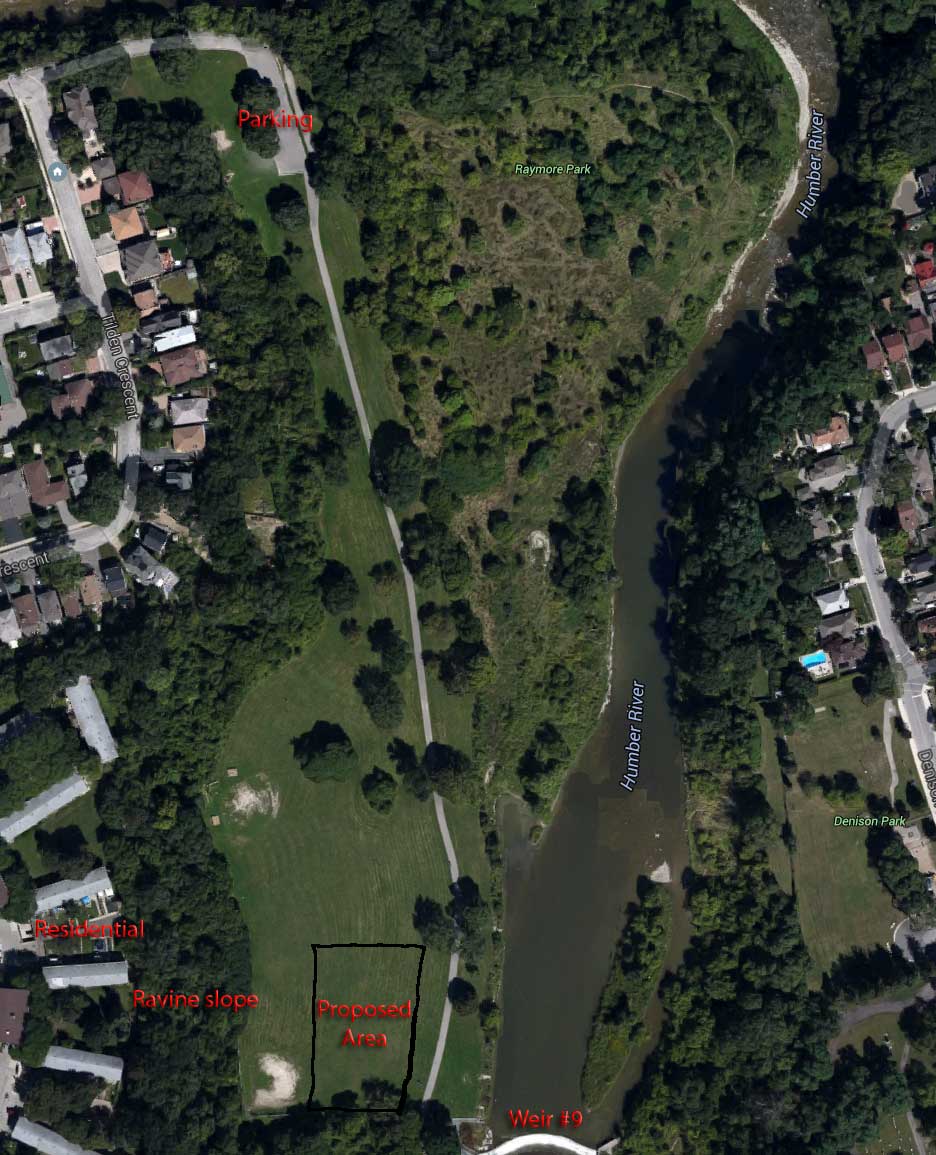
Raymore-Proposed-Leash-Free-Zone

Raymore Park showing the proposed off-leash zone. Google Earth.
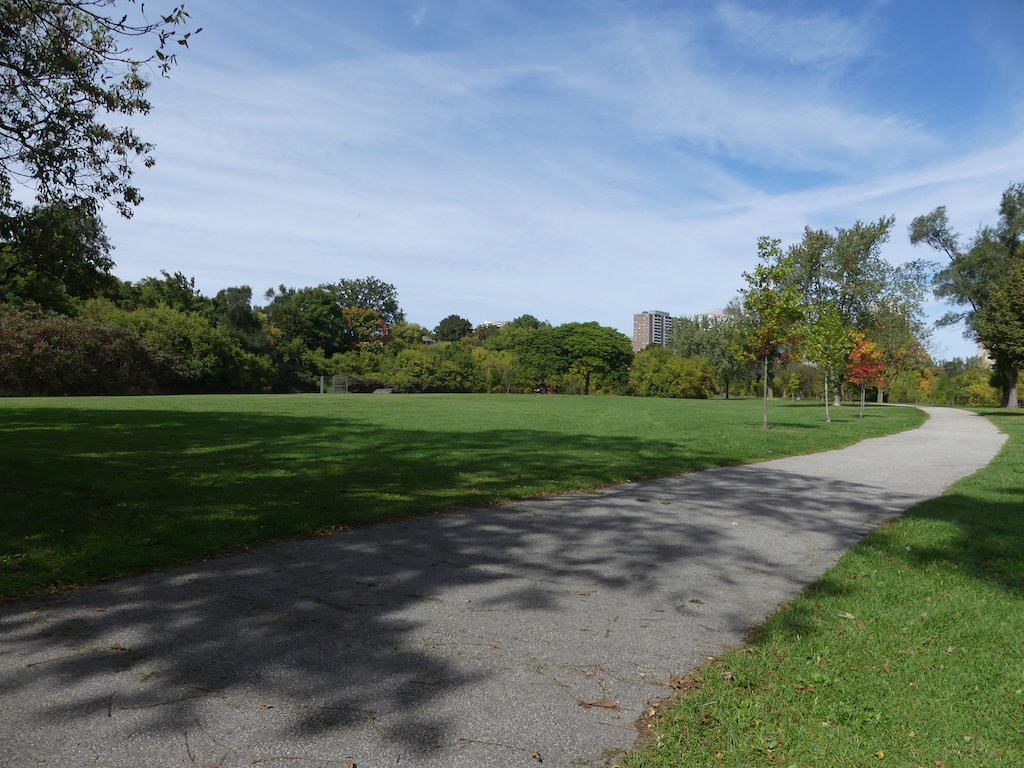
The site as it looks now (September 2015)

The site as it looks now (September 2015).

The zone will be about 450 metres from the parking lot yet only about 100 m from nearby residences (the fact they are TCH homes may have eased concerns). The baseball diamonds will remain in place as removing them would involve park owners, TRCA and it’s ‘too much hassle’ according to the meeting organizer. The zone will occupy ¾ of an acre down at the southern baseball diamond in a rectangle following the river about 15 feet from the far side of the path. It will be fenced with pine wood rail fences so at least it won’t look too bad. Its northernmost tip will be about half-way up the open field (perhaps a little further than what I have drawn). I did suggest planting trees to the north of the zone which would hopefully dampen the sound somewhat. The organizers’  positive response to this suggestion may have been a way of easing my concerns; we’ll see. Trees to the south will provide shade. Water and lighting will not be supplied as the location is too remote and the budget small. Supervision by city staff will be minimal thanks to budget restraints and may I cynically suggest, the long walk from the parking lot.

When I suggested that the majority of people using the zone will be with unlicensed dogs, the response was a bit of a metaphorical shrug. From what I gather, nobody will be checking for dog licenses – even in the early days of this thing. Professional dog walkers will be allowed to use the zone.

The proposed opening hours are 7:00 a.m. to 9:00 p.m. year-round (even though the park gates are locked from November until April). This will create parking issues along Raymore Drive and Tilden Crescent. Organizers then talked about keeping the gates open year-round which some in the crowd thought was unlikely as even the ploughs get stuck occasionally.

The zone will be installed by spring of next year.

The organizers claim that traffic and noise levels won’t increase by much but they don’t like getting complaints about the zones it will be up to residents to phone 311 if people are abusing the area or being noisy.

There will be one more meeting to discuss the plans based on community input.

Hazel Walk well attended.

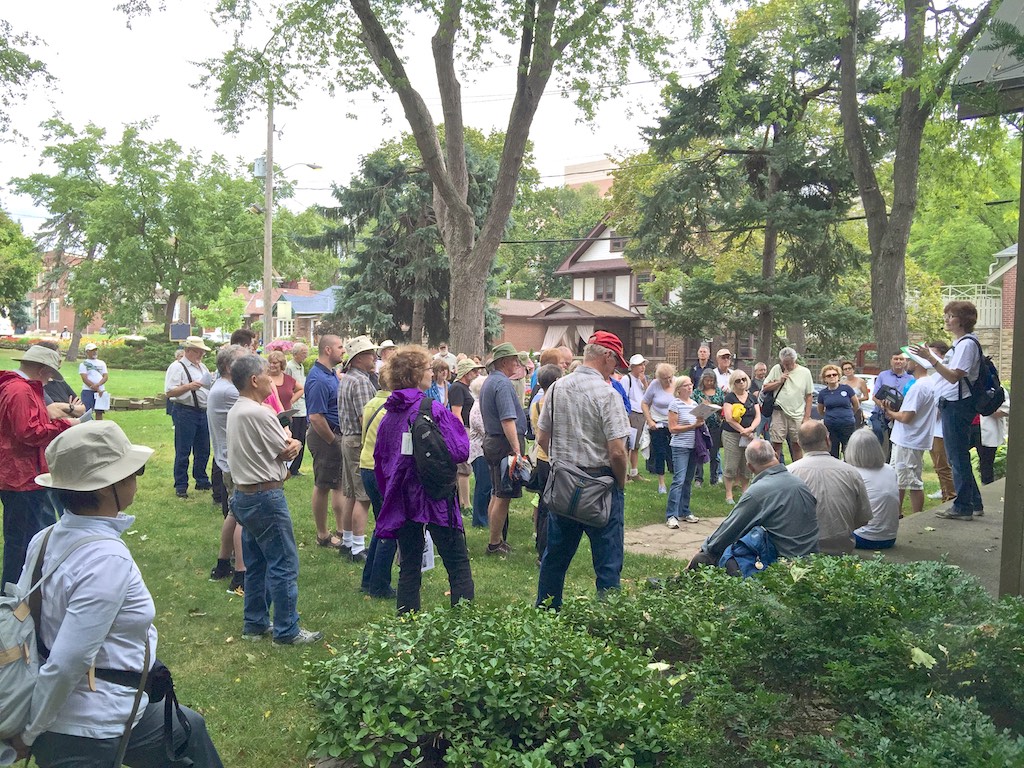
Weston Historical Society's Cherri Hurst talks at the first stop on the tour.

Weston Historical Society’s Cherri Hurst (far right) talks at the first stop on the tour.

Close to 70 people attended last Saturday’s Hurricane Hazel Revisited walk. The guided tour stopped at many of the significant locations that played a part in the October 1954 tragedy that changed the face of Toronto. The walk was well received thanks to an excellent script that was a collaboration between Weston Historical Society members, Cherri Hurst and Mary-Louise Ashbourne.

I had the privilege of assisting in this Heritage Toronto walk and the level of interest among attendees was impressive. Hazel’s legacy is our precious park ravine and system; a place to enjoy nature as well as a haven for plant and animal wildlife.

Thanks to Jill for coming all the way from Burlington and adding a personal touch via her father’s incredible memories of being personally involved during the storm.

The rain held off until we began walking to the renovated St Matthias Church – now the Canadian headquarters for Sukyo Mahikari. We were shoehorned into the beautifully restored small church, dripping wet and were given a bonus presentation on the renovation of the church which played a part during Hazel’s aftermath.

Hurricane Hazel Revisited – Walk on Saturday.

Have you ever wondered about the people who lived in Weston during the time of Hurricane Hazel? Weston’s Historical Society is leading a walk, ‘Hurricane Hazel Revisited‘ that focuses on the storm’s devastating impact on the people and surrounding area. Participants will walk along the river, past some of the most significant locations and look at traces of what remains and the changes forced by Hazel that have occurred since 1954. The tour begins on Little Avenue this Saturday at 1:30 follows the river down to Raymore Drive and ends at the former Matthias church at Scarlett and Kingdom.

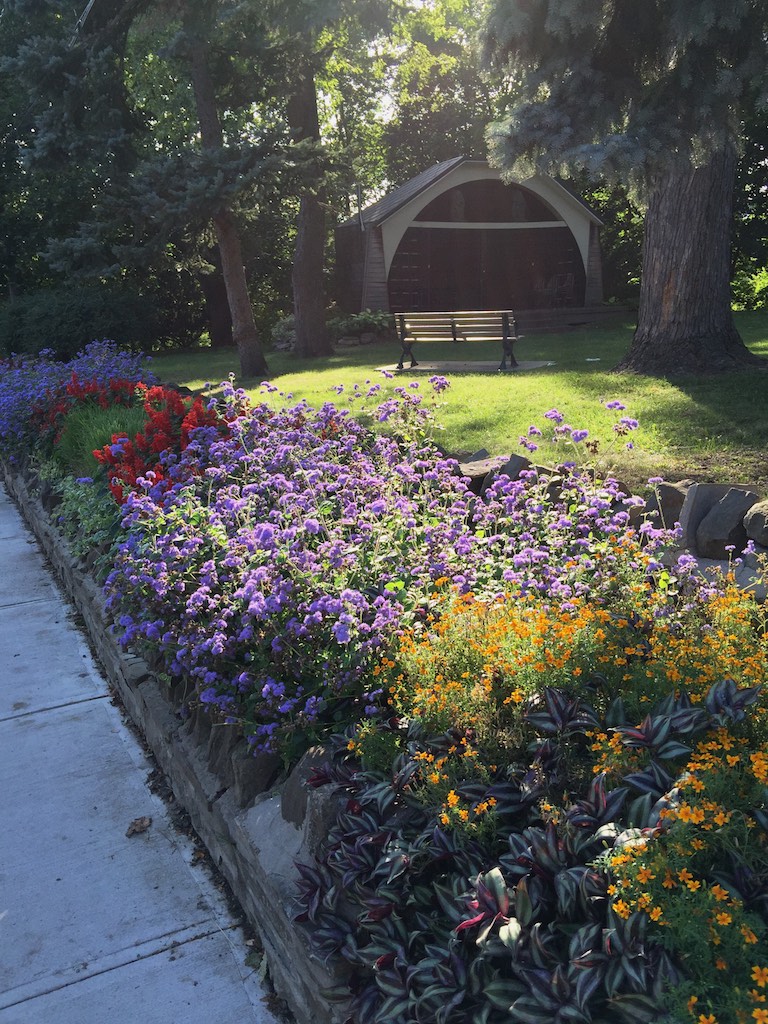
Little Avenue Memorial Park

Little Avenue Memorial Park

Meet on Little Avenue in the Memorial Park at 1:30

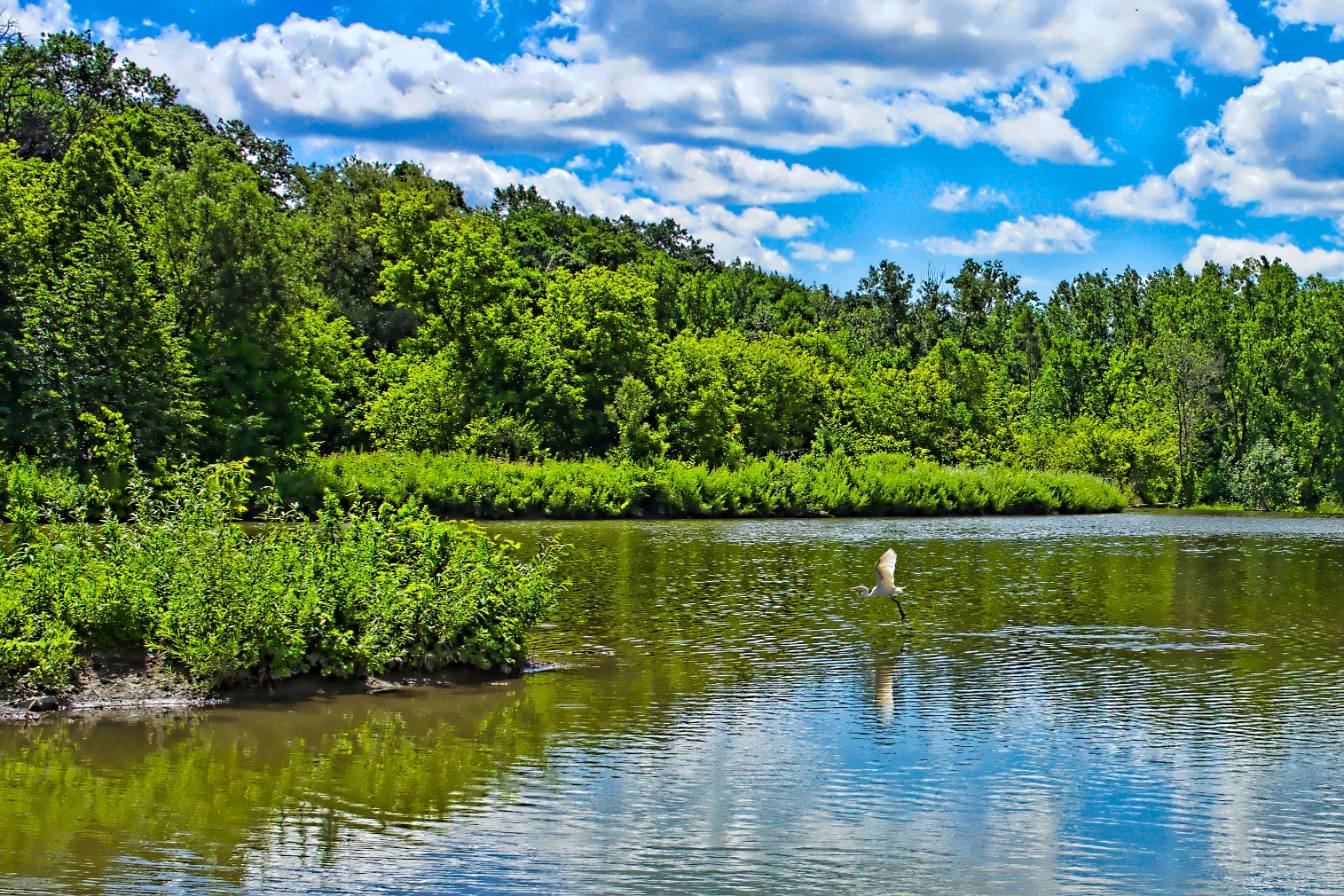
Great Egret takes flight.

Raymore Park has an astonishing variety of wildlife. Great Egrets are occasionally seen in the park and this one was seen taking off last month after wading through shallow waters ahead of the weir. They were nearly hunted to extinction in the 19th Century for their plumage which was used to decorate ladies’ hats. Once a purely migratory bird in southern Ontario, It is estimated that as many as a thousand breeding pairs make their home in Canada. Great Egrets are related to herons and have a similar profile. The first time I saw one in Raymore Park I thought it was an Ibis as they look so similar. The Ibis has a range much further south and is also a relative.

DSC01461

Click for larger image.

Hurricane Hazel Series- 1: The deadly knock

A knock on a door sealed the fate of two families on the rainy night of October 15, 1954. They lived on Raymore Drive in an idyllic neighbourhood by the shore of the Humber River. That night, radio stations had warned of a dangerous hurricane making its way north that would dump more heavy rain onto an already saturated ground.

Autumn in Ontario is a time of transition. The province occasionally finds itself in the path of extra-tropical hurricanes that are usually shadows of their former selves by the time their energy supply of tropical air has been cut off. This hurricane, named Hazel, was different. It had wreaked havoc in many areas of the United States. Instead of becoming a rain event, Hazel managed to re-energize itself by finding and merging with a cold low pressure area and using that to squeeze out more wind and moisture.

As the evening progressed, the storm parked itself over the city and the already swollen Humber River began to rise higher than residents had ever seen it. In wintertime, ice jams would bring water and inconvenience to the doorsteps of a few homes at the lower end of Raymore Drive but this time was different as the higher water level ceased to be an annoyance and started to become a threat. The roaring water surged wildly with no sign of levelling off.

As water lapped over thresholds into homes near by the river, one family thought it wise to ask neighbours on higher ground if they could bring over furniture threatened by the rising waters. This was the fatal knock. While the two families focussed on moving furniture to the higher house, their single-minded dedication to the task may have prevented them from acting quickly when events took a sudden turn for the worse.

What neither family could see and what would end up costing the lives of 35 residents of the neighbourhood was an unpredictable turn of events. Straddling the river was a footbridge. It was then, as its replacement is today, a convenient short cut from Raymore Drive to the bustling town of Weston, a centre of commerce for miles around.

As the water continued to rise, the western abutment of the footbridge was dragged off its perch into the river a few metres downstream where it anchored itself in the position it occupies today. The structure of the bridge held and in effect, re-positioned itself diagonally across the river forming a barrier which, thanks to the debris washing downstream quickly became a diversionary dam. Suddenly and without warning, the river was steered directly into the path of the homes at the end of Raymore Drive engulfing our two families and taking a total of 35 lives at this location.

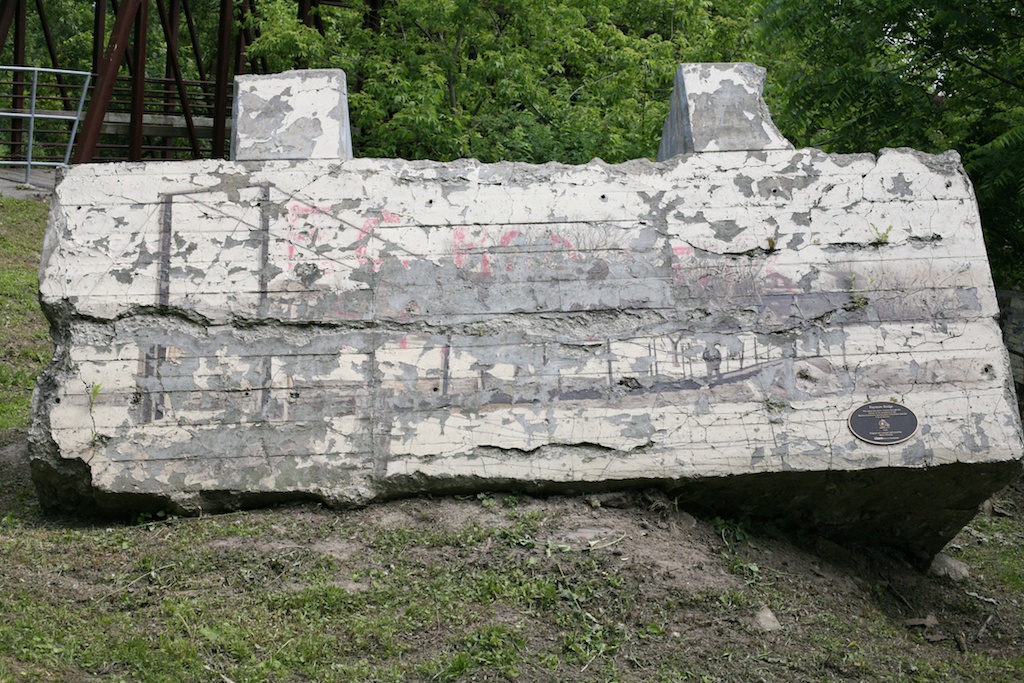
To this day, the western abutment remains in the river, standing as a grim witness to that terrible night. The eastern end of the bridge is also in place and as mentioned previously, was decorated with a (now badly peeled) commemorative mural in 2002. Raymore Park itself contains no memorial to the people who lost their lives that day. Perhaps this would be a worthy project.

Looking upstream, the western abutment is still in the Humber.

Looking upstream, the western abutment can be seen below and to the left of the bridge.

Readers are invited to add their own memories or anecdotes of Hurricane Hazel.

60 years since Hurricane Hazel

This year is the 60th anniversary of Hurricane Hazel. The night of October 15th, 1954 saw a storm that hugely affected many parts of Toronto and Southern Ontario. The epicentre of the tragedy was of course Raymore Drive where 35 residents died. In order to avoid such tragedies in the future, the Toronto and Region Conservation Authority was formed. This body was charged with setting aside flood-prone lands and creating the parks system that is a major feature of today’s Toronto.

To commemorate the anniversary, I’ll try and produce the occasional article on the topic until October. The first one will appear later this week.

The eastern abutment of the old footbridge connecting Weston to Raymore Drive.

The eastern abutment of the old footbridge connecting Weston to Raymore Drive. Artist Mario Noviello painted this commemorative work in 2002 but sadly the weather has not been kind to his creation showing the original suspension bridge. The western abutment remains in the river where it was dragged during Hazel’s fury.

River ice restrained this year.

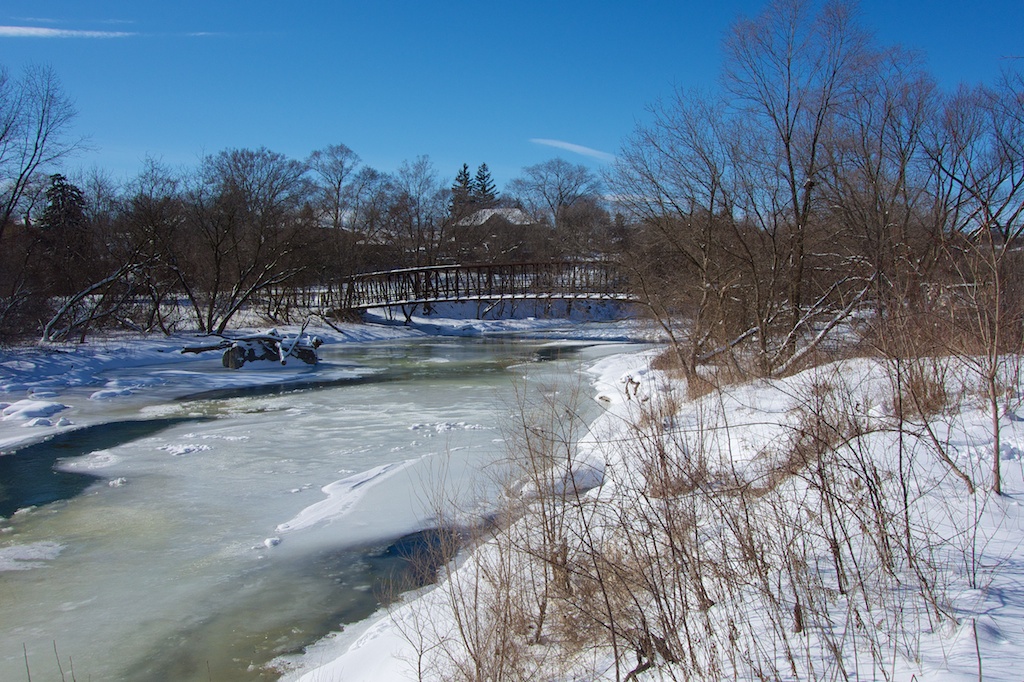
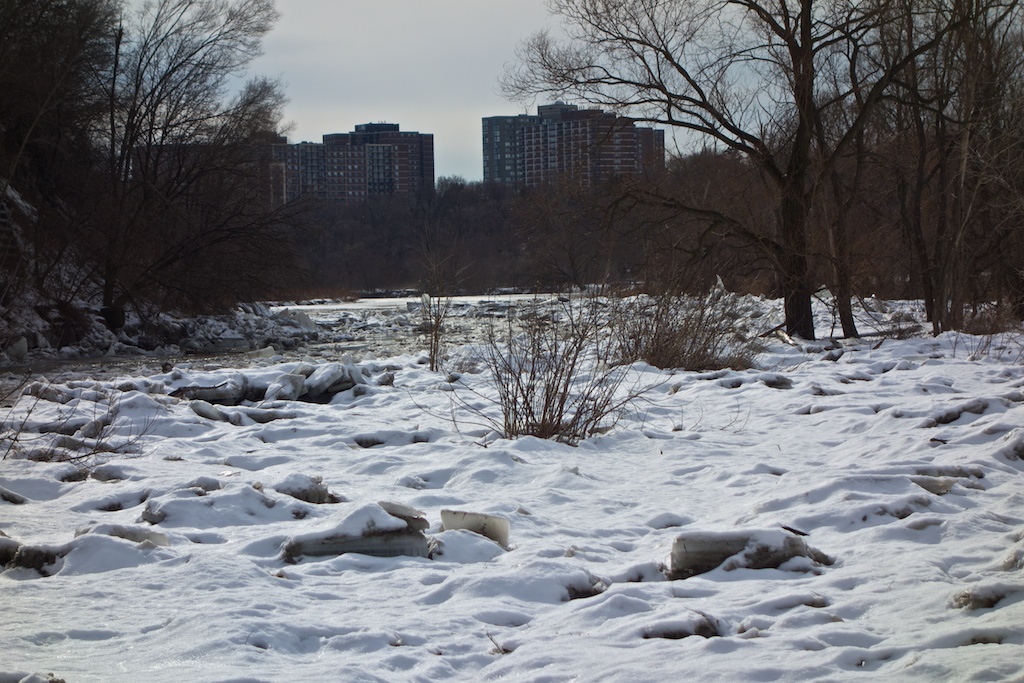
During most recent winters, there has been a battle between heat and cold, freeze and thaw. One of the features of a Raymore Park winter thaw is the flooding of the wild area across from the parking lot. An increased river flow usually caused by rain, raises river levels and cracks the ice cover. The ice then progressively forms a moving dam and flood which moves gently downstream. In a couple of decades of observing the before and after, I have never seen the process in motion. This January, after the recent thaw, the ice stalled before the river widens above the weir and no doubt will produce some spectacular flooding and subsequent erosion when the next strong rain event occurs.

Ice littering the banks of the Humber, January 2014.

Ice littering the banks of the Humber, January 2014.

Considering the cold weather prior to the thaw, the ice is surprisingly thin. The approaching ‘PolarVortex II’ will no doubt consolidate the present ice dam.

Winter continues

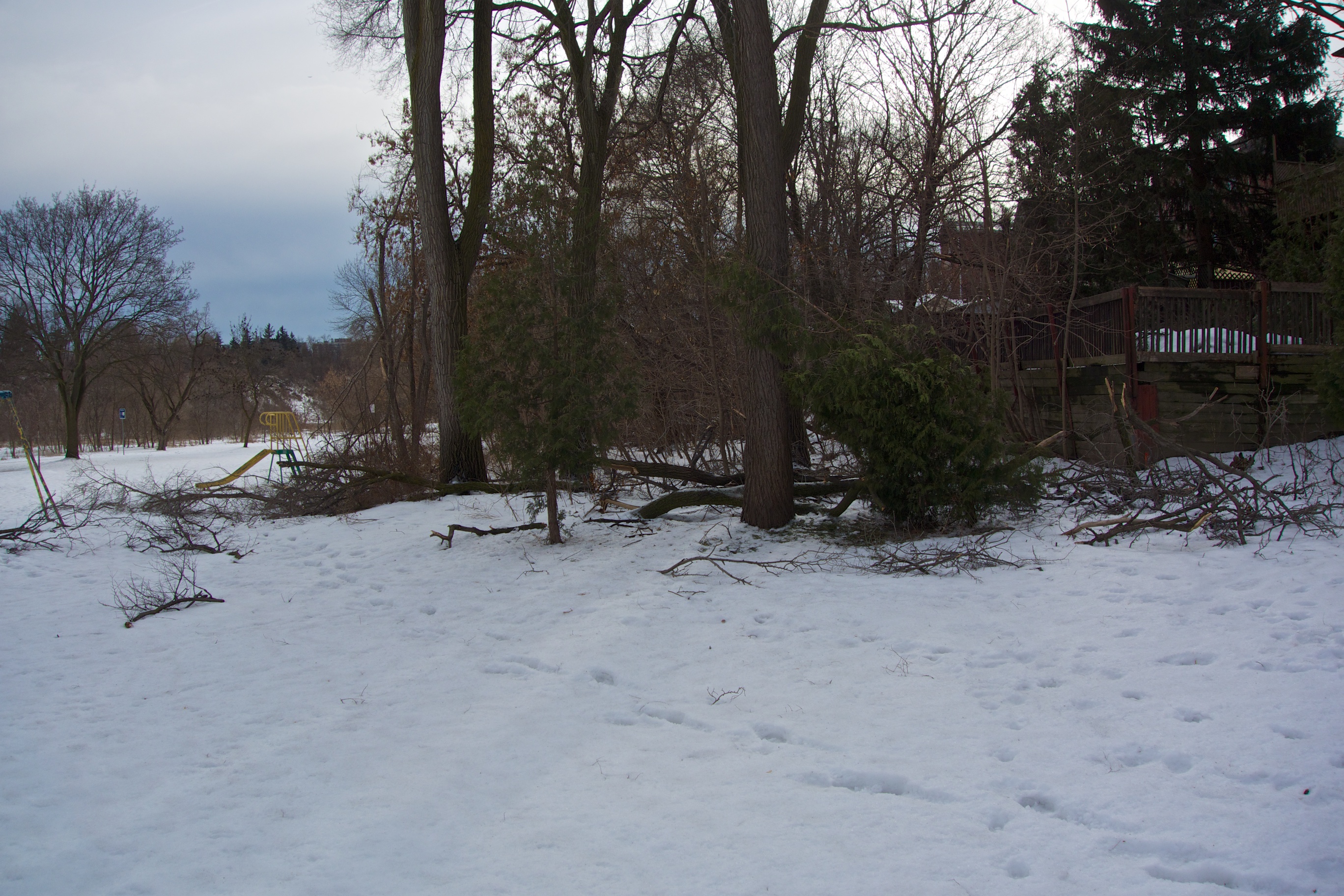
Last month’s ice storm inflicted little damage on the park. Most of the recently planted trees in the park suffered no damage while some of the older ones lost dead wood. Siberian elms at the entrance to the park seem to have suffered the most damage and as ‘Guest’ pointed out, these along with Norway maples are not natives and aren’t in their natural environment. Surprisingly, the park wasn’t planted with a lot of trees after its creation in the 1950s. If that had been done, Raymore Park would be a mature forest by now and helping to reduce flooding along the Humber. On the other hand, the trees chosen for planting may have been non-natives or even species under threat such as elm or ash.

Looking south - Siberian elms have dropped many branches.

Looking south – Siberian elms have dropped many branches near the park entrance.

Siberian elms are a particularly damaging tree in Ontario because they are so prolific and also because they are partly resistant to the Dutch elm beetle allowing it to remain a threat. No doubt the park will be low on the list for clean-up of the debris (which is not entirely a bad thing).

Hollywood snow.

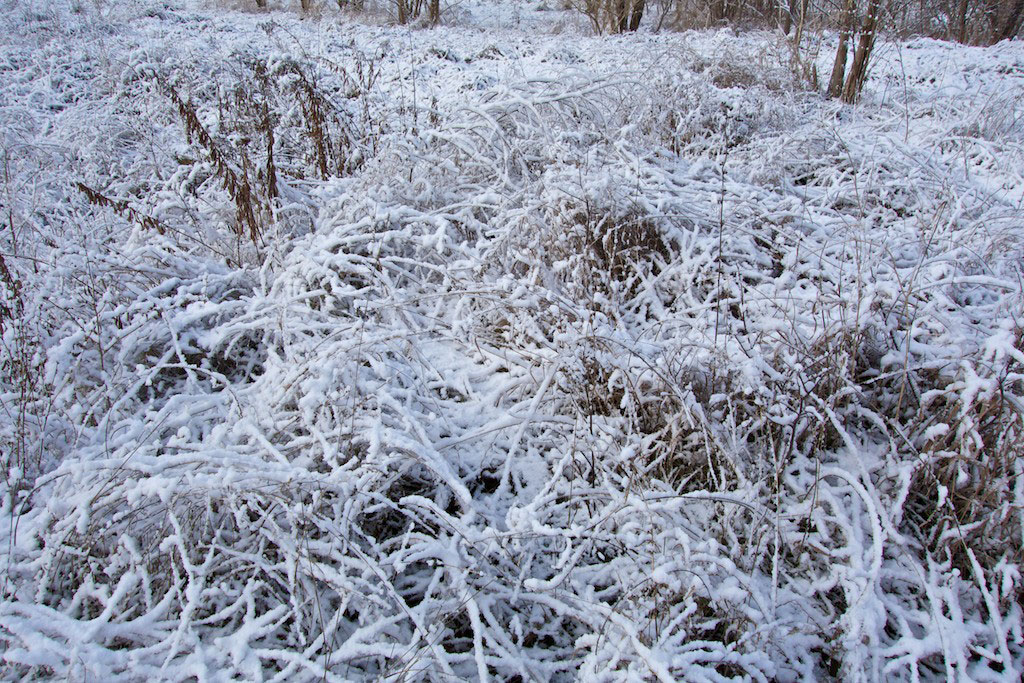
The first real snow of the season transformed the park into a movie set. The snow began as rain, and once everything was soaked, the air turned colder and helped by a stiff breeze, snow snow attached itself as if it had come from a machine. Here’s a couple of before pictures:

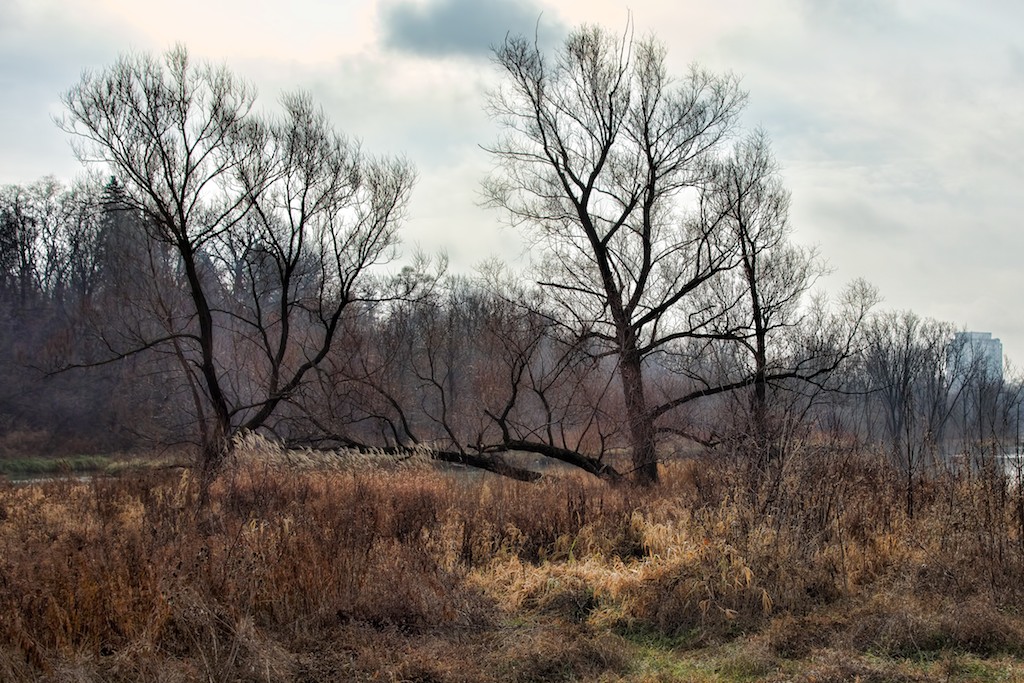
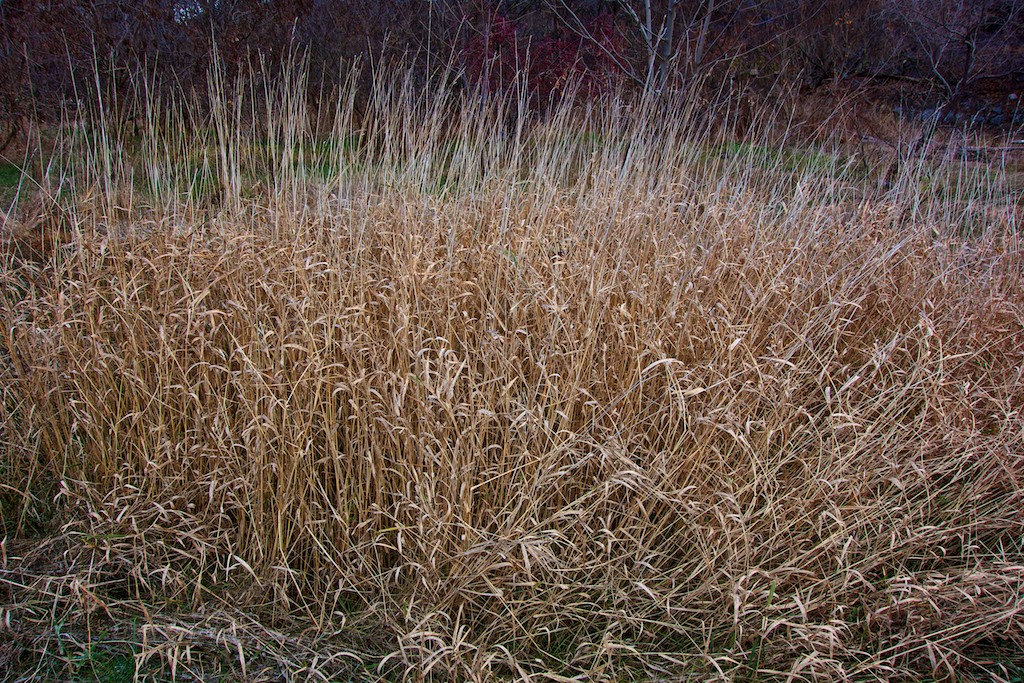
Beautiful browns.

Beautiful browns.

Standing grasses.

Standing grasses.

With wet snow clinging to the grass, it bends and flattens to begin the mulching and seeding process.

Hollywood snow machine.

Hollywood snow machine.

Snow can be a heavy blanket. While this snow will not last, the next snowfalls will continue the flattening process so that by springtime, there will be little trace of the previous year’s plants.

Lawn gods don’t ask for much.

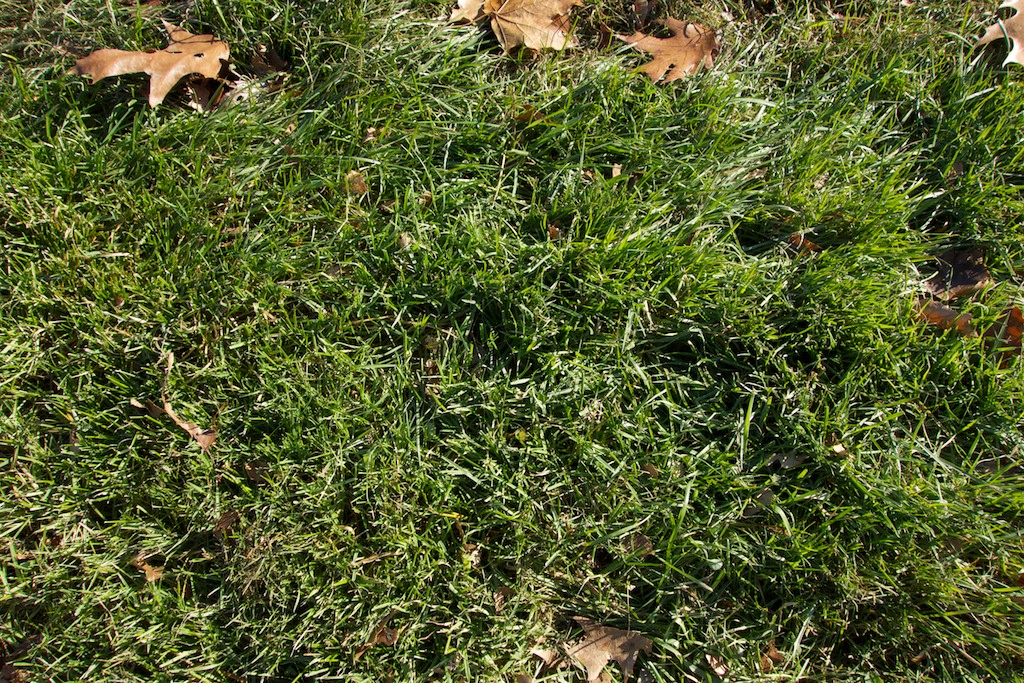
Who knew that all you have to do to maintain a spectacular lawn is cut and aerate it. The occasional re-seeding helps too.

DSC03787

This grass in Raymore Park hasn’t been treated with weed killer or insecticides in this century and is cut relatively infrequently (with a mulching mower) and aerated annually. In spite of that (or perhaps because of it) there are no bare patches, few weeds and no animal diggings for grubs. When a weed killer ban was proposed around 1999, there was a huge outcry from those who thought that weeds would replace grass in Toronto’s parks. Somehow, the chemical lawn brigade’s fears were as justified as those around computers and the Millennium.

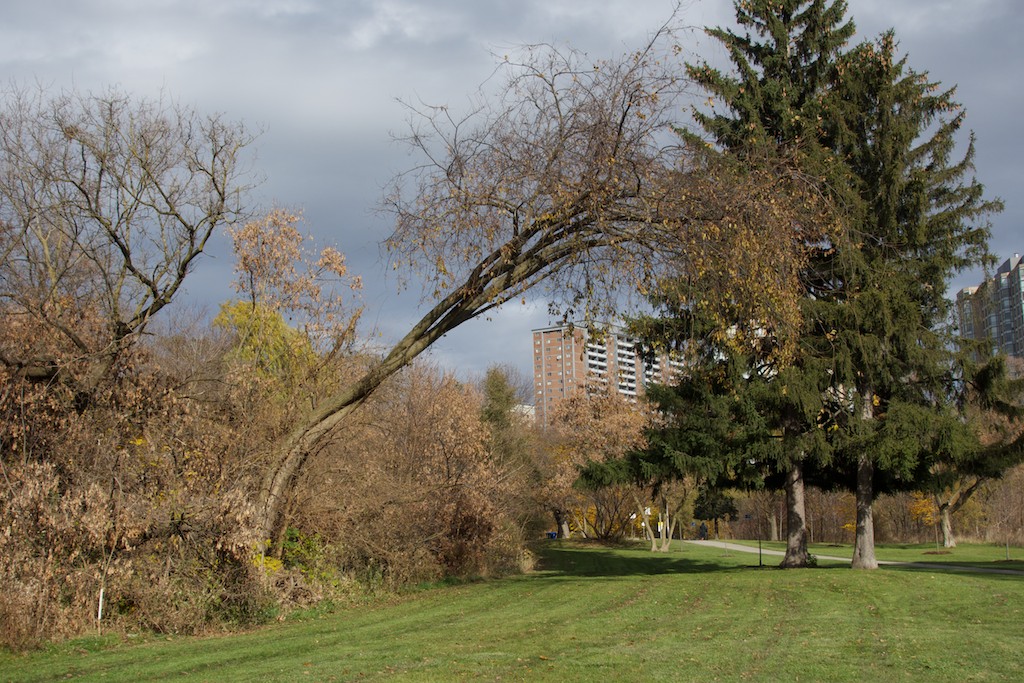
There is a tree that leans at a jaunty angle and I confess to walking at a brisker pace when underneath it. I have the impression that the lean is increasing so perhaps this winter will be its last.

DSC03748


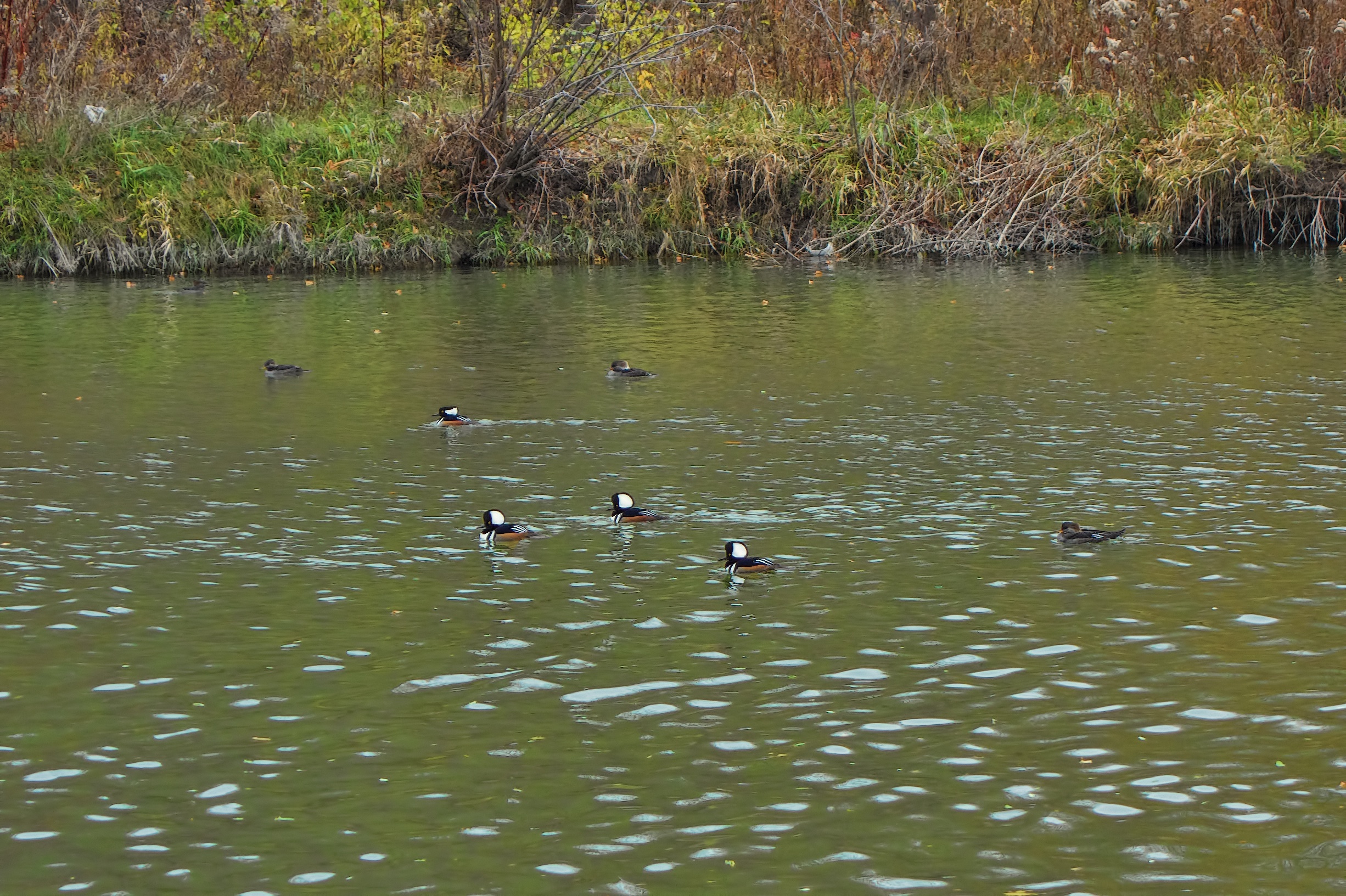
Lastly this group of Hooded Mergansers have returned to the Humber to add an exotic air. They are quite shy but don’t seem to mind hanging around with the resident mallards.

DSC03765