Category Archives: Raymore Park

Fishing on the Humber

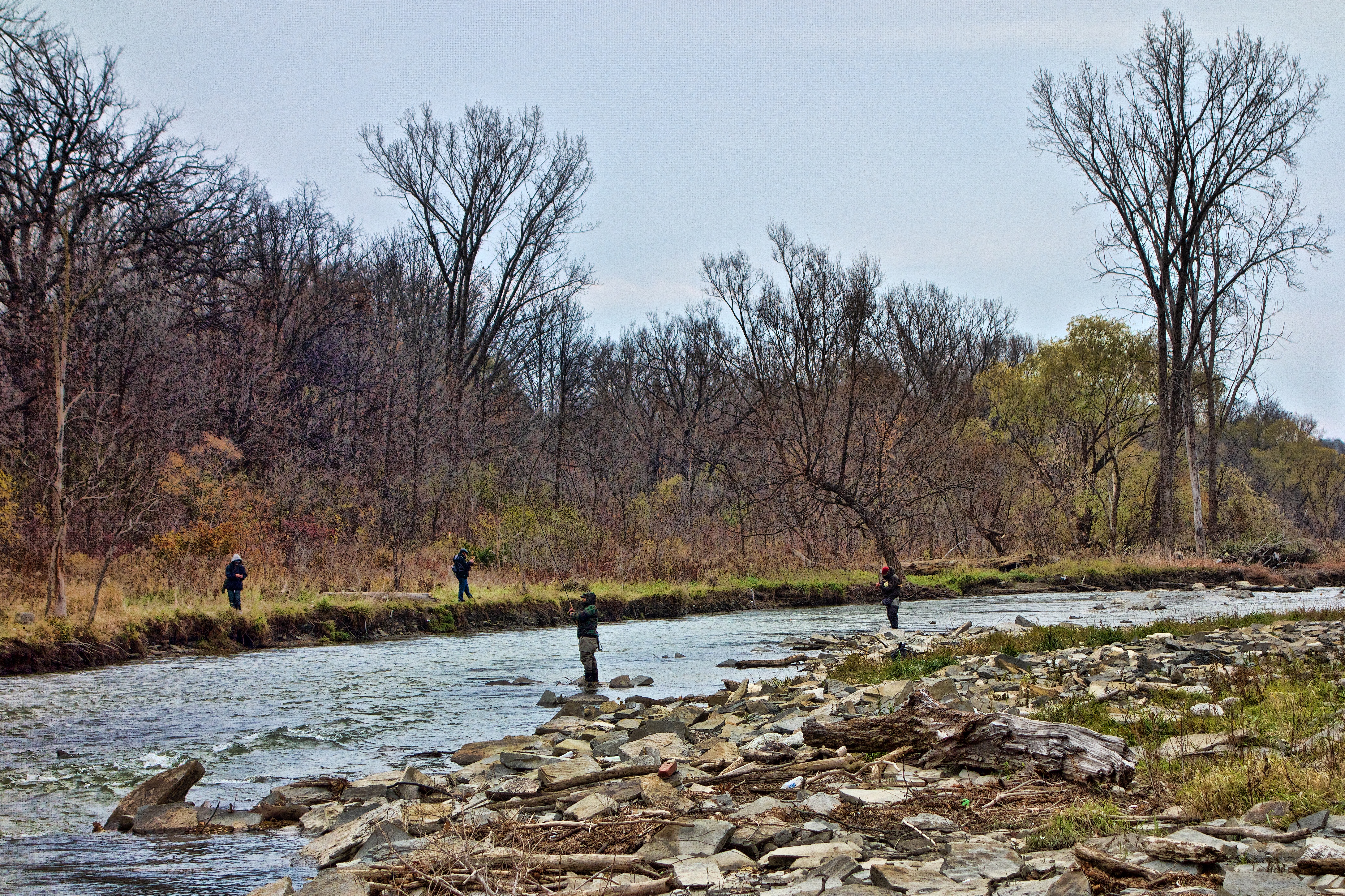
These fishermen formed a group along the Humber this weekend.

DSC03766

Click for closer view.

Contrary to common belief, migratory fish caught in the Humber are edible with no health concerns.

I was talking to a fisherman the other day and apparently the Ministry of Natural Resources is quite active along the Humber. Ministry officials go so far as to lurk in the bushes in camouflage gear waiting to charge people who fish too close to dams or use other illegal methods such as snagging or netting. Personally, it just seems like hard work for little reward, plus I’m not so keen on ending the life of such an amazing creature. There are others who catch and release but to me that’s pointless and cruel.

It’s that time…

Let it snow.

Let it snow.

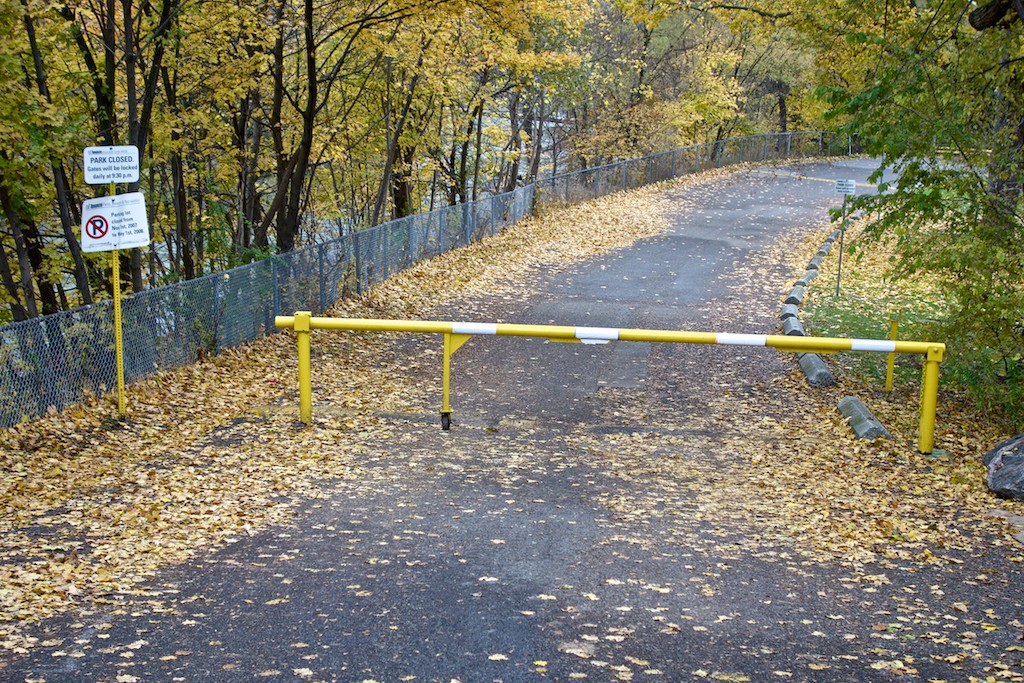
For the past few years, Raymore Park has closed its gate at the beginning of November and it stays that way until the end of March. This is because snow can occur at any time between these dates and many people are unable to drive back up a steep snowy hill to exit the park. This cuts down on quite a large number of visitors as the effort to park on Tilden Crescent and walk down to the park seems to deter most people.

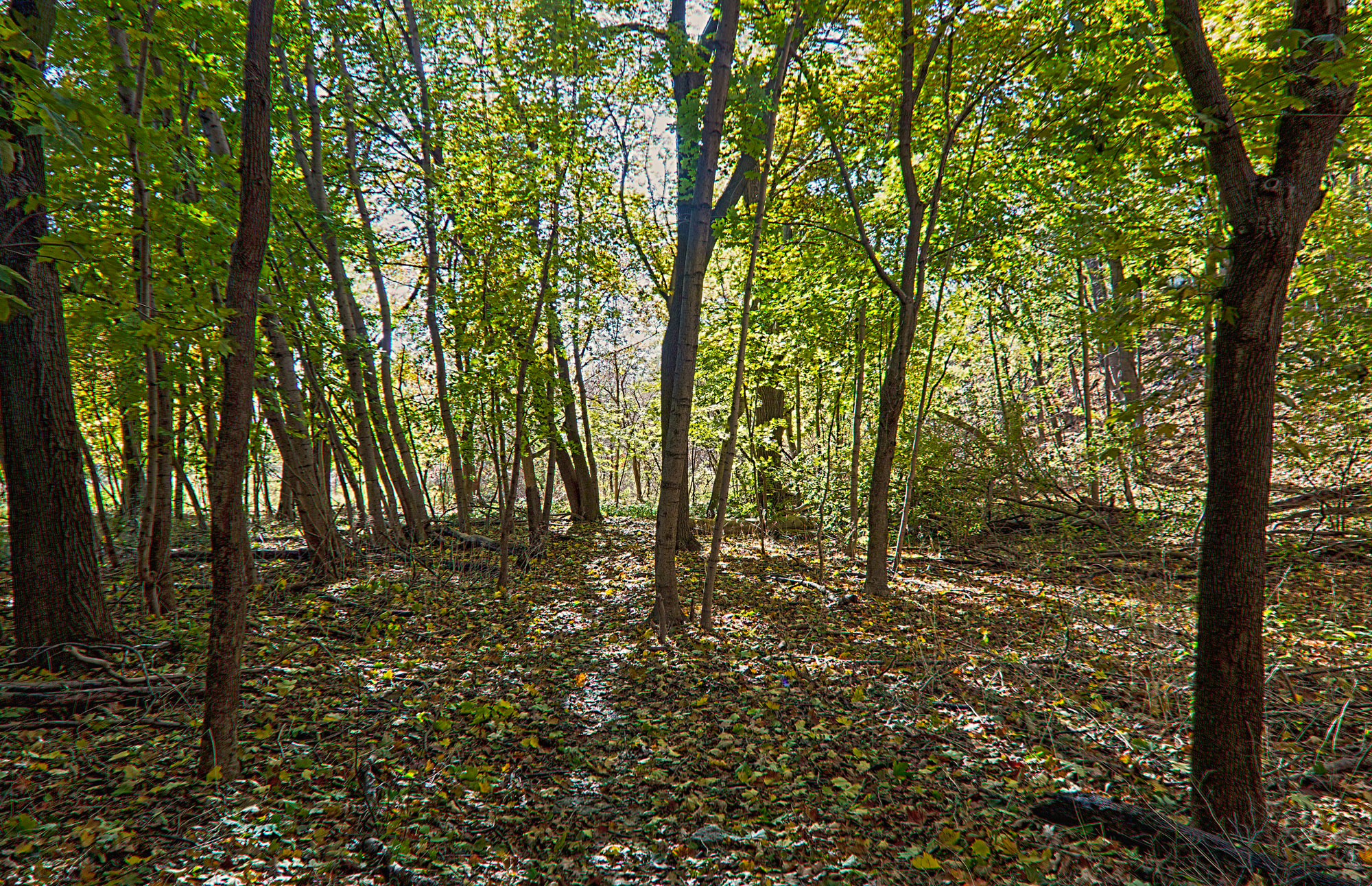
Light still is creating fascinating scenes in the woods. Here’s an attempt to capture what the eye sees using an HDR shot based on two images, one capturing highlights, the other, shadows then merged in Photoshop.

Woods-HDR

Frost kills but life will go on.

The first frost of the season hit in the early hours of Tuesday morning, killing millions of insects and annual plants in Raymore Park. In the earth’s two temperate zones, this annual tide of warm and then cold toughens every species and may explain the survival of life forms on earth after comet strikes and super volcanoes. Using techniques such as hibernation, dormancy and re-birth, plants and animals have devised amazing ways of ensuring that the next generation survives the ravages of an extended period of cold.

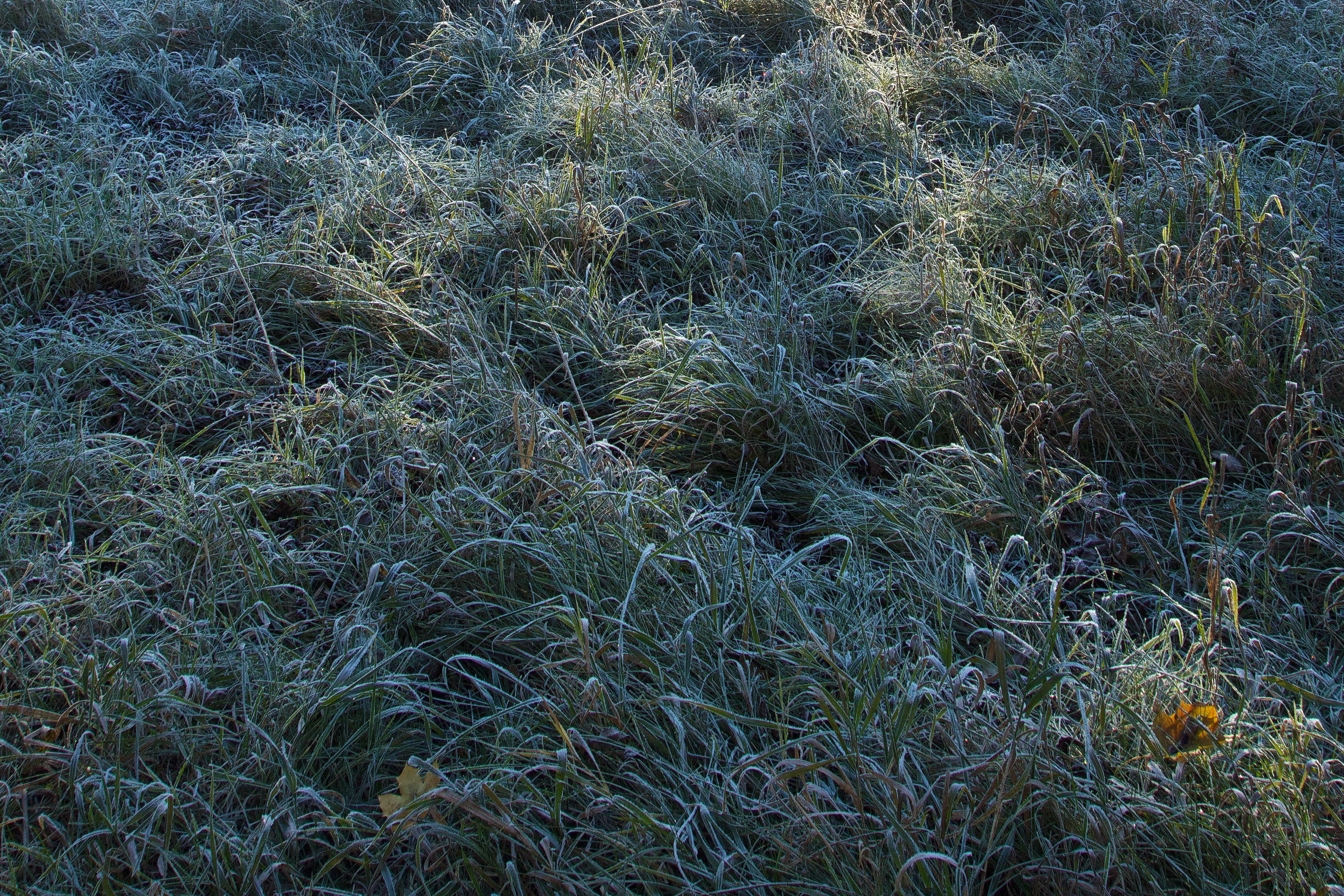
Grass edged with ice crystals.

Grass edged with ice crystals.

This morning’s frost is just the mildest of hints of what is to come but the effect is dramatic. Judging by the silence this morning, crickets in the meadows were almost all wiped out but females have been busy recently, each laying hundreds of eggs which will hatch next spring. Walnut trees simply drop everything after a frost.

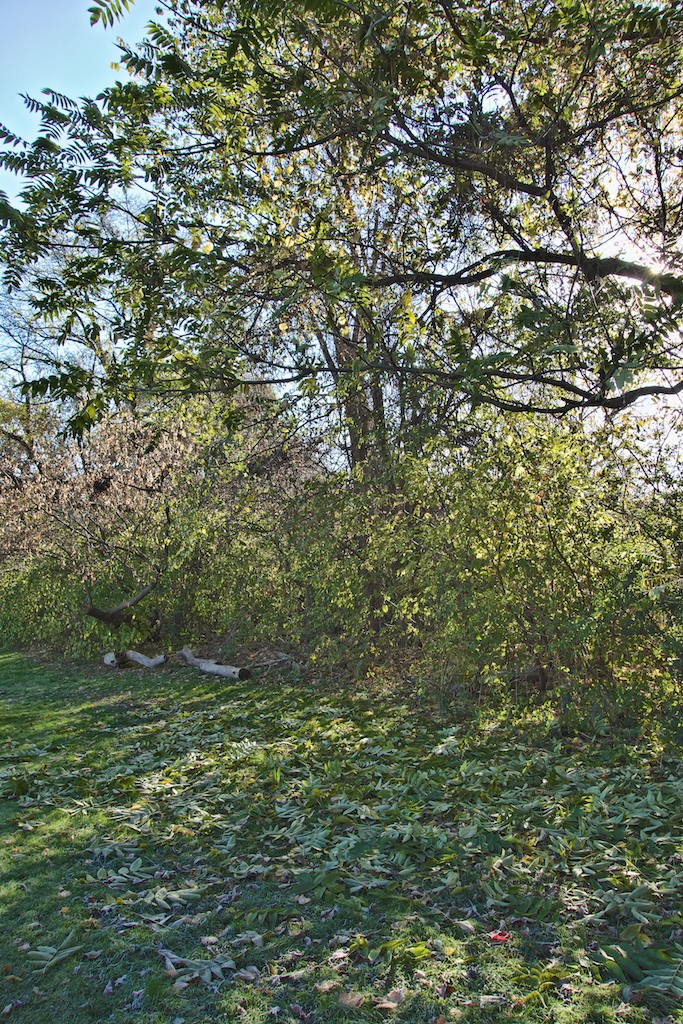
A walnut tree drops everything after a frost.

A pile of walnut leaves begins to form after a frost.

Elsewhere, many seeds are now ready to be carried away from the parent plant by the wind or unsuspecting animals and humans.

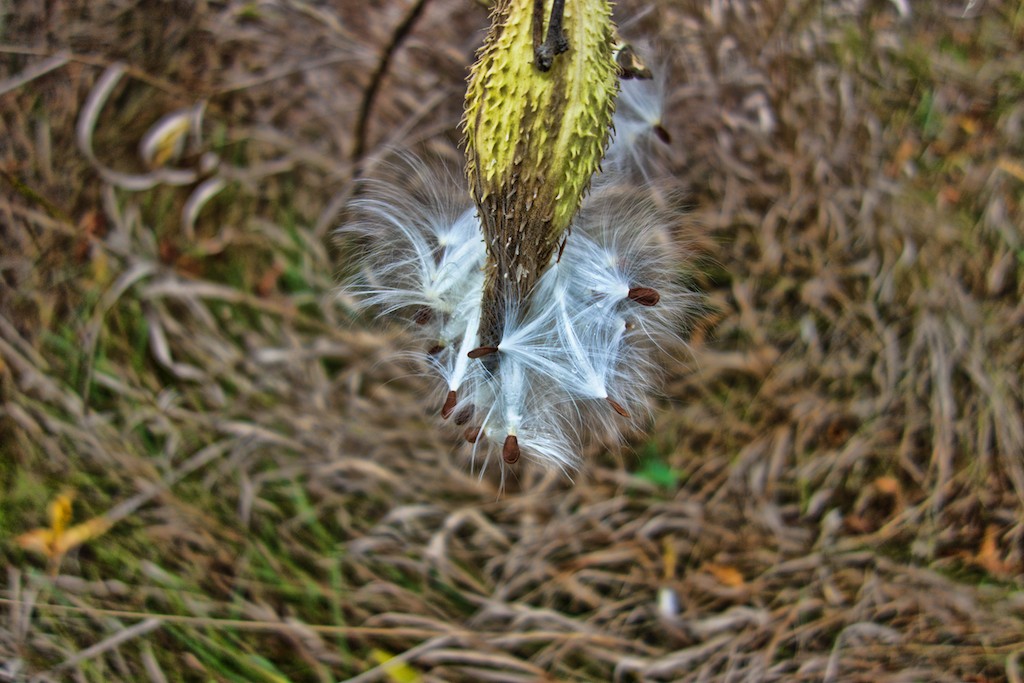
Milkweed seeds wait for a strong wind.

Milkweed seeds wait for a strong wind.

We may share the same latitude as Florence in Italy but our continental winters are considerably harsher and more eventful.

Some would say more interesting too.

The good earth.

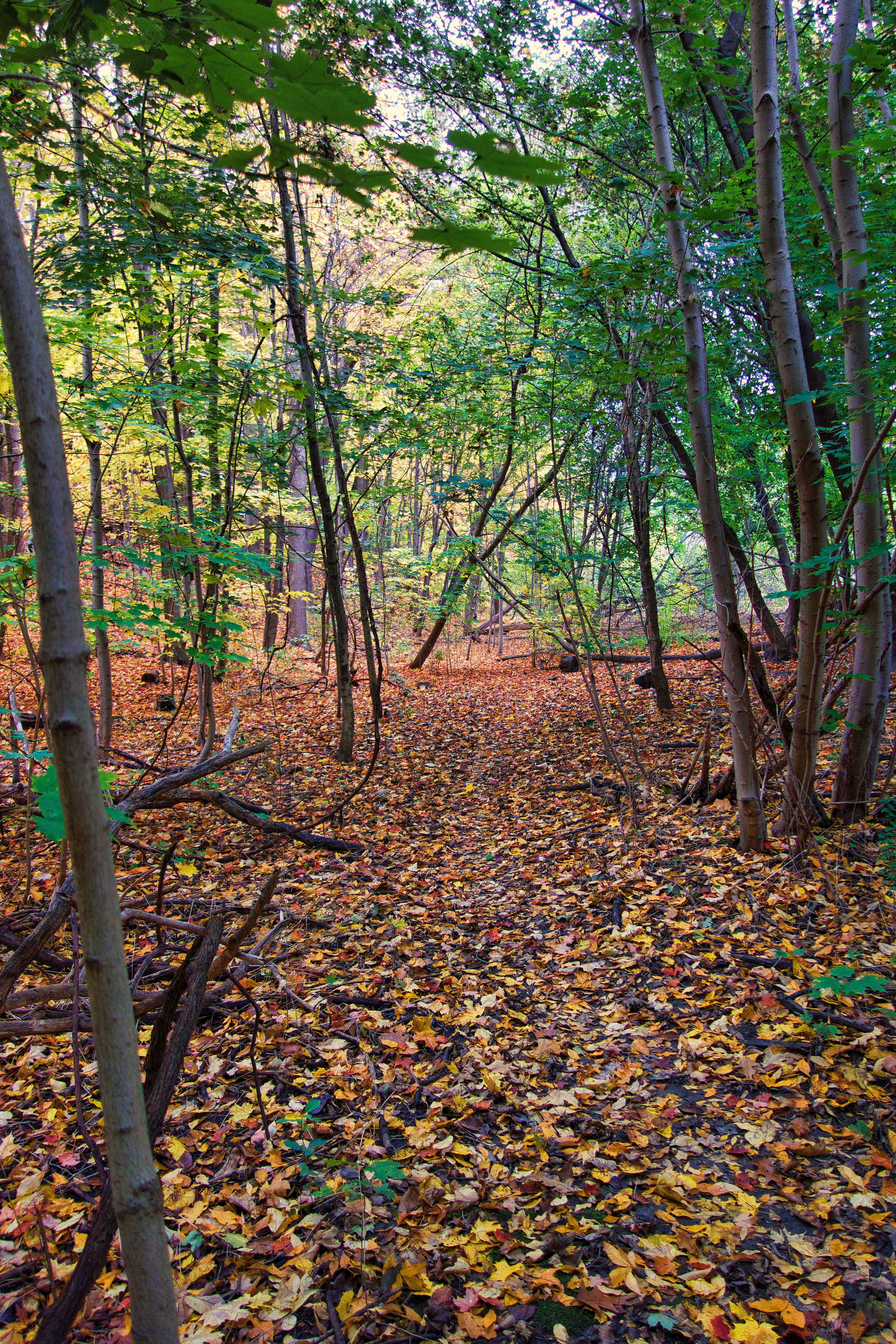
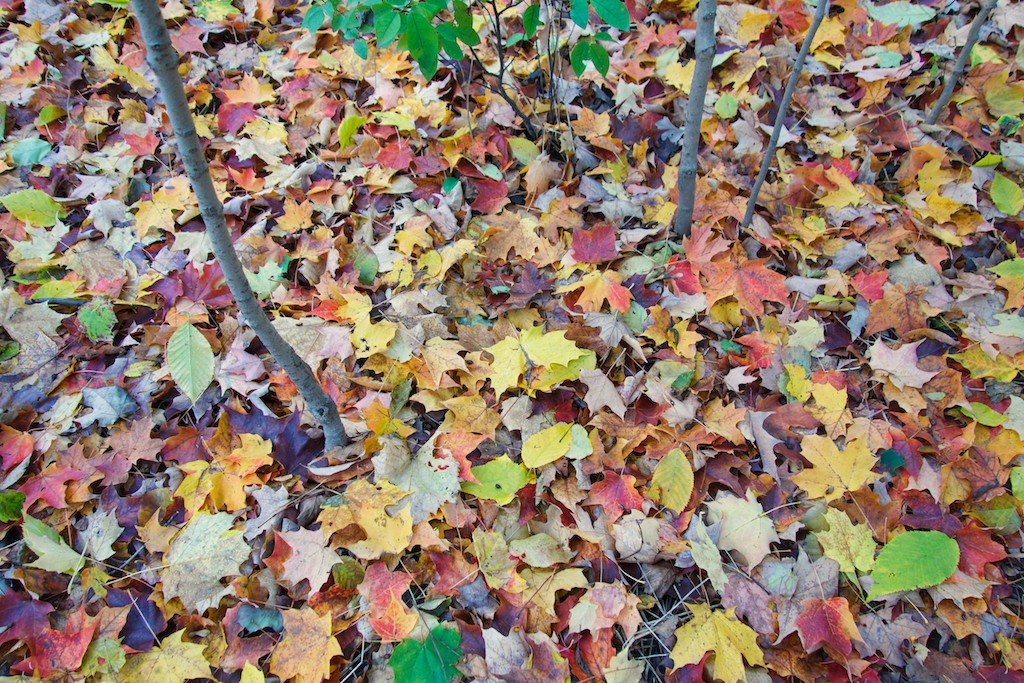
Autumn is well under way and the wooded area at the southern end of the park is undergoing a transformation. Many leaves are off the trees, changing the canopy dramatically and the increased light on the freshly fallen leaves has created a brightly coloured carpet.

A carpet of colour.

A carpet of colour.

This part of the park always reminds me of the nave of a great cathedral. Sadly, many of the trees in the woods are Norway maples which produce little colour and need a frost to dislodge them.

The fresh colours of early autumn.

The fresh colours of early autumn.

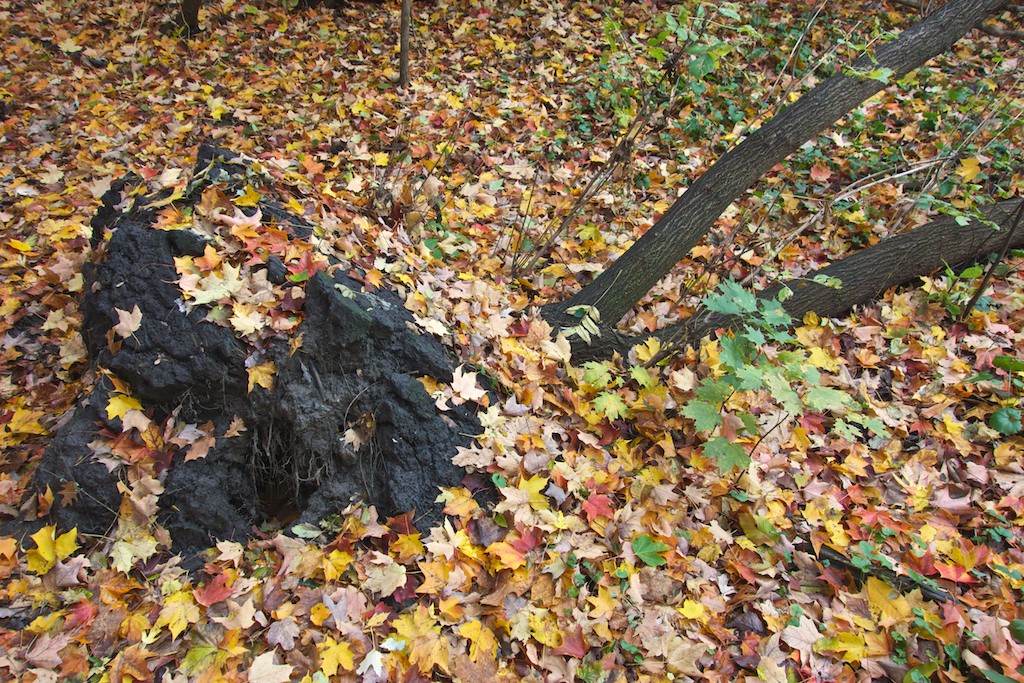
If there was ever any doubt as to the ability of trees in a park to act as a carbon sink, the soil in the woods provides ample evidence. The site was once a rubbish tip but has been wooded for a few decades. In that time, annual cascades of leaves have fallen and decomposed in place, leaving much of their carbon behind to form a deep and rich loam. This summer, a few trees were downed by strong winds and the uprooted trees reveal a soil that is incredibly black and rich in carbon.

Dark black loam, rich in nutrients.

Dark black loam, rich in nutrients and especially carbon.

It is estimated that Canada’s boreal forests (yes, even Raymore Park’s tiny woods) store up to 80% of the carbon they pull out of the air. This is because our cool climate drastically slows carbon’s oxidation back into the atmosphere. On the other hand, a mature tropical forest sequesters very little carbon. But wait, there’s more; boreal forests moderate a region’s climate by warming winter air (more sunlight is absorbed by trees than by snow). In summer, leaf transpiration keeps temperatures down so trees in our part of the world are definitely a great resource.

Toronto has a front yard tree planting program that allows residents to receive a native tree in the city-owned portion of their front yard for free. A selection of species is available and they’ll even do the planting. This is in an effort to raise the canopy cover of our city from around 27% to 40%. A laudable goal that will improve life for all residents and help with reducing flooding and the escalating carbon dioxide levels in the atmosphere.


Leeching the value from Raymore Park.

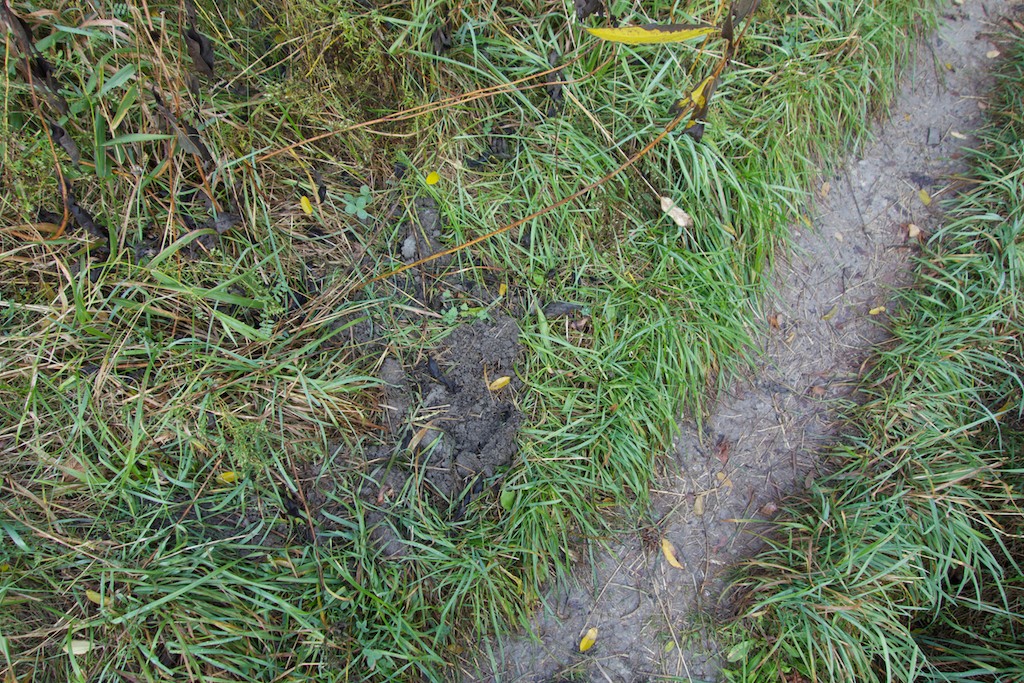
I was heading through the wild area on Monday (Thanksgiving Day). I could hear a strange sound, not an animal noise but a squeaking; like a chew toy. As I approached the sound increased in intensity and there were small mounds of earth along the dirt path in the wild area.

Curious piles of soil.

Curious piles of soil.

As I drew closer the answer was revealed. A treasure hunter, wife and chihuahua in tow, was looking for valuables left behind by Hurricane Hazel victims. Not wishing to be confrontational, I adopted a friendly approach and asked the man if he was aware of the history of the site. His apprehension dissolved and he soon became keen to tell me all about his hobby. ‘Oh yes, there’s lots of good stuff buried. Last time I was here, I found a silver jewel case’. All the while, with his wife nodding approval, the man continued, using a smaller squeaky probe and shovel to ferret out anything metallic. Instead of removing this debris, he tossed it aside, not even adding a gram of benefit from his odious activity.

It’s hard to know how to defend historic sites against such predators. The provenance of items found is probably lost without a trace once they have been removed and sold.

Another worrying development recently has been a group of people who act as if the park is their own personal off-leash zone. They seem to be led by a lady who drives to the park and releases her three very active dogs (without collars) into the wild area. The dogs are constantly being yelled commands so she’s an obvious presence. She meets up with a couple of local residents and their five dogs are set loose to harass whatever wildlife they come across.

These people give responsible dog owners a bad name.

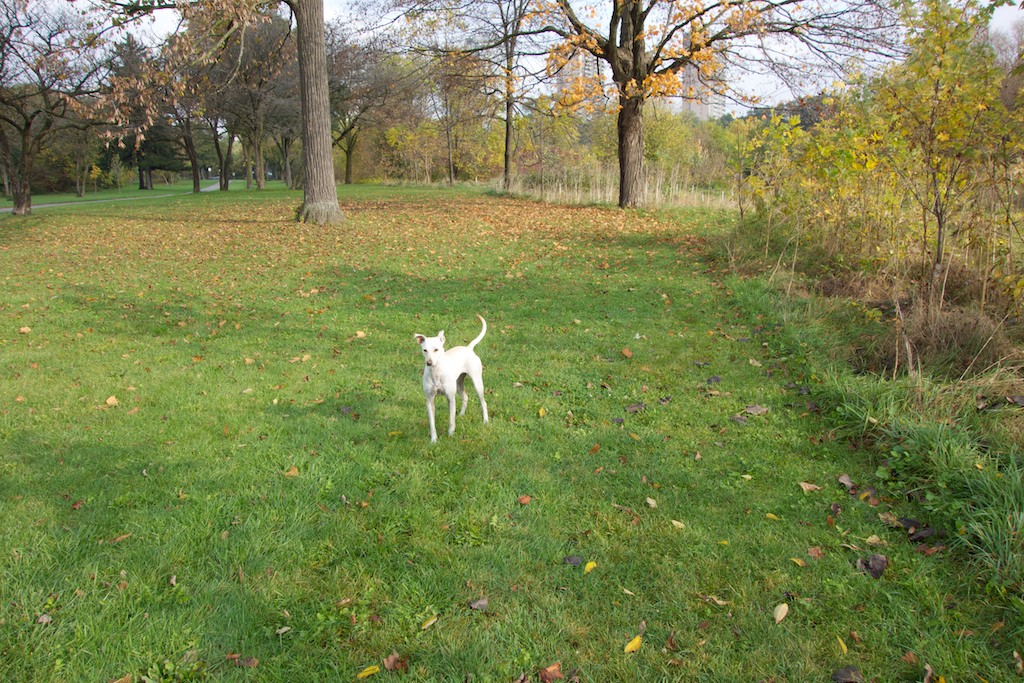
One of the offending dogs.

One of the offending dogs. The owner is nowhere to be seen.

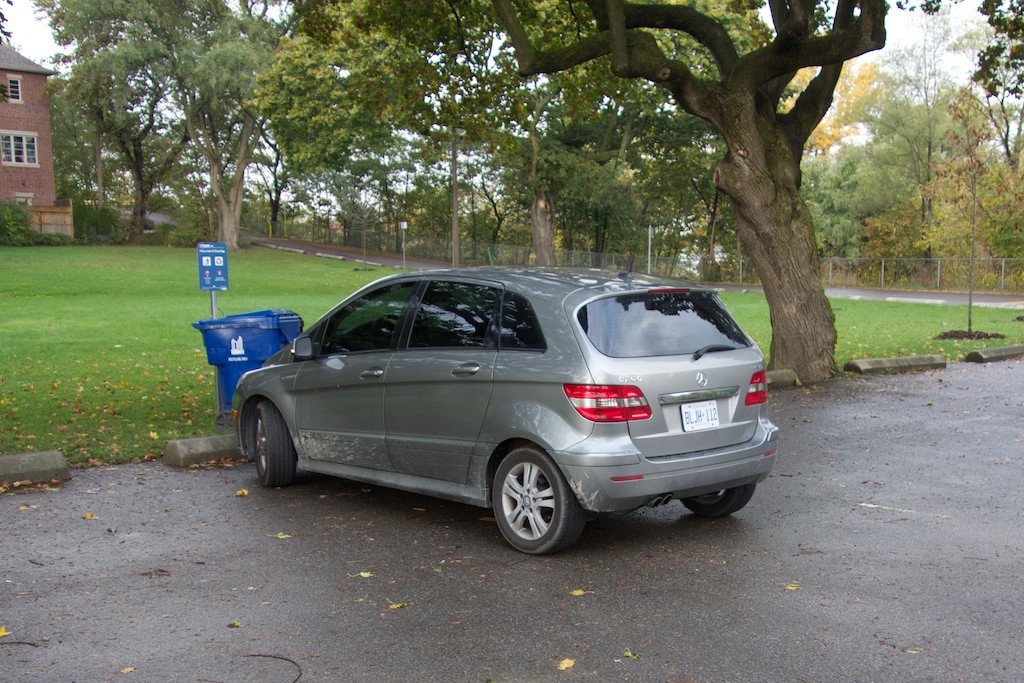
The dogs arrive in this vehicle.

Three of the dogs arrive in this vehicle.

It saddens me to think of the wildlife that struggles to survive in an urban environment. Now they have to deal with this added burden. It’s inconsiderate and unfair. After all, there are lots of off leash parks in Toronto. Once people see this open flouting of park rules, others will surely follow.

These two sets of people are like leeches because they take from the park and add nothing. The park is diminished by their presence. Their selfish behaviour presents a massive middle finger to those who appreciate the history and the wildlife of Raymore Park.

Signs of fall: blazing colours

The park is at its peak this week and with several days of sunshine on the way, there will be no better time to grab some stellar photographs. Here are a few taken in the past few days.

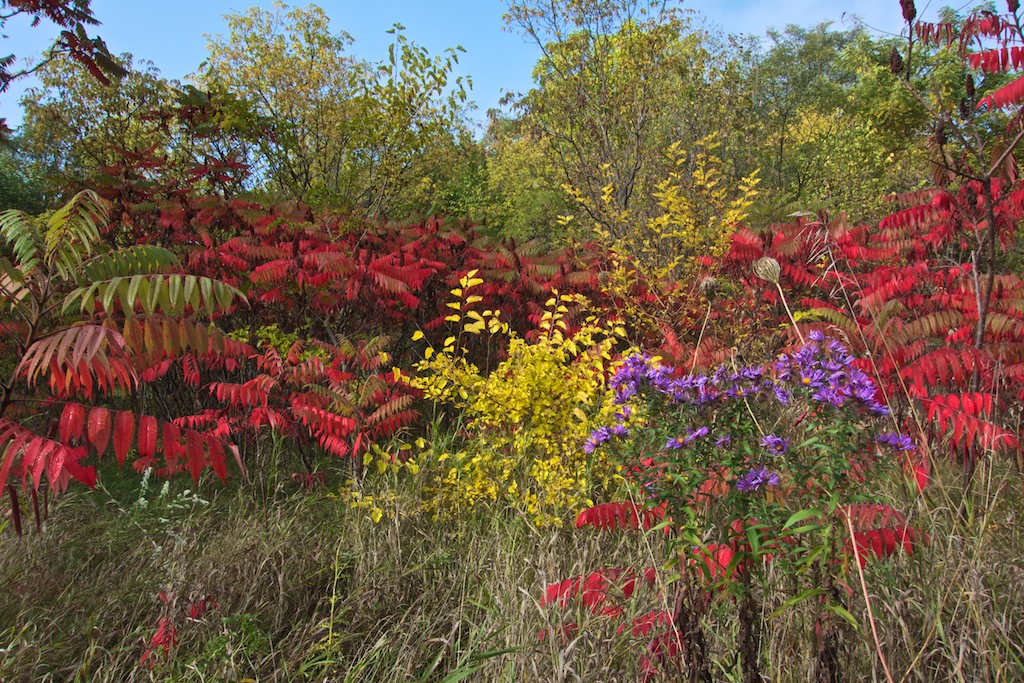
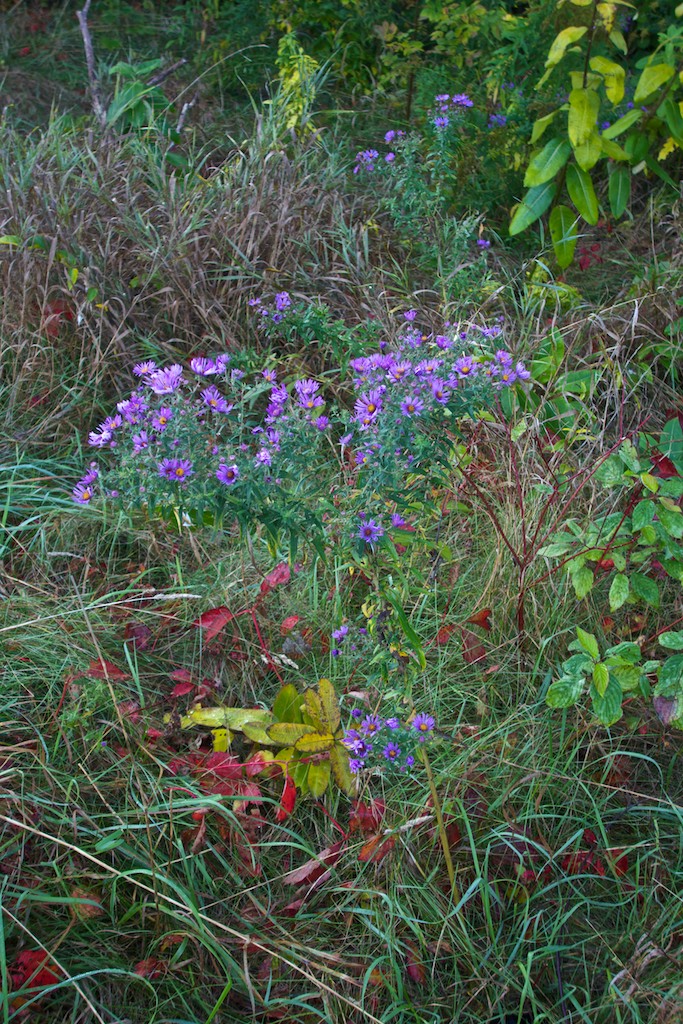
Sumac provides the backdrop to some wild asters.

Sumac provides the backdrop to some yellow leaves and wild asters.

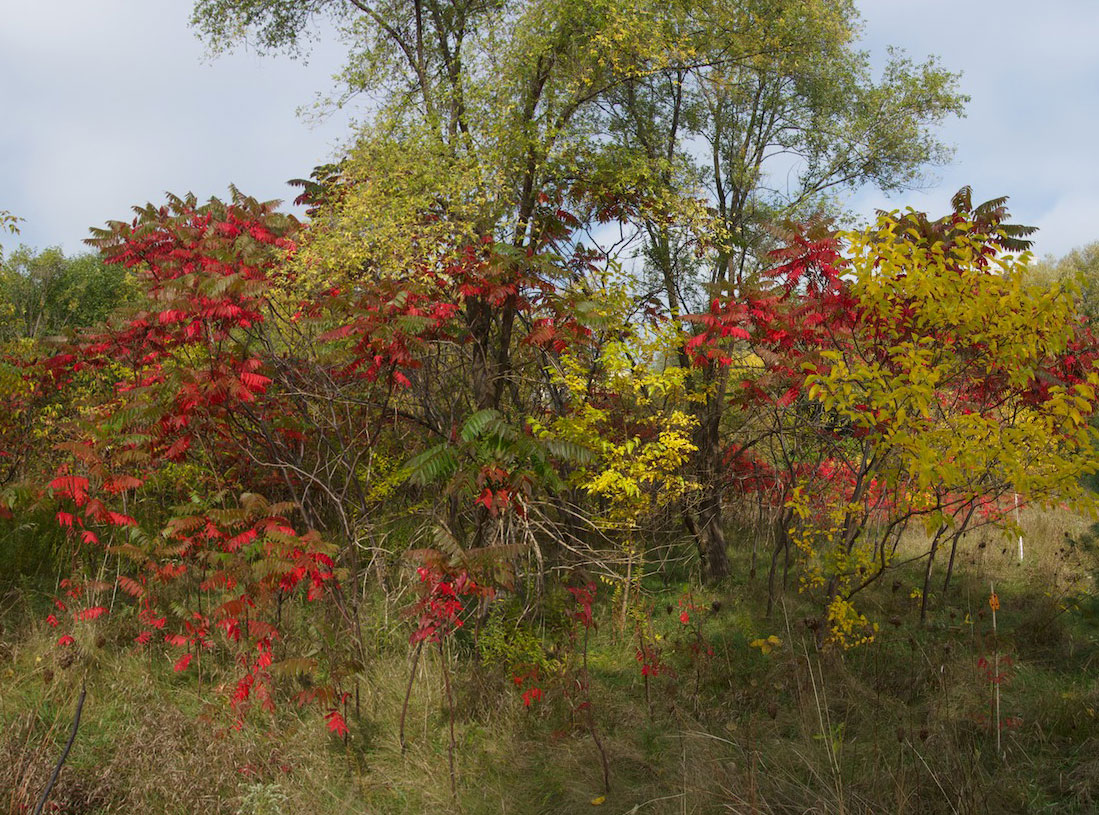
A colourful glade (panorama of 3 images).

A colourful glade (panorama of 3 images).

Wild asters.

Wild asters.

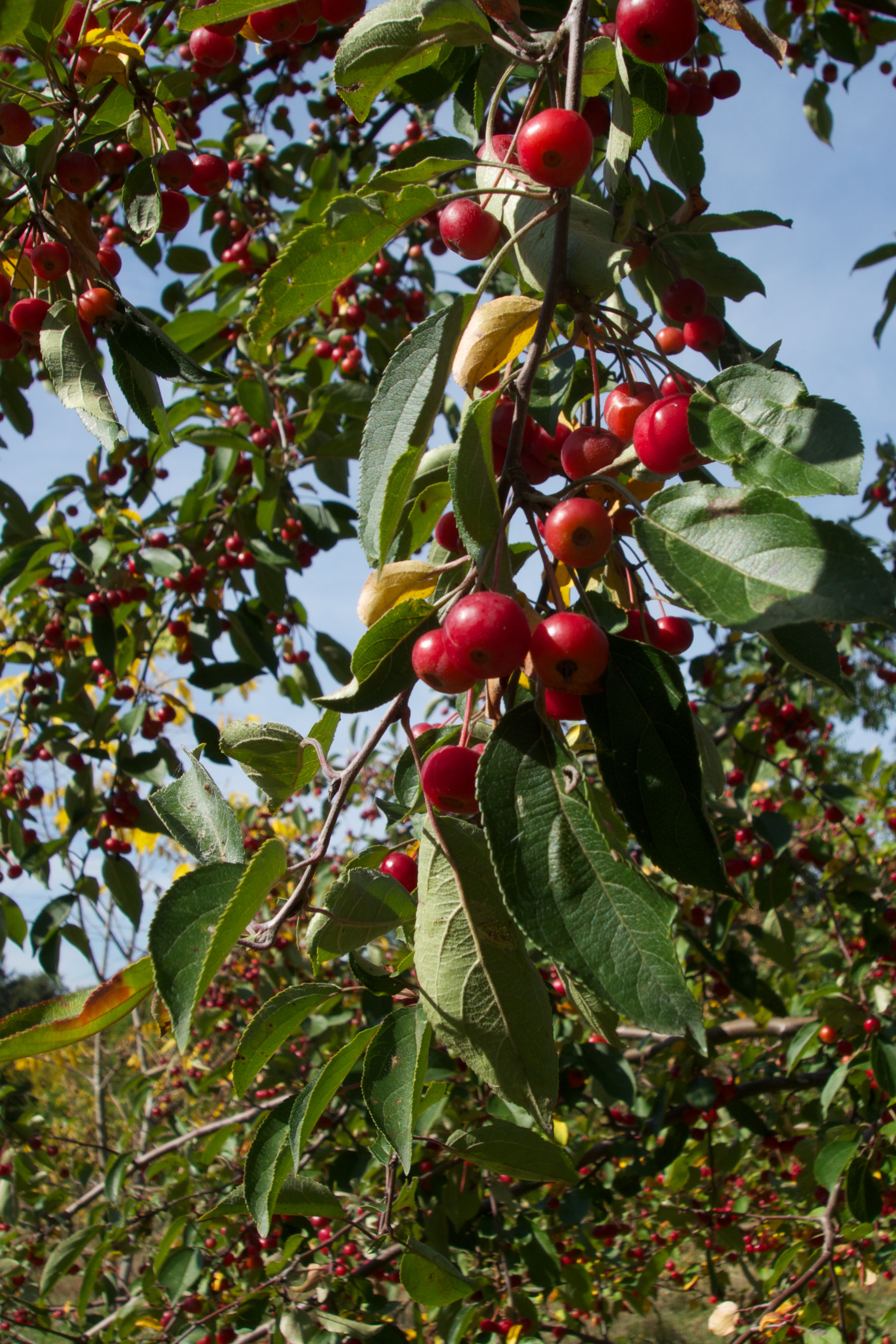
A crab apple tree laden with fruit.

A crab apple tree laden with fruit.

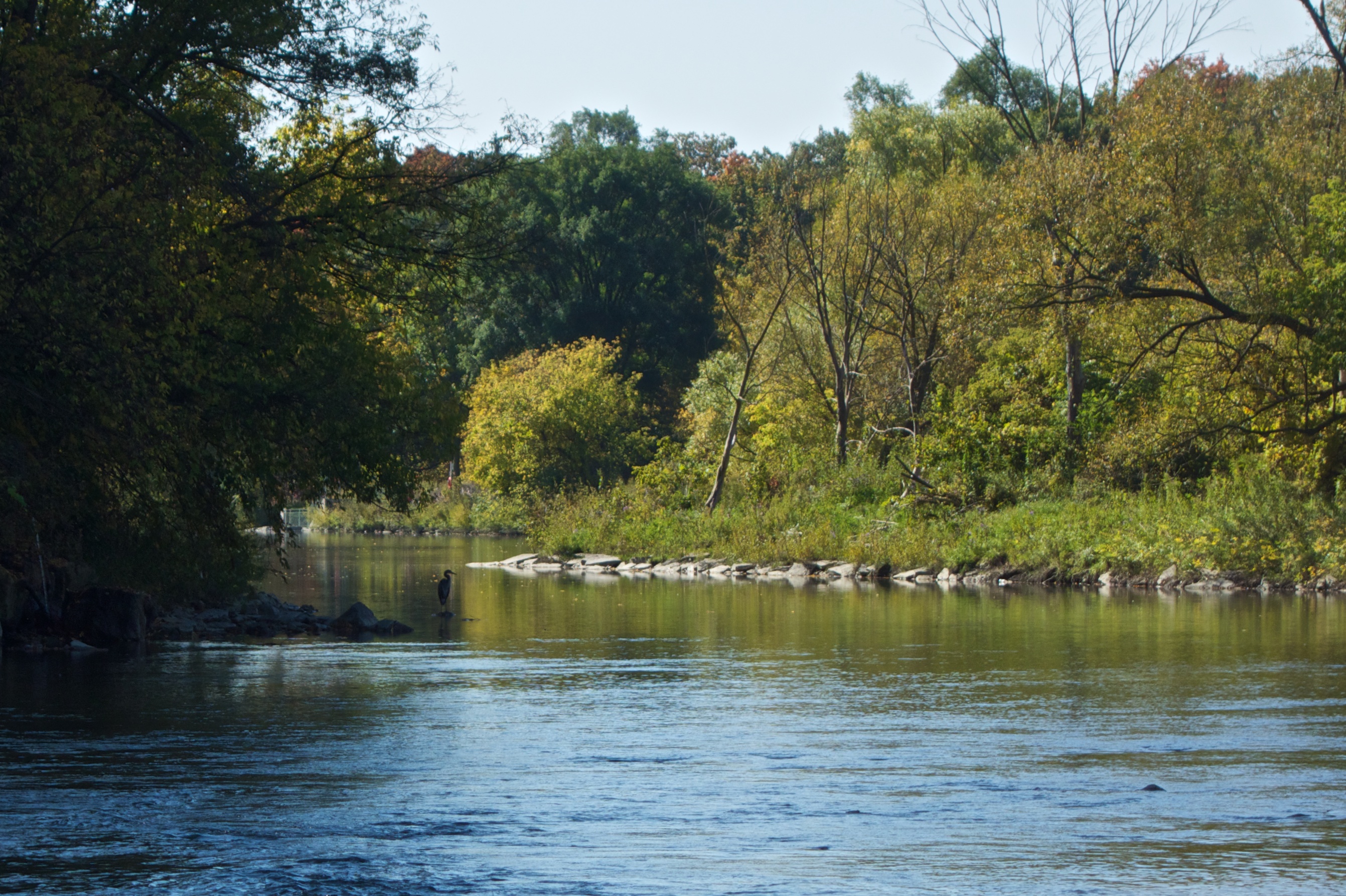
Finally, this one’s not so spectacular but I like the blue heron silhouette.

DSC03474

Signs of Fall: tree planting

In the last 20 years, thanks to old age and disease, there has been a steady reduction in the number of mature trees in Raymore Park. Quite a number of these trees are invasive non-natives such as Siberian elm and Norway maple. While many hundreds of native saplings have been mass planted in the wild areas, no mature boulevard trees have been planted to line the pathway.

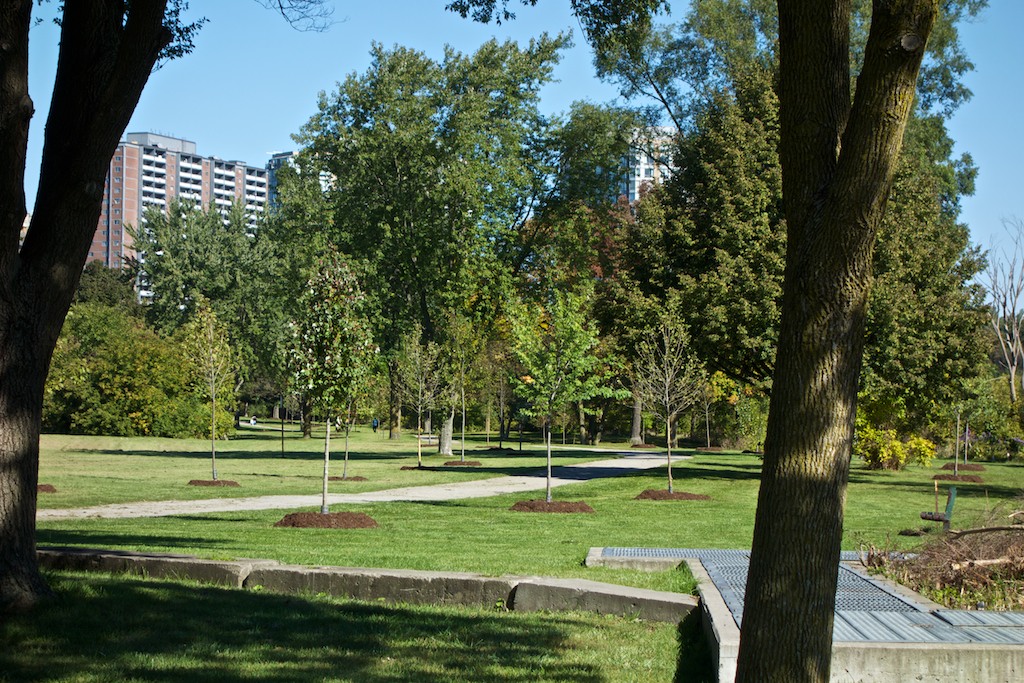
On Monday September 23rd, 43 trees were planted along the entrance and pathway as far down as the weir. This will make a big difference in years to come as the path is quite exposed in both winter and summer. I only have one slight quibble with the choice of trees; quite a number are black walnut and the park has no shortage of those already. There are quite a few water-loving weeping willows where the path comes near the river and some maples too.

A couple of Toronto Forestry workers were inspecting the trees yesterday and they told me that for the most part the trees were planted to the correct specifications by the contractor. A few have been planted too high and will need to  be adjusted and some look a little straggly, but for the most part it has been a successful planting.

This is the perfect time of year to plant trees as the ground is still warm and autumn rains will ensure lots of moisture for roots to grow.

Count 'em - it's 43!

Count ’em – 43 new trees!

Signs of Fall: Atlantic Salmon are climbing the ladder.

Two hundred years ago, Atlantic salmon along with many other varieties of fish were plentiful in the Humber. Gradually, settlers built dams and toxic waste from sewers, factories and pulp mills was dumped into the river. The combination killed just about everything in the water and Atlantic salmon were extirpated from the Humber as a result. In 1959, the opening of the St Lawrence Seaway saw the accidental introduction of the parasitic sea lamprey which killed the rest. An ambitious program lasting several years aims to restore a self-sustaining wild Atlantic salmon population to the Humber. Each spring until 2015, salmon fry are being released all along the Humber. Most weirs along the river have been adjusted to be too high for lamprey but low enough for migrating fish.

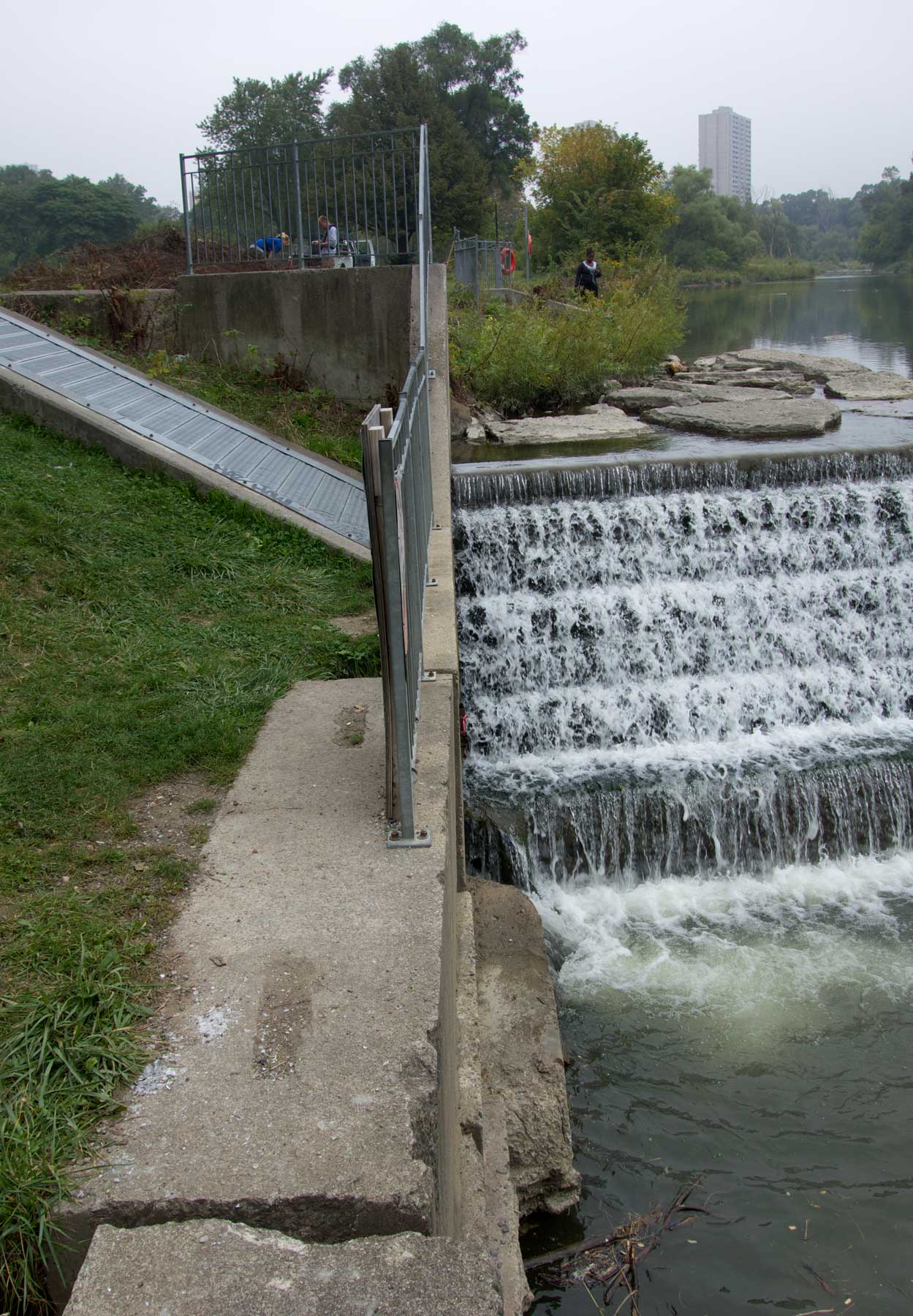
In Raymore Park, the 3 metre weir remains an insurmountable barrier to all aquatic life and to work around that, a denil fishway, (better known as a fish ladder) was built around 13 years ago.
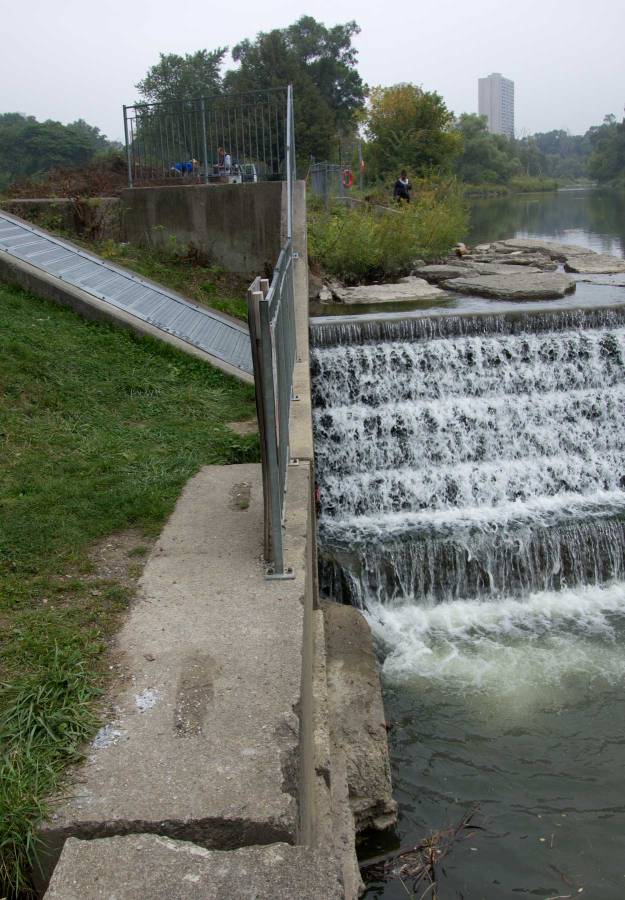
The fish ladder entrance is on the left just below the weir.

The fish ladder entrance is on the left just below the weir.

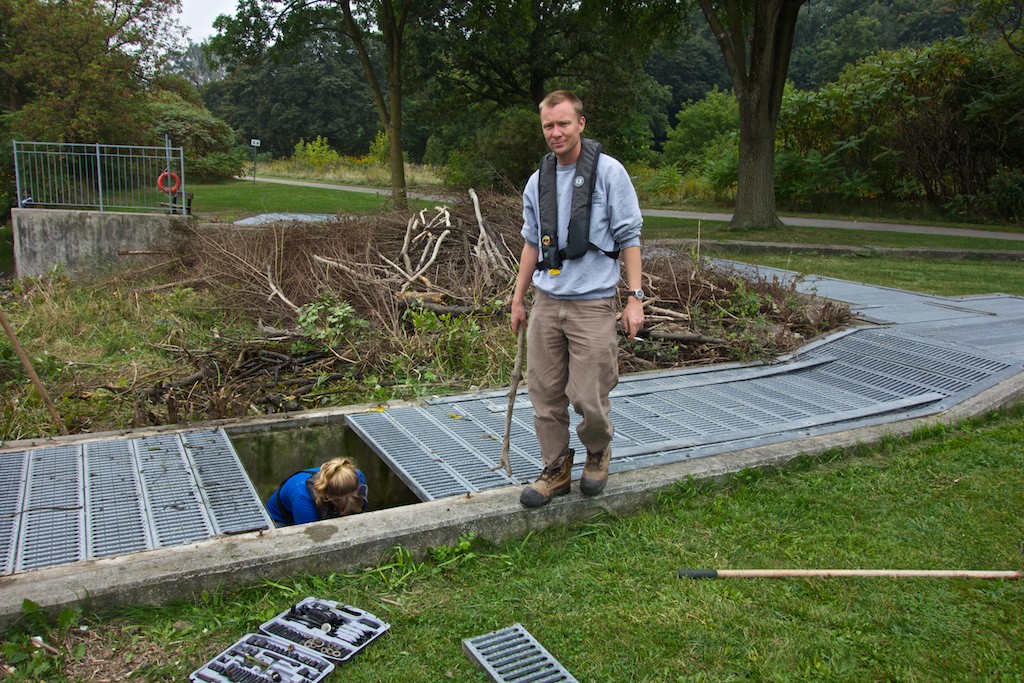
The fishway provides a gentler current and slope so that large fish can make their way up the ‘ladder’ with rest stops along the way. Unfortunately, beavers stuff the fishway with wooden debris in the hopes of creating a dam. Needless to say, the blockages need to be cleared several times a year so that fish can migrate to their spawning grounds.

On Friday, two workers were clearing the way for the salmon and told me that when water levels rise (as they did on Saturday), these large Lake Ontario fish will be able to access and use the ladder. From there they will swim upstream to their birthplace, spawn and return to the lake – assuming they can run the gauntlet of people out to get them.
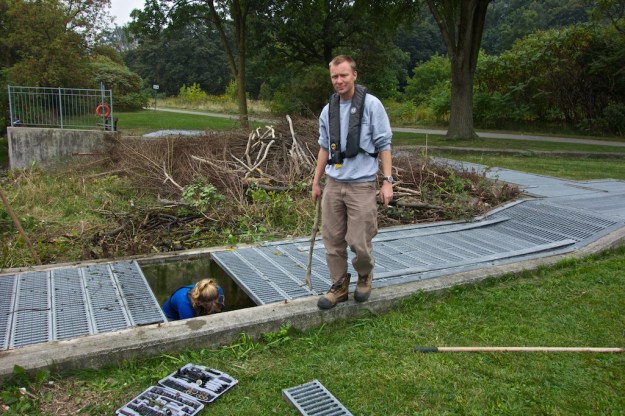
TRCA workers clear the top of the fishway.

Toronto and Region Conservation Authority workers clear the top of the fishway.

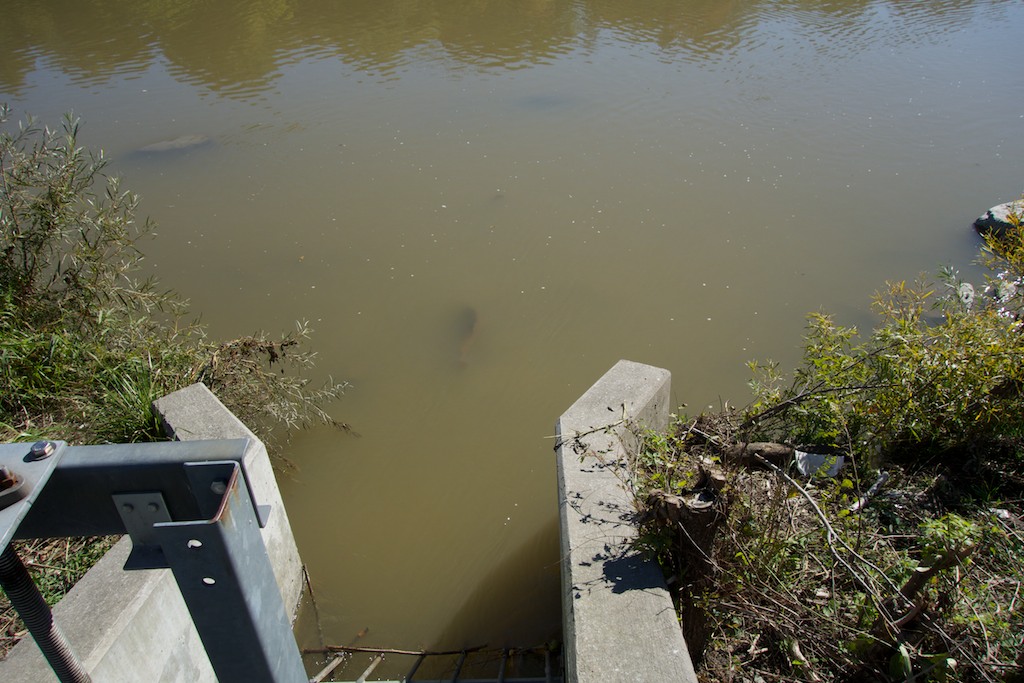
Since the ladder was built I have watched in vain for a fish to appear at the exit. Today, (Tuesday September 24th) I had a premonition and with the camera ready, just like that, a fish emerged. The water was a little murky and I was a little late but here’s the evidence; the ladder works.
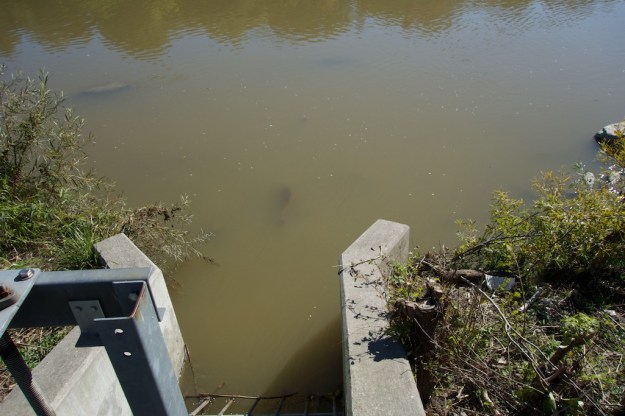
The salmon continues its journey up the river.

The salmon (middle top of photo) continues its journey up the river.

In spite of their impressive size, salmon will soon be seen along the Humber as far upstream as Bolton and Palgrave.

For its part, the TRCA is studying the further removal of obstacles to fish migration along the Humber and the weir in Raymore Park is the highest. Lowering and notching of the weir will allow the fish to leap upstream the old-fashioned and low-tech way. This will end the high maintenance costs of the fishway and finally allow the beavers to block it to their hearts’ content.
Signs of Fall: Wooly Bear Caterpillar

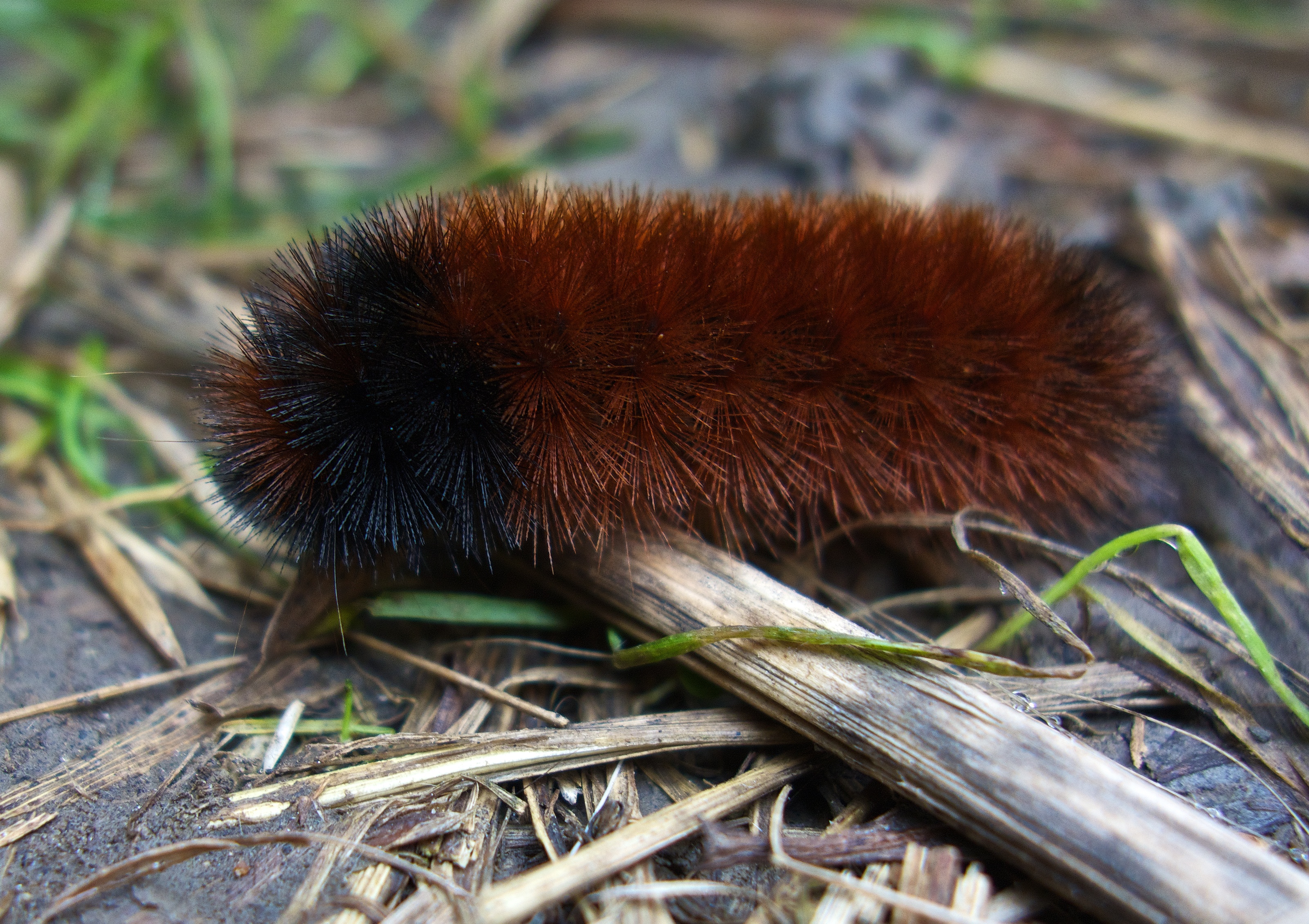
This insect  is a common sight in Raymore Park at this time of year inching its way along pathways and clearings. The freshly hatched wooly bear caterpillar is often seen moving along the ground looking for a hibernation spot. This one will pupate; in spring and its offspring will pupate in summer. Eggs from the summer generation hatch to become the overwintering caterpillar.

Pyrrharctia isabella; the banded wooly bear caterpillar

Pyrrharctia isabella; the banded wooly bear caterpillar trundling to a winter refuge.

These benign caterpillars have 13 segments and feed on plants such as clover and milkweed. Despite a spiky rather than wooly appearance, they contain no poison although handling them may trigger allergies in sensitive folk. If disturbed, they curl into a ball and stay still. Folk legends say that if the brown stripe on the caterpillar is narrow, winter will be cold and long. According to this little guy photographed today, we appear to be in for a mild time of things. The forecast is no doubt as accurate as those provided by Wiarton Willie. Regardless, this creature is able to manufacture its own anti-freeze and stop its heart before freezing solid during the winter. When spring arrives it thaws out and through metamorphosis, becomes a pupa and then a moth. Incredibly the Arctic version of the Wooly Bear Caterpillar needs several seasons to gather the food to become mature enough to pupate.

Signs of Fall: Black walnuts

Last night the first ground frost hit Raymore Park. This occurs when the temperature doesn’t go below zero but there is a touch of white on the grass. Hopefully the first air frost is some time away but there are unmistakeable signs of fall, even though most leaves are still green. One sign that is hard to miss is the fruit that seems to be everywhere. From crab apples to acorns, seeds for the next generation are ready to be distributed.

These exotic looking fruit are black walnuts.

These exotic looking fruit are black walnuts.

Black walnut trees are very common in Toronto and provide food for squirrels and the occasional curious human. They are native to Toronto but thrive in cold spots such as Quebec City because they avoid frost damage by leafing late in spring.  The walnuts themselves are surrounded by a fleshy outer skin and then an incredibly hard shell.

This walnut was run over by a car revealing the unbroken inner shell.

The walnut on the left was run over by a car revealing the unbroken inner shell.

Unlike Persian (aka English) walnuts that have been cultivated for millennia, black walnuts are pretty much as nature designed them and as a result are smaller and incrementally more difficult to harvest. Anyone who has attempted to extract a black walnut can only appreciate the skill and determination of squirrels. The trees dispense a natural herbicide called juglone which kills competing plants unlucky enough to be nearby. The toxicity is not isolated to plants; horses should be kept well away from black walnuts. Attempting to extract the nut from the flesh will leave hands turned dark orange by the chemical. The wood is much prized as a veneer.

Thanks to absent-minded squirrels, Raymore Park is a black walnut nursery with more and more planted every year. They grow quickly and can live on average 200 years. As time goes on, walnut trees will increasingly influence the variety of flora and fauna in the park.