Author Archives: Roy Murray

Unknown's avatar

About Roy Murray

I live near Raymore Park and have been visiting the park since 1993 and began blogging about it since 2012.

Winter continues

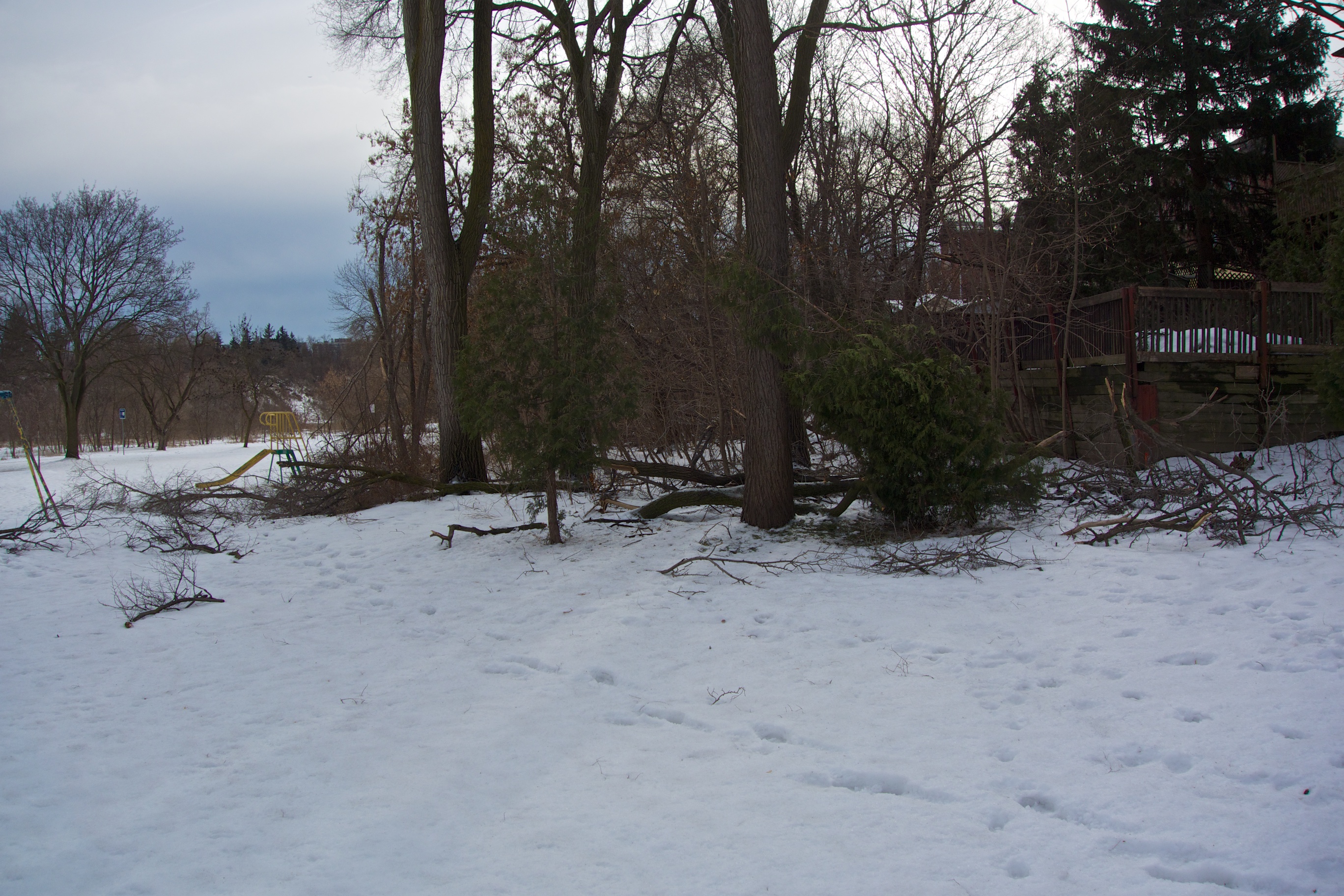
Last month’s ice storm inflicted little damage on the park. Most of the recently planted trees in the park suffered no damage while some of the older ones lost dead wood. Siberian elms at the entrance to the park seem to have suffered the most damage and as ‘Guest’ pointed out, these along with Norway maples are not natives and aren’t in their natural environment. Surprisingly, the park wasn’t planted with a lot of trees after its creation in the 1950s. If that had been done, Raymore Park would be a mature forest by now and helping to reduce flooding along the Humber. On the other hand, the trees chosen for planting may have been non-natives or even species under threat such as elm or ash.

Looking south - Siberian elms have dropped many branches.

Looking south – Siberian elms have dropped many branches near the park entrance.

Siberian elms are a particularly damaging tree in Ontario because they are so prolific and also because they are partly resistant to the Dutch elm beetle allowing it to remain a threat. No doubt the park will be low on the list for clean-up of the debris (which is not entirely a bad thing).

Ice Storm threatens trees

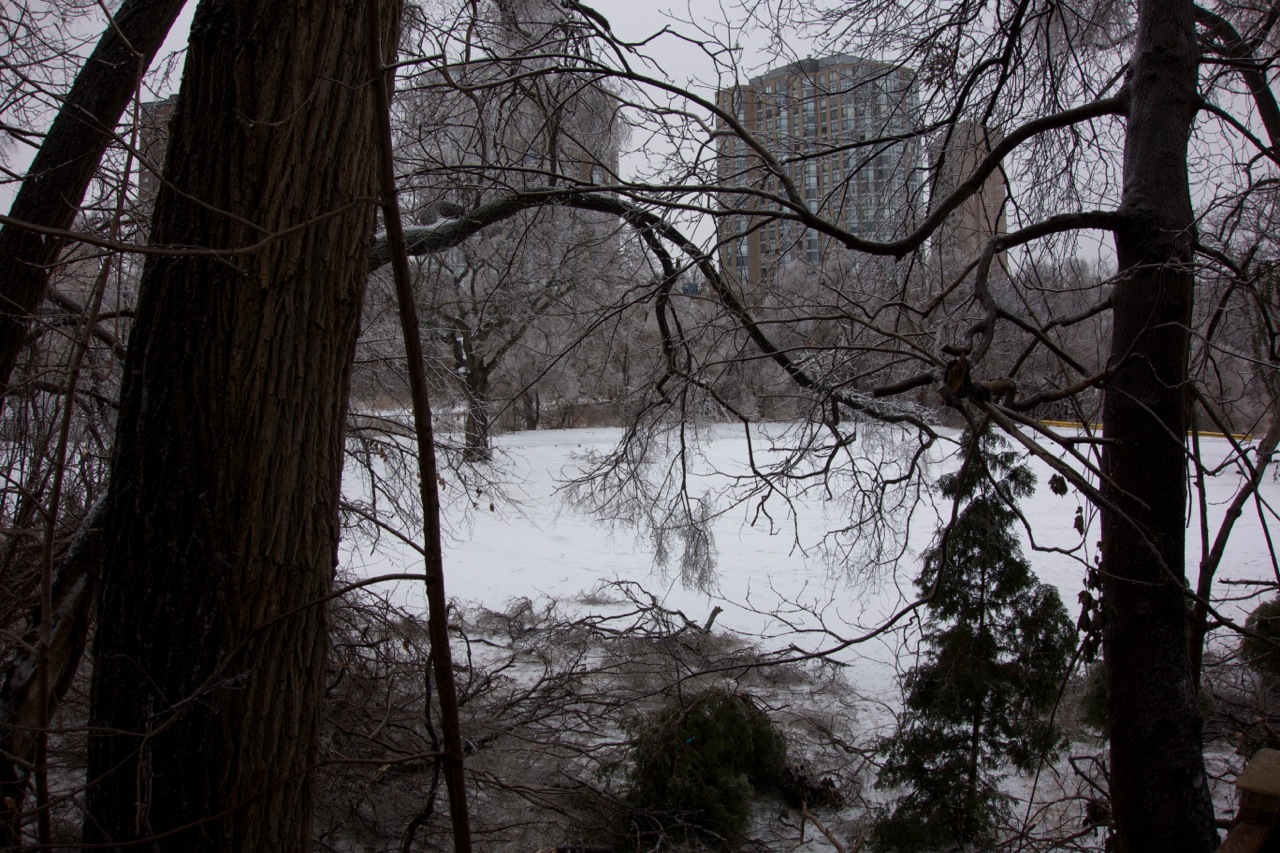
The view from the safety of a neighbour's back yard.

The view from the safety of a neighbour’s back yard.

While we’ve rounded the corner in terms of daylight hours, a severe ice storm has dumped a thick layer of ice on the park. Many trees are leaning and severely stressed with the extra burden. To complicate matters, moderate winds are forecast and there seems to be no possibility of a thaw in the next few days. Sorry about the lack of photos but the park is an ice sheet.

In the meantime, best wishes to all for the upcoming Christmas and New Year celebrations.

We’ve hit bottom (sunset times anyway). Caution: geek content.

This is the time of year when evenings are dark and there seems no end to the gloom. Never fear, our current sunset time of 4:41 p.m. is the earliest it can be – even though the Winter Solstice is more than two weeks away. In fact, by December 16th, the sun will begin to set later, continuing its trend until June.

At first I was astonished by this fact. It seemed to go against everything that I thought I knew about the Winter Solstice and the length of the daylight hours. On closer examination, there is a similar anomaly in the sunrise times which are progressively later until January 9th. OK then so what’s going on? The answer lies in the orbit of the earth and our current position. The earth doesn’t travel around the sun in a circle, in fact it’s an ellipse which is a kind of oval shape. Currently we are almost at our closest annual approach to the sun which occurs around the 3rd of January. We’re about 800,000 km closer at the moment than we will be in July. We’re also travelling faster because we’re rounding the corner at the near end of the ellipse. Because of this, it takes longer for the earth to rotate into position and the solar noon drifts later and later. In late October, solar noon is around 12:01 p.m.  while today, it’s happening at 12:09 p.m. and it will move to 12:32 p.m. by February. Because of this, our sunset and sunrise times are pushed later, hence the earliest sunsets occurring well before the solstice.

Sorry, I just had to have my moment of Geekiness.

For a better explanation try this link.

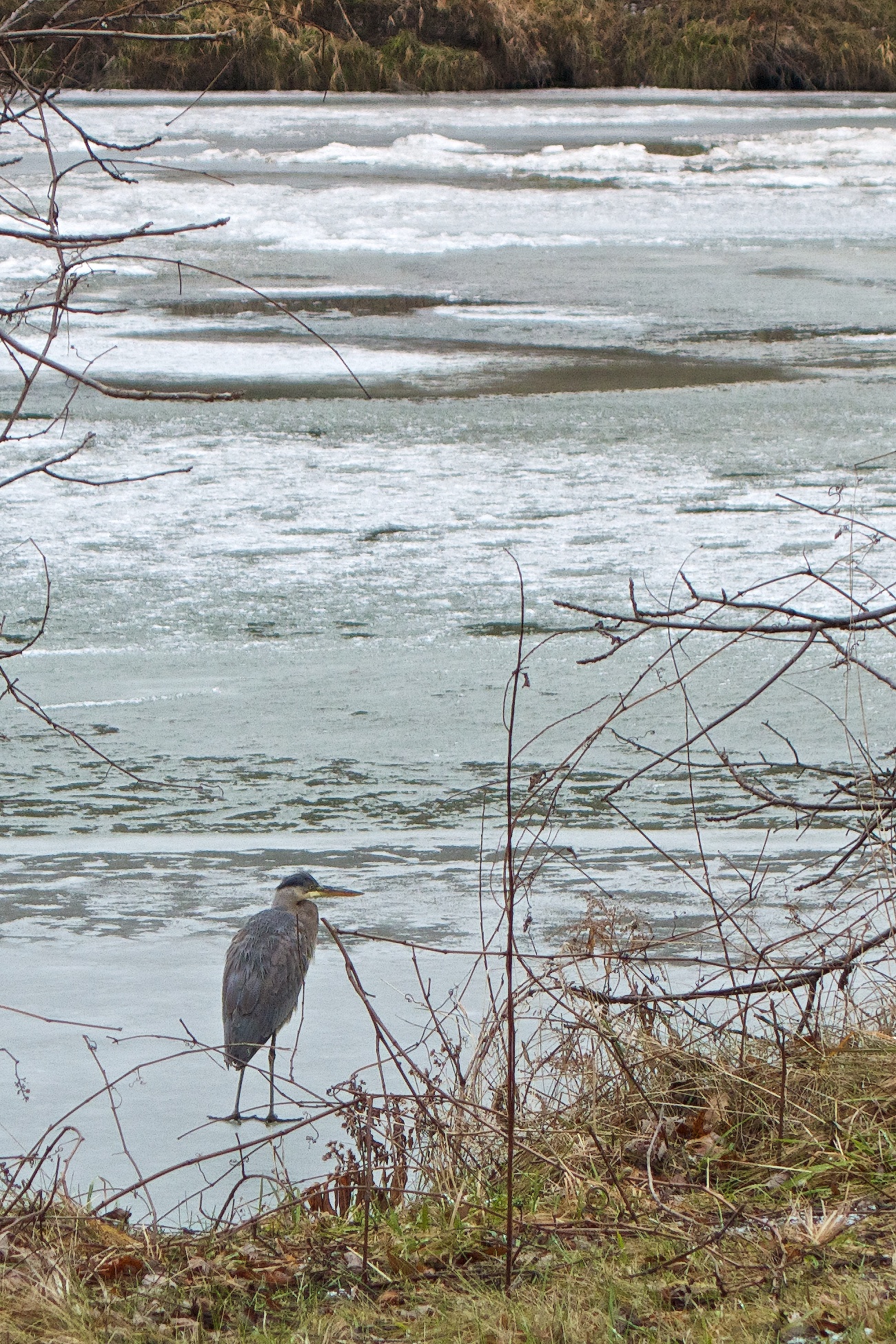
Great Blue Heron sticks around.

This Great Blue Heron surely only has a few more days left in Canada as the weather gets progressively colder. The Humber is frozen in calmer spots which must make for poor fishing yet this bird didn’t want to leave the lagoon. This is the latest I have seen a Heron on the Humber.

DSC03908

Slim pickings.

Hollywood snow.

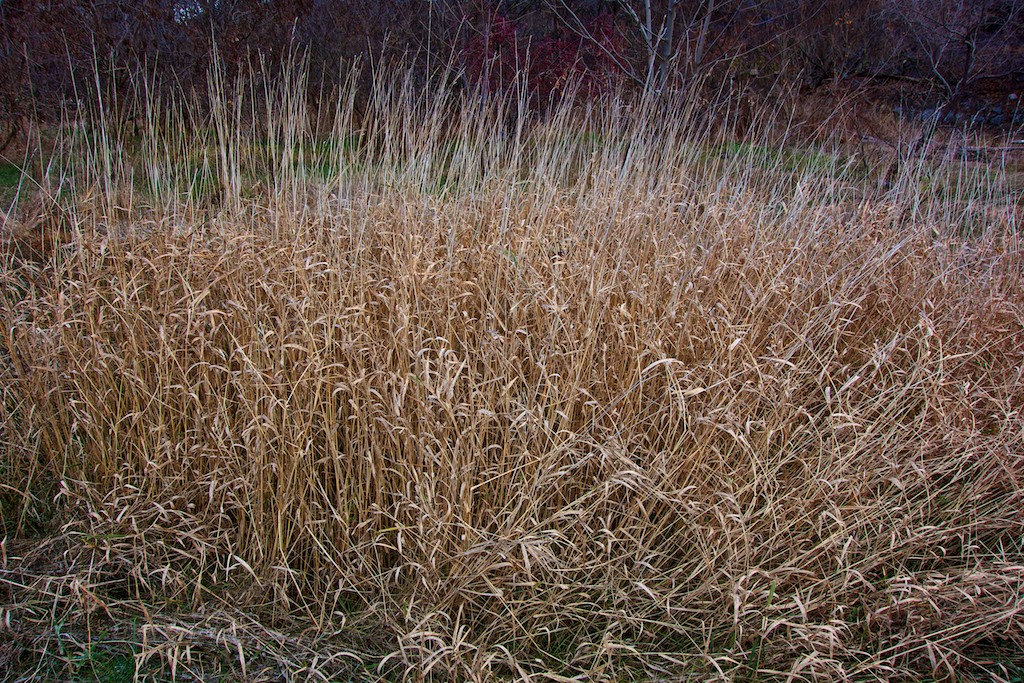
The first real snow of the season transformed the park into a movie set. The snow began as rain, and once everything was soaked, the air turned colder and helped by a stiff breeze, snow snow attached itself as if it had come from a machine. Here’s a couple of before pictures:

Beautiful browns.

Beautiful browns.

Standing grasses.

Standing grasses.

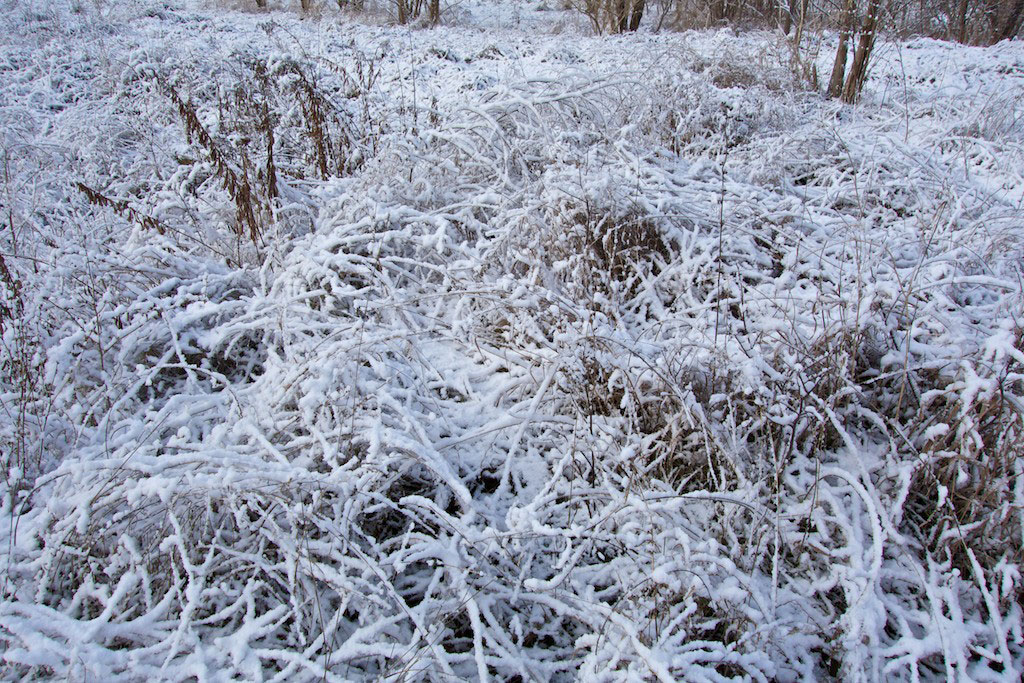
With wet snow clinging to the grass, it bends and flattens to begin the mulching and seeding process.

Hollywood snow machine.

Hollywood snow machine.

Snow can be a heavy blanket. While this snow will not last, the next snowfalls will continue the flattening process so that by springtime, there will be little trace of the previous year’s plants.

Lawn gods don’t ask for much.

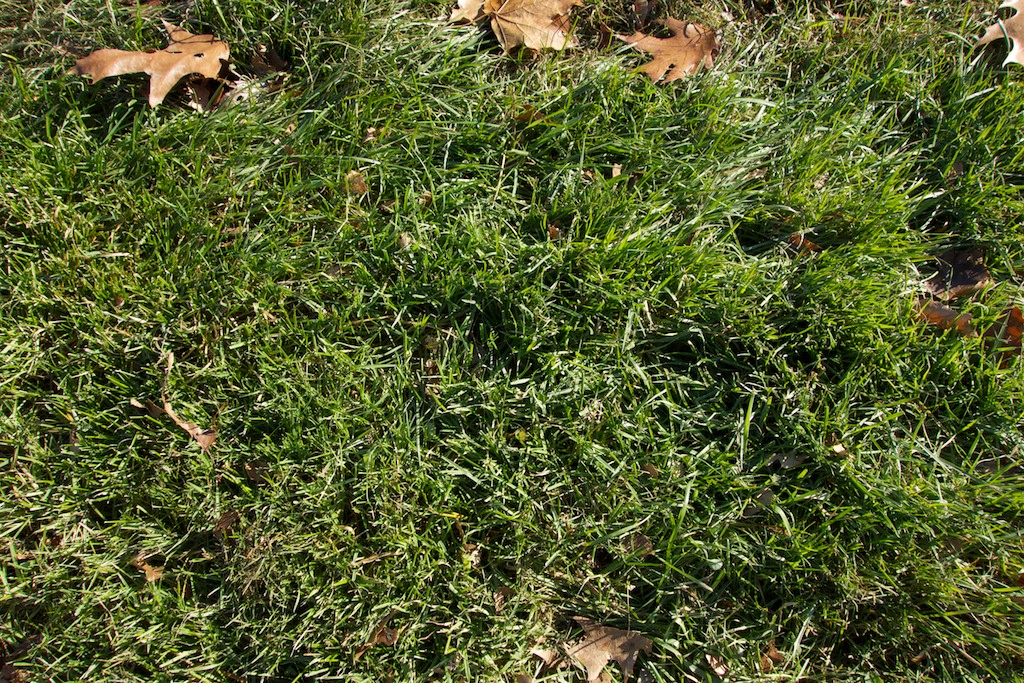
Who knew that all you have to do to maintain a spectacular lawn is cut and aerate it. The occasional re-seeding helps too.

DSC03787

This grass in Raymore Park hasn’t been treated with weed killer or insecticides in this century and is cut relatively infrequently (with a mulching mower) and aerated annually. In spite of that (or perhaps because of it) there are no bare patches, few weeds and no animal diggings for grubs. When a weed killer ban was proposed around 1999, there was a huge outcry from those who thought that weeds would replace grass in Toronto’s parks. Somehow, the chemical lawn brigade’s fears were as justified as those around computers and the Millennium.

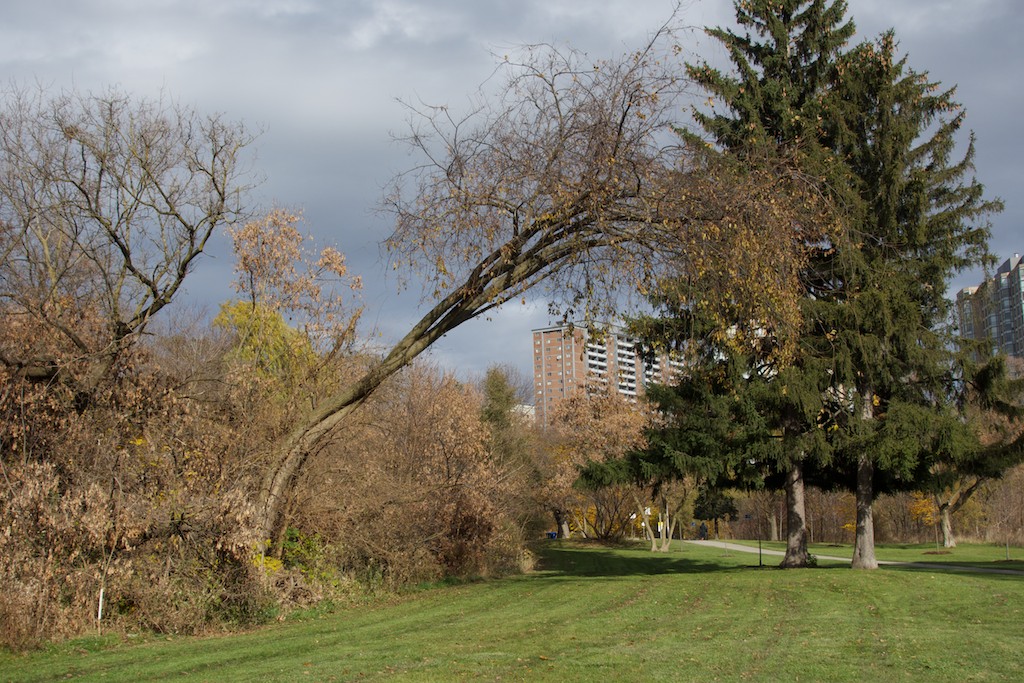
There is a tree that leans at a jaunty angle and I confess to walking at a brisker pace when underneath it. I have the impression that the lean is increasing so perhaps this winter will be its last.

DSC03748


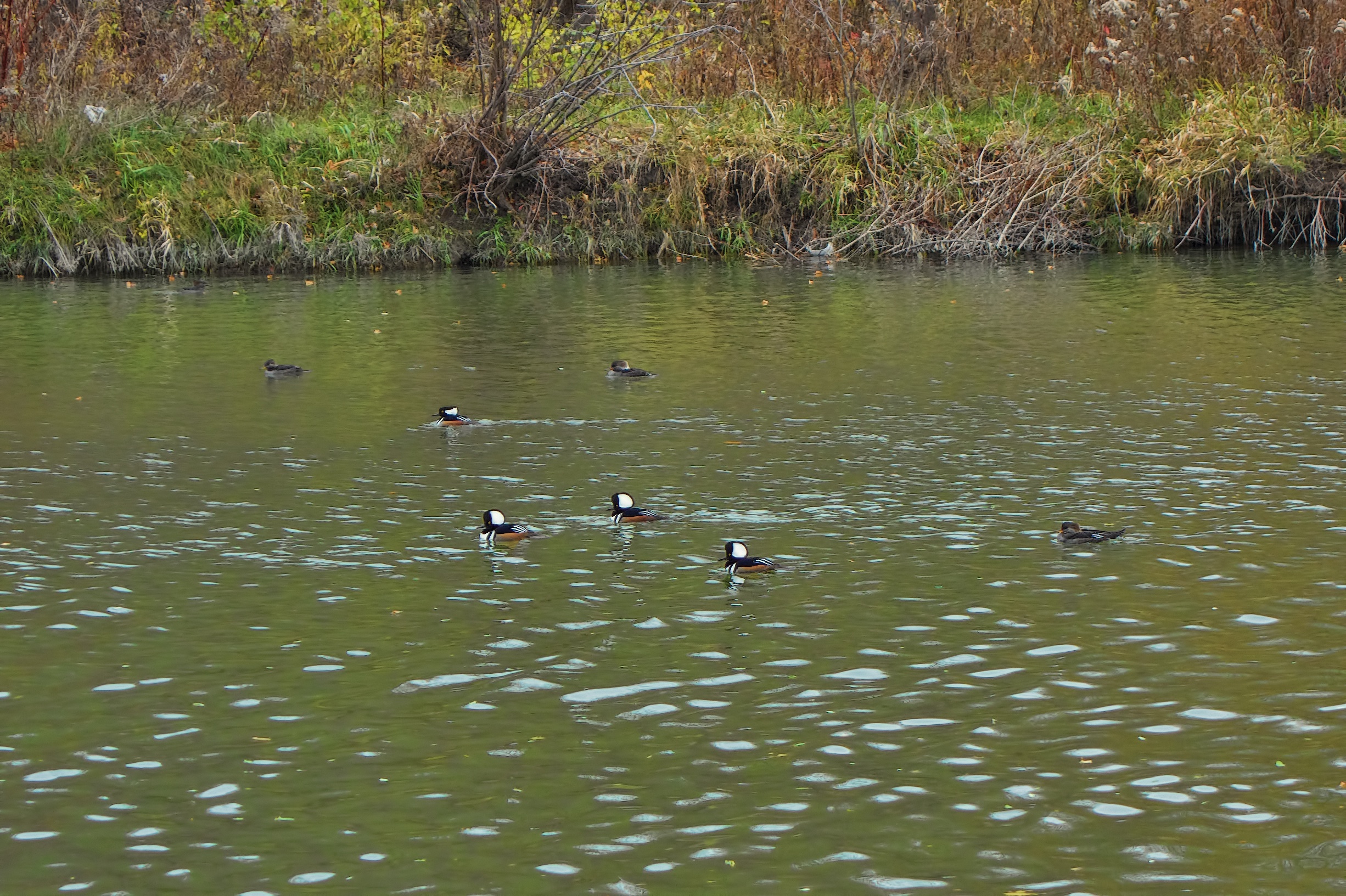
Lastly this group of Hooded Mergansers have returned to the Humber to add an exotic air. They are quite shy but don’t seem to mind hanging around with the resident mallards.

DSC03765

Fishing on the Humber

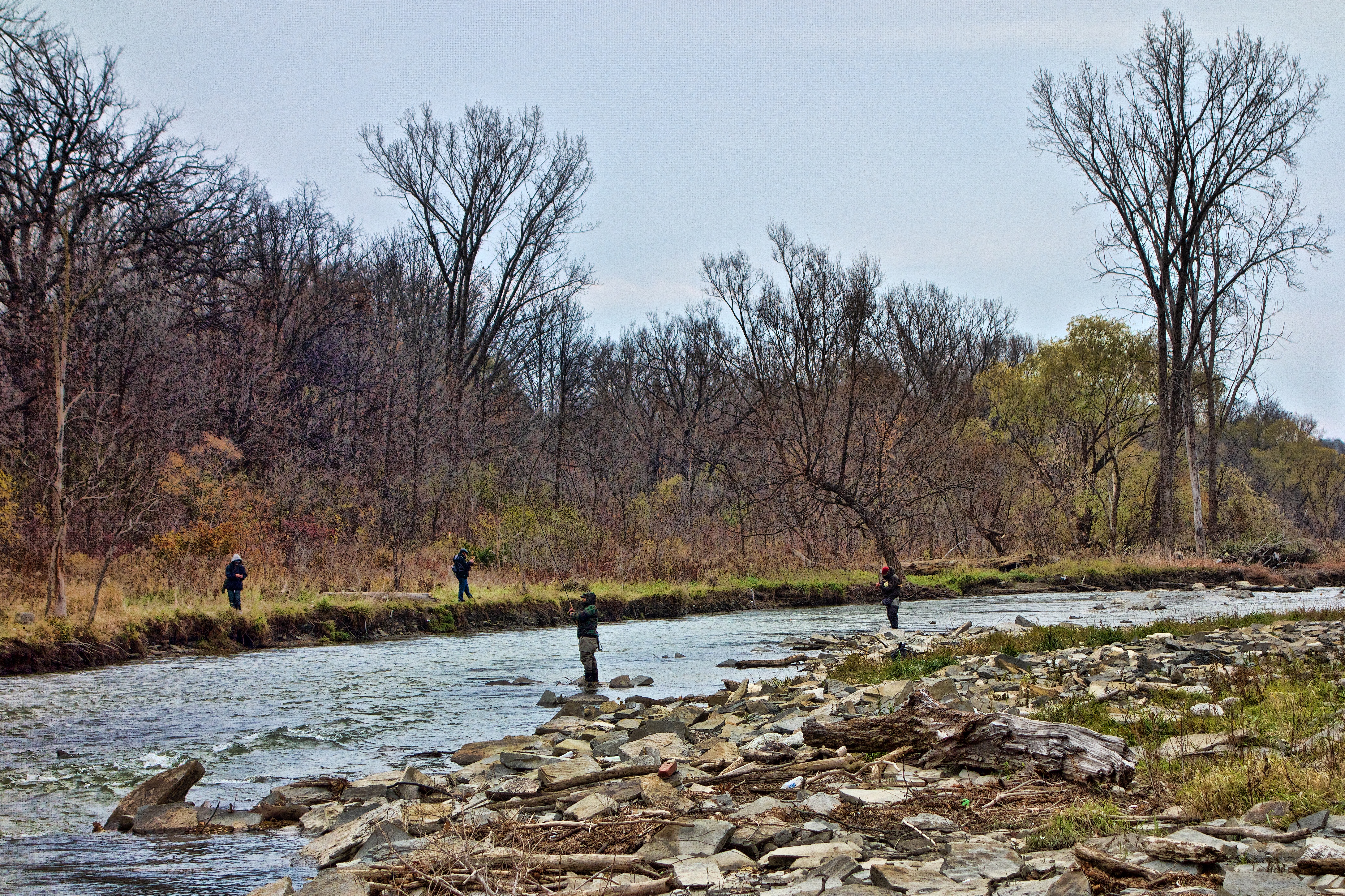
These fishermen formed a group along the Humber this weekend.

DSC03766

Click for closer view.

Contrary to common belief, migratory fish caught in the Humber are edible with no health concerns.

I was talking to a fisherman the other day and apparently the Ministry of Natural Resources is quite active along the Humber. Ministry officials go so far as to lurk in the bushes in camouflage gear waiting to charge people who fish too close to dams or use other illegal methods such as snagging or netting. Personally, it just seems like hard work for little reward, plus I’m not so keen on ending the life of such an amazing creature. There are others who catch and release but to me that’s pointless and cruel.

Strange behaviour…

As a regular in Raymore Park, people watching is part of the daily experience. Patterns of behaviour are often identifiable and the brain automatically assigns a category to people – for example dog walker, jogger, person in transit etc. This morning, I encountered a young woman walking in a way that defied easy categorization. She was coming from Scarlettwood Court and instead of joining the path, marched towards the river. I watched as she stepped down to the water’s edge and walked along the bank to the peninsula, her pace making it clear that she was not a sightseer. Once on the far bank, she retrieved a plastic bag from a holdall, quickly dropped the contents into the water and returned. In the meantime I moved closer and stood by her exit from the river. I looked at her questioningly and she retorted, ‘What?’.

‘What did you put in the river?’, I asked. She seemed embarrassed.

‘It’s wax’.

‘Why would you put wax in the river, why not throw it in a garbage bin?’

‘It’s private – something I had to do.’

She began to walk off.

‘Why poison the wildlife?’

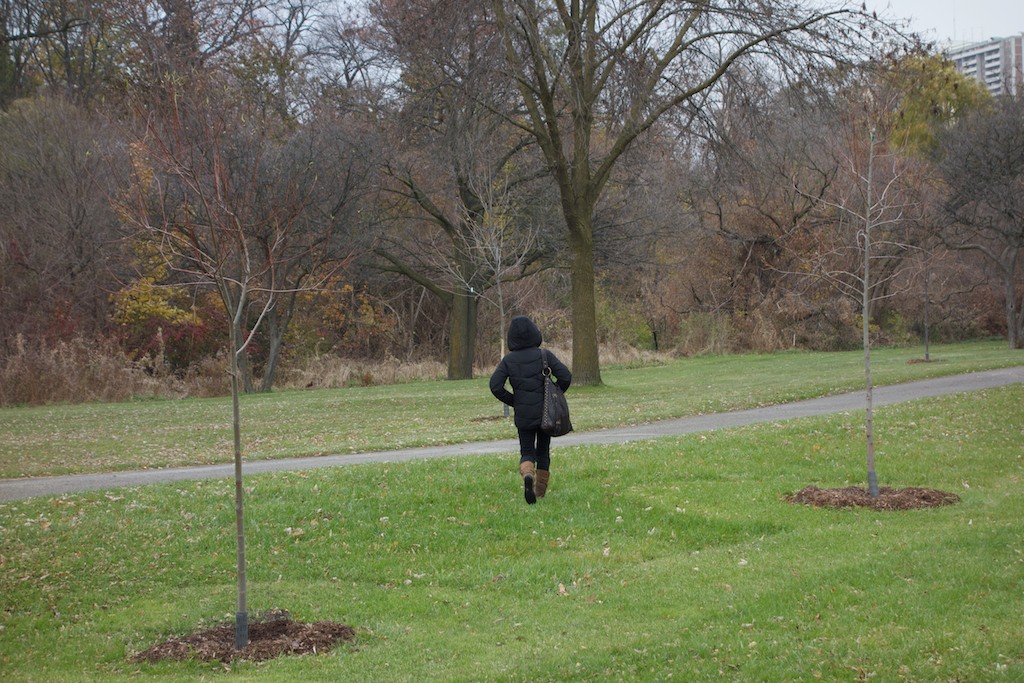
‘I’m sorry’, she threw the remark over her shoulder and strode off, not looking back.

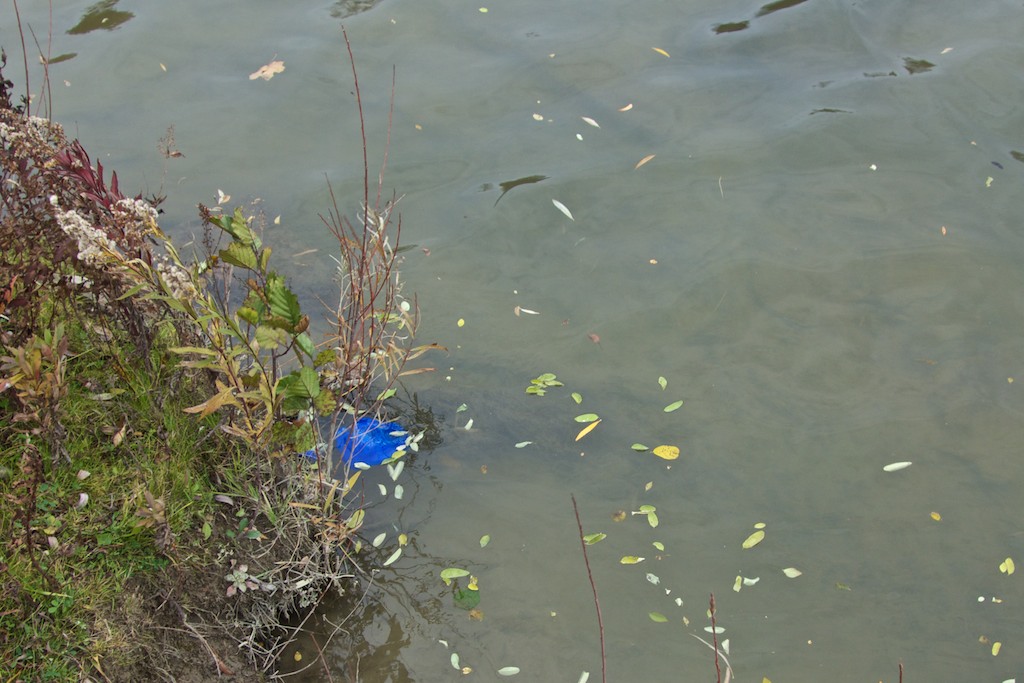
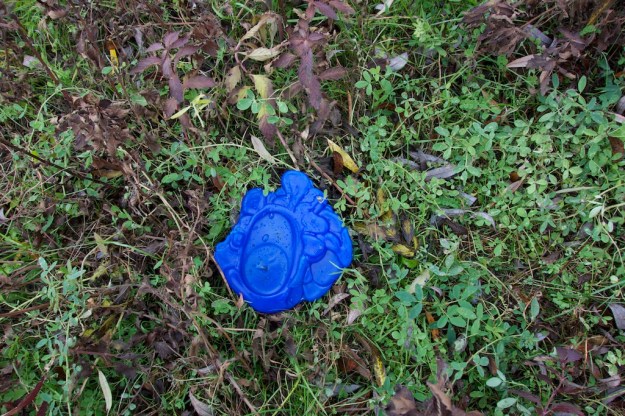
I walked down to the water and sure enough, the wax was floating exactly where it was dropped thanks to an onshore wind.
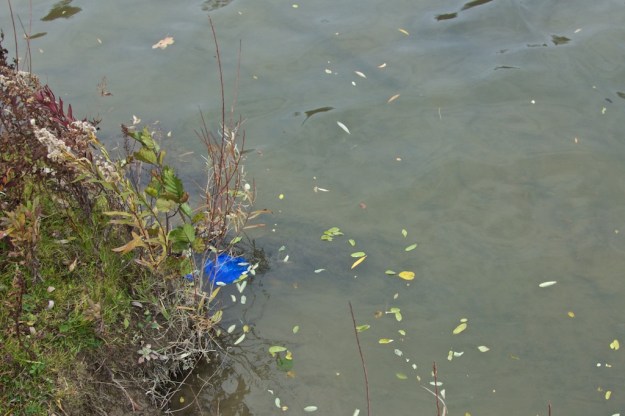
The wax, where it was dumped.
The wax, where it was dumped.

DSC03763

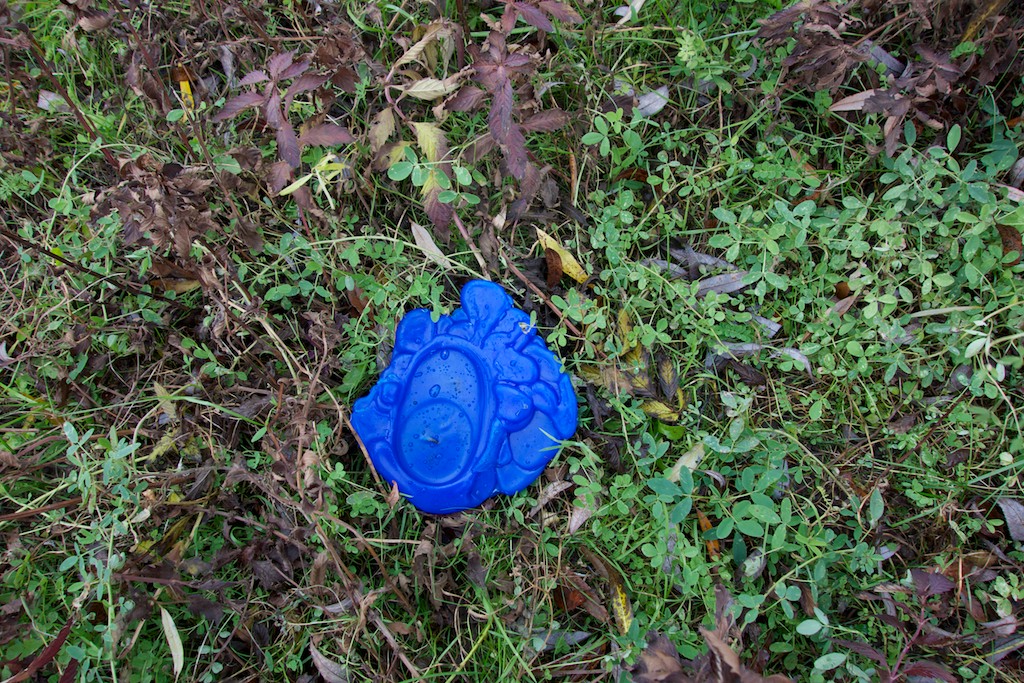
A better look at the wax.

Having no shame, I lay on the bank and fished it out of the water – a substantial lump, possibly from a large candle or wax figure – and dumped it in the garbage.
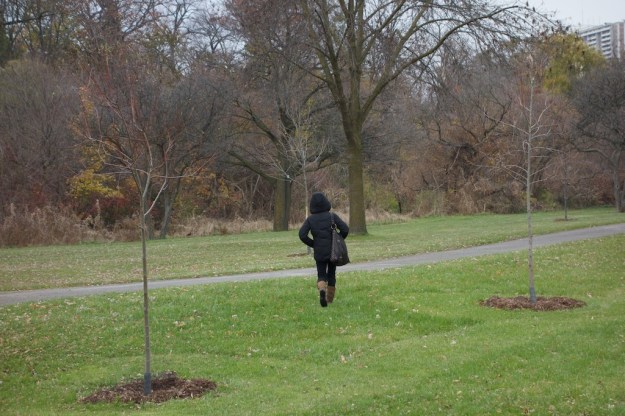
Sorry, it's private.

Sorry, dumping waste in a public park is not a private act.

I’ll probably never know the story behind the wax; whether or not it was some kind of occult leftover that had to be sent to the ocean – one can speculate endlessly. I am sure that if karma, voodoo, Air Miles or any kind of points were being awarded today, this young woman scored a big fat zero.

It’s that time…

Let it snow.

Let it snow.

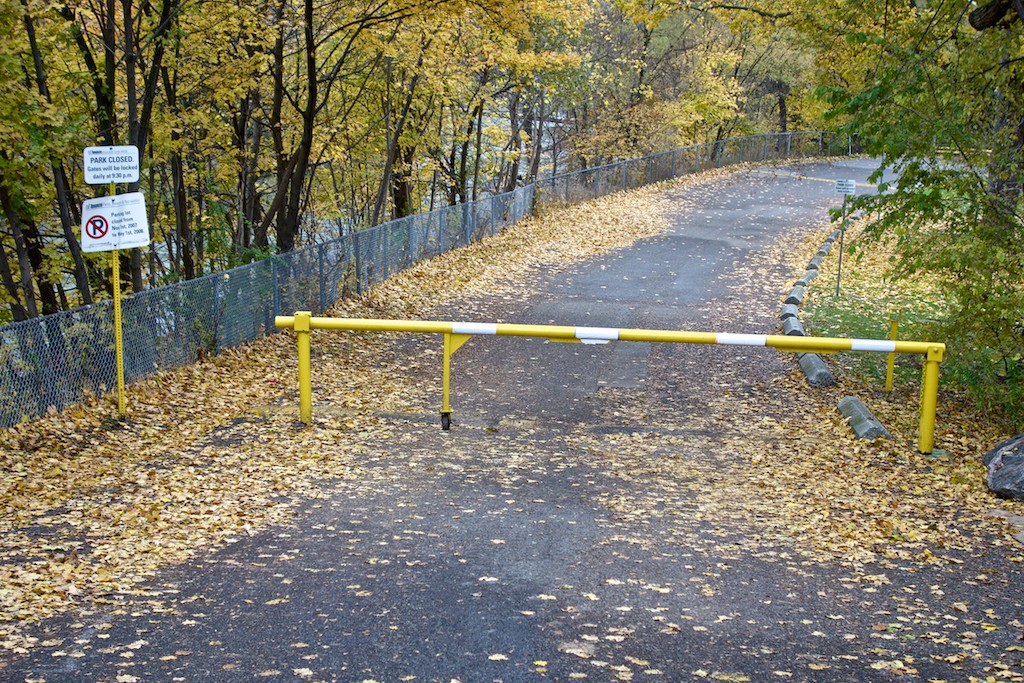
For the past few years, Raymore Park has closed its gate at the beginning of November and it stays that way until the end of March. This is because snow can occur at any time between these dates and many people are unable to drive back up a steep snowy hill to exit the park. This cuts down on quite a large number of visitors as the effort to park on Tilden Crescent and walk down to the park seems to deter most people.

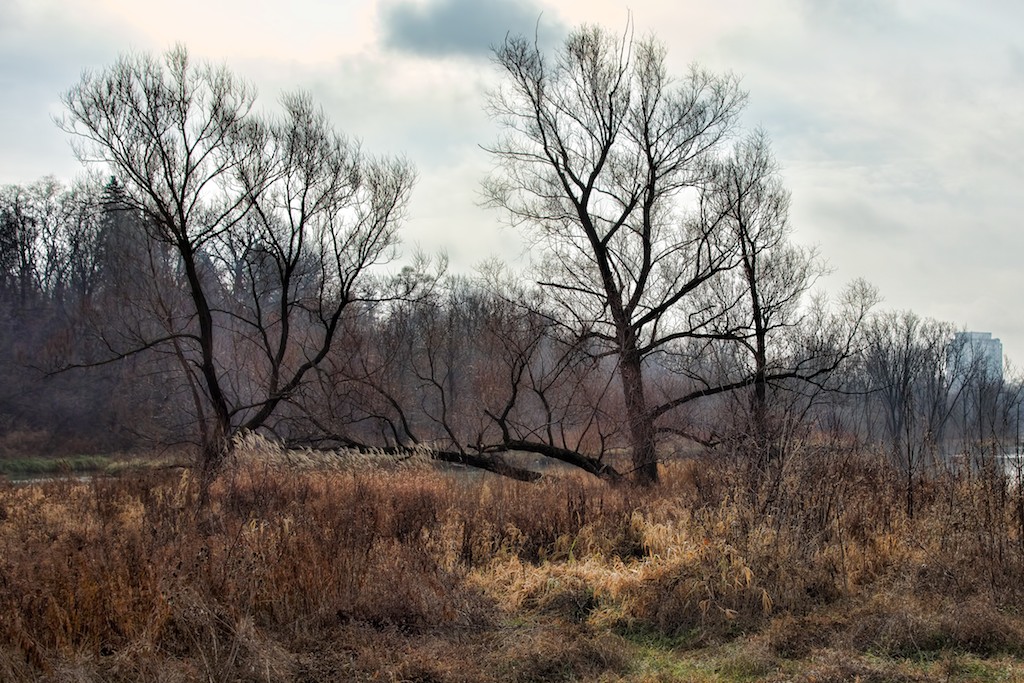
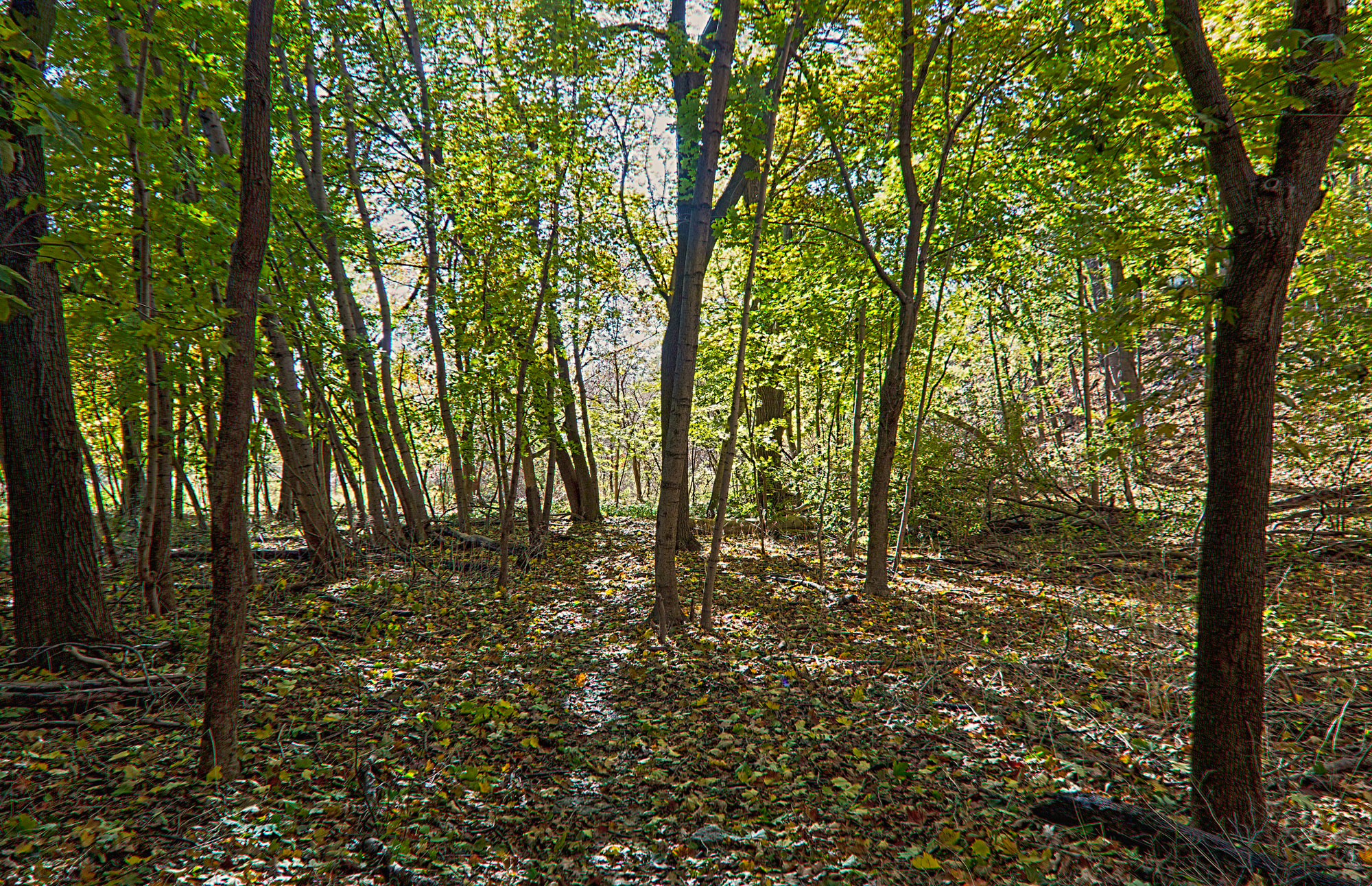
Light still is creating fascinating scenes in the woods. Here’s an attempt to capture what the eye sees using an HDR shot based on two images, one capturing highlights, the other, shadows then merged in Photoshop.

Woods-HDR

The downside of fish ladders.

The weir in Raymore Park is an insurmountable barrier to all fish. It’s about 3 metres from the base to the top and that makes it the tallest weir on the Humber. Recently, an attempt is being made to revive sustainable populations of Atlantic salmon and rainbow trout and fingerlings have been released for a few years in places like Bolton and Palgrave in the hopes that they would return annually once established.

The Denil fishway at the weir was constructed with that purpose in mind. It took months to build and cost several hundred thousand dollars. Fish are able to climb the three metres by finding their way through a modified sluice that eases the climb while slowing the current. As previously mentioned, it is prone to blockages from wildlife and even floating twigs thus denying returning fish a chance to spawn where they were released. Today is no exception; the fishway is totally plugged.

We can't even blame the beavers for this one.

We can’t even blame the beavers for this blockage.

Four or five years from now, fishing folk in Bolton and Palgrave will be wondering what happened to the salmon.

All is not lost. A study of all weirs along the Humber has been under way and soon, a TRCA report will detail what to do with the Raymore Park weir and its associated fishway. Let’s hope for a natural and unblockable solution for migrating fish.