Author Archives: Roy Murray

Unknown's avatar

About Roy Murray

I live near Raymore Park and have been visiting the park since 1993 and began blogging about it since 2012.

Jane’s Walk tours old piggery

This is the same article that I wrote in WestonWeb, a blog with news about Weston. We covered ground on the opposite side of the river to Raymore Park moving up from Eglinton to the weir.

On Saturday, May 7, about 50 people took part in a Jane’s Walk to discover some Weston and Mount Dennis history.

The walk led by Mike Mattos featured guest segments from Alistair Jolly, an archaeologist with TRCA, Simon Chamberlain from MDCA and myself.

Alistair Jolly from TRCA with some artifacts discovered in the Toronto region.

Mike Mattos (L) listens to Alistair Jolly from TRCA with some artifacts discovered in the Toronto region.

A sample of the range of artifacts discovered around Toronto.

A sample of the range of artifacts discovered around Toronto.

After viewing some artifacts including clovis arrowheads, stone axes and clay pipes, we ventured under the Eglinton bridge at Scarlett Road.

Simon Chamberlain discusses the history of the area.

Simon Chamberlain discusses the history of the area.

A view of the graffiti adorning the walls of the Eglinton bridge over the Humber.

A view of the graffiti adorning the walls of the Eglinton bridge over the Humber.

Moving up the river from there Mike and Simon led the group to some interesting relics from the early years of West Park Hospital. Established in 1904, for patients suffering from tuberculosis it was then known as the Toronto Free Hospital for Consumptive Poor or the Weston Sanitarium. Since this was in the days before antibiotics, treatment consisted mainly of rest and fresh air. At the time, Toronto’s death toll from TB was considerable; something like 7 people a day. Even then, TB was known to be infectious and city workers fearing contagion refused to collect food waste from the hospital. As a result, the sanatarium set up a piggery and chicken operation on hospital grounds close to the Humber. The farm was self-sustaining and with 1000 hens and 50 pigs, there was no shortage of food. Pigs were slaughtered at the stockyards.

Water troughs for the pigs still remain.

Water troughs for the pigs still remain.

Antibiotics revolutionized treatment of TB and in 1954, the animals were swept away during Hurricane Hazel but evidence remains of the extensive farming operation that was operated by staff and patients.

By the river, there is a small informal pet cemetery that apparently has been used by local residents for years.

Those animals were loved.

An informal cat grave.

The last segment of the walk ended by the weir in Raymore Park and there was discussion of the effects of Hurricane Hazel on the area which led to the forerunner of today’s TRCA, the creation of many of Toronto’s parks and the preservation of this city’s famous ravines.

Another great walk; luckily we had no rain and as a bonus – mosquitoes haven’t emerged – yet!

Off Leash Zone latest

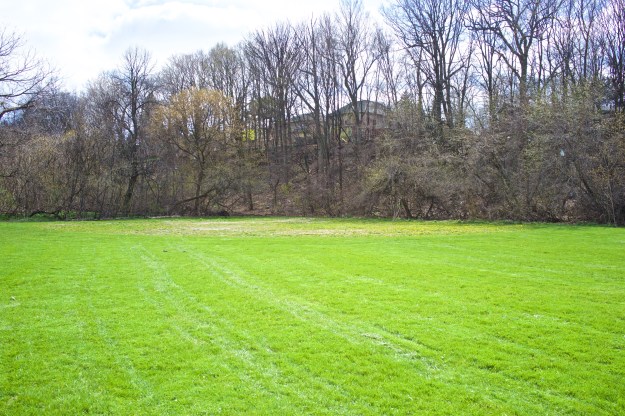
In preparation for the new off-leash area by the weir in Raymore Park city staff have removed the baseball diamond fencing that was installed a few years ago but rarely used.

The old baseball fencing has gone.

The old baseball fencing has gone.

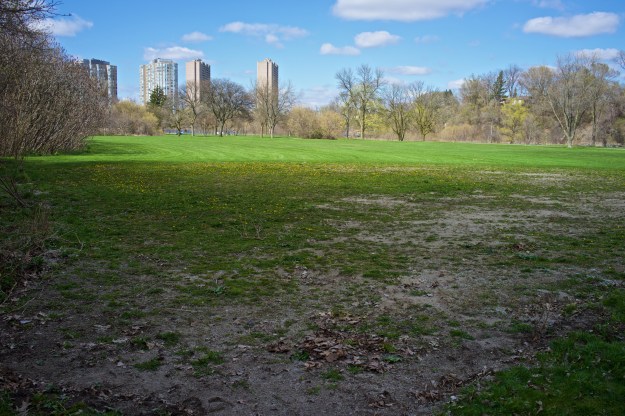
The view north from the upcoming leash free zone.

The view north from the upcoming leash free zone.

We’ll have to see if the extended deadline for work on the Humber retaining wall will delay the opening of the new dog facility. Workers did manage to remove the fencing without any logistical problems.

Some Questions Answered

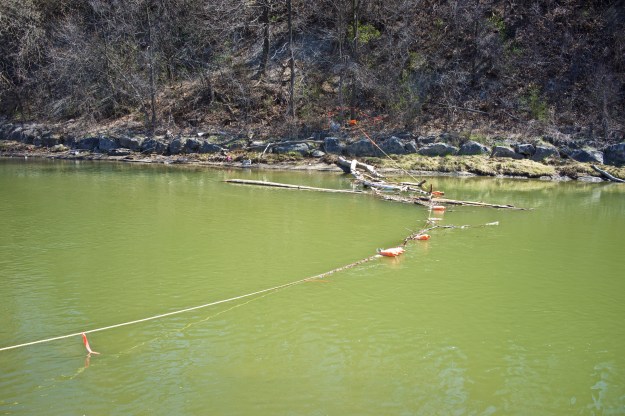
Work has resumed on the retaining wall and the mystery of the rope stretched across the river has been solved.

It's a lifeline.

It’s a lifeline.

It’s simply something to hang onto if a worker slips into the water accidentally.

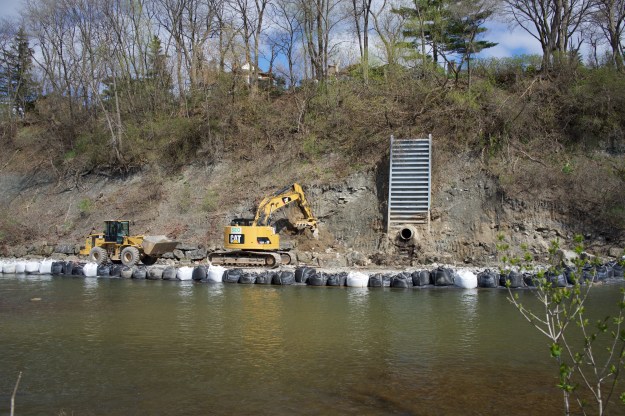
Another question answered is what they are going to do with the old retaining wall. Answer: remove it. This week the southerly end of the old wall is being removed and workers are digging  to the bedrock to make a secure foundation for the new blocks.

Digging down to the bedrock for a solid foundation.

Digging down to the bedrock for a solid foundation.

Material being removed from the foundation of the new retaining wall.

Material being removed from the foundation of the new retaining wall.

According to a worker on the site, the work was delayed while trout were spawning but TRCA has given the project the go-ahead and construction has re-started. Apparently when the original wall was constructed, the same company simply accessed the far bank directly and never had to take all the precautions expected of projects on the river nowadays.

Another interesting item; the new wall may not extend to the northernmost point planned as the landowner above that section of wall is worried that the removal of the old blocks and subsequent digging may trigger further landslides. Since the resident in question has riparian rights which go down to the water, they have the right to withdraw consent to construct that last section of wall.

The worker allowed that the project may take until October to complete.

Signs of spring

Winter is finally over – the signs are everywhere but interestingly, native plants are some of the last to leaf and bloom, possibly as a protection from our continental climate’s treacherous ability to produce late snowfalls and frosts.

Imports feel no such constraint. Alongside the old path that follows the curve of the river, some old exotic plants remain from the days when people had homes by the water. Many of these remnants of domestication are unnoticed but somehow they have survived and stand as a mute testament to the victims of Hurricane Hazel in 1954.

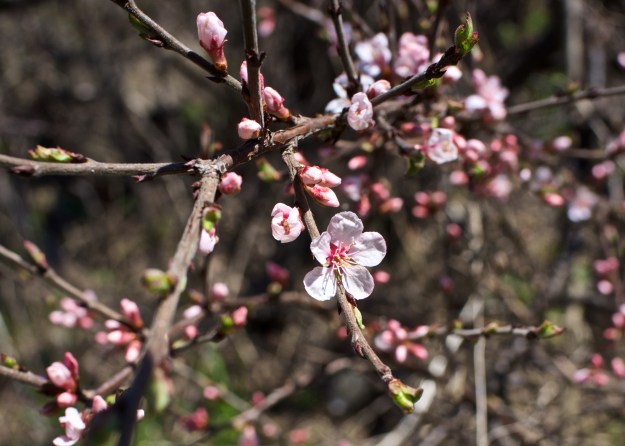
An exotic tiny blossom.

An exotic tiny blossom.

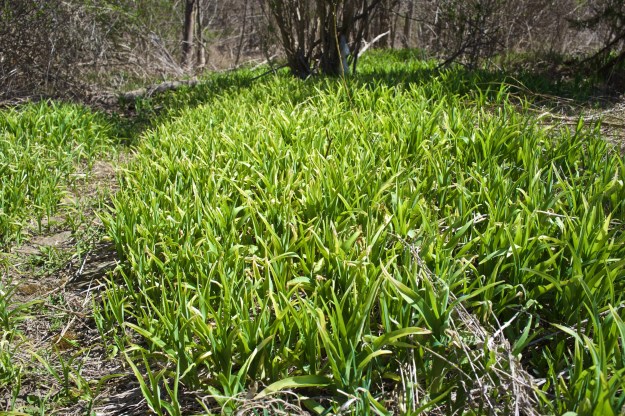
Day lilies carpet this fertile flood-prone corner of the park.

Day lilies carpet this fertile flood-prone corner of the park.

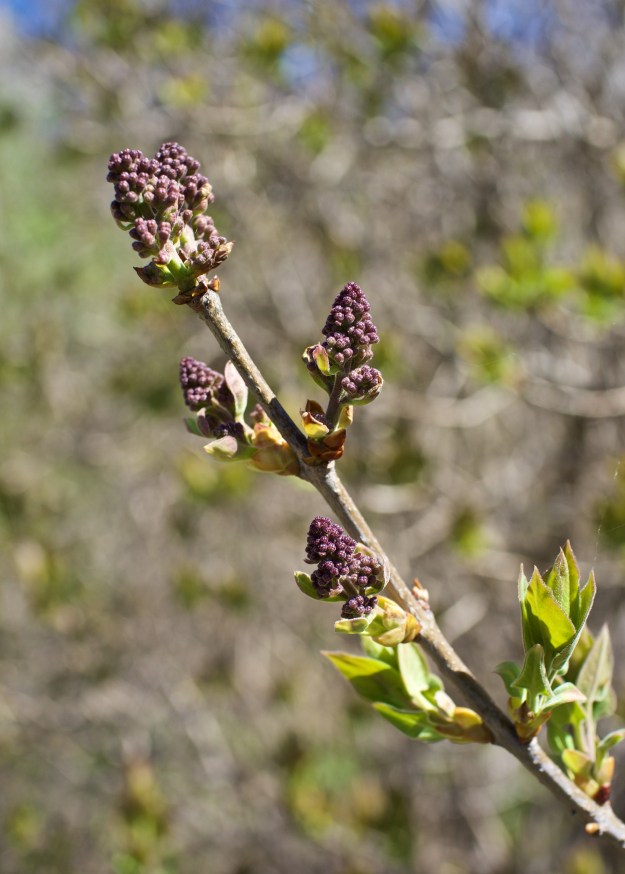
A lilac bush has begun to leaf and flower buds are set to bloom in a couple of weeks.

A lilac bush has begun to leaf and flower buds are set to bloom in a couple of weeks.

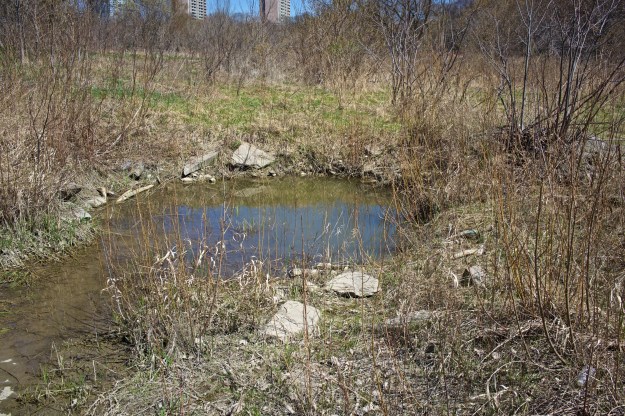
This pond was eroded out of the ground a few years ago as a result of an ice-jam temporarily diverting the river. It was promptly occupied by eastern American toads. No sign of the eggs or tadpoles yet.

This pond was carved out of the ground a few years ago as a result of an ice-jam temporarily diverting the river. It was promptly occupied by eastern American toads. No sign of this year’s eggs or tadpoles yet.

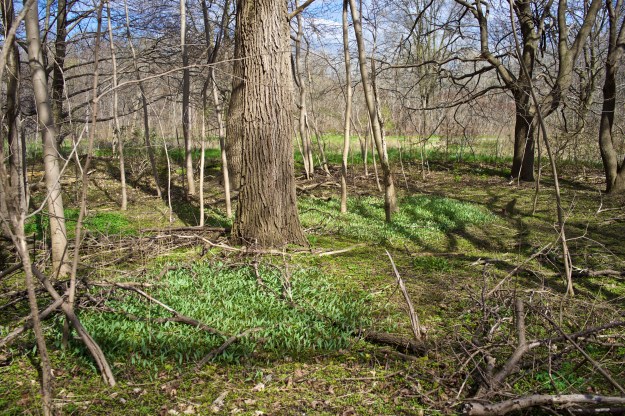
A carpet of toad lilies has sprung up in the woods south of the weir.

A carpet of toad lilies has sprung up in the woods south of the weir.

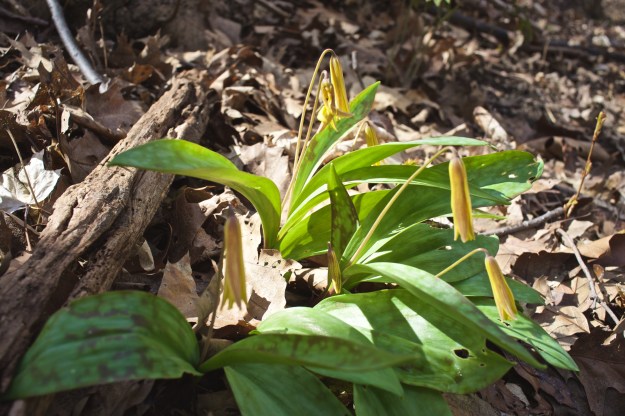
Toad lilies up close.

Toad lilies up close.

Toad lilies.

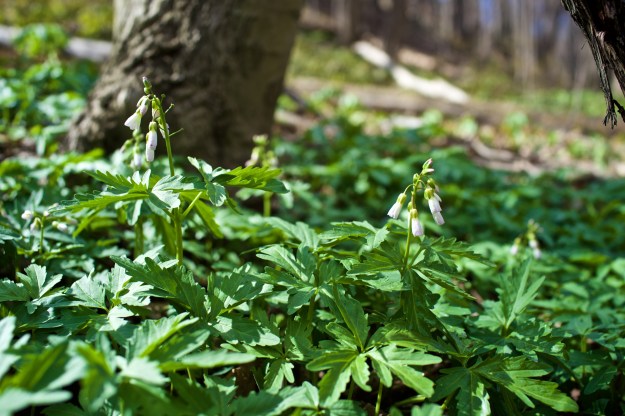
Cut leaved toothwort in the woods.

Double Trouble.

DSC03316

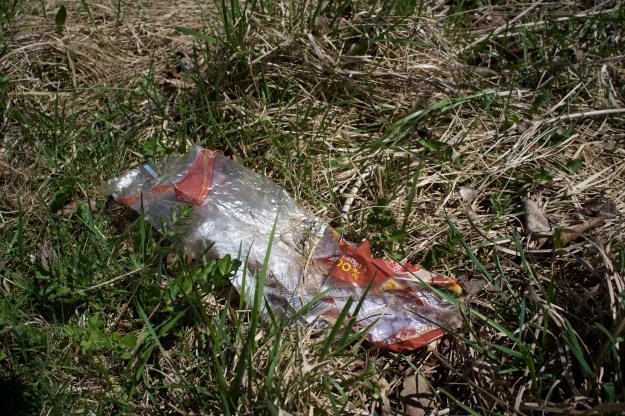
Plastic is a danger to wildlife in our parks.

Raymore Park attracts many people, drawn by its natural setting. It also has its fair share of visitors whose presence is a net detriment. The one responsible for this empty bag qualifies as doubly ignorant. First they bring their Dempsters 100% whole wheat bread scraps filled with some unwholesome ingredients*, attracting gulls and Canada geese while  training birds in general to approach humans. That’s not good enough apparently so they complete their (literal) douchebaggery by leaving the empty bag on the ground. The whole point of their visit seems to be the self-gratification obtained by watching wildlife jostle and beg for scraps.

*Ingredients of Dempsters 100% Whole Wheat Bread:

Whole grain whole wheat flour including the germ, water, glucose-fructose / sugar, yeast, vegetable oil (canola or soybean), wheat gluten, salt, vinegar, acetylated tartaric acid esters of mono and diglycerides, calcium propionate, sodium stearoyl-2-lactylate, sorbic acid, monoglycerides.

There is no shortage of material on the harmful effects of feeding bread to birds. Unfortunately the damage done isn’t evident at the time or else people might think twice.

Work slows on Retaining Wall

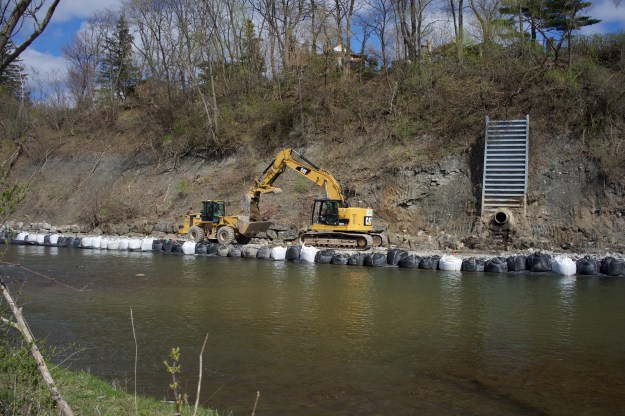
The retaining wall base has been wrapped in plastic.

The retaining wall base has been wrapped in plastic.

Work has slowed considerably at the site because migrating steelheads (better known as rainbow trout) are spawning in the Humber and rather than disturb their progress up the river, TRCA has ordered a hiatus in work until they complete their spawning. This will depend on the water temperature and will delay the wall’s construction for a while.

More brush was removed from the site recently and the staging area has been expanded, possibly for additional storage space. Further down the river, a mysterious rope has been stretched across the river. The purpose of the rope remains to be determined.

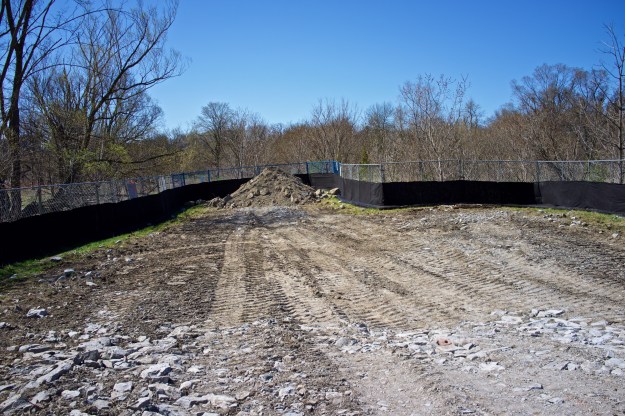
The staging area has been expanded south to include this area.

The staging area has been expanded south to include this land.

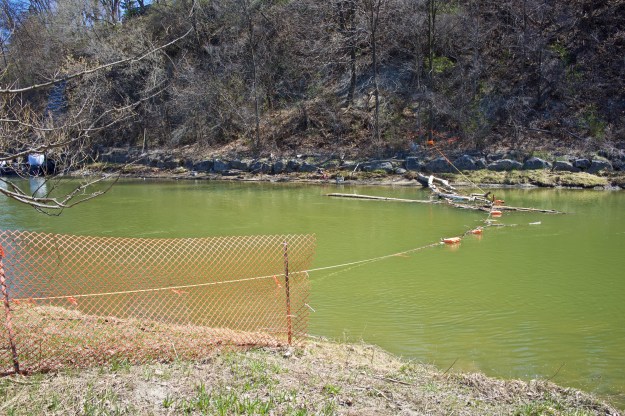
Further down the river, a rope has been stretched across the Humber.

Further down the river, a rope has been stretched across the Humber.

The rope across the humber.

The rope across the Humber is beginning to catch driftwood.

Looking north to the temporary bridge.

Looking north to the temporary bridge.

Retaining Wall Update April 18

At first glance nothing much seems to have changed from last week.

At first glance nothing much seems to have changed from last week.

Last week, the project took a major step forward with construction of the wall foundation to the south of the bridge. An equal length of foundation will be constructed upstream and then the wall will be added on top of that.

The retaining wall foundation stretches along its southern length.

The retaining wall foundation stretching along its southern length.

At least the question of what to do with the existing blocks is answered. They will simply be kept in place behind the new wall. With the narrowing of the existing riverbed, I wonder what the erosion implications will be on the western bank.

Retaining Wall Update April 12

It’s truly astonishing seeing the scope of this work and the seemingly glacial pace at which it is trundling along. As of last weekend, not much has changed except that the new bridge has had its eastern abutment extended to the far bank.

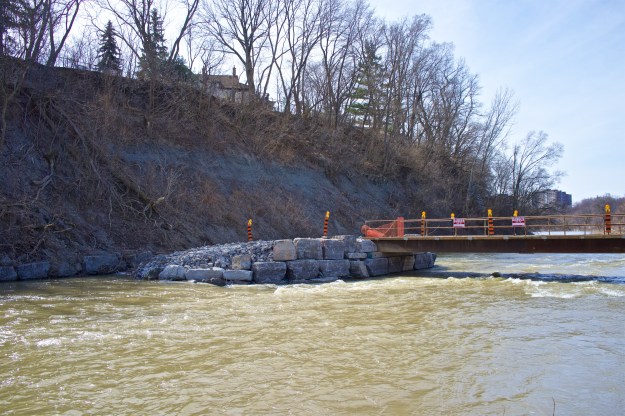
The bridge with its extended abutment.

The bridge with its extended abutment.

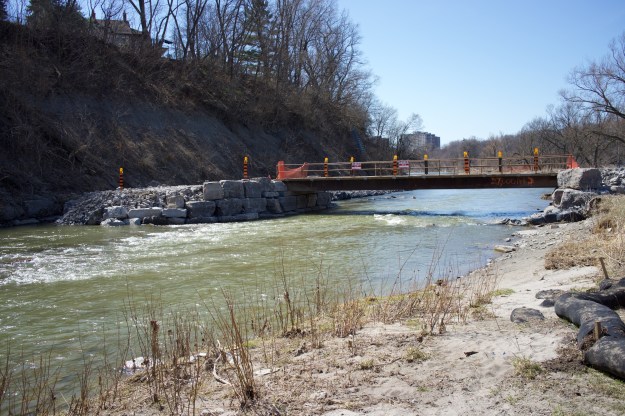
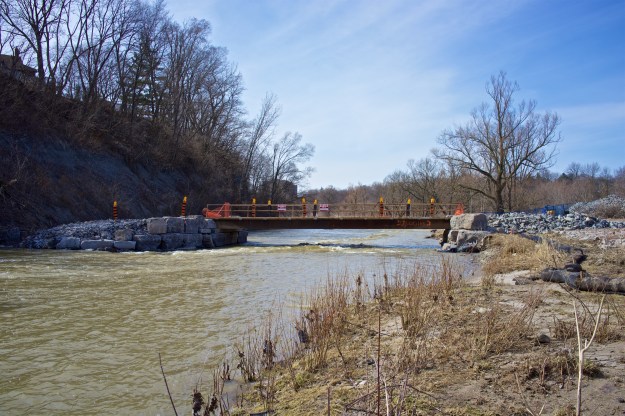
The result of the new abutment is to constrict the river at this point and warnings have been placed south of the bridge about the dangerous flow.

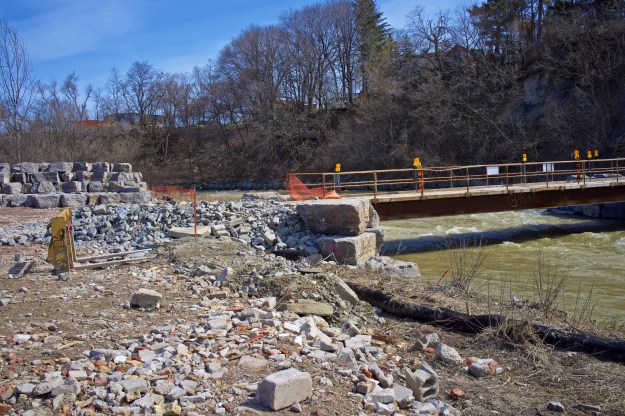
A close-up of the abutment.

A close-up of the abutment.

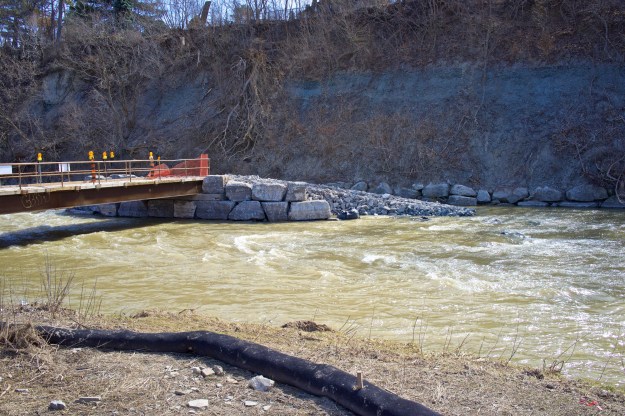
The extended abutment from downstream.

The extended abutment from downstream.

text

The faster flowing water downstream.


Retaining Wall Update March 30

Another week has gone by and progress has been made in the form of the long awaited bridge. We are now at the point (end of March) where the work was estimated to have been completed. As I have pointed out before, this is a huge undertaking. The scale of the materials and work needed to upgrade this relatively short section of retaining wall is staggering. The hard part is gaining access a long way from any roads and from the opposite bank of the river.

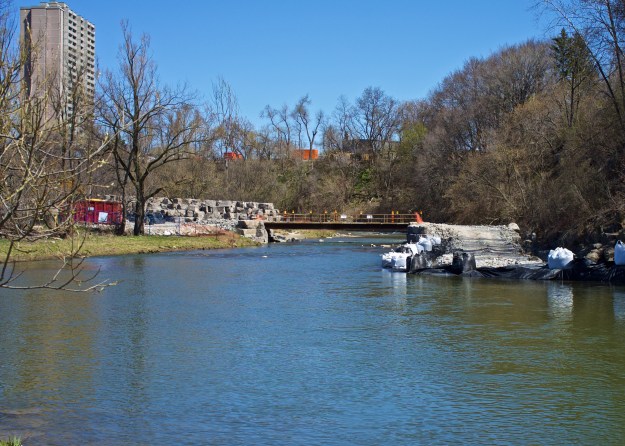
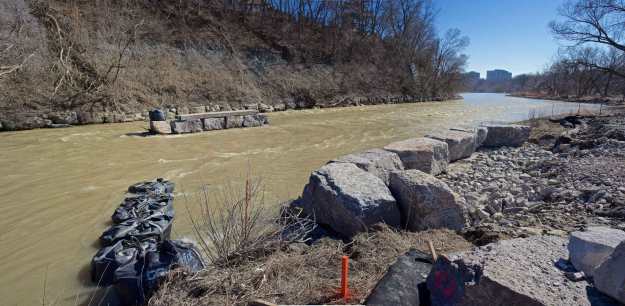
Panoramic shot of the bridge abutments.

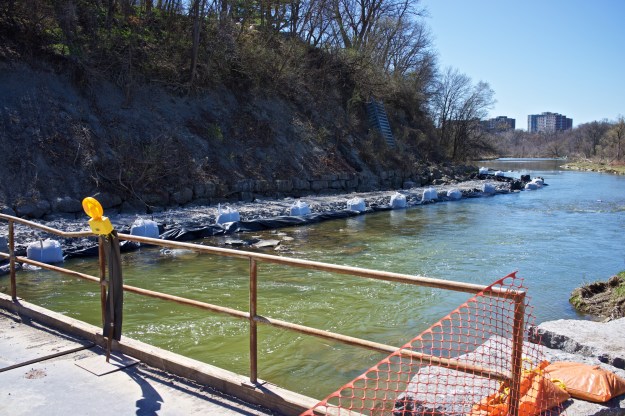
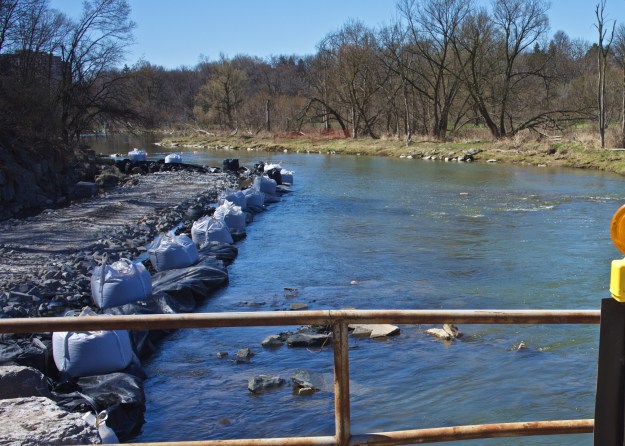
A panoramic shot of the bridge abutments. The bags of gravel are to help protect the near abutment from the strong spring current.


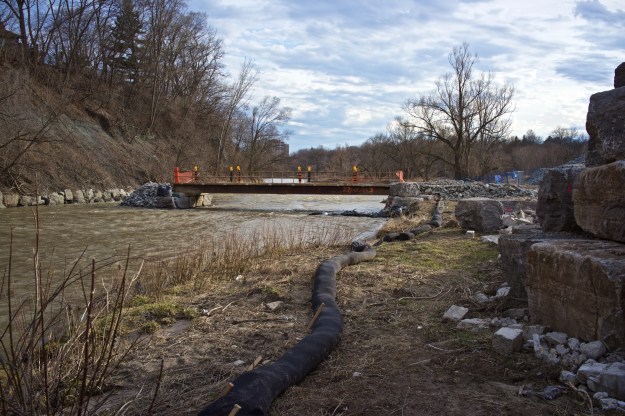
The bridge with decking newly installed.

The bridge with decking newly installed. According to the orange paint, the capacity of the bridge is 27,000 lbs. I’m surprised they are still working in pounds.


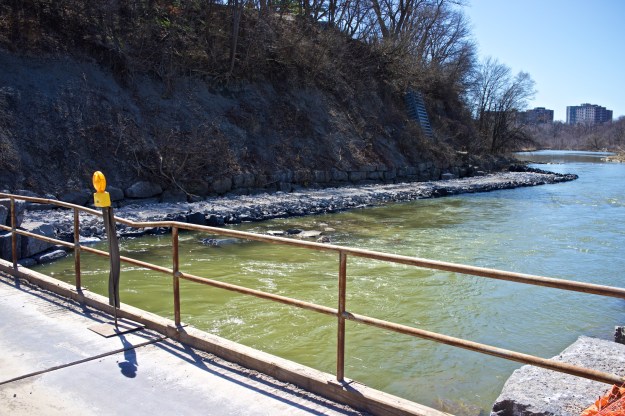
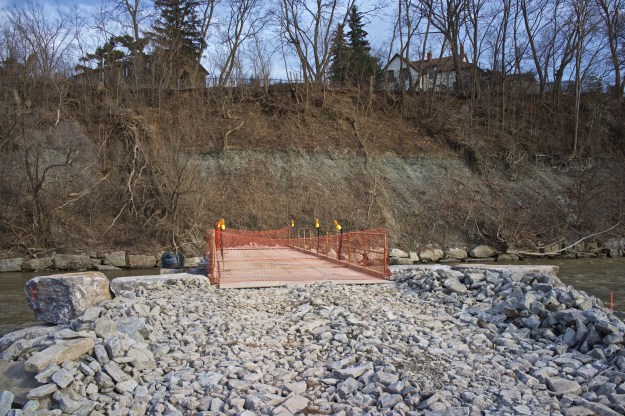
Looking across the bridge.

A view of the bridge deck and western abutment. On the far bank, a distinct geological layer change can be seen, about a third of the way from the top. The lower grey shale layer is from the time Weston was covered by a tropical sea.

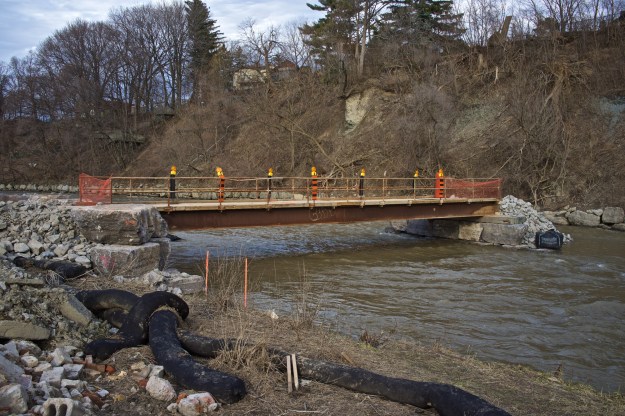
A view of the bridge from the south.

A view of the bridge from the south.

This is literally a ‘bridge to nowhere’ as the span is there to provide access to the opposite bank for the crane rather than to cross the river. Now the actual work of building the retaining wall can begin. It will be interesting to see how they go about removing the existing wall while stabilizing the slope.

Retaining Wall Update March 23

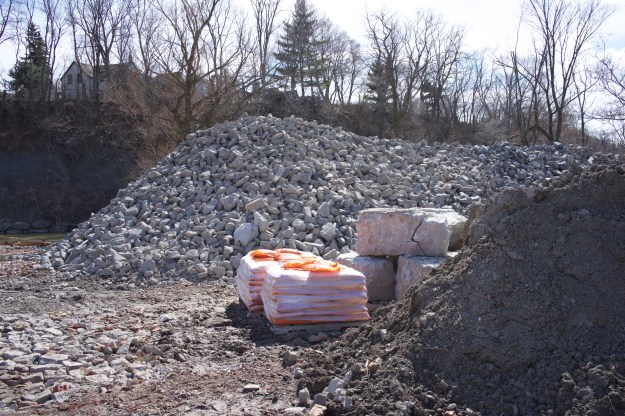
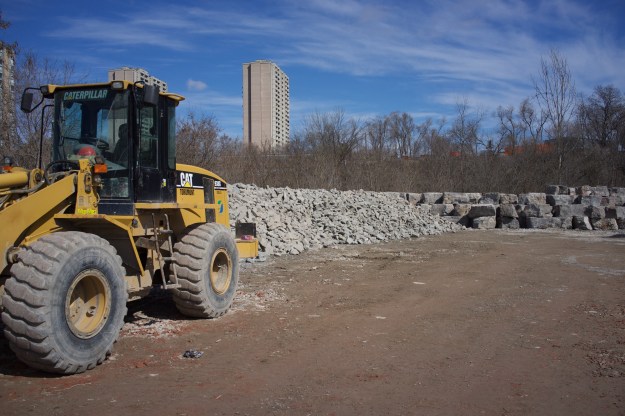
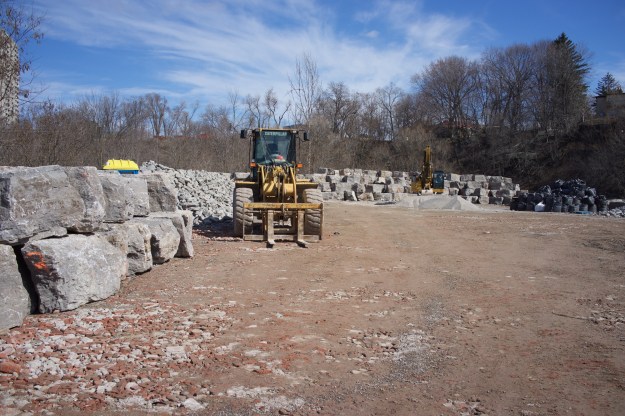
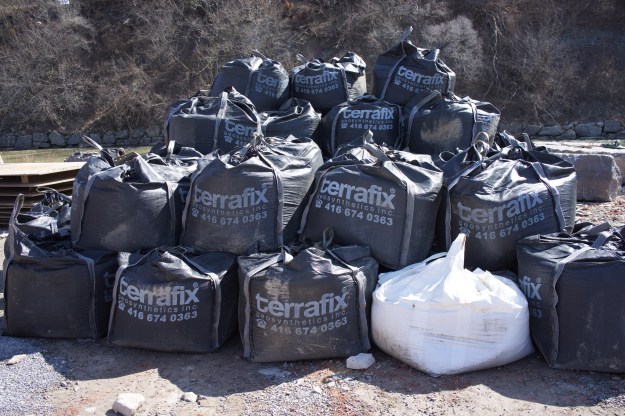
Materials are still being amassed on the staging area and while it looks as if the blocks are all set to go, the bridge decking has arrived along with large amounts of limestone rubble and bagged gravel. Actual construction shouldn’t be long in coming.

Limestone rubble at the south end of the site.

Limestone rubble at the south end of the site.


Limestone rubble stored by the blocks at the north end of the site.

Limestone rubble stored by the blocks at the north end of the site.


Blocks with limestone rubble.

Blocks with limestone rubble behind the forklift.


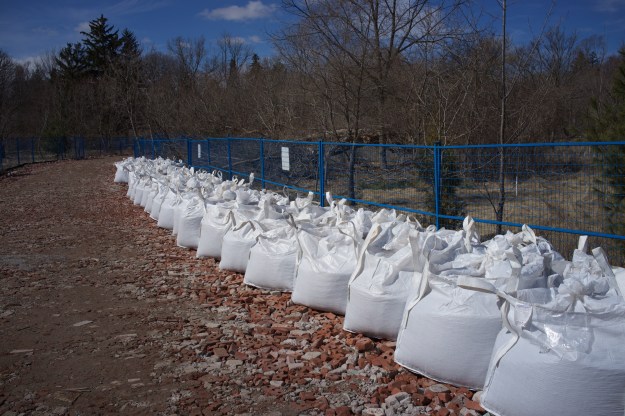
Bags of gravel.

Bags of gravel.


Bags of gravel stored by the staging area entrance.

More bags of gravel stored by the staging area entrance.


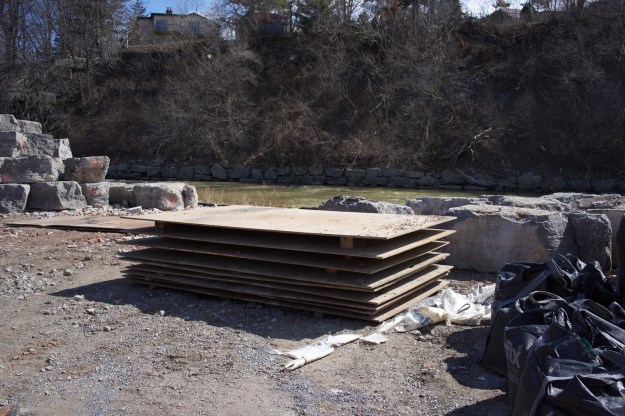
Steel plates that will form the decking of the bridge.

Steel plates that will form the decking of the bridge.


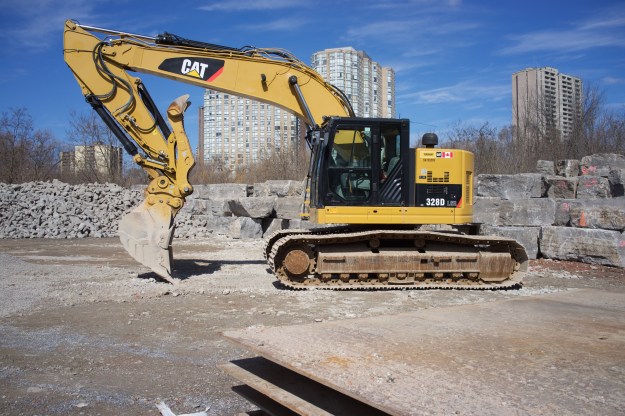
Another view with the bridge decking in the foreground.

Another view of the site with the bridge decking in the foreground.