Category Archives: Humber River

Wild water kayaking

So Raymore Park has a beach, a river and yesterday, I observed a car pull into the parking lot with a tiny snub-nosed kayak on the roof. Never being afraid to ask stupid questions I asked some and the young man, Steve, emerging from the car assured me the kayak would indeed go on the river in just a few minutes. With his 5 year-old retriever following closely, he started walking towards the section below the weir. I went home for a camera and later on, watched as he and his dog entered the water.  Steve told me that he and his friends discovered the wave action on this stretch of the Humber a couple of years ago and come down occasionally for some thrills and spills. Steve thinks it’s fantastic that we have such great whitewater right in the city. As an added bonus, the water was warm too.

The images and especially the video will speak for themselves.
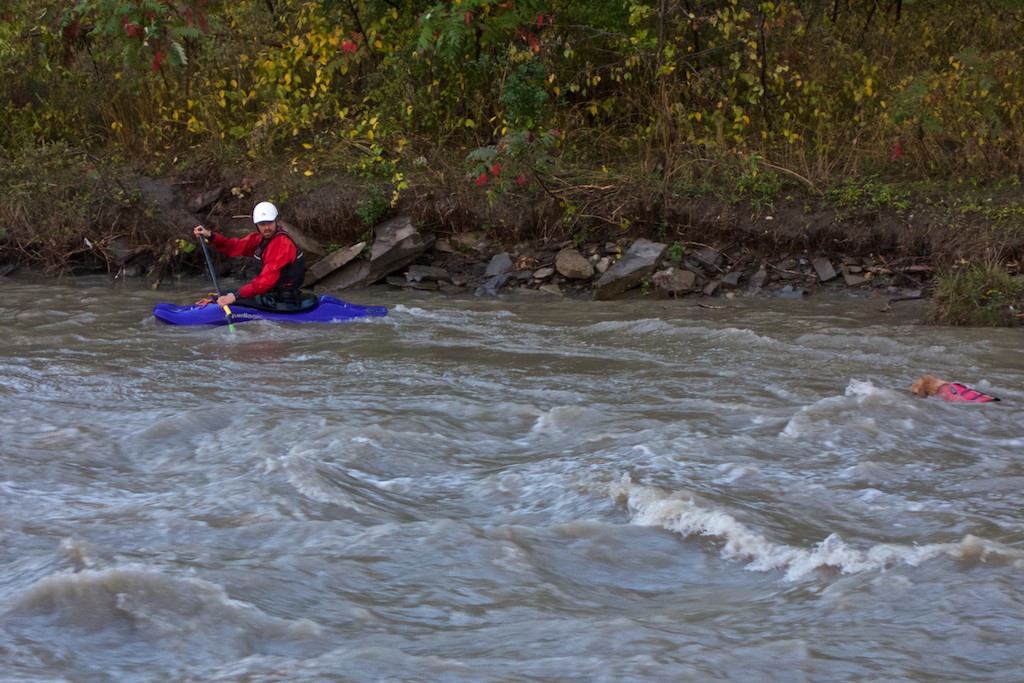
Steve pulls into quiet water to let his dog catch up.
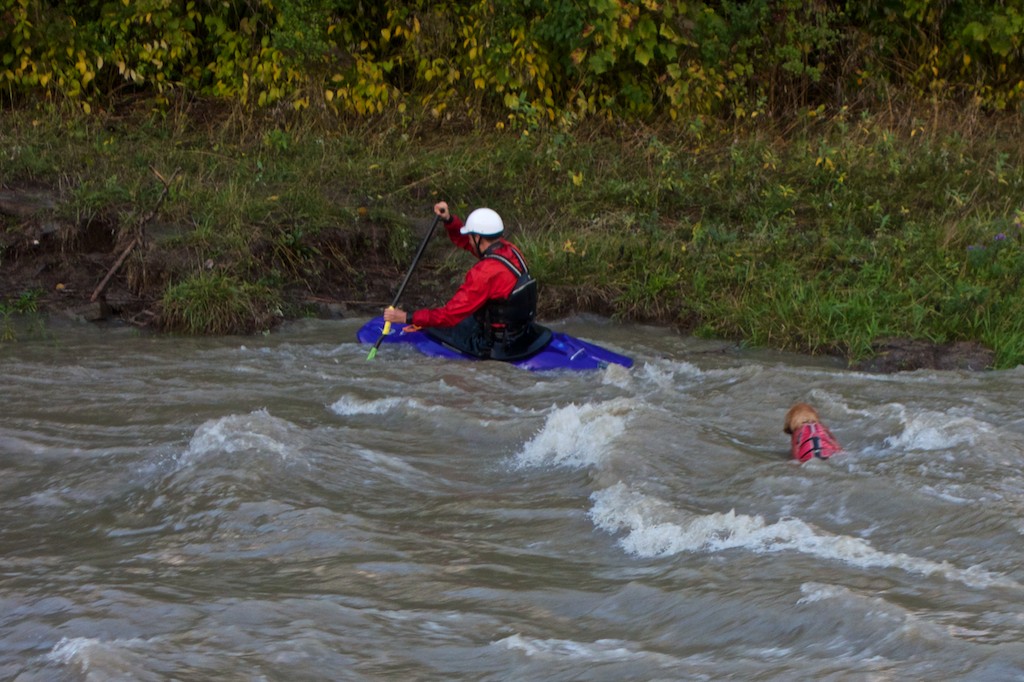
Steve pulls into quiet water to let his dog catch up.

DSC03363

Beautiful September day

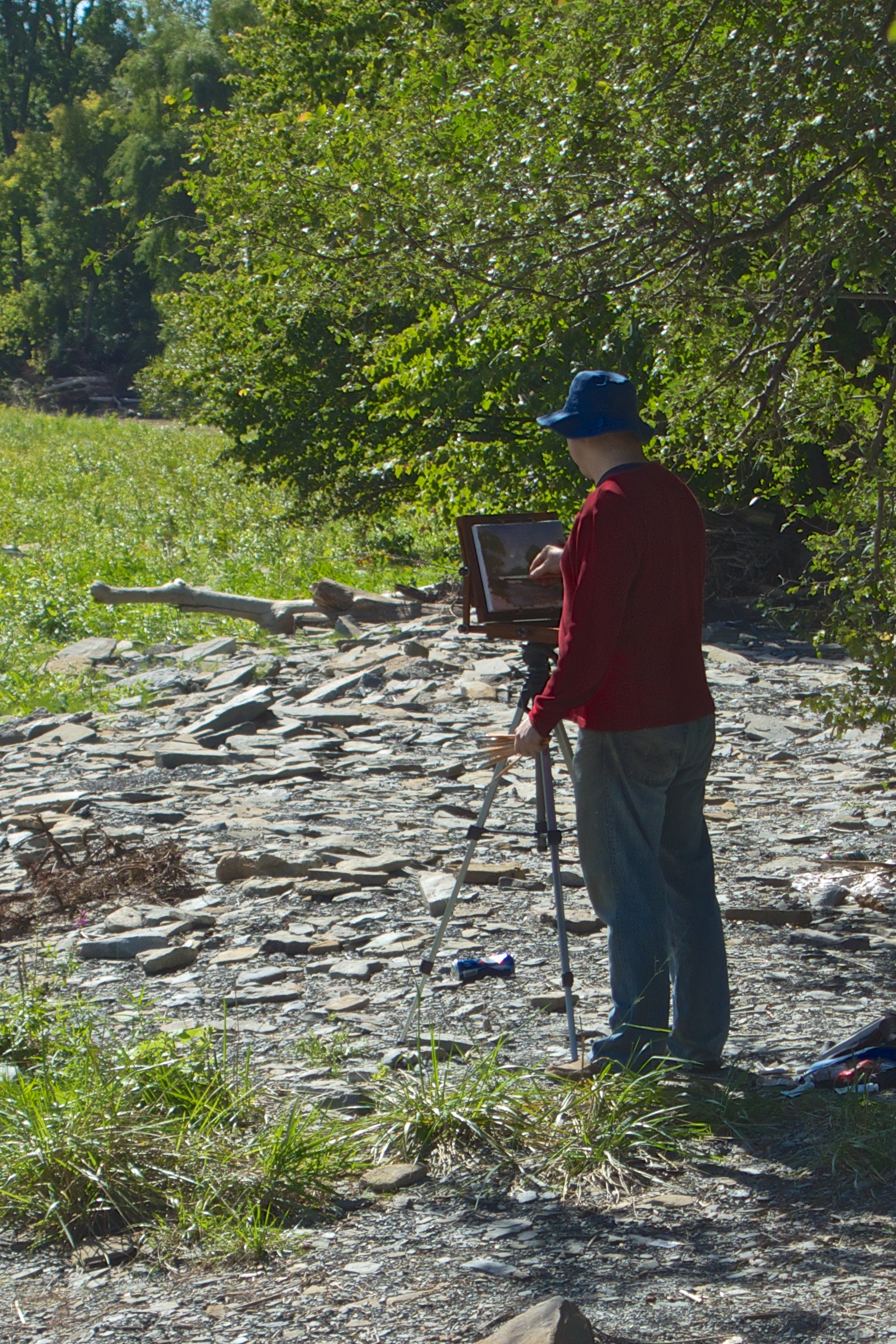
It’s Sunday and after yesterday’s decent rainfall, the park is washed clean and cooler dryer air has pushed its way through. Today, a group of painters scattered themselves throughout the park to various locations and were tackling some landscapes.

This gentleman was just south of the Humber Creek. Hope he takes that can with him!

This gentleman was capturing the view just south of the Humber Creek. Hope he takes that can (near his tripod) with him!

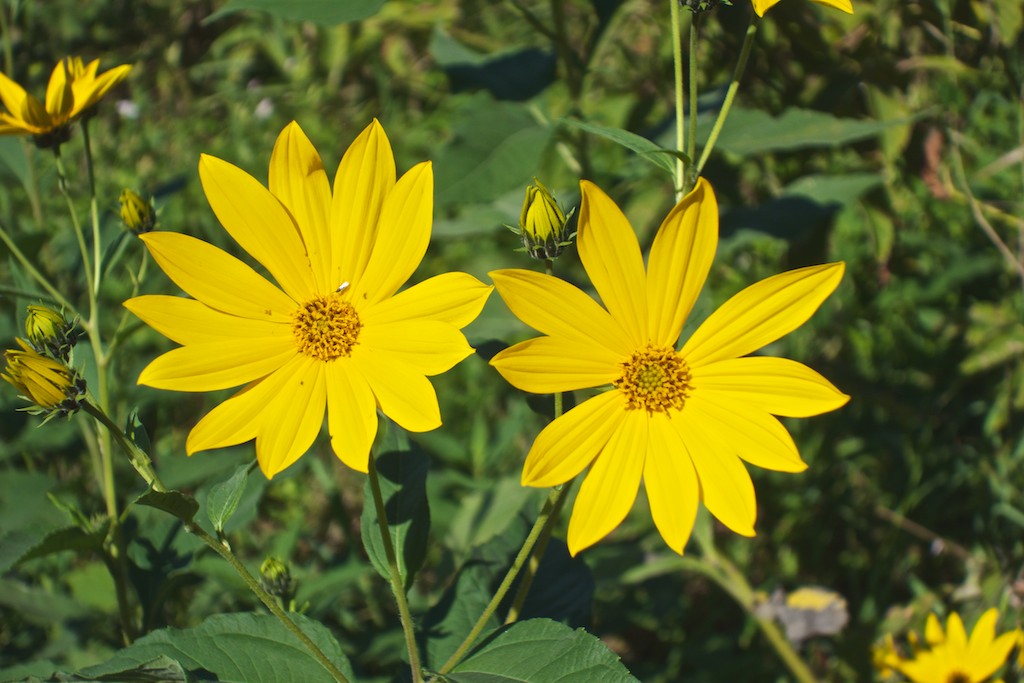
Elsewhere, these tall yellow flowers are hitting their peak.

Ragwort, not to be mistaken for ragweed.

Balsam Ragwort.

Balsam Ragwort is a member of the aster family and may actually be native to the area.

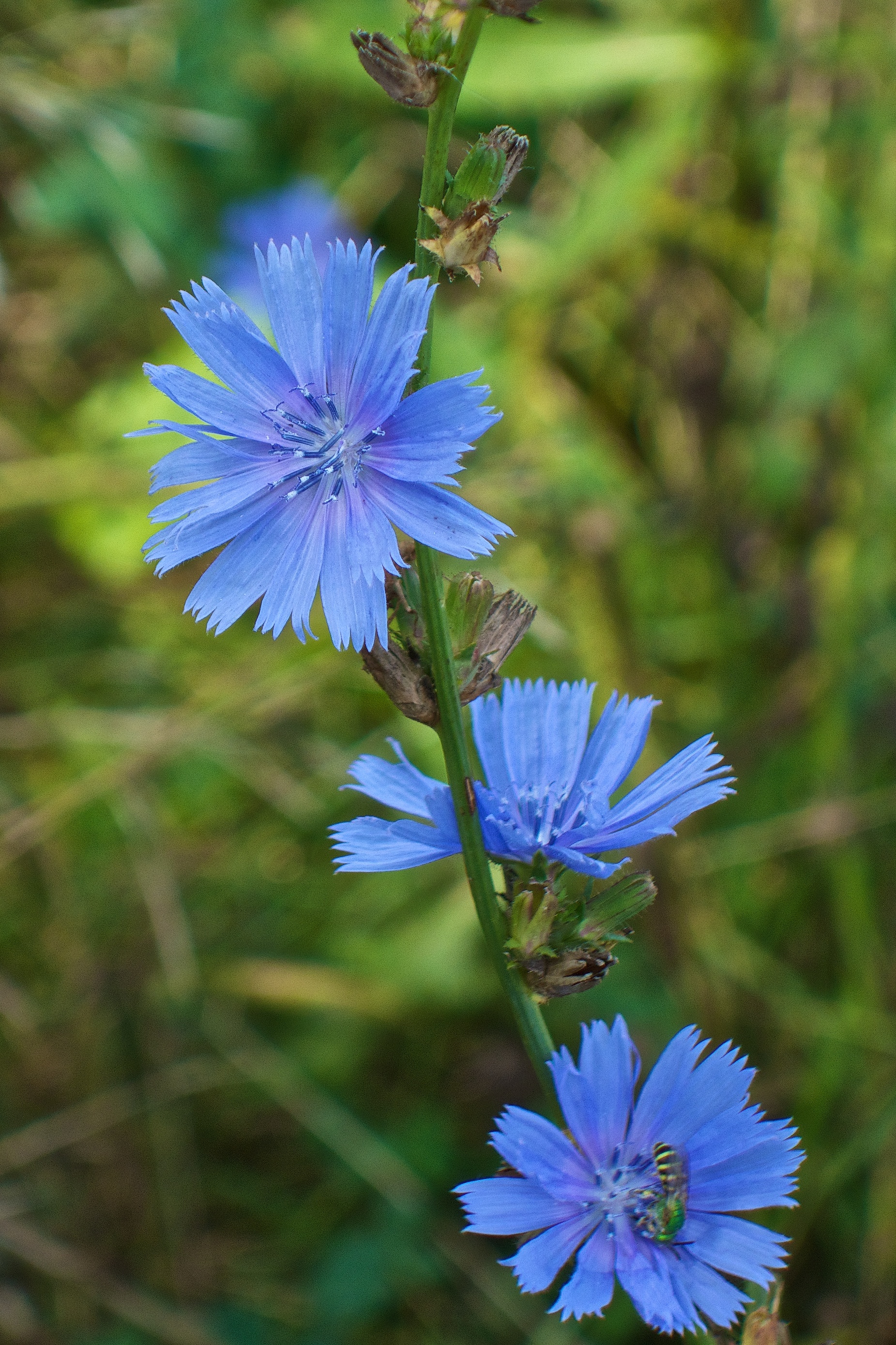
Chicory and its distinctive blue flowers.

Chicory and its distinctive blue flowers by the Humber.

Chicory is an interesting plant. As with many wildflowers in Raymore Park, it is not native. Probably brought over by settlers from Europe, it has a taproot that after baking, can be finely chopped and used as a caffeine-free coffee substitute. Chicory has been substituted for the real  thing whenever coffee supplies have been interrupted such as in wartime. My mother lived through World War II and tolerated the occasional chicory coffee. Many people acquired a taste for chicory and retained the habit but she refused to drink it after the war, regarding it as a bit too much like ‘dishwater’.

Other varieties of chicory have leaves that can be used in salads, some variants being radicchio and Belgian endive.

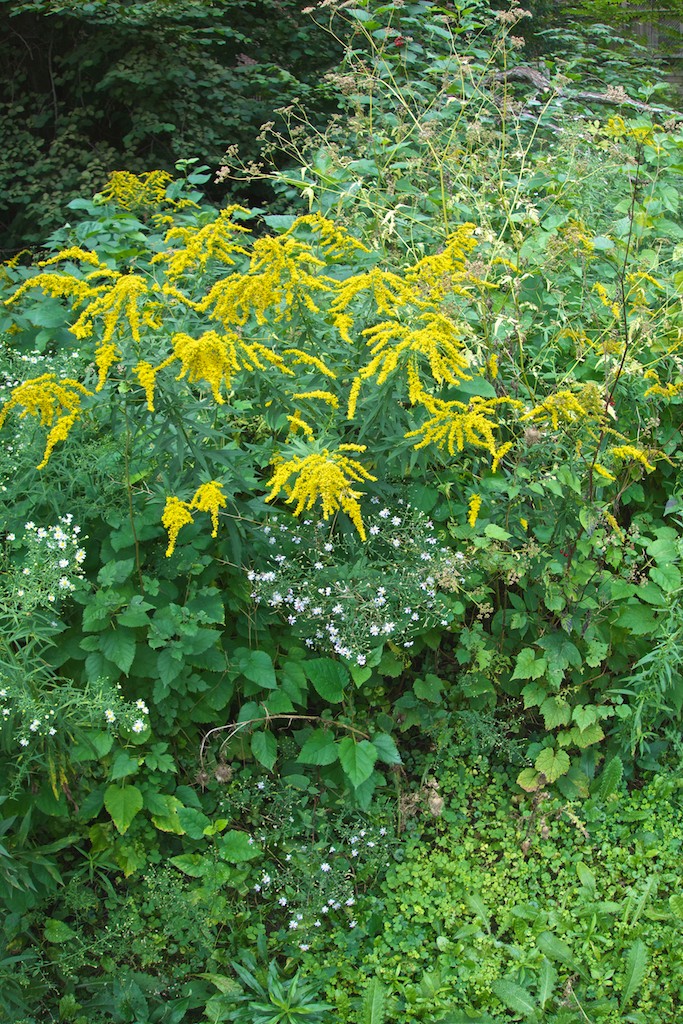
Finally, some goldenrod – a sure sign of the approaching fall season. It looks like an allergy sufferer’s nightmare but in fact releases no pollen.

Goldenrod mixed in with some wild asters.

Goldenrod mixed in with some wild asters.

Who’s poisoning the Humber?

After a prolonged dry spell, it’s rare that water in the Humber is cloudy. Today, water in the river had an unpleasant opacity to it. I’ve seen this happen before under similar conditions and attempted to trace the source on my bike but it seems to be well north of Weston. You can see the comparison between today (August 25th) and last Monday (19th).

Notice that the spill is recent as water close to the shore is still clear.

Notice that the spill is recent as water close to the shore is still clear.

For comparison, Monday's view of the same spot.

For comparison, Monday’s view of the same spot.

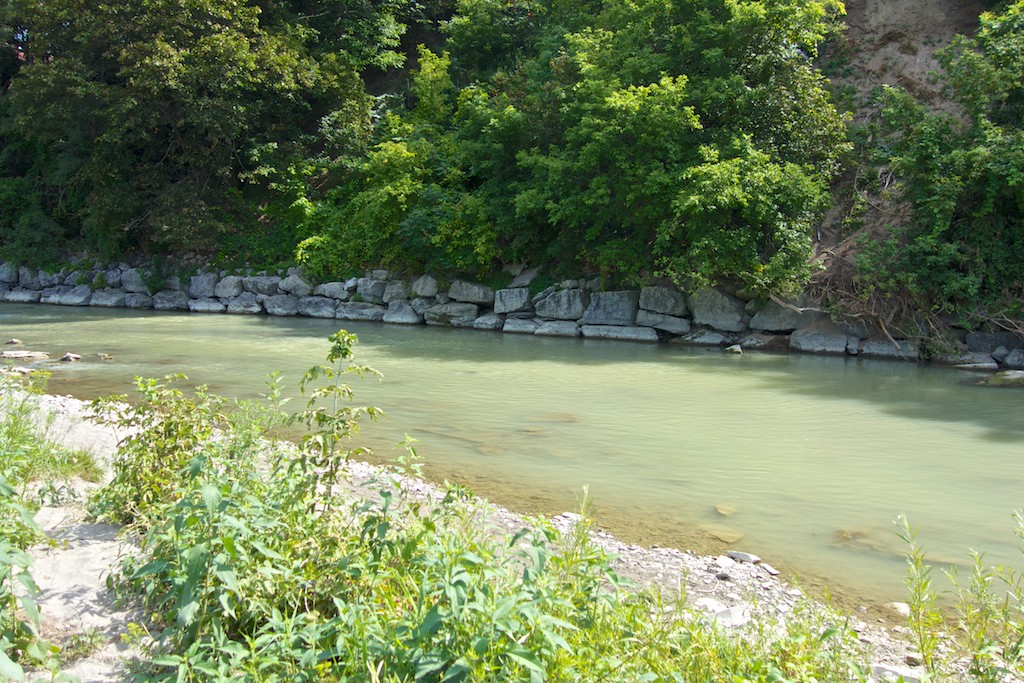
Raymore Park has a beach

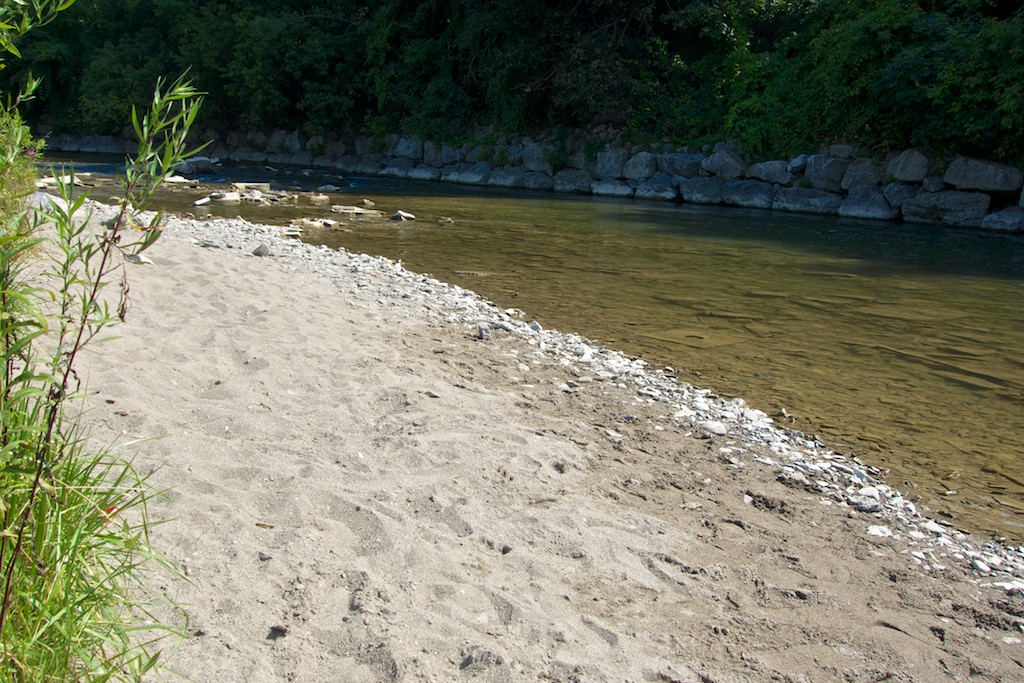
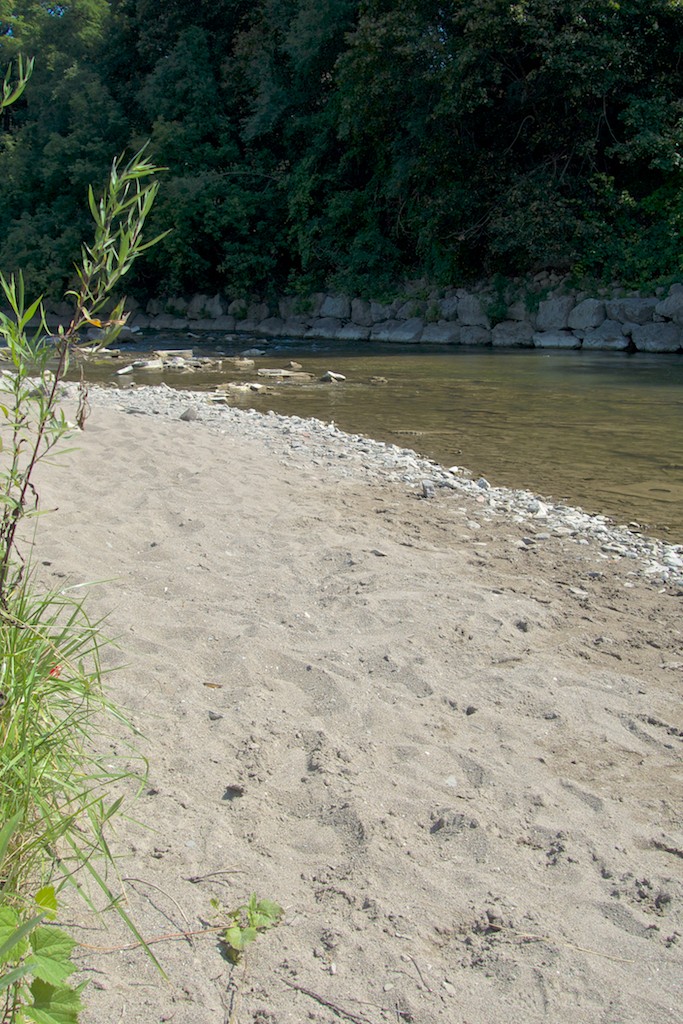
There are over 1400 Toronto parks, some tiny postage stamps just a few square metres while others cover vast ranges. The best known, High Park covers 161 hectares (400 acres) while Mimico Waterfront Park has over a kilometre of shoreline. Raymore Park, while not well known is larger than most, but to me its appeal lies in the sheer variety of features and habitats tucked away in various corners. One such feature is formed just past the inside of a very sharp curve in the Humber. After a rainfall, heavier sediment in the form of sand is carried along until the water slows and the sand is deposited. The beach actually gets built up after each storm and has been there for many years.

Looking north; the curve of the river allows sandy sediments to be deposited here.

Looking north; the curve of the river allows sandy sediments to be deposited here.

So it’s not Bondi or Waikiki. It is however a quiet and scenic place to sit and reflect in the middle of a big city. If you stay quiet for a few minutes, you’ll be amazed at the wildlife that will appear – take your pick from toads, egrets, hawks, blue herons, mallards, mink, beaver, fox, coyote, deer etc.

Before Hurricane Hazel in 1954, the small community living here would use the beach in summer for picnics and as a way for children to cool off.

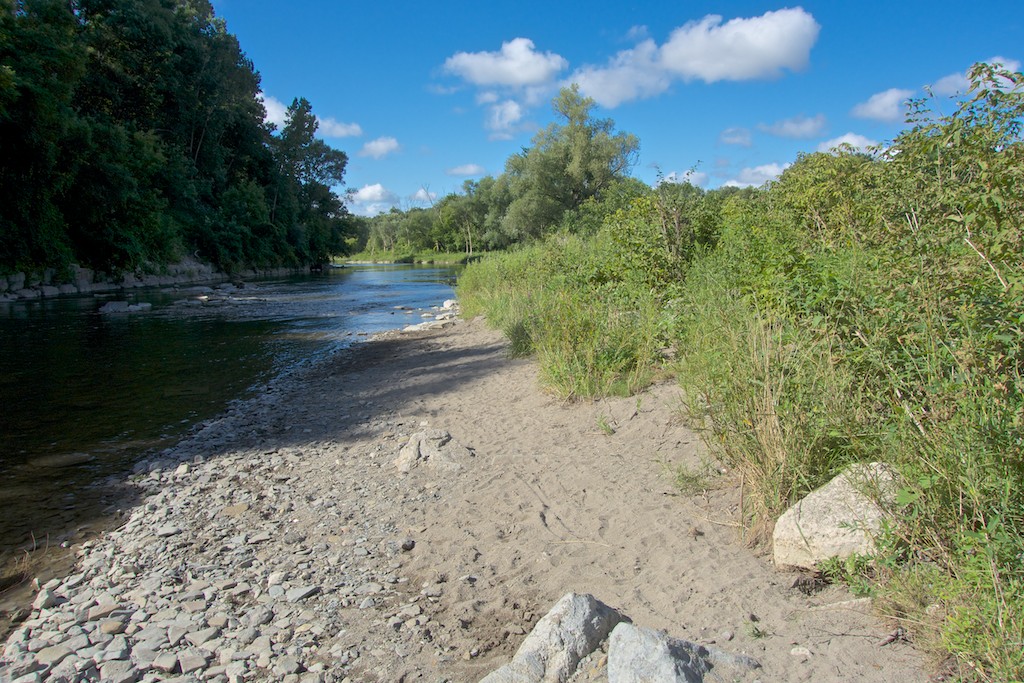
Looking south along the shoreline.

Looking south along the shoreline.

Fossils

When I was growing up in England I spent many a happy hour looking for fossils in Weardale, the upper reaches of the river Wear (pronounced as in weir). Raymore Park has lots of river bed in which to go fossil hunting, especially in summer when water levels drop. Many of these fossils date from the time 450 million years ago when Toronto was below the equator, covered by a shallow sea and the days were only 22.5 hours long (ah nostalgia).

Once you go fossil hunting, your eye develops a sense for it and you really don’t have to look very hard. The constant churning of the river brings new rocks to the surface so there are new discoveries to be made with every visit. Here are a few that I photographed along the Humber the other day without too much effort.

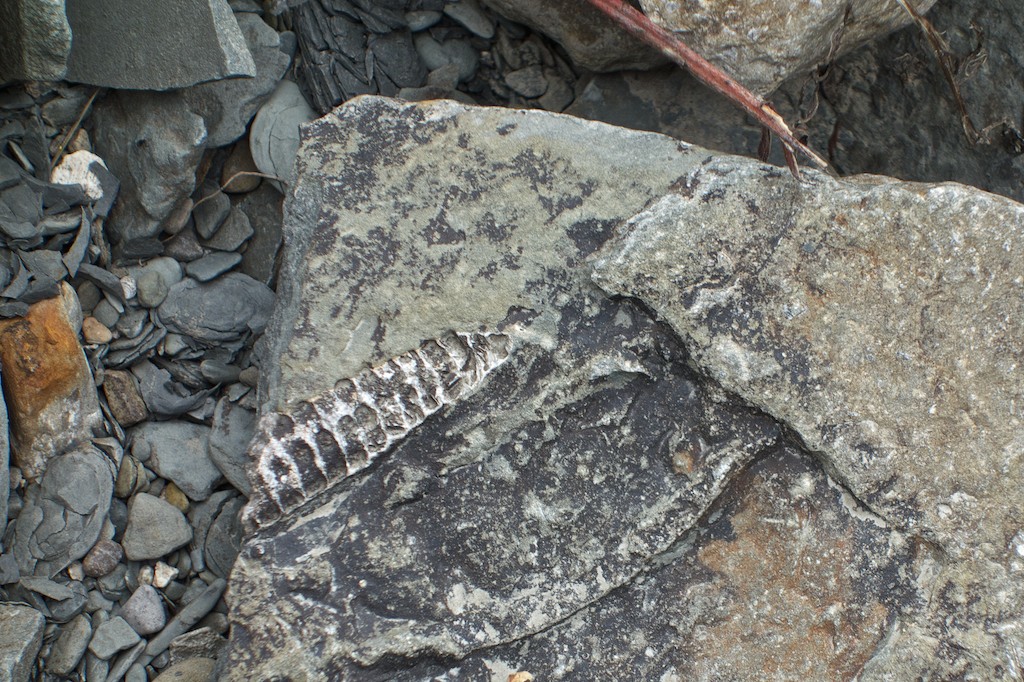
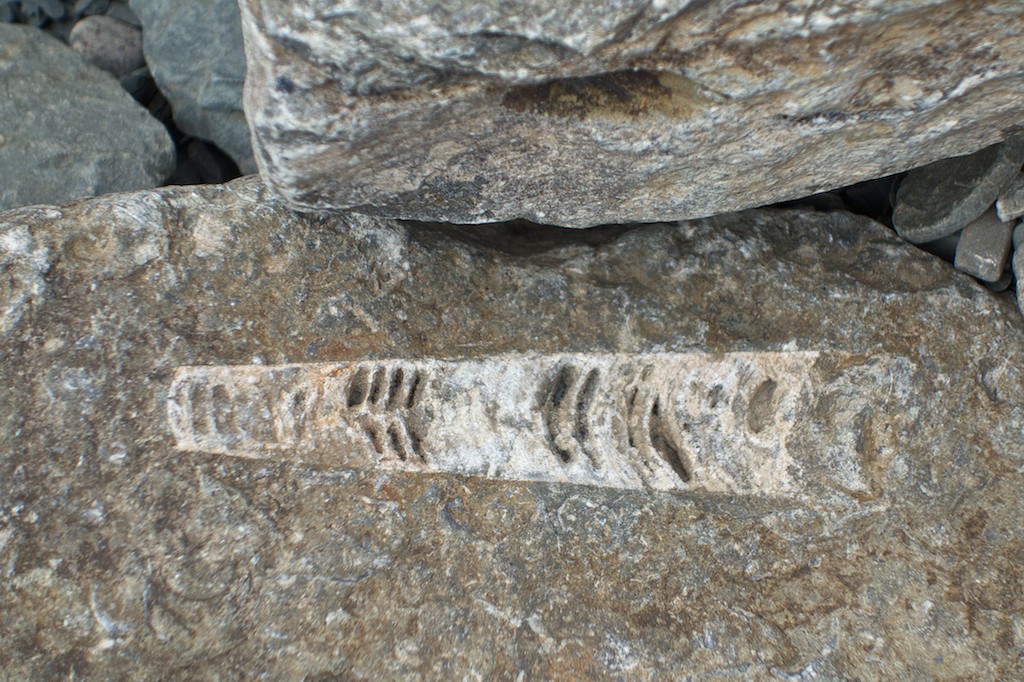
Trilobite

A cephalopod, ancestor of squid and octopus.

Trilobite

Another cephalopod

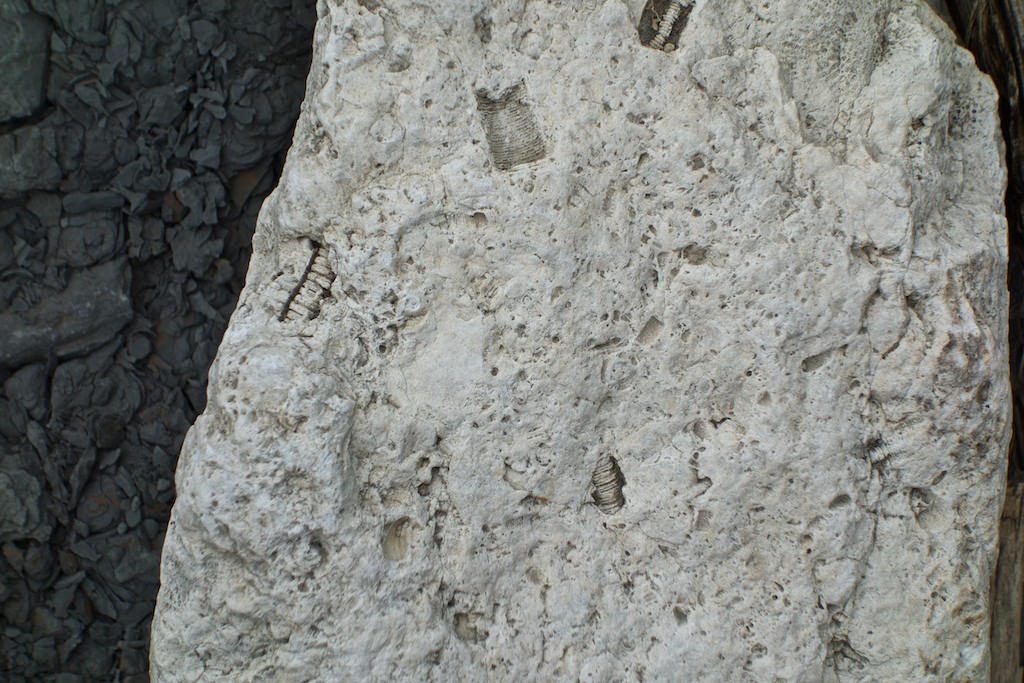
Calcium

This limestone rock possibly washed downstream from the upper reaches of the Humber contains the fossils of hundreds of creatures.

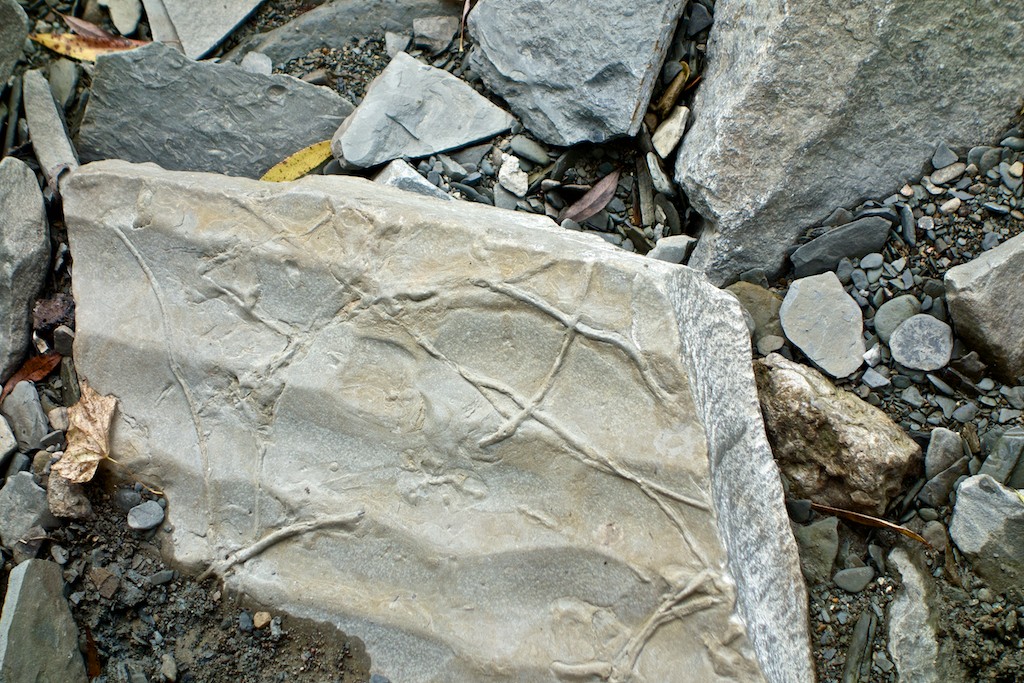
Worm tracks on a rippled surface.

Worm tracks on a rippled surface.

It’s a great adventure for kids to be able to find fossils and look at these exotic sea creatures who made their mark (literally) hundreds of millions of years ago.

A beautiful day in Raymore Park

We’re having a spell of mild weather and a refreshing change from the 27 degrees and humidity that we normally experience.

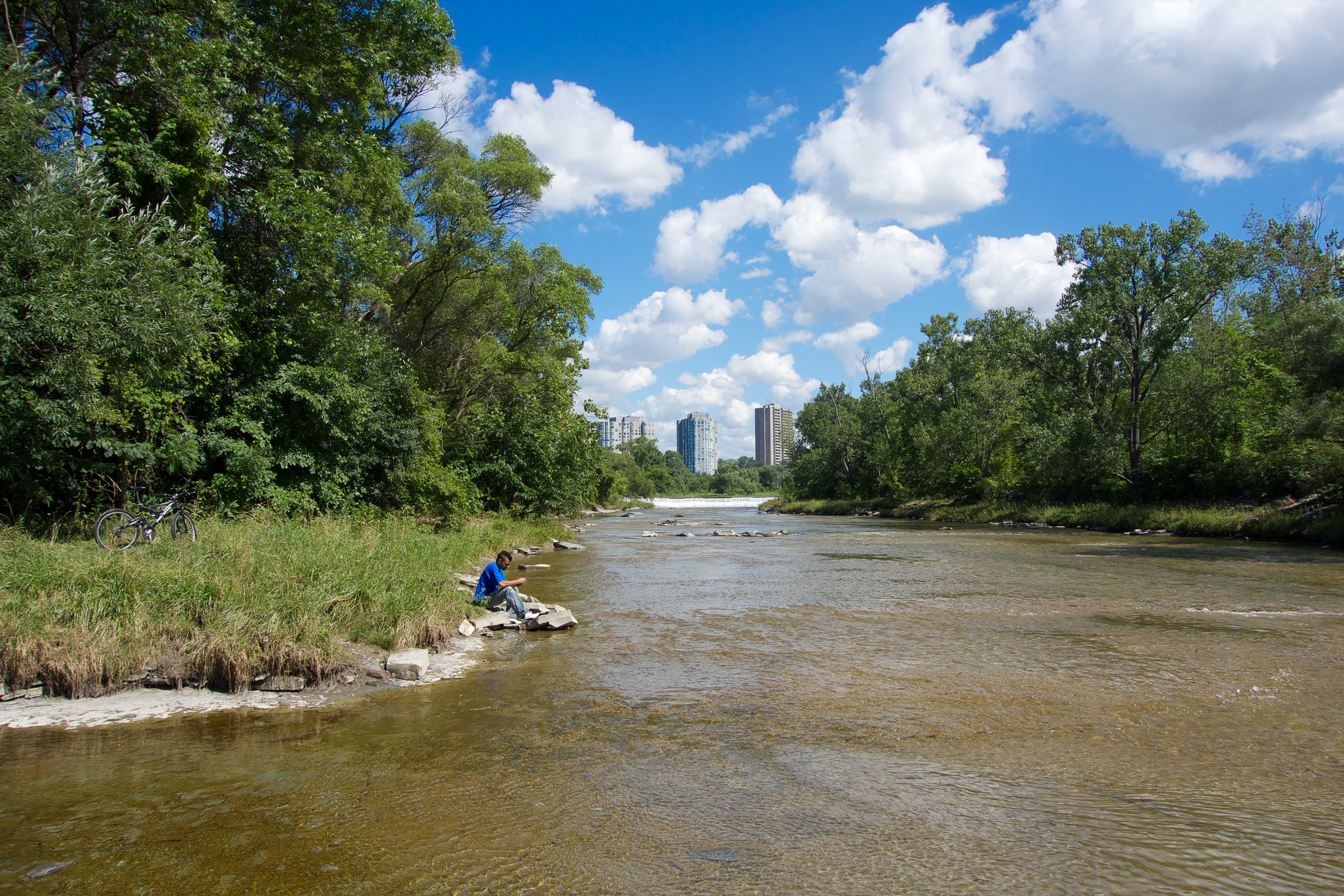
Today, Mugsey and I explored the river and came down to the Humber Creek. This gentleman had parked his bike and was checking his phone and it seemed like a good composition.

Forget about city life and sit by the water for awhile.

Forget about city life and sit by the water for awhile.

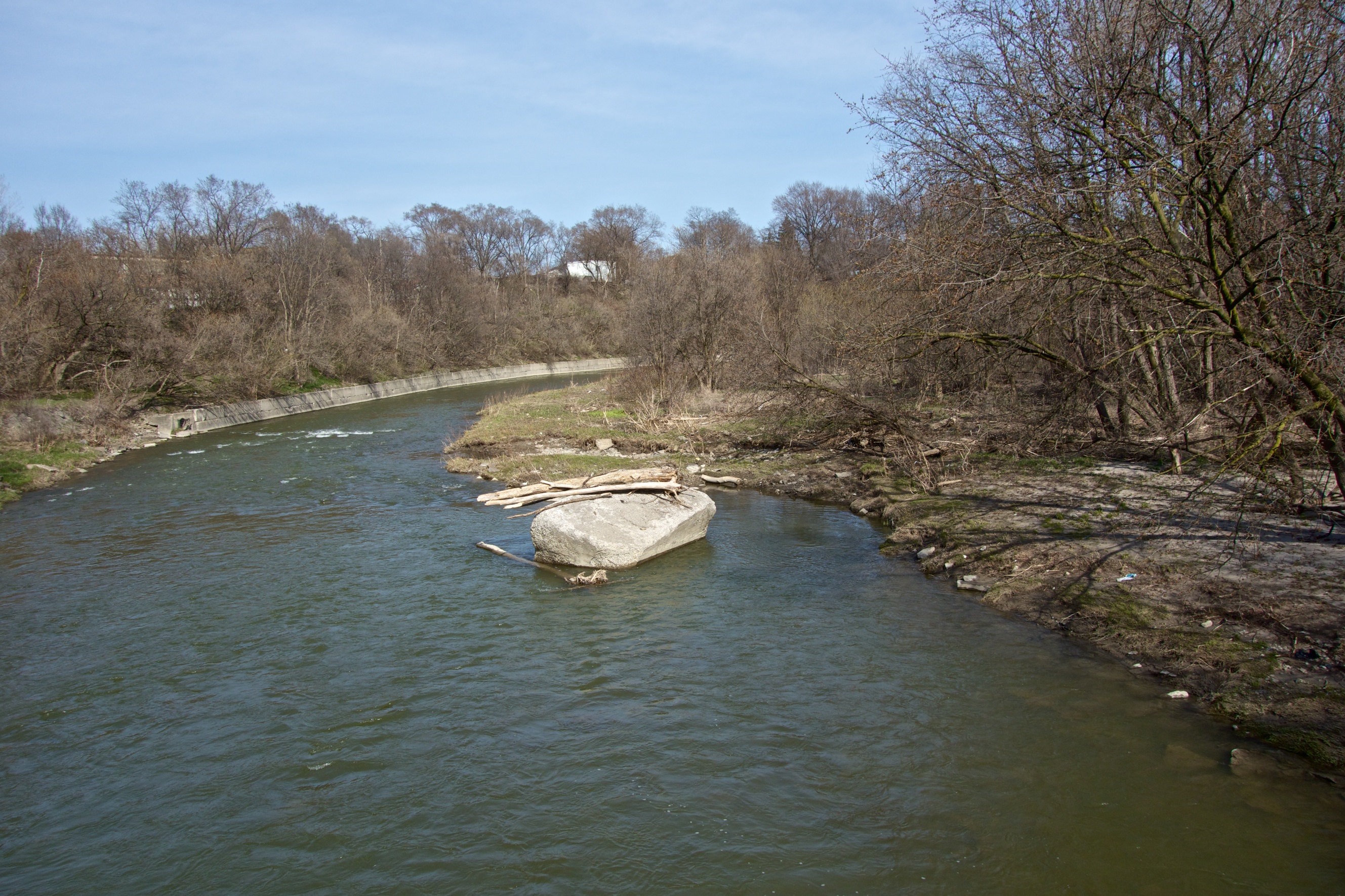
Old footbridge abutment turned by big storm.

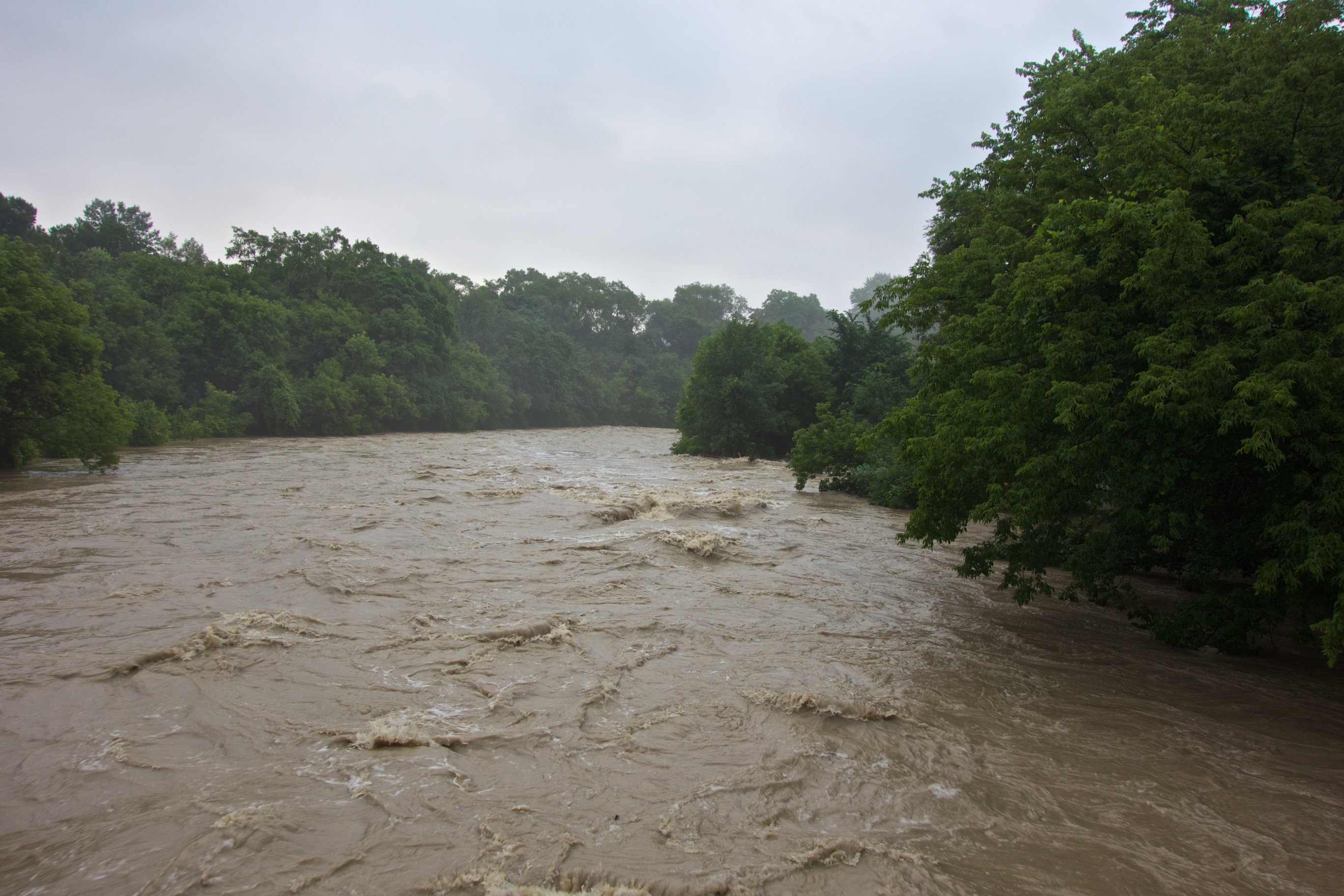
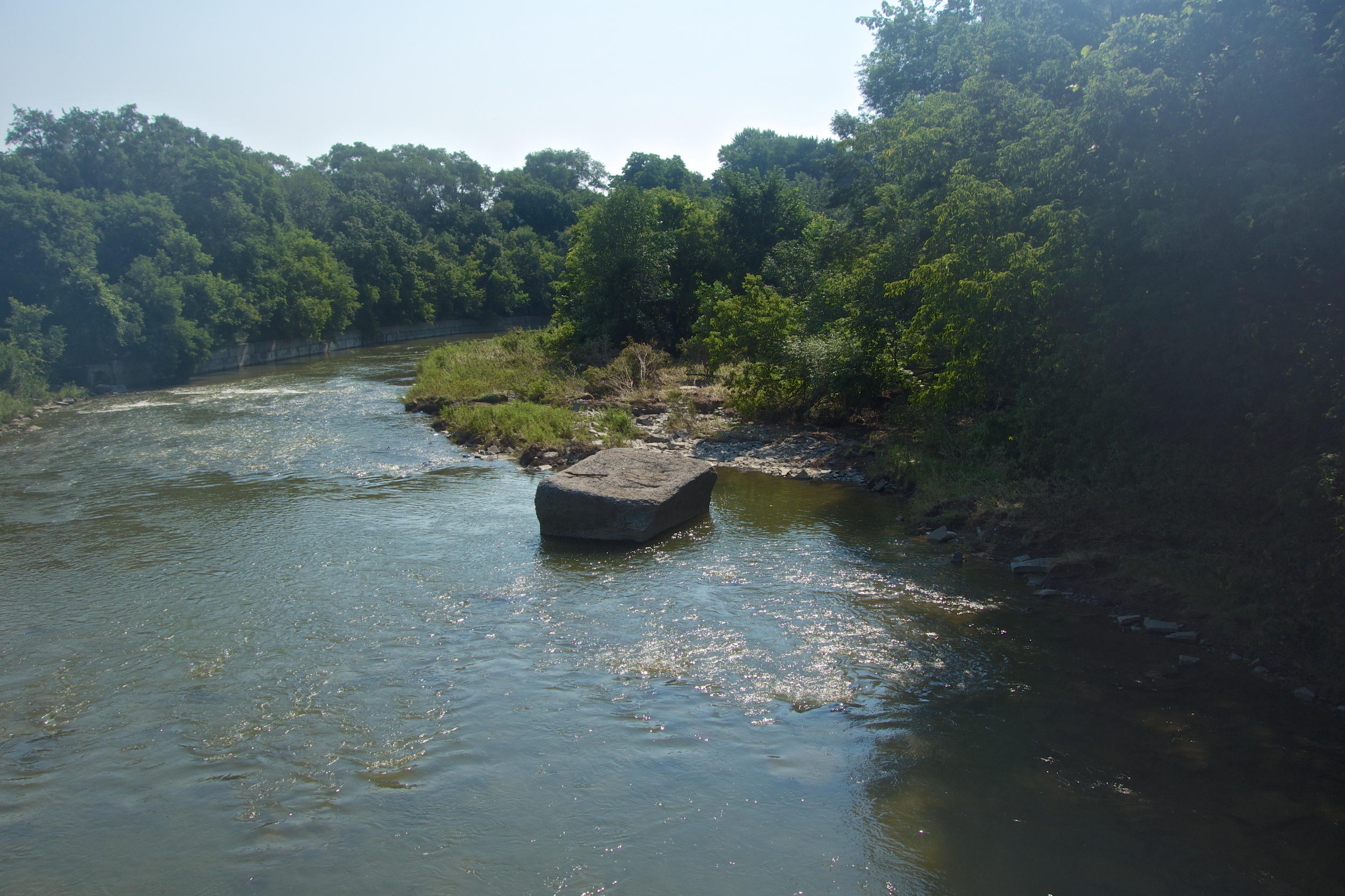
Its a subtle change but during the July 9th storm, the old bridge abutment was shifted backwards by the force of he river. The old bridge was destroyed in 1954 during Hurricane Hazel and the abutments have remained, more or less in place to this day. There is a strong theory that before its destruction, the bridge held together long enough to form a dam which sent the full force of the river from the bottom left of the picture into the small community living in the area to the right.

The before photo taken last April.

The ‘before’ photo taken this April.

The Humber in full flood, July 9, 2013

The same view with the Humber in full flood, July 9, 2013

The after photo taken July 23.

The ‘after’ photo taken July 23.

I have tried to take the comparison shot from the same viewpoint and with water levels roughly the same. To my untrained eye it looks as if not only has the big lump of concrete been rotated backwards by the force of water, it also seems as if it is riding higher, perhaps having been pushed onto higher ground.

Or maybe it’s my imagination…

July 8th flood aftermath

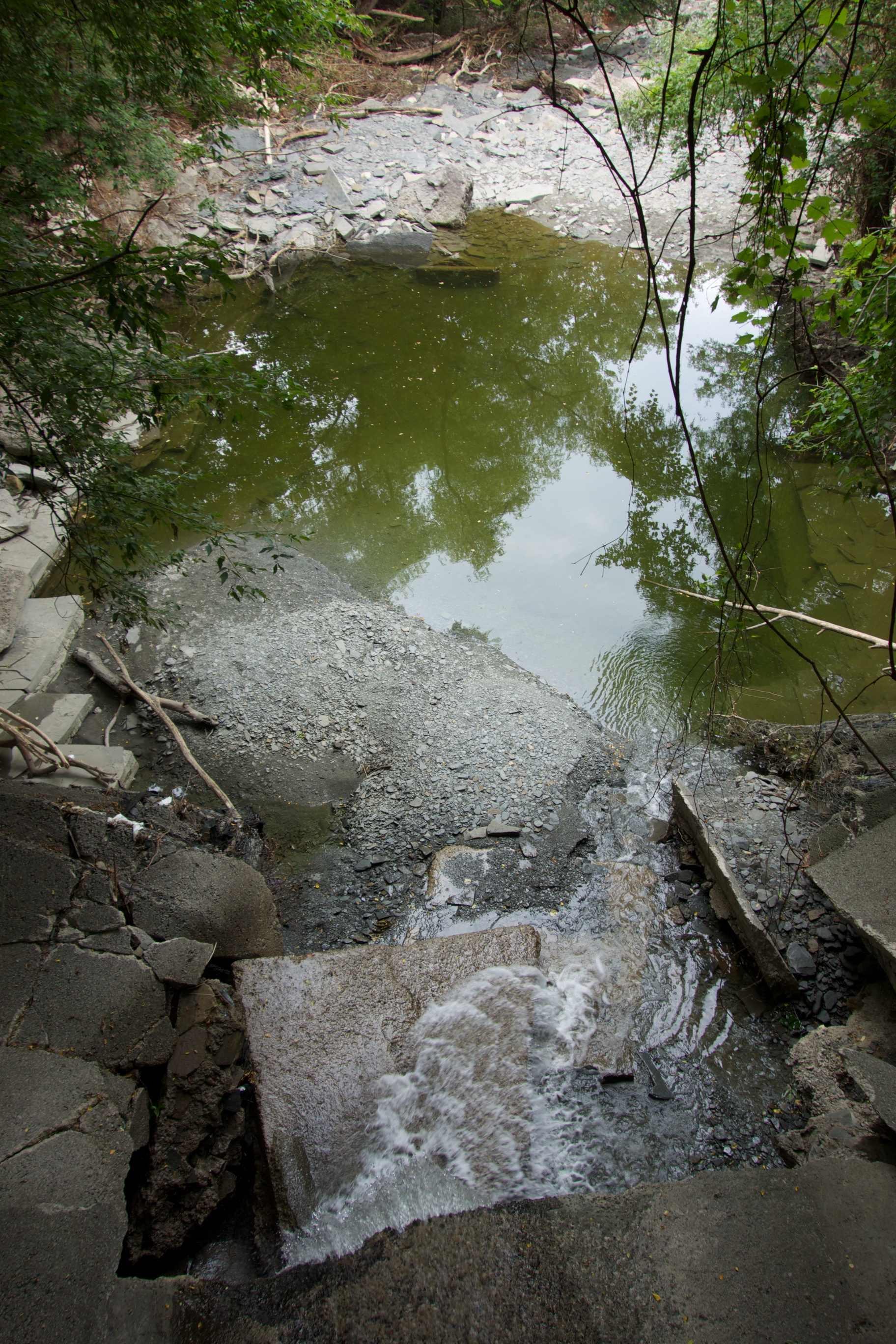
At the end of Raymore Park is a hill that takes the path over a small tributary of the Humber. The tributary passes through a culvert under Scarlett Road. Quite a bit of shale was moved by the force of water and this was projected through the culvert and has created a dam.

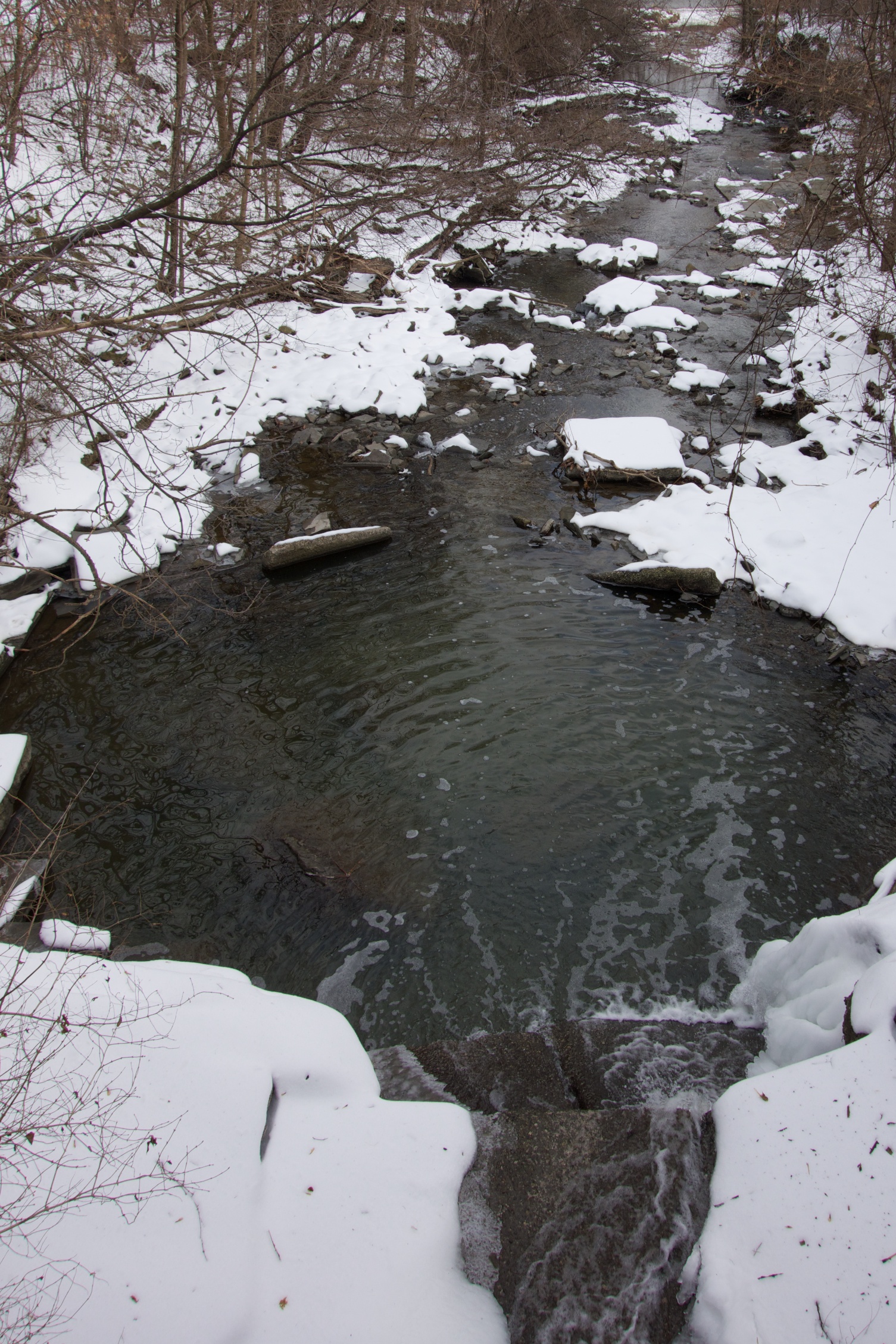
Humber Creek last January

Humber Creek last January

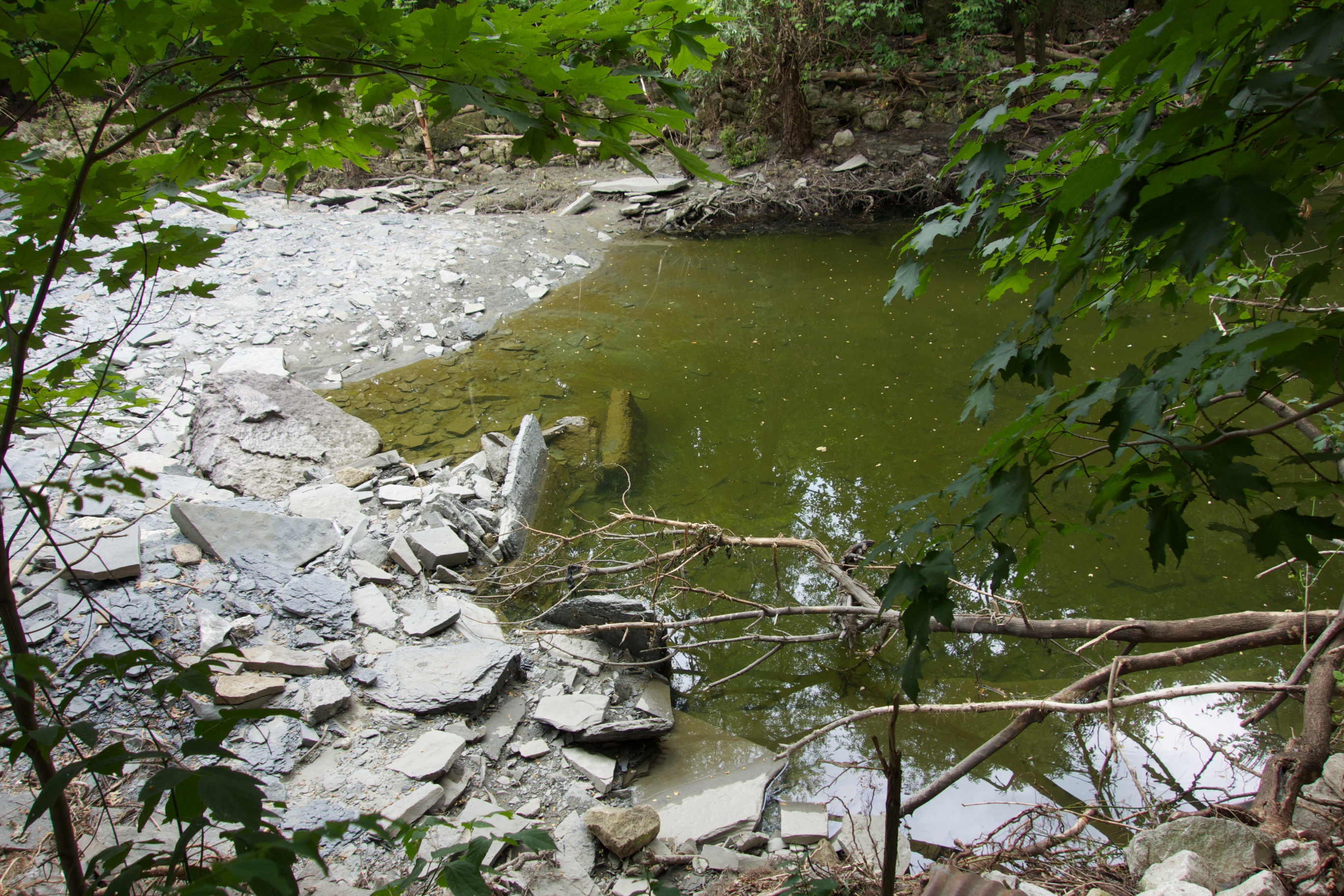
After the huge volume of water and silt projected onto the creek bed, the creek is dammed forming a large and quite deep pool.

July 2013, the creek is blocked with silt.

July 2013, the creek is blocked with silt (top of photo).

Silt forms a dam blocking passage of water creating a deep pool.

The new dam on the left blocking passage of water and creating a deep pool.

A new island.

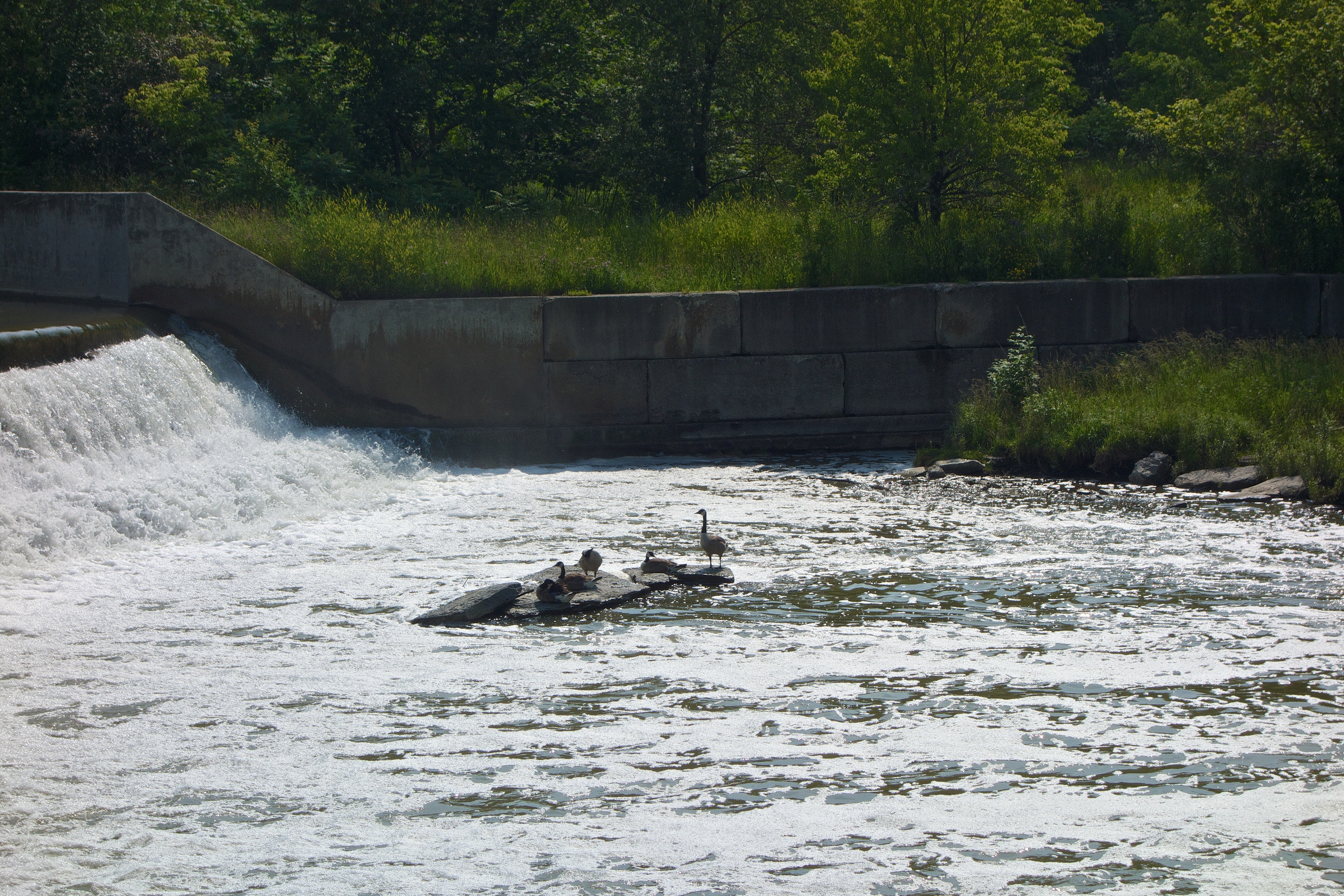
Last winter, huge amounts of ice and water coming over the weir seems to have pushed up some bedrock to form a small island.

These geese have a safe haven below the weir.

These geese have a safe haven below the weir.

It will be interesting to see if this will stay or be swept away next winter. For now, it’s a great spot for Canada Geese.

Mass planting in the park

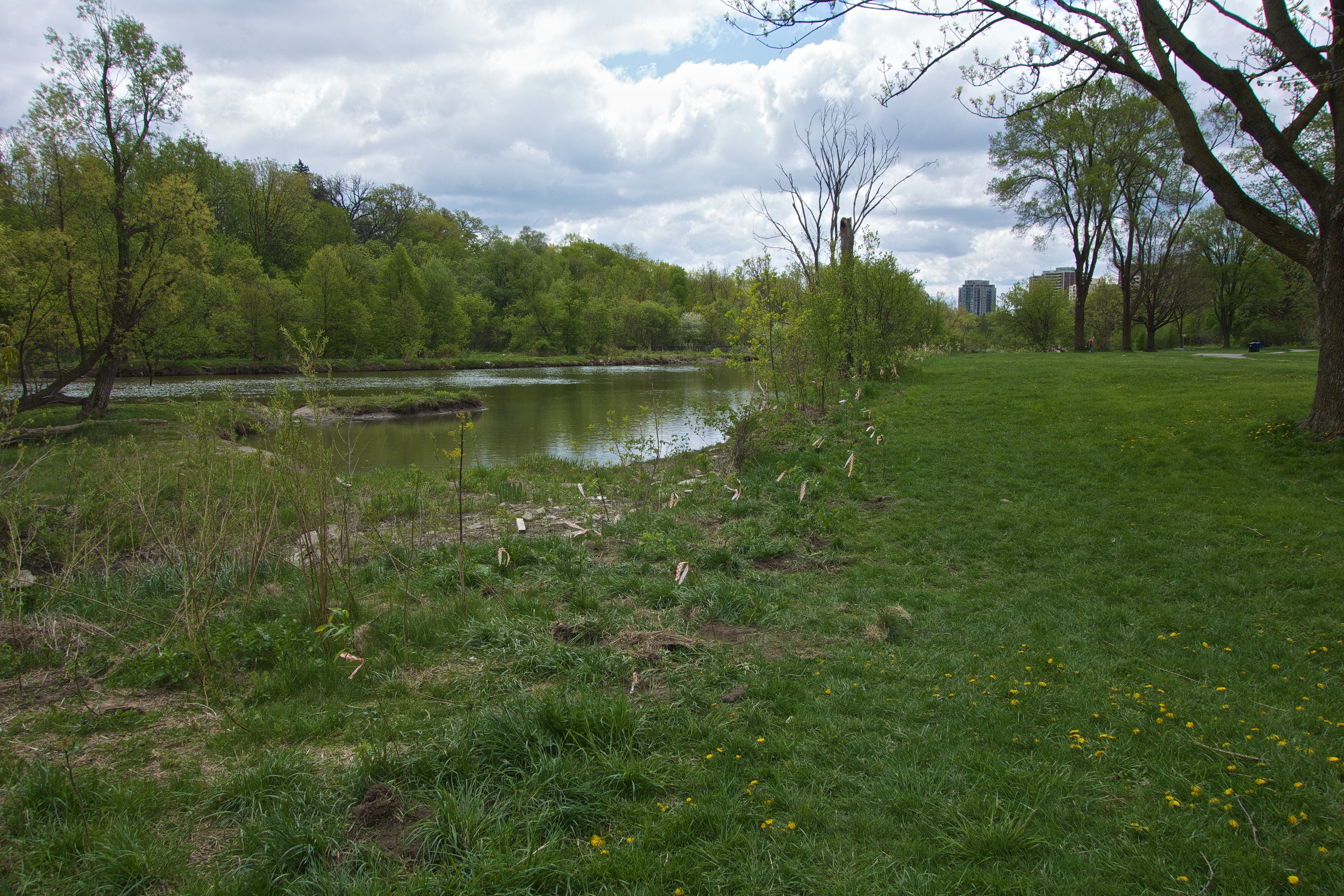
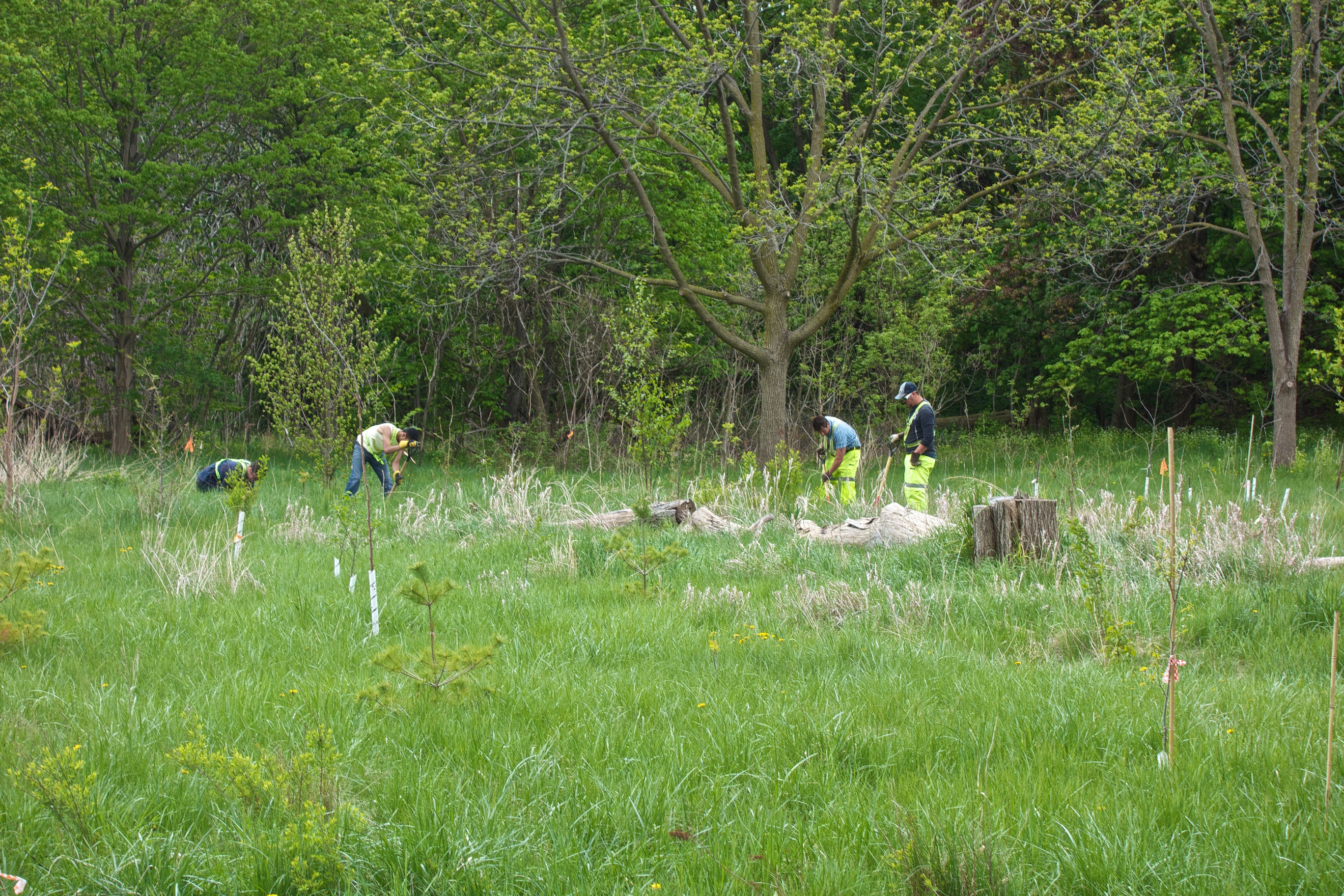
Hundreds of saplings were planted in the park yesterday. Beginning where the river comes close to the trail and continuing to the bottom of the hill towards Scarlett, lots of willow, red hawthorn, elm, and oak have been planted. This is a good time to plant – last year, a planting was done in July and most of the saplings were dead on arrival after having endured a hot day in a plastic bag in the sun.

Lots of willow by the riverbank.

Looking south, lots of willow by the riverbank.

The field past the weir was planted and will be a veritable forest in a few years.

Workers planting hundreds of saplings.

Workers planting hundreds of saplings in the field past the weir.

Today a tanker truck was watering them in thoroughly. Let’s hope for a wet spring so they can establish themselves.