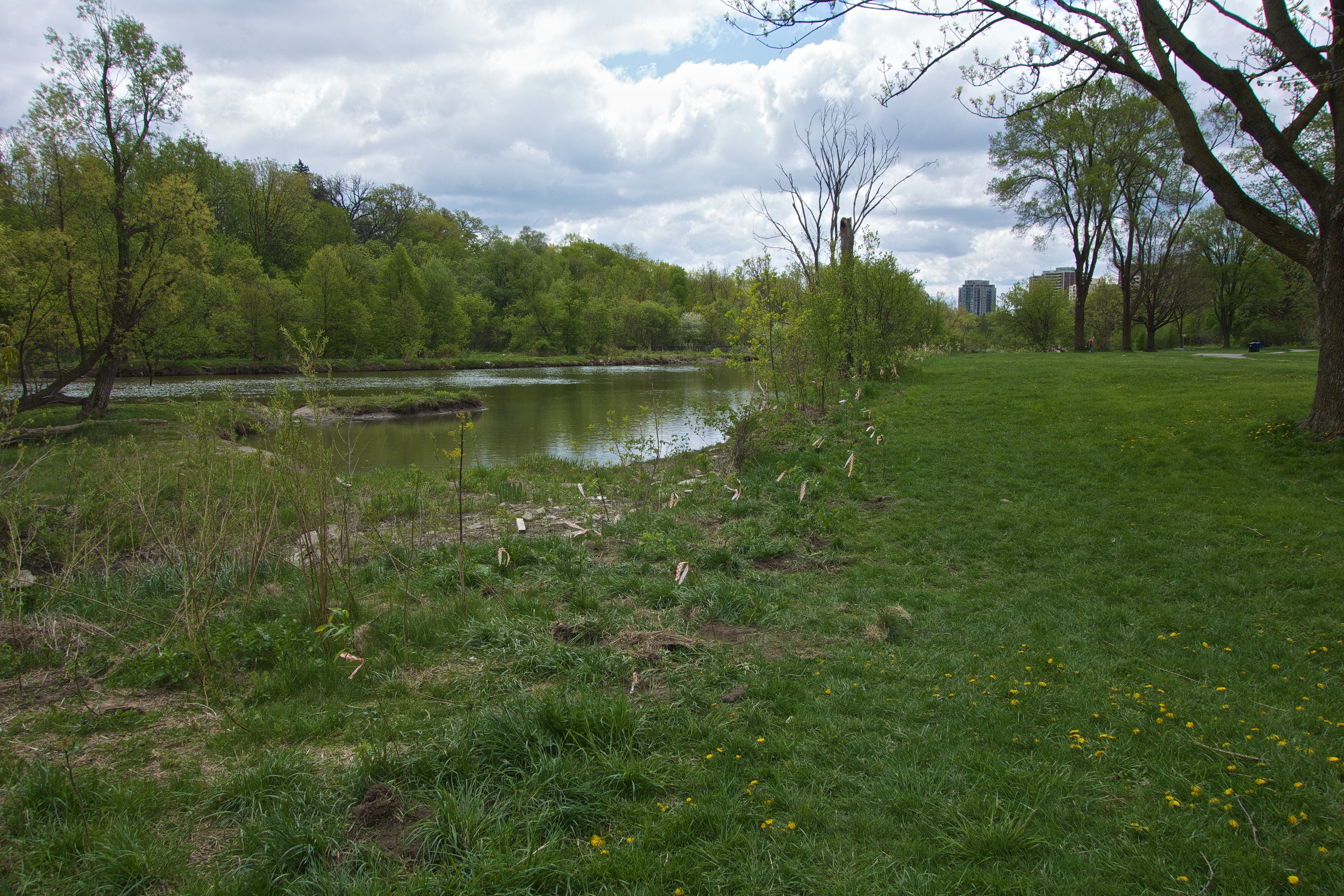
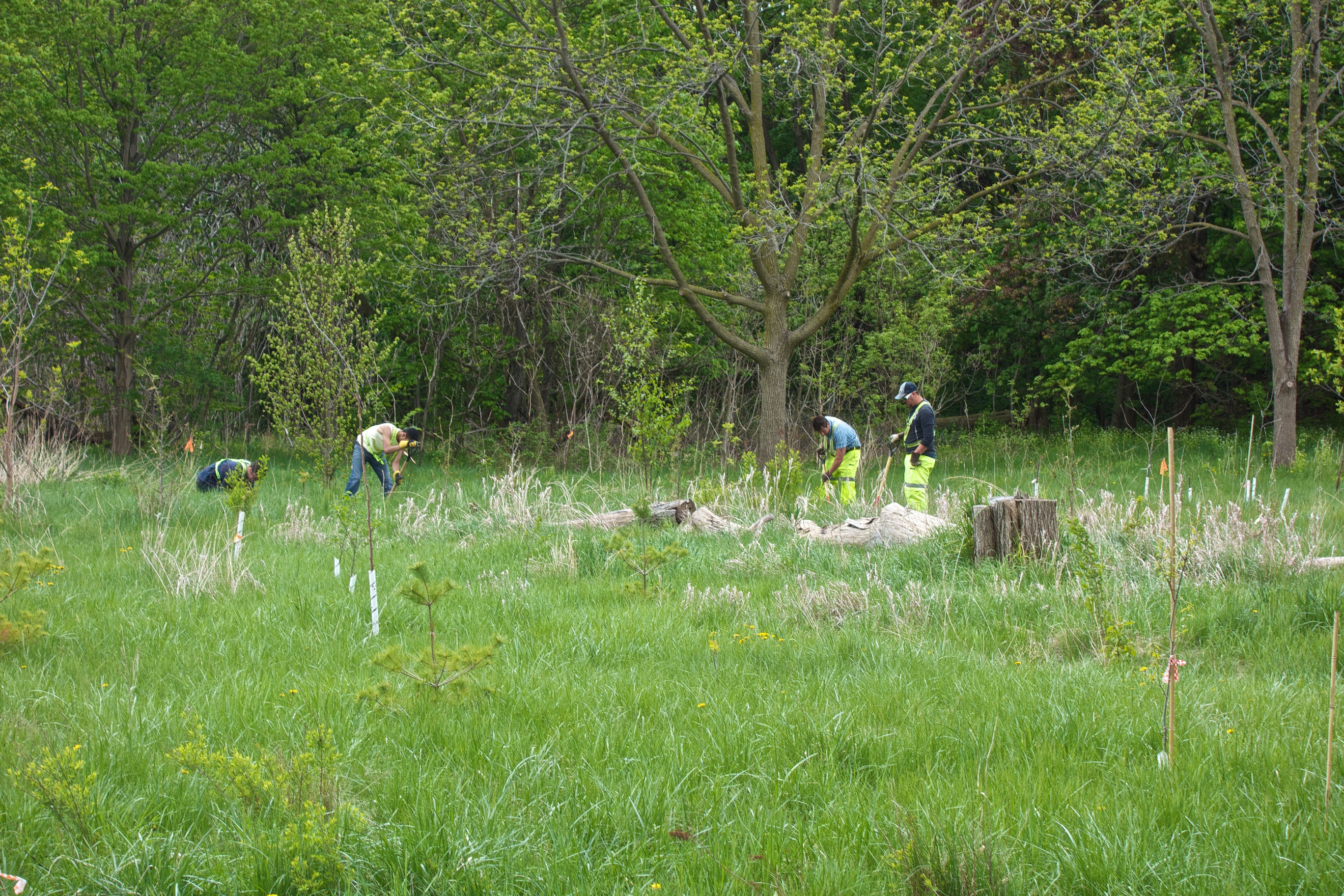
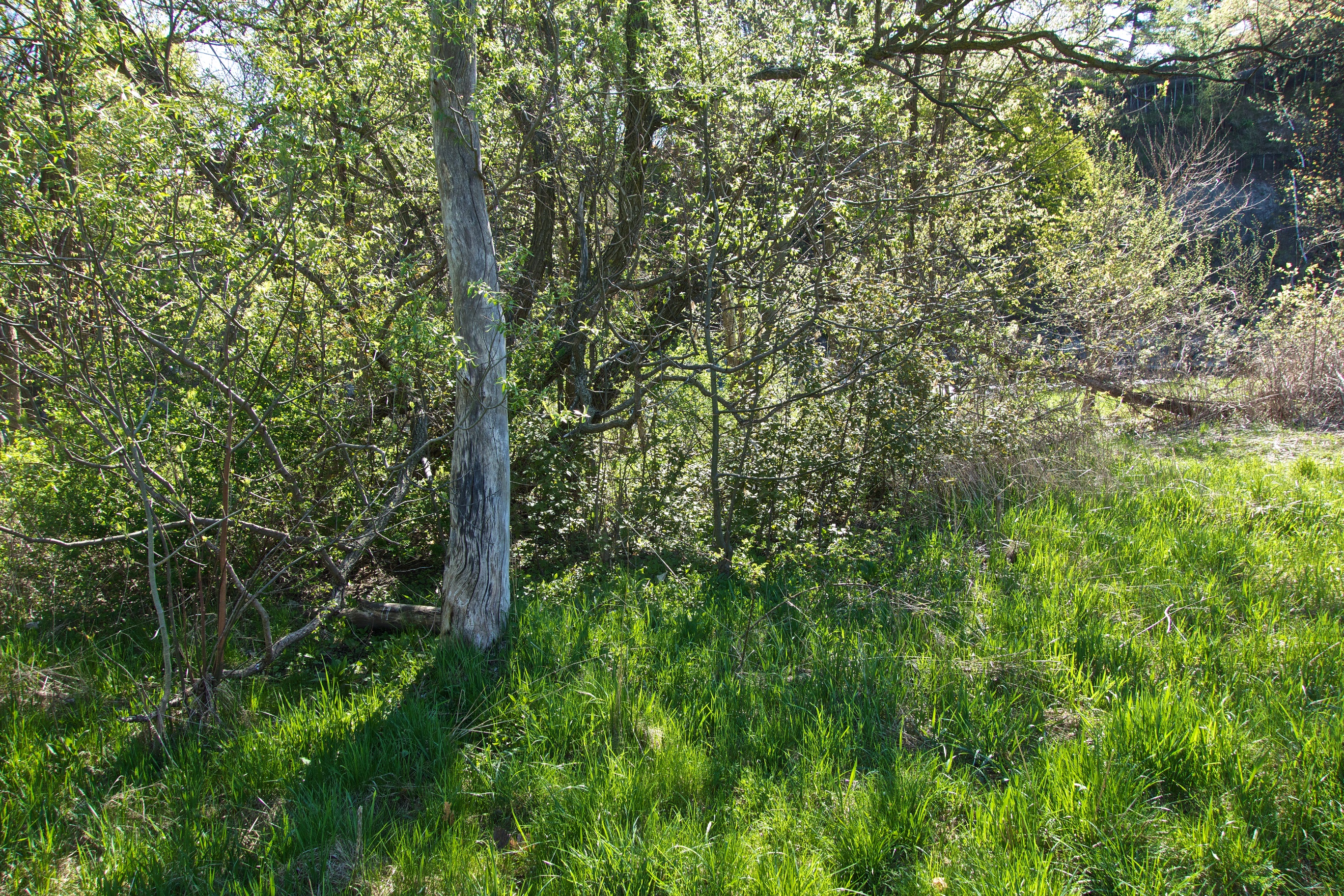
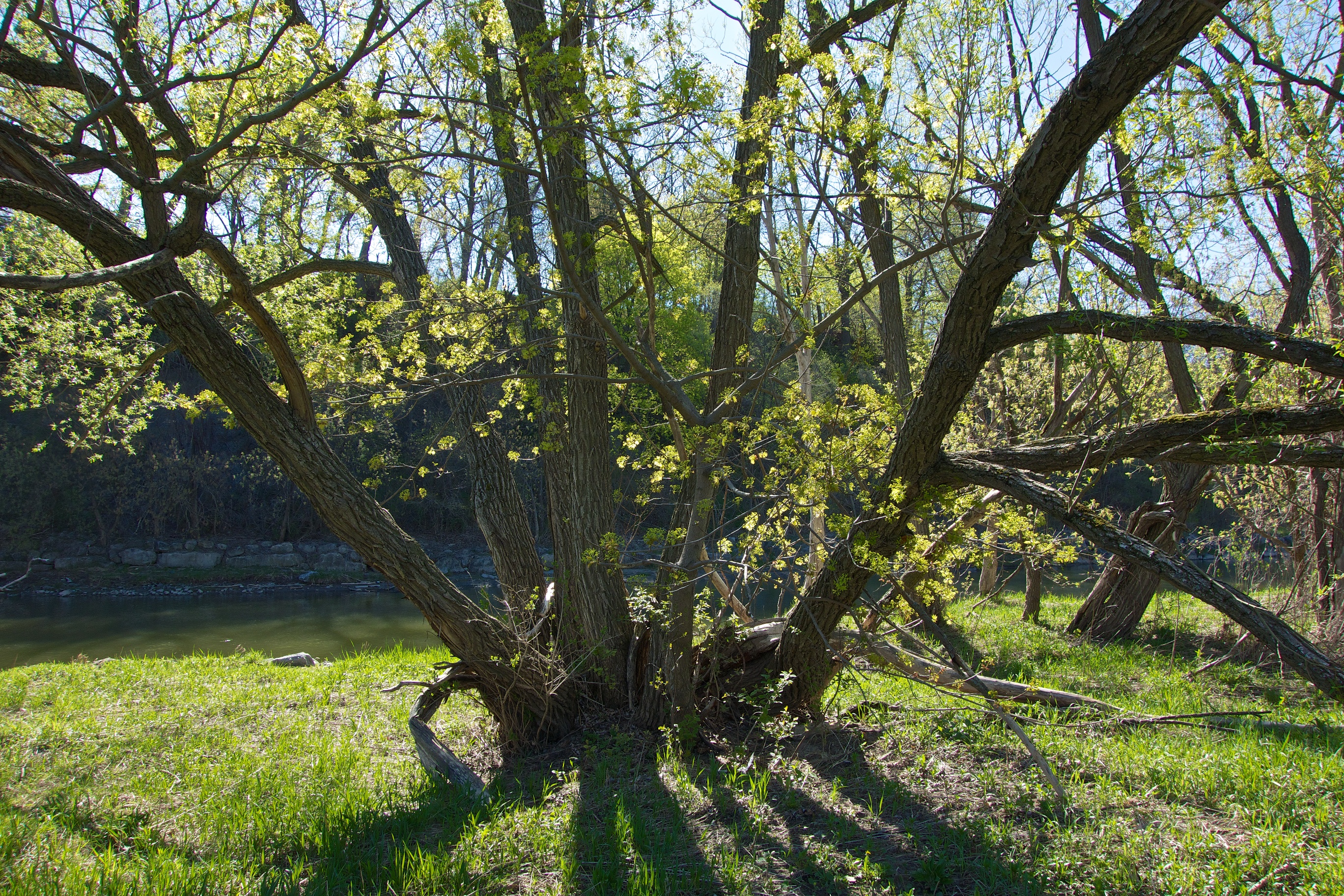
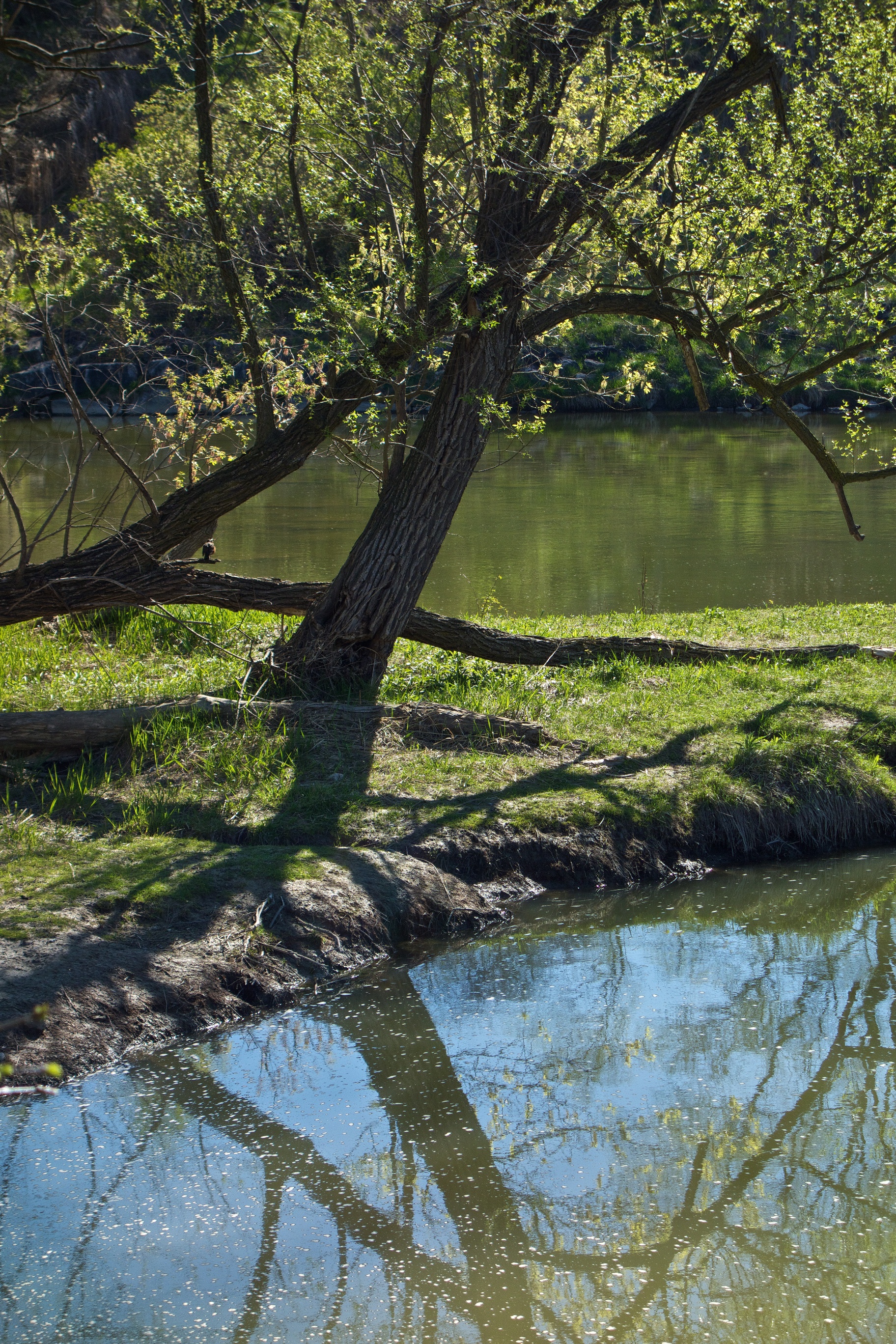
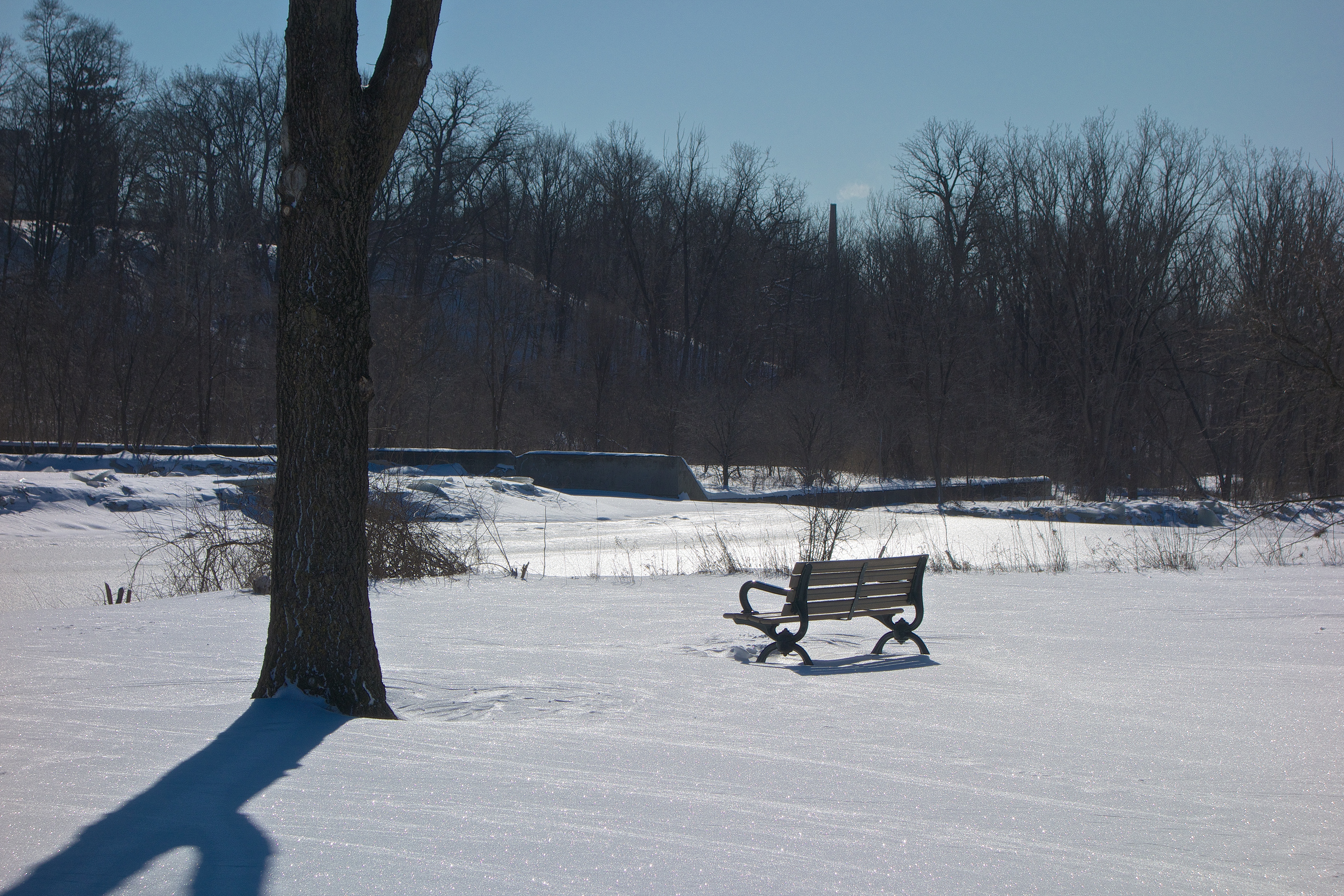
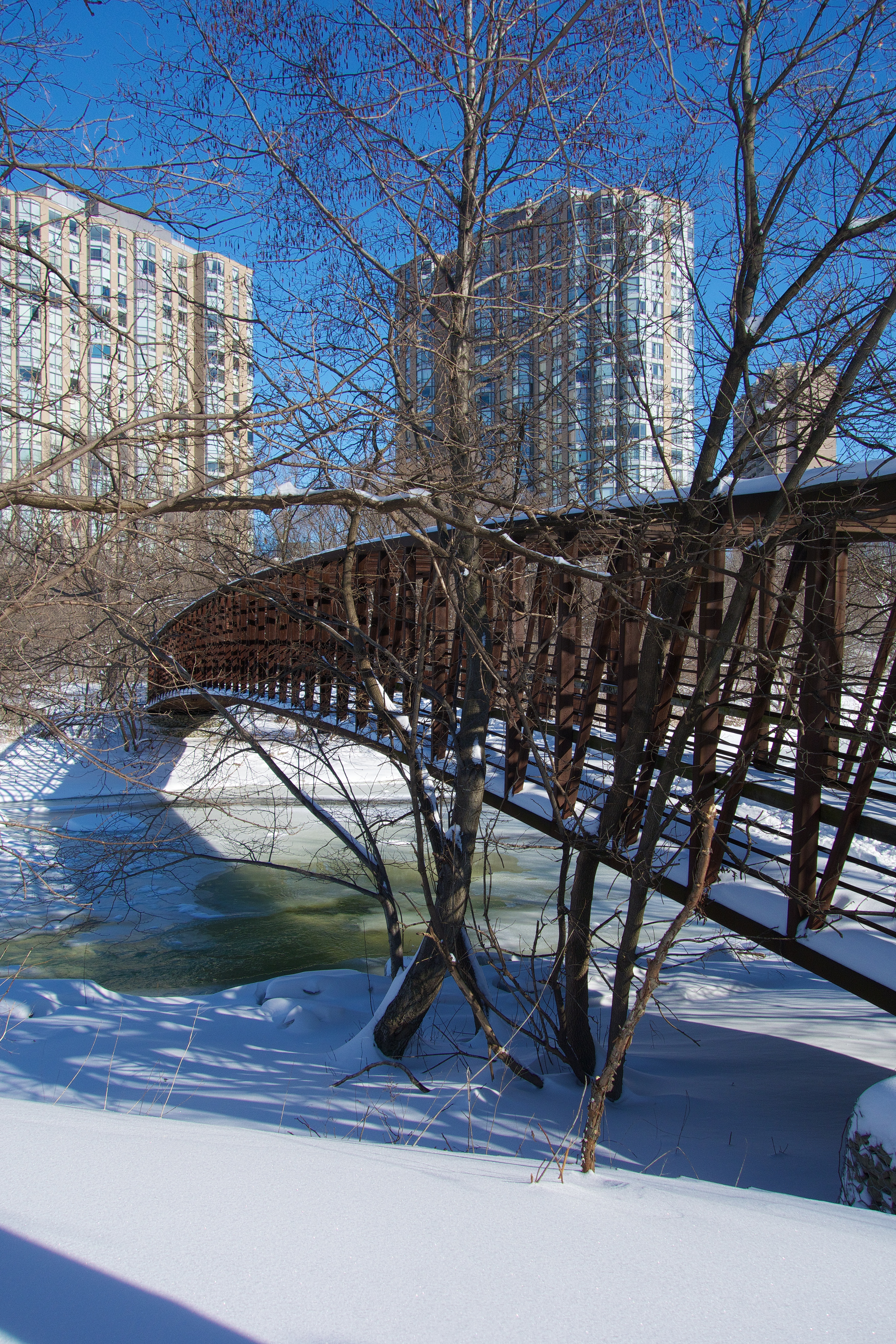
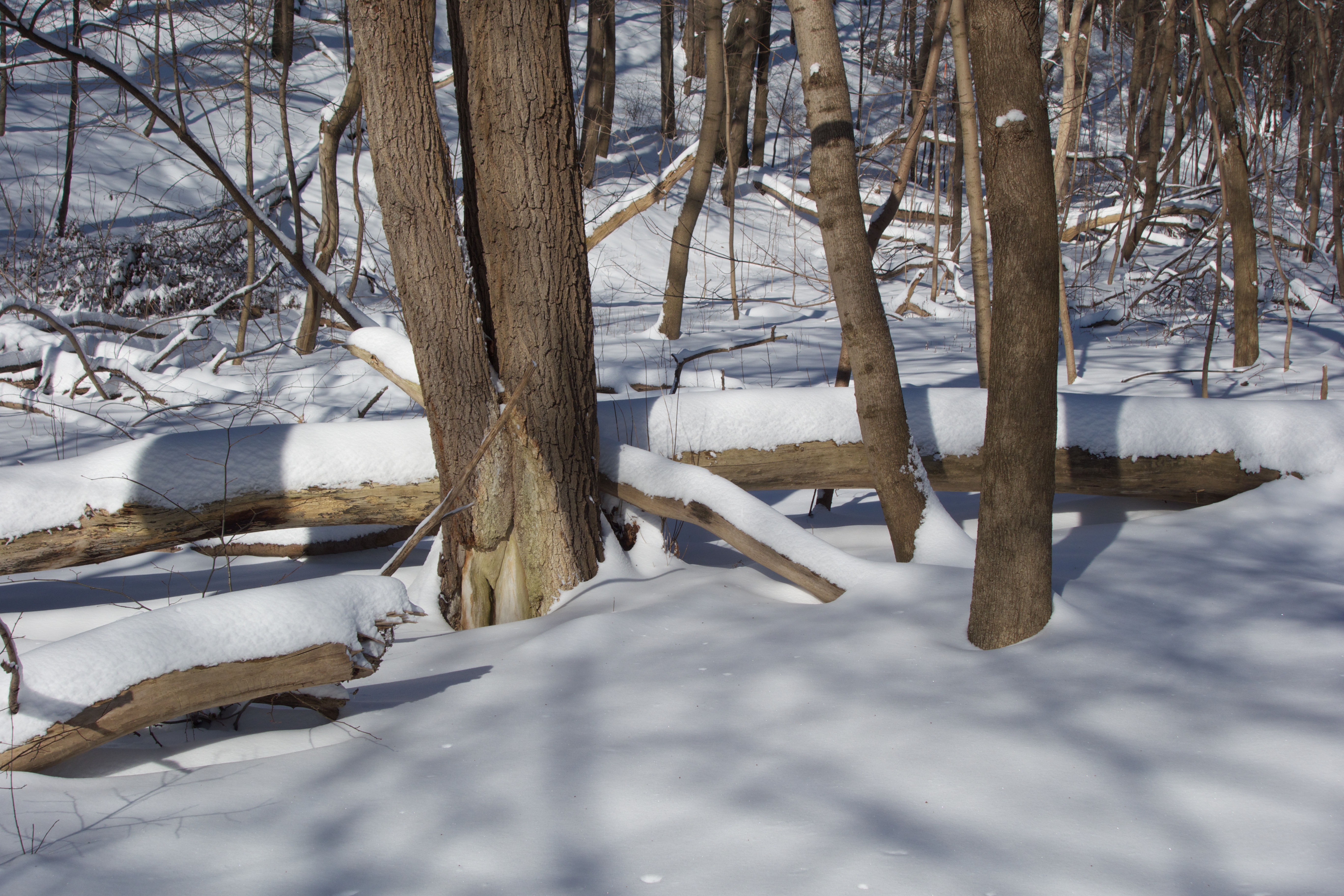
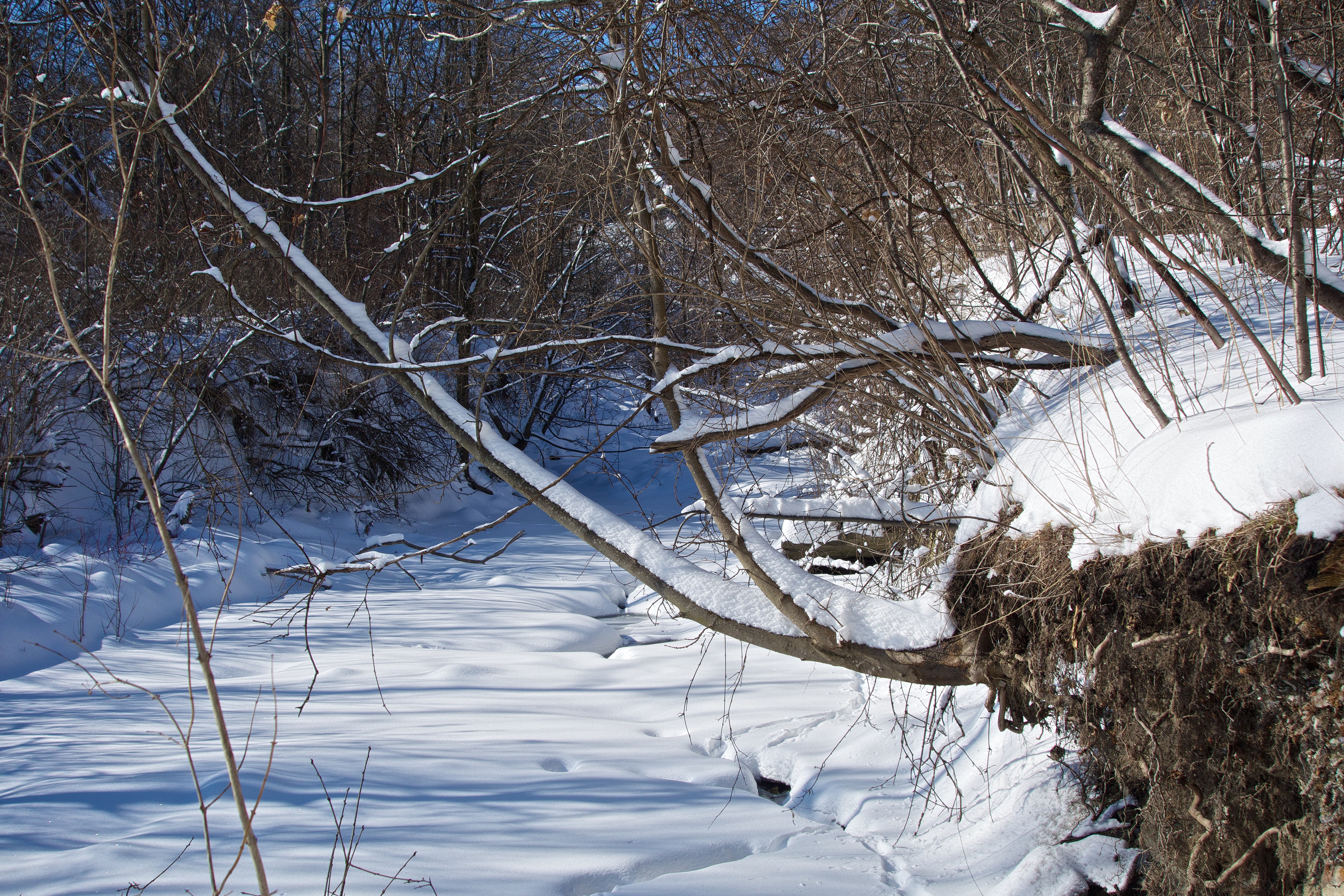
I love taking shots against the light. It can be a challenge to avoid glare and burnouts but the rewards are worth the effort in terms of contrast and vivid colour. Today was a continuation of several days of sun , mild temperatures and low humidity which lends even more clarity to such images.
Category Archives: Trees
A couple of mysteries solved.
A couple of updates while we’re waiting for spring.
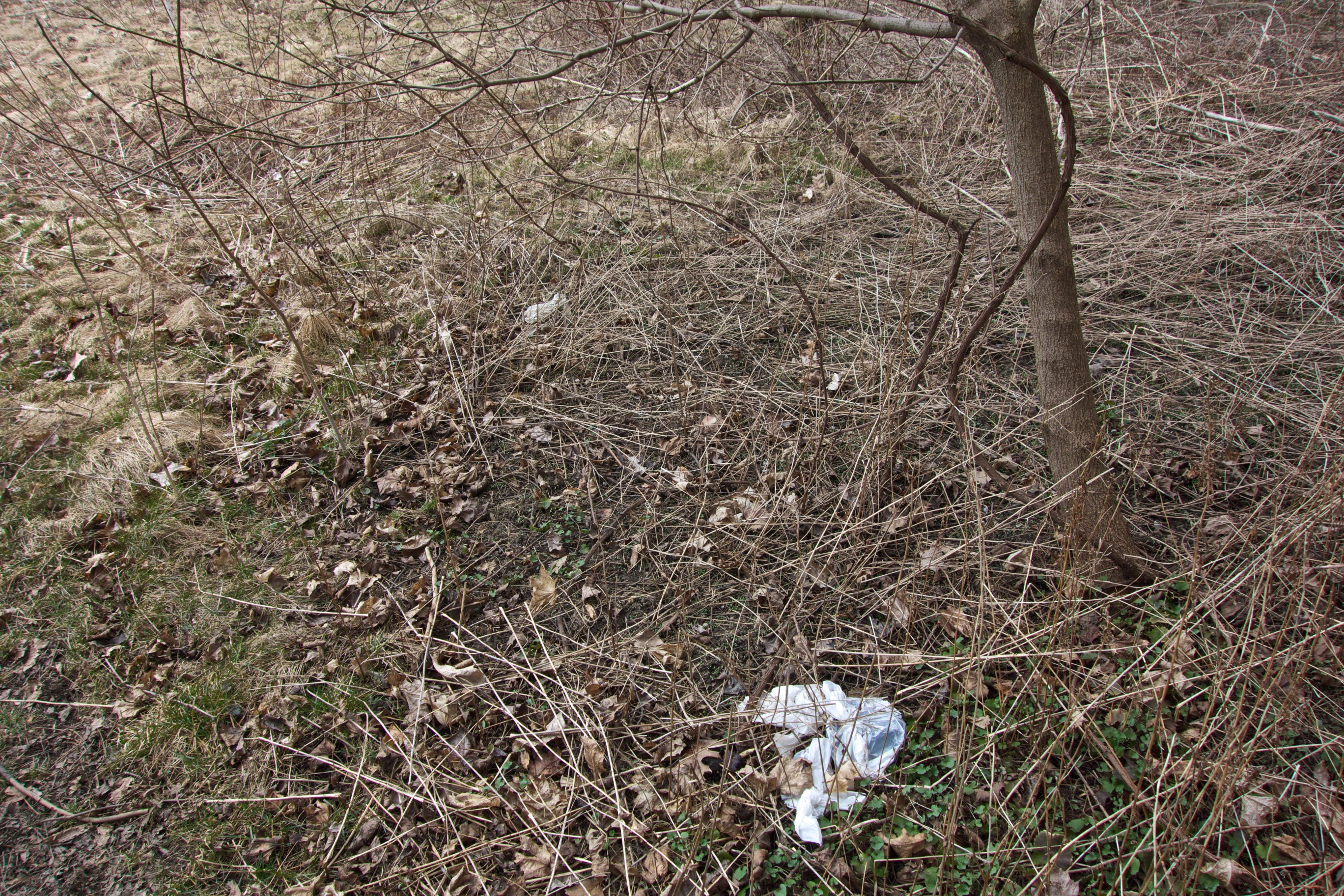
I discovered the identity of the ‘Douche’ who has been leaving packages of dog poo around the park. Yesterday, I brought a plastic shopping bag with me so that I could grab the odd bits of litter as I walked through the park. I passed by the lower entrance to the woods and the pile of bags that were left there all winter. There were four of them and another three along the way including a fresh one hanging on a tree. Into the plastic bag with all of them.
After doing my civic duty (and seething about the fresh bag of dog crap left hanging on a tree), I was talking about the ‘Poo Bomber‘ (also mentioned here) to a fellow dog owner; let’s call him Dave, and he said, ‘That’s me. Rather than carry them all the way through the park, I leave them and pick them up later’. Needless to say I was gobsmacked and mentioned that many had not been picked up. ‘That’s not me’, Dave insisted. This was just after picking up seven identical bags scattered through the woods – including the one on the tree. I didn’t press the point but at least I’m not watching out for who it is any more. Hopefully Dave will get the hint from now on. I mentioned that I keep a blog and he keeps telling me he’ll get around to reading it. I guess I’ll know when he does.
As for what I thought was a BMX track in the woods, I saw it in use the other day. A couple of adults and a small child came down the hill following a remote controlled toy truck of some kind. The track is for the toy and everyone stands and watches this thing trundle its way over the course. Go figure.
Hidden worlds
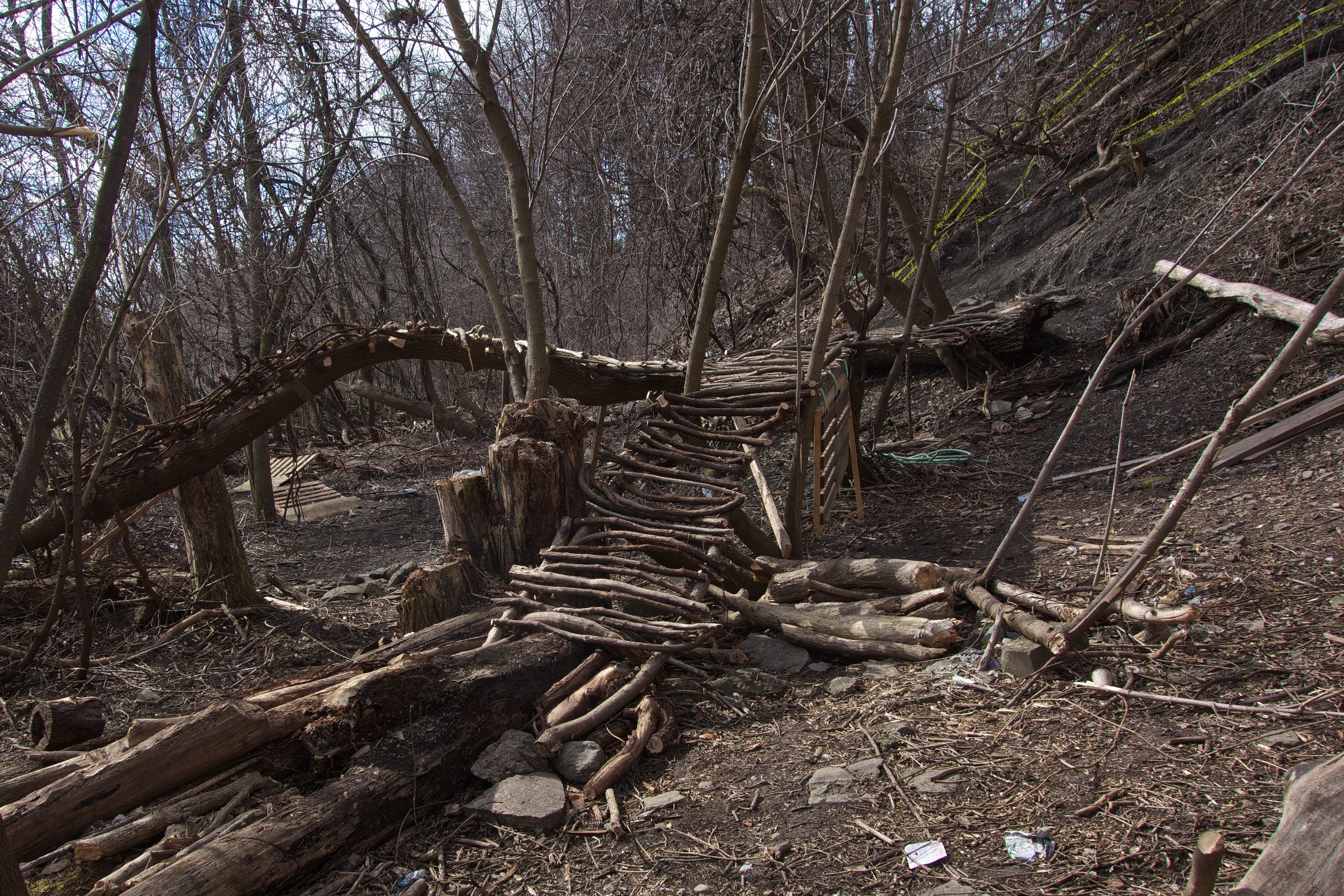
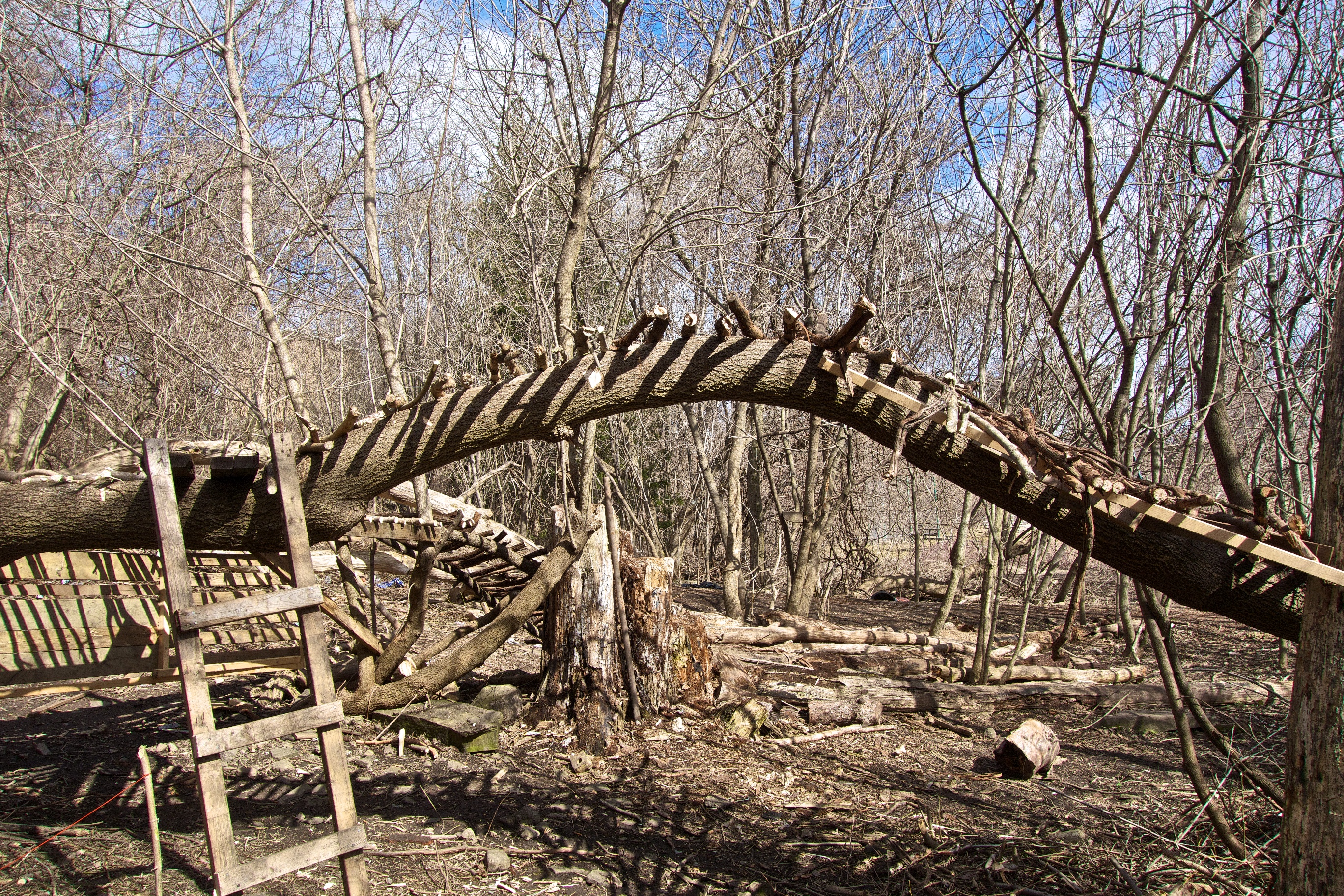
You’ve got to admire the resourcefulness of some people. This mini BMX circuit is well hidden and is the illegal labour of love of some parent. I remember seeing a man during the March Break who appeared to be clearing up litter in a wooded area. I should have known that few people actually pick up litter in Raymore Park. Instead of tidying up, he was labouring with at least one of his kids to produce this.
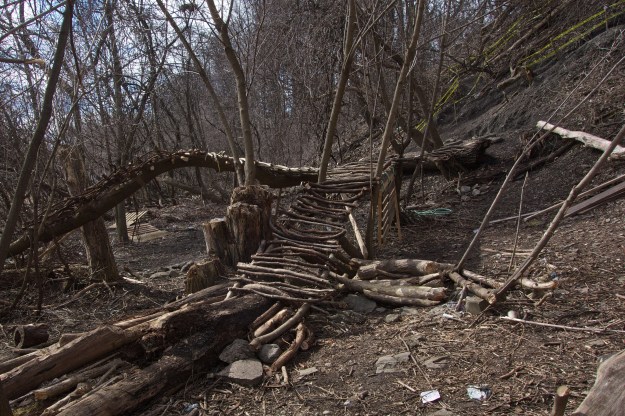
Every one of the branches forming this raised track is nailed to the wood below so this has taken a lot of time (and nails).
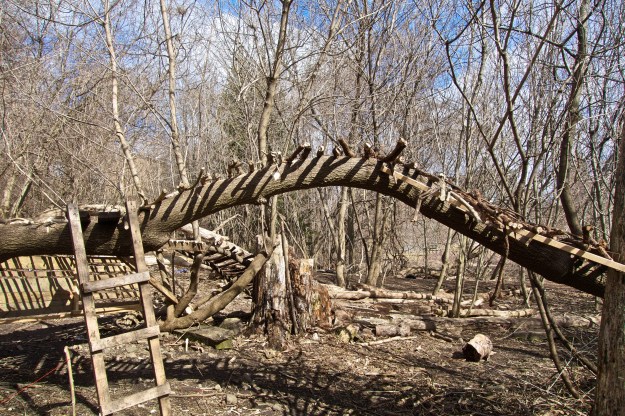
I’ve no idea how usable it is but it’s definitely an interesting structure to stumble across. You almost expect to see Robinson Crusoe coming through the woods.
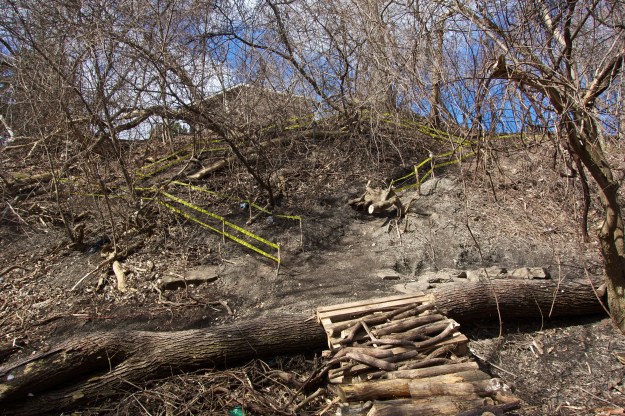
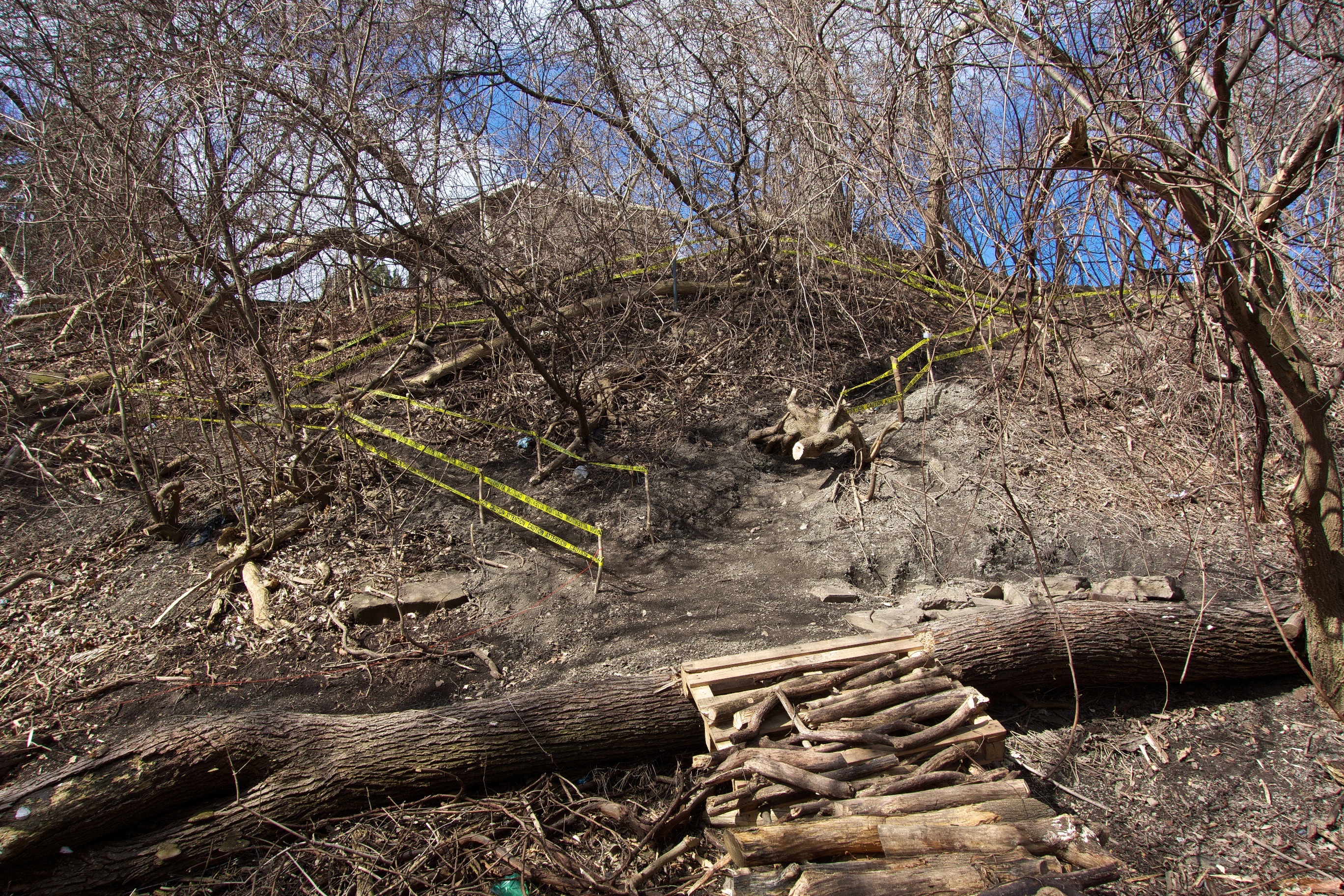
The dirt tracks between the tapes will certainly form a channel during rain and will eventually erode the hillside. I suspect the course is a little too challenging as I’ve never seen anyone using it.
There’s no faulting the motivation of this parent. Unfortunately, he has scarred the ground and littered the park with a structure that could present a danger to humans and wildlife. While I assume that shrubs and trees weren’t chopped down for this, branches taken from the forest floor could well have been home to overwintering insects and small vertebrates. When this thing is abandoned and falls apart, the nails will be around for years.
It’s another example of someone feeling comfortable in creating a clearly illegal structure in Raymore Park and shows an astonishing lack of respect for public parkland.
Waiting for spring…
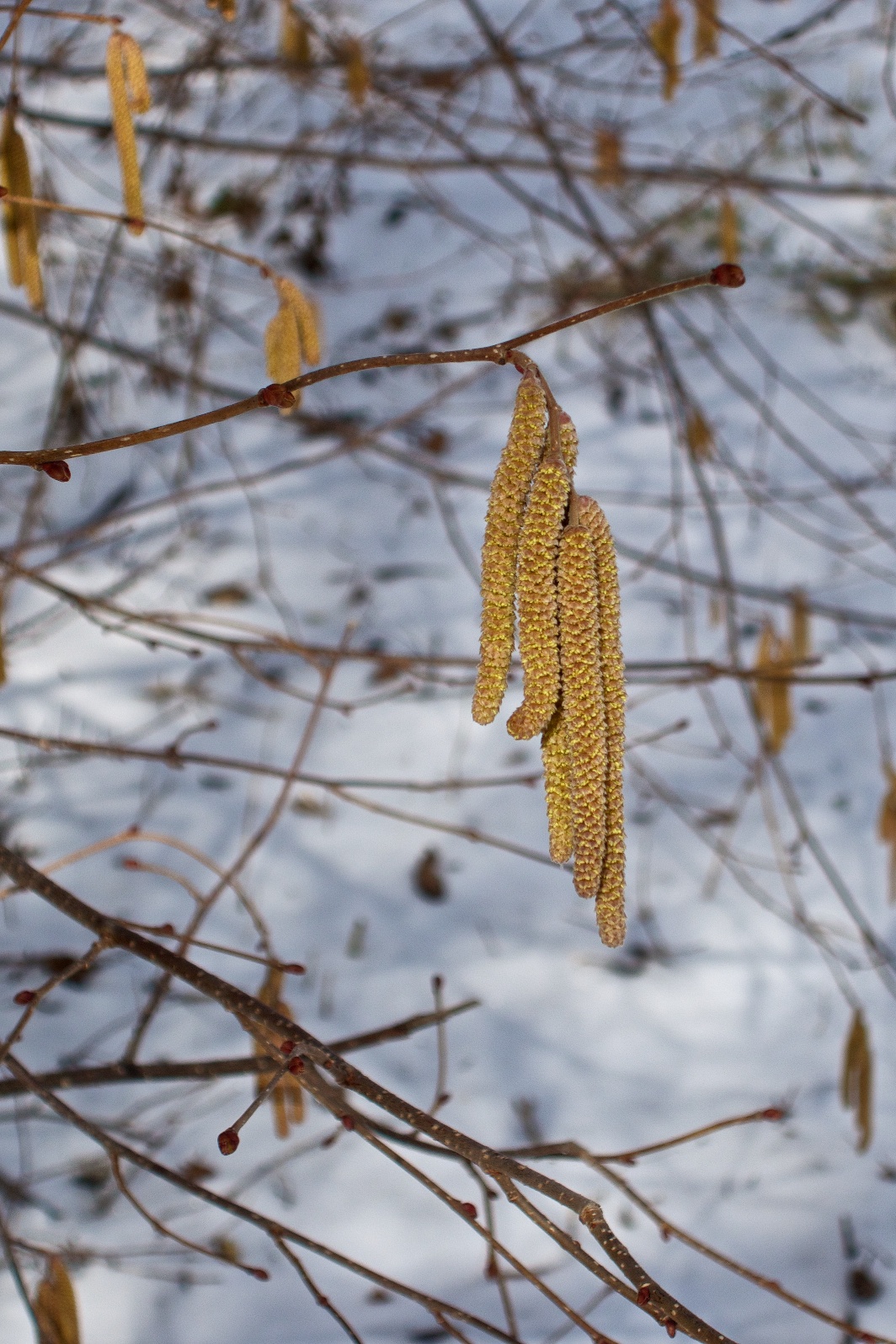
These beaked hazel catkins look as if they have just opened but they actually flowered last fall and are (like the rest of us) waiting for spring when they will pollinate female flowers with the help of insects.
In praise of Staghorn Sumac
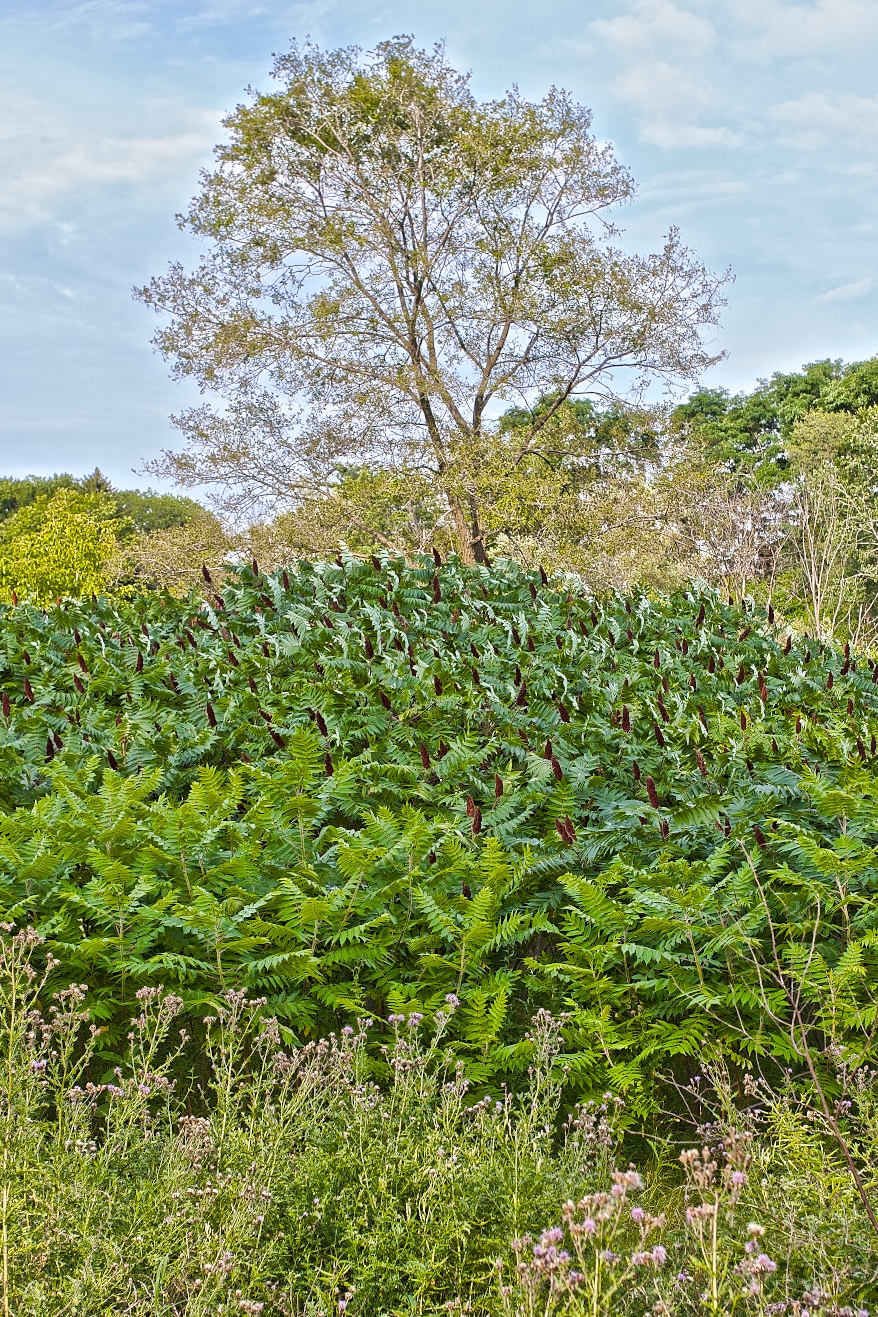
Staghorn sumac is a wonderful plant and there is lots of it in Raymore Park. What’s so wonderful?
For starters, it’s native and seems to be resistant to pests.
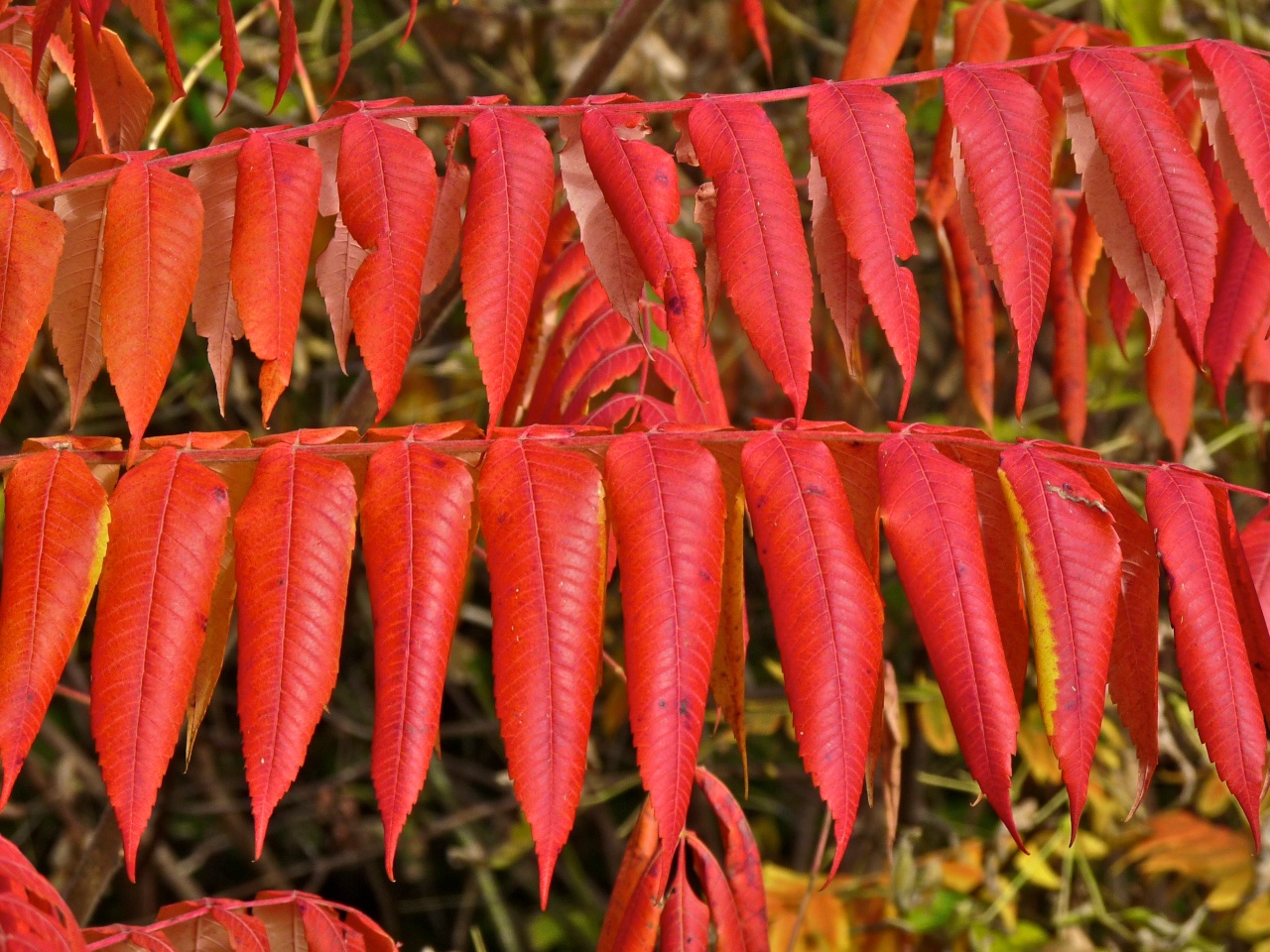
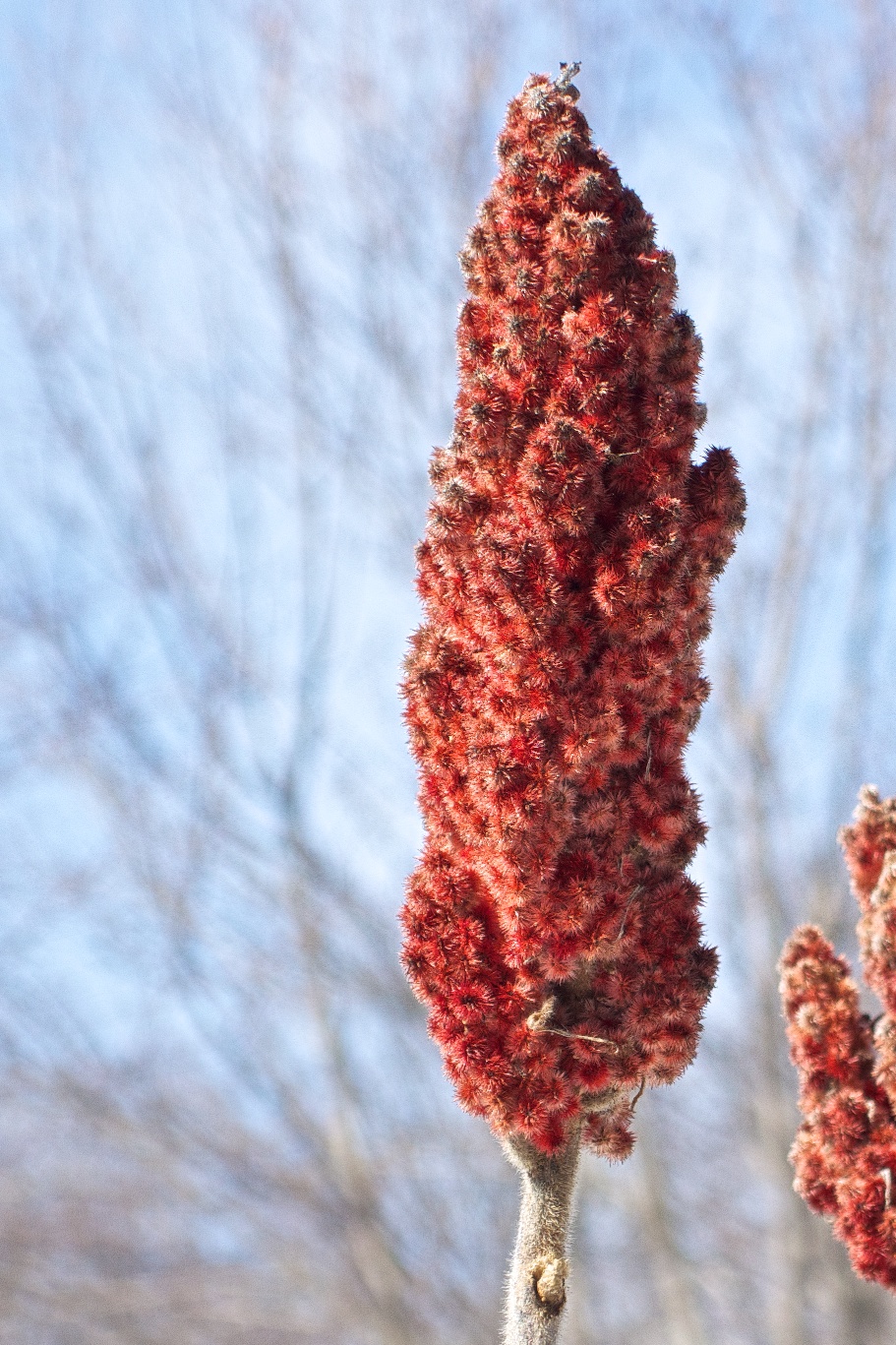
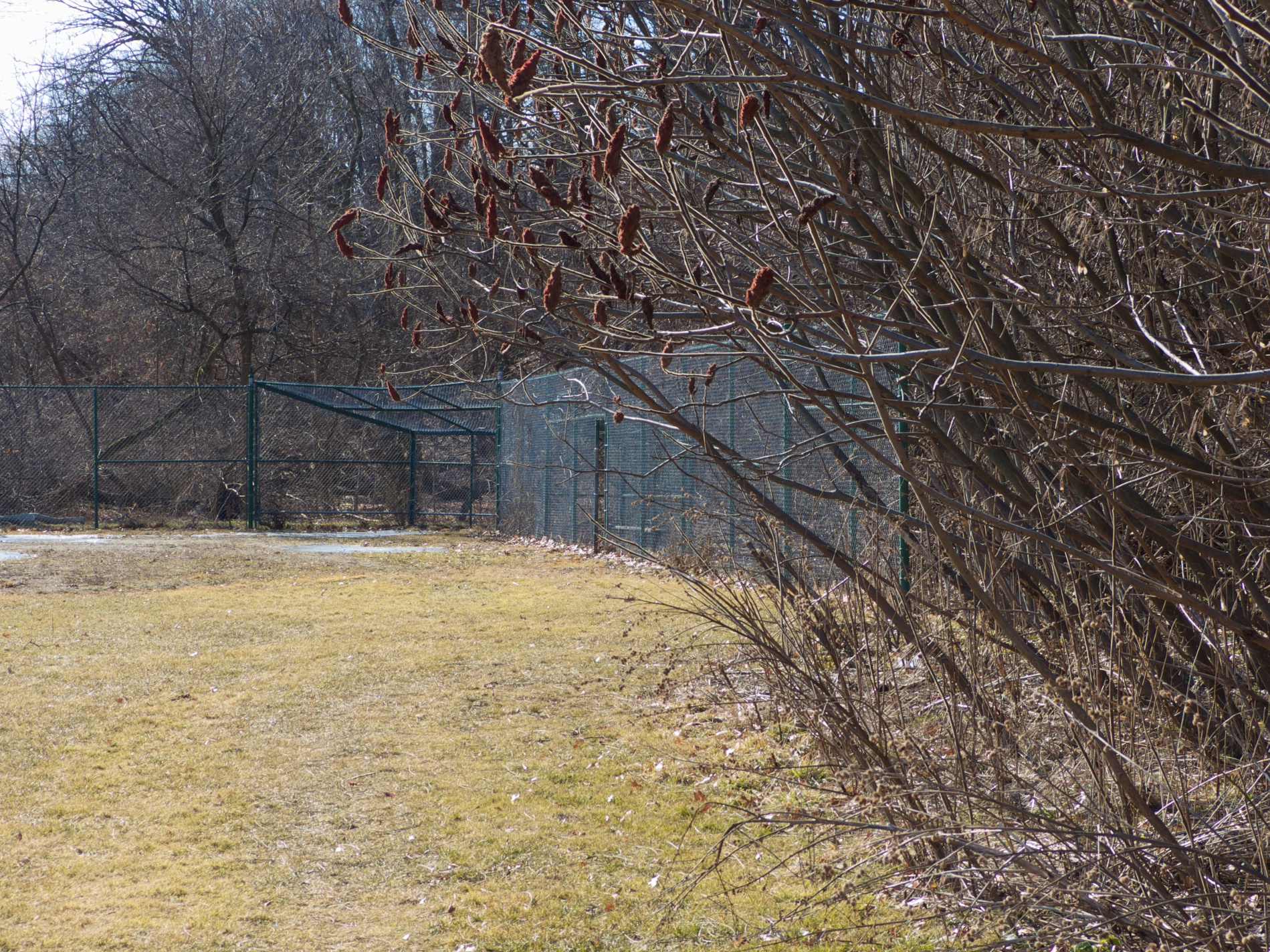
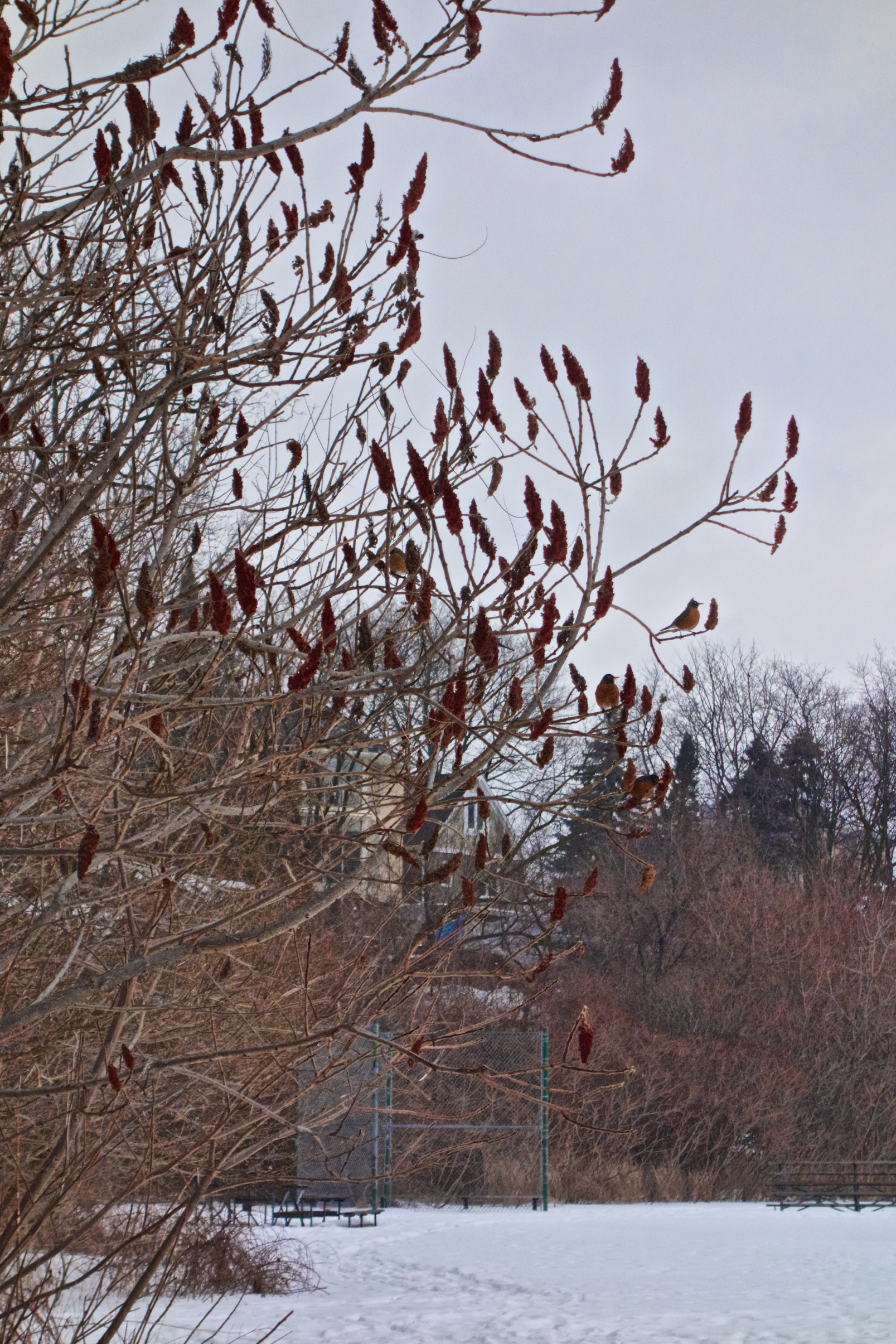
Second, it’s attractive with a kind of tropical look to it in the summer and a vivid red colouring in the fall. Its red flowers stay on the plant all winter.
Third, it benefits wildlife by encroaching, in spite of human efforts to control it. Mowers have to give encroaching sumac an ever-wider berth as sumac leans out as it grows, allowing the roots to put out new shoots. Its deep shade starves less worthy plants of sunshine.
Fourth, it supports a variety of native wildlife from the insects that feed on its nectar to birds feeding on the flowers that stay throughout the winter. Deer along with other mammals eat the foliage and branches.
Beauty in a mass extinction.
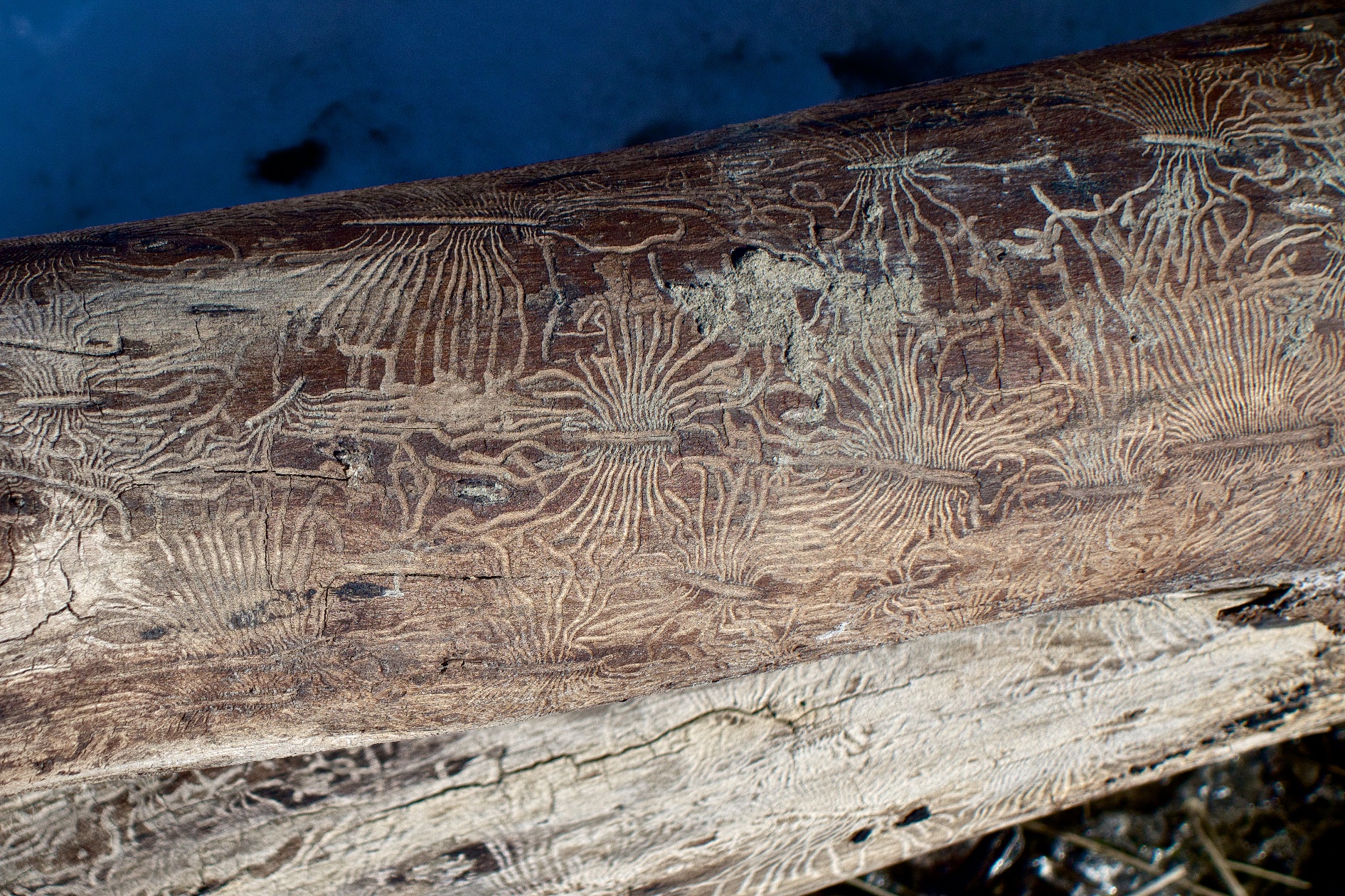
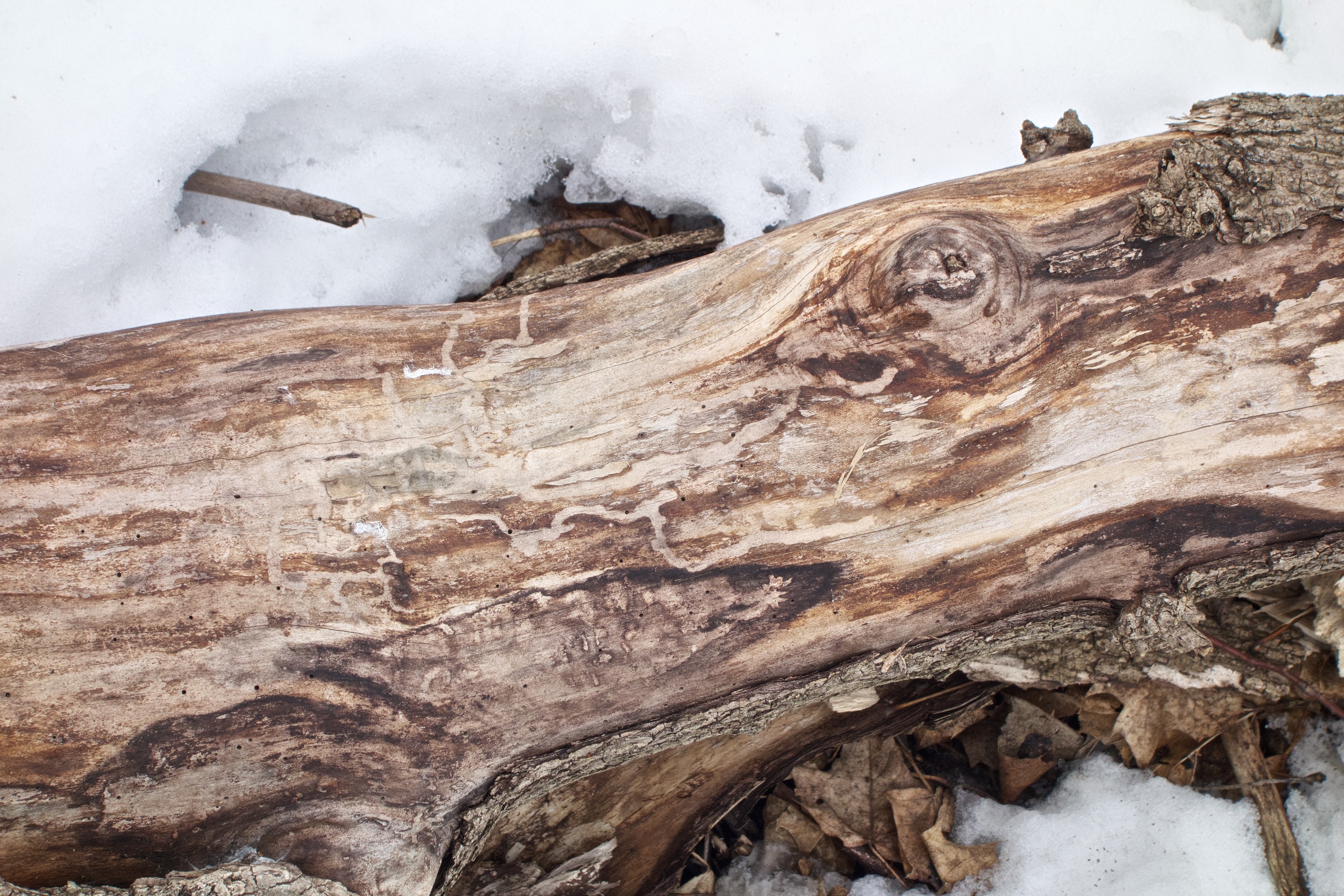
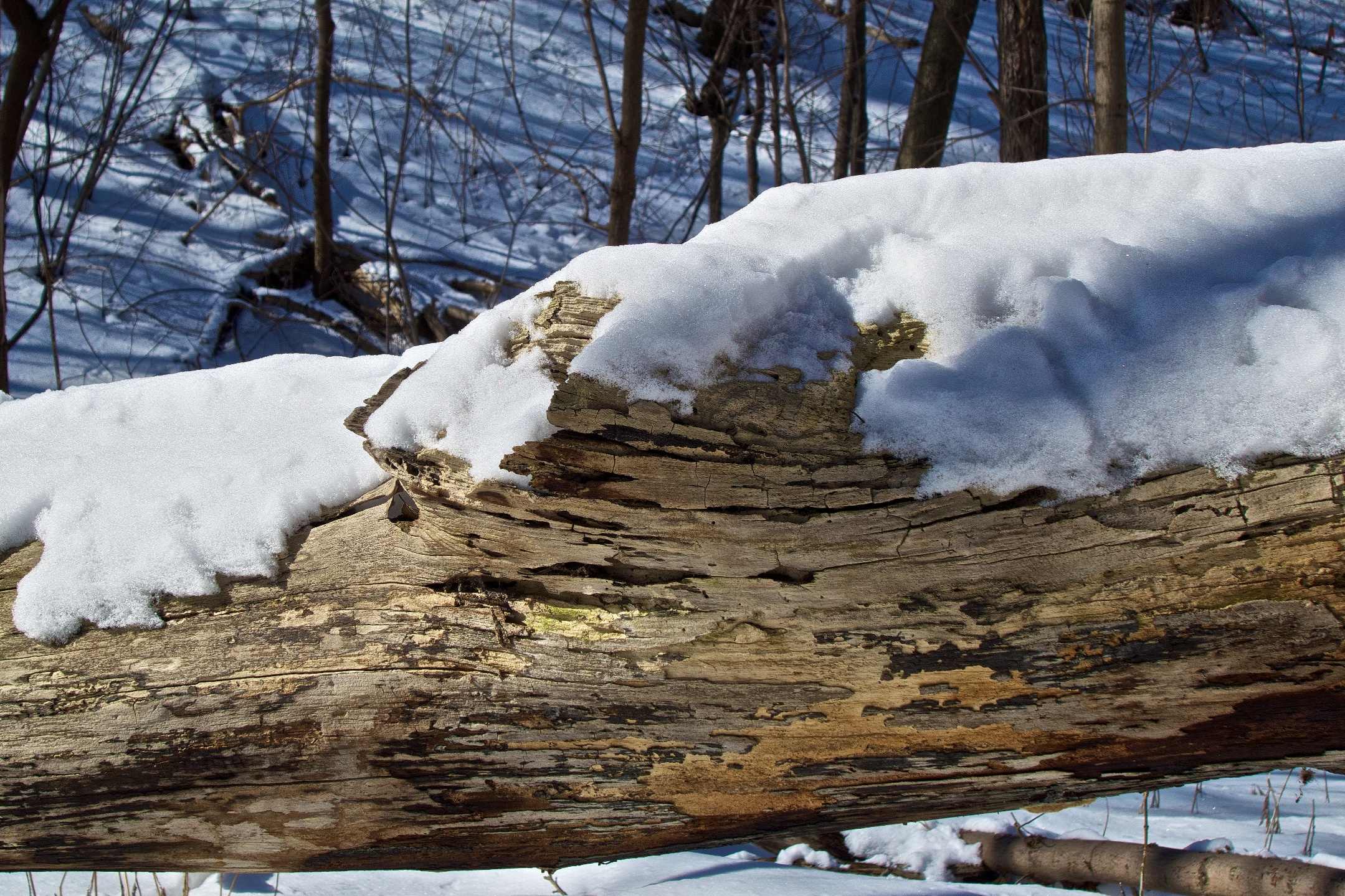
I found this piece of wood a couple of days ago and photographed it again today. The patterns carved into the wood are beautiful and resemble Australian aboriginal art but their origin is quite sinister. This wood has been infested by a creature known as the Smaller European elm bark beetle. Although this beetle (like many other bark beetles) doesn’t kill the trees it infests, it is the invasive species that carried and spread Dutch Elm Disease throughout North America, destroying billions of elm trees throughout the continent.
An equally dangerous tree pest which has established itself is the emerald ash borer, an invasive species brought to North America in the 1990s probably in wooden pallets. This insect kills the trees it infests directly. At first there was a desperate attempt to contain the pests but the battle is lost with every ash tree on the continent now in jeopardy. Imagine the effect on the environment if you could plant 50 to 100 million trees over a few years. Now imagine the reverse because that’s the number of trees that this creature has killed so far with the rest of the continent’s 7.5 billion ash trees firmly in its sights.
Thanks to increasing levels of world trade, North America is under siege from non-native plants and animals. The St Lawrence Seaway opening in 1959 brought the Lamprey eel, a parasite that feeds on fish. The weir in the park was constructed to act as a barrier to the lamprey. Asian carp are thought to have recently established themselves in the Great Lakes and could devastate fishing stocks here as they have no natural predators and thus there is no defence against them.
Unfortunately, government agencies on both sides of the border are slow to react to such invasions and by the time we take preventative or remedial action, the battle is lost.
Moss and Lichen
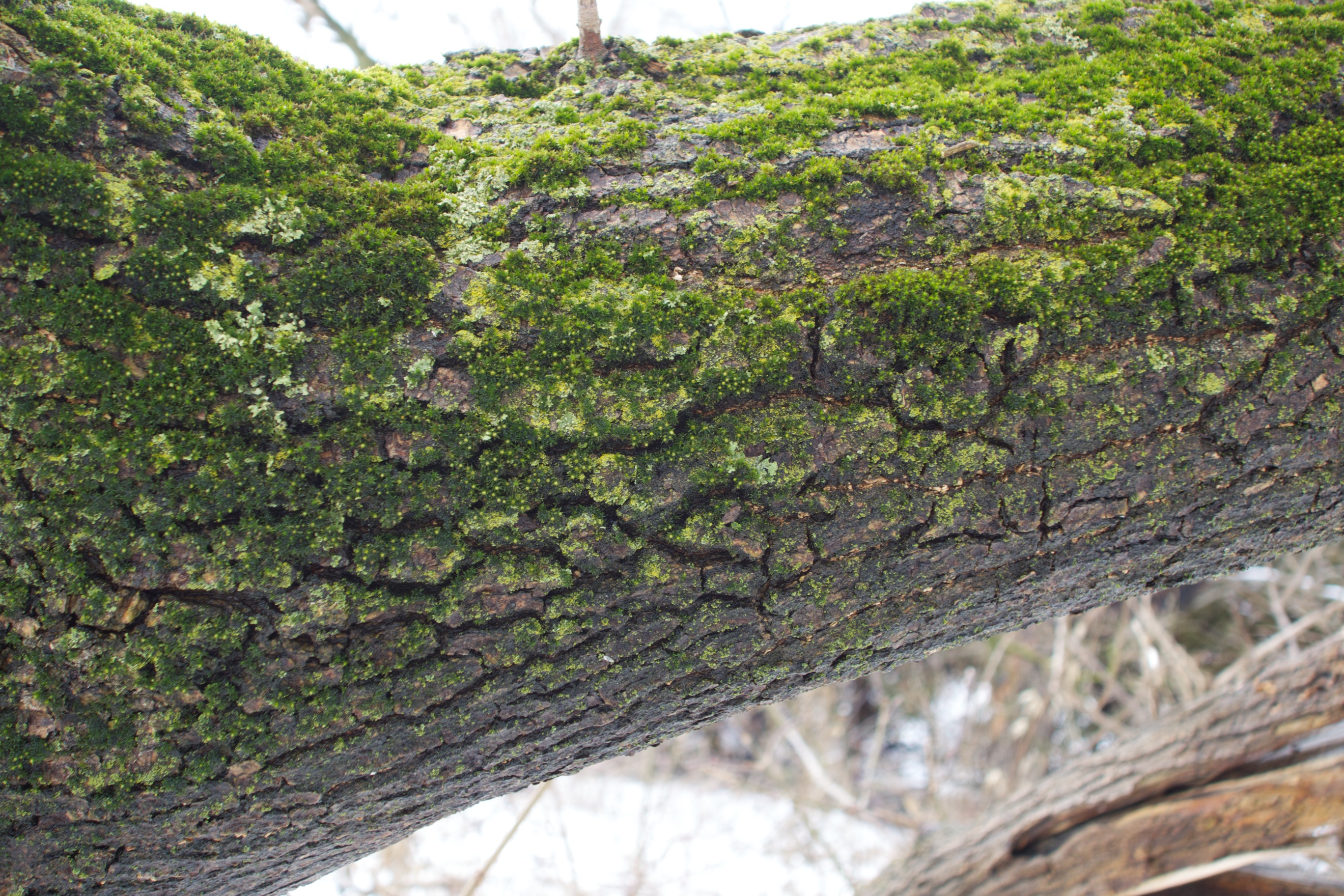
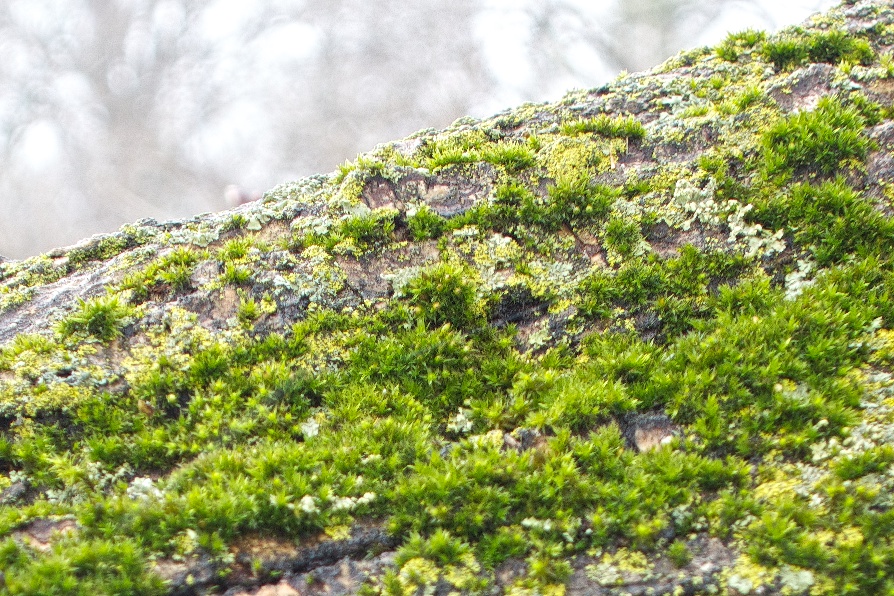
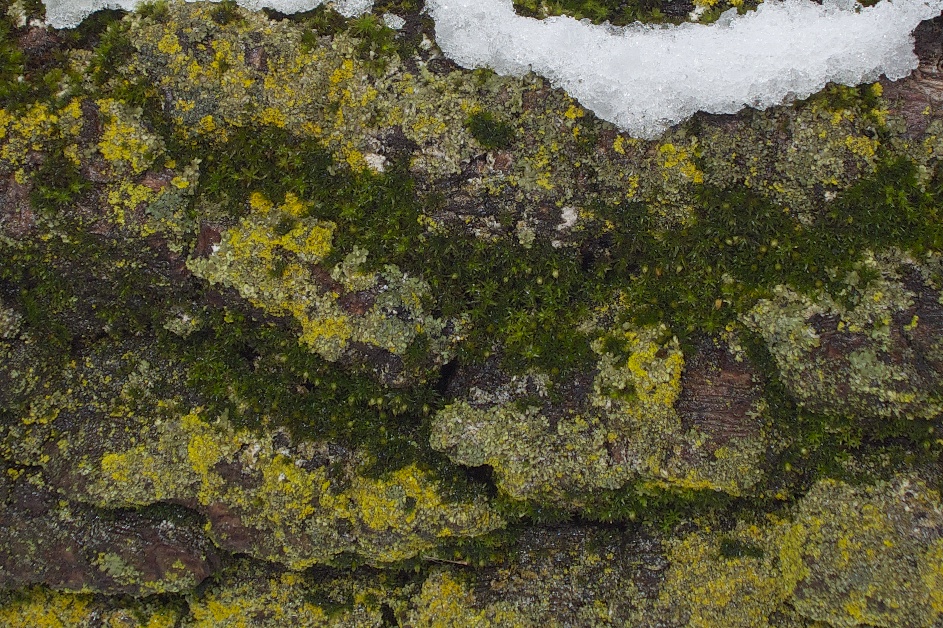
At this time of year, the grass is brown and usually buried. Moss however continues to be visible and can be seen on trees throughout the park. Here are a few examples:
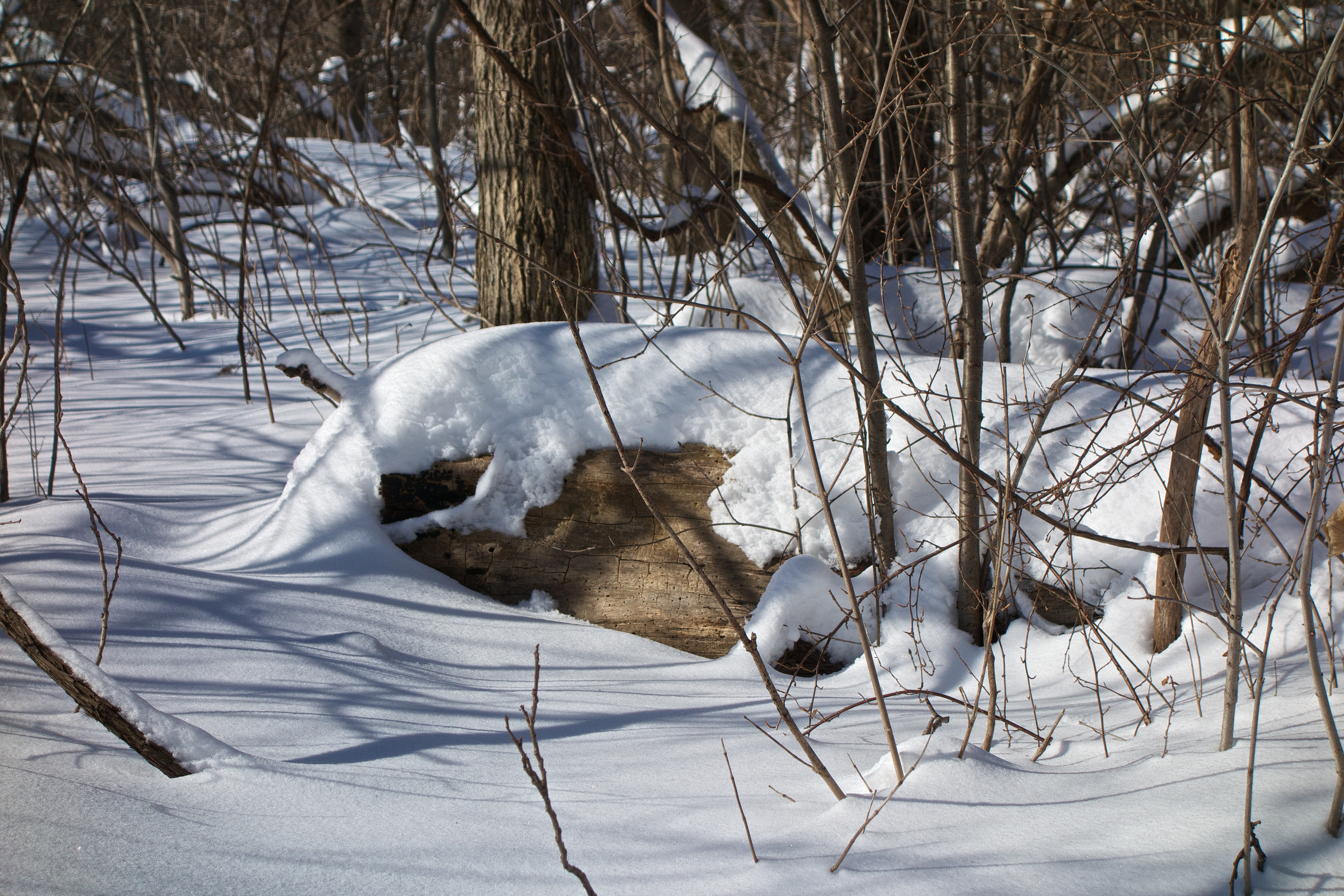
Moss is a plant with the characteristics that you expect – it’s usually green and has leaves. Moss doesn’t have roots and can’t send moisture through branches like other plants. For this reason, mosses prefer damp locations. Lichen on the other hand is a partnership between fungus and algae or bacteria structured in layers and is found on every continent.
Tracks and textures
After a couple of days absence from the park it was good to be back outside again. The last couple of days were bone chilling with wind chill readings below -20°. Mugsey and I had to make do with the treadmill.
The sun feels so much stronger now – the U.V. index for today was 3 and you can pretty well double that when walking in snow. The temperature however ensures that only the ‘bare’ minimum of flesh is exposed.
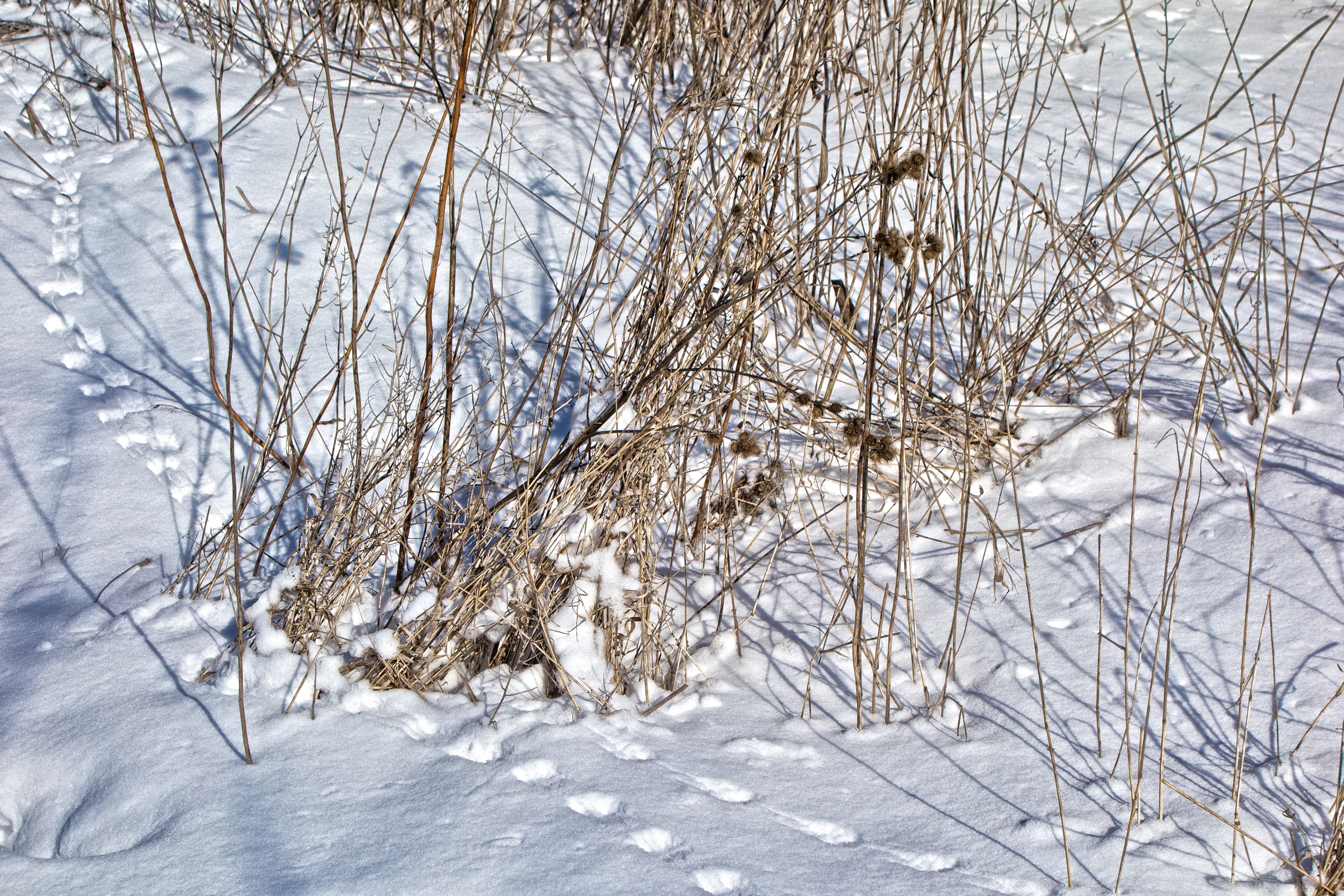
A fresh fall of snow allows a clean slate for tracks in the snow – these look to be from a mouse or other tiny creature.

A tiny animal with a tail comes and goes through some burdock and dog strangling vine.
As with a large number of trees, many of the plants in the park are also foreign invaders. Dog strangling vine is one of these and unlike invasive species that are quite attractive such as purple loosestrife or phragmites (a tall feathery grass), DSV is as attractive as its name. More about invaders another time.
Winter wonderland
There’s nothing like a good old dumping of snow to hide imperfections; especially when the next day is sunny and calm. We had close to 30cm (a foot in old speak). Let’s get started with the bench – the ‘before‘ was drab and dismal compared to views from other times of year. Today, it’s a postcard.
The bridge has many flattering angles. Photograph it from one side and you’d swear it was miles from anywhere. Here’s the other side set against condos in Weston. I like that the bridge and its shadow seem to form a loop over the Humber.
Next is a couple combining trees and snow – one of my favourite combos – especially on a sunny day and when the snow is fresh and deep as it is today.
Lastly, I was able to clamber down to the Humber Creek in my snowshoes. The view did not disappoint.