Category Archives: Wildlife

Invasive weed of the day; Garlic Mustard.

Imagine, a nutritious salad ingredient just for the picking.

Ontario is filled with invasive species that have been released accidentally or deliberately. Alliaria petiolata, a native European plant was brought to North America in the 19th Century by settlers who liked its garlic taste and medicinal properties. It’s an evergreen that grows quite tall and since its natural enemies didn’t come along for the ride, Alliaria petiolata, positively thrives. It is better known as garlic mustard, poor man’s mustard or in the U.K., as Jack-by-the-hedge.
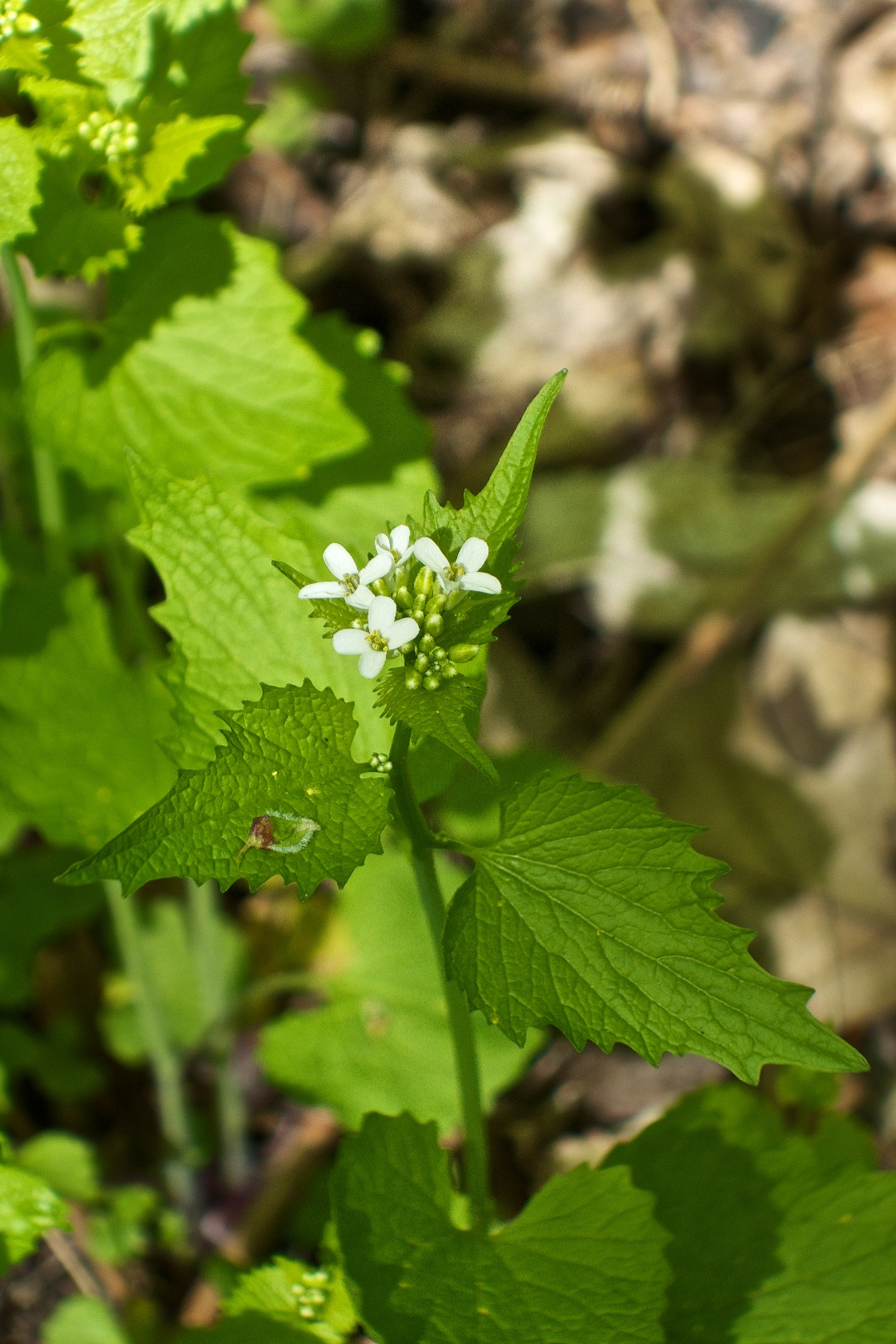
Tiny white flowers produce black seeds.

Tiny white flowers produce black seeds.

It can be used as a salad ingredient and is high in vitamins A and C. As the name suggests, it has a garlic flavour and apparently the small black seeds it produces are sprinkled on foods as a flavouring in France.
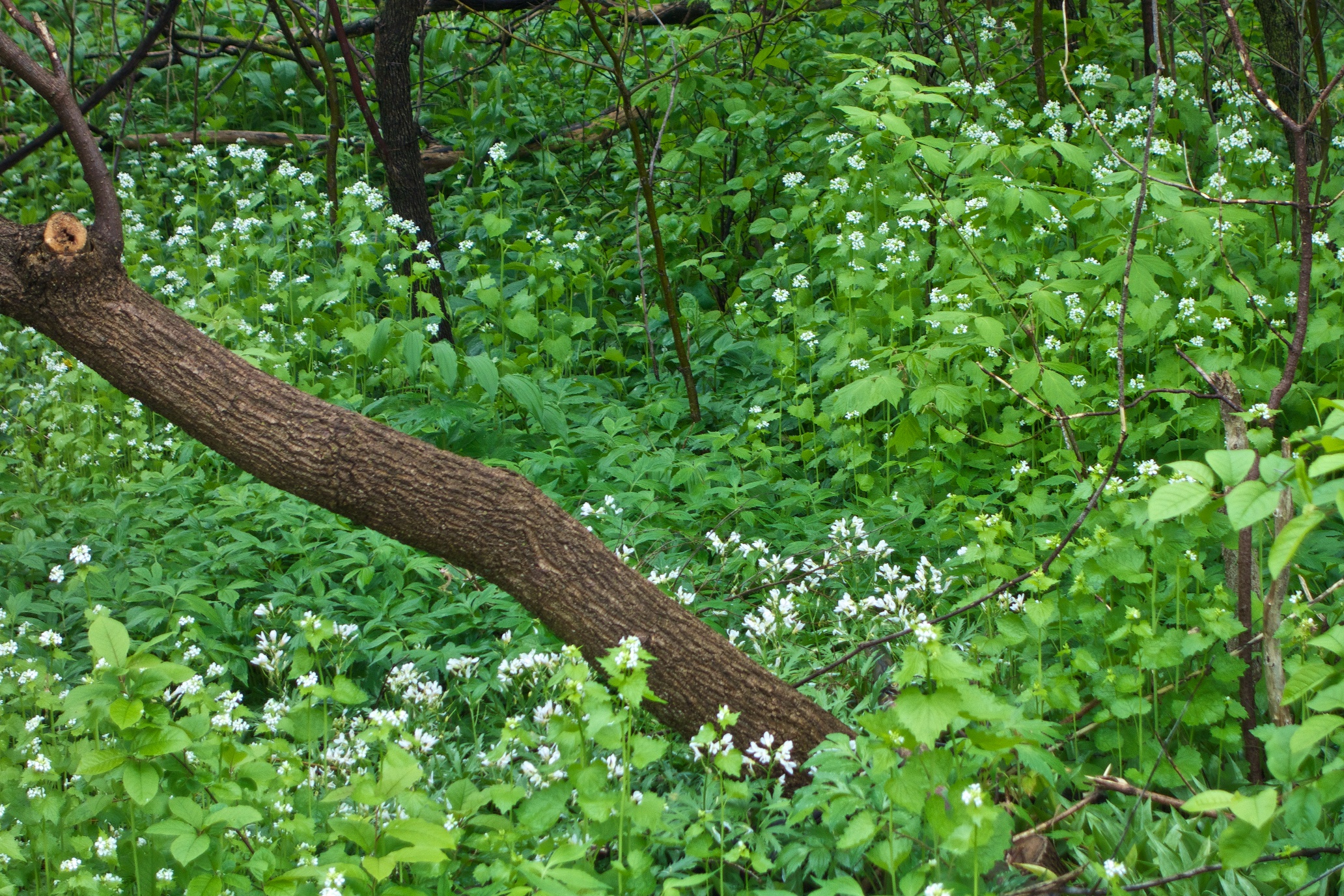
A patch of Broadleaf toothwort threatened by garlic mustard.

A patch of Broadleaf toothwort threatened by garlic mustard.

Like most invasive species, it looks as if we are stuck with this one and it’s not shy. It produces huge numbers of seeds and aggressively crowds out other plants; the lack of natural predators giving it an unfair advantage. To add insult to injury, deer avoid it, preferring native plants. It is therefore a real threat to native plants throughout Raymore Park and has spread rapidly in the park in the past few years. Eradicating it would require large numbers of people to cut it back regularly so that seeds cannot form and spread. A mammoth and probably futile task.
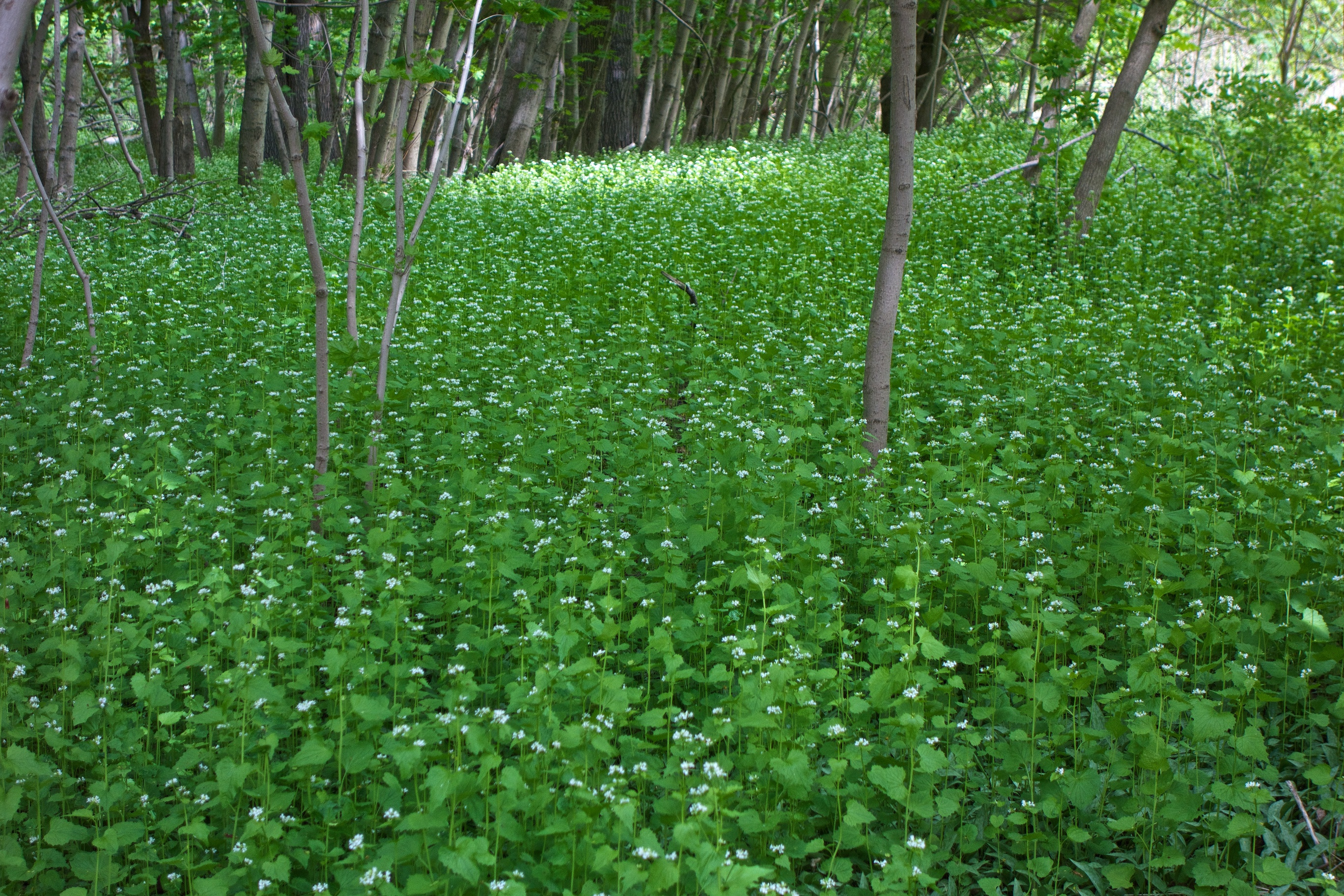
Garlic mustard is well on its way to monoculture status in this area.

Garlic mustard is well on its way to monoculture status in this area.

There is a glimmer of hope. U.S. scientists are looking to Europe where garlic mustard has several predators that keep it in check. The hope is that through painstaking research, they can find one or more that will not threaten other flora and fauna once introduced. The prime candidate is a weevil, Ceutorhynchus scrobicollis, that feeds exclusively on GM and therefore will not be a threat to anything else.
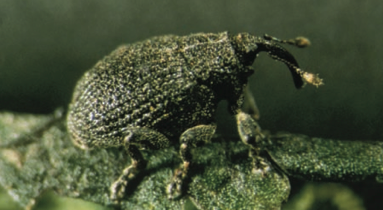
Could this tiny insect be the answer?

Could this tiny insect be the answer?

In the meantime, salad anyone?

Update: Dr. Frank S. Gilliam wrote asking for permission to use one of the photos in this article for his commentary on invasive species in The New Phytologist, a plant science publication. The article can be accessed here. The gist of it seems to be that invasive plants like garlic mustard create an advantage for themselves by releasing compounds that inhibit the growth of (often native) competitors.

Wildflowers make an appearance.

The ground has finally warmed and some spring wildflowers are making an appearance. A few years ago, some kind person planted a variety of wild flowers in the park and they have flourished.

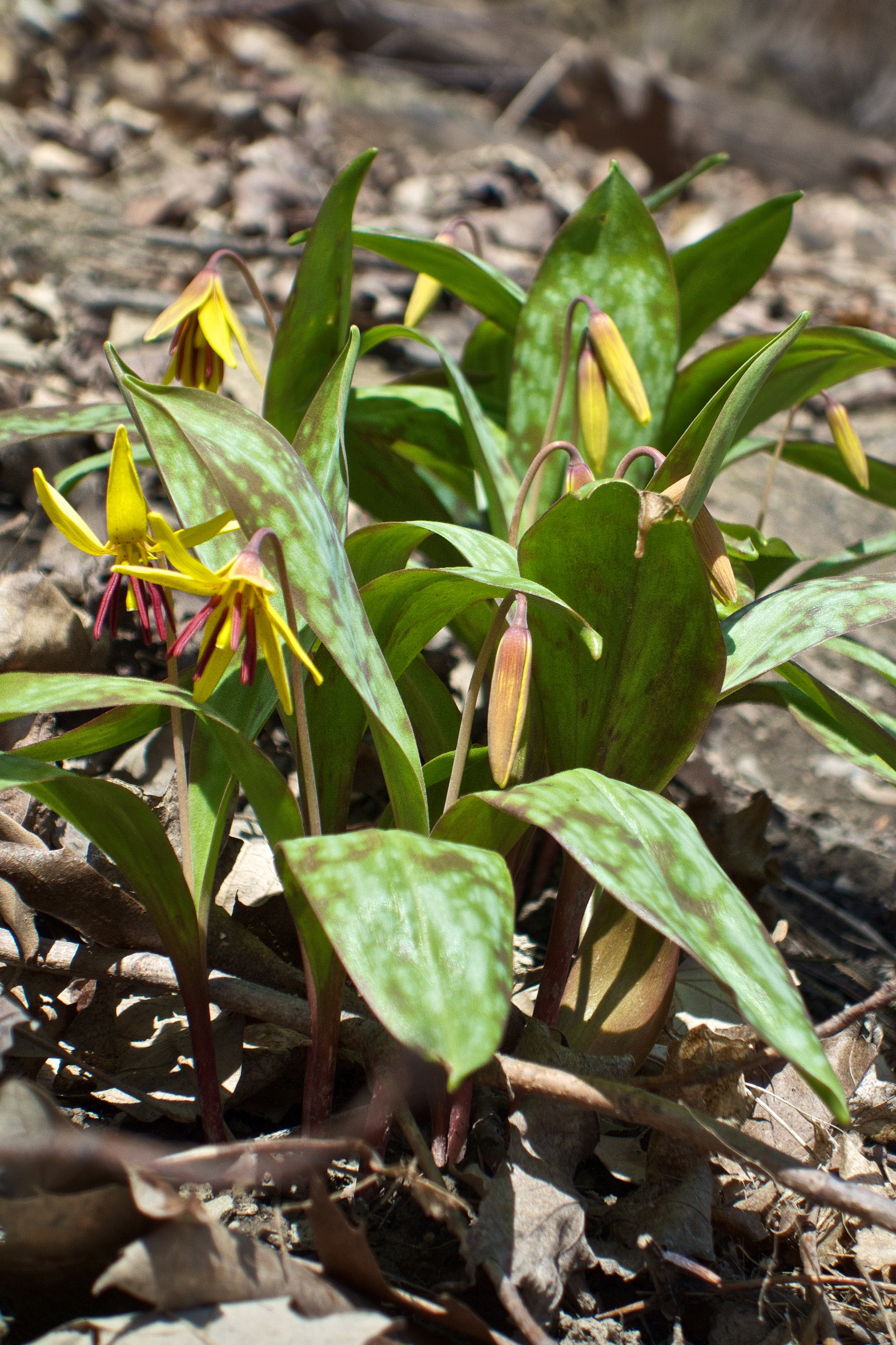
Trout lily is a beautiful and fascinating plant because it relies on ants to pollinate its flowers as well as spread its seeds.

Trout Lily

Trout Lily

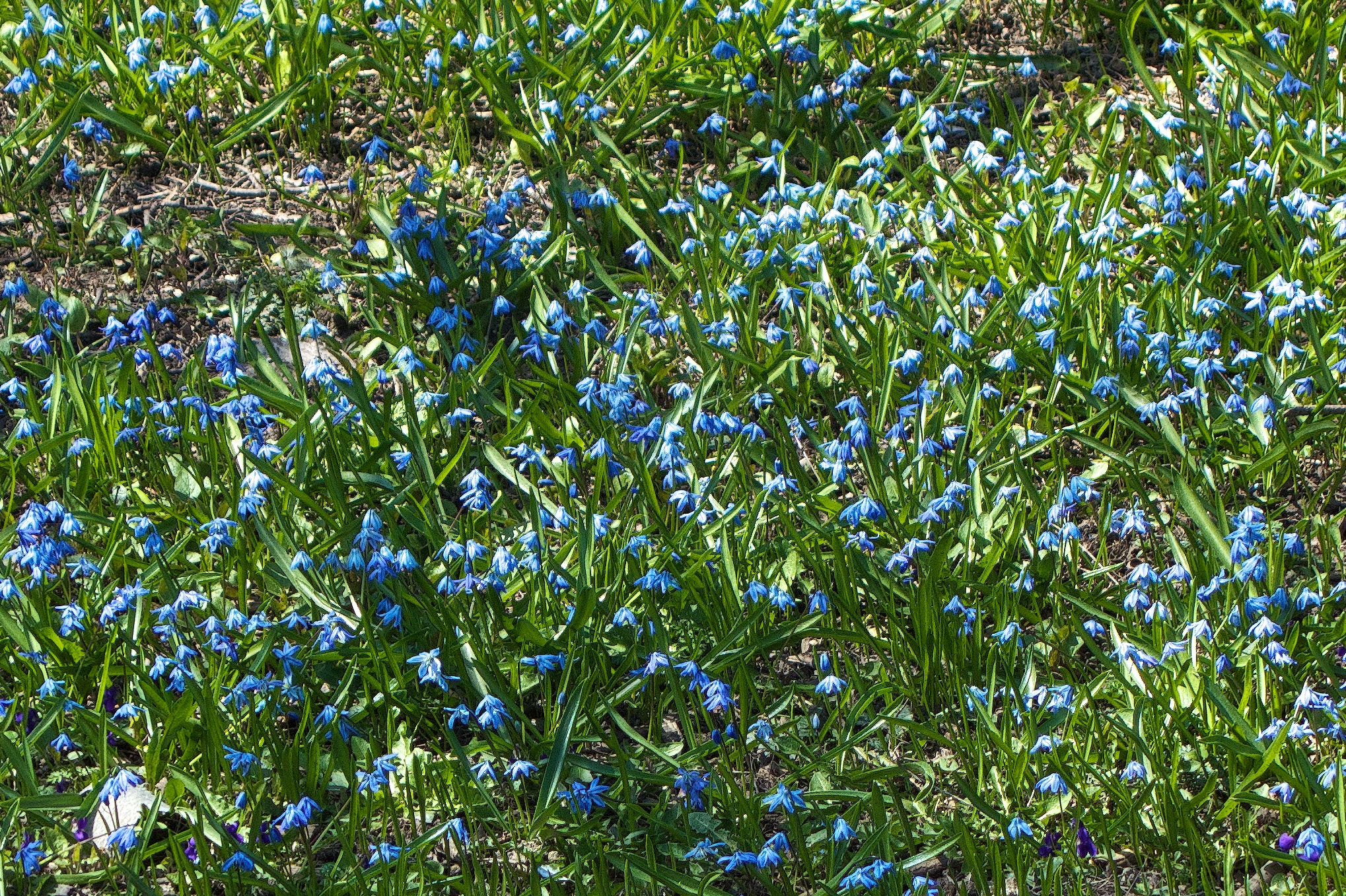
These bluebells aren’t native but they add a vivid splash of colour.

Bluebells at the edge of the park.

Bluebells at the edge of the park.

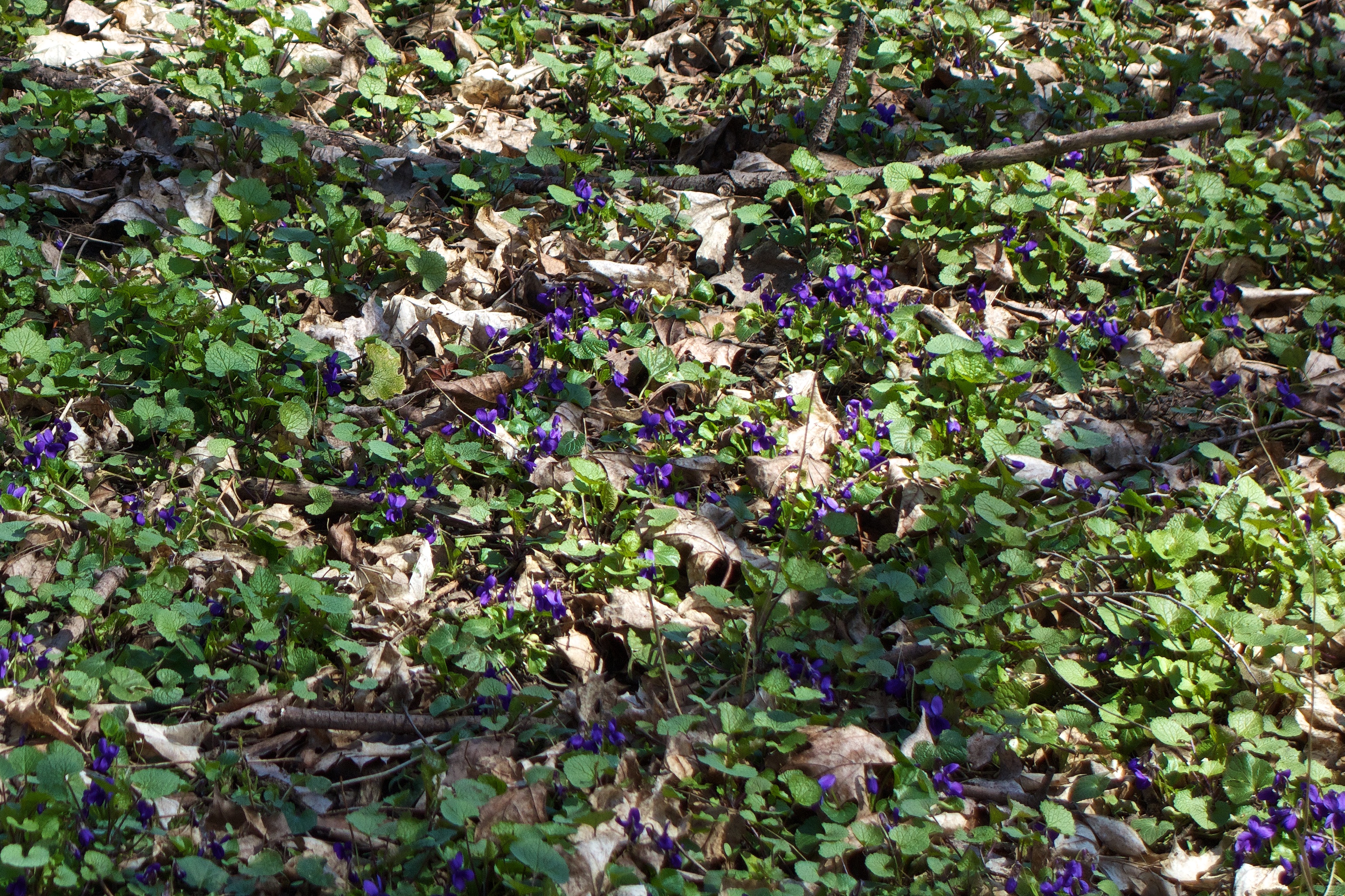
Northern Blue Violets aren’t spectacular but are a welcome addition to the forest floor.

Northern Blue Violet

Northern Blue Violet

Not a trace of trilliums unfortunately. I suspect they were dug out long ago.


Finally, signs of spring.

Finally, spring has arrived – only a few weeks late. The grass has turned green. People are out in force and the weather is quite pleasant.

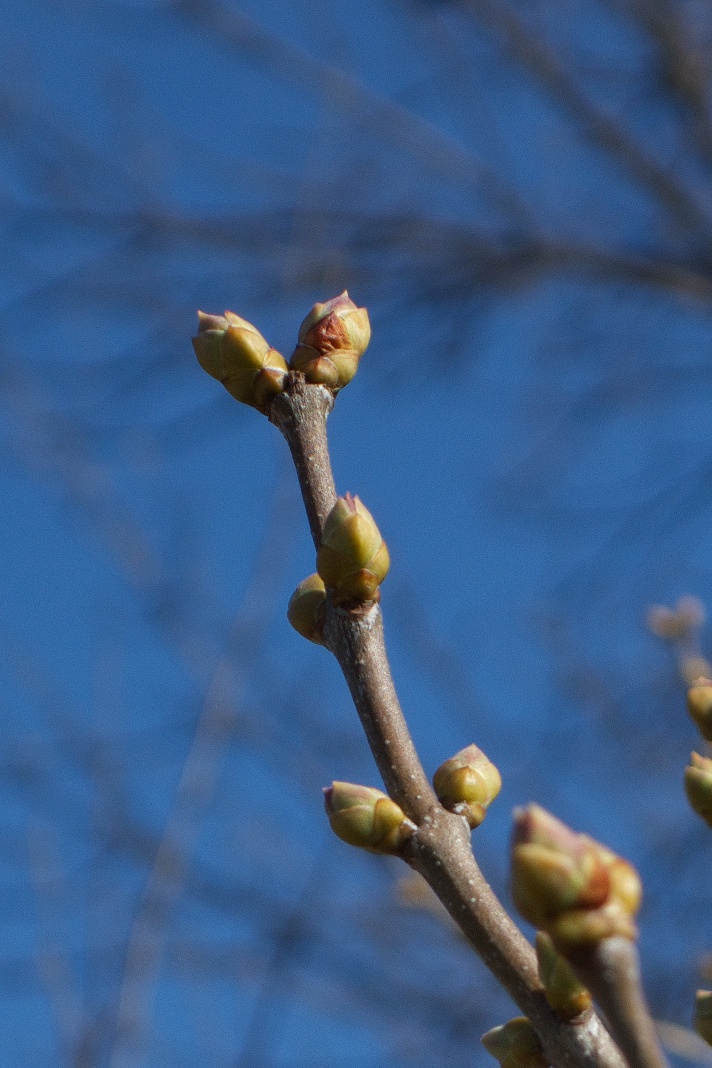
Lilac is starting to bud.

Lilac is starting to bud.

It will be a while before trees come into leaf but non-native trees such as Norway Maple and this lilac get a head start on their native cousins. We’ll probably have to wait another month before sumac and black walnut have leaves.

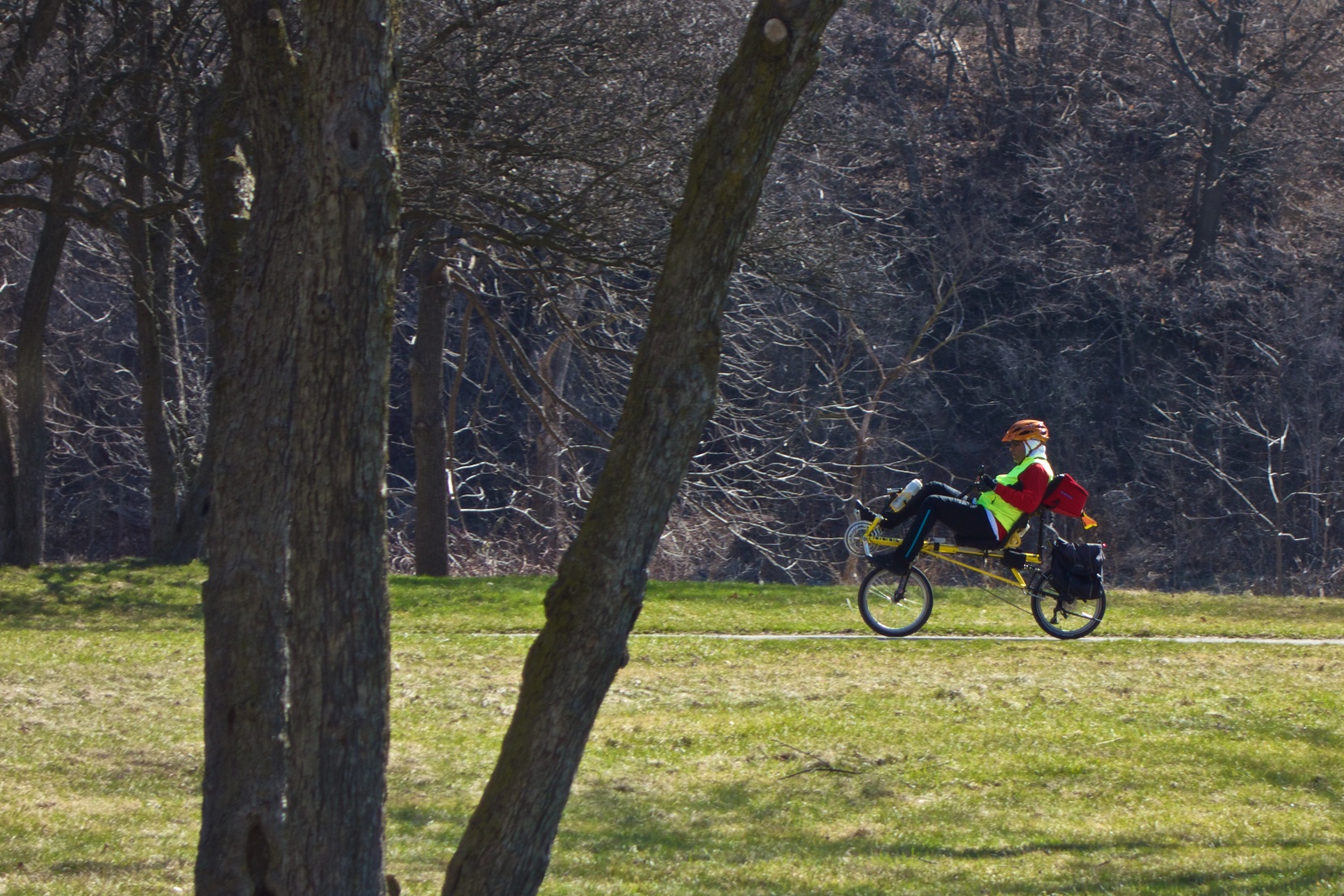
A recumbent cyclist makes his way through newly greened grass.

A recumbent cyclist makes his way through newly greened grass.

The cyclists are back – some more aggressive than others. I hate the weekend Spandex warriors who sneak up on you and ring their bell when quite close. My language often becomes quite blasphemous on those occasions.

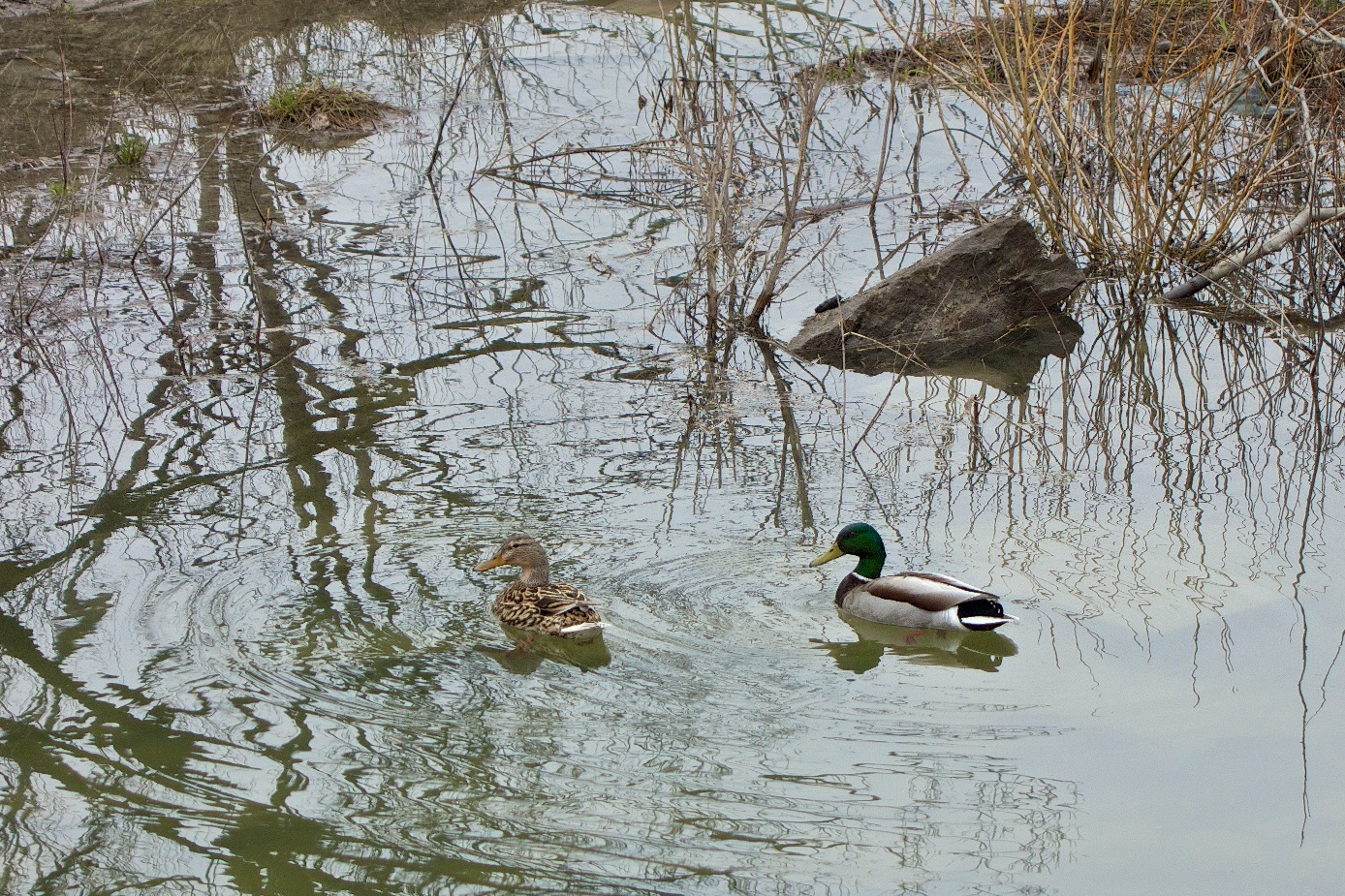
Ducks like their temporary pond.

Ducks like their temporary pond.

These mallards are still occupying the small pond that forms in the spring. I just hope the water level stays high for them.

Winter storm

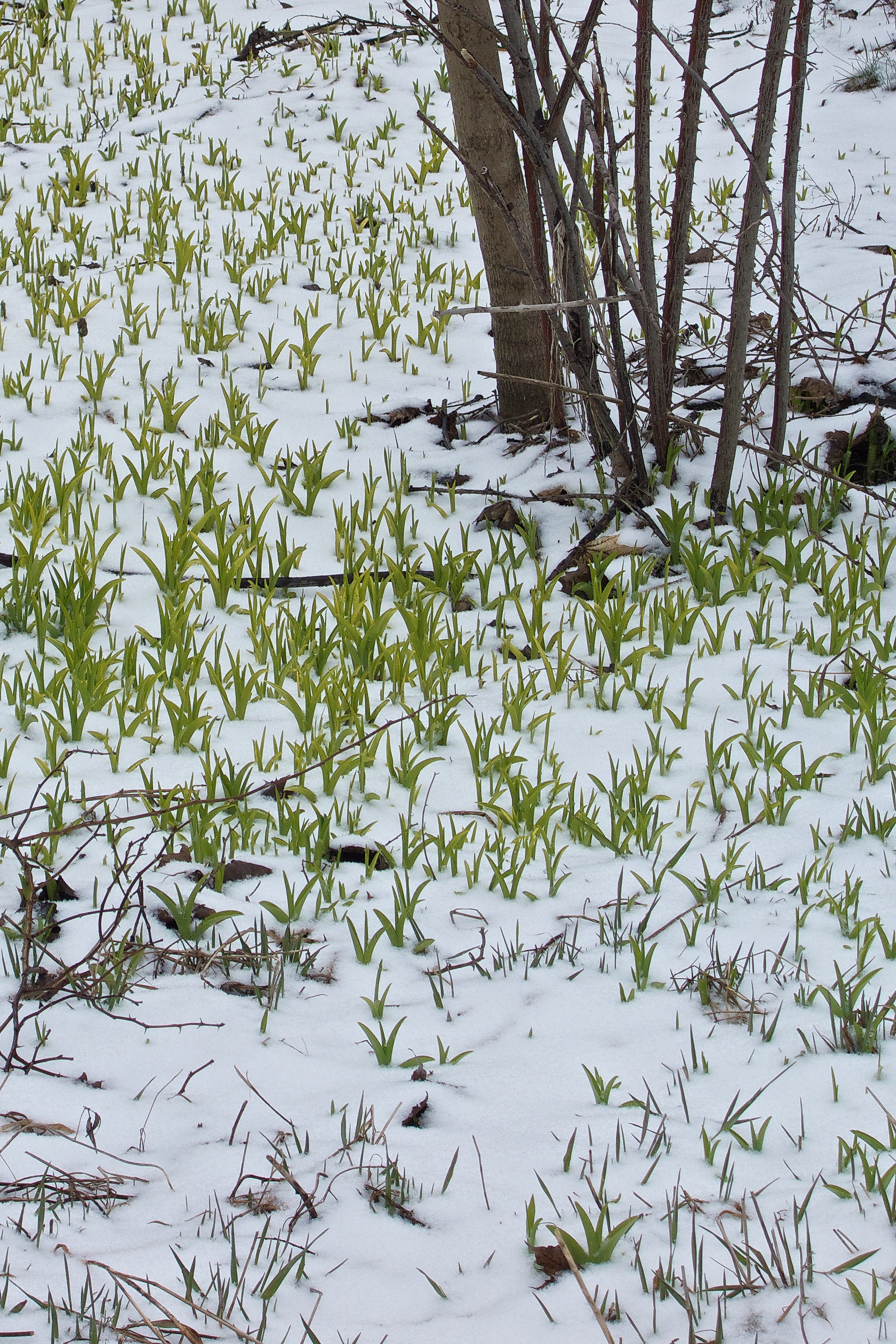
Day lilies are shocked I tell you.

Day lilies are shocked I tell you.

The park was cold and snowy today and a fresh covering made it look like January except for bright green new growth sticking out through the snow. These day lilies are probably remnants of gardens that belonged to homes destroyed during Hurricane Hazel.

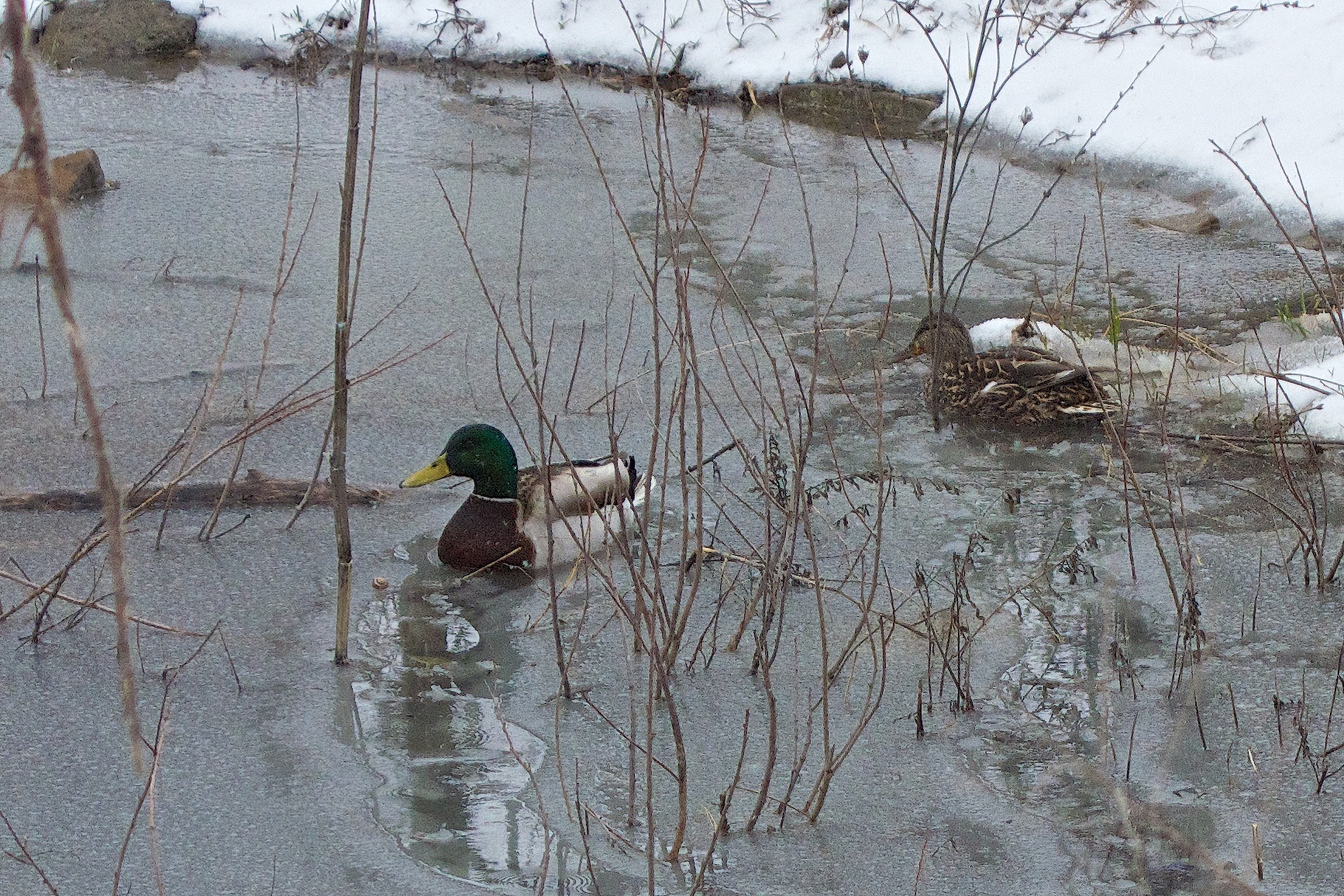
A pair of Mallards swimming around a temporary pond were taking refuge from high water in the river. I was careful to stay well clear so that they weren’t disturbed.

Ice is forming in April!!

DSC01427

Couple of shots

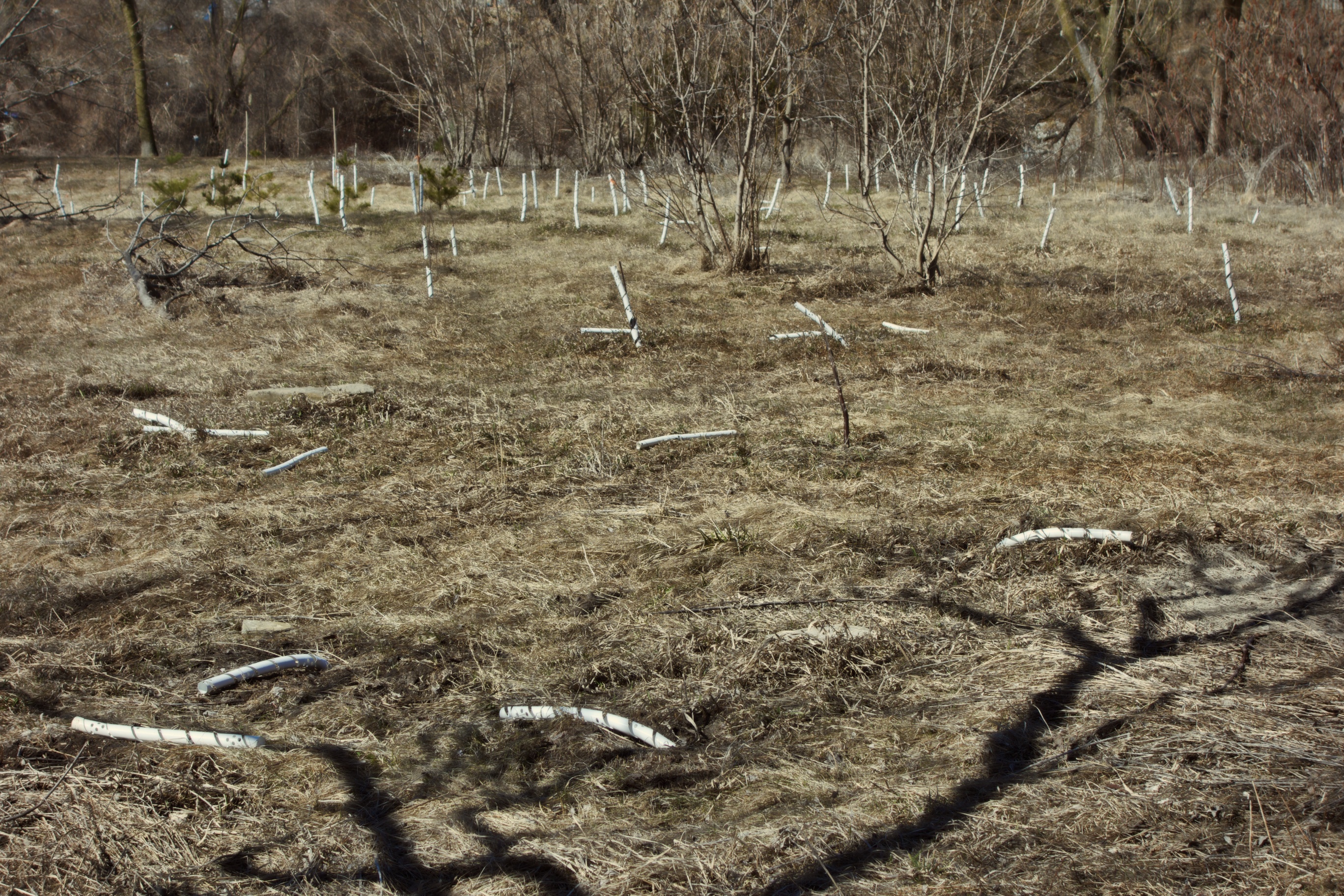
Spring has yet to impose itself on this part of the world although the ice left along the banks of the Humber has almost all melted. A sad testament to the nursery trees torn up by the ice is the spiral plastic protectors which somehow have remained.

Native trees were planted here two years ago - some didn't make it through the winter.

Native trees were planted here two years ago – some didn’t make it through the winter.

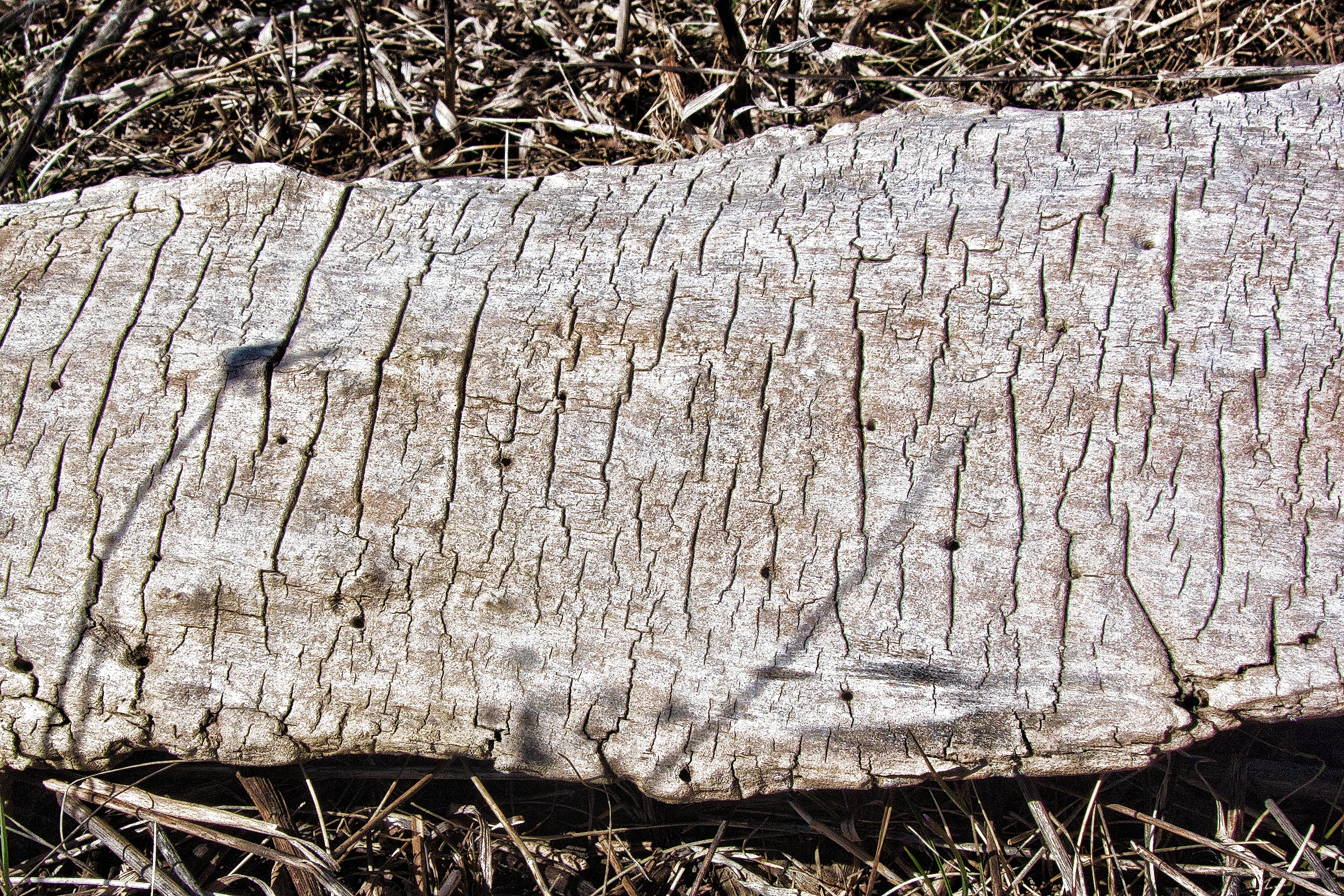
This weather-beaten piece of driftwood was left behind by melting ice and has a nice texture.

Tons of material gets left behind when the ice melts.

Shadows on driftwood.

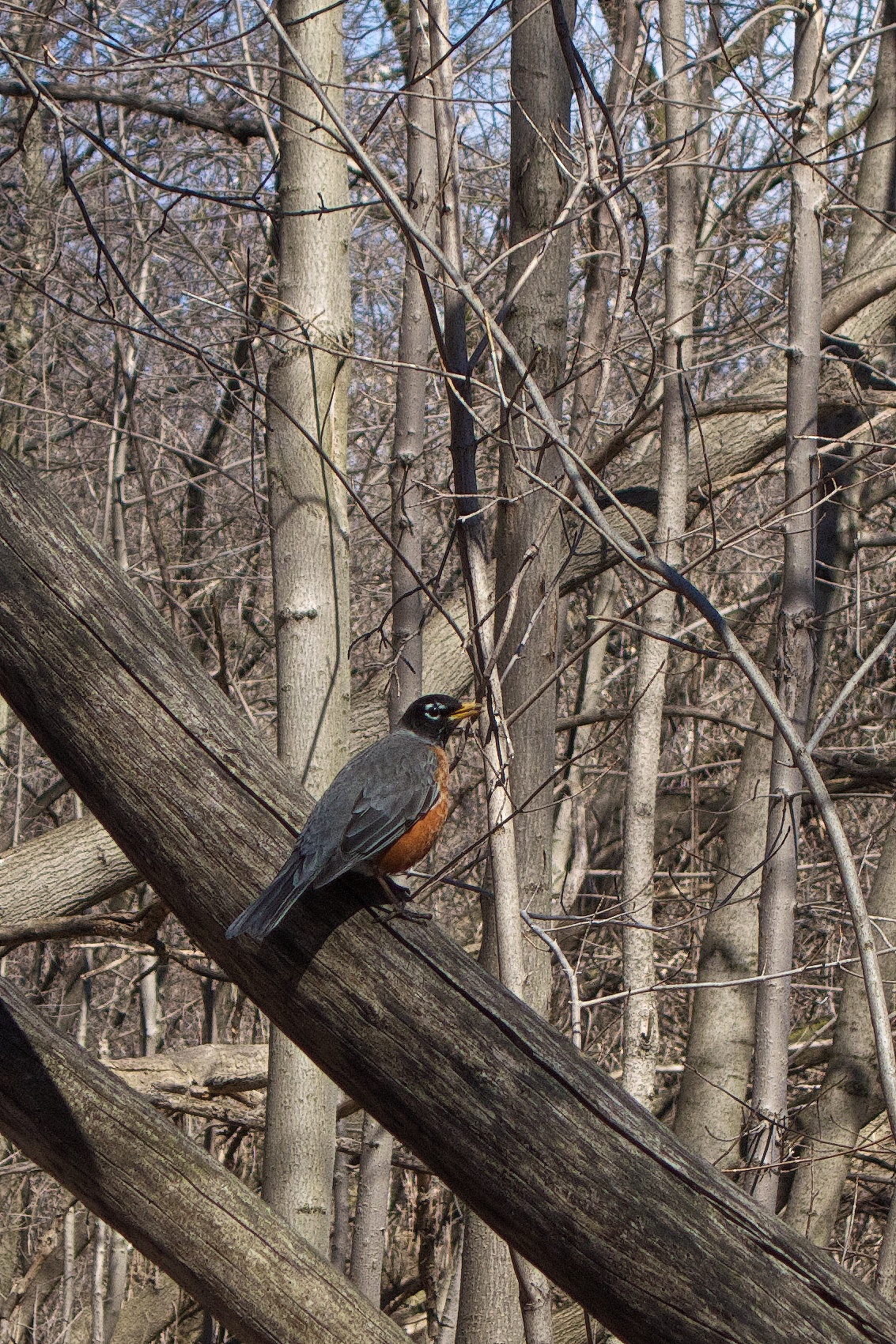
A good variety of birds was making the most of today’s strong sunshine. This robin posed nicely for me.

This one seems well fed!

This one seems well fed!

It’s the canine cops…

Tag, you're it!

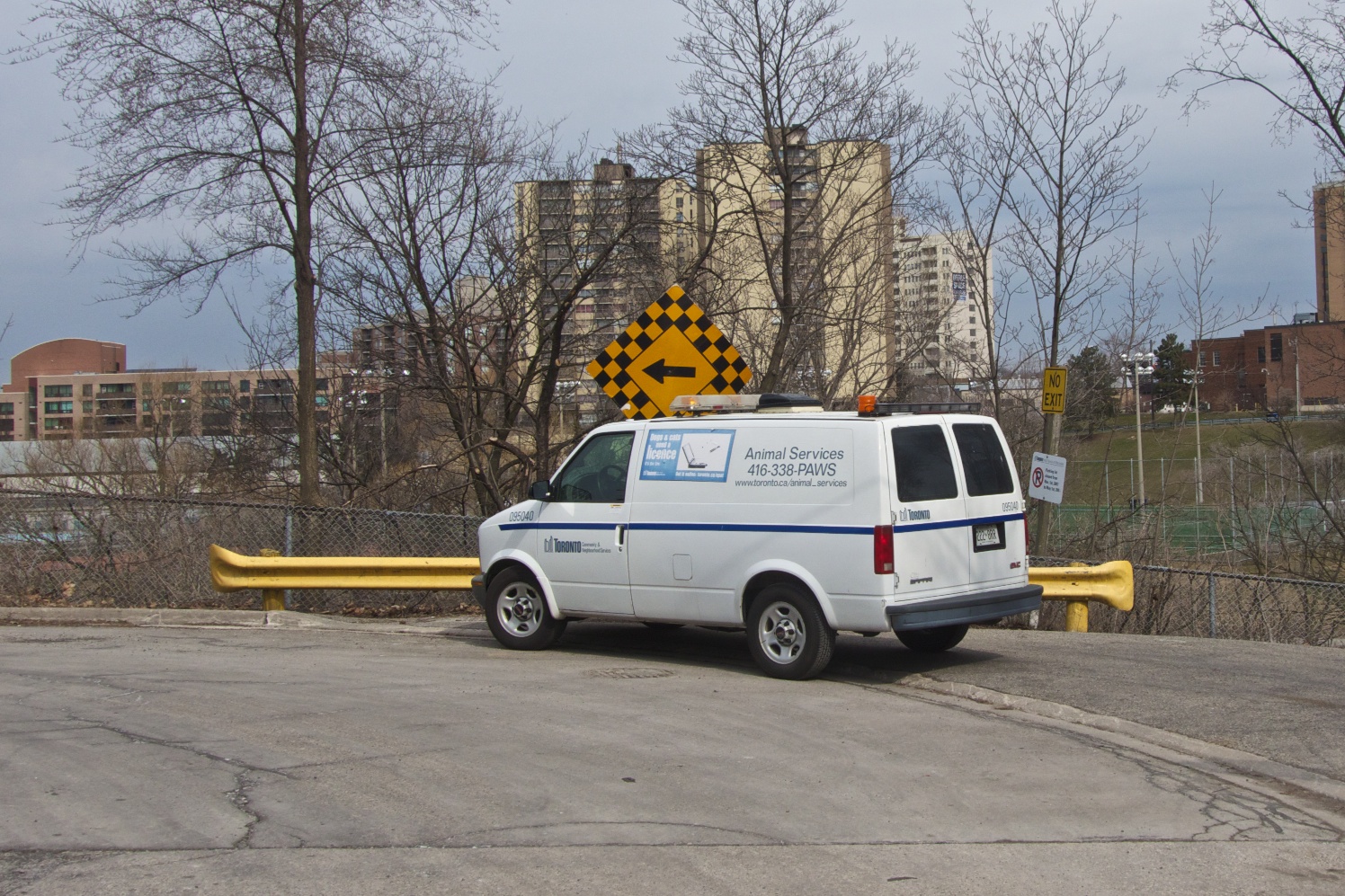
Dog tag please. Animal Services van by the Raymore Drive entrance to the park.

Today a lady from Animal Services was checking tags for a while. She walked from Raymore Park all the way along the path to Lions Park, checking tags along the way and extracting addresses from those unable to produce said tag.

According to the City Auditor, only about 30% of Toronto’s dogs are licensed. Actually, from what I have seen, the auditor’s estimate is quite high. Others put it closer to 10%. This is the first evidence I have seen of Animal Services in a long time. A few years ago they used to have quite a strong presence and an A.S. employee used to watch dog owners through binoculars, checking for by-law infringements. This was around the time that A.S. hired students to go knocking on doors and peering in windows, looking for evidence of dogs and cats. There was a bit of a public outcry against such draconian measures and Mayor Rob Ford mused that license fees should perhaps be abolished since they bring in very little money.

Apparently abolition must have been taken off the table – in addition to the ‘stick’ of fines for unlicensed dogs, A.S. is looking at the ‘carrot’ of discounts for doggy products and services if dog owners can prove their pet is licensed.

If they really want to enforce the tags, A.S. should enlist the help of vets throughout the city and allow them to issue tags – the vets would get a piece of the action and could offer a discount on some services. They could perhaps pay for or subsidize a pup’s tag on its first check-up. Once a dog is in the system, it’s likely to stay and the renewal fees would roll in for years.

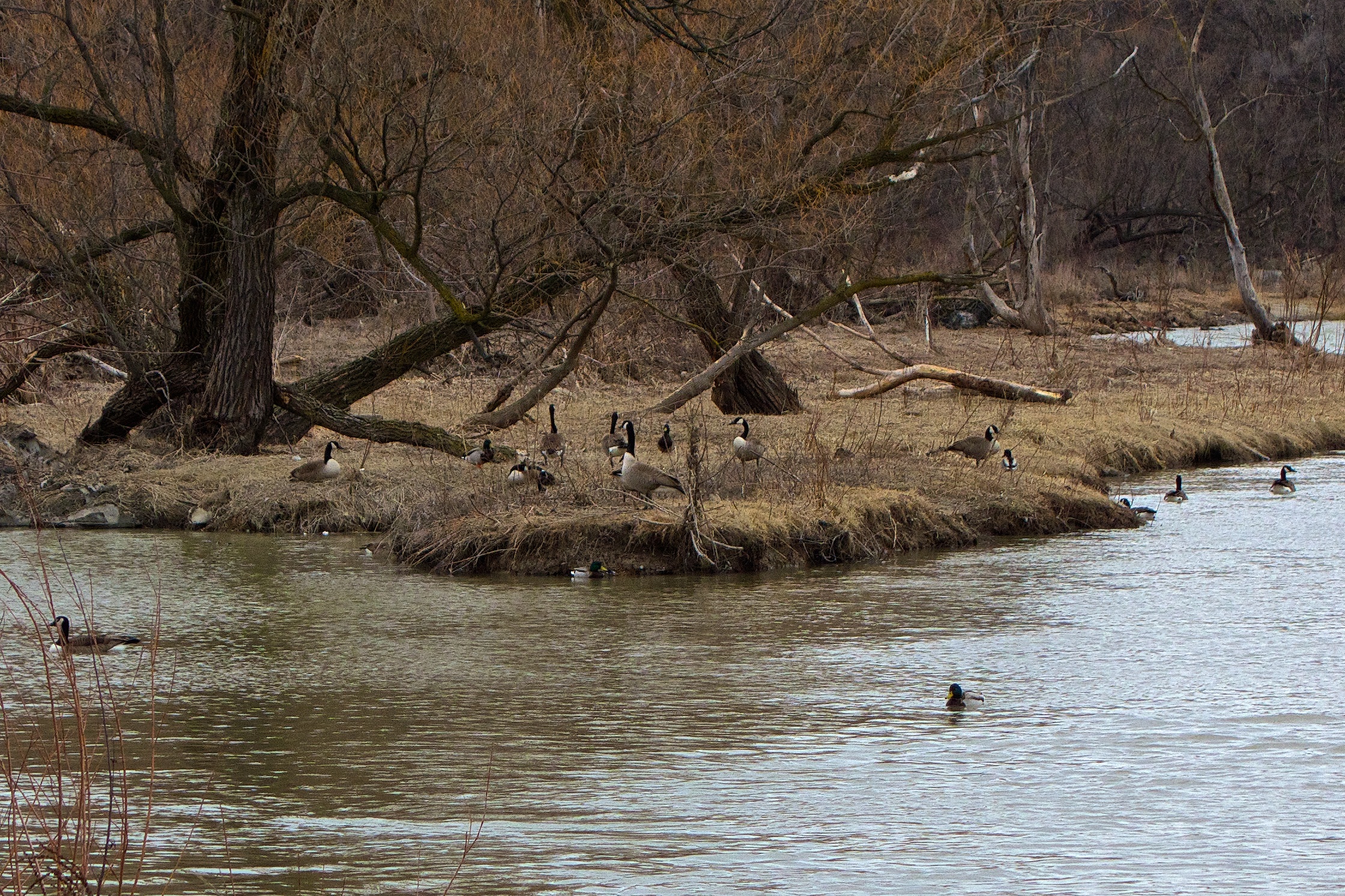
Meanwhile, in the park, birds are frantically mating and nesting and taking advantage of the mild temperatures before the mini cold-snap that is expected this week.

Lots of activity by the river.

Lots of activity by the river.

Park pariahs

Yesterday I encountered two people in the park who, although well meaning, are a detriment to wildlife.

How long have we known that bread is bad for ducks and geese?

How long have we known that bread is bad for ducks and geese?

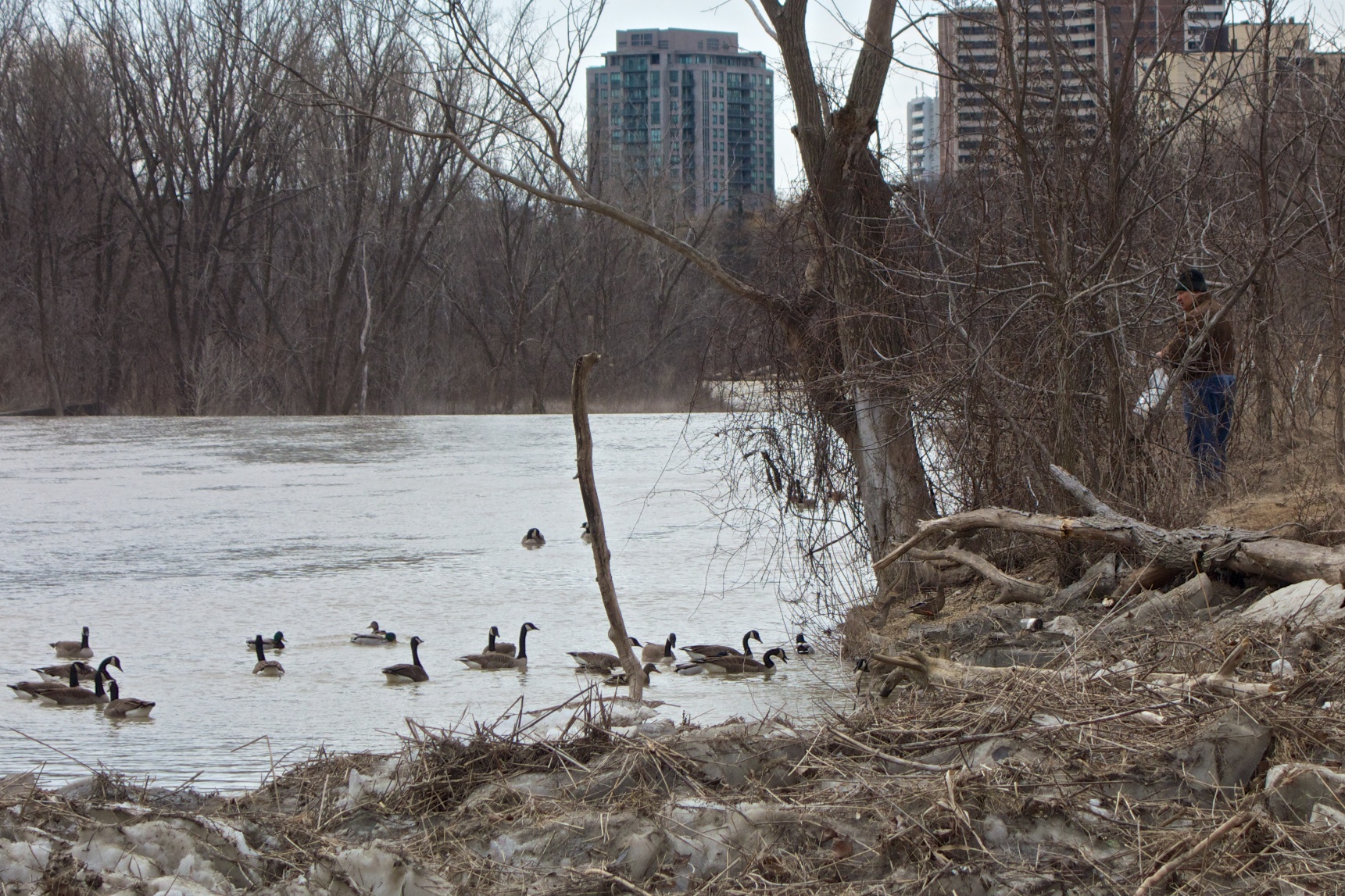
This old boy is one of a few who regularly feed Canada Geese and Mallards at this spot just above the weir. In fact, anytime you approach the water in this area, birds will swim over anticipating a free (but potentially harmful) meal.

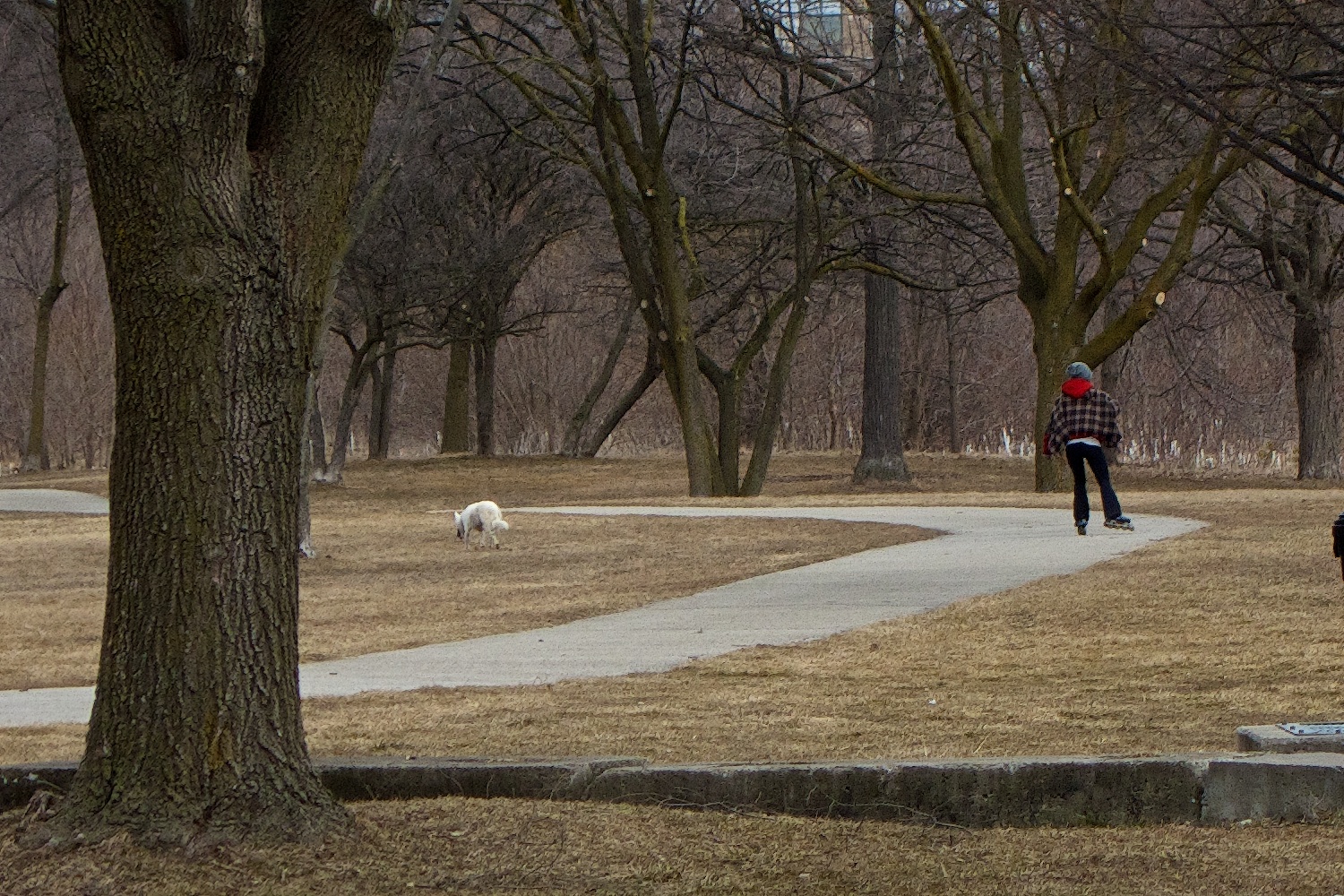
Here’s pariah number two. She was skating along with her very active dog off leash, no doubt congratulating herself for exercising the unfortunate animal. As I approached with my dog, it was evident she had no leash and had to hold onto her dog’s choke chain in order to keep it close. All this without missing a stride!

I'm such a free spirit, I don't leash my dog.

Such a free spirit, she doesn’t even bother bringing a leash.

Once she passed us, the dog was released and went on its way, flushing wildlife in its path. I have never seen this young lady and her dog before and probably won’t see her again but it’s hard to understand how people can be so cavalier about the responsibility of animal ownership and the effect an uncontrolled dog has on wildlife in a park setting.

Dreamy water.

Dreamy water

Dreamy water

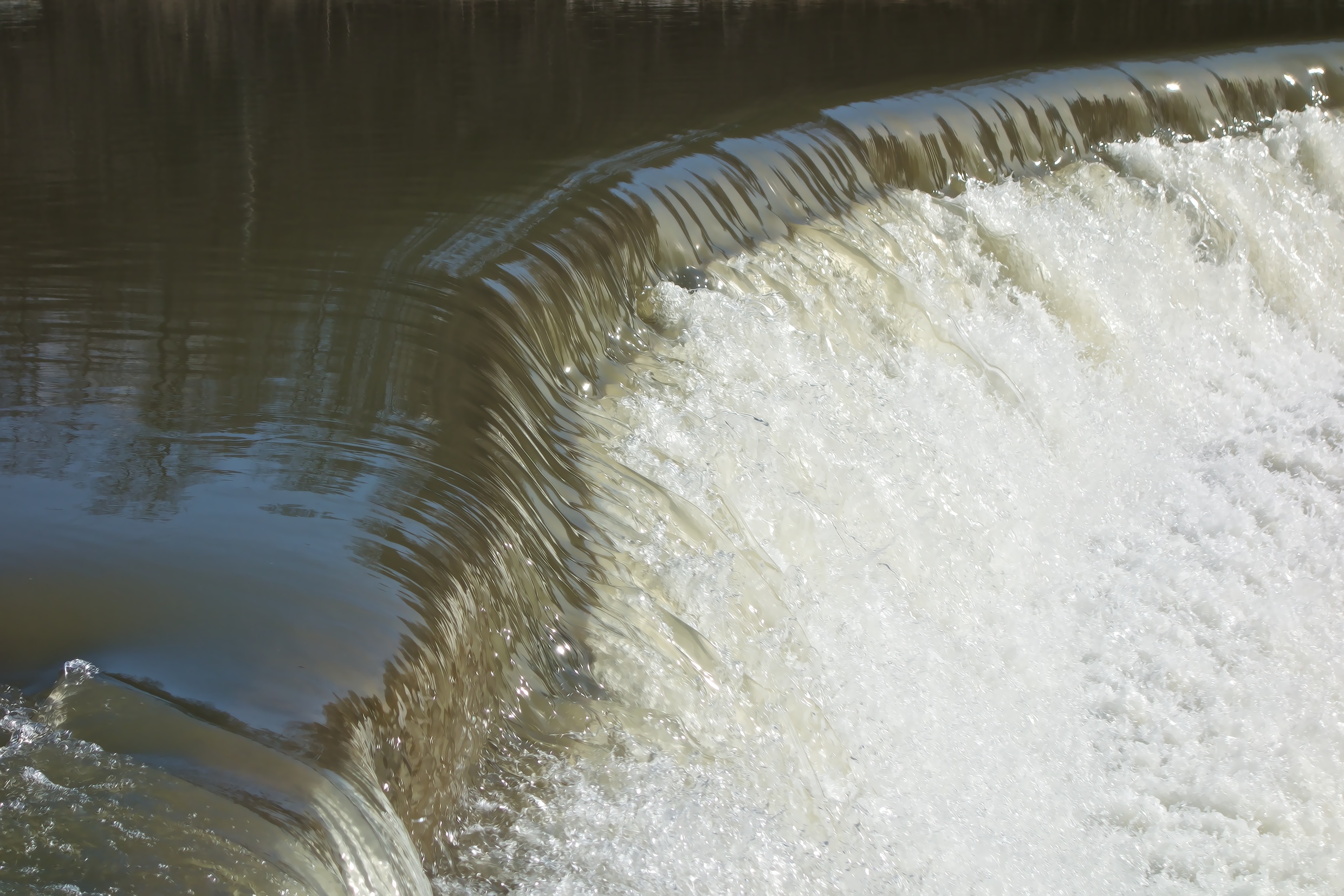
I continue to be fascinated by the sheen of the water as it slides over the weir and have stylized this image with the help of a Topaz filter or two.

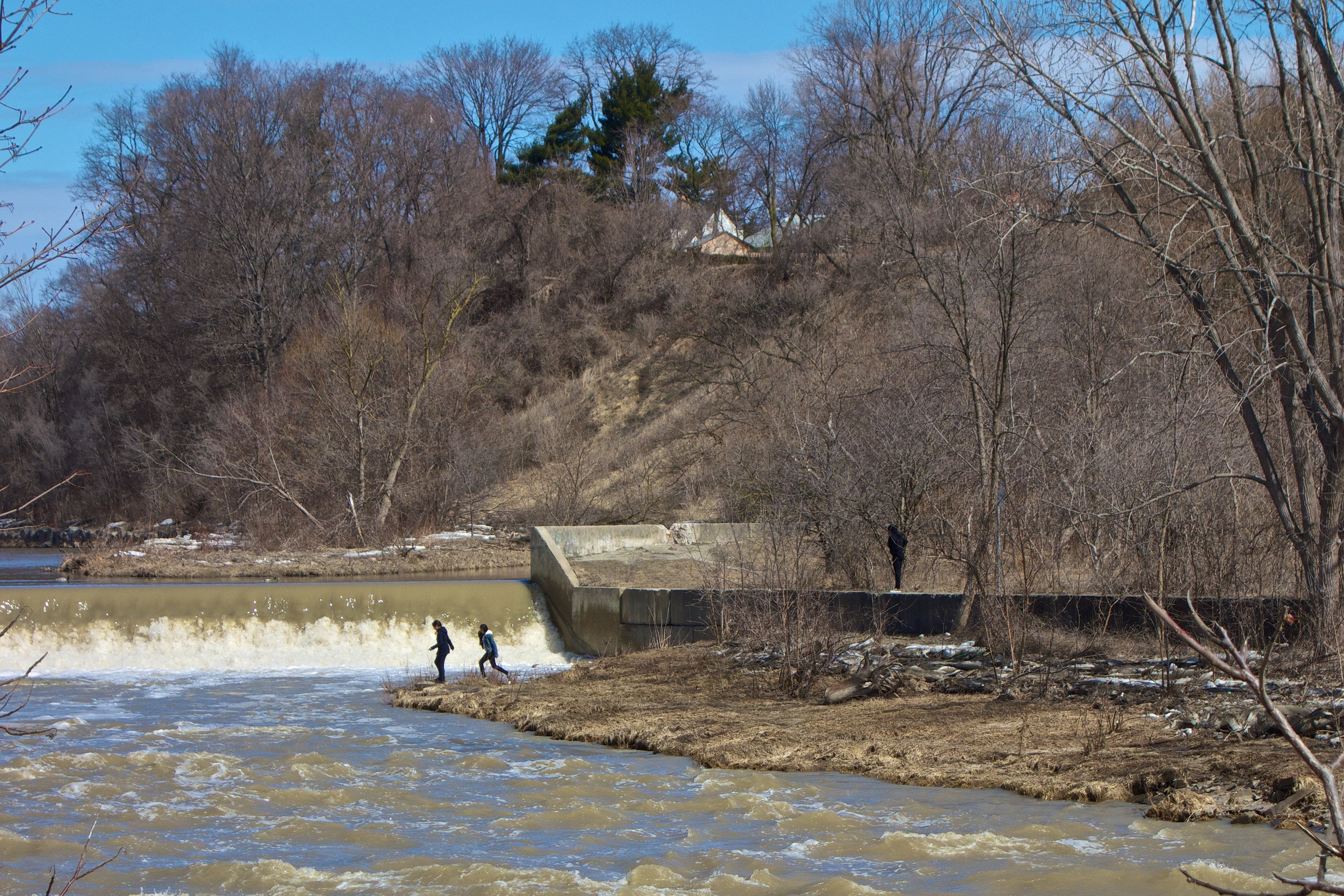
The water is higher today as a result of melting snow further north.

Students from a nearby school help give some scale to the weir.

Students from a nearby school help give some scale to the weir.

There was a coyote making its way upstream, probably getting out of the way of the students below the weir who were well, being kids. Snow has melted from all but the shadiest parts of the park and spring is off to a slow but long awaited start.

Winter drags on.

More snow today on the edge of a major winter storm that luckily just missed us. Another day of winter is disappointing  to humans but wildlife is really feeling the pinch. There were redwing blackbirds in the park a few days ago but there’s no trace of them now. Nothing has budged from its winter state so spring is still some time away. Because of thick cloud cover, the more powerful March sunshine is neutralized.

On days like these, I usually have the park to myself.

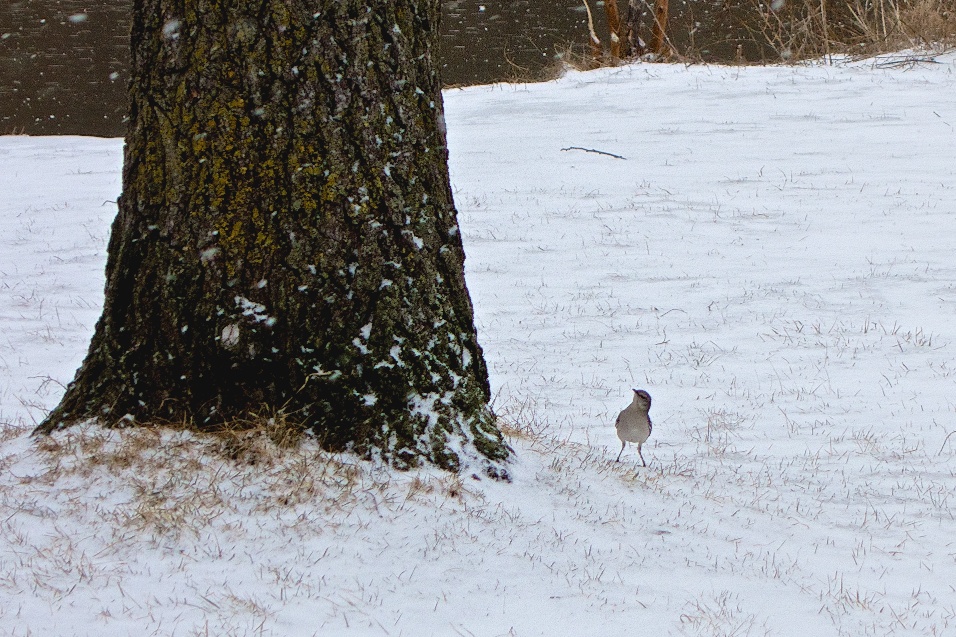
A Grey Jay(?) looks for food.

A Grey Jay looks for food.

Fresh snow covers the ground and the temperature barely cracked 0°C today.

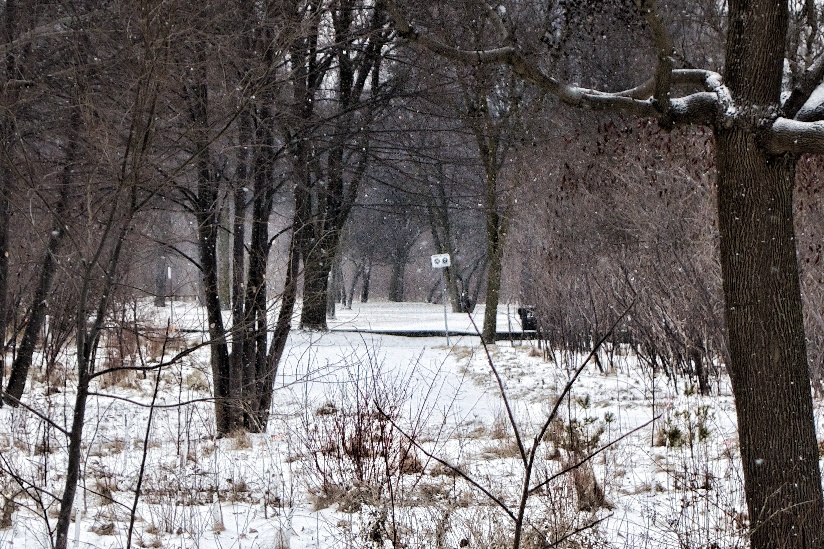
Looking north along the path by the weir.

Looking north to the path by the weir.

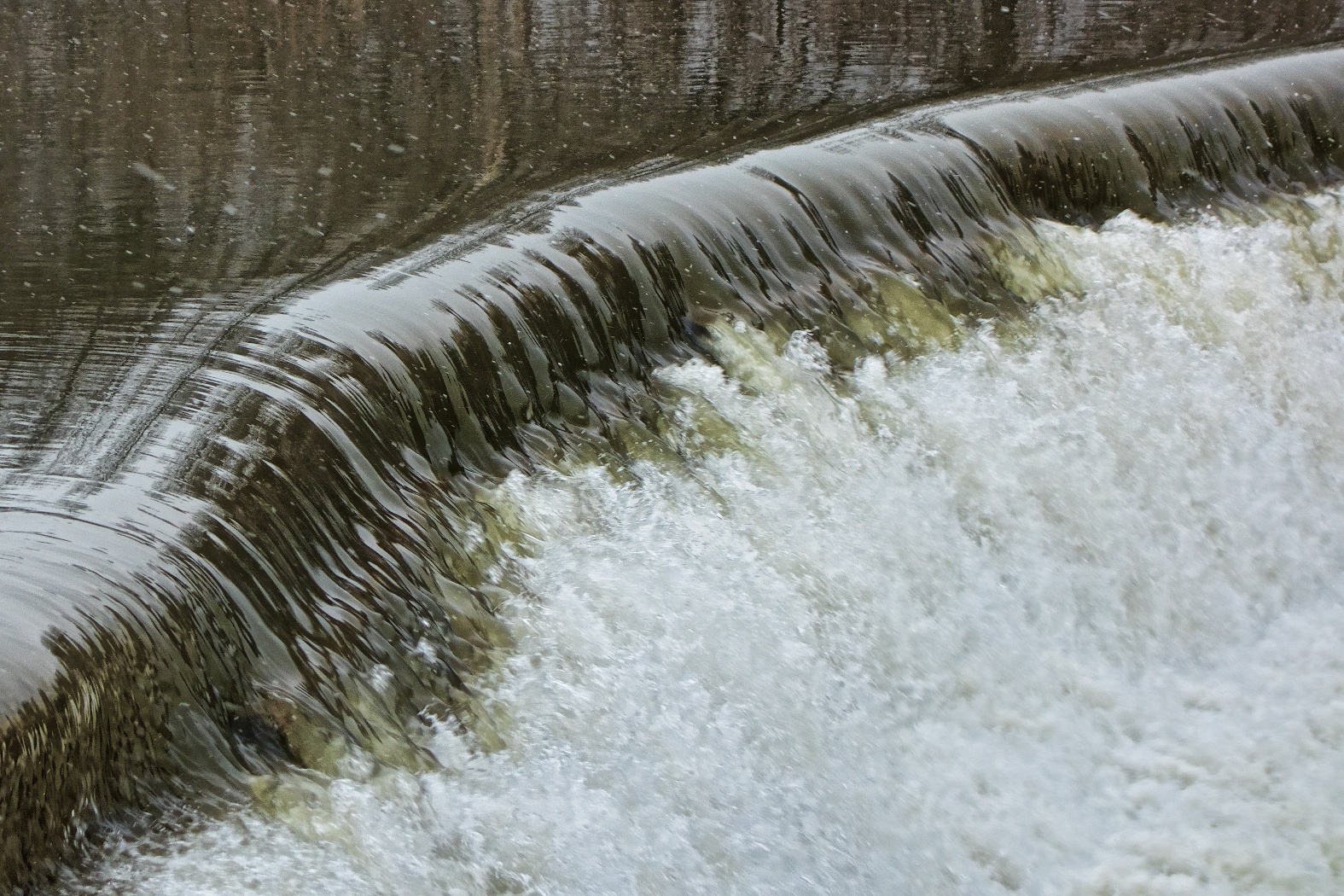
At the weir the water had an interesting oily look that the camera was able to capture quite nicely.

Snow flakes and oily water.

Snow flakes and an oily texture you can almost touch.

Bitter cold; shy ducks are named.

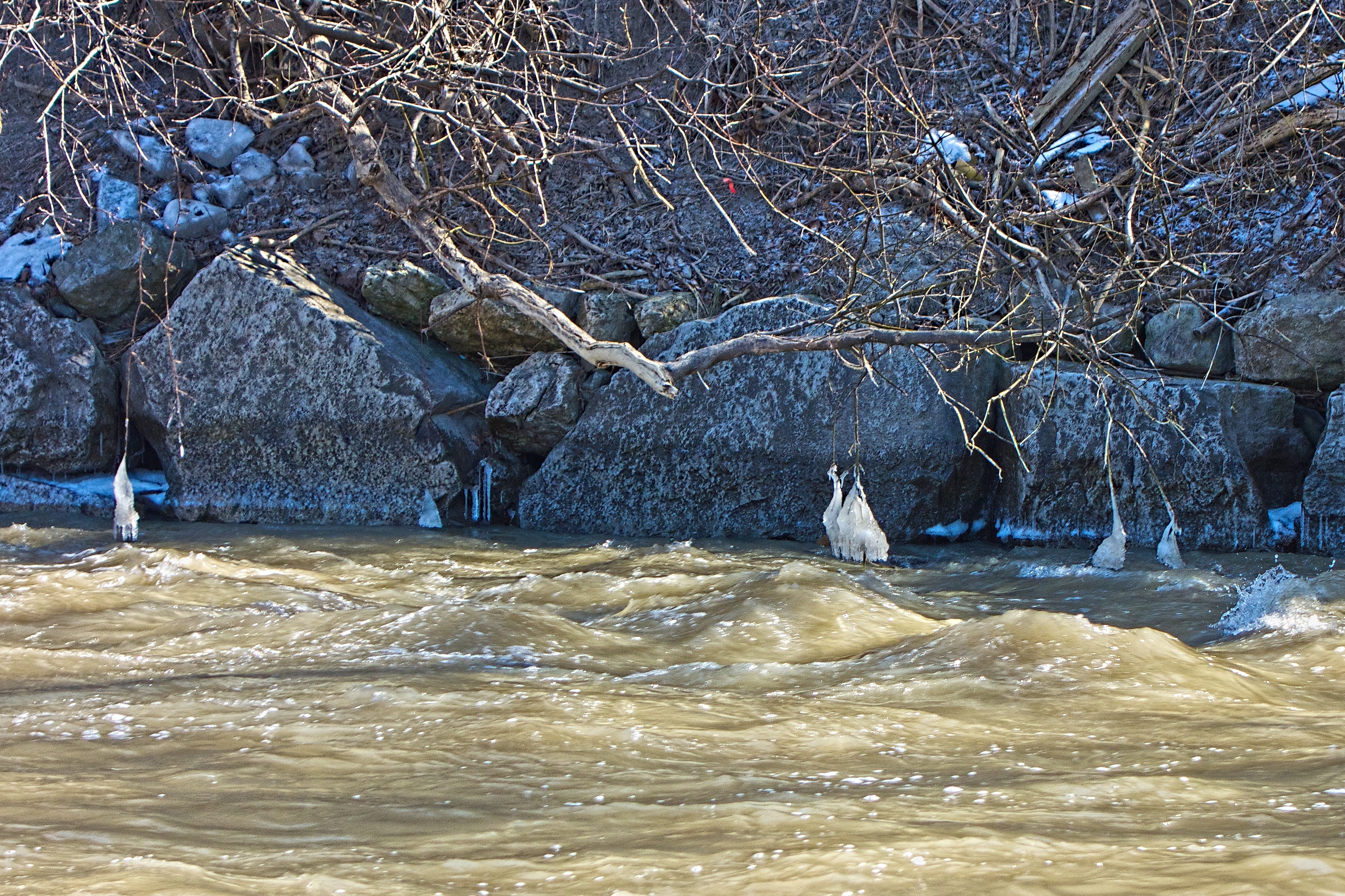
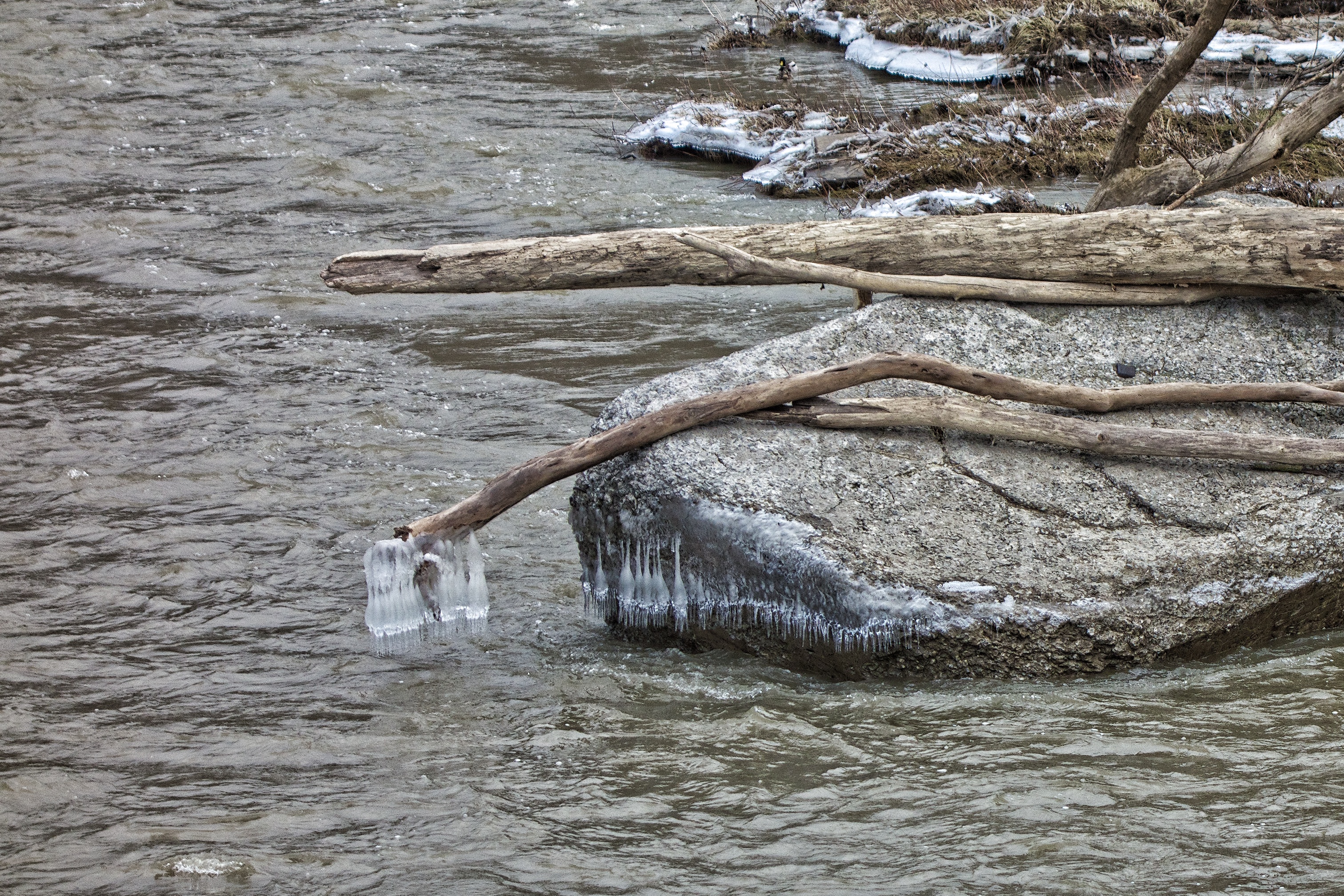
The sun is almost at 45° in the sky at noon and yet the cold persists. I discovered this phenomenon along the banks of the Humber where some branches dangling in the (receding yet rough) water have picked up ice in the same way that candlemakers make candles.

There's got to be a name for these - dingicles?

There’s got to be a name for these – dingicles?

Beautiful specimens on the old bridge abutment.

Beautiful specimens on the old bridge abutment.


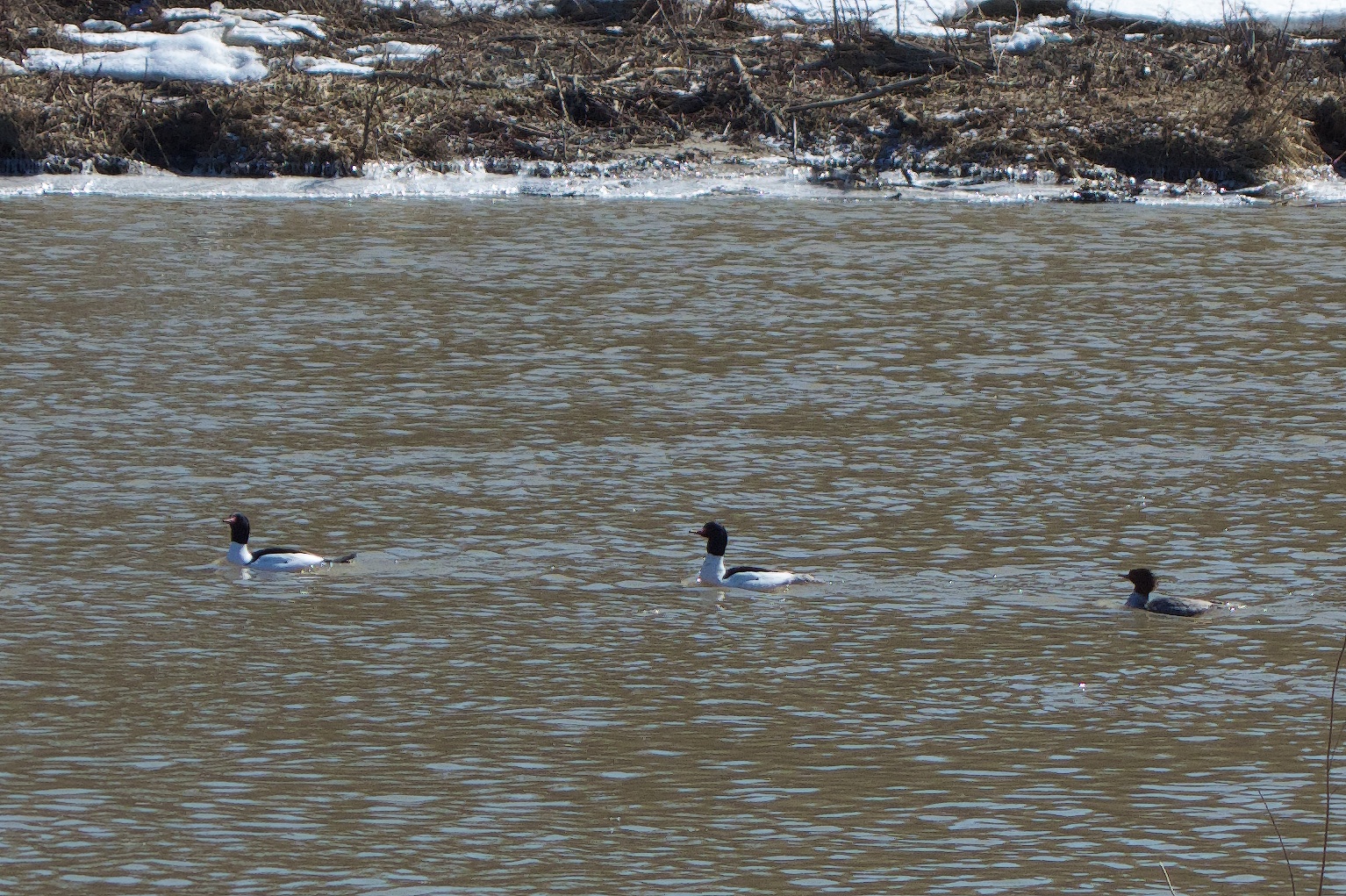
I managed to get my closest yet to the mystery ducks and have finally recognized them thanks to Professor Google.

Common Mergansers.

Two males and a female (not so) Common Mergansers.

They are Common Mergansers – a name that I don’t remember hearing before – but that could be me.

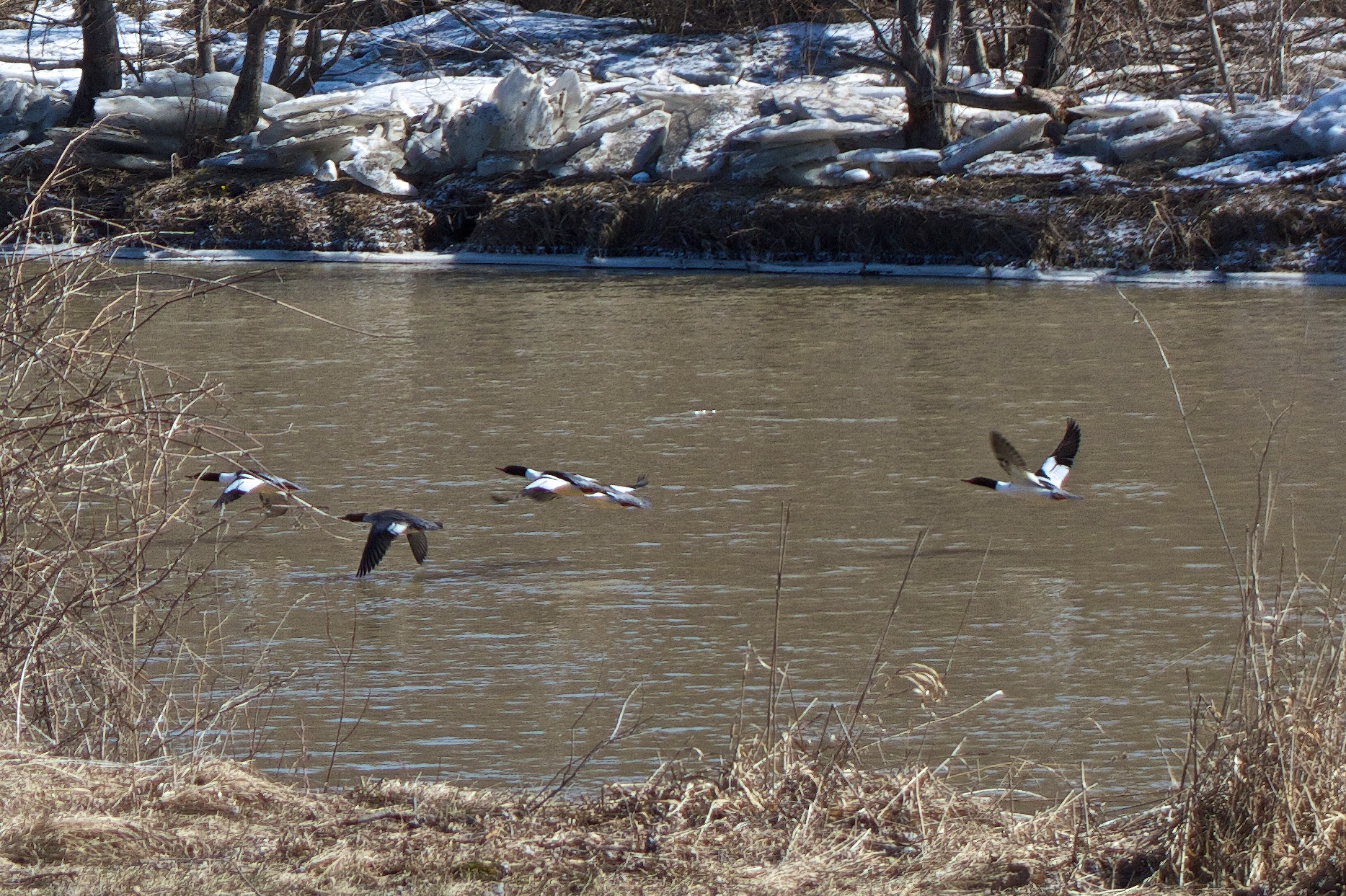
These shy ducks don't like humans.

These shy ducks didn’t like my presence and moved upriver.

Nesting in tree cavities, Common Mergansers, found all over North America dive to feed on fish and other aquatic animals. They make a nice change from the usual Mallard ducks who are considerably tamer.