In praise of Staghorn Sumac

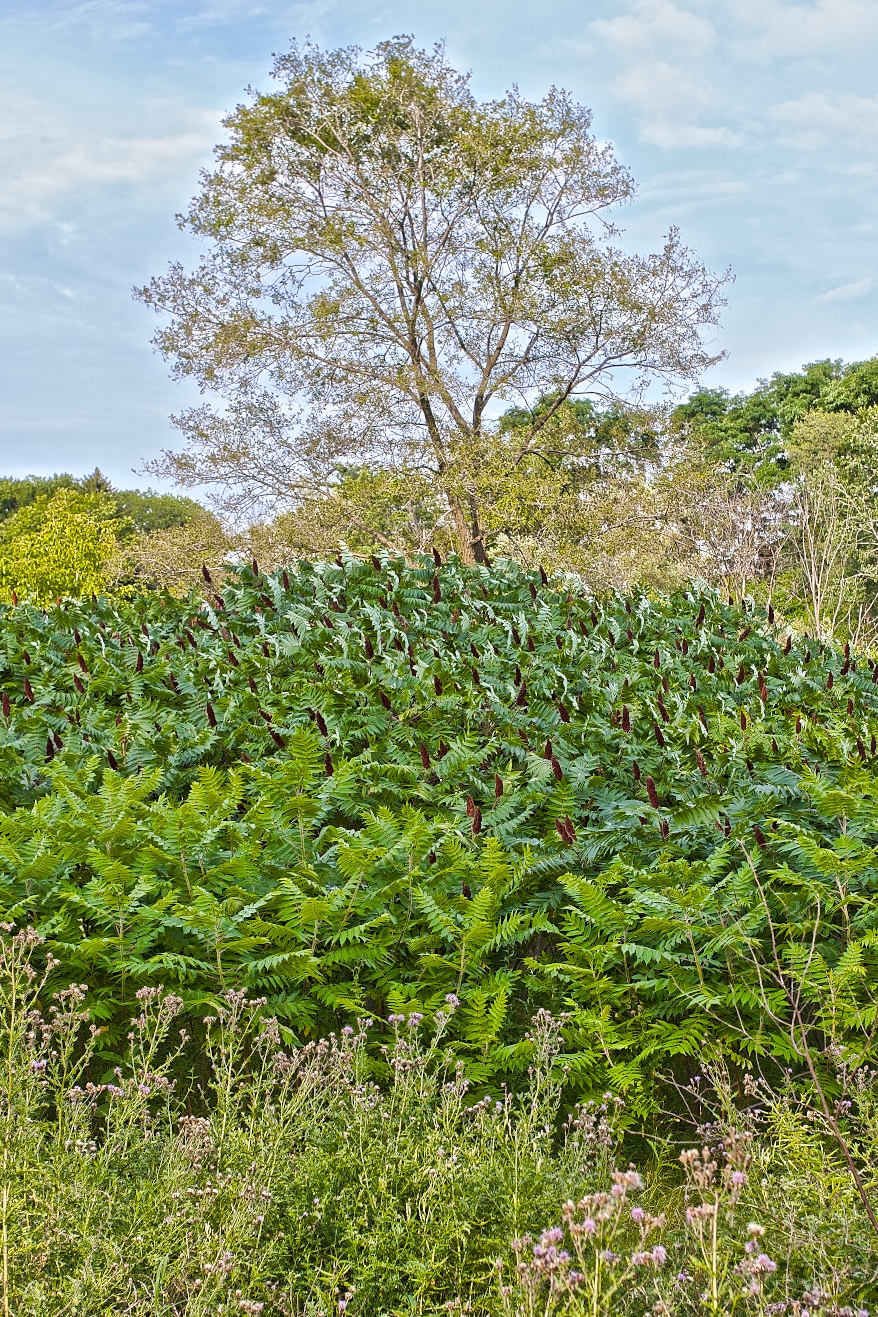
Staghorn sumac is a wonderful plant and there is lots of it in Raymore Park. What’s so wonderful?

For starters, it’s native and seems to be resistant to pests.

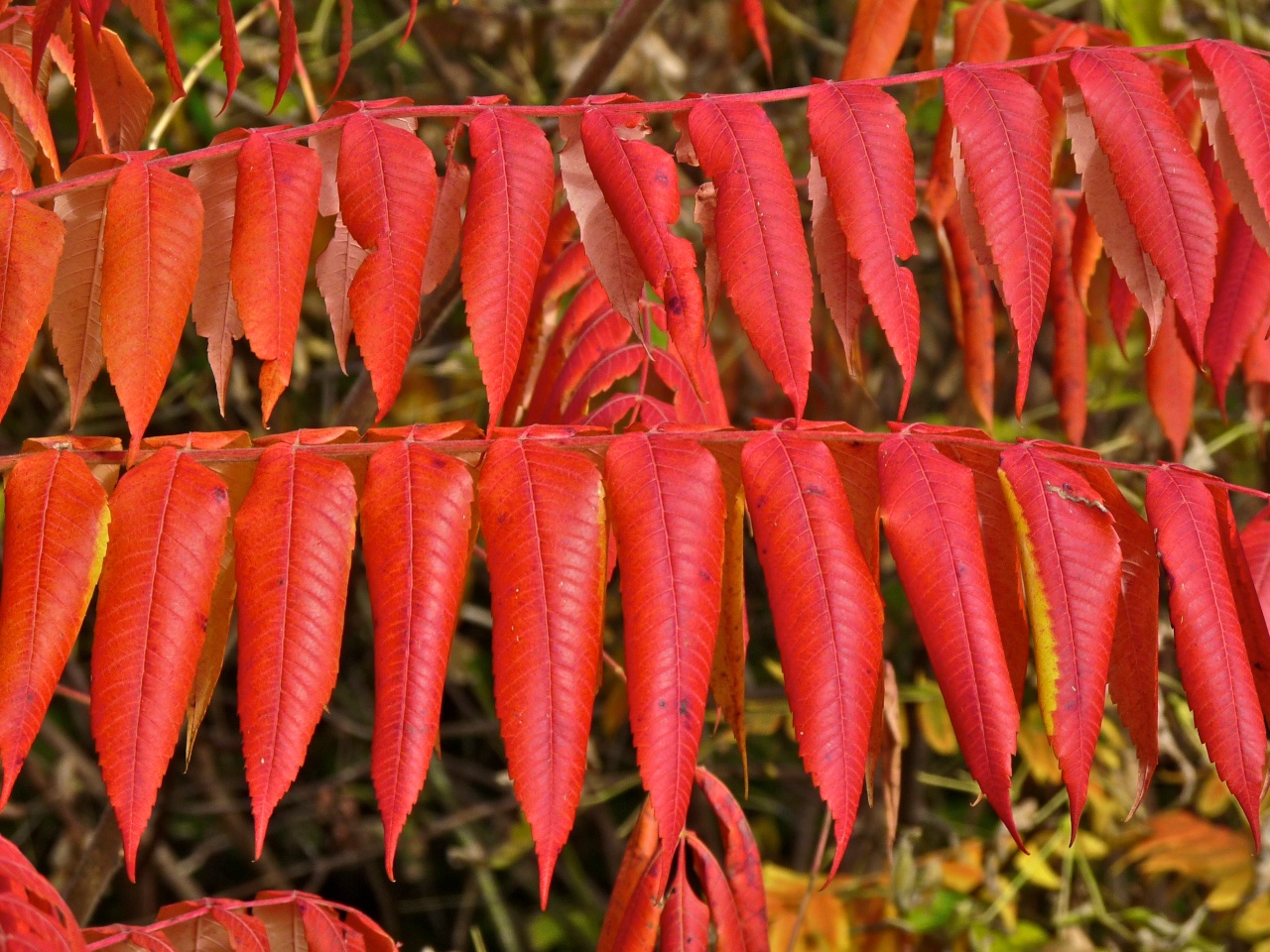
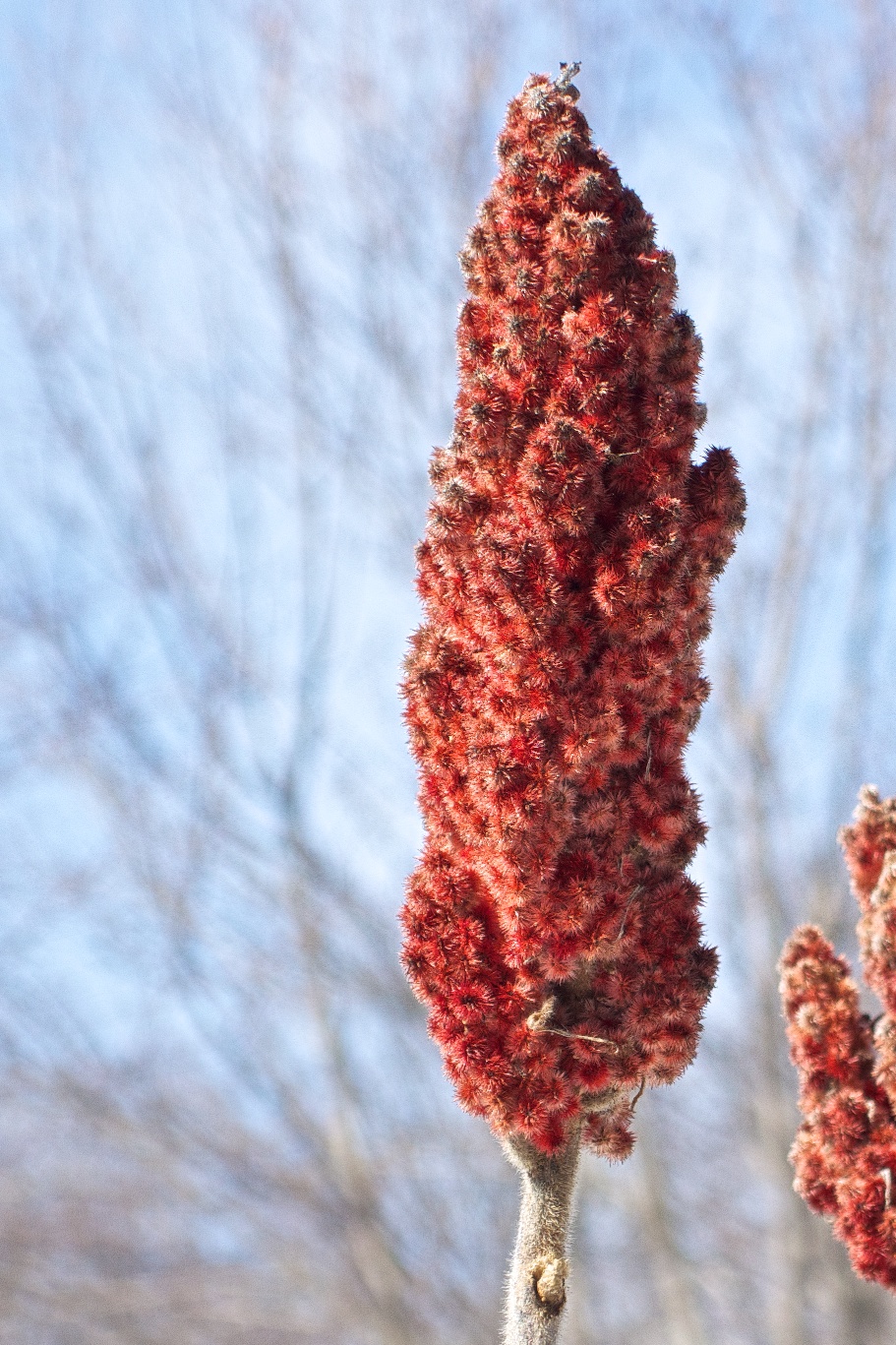
Second, it’s attractive with a kind of tropical look to it in the summer and a vivid red colouring in the fall. Its red flowers stay on the plant all winter.

A stand of sumac in summer.

A stand of sumac in the wild area in August.

Sumac in mid-October.

Sumac, brilliant in mid-October.

A sumac flower (March 9, 2013).

A sumac flower – note the velvet on the stem that gives the ‘staghorn’ name (March 9, 2013).

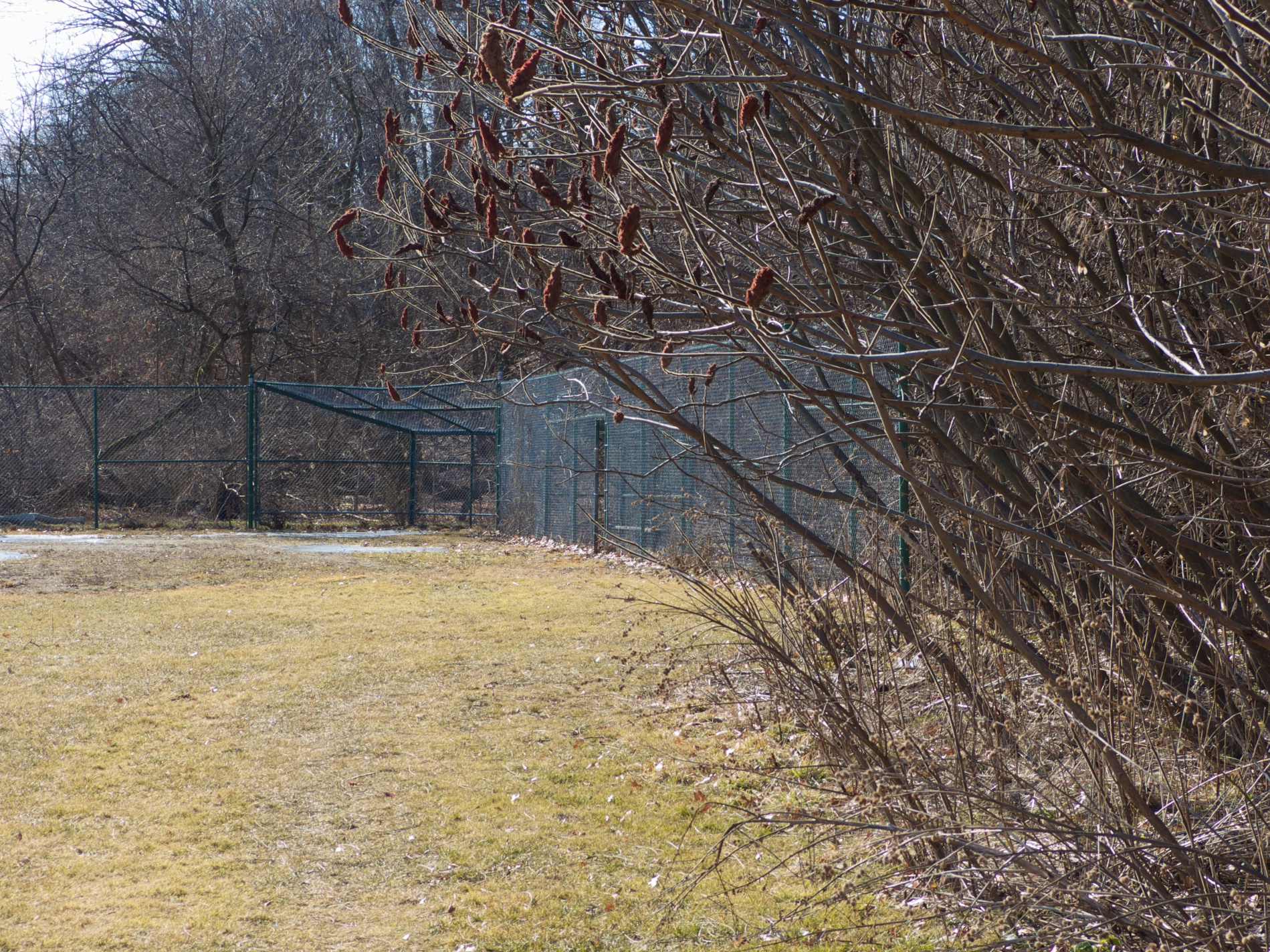
Third, it benefits wildlife by encroaching, in spite of human efforts to control it. Mowers have to give encroaching sumac an ever-wider berth as sumac leans out as it grows, allowing the roots to put out new shoots. Its deep shade starves less worthy plants of sunshine.

This disused baseball diamond is turning into woodland (slowly).

This disused baseball diamond is turning into woodland (slowly).

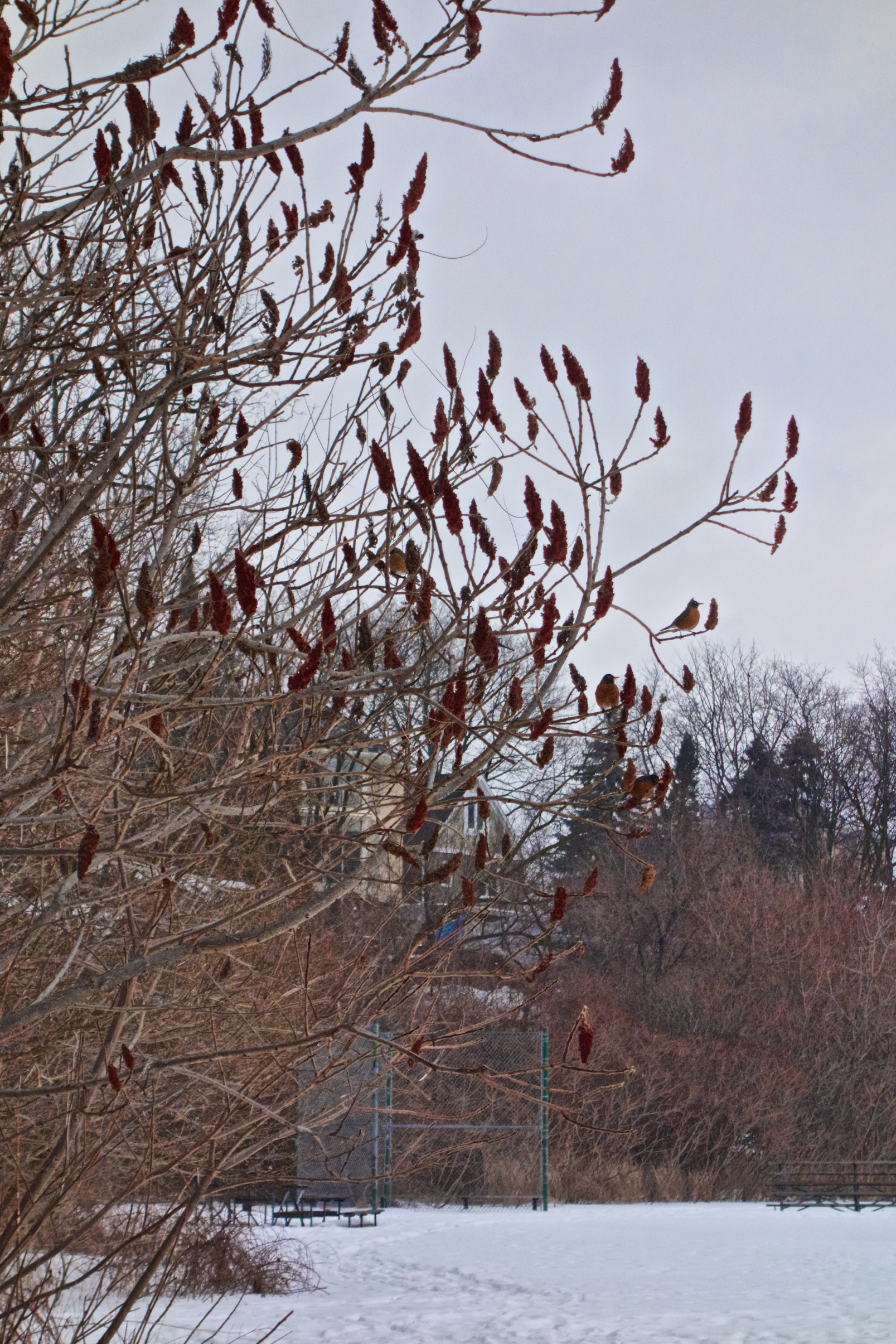
Fourth, it supports a variety of native wildlife from the insects that feed on its nectar to birds feeding on the flowers that stay throughout the winter. Deer along with other mammals eat the foliage and branches.

Count the robins enjoying a winter meal.

Count the overwintering robins enjoying a meal.

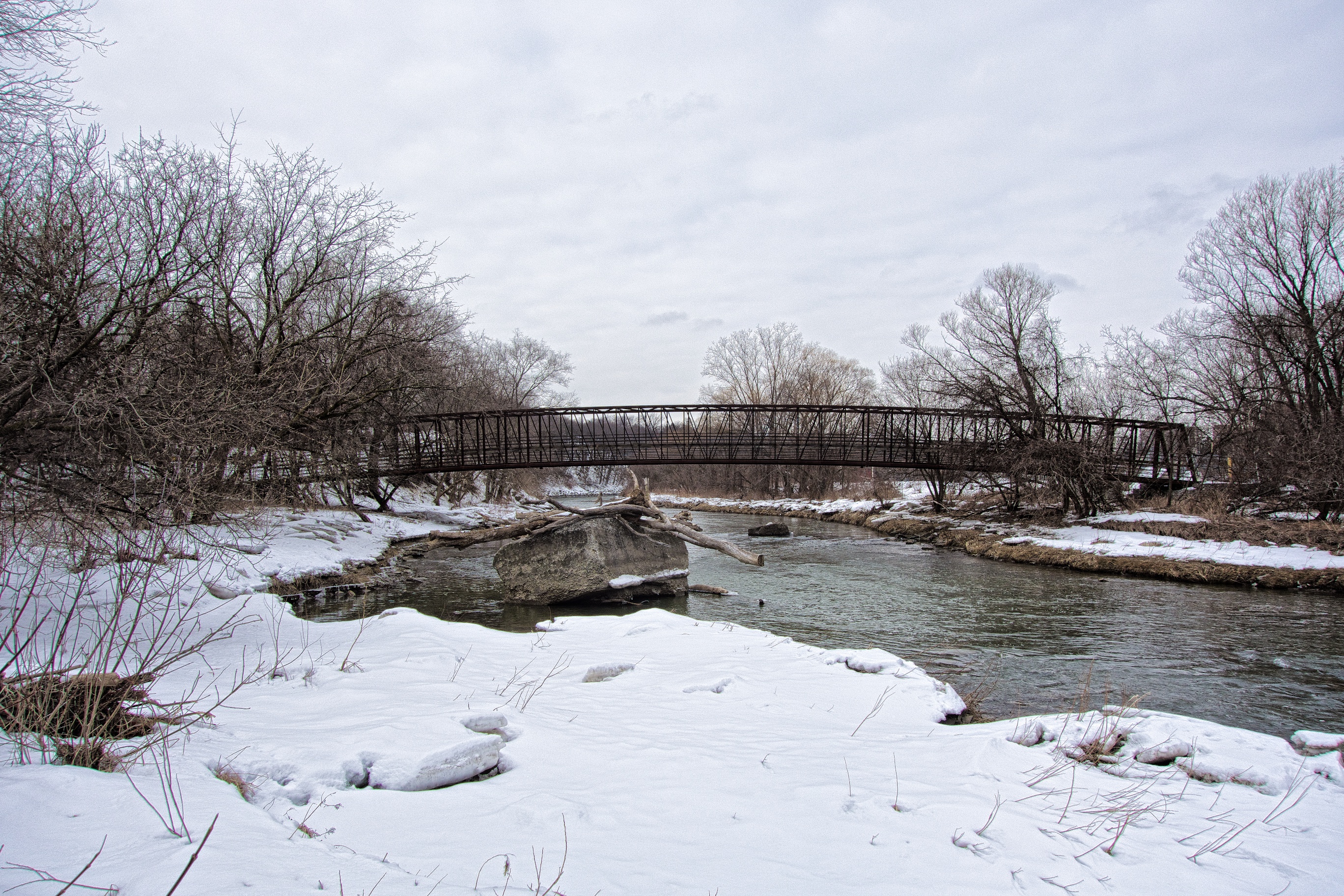
Humber footbridge – alternate view

The Humber footbridge looks good from just about any direction but this view looking north features the old suspension footbridge abutment in the foreground.

The old abutment captures driftwood from upriver.

The Humber footbridge and the old bridge abutment on a late winter’s day.

The footbridge was installed in 1995 (after an absence of 41 years) with provincial help, as part of the goal to have a waters’ edge trail from Lake Ontario right up to the Humber’s source on the Oak Ridges Moraine. As part of this goal, this summer, a 600m extension will move the end of the trail from its current location in Cruickshank Park to a set of steps by Weston and St Philips Roads. At the moment there are negotiations around land ownership issues further along the riverbank – hopefully these will be resolved soon.

Beauty in a mass extinction.

Coming to an ash tree near you.

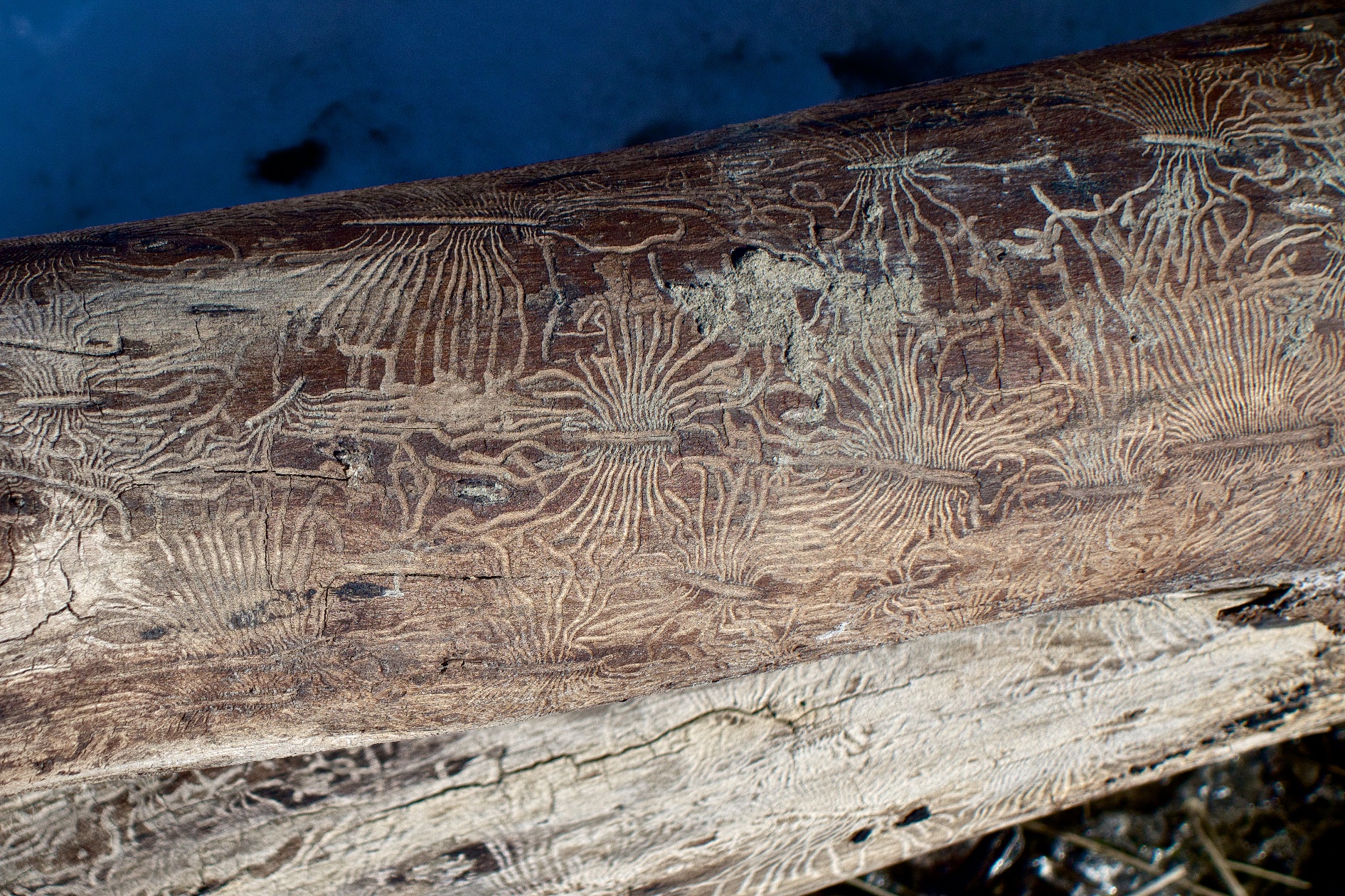
The terrible beauty in an insect’s destruction.

I found this piece of wood a couple of days ago and photographed it again today. The patterns carved into the wood are beautiful and resemble Australian aboriginal art but their origin is quite sinister. This wood has been infested by a creature known as the Smaller European elm bark beetle. Although this beetle (like many other bark beetles) doesn’t kill the trees it infests, it is the invasive species that carried and spread Dutch Elm Disease throughout North America, destroying billions of elm trees throughout the continent.

An equally dangerous tree pest which has established itself is the emerald ash borer, an invasive species brought to North America in the 1990s probably in wooden pallets. This insect kills the trees it infests directly. At first there was a desperate attempt to contain the pests but the battle is lost with every ash tree on the continent now in jeopardy. Imagine the effect on the environment if you could plant 50 to 100 million trees over a few years. Now imagine the reverse because that’s the number of trees that this creature has killed so far with the rest of the continent’s 7.5 billion ash trees firmly in its sights.

Thanks to increasing levels of world trade, North America is under siege from non-native plants and animals. The St Lawrence Seaway opening in 1959 brought the Lamprey eel, a parasite that feeds on fish. The weir in the park was constructed to act as a barrier to the lamprey. Asian carp are thought to have recently established themselves in the Great Lakes and could devastate fishing stocks here as they have no natural predators and thus there is no defence against them.

Unfortunately, government agencies on both sides of the border are slow to react to such invasions and by the time we take preventative or remedial action, the battle is lost.

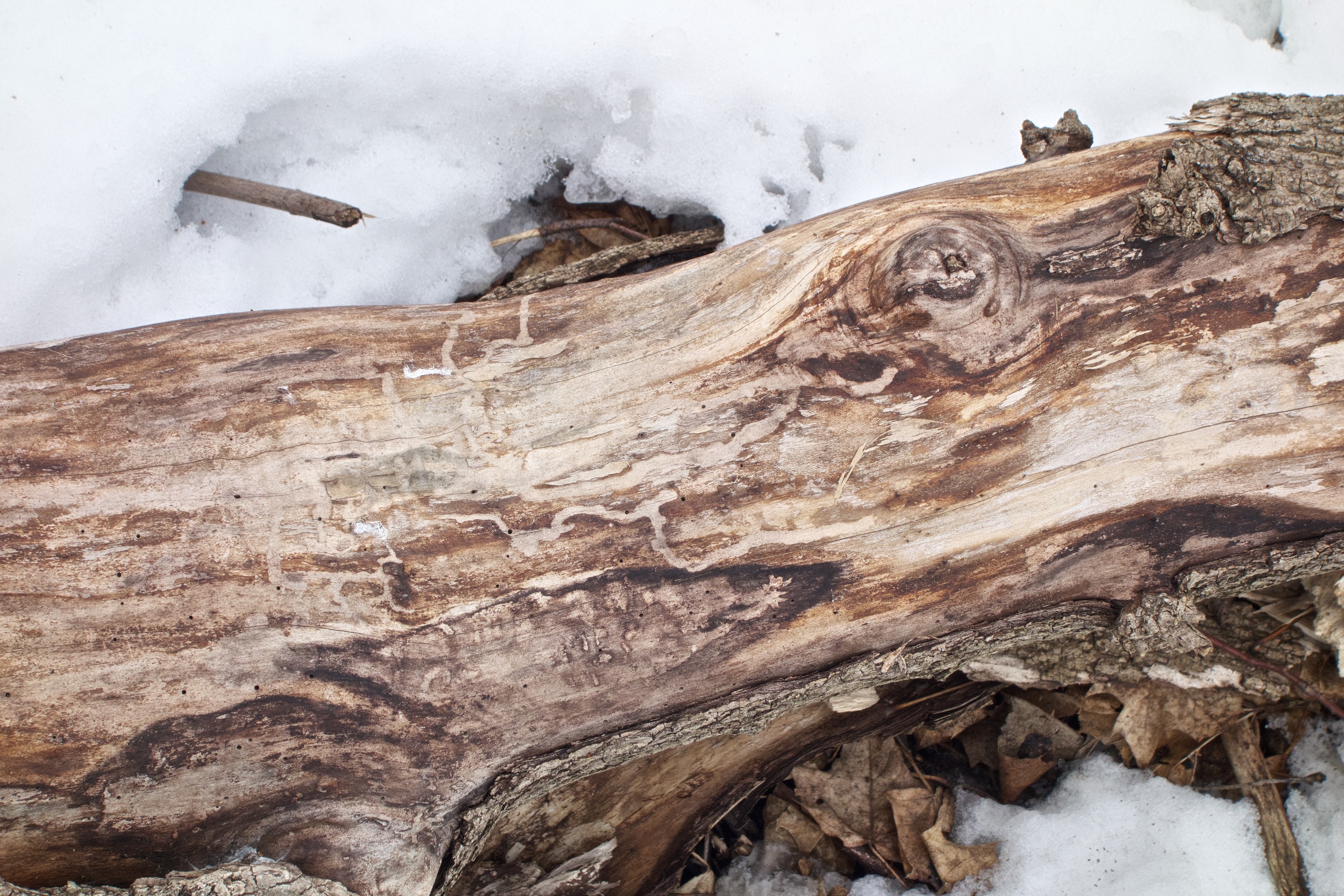
Traces of pine bark beetles.

More evidence of bark beetles, probably pine bark beetles.

Ducks have returned

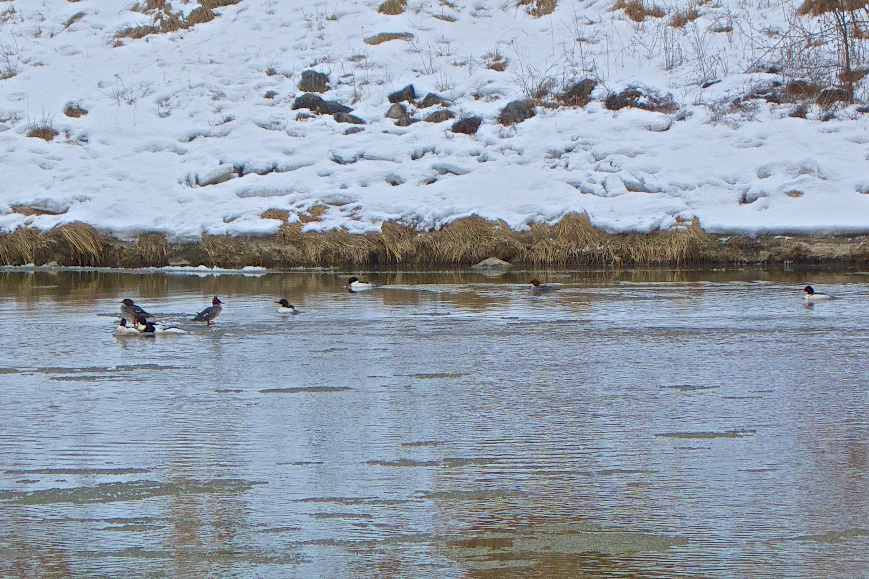
Shy ducks enjoy open water.

Shy ducks enjoy open water.

The river has cleared itself of ice and spring is around the corner. Ducks are now in evidence dodging chunks of ice as they look for food.

In addition to the many mallard ducks that can be seen in Raymore Park, there are some that are elusive and defy identification (at least by me). The mallards have unfortunately been trained to come for food while other breeds wisely stay well clear of humans.

Can anyone identify these ducks? This was as close as I could get with my puny 3.6x zoom.

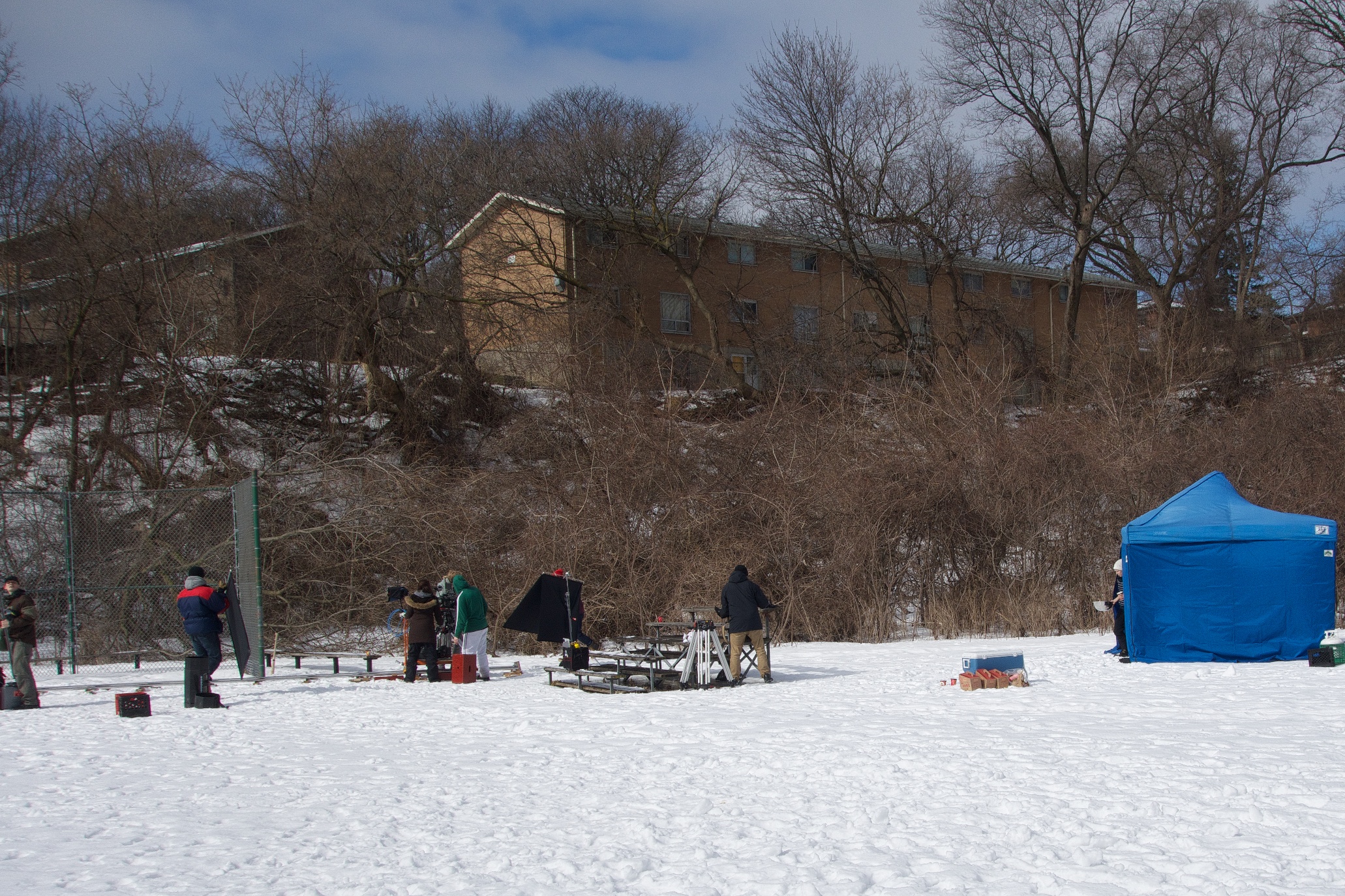
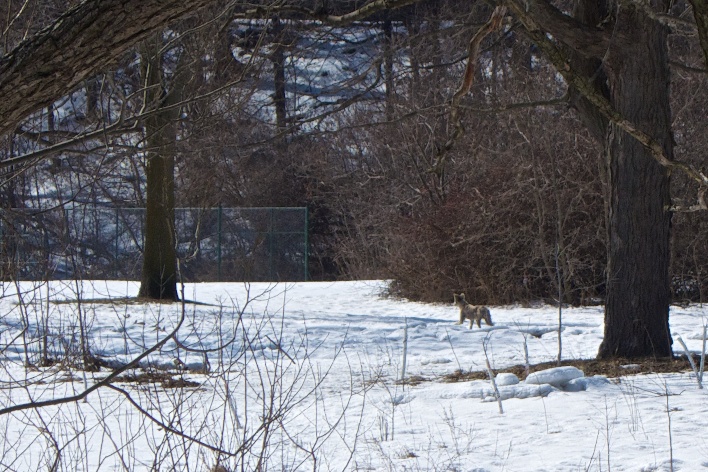
A movie shoot and a coyote

Lots of fancy equipment here!

Lots of fancy equipment here!

Students from York University are occupying one of the baseball diamonds today for a movie shoot. They seem a little cavalier with their garbage. Hopefully they will perform a site clean-up.

DSC01101

A coyote calmly making its way through the park today. I was quite a distance away and had to squeeze as much magnification as possible from this shot.

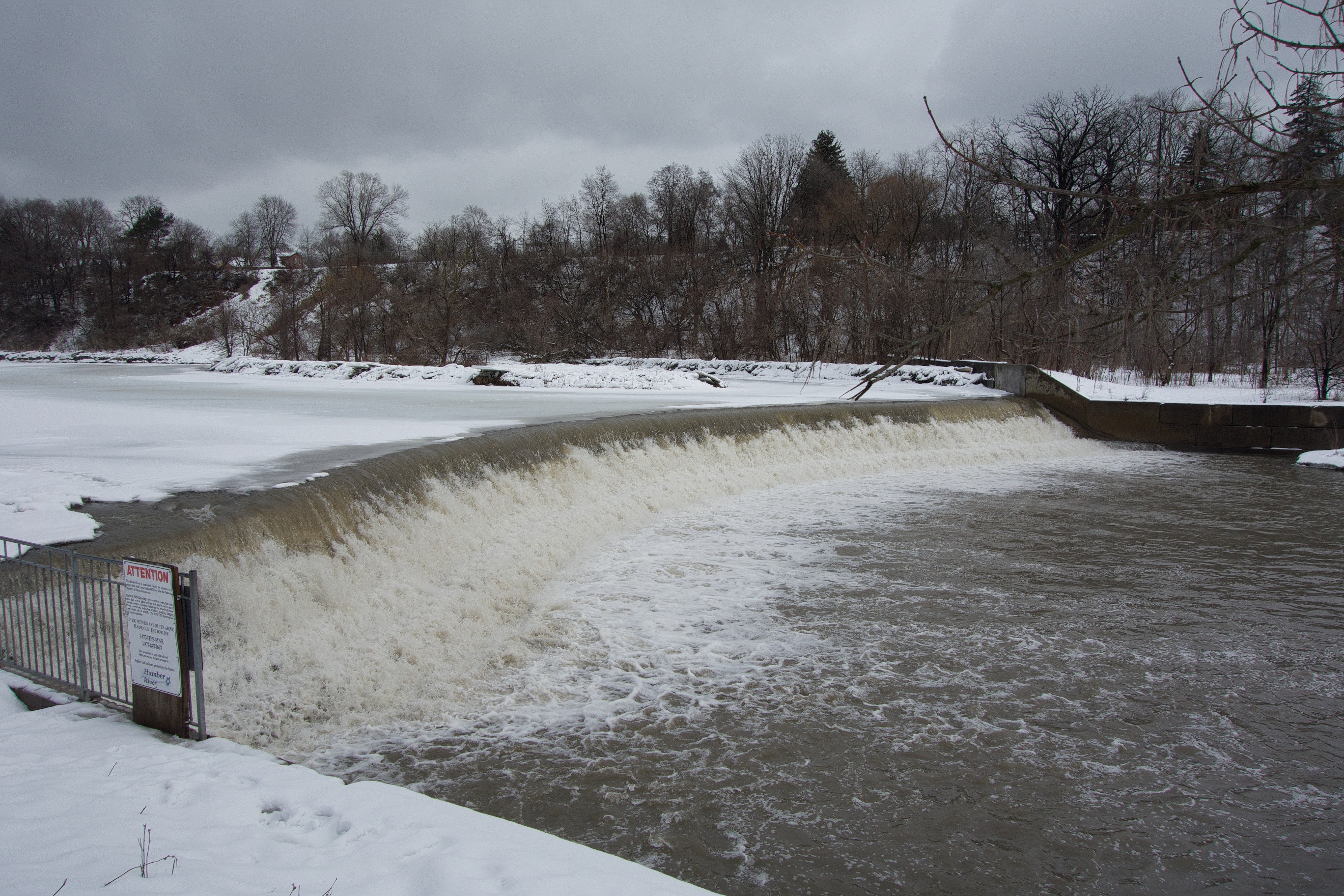
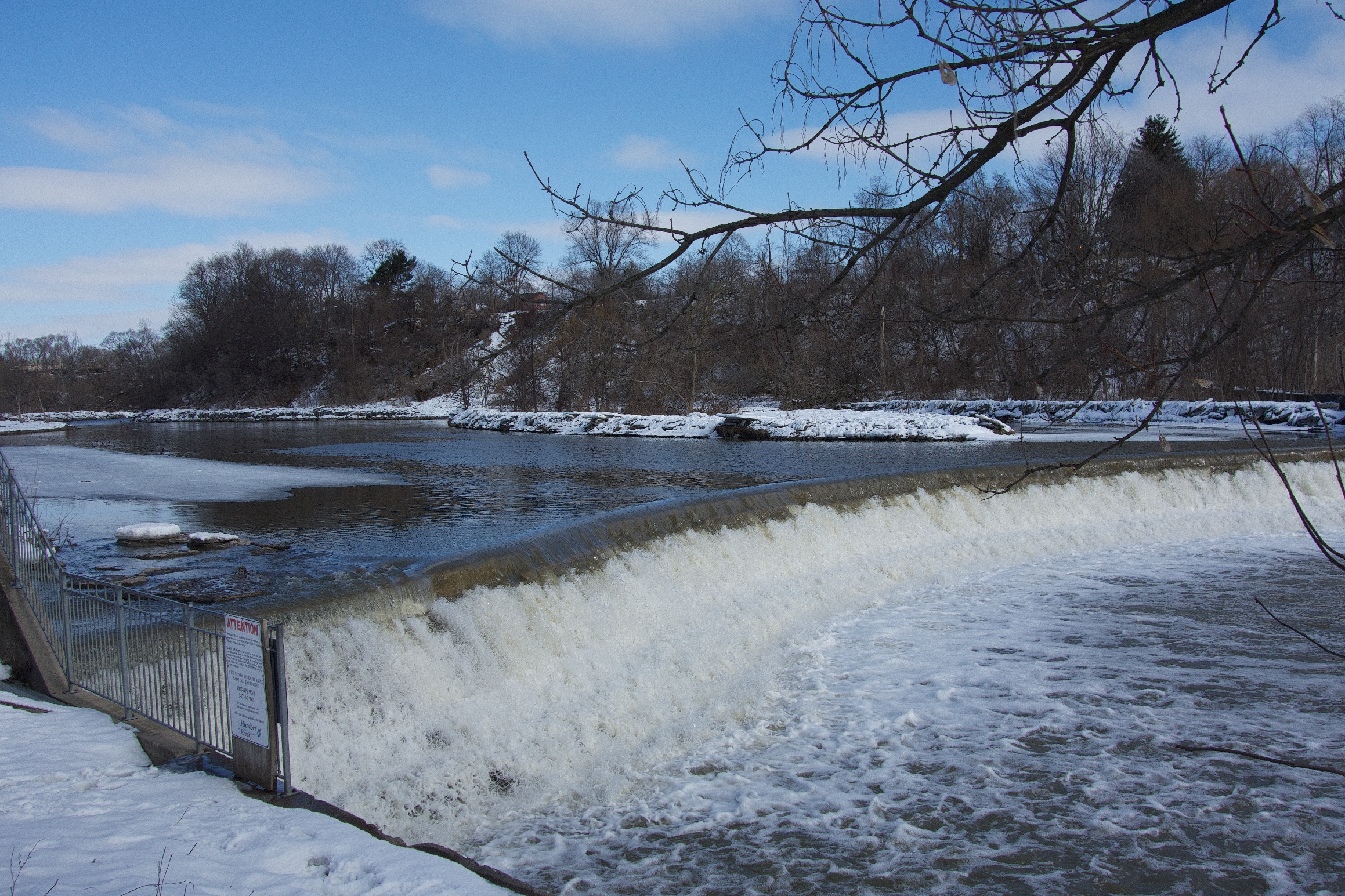
Lastly, what a difference a day makes. Suddenly the river has lost much of its ice. The ducks are happy.

Thursday 28th February

Thursday 28th February

Friday 1st March.

Friday 1st March.

Moss and Lichen

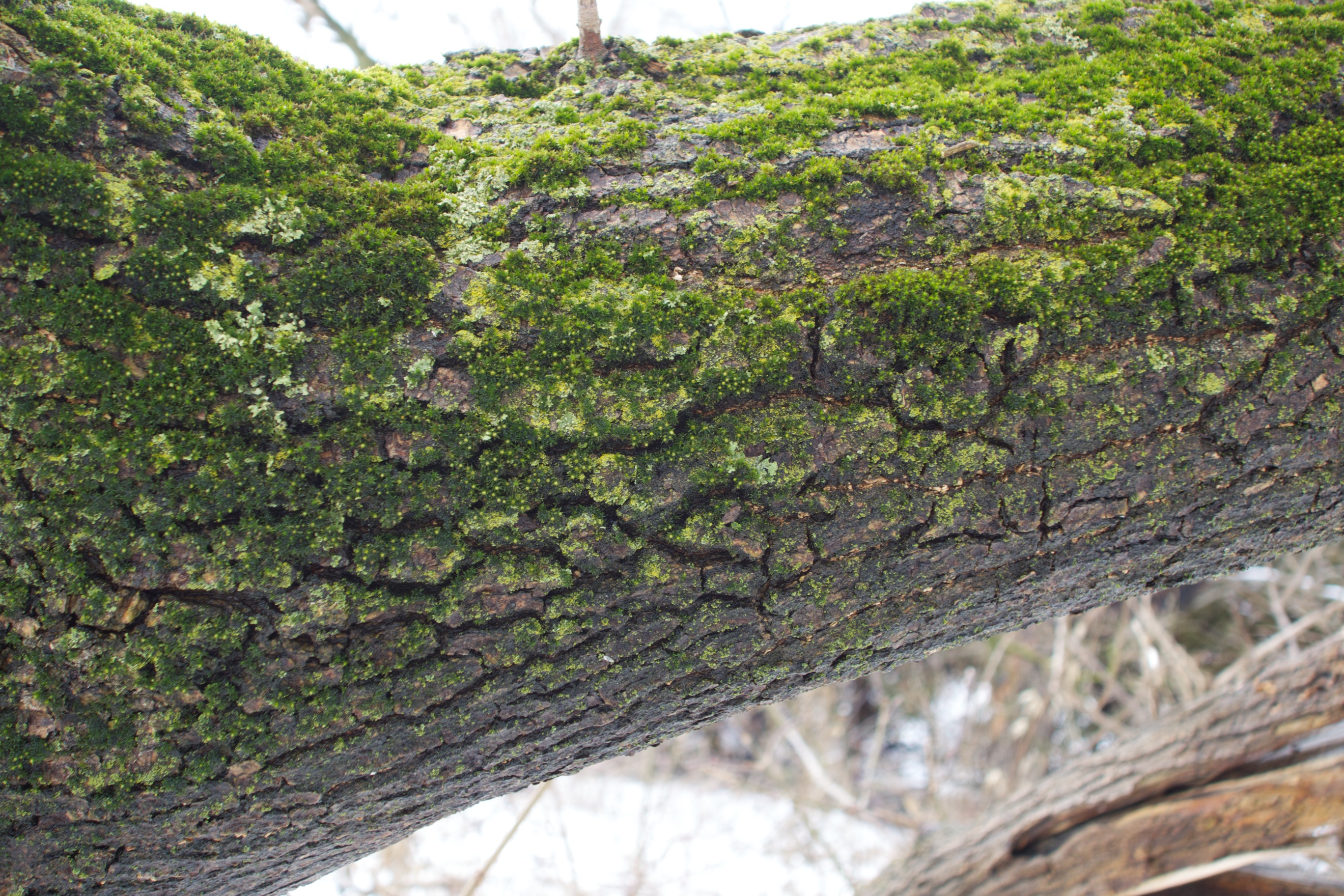
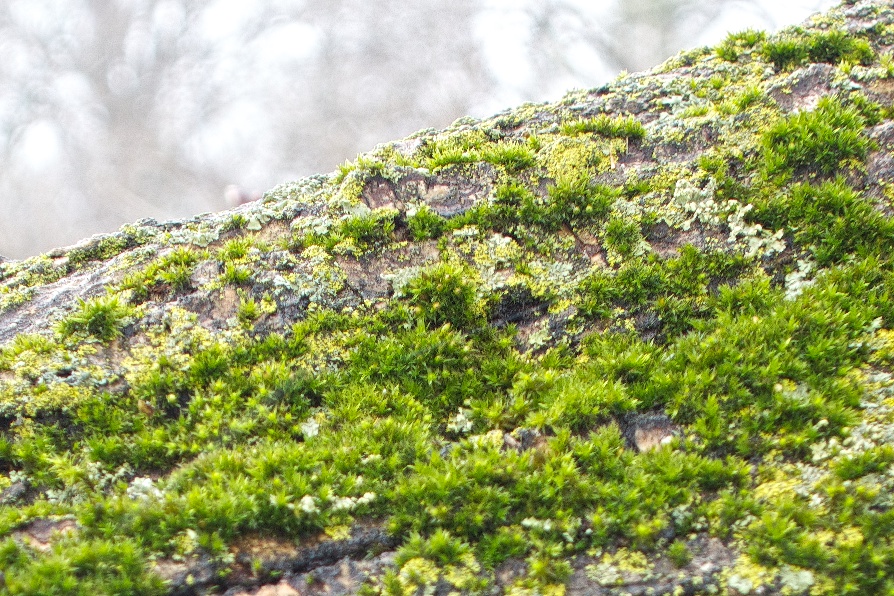
At this time of year, the grass is brown and usually buried. Moss however continues to be visible and can be seen on trees throughout the park. Here are a few examples:

Generally seen on the north side of tree branches.

Moss, usually on the north side of tree branches.

It's a miniature world.

It’s a miniature world of moss.


yadda

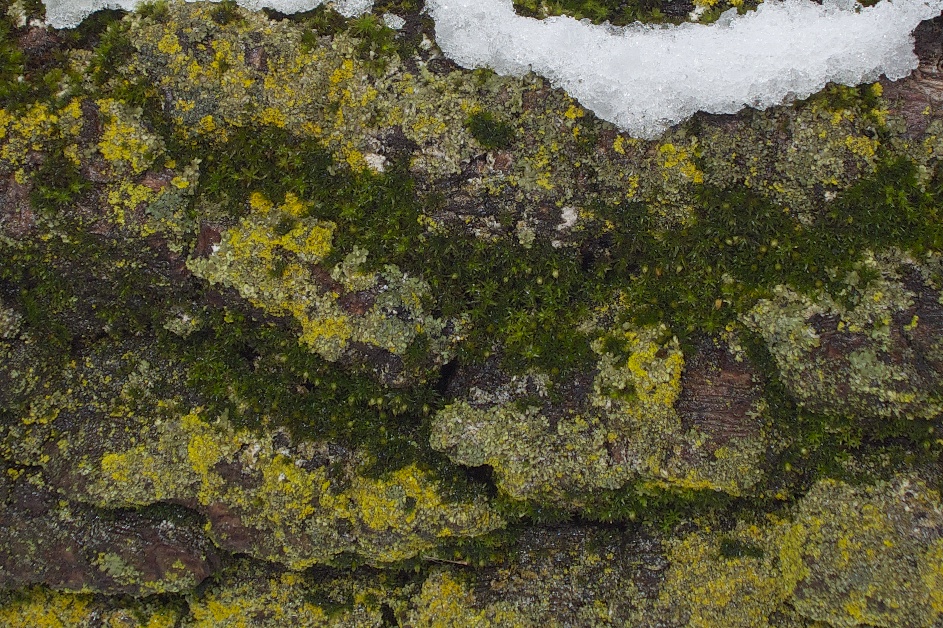
Moss and lichen together. Lichen prefers the north side too and they are often seen together.

Moss is a plant with the characteristics that you expect – it’s usually green and has leaves. Moss doesn’t have roots and can’t send moisture through branches like other plants. For this reason, mosses prefer damp locations. Lichen on the other hand is a partnership between fungus and algae or bacteria structured in layers and is found on every continent.


Impressions

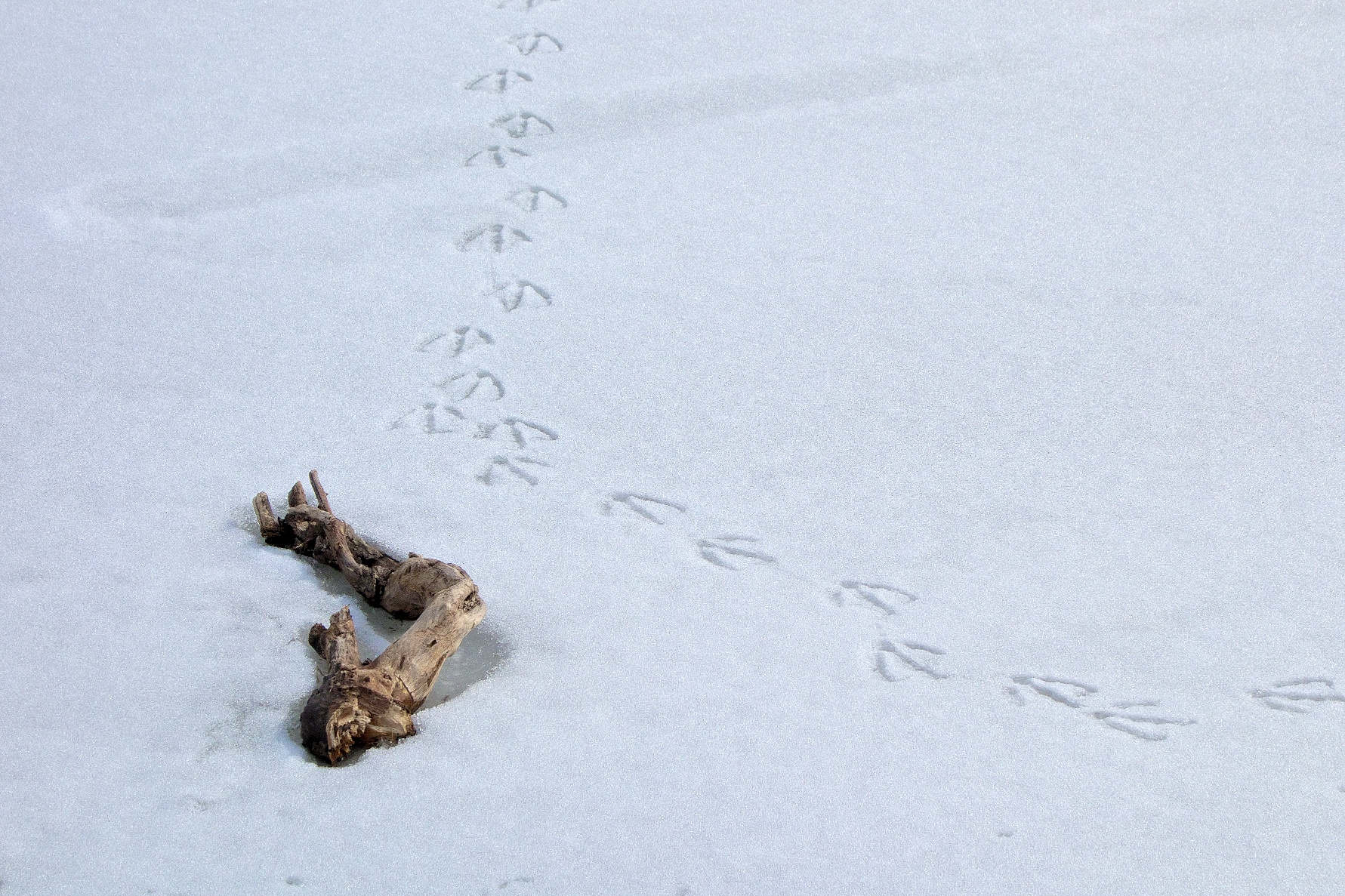
Snow is a wonderful medium for creating impressions through the tracks of animals or humans or the melting that happens around objects as the sun shines on them.

Goose tracks beside part of a tree branch.

Goose tracks beside part of a tree branch.

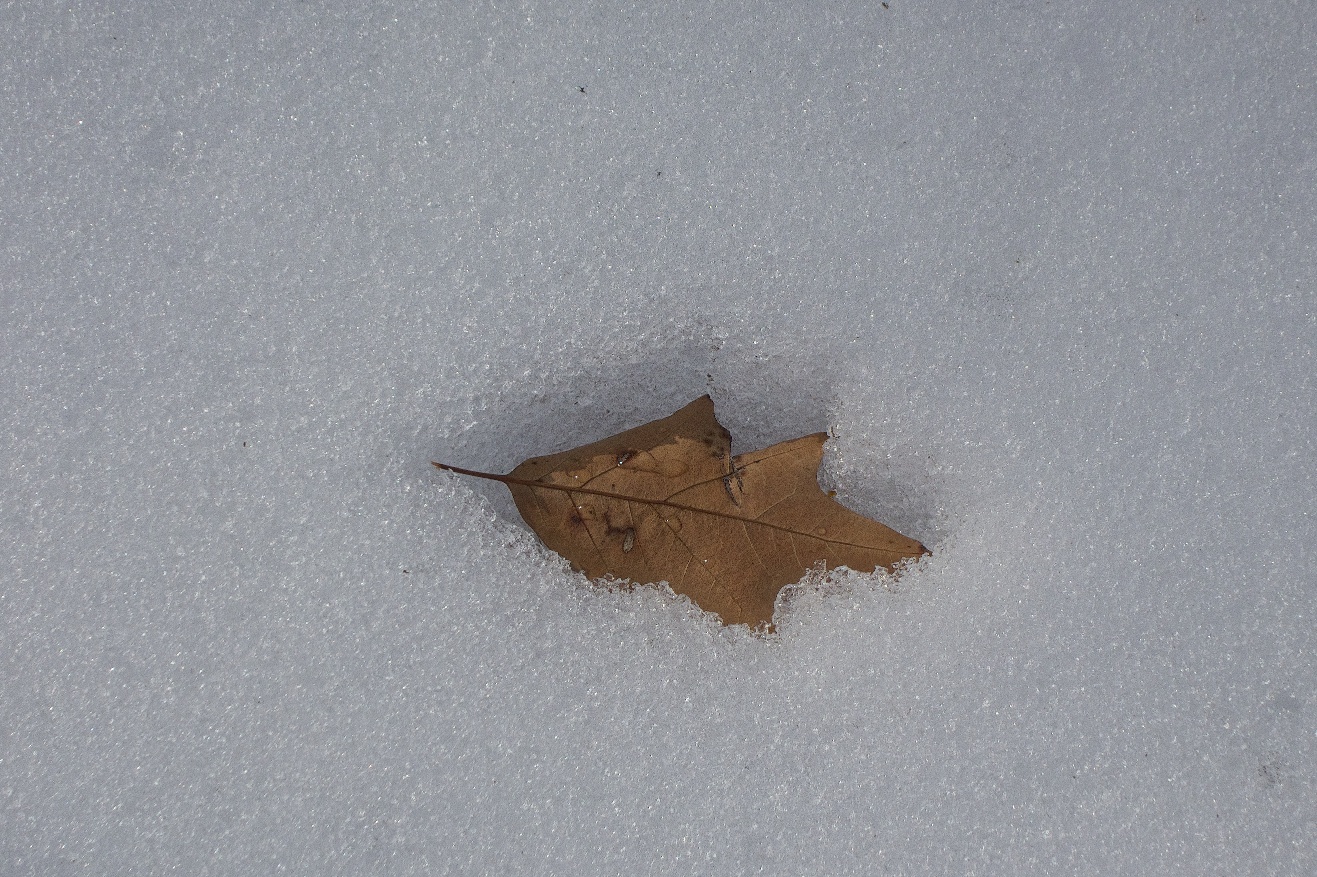
A recently fallen oak leaf 'burns' its way into the snow.

A recently fallen oak leaf ‘burns’ its way into the snow.

At this time of year the sun is much stronger and anything that falls onto the snow reflects less of the sun’s infra-red radiation and so will melt the snow underneath it while the surrounding snow stays frozen.

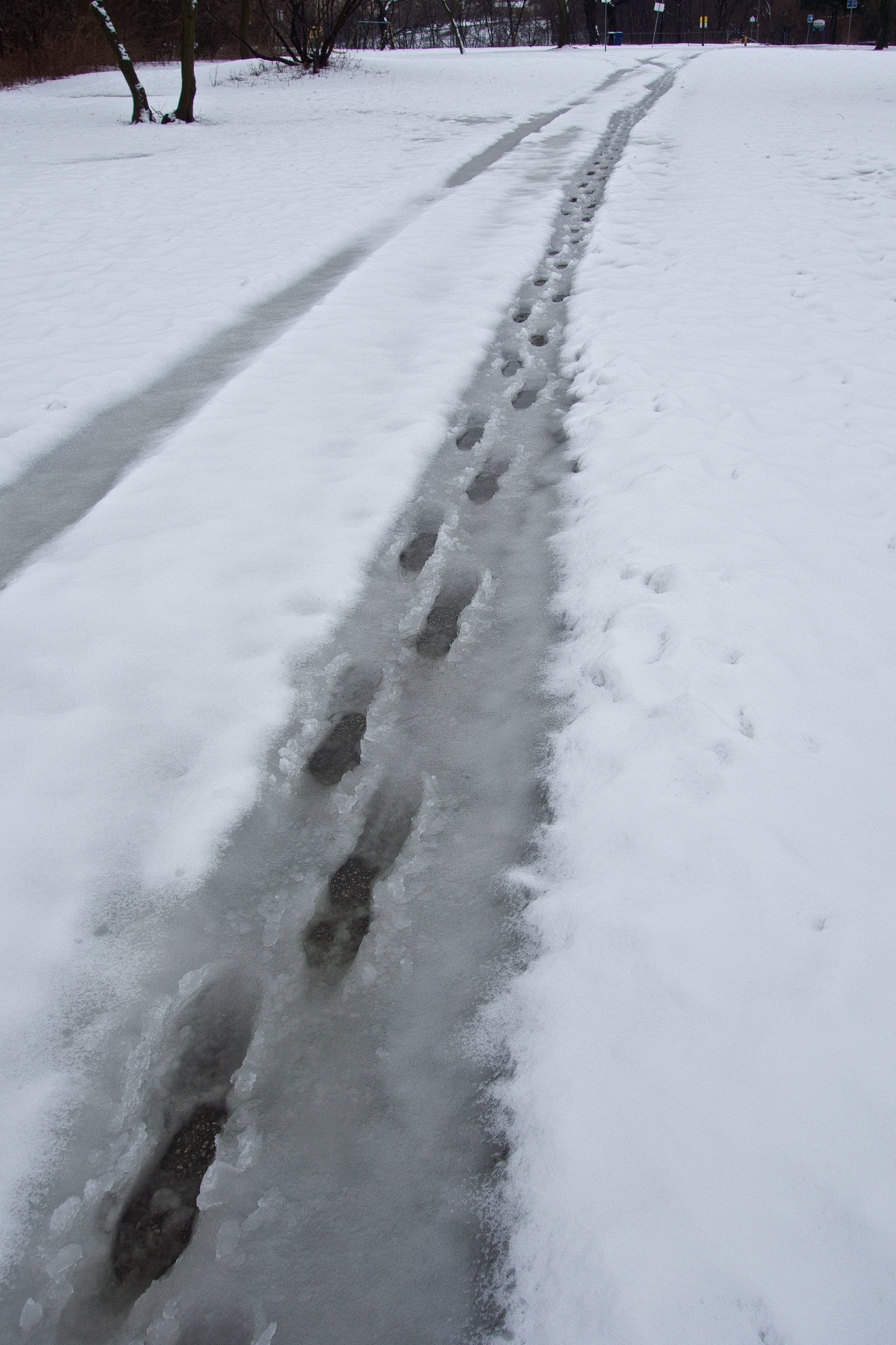
A human has walked on tire tracks.

A human has walked in slushy tire tracks.


This could be a sign.

Raymore Park is under the jurisdiction of a variety of agencies. For example, the Federal government is in charge of how close you can fish to the weir. The provincial government controls other aspects of fishing – don’t ask me how that was decided. The city of Toronto takes care of by-laws concerning usage of the park and parking; the Toronto and Region Conservation Authority (TRCA) manages the watersheds around Toronto. Some park signs are relics of the past while others aren’t that carefully worded. It’s doubtful whether people creating the signs have given much thought to either the appearance or the wording. To announce in large letters the words, ‘Park Closed’ is misleading, not to mention unwelcoming.
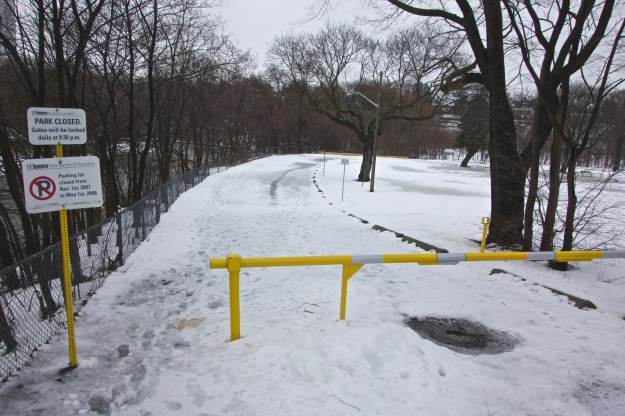
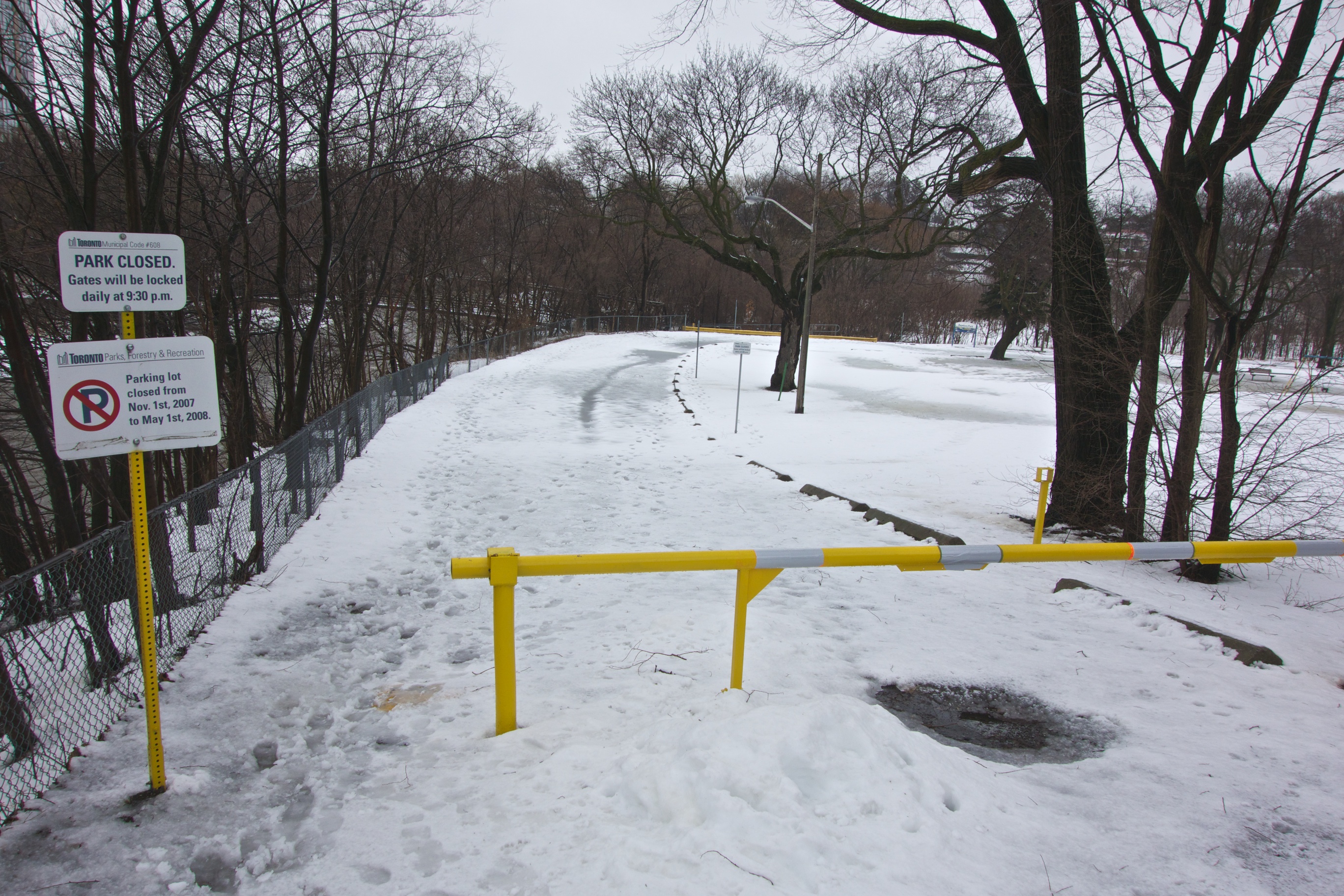
Inauspicious entrance to the park and a sign that has outlived it's specific timeframe.

The misleading and inauspicious road entrance to the park and a sign that has outlived its specific timeframe.

Somehow, the signmakers couldn’t figure out how to tell people that the park is closed to vehicles during winter and after 9:30pm. Another unstated point, the park is never closed to pedestrians. This is important to mention as Toronto is a city of immigrants and many newcomers need help understanding how parks operate.
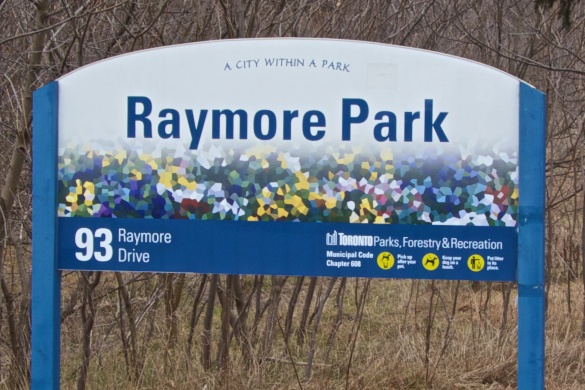
A city within a park? Where?

A city within a park? Where?

Thousands of dollars worth of city employee time was probably spent coming up with this trite little slogan. No doubt many committees spent hours labouring mightily over the five words. Unfortunately when viewed in context on the sign, people must wonder what it all means – there’s a city in Raymore Park?
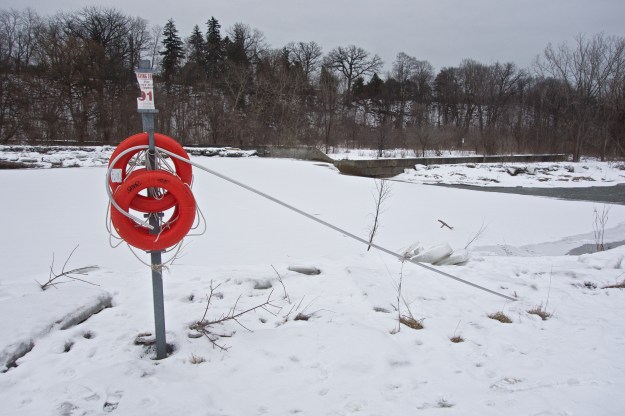
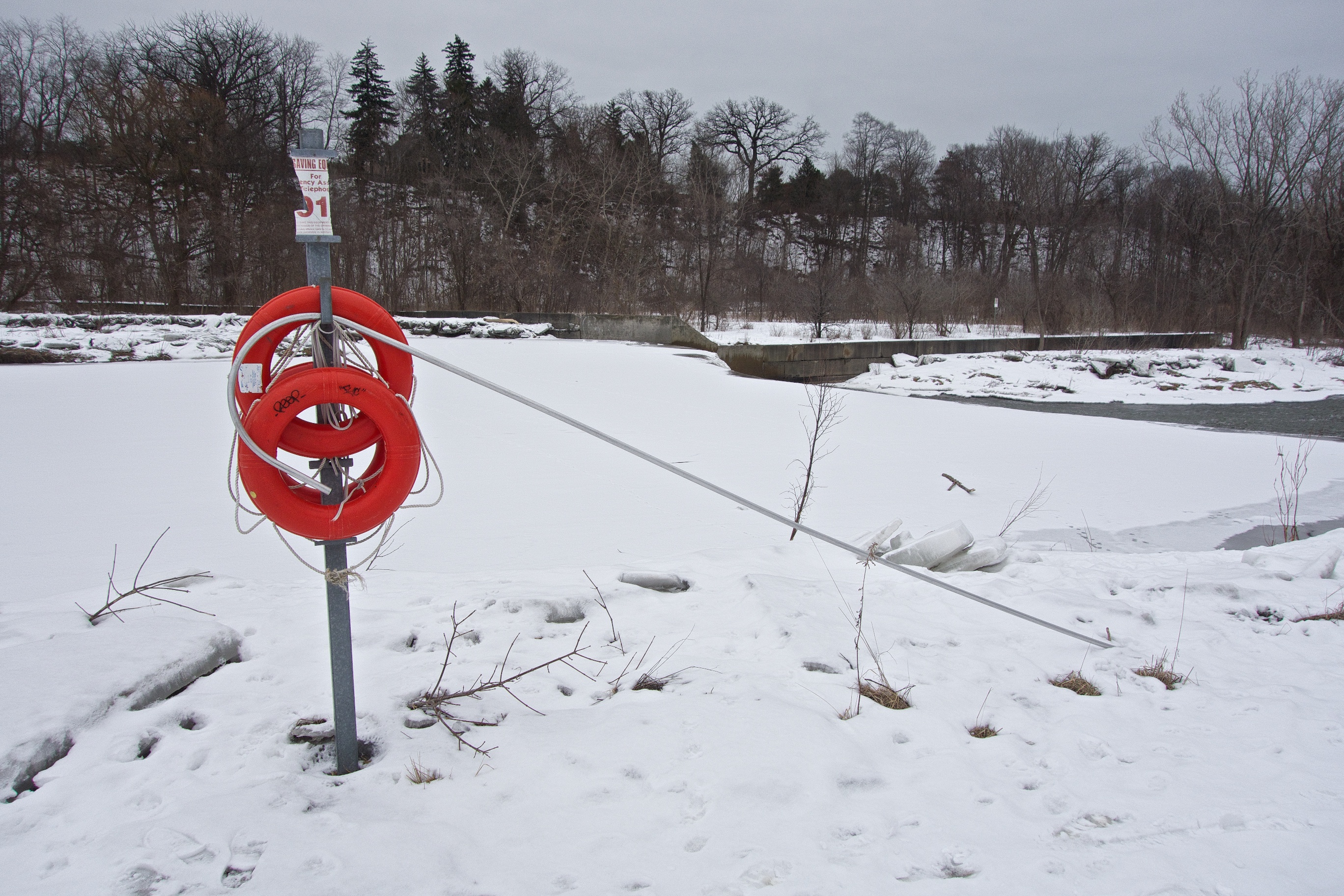
I'm not sure who manages this one but it could do with a bit of maintenance.

It’s not clear who manages this lifebuoy station by the weir but it sure could do with a bit of maintenance.
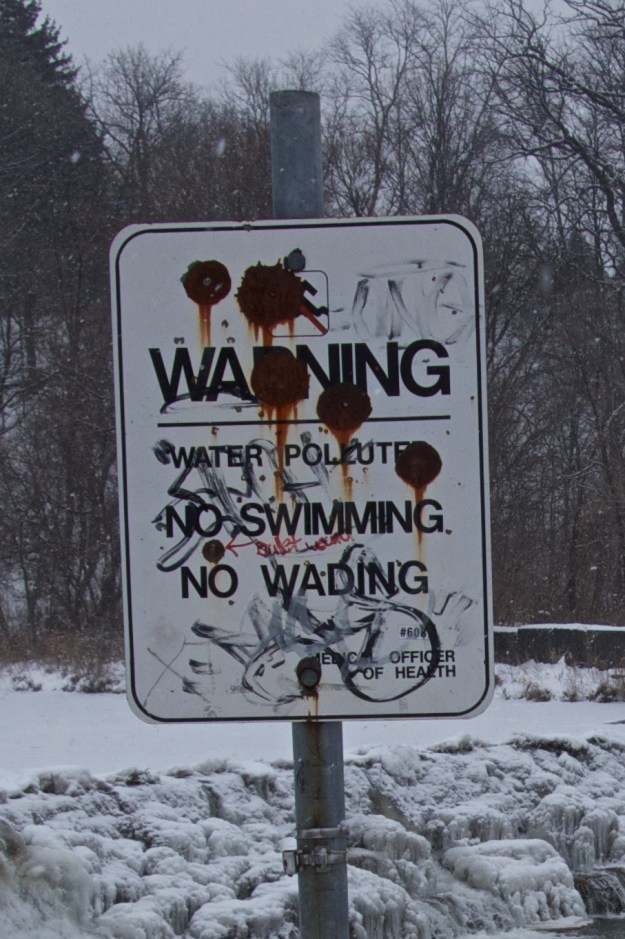
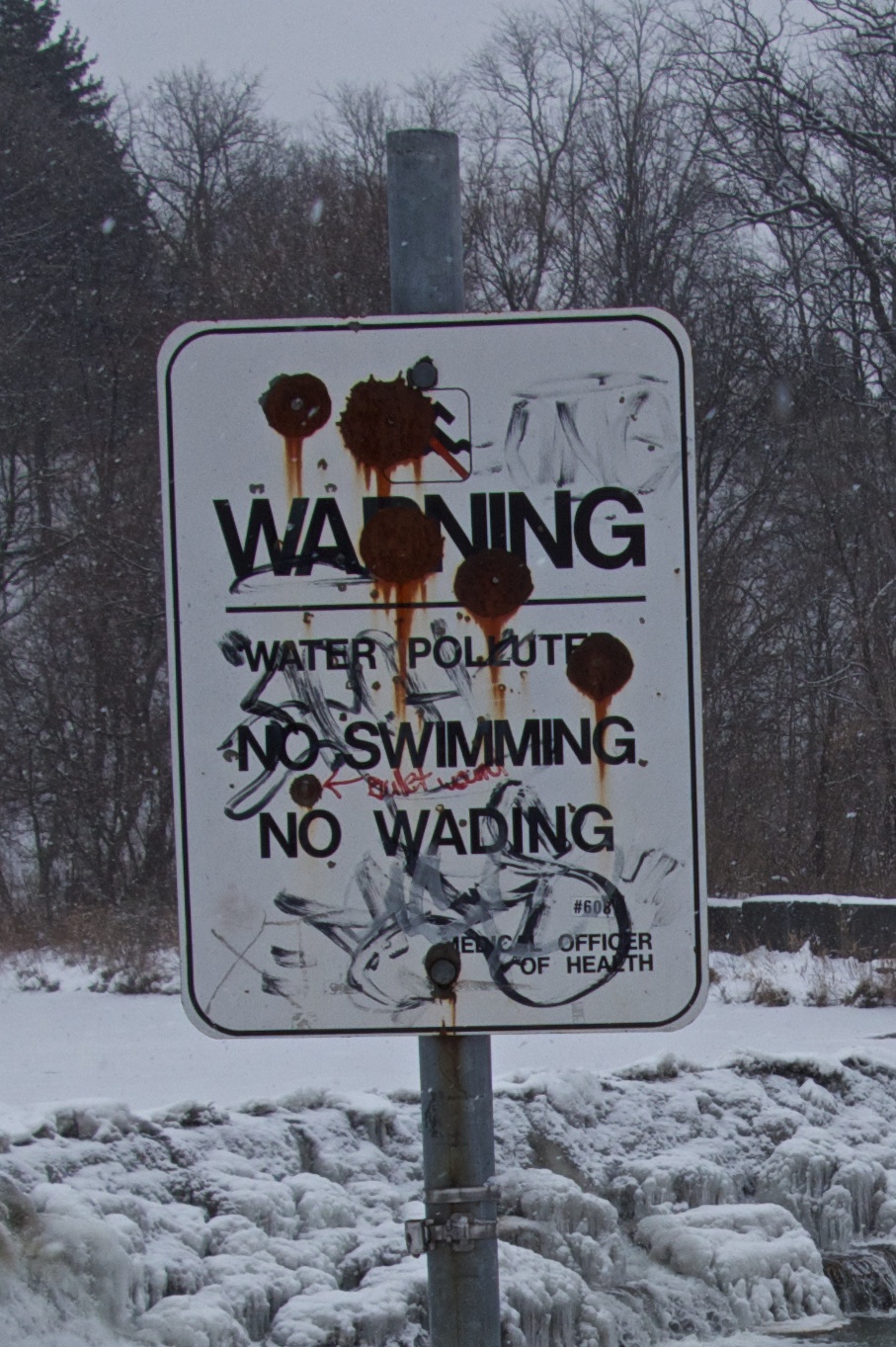
Dire warning - we're all gonna die!!!

OK, we get it – it’s an unmitigated shithole. If you survive the pollution, you’ll be shot.
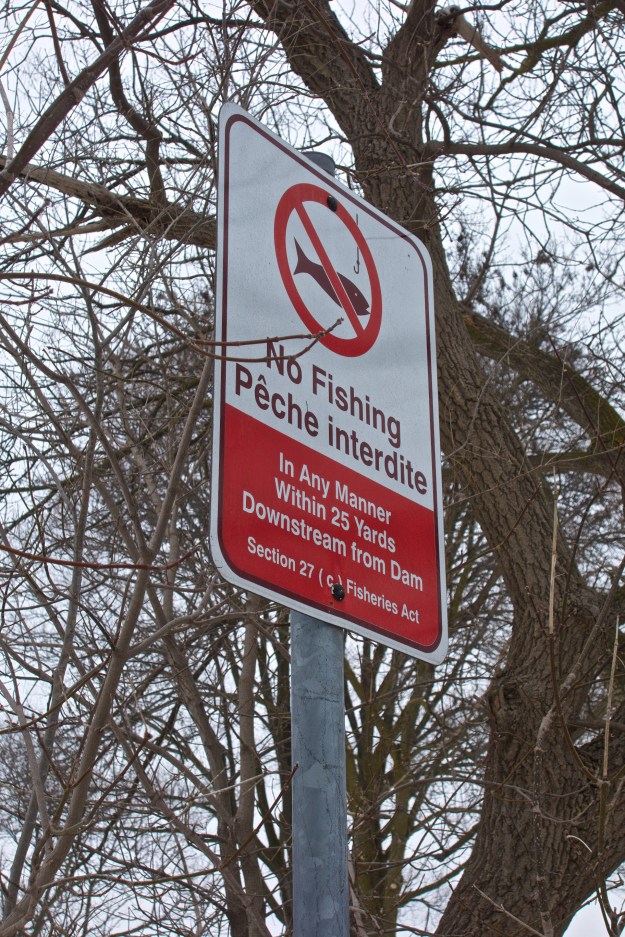
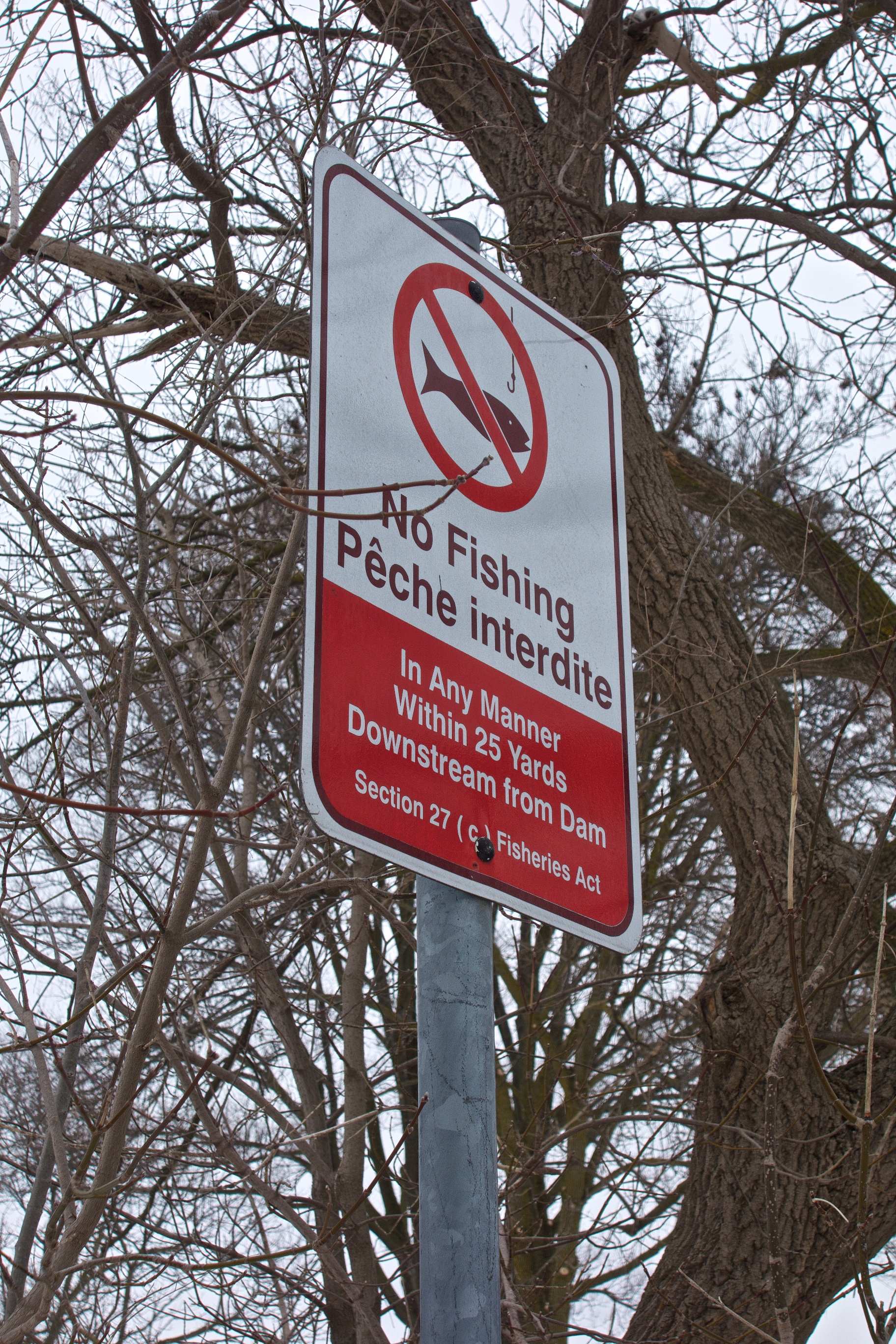
The feds bilingual sign seems to be 25 yards from the weir. It never seems to stop anyone though.

The Feds’ bilingual sign is (helpfully) 25 yards from the weir and faces the river although it never seems to stop anyone (didn’t we go metric?).
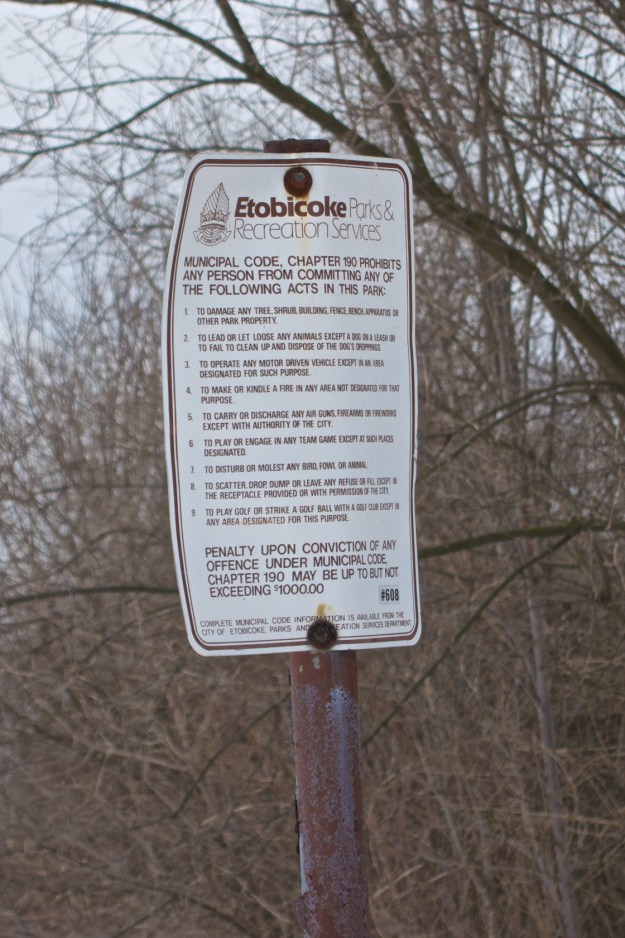
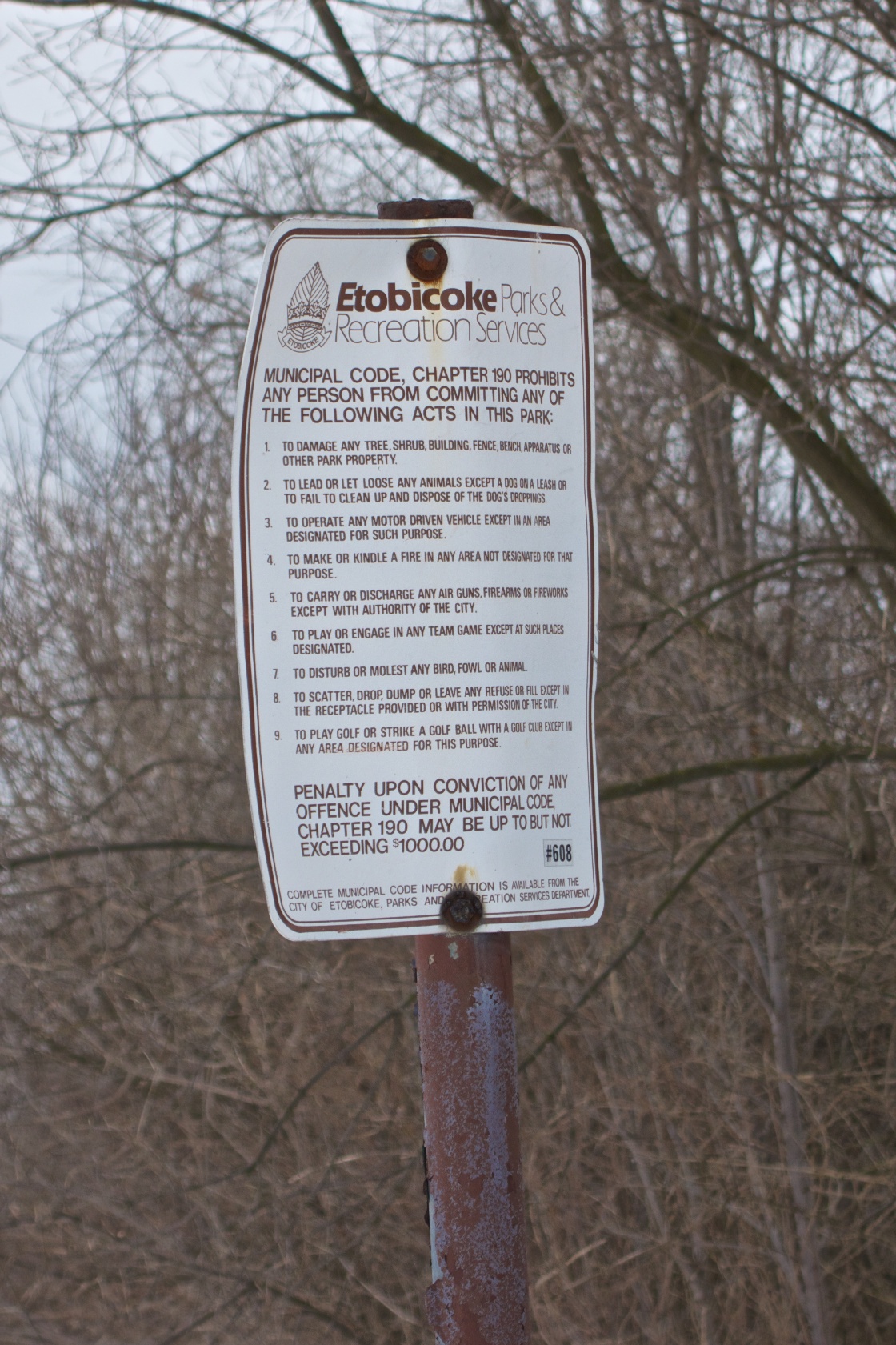
Toronto amalgamated in 1998 but this sign has stood the test of time.

Toronto amalgamated in 1998 but this sign is a relic that has stood the test of time.
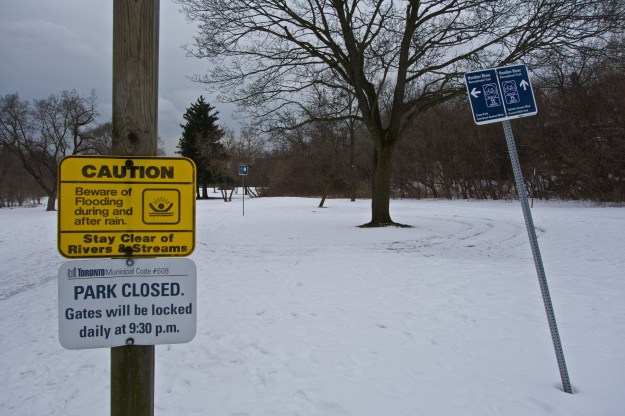
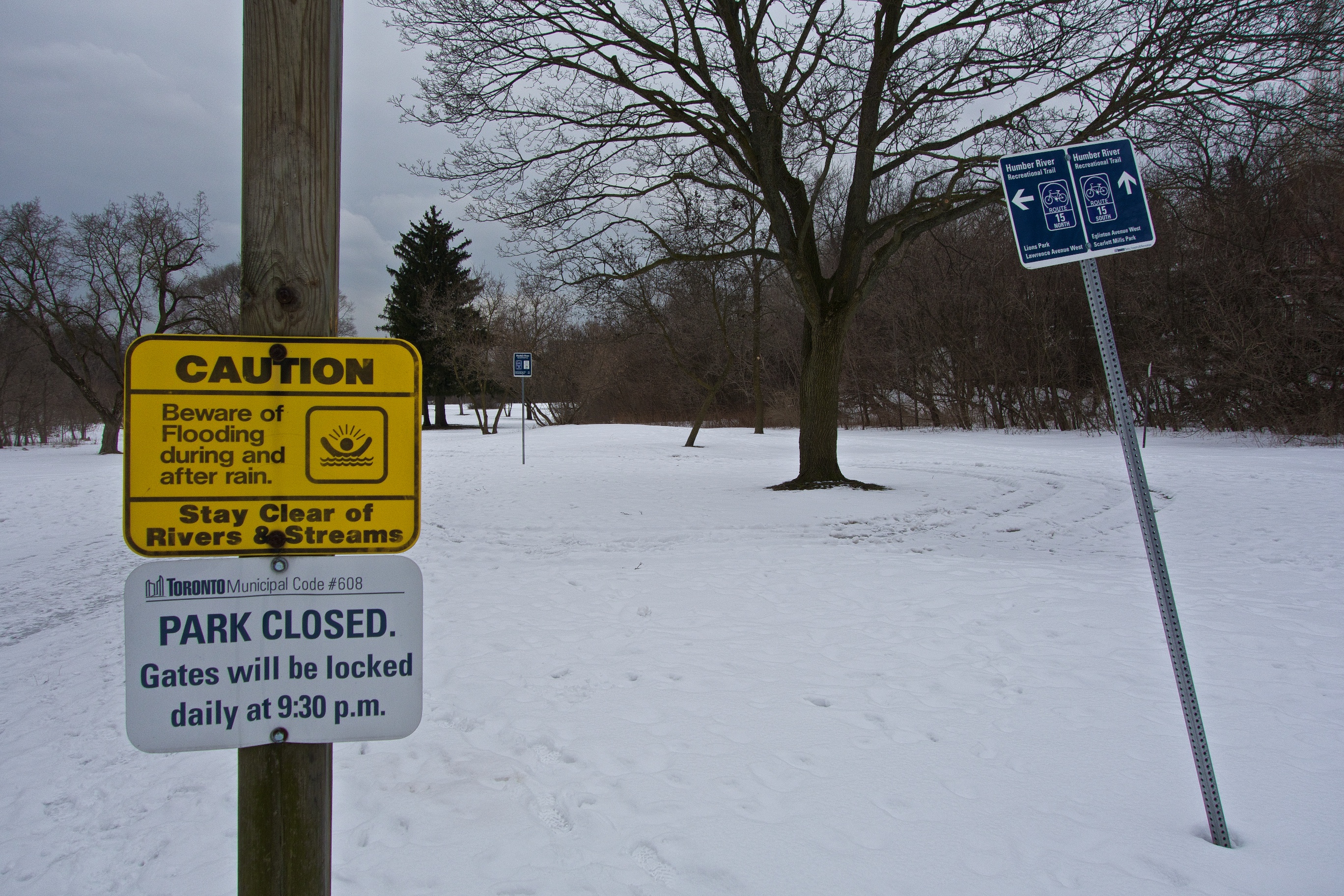
This set of signs face the parking lot. The 'Park Closed' sign is very misleading until you read the print below.

This dilapidated set of signs faces the parking lot. Another ‘Park Closed’ sign. The yellow one may be a TRCA sign while the blue signs help walkers and cyclists navigate the trails. There was another sign above the ‘caution’ one (outlining park by-laws) but it fell off months ago and has since disappeared.
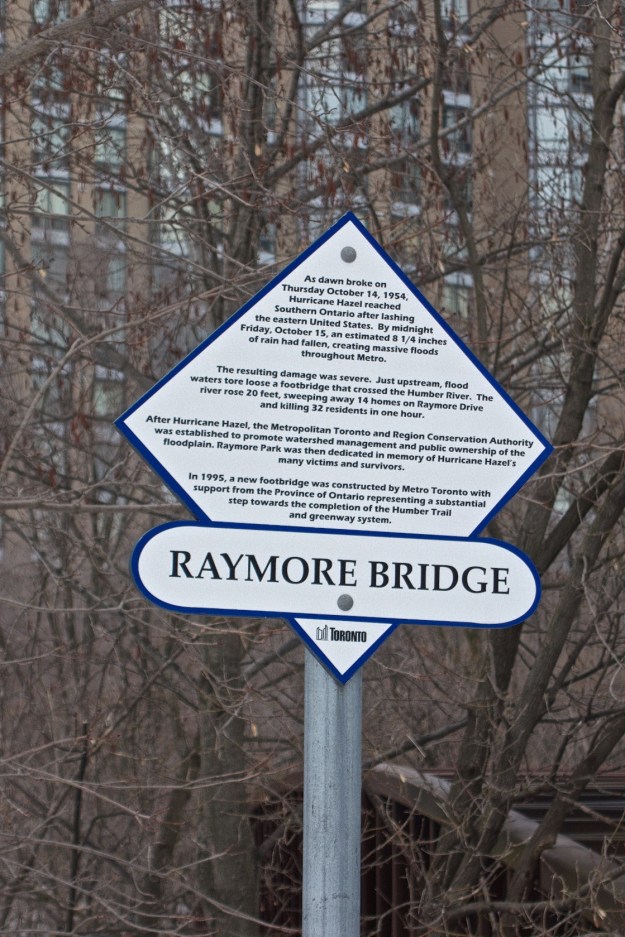
This plastic sign replaces the original made from cast metal which was stolen within days of its appearance.

This plastic City of Toronto sign replaces the beautiful original made from cast metal which was stolen within days of its appearance.

I doubt that much thought has been given to many of the various signs that are scattered throughout the park; especially on the part of the people who order, design and write them. It would be a good idea to coordinate and consolidate signage so that there is a consistency of appearance. In addition, outdated and missing or damaged signs are actually harmful as they imply a lack of order that can encourage anti-social behaviour.
Weir curtain

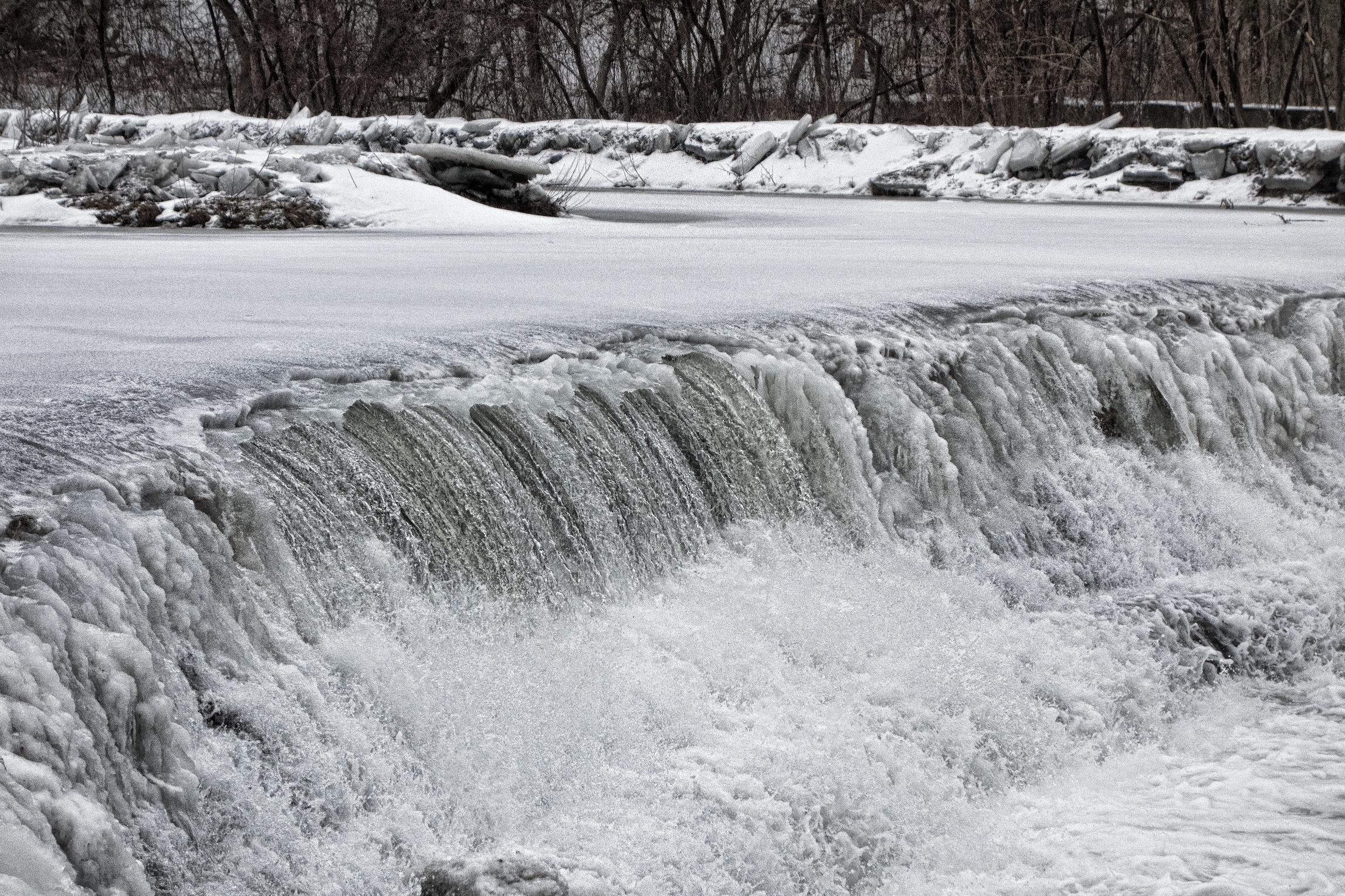
On some days, there’s a combination of ice and water that creates a curtain effect by the weir. The curtain is framed by spray and ice and calls out to the camera because it is so well defined. To make sure the curtain was photographed as it appeared, the camera was set to shutter priority and captured at 1/1600 second. I’m not a fan of those dreamy waterfall shots taken at a slow shutter speed but prefer a more realistic look.DSC00998
Bring on the Zamboni!

A steely-grey cloud deck, fast moving clouds being pushed along by a raw east wind can only mean one thing; snow is coming. This time we’re getting off lightly with just a couple of centimetres while temperatures will rise above the zero mark for the next few days.

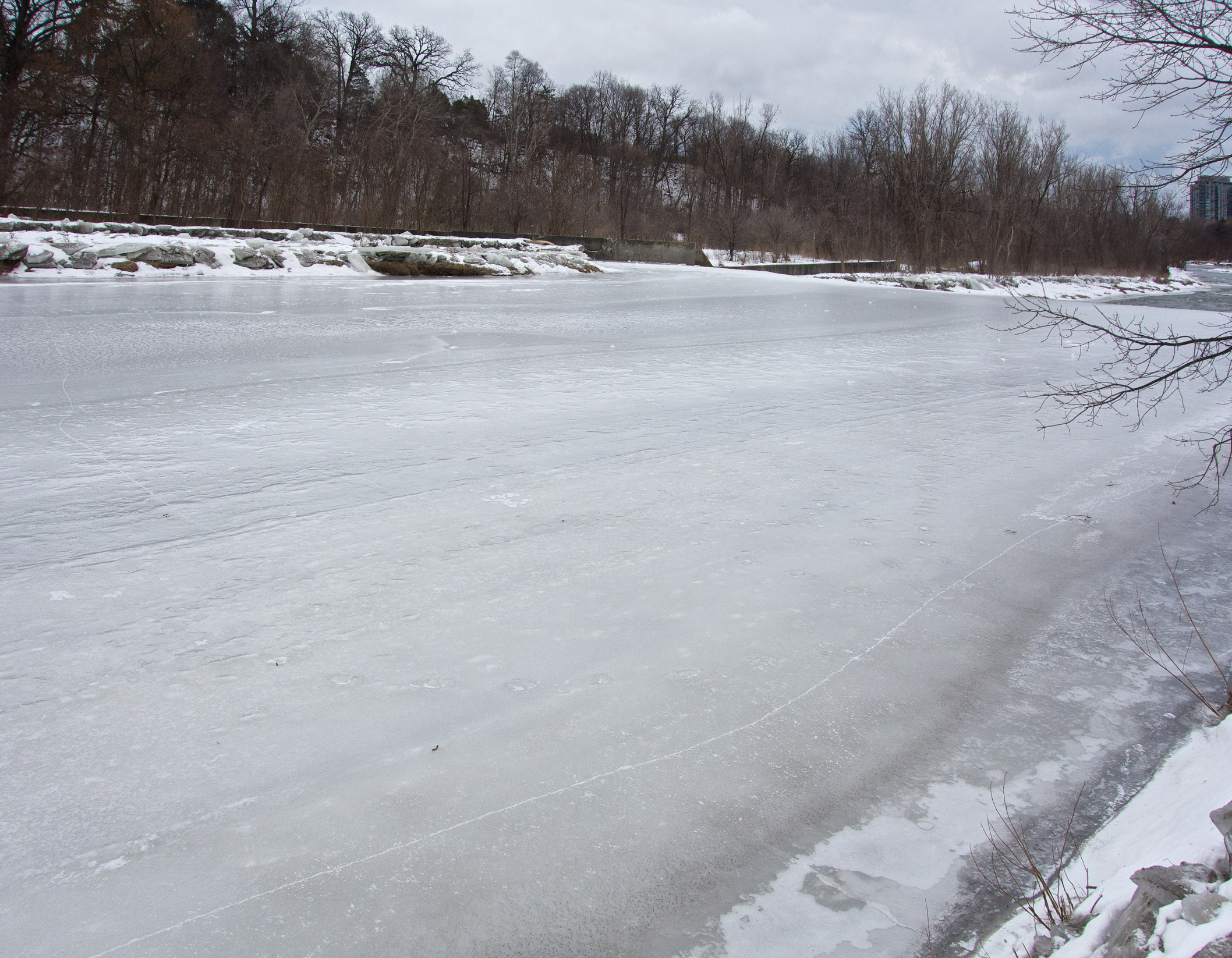
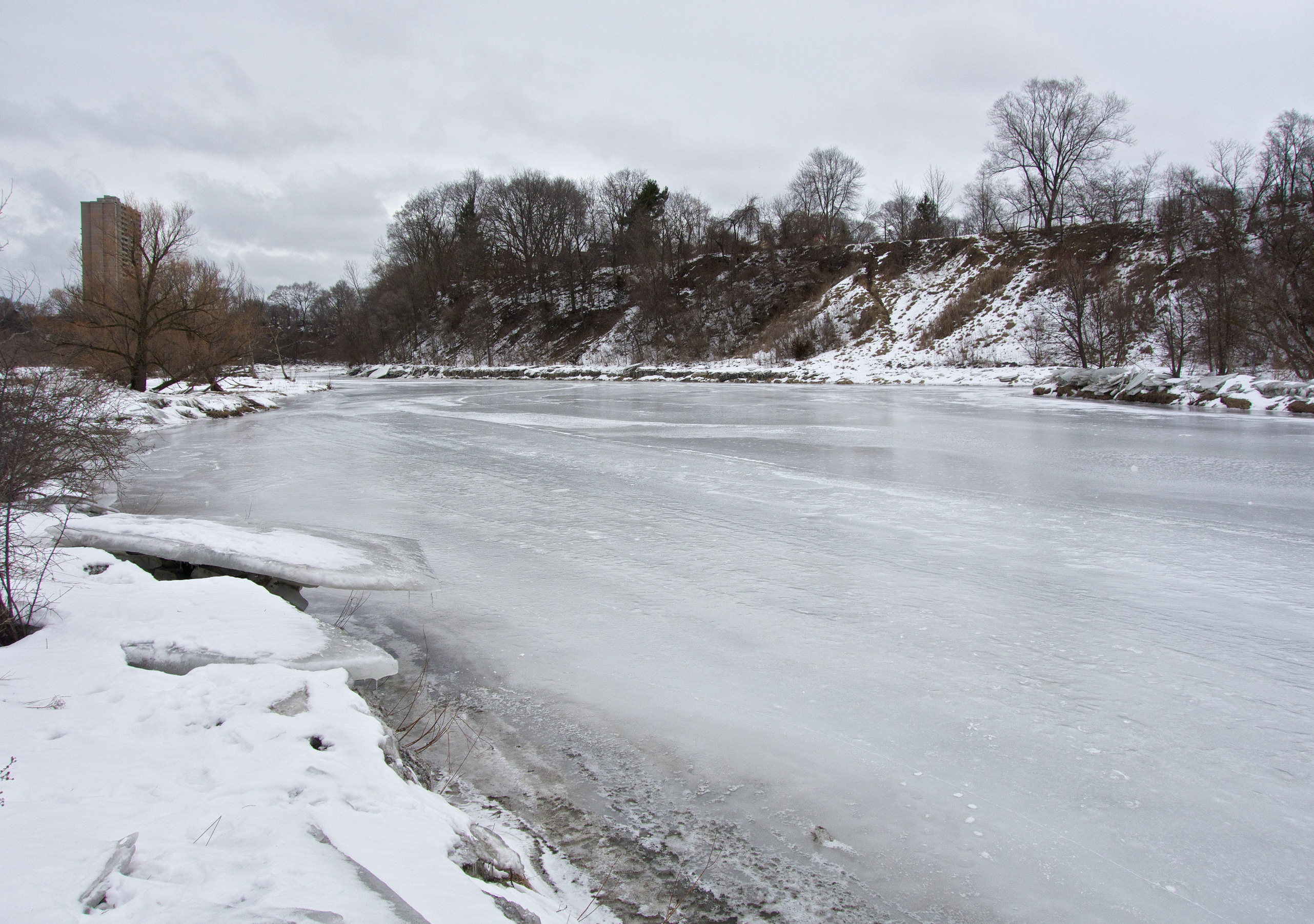
Above the weir, a large natural ice surface has magically appeared that (with some smoothing from a handy Zamboni or some strategic flooding) could be a fantastic outdoor rink. These two photographs were taken from the same spot.

Looking upriver towards Weston.

Looking upriver towards Weston.

Looking downriver over the weir.

Looking downriver over the weir.

Since the icy conditions have taken over and glazed the pathways, very few people are using the park as the entrance (closed to traffic for the winter) from Raymore Drive is on a steep slope. Only the die-hards with footwear designed for ice are braving these treacherous conditions. Even the extreme weather cyclists have admitted defeat. Not a square centimetre of spandex in sight!

I must admit it’s nice to have the place to yourself and no doubt wildlife prefers it too.