Category Archives: Park view

Spring advances slowly.

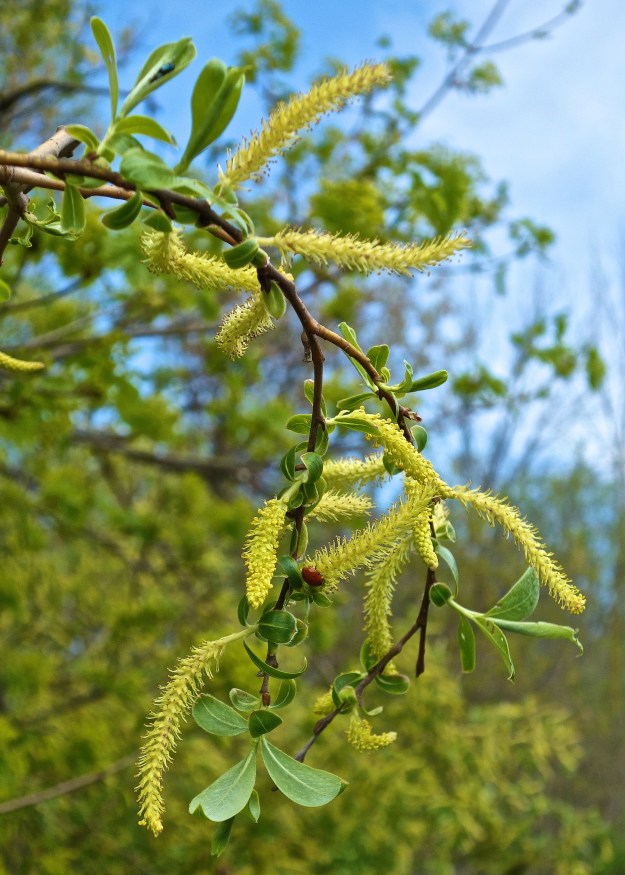
An Asian ladybug checks out some fragrant Willow blossoms.

An Asian ladybug clambers over some fragrant willow flowers by the Humber in Raymore Park.

Cool weather continues to make spring a long season this year. The upside to this is the ability to watch plants come to life in slow motion.

Willow trees (Latin name, Salix) are common in Raymore Park and they are native to Canada. They love watery environments and are easily propagated. They can be seen planted throughout the park, although, like walnuts, they don’t need much encouragement. Their flowers are particularly fragrant and have a lilac type smell.

The ancient Greeks knew about the medicinal abilities of willow bark extract to cut pain and reduce a fever. Native Canadians also used it in the same way. Scientists in the 19th Century extracted a chemical, which they named salicin, from the bark and converted it to salicylic acid and later still, to acetylsalicylic acid. The drug in this form is still in wide use today and more commonly known as ASA or aspirin.

As for the Asian ladybug, this was introduced by farmers in the U.S. to fight aphids and they do that job very well. Unfortunately they are not as benign as our native ladybugs and tend to find crevices in homes as well as contaminate grapes used in wines. They have to a large extent displaced our native bug. One year at a Niagara winery I drank some red wine which was ‘flavour enhanced’ with large numbers of the creatures accidentally harvested with the grapes. They have an unforgettable and bitter taste! It didn’t seem to bother anyone else so I let it go. Canadians can be very polite and forgiving.

Wineries now take precautions not to harvest ladybugs along with their grapes.

Off Leash Zone latest

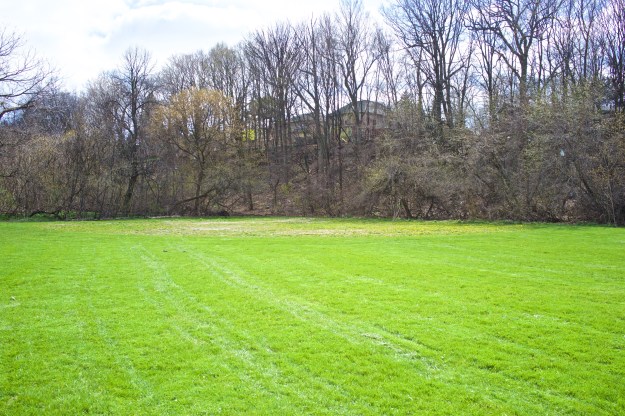
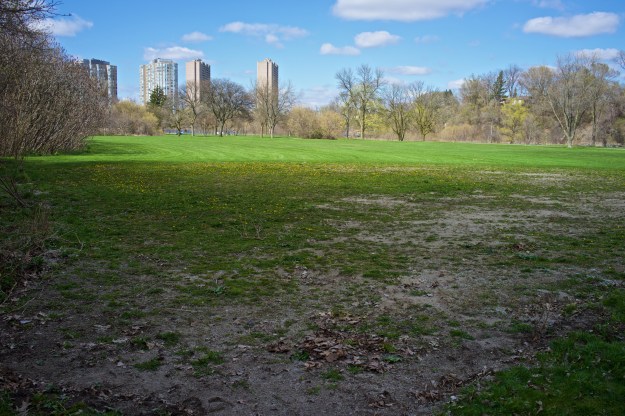
In preparation for the new off-leash area by the weir in Raymore Park city staff have removed the baseball diamond fencing that was installed a few years ago but rarely used.

The old baseball fencing has gone.

The old baseball fencing has gone.

The view north from the upcoming leash free zone.

The view north from the upcoming leash free zone.

We’ll have to see if the extended deadline for work on the Humber retaining wall will delay the opening of the new dog facility. Workers did manage to remove the fencing without any logistical problems.

Work slows on Retaining Wall

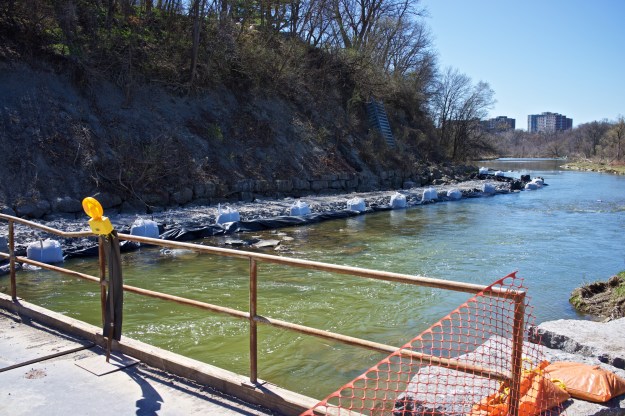
The retaining wall base has been wrapped in plastic.

The retaining wall base has been wrapped in plastic.

Work has slowed considerably at the site because migrating steelheads (better known as rainbow trout) are spawning in the Humber and rather than disturb their progress up the river, TRCA has ordered a hiatus in work until they complete their spawning. This will depend on the water temperature and will delay the wall’s construction for a while.

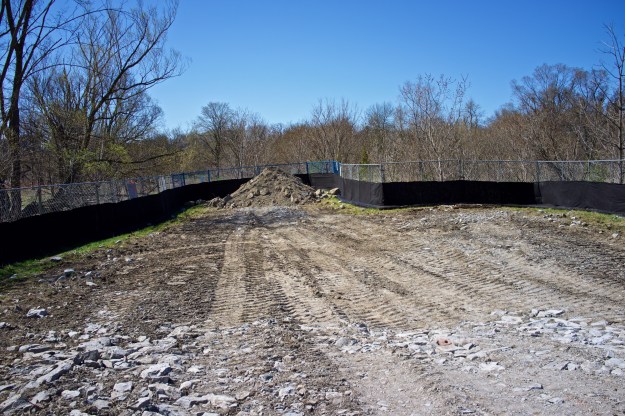
More brush was removed from the site recently and the staging area has been expanded, possibly for additional storage space. Further down the river, a mysterious rope has been stretched across the river. The purpose of the rope remains to be determined.

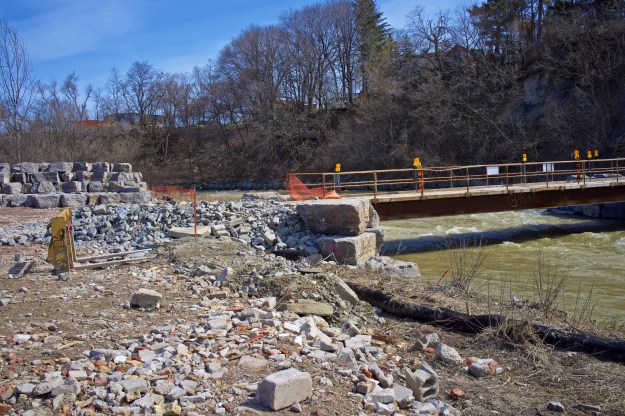
The staging area has been expanded south to include this area.

The staging area has been expanded south to include this land.

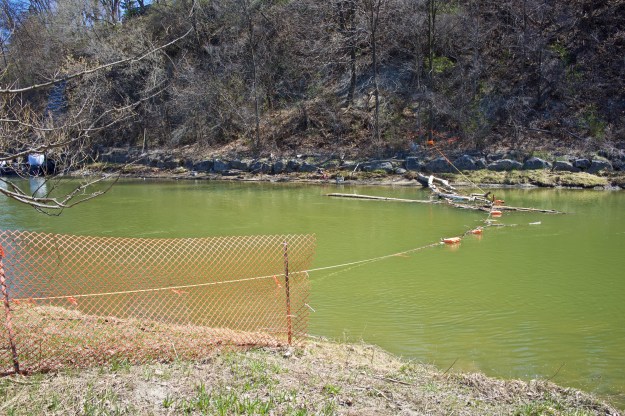
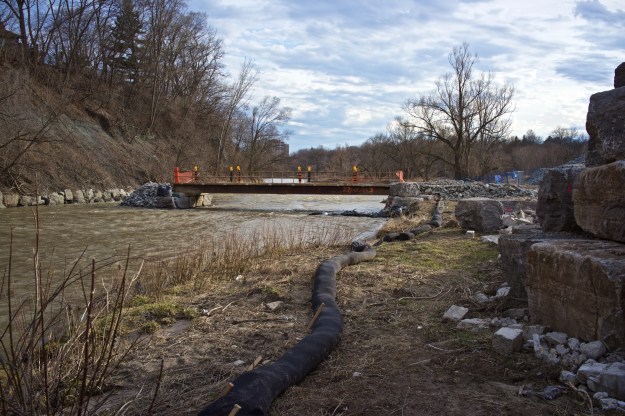
Further down the river, a rope has been stretched across the Humber.

Further down the river, a rope has been stretched across the Humber.

The rope across the humber.

The rope across the Humber is beginning to catch driftwood.

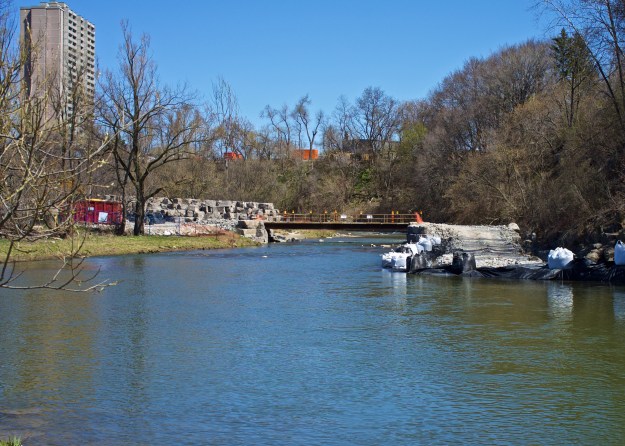
Looking north to the temporary bridge.

Looking north to the temporary bridge.

Retaining Wall Update April 12

It’s truly astonishing seeing the scope of this work and the seemingly glacial pace at which it is trundling along. As of last weekend, not much has changed except that the new bridge has had its eastern abutment extended to the far bank.

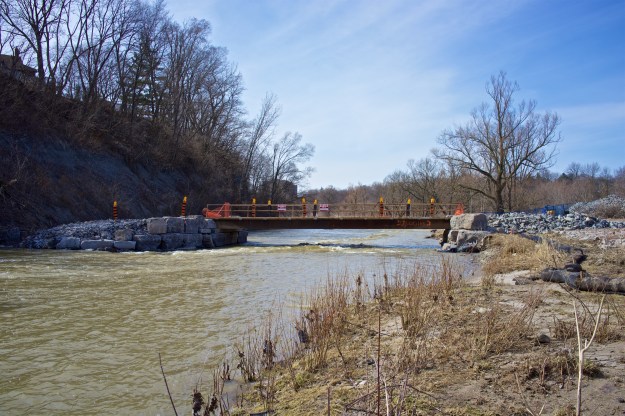
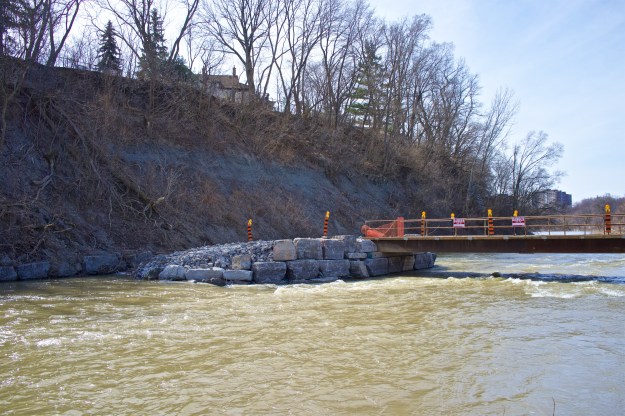
The bridge with its extended abutment.

The bridge with its extended abutment.

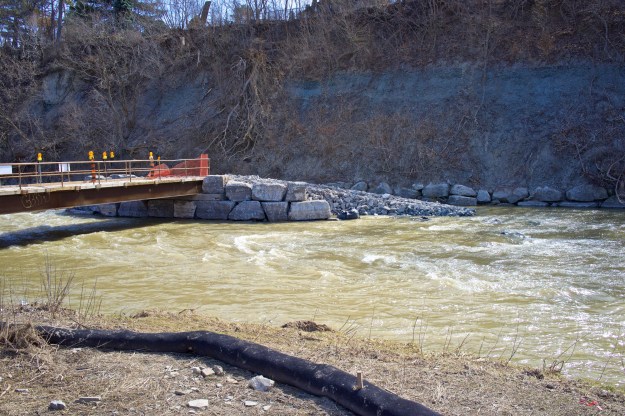
The result of the new abutment is to constrict the river at this point and warnings have been placed south of the bridge about the dangerous flow.

A close-up of the abutment.

A close-up of the abutment.

The extended abutment from downstream.

The extended abutment from downstream.

text

The faster flowing water downstream.


Retaining Wall Update March 30

Another week has gone by and progress has been made in the form of the long awaited bridge. We are now at the point (end of March) where the work was estimated to have been completed. As I have pointed out before, this is a huge undertaking. The scale of the materials and work needed to upgrade this relatively short section of retaining wall is staggering. The hard part is gaining access a long way from any roads and from the opposite bank of the river.

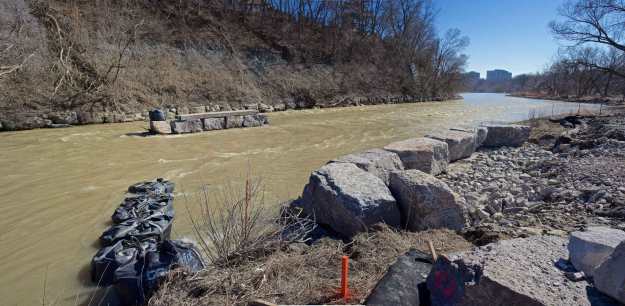
Panoramic shot of the bridge abutments.

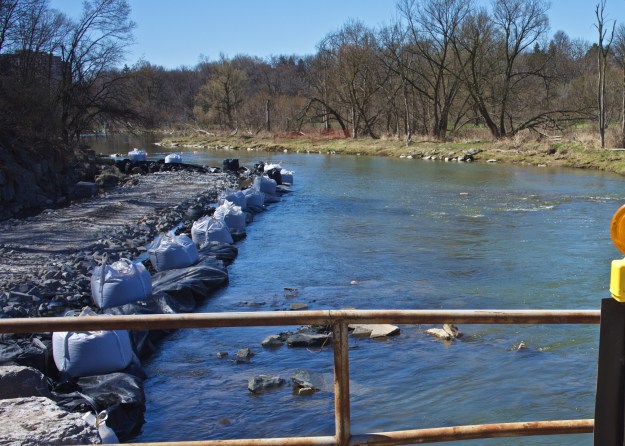
A panoramic shot of the bridge abutments. The bags of gravel are to help protect the near abutment from the strong spring current.


The bridge with decking newly installed.

The bridge with decking newly installed. According to the orange paint, the capacity of the bridge is 27,000 lbs. I’m surprised they are still working in pounds.


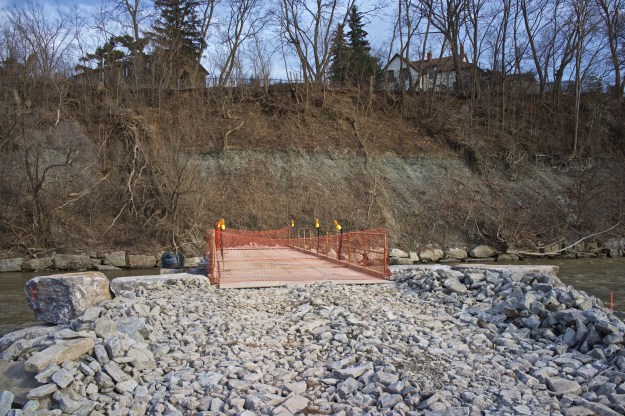
Looking across the bridge.

A view of the bridge deck and western abutment. On the far bank, a distinct geological layer change can be seen, about a third of the way from the top. The lower grey shale layer is from the time Weston was covered by a tropical sea.

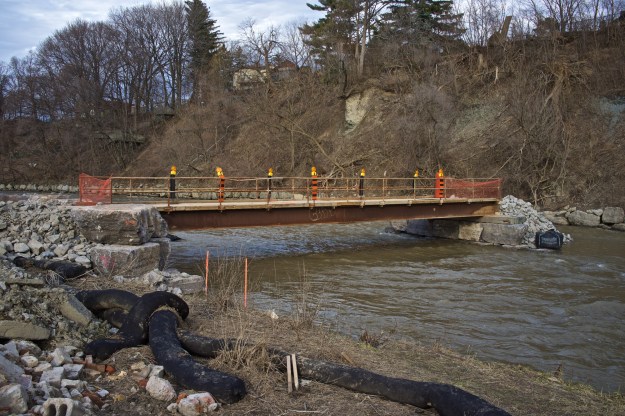
A view of the bridge from the south.

A view of the bridge from the south.

This is literally a ‘bridge to nowhere’ as the span is there to provide access to the opposite bank for the crane rather than to cross the river. Now the actual work of building the retaining wall can begin. It will be interesting to see how they go about removing the existing wall while stabilizing the slope.

Retaining Wall Update March 16.

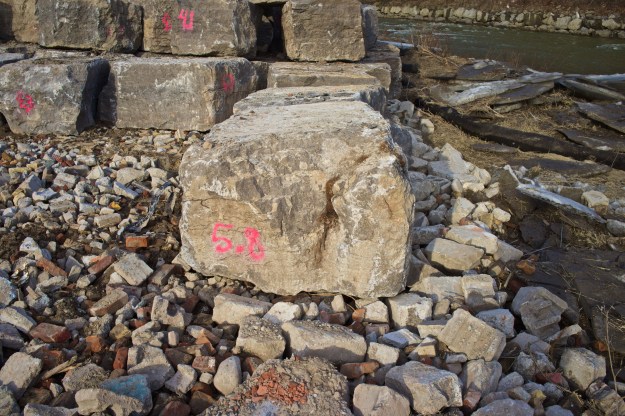
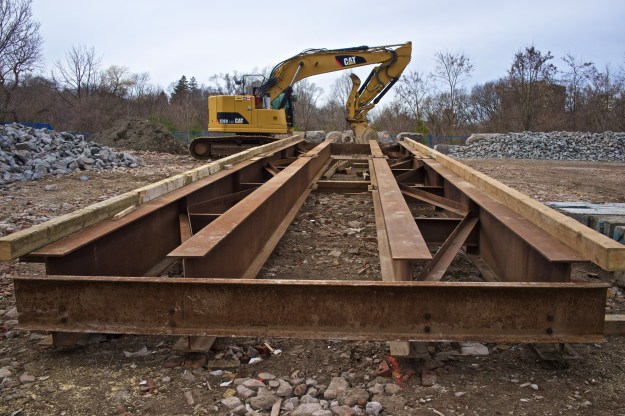
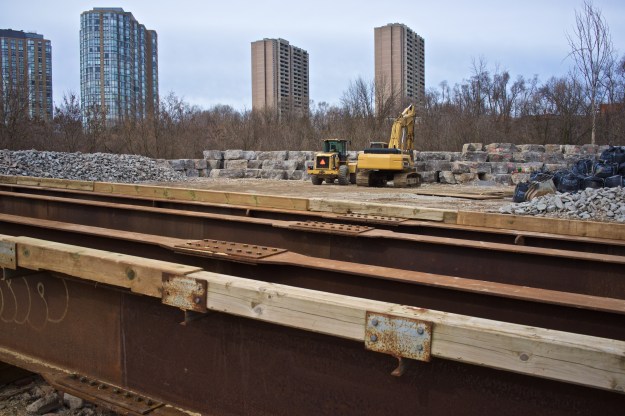
Work continues unabated at the site and the size and scope of the job is becoming apparent. More and more blocks are piling up in the staging area and the components for a temporary bridge that will straddle the river have arrived. The bridge will be placed across the river and support the crane that will build the retaining wall. Each block is labelled with its weight which is vital knowledge for the crane operator. The bridge will be re-positioned along the banks as required.

The project was originally scheduled for completion for the end of March but clearly there is still a massive task ahead.

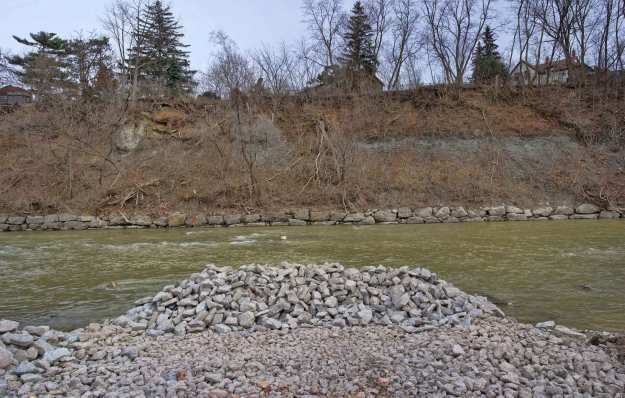
Interestingly, the second photo was taken on February 29th and in the top right of the image can be seen the very small amount of ice pushed ashore during the thaw. This is the smallest amount of ice I have seen in years and quickly melted.

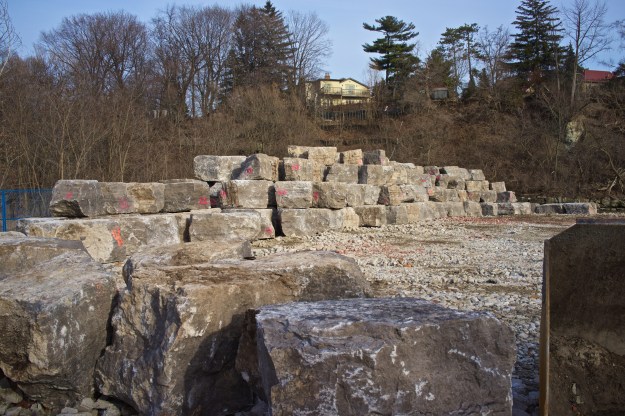
Blocks are piling up awaiting placement.

Blocks are piled up awaiting placement.


Each block is labelled with its weight.

Each block is labelled with its weight. Notice the small amount of ice freshly deposited as a result of the thaw.


The bridge.

Girders that will be used to make a bridge to straddle the river.


The bridge and blocks in the background.

The bridge girders and limestone blocks in the background.


The bridge platform.

What looks like the beginnings of an abutment on which the bridge will rest.

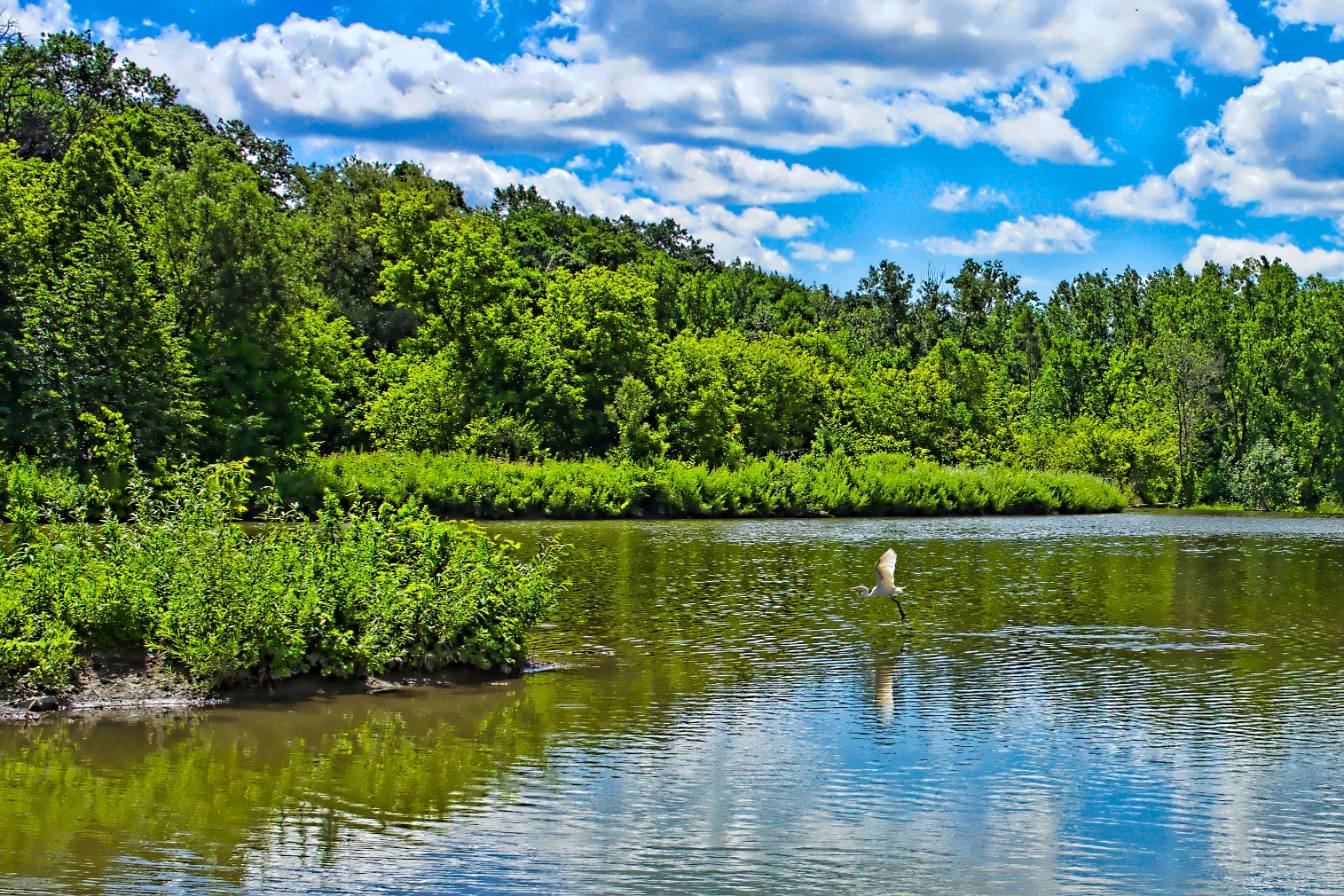
Great Egret takes flight.

Raymore Park has an astonishing variety of wildlife. Great Egrets are occasionally seen in the park and this one was seen taking off last month after wading through shallow waters ahead of the weir. They were nearly hunted to extinction in the 19th Century for their plumage which was used to decorate ladies’ hats. Once a purely migratory bird in southern Ontario, It is estimated that as many as a thousand breeding pairs make their home in Canada. Great Egrets are related to herons and have a similar profile. The first time I saw one in Raymore Park I thought it was an Ibis as they look so similar. The Ibis has a range much further south and is also a relative.

DSC01461

Click for larger image.

River ice restrained this year.

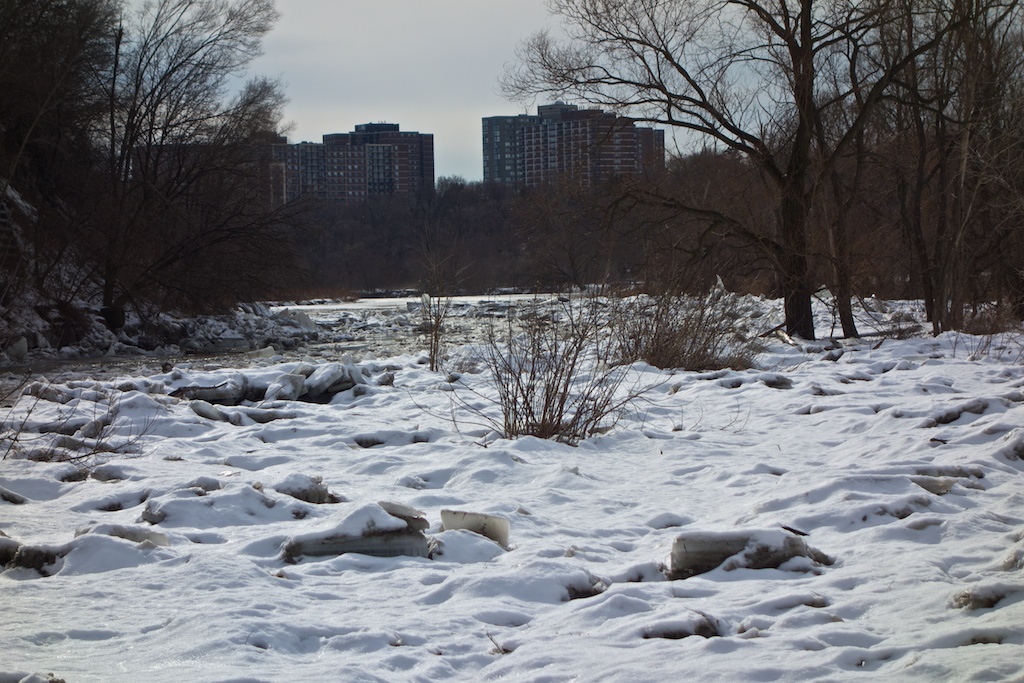
During most recent winters, there has been a battle between heat and cold, freeze and thaw. One of the features of a Raymore Park winter thaw is the flooding of the wild area across from the parking lot. An increased river flow usually caused by rain, raises river levels and cracks the ice cover. The ice then progressively forms a moving dam and flood which moves gently downstream. In a couple of decades of observing the before and after, I have never seen the process in motion. This January, after the recent thaw, the ice stalled before the river widens above the weir and no doubt will produce some spectacular flooding and subsequent erosion when the next strong rain event occurs.

Ice littering the banks of the Humber, January 2014.

Ice littering the banks of the Humber, January 2014.

Considering the cold weather prior to the thaw, the ice is surprisingly thin. The approaching ‘PolarVortex II’ will no doubt consolidate the present ice dam.

Winter continues

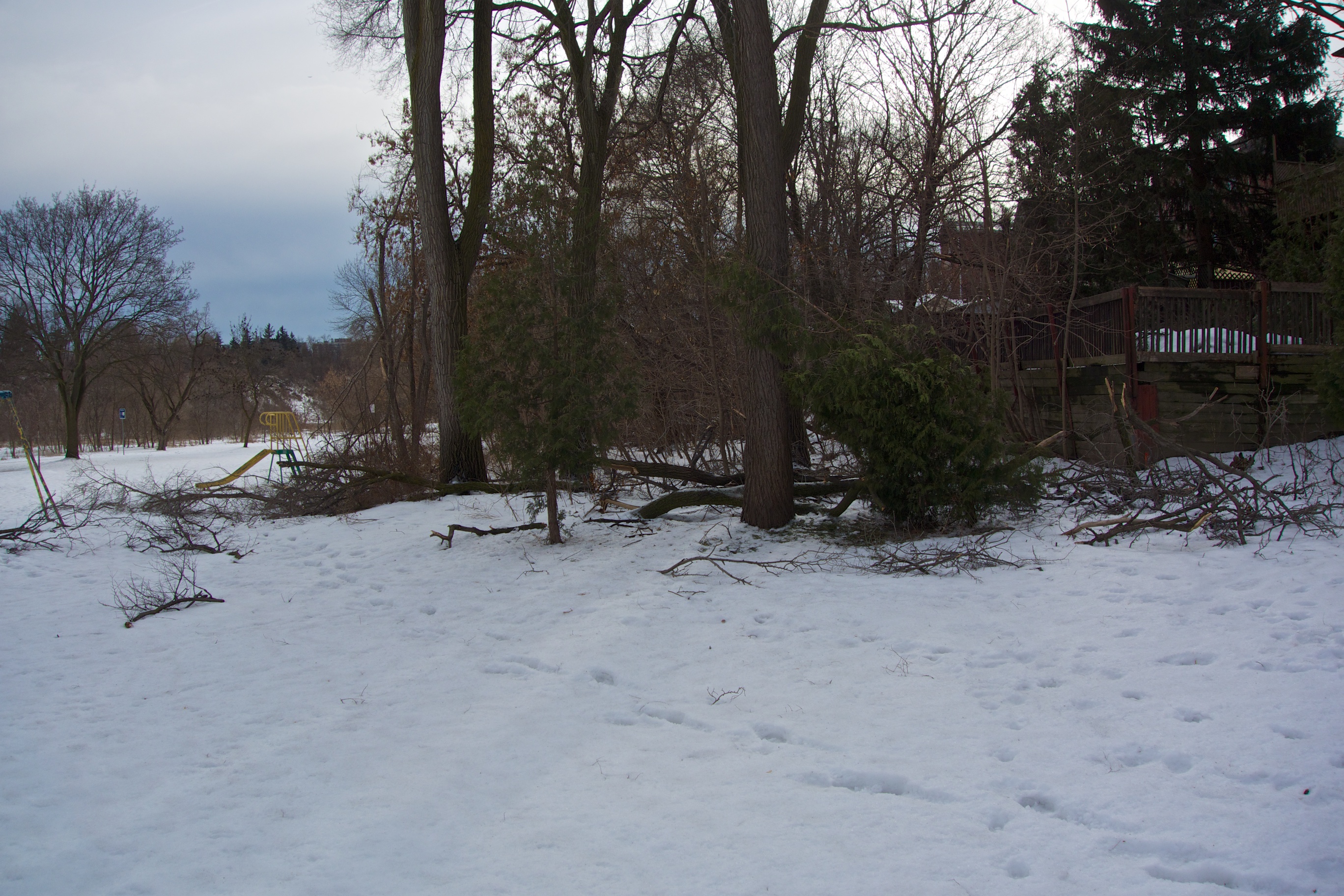
Last month’s ice storm inflicted little damage on the park. Most of the recently planted trees in the park suffered no damage while some of the older ones lost dead wood. Siberian elms at the entrance to the park seem to have suffered the most damage and as ‘Guest’ pointed out, these along with Norway maples are not natives and aren’t in their natural environment. Surprisingly, the park wasn’t planted with a lot of trees after its creation in the 1950s. If that had been done, Raymore Park would be a mature forest by now and helping to reduce flooding along the Humber. On the other hand, the trees chosen for planting may have been non-natives or even species under threat such as elm or ash.

Looking south - Siberian elms have dropped many branches.

Looking south – Siberian elms have dropped many branches near the park entrance.

Siberian elms are a particularly damaging tree in Ontario because they are so prolific and also because they are partly resistant to the Dutch elm beetle allowing it to remain a threat. No doubt the park will be low on the list for clean-up of the debris (which is not entirely a bad thing).

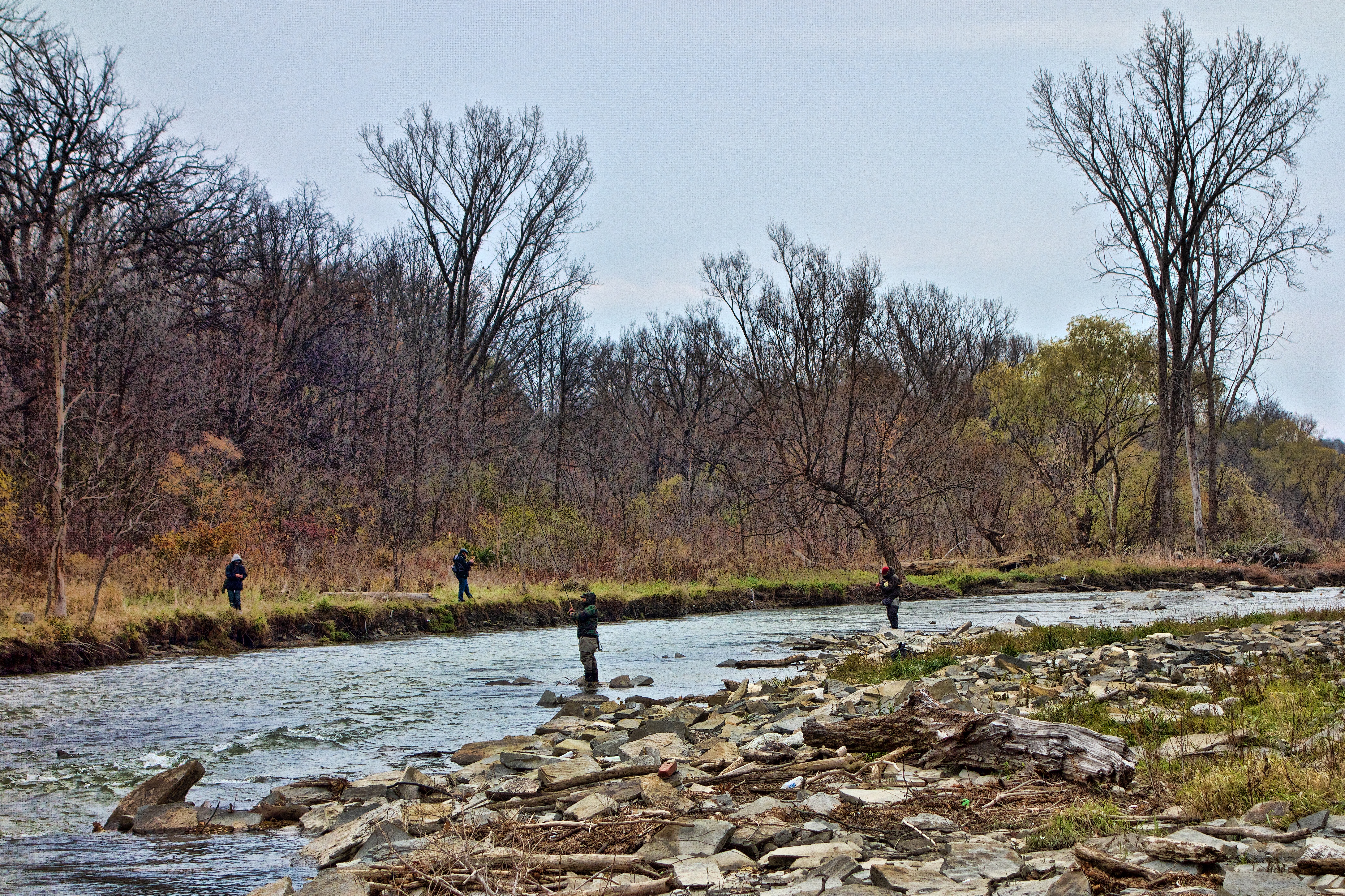
Fishing on the Humber

These fishermen formed a group along the Humber this weekend.

DSC03766

Click for closer view.

Contrary to common belief, migratory fish caught in the Humber are edible with no health concerns.

I was talking to a fisherman the other day and apparently the Ministry of Natural Resources is quite active along the Humber. Ministry officials go so far as to lurk in the bushes in camouflage gear waiting to charge people who fish too close to dams or use other illegal methods such as snagging or netting. Personally, it just seems like hard work for little reward, plus I’m not so keen on ending the life of such an amazing creature. There are others who catch and release but to me that’s pointless and cruel.