Category Archives: Photography

Apologies

It’s been a while but a flood in the park was matched by a flood in my basement July 8th.

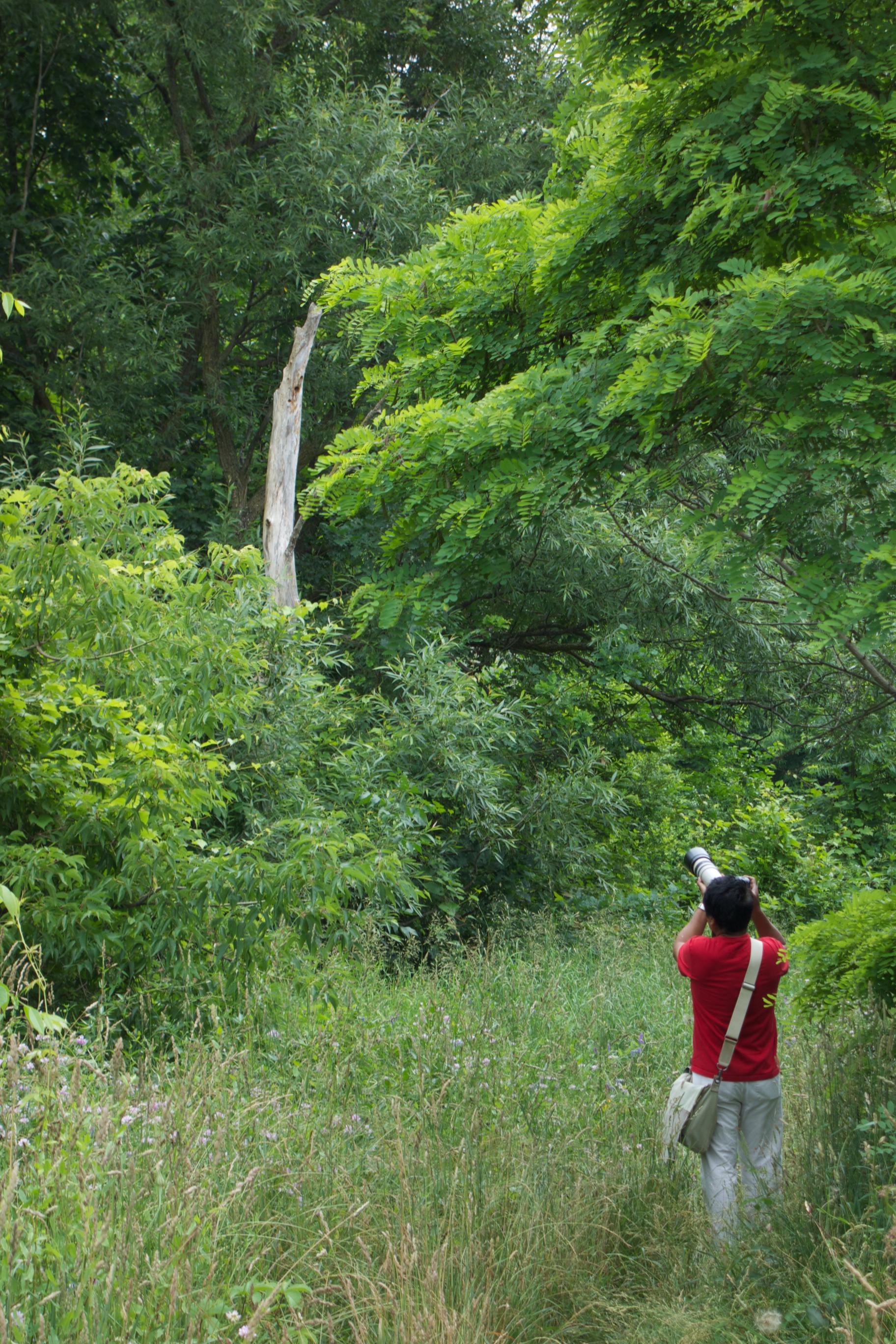
Codemonkey to  the rescue. This gentleman is often seen in Raymore Park going after anything that flies, usually birds and insects but knows a good shot when he sees one. He is a true photographer, spending hours stalking his ‘prey’ and patiently waiting for the right photo to present itself. He has honed his skills over the years and where I take ‘snaps’, Codemonkey takes photographs.

Codemonkey at work after a downy woodpecker.

Codemonkey at work going after a downy woodpecker on the tree stump.

Here are some examples of his work (posted with permission).

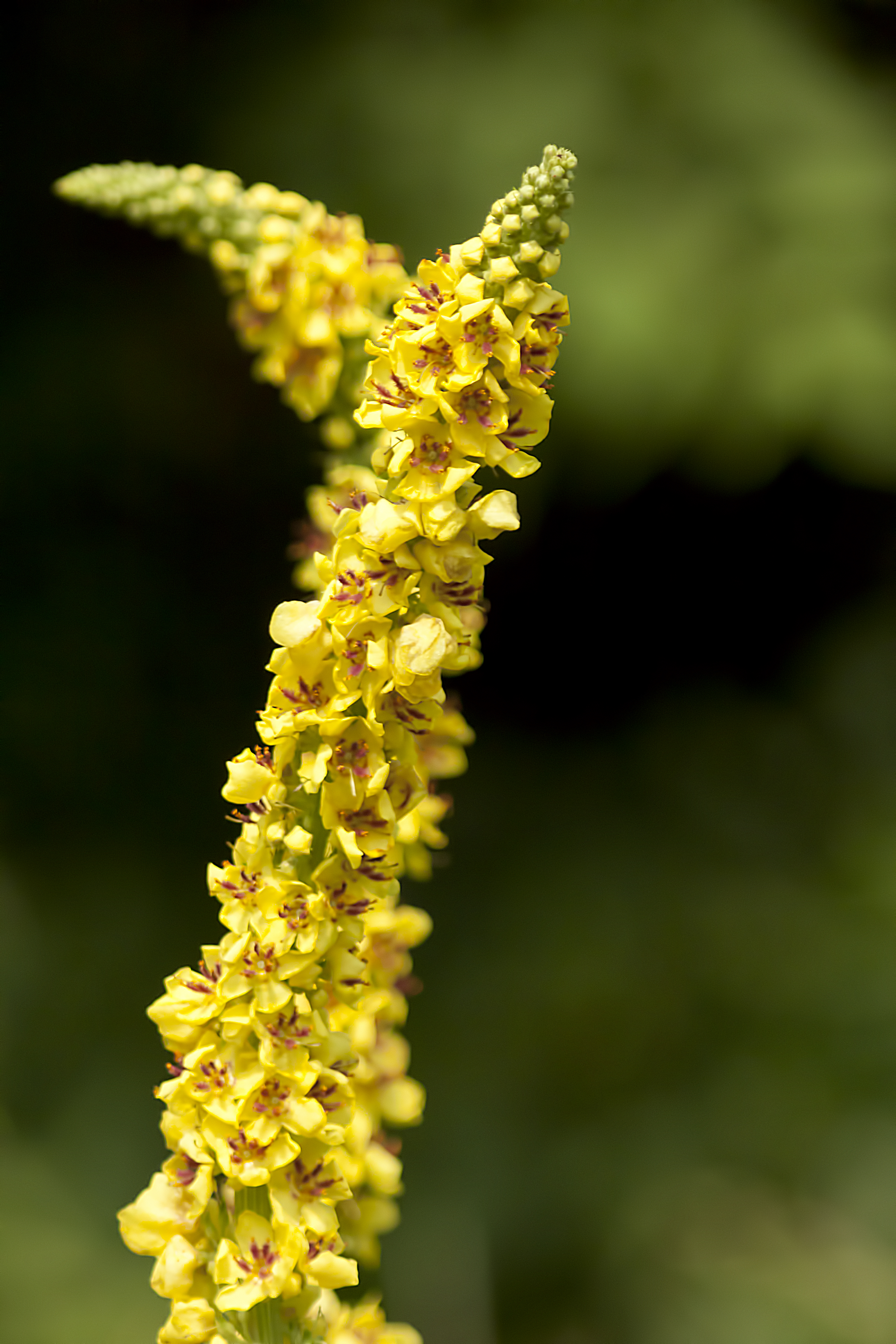
A beautiful yellow flower in Raymore Park.

A beautiful yellow flower in Raymore Park.

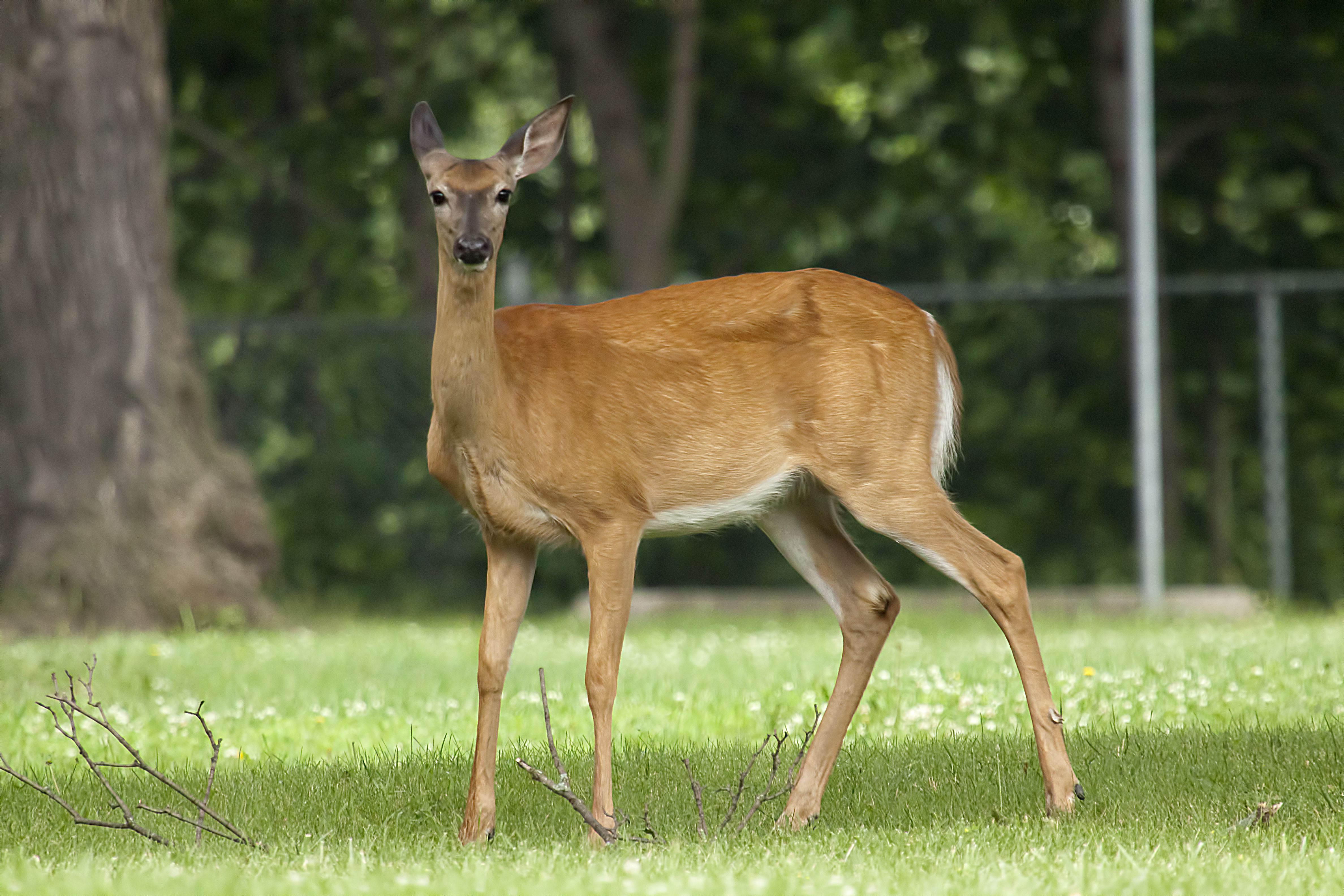
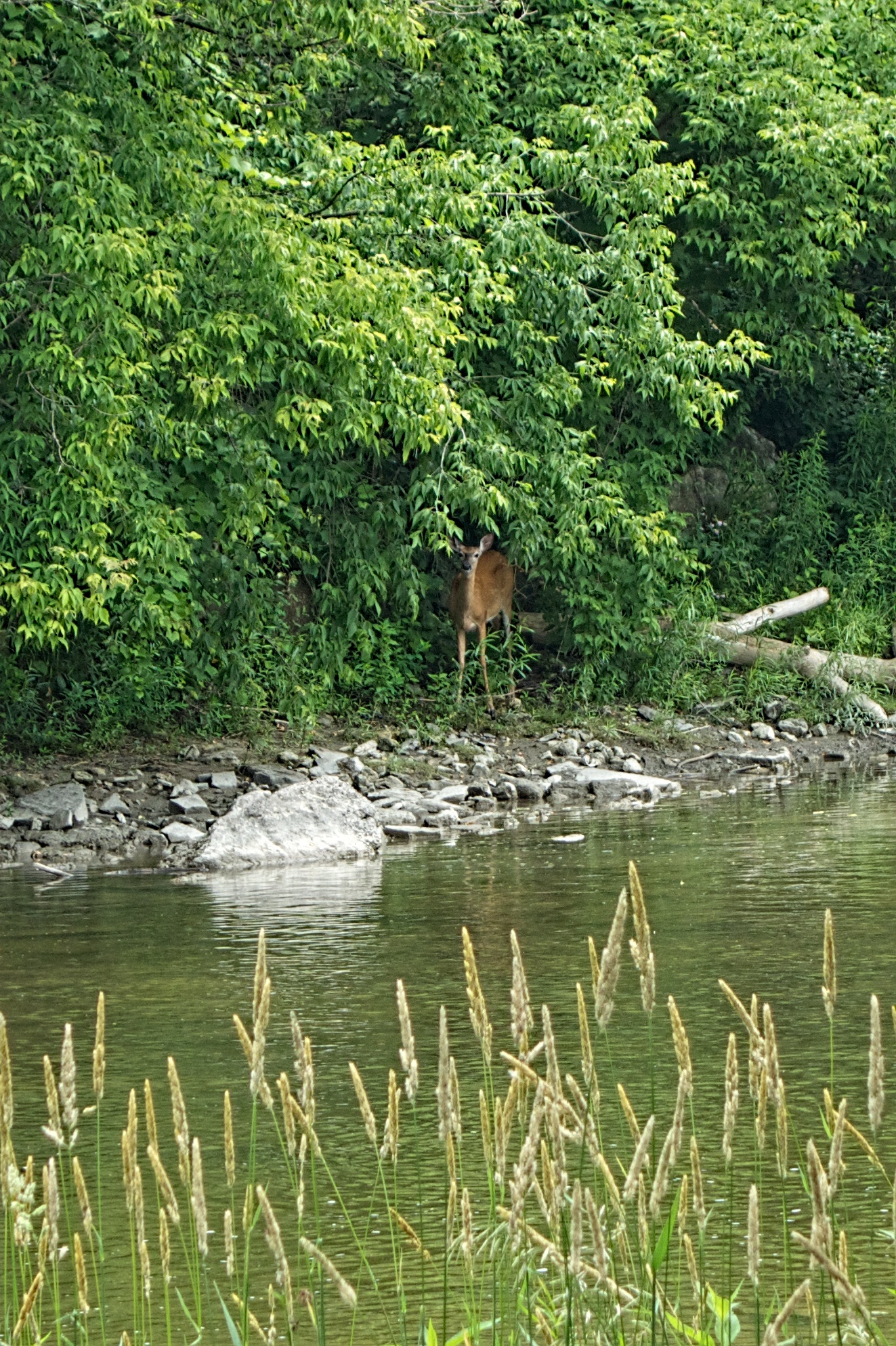
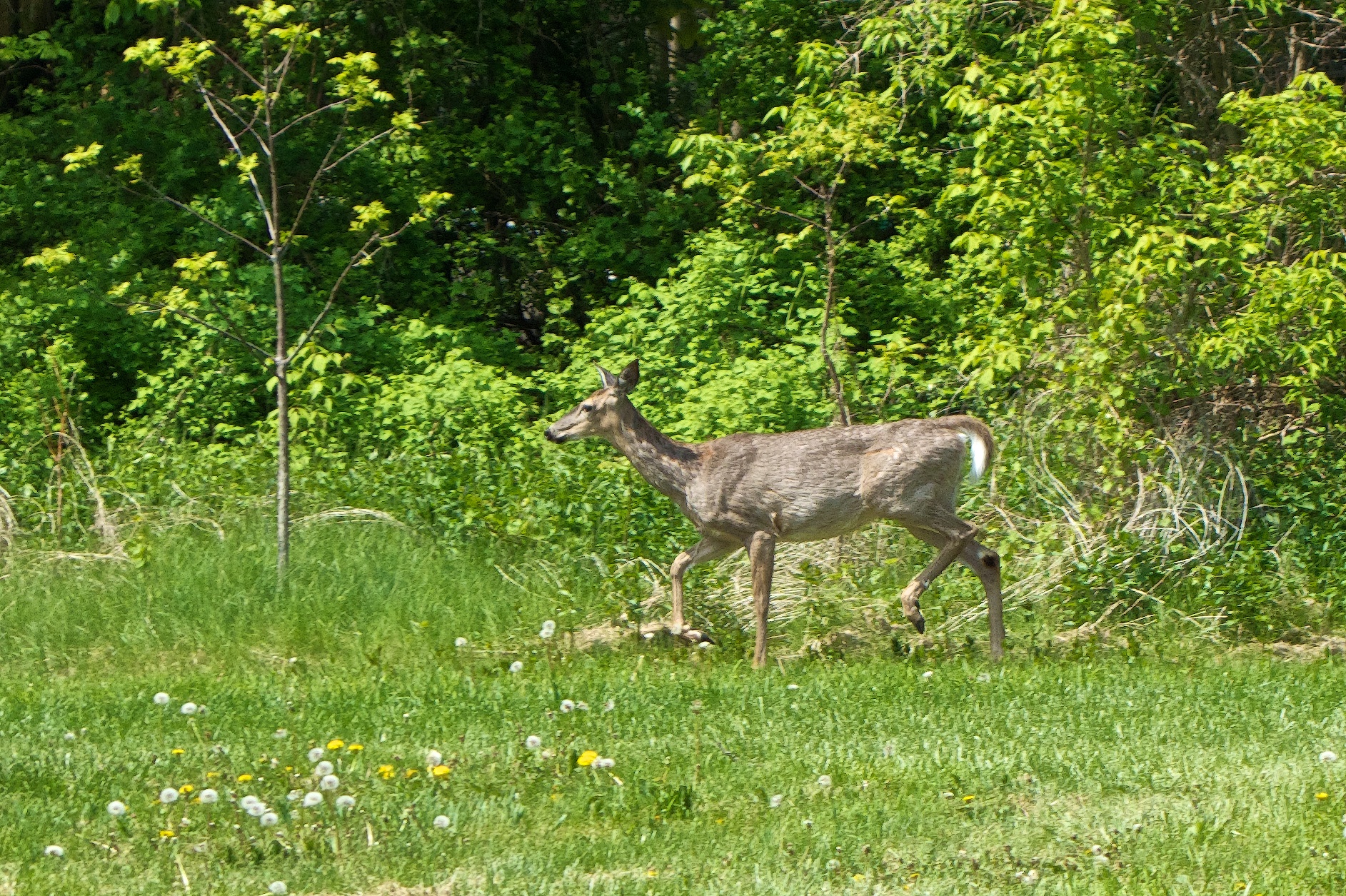
The mother deer often seen in Raymore Park.

The mother deer often seen in Raymore Park.

Codemonkey sent these exquisite rare sightings of wildlife that he managed to get on the same day (July 13).

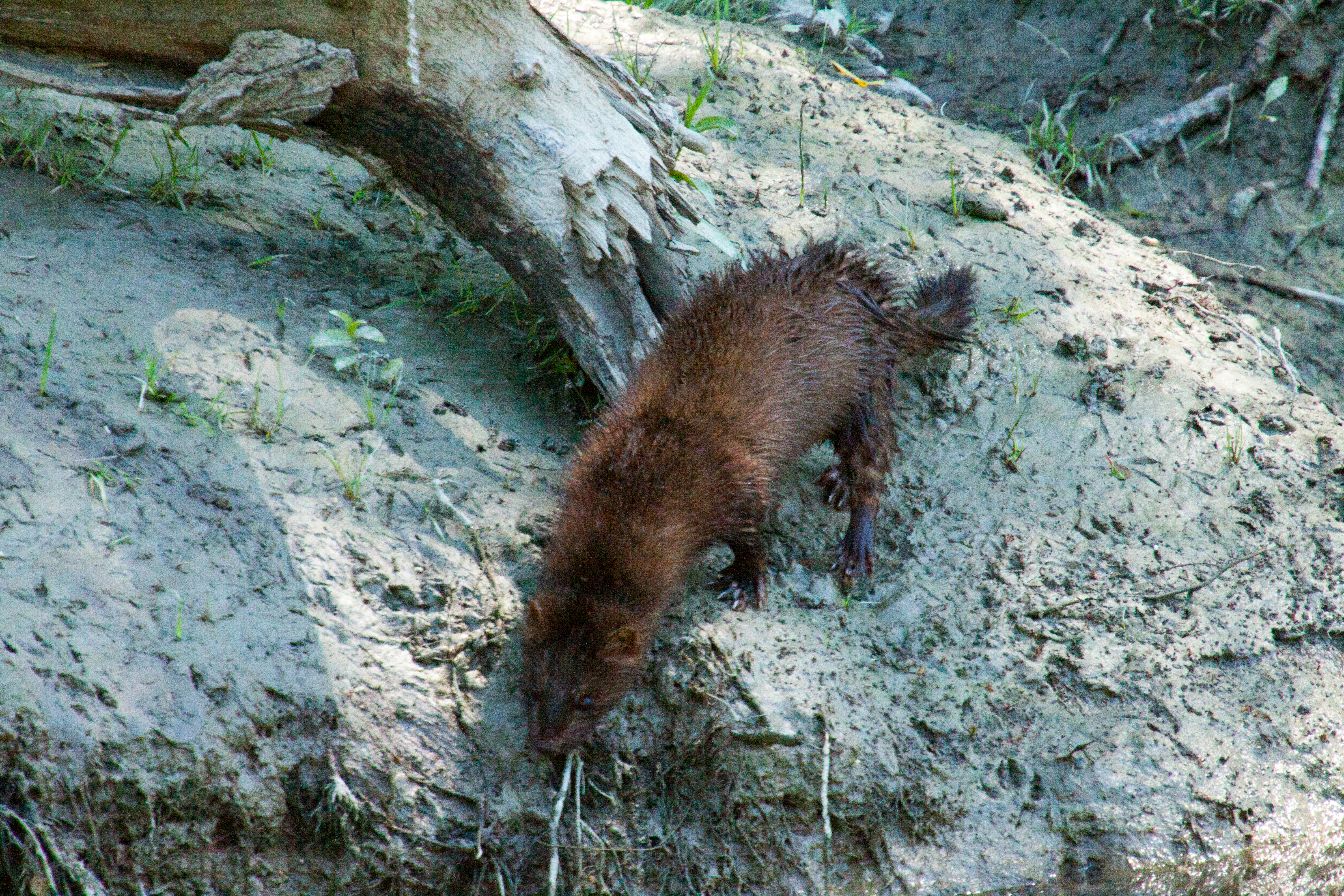
An American mink.

An American mink.

If that’s not incredible, here’s another rare sight that I’ve seen in Raymore once in 20 years (and that was without my camera!).

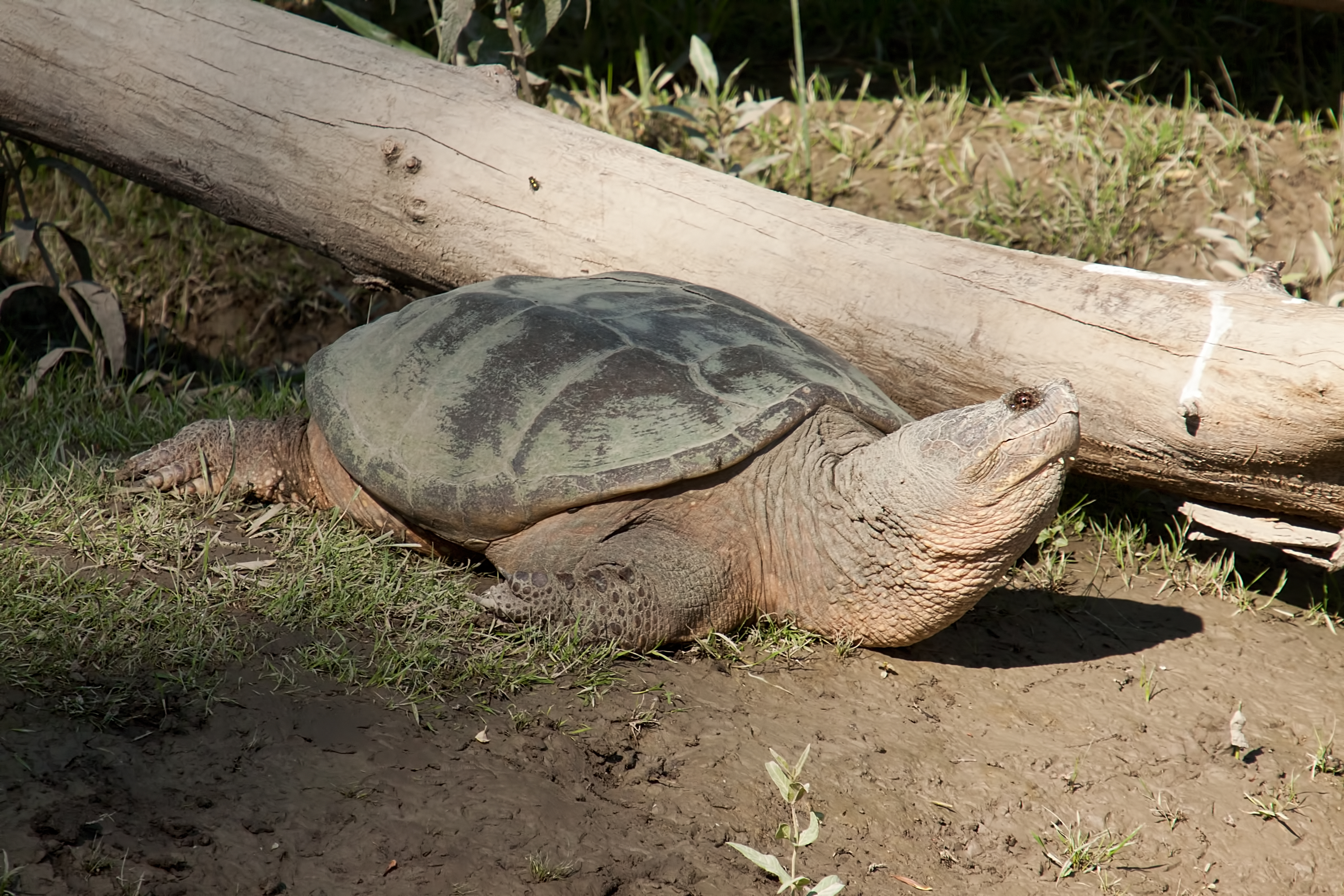
A snapping turtle suns itself after the storm.

A huge snapping turtle suns itself after the storm.

Thanks Codemonkey, you’re a lifesaver.

I did get out after the flood to take some pictures and will post these in the coming days.

Mother and baby are based in Raymore Park

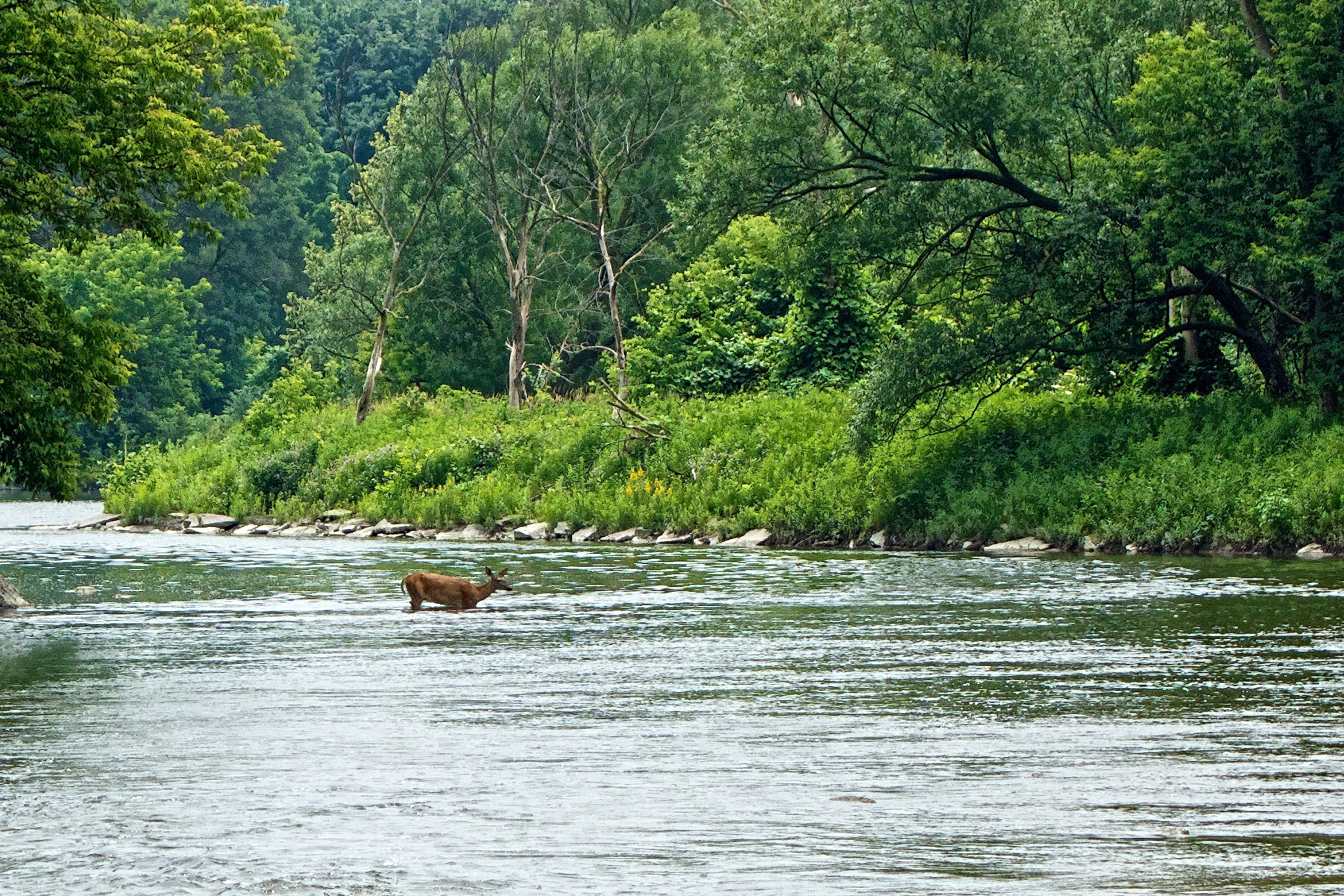
Yesterday, I saw the mother deer on her own in Raymore Park. She moved across the width of the park and moved slowly into the wild area right in front of my wife and I as we stood watching breathlessly.

White-tailed deer leave their young for hours on end while foraging and return to them to provide milk. Today the mother was on the Weston side of the river and waited until I moved upstream. The fawn will be safer on the far side as access is limited so hopefully, that’s where it is.

...standing motionless, waiting in the shadows.

…standing motionless, waiting in the shadows.

She crossed the river slowly and disappeared into the vegetation which, thanks to the rain is very tall this year.

DSC02401

As I was leaving the wild area, I encountered a lady with four very active, off-leash border collies. On mentioning my deer sighting, she seemed to believe her dogs wouldn’t bother the deer and its fawn. In fact, she went told me that ungulates (yes, she used the word ungulates) are a leading cause of death to other animals and humans thanks to their hooves! She mentioned that one of her dogs had had an encounter with a deer recently and that the deer chased her dog and threatened it (with its hooves).

It’s not hard to imagine what would happen if any dog happened across the fawn while it was on its own and defenceless. In fact, any kind of encounter between wild and domestic animals should be avoided. To me, it seems irresponsible to invite such an encounter on a daily basis.


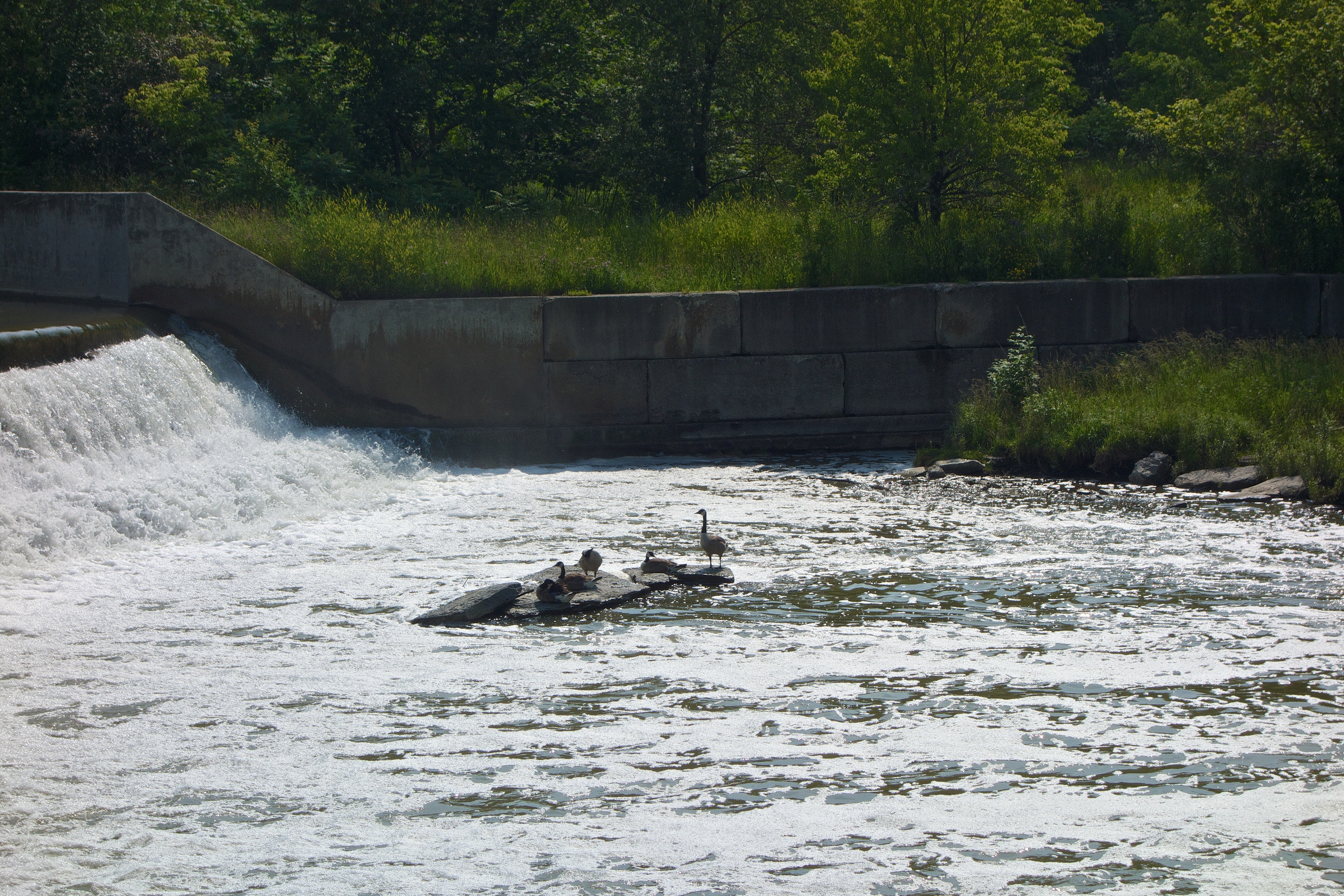
A new island.

Last winter, huge amounts of ice and water coming over the weir seems to have pushed up some bedrock to form a small island.

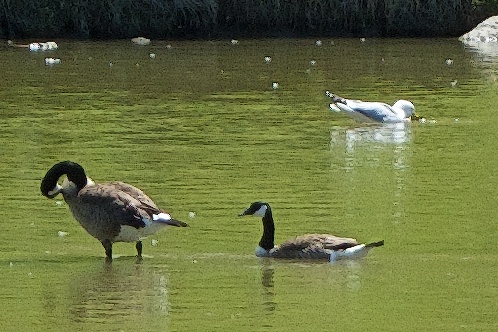
These geese have a safe haven below the weir.

These geese have a safe haven below the weir.

It will be interesting to see if this will stay or be swept away next winter. For now, it’s a great spot for Canada Geese.

And then there were eight…

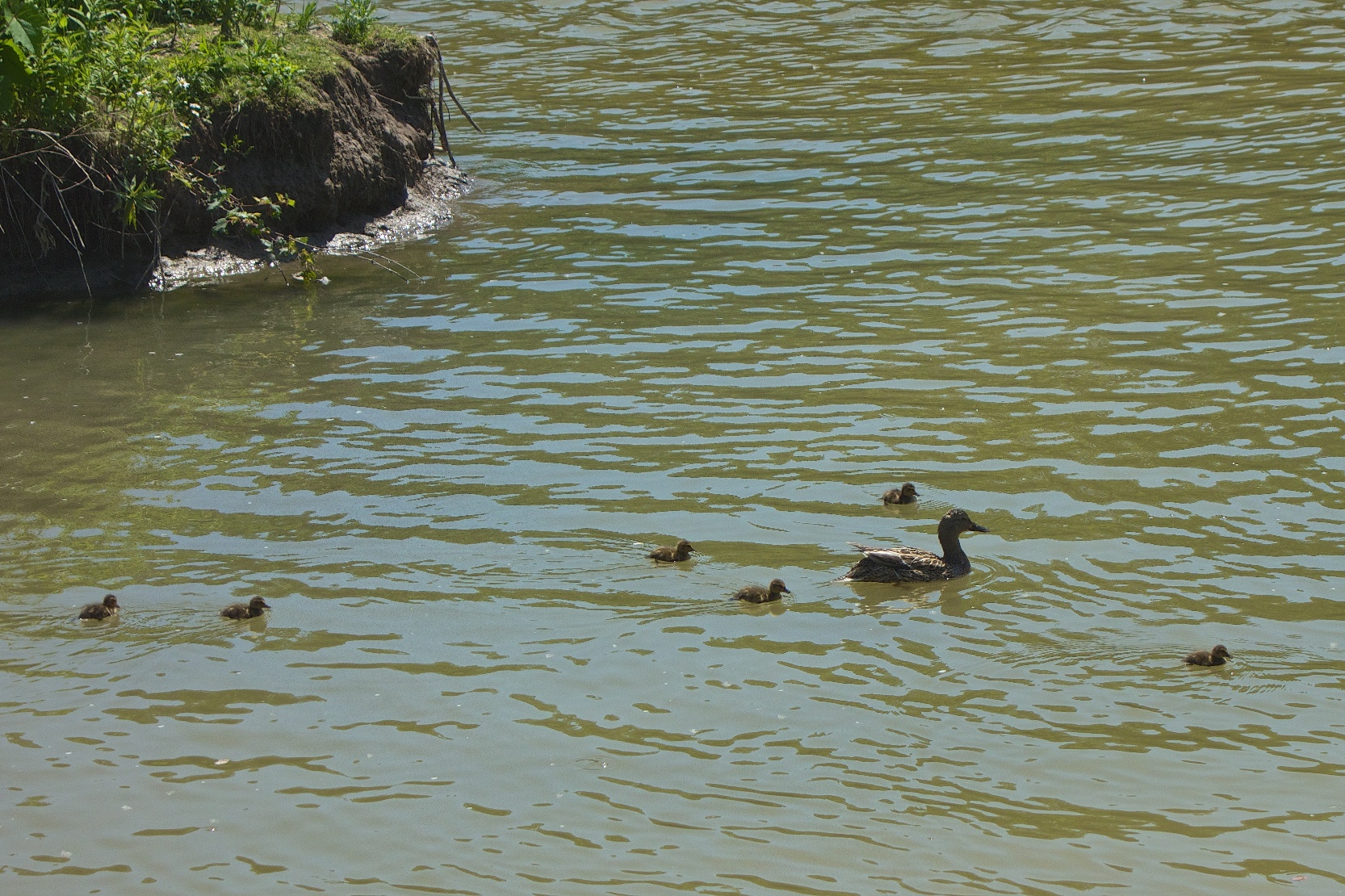
This morning, a beautiful moment on the water by the peninsula  was shattered by the harsh reality of life in the wild.

The mallard with six of her ducklings.

A mallard with six of her ducklings.

A mallard and her nine hatchlings were out on the water in an idyllic scene. I watched and took a number of shots until a large carp in the water distracted me. Out of nowhere, a gull swooped down, snatched one of the chicks and dispatched it very quickly. The duck gave chase as the gull flew off with its prize but quickly returned to the rest of her brood and gathered them close for safety. The gull seemed satisfied with just the one.

The guilty party.

The guilty party – with nearby witnesses pretending they haven’t seen a thing.

I had a feeling that the chicks were vulnerable as they seemed to stray quite far from the mother but didn’t expect to witness such a quick end for one of them. I guess that’s why they breed in such large numbers. On the other side of the coin, the gulls have an interest in ducks breeding and providing the occasional tasty snack so a feeding frenzy is not in their best interest either.


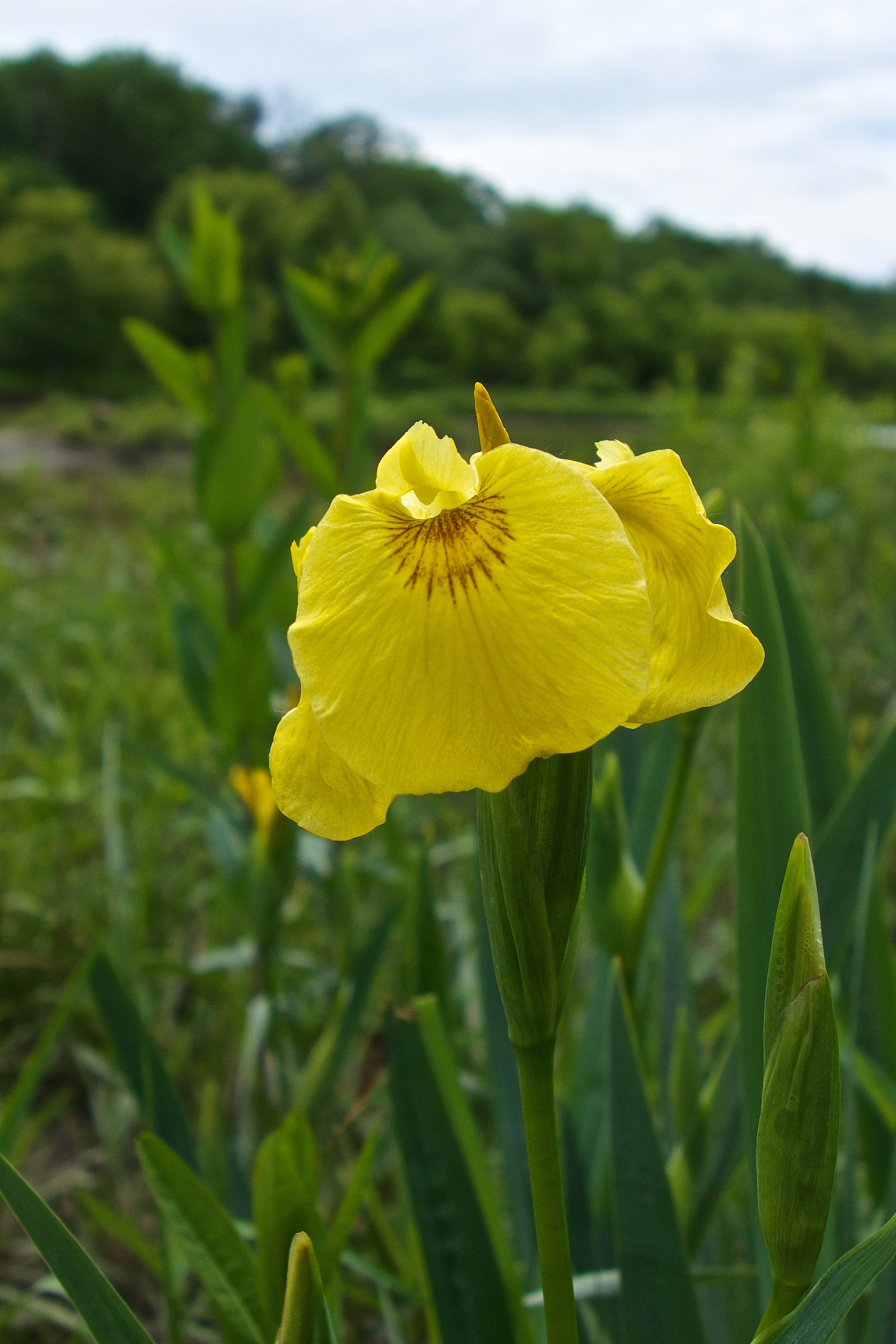
Another foreign (but beautiful) invader!

This is a pretty one but the wild yellow iris, (Iris pseudacorus) is not a native plant. I discovered this one by the peninsula approaching the weir. It is an aquatic plant but can survive in fairly dry conditions. Often used as a decorative plant in gardens, this grouping may have arrived here from a garden up the river. 

Iris pseudacorus

Iris pseudacorus

This ‘n that…

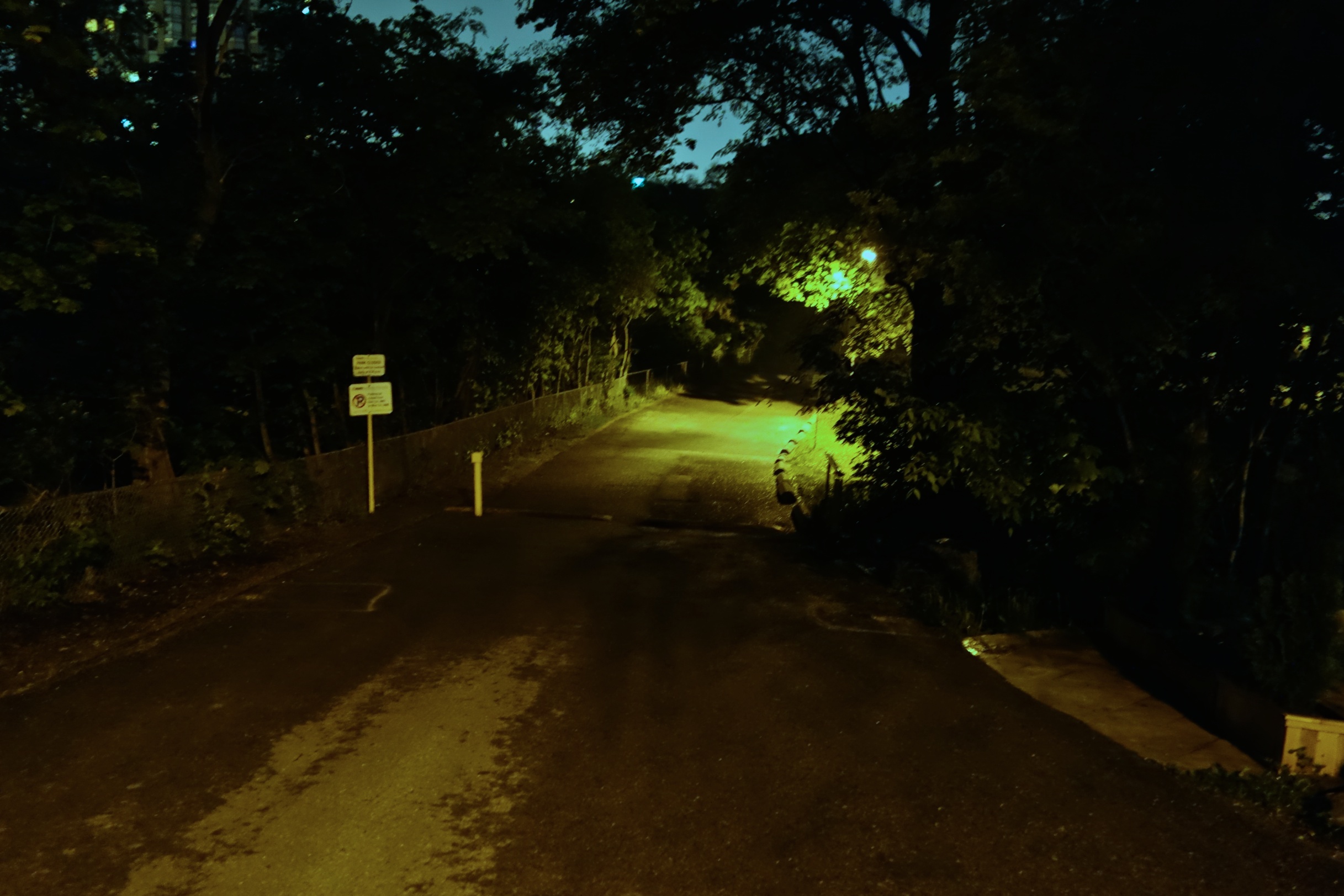
It’s already May 22nd and yet the gates to Raymore Park are left wide open every night. This despite a call to 311 last week.

Park gates open at 11:00 pm May 21st.

Park gates open at 11:00 pm May 21st.

May 20th was the Victoria Day holiday. Because the gates were left open, a group of people held a fireworks party on the grass by the parking lot.

Every year it’s the same. Surely the date cannot come by surprise? Gimme the friggin’ key and I’ll lock it up.

Postscript: As of early June, the park is being locked up regularly but interestingly it re-opens between 3 and 4 a.m.

Earlier on the 20th, a young deer ambled down through the park quite unconcerned with the large numbers of people. A few people stopped to watch before it disappeared into the sumac behind the unused ball diamonds.

DSC02015

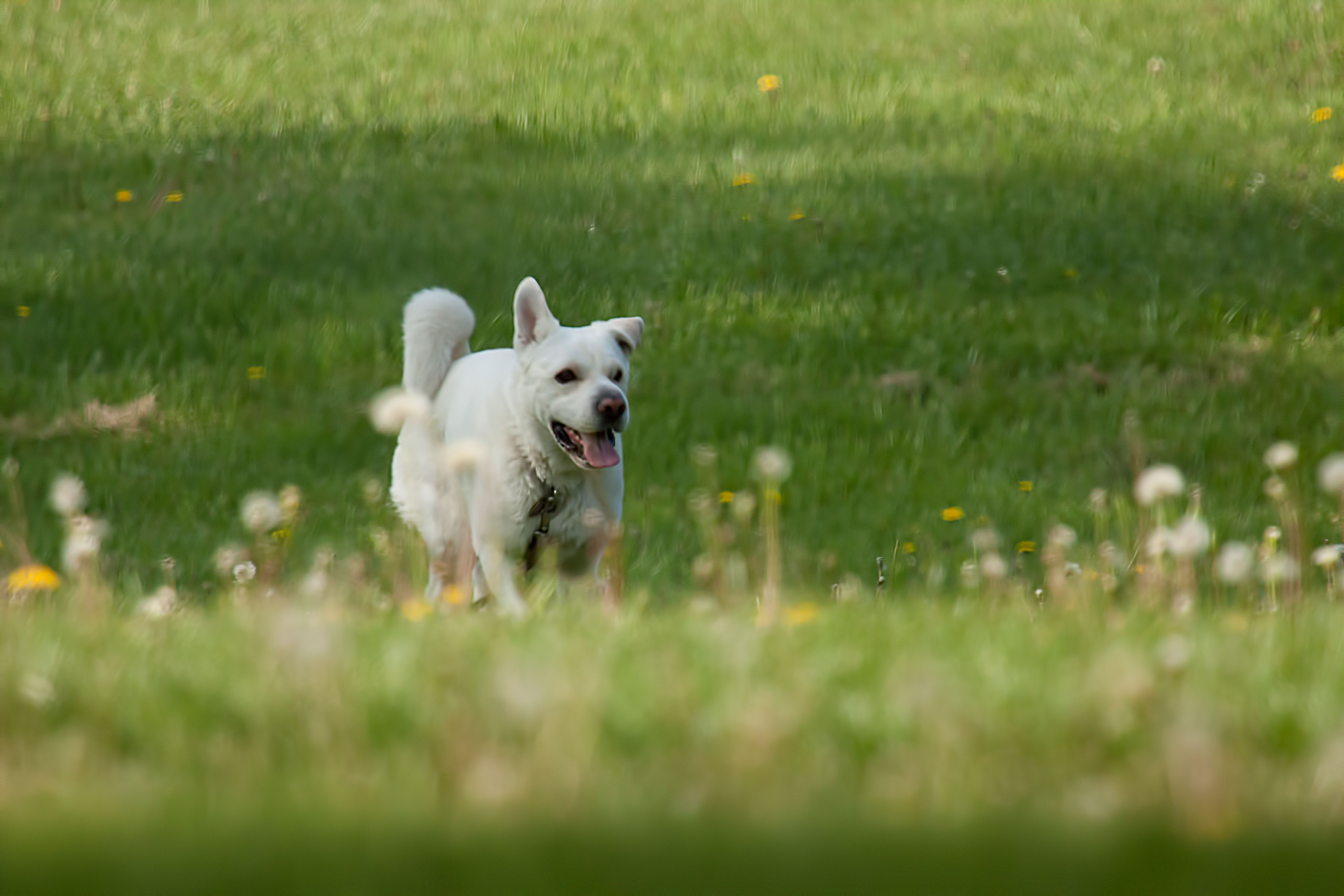
Fortunately there were no dogs on the loose – like this one that is allowed to chase park wildlife.

diablo

Image courtesy of Code Monkey.

On a further seasonal note, mosquitoes are back. The woods at the bottom of the park are home to some of the most aggressive bugs known to humanity. They managed to give me a matching welt on each arm.

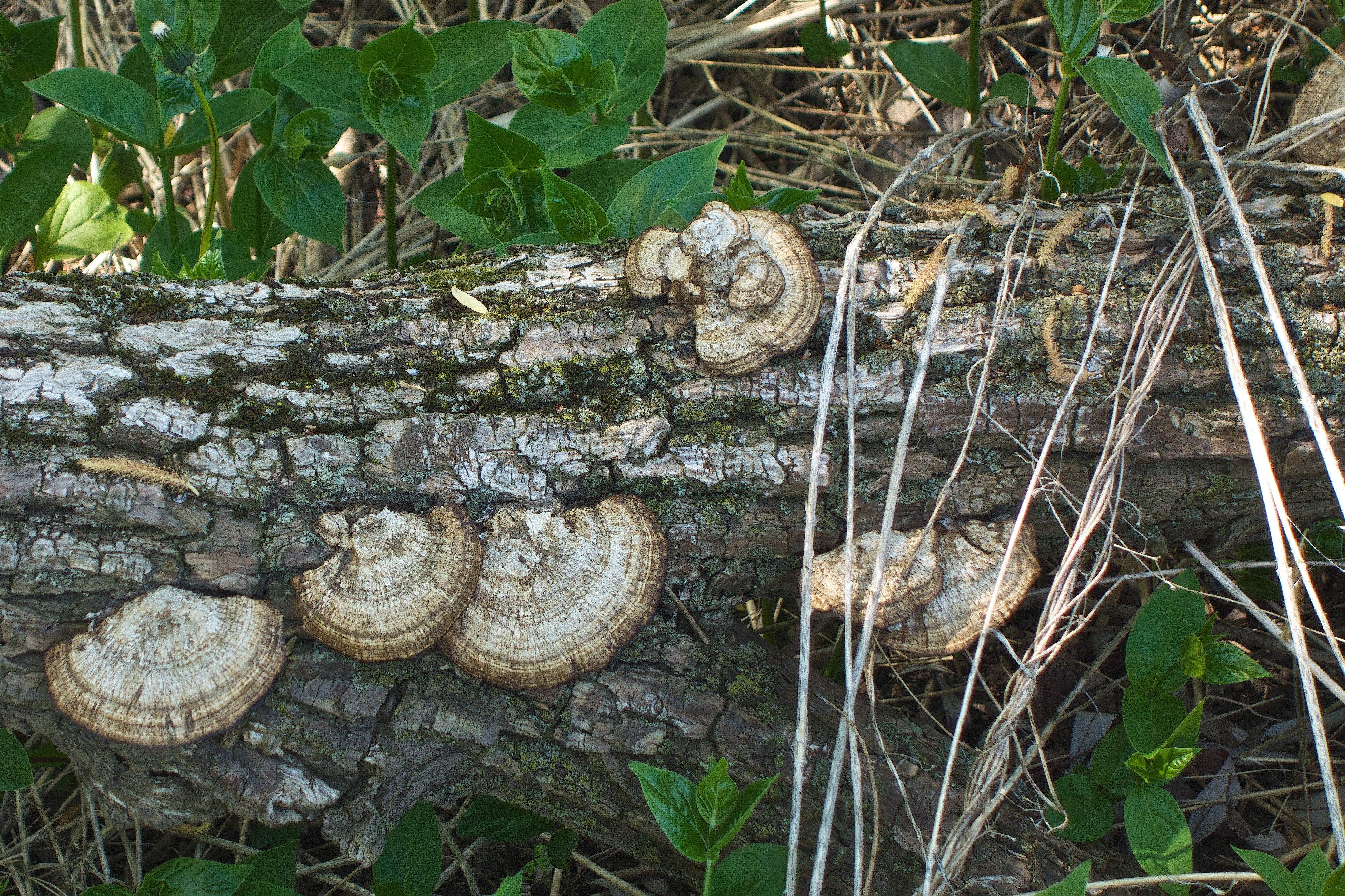
Lastly, some fungus caught my eye. It’s a type of bracket fungus commonly named Turkey Tail. It breaks down dead and diseased wood.

Trametes versicolor - Turkey Tail Fungus.

Trametes versicolor – Turkey Tail Fungus.

More hints of the past

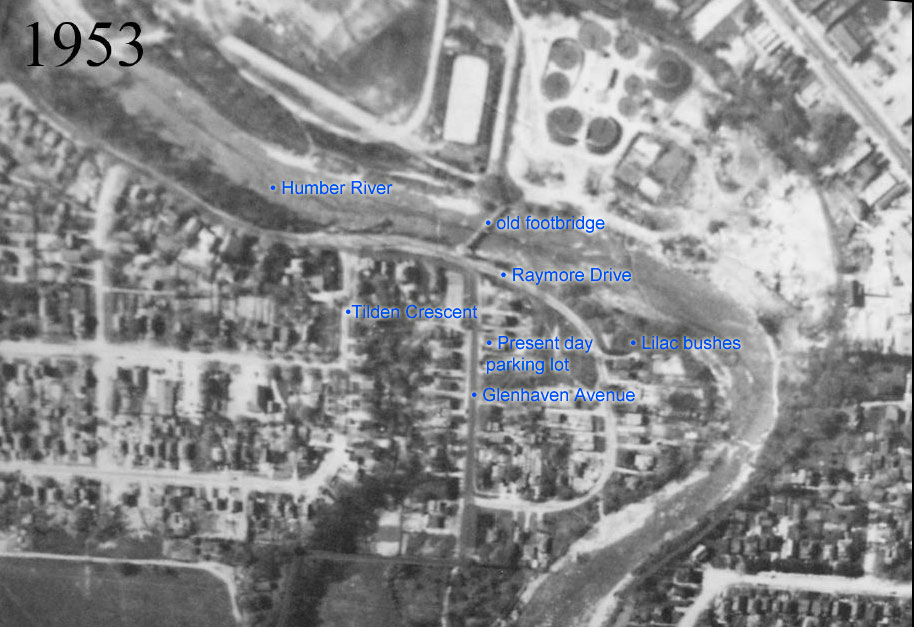
Housing was once scattered along the length of the Humber. Quite a few were built on the valley floor in present day Raymore Park. Raymore Drive used to stretch down into the present-day parking lot and Gilhaven Avenue. It must have been an idyllic location with nature close at hand, rich flood plain soil and an easy walk to the shops and transportation links in Weston. Interestingly, I was talking to long time Weston resident Douglas Tucker and he mentioned that until the mid-1960s, Weston was a shopping destination for people from as far away as Palgrave and Bolton thanks to a regular train service.

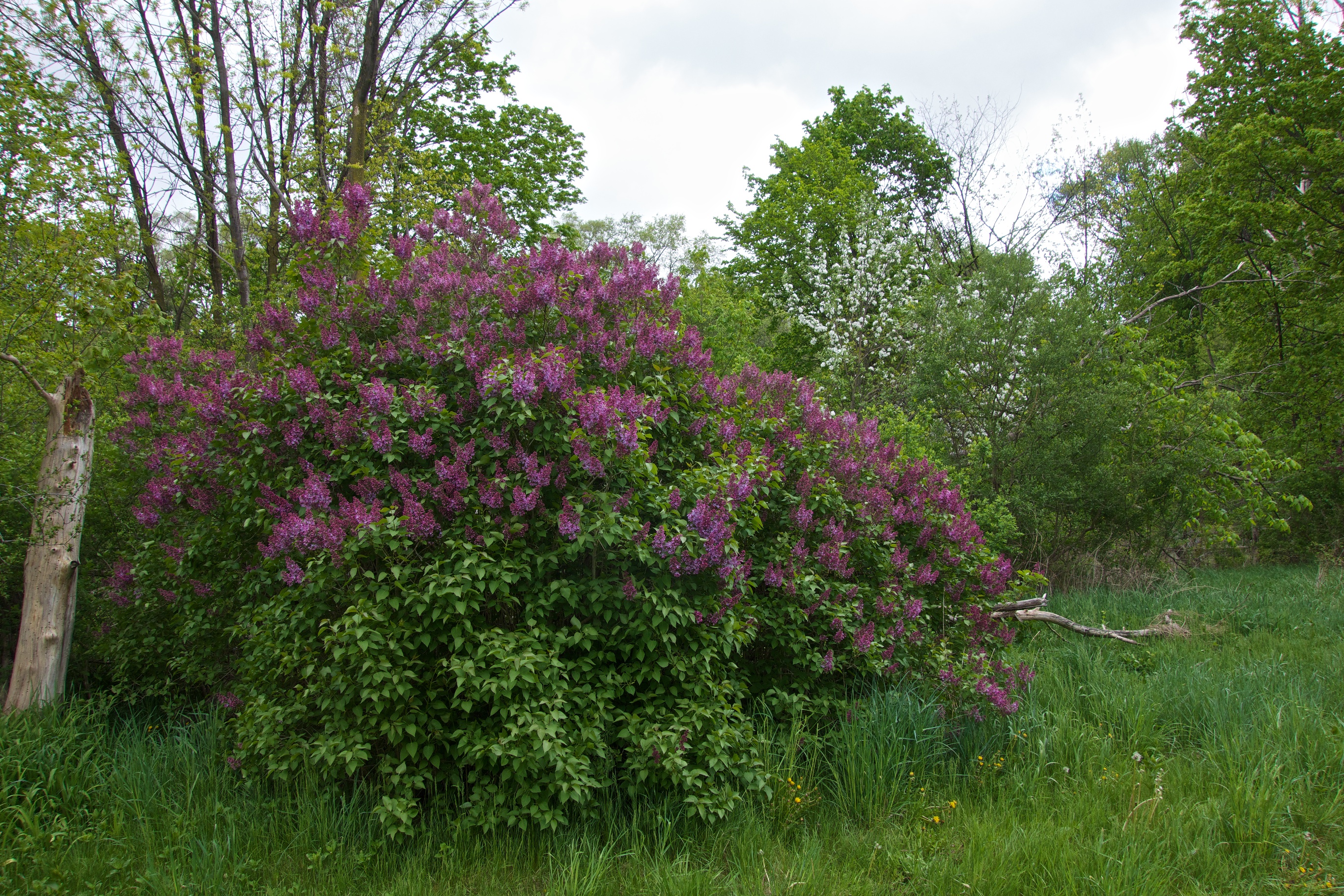
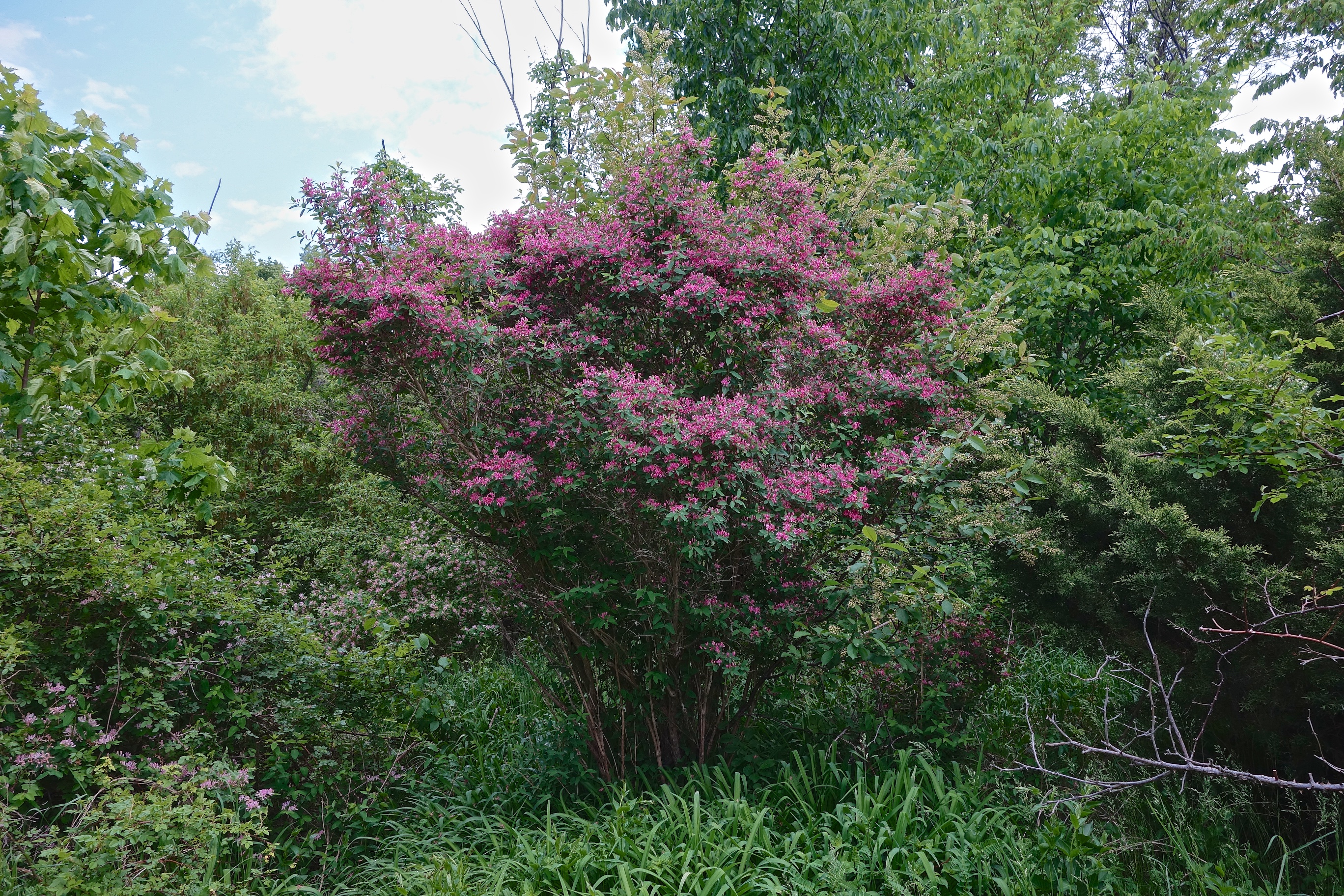
In Raymore Park, few traces remain of the houses once located here before they were either swept away during Hurricane Hazel or demolished by authorities in the aftermath. Every spring however, flowering shrubs are living reminders of the families who cultivated gardens here more than fifty years ago.

This beautiful lilac blooms faithfully every year.

This is one of two beautiful lilacs that bloom faithfully every year.

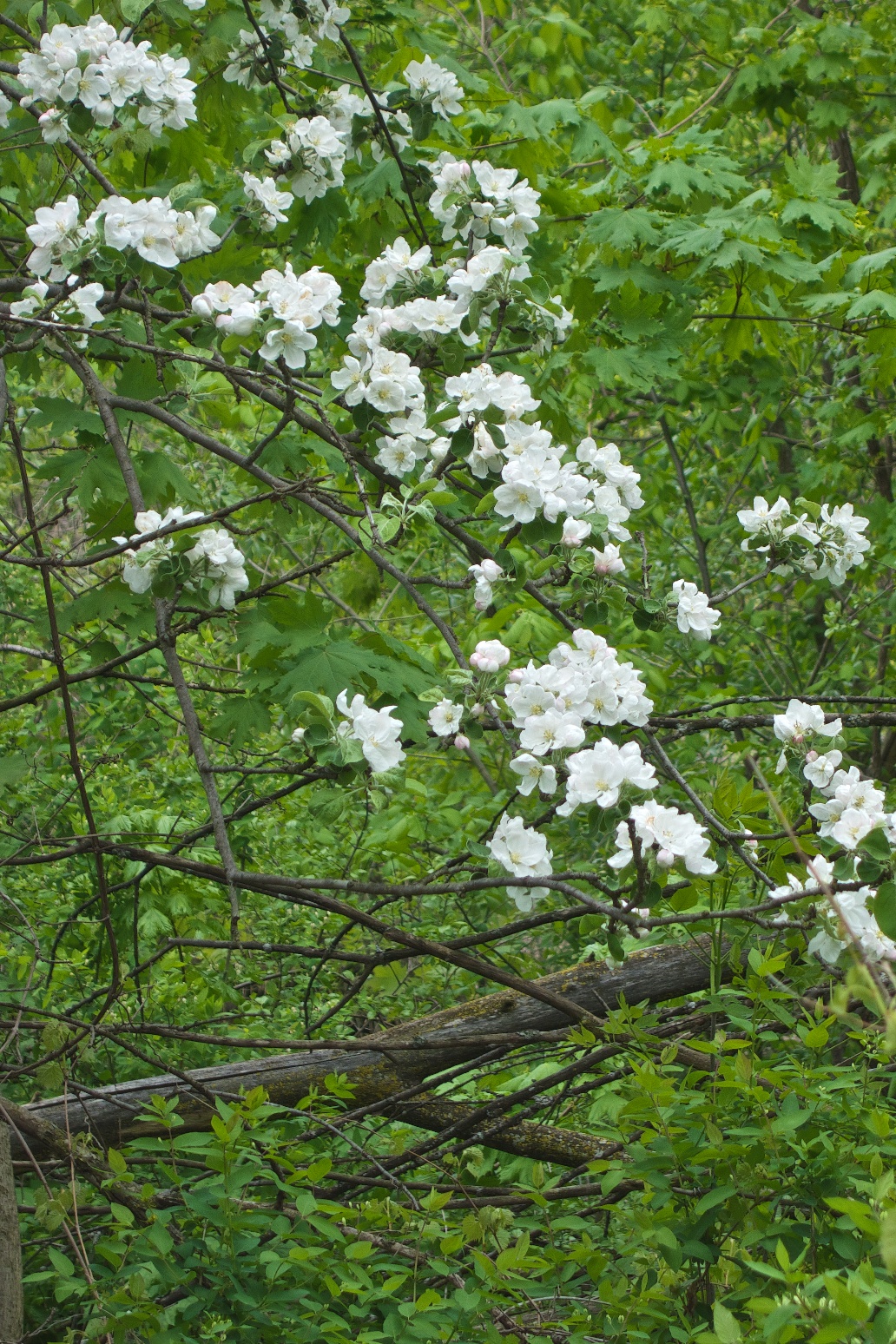
Apple blossom pokes its way through the surrounding trees.

Apple blossom pokes its way through the surrounding trees.

A beautiful American Honeysuckle towers over day lilies.

Along with the day lilies in front of it, I don’t know if this beautiful honeysuckle is a remnant or not.

This City of Toronto Archive aerial view has been labelled to show the location of some of the streets including Gilhaven Avenue which no longer exists. The present-day lilac bush and parking lot locations are marked. The Humber still follows the same approximate course.

Aerial view of Raymore and Glenhaven in 1953.

Aerial view of Raymore and Gilhaven in 1953.

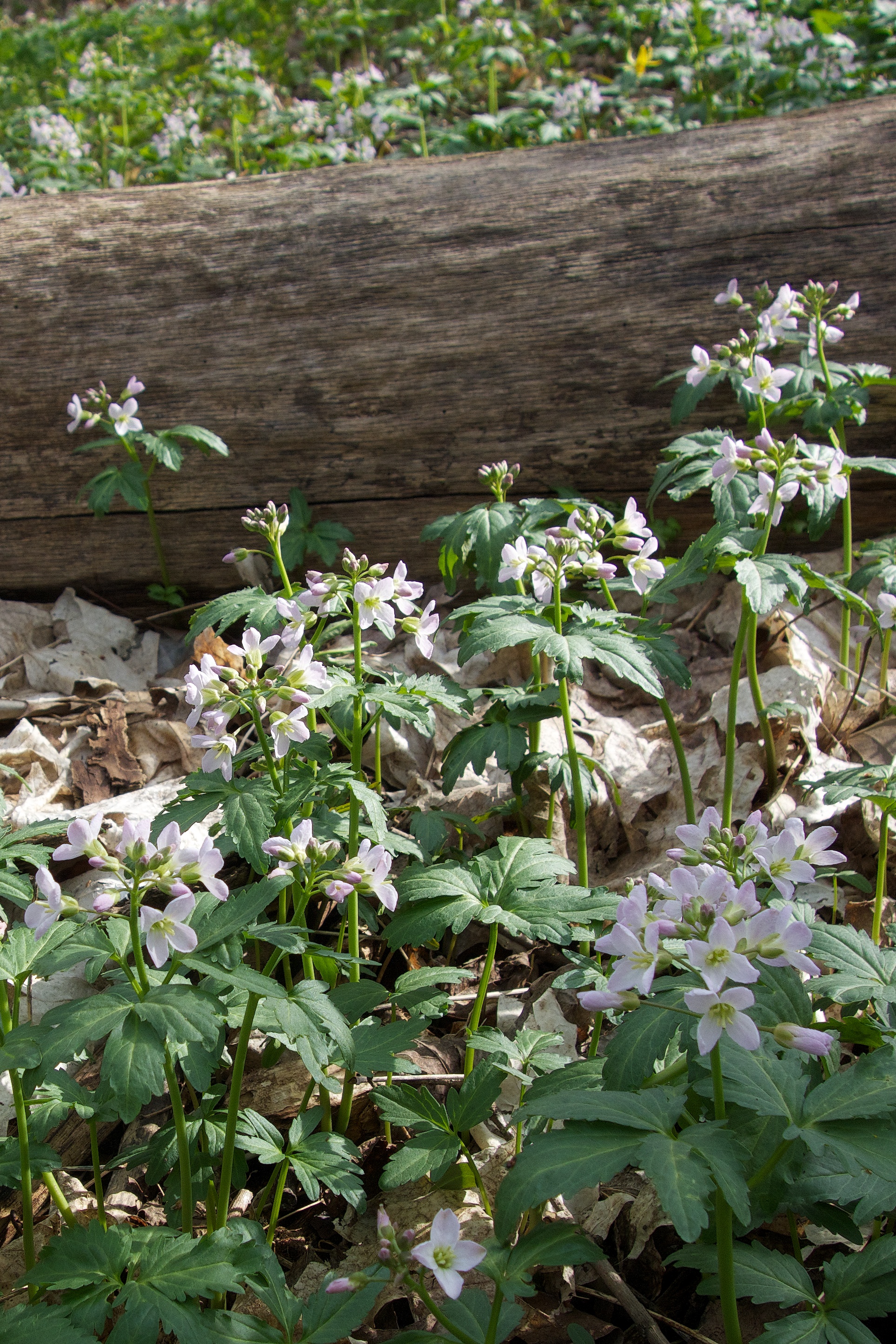
Wildflower of the day: Broadleaf Toothwort.

Cardamine diphylla; Broadleaf Toothwart

Cardamine diphylla; Broadleaf Toothwart

This native wildflower is found over a huge area of North American woodlands from Georgia to Ontario and from the east coast to Wisconsin. Wort is used to denote an edible plant and/or one with medicinal properties while the tooth part of the name refers to toothlike formations on the roots. It produces white, lightly pink or purple flowers in spring. A member of the mustard family, it was and still is used as a food as well as a medicine by many native tribes. Garlic mustard is a major threat to the broadleaf toothwort.

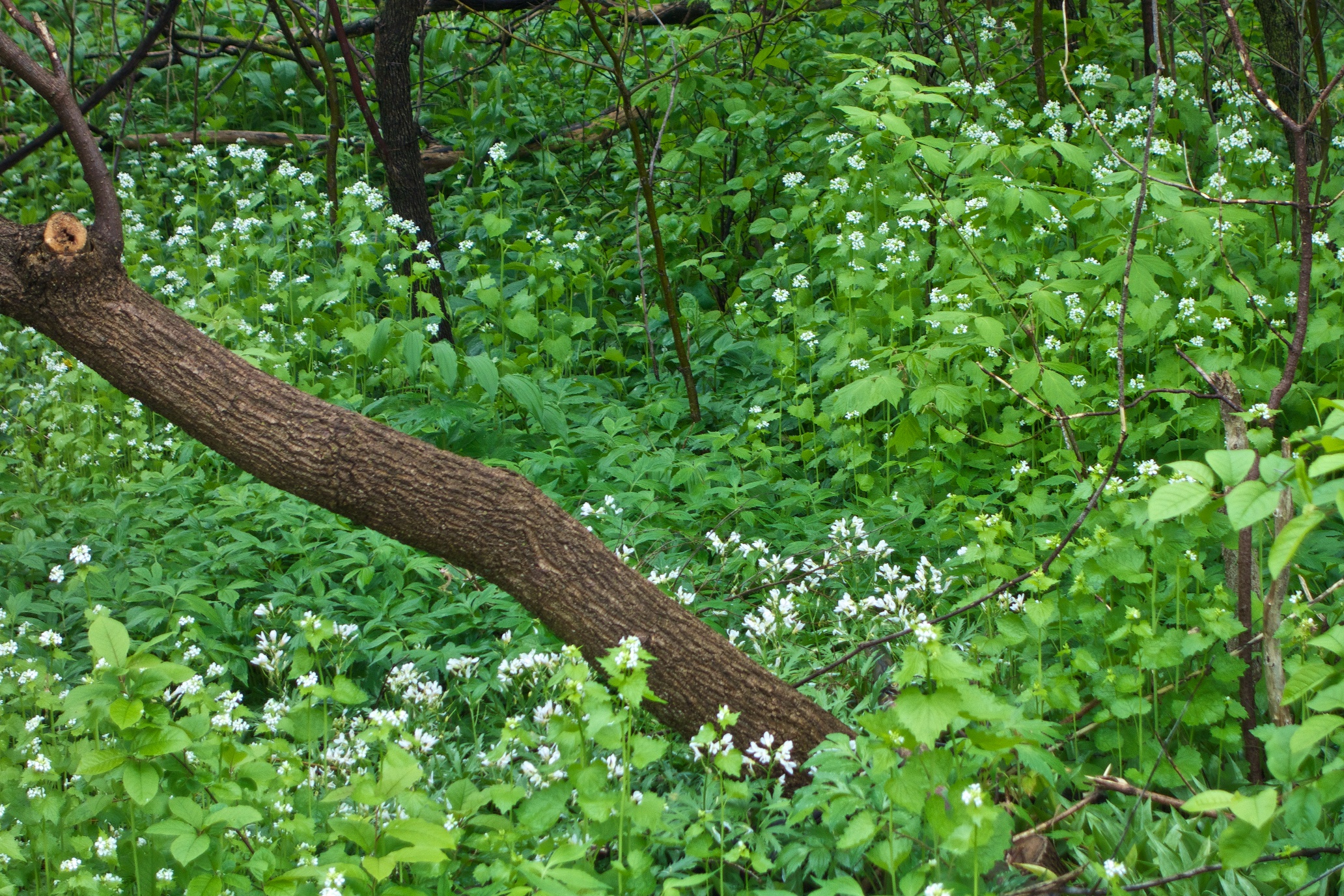
A patch of Broadleaf toothwort threatened by garlic mustard.

A patch of broadleaf toothwort surrounded by garlic mustard.

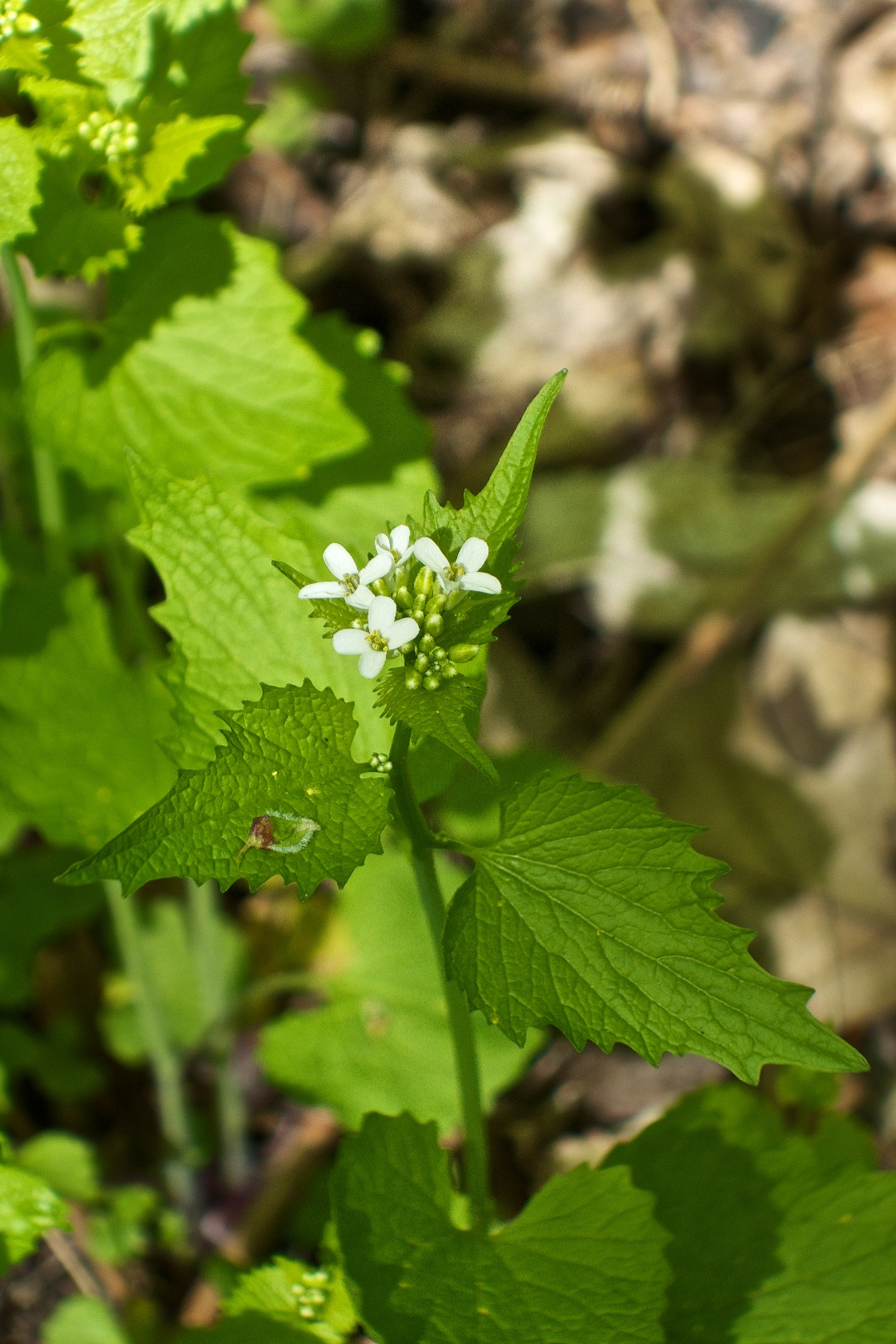
Invasive weed of the day; Garlic Mustard.

Imagine, a nutritious salad ingredient just for the picking.

Ontario is filled with invasive species that have been released accidentally or deliberately. Alliaria petiolata, a native European plant was brought to North America in the 19th Century by settlers who liked its garlic taste and medicinal properties. It’s an evergreen that grows quite tall and since its natural enemies didn’t come along for the ride, Alliaria petiolata, positively thrives. It is better known as garlic mustard, poor man’s mustard or in the U.K., as Jack-by-the-hedge.
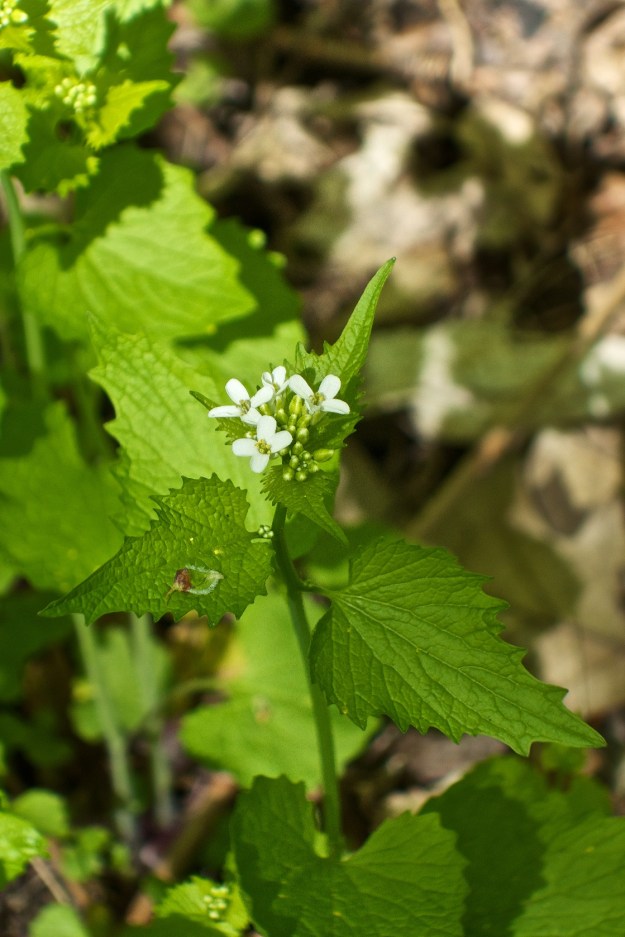
Tiny white flowers produce black seeds.

Tiny white flowers produce black seeds.

It can be used as a salad ingredient and is high in vitamins A and C. As the name suggests, it has a garlic flavour and apparently the small black seeds it produces are sprinkled on foods as a flavouring in France.
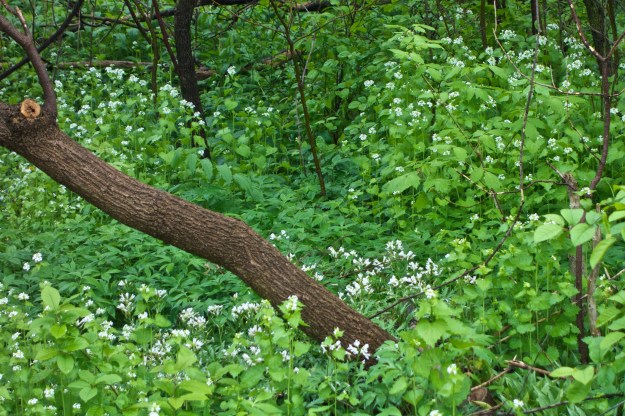
A patch of Broadleaf toothwort threatened by garlic mustard.

A patch of Broadleaf toothwort threatened by garlic mustard.

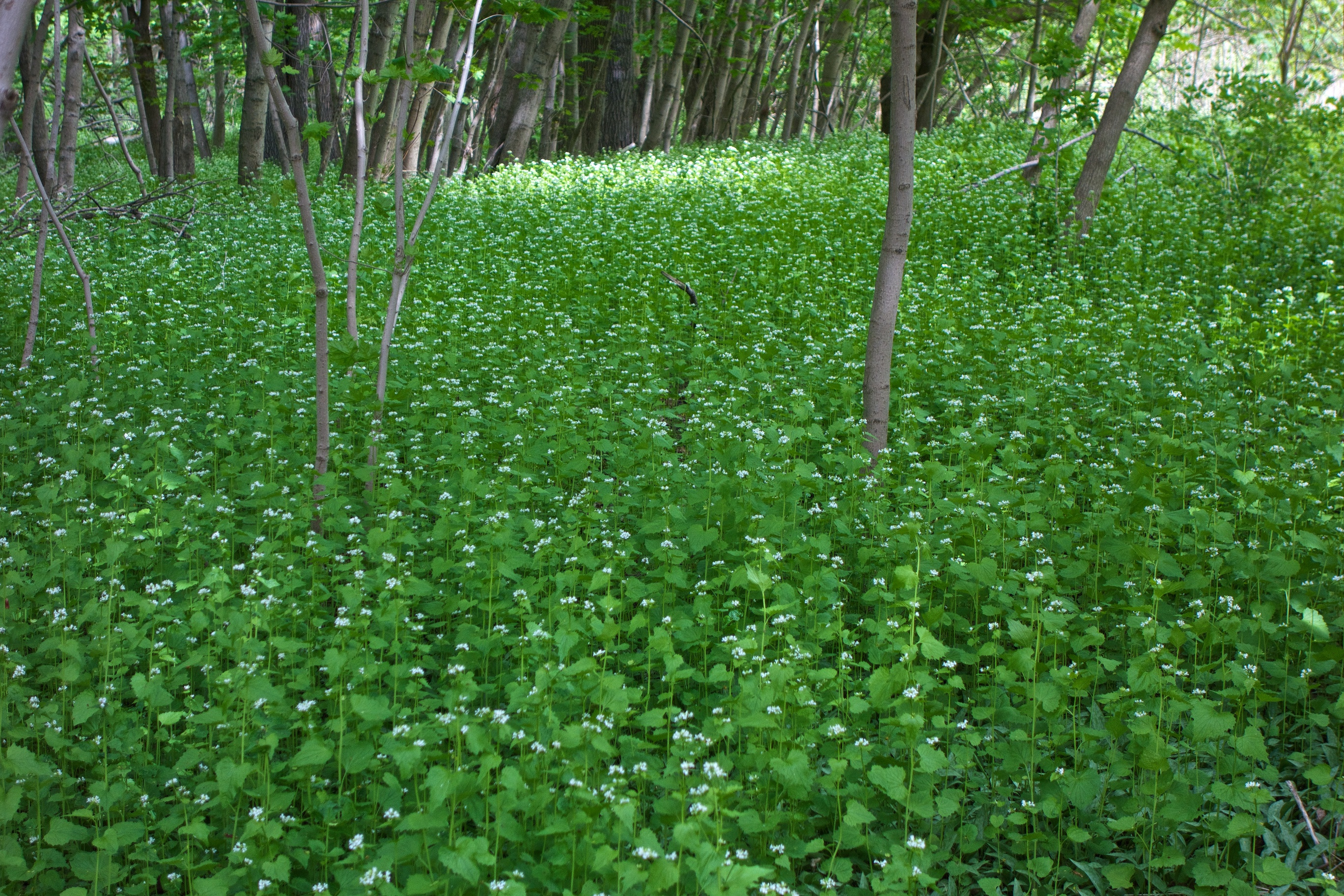
Like most invasive species, it looks as if we are stuck with this one and it’s not shy. It produces huge numbers of seeds and aggressively crowds out other plants; the lack of natural predators giving it an unfair advantage. To add insult to injury, deer avoid it, preferring native plants. It is therefore a real threat to native plants throughout Raymore Park and has spread rapidly in the park in the past few years. Eradicating it would require large numbers of people to cut it back regularly so that seeds cannot form and spread. A mammoth and probably futile task.
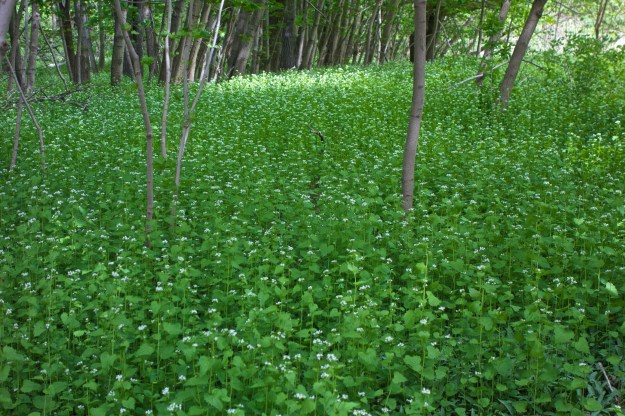
Garlic mustard is well on its way to monoculture status in this area.

Garlic mustard is well on its way to monoculture status in this area.

There is a glimmer of hope. U.S. scientists are looking to Europe where garlic mustard has several predators that keep it in check. The hope is that through painstaking research, they can find one or more that will not threaten other flora and fauna once introduced. The prime candidate is a weevil, Ceutorhynchus scrobicollis, that feeds exclusively on GM and therefore will not be a threat to anything else.
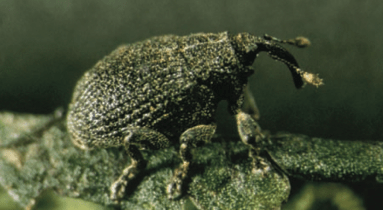
Could this tiny insect be the answer?

Could this tiny insect be the answer?

In the meantime, salad anyone?

Update: Dr. Frank S. Gilliam wrote asking for permission to use one of the photos in this article for his commentary on invasive species in The New Phytologist, a plant science publication. The article can be accessed here. The gist of it seems to be that invasive plants like garlic mustard create an advantage for themselves by releasing compounds that inhibit the growth of (often native) competitors.
Against the light.

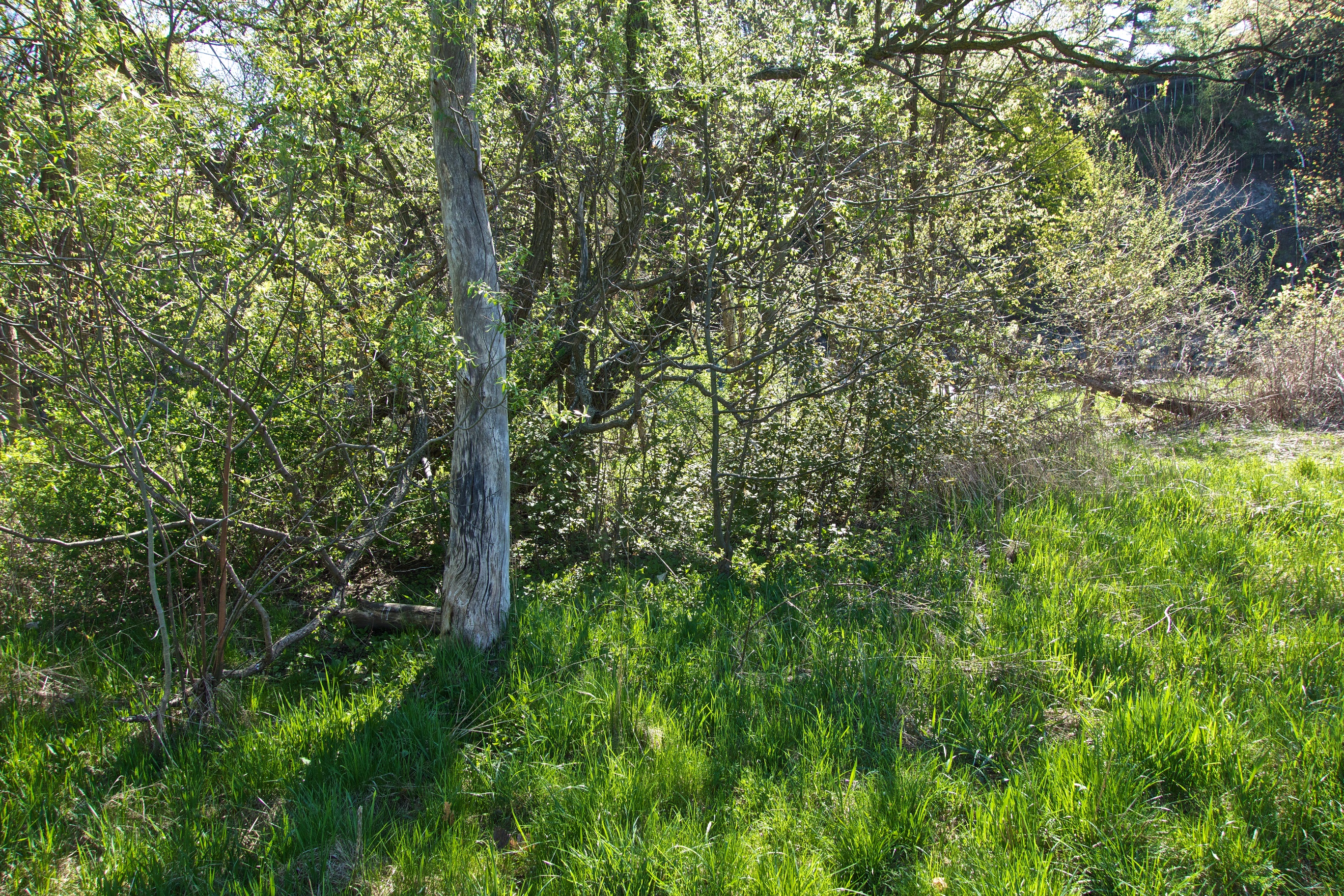
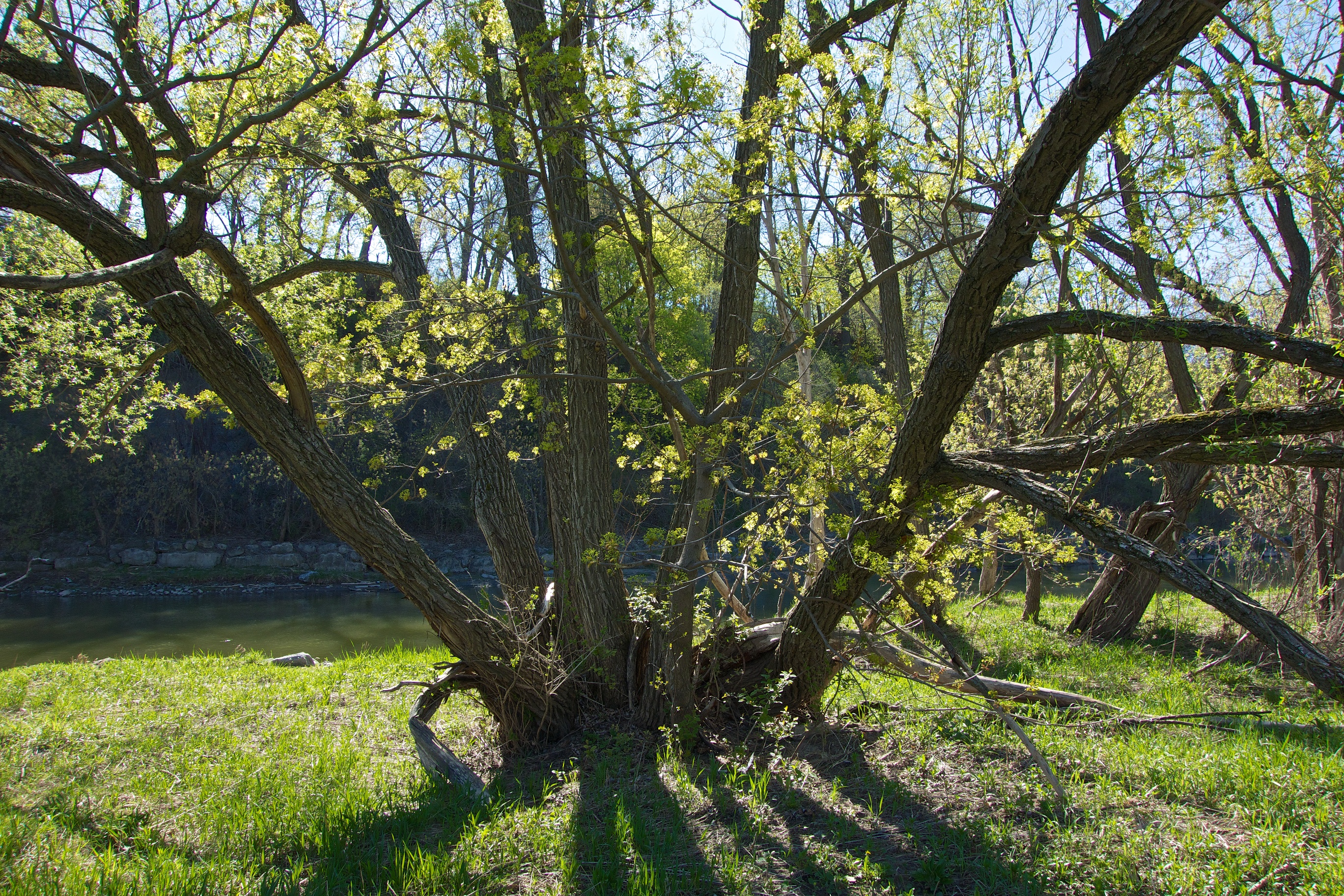
I love taking shots against the light. It can be a challenge to avoid glare and burnouts but the rewards are worth the effort in terms of contrast and vivid colour. Today was a continuation of several days of sun , mild temperatures and low humidity which lends even more clarity to such images.

DSC01794

Fresh blades of grass are backlit and the air is clear on this day of low humidity.

DSC01800

The texture of the tree trunks makes a nice contrast with the blades of grass while the shadows continue the tree lines.

DSC01807

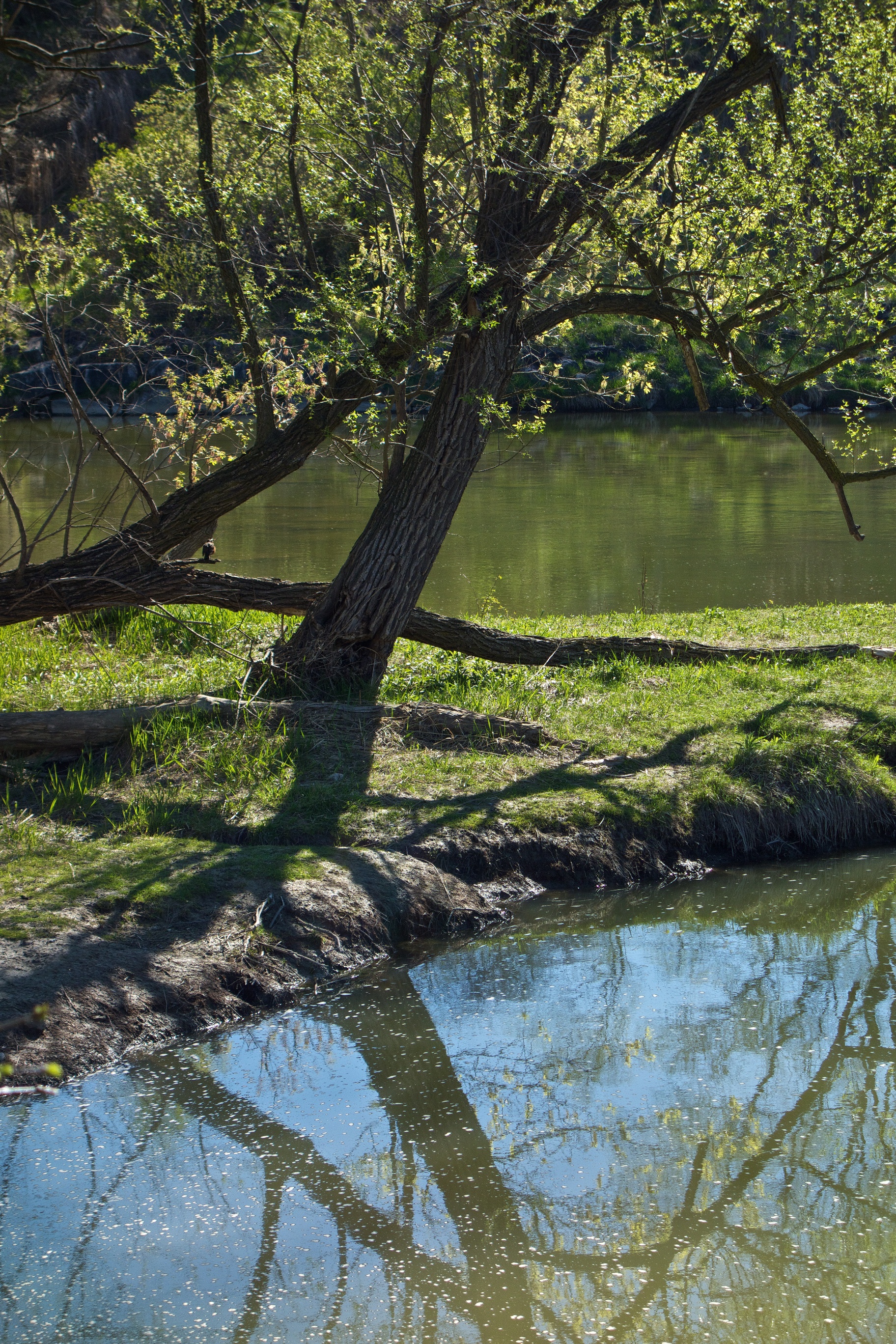
Flowers from the trees dot the water by the peninsula. Lots of green shades contrast nicely with the sky reflection.