Tag Archives: Raymore Park

The downside of fish ladders.

The weir in Raymore Park is an insurmountable barrier to all fish. It’s about 3 metres from the base to the top and that makes it the tallest weir on the Humber. Recently, an attempt is being made to revive sustainable populations of Atlantic salmon and rainbow trout and fingerlings have been released for a few years in places like Bolton and Palgrave in the hopes that they would return annually once established.

The Denil fishway at the weir was constructed with that purpose in mind. It took months to build and cost several hundred thousand dollars. Fish are able to climb the three metres by finding their way through a modified sluice that eases the climb while slowing the current. As previously mentioned, it is prone to blockages from wildlife and even floating twigs thus denying returning fish a chance to spawn where they were released. Today is no exception; the fishway is totally plugged.
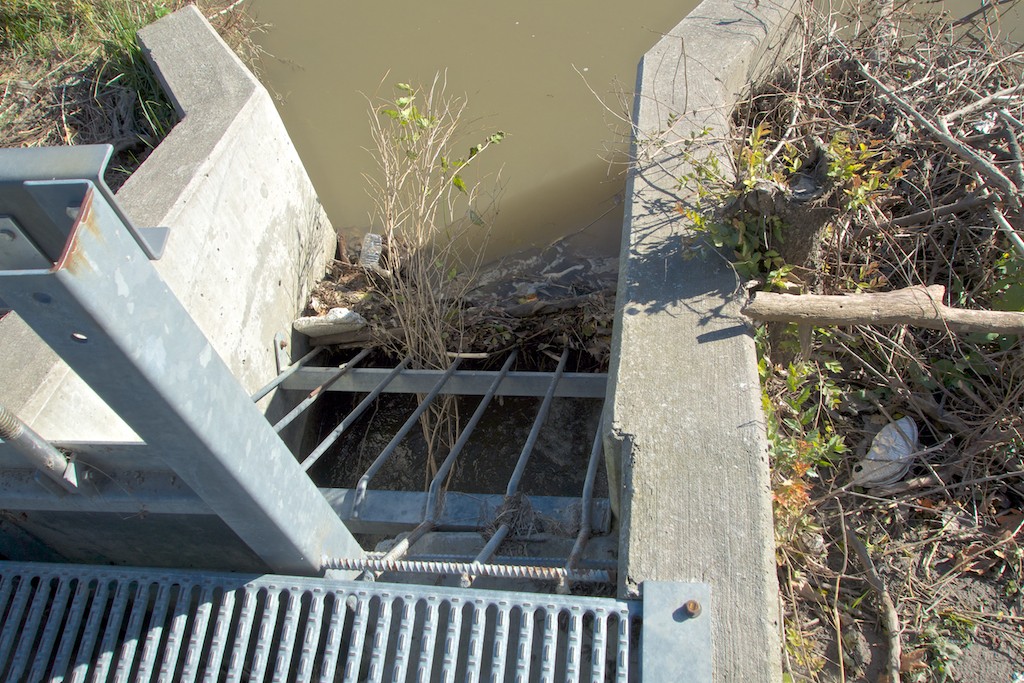
We can't even blame the beavers for this one.

We can’t even blame the beavers for this blockage.

Four or five years from now, fishing folk in Bolton and Palgrave will be wondering what happened to the salmon.

All is not lost. A study of all weirs along the Humber has been under way and soon, a TRCA report will detail what to do with the Raymore Park weir and its associated fishway. Let’s hope for a natural and unblockable solution for migrating fish.

Frost kills but life will go on.

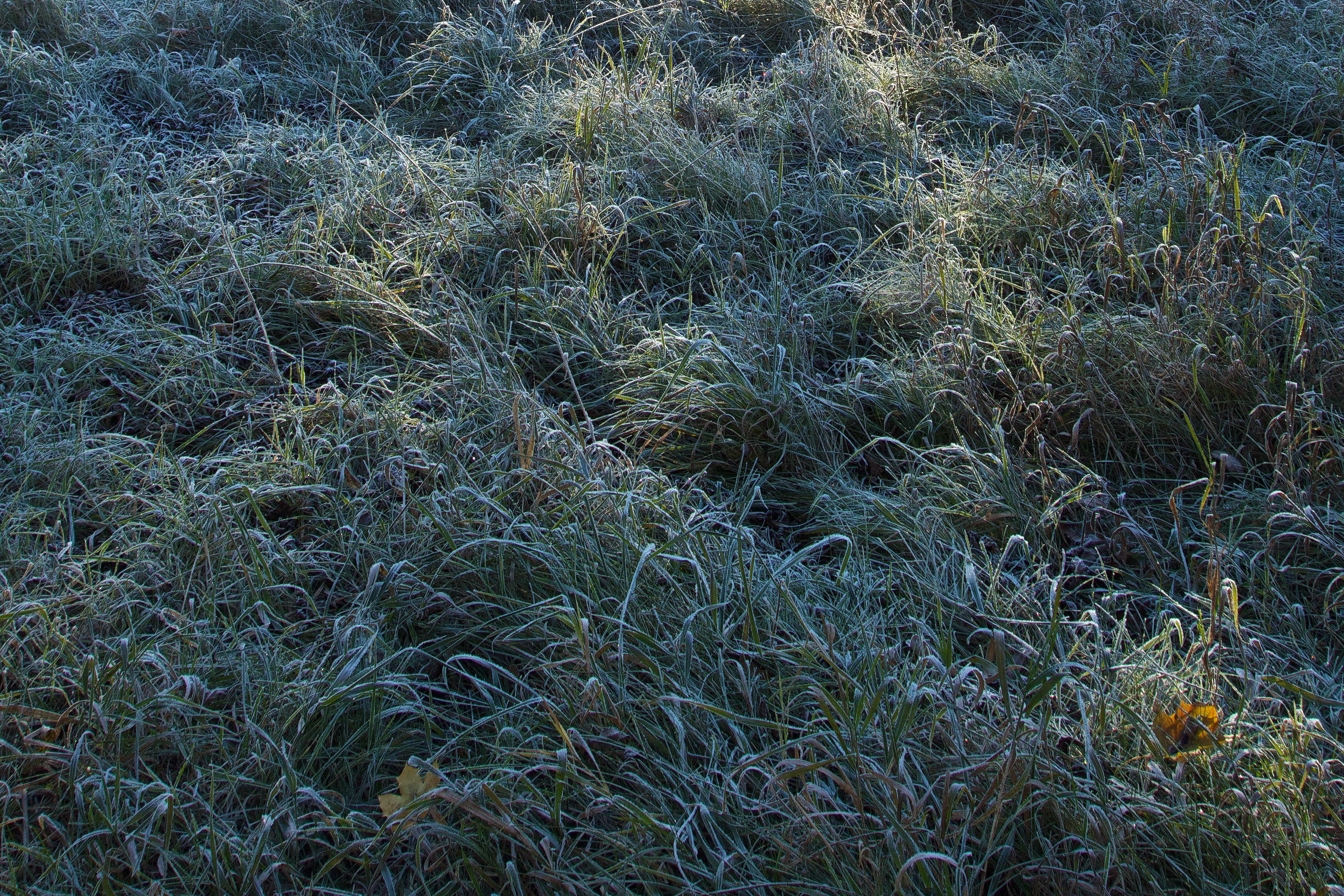
The first frost of the season hit in the early hours of Tuesday morning, killing millions of insects and annual plants in Raymore Park. In the earth’s two temperate zones, this annual tide of warm and then cold toughens every species and may explain the survival of life forms on earth after comet strikes and super volcanoes. Using techniques such as hibernation, dormancy and re-birth, plants and animals have devised amazing ways of ensuring that the next generation survives the ravages of an extended period of cold.

Grass edged with ice crystals.

Grass edged with ice crystals.

This morning’s frost is just the mildest of hints of what is to come but the effect is dramatic. Judging by the silence this morning, crickets in the meadows were almost all wiped out but females have been busy recently, each laying hundreds of eggs which will hatch next spring. Walnut trees simply drop everything after a frost.

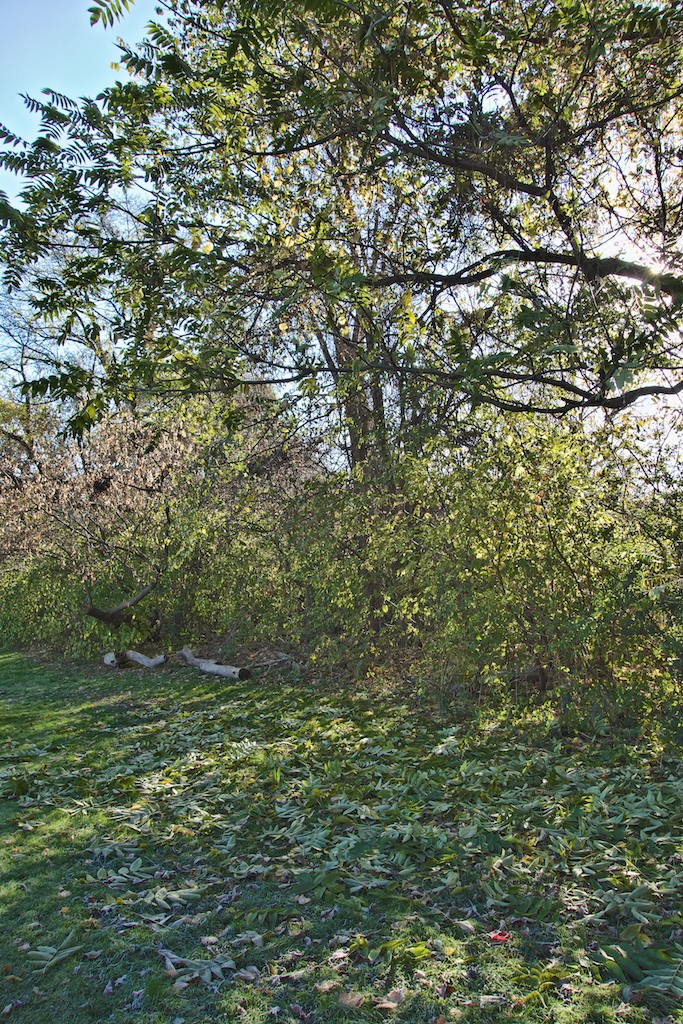
A walnut tree drops everything after a frost.

A pile of walnut leaves begins to form after a frost.

Elsewhere, many seeds are now ready to be carried away from the parent plant by the wind or unsuspecting animals and humans.

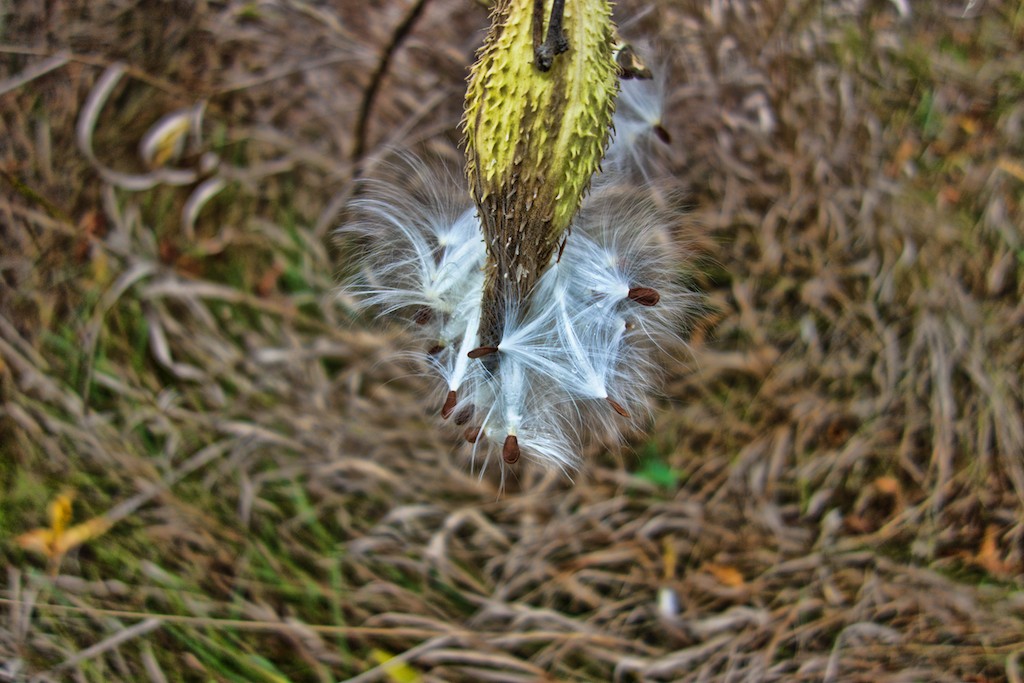
Milkweed seeds wait for a strong wind.

Milkweed seeds wait for a strong wind.

We may share the same latitude as Florence in Italy but our continental winters are considerably harsher and more eventful.

Some would say more interesting too.

Signs of fall: American Oil Beetles

I saw several of these beetles marching through cut grass in the park. They seem to be a regular sight in the fall.

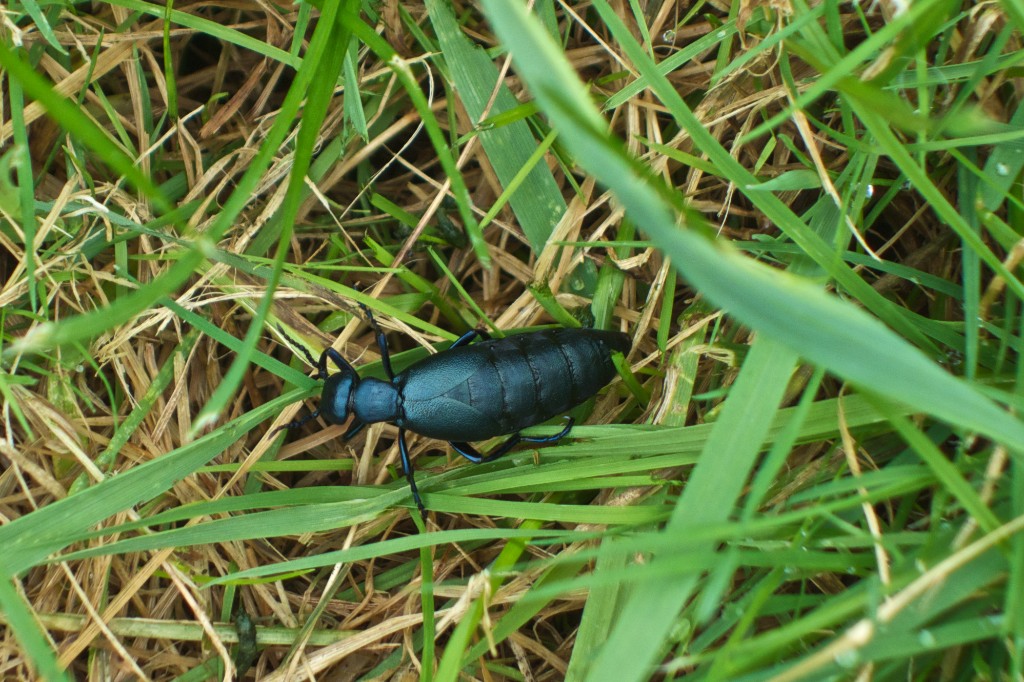
An American oil beetle marching grimly along.

An American oil beetle marching grimly along.

They are known as American oil beetles or blister beetles because of an oil secreted from their legs when disturbed. This oil is a skin irritant and soon teaches victims to leave the beetles alone. This isn’t the only example of an ability to use chemicals to their advantage. In fact the life cycle of blister beetles stretches all credulity in addition to illustrating an amazing balance between parasite and host.

This BBC short tells the story of these amazing creatures (in this case in the Mojave Desert) better than I can.

Signs of Fall: Wooly Bear Caterpillar

This insect  is a common sight in Raymore Park at this time of year inching its way along pathways and clearings. The freshly hatched wooly bear caterpillar is often seen moving along the ground looking for a hibernation spot. This one will pupate; in spring and its offspring will pupate in summer. Eggs from the summer generation hatch to become the overwintering caterpillar.

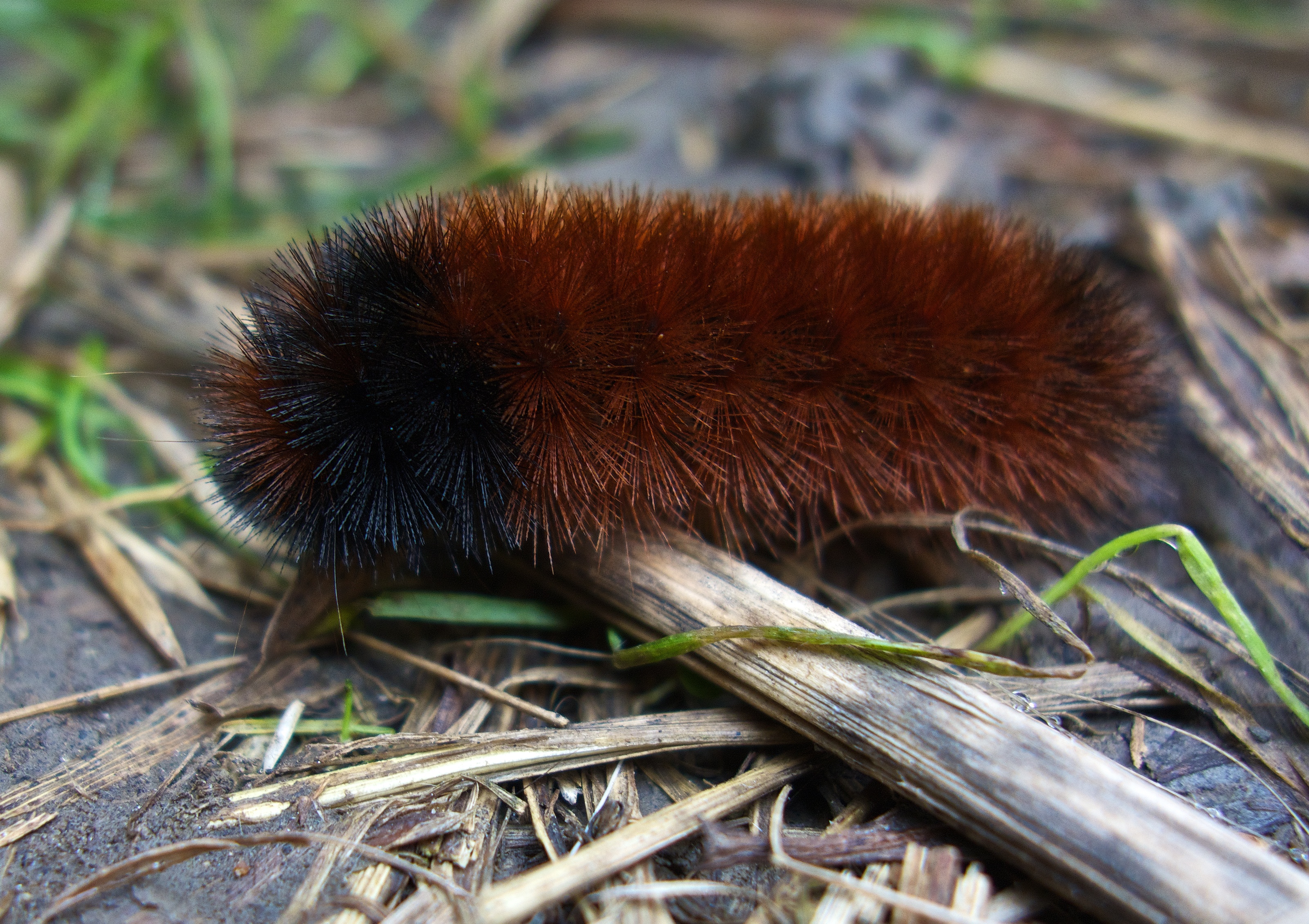
Pyrrharctia isabella; the banded wooly bear caterpillar

Pyrrharctia isabella; the banded wooly bear caterpillar trundling to a winter refuge.

These benign caterpillars have 13 segments and feed on plants such as clover and milkweed. Despite a spiky rather than wooly appearance, they contain no poison although handling them may trigger allergies in sensitive folk. If disturbed, they curl into a ball and stay still. Folk legends say that if the brown stripe on the caterpillar is narrow, winter will be cold and long. According to this little guy photographed today, we appear to be in for a mild time of things. The forecast is no doubt as accurate as those provided by Wiarton Willie. Regardless, this creature is able to manufacture its own anti-freeze and stop its heart before freezing solid during the winter. When spring arrives it thaws out and through metamorphosis, becomes a pupa and then a moth. Incredibly the Arctic version of the Wooly Bear Caterpillar needs several seasons to gather the food to become mature enough to pupate.

Signs of Fall: Black walnuts

Last night the first ground frost hit Raymore Park. This occurs when the temperature doesn’t go below zero but there is a touch of white on the grass. Hopefully the first air frost is some time away but there are unmistakeable signs of fall, even though most leaves are still green. One sign that is hard to miss is the fruit that seems to be everywhere. From crab apples to acorns, seeds for the next generation are ready to be distributed.

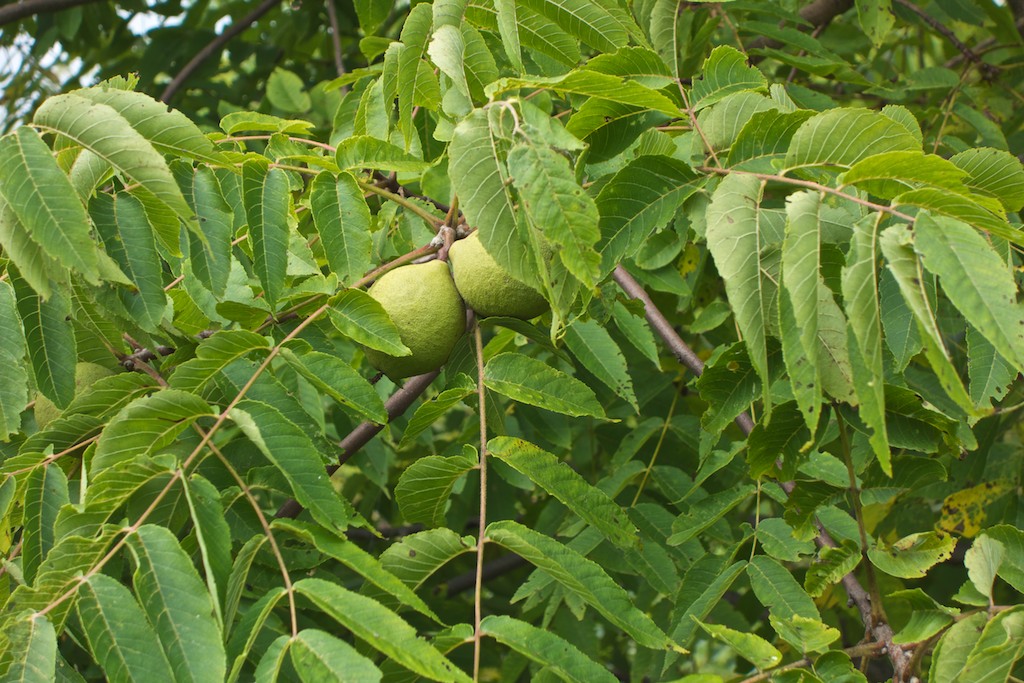
These exotic looking fruit are black walnuts.

These exotic looking fruit are black walnuts.

Black walnut trees are very common in Toronto and provide food for squirrels and the occasional curious human. They are native to Toronto but thrive in cold spots such as Quebec City because they avoid frost damage by leafing late in spring.  The walnuts themselves are surrounded by a fleshy outer skin and then an incredibly hard shell.

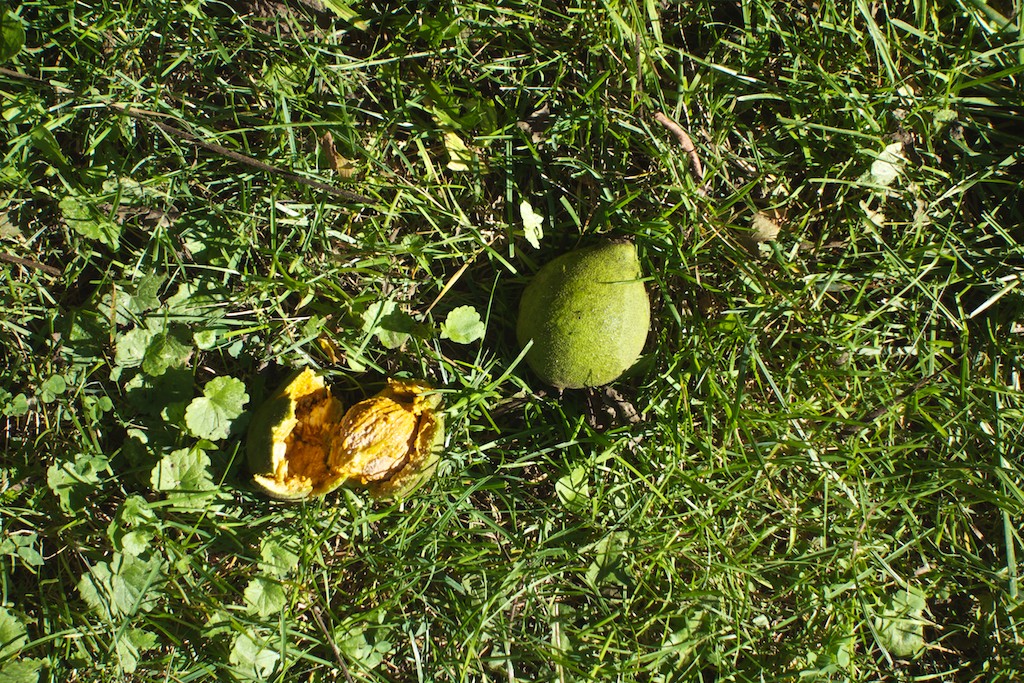
This walnut was run over by a car revealing the unbroken inner shell.

The walnut on the left was run over by a car revealing the unbroken inner shell.

Unlike Persian (aka English) walnuts that have been cultivated for millennia, black walnuts are pretty much as nature designed them and as a result are smaller and incrementally more difficult to harvest. Anyone who has attempted to extract a black walnut can only appreciate the skill and determination of squirrels. The trees dispense a natural herbicide called juglone which kills competing plants unlucky enough to be nearby. The toxicity is not isolated to plants; horses should be kept well away from black walnuts. Attempting to extract the nut from the flesh will leave hands turned dark orange by the chemical. The wood is much prized as a veneer.

Thanks to absent-minded squirrels, Raymore Park is a black walnut nursery with more and more planted every year. They grow quickly and can live on average 200 years. As time goes on, walnut trees will increasingly influence the variety of flora and fauna in the park.

Tim Hortons and Corporate Responsibility

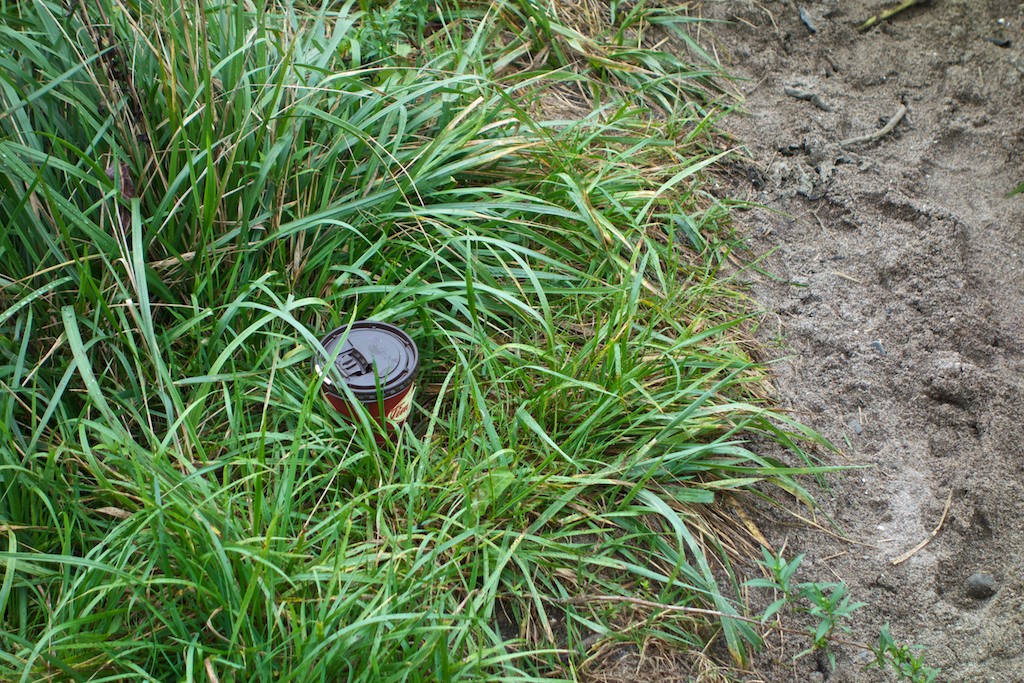
I don’t know what’s in Tim Hortons’ coffee but there must be an additive that makes some of their customers into irresponsible idiots. There’s a percentage of Timmies drinkers who seem to believe that nature will be enhanced by their discarded cup.

A sociopath was here.

A sociopathic calling card.

Now naturally you would think that Tim Hortons being a responsible Canadian corporation would be horrified that some customers are cavalier with their Timmie Trash™. After all, their mission  statement claims that ‘Our vision is to be the quality leader in everything we do.’ Given that, you might also think that the lid is made of biodegradable plastic. Wrong. Well at least the cups are paper and therefore biodegradable. Wrong again; they’re lined with plastic.

Tim Hortons must know that a significant percentage of its customers are tossers and that these cups degrade the visual and natural environment. They then become the responsibility of the taxpayer through street and park cleaning. They must also know that their refusal to use recyclable materials increases the burden on landfills. Tims apparently doesn’t care. If they did care, they would provide a meaningful percentage of profits towards solving the problem.

Back to our little nature lover who communed with nature this morning while enjoying a coffee. They had to pass a garbage can on the way out of the wild area. Even so, the thought of carrying the cup all the way back was too much and the cup had to be left for someone else (me).

Tosser!

Raymore Park has a beach

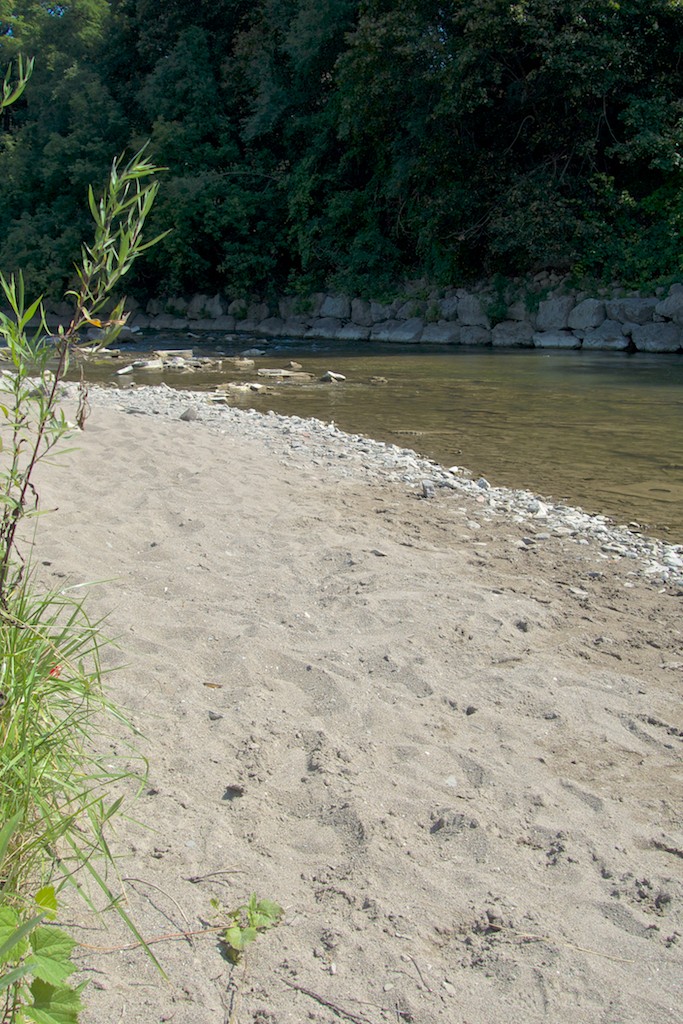
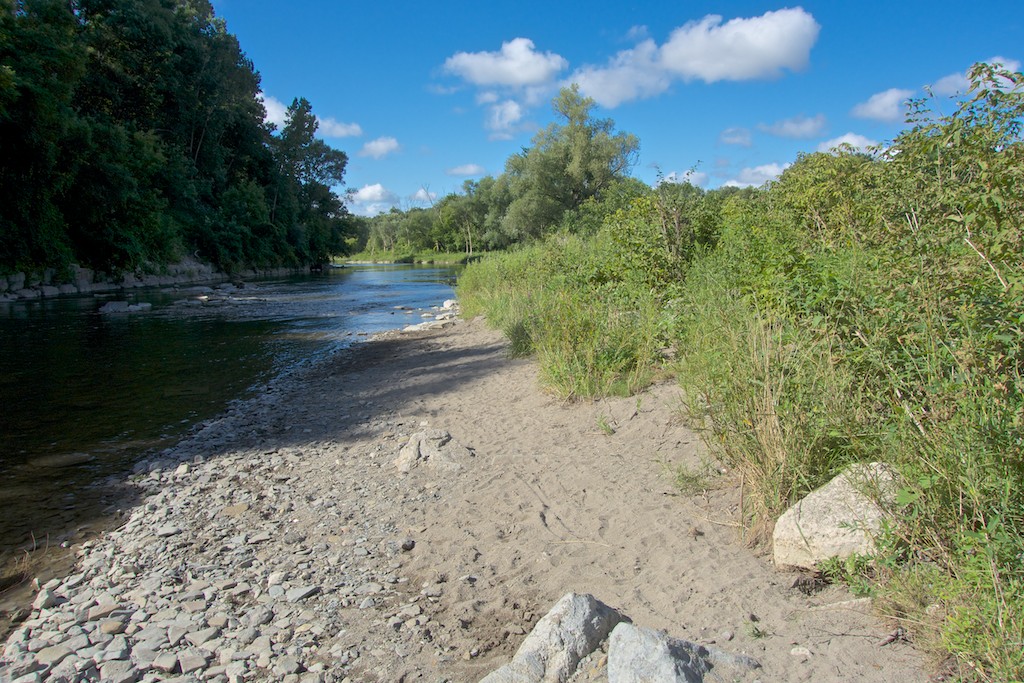
There are over 1400 Toronto parks, some tiny postage stamps just a few square metres while others cover vast ranges. The best known, High Park covers 161 hectares (400 acres) while Mimico Waterfront Park has over a kilometre of shoreline. Raymore Park, while not well known is larger than most, but to me its appeal lies in the sheer variety of features and habitats tucked away in various corners. One such feature is formed just past the inside of a very sharp curve in the Humber. After a rainfall, heavier sediment in the form of sand is carried along until the water slows and the sand is deposited. The beach actually gets built up after each storm and has been there for many years.

Looking north; the curve of the river allows sandy sediments to be deposited here.

Looking north; the curve of the river allows sandy sediments to be deposited here.

So it’s not Bondi or Waikiki. It is however a quiet and scenic place to sit and reflect in the middle of a big city. If you stay quiet for a few minutes, you’ll be amazed at the wildlife that will appear – take your pick from toads, egrets, hawks, blue herons, mallards, mink, beaver, fox, coyote, deer etc.

Before Hurricane Hazel in 1954, the small community living here would use the beach in summer for picnics and as a way for children to cool off.

Looking south along the shoreline.

Looking south along the shoreline.

Cicadas are hatching

Unless you know what to look for (thanks, Codemonkey), the mysterious life cycle of the cicada happens without most people noticing. We can hear the electrical sounding buzzer noise that cicadas produce in late summer but where they come from is rarely given a second thought. Unlike their better known American cousins with 17-year life cycles, the ones seen in Toronto have 2-5 year cycles of birth and death. Ours are known as Dog-Day Cicadas, Harvestflies or formally, Tibicen Canicularis. The common names refer to the later days of summer in which they appear. Because their life cycles overlap, our cicadas appear every year.

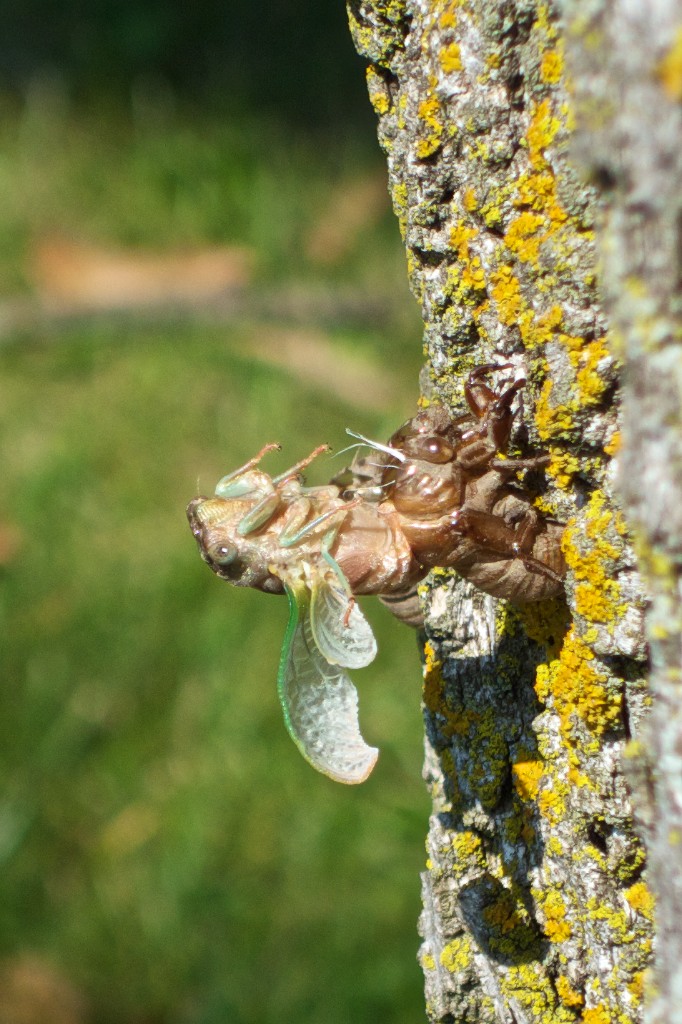
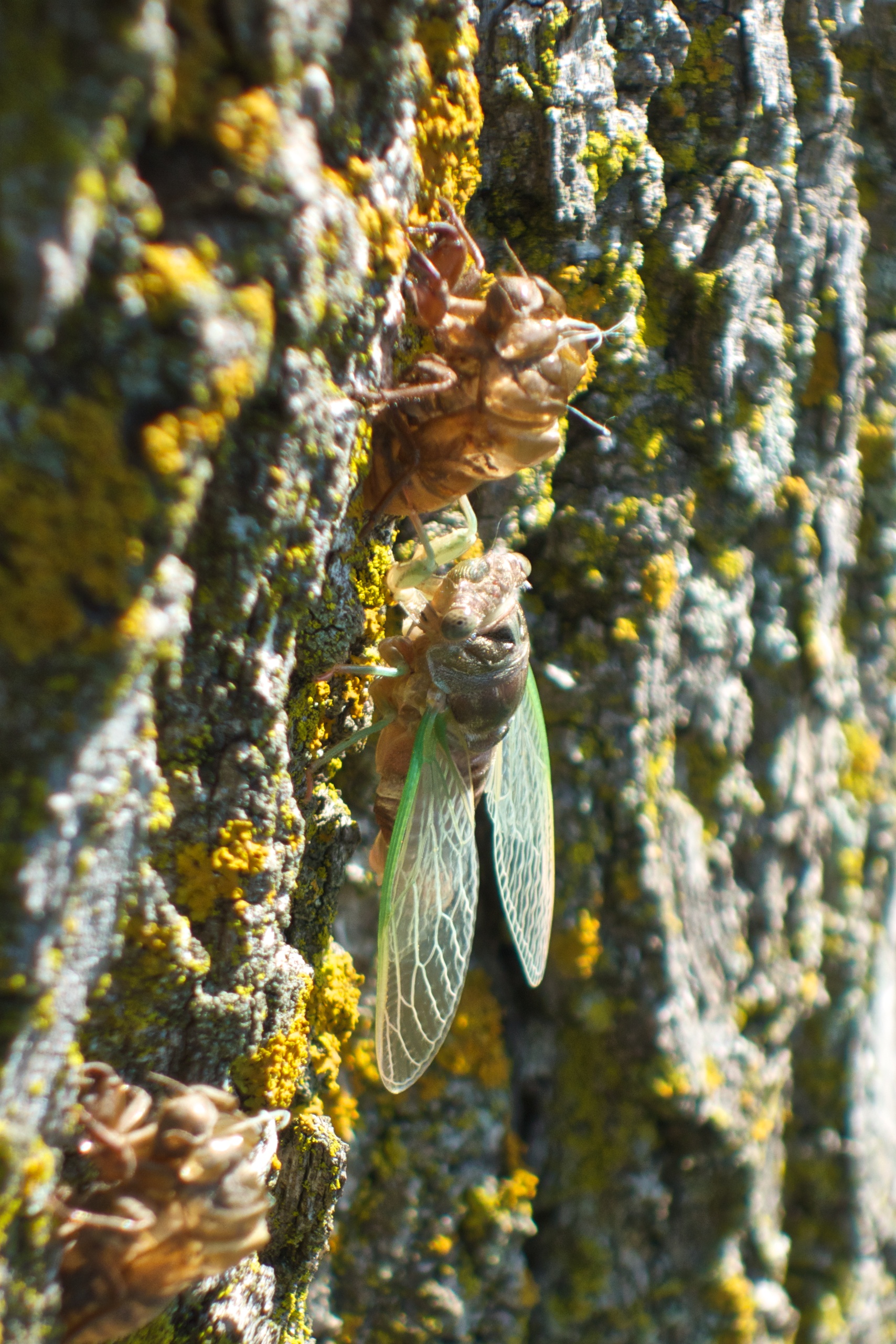
From a human perspective, their life begins when they come up from burrows in the ground and climb a tree. They pump fluid into their abdomens which bursts open the exoskeleton from which they emerge.  At this final life stage, tiny wings are revealed. After a few minutes these wings inflate with blood and unfurl to grow larger than the insect itself. The adult cicada is now ready to fly.

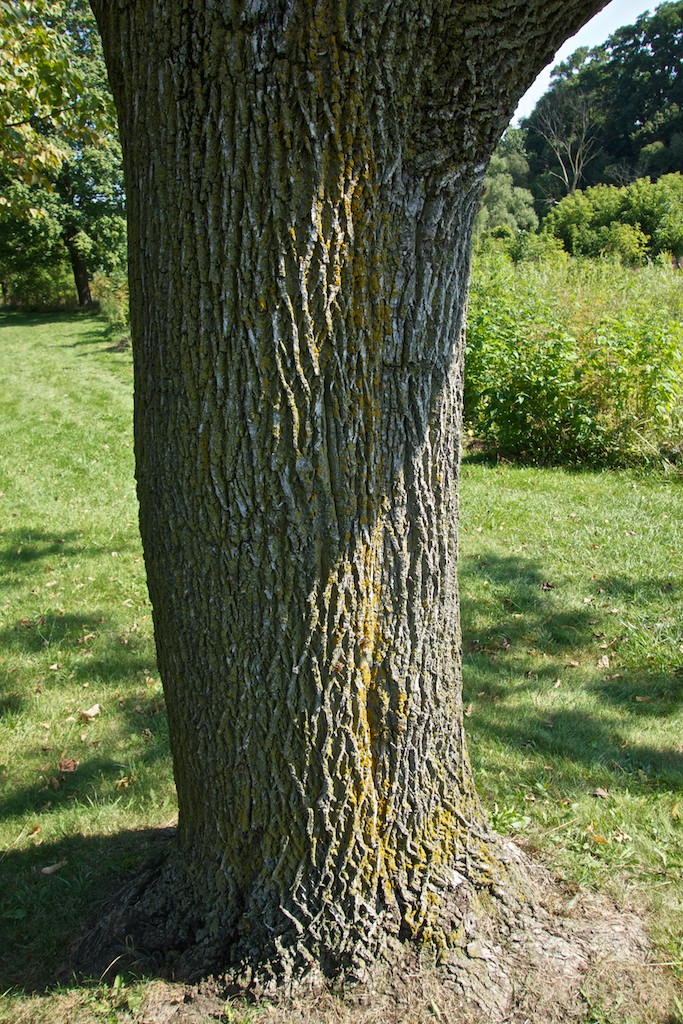
This tree is a cicada adult hatching point.

This tree is a cicada adult hatching point with many exoskeletons visible.

This

A cicada emerging from its exoskeleton. The two sets of wings are unfurling.

This

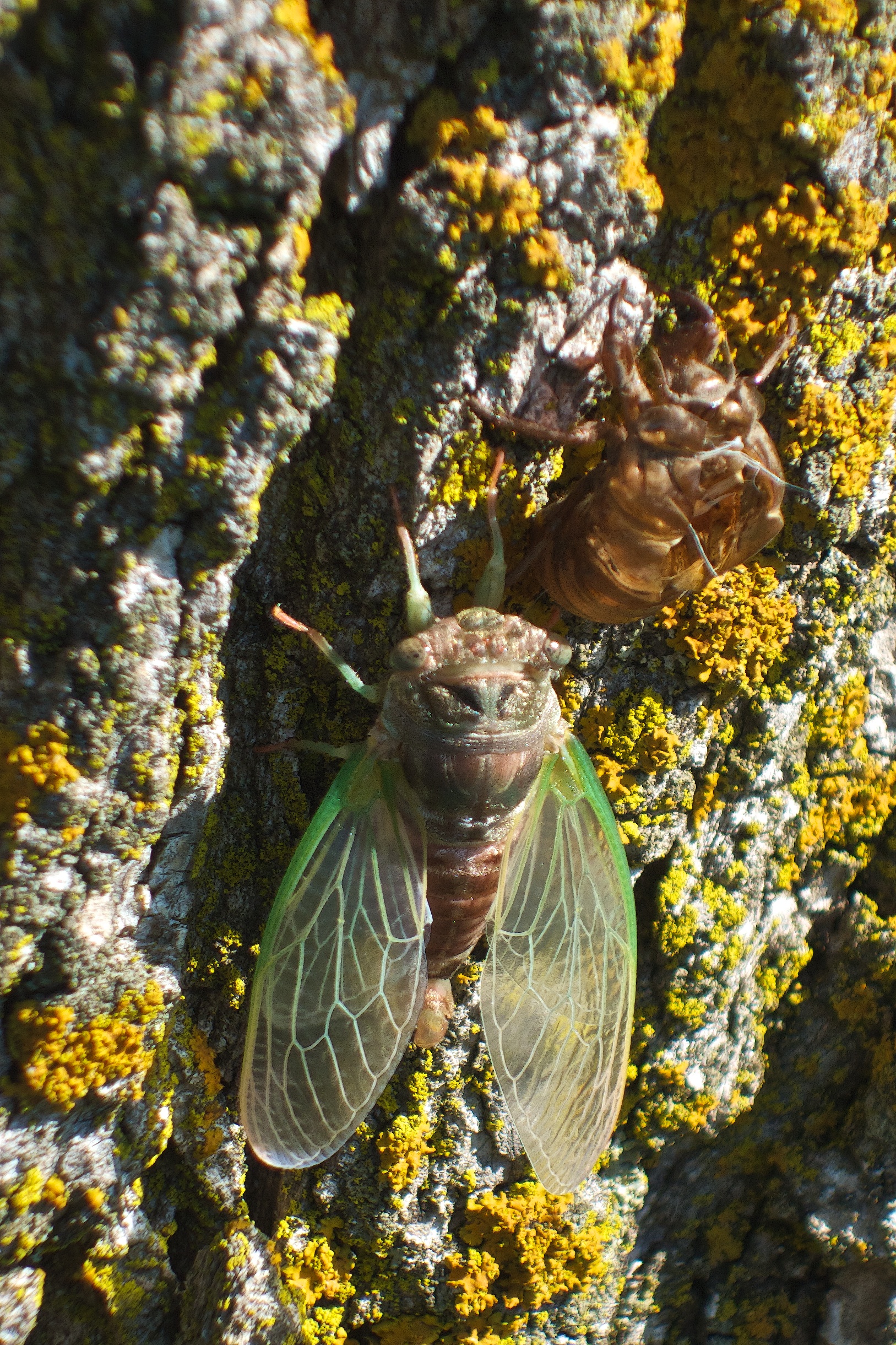
Green blood can be seen circulating through the wings.

This

The cicada beside its old exoskeleton.

Adults can live for 5-6 weeks if they’re not picked off by birds and other predators. Most of the time, we can’t see them but we can certainly hear them. Males are the noisemakers and they produce that familiar deafening sound to attract a mate. Female cicadas carve slits in tree branches and lay their eggs. After hatching, nymphs drop to the ground. This first larval stage digs until reaching tree roots from which they feed, moulting several times before that last stage above ground some years later.

There is a folk legend that the first buzz of cicadas in late summer indicates there are only six weeks until frost.

What a depressing thought.

Anomalies

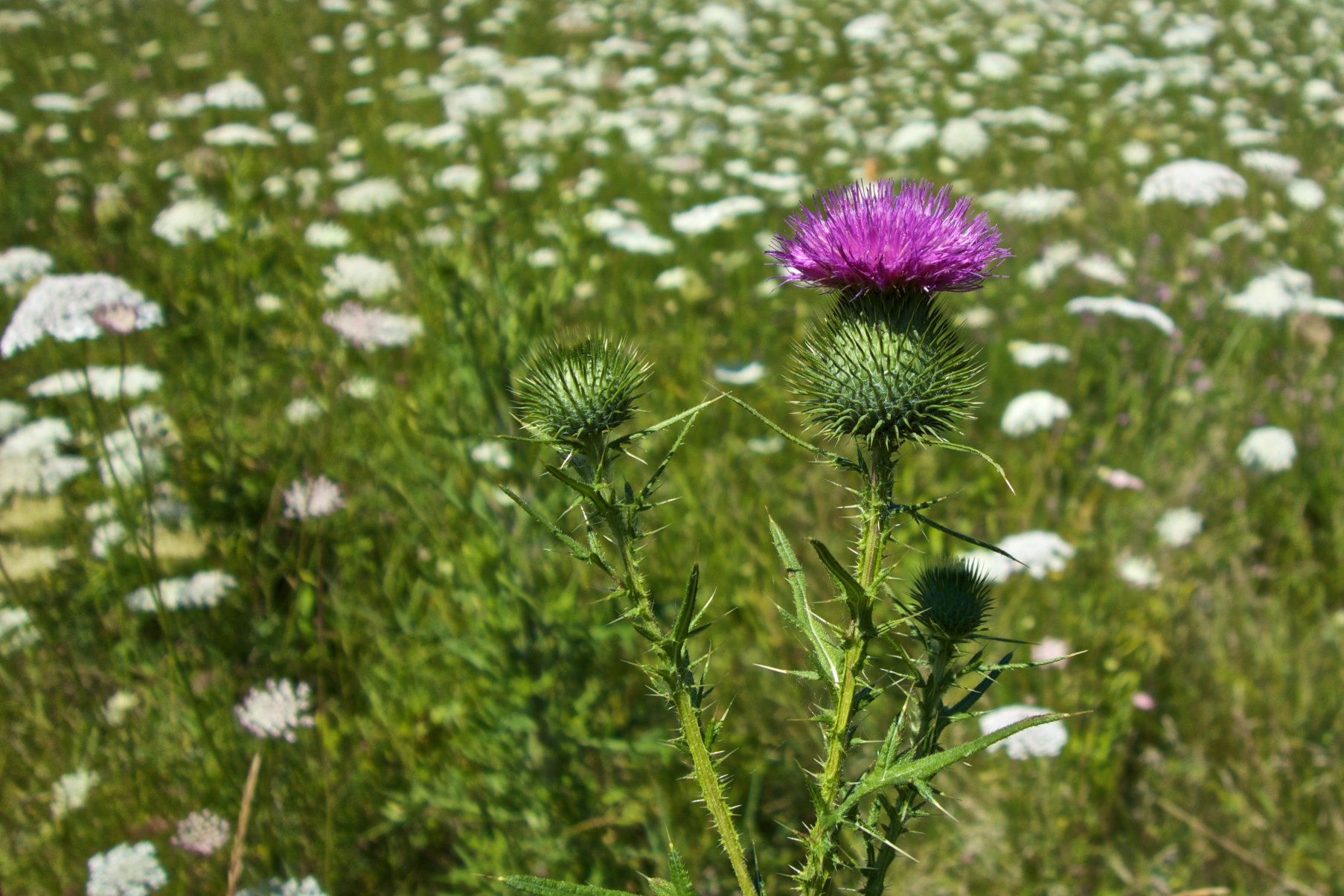
A couple of shots illustrate one of the habitats in Raymore Park.

A bull thistle stands guard over a field of queen anne's lace.

A bull thistle stands guard over a field of Queen Anne’s lace.

The field in question will be a small wood in a few years thanks to native saplings in place for several years. For now, weeds and wildflowers are enjoying the space. Bull thistles are not native but seem to be the most common thistle in Raymore Park. Members of the aster family they propagate by seeds alone. The roots and leaves are edible with some preparation.

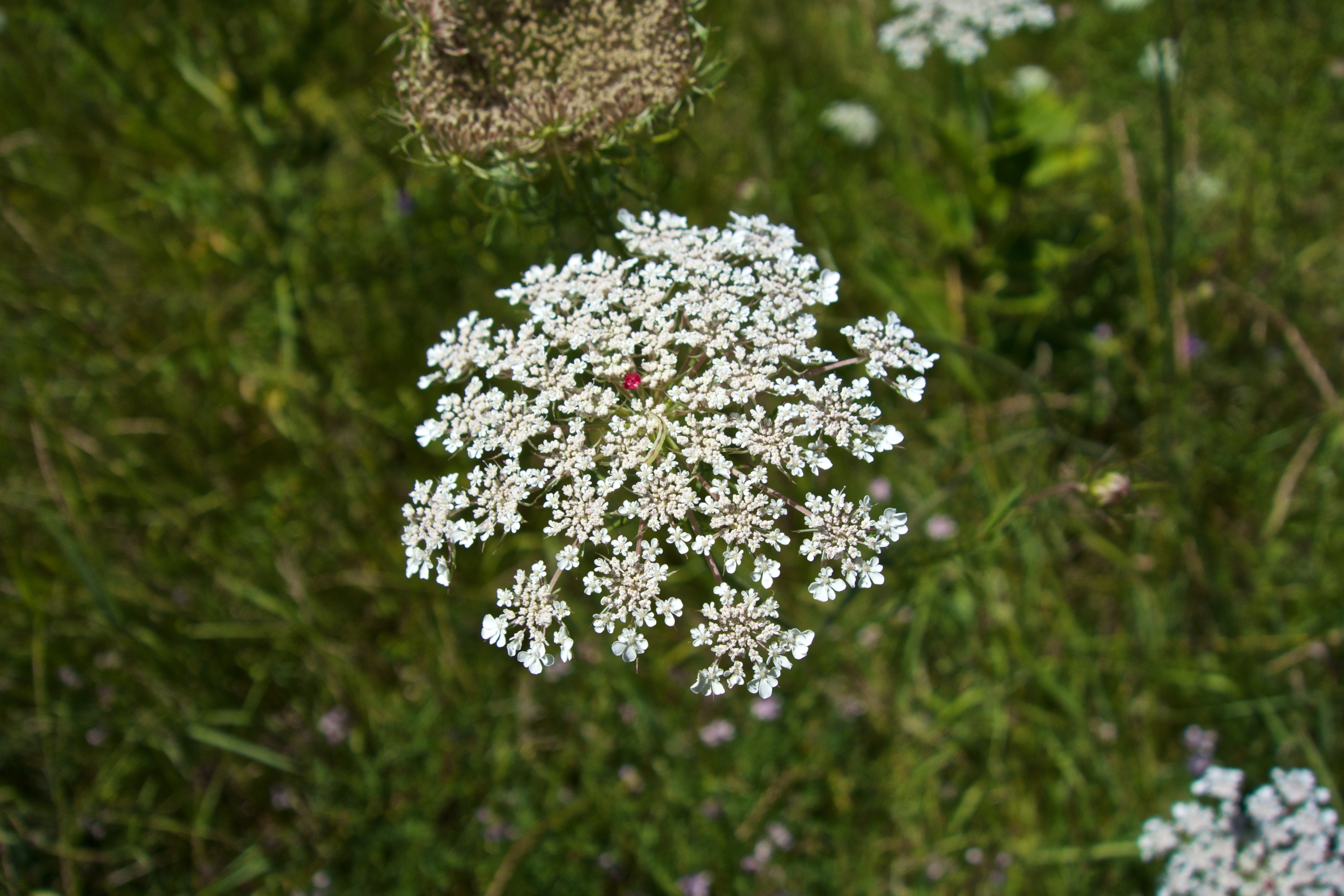
Queen Anne's lace

This Queen Anne’s lace has a tiny red flower.

Another foreign invader (from Europe), Queen Anne’s lace is a member of the carrot family and the root is edible. Being a biennial plant, it flowers and dies in its second year. Insects love QAL and so it can’t be all bad.

Bleachers are repaired

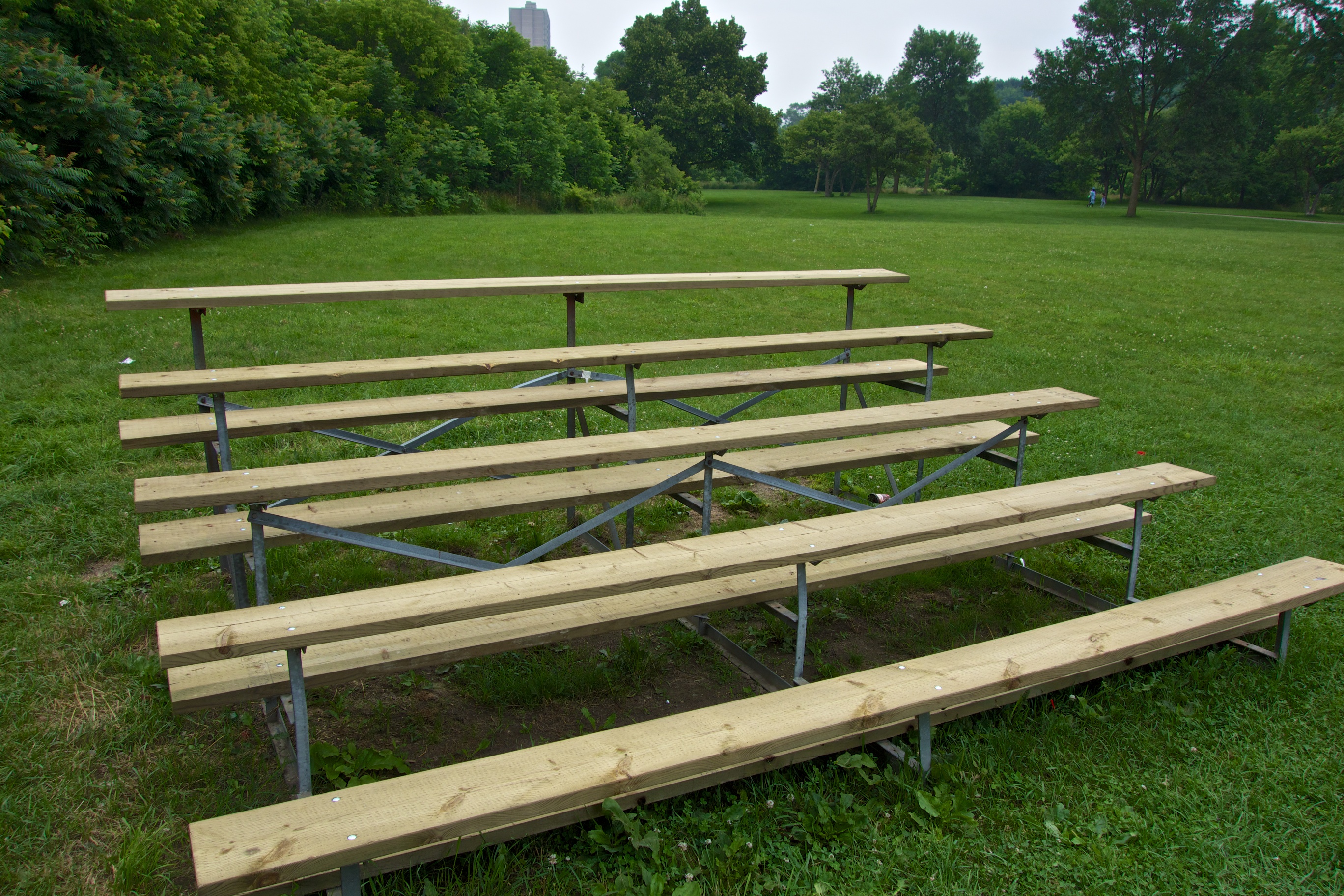
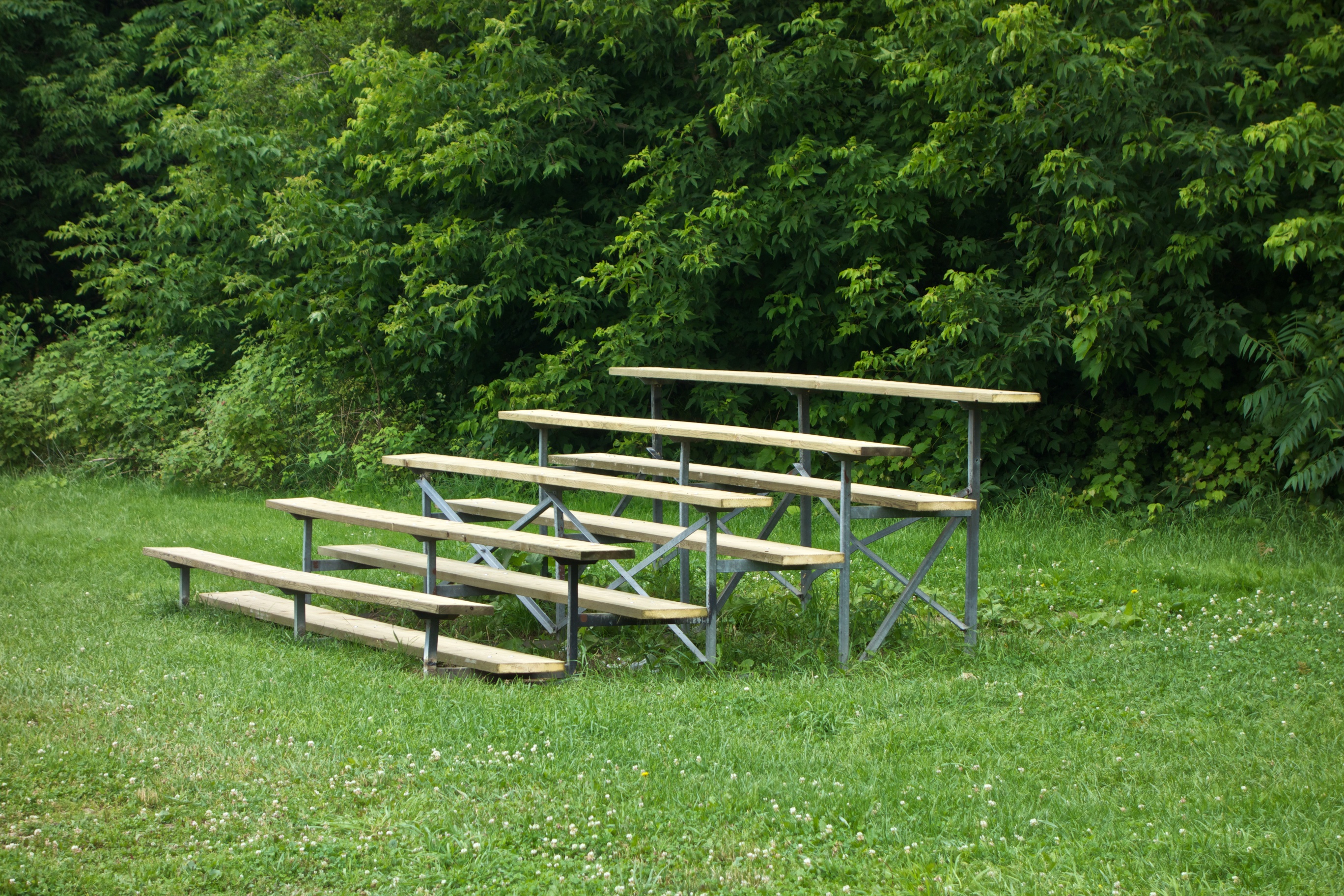
Not a particularly momentous occasion but the bleachers have been repaired by the smaller baseball diamond. New wood has been installed and while the bleachers’ principal use is to host late night drinking parties, at least they are safe and don’t add to the air of general air of dilapidation in that corner of the park.

It might be nice to install some garbage bins nearby.DSC02371 DSC02372